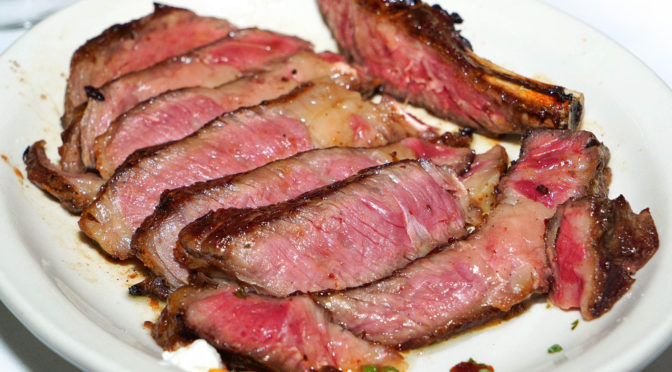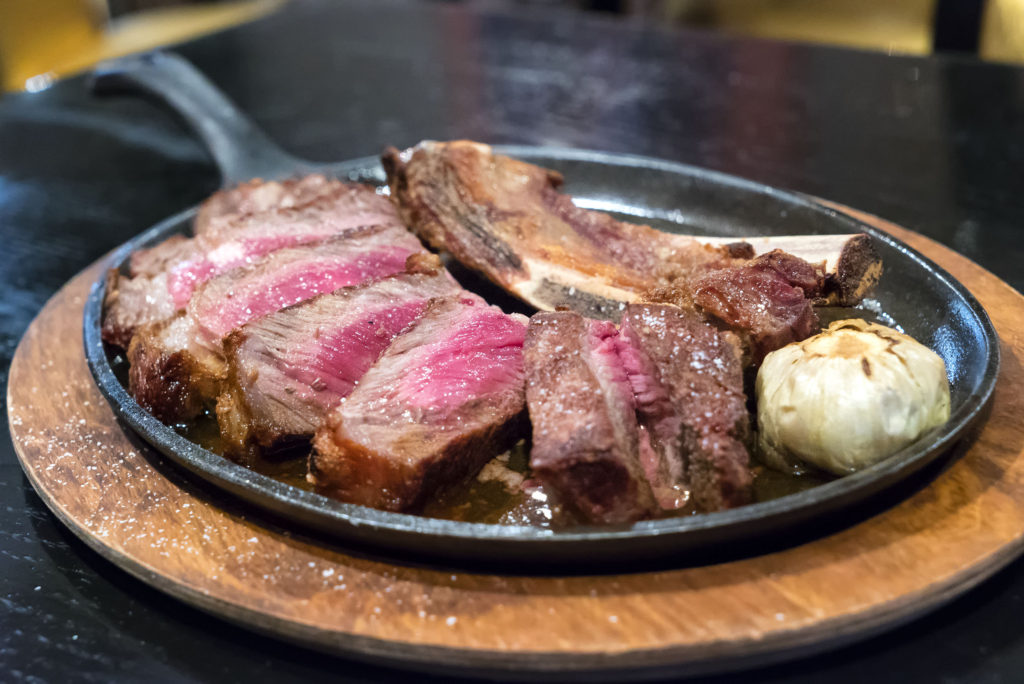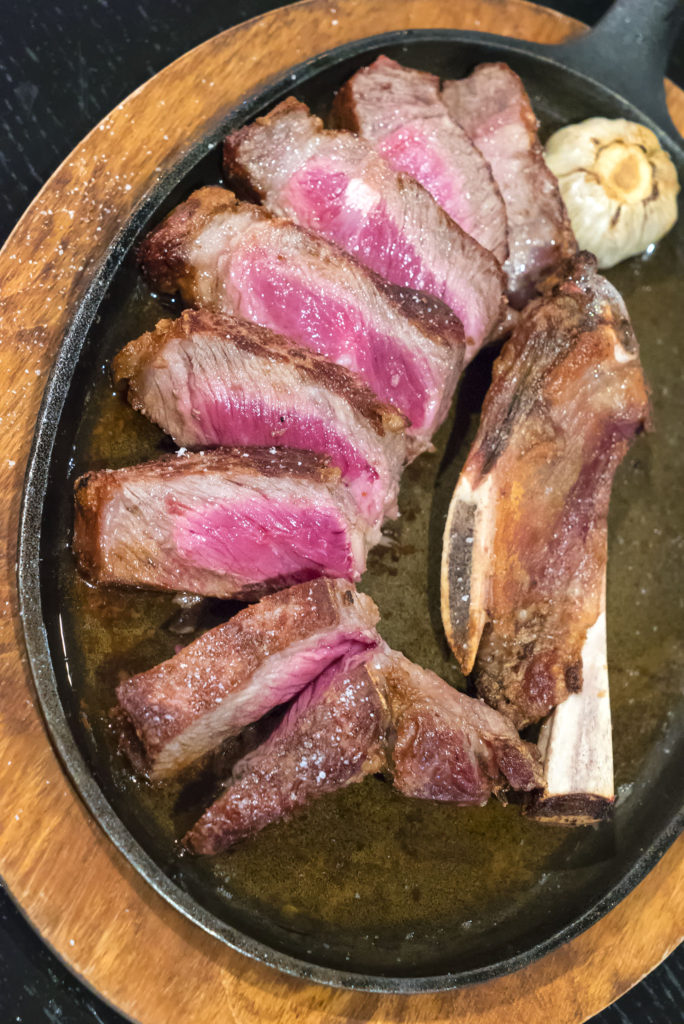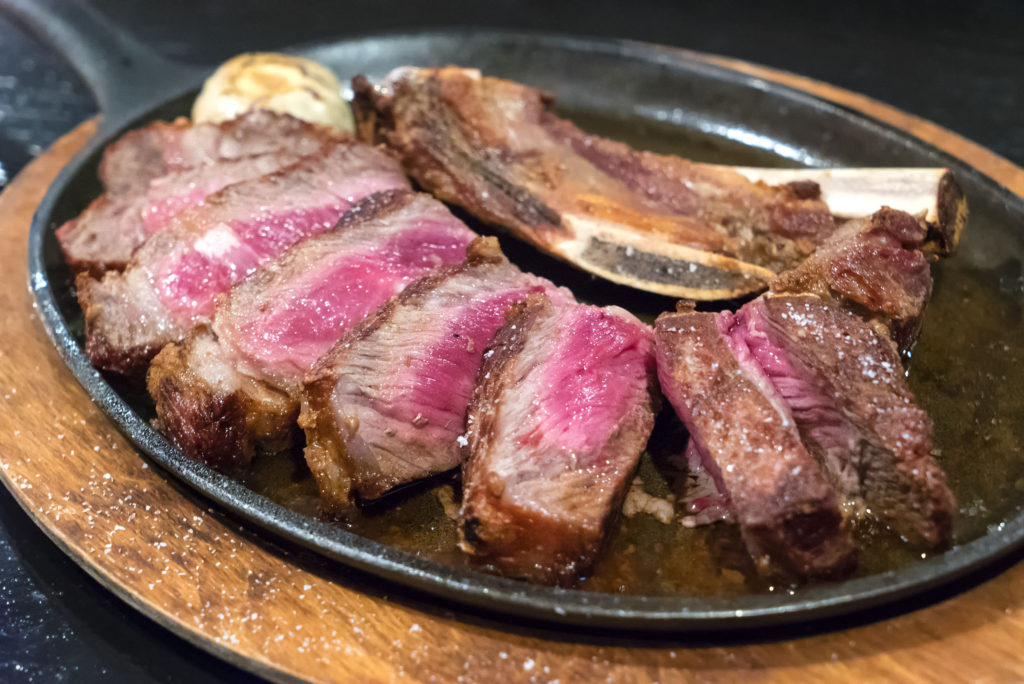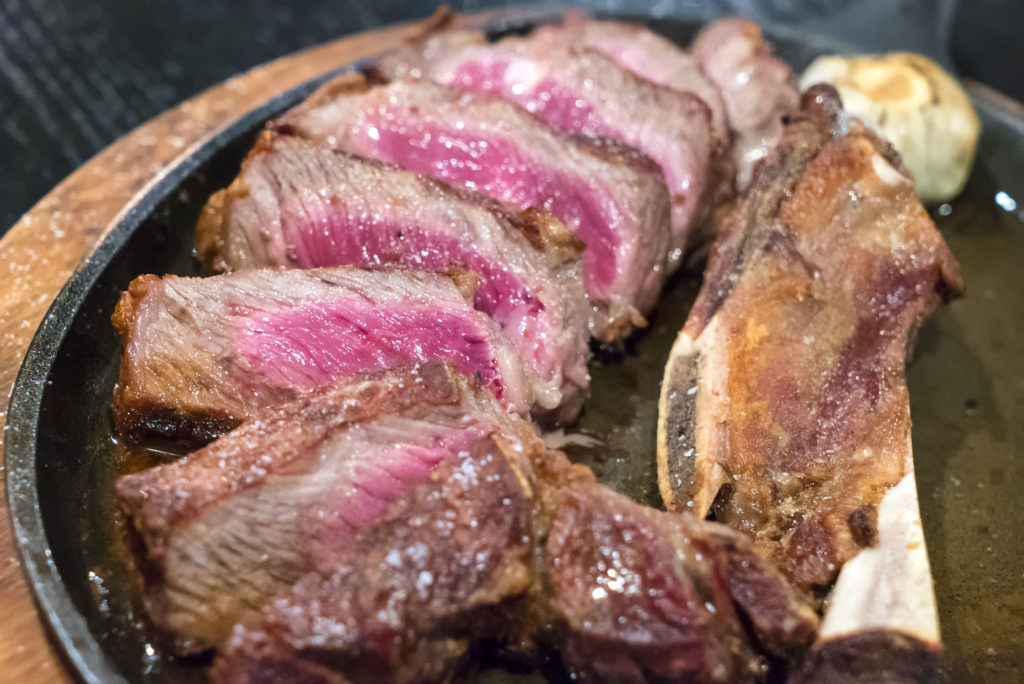
Tag Archives: beef

Cut

Cut overall score: 80

Wolfgang Puck just opened up a new location of his steakhouse “Cut” in downtown Manhattan. Of course I had to check it out. A buddy and I came here with our ladies to get down on some steak.

Flavor: 8
We were able to sample three different cuts: rib eye, sirloin and tenderloin. All three hailed from Creekstone Farms, and all three were bone-in.

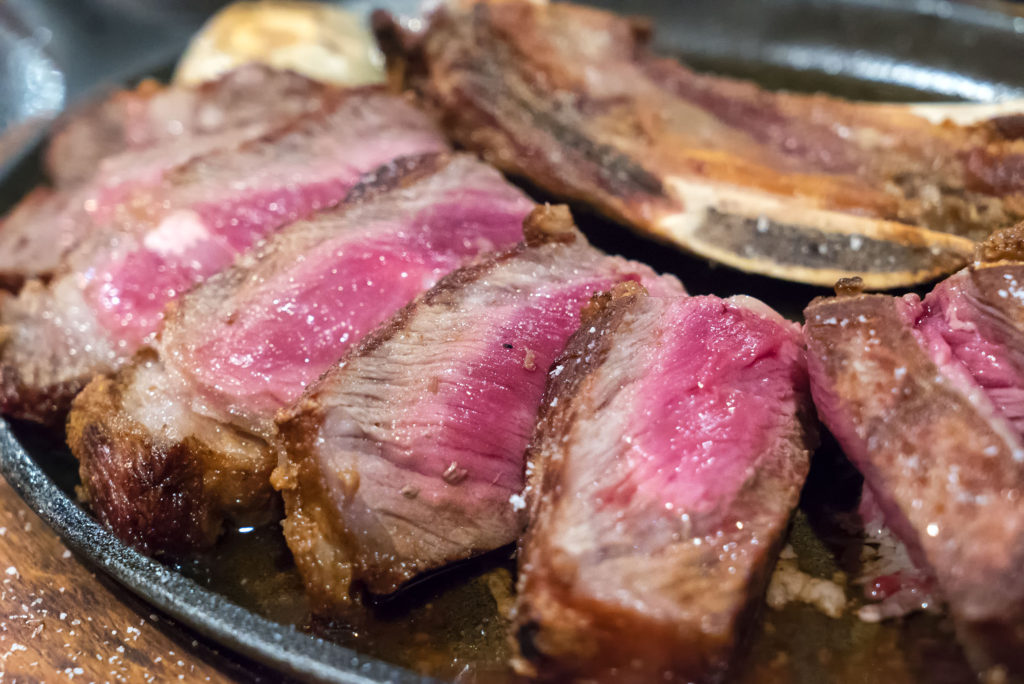
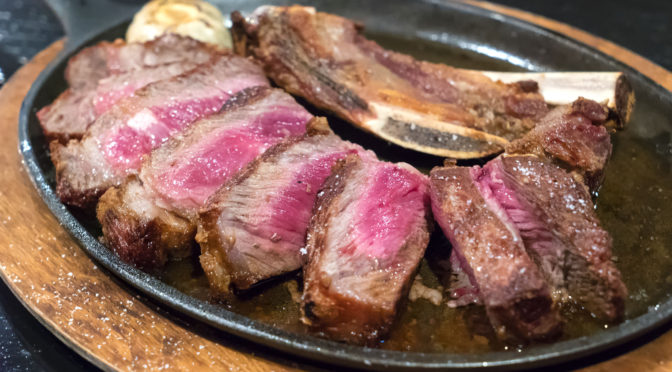
The rib eye here is a solid 8/10. It felt a bit small for 20oz, but as you can see it had a great outer crust.
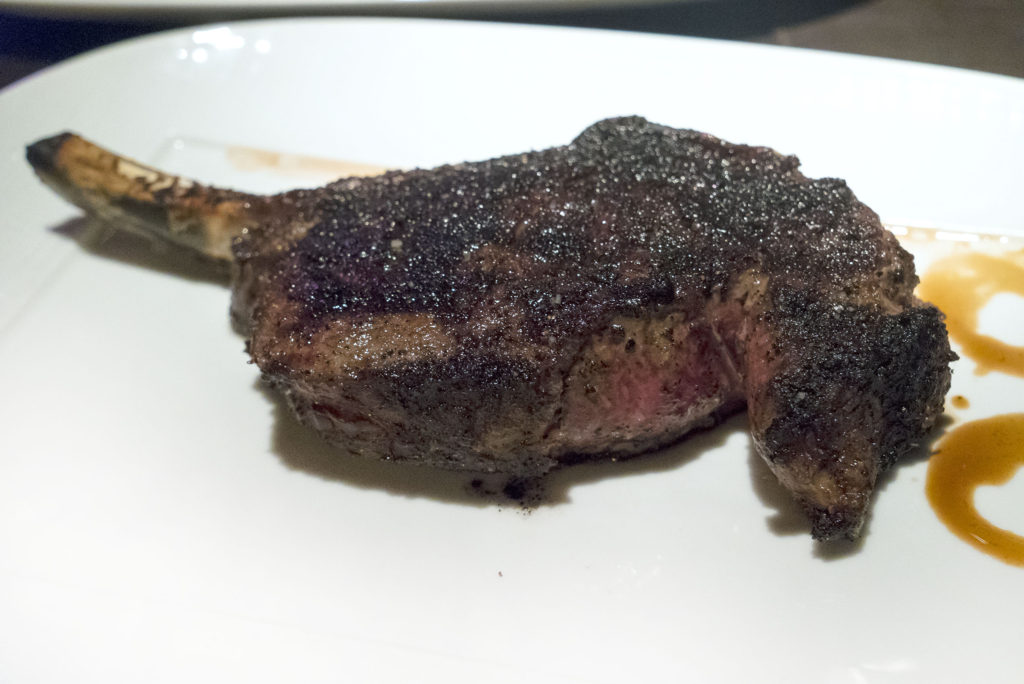
DSC08296

Inside was perfectly cooked. Check out the cut:
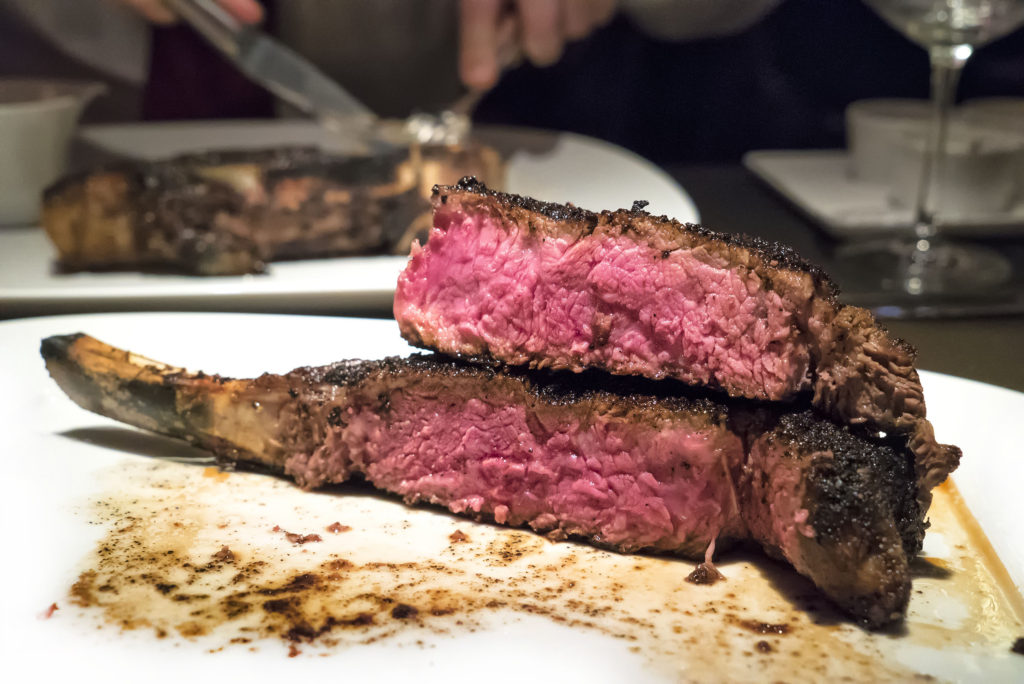
DSC08300

Where it fell short, for me, was the cap. There wasn’t much to it, unfortunately. The eye was delicious though, and I think it was the most flavorful cut of the night. I didn’t get pics of the other two.

I’m giving the tenderloin a 9/10. It had that same great sear and same great cook temp. The flavor was excellent for a tenderloin, too.

The sirloin was not marketed as a NY strip or strip loin, so I am considering it to be an “other cut” for categorization purposes. In all likelihood, it was probably a strip, but one can never be certain without actually doing the butchering oneself. This was an 8/10. Again, same great crisp and cook, and the flavor was nice for a lean cut, though I did prefer the rib eye and tenderloin over the sirloin.

As for the sauces, well, each steak comes with a free sauce on the side. There are about six to eight to choose from. We tried a bunch: house steak sauce, bernaise, creamy horseradish, and yuzu. While I prefer my steak naked, the best of the lot was the horseradish. Their house steak sauce was a bit aggressive on the tarragon (I think that’s what it was in there – not rosemary).

Choice of Cuts & Quality Available: 10
This place is truly amazing in terms of available cuts and quality. A quick scan of their menu reveals that they not only offer all of the main steakhouse cuts in various sizes, but you can also choose by farm. They offer stuff from Kansas (Creekstone), Illinois (corn-finished), Ithaca New York (grass-finished), and Snake River (American Wagyu). On top of that, they feature legit Miyazaki beef from Japan as well. You can even order a tasting that will give you 4oz from various farms, that way you can actually taste the difference between them. Currently, they only do this with the sirloin – not the rib eye. Honestly I don’t think any other steakhouse has this extensive of a selection.

As if the cuts of beef for steaks aren’t enough variety, they also feature wagyu beef short rib and wagyu beef sashimi. Amazing.

Oh, and they bring the shit out to show you, too.
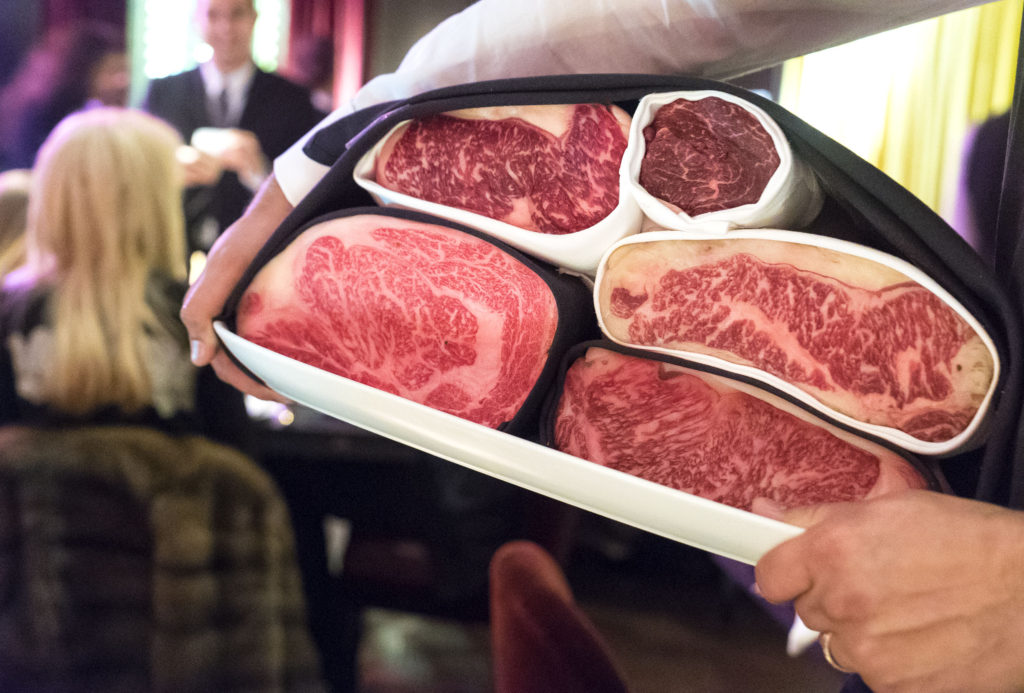
DSC08265

Portion Size & Plating: 7
Portions could be a bit larger here for the pricing. I understand the cost of high-end beef, but at $88 for 9oz of American wagyu rib eye, you are getting ripped off. If that’s what I am going for, I will happily just head the fuck over to Del Frisco’s to get 23oz more wagyu beef for an additional $7 (32oz, $95). And that fucker is a clear 10/10 score on flavor – one of the best steaks I’ve ever eaten.

Price: 5
See my rant on portion size above for some weight here as well. But in addition to that issue, I felt that some of the items were way overpriced for what we were getting. In particular, the marrow app, the tortolloni, and the mac and cheese.
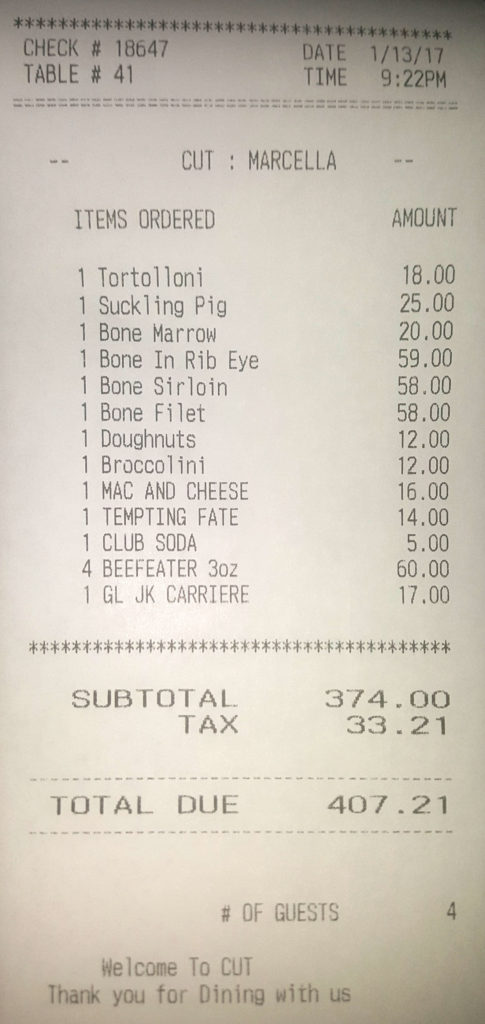
cut bill

Bar: 8
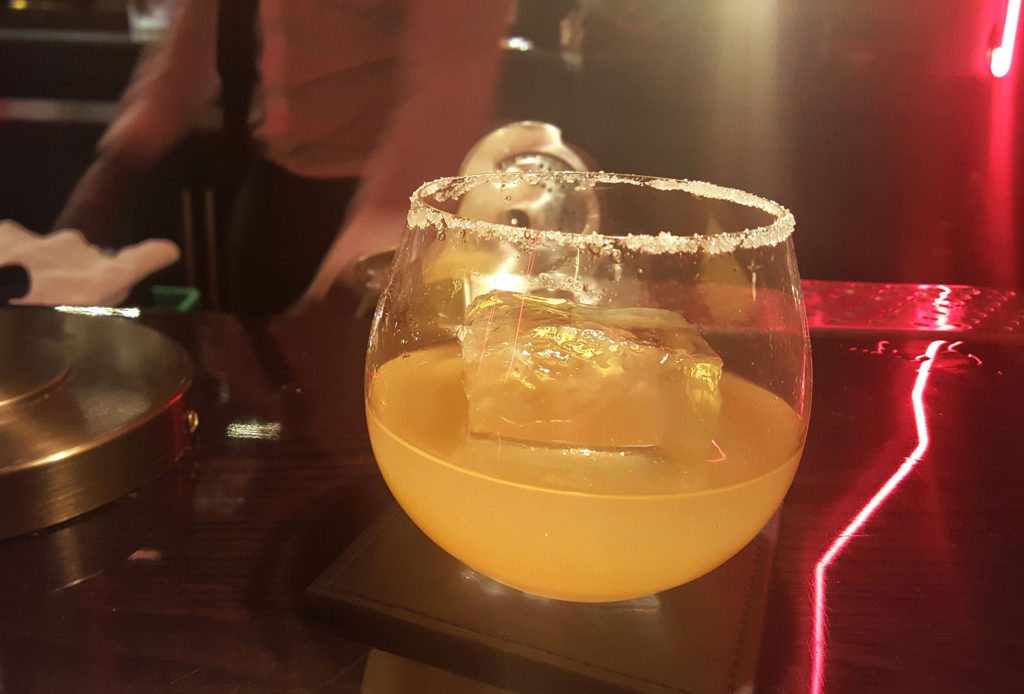
The bar is pretty cool, and there are some great cocktails and booze selections available. However the prices are a bit too high (a non-alcoholic “mocktail” was fucking $14), and I was hoping for a more street side experience. The bar is just off the lobby of the apartment building / hotel with no view of the downtown streets, so the vibe is slightly off a bit.
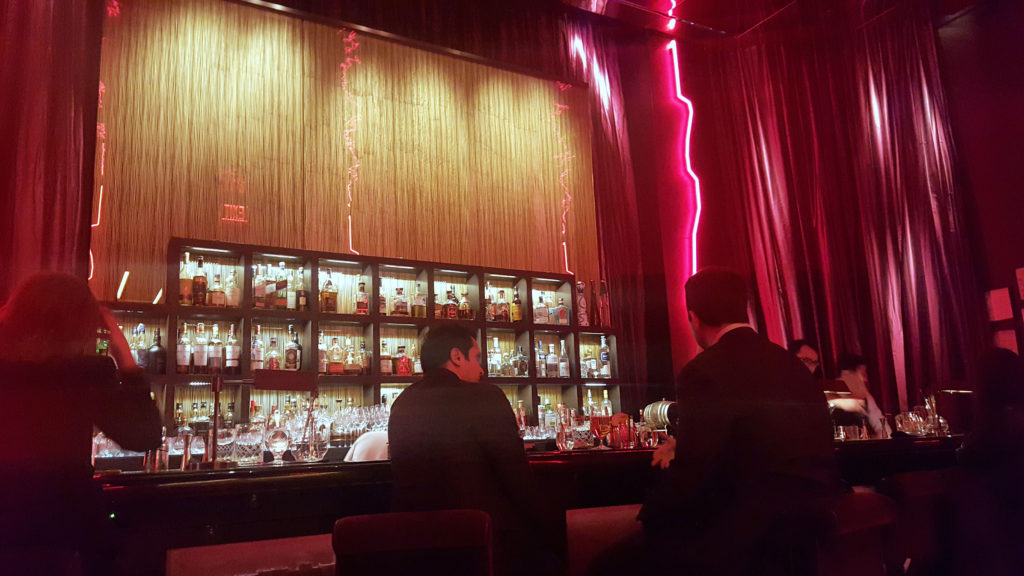
cut bar

cut drink

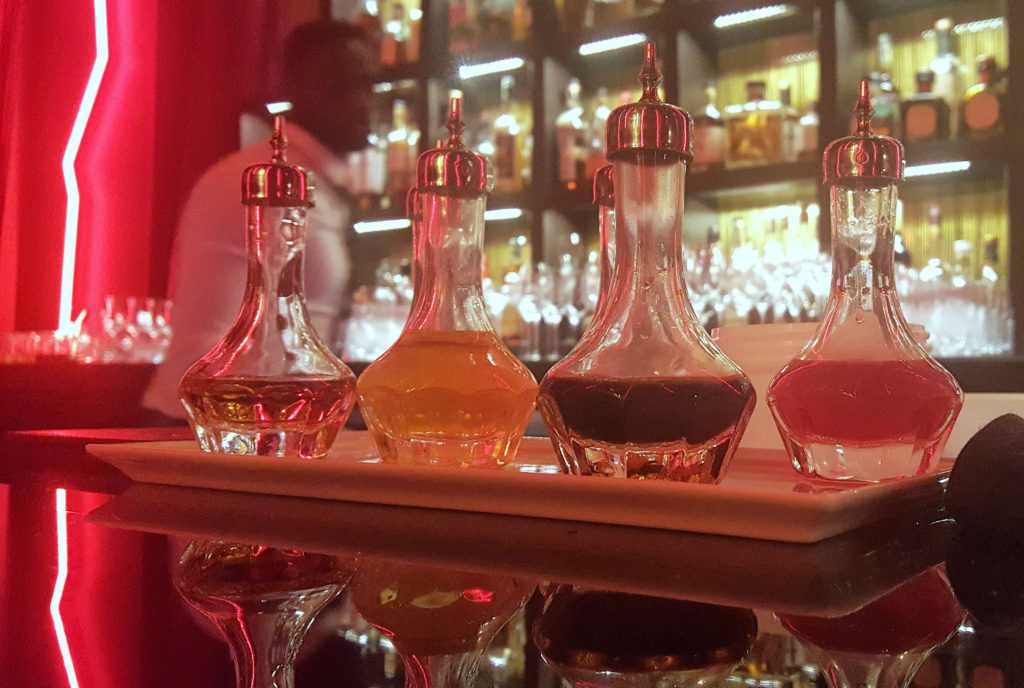
cut potions

Specials and Other Meats: 9
There are no off-menu specials, with the exception of an addition that was not yet printed – another offering of steak. But there’s chicken, pork and lamb for alternative meat selections, if for some reason you are avoiding all the tasty beef on the menu. The app selections also feature veal tongue, suckling pig, and bone marrow flan. Really interesting.

Apps, Sides & Desserts: 9
We tried a bunch of stuff. Let’s get right down to business.

The mac and cheese was really tasty, but insanely overpriced at $16. Apologies for not getting a photo of it.

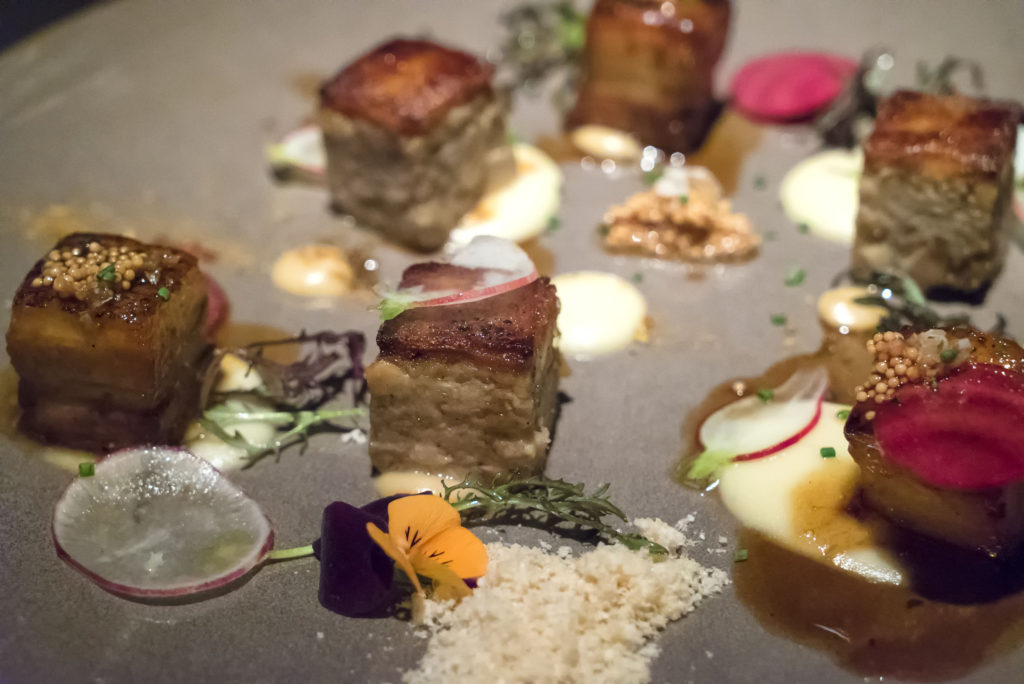
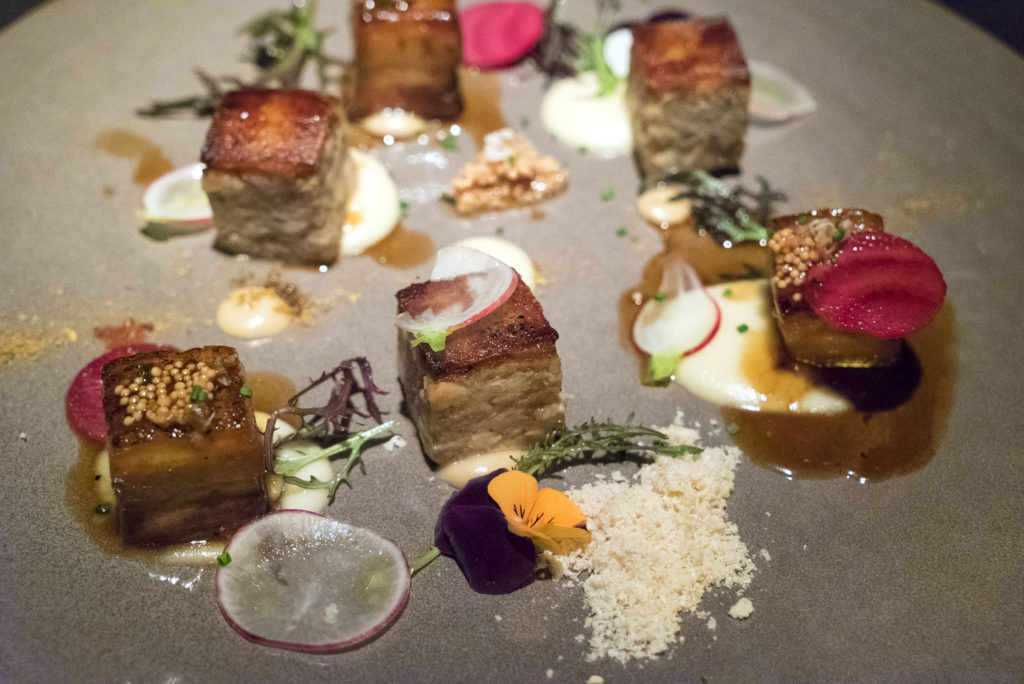
The suckling pig and pork belly was excellent. Not as salty as I was expecting, but really nicely plated. Also overpriced at $25 for six cubes that were the size of large Las Vegas gambling dice.
DSC08292

DSC08289

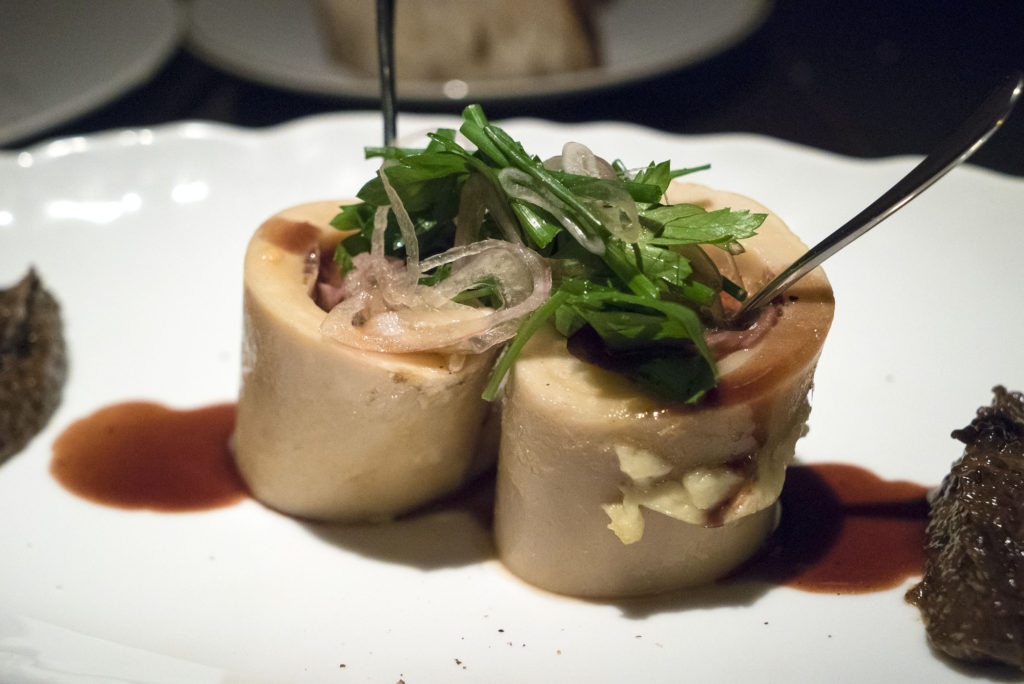
Bone marrow flan was very nice, but overpriced and small in size. It was similar to the creme brûlée from Beatrice Inn, only savory.
DSC08295

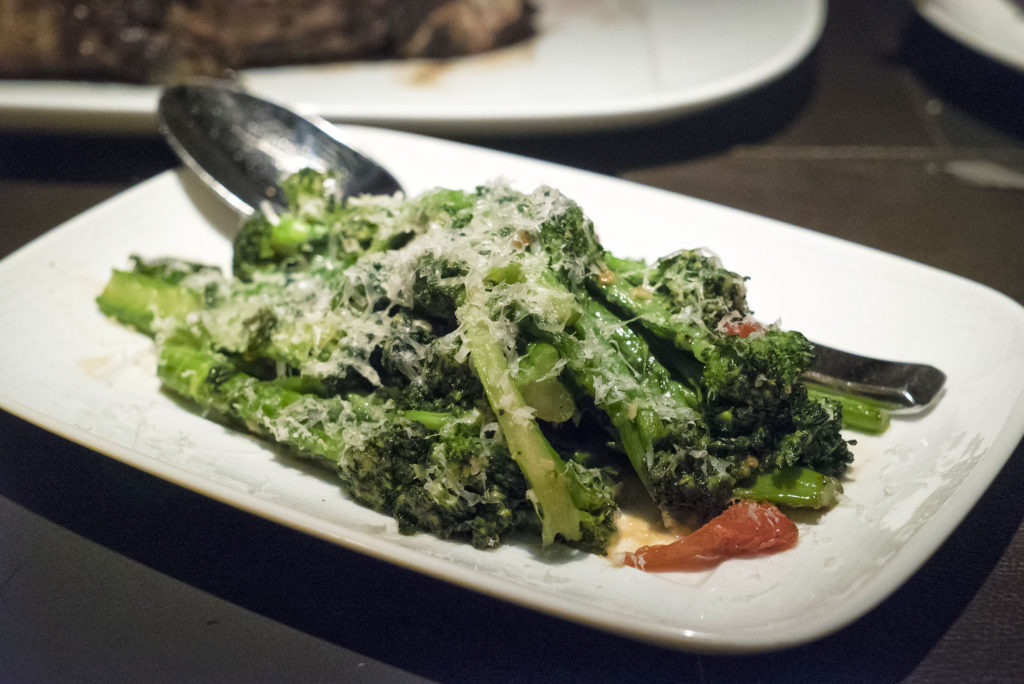
Broccolini was fantastic. I highly recommend this item. Topped with shaved cheese and adorned with roasted tomatoes, one cannot possibly go wrong.
DSC08306

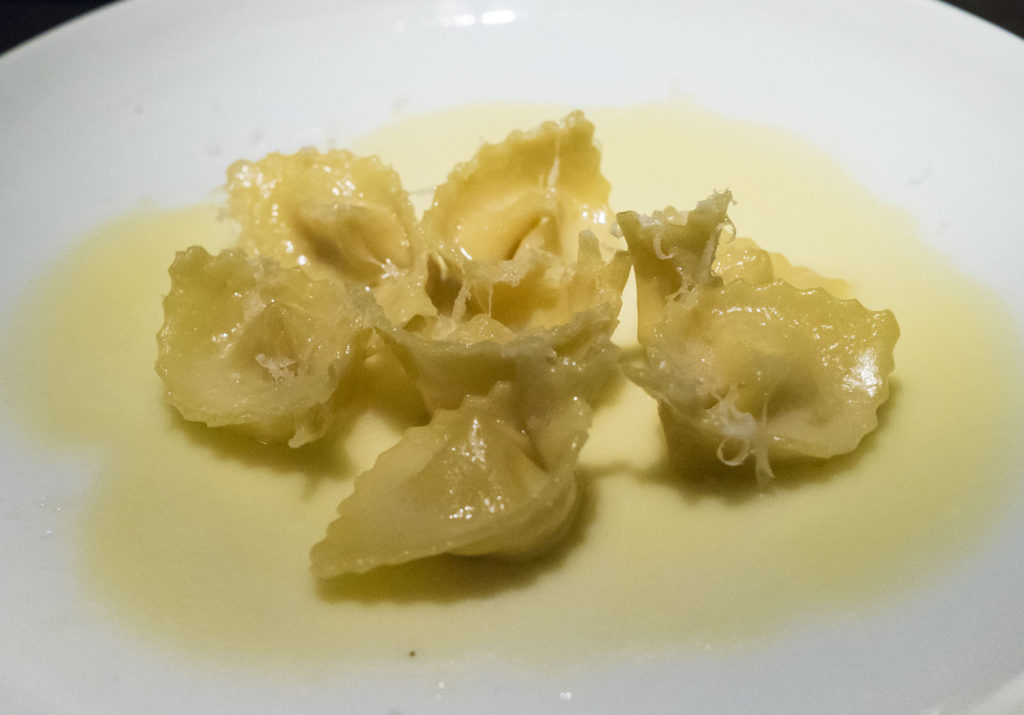
Tortolloni was overpriced for seven small dumplings. They were nice and mild though, which is exactly what my wife wanted.
DSC08307

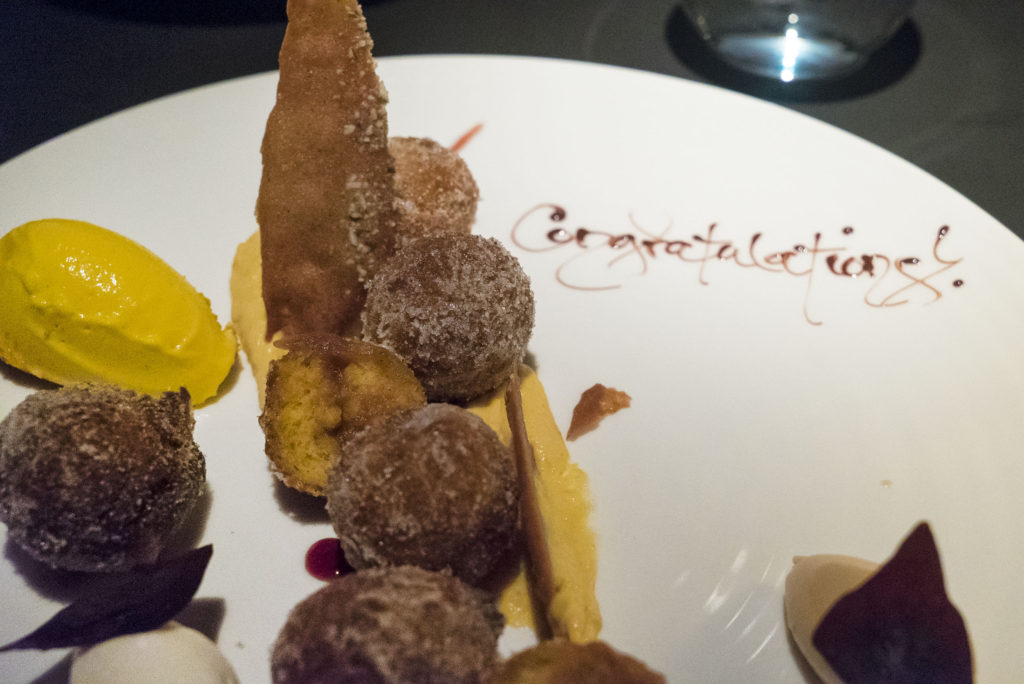
Doughnuts dessert came with about six doughnut holes, all the same flavor (granulated sugar coated). Some of the purees that came with it weren’t that good (sweet potato), but the ice cream was nice.
DSC08313

Seafood Selection: 8
There’s lobster, “loup de mer” (branzino), cod and sole on the seafood menu here. Scallop preparations, hamachi, a crab and lobster cocktail and a tuna tartare can be found on the app menu. Not too shabby, though I didn’t notice any oysters or clams.

Service: 9
One thing worth noting here is that you can add a variety of nice items to your order (for a fee, of course). But you can add a fried egg, white truffles, blue cheese, mushrooms, garlic, bone marrow, etc. to the steaks you order.

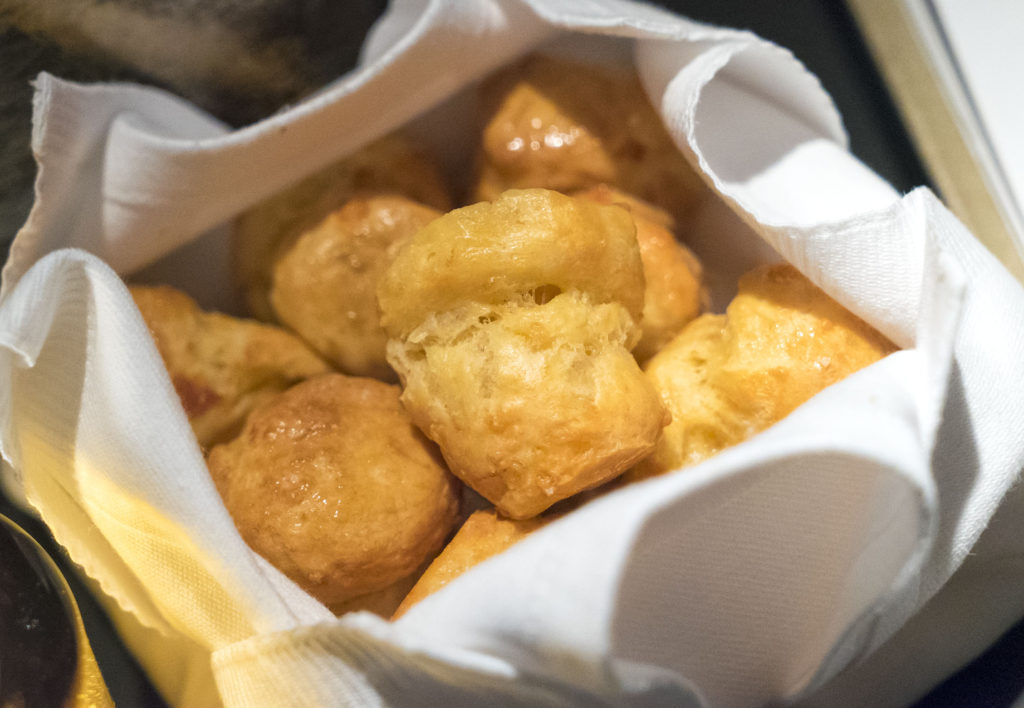
Bread is on point. The table receives a basket of mini pop-overs (we got a second basket) and five different style dinner rolls/breads to choose from with a nice whipped butter. All are delicious. My advice is to fill up on bread and share a really good, high end steak.
DSC08254

Ambiance: 7
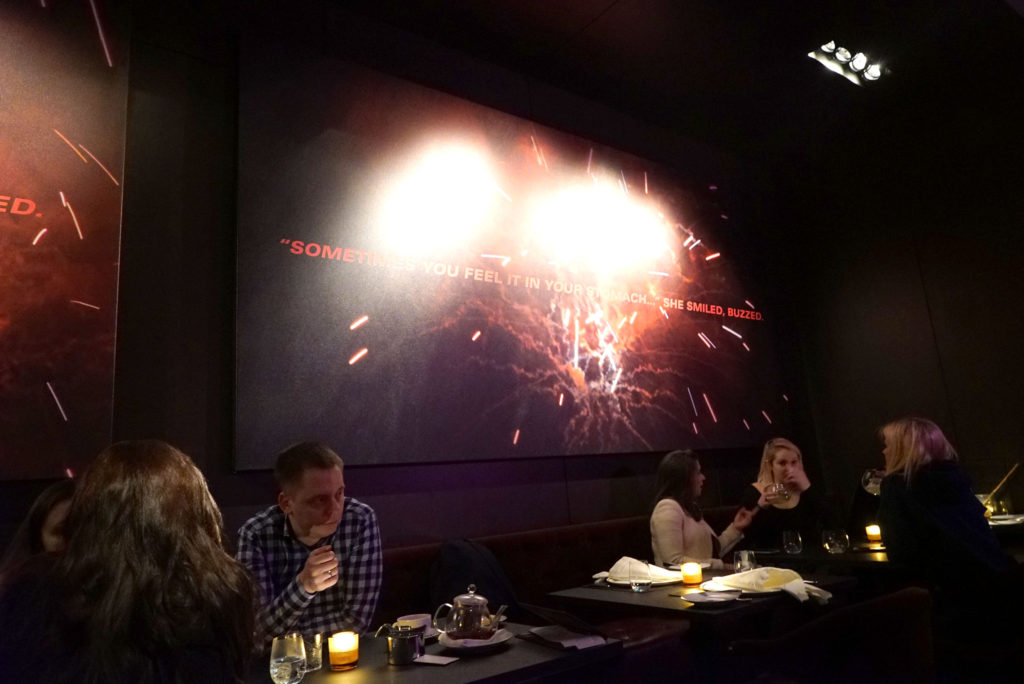
This place suffers from a bit of an identity crisis. There are two huge panels on one wall that show a kind of cheese-bag conversation between a chef and a woman. We surmised that this had something to do with how Wolfgang Puck met his wife, and it turned out we were right (our waitress overheard us talking and confirmed it when we asked).
DSC08314

The dining room was vast and dark; a bit too sexy for my liking. And the random neon lighting at the bar felt a bit too “Miami Vice.”

CUT
The Four Seasons Hotel
99 Church St or 27 Barclay St
New York, NY 10007
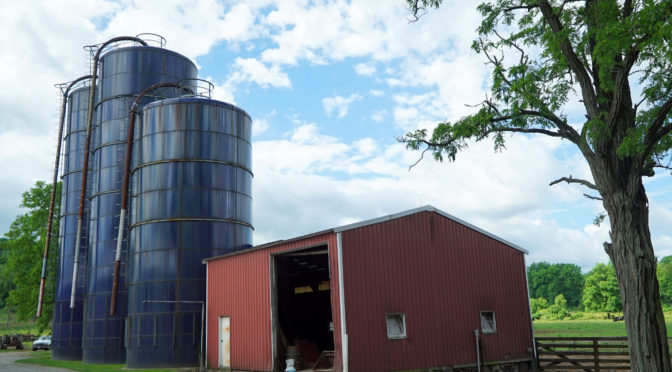
Sustainability in the US Beef Industry

I hesitate to even use the word “industry” when talking about beef in the USA. Perhaps “Sustainability in US Beef Production” is a better title for this post. “Industry” makes people think of the “factory farming” bullshit myth, which I already debunked HERE.

In any case, Happy New Year!!! As usual, this post is designed to do away with yet another set of myths about US beef. Apparently some false ideas have spread that beef production in America is vicious to the environment, emits far too many “greenhouse gases,” is responsible for “global warming” (or whatever people call it these days), is wasteful, and is generally not a sustainable practice. Lies. Every one of them.

Grazing

Grasslands involved in beef production account for nearly 75% of US natural wildlife, and cattle spend a majority of their lives feeding on these natural grasslands. Up to 85% of grassland in the US is actually not suitable for crop farming due to soil characteristics, topography or rainfall. Cattle grazing is a good use of the otherwise inarable land, and it even helps prevent wildfires. Also, cattle can eat shit that almost nothing else can. Bovine digestive systems are made to convert inedible plants into protein that we can eat.

DSC04663

That’s all wonderful, and you may have read a little about that on here before. But what I’m going to do now is introduce you to the concept of “diversified farming” practices.

Diversified Farming

What the fuck is a diversified farm? Essentially it’s when a farm produces a variety of crops or animals, usually both, with the crops feeding the animals that they raise, in an effort to create a self-sustained farm with little waste or reliance upon other operations.

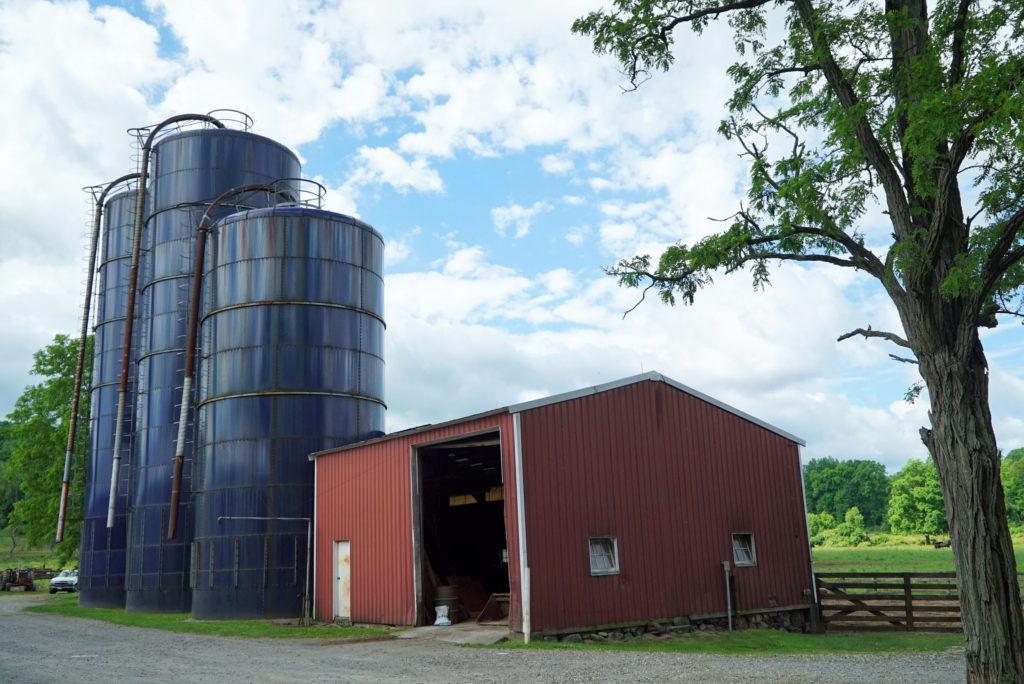
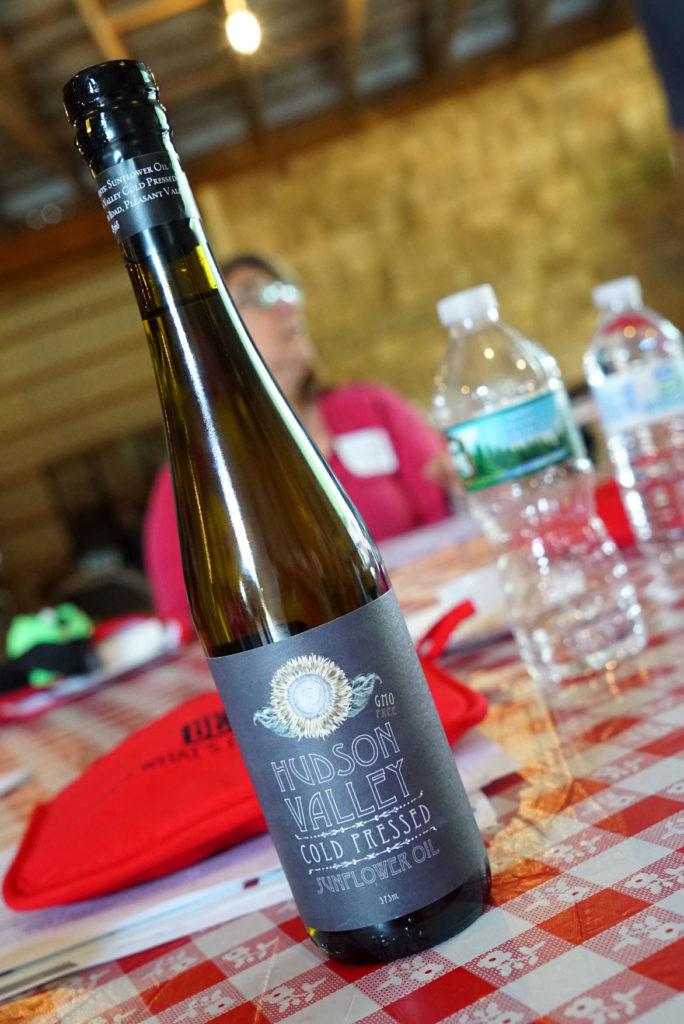
You may recall that Walbridge Farm is like this as well, where they grow sunflowers and raise cattle. The sunflowers are used to produce cold pressed sunflower oil, which they sell at their market.

DSC04744

The hulls, shells and ground up sunflower byproduct from that oil-making process is then used to create cattle feed. Pretty brilliant, if you ask me. Not only is this a good idea from a business standpoint, since you are becoming more self-reliant and utilizing more of what you make, but it is also responsible environmental stewardship.

Speaking of environmental stewardship, many diversified farm operations also catch water runoff from their feed yards to be processed and rendered inert before being reclaimed by the land. In fact, water management is an area of the industry that has seen great improvement in recent years. In addition, almost all diversified farms collect cow dung as well, which is then used as fertilizer for their crops. Even waste is not wasted!

But aside from diversified farming efforts, cattle are natural recyclers. They kick so much ass at recycling that you can literally feed them the waste from other industries.

Recycling

Do you enjoy bourbon? Of course you do, because you’re a man with balls and a dick swinging between your legs. You’re a red-blooded fucking American, and nothing is more American than bourbon, except for maybe jazz or steak. Do you know how bourbon is made? With corn! Good: You’re not an idiot. Corn mash, to be more accurate. That gets fermented and turned into booze. But what happens with the mash after the fermentation and distillation process? You guessed it: it often gets turned into cattle feed.

You all know how much I love Martin’s Potato Buns, right? The reason I love them so much is because their buns are always fresh, supple and soft; perfect for constructing a burger. I recently learned why that is the case. They pull their bread from shelves a little earlier than most, to ensure freshness to the consumer. Know what they do with the buns after they get pulled from the shelves? Rather than going to the garbage heap, they get re-purposed and turned into cattle feed.

That’s just two examples of other industries and businesses that contribute their unused byproducts to the beef production cycle, thereby reducing and re-purposing waste. The ethanol fuel industry is another big one, but many others contribute as well.

Greenhouse Gases

So what about greenhouse gases? We’ve all heard how cow farts are supposedly destroying the planet, right? Come on…

According to numbers from the EPA, cattle production is not even a top contributor to greenhouse gas emissions.

Here’s some recent data:

  • Agriculture: 6.9% of U.S. greenhouse gas emissions.
  • Livestock: 3.1% of U.S. greenhouse gas emissions.
  • Livestock Methane: 2.8% of U.S. greenhouse gas emissions.
  • Beef Cattle Methane: 1.5% of U.S. greenhouse gas emissions.

What about other industries?

  • Electricity Generation: 33% of U.S. greenhouse gas emissions.
  • Transportation: 26% of U.S. greenhouse gas emissions.
  • Industrial Use: 11% of total U.S. greenhouse gas emissions.
  • Residential/Commercial: 8% of U.S. greenhouse gas emissions.

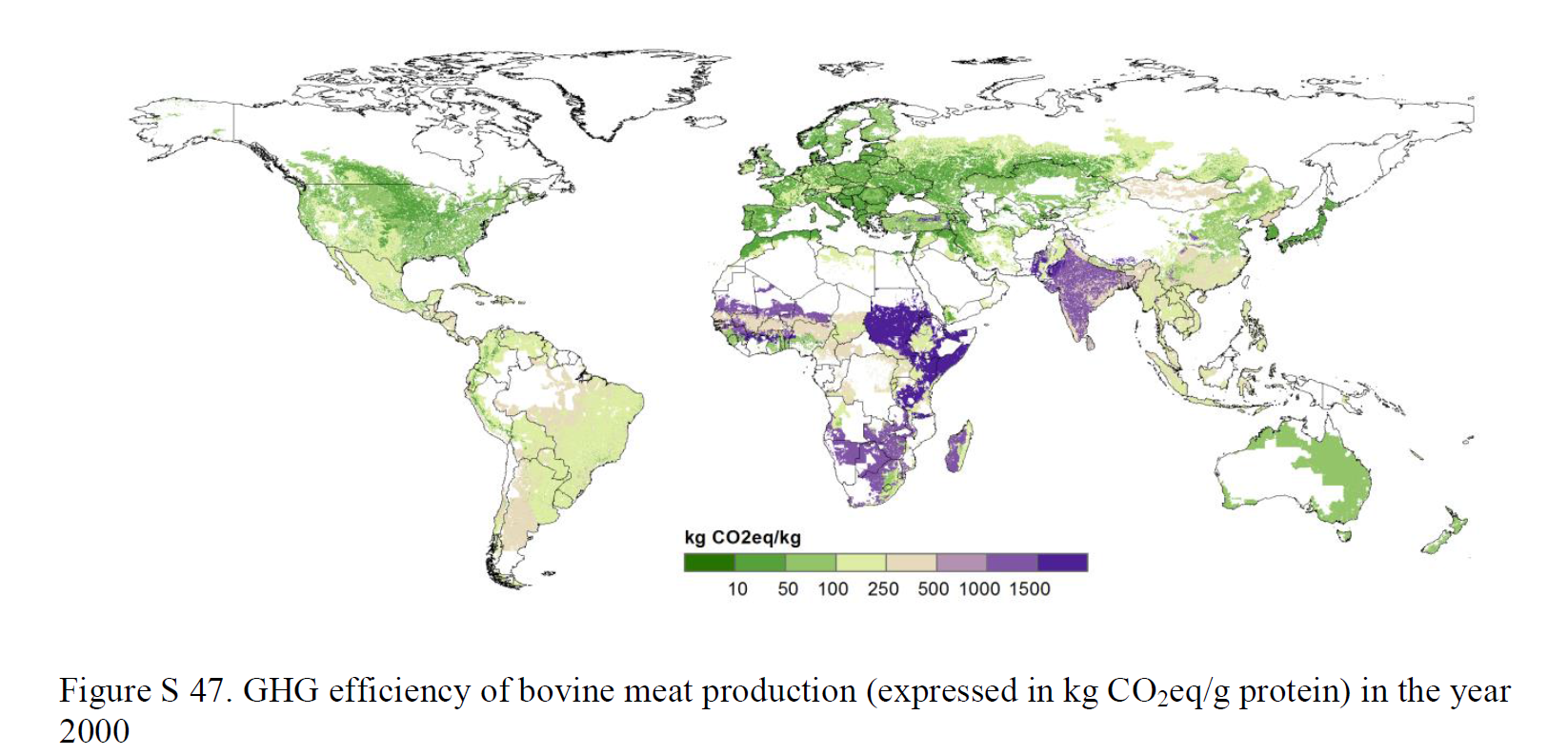
It’s really pretty simple though: Cattle are not the major cause of greenhouse gas emissions in the United States. And as far as the US is concerned, we do a pretty damn good job at containing the impact that beef production has on the environment. The US is actually one of the most efficient nations in terms of lowering greenhouse gases and environmental concerns that stem from beef production. Click the image below to see a larger version:

water-2-fal-2015
From www.beefissuesquarterly.com

Still Improving

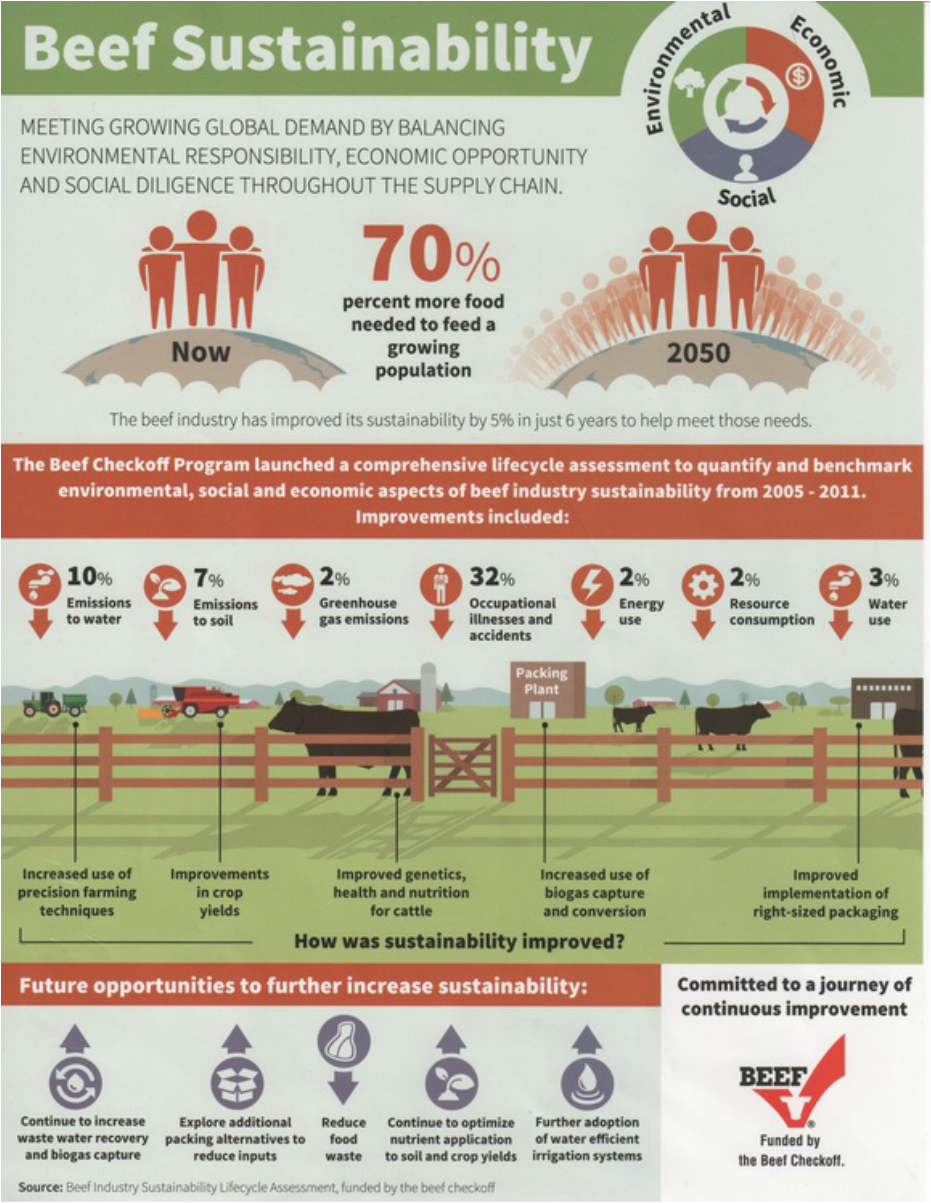
Furthermore, a “Lifecycle Assessment” of the beef industry was recently conducted. What that means is that everything and anything that touches the production cycle was examined. Use of farm equipment, water, machines, everything – not just the cattle themselves or the land use.

Take a look at this nifty graphic that encapsulates the findings of the life cycle assessment (click for a larger version):

From www.beefresearch.org/
From www.beefresearch.org

It turns out that the beef production cycle scored much better than car emissions from the auto industry. Why mention emissions and the auto industry? Because they promoted a poor emissions study and leveled some wild accusations at the beef industry.

Better still: the emissions study didn’t focus on the entire auto industry lifecycle in the way that the beef study did. Had they conducted a full lifecycle study, they would have had to include assessments of things like power plants and such. Once those things are factored in, the beef industry becomes squeaky clean in a direct comparison with the auto industry in terms of greenhouse gas emissions.

For more information about the improvements made in the beef production lifecycle, go HERE.

Niche Market Beef

A lot of hulabaloo has been going on around the discussion of grain finished vs grass finished beef. People seem to think that grass finished beef is somehow more natural and environmentally friendly. Yet we know it takes about 226 more days for grass-finished cattle to reach market weight than grain-finished cattle. More days on grass may mean greater environmental impact.

Let’s look at the difference. Each pound of grain-finished beef requires:

  • 45 percent less land;
  • 76 percent less water; and
  • 49 percent less feed;

And generates:

  • 51 percent less manure; and
  • 42 percent fewer carbon emissions.

So it would seem to me that grain finishing is more environmentally sound. For more on that, click HERE.

Meatless Monday

Just the idea of it makes me cringe. What would possess someone to avoid meat just because of alliteration? Why not increase beef intake and call it Meaty Monday? Because some fool out there thought it would be healthy and better for the environment to cut meat from your diet just one day a week. Were they right? Of course not. Let’s examine the idea:

First, we know that beef is nutritious and a vital part of a healthy, well-balanced diet. Refresh yourself with my post, if you must.

As for the environment, “Meatless Monday” would have a very small impact even if every American followed it. One meatless day per week would account for less than one half of one percent of the U.S. carbon footprint. For more on that, check out THIS LINK.

Nose to Tail

Are we, as a society, wasting any part of the animal? Not really.

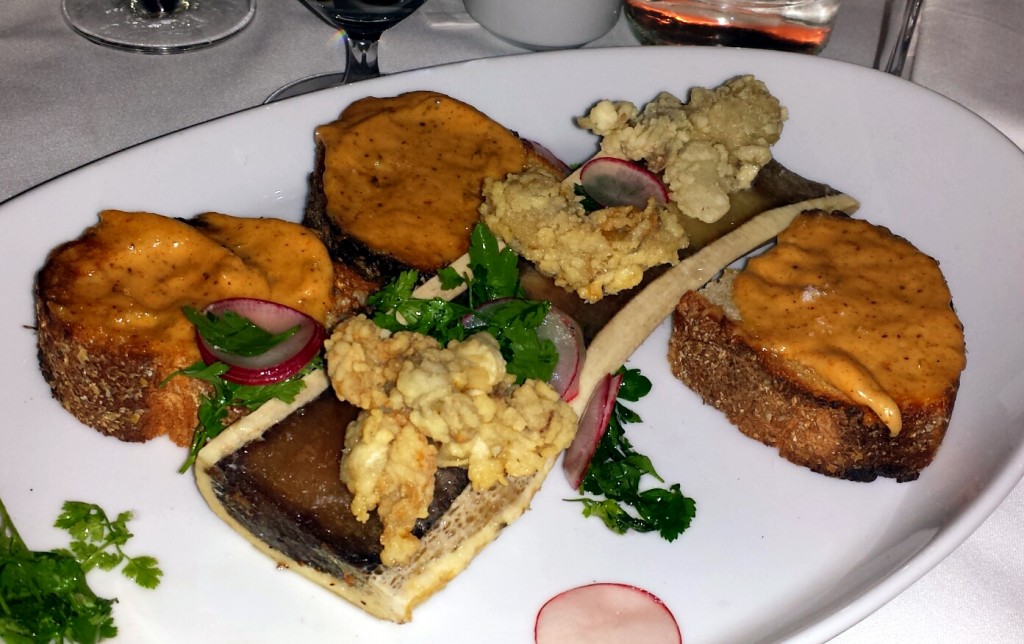
First, you’ve all noticed some of the shit I’ve been eating lately at fine dining establishments: Oxtail stew, blood sausage, bone marrow, tripe, and all sorts of offal or “variety meats.”

bone marrow with fried oyster

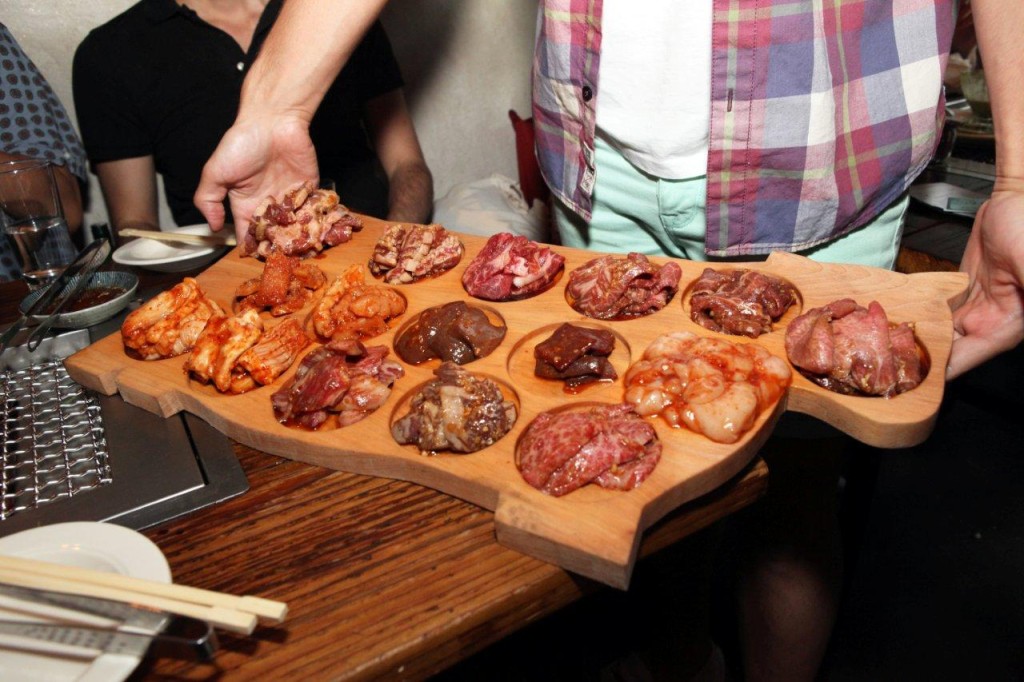
There is a readily identifiable trend in the food biz where chefs want to use the entire animal, from nose to tail, to reduce waste and elevate their cuisine by offering on their menus the proteins that used to be relegated to the impoverished.

takashi 3 012 edits

Offal and “variety cuts” were always cheap and within the budgets of the poor, especially outside of the US. You know what I’m talking about: stews, cured meats, slow and low cooked meals, etc. Now, restaurants are taking inspiration from some of those humble dishes and featuring them on their menus.

Beef Byproducts

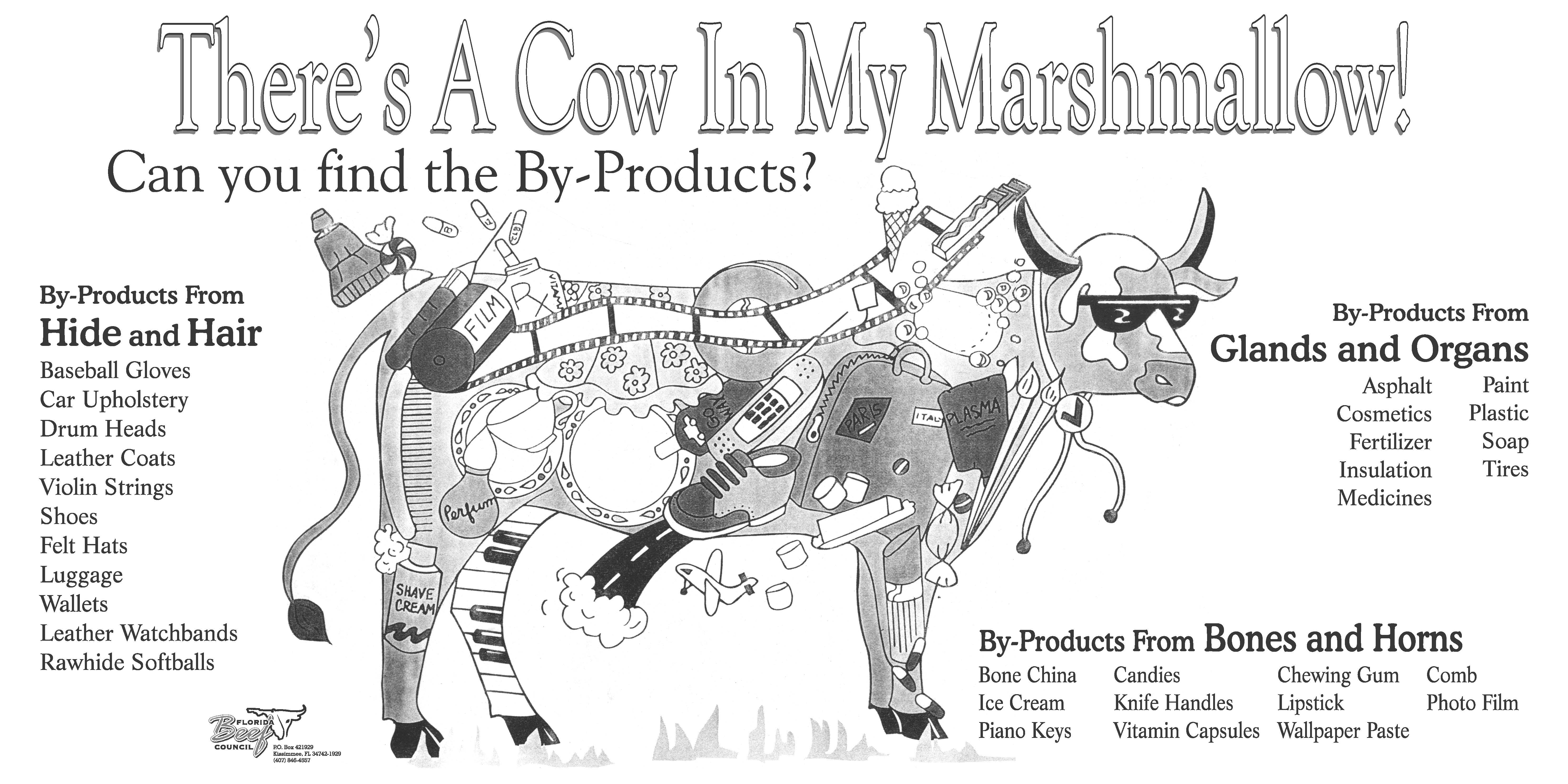
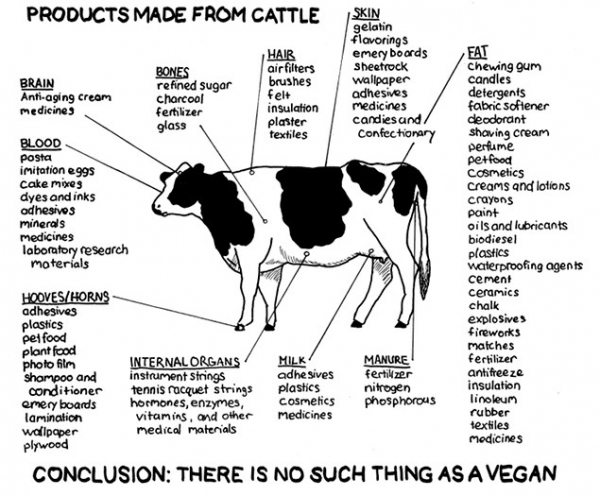
But even outside of human consumption, the carcass is utilized across a wide spectrum of modern society. Take a look at this diagram, courtesy of Facts About Beef:

cow-in-my-marshmallow-48x24_page_1

Another from BeefUSA:

I also liked this one from Snopes, mainly for the conclusion at the bottom of the image:

wp-1482350032402.jpg

I haven’t independently verified all uses claimed on the Snopes chart, but the Facts About Beef chart is 100% legit and it looks like whoever made the Snopes pic just grabbed the same list from the BeefUSA graphic. The overall point is that beef byproducts are in a lot of things we use every day. It’s not like we just kill cows, cut the meat off and fling the carcass into a ditch on the side of the road. There’s really no waste.

Wrap Up

I guess I should cut this baby off here. There’s a lot to talk about as far as sustainability is concerned, and if I tried to tackle everything, this would be a book as opposed to an article.

Just remember that America’s cattle ranchers have a vested interest in sustainable environmental practices. After all, the beef community thrives on multi-generational family farms. Cattle farmers have an average of 13 different practices in place to accomplish environmental goals.

Bonnie’s Grill

Demetri Kontakos, the owner of Bonnie’s Grill for the last two years, recently invited me into his establishment for a press review. Bonnie’s has been a Brooklyn staple for about 15 years and running. I had heard great things about Bonnie’s wings, so I was excited to hoof it out into Brooklyn and give them a shot.

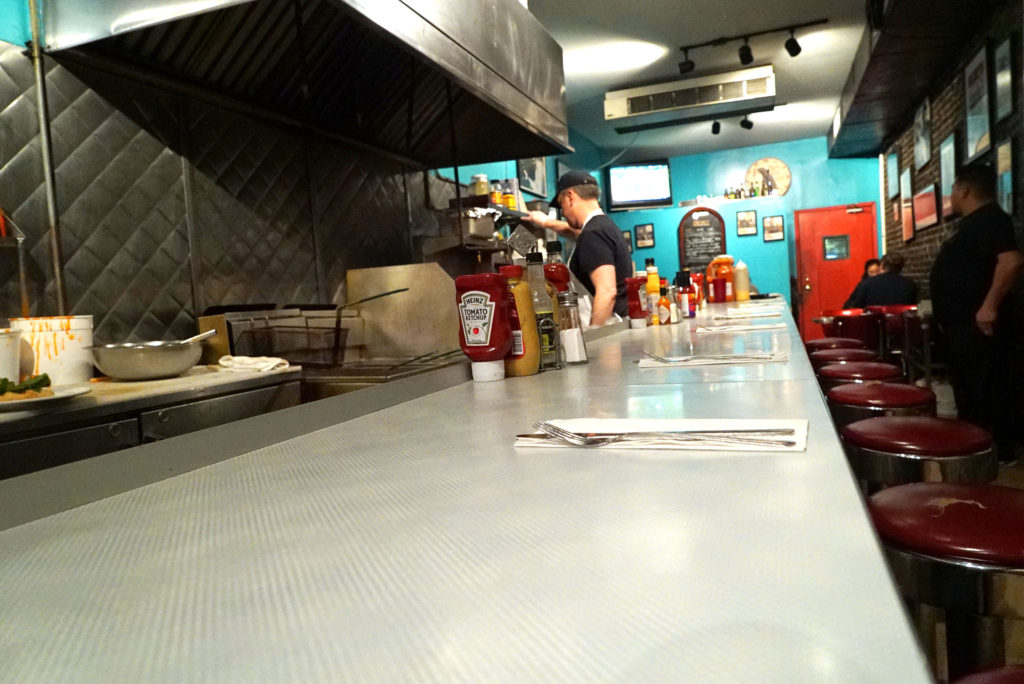
I love a simple countertop style joint. No fuss, no glitz and glamour: just really good fucking food. Bonnie’s is exactly that kind of place.

dsc07508

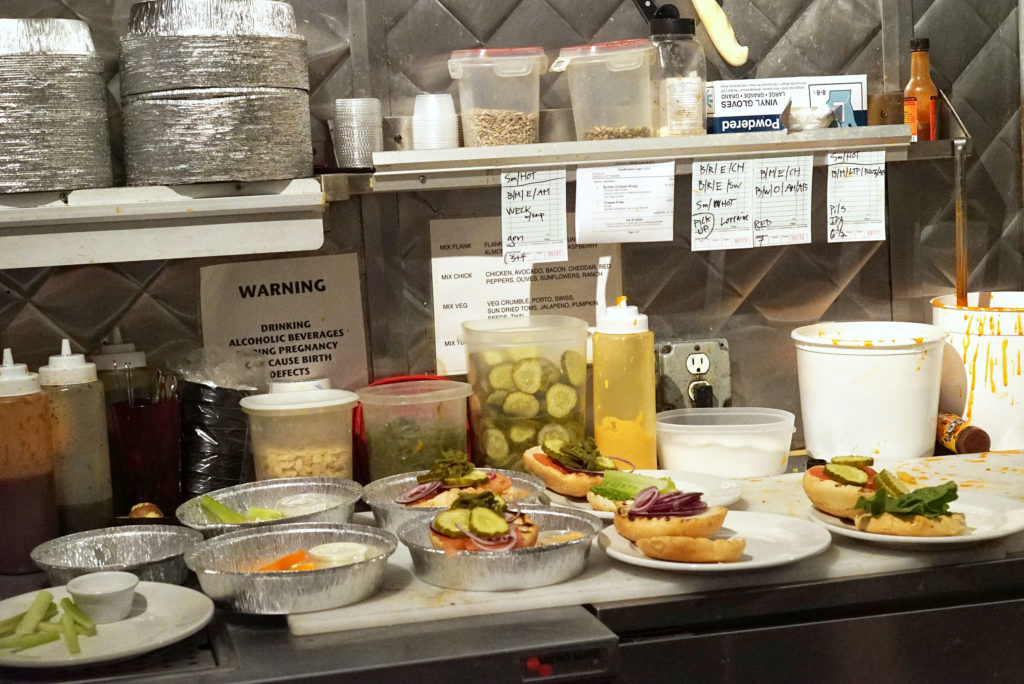
Some people get excited about a fancy joint with buttoned up waiters, candle light and white tablecloths. Not me. I get excited when I can see people working on my ticket right in front of me.

dsc07507
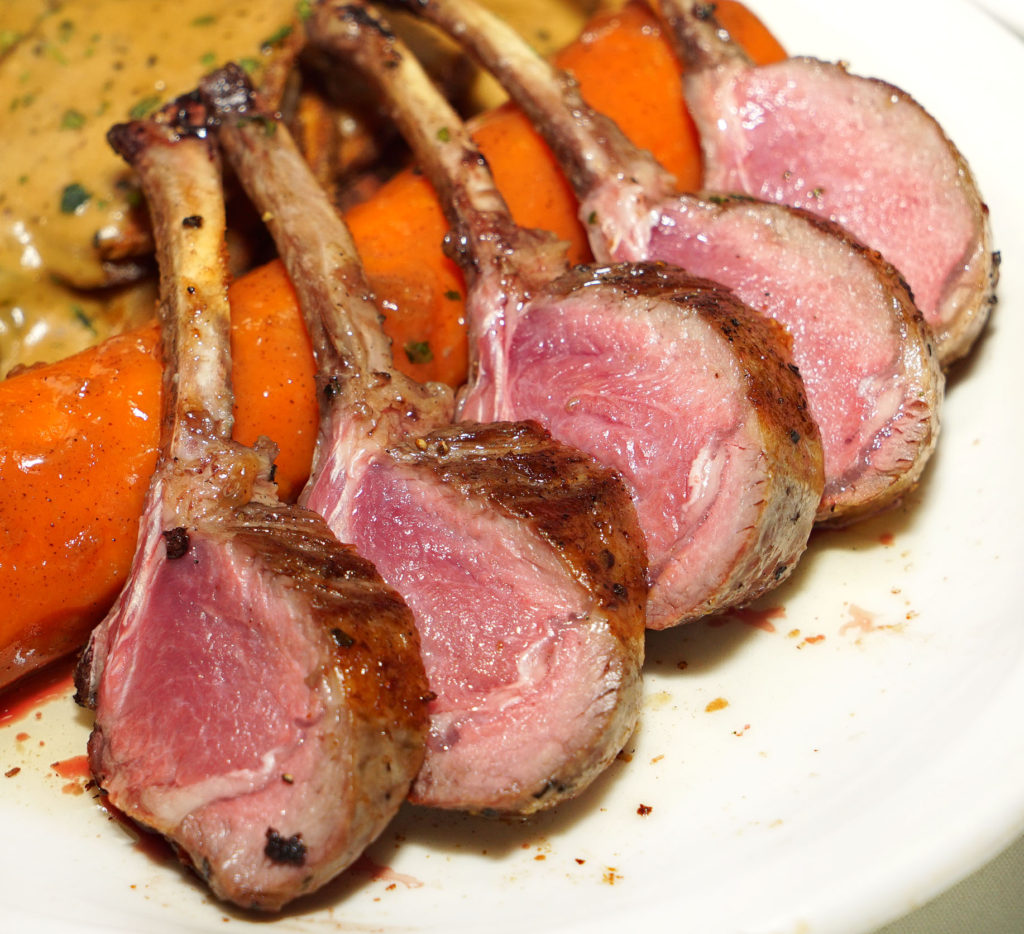
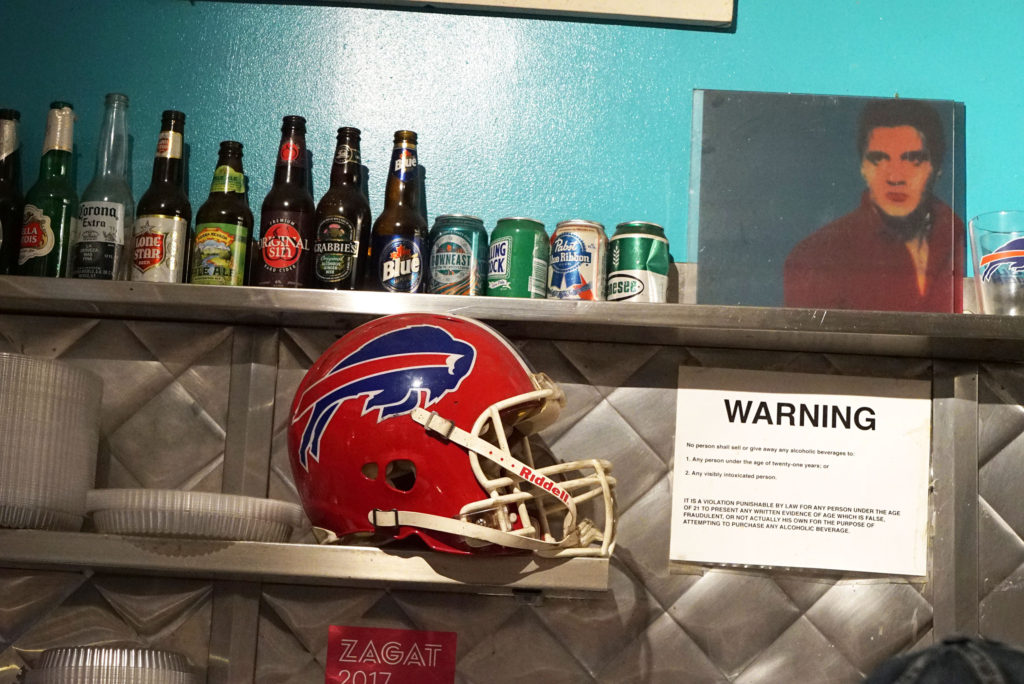
And somehow I was a big Bills fan when I was a kid. Probably because they had an awesome looking bovine as their logo. And Bonnie’s is a proud Buffalo style establishment.

dsc07510

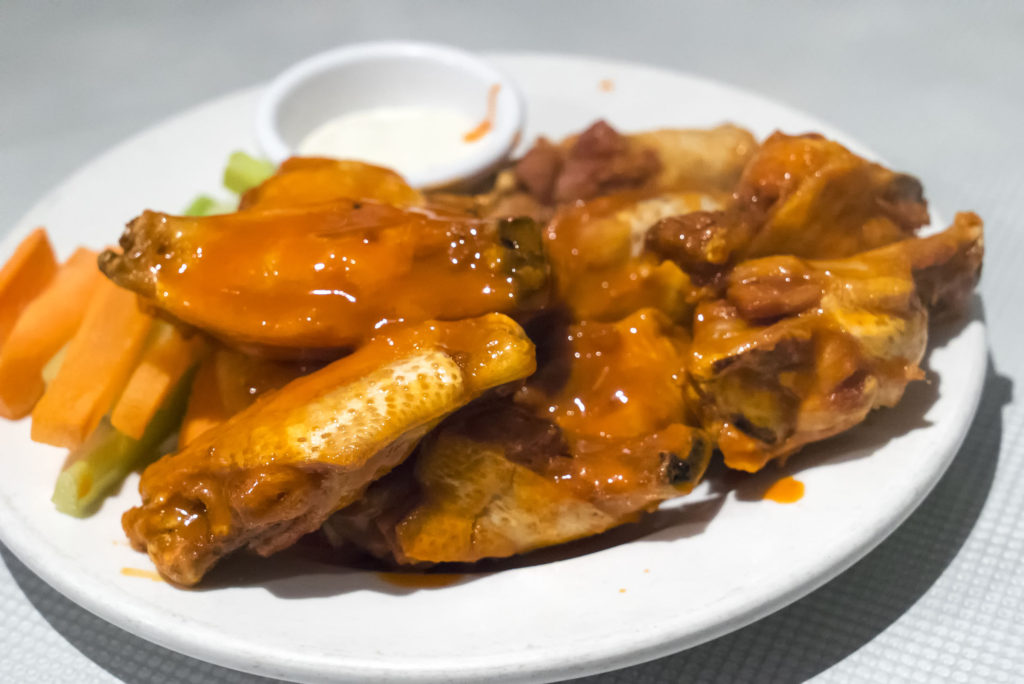
Speaking of Buffalo: the wings. They get fried up to a really nice crisp here – none of that rubbery skin bullshit that you get from other places. And the sauce is really flavorful: you can get mild, medium, hot or hotter. I can take a lot of heat; in fact I enjoy it. So next time I will be trying the hotter wings. This time we went with hot, and it didn’t have us tearing up and sucking down water.

dsc07512

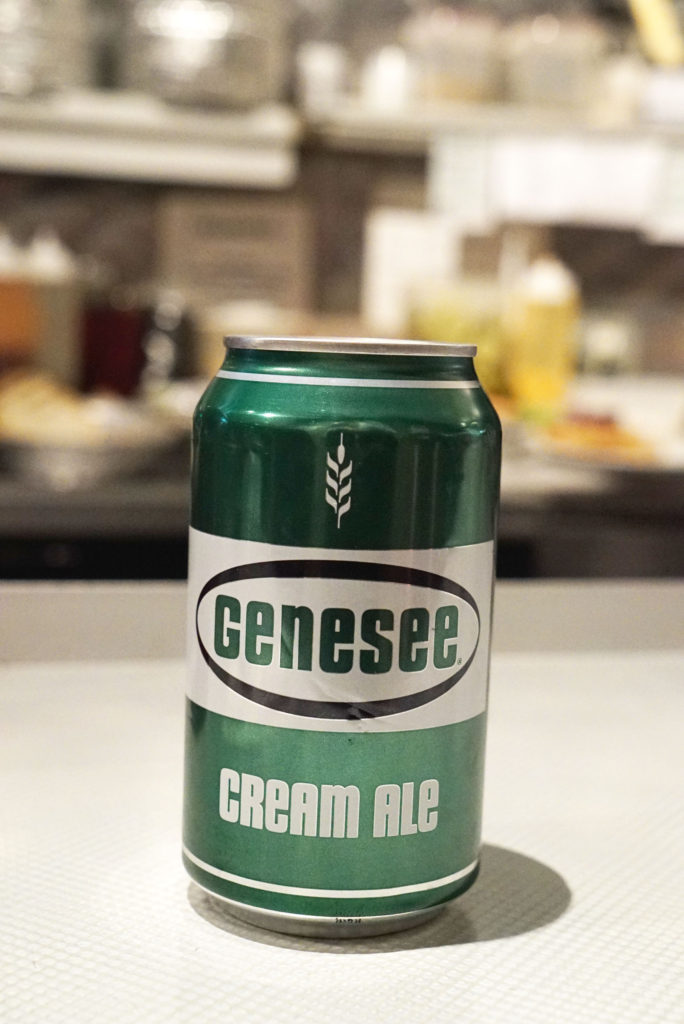
We did suck down a cream ale, though.

dsc07509

These are a great bargain at just $3.50, but if canned beer isn’t your thing, every weekday from 4pm-7pm is happy hour, where drafts are just $4, and they run three or four pretty good handles.

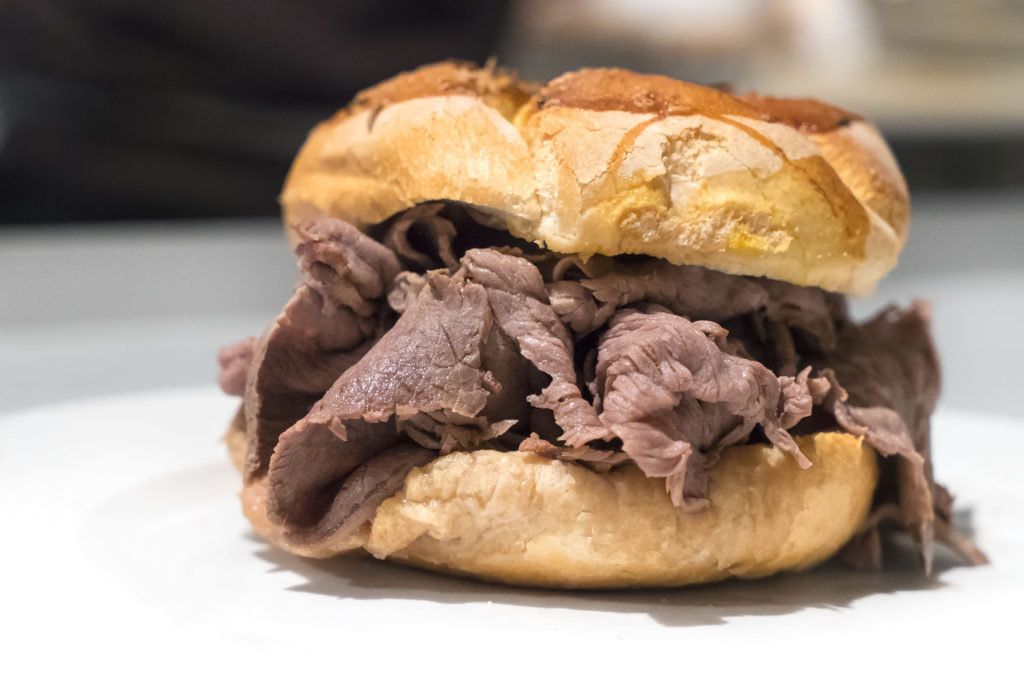
But back to all things Buffalo… Check out this gem: beef on weck!

dsc07570

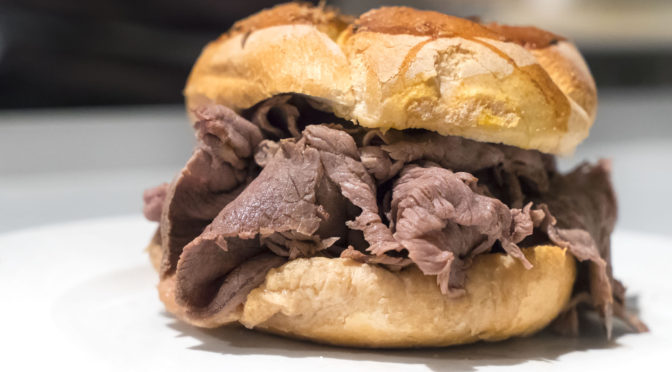
I love regional food quirks. Beef on weck is one of those quirks that hails from Buffalo, or western New York, generally. Essentially, what you have here is sliced roast beef with horseradish and some meat juice on a kimmelweck roll (kaiser style, with caraway seeds and coarse grain salt on top).

Anyway this fucker was pure and simple. You can mess with it a little if you want, and add jalapeños and cheddar, but then you’re screwing with the integrity of a traditional sandwich.

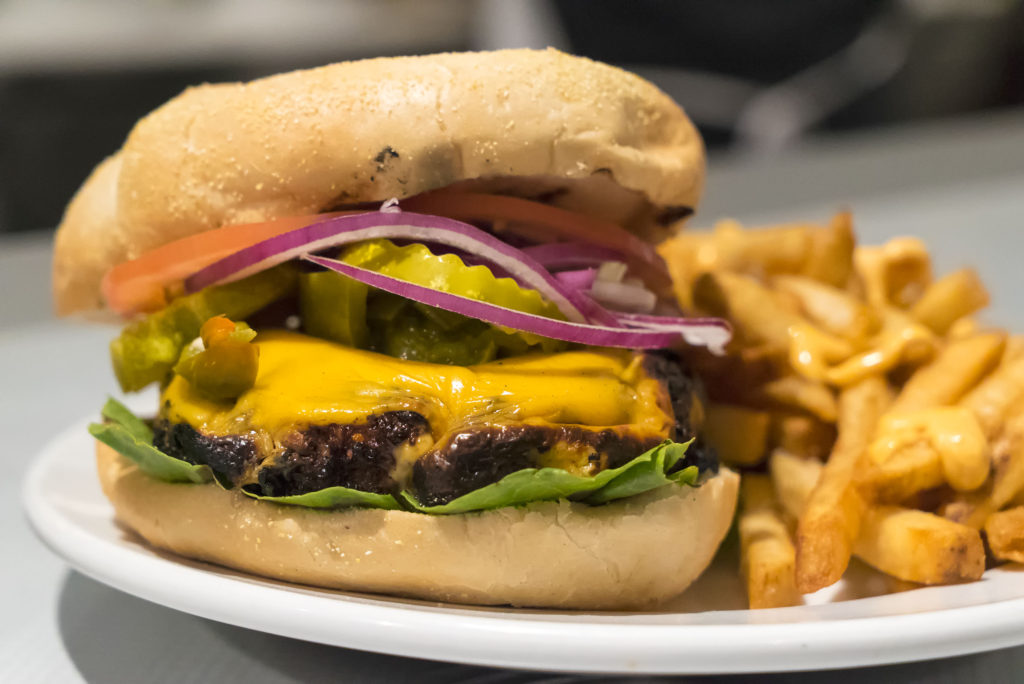
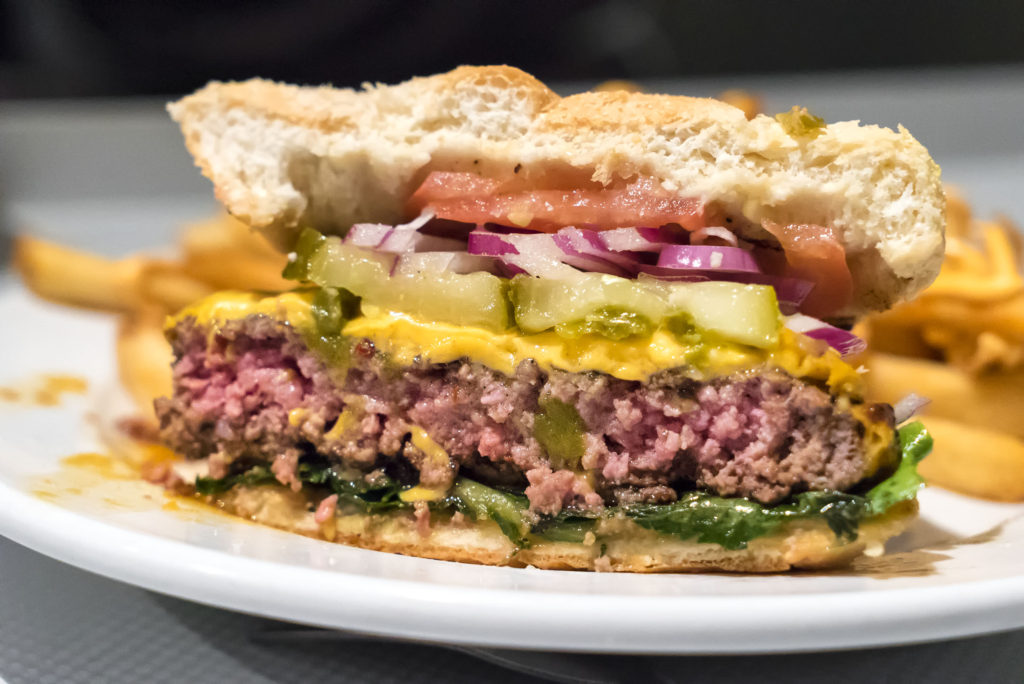
And speaking of traditional, by now most of you know how I like my burgers: simple, nothing fancy. The classic American cheeseburger reigns supreme. So that’s what I got here.

dsc07547
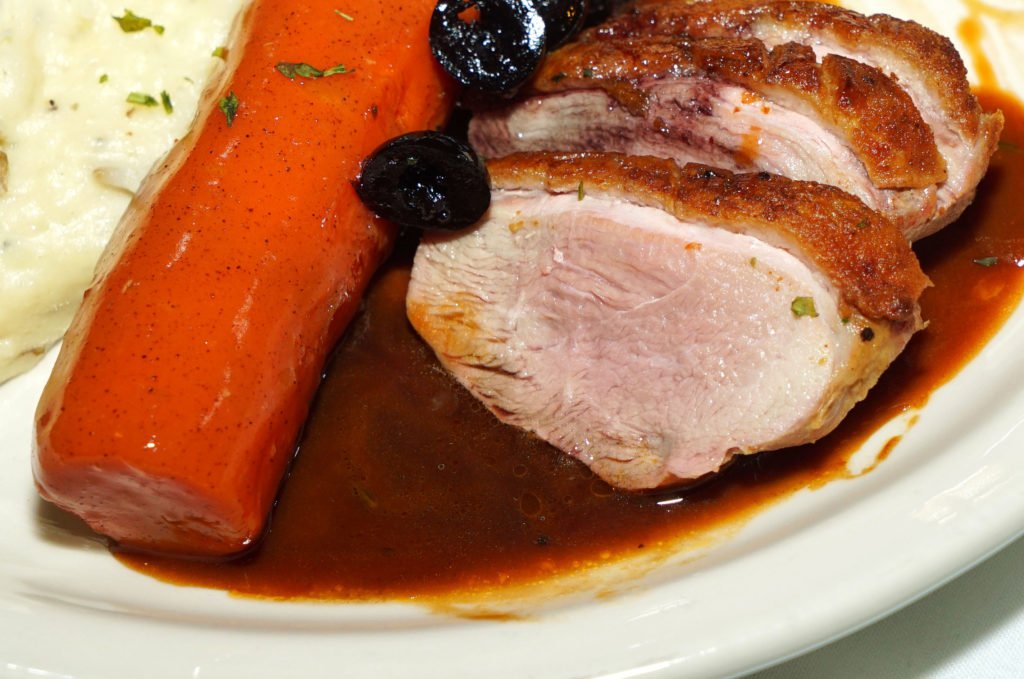
The patty is 80/20 lean/fat, so the masters at Bonnie’s develop a really great crisp on the outside of the burger. The cheese melts down so nicely and surrounds the patty with even more crisp.

There’s a ton of free toppings you can go with. I went with lettuce, tomato, red onion, pickles and jalapeños. By the way: cheese is even a free topping here. But the kicker for me was that these guys kinda read my mind when it comes to the toppings. Notice how thin the tomato and onion slices are? I hate when the toppings end up making a burger eight inches tall. This was perfect.

dsc07576

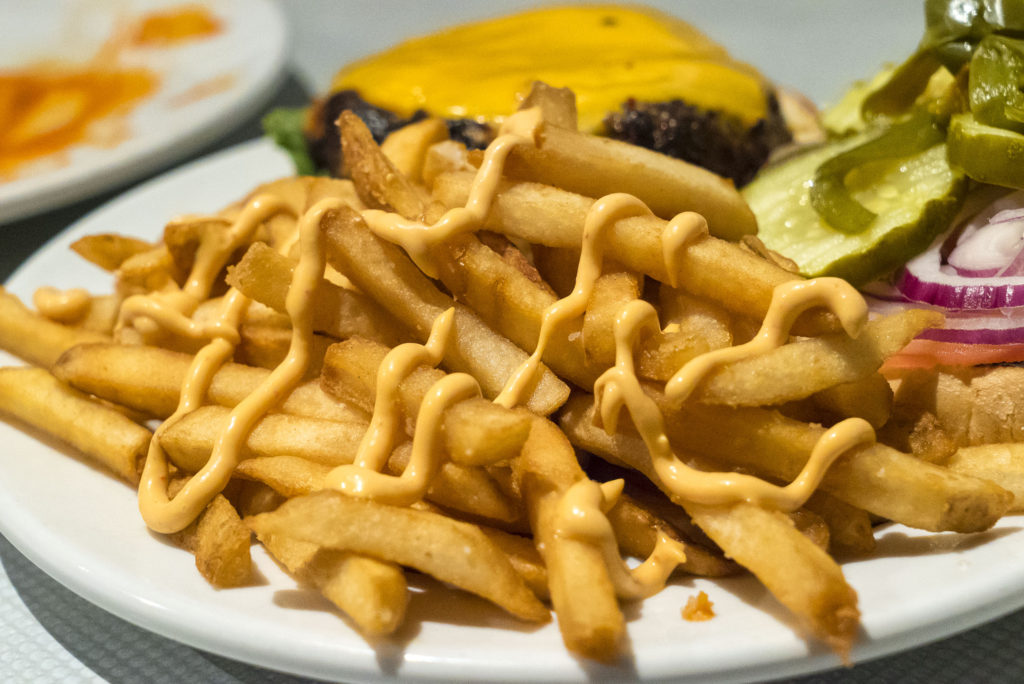
And speaking of perfect… the fries!

dsc07537
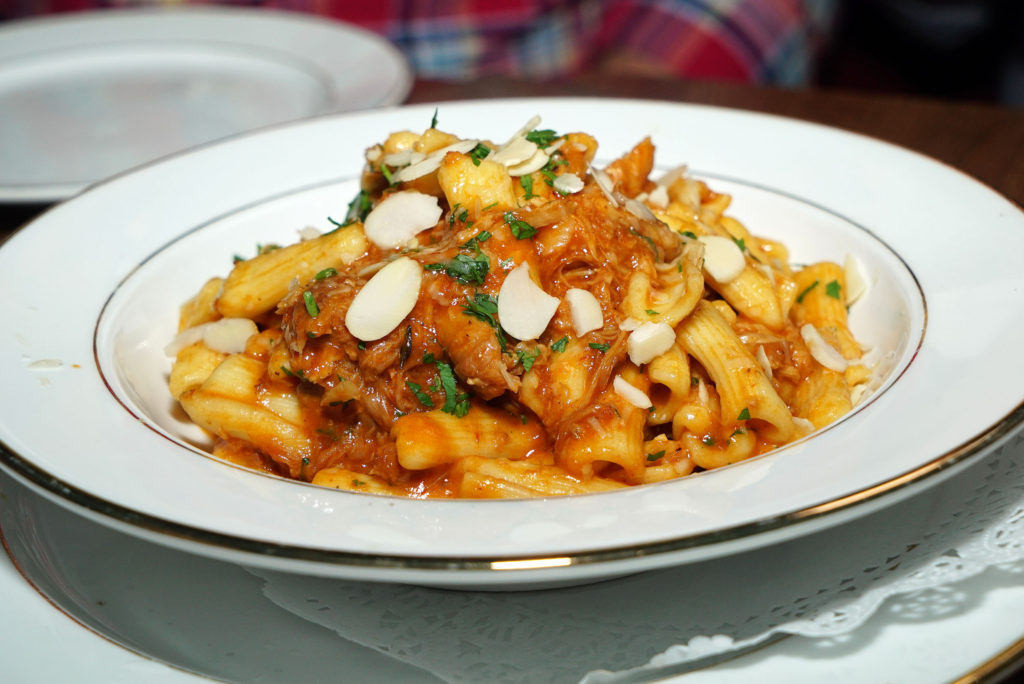
Golden and crisp, and deftly seasoned with salt. And the chipotle mayo is a great way to enjoy them.

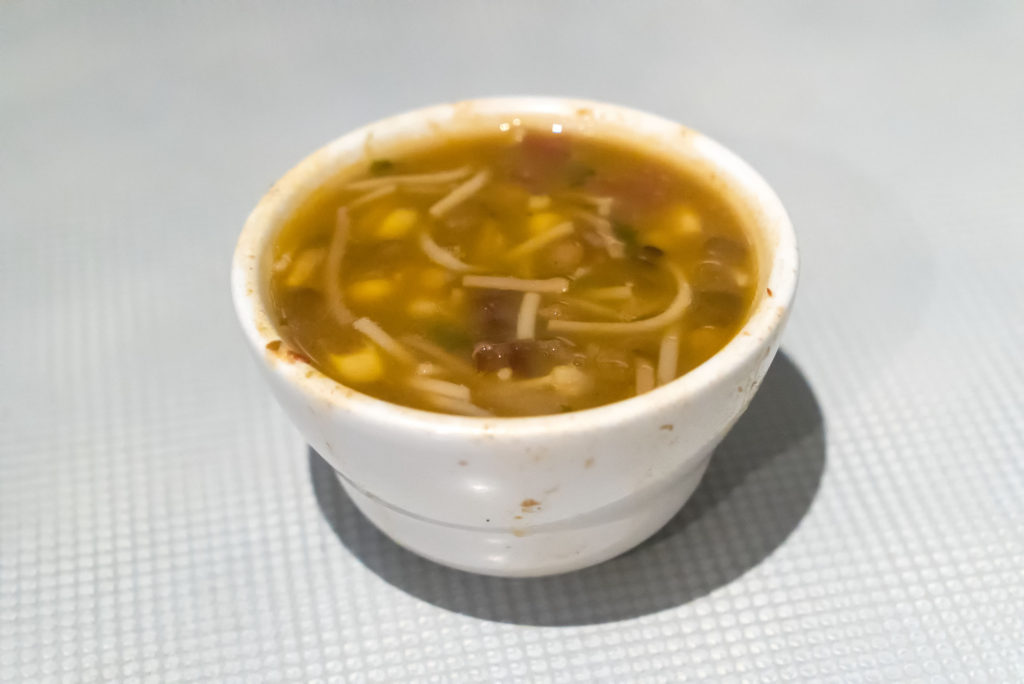
Another side I tried was the soup of the day, which was lentil and sweet corn. Very hearty and soulful.

dsc07574

I can’t say enough positive things about this place. I just wish it was closer to my apartment! I’m near Central Park and this is near Prospect Park. But I highly recommend this place. So freaking good, and the staff are all really nice – ask for Alex and Rick when you go.

BONNIE’S KITCHEN
278 5th Ave
Brooklyn, NY 11215

Bob’s Steak & Chop House

Bob’s Steak & Chop House overall score: 88

My buddy Jeff from @foodmento organized a nice influencer meal here and invited me to tag along. Bob’s is a chain steak house that hails from Texas. They just recently opened shop at the Omni Berkshire Place hotel on 52nd and Madison. Since Texas knows beef, I was really excited to try this out. Here’s how it went down:

Flavor: 8
We had two beef items and lamb. I’ll focus on the beef here and discuss the lamb later.

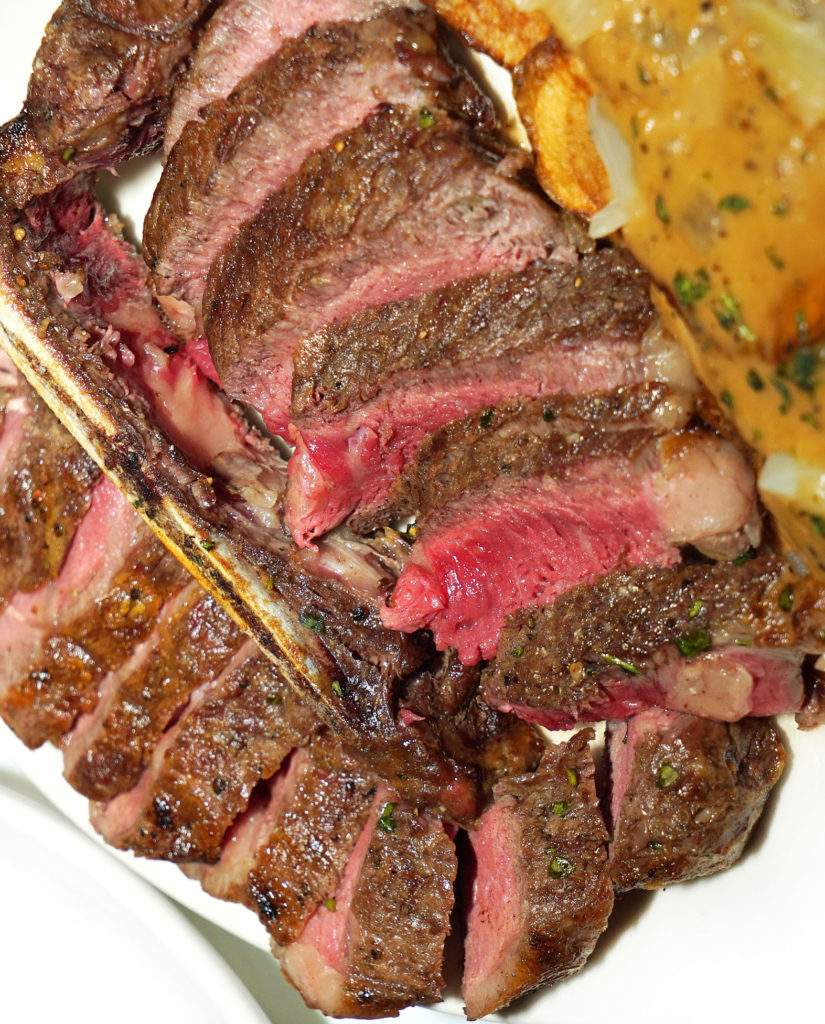
The 22oz cote de boeuf rib eye was the better of the two steaks we had. It was cooked perfectly to medium rare, with a nice crust on the outside that was packed with good, simple seasoning. 9/10.

dsc07098

dsc07118

dsc07120

dsc07142-fixed

dsc07144

dsc07182

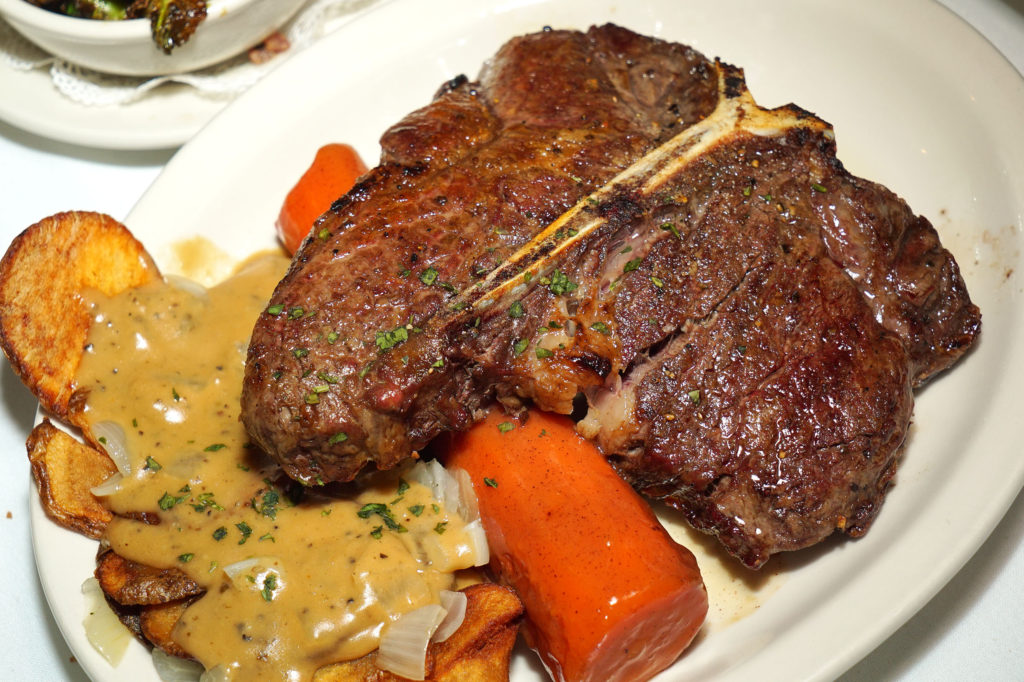
The 28oz porterhouse had a slightly different flavor profile to it that I wasn’t really feeling. It was still good – don’t get me wrong – but going back and forth with the rib eye created a stark and noticeable difference. 7/10.

dsc07110

dsc07171

dsc07179

dsc07184-crop

dsc07184

dsc07179-edits

Choice of Cuts & Quality Available: 9
There’s a lot of variety here. Three different sized rib eyes, filets and strips, and a t-bone as well as a porterhouse. Excellent showing. All the cuts are wet-aged for 28 days, so the flavor is a bit different than the standard dry aged cuts at many NYC joints.

Portion Size & Plating: 8
Portions here run slightly small for the steaks in relation to the pricing. The cuts themselves are good sizes, though, and so are teh other items like sides and apps.

Price: 7
My meal was comped, as I was here for an influencer gig to promote the restaurant. The prices, however, are a bit high for the sizes, with a 22oz “cote de boeuf” being $62 and prime porterhouse being $75. Luckily the quality is pretty much on point.

Bar: 9
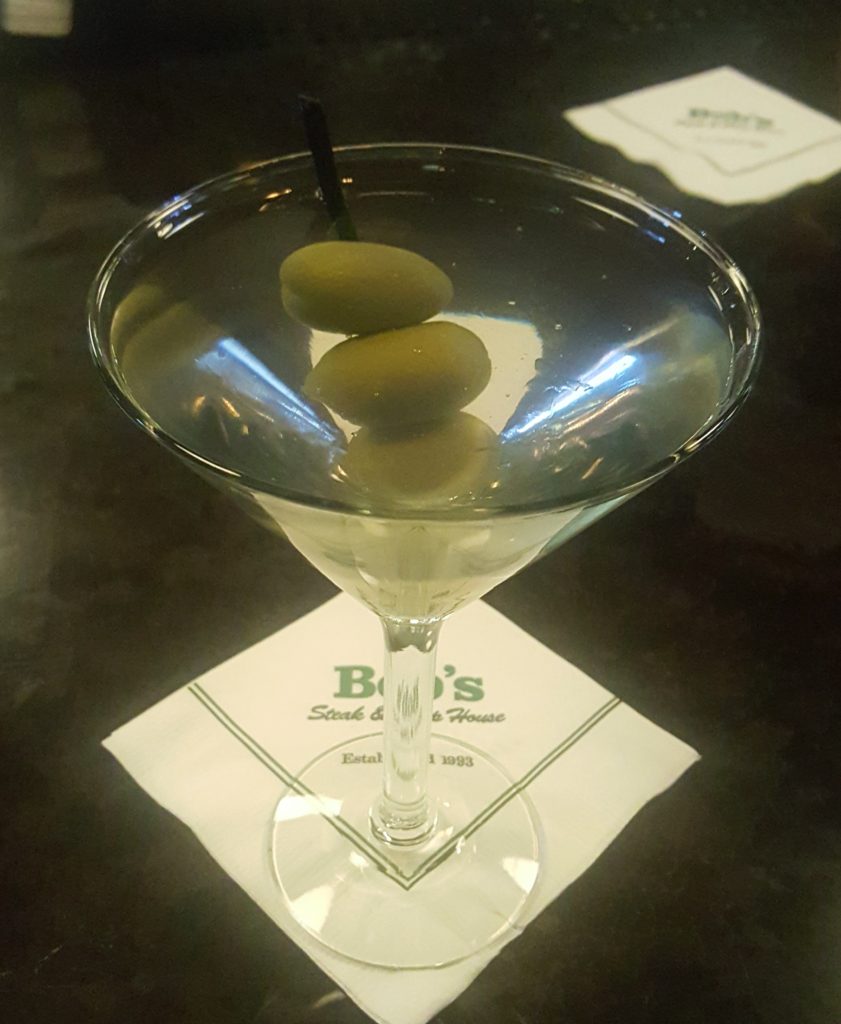
The bar is great. It’s a big rectangle with a bunch of high top tables situated along the windows that look out onto 52nd Street. Definitely a spot you can hang at for a bit. They also mix a good martini with blue cheese stuffed olives. Hendricks is $16, which is very fair in my opinion.

wp-1482468598105.jpg

Specials and Other Meats: 10
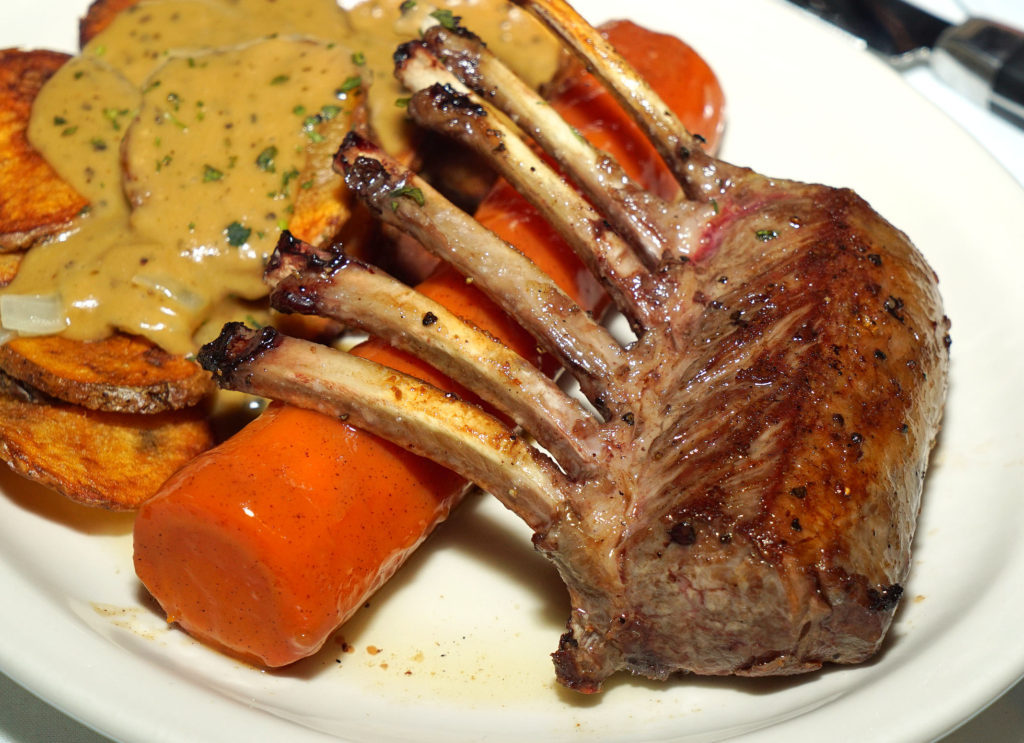
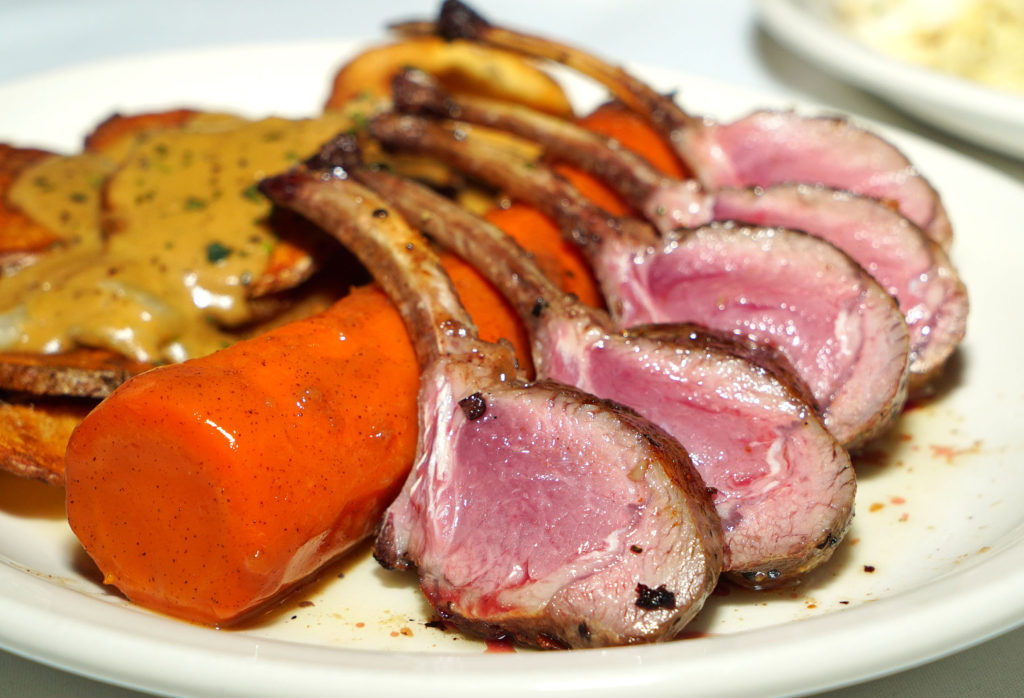
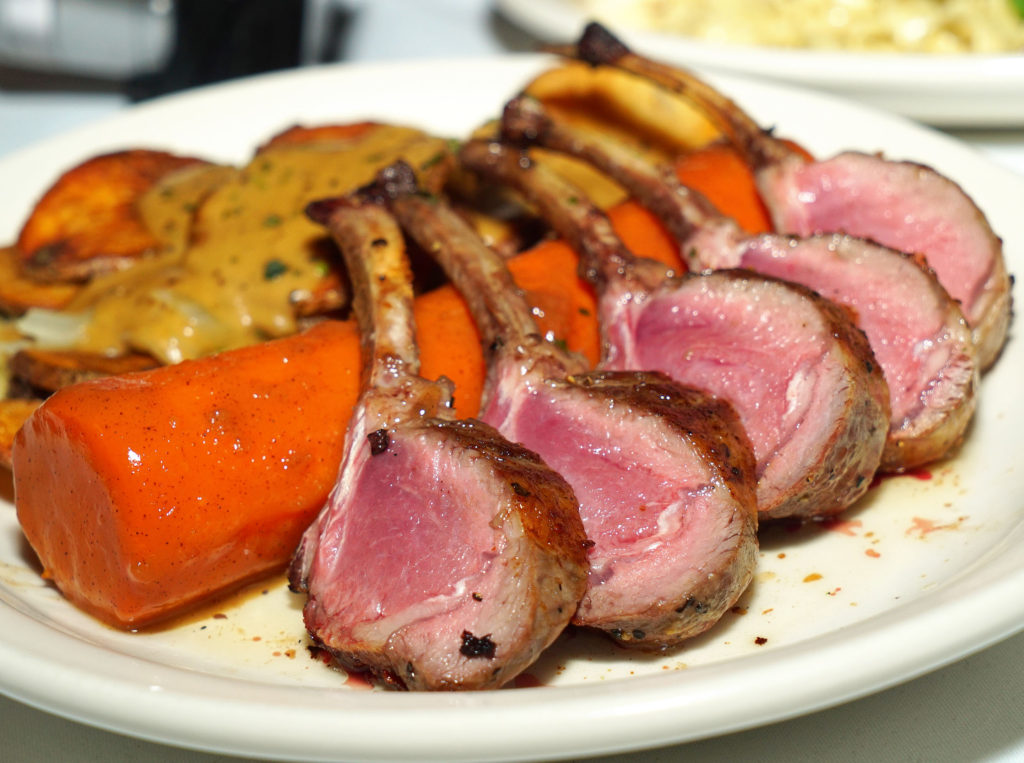
This joint has a solid variety of other non-beef meats. They offer lamb, duck, pork, and veal (the other white beef). Fuck chicken. We tried both the lamb and the duck, and both really stood out as exemplary menu items that are totally worth trying. These would even be great as appetizers to share with the table.

dsc07101

dsc07136

dsc07160

dsc07186

dsc07151

Apps, Sides & Desserts: 9
We tried a lot of shit, and if I go deep into each with descriptions, this will be a long fucking review. So let me just rattle them off and highlight a little here and there.

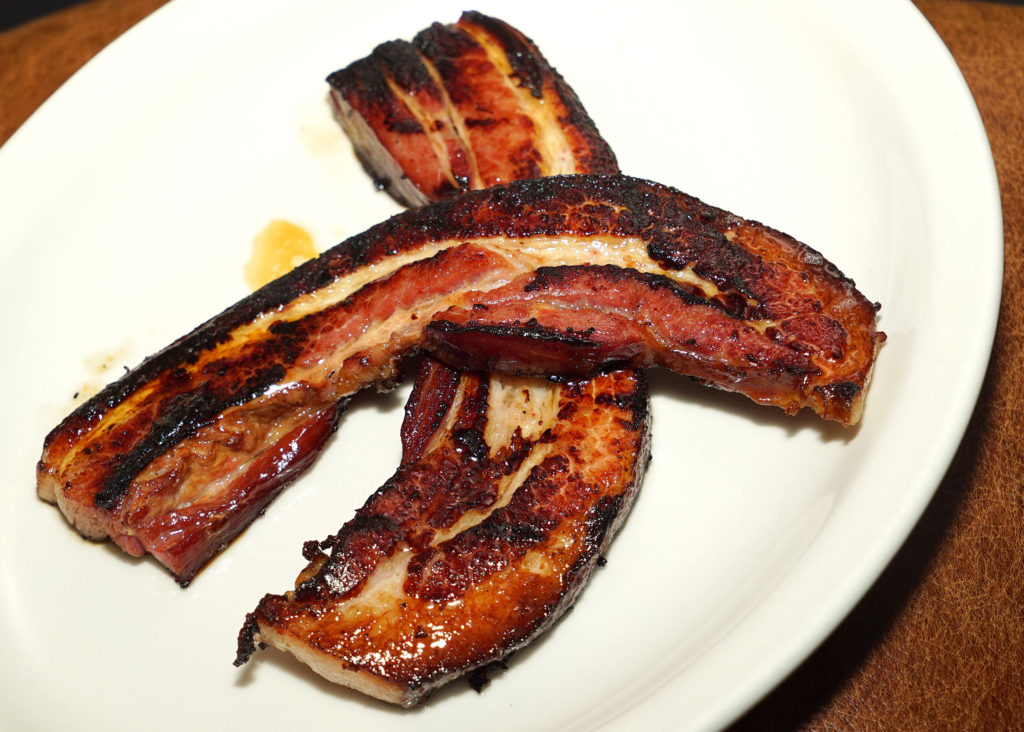
Bacon: (thick cut slabs of Neuskes – outstanding):

dsc07192

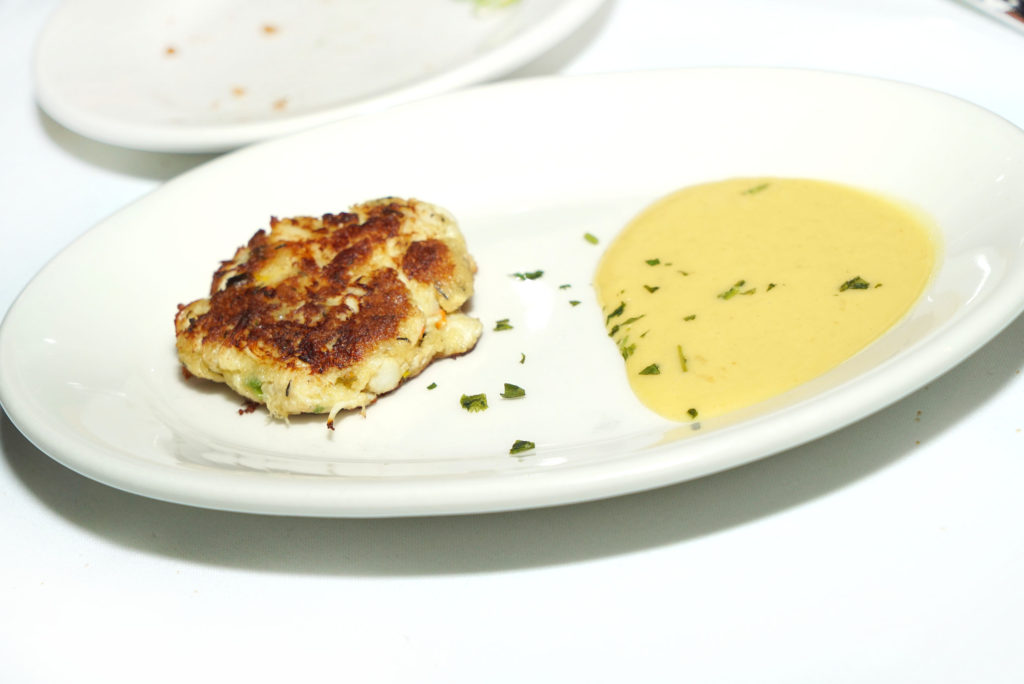
Crab cake (great honey mustard sauce):dsc07073

dsc07114

Potatoes (these were incredible – you can see them on the bottom right side of the steak here, sliced like thick potato chips, baked to a crisp, and covered with cheese sauce and onions):

dsc07179

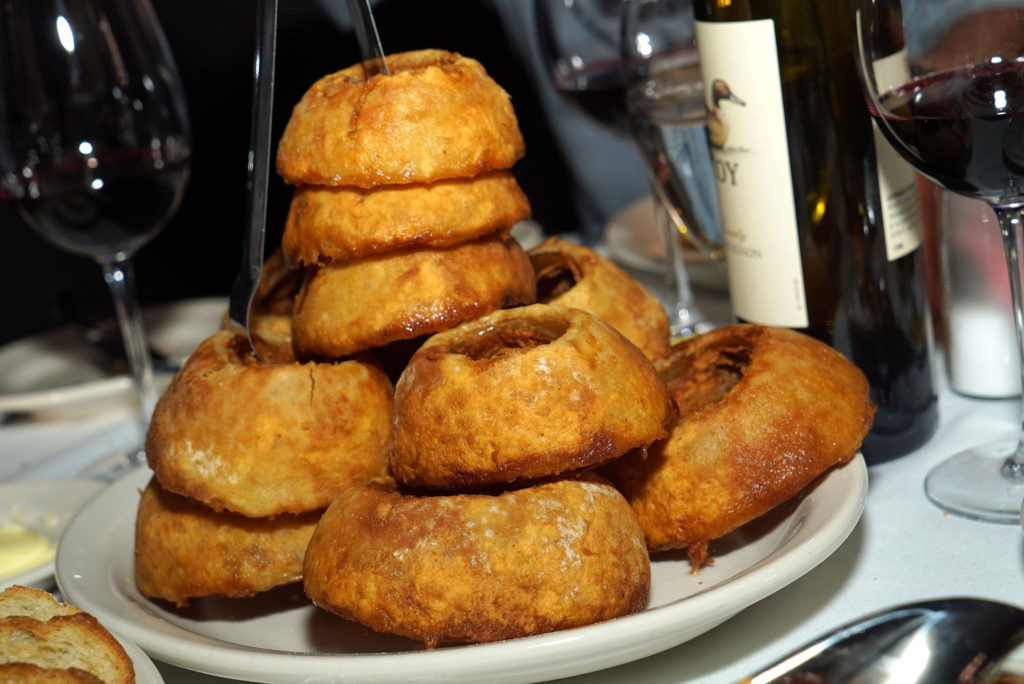
Onion rings (amazing stack and perfectly cooked):

dsc07078

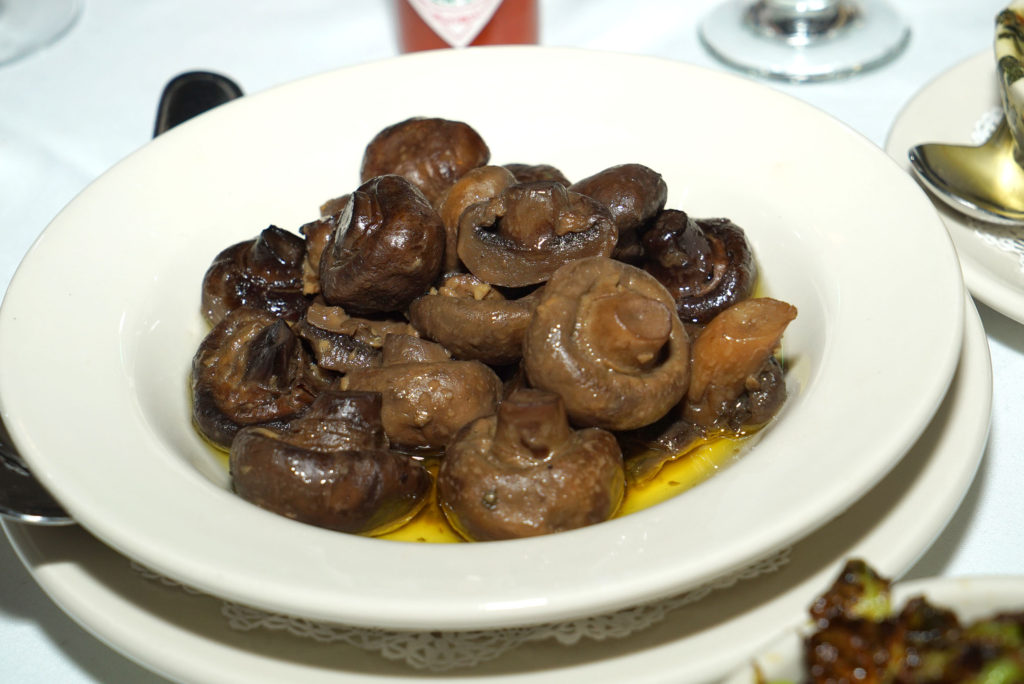
Mushrooms:

dsc07095

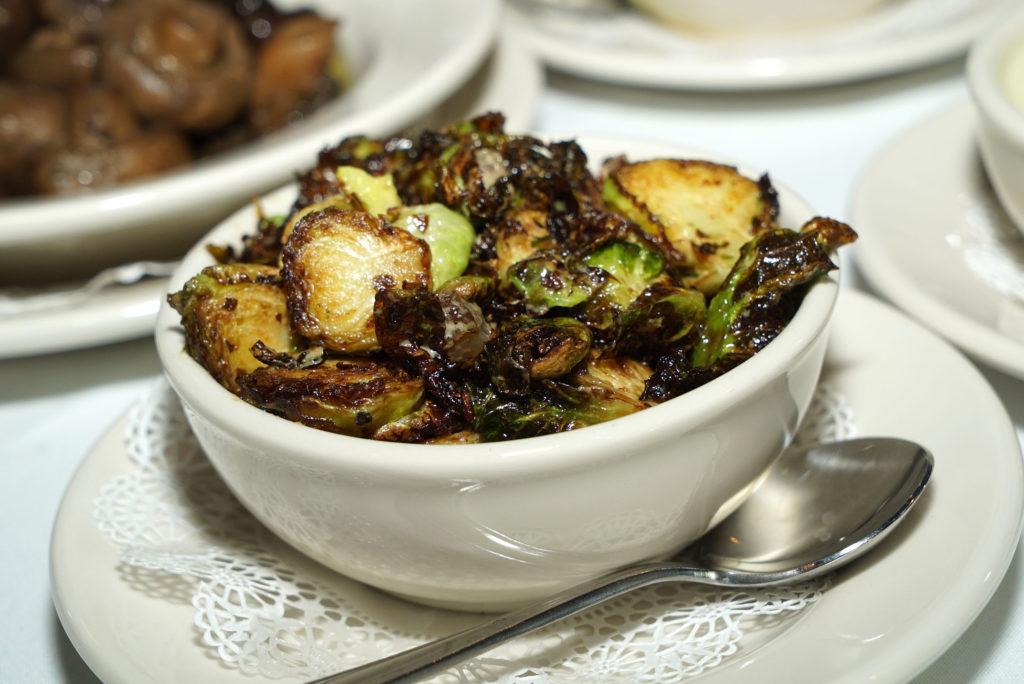
Roasted Brussels (because you need a little green sometimes):

dsc07093

Creamed Corn: I didn’t get a pic but it was excellent.

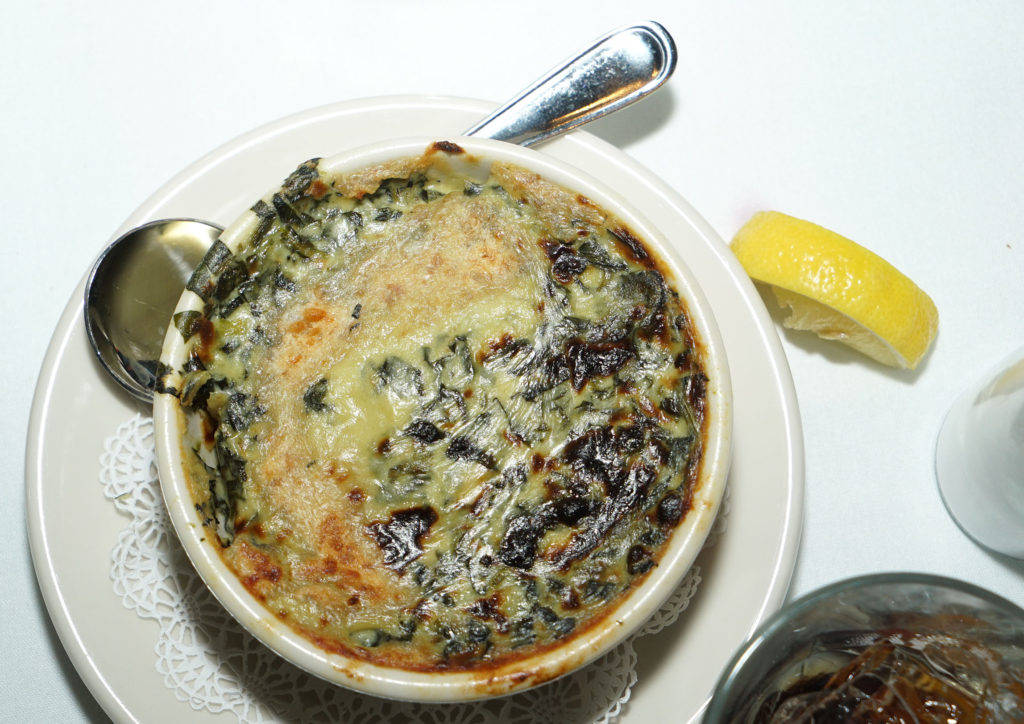
Creamed Spinach:

dsc07114

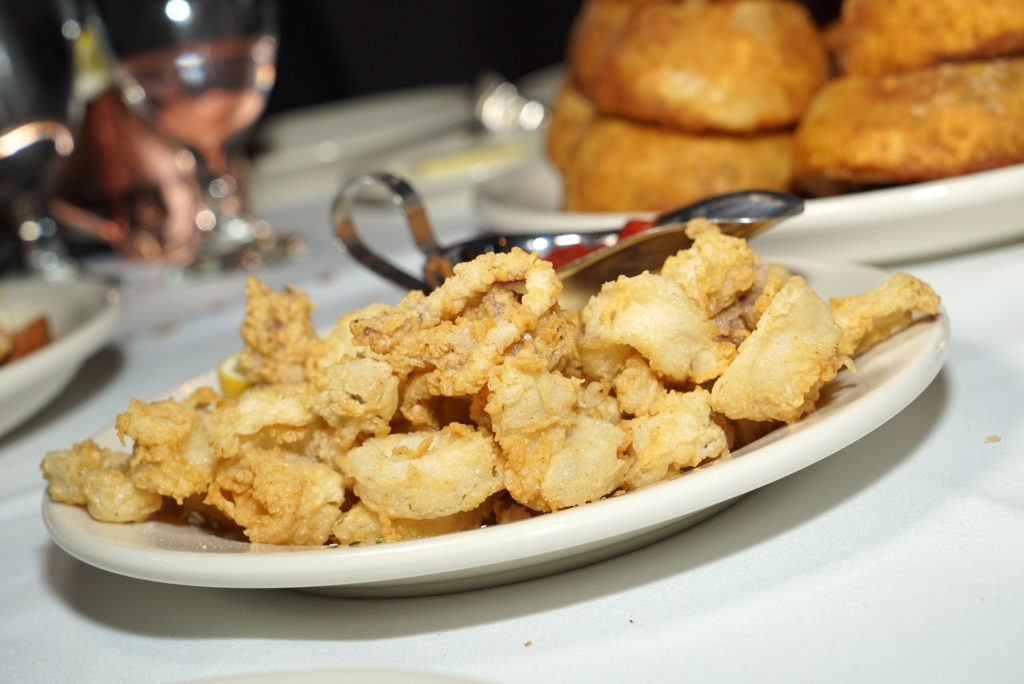
Fried Calamari (great crispy batter):

dsc07086

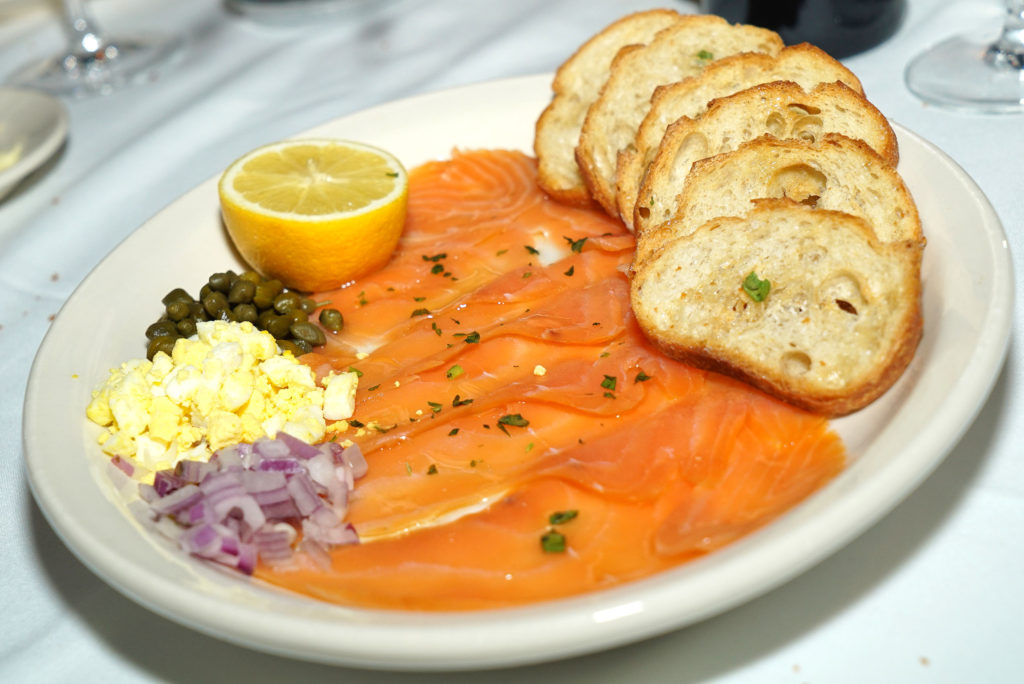
Smoked Salmon (the prosciutto of the fish genre – excellent):

dsc07076

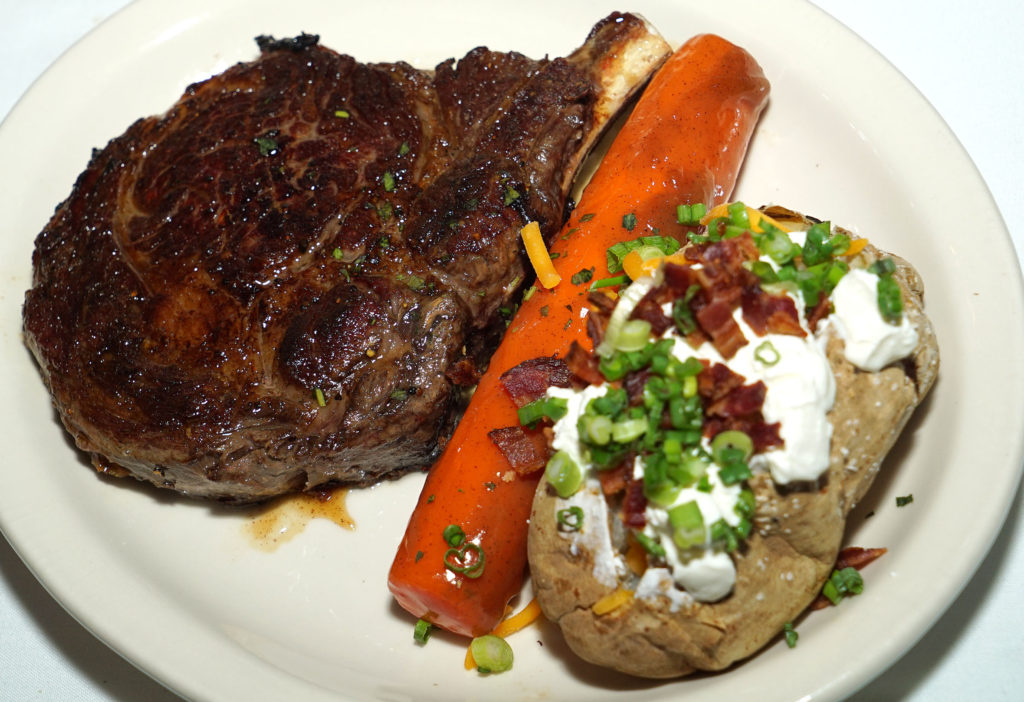
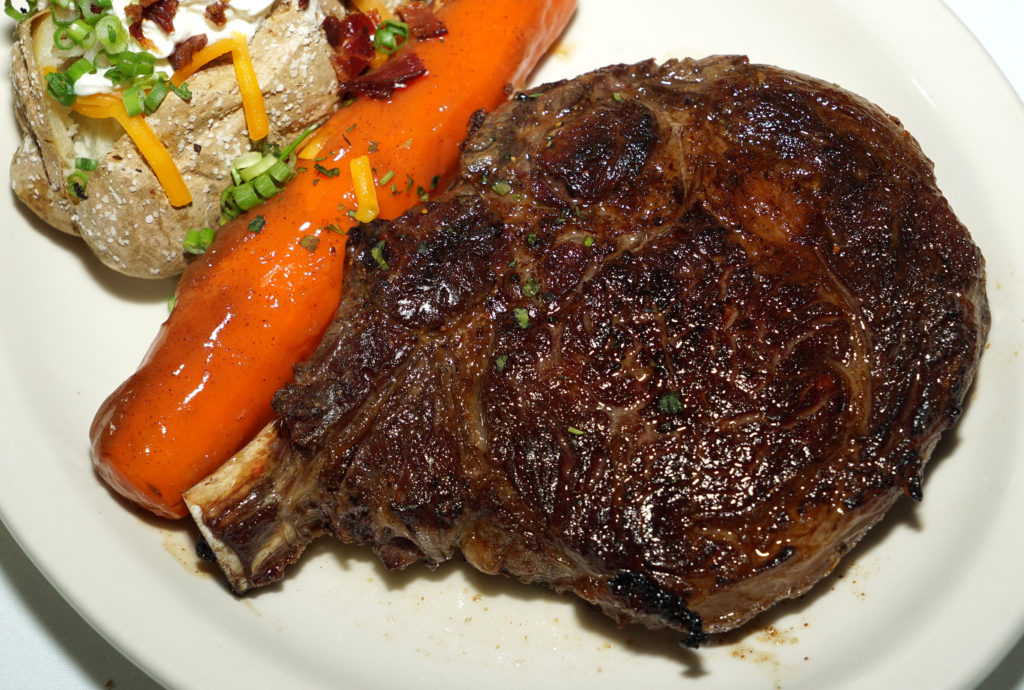
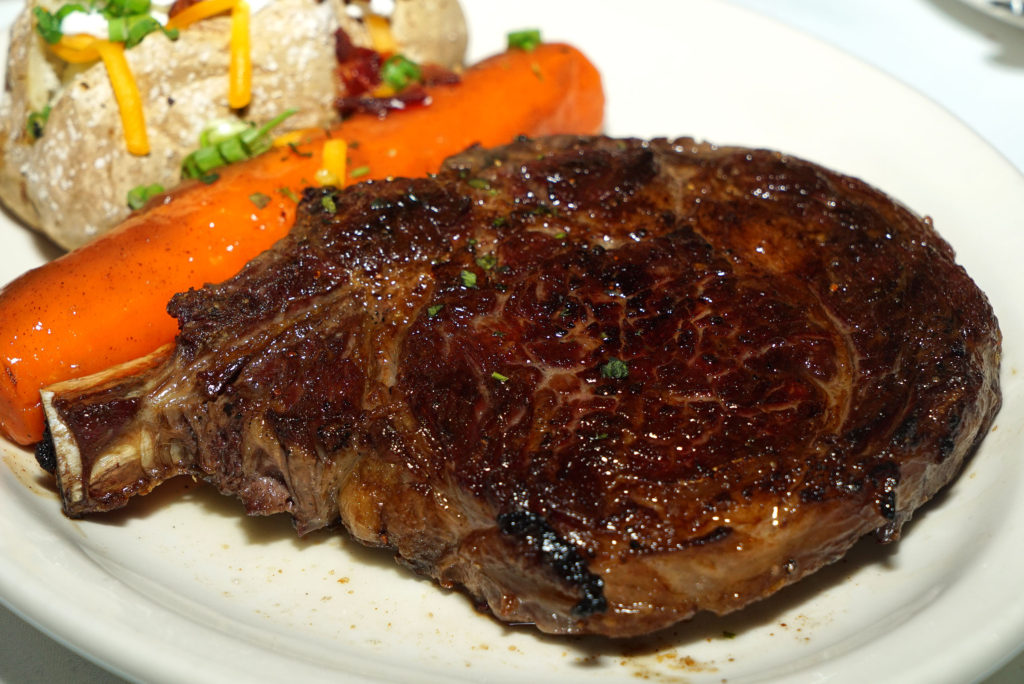
Baked Potato & Carrot: See pics of the composed dishes above. The thick, long, and obviously phallic carrot is prominently placed on each plate, it seems, like the raging boner that hides within Donald Trump’s pants. You can just imagine the jokes that went around the table with that.

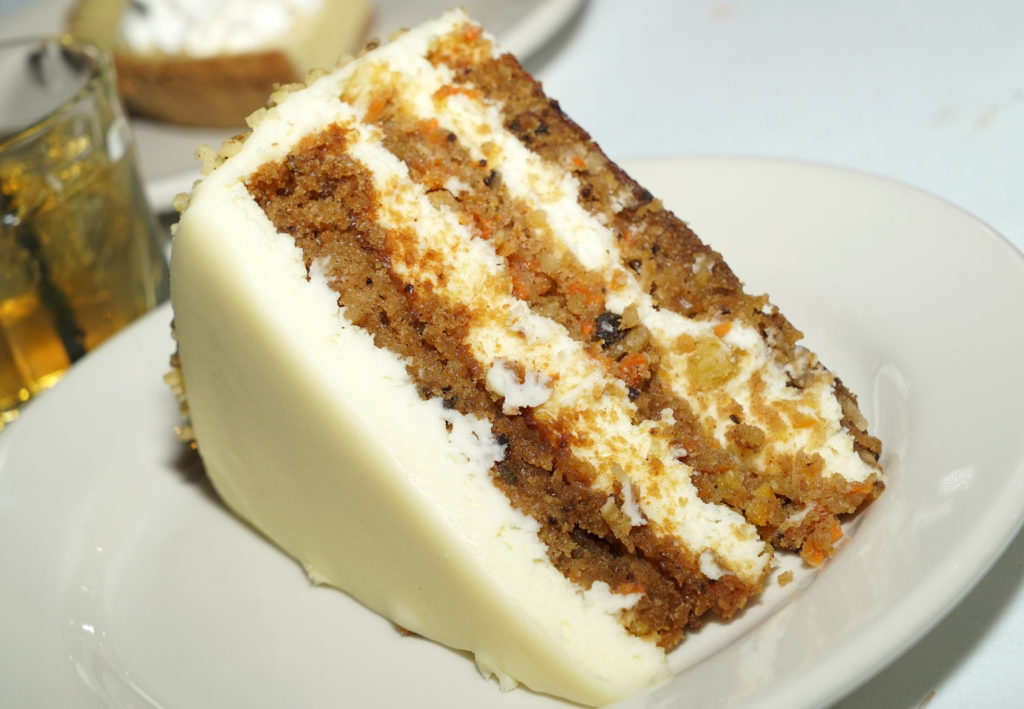
Carrot Cake (very moist and tasty):

dsc07217

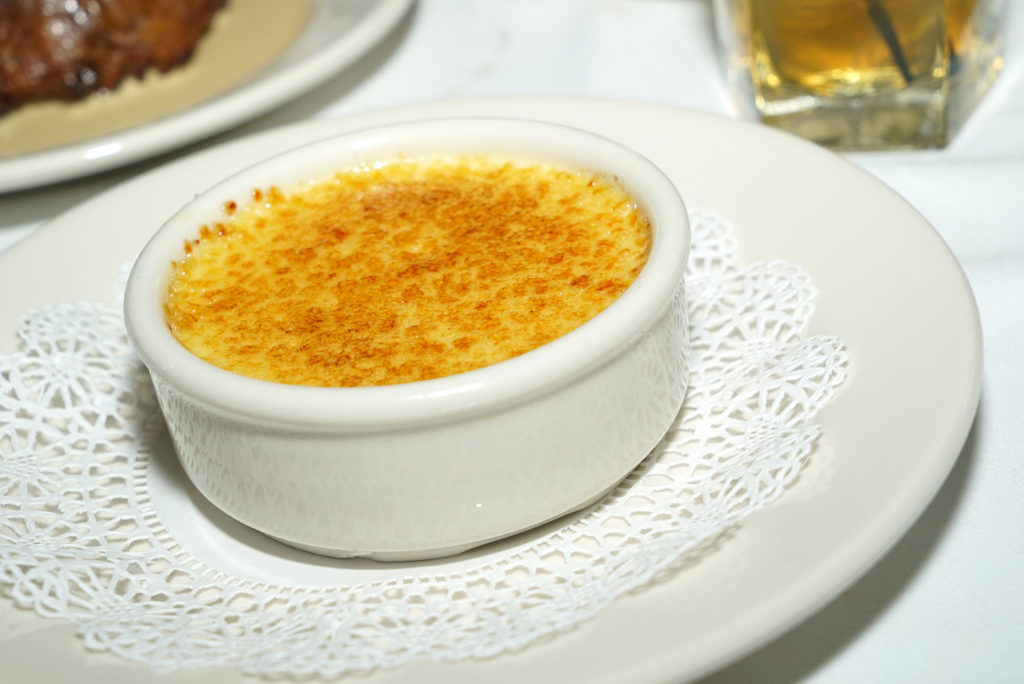
Creme Brûlée (perfect execution):

dsc07231

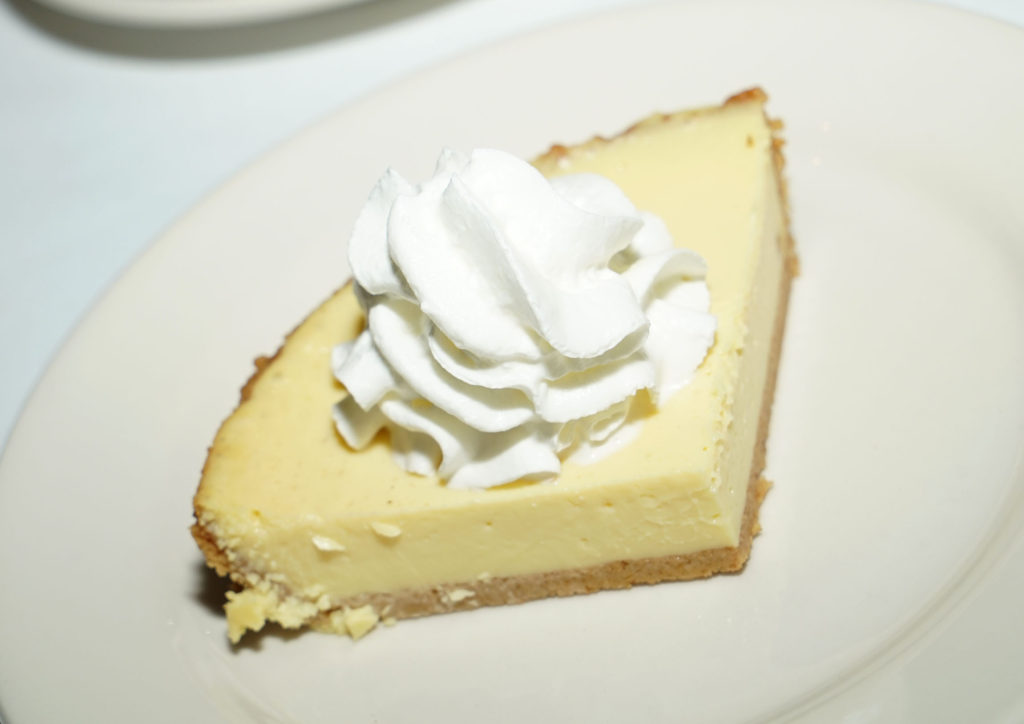
Key Lime Pie:

dsc07222

Bread Pudding:

dsc07208

Chocolate Brownie Cake:

dsc07225

dsc07234

Seafood Selection: 9
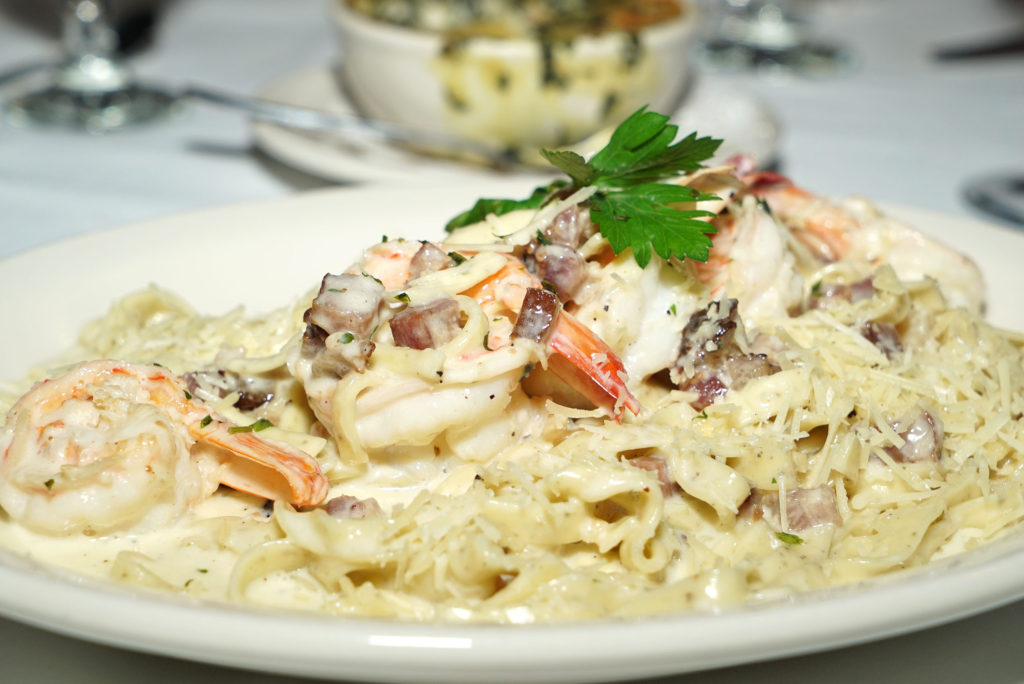
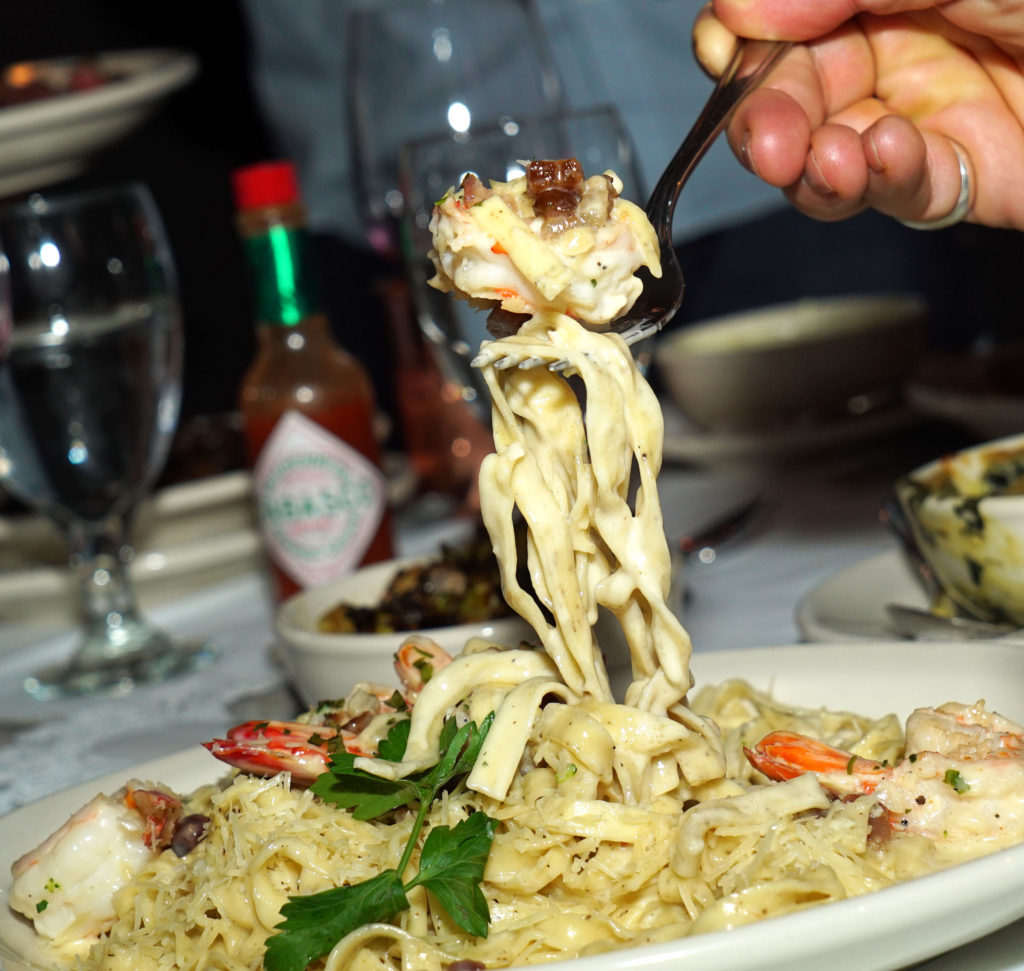
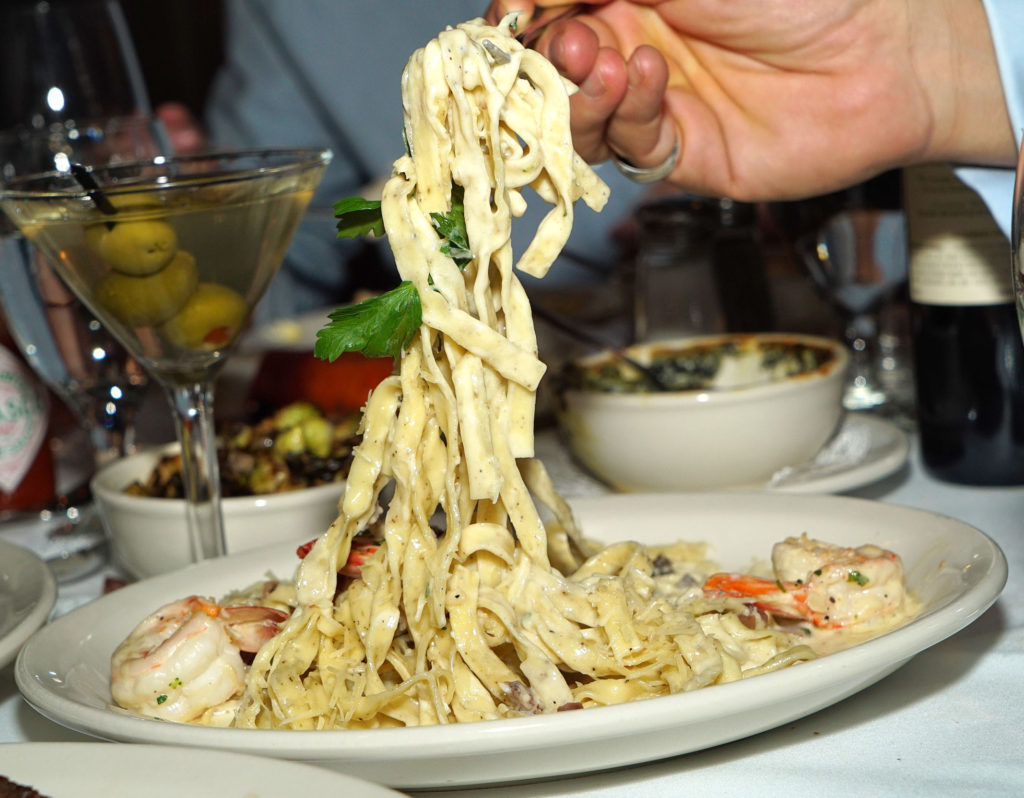
There’s salmon, shrimp (scampi or fried jumbos), crab cakes (entree portion), lobster tails and fresh fish of the day available. Not a whole lot, but it certainly will get the job done for the assholes who aren’t ordering meat. In fact, we ordered the shrimp scampi with black pepper pasta, and it was fantastic.

dsc07125

I kept going back in for more and more, bite after bite.

dsc07166

dsc07187

Service: 10
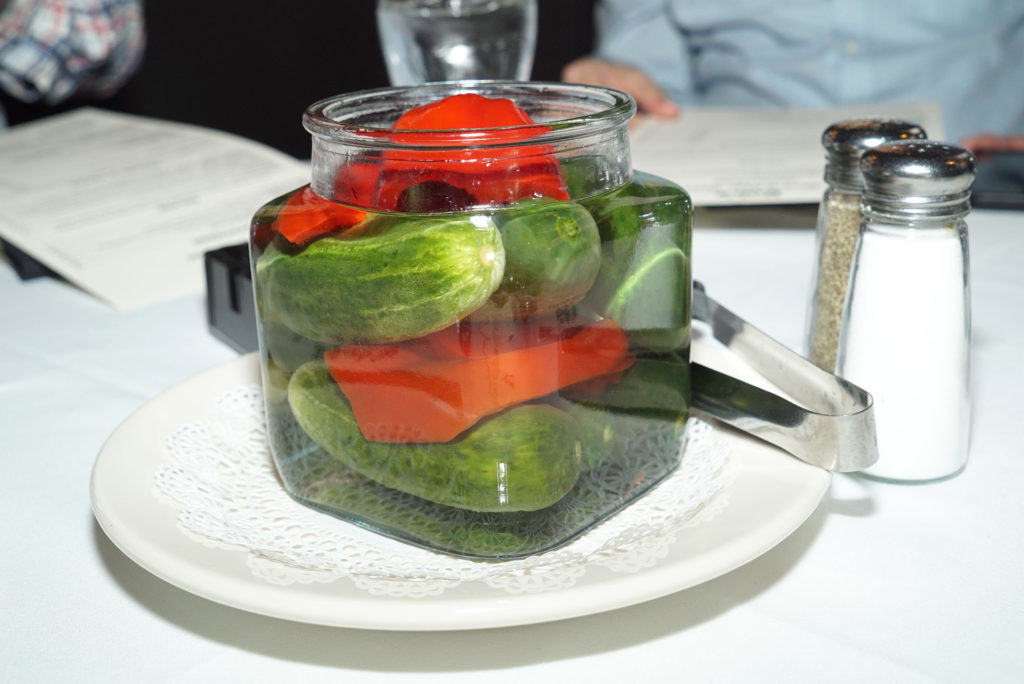
Impeccable. Everyone here is amazing and attentive. They know their menu well, and make excellent suggestions. Worth mentioning here is the amazing jar of pickles and peppers that comes out to every table. Careful or you might fill up on this instead of steak!

dsc07070

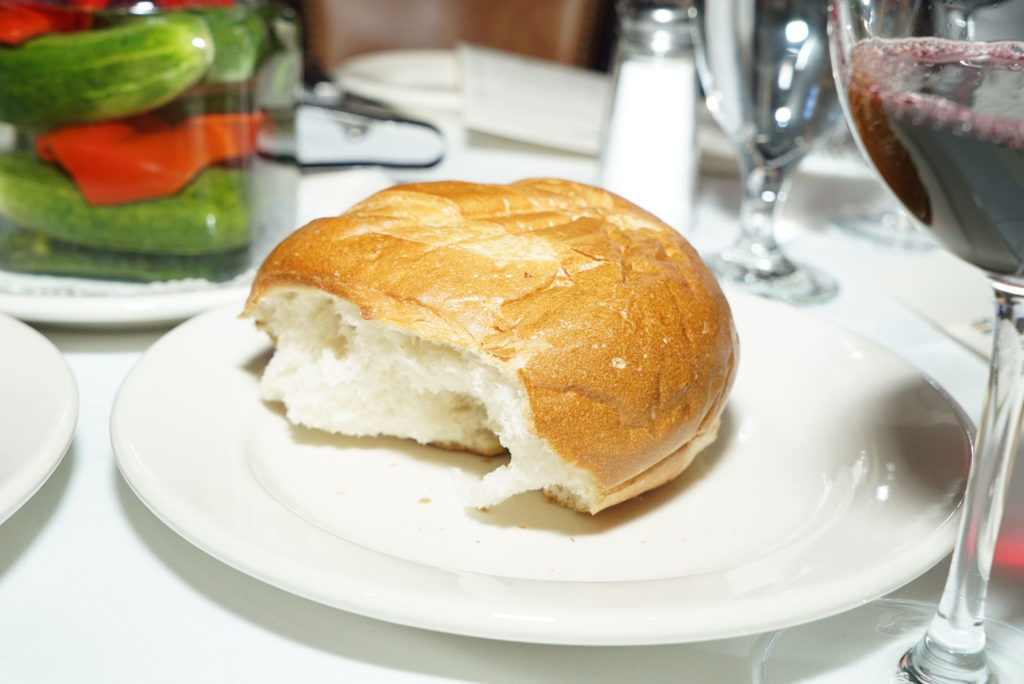
The table bread was warm and flakey, like a large dinner roll.

dsc07071

Ambiance: 9
I like the large, open feel to this place. Finally, you can stretch out in Manhattan and not hit the back of someone’s head. Also the decor is beautiful with warm grey paneled walls and beautiful table settings.

BOB’s STEAK & CHOP HOUSE
21 East 52nd St
New York, NY 10022

Top of the Class Beef Advocacy Training

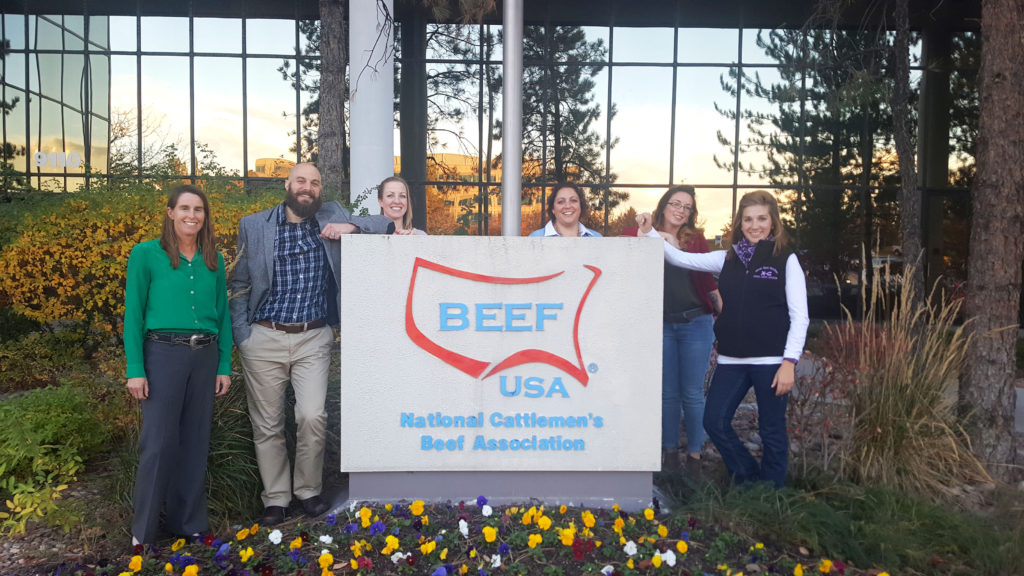
Back in October I was invited out to the National Cattlemen’s Beef Association headquarters in Denver, CO to partake in their advanced beef advocacy training program called “Top of the Class.”

ncba3

You guys may recall a post back in the summer where I talked about how I was earning my MBA (Masters in Beef Advocacy) with five online course modules designed to educate people about the beef industry. Those courses inspired me to write some fun and informative posts.

But after getting that MBA, a friend at the New York Beef Council contacted me and encouraged me to apply for the Top of the Class program, which is essentially like the PhD level of beef advocacy training.

I submitted my application and was accepted! It was wild. Two days of intense training, beef information workshops, on-camera cooking demos, on-camera interviews facing tough questions, engaging lectures and helpful blogging tips.

The first half of day one involved group sessions with topics on nutrition, beef research, food photography, blogging, beef advocacy, animal care, sustainability and beef quality assurance. We also received tips on how to give effective presentations and how to conduct media interviews (on topics we are passionate about, and then some harder questioning about the beef industry).

In the afternoon and on day two we had individual break-out sessions. Two fun break-outs involved me getting in front of a camera, rather than working behind it like I normally do.

The first was a simulated TV interview with a PR and media training specialist, in which he asked me a bunch of questions about aged beef, and then threw in a few zingers about beef safety and the myth we know as “factory farming.” I was prepared to answer given my previous training! I’m trying to get my hands on those videos for you to see how I performed.

The second fun break-out was a cooking demo, where I prepared “planned-overs:” A crispy Cuban shredded beef stir-fry dish made from the leftovers of a “Sunday roast.” This was filmed as a simulation as well: I was the cooking guest on a morning news TV show, with a host who asked me questions and helped me prepare the food. During the shoot, the goal was to work in some messaging about beef nutrition, and about re-purposing leftovers to help reduce food waste. I’m trying to get my hands on these videos as well. They were pretty cool.

Other break-out sessions were about finding a message, a niche and a goal for both my blogging endeavors and my social media accounts. I think it’s safe to say I’ve found my niche! There were also some sessions regarding how to engage and advocate about beef on social media and elsewhere.

Each Top of the Class program has five students, and I think they’ve only done a handful of programs to date. The other students in the program were highly diversified, and I thought it would be cool to introduce them to you.

ncba1

____________________

Dr. Lindsay Chichester

Lindsay has a blog called “Agricultural With Dr. Lindsay.” Her aim is to bring her readers stories about agriculture and introduce them to the people who grow and produce our food.

https://agriculturalwithdrlindsay.com/

She shares agricultural practices, meat selection, cooking and storage tips, and will answer any questions you may have. With a Master of Science in Animal Science, a Master of Art in Speech Communications, and a PhD in Systems Agriculture from West Texas A&M University, you can be confident that Dr. Lindsay will have highly knowledgeable answers for you.

She’s truly a force to be reckoned with. Lindsay grew up on a cattle and sheep ranch in northern CA. She was a 10 year 4-H member, received a formal education in agricultural systems, and worked a variety of jobs in the agricultural industry (meat packing, feed yards, managing cattle herds, collecting research, etc.).

She was also an Extension Educator with University of Nebraska-Lincoln for six years focusing on livestock, agriculture, food systems, and 4-H, working with both adults and youth. In January 2016 she began a new career with Nevada Cooperative Extension.

If you’re wondering what some of that stuff means, I will explain it to you as best as I can. And yes, I was clueless about it too.

The Department of Agriculture’s National Institute of Food and Agriculture’s (NIFA) Cooperative Extension provides non-formal education and learning activities to farmers, residents of rural communities, and people in urban areas throughout the country.

The country’s more than 100 land-grant colleges and universities have a critical mission: extension. Through extension, they bring vital, practical information to agricultural producers, small business owners, consumers, families and kids.

That’s where 4-H comes into play. 4‑H is a youth development program delivered by Cooperative Extension. You probably remember the commercials that used to air in the 80’s, like this one:

Kids complete hands-on projects in areas like health, science, agriculture and citizenship. They receive guidance from adult mentors and are encouraged to take on proactive leadership roles. 4‑H touches every area of the country via in-school and after-school programs, community clubs and camps.

Cassidy Johnston

Cassidy has a blog called Cow Country Blog. With it, she shows readers the very human and family-oriented aspects of ranching, as well as the hard work and joy behind what it means to produce cattle for the US beef market. You can see exactly the kind of love and attention that it takes to raise both cattle and a growing family.

Cassidy worked on a ranch as part of her research for her collegiate honors thesis about ranching and environmentalism. After graduating from the University of Colorado at Boulder with a degree in Environmental Studies, she went to work on that same ranch.

While researching, she met her cowboy husband, Robert, and they’ve been together ever since. Cowgirl meets cowboy; it doesn’t get any more classic Americana than that! Together they have worked on three cattle ranches in two different states. They currently live in Colorado and work for one of the largest ranches in the country.

Kita “Girl Carnivore” Roberts

Like me, Kita is a photographer as well as a food blogger. In fact she has two blogs: one is meat-centric, called Girl Carnivore, and the other is called Pass the Sushi (recipes, travel, photo tips, blogging tips). Her primary location of operation is out of Delaware, but she gets to travel around pretty often due to her photography and blogging endeavors.

wp-1482159544550.png

With her blogs, she shares tons of really awesome recipes that she developed on her own. I mean, I know how hard it is to develop a recipe and come up with something unique, and then photograph it in such a way as to get readers to run out and buy the ingredients. Kita makes it look easy.

As you might expect, food photographers tend to share a wealth of really great foodporn via Instagram and social media. Kita is no exception:

As her moniker and the above photo suggests, the “Girl Carnivore” is not limited to beef. Her site has recipes broken down by protein right on the front page for easy navigation: beef, lamb, poultry and pork. You can find amazing stuff there for entrees, side dishes, what to do with leftovers… everything.

Michaela Gasseling

Michaela writes a blog called Cowgirl Boots & Running Shoes. On her blog, she shares healthy recipes, meal planning pointers, nutrition and dieting tips, fitness motivation, and an inside look at what family farming life is like. One of my favorite posts from her blog is about why she incorporates beef into her diet. Finally! More people talking about how great beef is for nutritional purposes.

http://www.cowgirlbootsandrunningshoes.com/

After nearly burning out from working crazy shift hours as an ultrasound tech, Michaela and her husband Matt moved themselves and their two kids back to Matt’s family farm.

She does ultrasound part time now, but she also became a health and fitness coach and a certified PiYo Live fitness class instructor. She’s also an accredited La Leche League Leader and runs a support group for pregnant and breastfeeding moms.

____________________

To be honest, I felt a little intimidated. I just really love steak and writing about meat! Some of these other folks had way more hands-on experience in the beef industry than me, especially when it came to knowing about farms and how beef is produced. I guess the folks in charge of the program’s admissions thought there was some value in what I was doing here, at the consumer level.

But all of us are bloggers of some sort, if you hadn’t noticed. And all of us were somehow touching the beef industry, if not purely focused on it. It was a great group, and we all learned a lot from one another.

The instructors were impressive, too. There were registered dietitians, food scientists, public relations specialists, sustainability gurus, feed lot operators, and media and communications experts. I actually already did a spotlight post on one of the instructors, Ann Burkholder.

august-20-2011-030

I hope to spotlight a few more, in time.

The NCBA offices are quite impressive. The walls are lined with nice framed photos of past leaders of the industry, and really cool cattle brands from various producers around the country, old and new.

ncba2

They have a state of the art test kitchen with both gas and electric piped in to play around with various ways of cooking beef. In fact this is where they create various recipes, and even study, discover, or market cuts of beef (like they did with the flatiron steak). They even innovate new products, like when they helped come up with Schmacon (beef bacon). I was impressed big time!

They also have a media monitoring control room. It was like something from a science fiction movie or a spy movie. Basically, any time beef is mentioned on Twitter, Instagram, Facebook, or anywhere else for that matter, someone at NCBA will know about it and be able to respond, engage, or just simply watch.

As I mentioned above, I was on camera a few times. That’s because the NCBA has a fully functioning TV studio on site, and they even have a show that airs regularly called Cattlemen to Cattlemen. They can also broadcast live and link up with various TV news agencies who may want their media spokespeople for interviews.

I was blown away by the facilities. They’re truly amazing, and cattle farmers and ranchers can rest assured that their Beef Checkoff dollars are being put to very good use. But the experience as a whole really acted to sling-shot my motivation here. I’ll be doing some interesting things in the future, and posting some new and interesting content. Keep an eye out!

Boucherie

Boucherie overall score: 95

My wife and I came here for a special preview dinner that was hosted for friends, family and influencers on the night before the official opening. I really enjoyed the meal, and I plan on coming back again soon to try more of their steak selections.

Flavor: 9
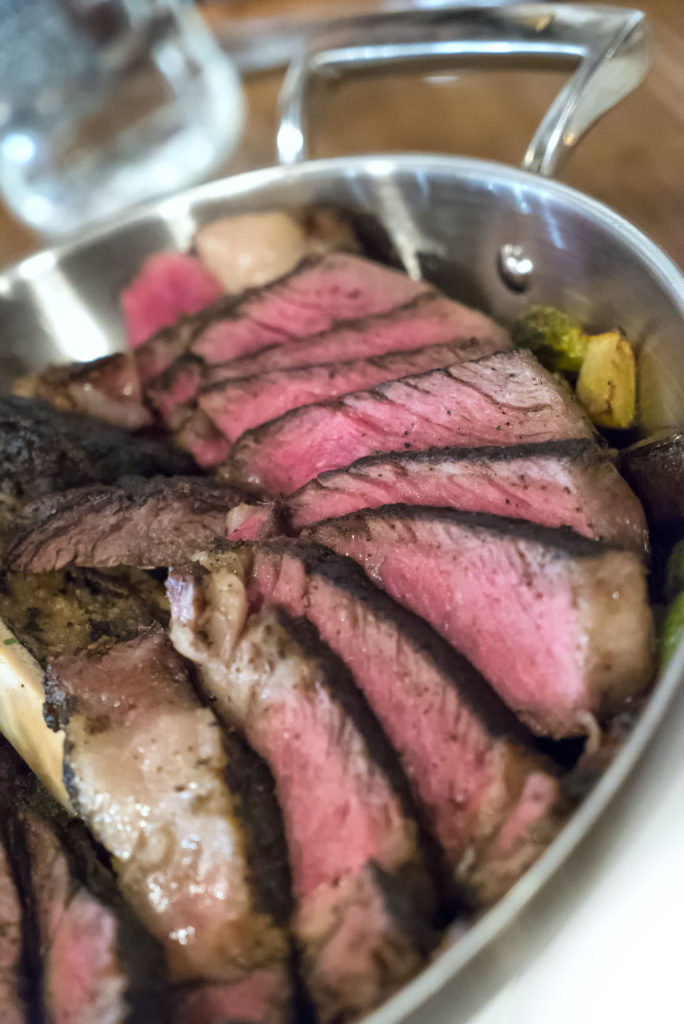
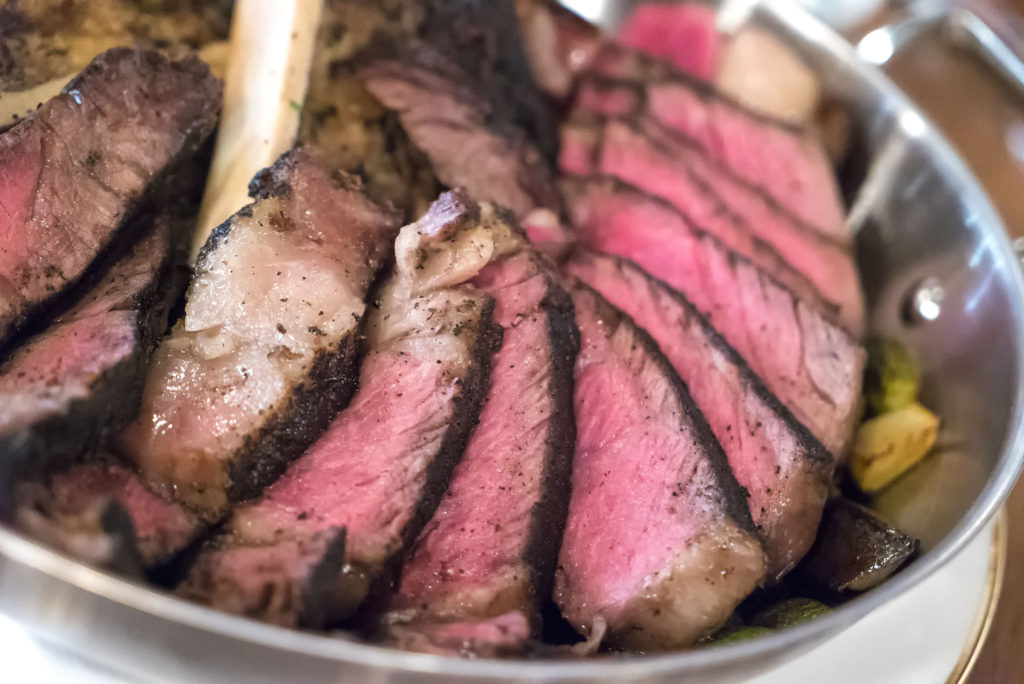
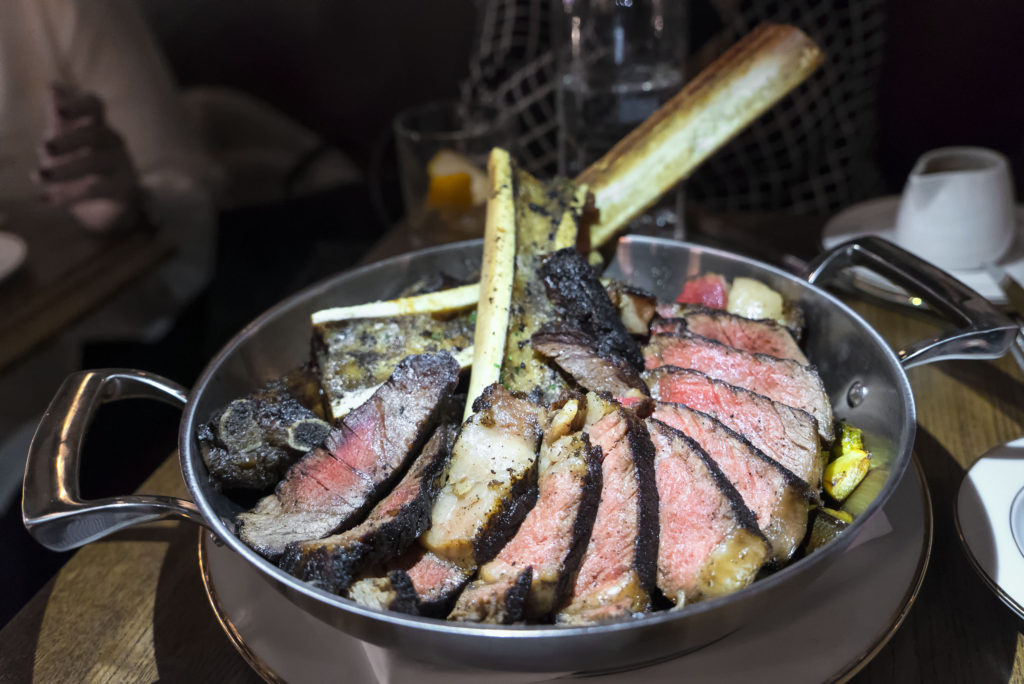
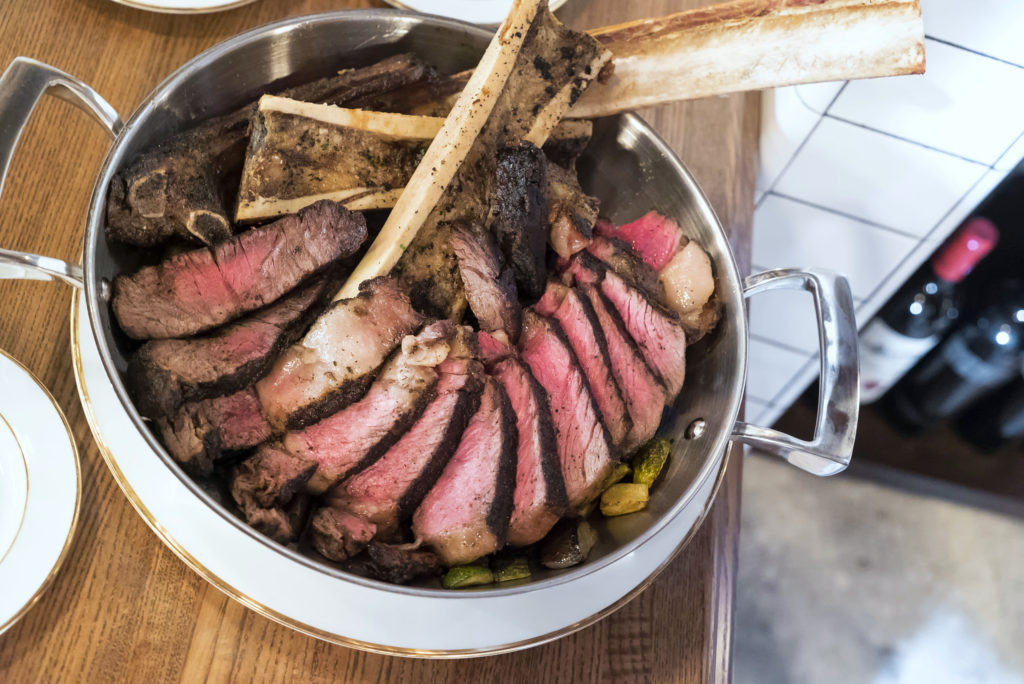
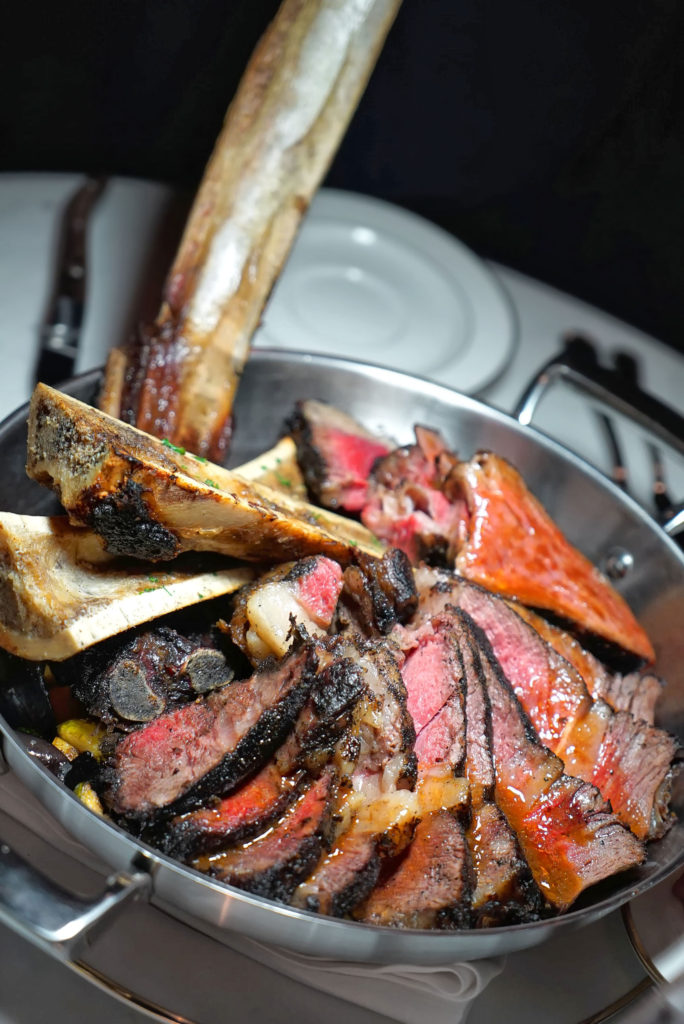
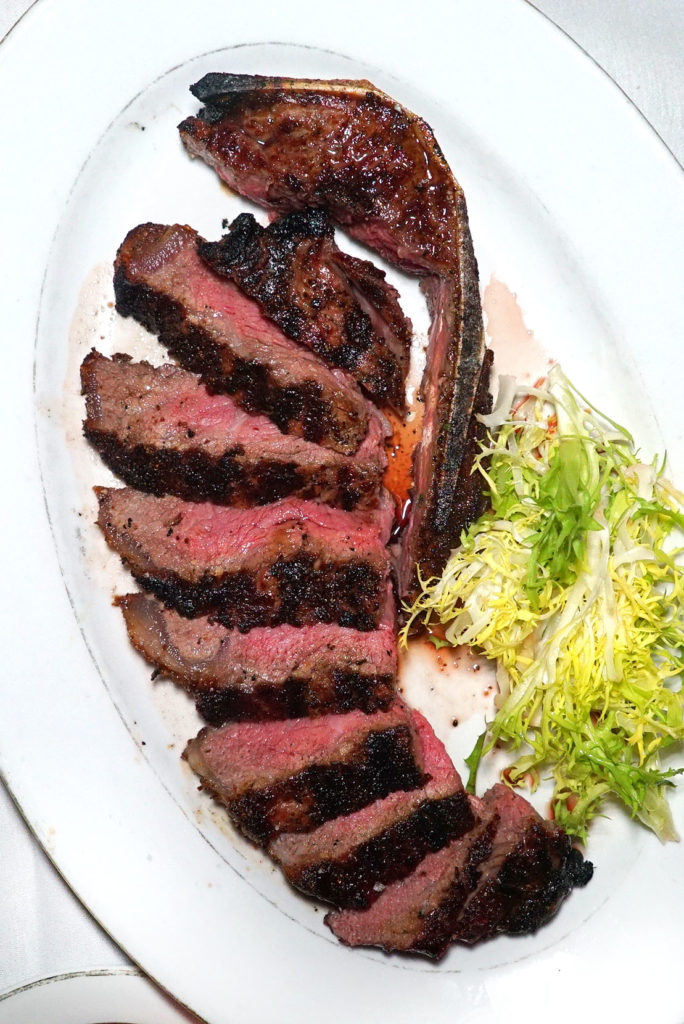
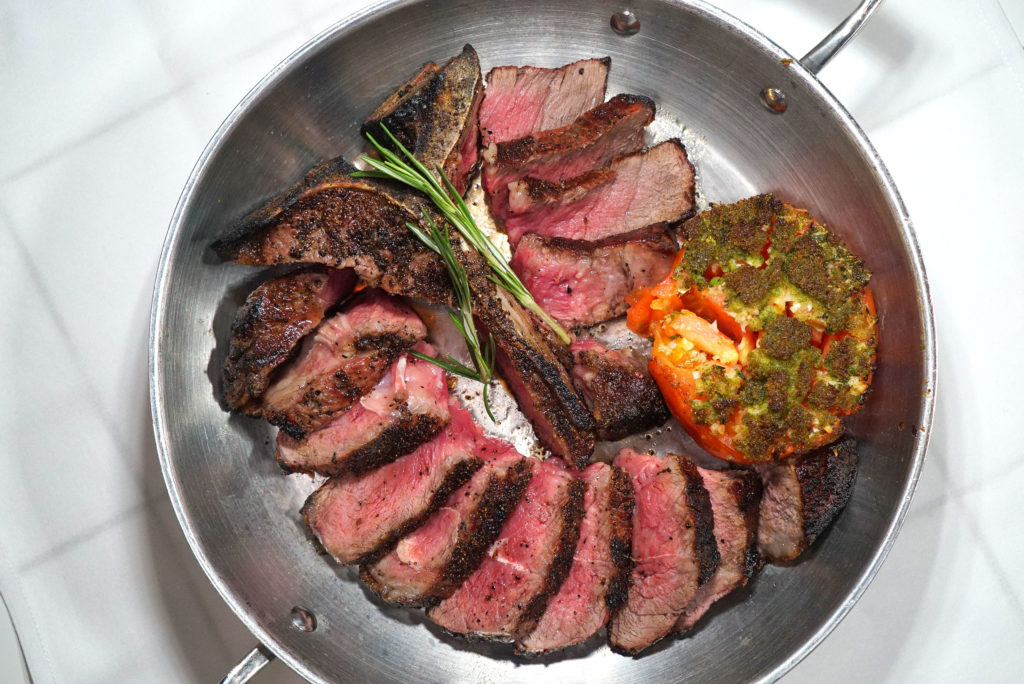
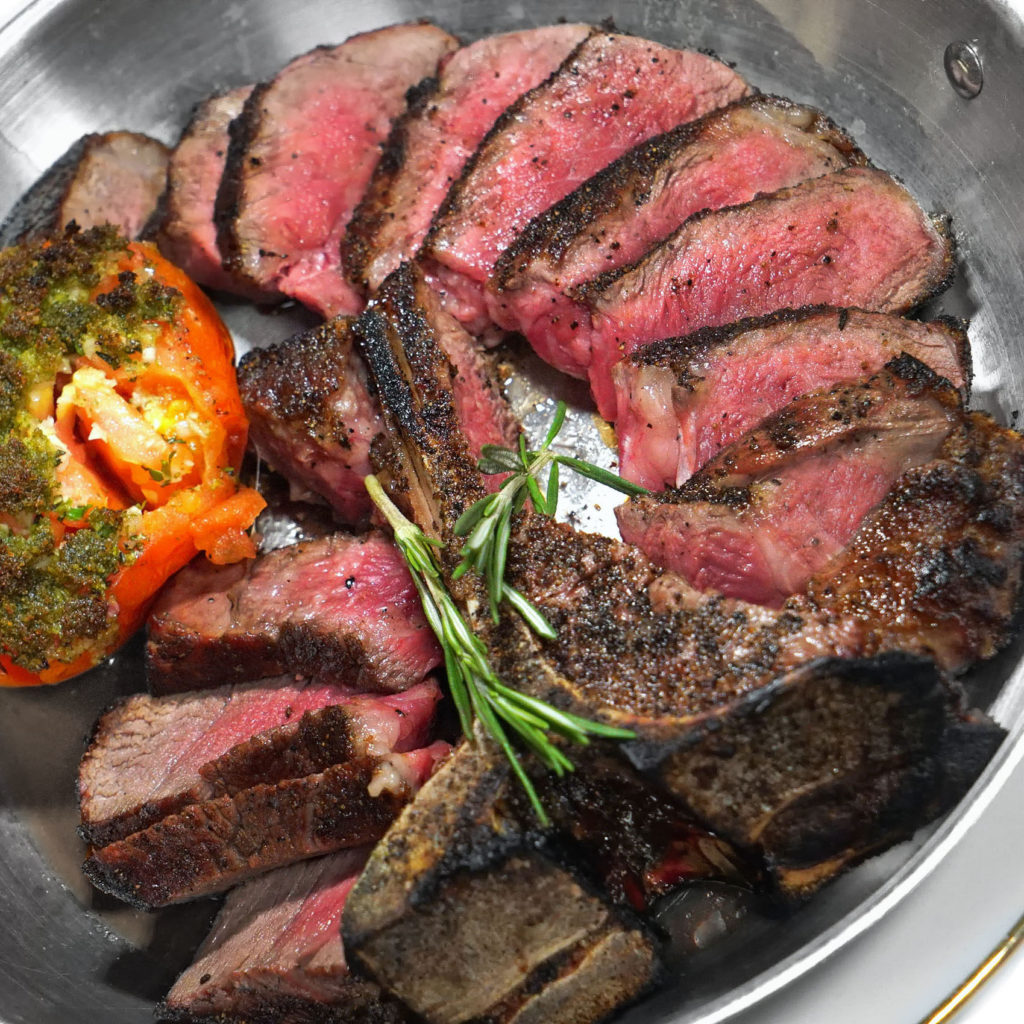
My wife and I split the cote de boeuf for two.

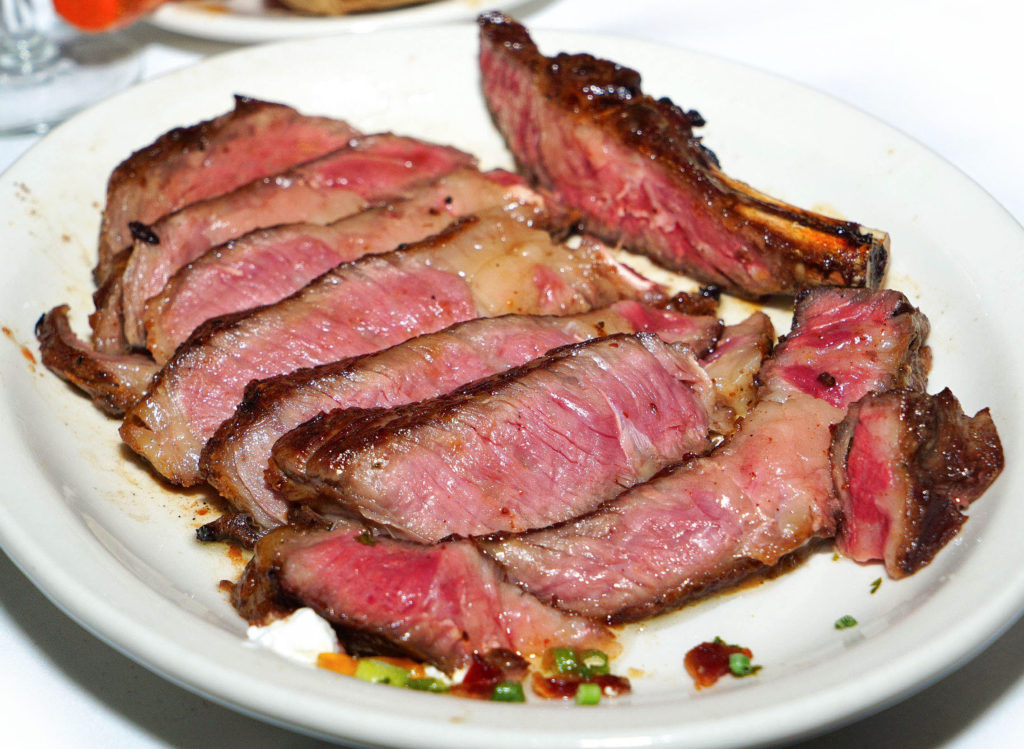
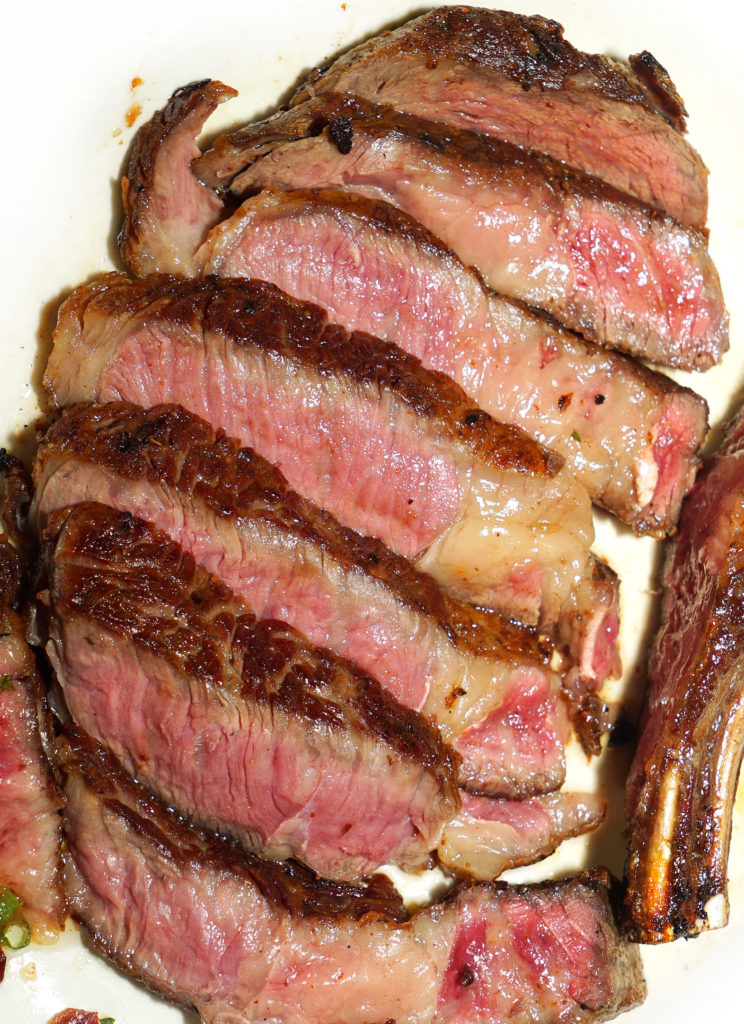
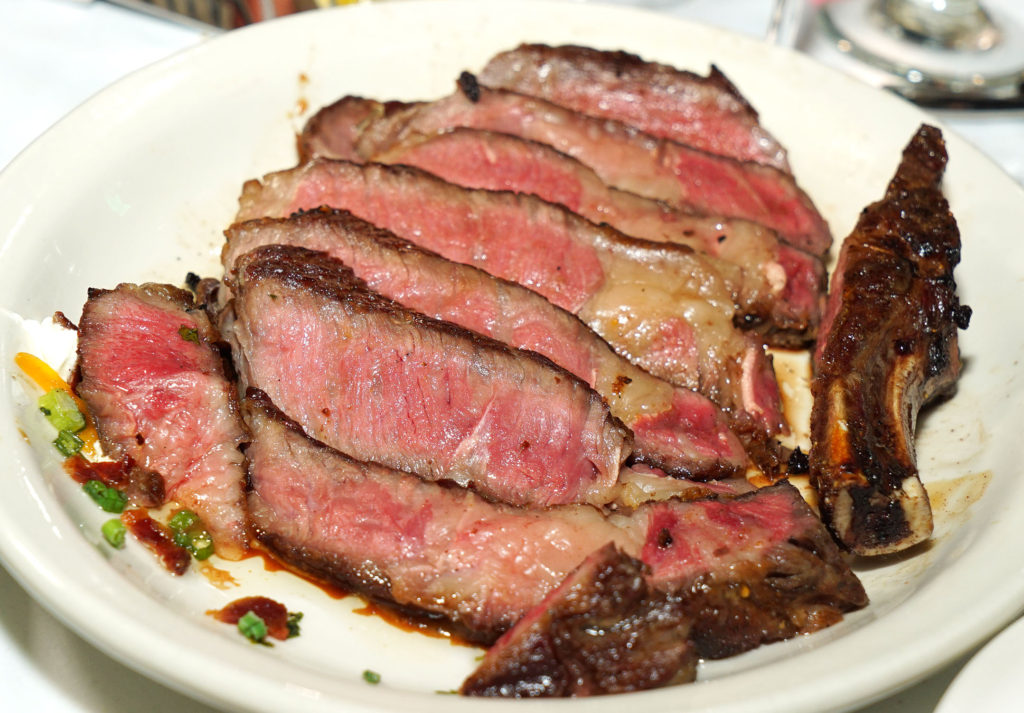
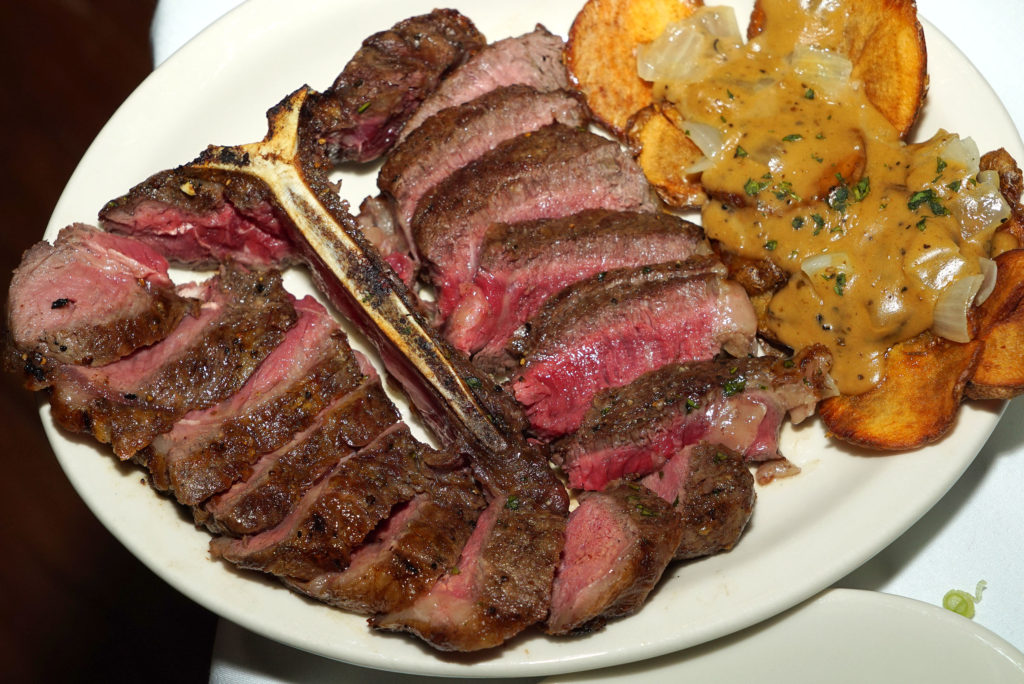
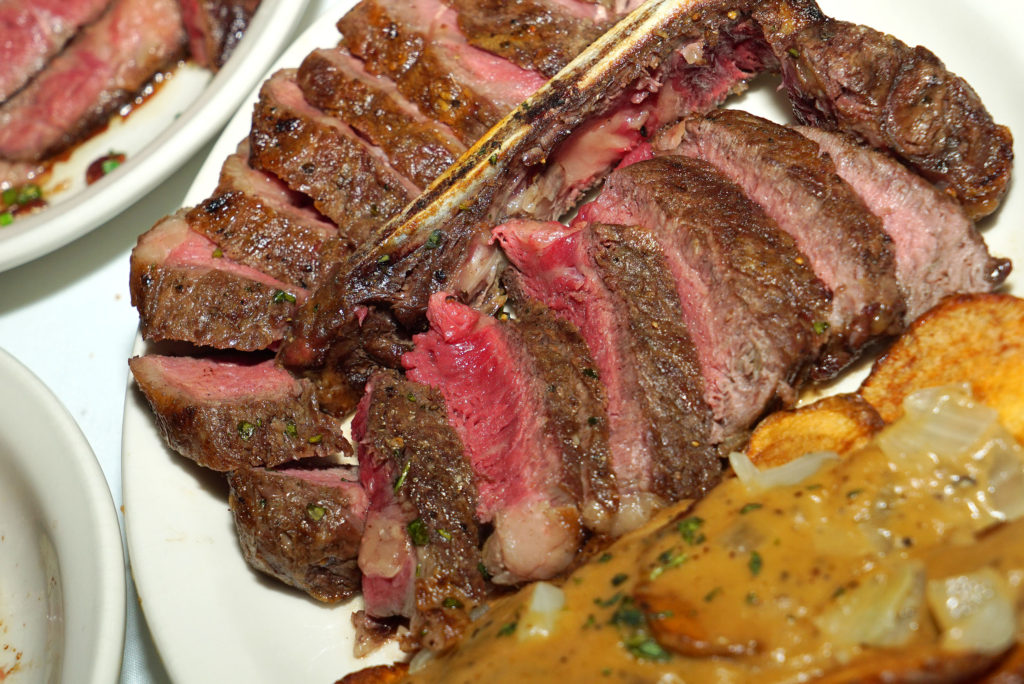
dsc06088

dsc06090

dsc06092

dsc06094

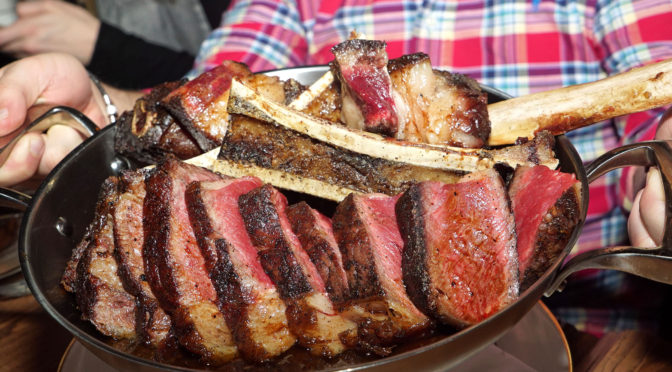
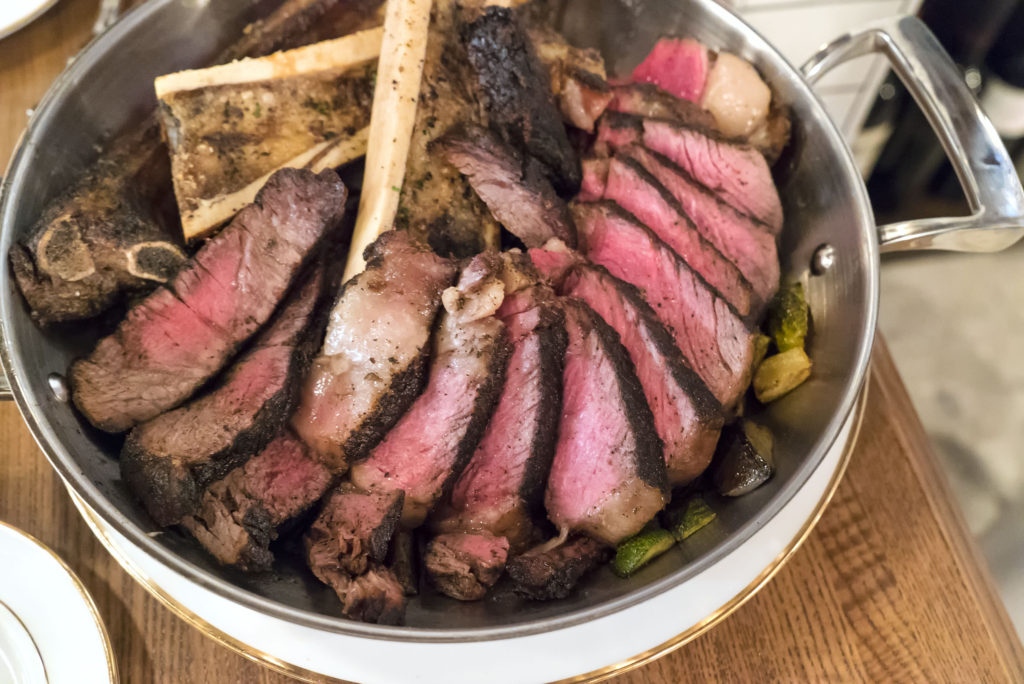
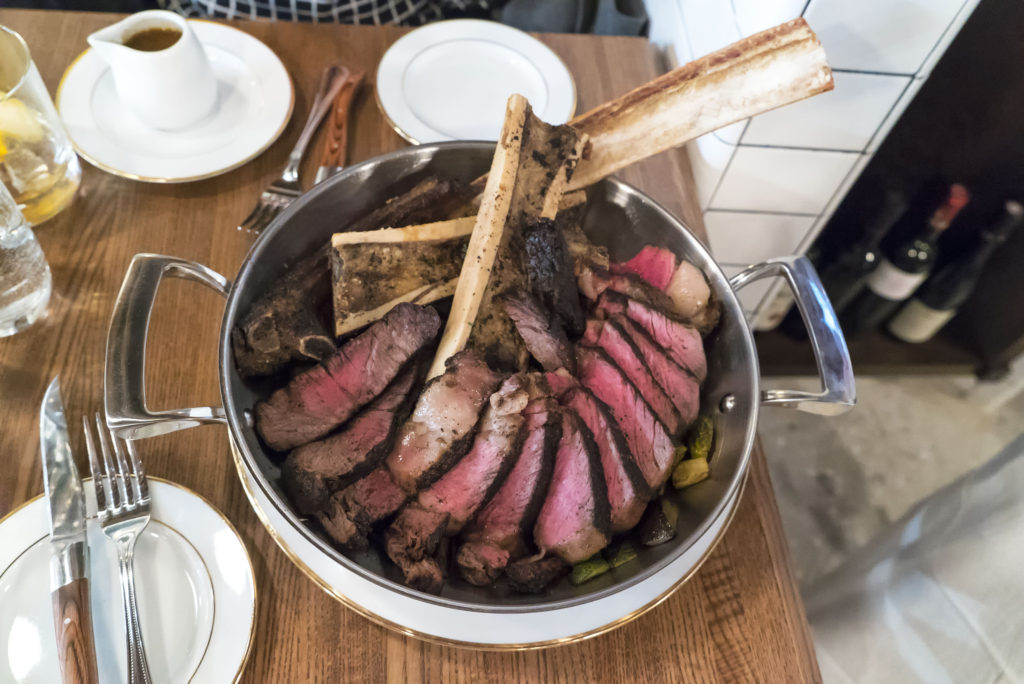
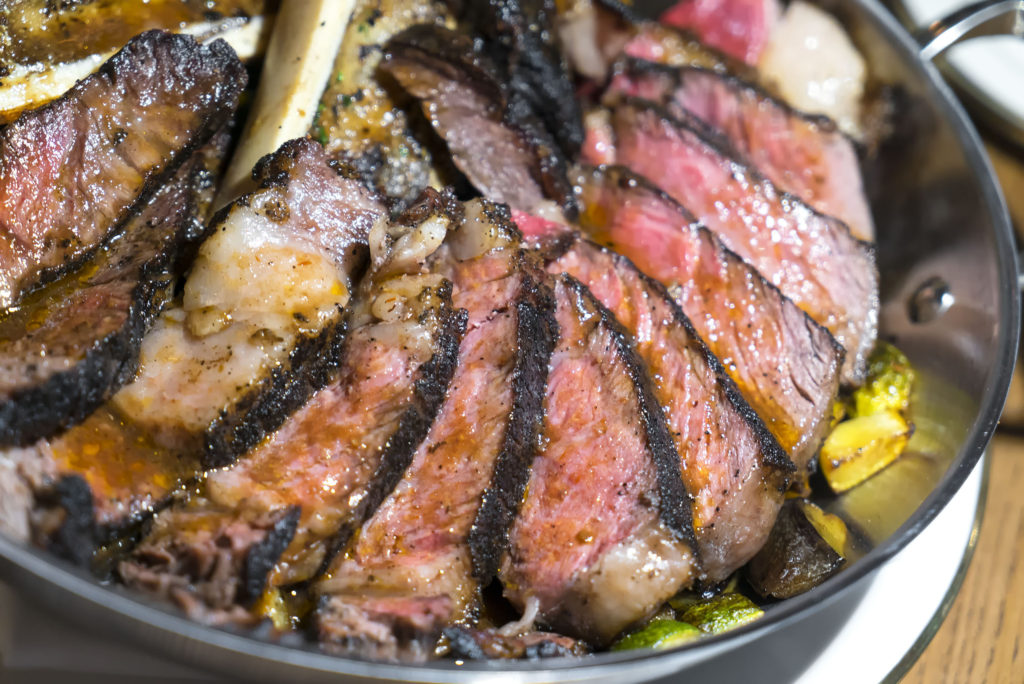
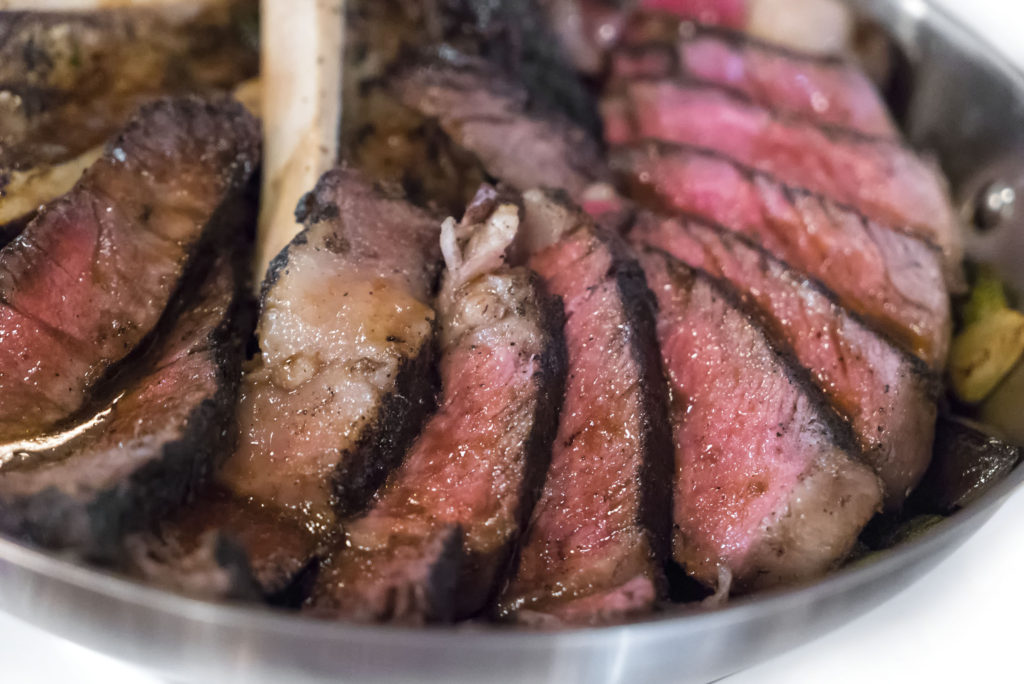
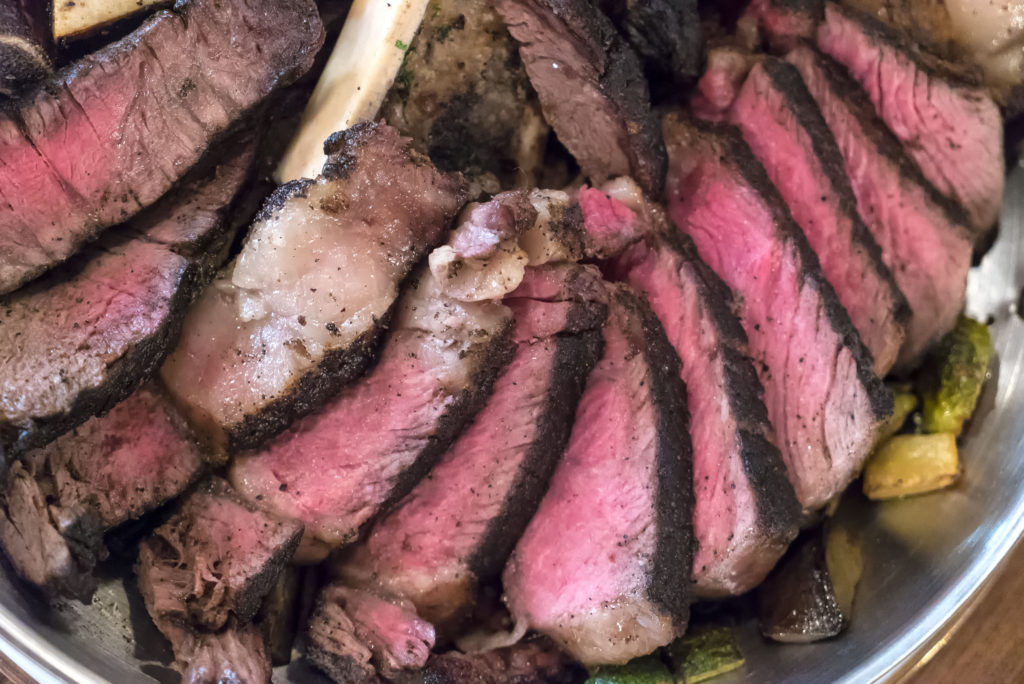
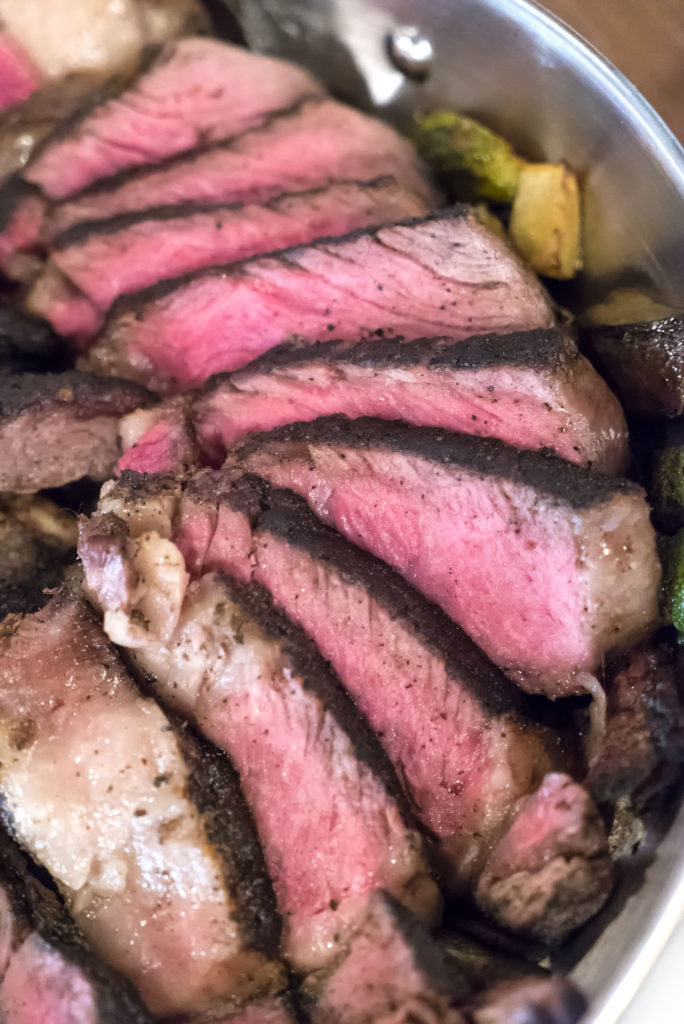
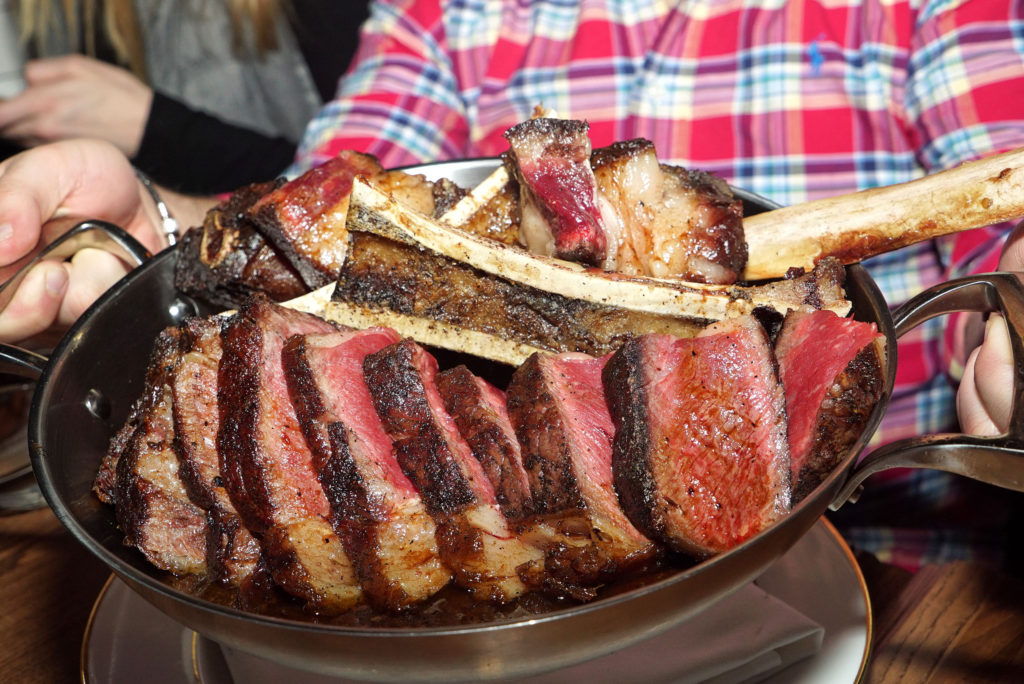
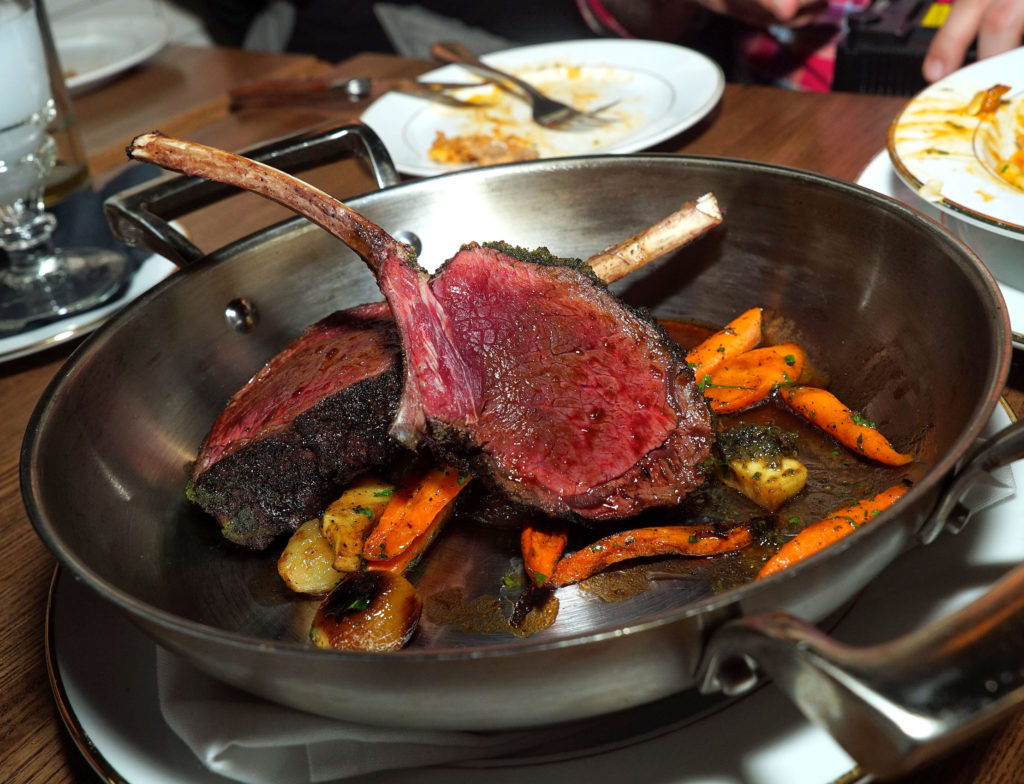
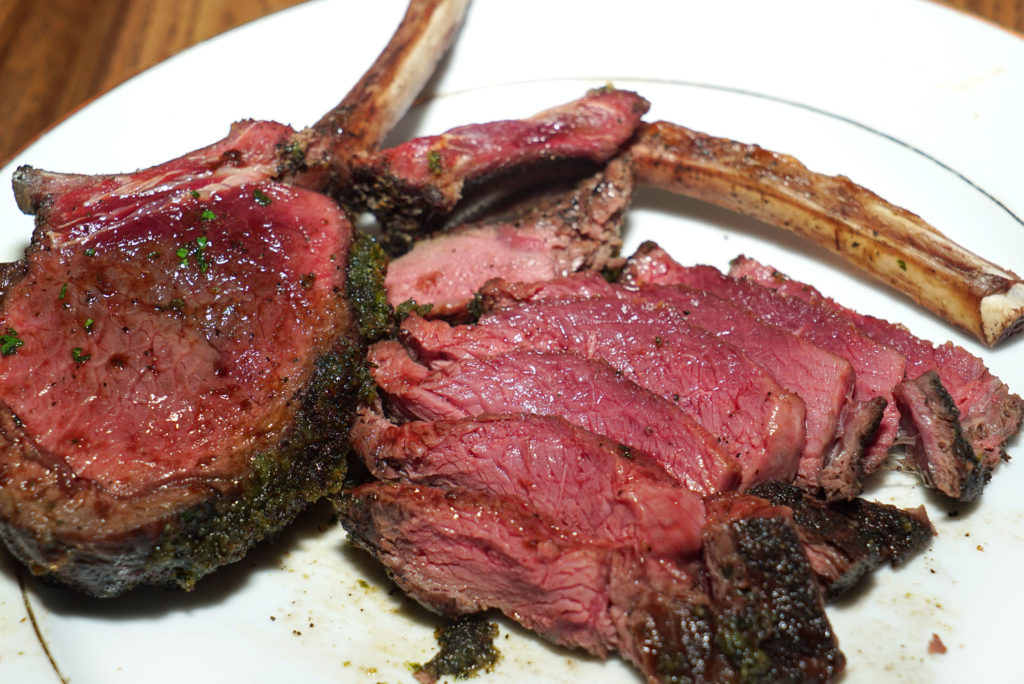
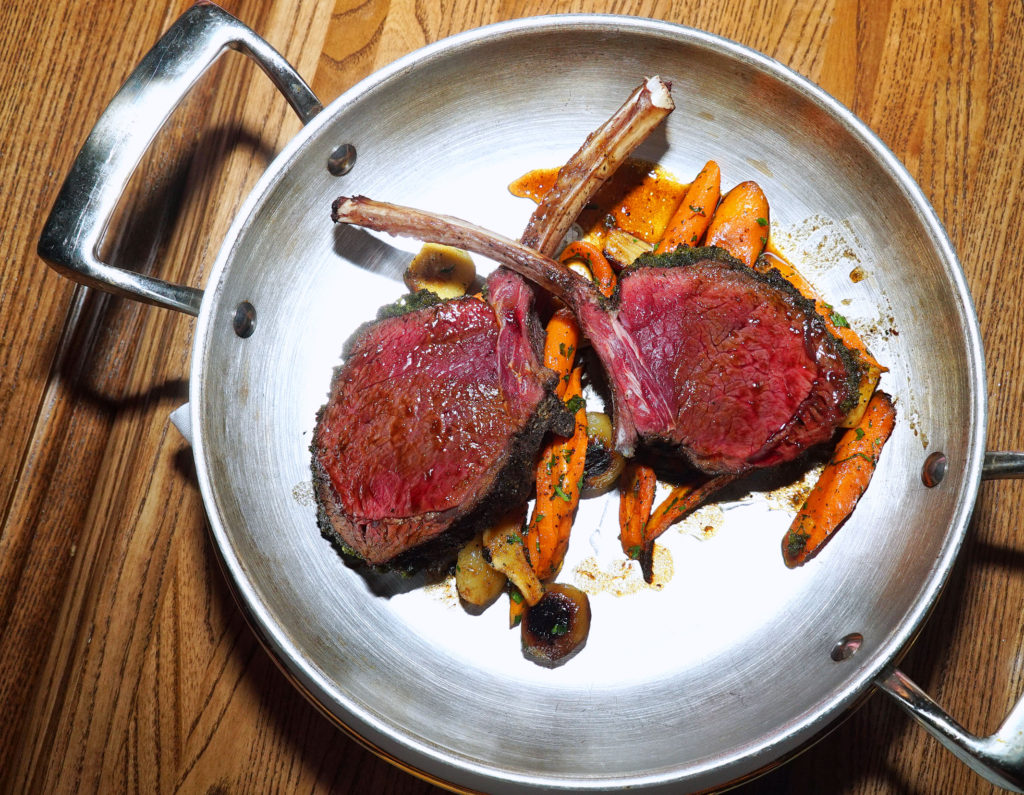
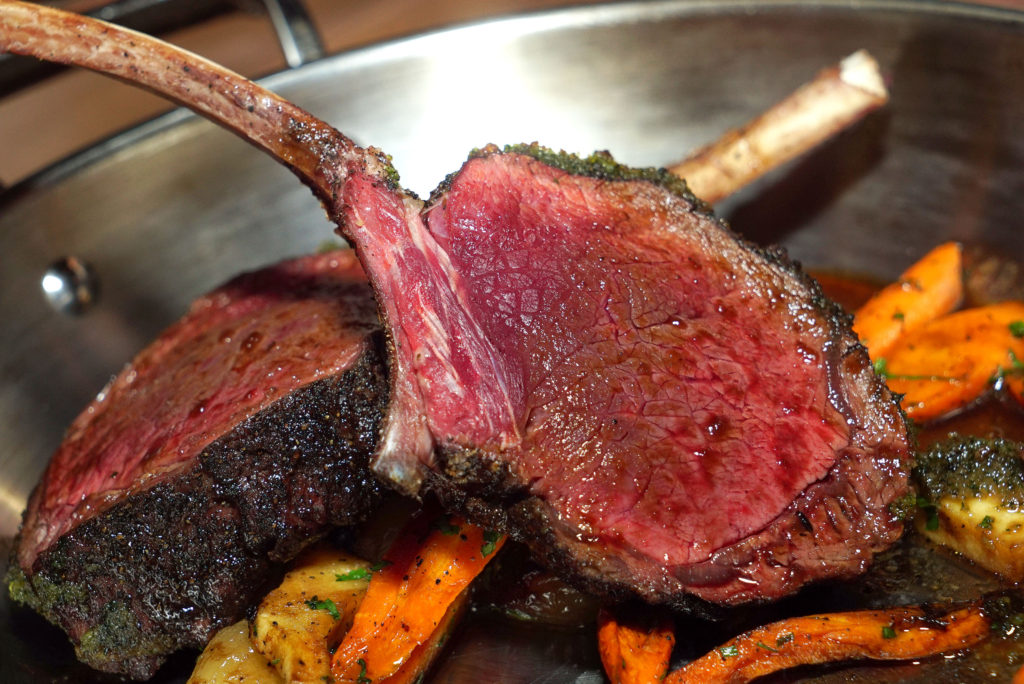
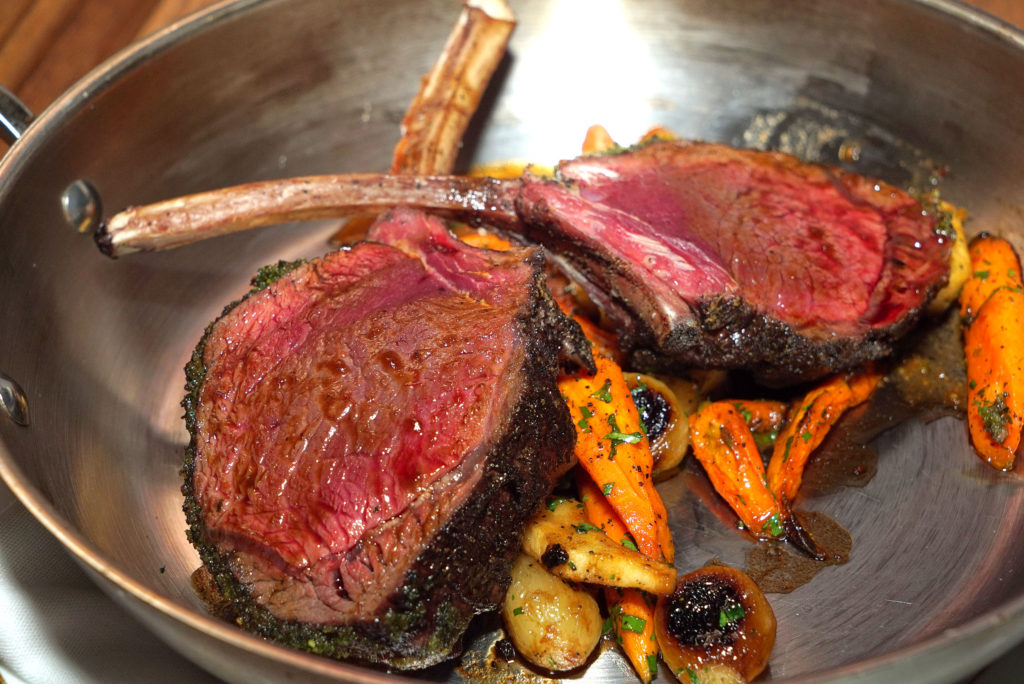
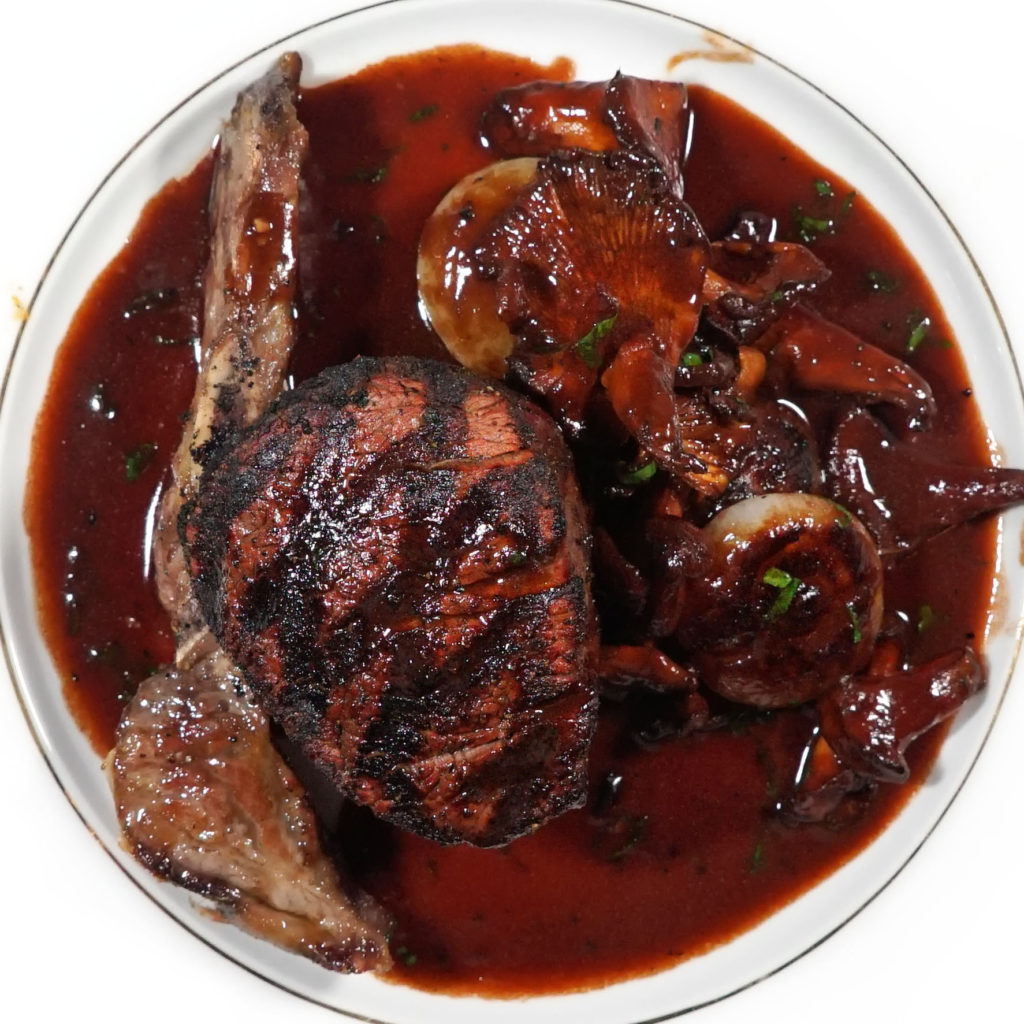
This massive tomahawk rib eye is 36oz and comes with some nice roasted marrow bones and a bordelaise sauce.

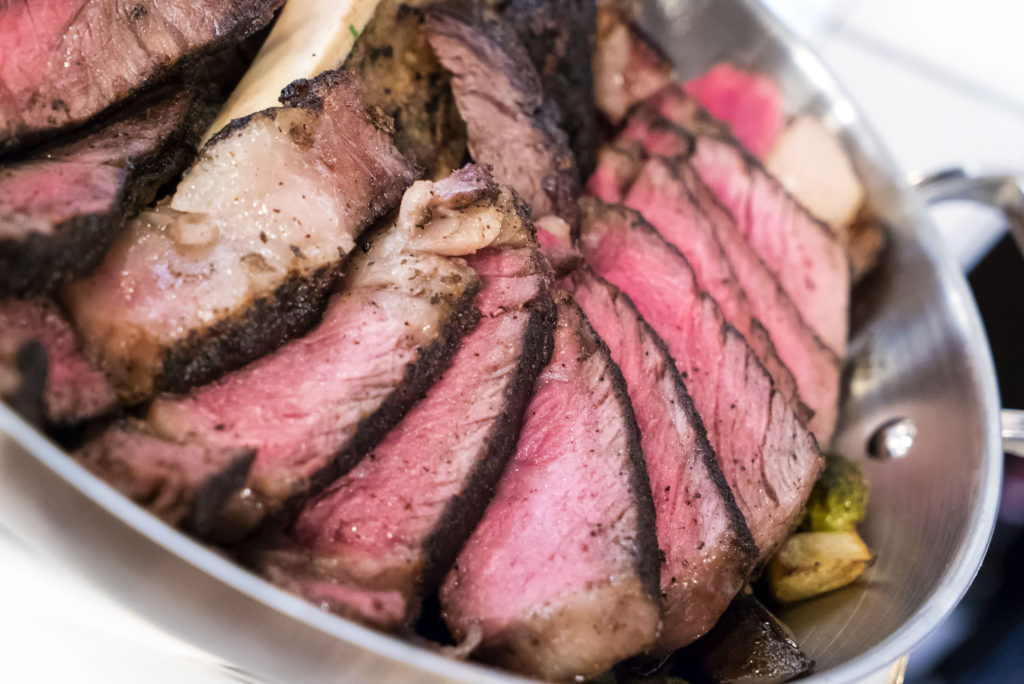
The steak comes out pre-sliced and ready to rock, served in a beautiful pan, atop a bed of roasted veggies.

dsc06128

dsc06079

dsc06070

dsc06142

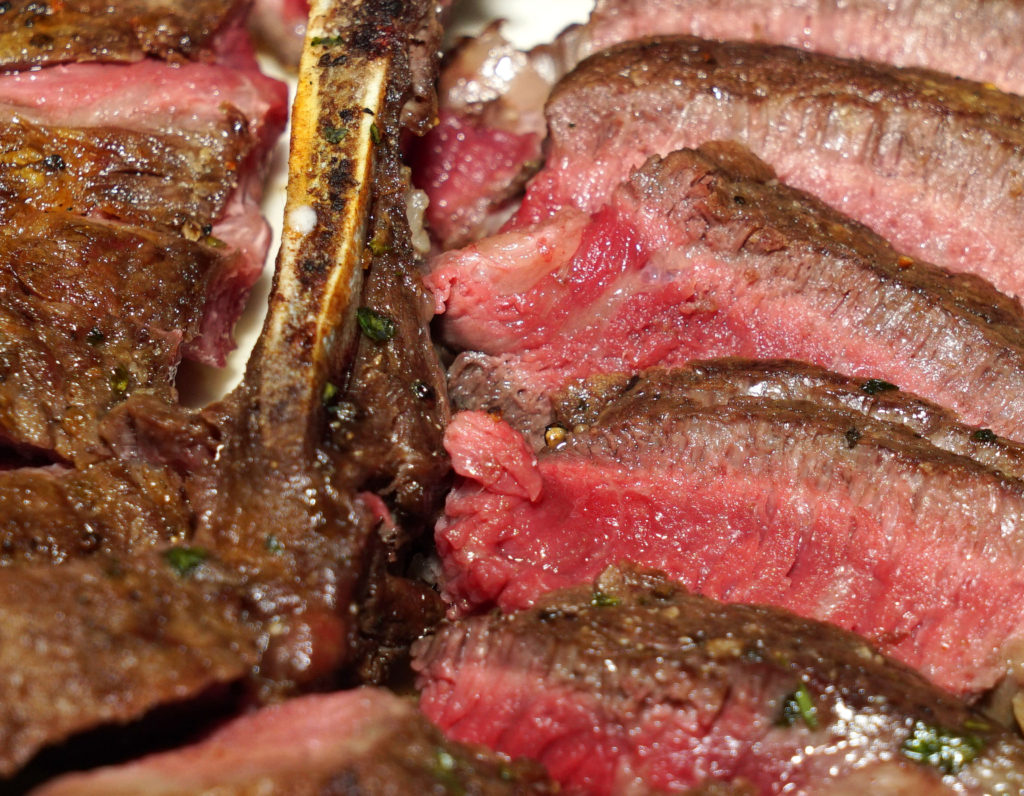
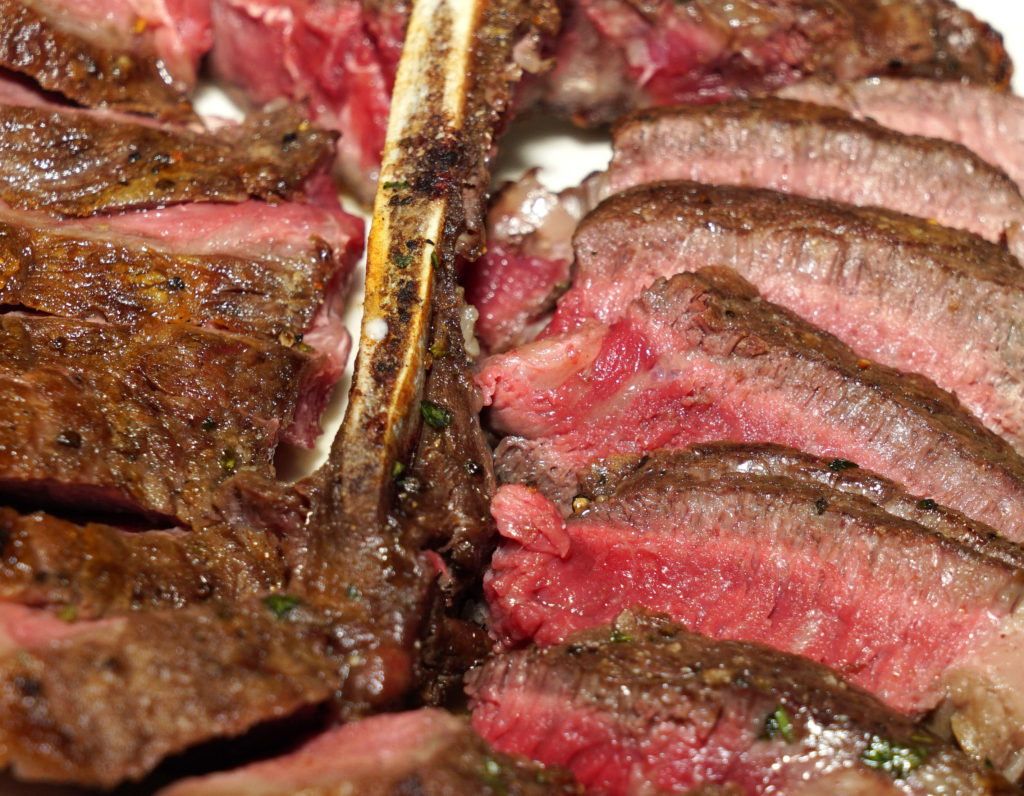
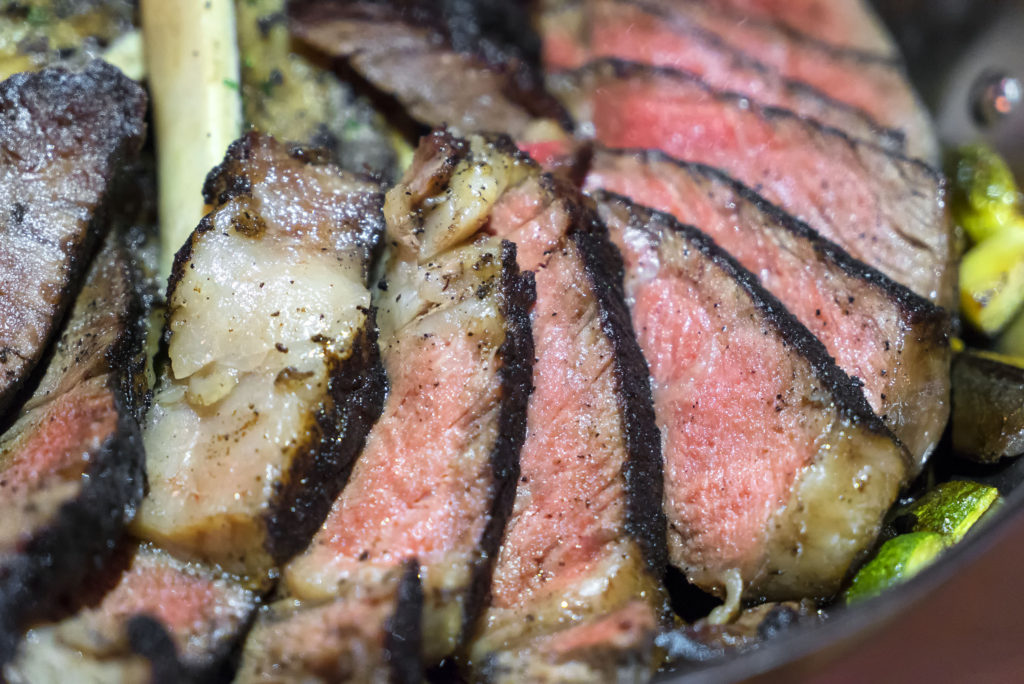
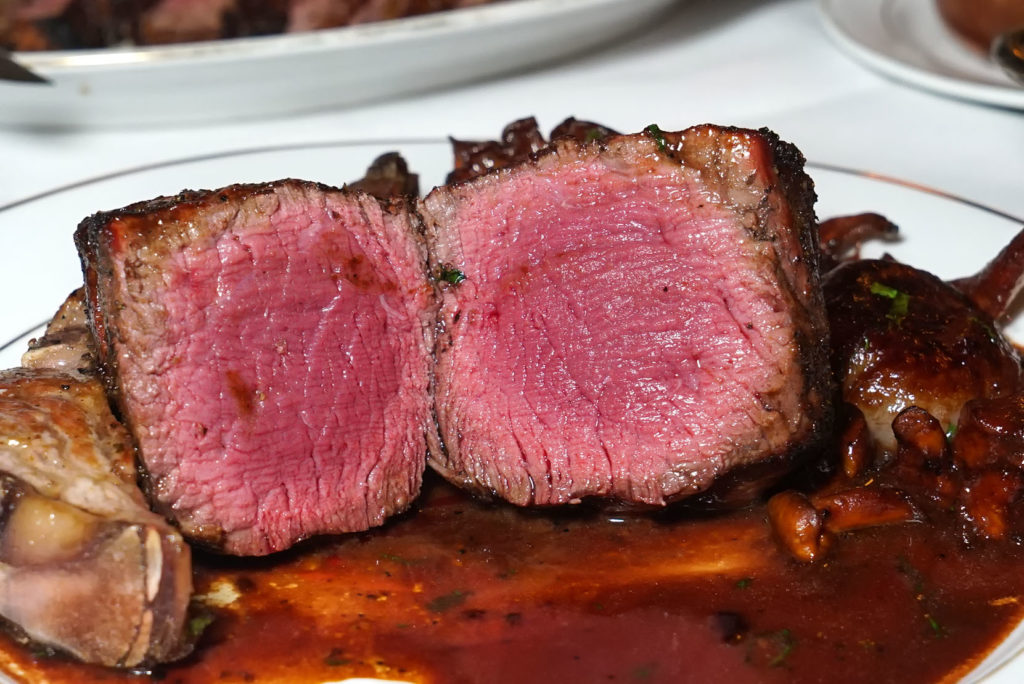
The steak was cooked to a perfect medium rare, it was well-rested before slicing, and it had a good crust on the outside.

dsc06117

dsc06082

dsc06136

dsc06101

dsc06095

Okay I took a shitload of photos of this thing… My wife said she ate a few slices that had a grainy texture. I didn’t notice it, so I pretty much enjoyed it immensely. Even the fat was really soft and edible. Like a beefy Jell-O. We also carved off the awesome crispy meat that sits along the rib, which was spectacular.

On a second visit, however, this wasn’t quite as good. The meat lacked seasoning (as did several items that night – maybe they ran out of salt or something), and when tasted side-by-side with the other meat items we tried, it just didn’t hold up. 7/10.

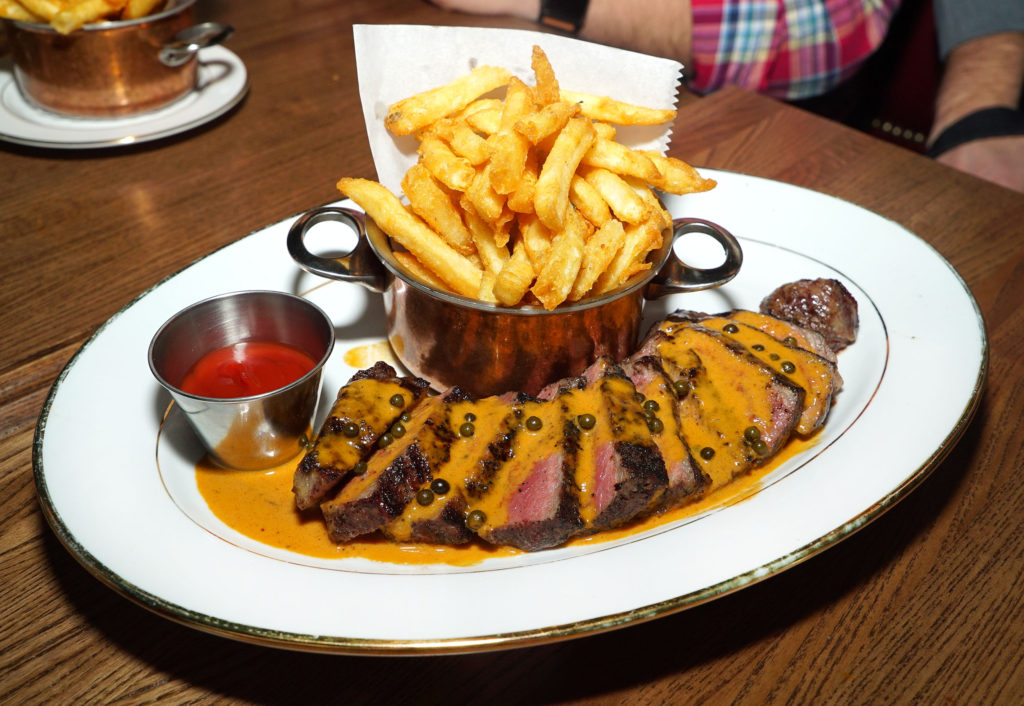
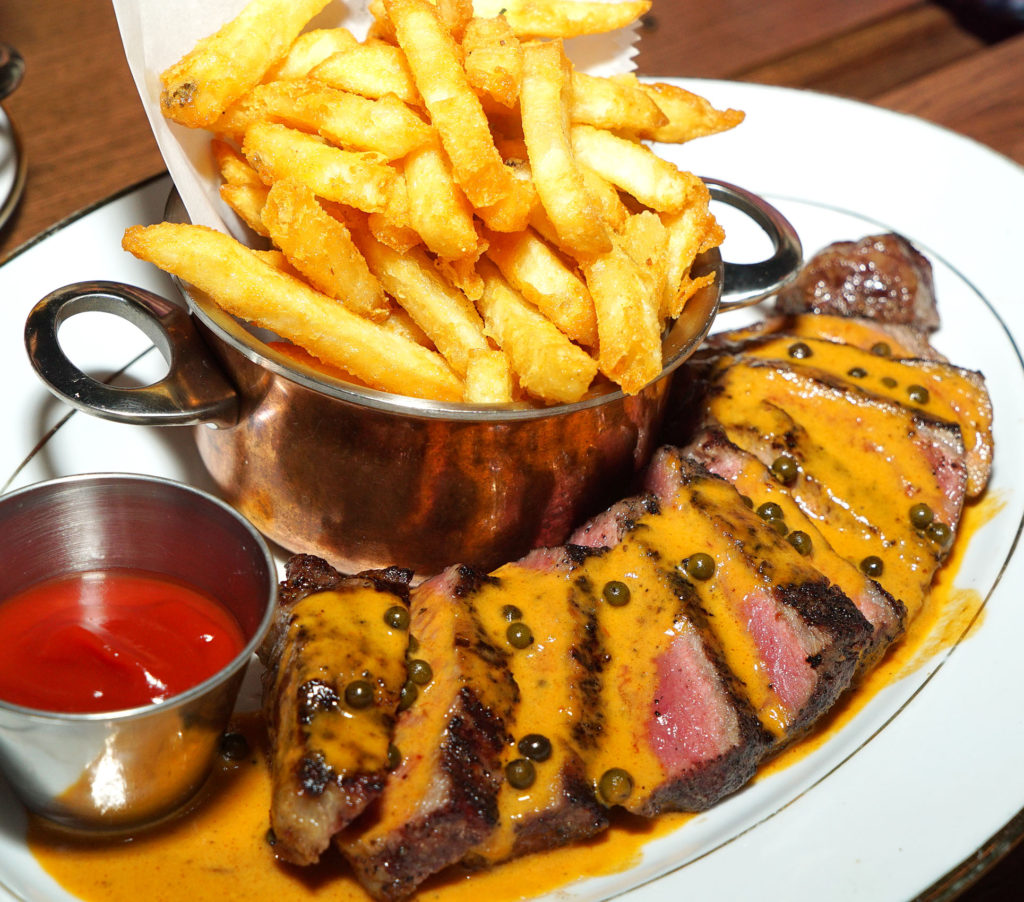
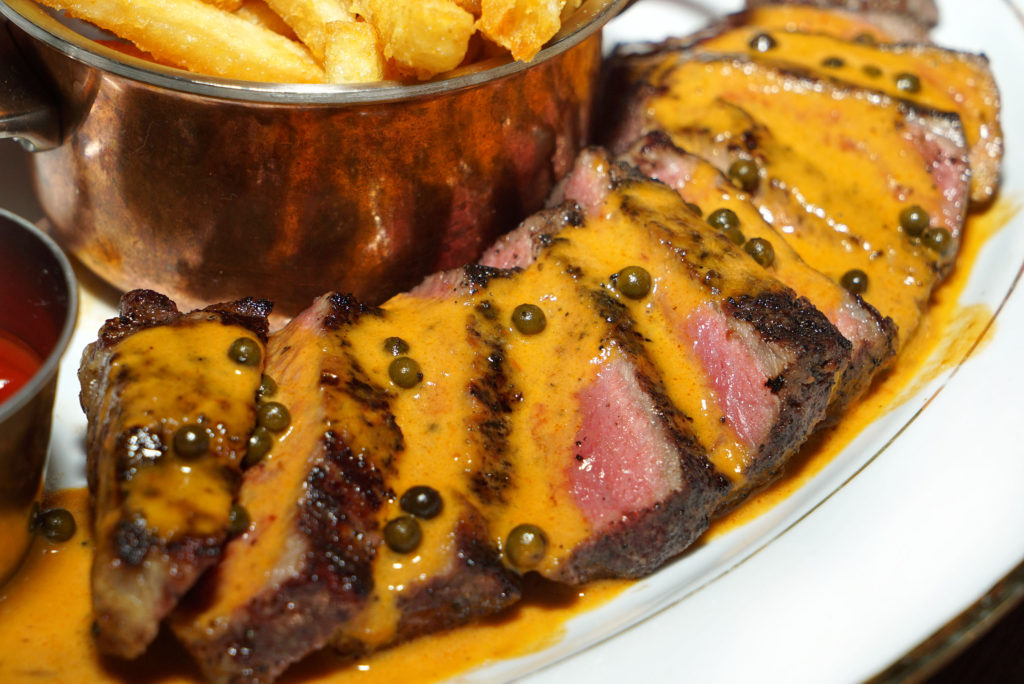
The strip steak frites, however, was absolutely delicious.

This one was seasoned well, in fact it was almost too salty, but I didn’t mind.

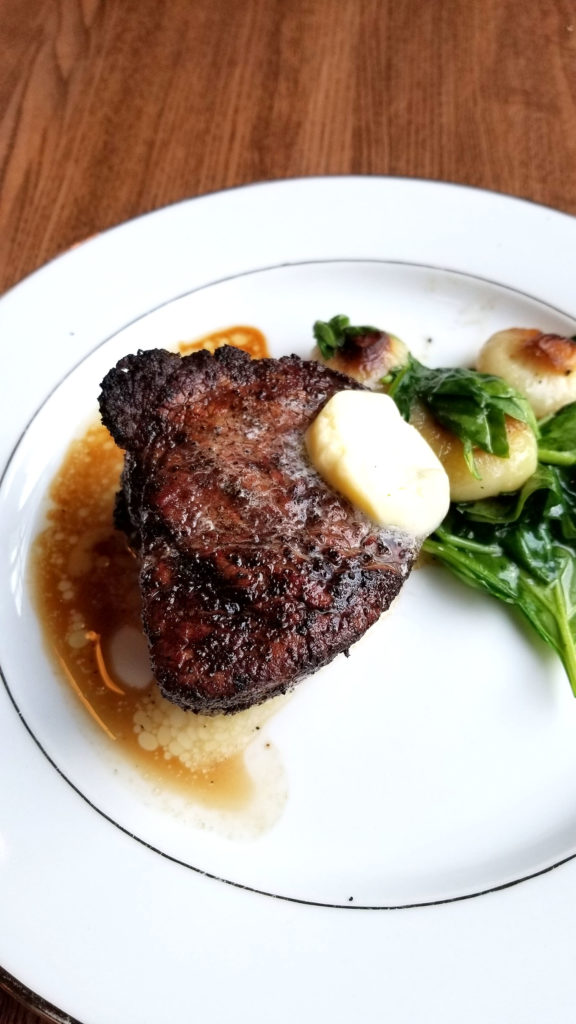
No waste, all pink, great sauce and peppercorn flavor. 9/10.

Their bone in strip was slightly overcooked and dry when I tried, but it still had great flavor. 7/10.

The filet mignon was also a nice 9/10. It would have been a 10 if they didn’t go slightly over on one end, but ver all it was really juicy and nicely seasoned.

Choice of Cuts & Quality Available: 9
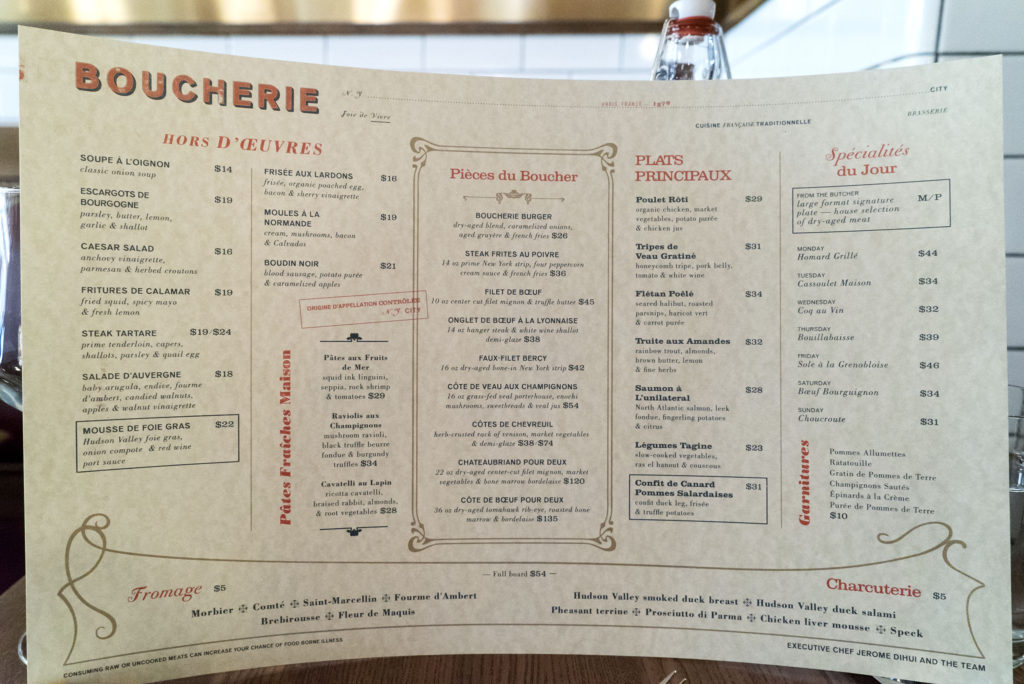
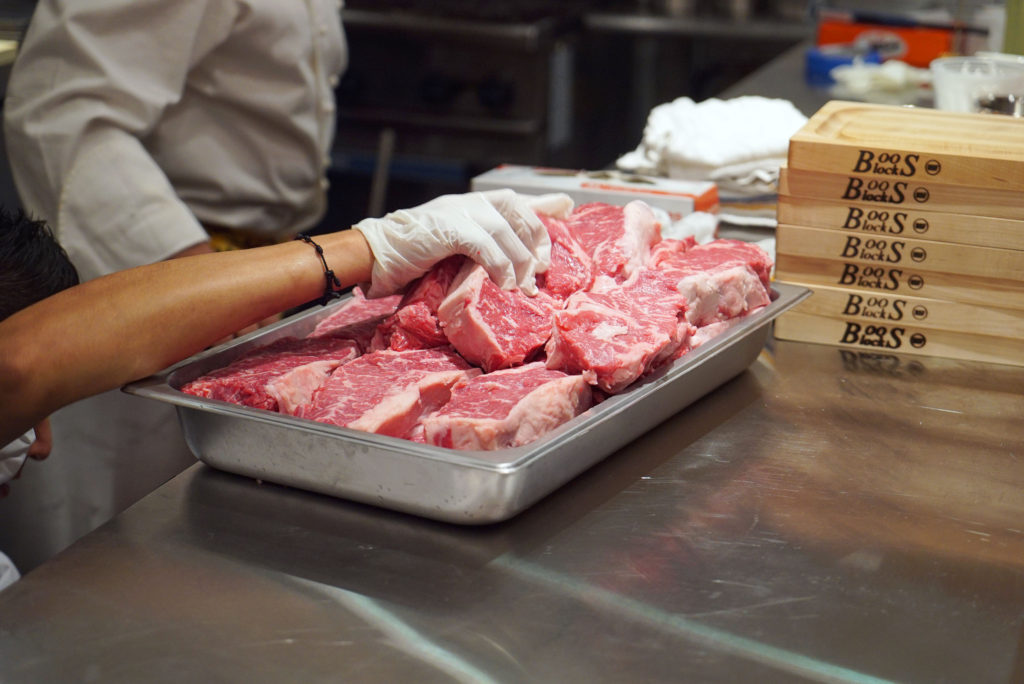
Most of the cuts here are dry-aged, but there is no indication on the menu about how long they are aged.

dsc06017

It could be that they age them in house, continuously, as there seemed to be a good amount of space and massive stainless steel appliances.

dsc05999

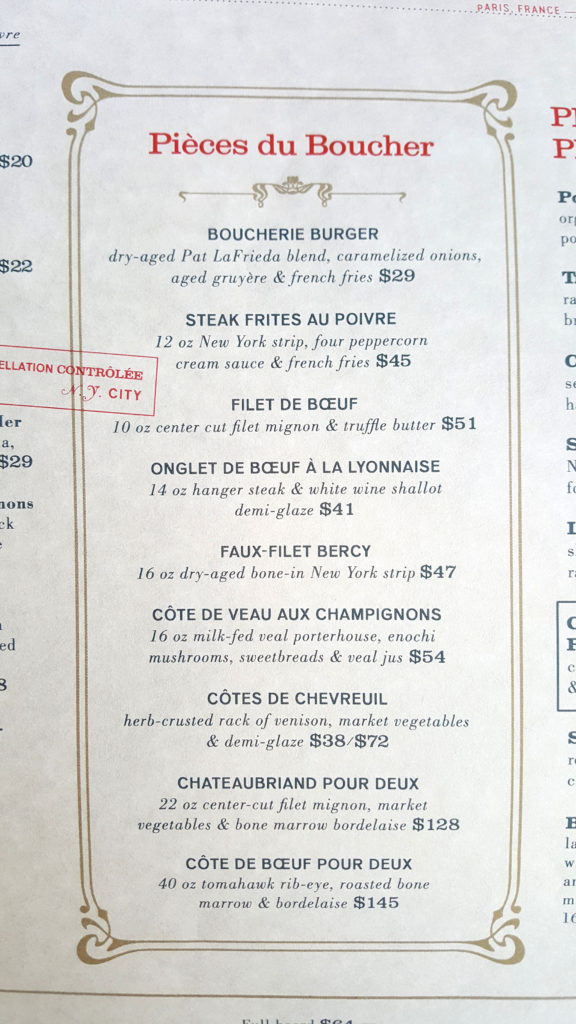
There are two types of strip, a filet mignon, a chateaubriand for two, a hanger steak and a cote de boeuf rib eye for two on the menu. They lack a proper porterhouse, but this is a fun menu because there are plenty of other meats to choose from as well.

Portion Size & Plating: 10
Portions here are massive. I suspect the sizes of some of these items may come down a bit after they get on track in the kitchen, but every dish we tried was large. As for plating, you can see how beautiful the pan of steak looked above.

Price: 10
The menu prices are pretty normal here, and given that the portion sizes are all generous, I had to conclude that you get a good value for your money here. As such, I will leave this scored at 10/10 until I visit again for a better perspective on the pricing.

Bar: 10
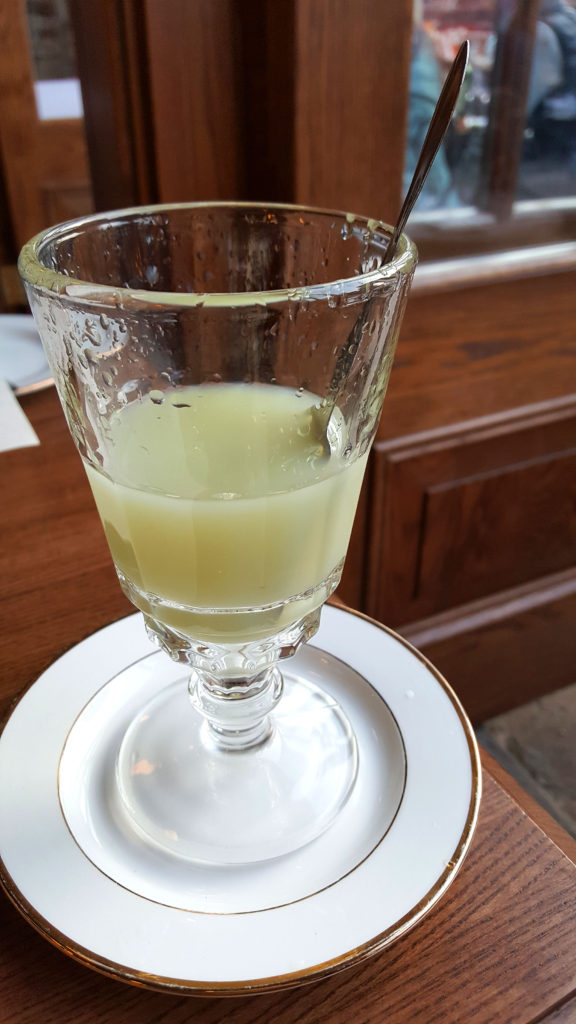
The bar is a beautiful and impressive stretch along the side wall, adorned with absinthe drinking tools and proper glasses for enjoying the spirit.

They offered just a pair of signature cocktails, which I imagine will change often since one was overly summer-themed, for some reason, and both were made with absinthe. But the bartenders definitely know what they’re doing. They mix a mean old fashioned.

dsc06019

Specials and Other Meats: 10
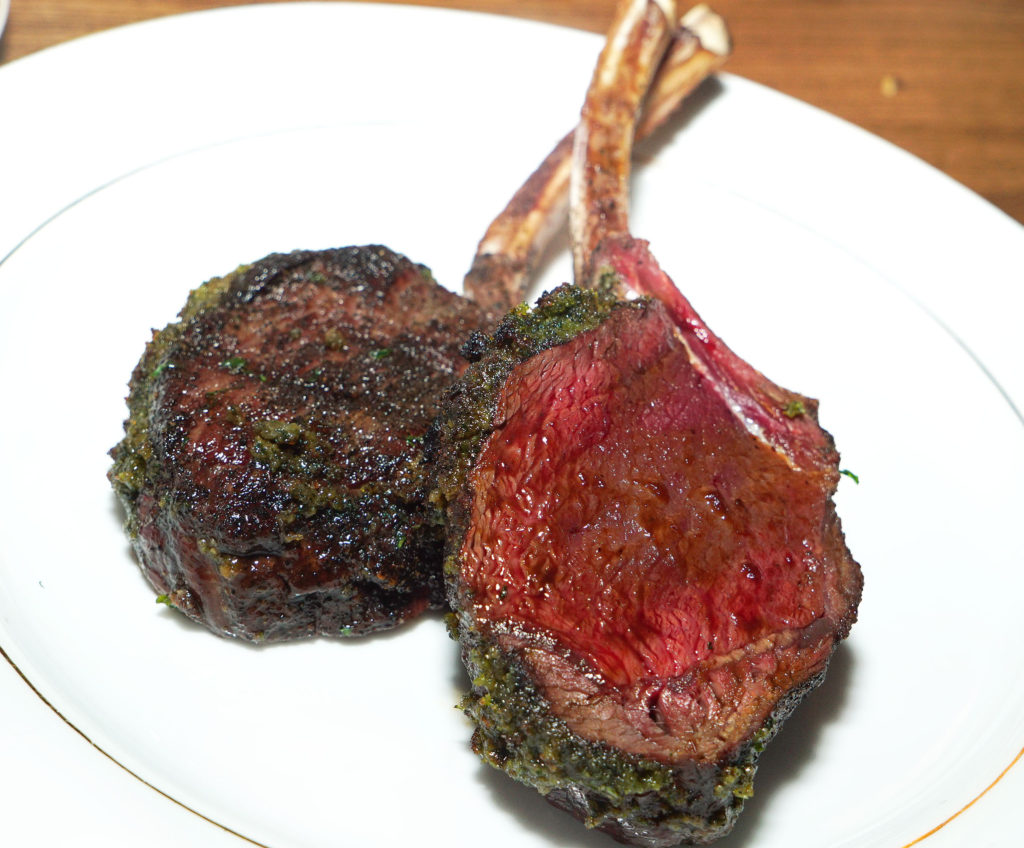
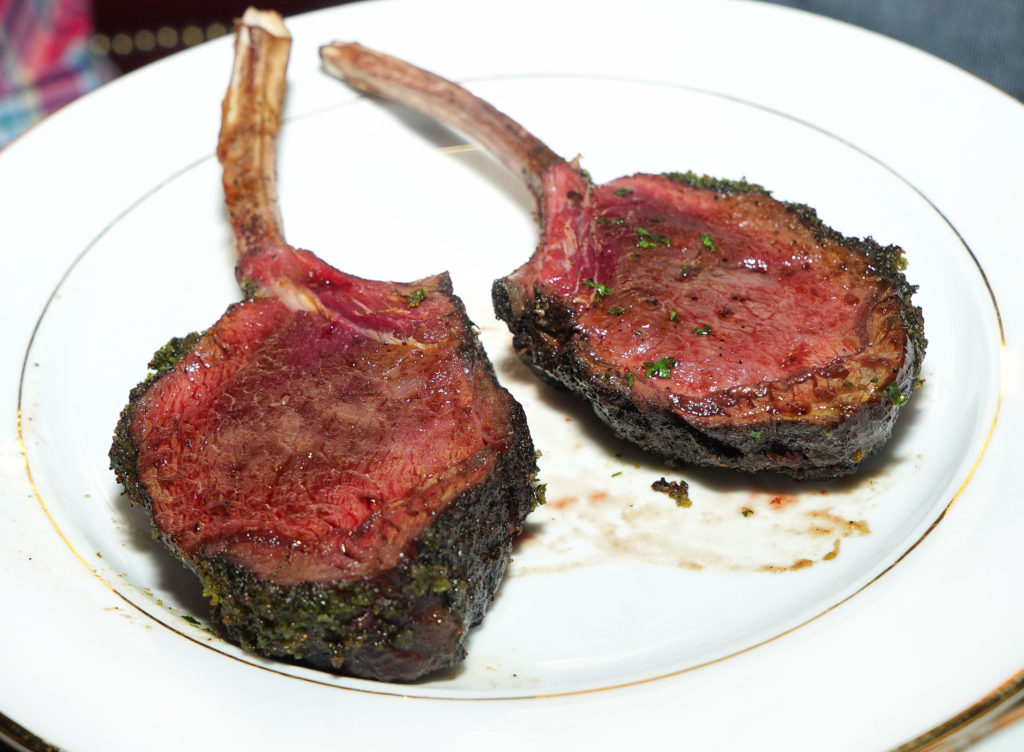
The non-beef selection is pretty great here. Well, there’s veal too, which is baby beef: veal porterhouse, if that’s your thing. And there’s tripe too; alterna-beef! There’s also a rack of venison, which was amazing.

They first coat it in honey, and then crust it with mustard, breadcrumbs and garlic before searing.

And finally, there’s duck, chicken, and even some rabbit in a pasta dish. This lacked seasoning but the meat was tasty and tender. Also the pasta was cooked perfectly.

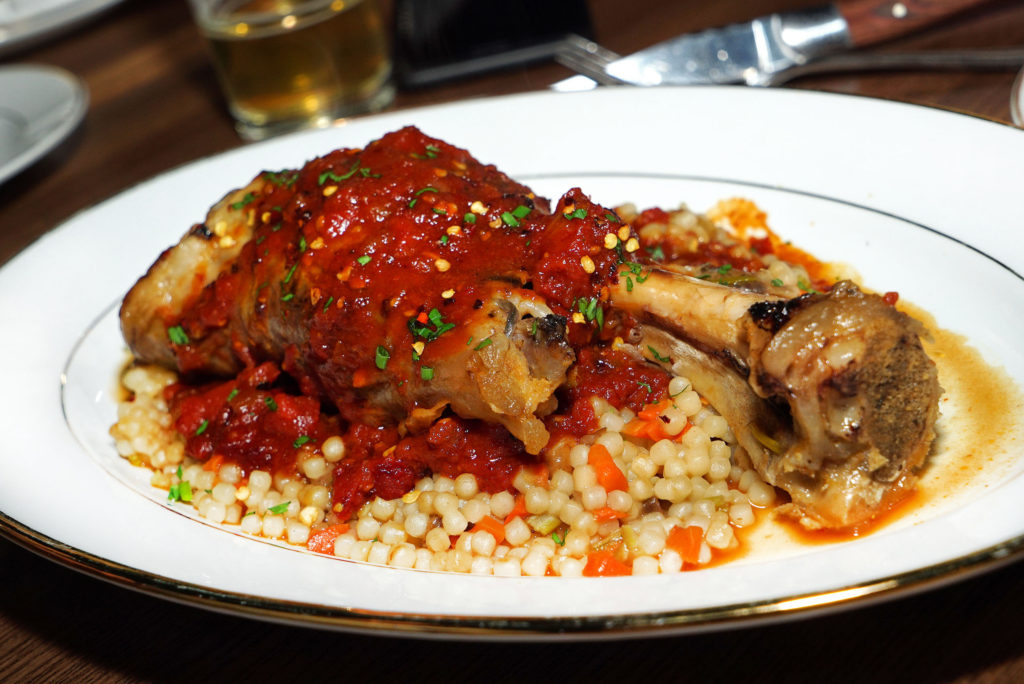
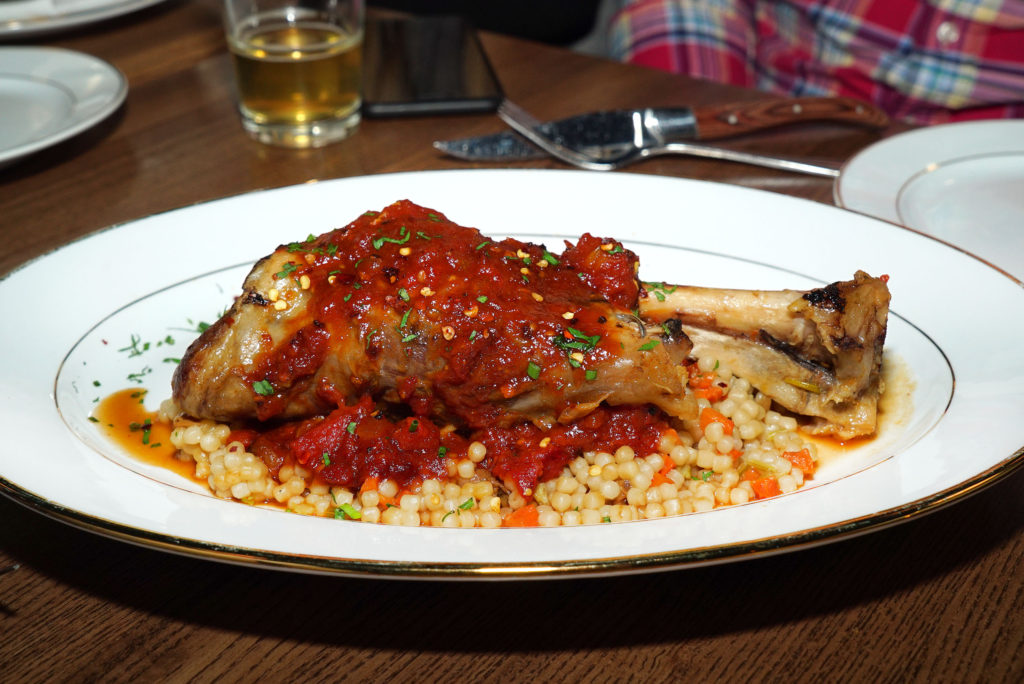
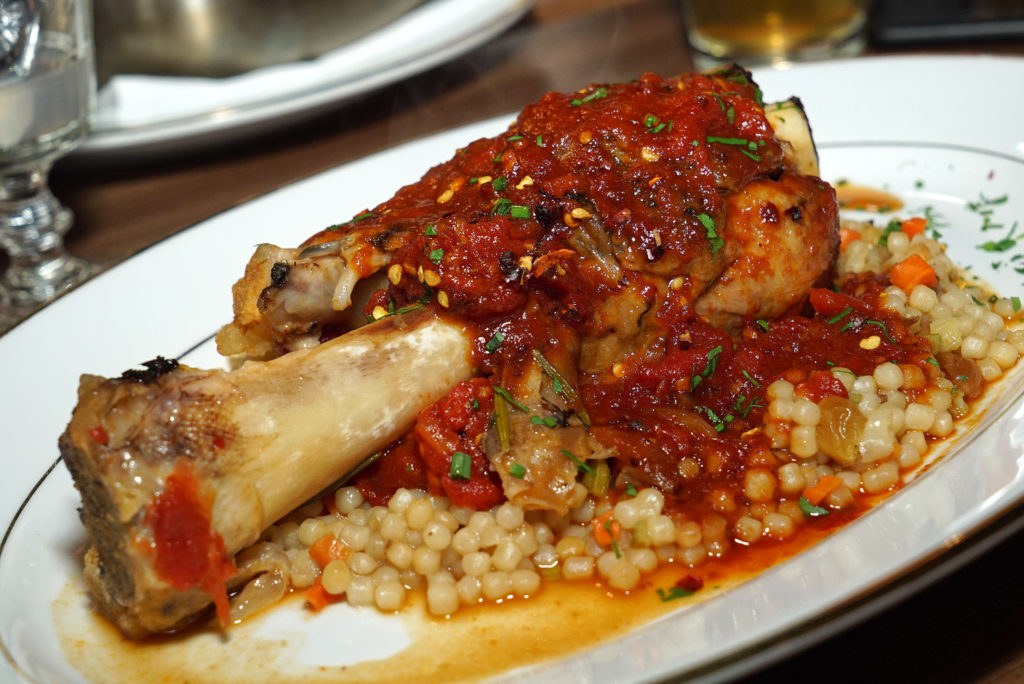
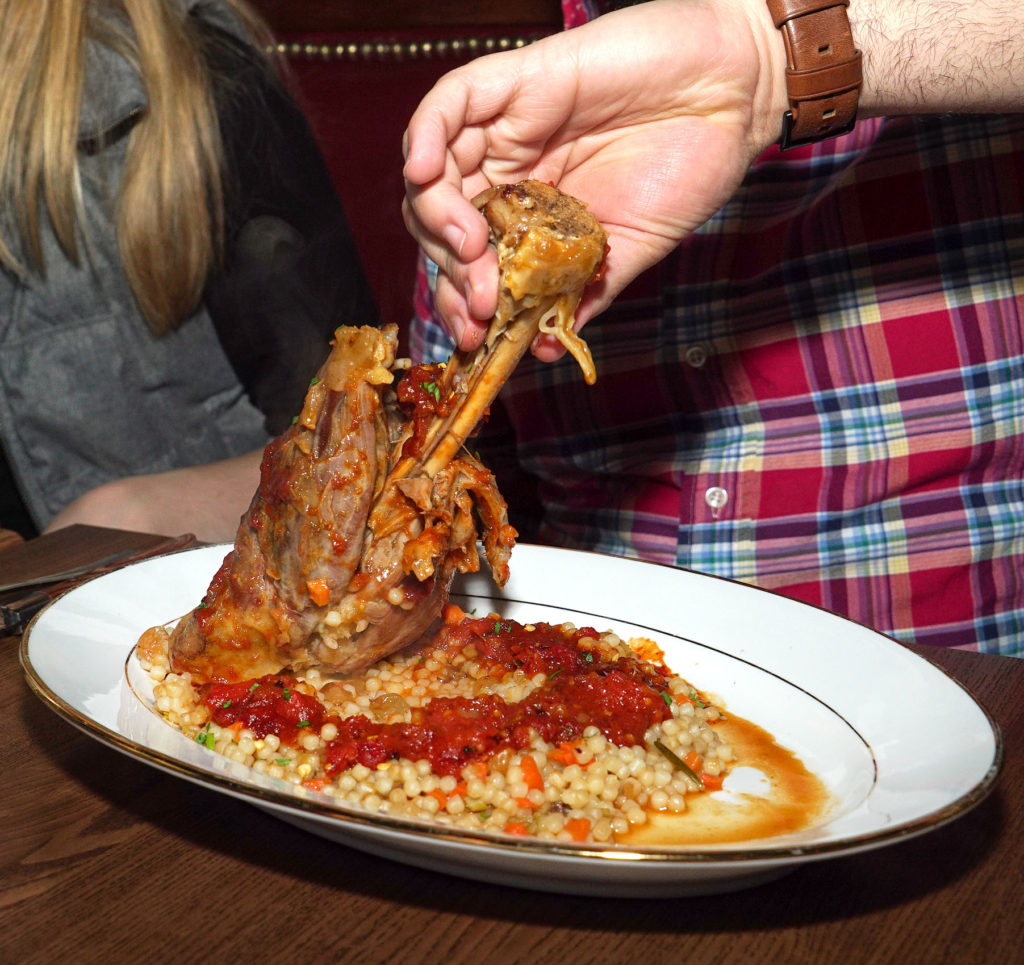
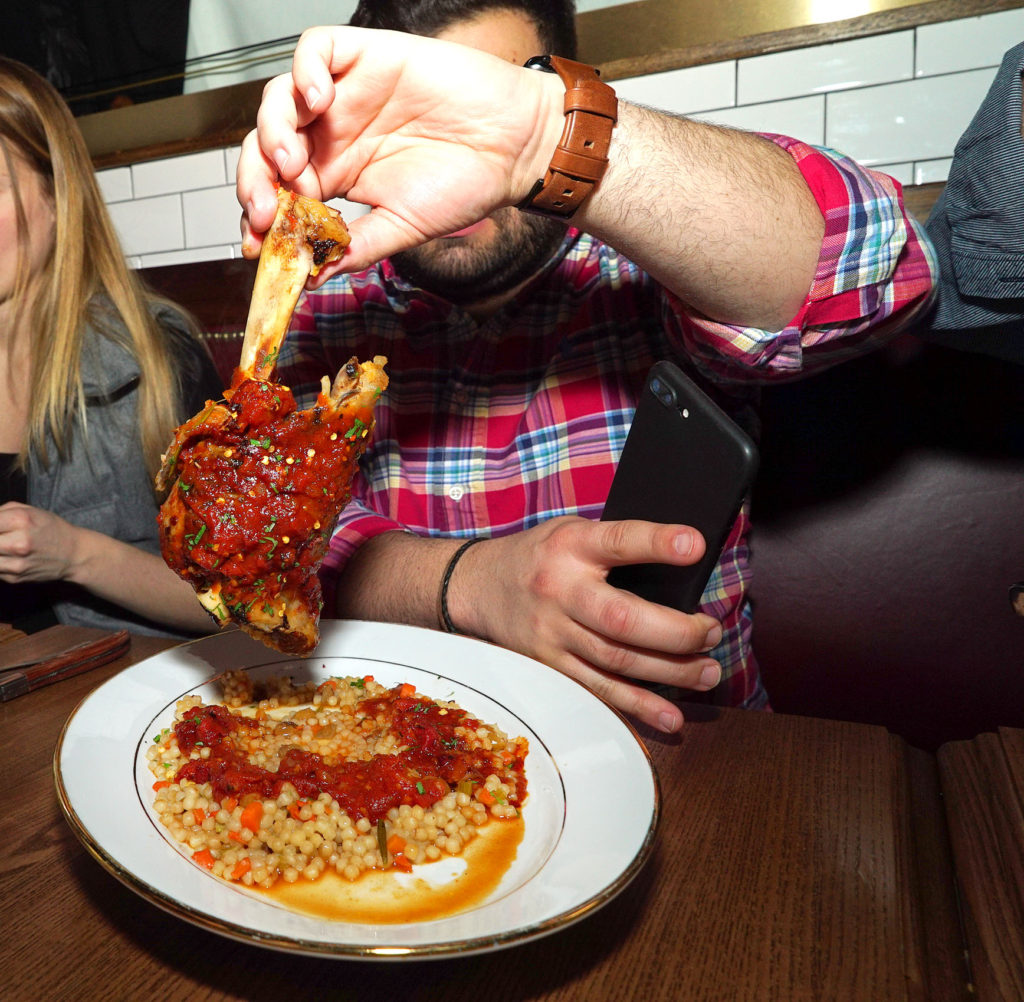
I also tried the lamb shank with cous cous, which was a new addition to the menu from my last visit. This, too, needed a hit of salt, but the meat was spectacular.

Apps, Sides & Desserts: 9
We only tried apps and sides on the first visit. Since the place was pretty slammed with their friends and family extravaganza, we figured we would clear out before dessert so that some other people could get a seat to eat. Here’s what we tried:

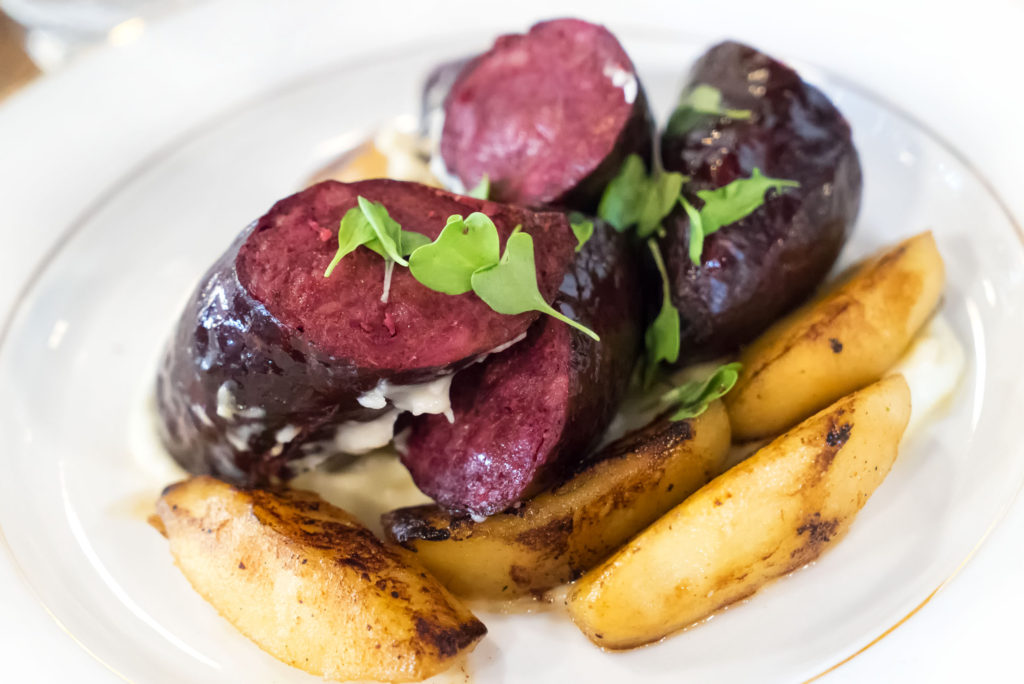
Blood Sausage – not everyone’s cup of tea, I acknowledge that. But this was one of the best versions I’ve had. There was no grainy, mealy texture to it, and no overly iron-flavored bites involved. A few spots contained some chew, but nothing repulsive.

dsc06023

The serving size was massive, and it was plated with roasted apples and a potato puree. If you split a salad with your dinner-mate, this could easily be ordered as an entree.

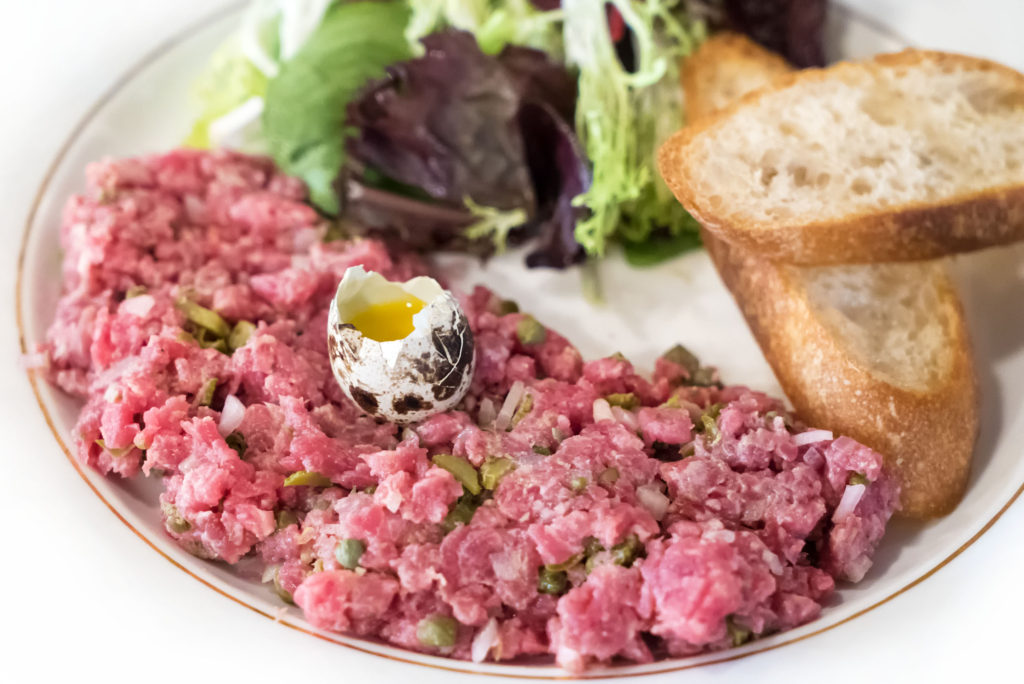
Steak Tartare – I love meat, so the idea was to try as many meat items as possible before ordering a meat entree. This tartare was great, and also a very big serving size. In fact, it was so big that it really could have used three quail eggs, if not a full chicken egg.

dsc06038

The texture was smooth without being too fine, and it had a good pop of flavor from the capers and herbs within.

Our sides unfortunately came AFTER our entree, but to be honest we didn’t mind. The table would have been a bit crowded with everything on it, and my wife and I actually felt a little bad for how slammed the staff was for such a massive preview night with so many guests piling into the dining room all at once.

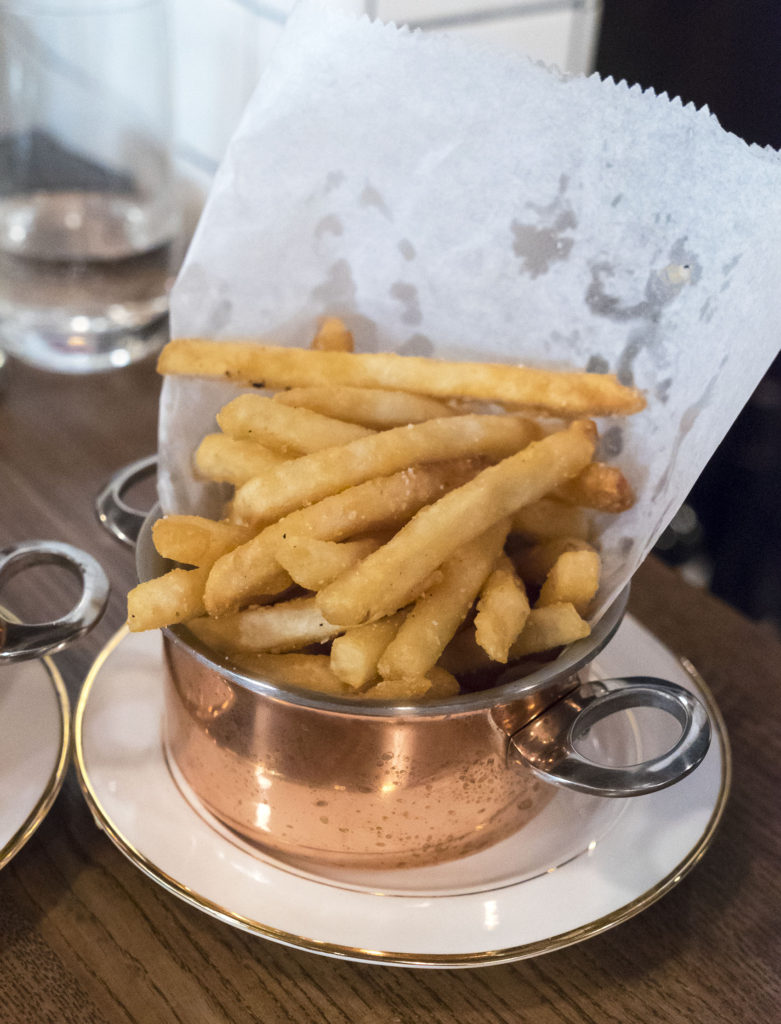
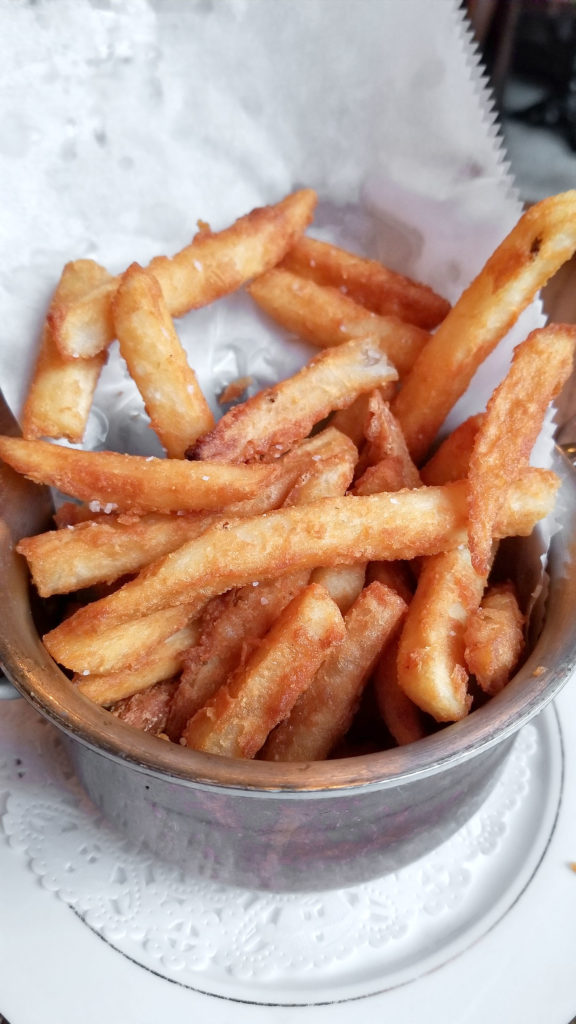
Fries – Hands down the best French fries I’ve ever eaten. Unreal. I mean, crispy outside, and like mashed potatoes inside. Perfectly seasoned as well. They just needed a mayo or something for dipping.

dsc06163

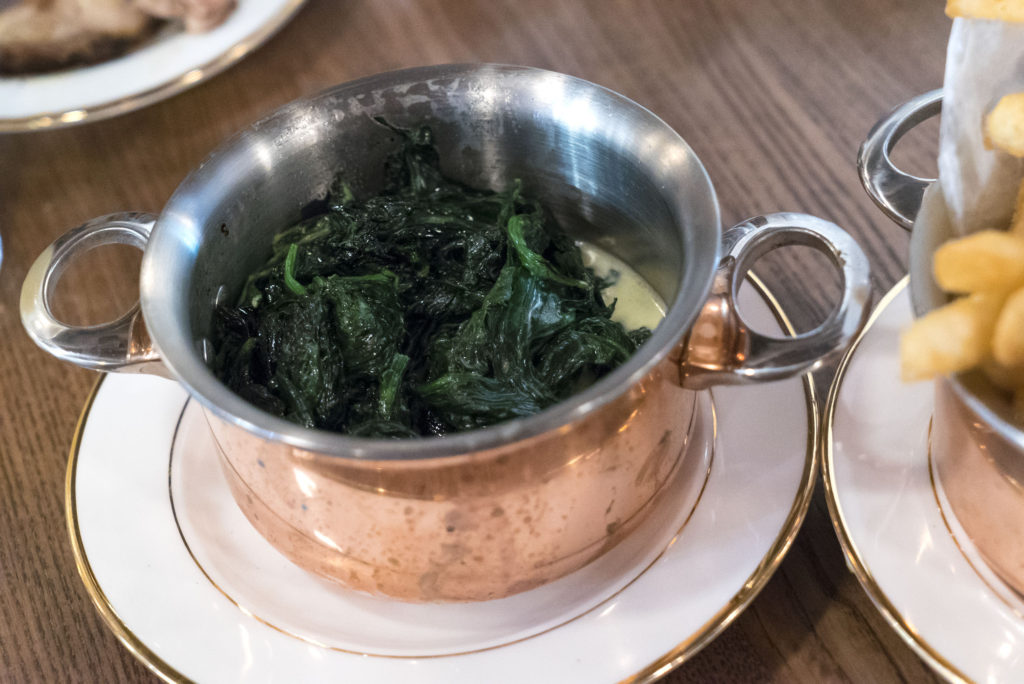
Creamed Spinach – Full, sauteed leaf spinach that’s really just served with a cream sauce at the bottom, to be mixed up with the spinach. Not bad. I’ve had better, but this was certainly not a bad item.

dsc06169

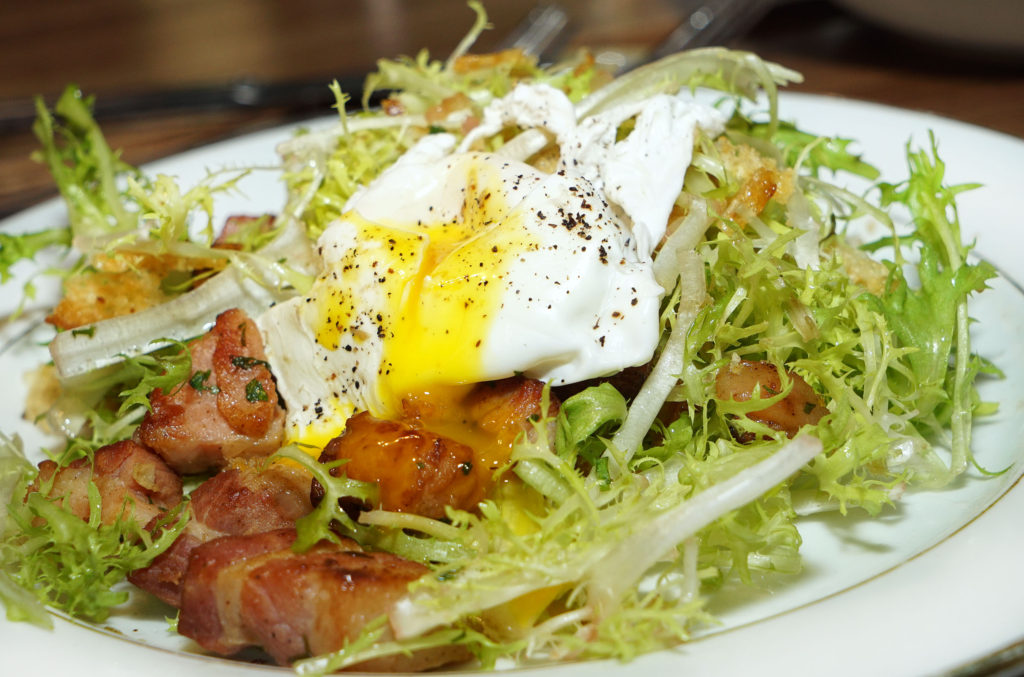
We tried a few other sides on a second visit. Frisee salad with egg and bacon. Very French and very good.

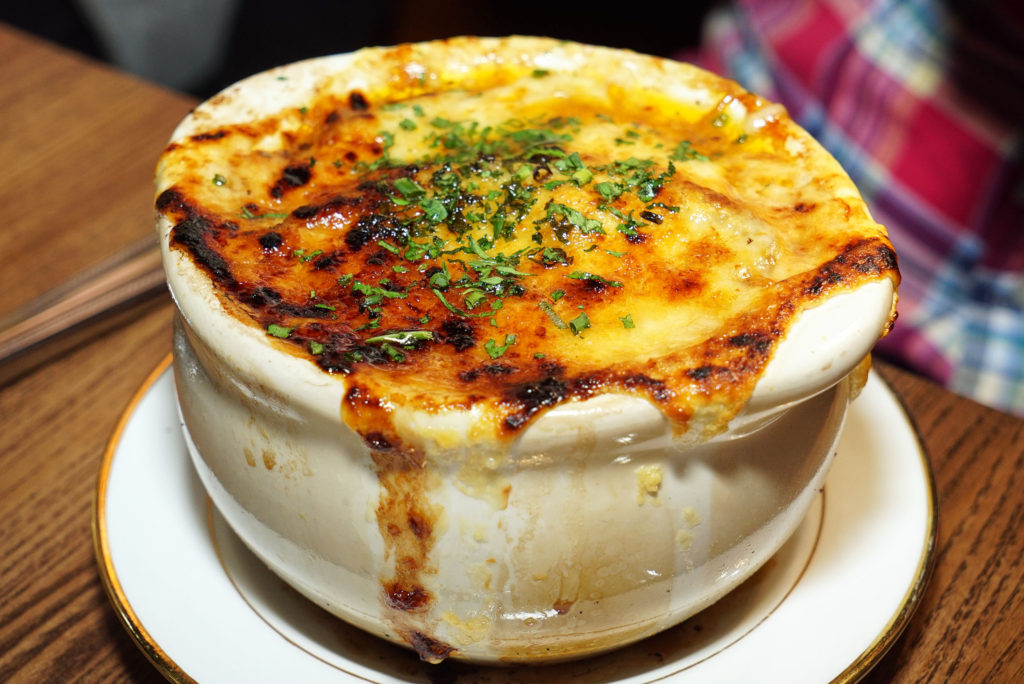
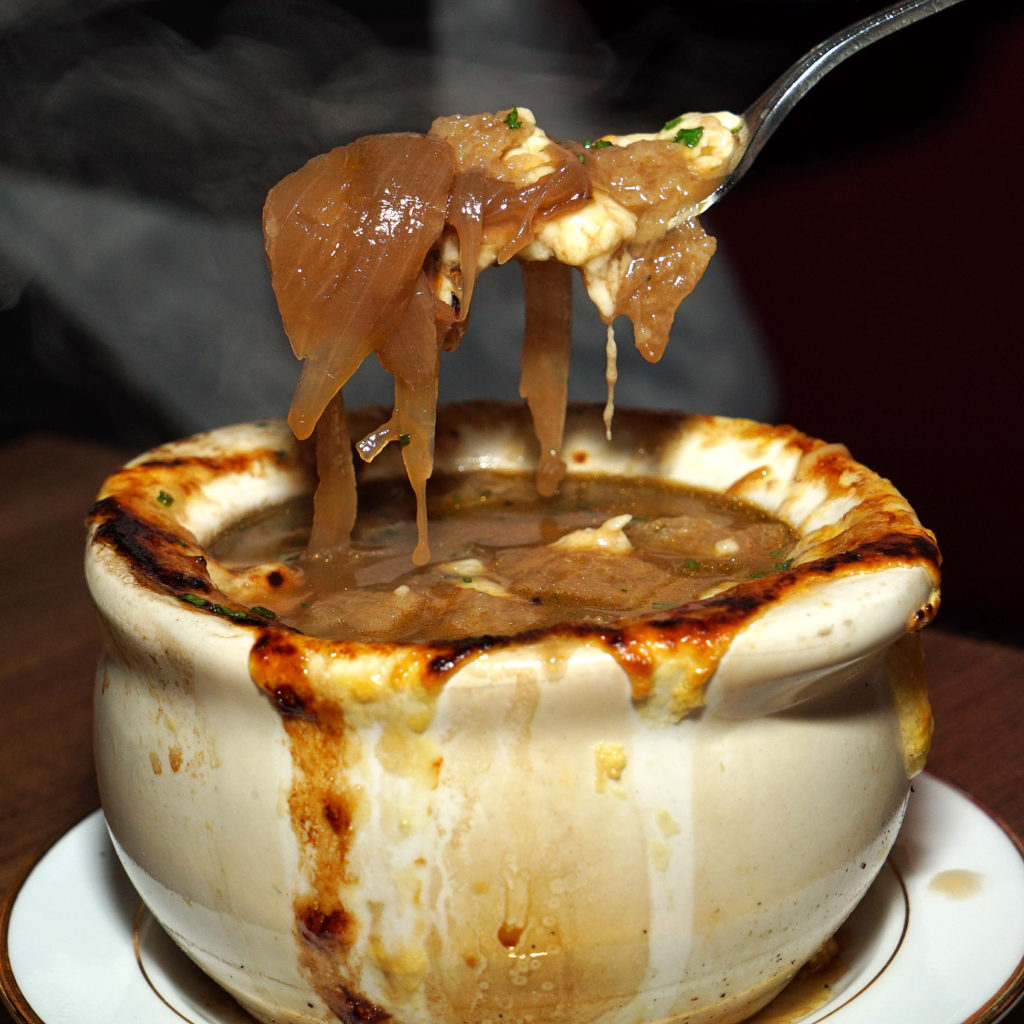
French onion soup:

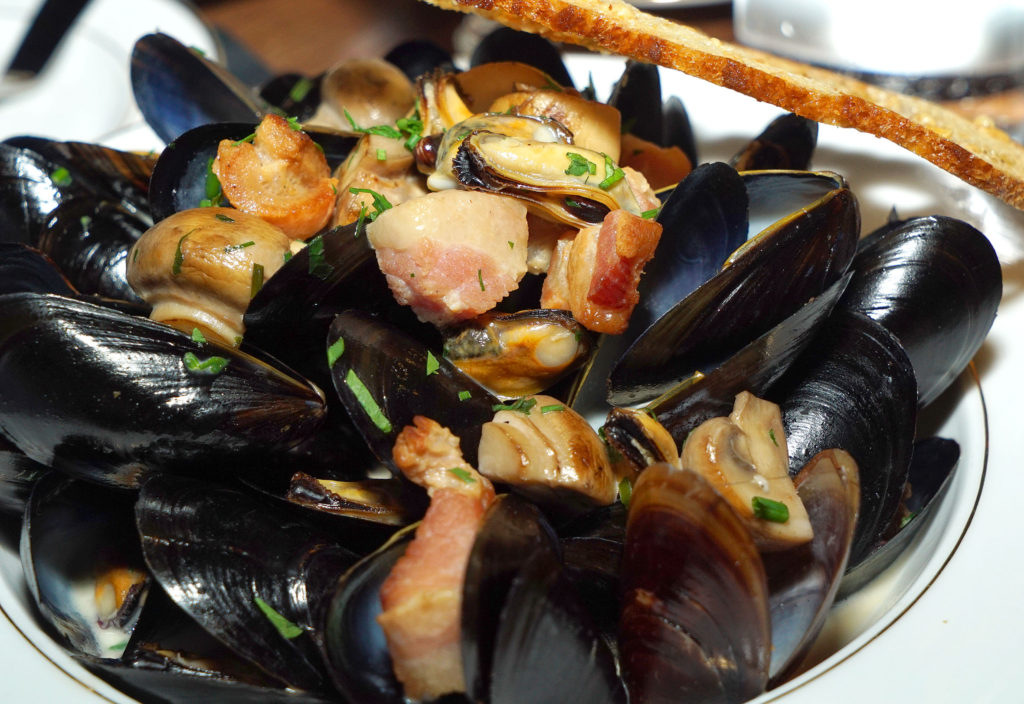
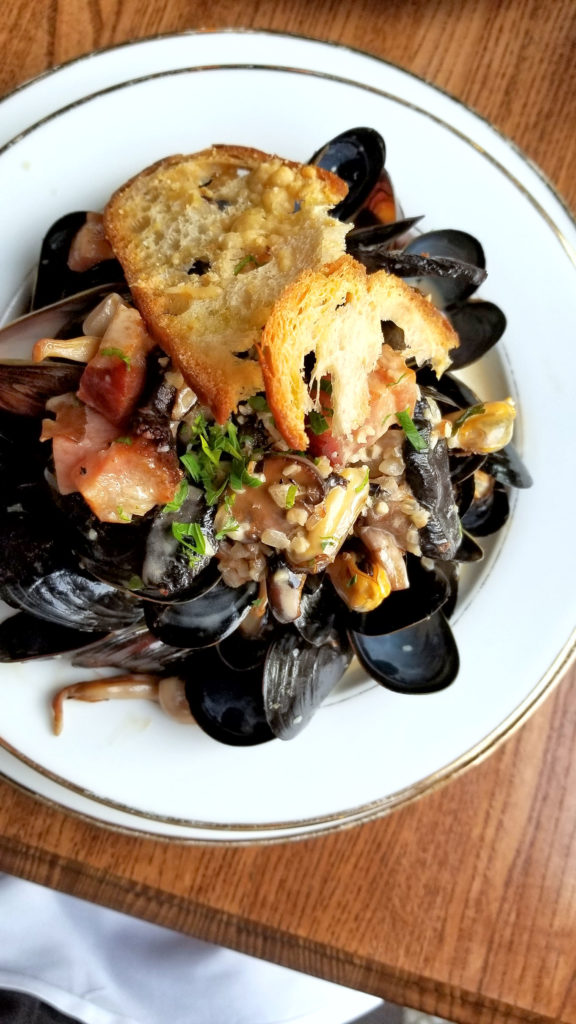
Mussels with bacon. A very nice creamy sauce was going on here too. Great with bread.

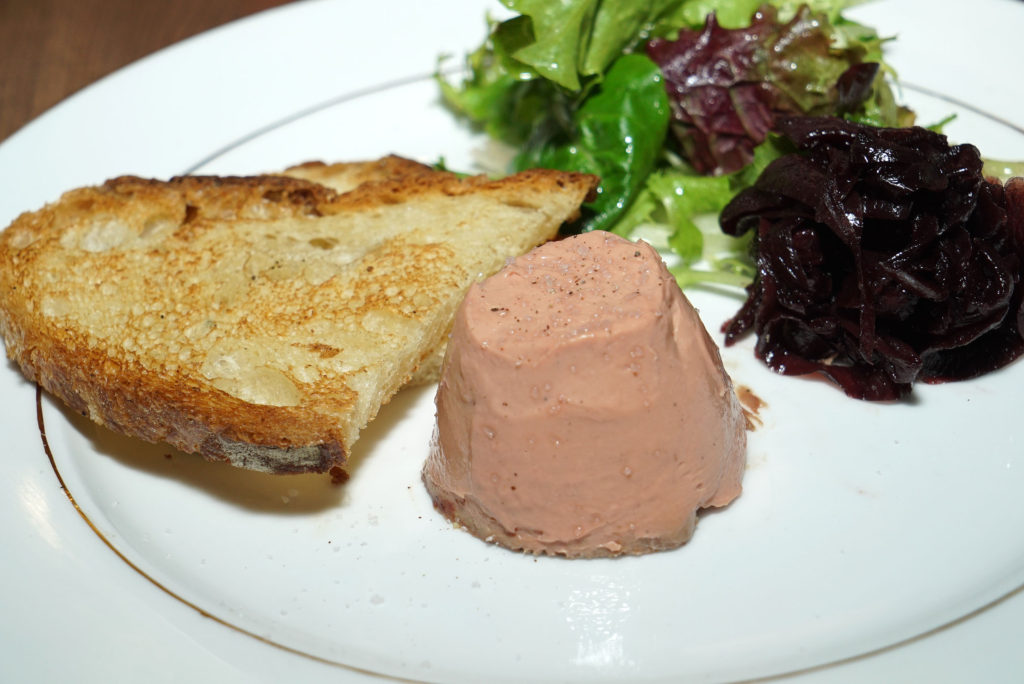
Fois gras pate. Incredibly smooth.

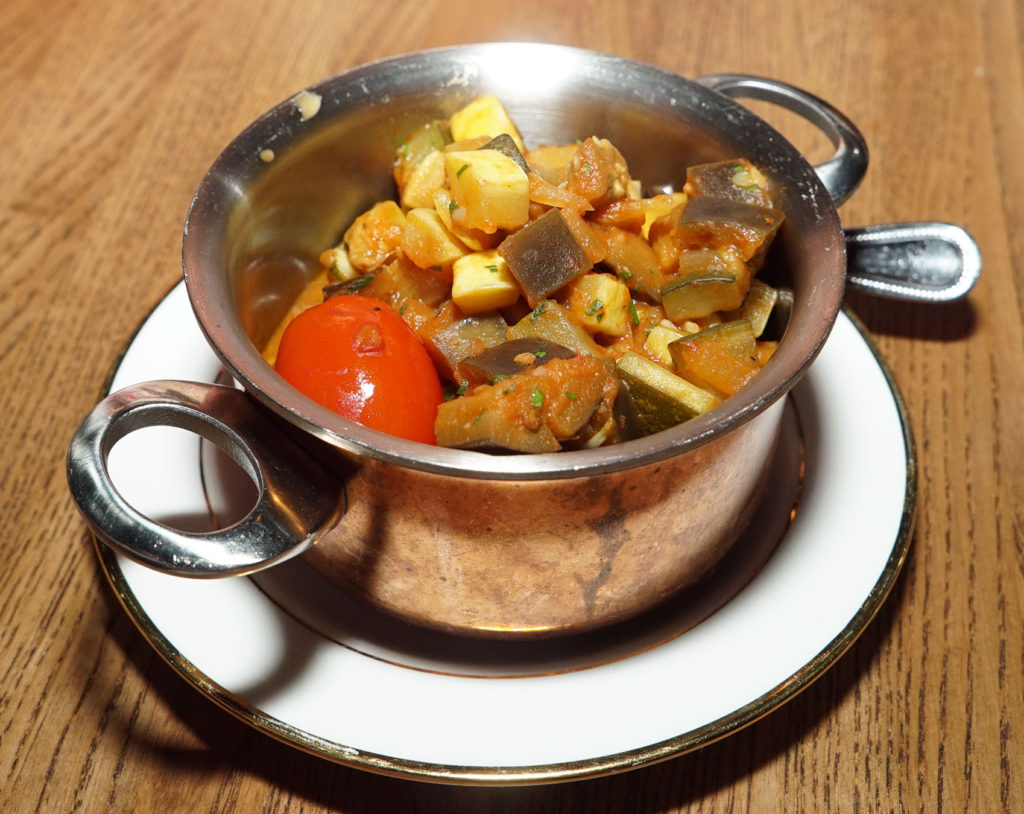
Ratatouille:

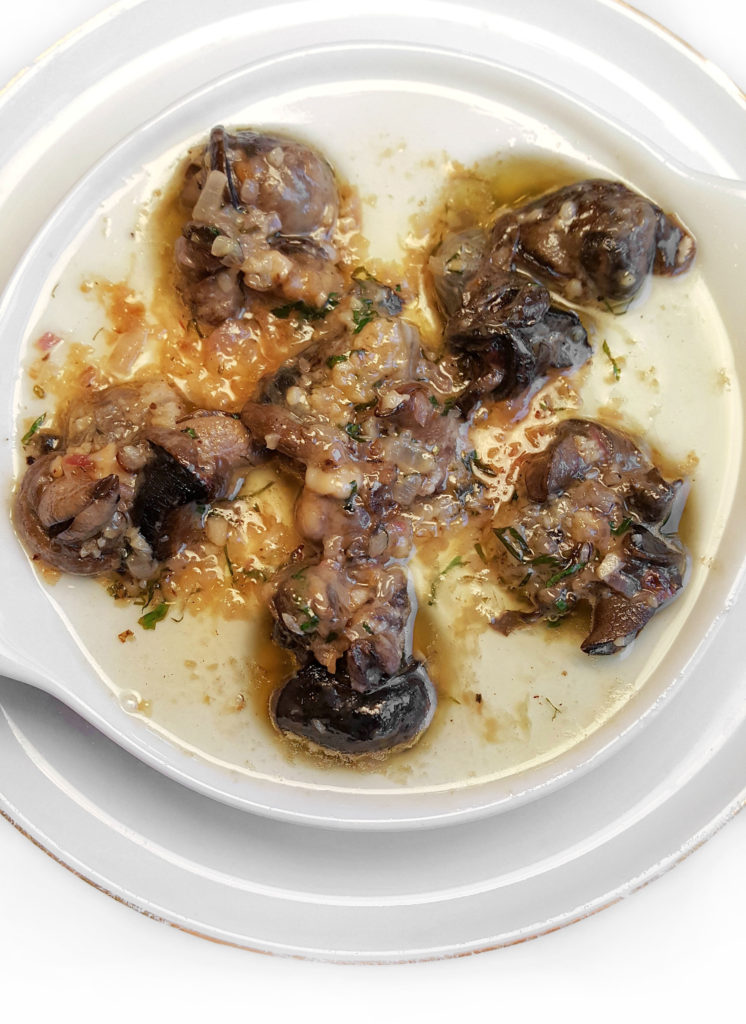
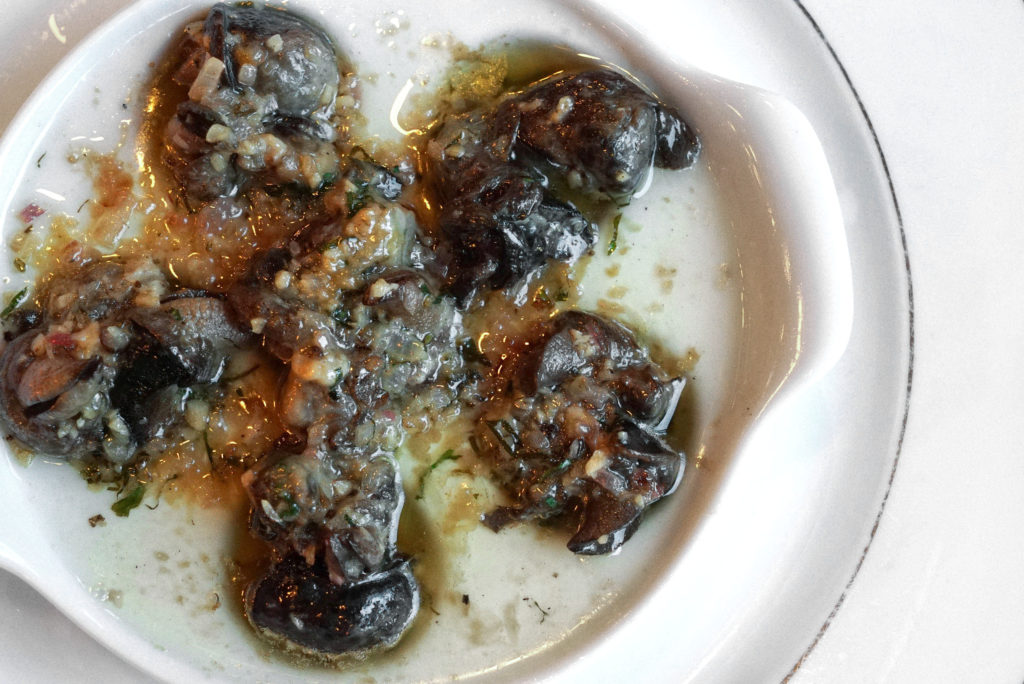
Escargot. These are not served in the shell, but each divot on the plate has two snails within, so looks are deceiving on this:

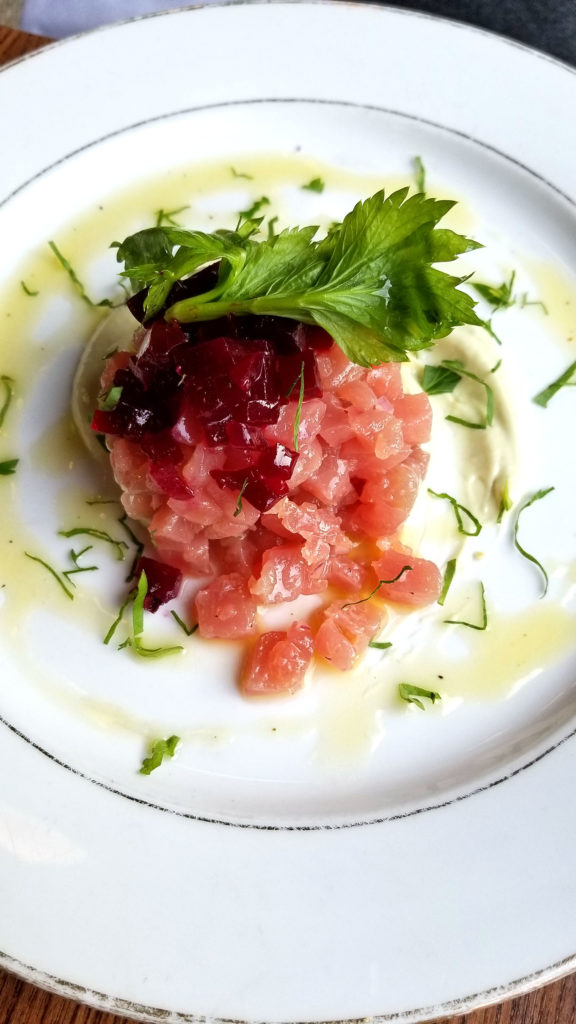
Tuna Tartare:

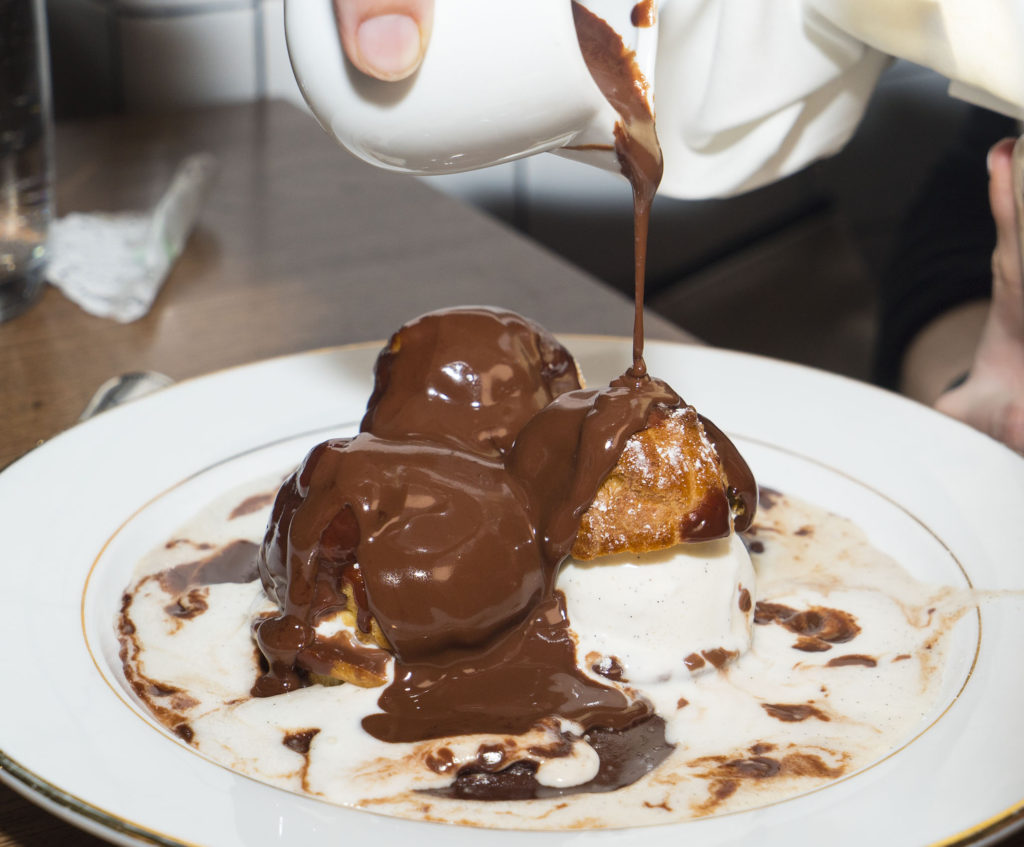
Profiteroles:

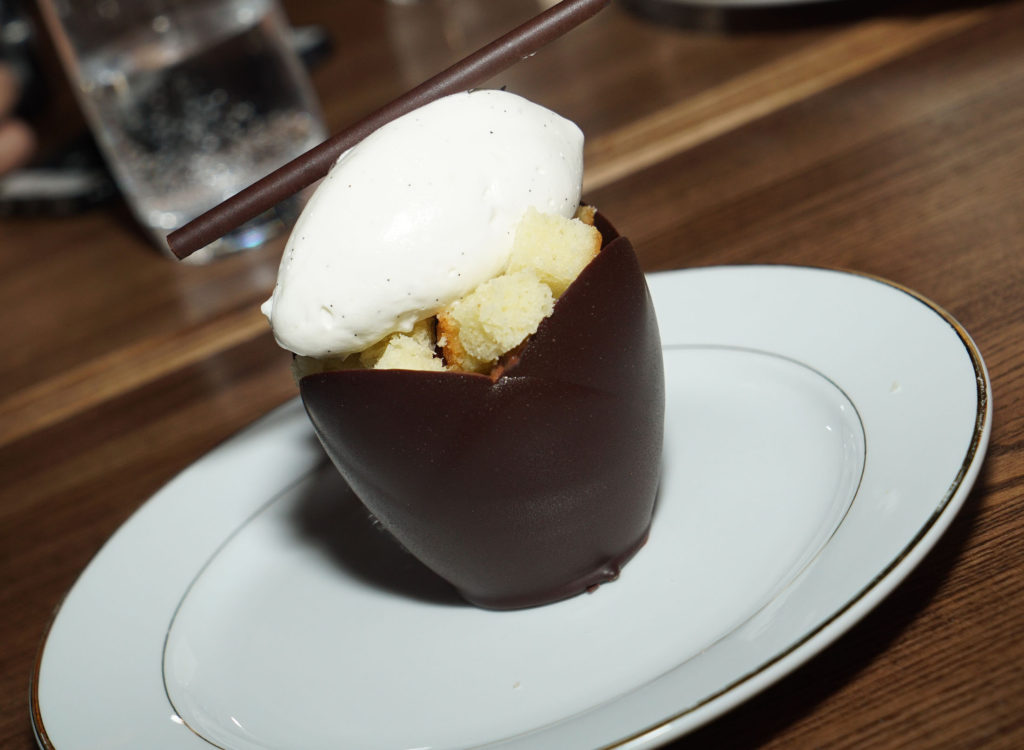
Chocolate mousse cup:

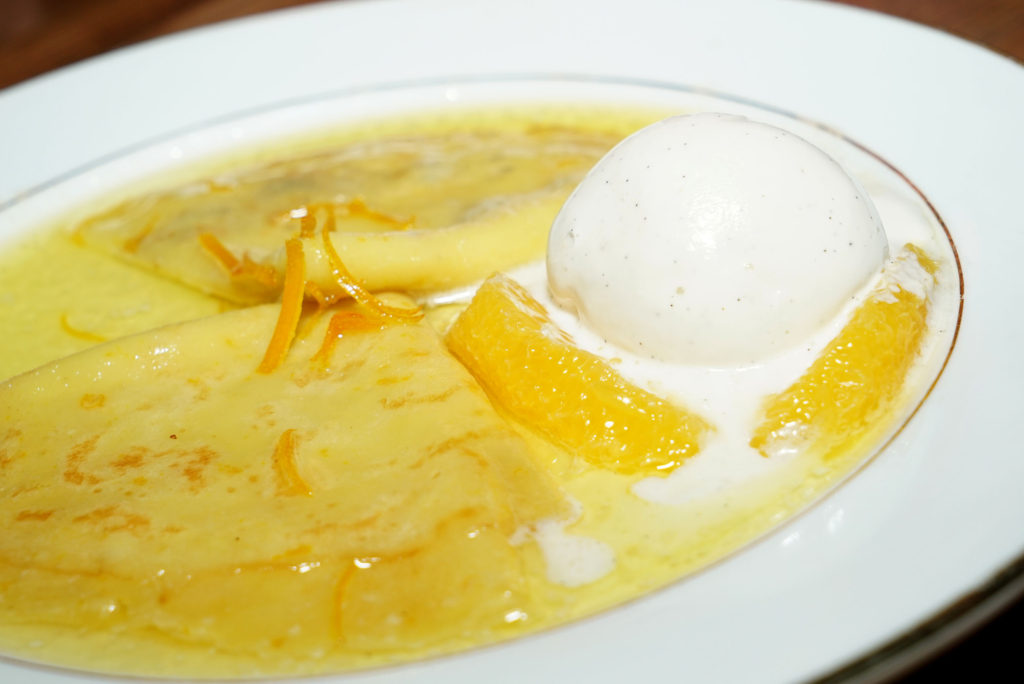
Crepes Suzette:

Seafood Selection: 8
You are dining at a place where the name, in French, means Butcher. Why would you even consider seafood as a possibility? If, for some fucking retarded reason, you’re considering eating something from the sea here as an entree, they offer halibut, trout and salmon. Since I didn’t try any, I can’t really comment.

Service: 10
Since this was a preview event that was incredibly swamped, you shouldn’t rely on the numbers here. We experienced a few missteps, but nothing that we didn’t expect given how packed it was. We had very slow service, and sides coming out after the entree. Some people, however, had some horrendous issues, like never getting their food. I’ll give this place a chance to officially open and sort itself out for a few weeks before I come back and give it an official score. For now I’ll stick with a general 7/10 as a place holder.

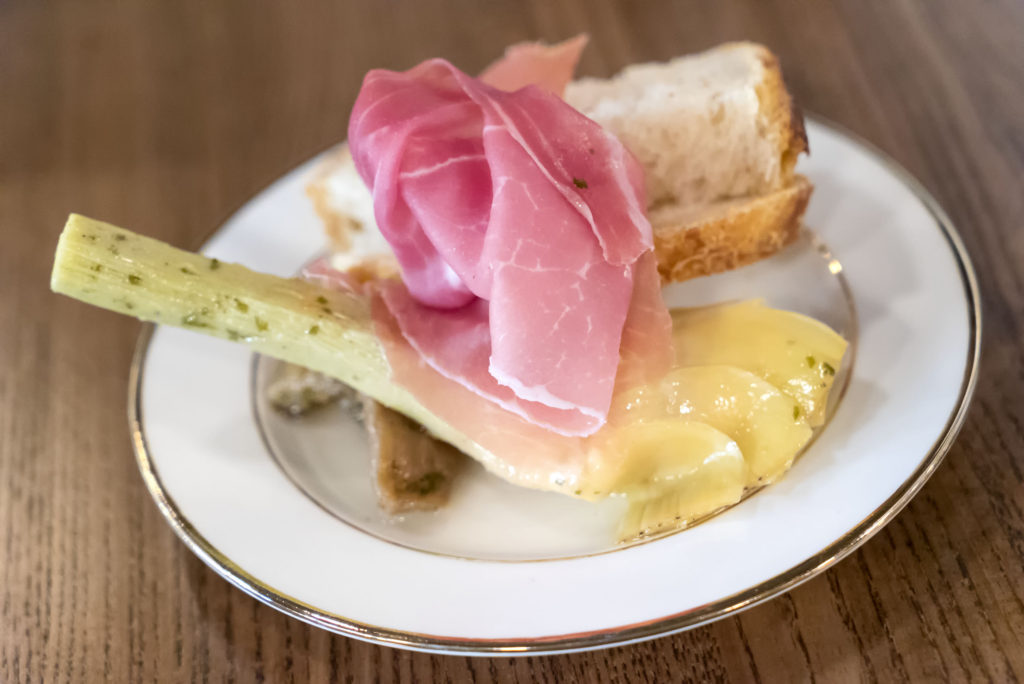
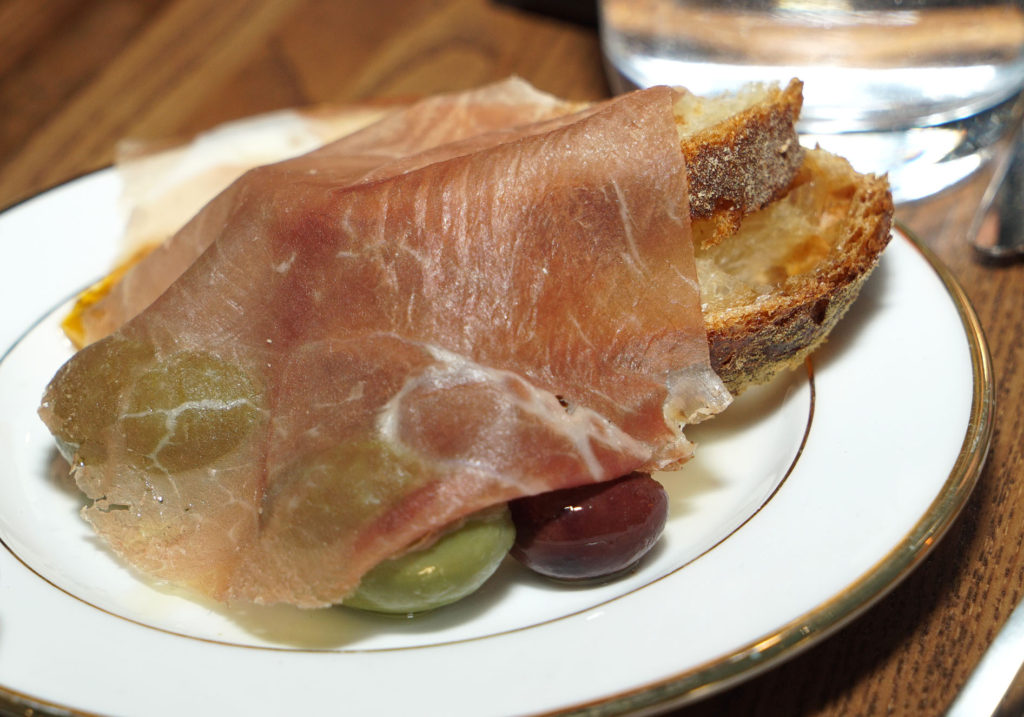
Oh yeah… the table bread comes with both meat and veggies; that’s pretty amazing. A slice of country ham with artichoke heart, pickled eggplant and bread:

dsc06015

On my third visit, these things didn’t make it out to the table. Service had improved a bit, but there were still a few minor missteps, like not bringing a spoon out for the soup, or not bringing condiments out for the burger and fries. Not a big deal though.

Ambiance: 10
What an amazing space. Wow. I mean, my photos didn’t do it justice, so I passed on sharing them here. But the place is located at the old Garage Bar spot, where you have 20ft wood-beamed ceilings overhead and a skylight. Also, the decor they went with is astoundingly gorgeous.

BURGER REVIEW

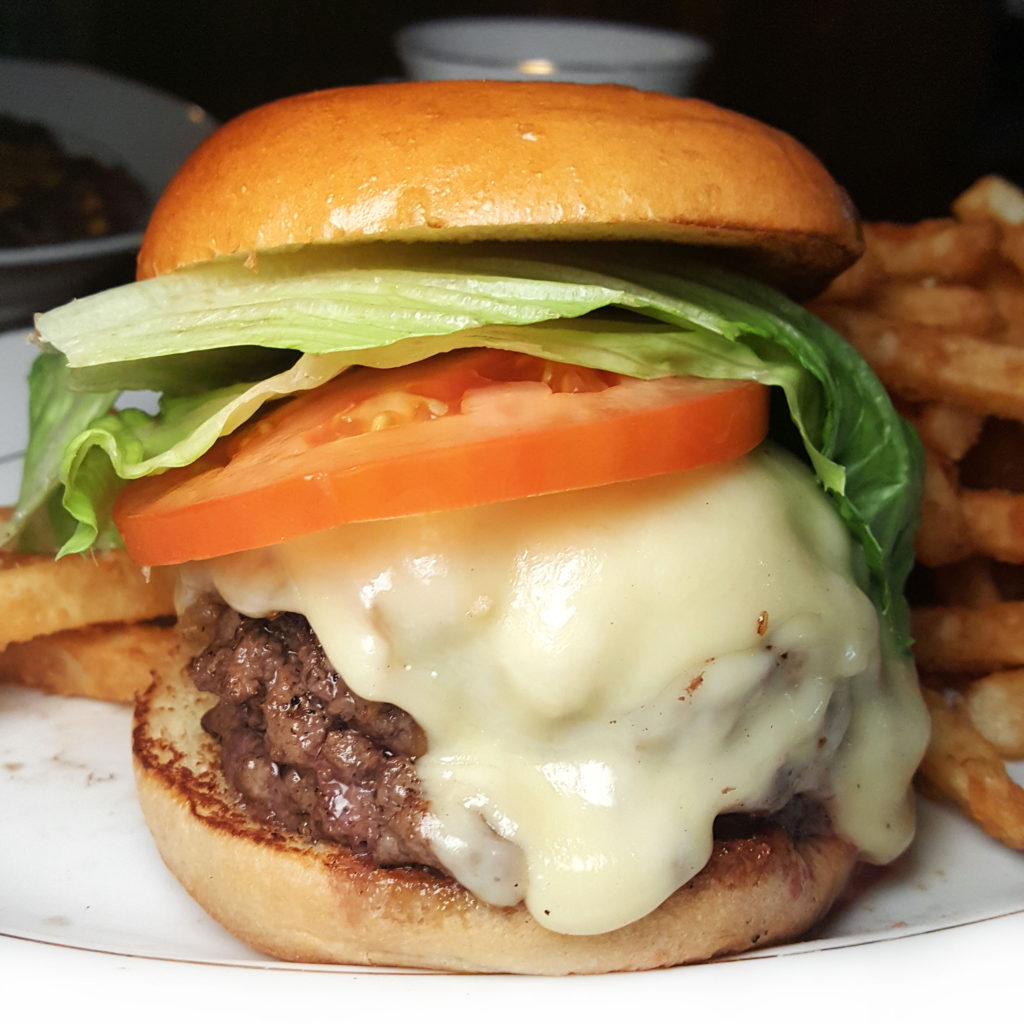
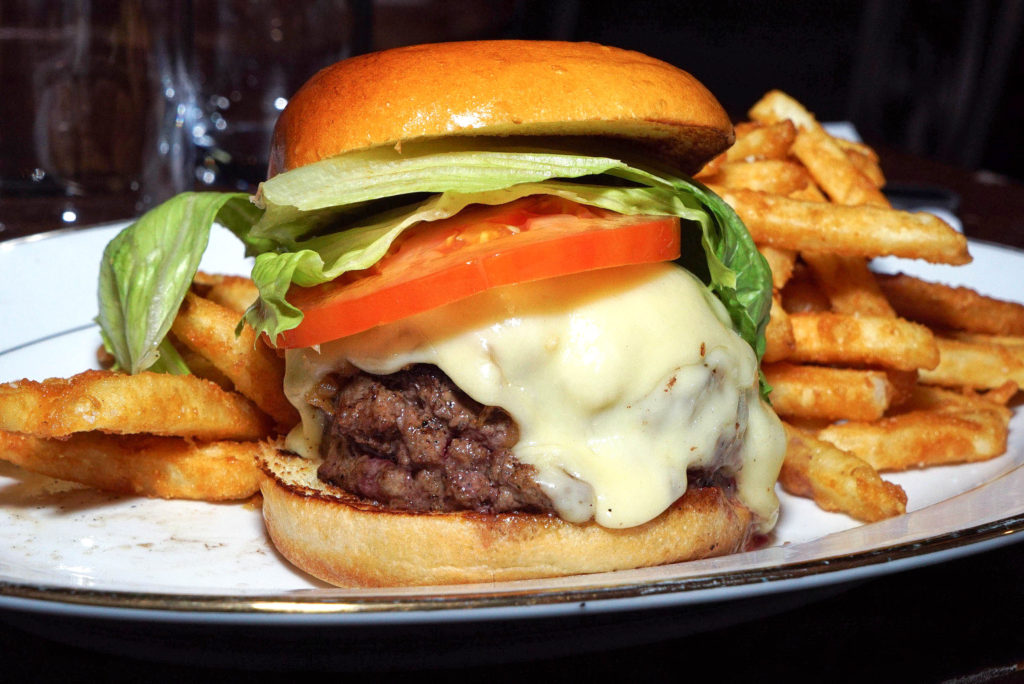
They offer a Pat LaFrieda dry-aged burger that’s topped with melted gruyere cheese, caramelized onions, lettuce and tomato. At $29 it’s a bit pricey, but the patty is thick and tasty.

It comes with fries, so that’s a plus. The only negative was that my bottom bun sort of sogged up and fell apart. Maybe a slick of mayo on there would help create a vapor barrier on the bun.

LAFRIEDA PARTNERSHIP

Boucherie partnered with LaFrieda to offer special “cut of the week” steaks that will change up bi-weekly. I was invited in to try them out and shoot photos. Since there aren’t sticking on the menu for good, I’m not including them in my official cuts pages. I am, however, going to score them out of 10 points for you based on flavor.

Round 1: Snake River farms 12oz wagyu sirloin. 9/10

Round 2: 120 day dry-aged bone in strip steak. 9/10

Round 3: 25 day dry-aged porterhouse. 7/10

Round 4: 60 day dry-aged bone-in tenderloin. 8/10

BOUCHERIE
99 7th Ave South
New York, NY 10014

Meet Your Meat: Anne Burkholder

What’s this? A new kind of post? Why, yes, it is!

Meet Your Meat posts are a new way for me to introduce my readers to the people responsible for raising and producing our food. Farmers, ranchers, processors, butchers, etc. You get enough chef info in my restaurant reviews, but it’s high time that I start focusing on the people who actually supply restaurants with their delicious beef proteins.

I recently attended “Top of the Class” beef advocacy training at the National Cattlemen’s Beef Association in Denver, Colorado. I’ve blogged about the Masters in Beef Advocacy courses that I took a while back, and Top of the Class is like the PhD level for that training.

That experience is the subject of a whole other post, so I won’t get too deep into it here, but the point in mentioning it is to anchor your understanding of why I’m choosing Anne Burkholder to be the first person that I spotlight in this new “Meet Your Meat” endeavor. Anne was an instructor at the Top of the Class, and over the course of the two day training program, I got to know her and was inspired to write about her journey.

https://feedyardfoodie.wordpress.com/

Since I and most of my readers are from the NYC metro area, many of us don’t know a lot about farming, or we take it for granted. Most of us are probably still in the dark about what it takes to bring beef to our plates every week. We just don’t get exposed to the process often enough.

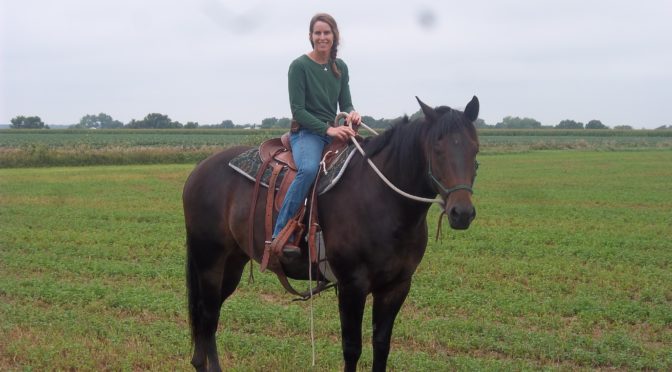
Anne represents all of us urbanites and suburbanites. She grew up in urban Palm Beach County, Florida. While anything “Florida” may sound like a sprawling paradise to us NYC folks, urban Palm Beach is certainly not a farming community; it’s a city!

Smart as a whip and with incredible athletic pedigrees in both cross country running and swimming, Anne attended an ivy league college. She met her husband Matt there, and they later moved back to Matt’s home town in Nebraska.

Matt’s family owned and operated a diversified farm business. What is a diversified farm? Essentially it’s when a farm produces a variety of crops or animals, usually both, with the crops feeding the animals that they raise, in an effort to create a self-sustained farm with little waste or reliance upon other operations. You may recall that Walbridge Farm is like this as well, where they grow sunflowers and raise cattle, with the sunflowers being used to produce both sunflower oil and cattle feed.

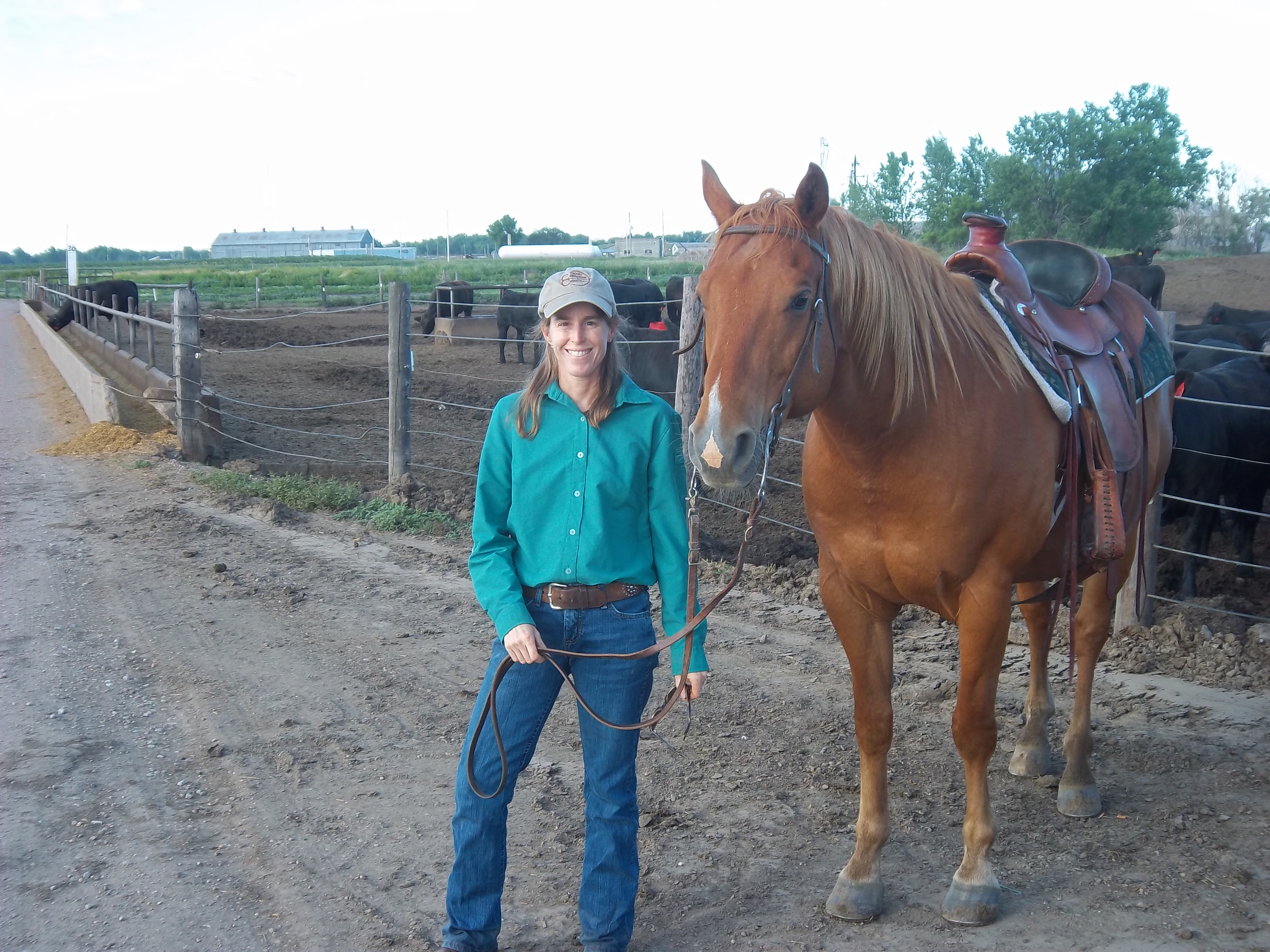
Okay so back to Anne. Soon after graduating cum laude at Dartmouth, she was putting on boots and blue jeans to work at her and her husband’s cattle feed yard, Will Feed, Inc. This is where cattle get fattened up, so to speak, before going off to market. Check out this short video that explains what she does:

See how much space these animals have? Just goes to show you how bogus those myths are about “factory farming.” But anyway, I digress…

Nearly 20 years have passed since Anne moved out to the country, and she still loves what she does. Apparently the beef community loves what she does as well:

In 2009, she was awarded the Beef Quality Assurance Producer of the Year Award for her volunteer work in beef farmer education concerning animal welfare and food safety. In 2013 she was voted to Vance Publishing’s 40 under 40 in Agriculture, and in 2014 she was awarded Beef Magazine’s Trail Blazer Award. Both awards were given for her work in consumer outreach through her blog, Feed Yard Foodie.

She’s a member of the Tyson Fresh Meats Animal Well-being Committee for Farm Check, the National Beef Quality Assurance Advisory Committee, a Director of the Nebraska State Beef Council, and an avid advocate for the cattle industry. She’s constantly and actively improving cattle welfare and beef safety. She is an irreplaceable asset.

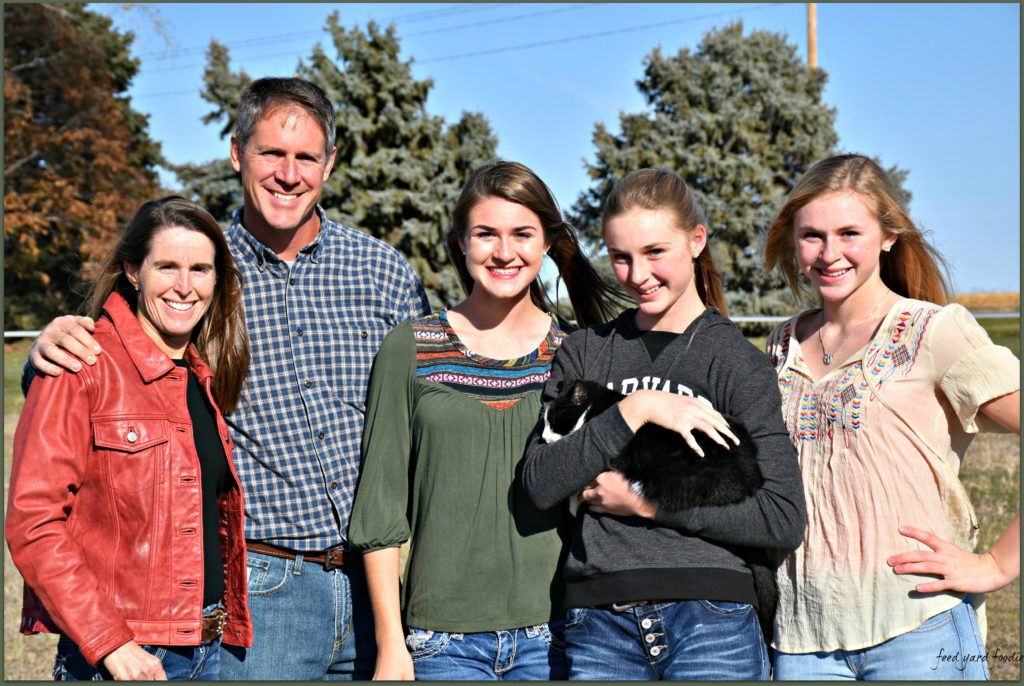
The best part is that Anne’s operation is a family farm, and she loves the personal responsibility that her three daughters learn from taking care of their land and animals. So not only is Anne working to improve all-things-beefy, but she is setting a great example so that the next generation can do so as well.

wp-1481043934731.jpg

In addition to running cattle on grass in the spring and summer, Anne is soon to start a new job with Beef Marketing Group and Innovative Livestock Services. Her role will be in communications, and she will also be helping take on various animal welfare projects for four Nebraska feed yards. She’s looking forward to implementing her animal care ideas to impact a larger number of animals.

I encourage you all to follow her blog and check out her insightful posts. She’s a wonderful person and an inspiration.

B.A.M. Episode 6: Antibiotics, Schmantibiotics

A whole crapload of unnecessary freaking out has happened over ranchers’ use of antibiotics in the raising of animals for human consumption. While some of the alarmist stuff out there might sound scary, in reality it isn’t. So I feel the need to ease some tensions here with this beef advocacy post.

It’s Humane

The judicious use of antibiotics is the humane thing to do for animals that are in need of care. Just like humans, animals need help every so often to fight off a bug. When sick, their ears droop, they cough and have runny noses. They separate from the herd and go off by themselves. Some diseases can be avoided through the use of vaccines, and illnesses can be prevented and combated with the use of vitamins and antibiotics.

DSC04728

The Law

By law, producers must wait a certain amount of time after administering an antibiotic before an animal can be slaughtered for consumption, to ensure that no traces of the antibiotic remain within the animal. These “withdrawal times” are strictly monitored and vary from 0-60 days based on the substance being administered. That means you can be confident that there are no antibiotics in the meat you buy at stores or order in restaurants. Once the withdrawal time is tolled, that basically means the antibiotic has been completely metabolized and has worked its way out of the animal’s system.

Ranchers must carefully follow directions for administering the proper amounts of antibiotics to their animals, and the FDA tests for traces of antibiotics in meat products as well. There is a mess of paperwork, regular federal inspections and tedious record keeping involved in this entire process. It really is a tightly run ship.

DSC04699 b&w

Let me unpack those generalizations a bit here: Under new FDA guidelines, there are very specific, detailed measurements that are set for antibiotics in feed – authorized by veterinarians – that are called “veterinary feed directives.” These directives outline exactly how long an antibiotic can be used and which illnesses can be treated. They also specify the number of animals that can be treated.

Again, these drugs will only be used to treat, prevent and control disease with the oversight of a veterinarian. Farmers and ranchers will be required to form even stronger relationships with licensed veterinarians in order to receive authorization for the appropriate antibiotic for a specified illness, and for a specific time period. I’d say that creates a pretty well regulated and closely monitored situation.

Additionally, new laws require that little to no antibiotics given to the herd can be in the same class as human medicines. This is done to prevent any potential reduction in the effectiveness of antibiotics that are needed to treat human diseases.

DSC04683

Even something as simple as a vaccination carries with it a host of guidelines. For example, no shots are allowed in the hip or thigh, as this can damage the sirloin or round cuts of beef.

Ionophores

This is a good time for me to talk about ionophores, actually. Ionophores are a class of antibiotics that are not involved in human health because they work specifically in the rumen (a digestive organ which we do not have).

Coccidiosis is a parasitic disease in the intestinal tract of animals caused by coccidian protozoa. Ionophores combat these organisms, so they’re technically “antibiotics” from the US standpoint.

In Europe, these ionophores have a different term (anticoccidials), and are not classified as antibiotics like they are here. You may have heard that Europe has much lower antibiotic use in their beef industry. That’s misleading, mainly because Europe does not consider the ionophore to be an antibiotic.

Hormones

Hormones and steroids are often used for growth promotion, digestive aids, and to prevent illness and the later need for antibiotics in a herd. Small pellets are implanted behind the animals ear, under the skin, to release these aids into the animal’s body. Many don’t realize that these are completely metabolized and no traces are found in the beef products at the point of consumption.

The FDA and USDA enforce rules on these things, and scientists have tested them for safety. Additionally, once the use of a hormone has been reviewed and approved, it’s continually re-tested, annually, and reevaluated. It will only stay on the market if it continues to pass all FDA and USDA testing. So this stuff may sound scary, but in reality it’s completely safe according to all scientific testing.

Niche Labels

Despite these numerous safety assurances, U.S. consumer concern about using antibiotics in animal feed has led producers to create niche markets for products with specialty labels. “Never ever” means that the animal was never given an antibiotic, for example, throughout its entire lifetime. Other labels tout the fact that the animal was not given any antibiotics in the last 60 days of it’s life, or from various points of its life cycle onward (for example, no antibiotics administered once the animal is sent to the feedlot).

The USDA makes no claim about these products being safer. They are, however, more expensive to produce, and, therefore, more expensive to buy at the consumer level. Here are a few more:

  • Natural: minimally processed with limited additives.

  • Naturally Raised: No antibiotics and no hormones except for ionophores.

  • Certified Organic: No hormones, and raised on 100% organic feed, which means no synthetic pesticides or fertilizers were used to grow the feed.

Conclusion

While our beef producers are wonderful for creating new markets and catering to the odd and unique demands of a diverse population, I felt obligated to set the record straight on the issue of antibiotics with this post.

dsc03762

In general, the use of antibiotics is more an issue of animal health than human health, but it’s still an important topic to know about.

Remember, beef producers have a vested interest in raising healthy, safe and nutritious food, because they feed themselves and their families with the same beef that you and I eat. They understand that antibiotics are vital for the health of the herd, and administering them is a humane act to safeguard their animals.

Farmers and ranchers are dedicated to providing safe products to the market. It’s their livelihood, after all. Implementing new antibiotics guidelines and working closer with veterinarians are just a few examples of how farmers and ranchers are continuously improving the cattle industry.

There’s really nothing to worry about. US beef products are safe, nutritious and delicious. There are safeguards put into place at every step of the beef life cycle, and even afterward at the slaughterhouse and packing plant, to ensure our safety.

Carnem

Carnem overall score: 83

NOTE: THIS JOINT IS NOW CLOSED!

Every once in a while I score a Groupon deal for a steakhouse. This particular deal came out to be about $28 for $60 worth of food at this relatively new steak joint in Brooklyn. Check out the verdict:

Flavor: 7
While this had the trimmings of an 8/10, I took a point away for two reasons: (1) relatively little amount of spinalis (fat cap), and (2) some pretty thick grey banding.

dsc03768

The meat itself was dry aged for 28-days, so it just started to develop that nice funky and earthy flavor.

dsc03724

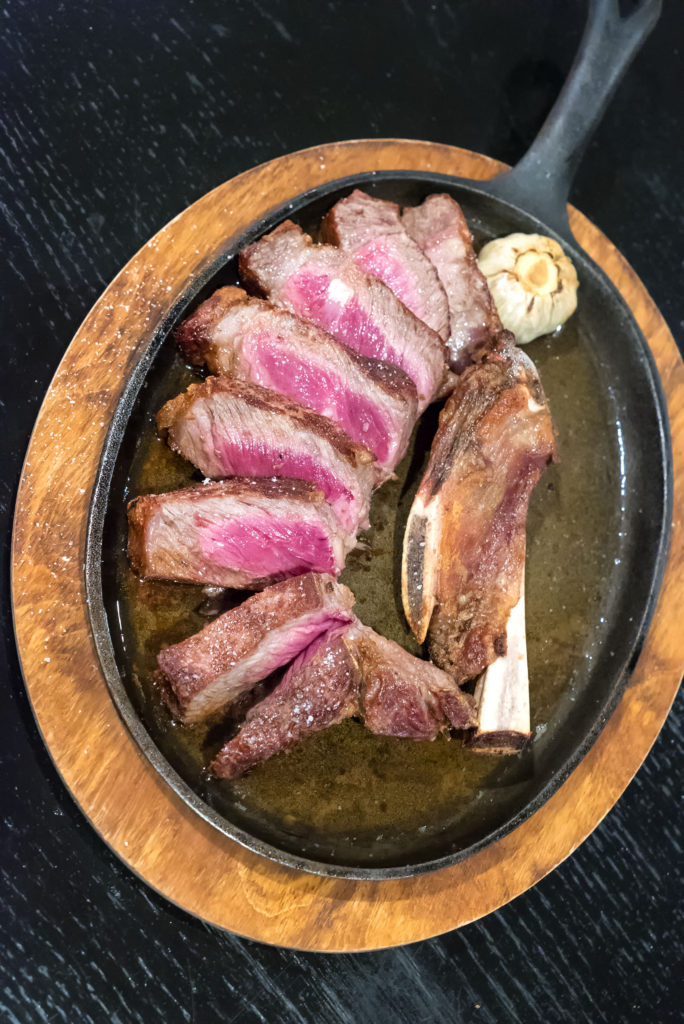
At 38oz on the bone, this was enough for two. It had a buttery flavor with a good crust on the outside.

dsc03762

dsc03756

dsc03717

Despite the grey banding, it still retained a good amount of juiciness and my wife and I finished it all.

Choice of Cuts & Quality Available: 9
All cuts served here are prime, Certified Angus Beef quality, with most being dry aged for 28 days. They offer two types of hanger, three versions of a filet, a rib eye for two (pictured above), a porterhouse for two, and two sizes of strip loin. I was bummed that they didn’t have a single cut rib eye on the menu, for one, but they did have a wagyu rib eye on special this particular night.

Portion Size & Plating: 8
Portions here are good. Plating is rustic yet pretty, as you can tell by the skillet and wood serving platter for the steak.

dsc03726

Price: 8
While the porterhouse is a bit pricey at nearly $70/pp, it is a big 42oz hunk of meat. The rib eye for two was a bit closer to normal at $104 for 38oz. However the pricing comes in very close to the midtown Manhattan range, so make sure you pick up that Groupon deal to offset this a bit. All in, this was about $168 after the $60 credit was applied, including tax and tip.

Bar: 8
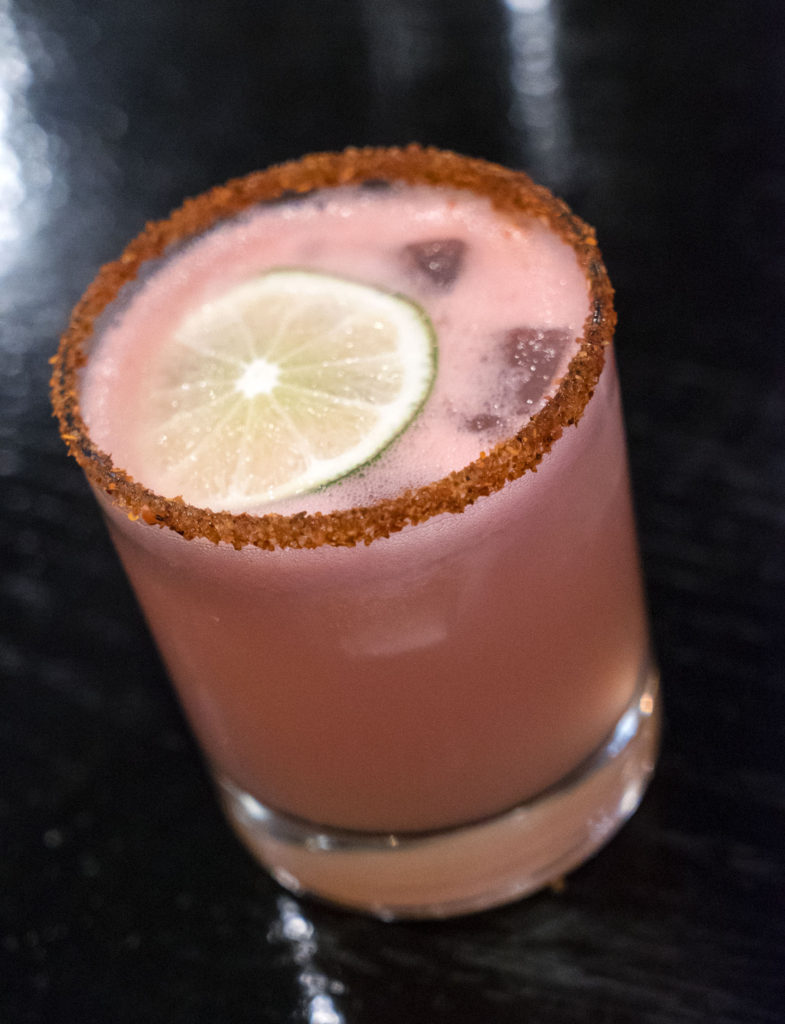
This joint offers a nice variety of cocktails featuring fun and unique throwback spirits. They also have a nice wine selection both by the glass and by the bottle, and you can even get the finer wines served by the glass through a Coravin type method of pulling a glass of wine out of a still-corked bottle through a needle.

dsc03689

The bar itself is oriented perpendicular to the street, but it is a nice area for sitting and hanging out.

dsc03696

Specials and Other Meats: 9
In addition to the 12oz wagyu rib eye that was on special, they also offered lamb and veal dishes. The regular menu boasts pork chops and chicken as well. This is a fairly strong showing.

Apps, Sides & Desserts: 8
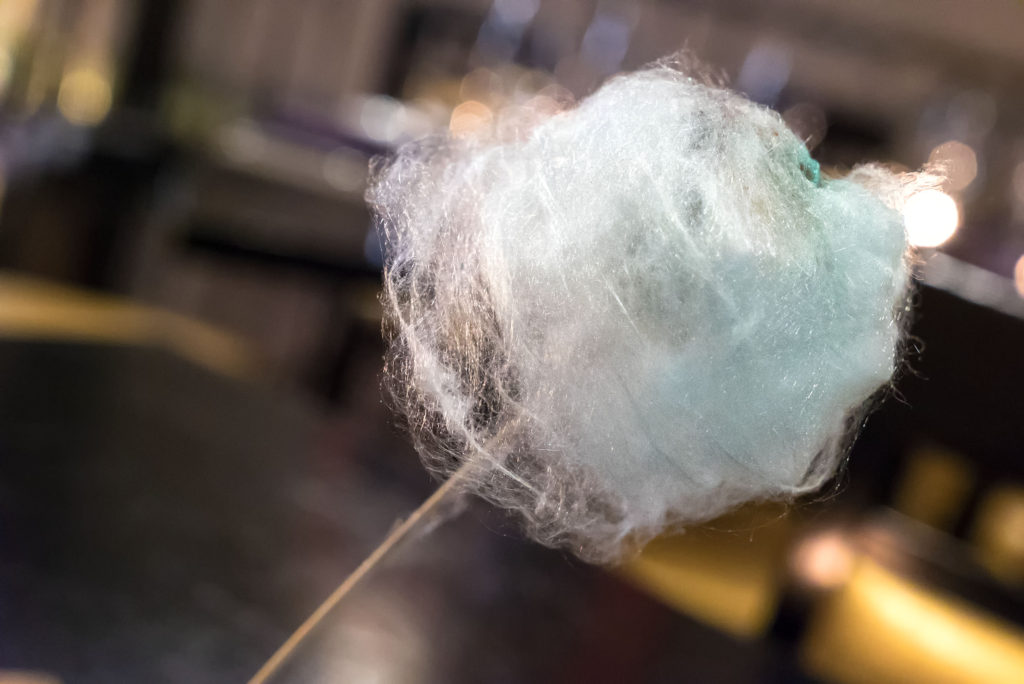
For starters, we tried two items. First, this grilled pork belly wrapped in cotton candy.

dsc03710

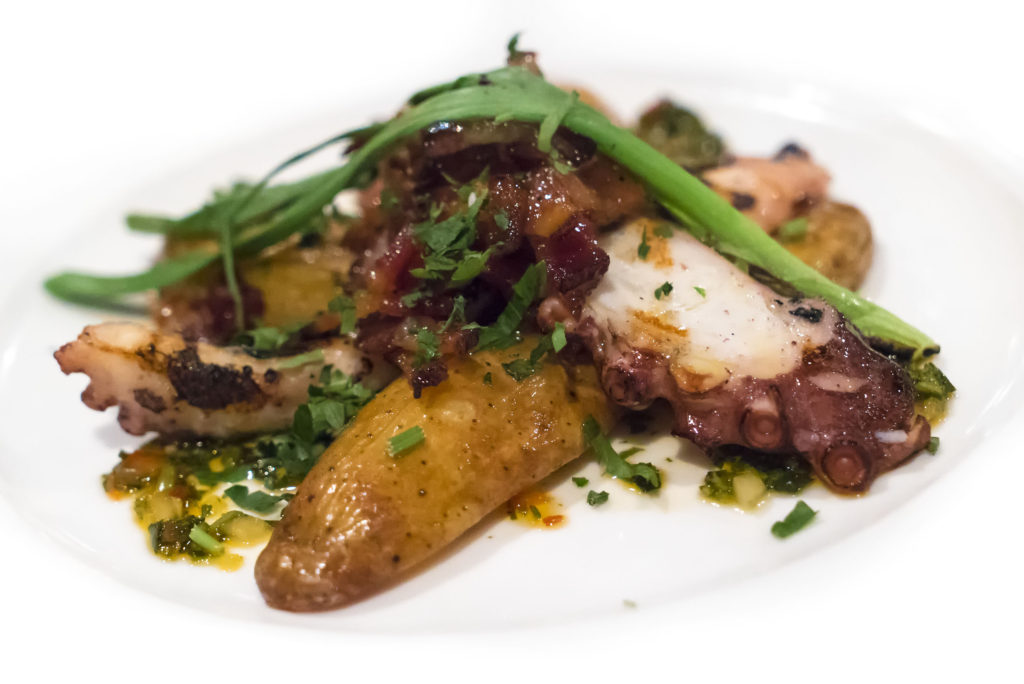
This was pretty fun, and the hunk of pork inside was substantial for just $3. Next up was the Spanish charred octopus, as recommended by our waitress.

dsc03702

I’d say this was about one large tentacle’s worth of meat, with some roasted, halved fingerings and bacon. It was tasty! Good call.

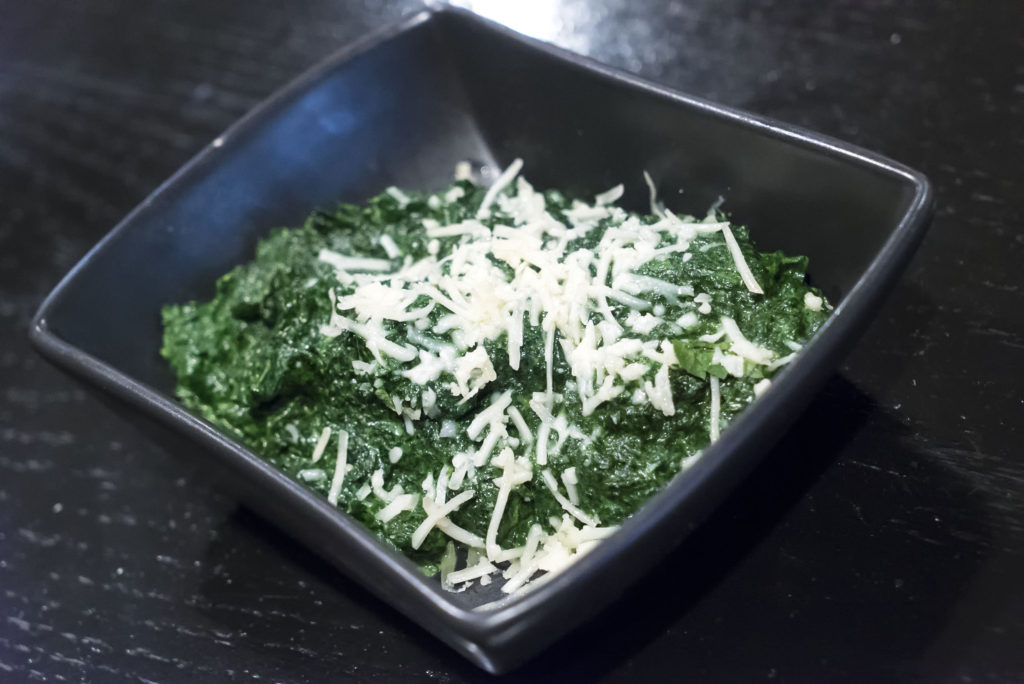
For our side, we went with the creamed spinach.

dsc03784

This was sort of a flop. It wasn’t very creamy, and the texture of the spinach wasn’t leafy. It seemed like a high quality frozen spinach.

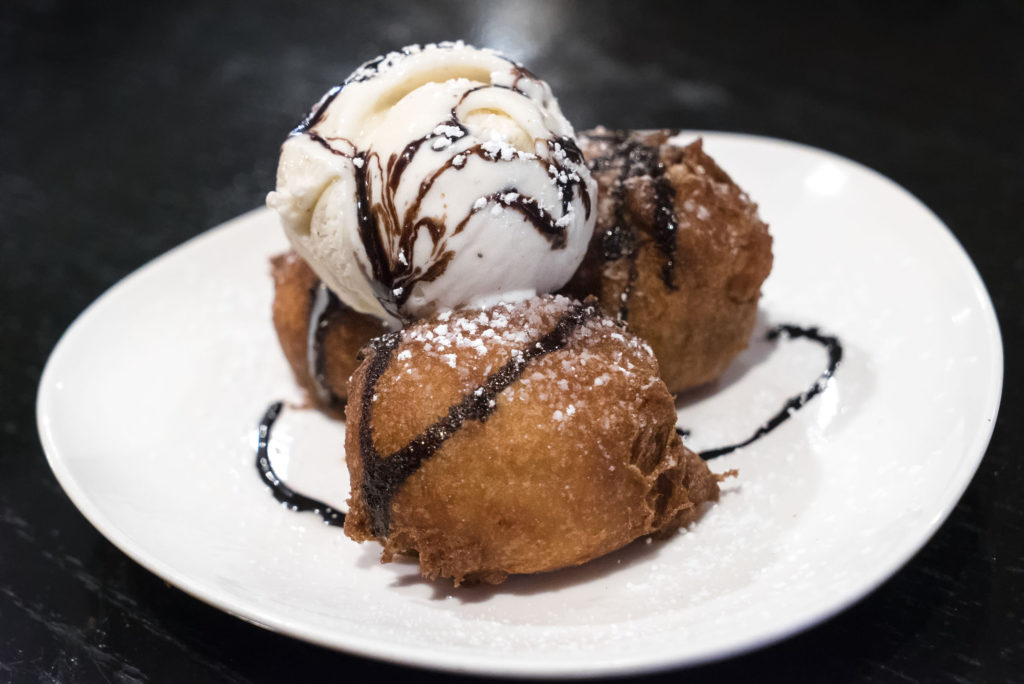
For dessert, we went with both the waitress’ and host’s recommendation: the fried oreos.

dsc03792

This was absolutely fantastic. It came with three battered and deep fried oreos and a scoop of vanilla ice cream. Then some chocolate sauce was drizzled on top. Despite being full from our meal, we devoured every bite of this shit.

Seafood Selection: 8
Sea bass, salmon, lobster risotto and seafood paella grace the menu here in terms of seafood. Not bad, but maybe one more item like a whole roasted fish would do the trick. Then again, you’re coming here for beef, right? You should be.

Service: 10
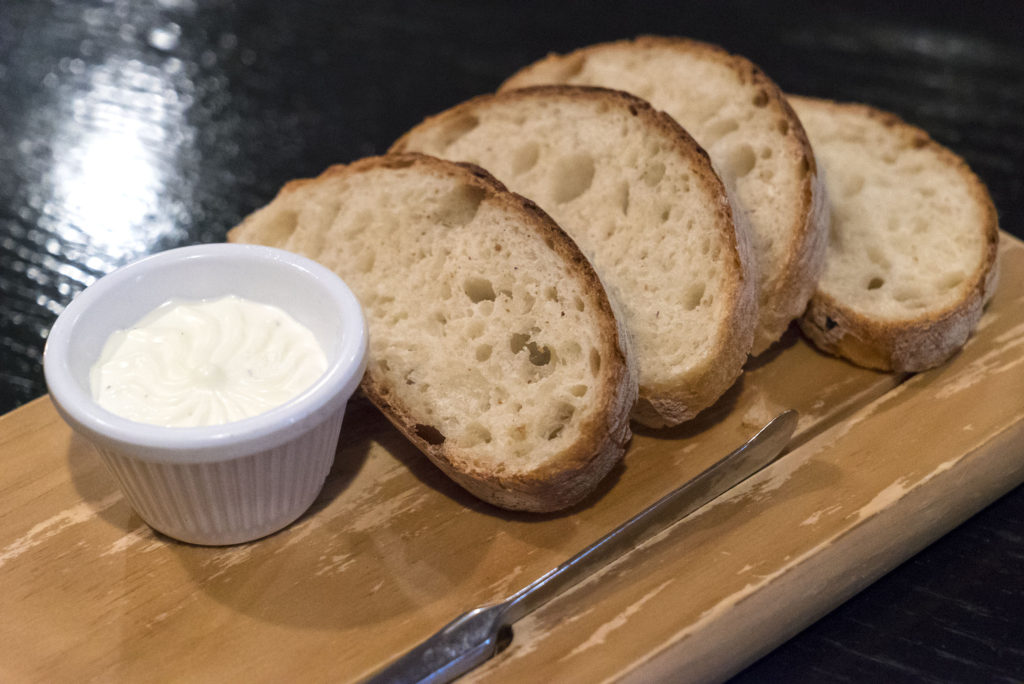
The service here is impeccable. Wait staff, bussers, host and bartenders are all working at top notch levels. And since I always do it here, let’s talk about the table bread:

dsc03683

The bread itself was a bit hard and dry, but the garlic and herb whipped butter was super smooth and tasty.

Ambiance: 8
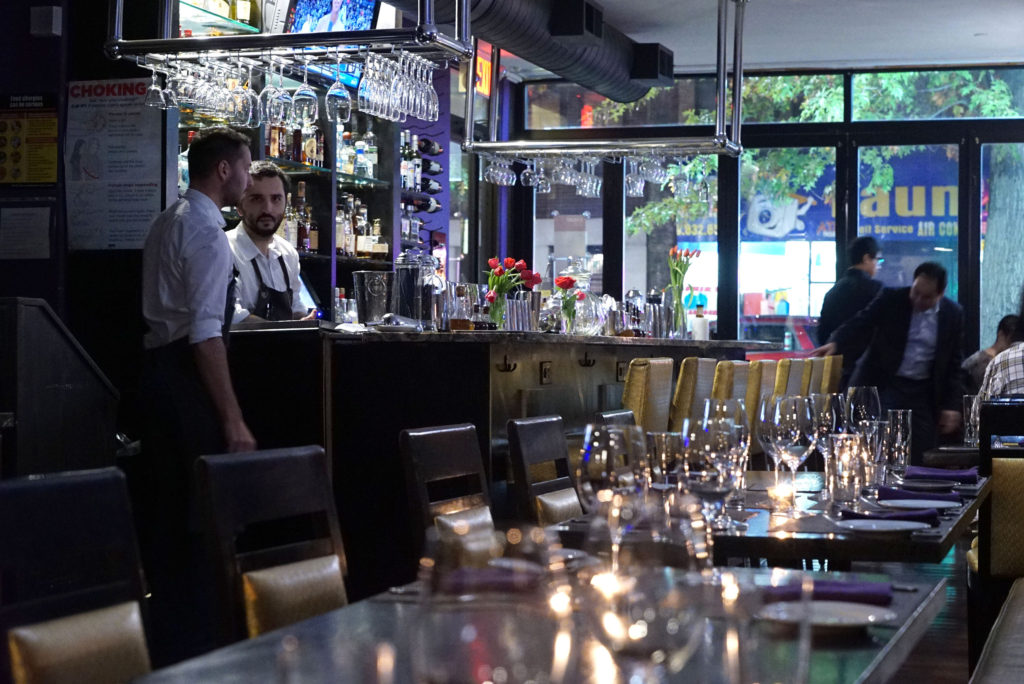
This place is really nicely decorated. It has a more modern touch, and it’s dim (they even have menus with built in lights so you can easily read them in the dark). The seats are spacious, and there’s even a backyard and downstairs area.

dsc03694

Overall Summary: This is a great score for a small mom and pop joint out in Brooklyn. This is a welcome addition to the steakscape, and Brooklyn is definitely in need of more options the further you go out. I would definitely eat here again, and certainly recommend picking up a Groupon if they’re still available.

CARNEM
318 5th Ave
Brooklyn, NY 11215

B.A.M. Episode 5: Beef Does Not Cause Cancer

A little over a year ago, the World Health Organization published a finding through their International Agency for Research on Cancer (IARC) that the consumption of red meats represented a “hazard” and classified red meat as “probably carcinogenic.” While the craziness over that fake scare has already passed like a cow fart in the wind, I think it’s useful to talk about it here, even if just to reiterate how wrong it was.

First, I think it’s important to discuss a few things right off the bat.

Okay but seriously…

Difference Between Hazard and Risk: The IARC does not evaluate cancer risks. They only identify hazards. A risk is a statement about the probability, possibility or likelihood to cause harm, while a hazard is merely representative of a possibility to cause harm under any circumstances. It is always important to look at hazard and risk together when talking about things like cancer.

Perhaps the best way to illustrate the difference between the two is by way of analogy. Think about driving, for example. If it’s raining, we know that wet roads represent a hazard to drivers for getting into an accident (cancer). Now let’s say you’re speeding, driving with bald tires, and not using your windshield wipers after drinking a six pack of Bud. You’ve significantly elevated your risk of getting into an accident during hazardous driving conditions like wet roads.

www.vintodphoto.com
www.vintodphoto.com

If we apply this to beef, the IARC merely told you that the roads are wet. They identified a hazard, and nearly anything can be hazardous. Water is hazardous. It only becomes a risk when you try to breathe it, or drink it while hanging upside down or something ridiculous. So, wet roads? Maybe you walk to work, or maybe you have new tires, drive very slowly in the rain and never drive while intoxicated. As a result, your risk of getting into an accident due to a wet road hazard is very low.

See the difference, and the need to always consider both together? Of course you do, because you’re not an idiot. So when we extrapolate this to something complex, like diet or personal health, the need to assess both becomes absolutely vital. If you’re an alcoholic smoker who works around asbestos all day, never exercises, and consumes nothing but bacon grease, then chances are you’re going to die of cancer pretty quickly, because your personal risk levels are through the roof and you’re dancing around several big hazards.

Scope of Study: First, the IARC does not seem to specialize in the evaluation of food. They’ve looked into more than 1000 chemicals, mixtures, biological agents, personal habits and occupational exposures, but diet and food represent large complexities that are simply out of their realm of specialization.

Second, the IARC only categorizes things into five wishy-washy designations: Probably Not Carcinogenic to Humans (Category 4); Not Classifiable as to its Carcinogenicity to Humans (Category 3); Possibly Carcinogenic to Humans (Category 2B); Probably Carcinogenic to Humans (Category 2A); and Carcinogenic to Humans (Category 1). Aside from the fact that language like “probably” and “possibly” is arbitrary at best, only one substance has ever received the Category 4 designation of “Probably Not Carcinogenic,” and that was caprolactam (whatever the fuck that is).

www.vintodphoto.com
www.vintodphoto.com

They claimed that red meat was “probably carcinogenic” (Category 2A) and that processed meats were “carcinogenic” (Category 1). So what do “red meats” and “processed meats” even mean?

According to IARC, red meat refers to “unprocessed mammalian muscle meat.” This means beef, veal, pork, lamb, mutton, horse or goat meat. Yeah, you read that right: Pork is not “the other white meat.” Based on the amount of myoglobin or “stuff that looks like blood, but really isn’t blood” in the muscle tissue, pork is categorized as a red meat.

Processed meat refers to “meat that has been transformed through salting, curing, fermentation, smoking or other processes to enhance flavor or improve preservation.” In the U.S., processed meats like bacon, sausages, hot dogs and deli meats primarily contain pork and poultry, but sometimes contain beef as well.

Note that all production and processing methods fall into these definitions, and that even includes organic, grass-fed, nitrite- and nitrate-free meats, as well as conventional meats. NO ONE IS SAFE FROM THE IARC!!!

DSC04710 test edits

Findings: The findings are based on pre-existing research. What is that research? How can they control for external factors that may increase or decrease risk when studying human diet? Well, according to their Q&A, “In the case of red meat, the classification is based on limited evidence from epidemiological studies showing positive associations between eating red meat and developing colorectal cancer as well as strong mechanistic evidence. Limited evidence means that a positive association has been observed between exposure to the agent and cancer but that other explanations for the observations (technically termed chance, bias, or confounding) could not be ruled out.”

In layman’s terms, that means other factors could have influenced the weak positive associations between red meat and cancer, like poor diet, sedentary lifestyle, obesity, bad habits like smoking or excessive alcohol consumption, or even genetic health conditions or pre-existing diseases (think speeding, driving on bald tires, driving while intoxicated, etc). So there’s that difference between hazard and risk being played out again.

In short, don’t believe the hype!

Research has always shown that beef should be part of a healthy and balanced diet. But don’t just take my word for it; check out what some dietitians think. To me, it’s clear that the scientific evidence doesn’t show that red or processed meat causes cancer. Studies in humans are limited and inconsistent, and evidence has weakened over time. Take a look HERE for research that the Beef Checkoff submitted to the IARC. The Beef Checkoff is an organization that’s funded by farmers giving $1 for every animal produced in order to pay for research and marketing campaigns within the industry. If you think those submissions are biased for some reason (which is silly, because beef farmers and ranchers feed their families with the same beef and have a vested interest in the industry’s safety), then go HERE for independent submissions that were sent to the IARC.

Okay so what about hot dogs and bacon, the “processed meats” that were categorized as being “Carcinogenic?” If you poked around their website you may have noticed that smoking and asbestos are in IARC Category 1 as well. But on their Q&A they’ve explained that eating processed meats is not equally as dangerous as smoking – not even close, as a matter of fact. As I mentioned above, rather than assessing the level of risk, the IARC classifications merely describe hazards and potential causes.

Just one last note here on the findings: every one of us has about a 1.8%-4% chance of getting colon cancer, which is the form of cancer that many of the studies focused upon for red meat. Colon cancer is the third most common cause of cancer and cancer-related deaths. Even if the risk of colon cancer goes up 17-18% due to eating red meat, as some of the more fear-mongering studies said (and recall that some studies said there was no increased risk), it’s only about 17-18% of that 4%, or an increased risk of 0.72%. That’s only 4.72% total, if we use the worst figures we can find. The bottom end all-in figure is more like 2.1%, and again that’s only if we ignore all of the other studies that found no risk in eating red meat.

I don’t know about you guys, but even if these false-positive studies were somehow believable, I’d be perfectly willing to take on a 0.3% to 0.7% risk in exchange for a lifetime of enjoying nutritious and delicious red meat in my diet. The air I breathe here in NYC is probably way more hazardous or risky to me than red meat.

DSC04168 jpg

Charred Crusts: Another concern that was floating around the web was the idea that the charred outer crisp on meats that develops when the meat comes in contact with fire (like the crust of a broiled steak or the smoky crisp on a flame-kissed burger) is also cancerous.

dsc01689

The chemicals that form during this charring process are present on any meat that gets hit with flame (not just beef). They’re called heterocyclic aromatic amines (HAA) and polycyclic aromatic hydrocarbons (PAH).

They are, indeed, known or suspected carcinogens. However, they aren’t present in high enough concentrations to be a real concern when grilling or cooking. I’ve known of people who charred meat to a crisp and tested the meat afterward, and the amounts of harmful chemical present were so small that they were insignificant. Concentrations matter here. There are probably harmful chemicals in the water you drink too, but unless they’re highly concentrated there’s no cause for concern.

Conclusion: Given the totality of the studies, it’s clear to me that no single food, including red or processed meats, causes cancer. So, my meat minions, beef on with confidence and pride. And go forth and continue to develop that delicious, nicely-textured crust on your steaks and burgers as well. Just don’t overcook anything, for fuck’s sake!