Lean Beef

I recently had dinner with a friend of mine who had just gotten an angioplasty. If you don’t know what that is, it’s when surgeons open up blocked arteries and restore normal blood flow to the heart. If your arteries stay clogged, you can have a heart attack and die. Duh.

My friend’s doctor obviously cautioned him to avoid saturated fats and bad cholesterol. That doesn’t mean he can’t have a steak once in a while, and that’s exactly what he wanted for dinner on the night we hung out. I have that effect on people…

So there were two steaks on the menu; a NY strip and a skirt. My buddy asked the waitress, “which one is more fatty?” She said the strip, which, all things equal in terms of grade and cooking prep, is completely false. I informed my buddy why she was wrong after she stepped away, so as not to embarrass her. But I figured I would share that knowledge here with you guys, too. Here’s why she was wrong:

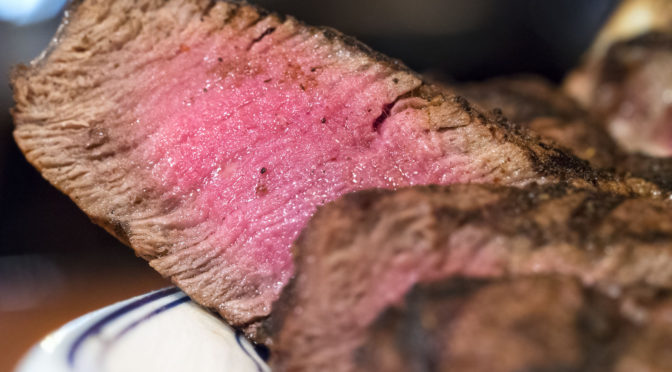
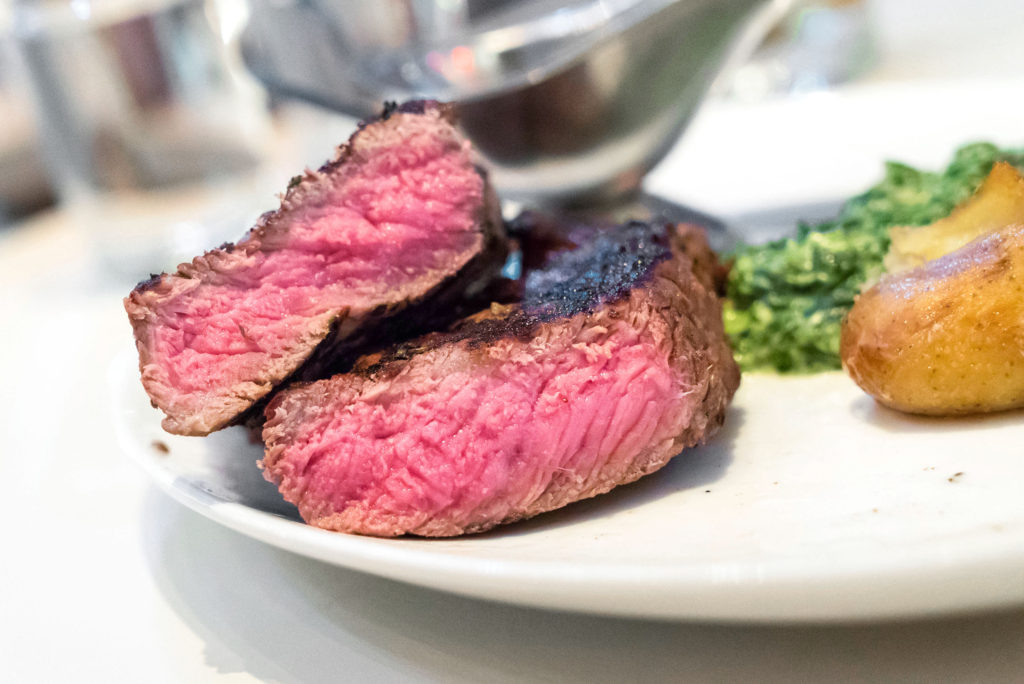
NY strip steak is a strip loin cut of beef, which is the most prized part of the sirloin. Sirloin is considered a lean cut of beef. In fact, any time you see the word “loin” in describing a cut of beef, that means it’s lean. The one caveat I’ll give is that fat content also depends on the grade of beef, not just the location of the cut. Prime has more intra-muscular fat (marbling) than choice, for example, and something like Kobe has more than prime.
The term “lean” means that the beef has 4.5g or less of saturated fat per serving, and 10g or less total fat per serving. About 66% of beef cuts are considered lean cuts. That’s pretty fucking good!
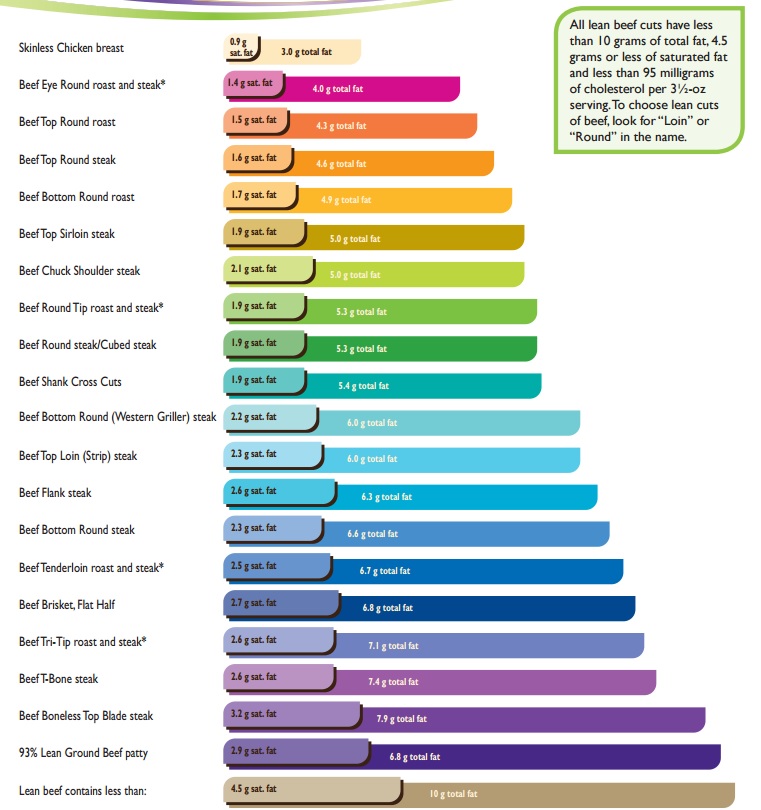
Skirt hails from the “plate” or diaphragm muscle of the bovine anatomy. It’s not listed above because it isn’t within the definition of lean. It has more fat content than a strip steak, especially after a strip is trimmed by a restaurant. Most of the fat on a sirloin lies on the outside of the muscle, as opposed to the inside marbling (which, by the way, contains “good fats,” like olive oil and avocados do). But when external fat is trimmed away, you’re down to low fat content.
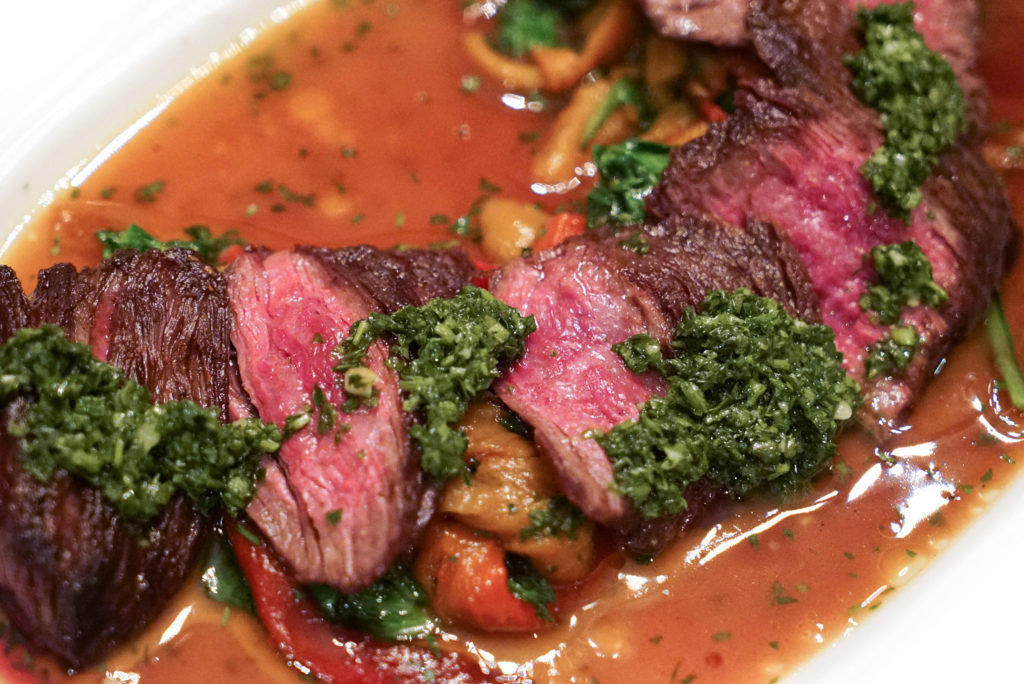
The real question, then, becomes: How is the steak prepared? Does it come with a cream sauce? Is it cooked with tons of butter? Is it simply seasoned and grilled? All of this matters tremendously in terms of calculating the total fat content of a particular dish.
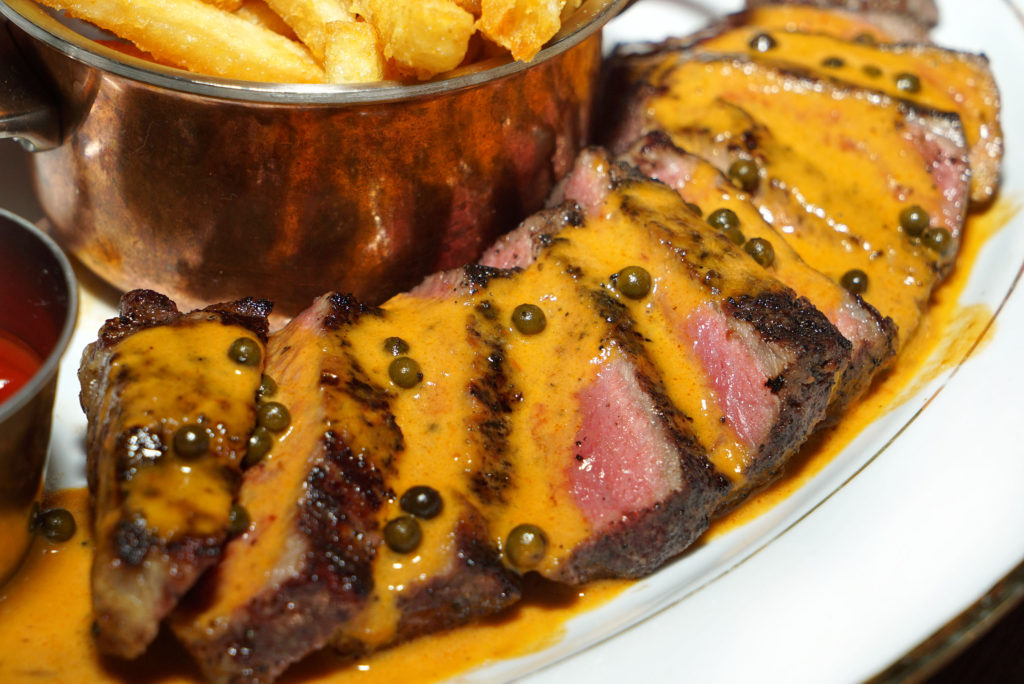
Why do I mention this? Because the method of cooking could flip these fat levels very easily. If the strip is being cooked in a pan filled with butter and then smothered in a cream sauce, while the skirt is simply seasoned and grilled, then maybe it’s best to get the skirt if you’re trying to be mindful of overall fat content. It all depends, like adult diapers.
My advice: don’t ruin good beef with a sauce. I love the flavor of beef, so I don’t like to mask it with sauces of any kind. Simply season and fire it up. If you live by those rules, then you can take the fat content of lean cuts at face value and be confident that you’re eating a low fat, lean beef meal that’s both nutritious and delicious.
Maroni Hot Pots

UPDATE: THIS PLACE IS CLOSED!

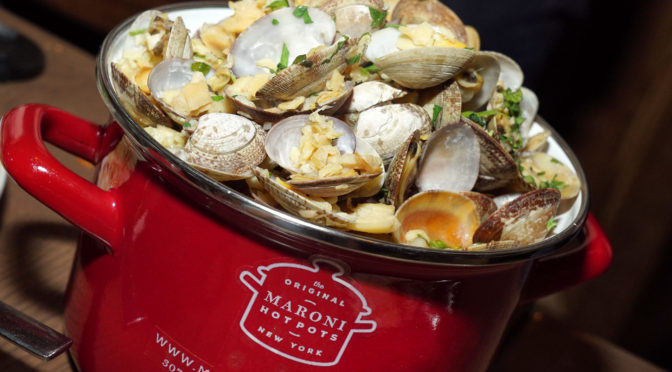
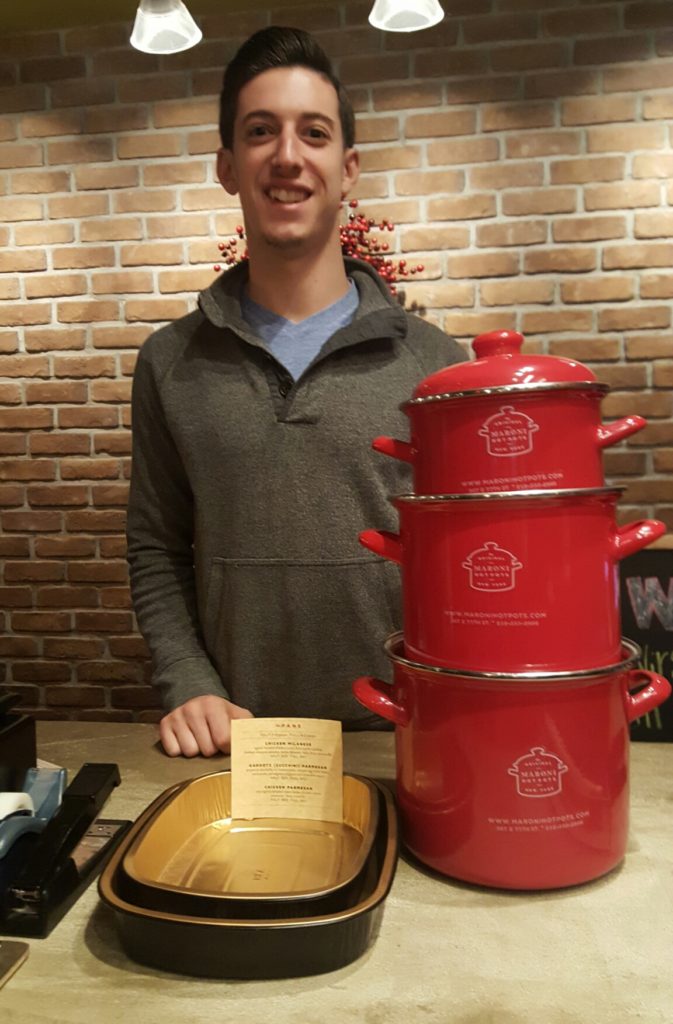
There’s a very interesting little concept restaurant on the upper east side called Maroni Hot Pots. The joint is mainly aimed at providing delivery service, but there’s still a handful of tables set up inside the beautiful little space. So what makes this concept unique? The pot.

Many of their dishes are served (and delivered!) in really nice keepsake metal pots. Yes – you get to keep them.

I’m not sure how useful they’d be on your stove top, but they’re definitely not cheap, crappy items by any means. At the very least you can use them as planters.

Okay, but enough about the pots. We tried a lot of different items.

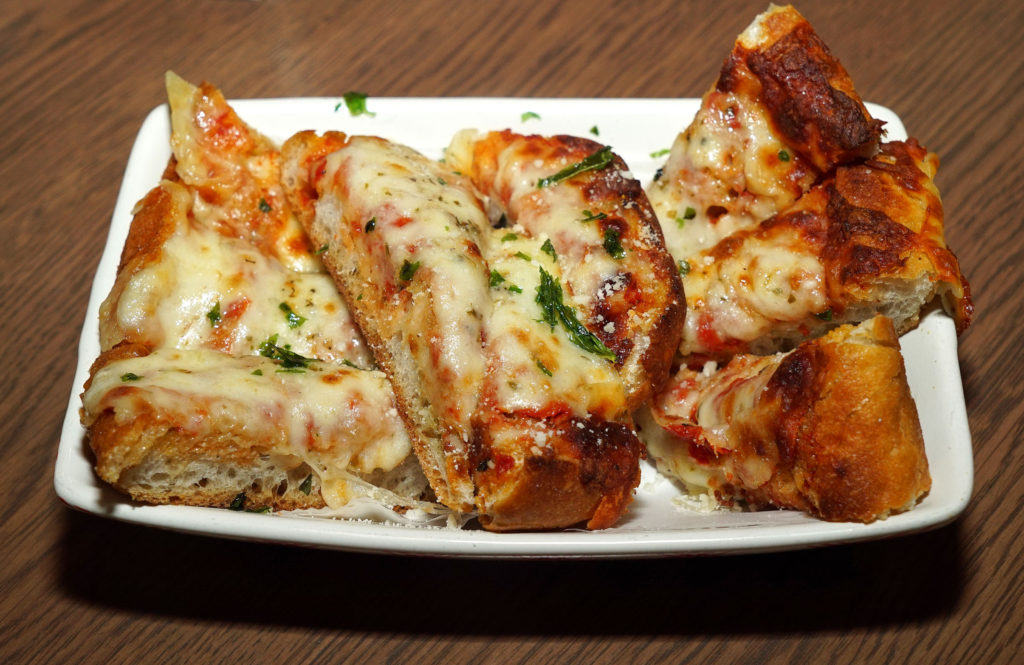
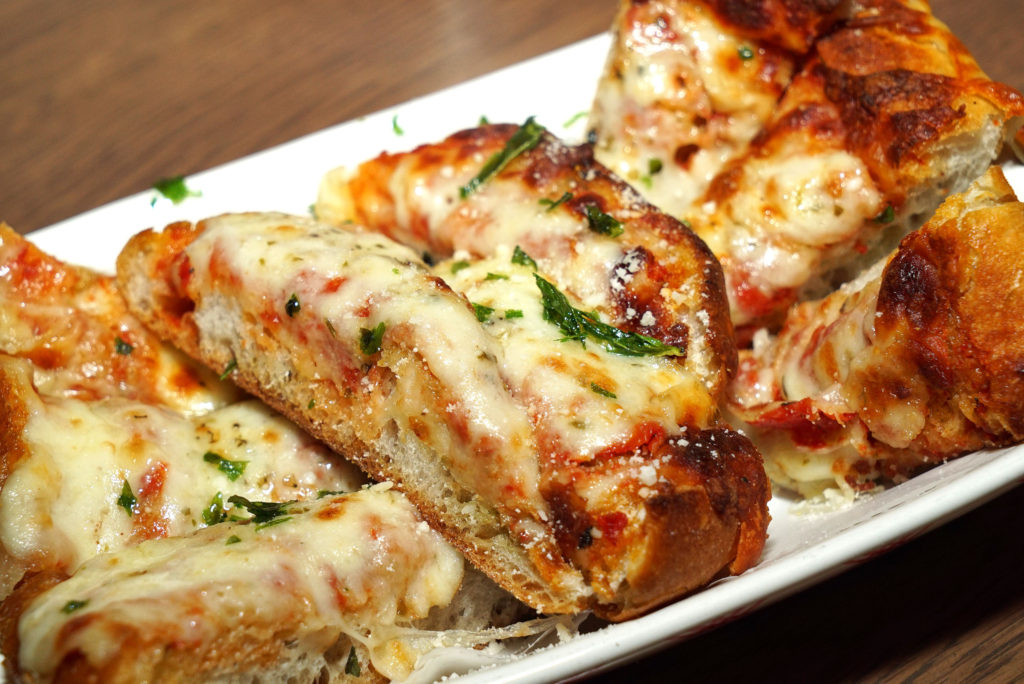
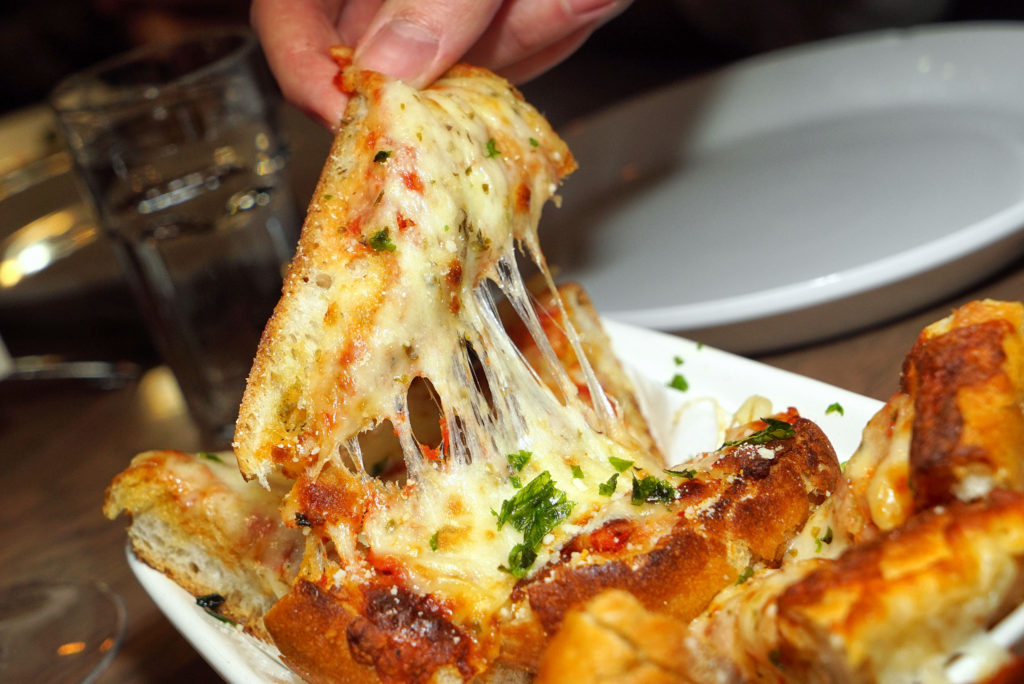
First up, pizza bread. This is more like a garlic bread with cheese and sauce topping as opposed to your standard NYC style pizza. A more puffy, doughy pie.

It’s served in a nice glass dish and it’s seasoned generously, topped with herbs as well. Essentially, it’s like a Sicilian pizza.

I should say now that the cheeses here are all incredible. They don’t harden after a few minutes – they stay nice and stretchy. I shot this probably 15 minutes after the pizza came out:

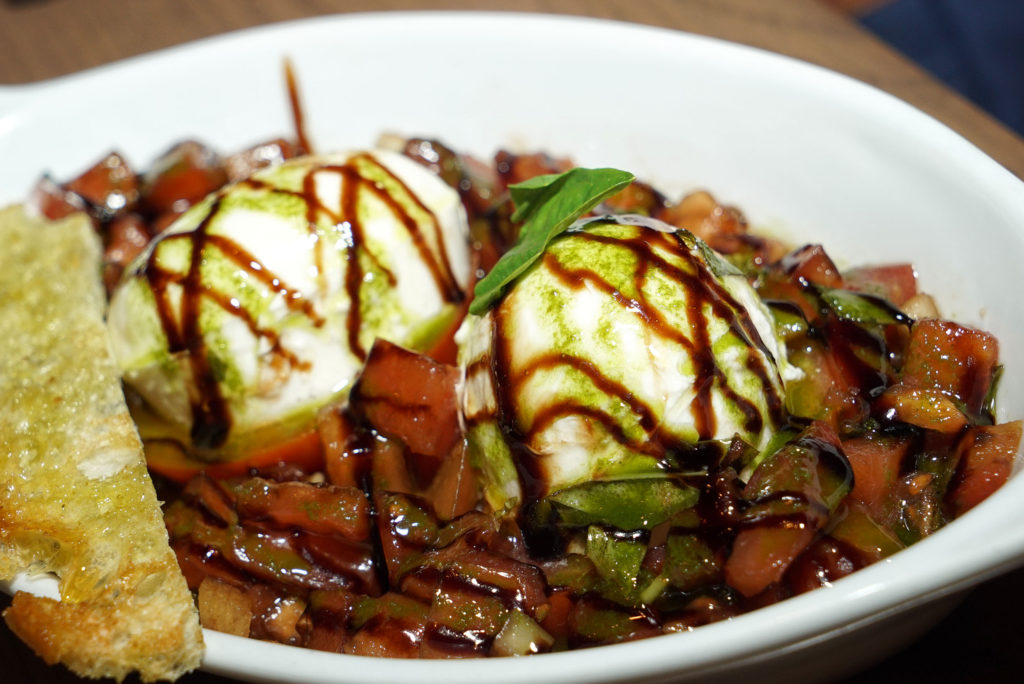
The fresh mozz caprese salad also exhibits stellar quality cheese, and the diced tomato, dresed with a nice balsamic, was a nice change of pace from an ordinary caprese salad.

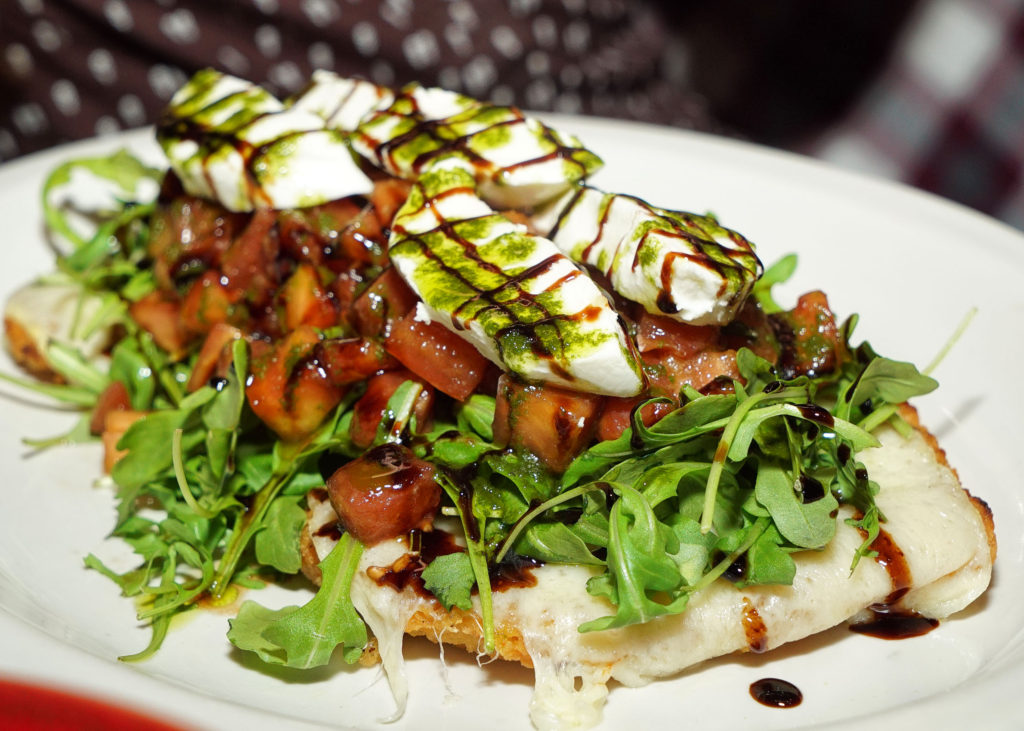
Throw that on top of a lightly breaded chicken cutlet with some arugula, and you have their delicious chicken milanese dish.

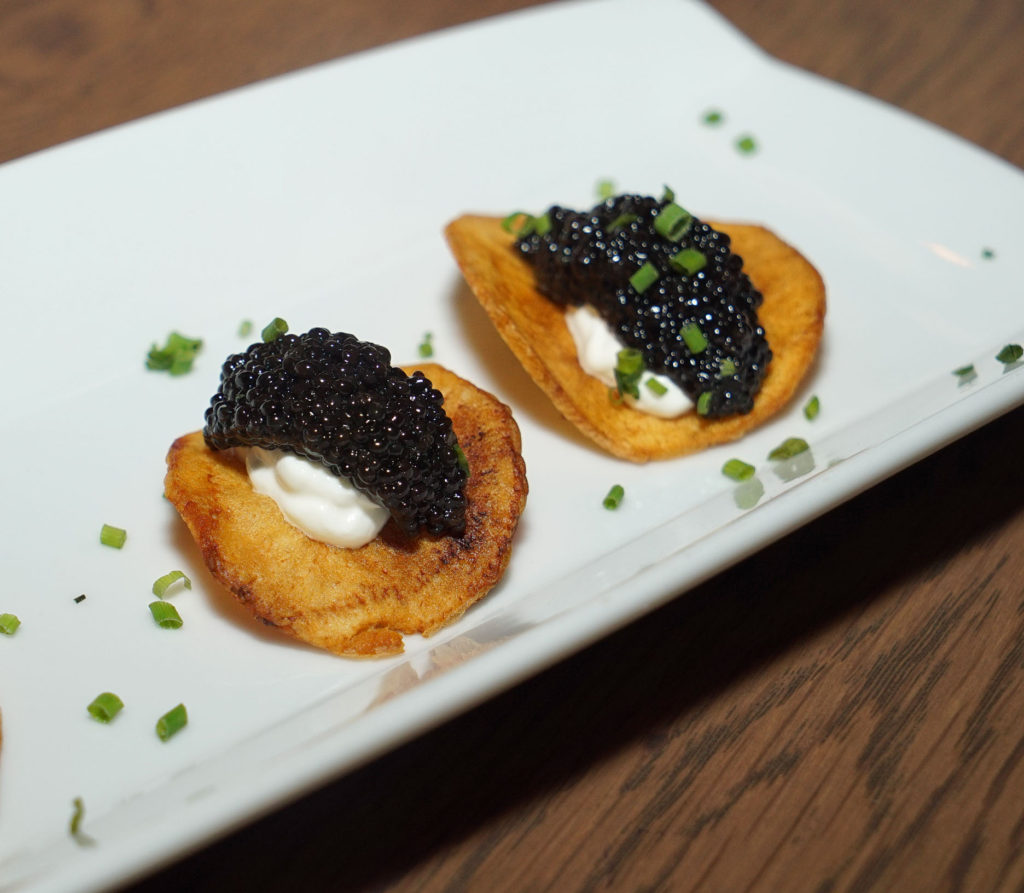
But one starter they have become known for is their million dollar potato chip. A thick cut, fried potato crisp, topped with fresh cream and caviar. Very tasty.

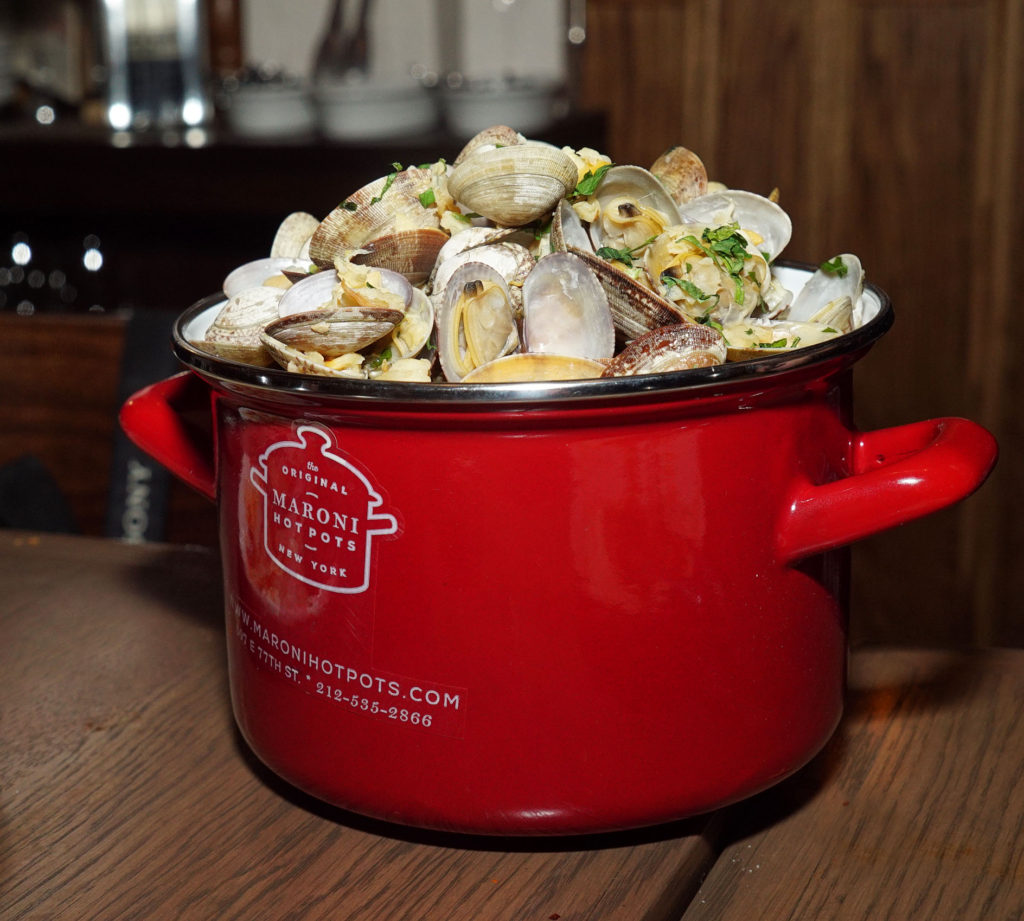
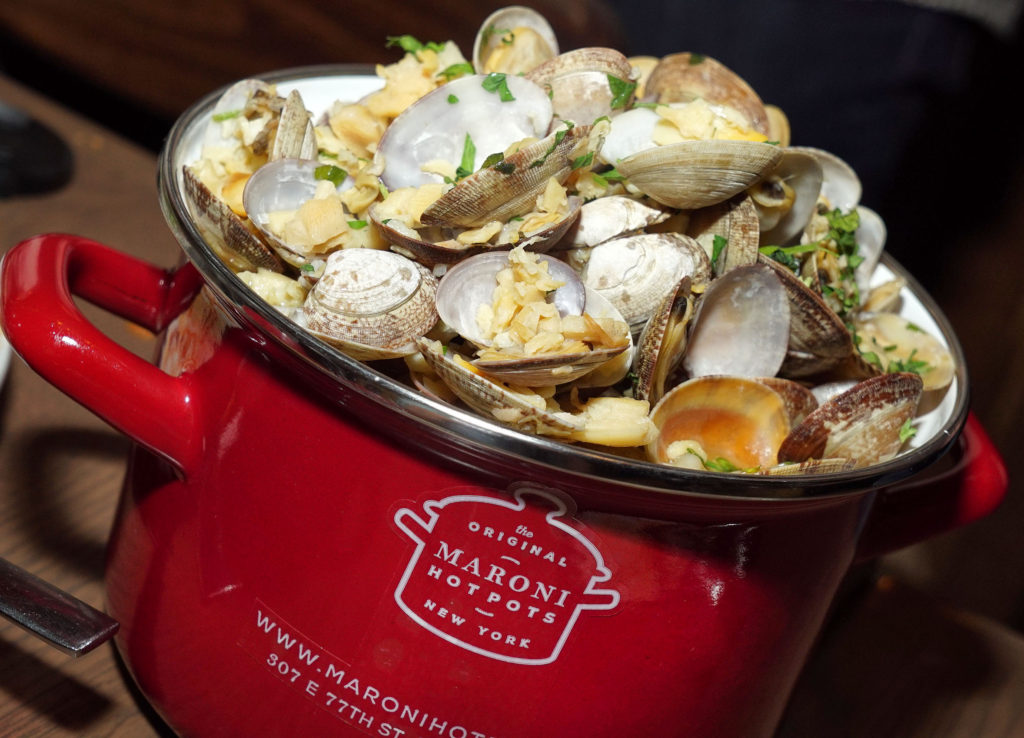
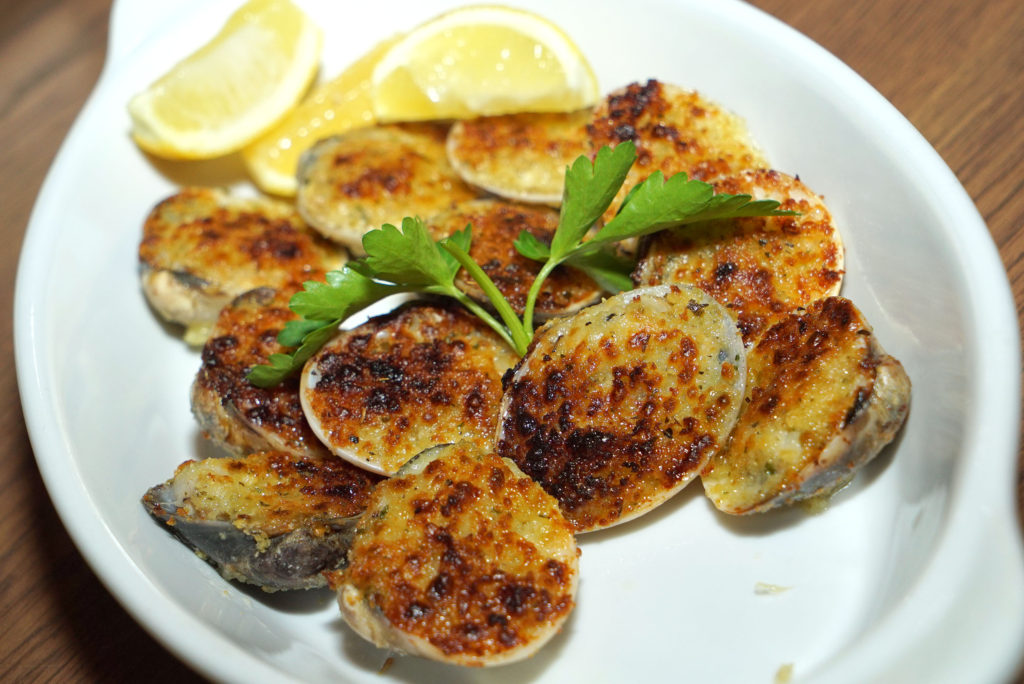
And it’s not often that you see baked clam dishes use high quality little necks or cockles like they do here. Most baked clam dishes use giant bait clams, with minced up meat inside. No thanks. These were whole clams, nicely breaded and stuffed, and then baked to perfection.

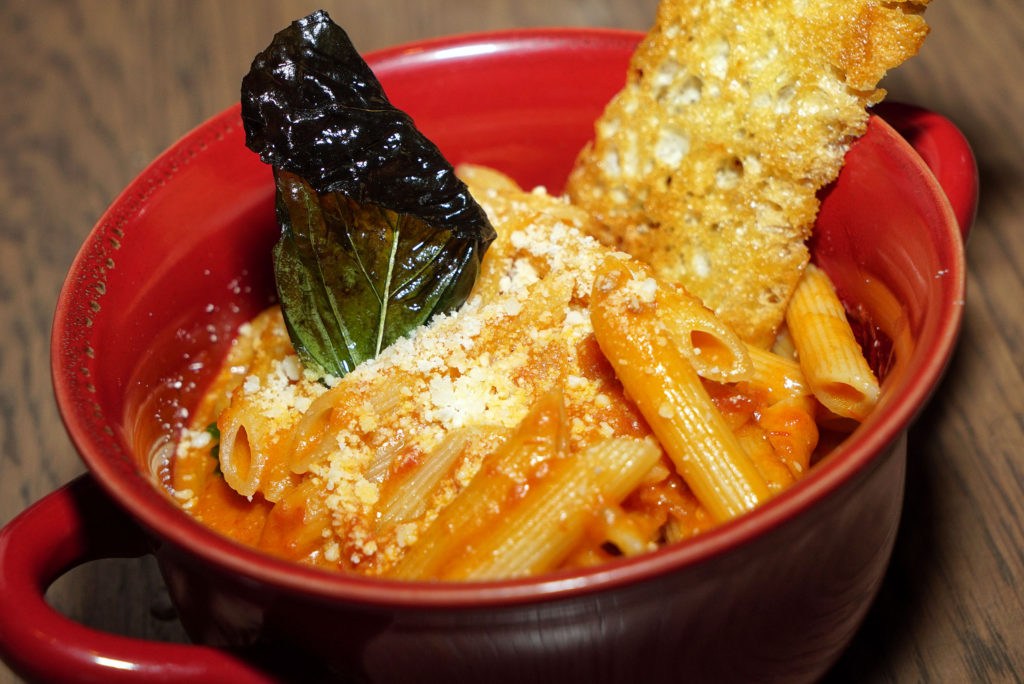
Okay now for the pasta dishes. We tried a bunch. I’ll start with my favorite, the penne a la vodka.

What I liked about this sauce was that it was more buttery than typical vodka sauces I’ve had in the past. The pasta was cooked perfectly in this dish too.

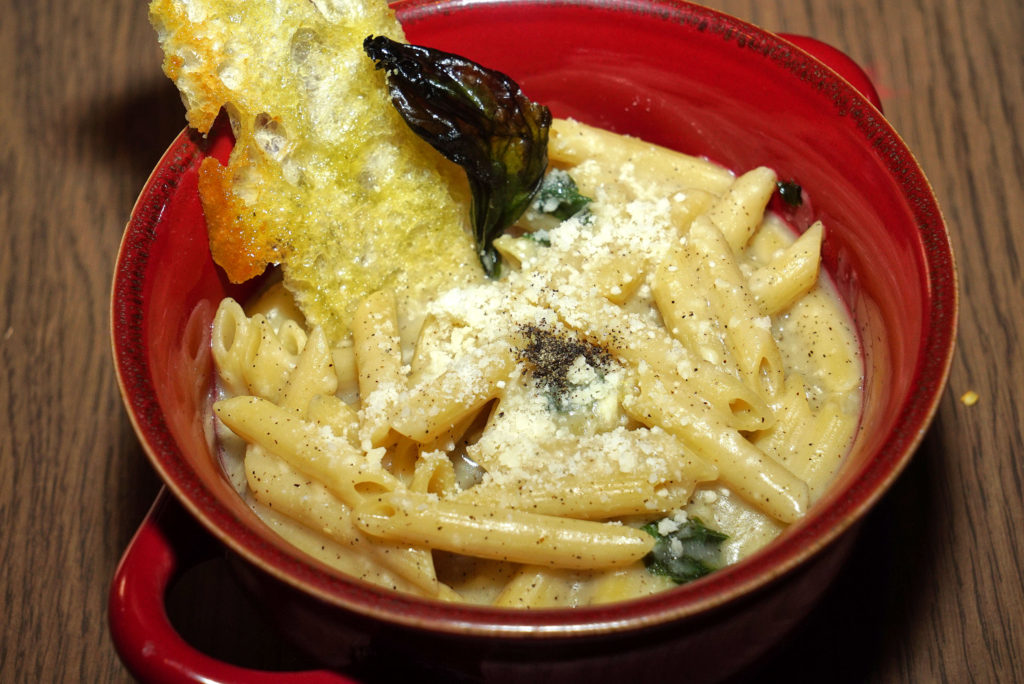
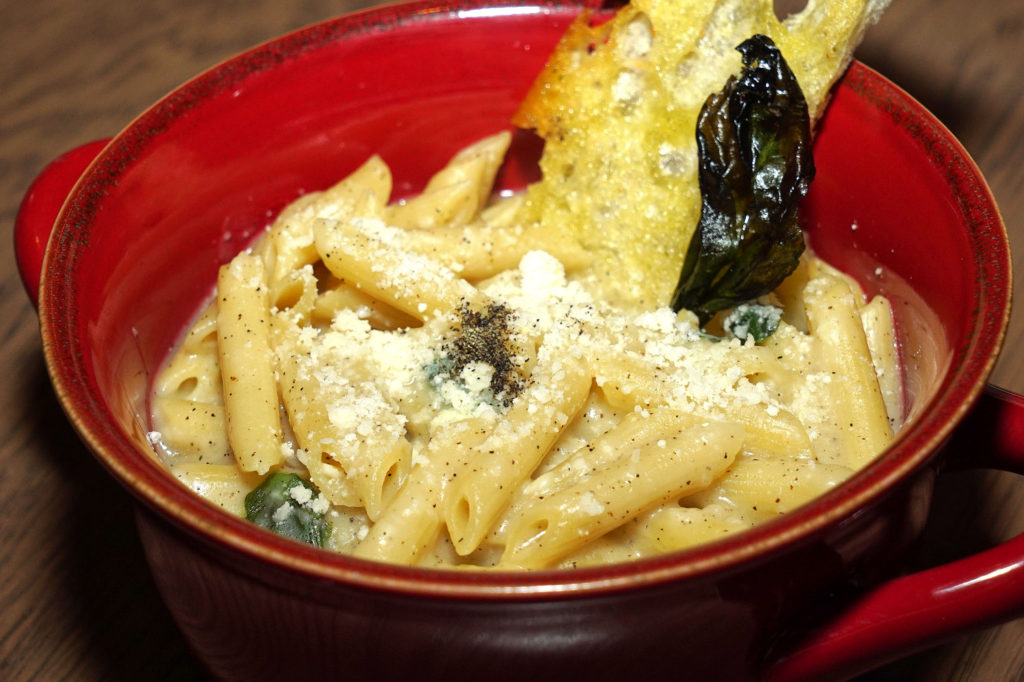
Their cacio e pepe is nice, but having just come back from a trip to Italy, I was a bit too spoiled to truly appreciate the dish. Cacio e pepe in Rome is just insane. Nothing quite comes close. I did, however, get a bunch of nice pics. As you can see, they used a penne pasta here as well.

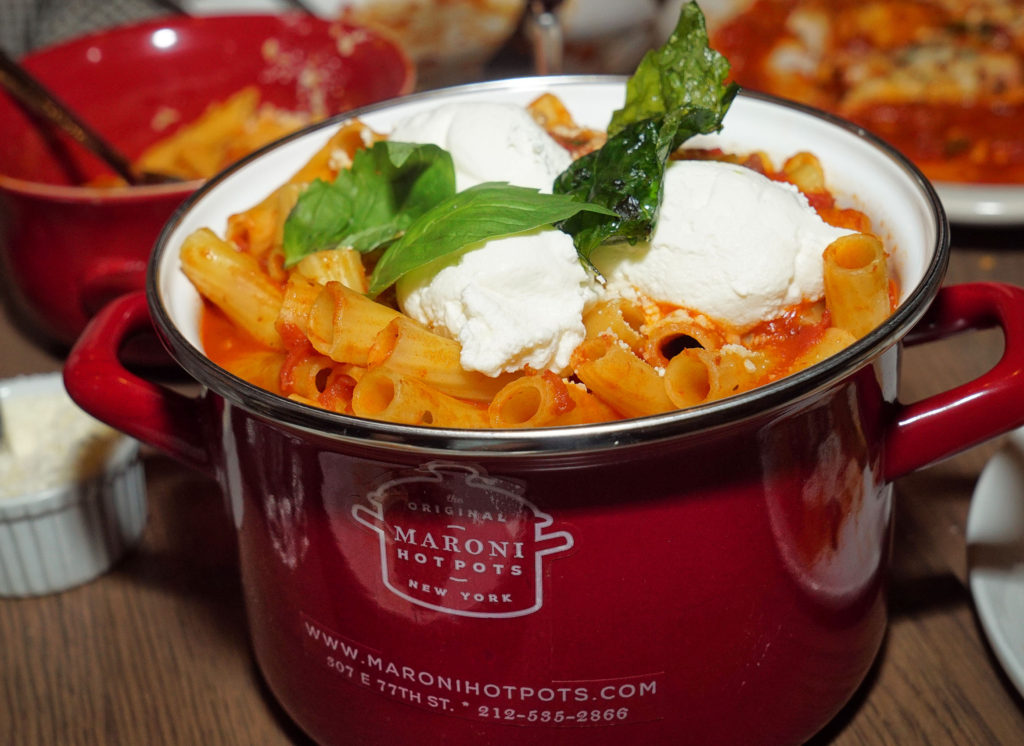
One specialty they’re known for here is their cognac sauce. They hit their tomato sauce with some cognac, burn it off, and simmer it down. What they’re left with is a nicely sweetened sauce. They serve that with rigatoni and a generous glob of ricotta for mixing into the sauce. Amazing. This dish has even been featured on local news stations. I highly recommend it.

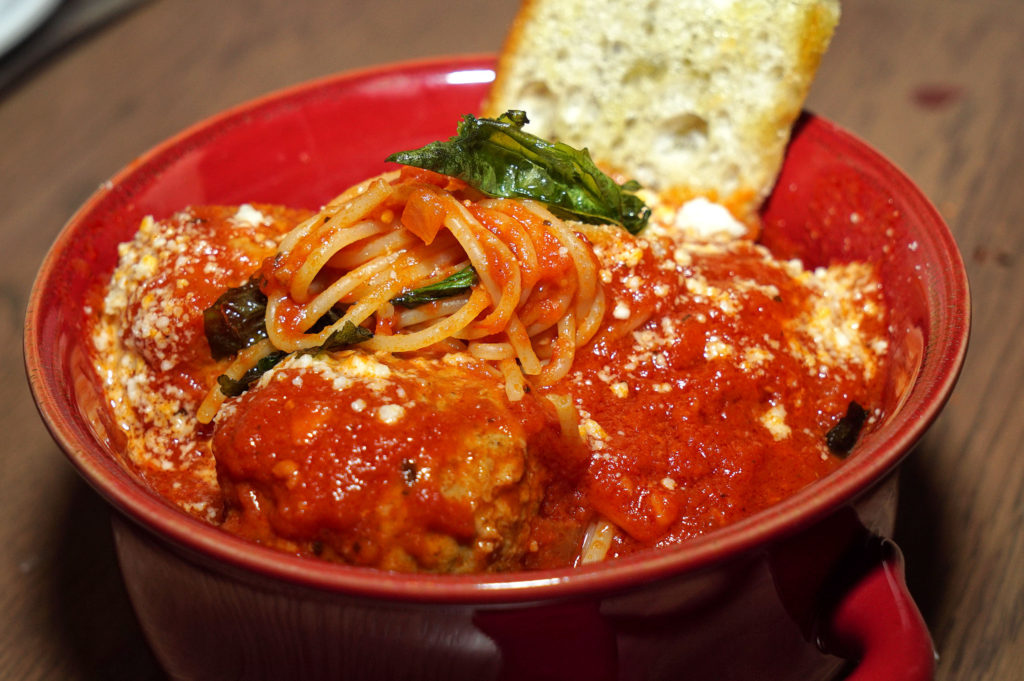
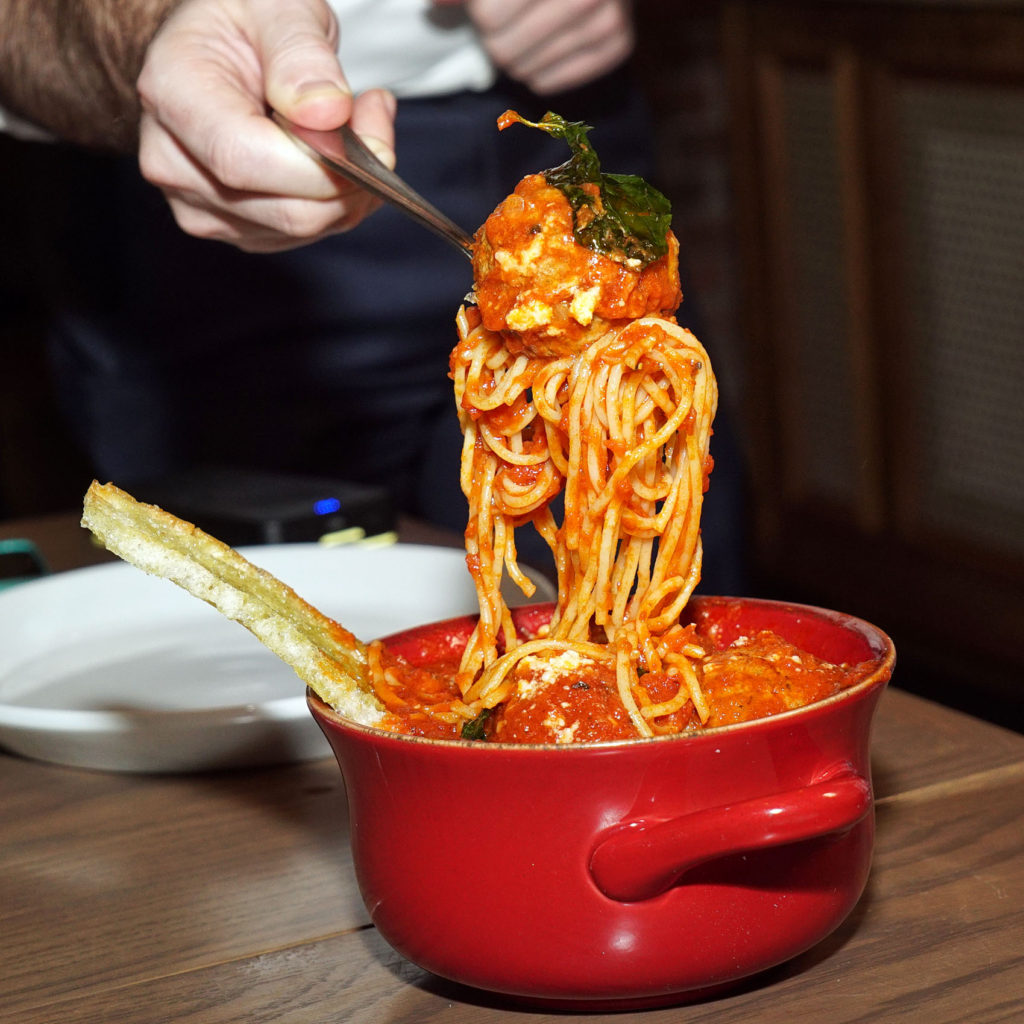
Last pasta dish: spaghetti and meatballs. This classic tasted great.

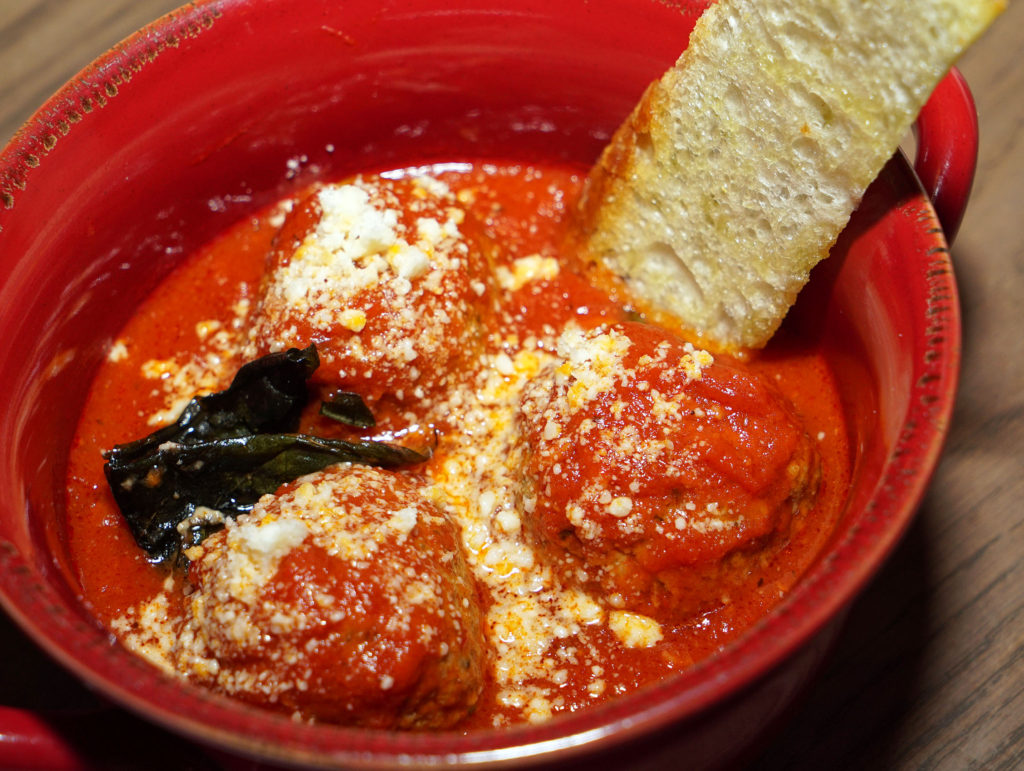
And while nothing beats mom’s homemade meatballs, these were pretty tasty. We had an order sans spaghetti as well.

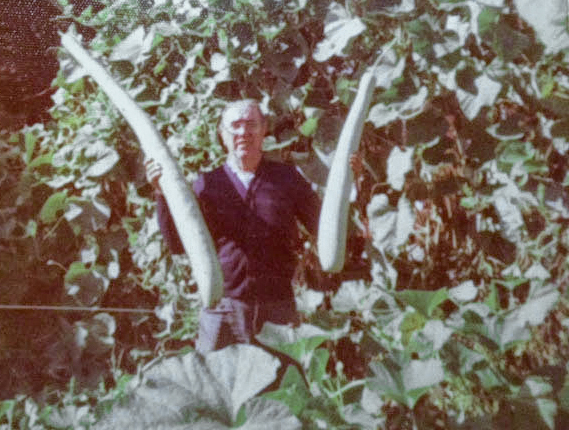
Like any Italian meal, there’s always more. We also tried their chicken parm and gagootz (zucchini) parm. The last time I heard that word was probably when my grandfather was featured in the news for growing the biggest one in Long Island history out of his backyard garden, which, at one point, was more like a small farm.

Here’s a shot of my grandfather’s massive gagootz (not the actual prize winning squash, however; that one was like 15ft, and we are still trying to locate the photo).

FYI, the word “gagootz” is a dialected, faster way of saying the word “cucuzza” in Italian, which is a kind of squash. The word “gagootz” is typically used by Italians to refer to all types of squash, though, including zucchini, as is done here at Maroni Hot Pots.

In any case, both parms were excellent, and both essentially looked the same, so I’m just using one picture to showcase them. Can you guess which one this is?

The beatles are all over this joint, by the way, and the music is a great mix of classic rock. Anyway, I really enjoyed the gagootz parm. I’m not an eggplant fan, so swapping that out for zucchini is a great idea. The skin is much more pleasing, and the texture of the vegetable’s flesh itself is firmer and more snappy.

I was so full at that point that I put my camera away, thinking we were done… but Italians… Bless our hearts, and stomachs…

So dessert came out. Chocolate mousse with a toasted marshmallow topper, cannoli and tiramisu. All excellent. Here’s a nice shot of them, taken by my wife:

A photo posted by Katherine (@thecakedealer) on

The Maroni family also owns a high-end, multi-course “tasting menu” style restaurant in Northport, Long Island. I’ve heard amazing things about this place, and, from what I understand, a reservation has to be made a month in advance because it is so well received. I plan to visit soon with my cousins. Stay alert for updates!

MARONI HOT POTS
307 E. 77TH St
New York, NY 10075