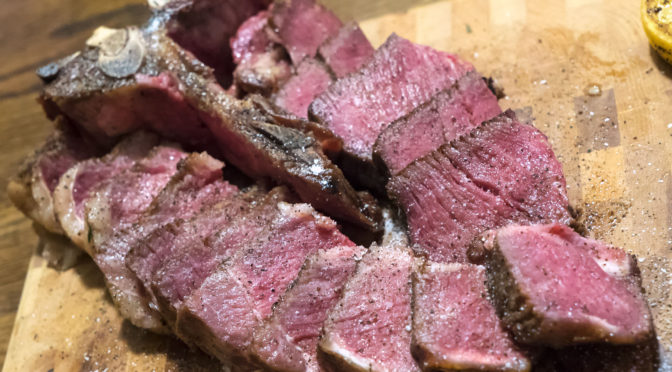
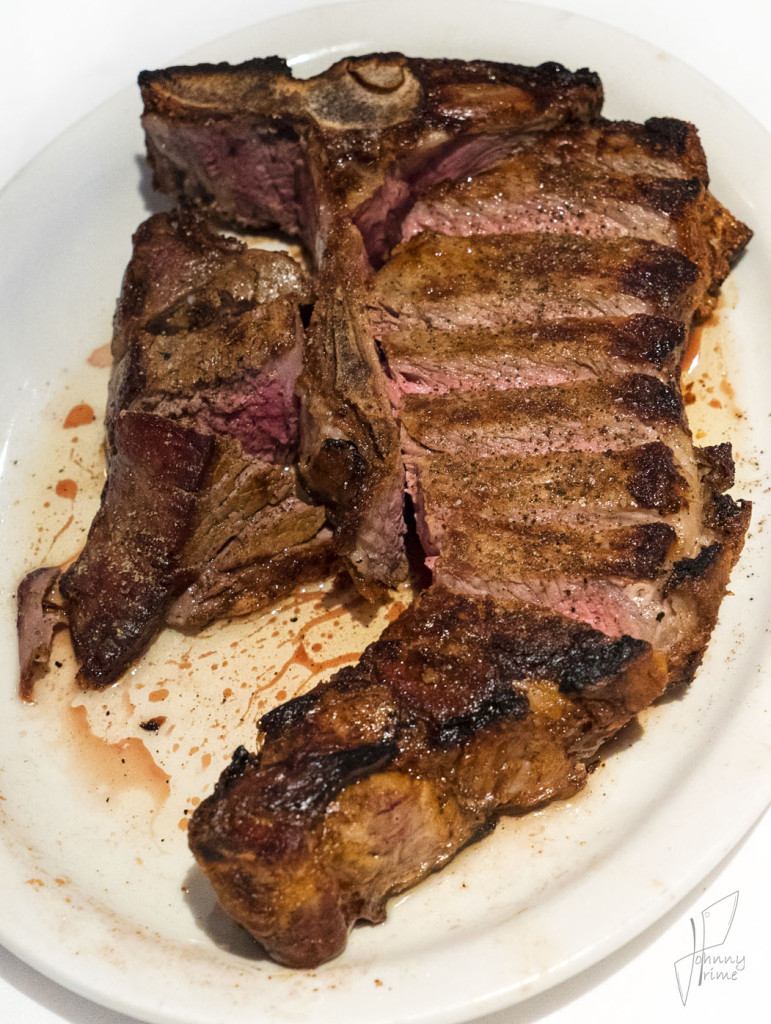
Etymology: There is some difference of opinion on the origin of the word “Porterhouse,” with several restaurants and cities claiming to have created the name. For example, Martin Morrison served large T-bones in his Pearl Street (Manhattan) “Porter House” around 1814.This history was popular in the late 1800’s, but some say a Cambridge, Massachusetts proprietor by the name of Zachariah B. Porter added his name to the steak. Still, others argue that the Porterhouse name stems from various 19th Century U.S. hotels or restaurants called Porter House, such as the Porter House Hotel in Flowery Branch, Georgia.
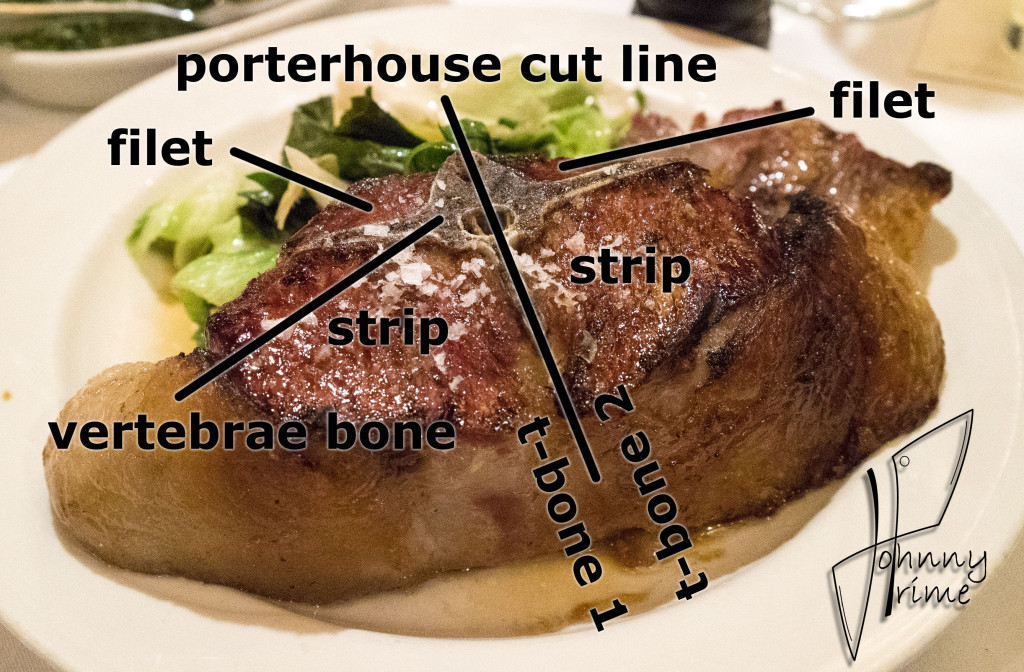
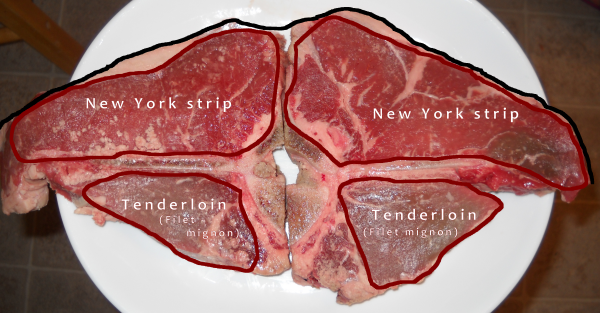
Anatomy: The Porterhouse is a cut of steak from the short loin portion of the animal that contains both strip loin and tenderloin meats. See the highlighted portion in the diagram below:
It is cut from a lumbar vertebra that is sawed in half through the vertebral column.
The downward prong of the “T” is a transverse process of the vertebra, and the flesh that surrounds it (spinal muscles) makes up the meat of the Porterhouse.
Essentially, it is a large T-bone steak from the rear of the animal that has two different types of meat (tenderloin and strip loin), one on either side of the “T.” In the picture below, the strip loin or Strip Steak is on the right, and the tenderloin or Filet Mignon is on the left.
The small semicircle at the top of the ‘T’ is half of the vertebral foramen, which is the name of the hole that passes through each vertebra for housing and protecting the spinal cord. They run the whole way up the back, all the way up to the brain of the animal.
The anatomy of a Porterhouse differs from that of a T-bone only in that the Porterhouse contains a larger portion of tenderloin than its T-bone counterpart.
This is primarily due to the fact that Porterhouse steaks are cut from further in the rear of the animal, from lumbar vertebrae, where the tenderloin is much thicker. Experts differ, however, on how large the tenderloin must be to differentiate a Porterhouse from a T-bone. The U.S. Department of Agriculture’s Institutional Meat Purchase Specifications state that the tenderloin of a Porterhouse must be at least 1.25 inches thick at its widest, while that of a T-bone must be at least 0.5 inches.
Here is a shot of a short loin with multiple vertebrae still intact and not portioned out into individual Porterhouses and T-bones.
You can see on the left there is a good sized, thick portion of tenderloin. That thins down as you move the the right, and seems to disappear by time your eyes reach the far end of the cut.
Just to drive home the anatomy a little more, here is a great excerpt and image from Russ Cooks:
“Up close and personal, this is where the T-bone fits.
The black line across the top of the two T-bones pictured here is the outside (top of the back) of the steer. You can see the T-bone in the schematic illustration higher up on this page as the topmost part labelled Rib. Above the ribs, what you touch if you pat the steer’s back, is the New York strip. Beneath the ribs is the tenderloin from which a filet mignon is often cut. T-bone steaks cut closer to the shoulder are known as Porterhouse while those cut closer to the loin are just T-bones.”
Preparation: Most times, T-bones and Porterhouses are either grilled, seared in a pan, broiled or blasted with high heat in specialty steak ovens made for charring the outside of the meat without over-cooking the inside. Butter is essential, and heavy seasoning is important as well. Herbs and garlic help boost the flavor too.
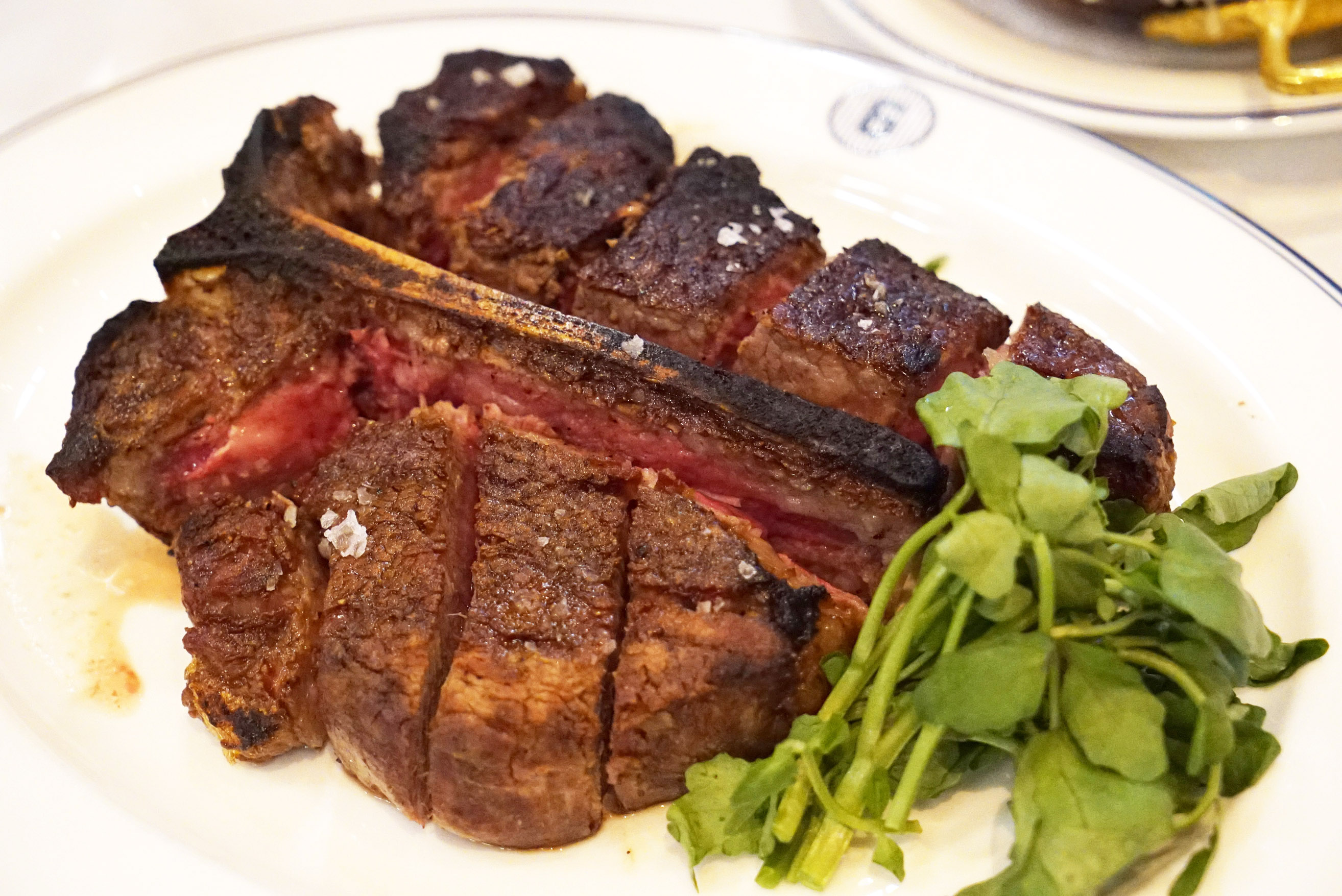
Flavor: Since this cut contains both the Filet Mignon and the Strip Steak, I refer you to the flavor sections for those cuts below, with a notation that the bone being left in often adds a more robust flavor while helping to retain tenderness and juiciness. These are very popular items at steakhouses because they can be cut large enough to feed anywhere from two to four people. Additionally, with two different types of meat in one steak, one can vary the flavors that one experiences with each bite.
Thanks to new friend and fellow food blogger The Restaurant Fairy, I was recently hooked up with a restaurant PR person who is in charge of setting up press dinners for restaurants that are looking to generate detailed reviews and additional news coverage to build customers or put a spotlight on a new/special menu at their establishment. I’m hoping to attend more of these types of press dinners in the future. With any luck some wealthy benefactor will discover me and fund a new career for me in the world of food writing. The goal is to become a professional diner.
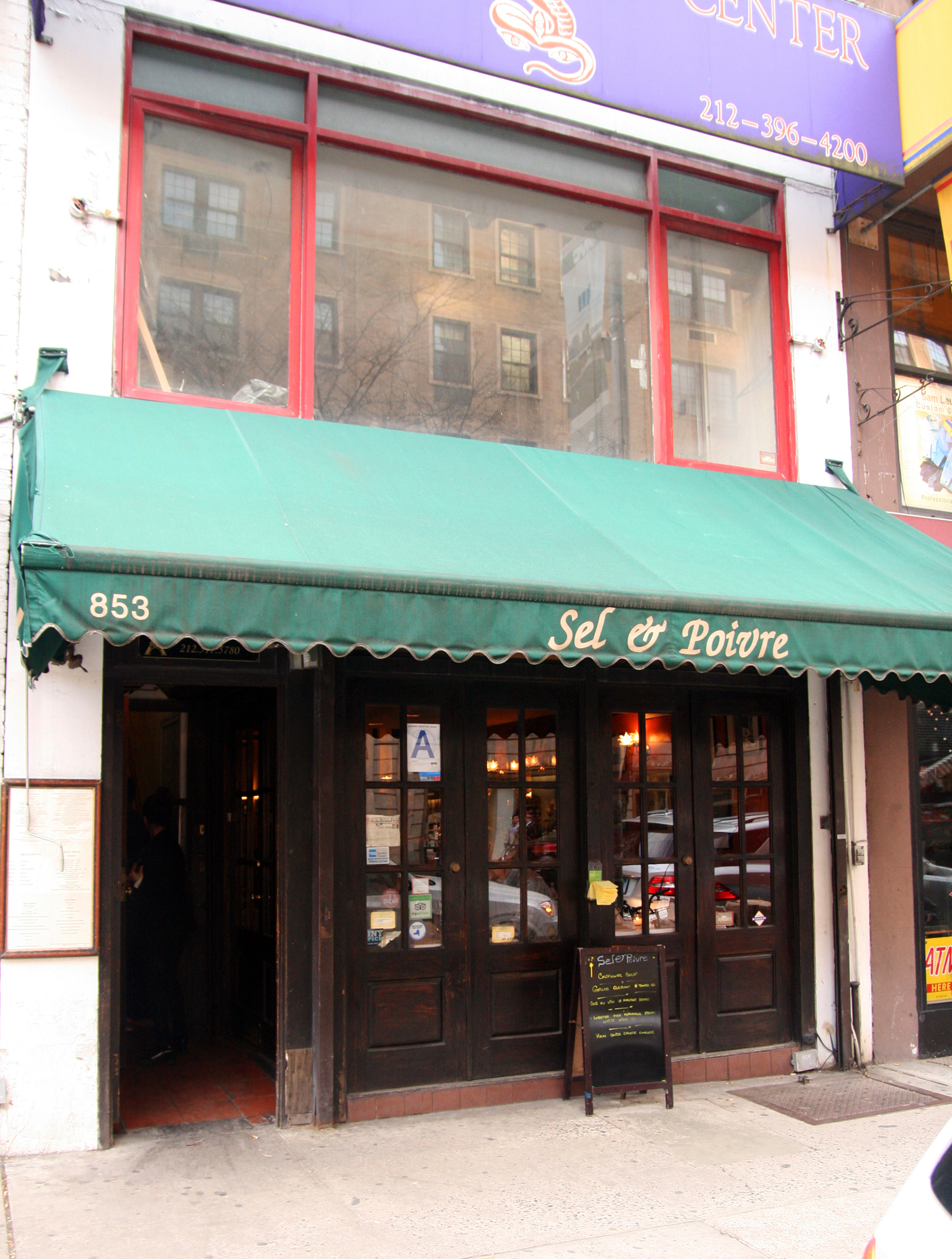
Anyway, my first press dinner in this vein was at French joint Sel et Poivre. For you proud, dirty American apes out there who don’t know or care too much about other languages, that means Salt and Pepper.
The restaurant has been in business here for decades. Owners Christian and Pamela are a husband and wife duo who take turns managing the place each night. They’ve been a team here for about 8 years, and for decades prior the restaurant was run by Pamela and her mother. This year Christian and Pamela are celebrating their 25th anniversary so be ready for some special menus coming this spring/summer season.
The atmosphere is very local and homey. Walls are adorned with old black and white photos of family travels. There’s a classic, clean French bistro feel to the place, and the 65-person seating capability is intimate without being stuffy or crowded.
So how’s the service? Amazing. Waiters here aren’t just people toiling away at their job. These are men with long careers. The newest employee other than the bar staff has been there for 7 years, and veteran waiters have loyalty in the 25-30 year range. The chef has been there for that long, and the staff still manages to keep the menu interesting and new while always retaining the classics that some people have been coming back to eat for years. Impressive, and that speaks volumes about the management and quality of the joint. Christian himself is a stand-up guy. A class act. He’s funny, talkative, approachable, kind, warm, inviting and a great host. Within moments of talking with him you feel as if you’ve known him all your life.
Located on Lex at 64th, the customers range from shoppers, to business people, to tourists. But their bread and butter are the locals, some of whom come in several times per week for specific dishes that they’ve been enjoying for generations. One family has been dining here for 4 generations. Even the landlord eats there, who has had the building property in his family since it was a cow grazing pasture in the 1600s. I’m serious.
Okay so on to the good stuff. Note that the portion sizes in my pics are all smaller than the actual menu items (except for the desserts). Press dinner portions are typically smaller so that more stuff can be tried. Here’s what we had:
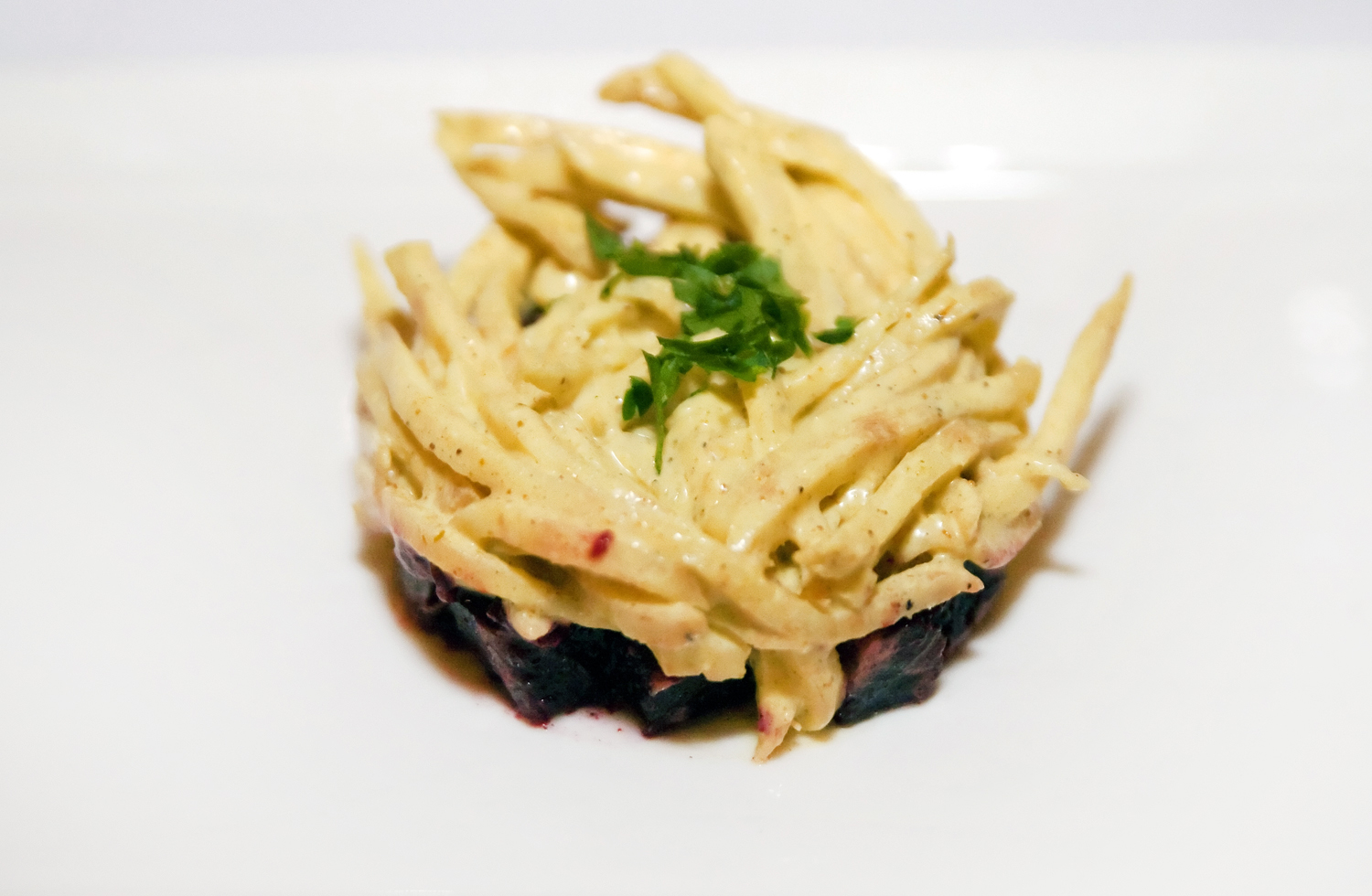
First was a celery root remoulade with red beets. There was a distinctly Mediterranean flavor in this dish, likely because of the cumin spicing. I enjoyed it. It was a cool, refreshing way to open up the taste buds.
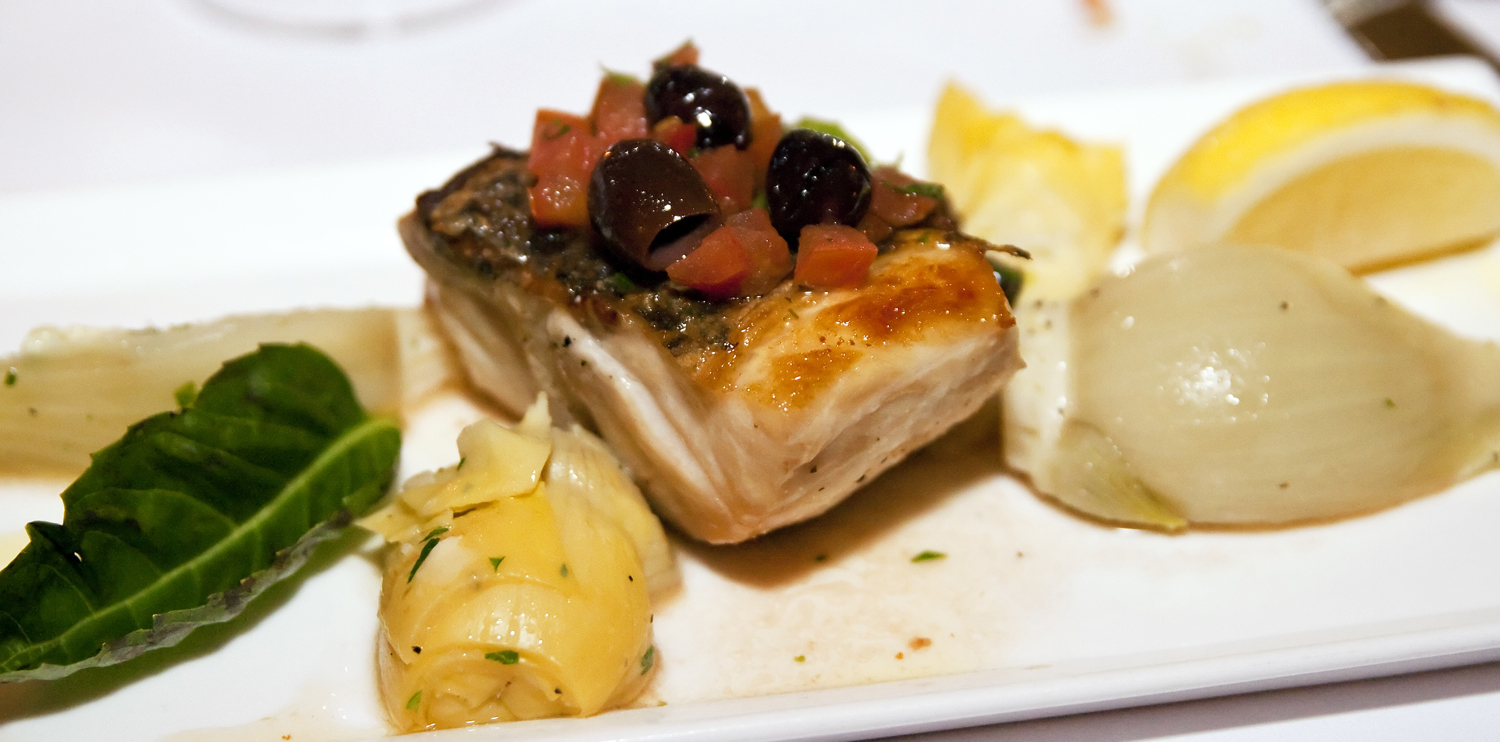
Next we had wild striped bass with artichoke hearts, fennel and black olive lemon oil. The fish was perfectly cooked with its crisp skin still intact. This was also very Mediterranean in its flavor profile. Light and fresh. And I must say that the artichoke was one of the best preparations I’ve ever had outside of mom’s home cooking.
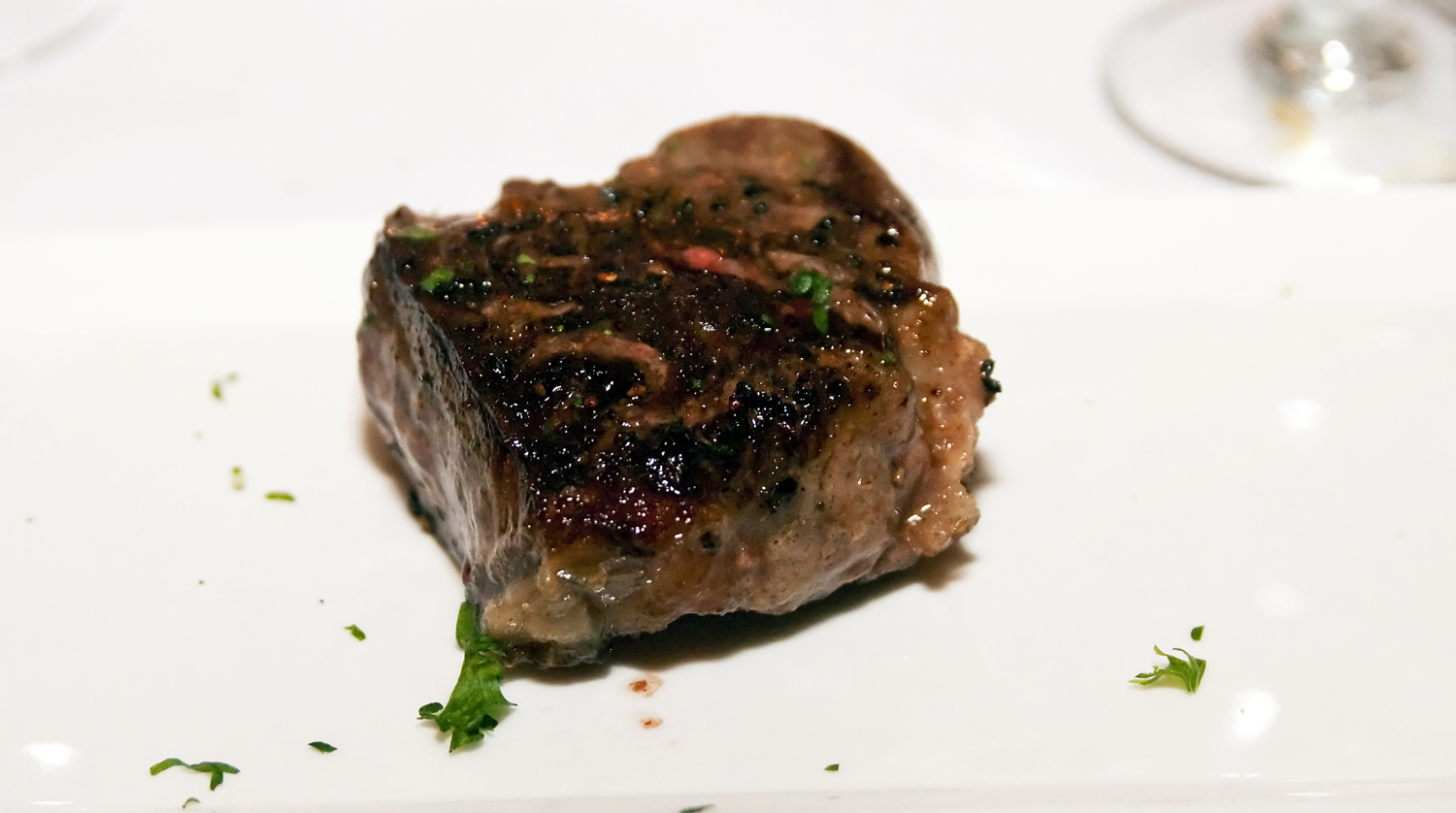
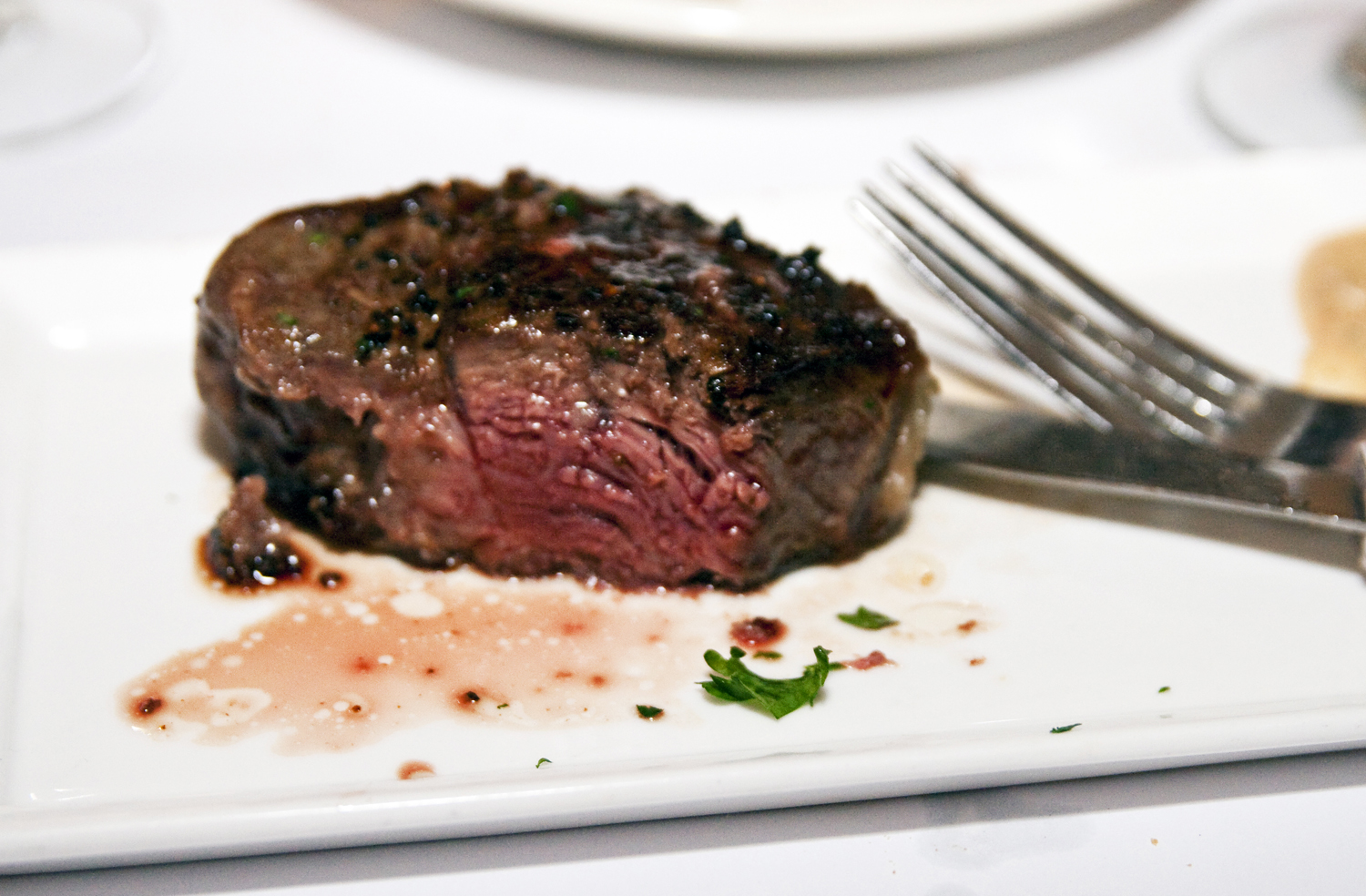
Steak was next. An aged sirloin to be exact. It was juicy and flavorful, had a nicely seasoned crust, and was cooked to a perfect medium rare.
The beef was served with two sauces: roquefort and poivre.
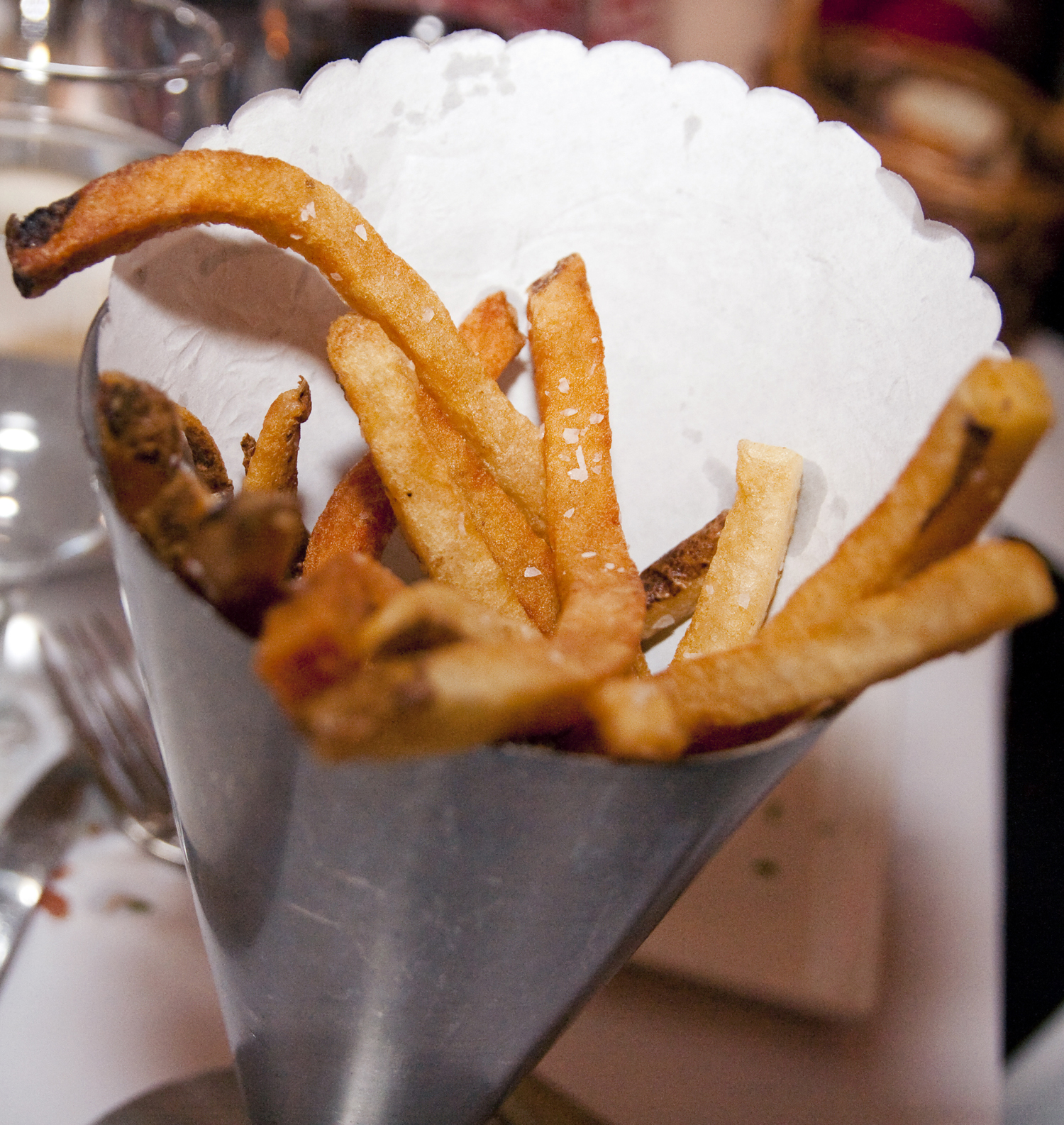
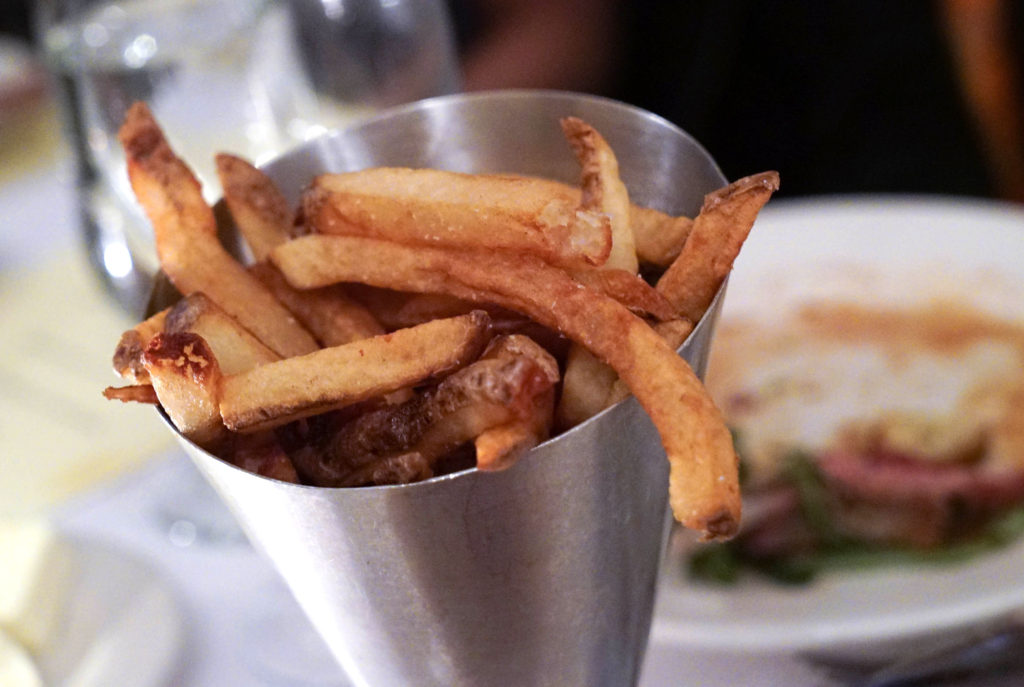
I only took a pic of one because they looked and tasted similar to me, though one was clearly more peppery. Both were drinkable, however. They went especially well with the cone of crispy and savory fries that came with the steak. Delicious.
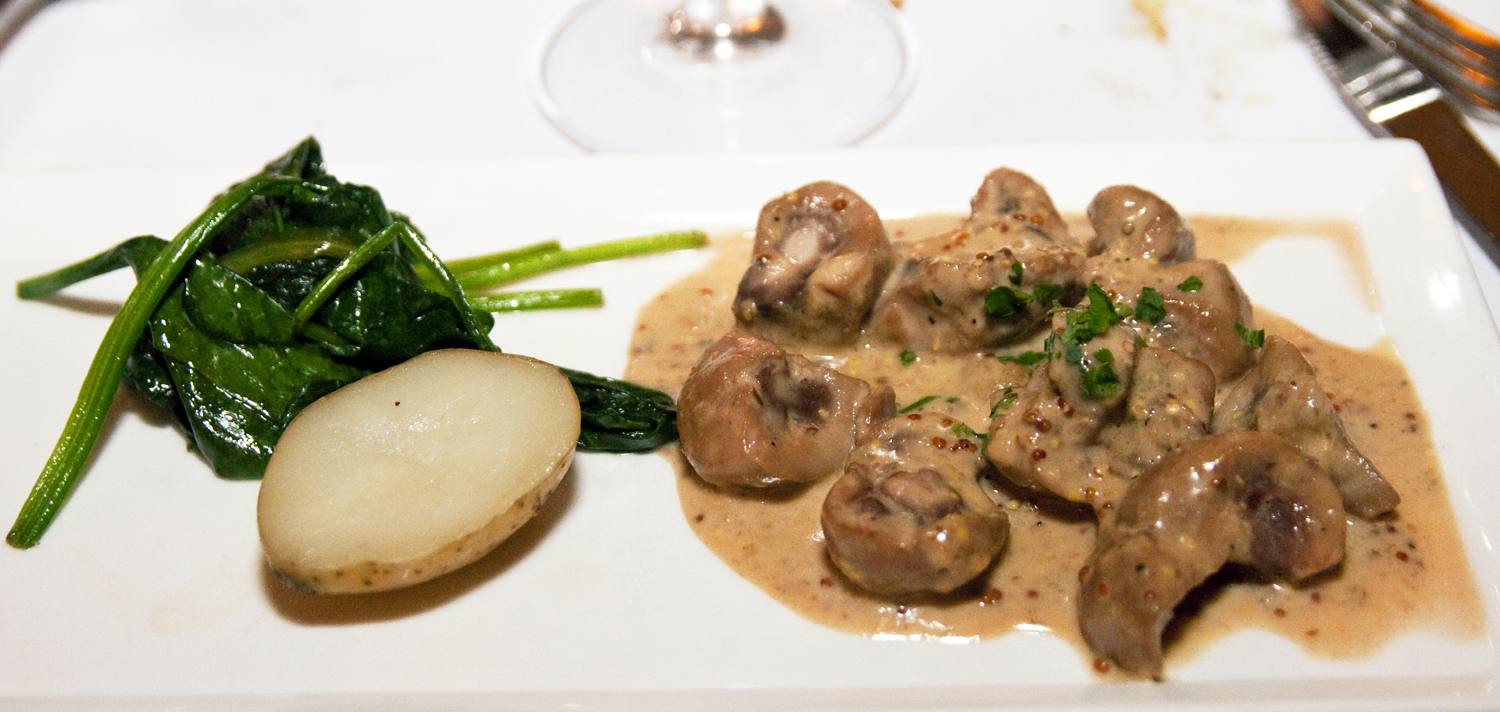
Next was a bit of offal! Veal kidneys with an amazing mustard sauce, boiled potatoes and spinach.
Kidneys aren’t for everyone. This was my first time eating kidney. It was a bit mealy and chewy in parts, but the flavor was delicate and nice. The sauce did a great job of bringing out the game flavors without letting them overpower you. I ate every bite!
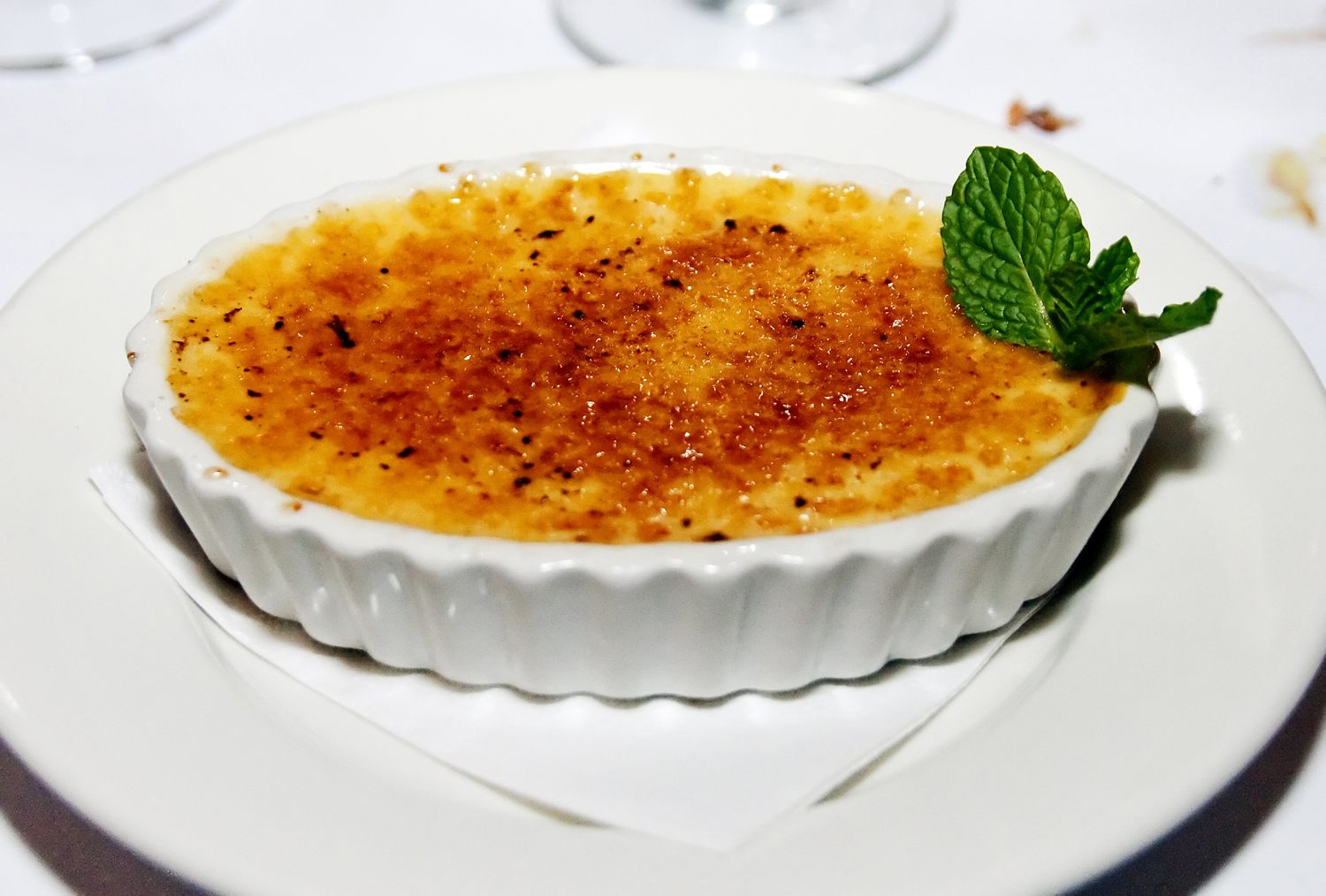
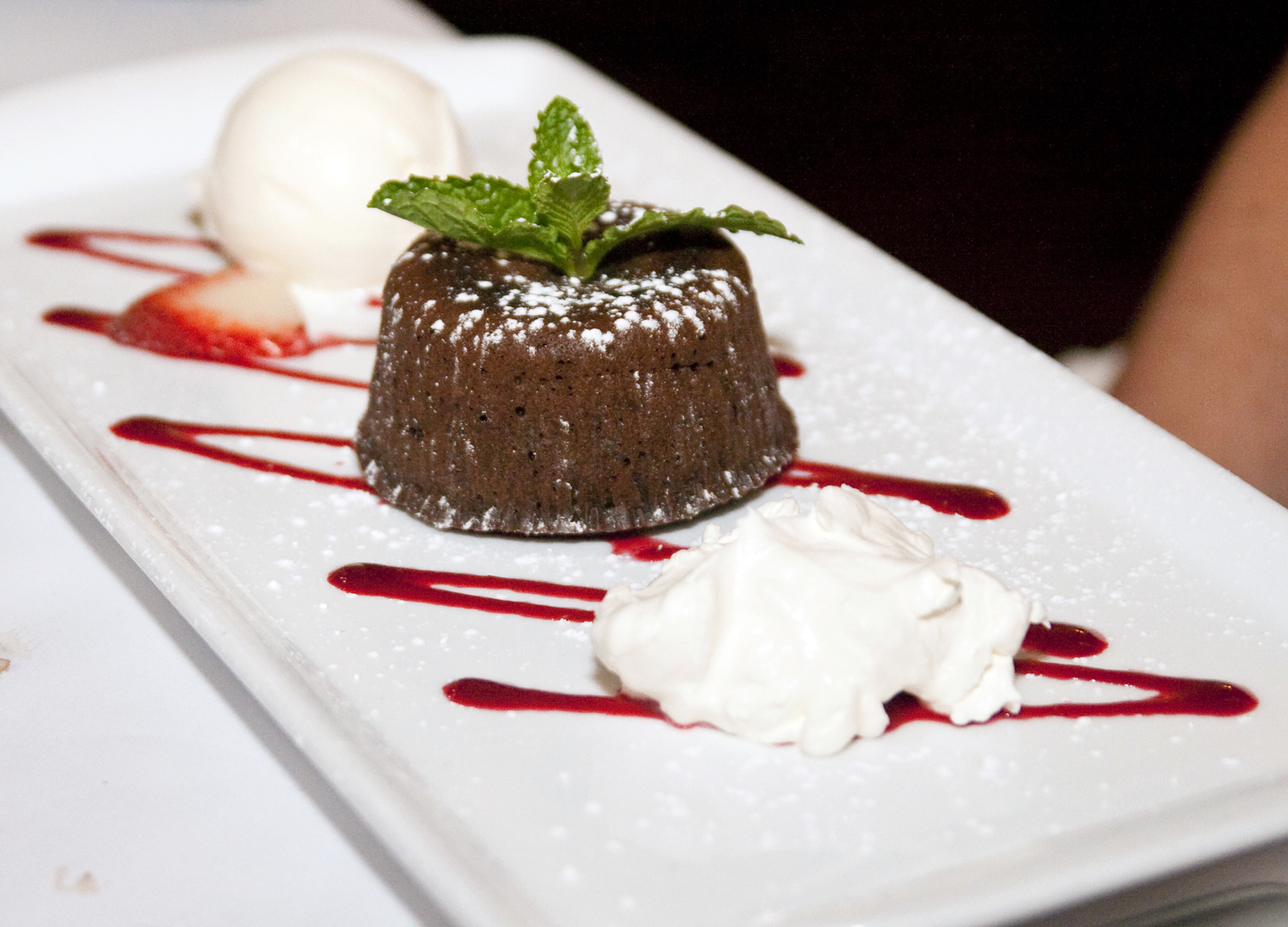
For dessert we had classic French creme brulee and chocolate lava cake.
They were both very nicely executed, well-balanced, and not overly sweet. The cake came with some fresh whipped cream and vanilla ice cream, and the brulee had a nice consistency and great caramelized sugar on top.
Last, I should also note that the wine selection here is extensive. Having broadened the scope from French and California wines to include stuff from New Zealand and South America, Christian and Pamela have modernized their wine selection to stay on pace with an increasingly knowledgeable caliber of diners. This is probably because Christian is also a sommelier, so he knows what pairs well with the dishes outside of French-only wines.
I look forward to going back for lunch or dinner to try some of their other amazing menu items, like frog legs, or to try their classic French daily special dishes (Bouillabaisse Monday; Coq Au Vin Tuesday; etc).
If you like classic French food then this is a great place to go, and they also modernize and freestyle very well with some of their other dishes.
UPDATE 3/8/2017
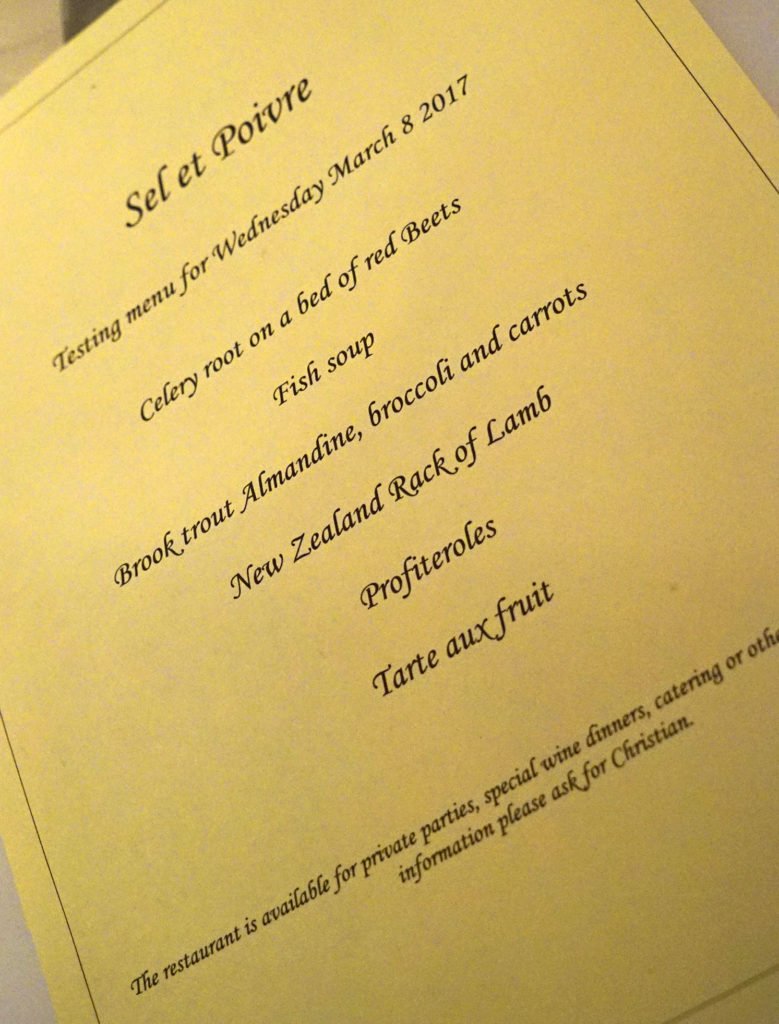
I went back to Sel et Poivre for another press dinner. We tried a few different items this time, and I was able to meet Pamela, the other half of the dynamic duo behind their French bistro (which is now coming up on its 28th year in business).
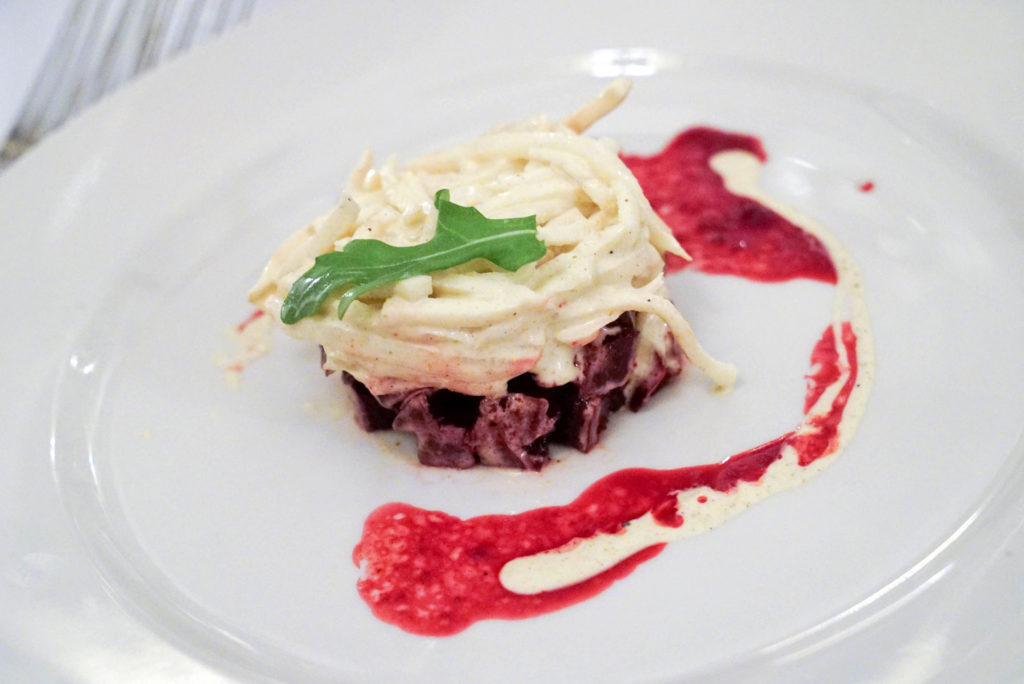
The celery root and beets were just as good as I remembered, this time more artistically plated.
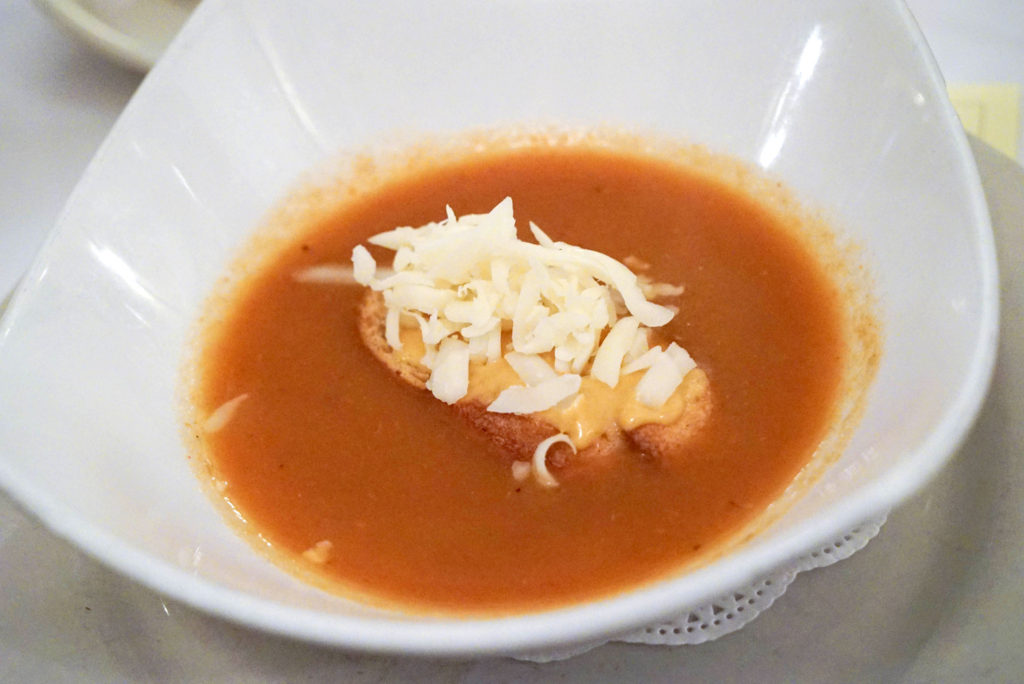
The fish soup was really fun. It comes with a plate of toasted baguette slices, roue and shredded Swiss cheese. The idea is to spread the garlicky, spicy roue onto a slice of bread and they sprinkle the shredded Swiss on top. Then, you float it in the soup and let it all melt together and combine into a velvety consistency.
It was delicious. The fish was clearly present, yet subtle and not overly powerful. I could easily slurp down a few bowls of this.
The brook trout was really nicely cooked and had great flavors from the shaved almonds and tangy white wine and lemon sauce.
It was prepared skin-on, but I felt that it could have used a bit more crisp on the skin. Perhaps because it was plated skin-down, the skin lost some of the crisp it might have developed while cooking. Otherwise this was an excellent dish.
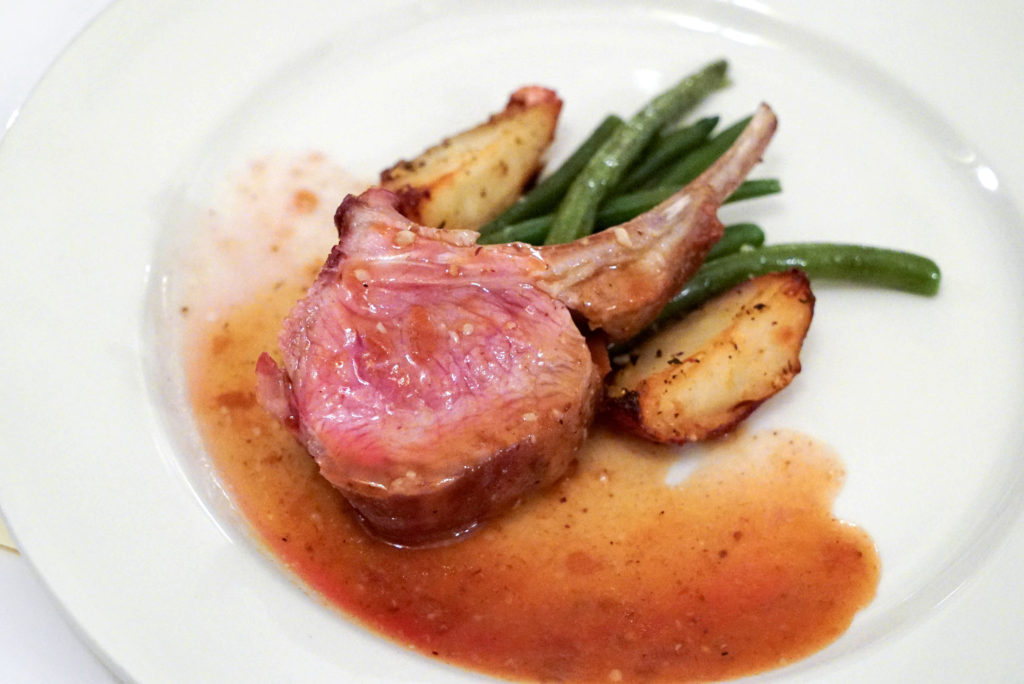
This lamb rib was perfectly cooked. So juicy and tender, with a nice mild game flavor. The outer edges were coated with peppery spices that penetrated deep into the meat. My favorite dish of the night.
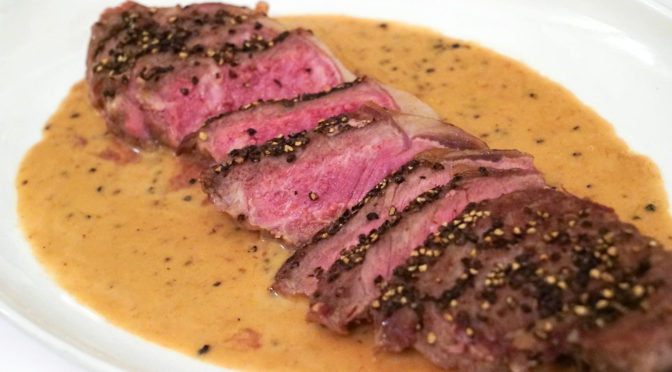
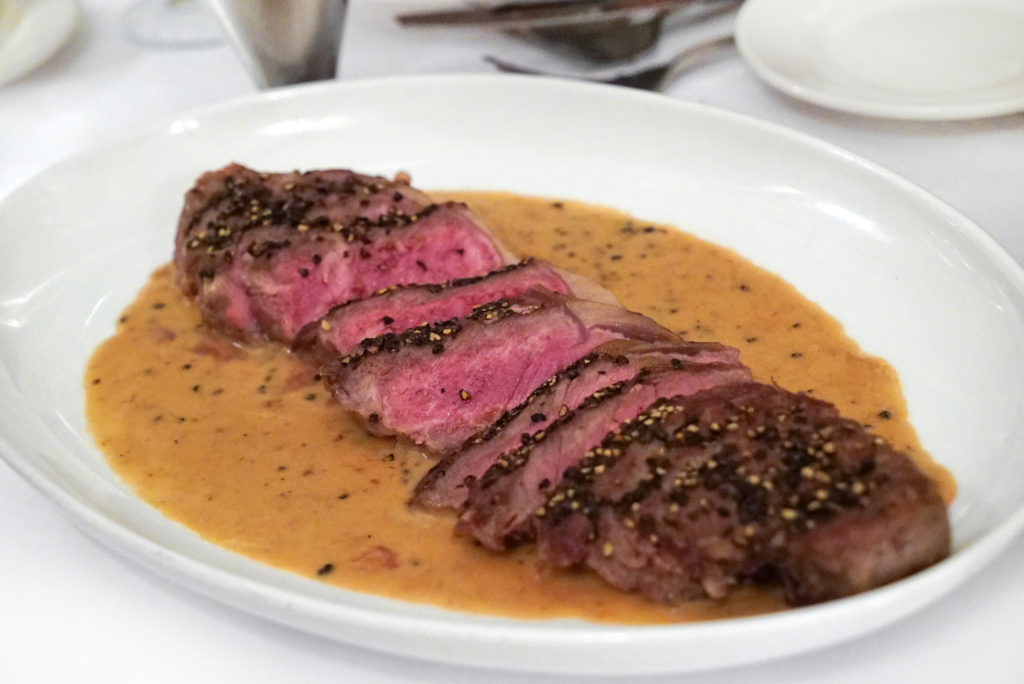
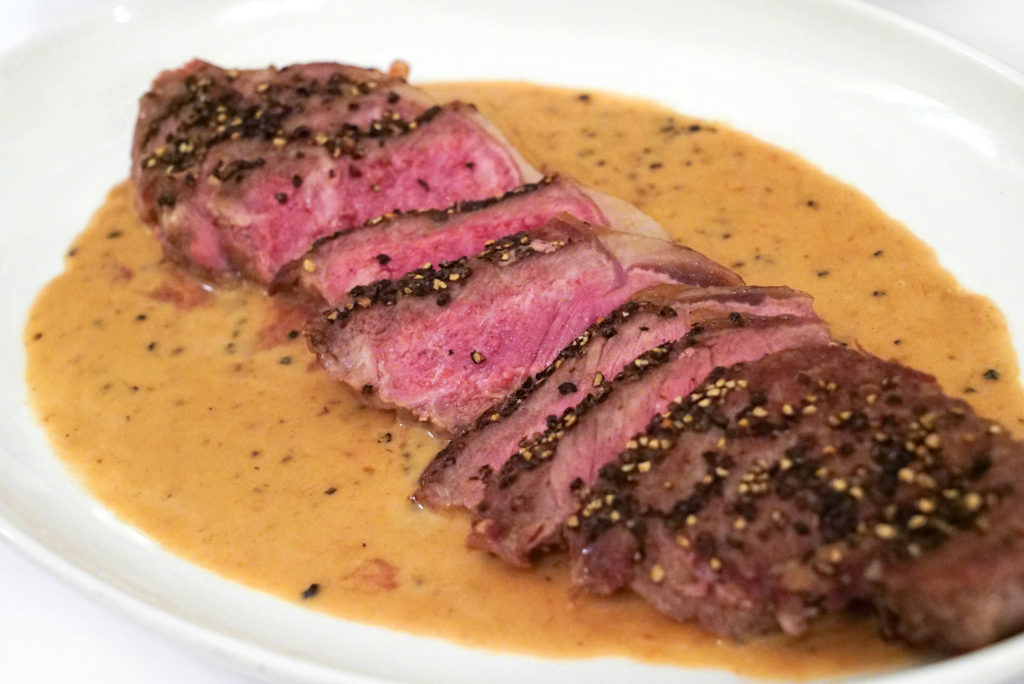
I was excited to see the steak come out (sirloin). While I had already tried it in the past, this time I was able to see the full portion size – with a beautiful pre-sliced presentation – on a bed of mustard-based peppercorn sauce.
It was a perfect medium rare execution!
This baby still had all the same qualities as the last visit, only this time there was only the one sauce and a more pronounced peppercorn crust. Further, the last time featured an aged cut, while this one was not aged, as far as I could tell.
The fries that are served with the steak were golden and crispy.
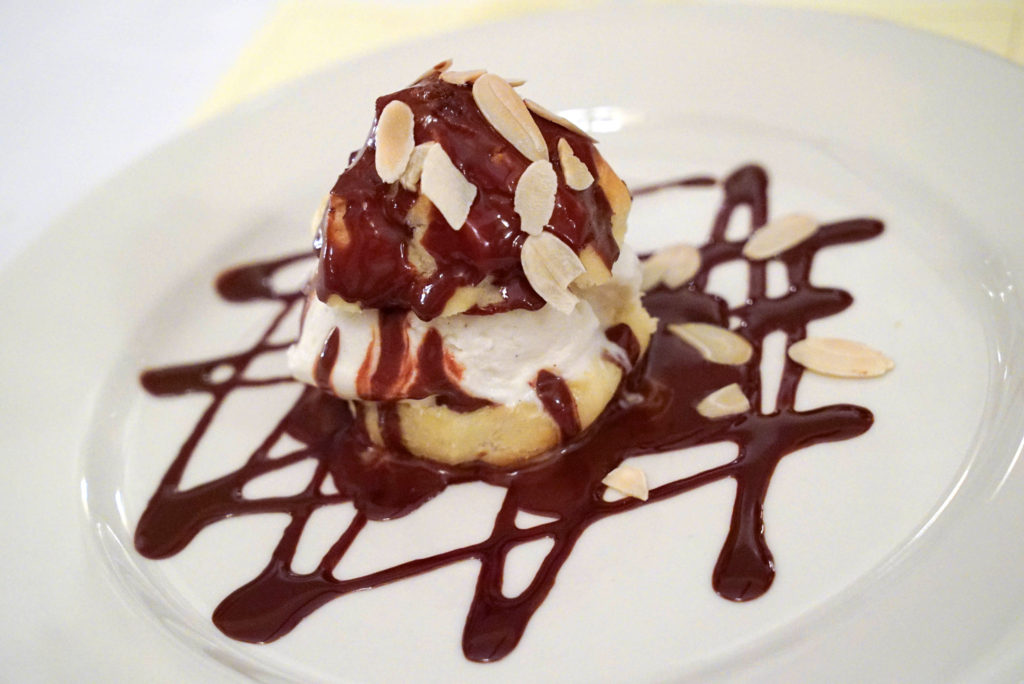
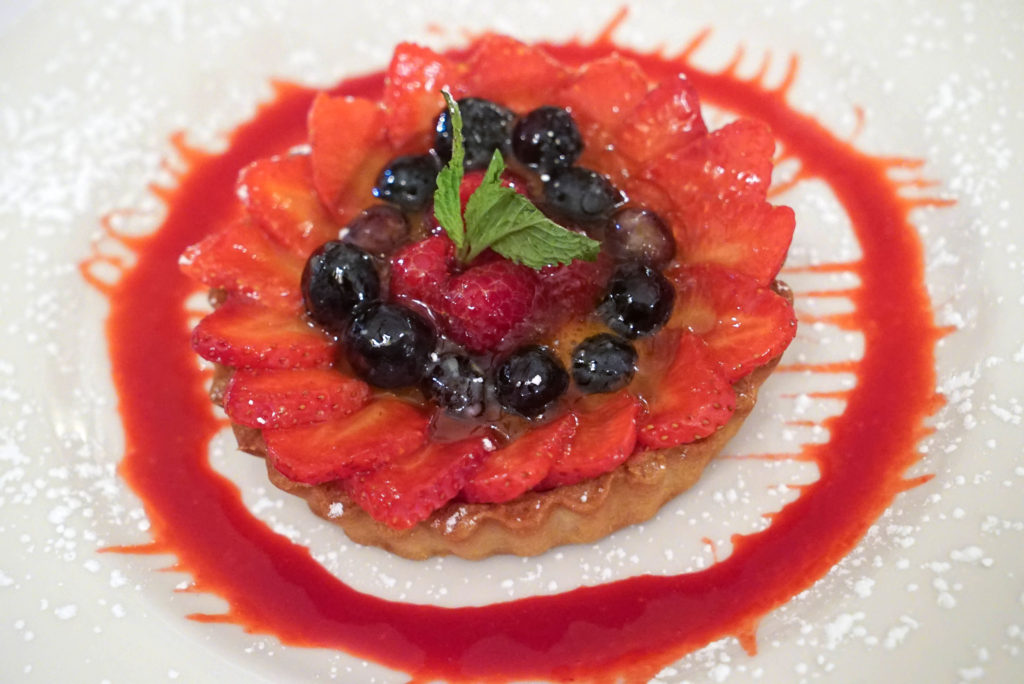
Dessert was nice. We tried some profiteroles and a berry tart.
The berry tart was gorgeous, and was easily my preferred dessert between the two.
SEL ET POIVRE
853 Lexington Ave.
New York, NY 10065
If you dine out often in this great city, you’ve no doubt seen the name Pat LaFrieda featured prominently, in bold or italics, beside some of the best beef offerings at the finest restaurants.
The name has become synonymous with top notch quality beef, along with other proteins like lamb, poultry, game and pork. Personally, I can vouch for this. Many of my favorite dry-aged, high end cuts of steak and delicious burger grinds come from LaFrieda. In fact, the best steak I’ve ever had in my life was a LaFrieda tomahawk from Osteria Morini, and I’ve eaten a lot of fucking steak!
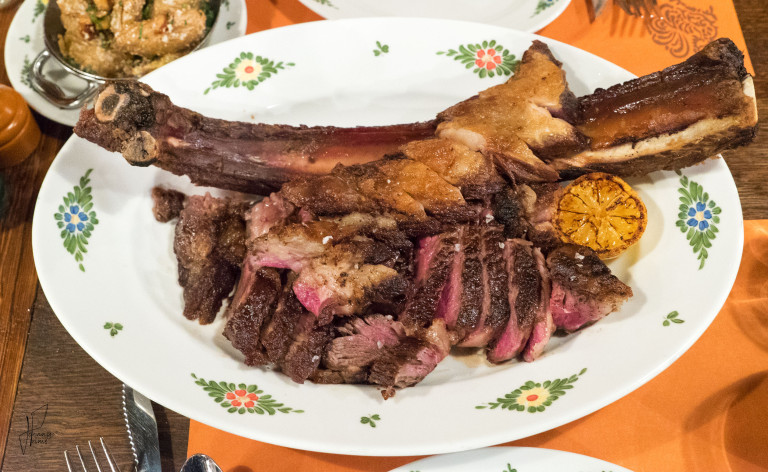
The 120-day dry-aged Pat LaFrieda tomahawk rib eye at Osteria Morini
Currently, the LaFrieda business is a 36,000 square foot processing facility in New Jersey that ultimately feeds 300,000 carnivores a day. But it wasn’t always like that. So, what happened, and what makes LaFrieda beef so great?
History
Like all great success stories, LaFrieda’s started with a vision. Or perhaps it was a lack of vision, to be precise. You see, in late 1800’s Naples, a young Anthony LaFrieda was popped in the face during a street fight, resulting in a black eye. A butcher came out of his shop from nearby and slapped a cold steak over Anthony’s eye to soothe the pain. But that butcher ended up giving Anthony a job, and that’s when the family business took root.
Anthony learned the art of butchery in Italy and brought it with him to the US in 1909. Eventually he opened a meat shop in Brooklyn, 1922. He ran it with his five sons, Pat (the first) being one of them. They began servicing restaurants in the 1950’s with a shop in Manhattan’s meatpacking district, and in 1964 Pat and his son (Pat the second) took ownership of the business, calling it Pat LaFrieda Meat Purveyors.
The business grew, and the shop changed locations a few times throughout the west village, eventually landing at Leroy Street for 30 years, starting in the 1980’s. It was there that Pat the third, age 12, began to learn his family’s trade, thereby carrying the business from great grandfather, to grandfather, to father, to son; a four generation meat dynasty!
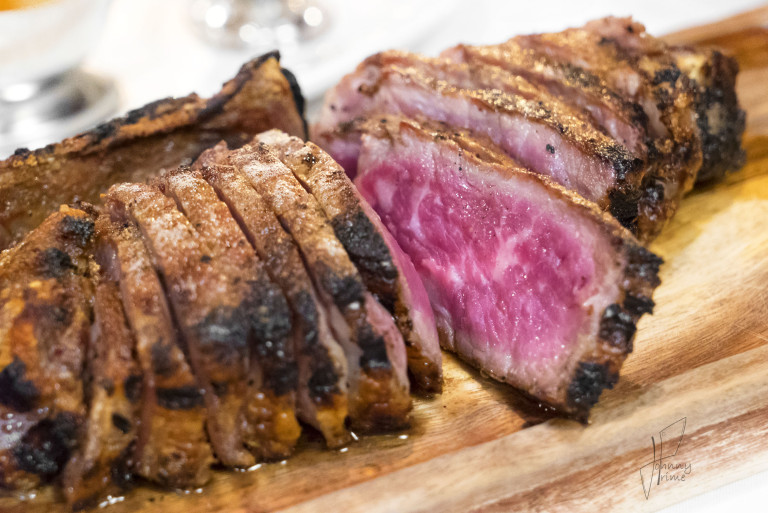
The 65-day dry-aged Pat LaFrieda strip steak at Le Rivage
The Business Today
Pat the third’s vision for the business was a bit different than his elders. He wanted to work directly with restaurants to provide them with the best product, trimmed and portioned exactly to their specifications. He even went so far as to begin creating custom burger blends for his customers. He wanted to help restaurants develop products that showcased their chef’s talents, and to treat restaurant customers as if they were also LaFrieda customers.
It worked. This concept made the Pat LaFrieda Meat Purveyors brand a highly sought after commodity among the NYC restaurant elite. But the meat isn’t only relegated to high-priced steakhouses and fancy “white table cloth” joints. You can find Pat LaFrieda custom burger blends and steaks all over the place, from bars to neighborhood mom and pop shops. The concept that Pat the third created allows for all kinds of budgets, since custom portioning and cutting is the specialty.
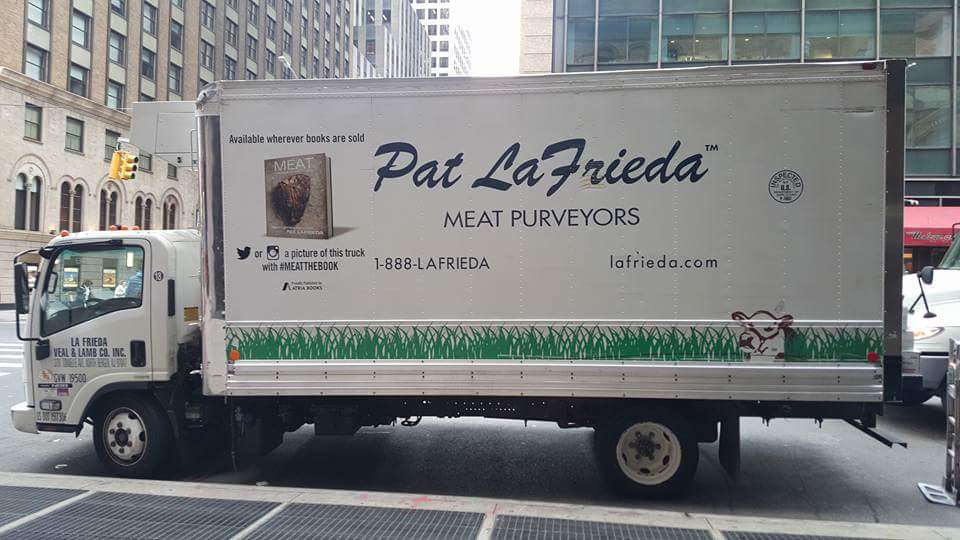
The Pat LaFrieda truck making deliveries
I mentioned earlier that the operation is now run out of Jersey in a large facility. Well, there, LaFrieda has a full aging room on site, with over 5,000 primals aging at any given time. LaFrieda supplies both choice and prime beef, and grinds upwards of 50 unique burger blends every day. In fact, LaFrieda grinds out 75,000 burger patties every day, in all different sizes, including all different proteins, and within all different niche markets (like organic, all natural, grass-finished, etc.). Amazing.
The Pat LaFrieda blend burger at Burger & Lobster
But LaFrieda beef isn’t only just for bars, restaurants and hotels. Pat the third stays true to his great grandfather Anthony’s original butcher shop business model, as you can order directly from their website for home delivery. In fact a friend of mine just recently ordered up and grilled a bunch of rib eyes for a party he hosted.
I did the same as well, actually. It was tremendous. Take a look HERE, as I documented the whole thing.
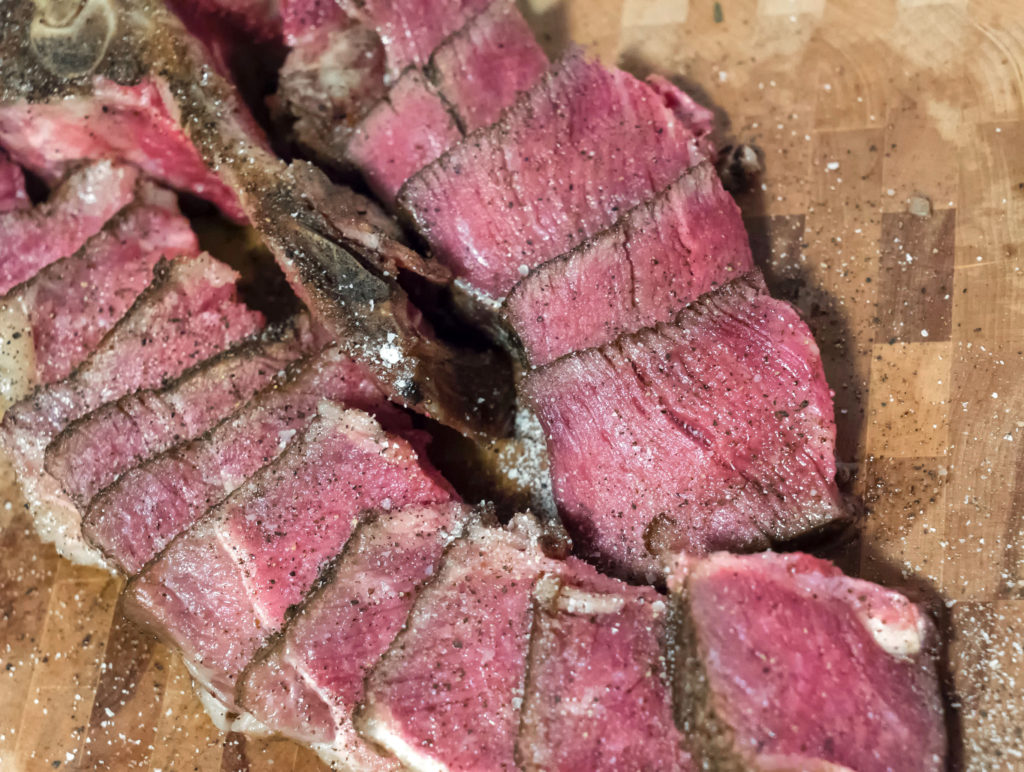
A 60-day dry-aged Pat LaFrieda porterhouse, home delivery
Sourcing
LaFrieda currently works with small farms and processors from all around the country to acquire the best meats from the best producers. As my “Meet Your Meat” series continues and develops, I will be featuring some of these farms in similar articles. My goal here is to provide you meat maniacs with a better understanding of where your food comes from, from feed to food, so to speak.
Pat, his dad, and Mark
Interview with Pat
I had the pleasure of communicating with Pat via email before publishing this article, and it made for some interesting Q&A. Take a gander below:
Me: Okay, first, some more serious questions. I have this romanticized notion in my mind that you get to hang around beef and taste steak all day long while beautiful maidens fan you and feed you grapes. But deep down I know it can’t be beautiful and dreamy like that. So what is a typical work day like for you?
Pat: Johnny, that is a great question and one that is asked often. When I first joined the family business, my Dad began his day at 3am every morning. Although that sounds early, in order to grow and maintain the customers that we already had, I changed our start time a little earlier every so often. The way NYC works for a chef is a logistical nightmare. With storage space being so tight, chefs normally wait until after dinner service to place their order for the next morning, roughly at 10 pm. Most restaurants want their delivery before 9 am. In between the time that a chef orders and the time of delivery, the butcher needs to translate the order into a computerized system, custom portion whatever was ordered, weigh, package, load and invoice the restaurant before sending the order off in a delivery truck, into the Hell of NYC traffic. That all boils down to me beginning my day at 3pm, running the labyrinth I just described until 5am. Never wanting to disrespect my Dad, I never asked him to start his day any earlier so my last two hours at work are the most pleasurable, being that they overlap with his. A beautiful maiden offering grapes he is not, but funny he is.
Me: I’ve always joked that I must have been a butcher in a past life or something, given how fascinated I am with the art and skill of it. But I’ve actually heard that being a butcher is really difficult work with odd hours. I suppose like any career, there are challenges and rewards. While your current business is much different from the shop your great grandfather opened, what are some of the challenges and rewards you’ve experienced in your lifetime of butchery, processing and meat purveying?
Pat: Space, was always the biggest challenge and it came in more than one form. For storage and portioning meat, we were always tight for space. As our expansion increased from the mid-nineties, real estate prices began to soar so butchers had to operate within the space that we had. Growth was great, but it made our quality of life worse because there was nowhere to put our inventory after a short few years. The thought of leaving Manhattan was a nightmare, but when the city put a bicycle lane through our loading area, we knew it was time to build a new facility out of the city. Another form that space takes is the worst part of the meat business and that’s the time between when we need to pay our farmers and the time in which our customers pay us. The gap is so vast, it would put most out of business faster than we got parking tickets in the bus lane of our loading zone.
Me: I’m always trying to give my readers a better understanding of where their food comes from. What are some of the farms you deal with when sourcing the meat that you process? Anything local or big-name that us steak aficionados might know?
Pat: Long before the recent political campaign, we have always preached to buy domestic, yes, product that is raised and grazed in America. We have the safest meat supply in the world and since meat is one of our last natural resources, with manufacturing jobs plummeting, why would Americas not want to preserve that? I believe that “Local” is a gimmick however. In NYC for instance, NY State does not grow beef anywhere near as good as Kansas, so why would I want to pedal that garbage to prestigious NYC institutions that count on an amazing experience to survive. As for other meat, like rabbits, there is no place better than NY State to source them. That is how we base our sourcing, locating the best in class for each category as long as it’s domestic.
Me: How often do you interact with the farmers who actually raise the animals or run the feedlots?
Pat: We work very close with farmers for our sourcing. My cousin is in Dodge City right now as I write this, to ensure that our product is humanely handled, properly raised and finished.
Me: I’m a huge fan of dry-aging beef because the process concentrates flavor and increases tenderness, along with adding earthiness. Often we see steaks that were aged for 28-35 days on menus, but some places tout steaks that are aged upwards of 100 days like they are delicacies. Is 28-35 days a sweet spot for how long the beef should age, and is there any downside to aging for longer periods of time aside from the normal loss of weight that happens from the dry-aging process?
Pat: We age up to 120 days. As long as the humidity is controlled, the temperature is constant and the air circulation is vast, the meat will not rot. After 120 days, diminishing returns will begin to effect the product in that the funk of the dry age gets a bit bitter. 28 days is the young side of the range and is very universal whereas 120 days is the far end and is intended for those who have acquired the pallet for such.
Me: Okay now some fun stuff. There’s an old myth that a butcher’s favorite steak is the hanger, or “butcher’s steak,” as it is aptly called. Is there any truth to that, and what is your favorite cut? Dad’s, grandfather’s and great Grandfather’s favorite cuts?
Pat: Hanger was a butcher’s favorite because it is the only muscle in the animal that must get removed first before the animal is split. It is not symmetrical so before today’s practice of removing it first, the net result would be an ugly steak that only the butcher would eat because it was not appealing to the public back then. My family’s favorite cut has always been Outside Skirt steak.
Me: Are you like me, in that beef is your favorite meat protein? If not, which is your favorite?
Pat: Beef for sure because it is universal in cooking, with Lamb close behind.
Me: How often would you say that you eat red meat or beef?
Pat: I eat red meat daily. It is an amazing source of protein and crucial vitamins, it was intended by nature for us to eat and I happen to have a decent amount of it at any given time.
Me: Do you have a favorite steakhouse, or place to eat steak when not making your own?
Pat: I’m often asked to pick a favorite restaurant and from the bottom of my heart, I mean what I say when I answer that it truly depends on where I’m standing when I’m hungry, what my pallet is desiring at that moment and the friends that I’m with at that time. If you let that be your guide, you will have many favorites as I do.
Me: And finally, your Sophie’s Choice moment: If you could only have one for the rest of your life, would it be a burger or a steak?
Pat: I had to think long and hard on this one. In my lifetime, I could have answered this question differently every week depending on my last experience before being asked. A few days ago, I would have responded STEAK because I just had a great one at Benjamin’s, then our corporate chef made me a truffle burger yesterday that has had me hungry for another ever since, so because you are asking me today, it’s all about the BURGER.
I picked up a Groupon for this place because they were offering a steak dinner for two with wine for a fairly low price. It doesn’t take much to get me motivated to try another steak, so this was a no-brainer purchase for me.
Let’s get down to business. The Groupon got us the following, in addition to two glasses of wine:
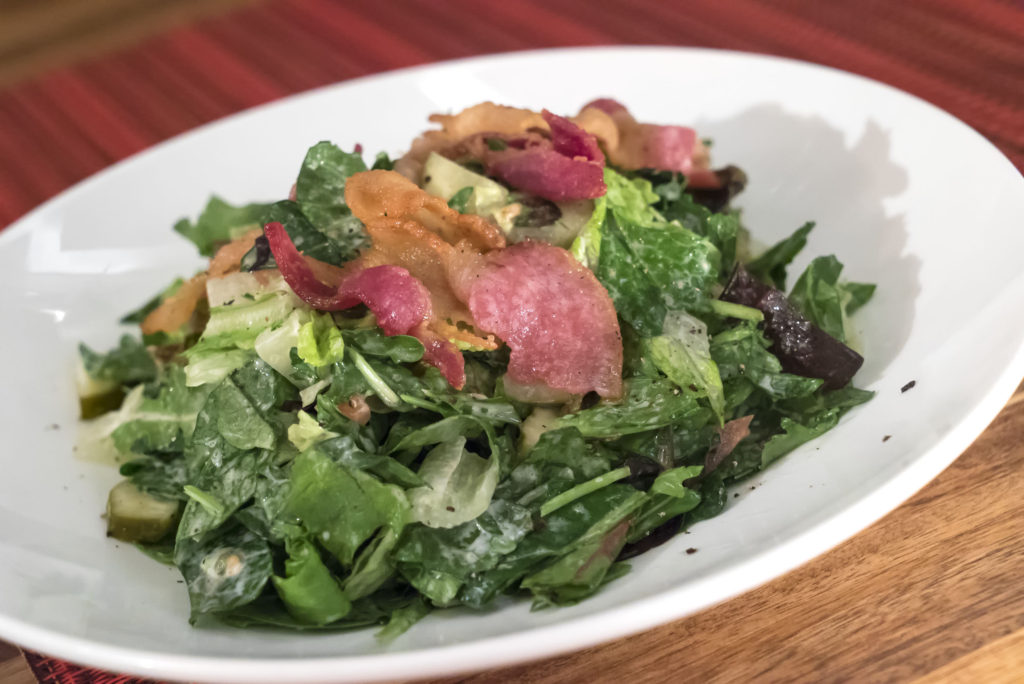
Chopped Salad for Two: This was a BLT salad and probably one of the top salads I’ve eaten in a while. Obviously it contained bacon, lettuce and tomato, but it also had a great pop from pickles and the right kind of dressing that made you think you were actually eating a BLT without the bread.
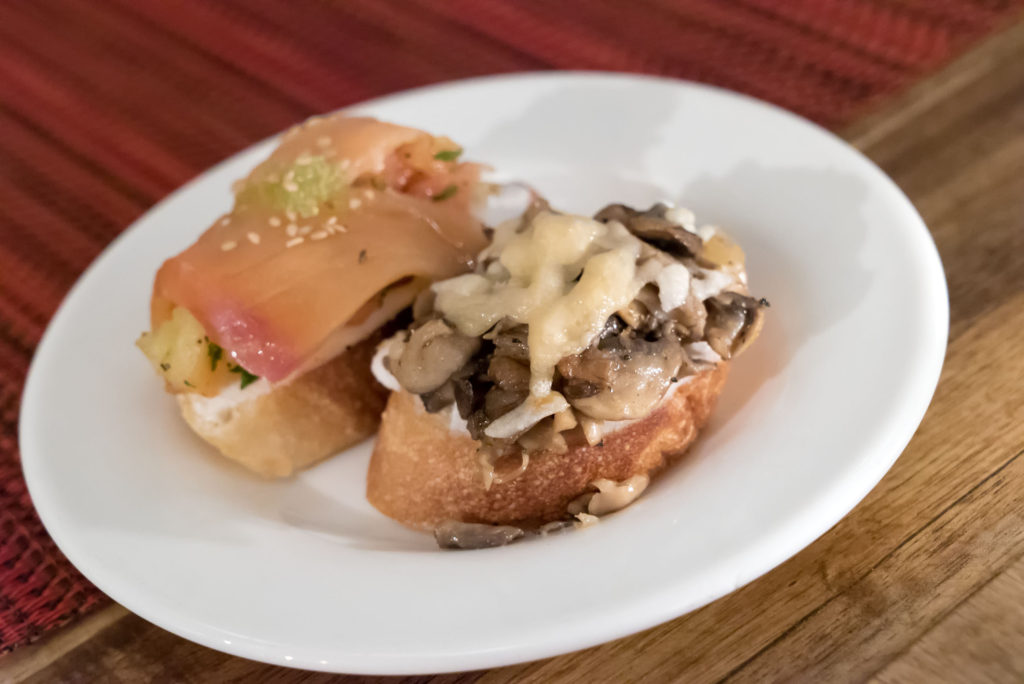
Crostini for Two: Mushroom and cheese, and salmon with goat cheese. Both of these were really good, fresh and crisp with great pops of flavor. Unfortunately I focused my lens on the uglier of the two. The salmon one was very pretty.
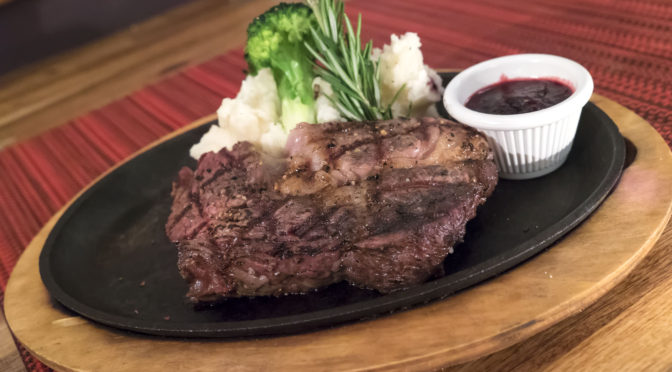
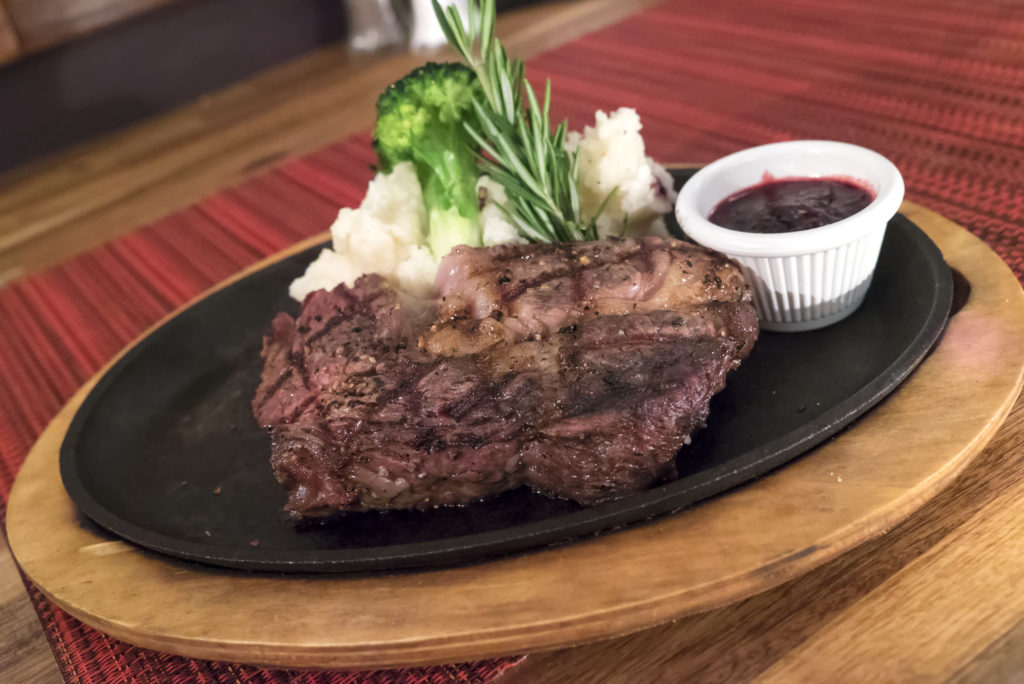
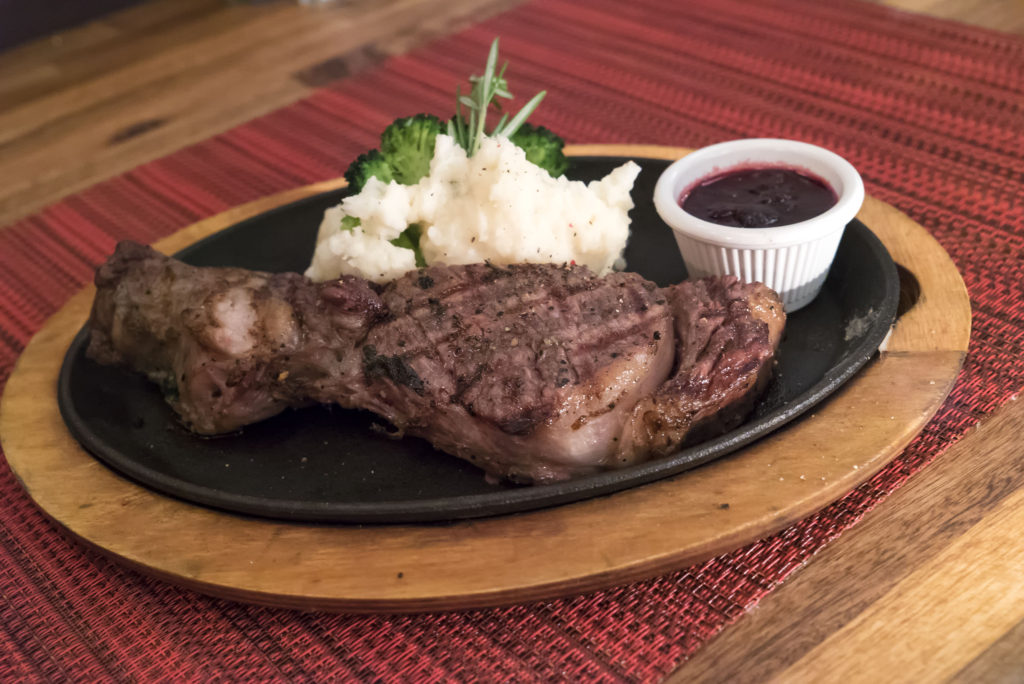
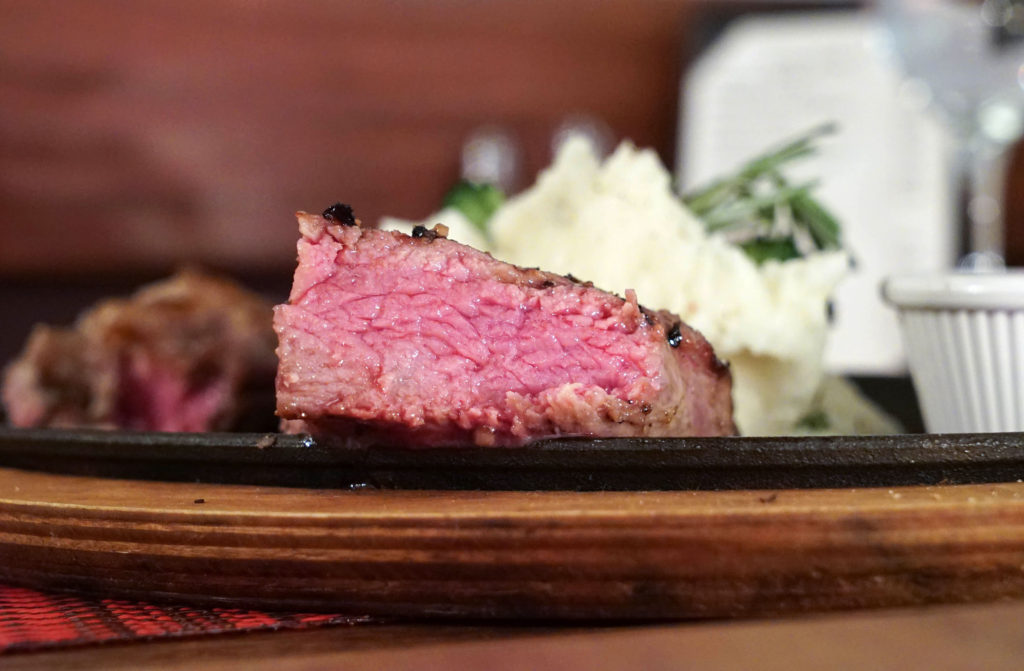
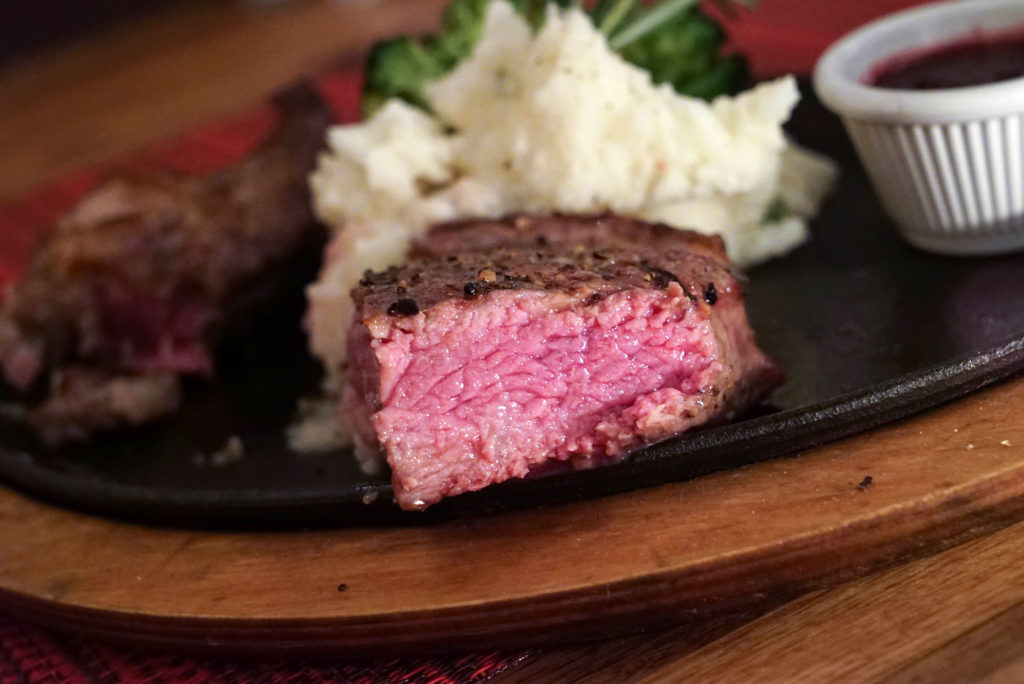
24oz Steak with Grilled Veggies and Mashed Potatoes for Two: The rib eye was cut into two portions rather than served family style and pre-sliced, which was a bad move. As you can see from the pics below, one side was all cap with a little eye (top) and the other side was all eye with a little cap (bottom).
In any event, it was served beautifully on a hot skillet. The grilling method meant less seared edges, but at least they hit medium rare nicely; pretty much dead on.
There was some gristle and inedible fat, but not an overwhelming amount. It could have used a bit more seasoning as well. 6/10.
As for the veggie sides; I felt that they skimped on the broccoli. We each had 1 small head, and it was a shame because the broccoli was actually tasty and not a throw-away. The mashed potatoes were a little on the dry side but not intolerable.
To sum it up, this was a decent deal. I probably wouldn’t do it again, but I’m not bummed that I purchased it. I think it runs about $80, but if you’re considering getting it, make sure you have a good coupon code to knock back the cost a bit.
The Patina group of restaurants is awesome. If you sign up for their email list they send you a $50 credit to use for your birthday, and they give you a pretty big window of time to come in and use it. We used my wife’s credit for a dinner at Sea Grill recently.
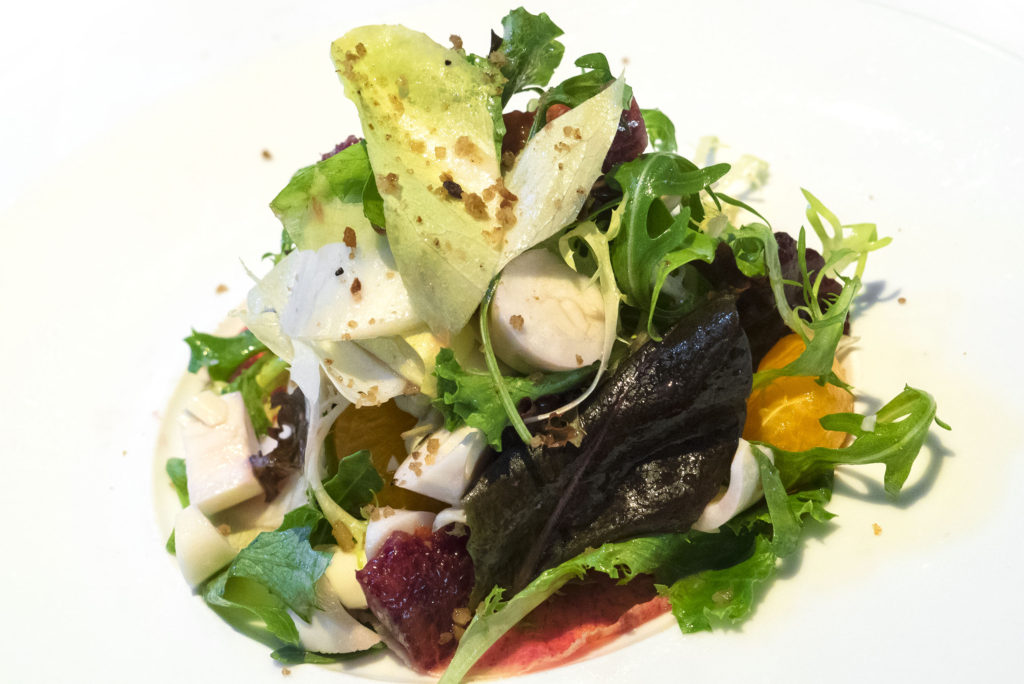
I started with a hearts of palm salad. I was hoping for more hearts of palm, expecting less leafy greens, but it was good nonetheless; just a bit tangy from all the citrus.
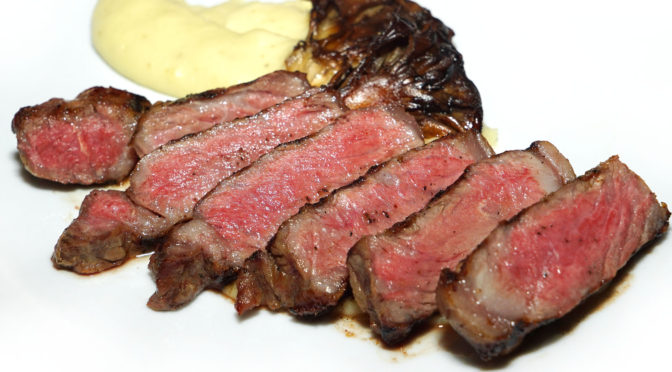
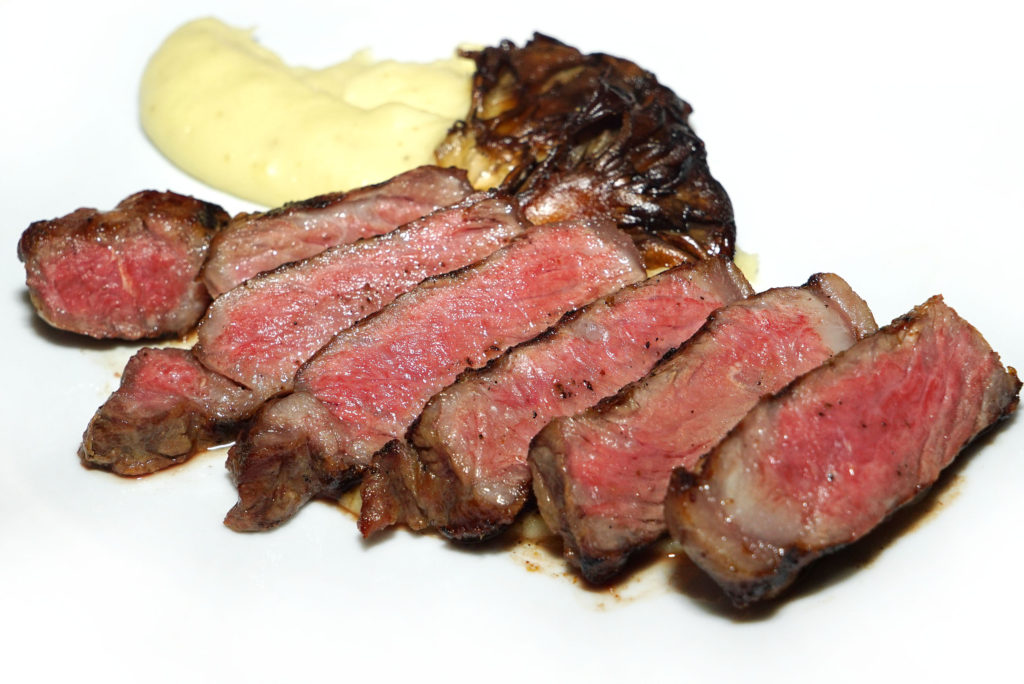
I had the wagyu strip loin for my entree. At $56 this is a very small portion. The meat was tender and perfectly cooked, however, so that’s a plus. The cut could have used a bit more char on the edges, but it still comes in at a 7/10. It would have been an eight if it wasn’t for the price/size ratio, even with wagyu in mind.
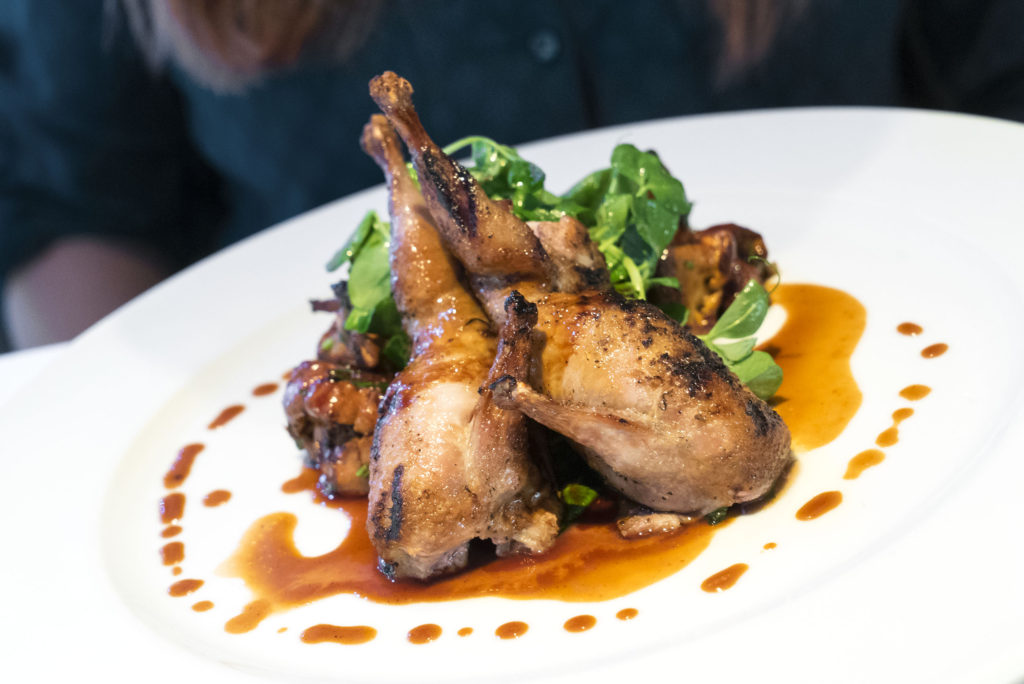
My wife tried the oyster stuffed quail. It sounded really interesting, but ultimately the flavor combination was a bit odd. The bird itself had a nice game, iron and blood flavor, which is exactly what you want sometimes when getting down on game birds. I think those oysters just threw it off for me.
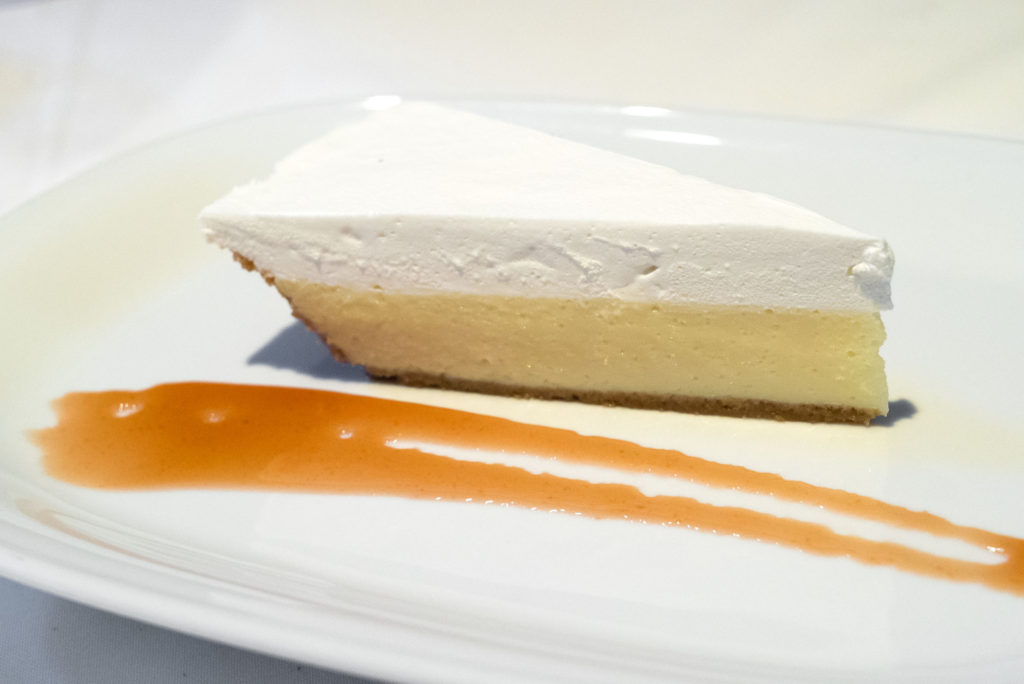
For dessert we shared the key lime pie. This was tangy and tart, and it was a generous-sized piece; easily good for sharing.
SEA GRILL
Rockefeller Center
19 W 49th St
New York, NY 10020