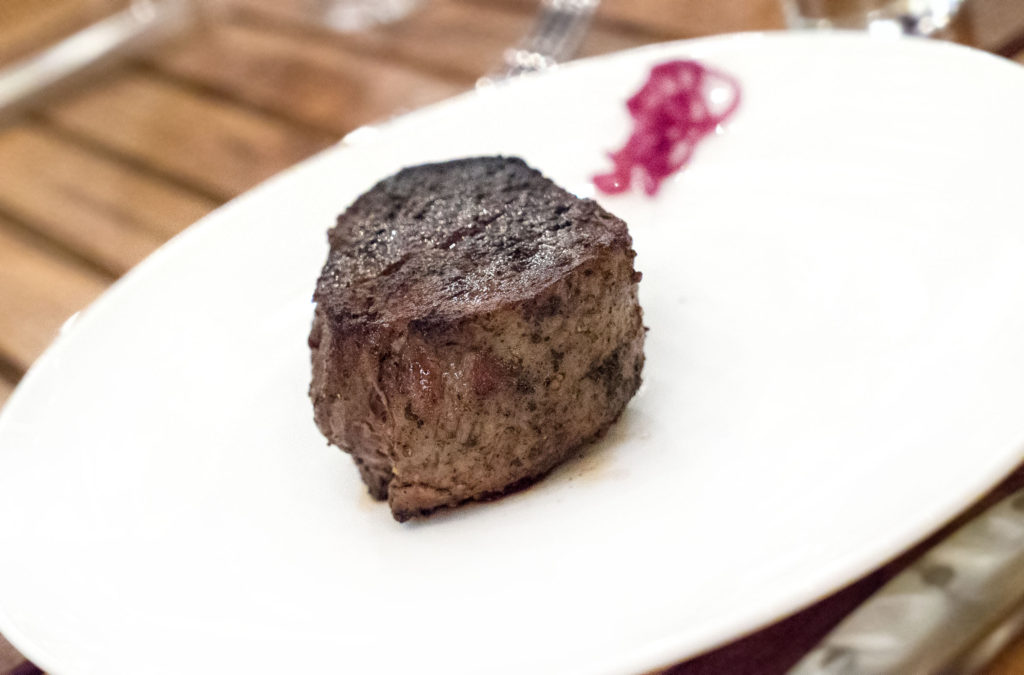
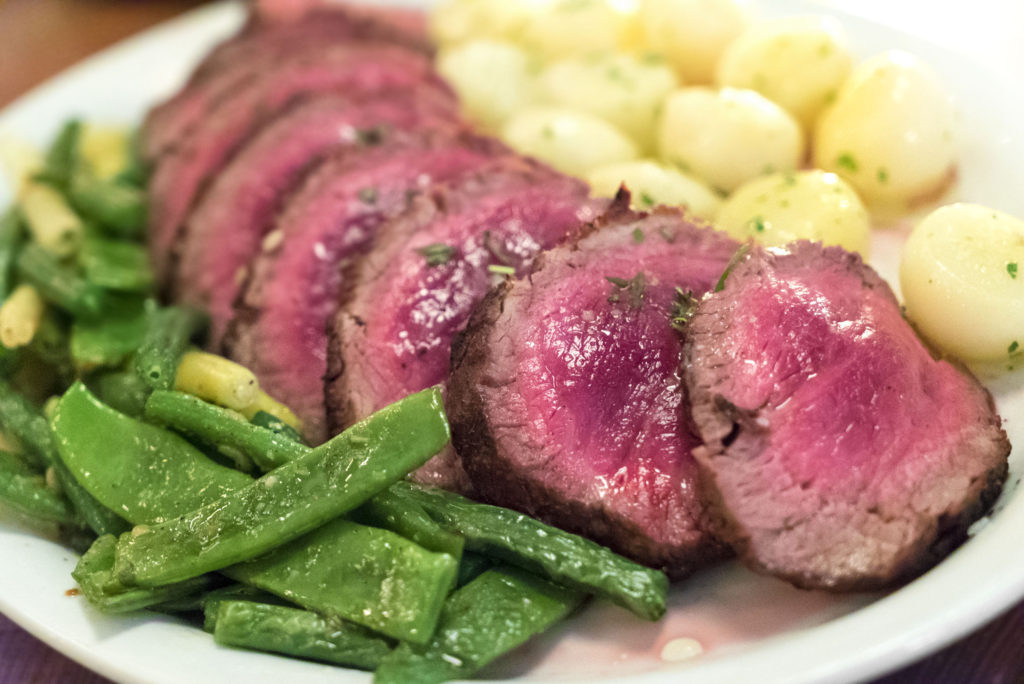
Etymology: Filet, in culinary terminology, means boneless. Mignon, in French, means dainty or small. As such, this is a steak ideally suited for chicks: small/dainty, and with no bone.
Occasionally on a steakhouse menu you will see a “bone-in filet.” Given what I just mentioned above, that phraseology is completely self-defeating and confusing, as it simultaneously means both “bone-in” and “boneless.” However, it seems this sort of language is becoming commonplace. If it were up to me, I would prefer “bone-in tenderloin” to be listed on menus instead. There is no wording conflict with that phrasing, and it is an accurate description of what is being presented. In other words: all Filet Mignon is tenderloin, but not all tenderloin is Filet Mignon.
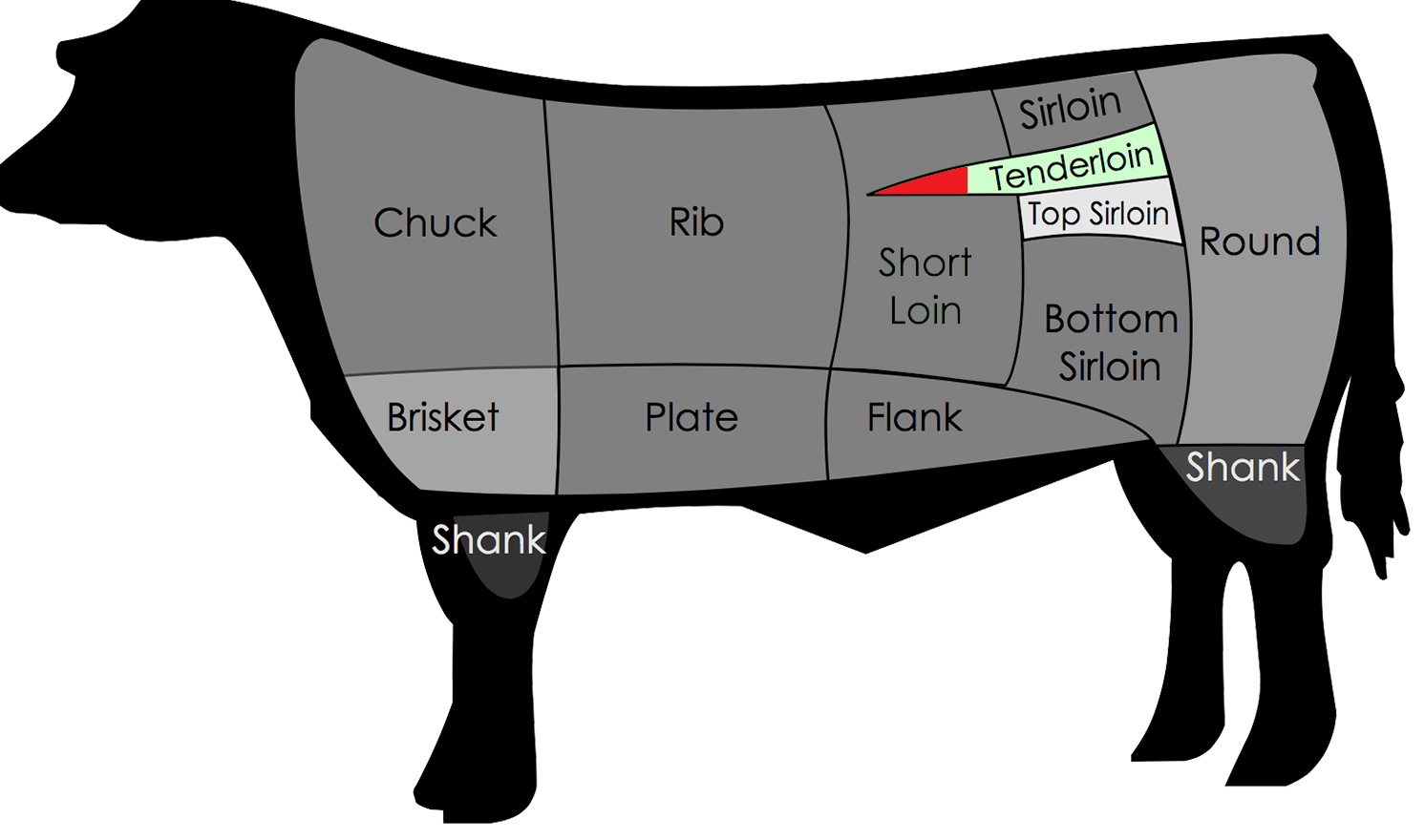
Anatomy: Traditionally, a Filet Mignon was cut from the anterior end of the tenderloin. In the beef chart image below, you can see a portion of the tenderloin section highlighted in red.
That is where Filet Mignon was typically located, though most butchers label all steaks cut from the tenderloin as Filet Mignon (this allows for larger portions). The tenderloins run along both sides of the spine. They taper from thick, in the posterior of the animal, to thin in the front.
In their unbutchered form, they contain what’s called the “silver skin” still attached to the flesh. This is a thick connective tissue that is pretty much inedible. When butchering the full tenderloin, you will want to slice that off (it is NOT tender).
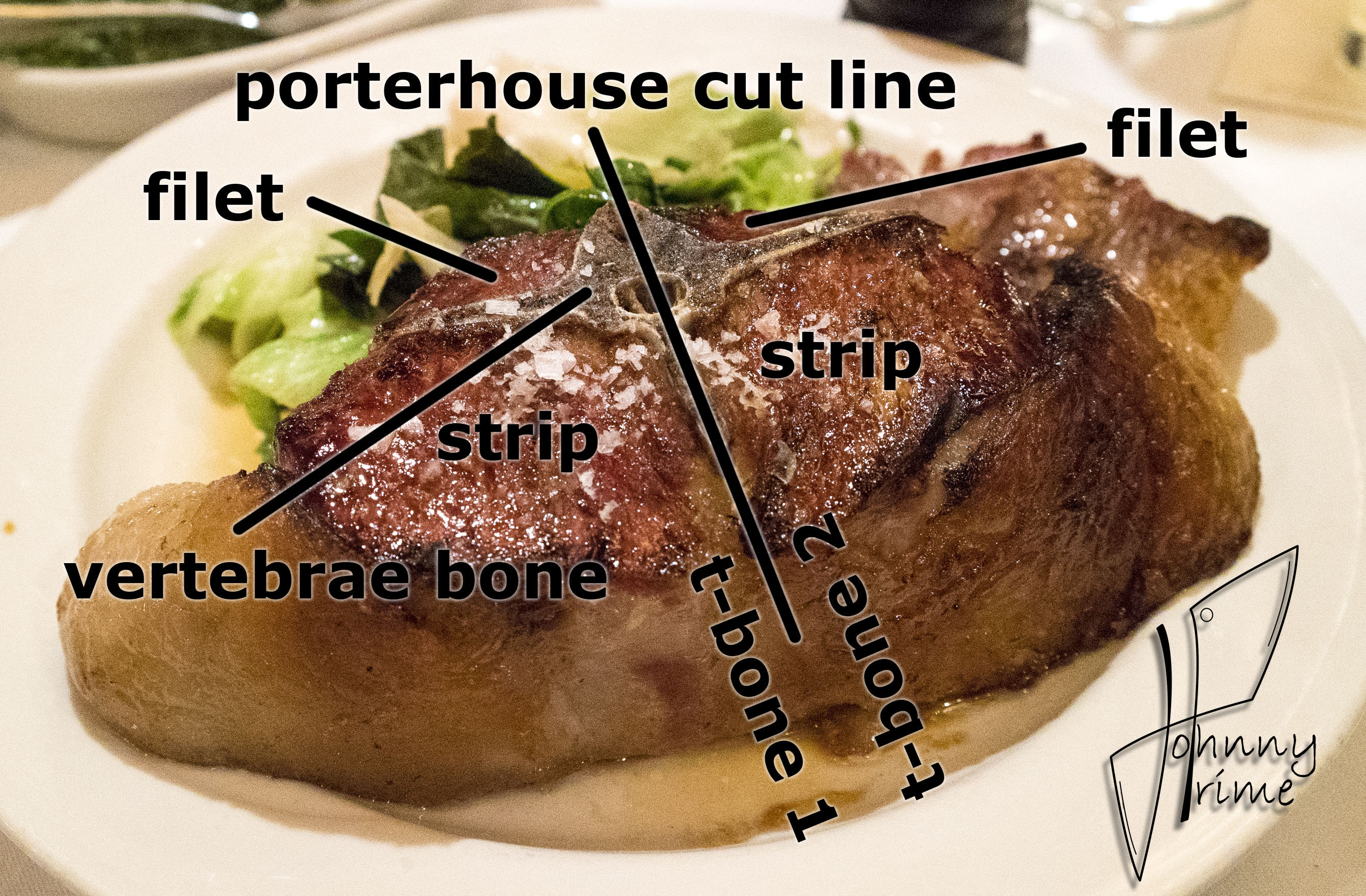
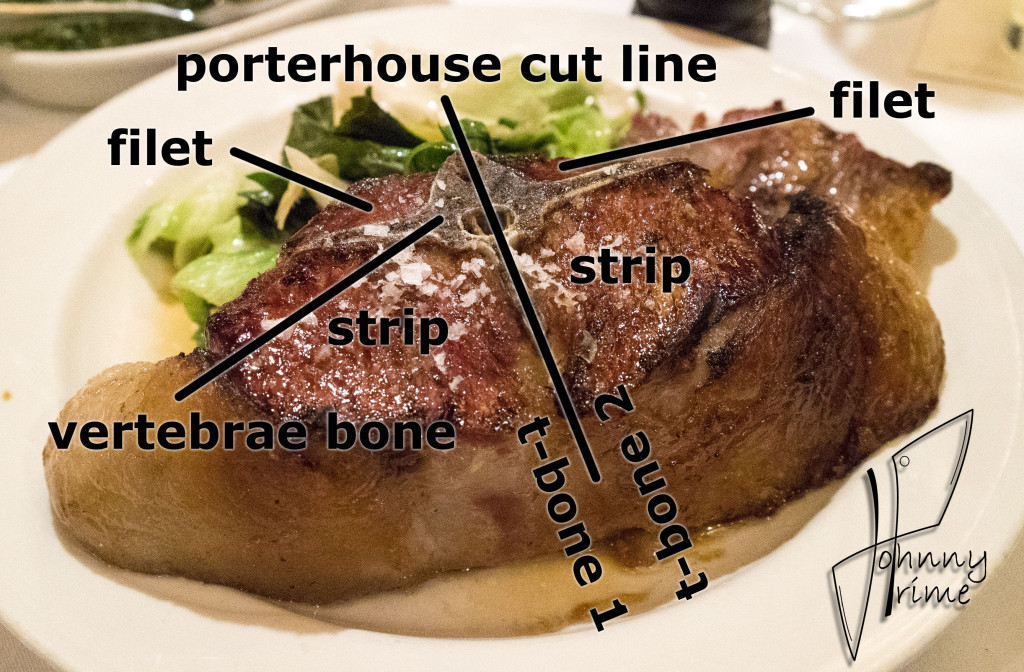
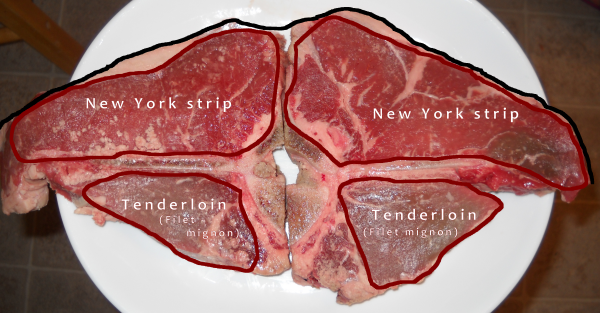
While this next photo is a repeat shot of a lamb vertebra Barnsley chop (the mutton chop from Keen’s), the anatomy is exactly the same for beef. This will illustrate exactly where the filet comes from. Essentially this is a double porterhouse, with a filet and a strip on each side. In addition to understanding the Filet Mignon, this image is useful in demonstrating the anatomy of the Strip and Porterhouse cuts as well, since they all come from the same place – the vertebrae of the animal:
Preparation: Preparations of this cut vary greatly. You may see this cut sliced thin and pounded flat, served raw for carpaccio. You may also see it finely chopped for tartare. A simple pan sear with butter and herbs, however, is probably the most common preparation.
Yet another style is Chateaubriand, which is a large section of the thick portion of the tenderloin that is roasted boneless, then sliced and served with a reduction sauce.
There is also Beef Wellington, which is a portion of tenderloin that has been coated with pate and then wrapped in puff pastry dough prior to cooking.
Flavor: Widely considered the most tender and least fatty cut of beef on the animal, the flavor should be uniform from one end to the other, with very tender and soft texture the whole way through. There is hardly any fat content in the standard cut of Filet Mignon. Some chefs will wrap the filet in caul fat (a lacy, fatty, web-like membrane that surrounds the stomach of an animal) before cooking. The webbing melts away during cooking and imparts a fat flavor into the meat. But it is more common to use things like butter, or to wrap a filet in bacon to add the fat flavor into the meat.
Etymology: There is some difference of opinion on the origin of the word “Porterhouse,” with several restaurants and cities claiming to have created the name. For example, Martin Morrison served large T-bones in his Pearl Street (Manhattan) “Porter House” around 1814.This history was popular in the late 1800’s, but some say a Cambridge, Massachusetts proprietor by the name of Zachariah B. Porter added his name to the steak. Still, others argue that the Porterhouse name stems from various 19th Century U.S. hotels or restaurants called Porter House, such as the Porter House Hotel in Flowery Branch, Georgia.
Anatomy: The Porterhouse is a cut of steak from the short loin portion of the animal that contains both strip loin and tenderloin meats. See the highlighted portion in the diagram below:
It is cut from a lumbar vertebra that is sawed in half through the vertebral column.
The downward prong of the “T” is a transverse process of the vertebra, and the flesh that surrounds it (spinal muscles) makes up the meat of the Porterhouse.
Essentially, it is a large T-bone steak from the rear of the animal that has two different types of meat (tenderloin and strip loin), one on either side of the “T.” In the picture below, the strip loin or Strip Steak is on the right, and the tenderloin or Filet Mignon is on the left.
The small semicircle at the top of the ‘T’ is half of the vertebral foramen, which is the name of the hole that passes through each vertebra for housing and protecting the spinal cord. They run the whole way up the back, all the way up to the brain of the animal.
The anatomy of a Porterhouse differs from that of a T-bone only in that the Porterhouse contains a larger portion of tenderloin than its T-bone counterpart.
This is primarily due to the fact that Porterhouse steaks are cut from further in the rear of the animal, from lumbar vertebrae, where the tenderloin is much thicker. Experts differ, however, on how large the tenderloin must be to differentiate a Porterhouse from a T-bone. The U.S. Department of Agriculture’s Institutional Meat Purchase Specifications state that the tenderloin of a Porterhouse must be at least 1.25 inches thick at its widest, while that of a T-bone must be at least 0.5 inches.
Here is a shot of a short loin with multiple vertebrae still intact and not portioned out into individual Porterhouses and T-bones.
You can see on the left there is a good sized, thick portion of tenderloin. That thins down as you move the the right, and seems to disappear by time your eyes reach the far end of the cut.
Just to drive home the anatomy a little more, here is a great excerpt and image from Russ Cooks:
“Up close and personal, this is where the T-bone fits.
The black line across the top of the two T-bones pictured here is the outside (top of the back) of the steer. You can see the T-bone in the schematic illustration higher up on this page as the topmost part labelled Rib. Above the ribs, what you touch if you pat the steer’s back, is the New York strip. Beneath the ribs is the tenderloin from which a filet mignon is often cut. T-bone steaks cut closer to the shoulder are known as Porterhouse while those cut closer to the loin are just T-bones.”
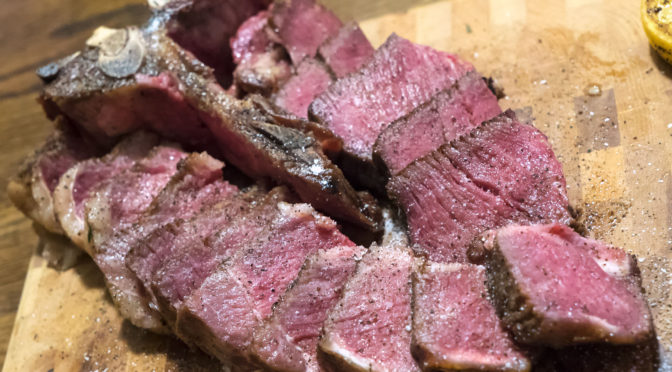
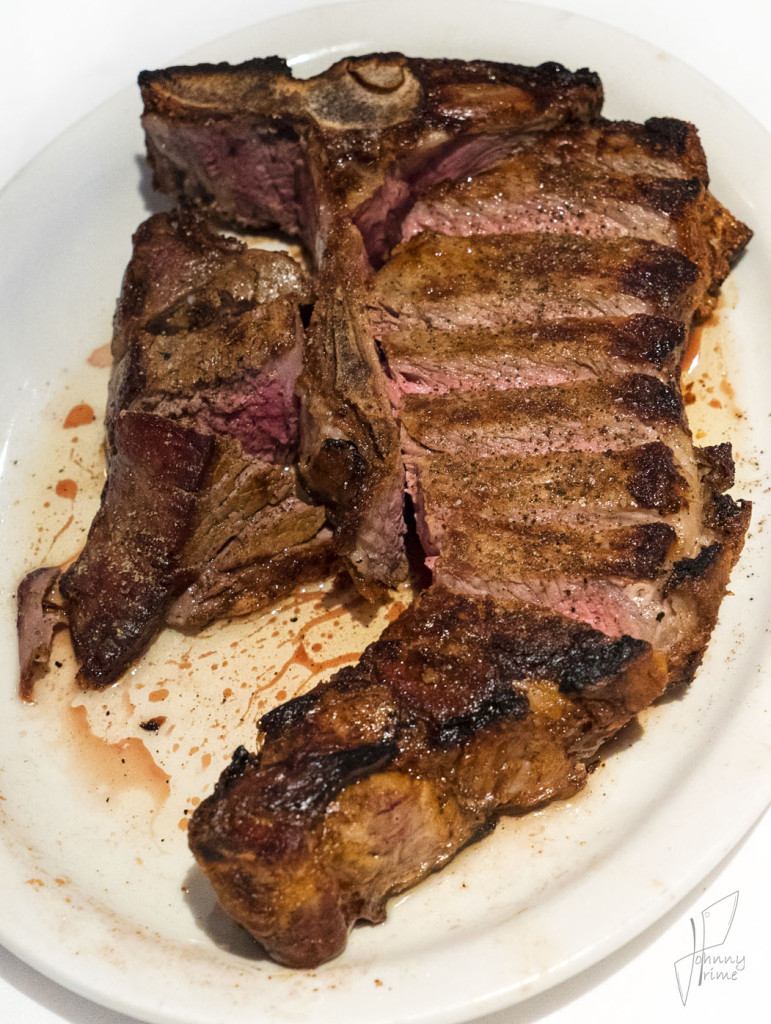
Preparation: Most times, T-bones and Porterhouses are either grilled, seared in a pan, broiled or blasted with high heat in specialty steak ovens made for charring the outside of the meat without over-cooking the inside. Butter is essential, and heavy seasoning is important as well. Herbs and garlic help boost the flavor too.
Flavor: Since this cut contains both the Filet Mignon and the Strip Steak, I refer you to the flavor sections for those cuts below, with a notation that the bone being left in often adds a more robust flavor while helping to retain tenderness and juiciness. These are very popular items at steakhouses because they can be cut large enough to feed anywhere from two to four people. Additionally, with two different types of meat in one steak, one can vary the flavors that one experiences with each bite.
The Patina group of restaurants is awesome. If you sign up for their email list they send you a $50 credit to use for your birthday, and they give you a pretty big window of time to come in and use it. We used my wife’s credit for a dinner at Sea Grill recently.
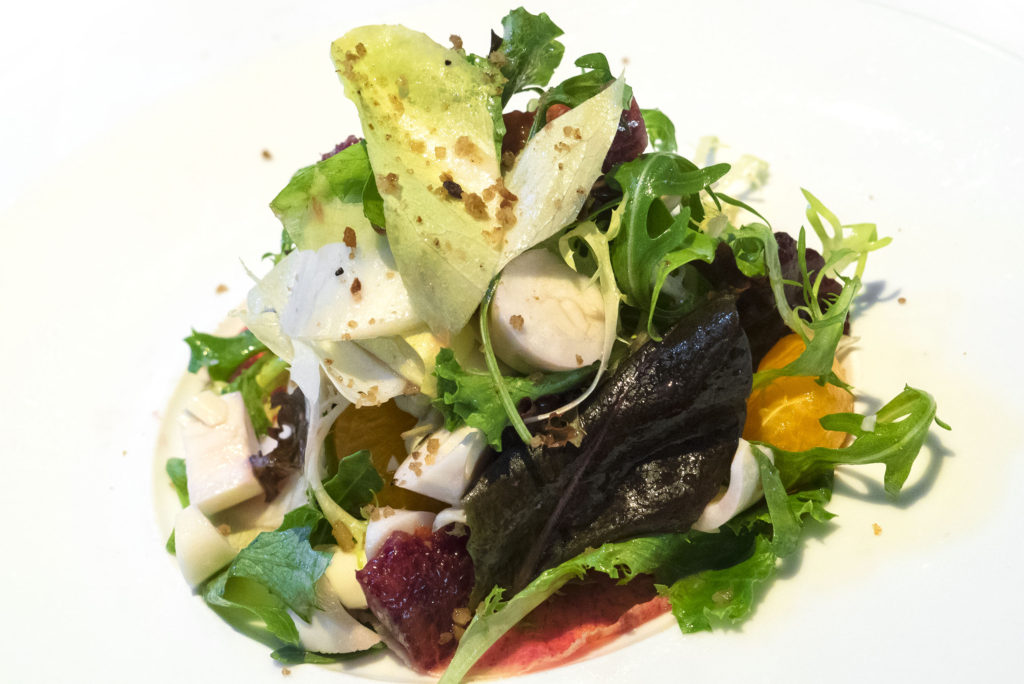
I started with a hearts of palm salad. I was hoping for more hearts of palm, expecting less leafy greens, but it was good nonetheless; just a bit tangy from all the citrus.
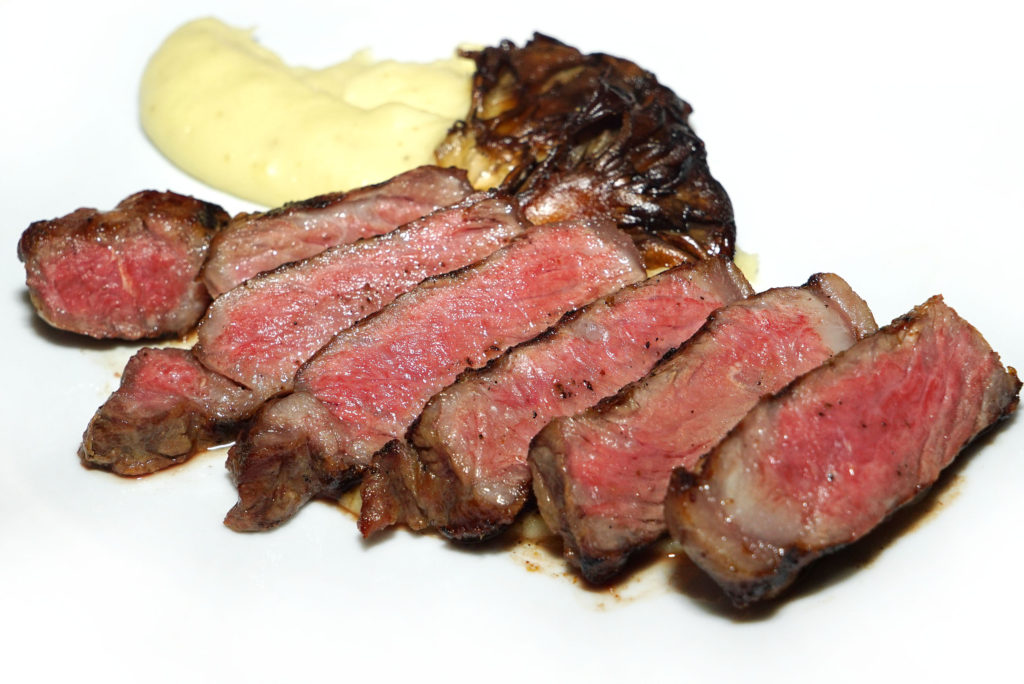
I had the wagyu strip loin for my entree. At $56 this is a very small portion. The meat was tender and perfectly cooked, however, so that’s a plus. The cut could have used a bit more char on the edges, but it still comes in at a 7/10. It would have been an eight if it wasn’t for the price/size ratio, even with wagyu in mind.
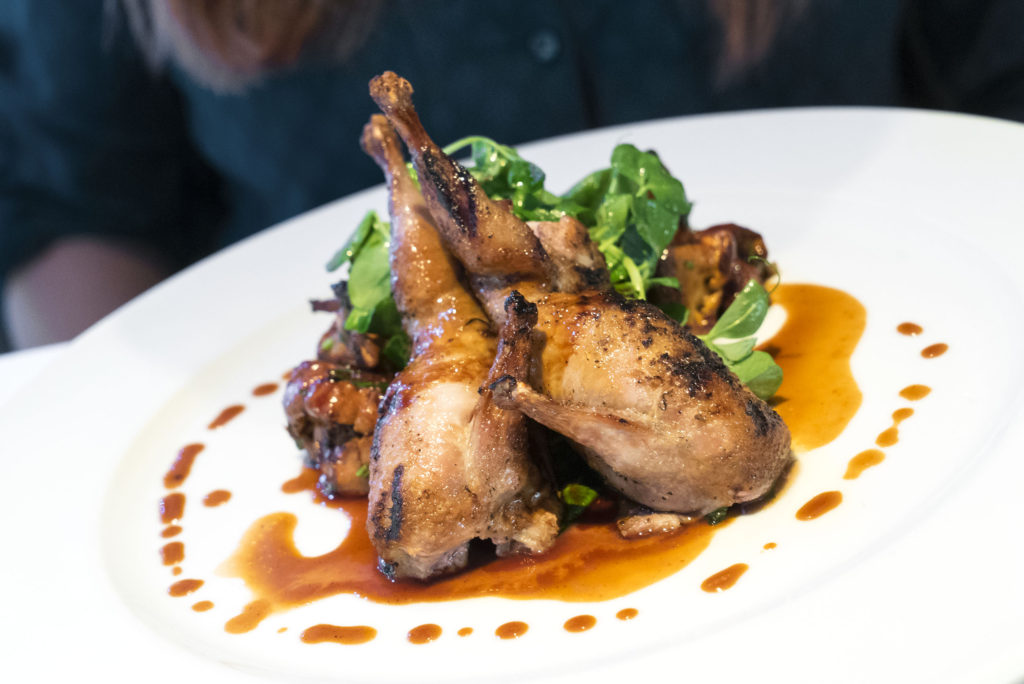
My wife tried the oyster stuffed quail. It sounded really interesting, but ultimately the flavor combination was a bit odd. The bird itself had a nice game, iron and blood flavor, which is exactly what you want sometimes when getting down on game birds. I think those oysters just threw it off for me.
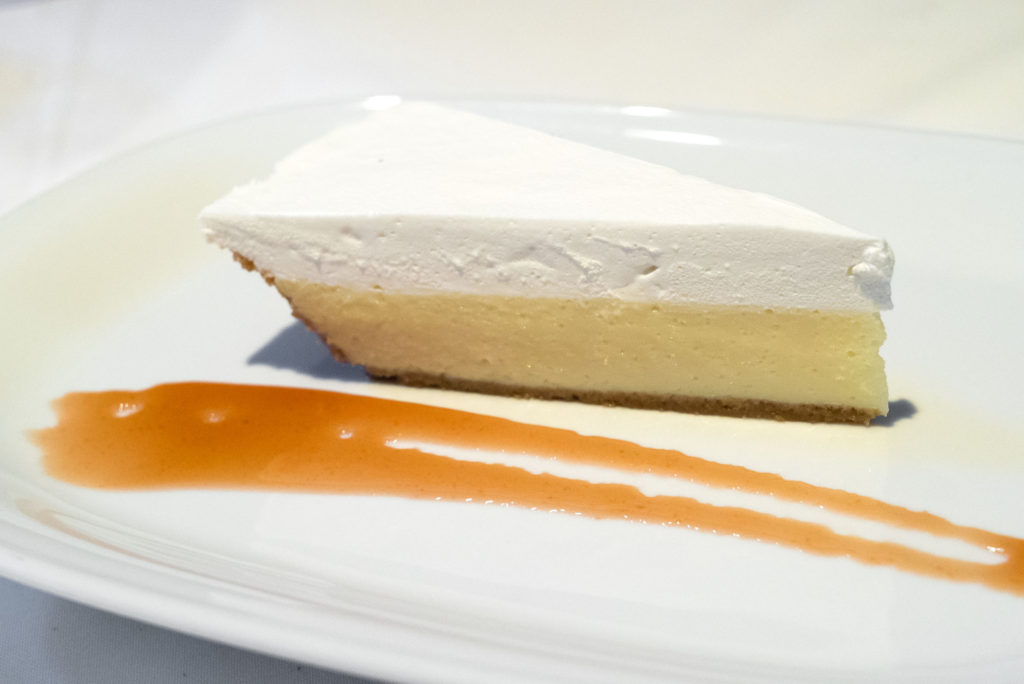
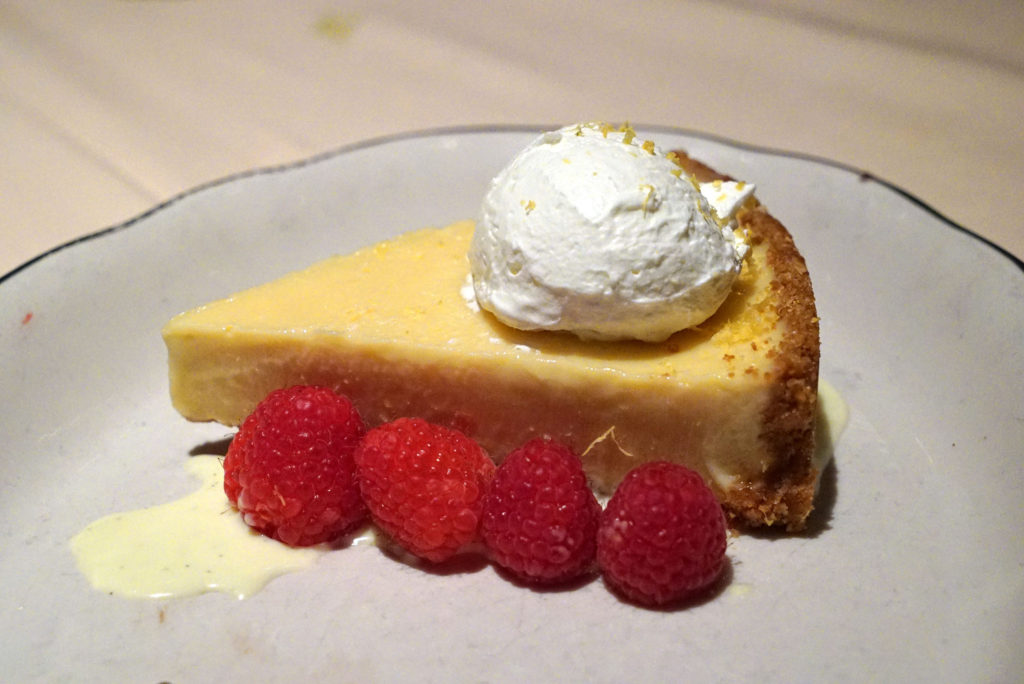
For dessert we shared the key lime pie. This was tangy and tart, and it was a generous-sized piece; easily good for sharing.
SEA GRILL
Rockefeller Center
19 W 49th St
New York, NY 10020
My wife and I were in Philly for the weekend to see family and take in some sights. After a long day of walking around, we hit Butcher & Singer for a late evening carnivorous meal.
Flavor: 9
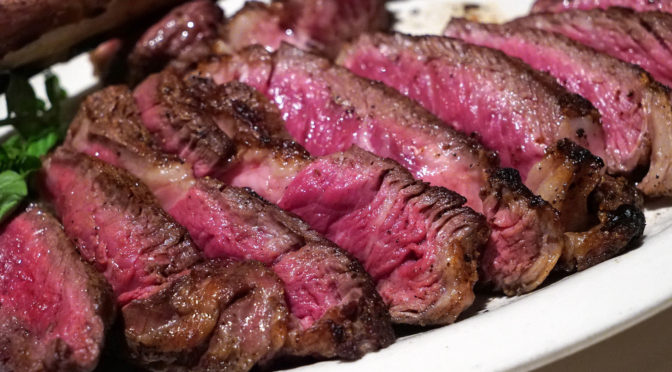
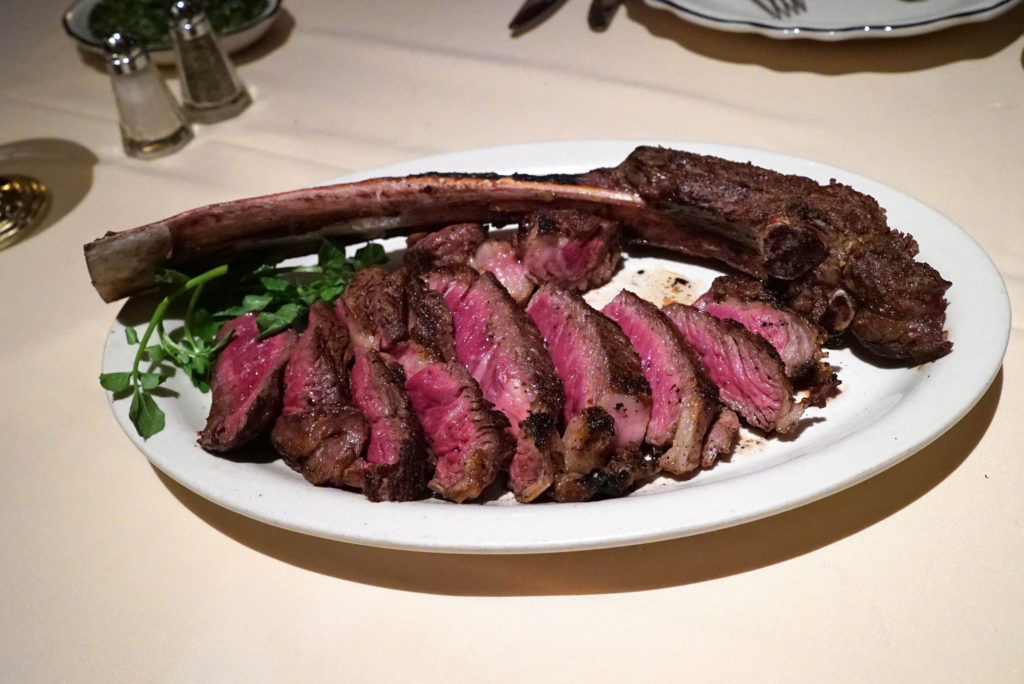
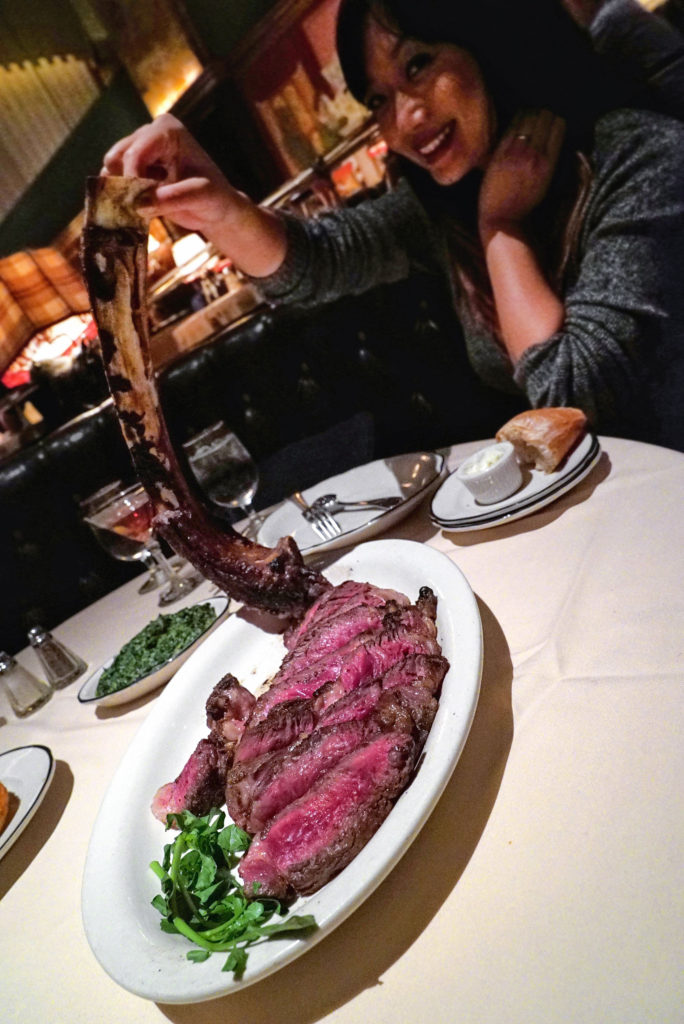
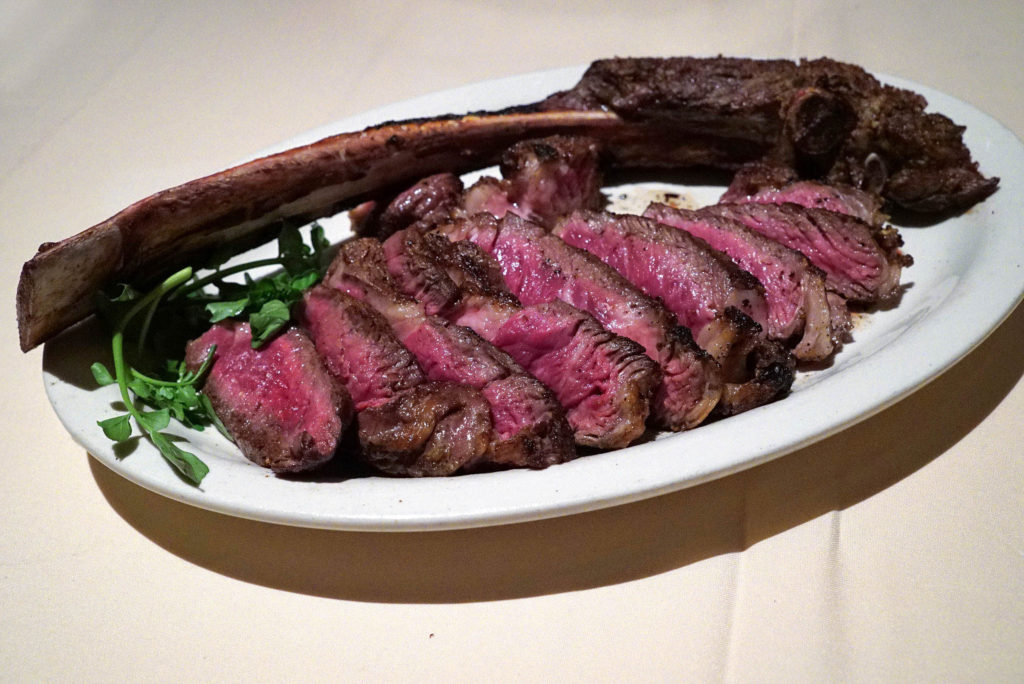
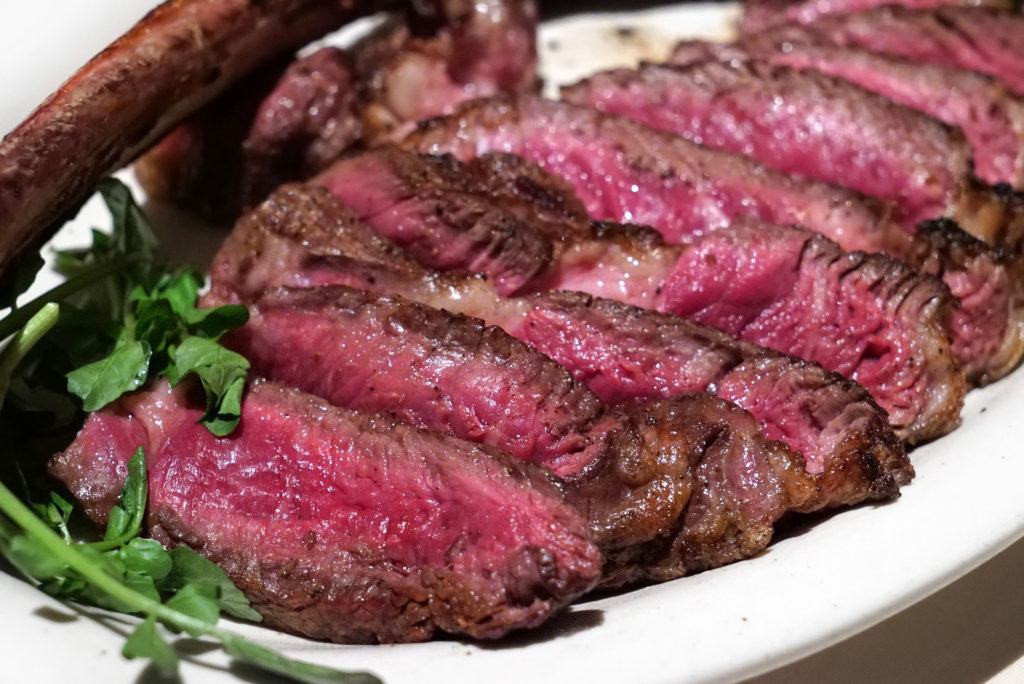
We ordered their Pat LaFrieda 50oz tomahawk rib eye. This thing was monstrous.
But, as you can tell, it was cooked to a perfect medium rare.
Let’s get right in there:
Gorgeous. And they did a fine job on this thing, especially considering there was no aging done to the cut. That bone adds a lot of flavor into the meat though. It was perfectly seasoned with a good crust on the outside, and the flavor penetrated deep into the muscle tissue for a nice even bite. I just missed that aged funk a bit.
Choice of Cuts & Quality Available: 9
A strip, two filets, two rib eyes, and multiple sized porterhouses are available here. Not too shabby, but also nothing over and above. In addition, there are no dry-aged selections. They do a great job cooking these fuckers though, so that’s a plus. And all the meats are LaFrieda, so you know you’re getting top notch quality here.
Portion Size & Plating: 9
Portions are all nicely sized here, with the exception of the bacon. I felt there could have been two strips for $12. Plating is simple and basic – nothing fancy.
Price: 9
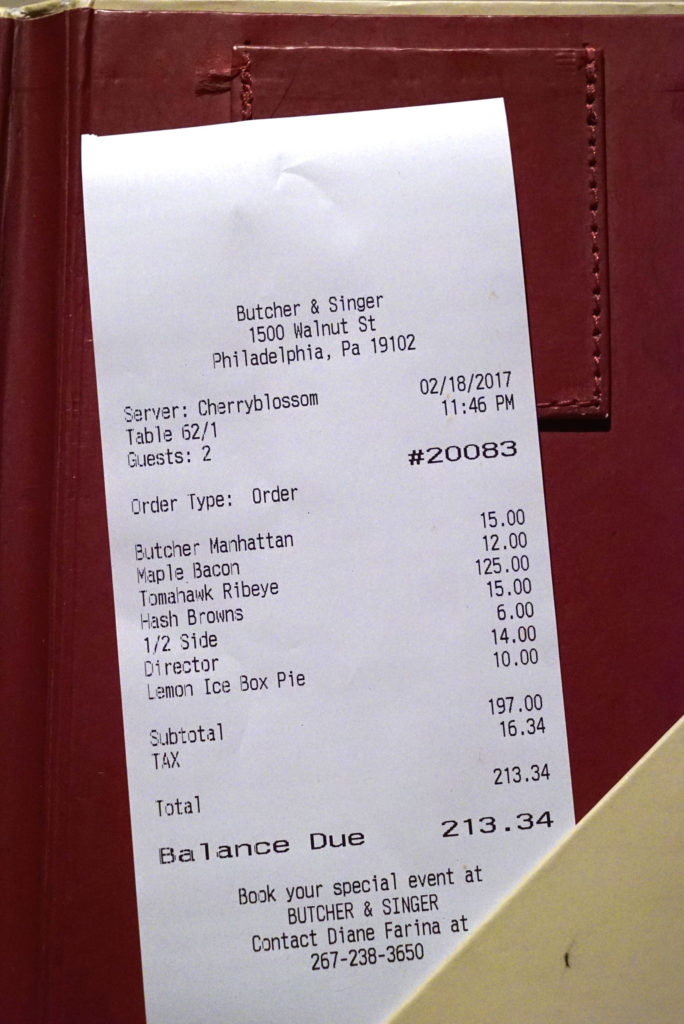
I mentioned the bacon above. In addition, I felt that the tomahawk was a bit pricey for a non-aged cut at $125. Their porterhouse seemed to be a better deal for two diners. In any event, it was still well worth the shell-out, and they ended up comping our dessert, which was very nice of them.
Bar: 9
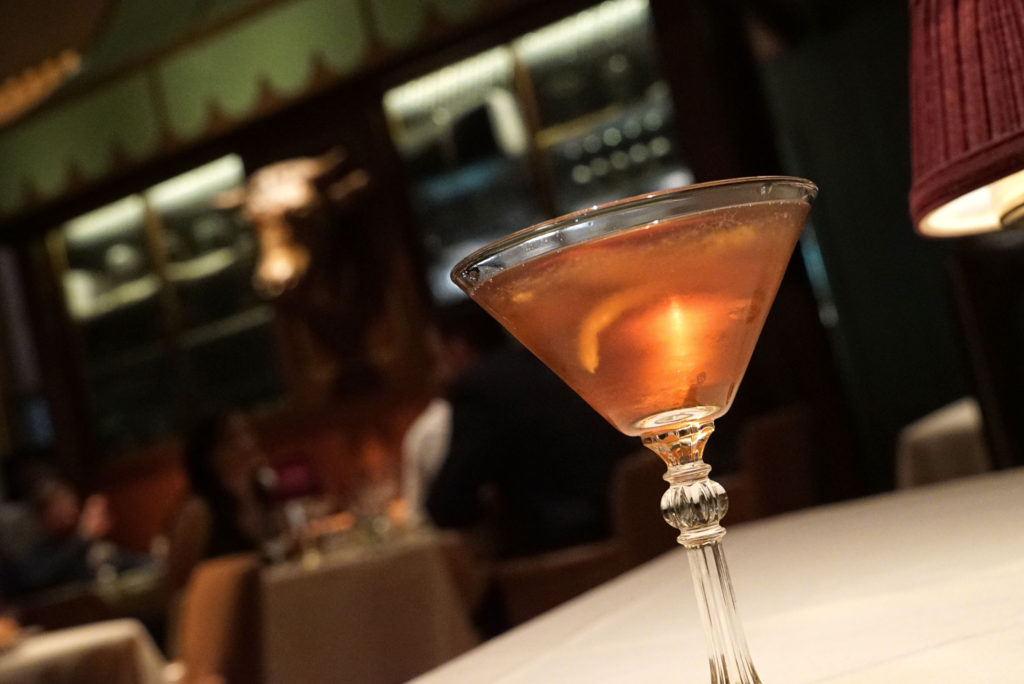
I wish this bar was bigger, because I would definitely give it a 10 based on the quality of the cocktails alone. There was some lounge seating as well, which was nice, but ultimately this bar was a bit small for such an immensely high-ceilinged joint.
In any event they mixed a perfect martini.
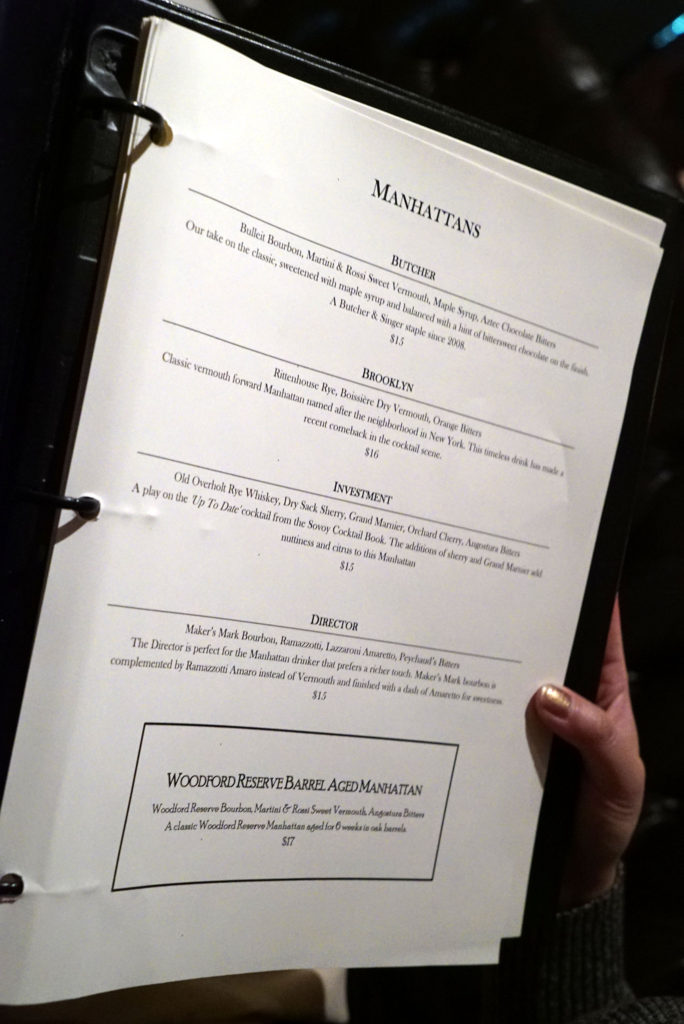
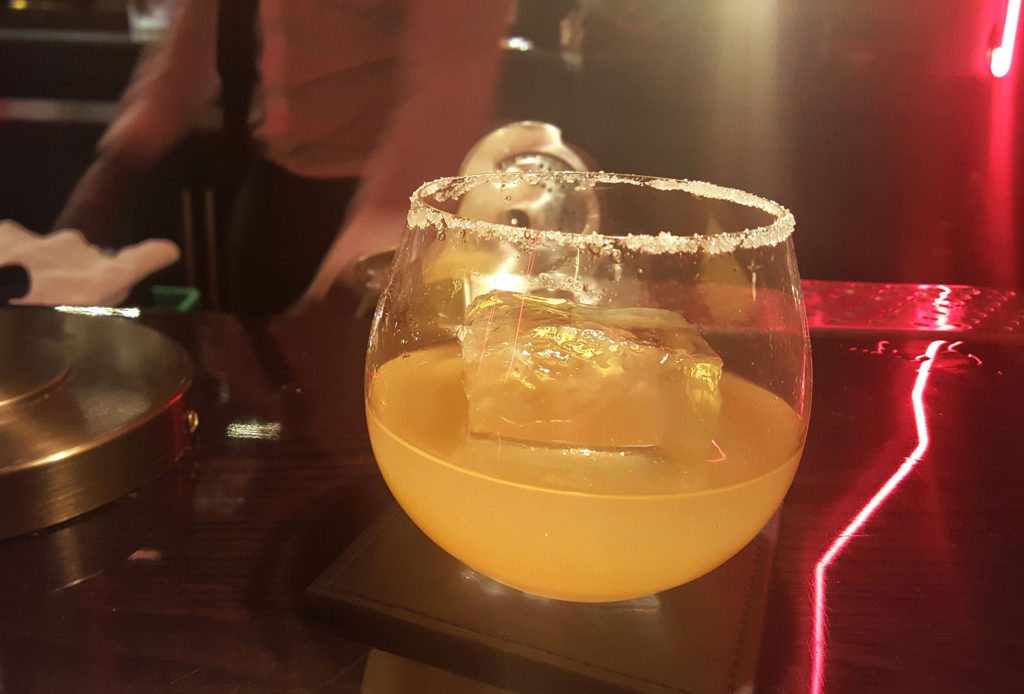
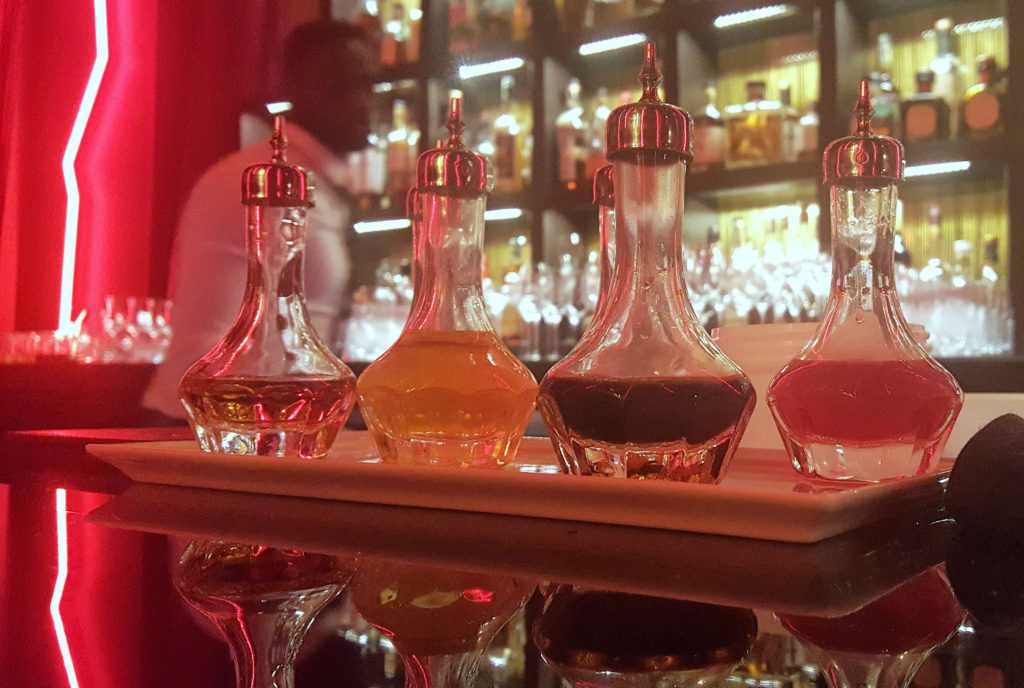
And they sported an awesome cocktail menu, with an entire page dedicated to Manhattans.
Definitely a cool place to hang out, even if you’re not eating.
Specials and Other Meats: 8
There are pork chop and lamb chop selections here, as well as a girly chicken entree. Not bad, but I’ve seen better.
Apps, Sides & Desserts: 8
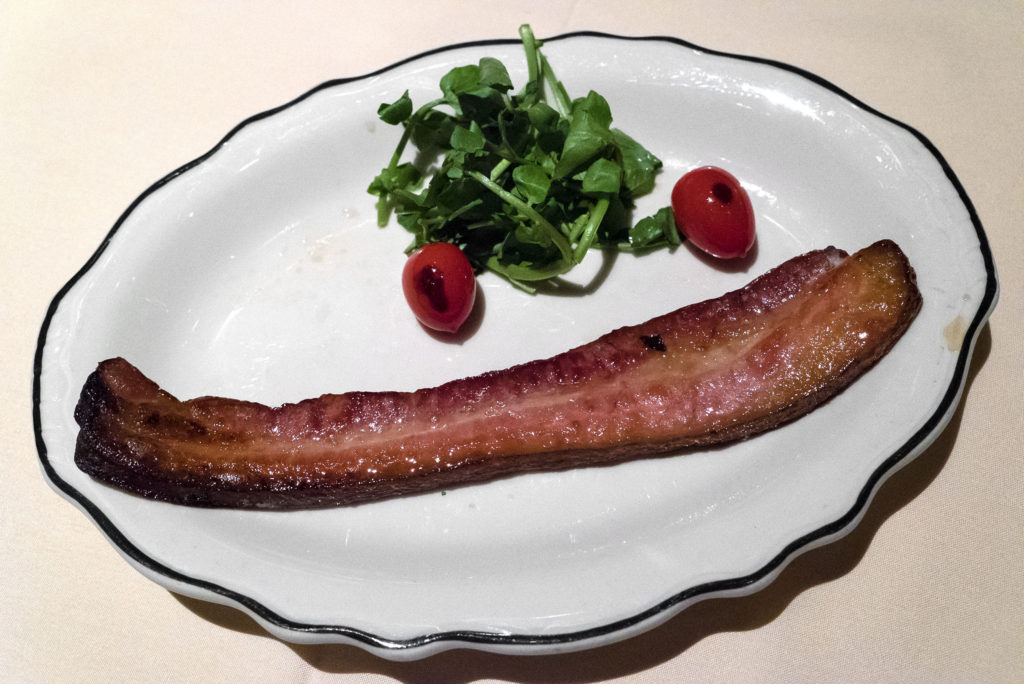
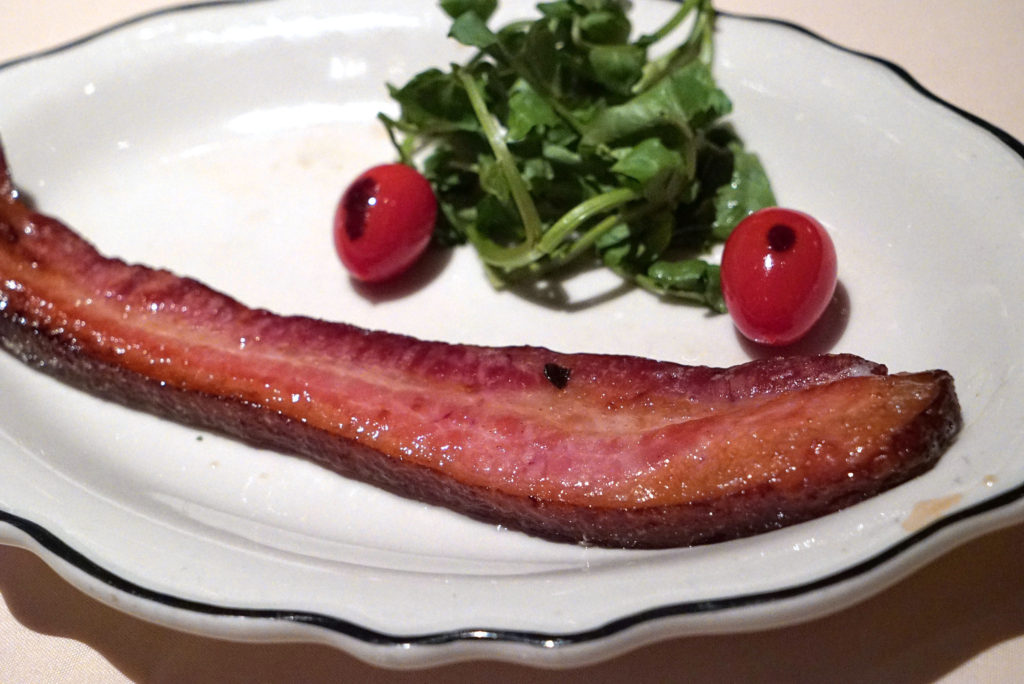
We started with the thick cut maple bacon, which was awesomely sweet and savory at the same time.
Yes, that bacon is smiling at you.
I wish there was one more slice for that price of $12. Oh well.
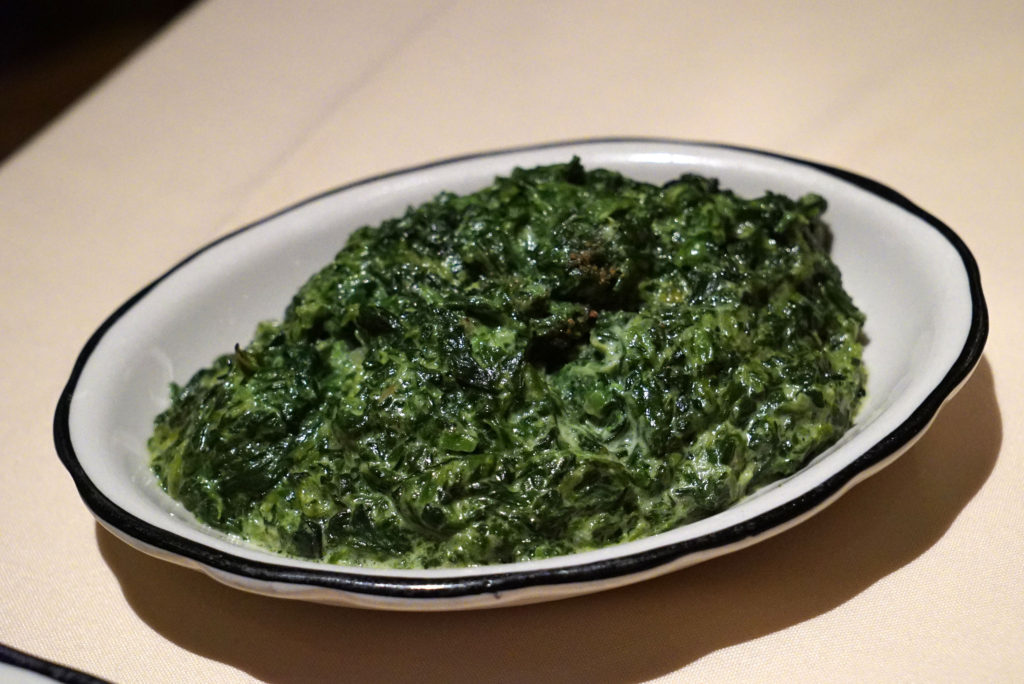
For sides we went with a half portion of creamed spinach, which was generous for just $6. This was just okay. It did the job.
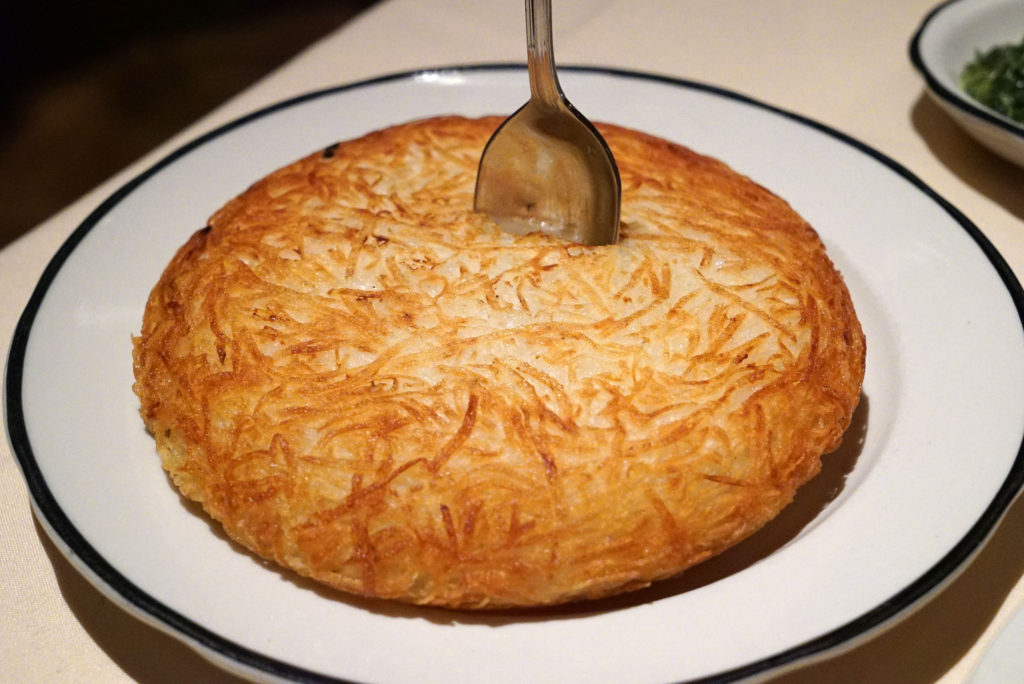
The stuffed hash browns were excellent. This was basically a latke of shredded potatoes with chunks of diced potato and sour cream inside. Fried to a crisp. Excellent for leftovers with fried eggs on top.
For dessert we went with the ice box lemon cake, which was similar to a key lime pie, only frozen. I liked this very much.
Seafood Selection: 9
There’s a great deal of nice looking seafood on the menu. Branzino, swordfish, shrimp, lobster and salmon. We also got a peek at the seafood tower app from across the restaurant and it looked marvelous. Not to mention they also had some east and west coast oyster varieties that were being offered on special.
Service: 10
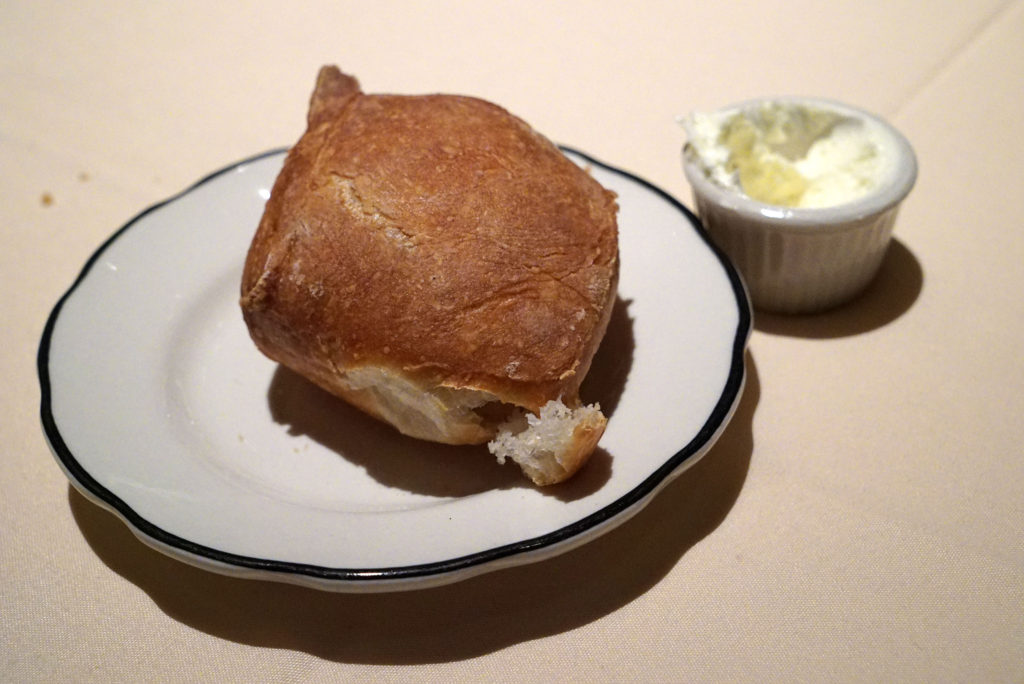
Our waitress was awesome. She knew her meats in and out, and she was quick with answers to my questions about the beef itself, where it came from, whether it was aged, etc. Also, the bread was good. It was served with a soft, whipped butter, and it was warm and fresh.
Ambiance: 10
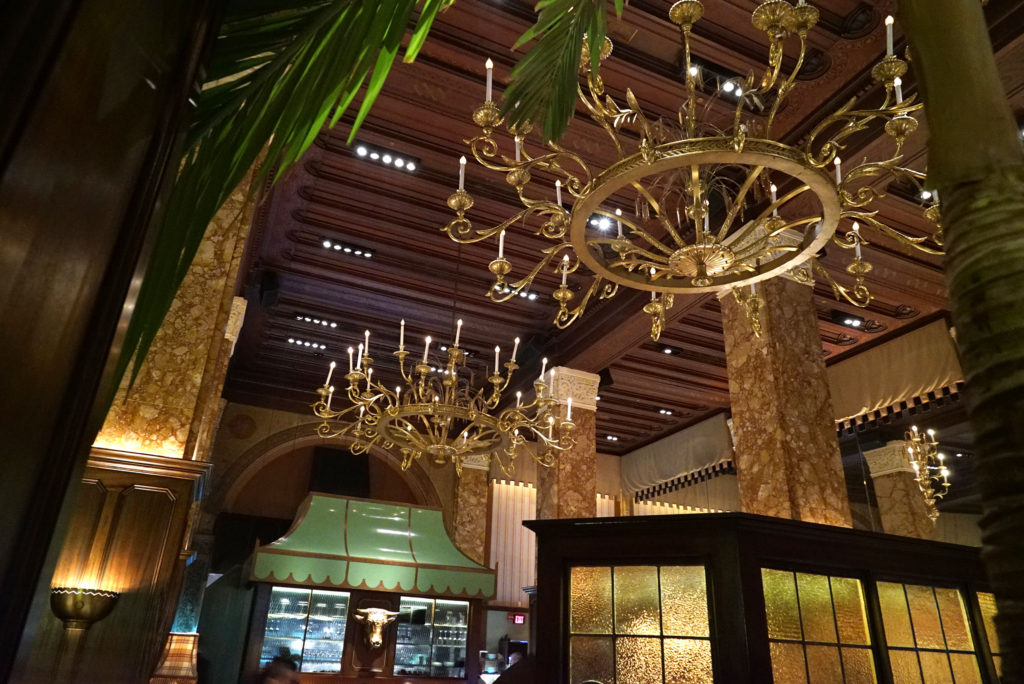
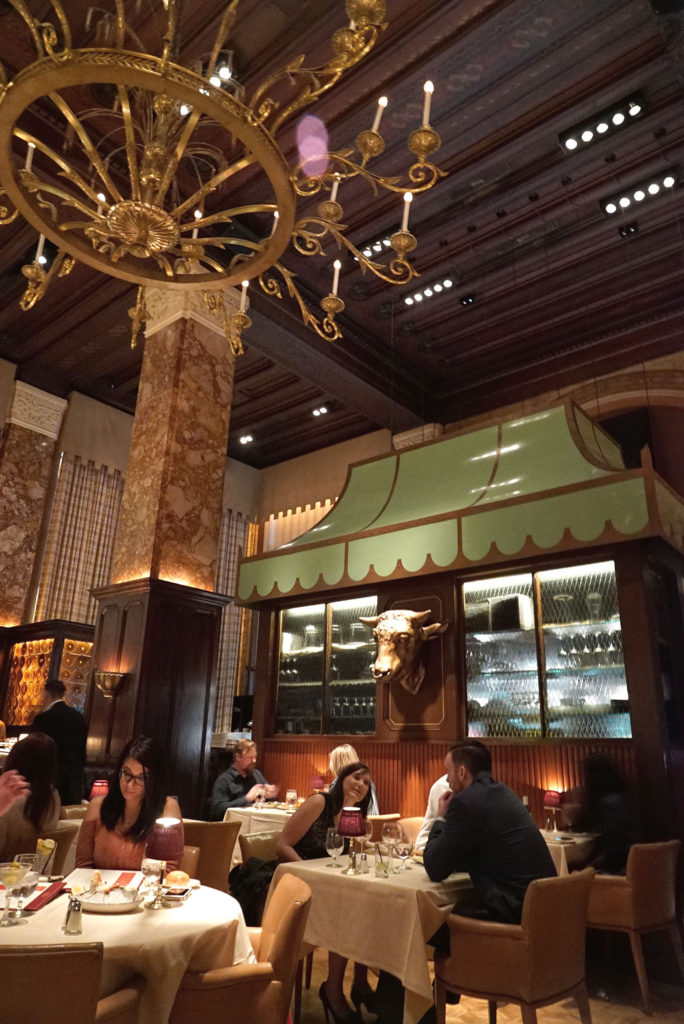
Fantastic. I am guessing this was an old bank that was converted into a steakhouse due to the incredibly high ceilings.
And they’ve got a nice bull head in the rear.
They play fancy 1920’s music, which is a nice change up from the typical trendy bullshit I’m hearing in NYC these days. Bravo.
BUTCHER & SINGER
1500 Walnut St
Philadelphia, PA 19102
I decided to go bonkers this year on Superbowl Sunday with some Omaha Steaks tenderloin cuts that my wife and I received as a gift from her father. It had been a while since I used my sous vide machine, so I knew I wanted to use that.
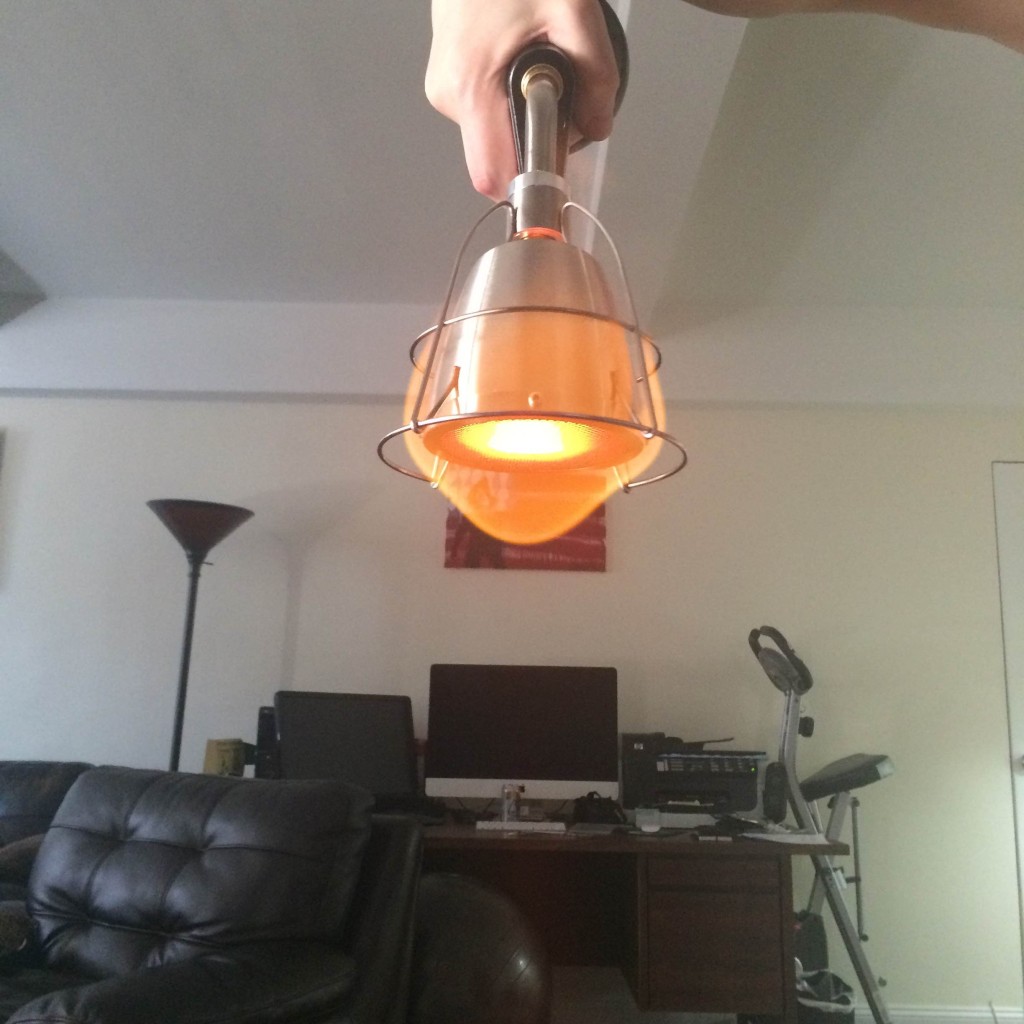
I also figured this would be a good time to bust out the Searzall again, since the cuts were only about an inch thick, and, fearing a blasphemous overcooking, I didn’t want to put them in a pan to get that coveted sear on the outside.
Nothing new there. I’ve given you recipes for that before. The ringer here, for this meal I envisioned, was the Bitterman Salt Co. Himalayan salt block that I had chilling in my freezer. I keep it cold for serving sliced sashimi and raw fish items, but I thought it might be nice for medium rare, seared, thin-sliced tenderloin as well.
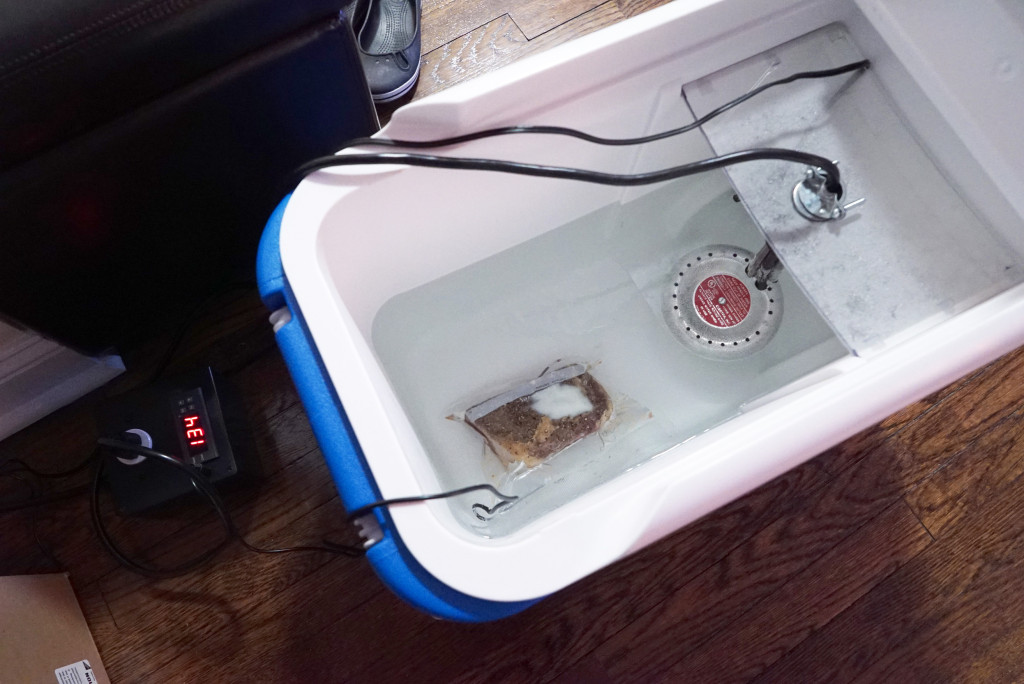
Essentially, I cooked the steak to rare at 130 degrees in the sous vide machine, right from the sealed Omaha Steaks bags (no seasoning beforehand). Then I popped the steaks into an ice bath to cool them down quickly and halt the cooking process. I know that the Searzall can continue to cook the steak’s interior with prolonged exposure, so I wanted them rare when they came out of the sous vide machine.
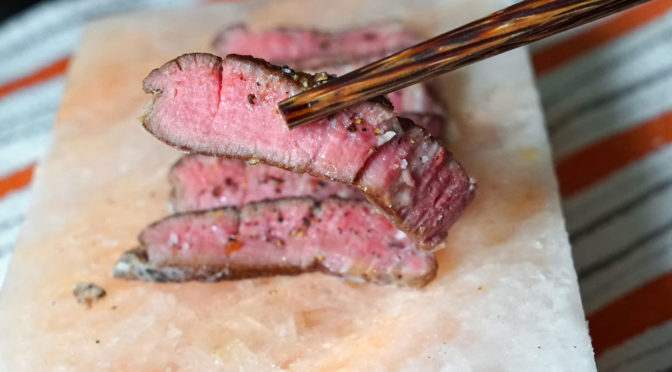
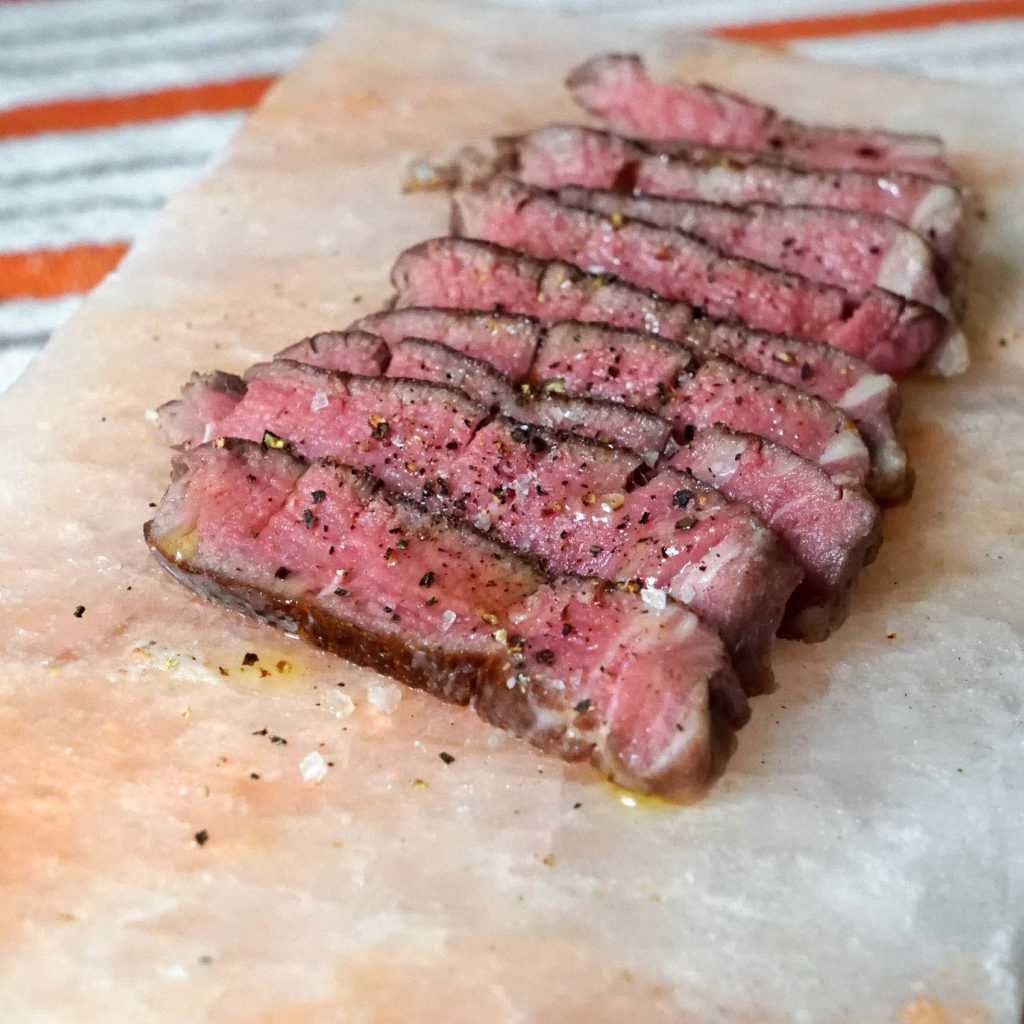
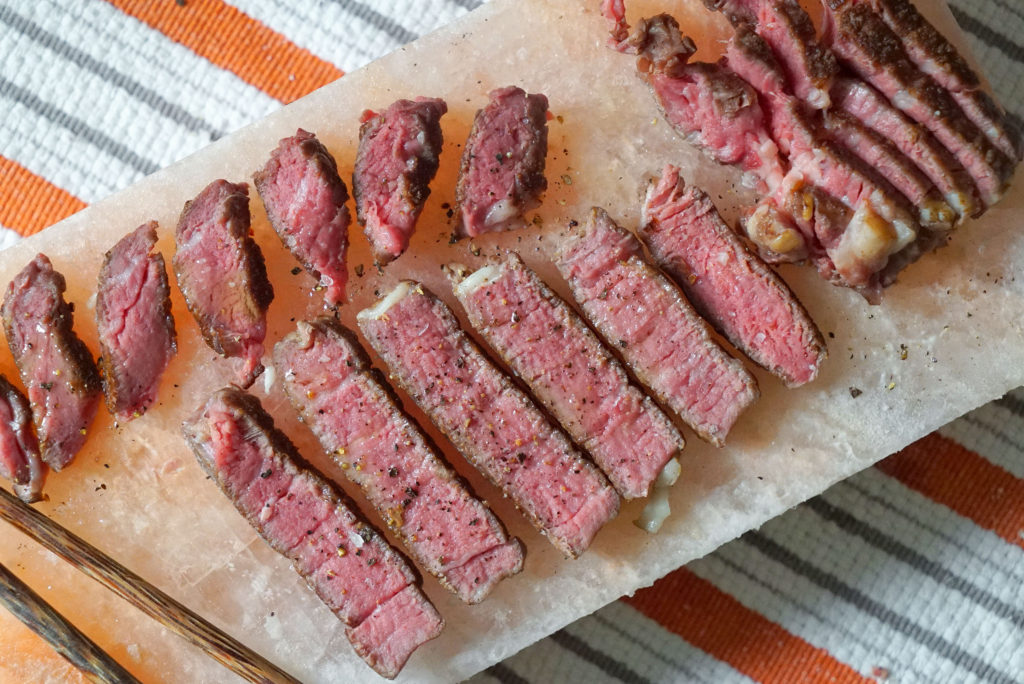
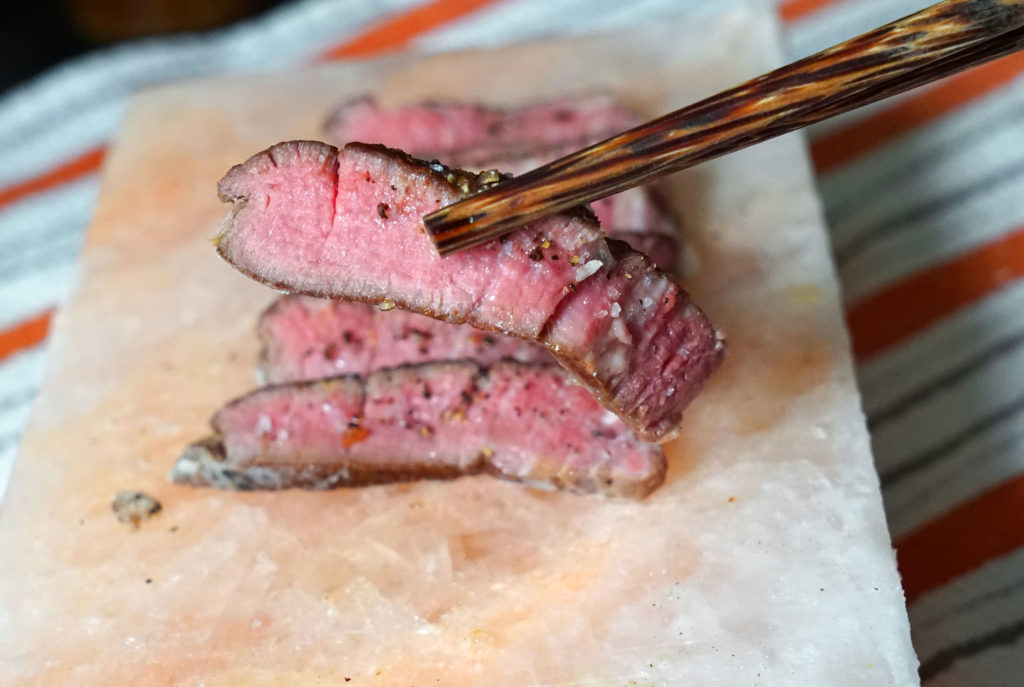
After blasting them with the Searzall, I had a good crisp on the outside and a perfect medium rare pink on the inside. Then I sliced them on the salt block, using that as a serving platter. I finished them off with a drizzle of Trader Joe’s black truffle oil, a few cranks of fresh cracked black pepper, and some ground sea salt.
Check out the video demo that I posted on youtube:
And some photos of the finished product:
It was a great, cool-temperature, lean beef dish that really packed a delicious flavor profile. The truffle oil was a great way to bring out the earthy flavors from the steak. Simple but robust. Try it at home!
I recently had dinner with a friend of mine who had just gotten an angioplasty. If you don’t know what that is, it’s when surgeons open up blocked arteries and restore normal blood flow to the heart. If your arteries stay clogged, you can have a heart attack and die. Duh.
My friend’s doctor obviously cautioned him to avoid saturated fats and bad cholesterol. That doesn’t mean he can’t have a steak once in a while, and that’s exactly what he wanted for dinner on the night we hung out. I have that effect on people…
So there were two steaks on the menu; a NY strip and a skirt. My buddy asked the waitress, “which one is more fatty?” She said the strip, which, all things equal in terms of grade and cooking prep, is completely false. I informed my buddy why she was wrong after she stepped away, so as not to embarrass her. But I figured I would share that knowledge here with you guys, too. Here’s why she was wrong:
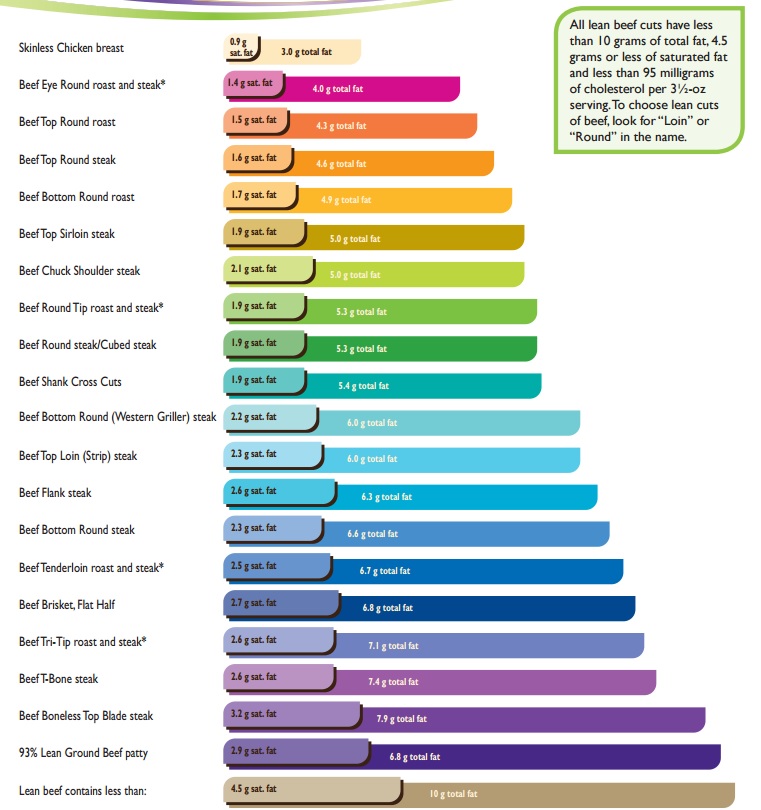
NY strip steak is a strip loin cut of beef, which is the most prized part of the sirloin. Sirloin is considered a lean cut of beef. In fact, any time you see the word “loin” in describing a cut of beef, that means it’s lean. The one caveat I’ll give is that fat content also depends on the grade of beef, not just the location of the cut. Prime has more intra-muscular fat (marbling) than choice, for example, and something like Kobe has more than prime.
The term “lean” means that the beef has 4.5g or less of saturated fat per serving, and 10g or less total fat per serving. About 66% of beef cuts are considered lean cuts. That’s pretty fucking good!
Skirt hails from the “plate” or diaphragm muscle of the bovine anatomy. It’s not listed above because it isn’t within the definition of lean. It has more fat content than a strip steak, especially after a strip is trimmed by a restaurant. Most of the fat on a sirloin lies on the outside of the muscle, as opposed to the inside marbling (which, by the way, contains “good fats,” like olive oil and avocados do). But when external fat is trimmed away, you’re down to low fat content.
The real question, then, becomes: How is the steak prepared? Does it come with a cream sauce? Is it cooked with tons of butter? Is it simply seasoned and grilled? All of this matters tremendously in terms of calculating the total fat content of a particular dish.
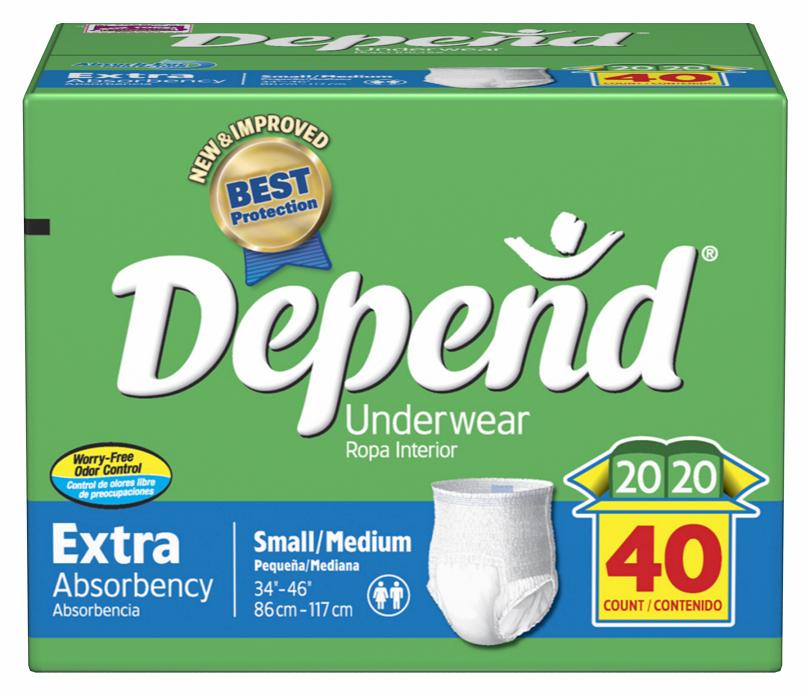
Why do I mention this? Because the method of cooking could flip these fat levels very easily. If the strip is being cooked in a pan filled with butter and then smothered in a cream sauce, while the skirt is simply seasoned and grilled, then maybe it’s best to get the skirt if you’re trying to be mindful of overall fat content. It all depends, like adult diapers.
My advice: don’t ruin good beef with a sauce. I love the flavor of beef, so I don’t like to mask it with sauces of any kind. Simply season and fire it up. If you live by those rules, then you can take the fat content of lean cuts at face value and be confident that you’re eating a low fat, lean beef meal that’s both nutritious and delicious.
Wolfgang Puck just opened up a new location of his steakhouse “Cut” in downtown Manhattan. Of course I had to check it out. A buddy and I came here with our ladies to get down on some steak.
Flavor: 8
We were able to sample three different cuts: rib eye, sirloin and tenderloin. All three hailed from Creekstone Farms, and all three were bone-in.
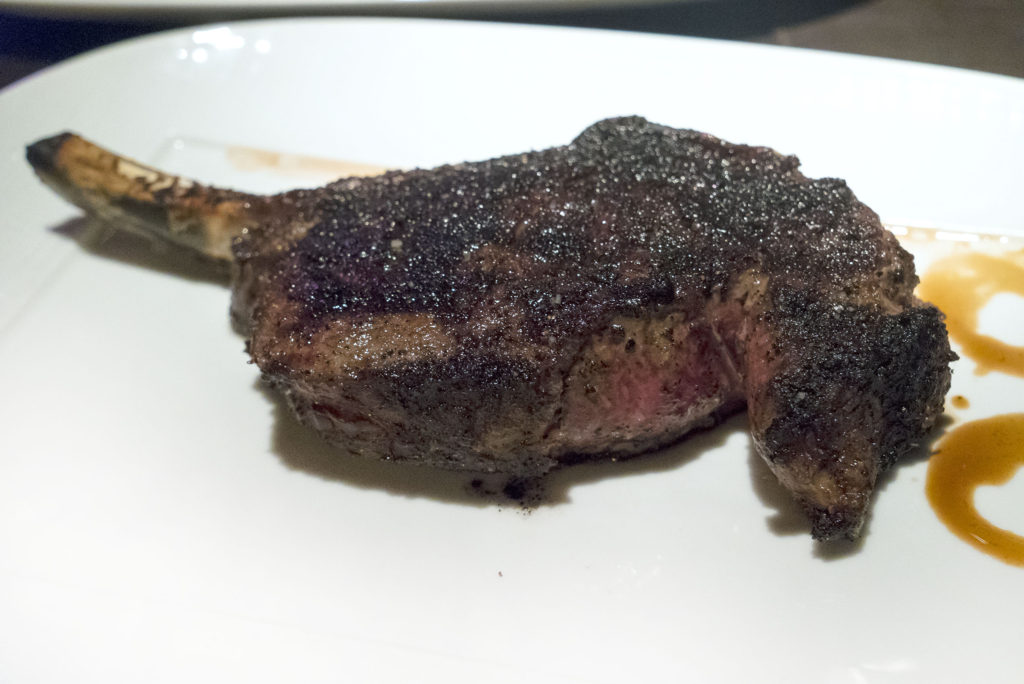
The rib eye here is a solid 8/10. It felt a bit small for 20oz, but as you can see it had a great outer crust.
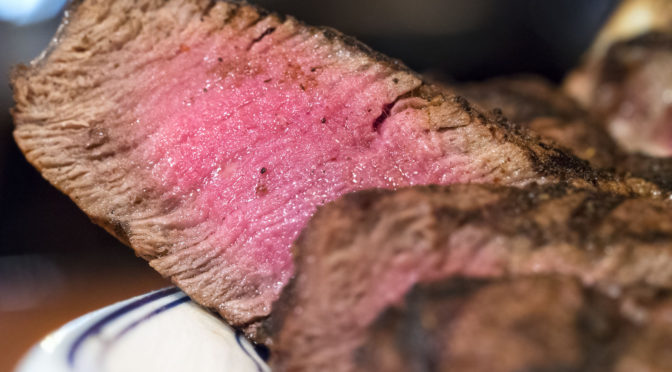
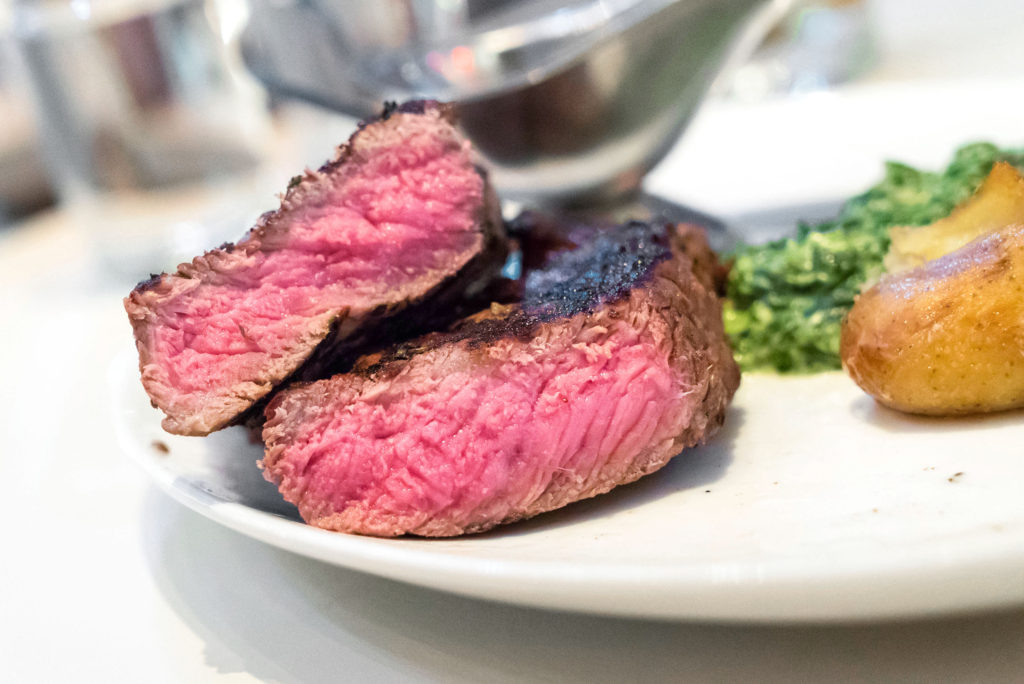
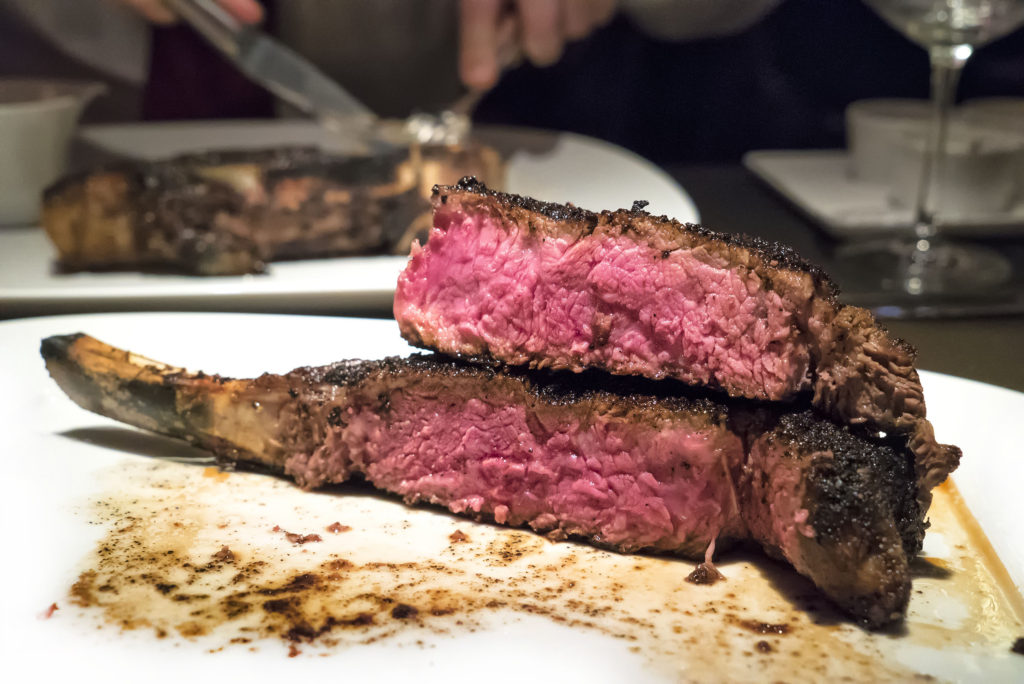
Inside was perfectly cooked. Check out the cut:
Where it fell short, for me, was the cap. There wasn’t much to it, unfortunately. The eye was delicious though, and I think it was the most flavorful cut of the night. I didn’t get pics of the other two.
I’m giving the tenderloin a 9/10. It had that same great sear and same great cook temp. The flavor was excellent for a tenderloin, too.
The sirloin was not marketed as a NY strip or strip loin, so I am considering it to be an “other cut” for categorization purposes. In all likelihood, it was probably a strip, but one can never be certain without actually doing the butchering oneself. This was an 8/10. Again, same great crisp and cook, and the flavor was nice for a lean cut, though I did prefer the rib eye and tenderloin over the sirloin.
As for the sauces, well, each steak comes with a free sauce on the side. There are about six to eight to choose from. We tried a bunch: house steak sauce, bernaise, creamy horseradish, and yuzu. While I prefer my steak naked, the best of the lot was the horseradish. Their house steak sauce was a bit aggressive on the tarragon (I think that’s what it was in there – not rosemary).
Choice of Cuts & Quality Available: 10
This place is truly amazing in terms of available cuts and quality. A quick scan of their menu reveals that they not only offer all of the main steakhouse cuts in various sizes, but you can also choose by farm. They offer stuff from Kansas (Creekstone), Illinois (corn-finished), Ithaca New York (grass-finished), and Snake River (American Wagyu). On top of that, they feature legit Miyazaki beef from Japan as well. You can even order a tasting that will give you 4oz from various farms, that way you can actually taste the difference between them. Currently, they only do this with the sirloin – not the rib eye. Honestly I don’t think any other steakhouse has this extensive of a selection.
As if the cuts of beef for steaks aren’t enough variety, they also feature wagyu beef short rib and wagyu beef sashimi. Amazing.
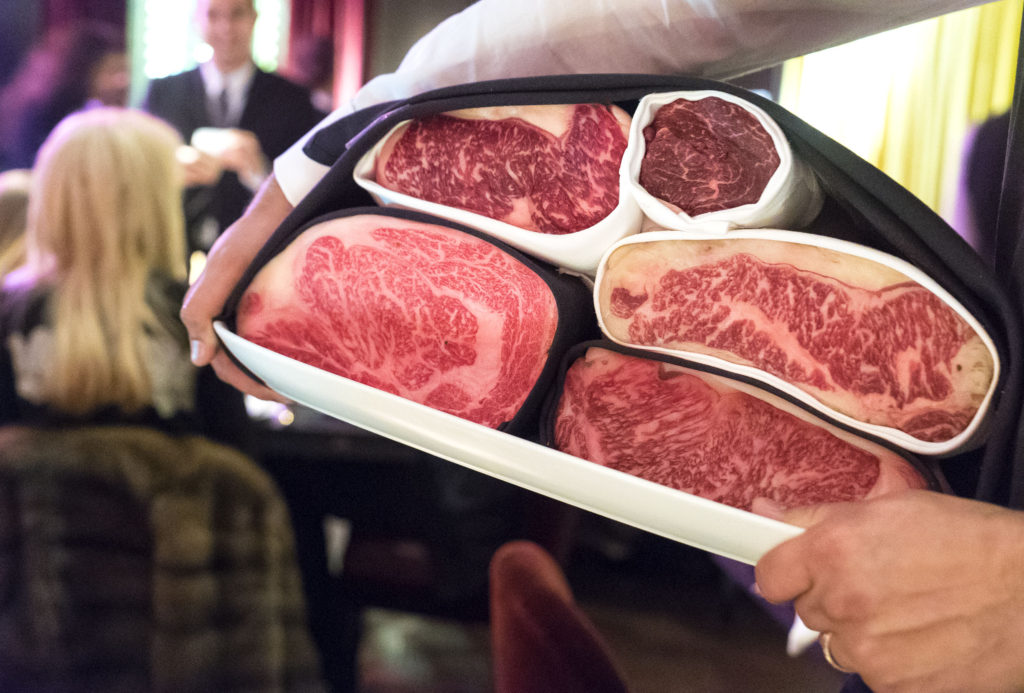
Oh, and they bring the shit out to show you, too.
Portion Size & Plating: 7
Portions could be a bit larger here for the pricing. I understand the cost of high-end beef, but at $88 for 9oz of American wagyu rib eye, you are getting ripped off. If that’s what I am going for, I will happily just head the fuck over to Del Frisco’s to get 23oz more wagyu beef for an additional $7 (32oz, $95). And that fucker is a clear 10/10 score on flavor – one of the best steaks I’ve ever eaten.
Price: 5
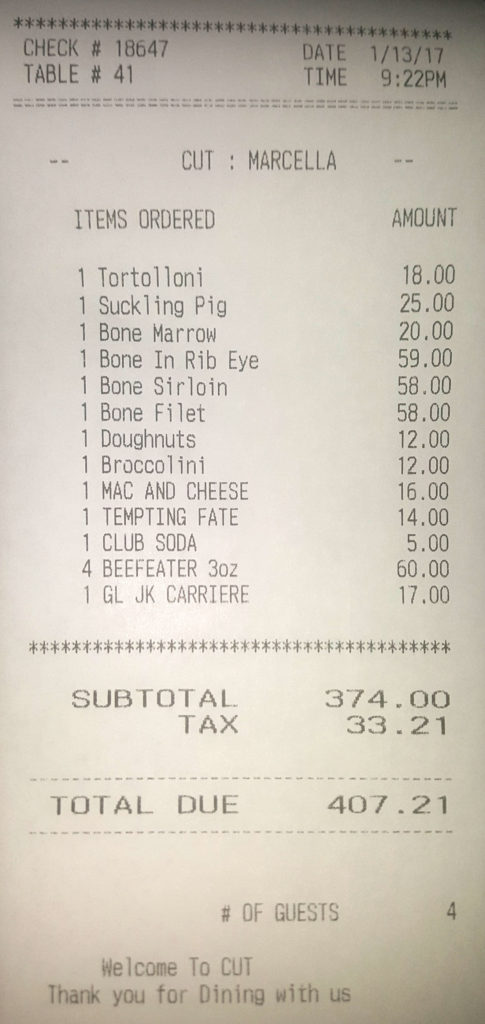
See my rant on portion size above for some weight here as well. But in addition to that issue, I felt that some of the items were way overpriced for what we were getting. In particular, the marrow app, the tortolloni, and the mac and cheese.
Bar: 8
The bar is pretty cool, and there are some great cocktails and booze selections available. However the prices are a bit too high (a non-alcoholic “mocktail” was fucking $14), and I was hoping for a more street side experience. The bar is just off the lobby of the apartment building / hotel with no view of the downtown streets, so the vibe is slightly off a bit.
Specials and Other Meats: 9
There are no off-menu specials, with the exception of an addition that was not yet printed – another offering of steak. But there’s chicken, pork and lamb for alternative meat selections, if for some reason you are avoiding all the tasty beef on the menu. The app selections also feature veal tongue, suckling pig, and bone marrow flan. Really interesting.
Apps, Sides & Desserts: 9
We tried a bunch of stuff. Let’s get right down to business.
The mac and cheese was really tasty, but insanely overpriced at $16. Apologies for not getting a photo of it.
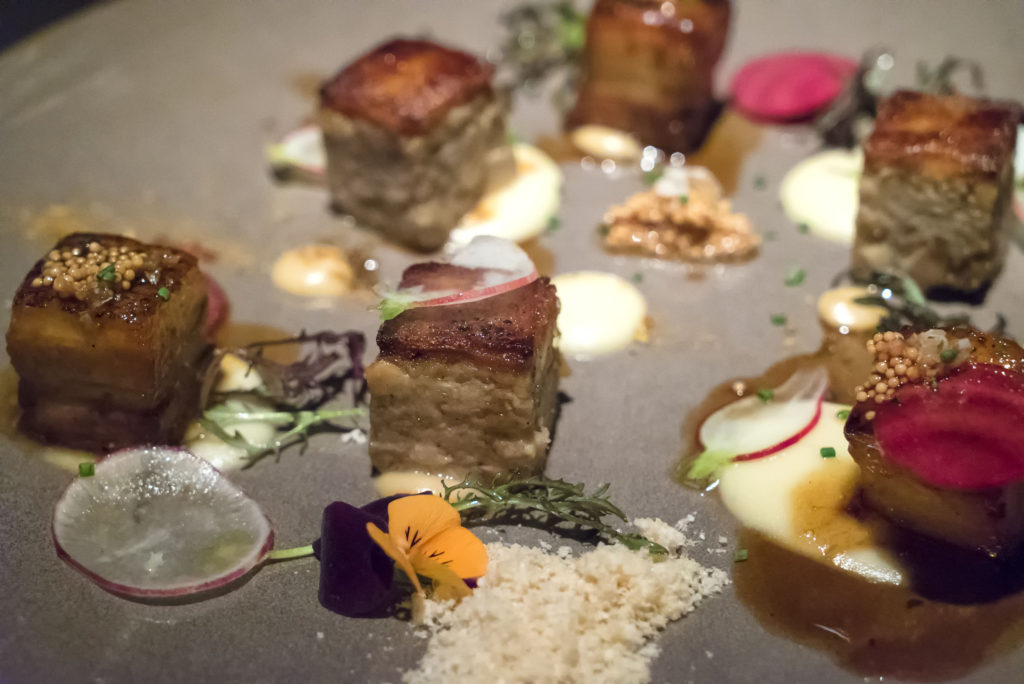
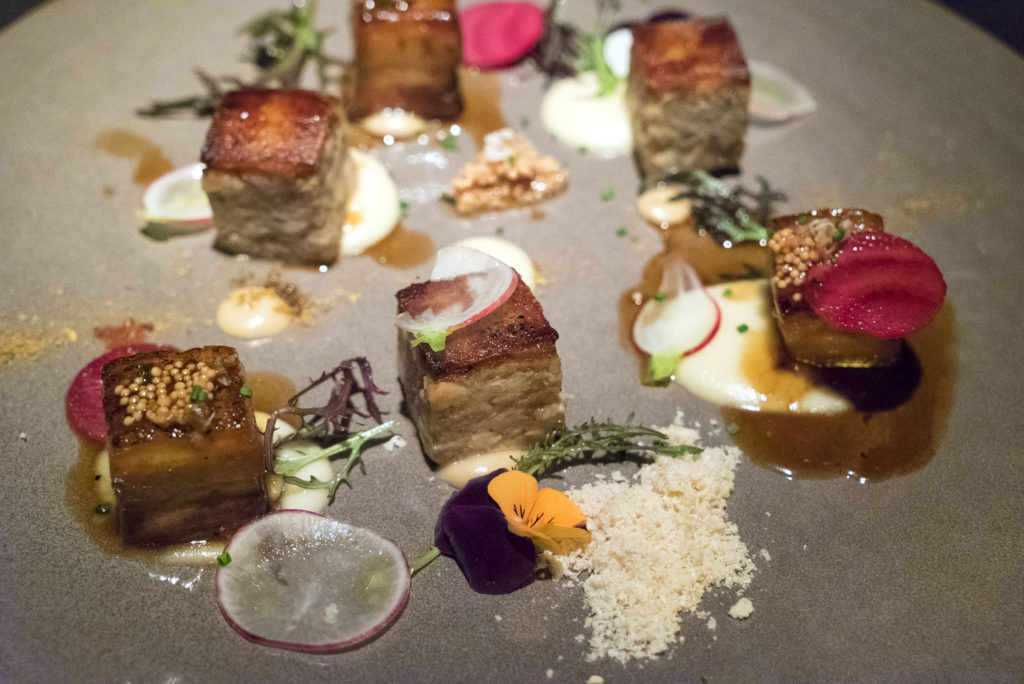
The suckling pig and pork belly was excellent. Not as salty as I was expecting, but really nicely plated. Also overpriced at $25 for six cubes that were the size of large Las Vegas gambling dice.
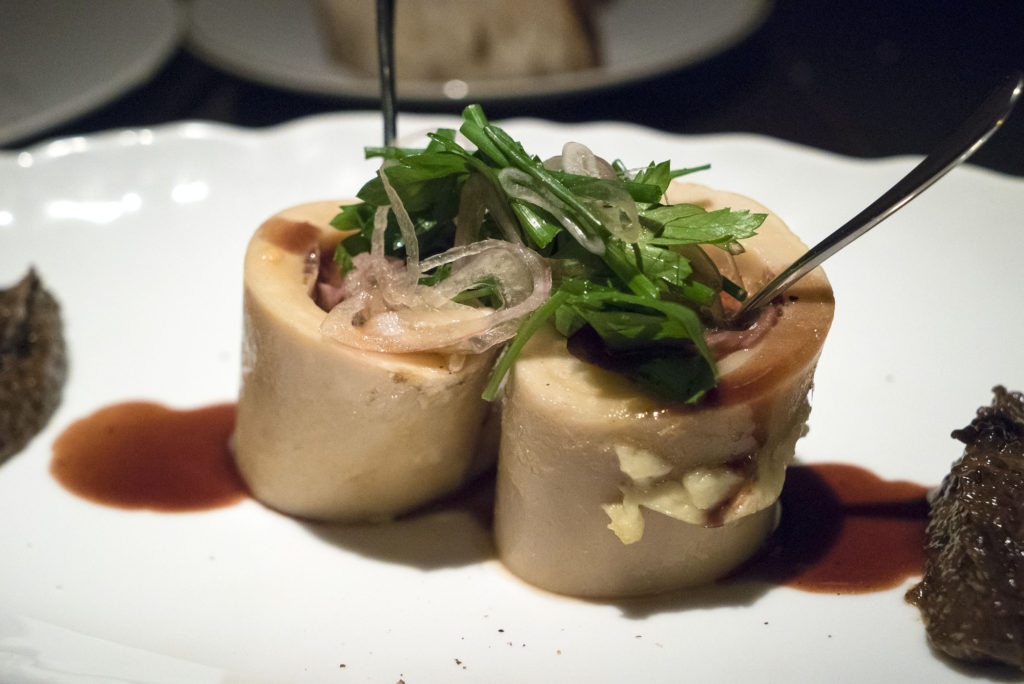
Bone marrow flan was very nice, but overpriced and small in size. It was similar to the creme brûlée from Beatrice Inn, only savory.
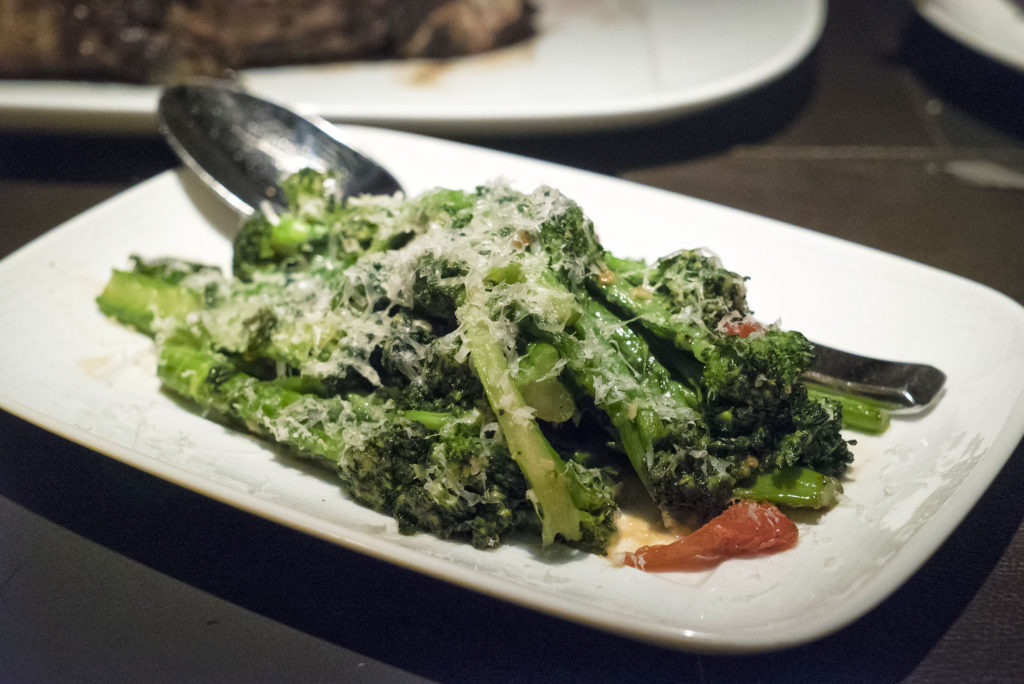
Broccolini was fantastic. I highly recommend this item. Topped with shaved cheese and adorned with roasted tomatoes, one cannot possibly go wrong.
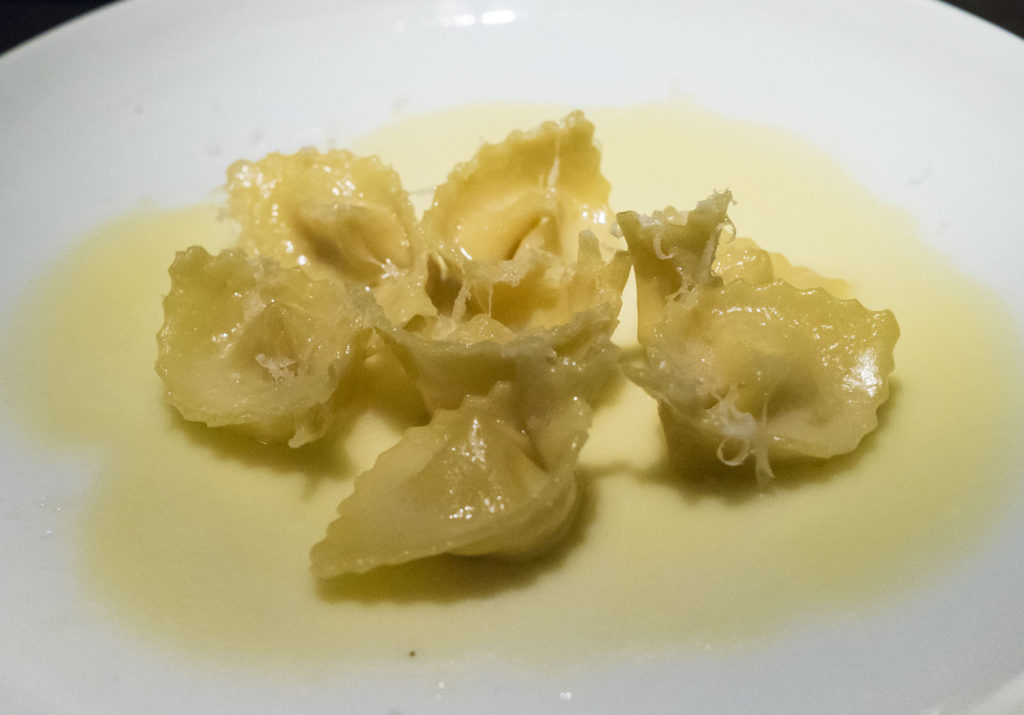
Tortolloni was overpriced for seven small dumplings. They were nice and mild though, which is exactly what my wife wanted.
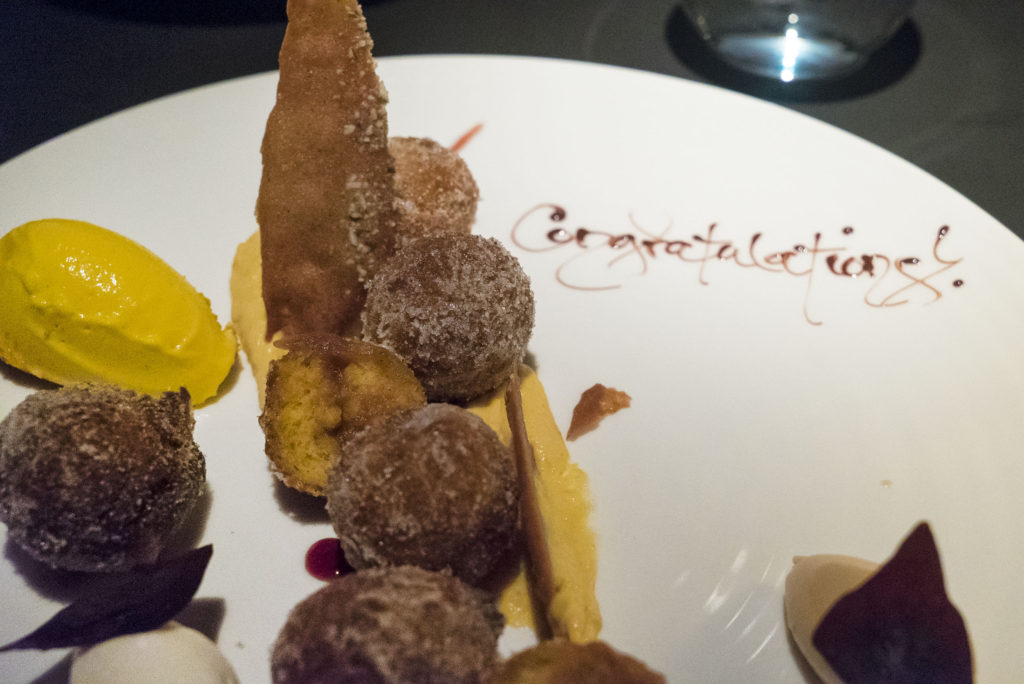
Doughnuts dessert came with about six doughnut holes, all the same flavor (granulated sugar coated). Some of the purees that came with it weren’t that good (sweet potato), but the ice cream was nice.
Seafood Selection: 8
There’s lobster, “loup de mer” (branzino), cod and sole on the seafood menu here. Scallop preparations, hamachi, a crab and lobster cocktail and a tuna tartare can be found on the app menu. Not too shabby, though I didn’t notice any oysters or clams.
Service: 9
One thing worth noting here is that you can add a variety of nice items to your order (for a fee, of course). But you can add a fried egg, white truffles, blue cheese, mushrooms, garlic, bone marrow, etc. to the steaks you order.
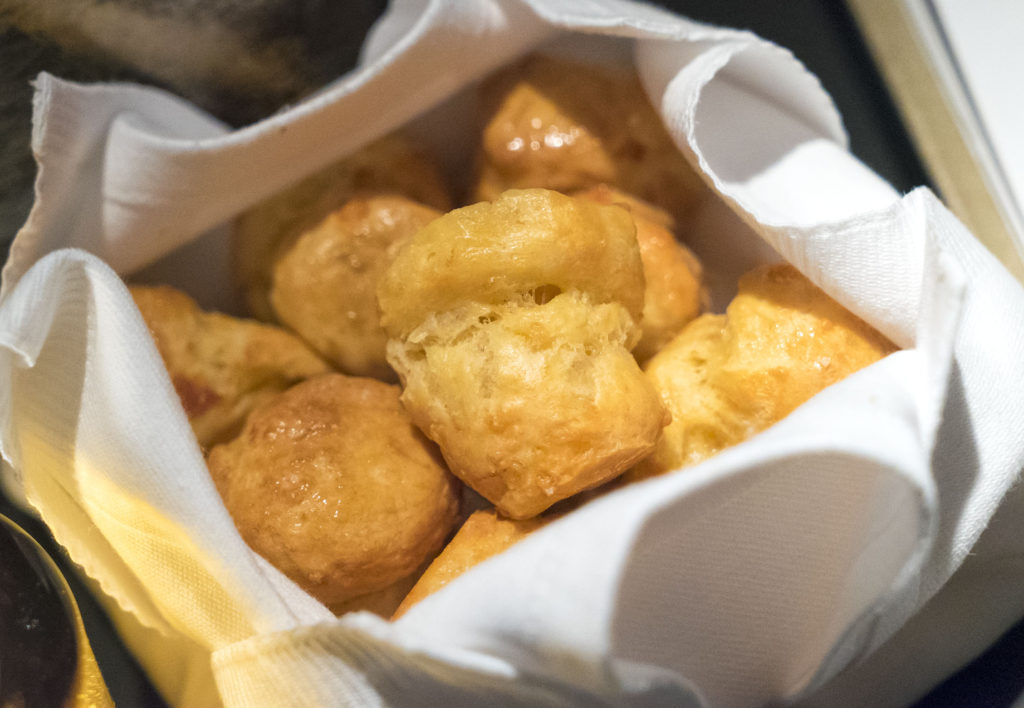
Bread is on point. The table receives a basket of mini pop-overs (we got a second basket) and five different style dinner rolls/breads to choose from with a nice whipped butter. All are delicious. My advice is to fill up on bread and share a really good, high end steak.
Ambiance: 7
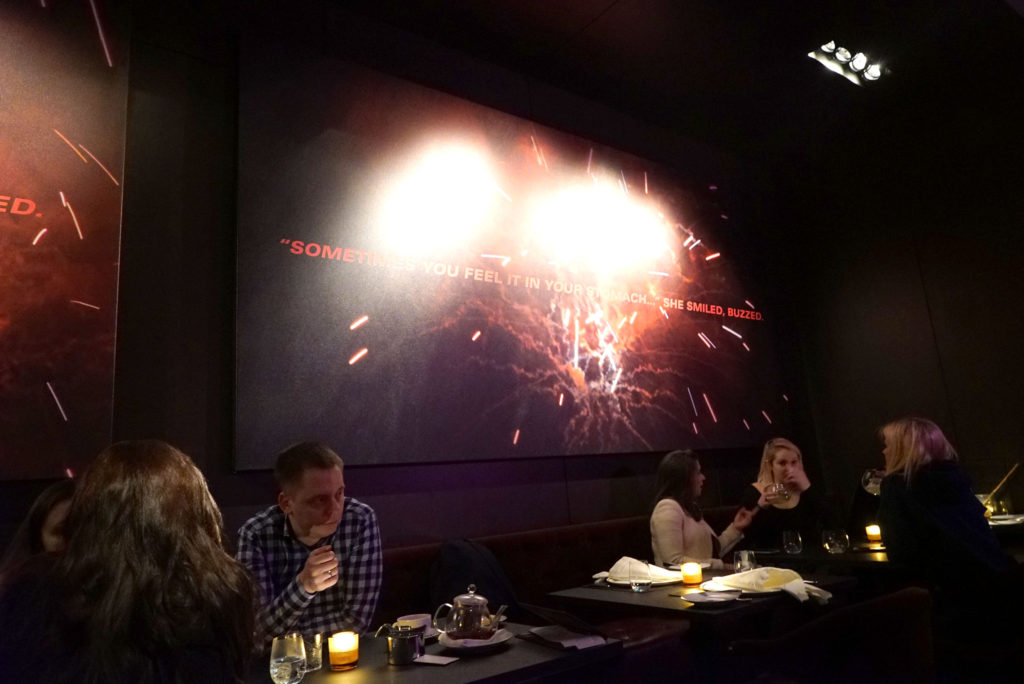
This place suffers from a bit of an identity crisis. There are two huge panels on one wall that show a kind of cheese-bag conversation between a chef and a woman. We surmised that this had something to do with how Wolfgang Puck met his wife, and it turned out we were right (our waitress overheard us talking and confirmed it when we asked).
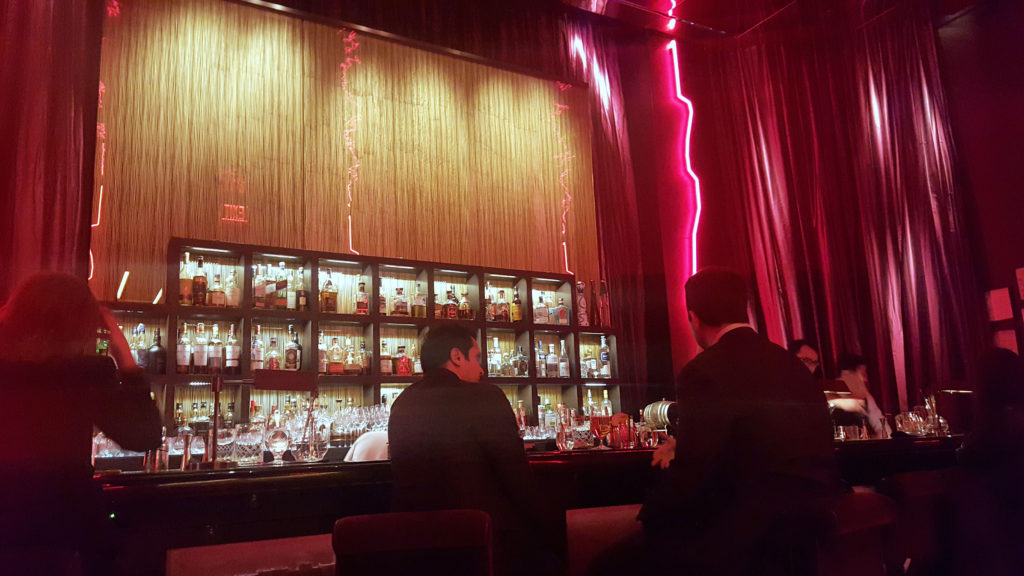
The dining room was vast and dark; a bit too sexy for my liking. And the random neon lighting at the bar felt a bit too “Miami Vice.”
CUT
The Four Seasons Hotel
99 Church St or 27 Barclay St
New York, NY 10007
I hesitate to even use the word “industry” when talking about beef in the USA. Perhaps “Sustainability in US Beef Production” is a better title for this post. “Industry” makes people think of the “factory farming” bullshit myth, which I already debunked HERE.
In any case, Happy New Year!!! As usual, this post is designed to do away with yet another set of myths about US beef. Apparently some false ideas have spread that beef production in America is vicious to the environment, emits far too many “greenhouse gases,” is responsible for “global warming” (or whatever people call it these days), is wasteful, and is generally not a sustainable practice. Lies. Every one of them.
Grazing
Grasslands involved in beef production account for nearly 75% of US natural wildlife, and cattle spend a majority of their lives feeding on these natural grasslands. Up to 85% of grassland in the US is actually not suitable for crop farming due to soil characteristics, topography or rainfall. Cattle grazing is a good use of the otherwise inarable land, and it even helps prevent wildfires. Also, cattle can eat shit that almost nothing else can. Bovine digestive systems are made to convert inedible plants into protein that we can eat.
That’s all wonderful, and you may have read a little about that on here before. But what I’m going to do now is introduce you to the concept of “diversified farming” practices.
Diversified Farming
What the fuck is a diversified farm? Essentially it’s when a farm produces a variety of crops or animals, usually both, with the crops feeding the animals that they raise, in an effort to create a self-sustained farm with little waste or reliance upon other operations.
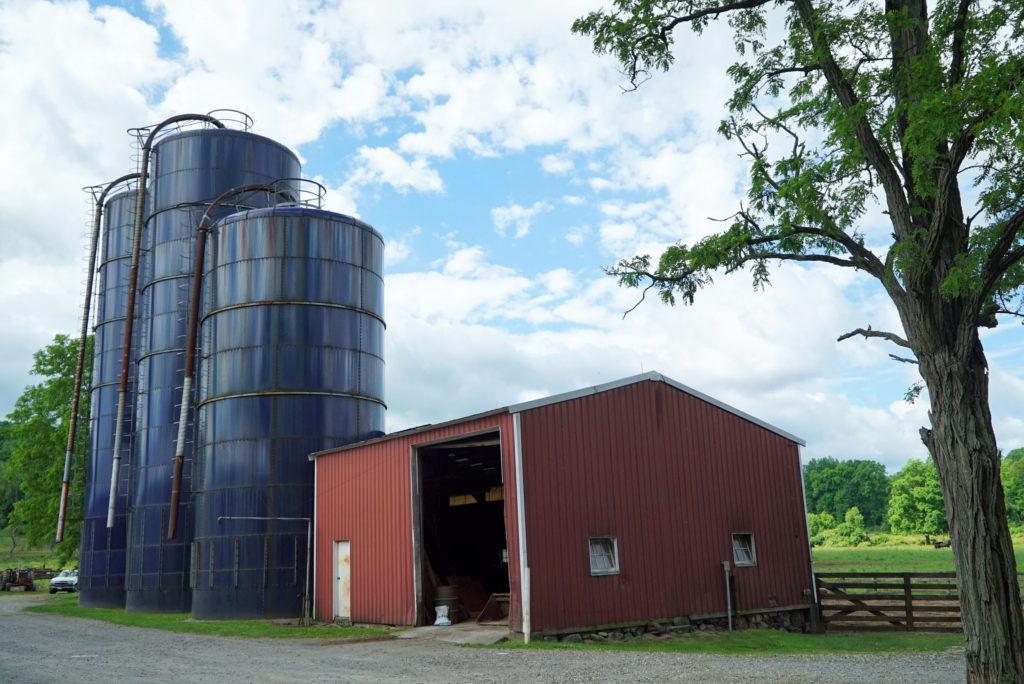
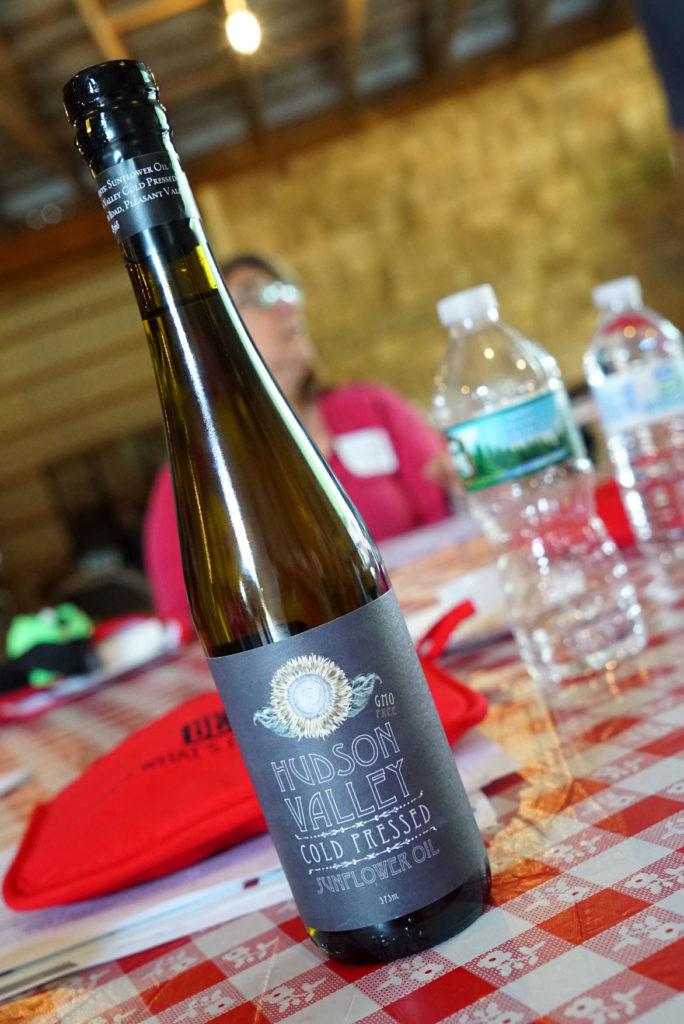
You may recall that Walbridge Farm is like this as well, where they grow sunflowers and raise cattle. The sunflowers are used to produce cold pressed sunflower oil, which they sell at their market.
The hulls, shells and ground up sunflower byproduct from that oil-making process is then used to create cattle feed. Pretty brilliant, if you ask me. Not only is this a good idea from a business standpoint, since you are becoming more self-reliant and utilizing more of what you make, but it is also responsible environmental stewardship.
Speaking of environmental stewardship, many diversified farm operations also catch water runoff from their feed yards to be processed and rendered inert before being reclaimed by the land. In fact, water management is an area of the industry that has seen great improvement in recent years. In addition, almost all diversified farms collect cow dung as well, which is then used as fertilizer for their crops. Even waste is not wasted!
But aside from diversified farming efforts, cattle are natural recyclers. They kick so much ass at recycling that you can literally feed them the waste from other industries.
Recycling
Do you enjoy bourbon? Of course you do, because you’re a man with balls and a dick swinging between your legs. You’re a red-blooded fucking American, and nothing is more American than bourbon, except for maybe jazz or steak. Do you know how bourbon is made? With corn! Good: You’re not an idiot. Corn mash, to be more accurate. That gets fermented and turned into booze. But what happens with the mash after the fermentation and distillation process? You guessed it: it often gets turned into cattle feed.
You all know how much I love Martin’s Potato Buns, right? The reason I love them so much is because their buns are always fresh, supple and soft; perfect for constructing a burger. I recently learned why that is the case. They pull their bread from shelves a little earlier than most, to ensure freshness to the consumer. Know what they do with the buns after they get pulled from the shelves? Rather than going to the garbage heap, they get re-purposed and turned into cattle feed.
That’s just two examples of other industries and businesses that contribute their unused byproducts to the beef production cycle, thereby reducing and re-purposing waste. The ethanol fuel industry is another big one, but many others contribute as well.
Greenhouse Gases
So what about greenhouse gases? We’ve all heard how cow farts are supposedly destroying the planet, right? Come on…
According to numbers from the EPA, cattle production is not even a top contributor to greenhouse gas emissions.
Here’s some recent data:
Agriculture: 6.9% of U.S. greenhouse gas emissions.
Livestock: 3.1% of U.S. greenhouse gas emissions.
Livestock Methane: 2.8% of U.S. greenhouse gas emissions.
Beef Cattle Methane: 1.5% of U.S. greenhouse gas emissions.
What about other industries?
Electricity Generation: 33% of U.S. greenhouse gas emissions.
Transportation: 26% of U.S. greenhouse gas emissions.
Industrial Use: 11% of total U.S. greenhouse gas emissions.
Residential/Commercial: 8% of U.S. greenhouse gas emissions.
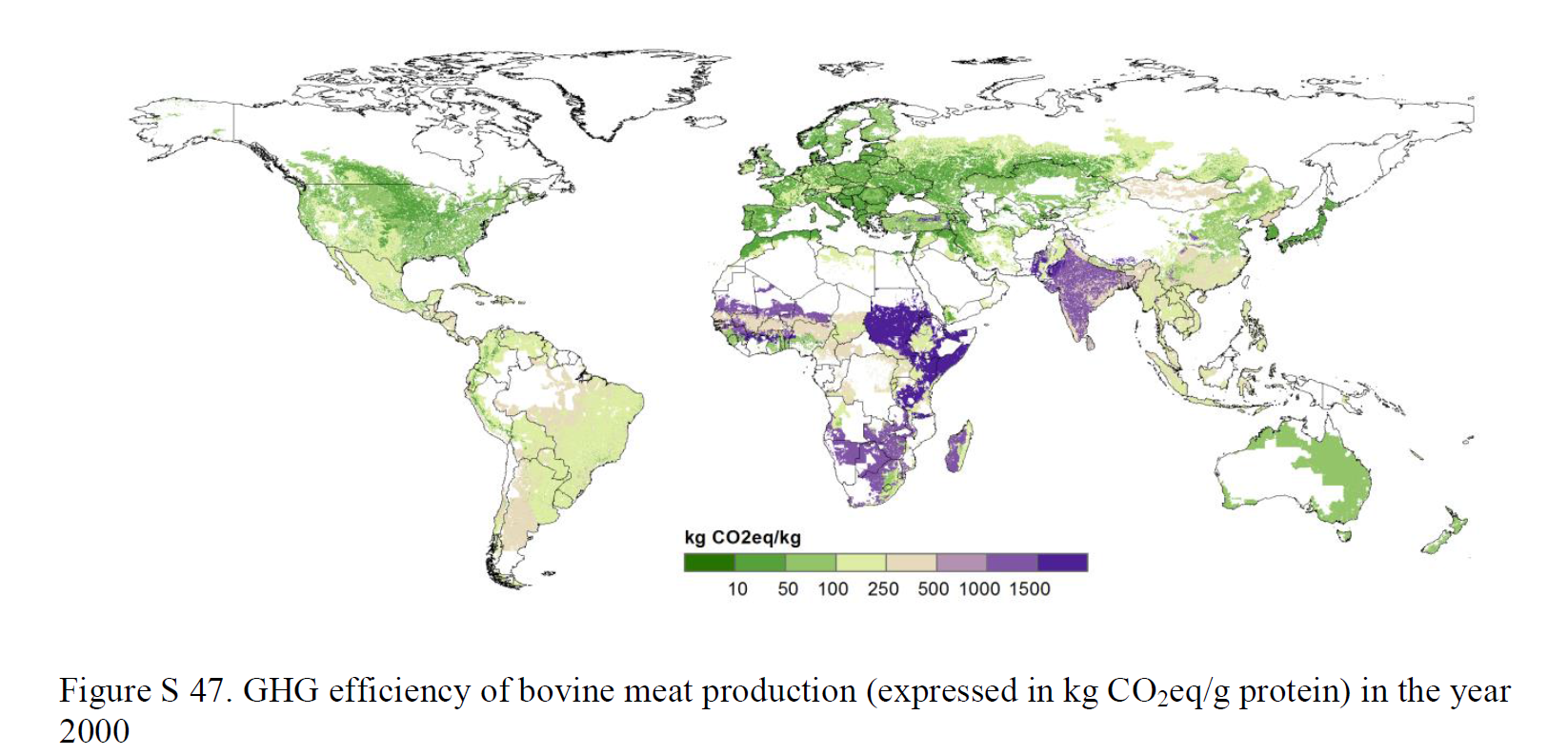
It’s really pretty simple though: Cattle are not the major cause of greenhouse gas emissions in the United States. And as far as the US is concerned, we do a pretty damn good job at containing the impact that beef production has on the environment. The US is actually one of the most efficient nations in terms of lowering greenhouse gases and environmental concerns that stem from beef production. Click the image below to see a larger version:
From www.beefissuesquarterly.com
Still Improving
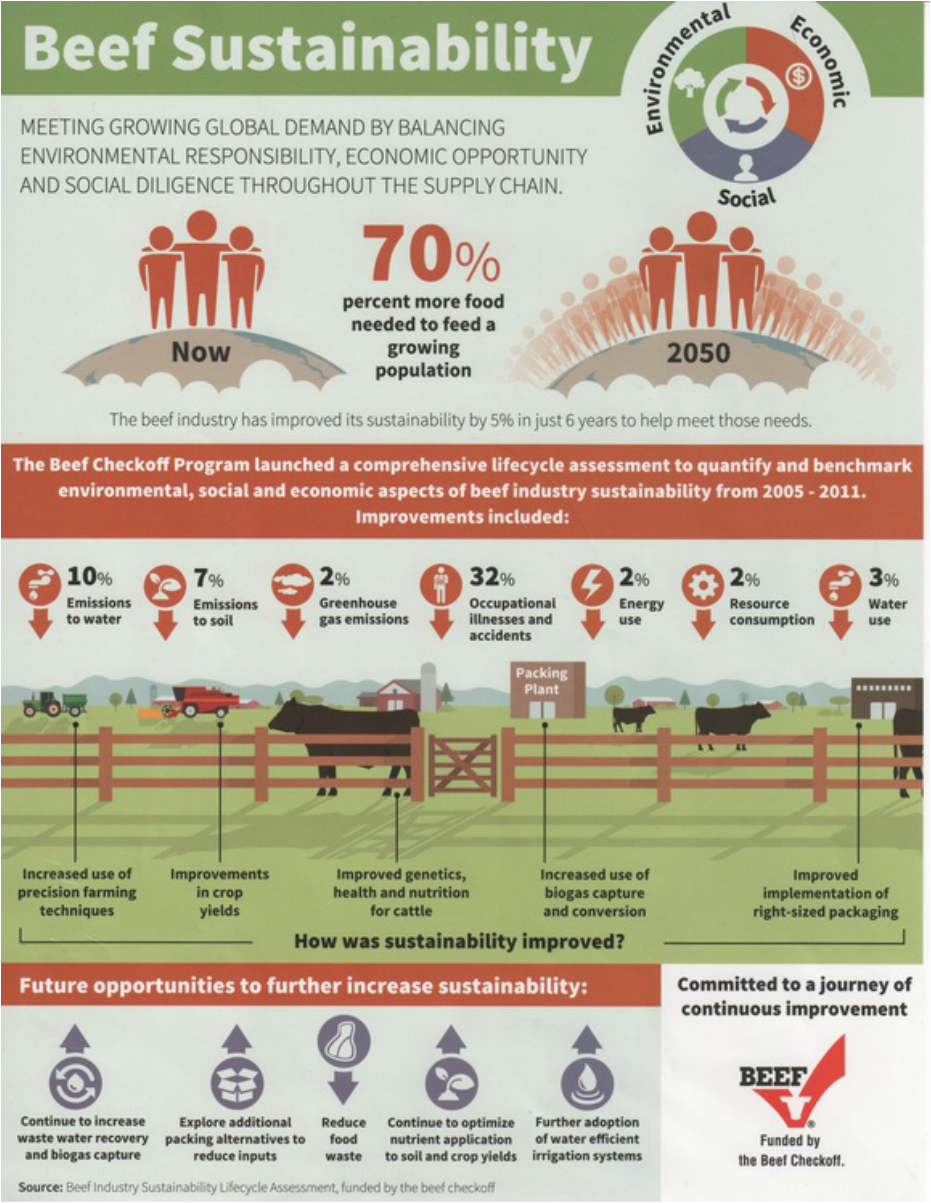
Furthermore, a “Lifecycle Assessment” of the beef industry was recently conducted. What that means is that everything and anything that touches the production cycle was examined. Use of farm equipment, water, machines, everything – not just the cattle themselves or the land use.
Take a look at this nifty graphic that encapsulates the findings of the life cycle assessment (click for a larger version):
From www.beefresearch.org
It turns out that the beef production cycle scored much better than car emissions from the auto industry. Why mention emissions and the auto industry? Because they promoted a poor emissions study and leveled some wild accusations at the beef industry.
Better still: the emissions study didn’t focus on the entire auto industry lifecycle in the way that the beef study did. Had they conducted a full lifecycle study, they would have had to include assessments of things like power plants and such. Once those things are factored in, the beef industry becomes squeaky clean in a direct comparison with the auto industry in terms of greenhouse gas emissions.
For more information about the improvements made in the beef production lifecycle, go HERE.
Niche Market Beef
A lot of hulabaloo has been going on around the discussion of grain finished vs grass finished beef. People seem to think that grass finished beef is somehow more natural and environmentally friendly. Yet we know it takes about 226 more days for grass-finished cattle to reach market weight than grain-finished cattle. More days on grass may mean greater environmental impact.
Let’s look at the difference. Each pound of grain-finished beef requires:
45 percent less land;
76 percent less water; and
49 percent less feed;
And generates:
51 percent less manure; and
42 percent fewer carbon emissions.
So it would seem to me that grain finishing is more environmentally sound. For more on that, click HERE.
Meatless Monday
Just the idea of it makes me cringe. What would possess someone to avoid meat just because of alliteration? Why not increase beef intake and call it Meaty Monday? Because some fool out there thought it would be healthy and better for the environment to cut meat from your diet just one day a week. Were they right? Of course not. Let’s examine the idea:
First, we know that beef is nutritious and a vital part of a healthy, well-balanced diet. Refresh yourself with my post, if you must.
As for the environment, “Meatless Monday” would have a very small impact even if every American followed it. One meatless day per week would account for less than one half of one percent of the U.S. carbon footprint. For more on that, check out THIS LINK.
Nose to Tail
Are we, as a society, wasting any part of the animal? Not really.
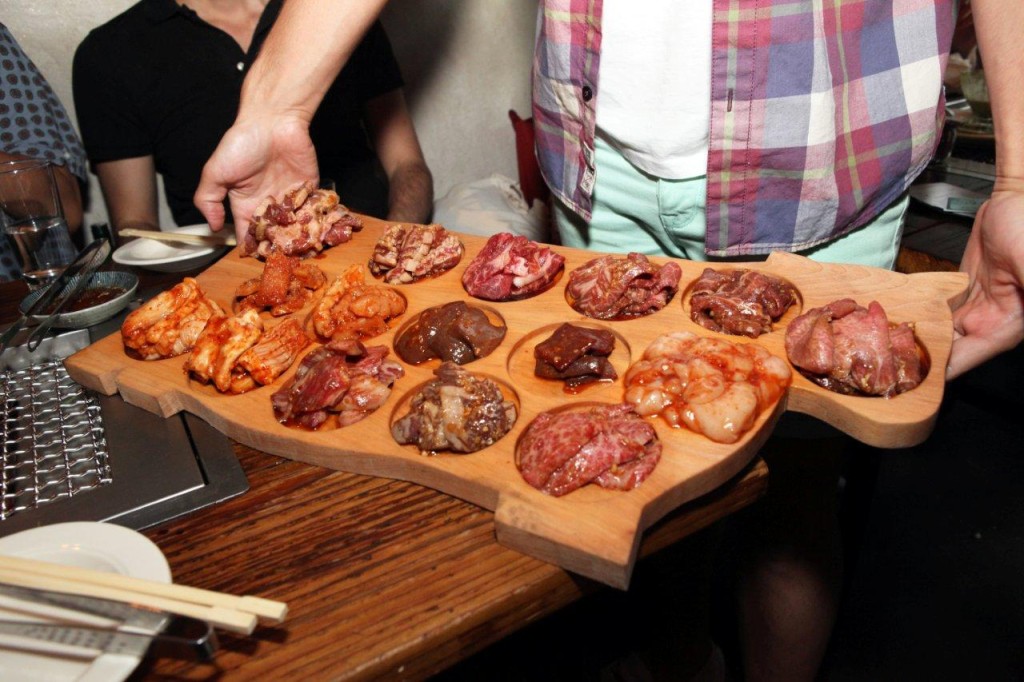
First, you’ve all noticed some of the shit I’ve been eating lately at fine dining establishments: Oxtail stew, blood sausage, bone marrow, tripe, and all sorts of offal or “variety meats.”
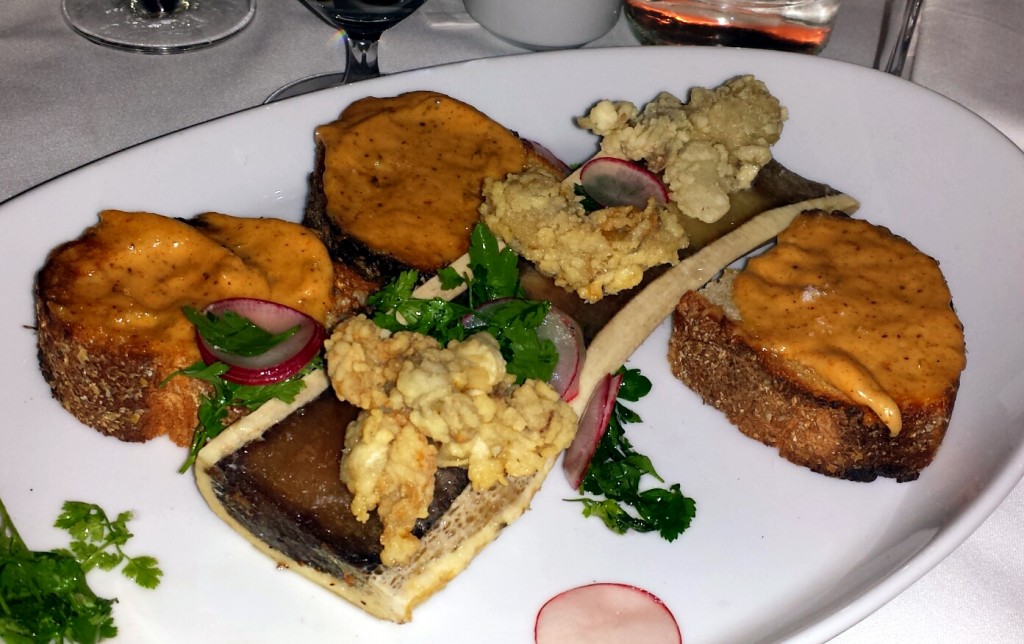
bone marrow with fried oyster
There is a readily identifiable trend in the food biz where chefs want to use the entire animal, from nose to tail, to reduce waste and elevate their cuisine by offering on their menus the proteins that used to be relegated to the impoverished.
Offal and “variety cuts” were always cheap and within the budgets of the poor, especially outside of the US. You know what I’m talking about: stews, cured meats, slow and low cooked meals, etc. Now, restaurants are taking inspiration from some of those humble dishes and featuring them on their menus.
Beef Byproducts
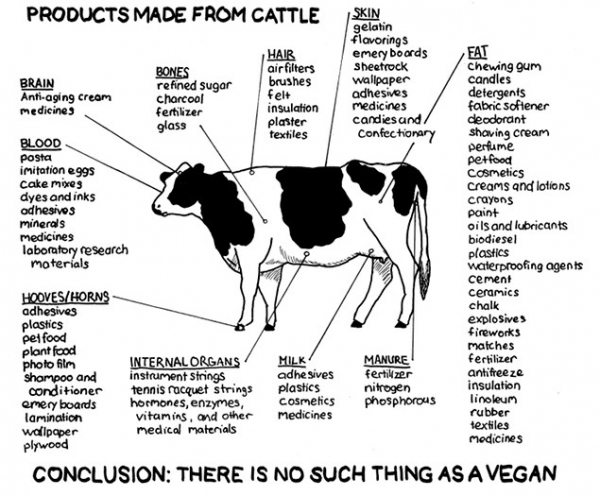
But even outside of human consumption, the carcass is utilized across a wide spectrum of modern society. Take a look at this diagram, courtesy of Facts About Beef:
I also liked this one from Snopes, mainly for the conclusion at the bottom of the image:
I haven’t independently verified all uses claimed on the Snopes chart, but the Facts About Beef chart is 100% legit and it looks like whoever made the Snopes pic just grabbed the same list from the BeefUSA graphic. The overall point is that beef byproducts are in a lot of things we use every day. It’s not like we just kill cows, cut the meat off and fling the carcass into a ditch on the side of the road. There’s really no waste.
Wrap Up
I guess I should cut this baby off here. There’s a lot to talk about as far as sustainability is concerned, and if I tried to tackle everything, this would be a book as opposed to an article.
Just remember that America’s cattle ranchers have a vested interest in sustainable environmental practices. After all, the beef community thrives on multi-generational family farms. Cattle farmers have an average of 13 different practices in place to accomplish environmental goals.
Demetri Kontakos, the owner of Bonnie’s Grill for the last two years, recently invited me into his establishment for a press review. Bonnie’s has been a Brooklyn staple for about 15 years and running. I had heard great things about Bonnie’s wings, so I was excited to hoof it out into Brooklyn and give them a shot.
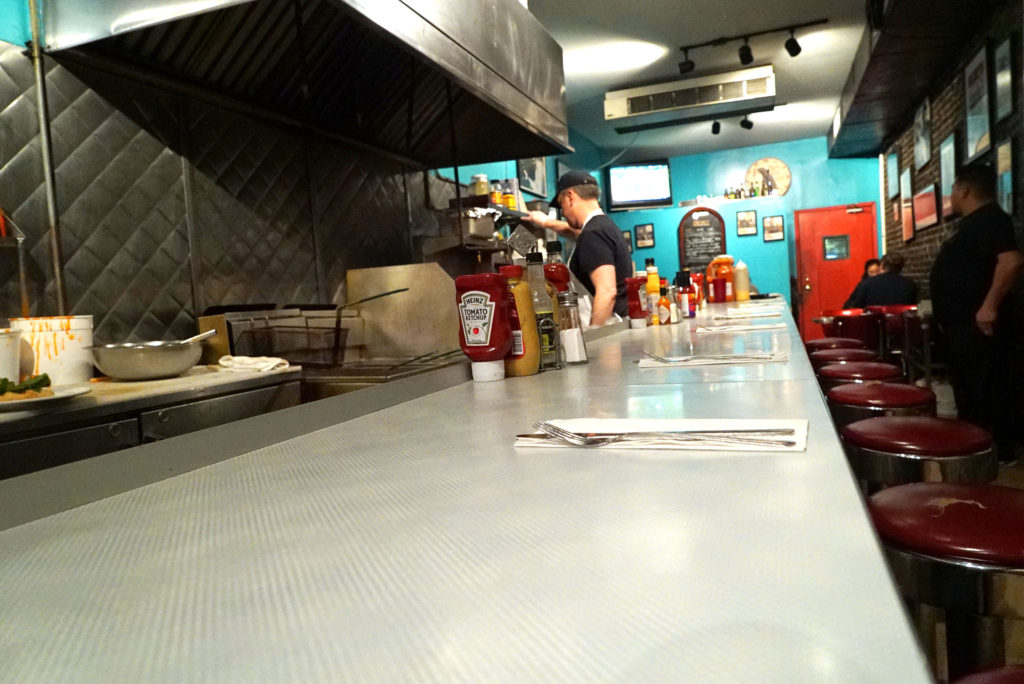
I love a simple countertop style joint. No fuss, no glitz and glamour: just really good fucking food. Bonnie’s is exactly that kind of place.
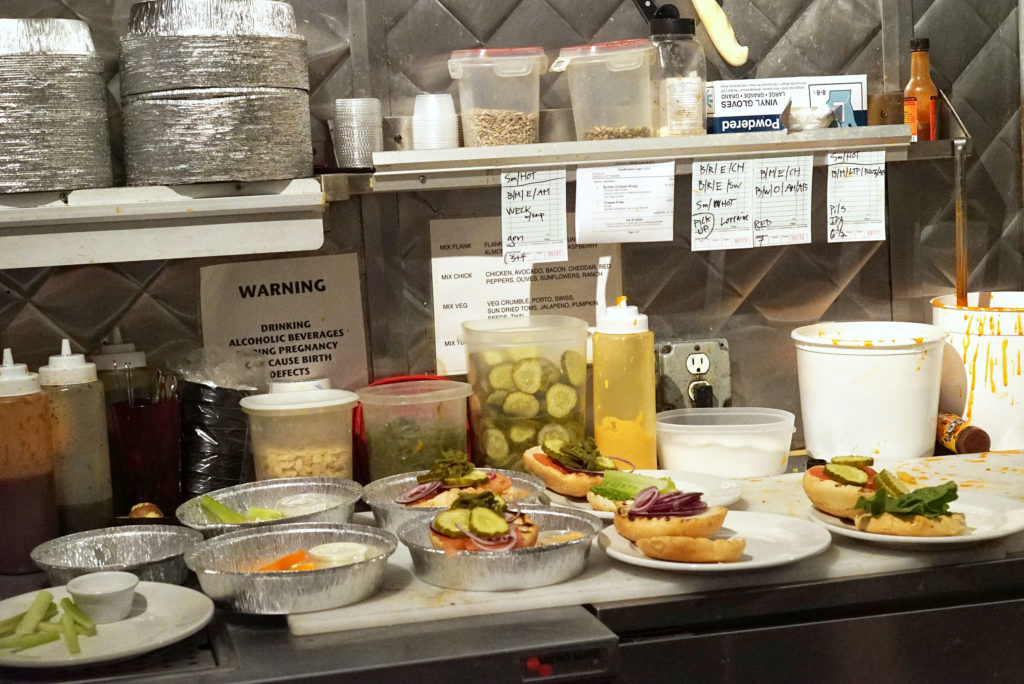
Some people get excited about a fancy joint with buttoned up waiters, candle light and white tablecloths. Not me. I get excited when I can see people working on my ticket right in front of me.
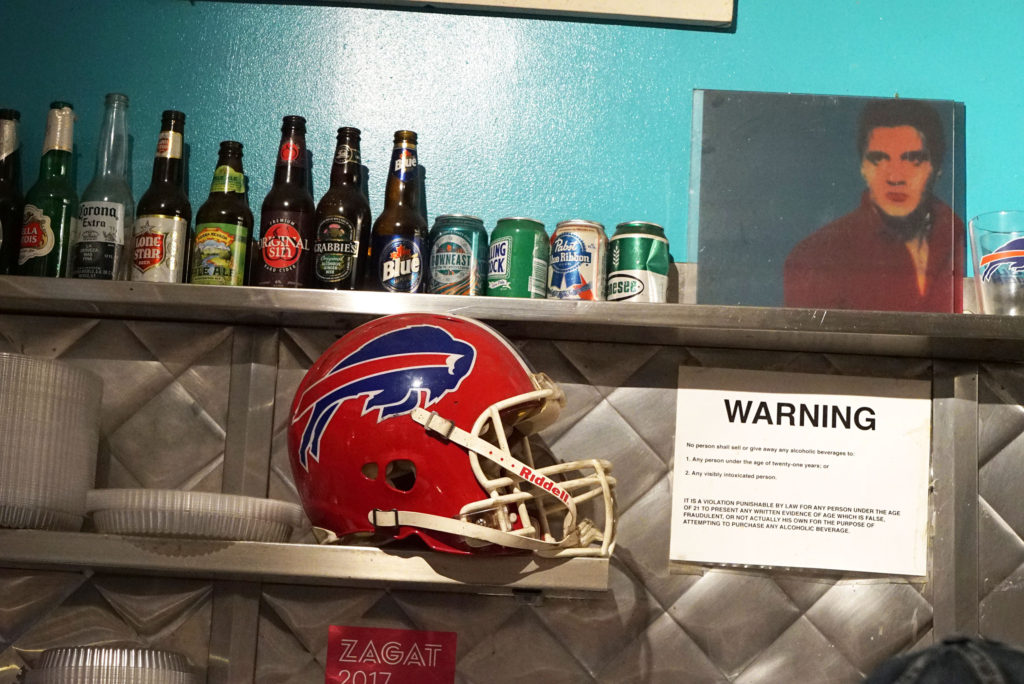
And somehow I was a big Bills fan when I was a kid. Probably because they had an awesome looking bovine as their logo. And Bonnie’s is a proud Buffalo style establishment.
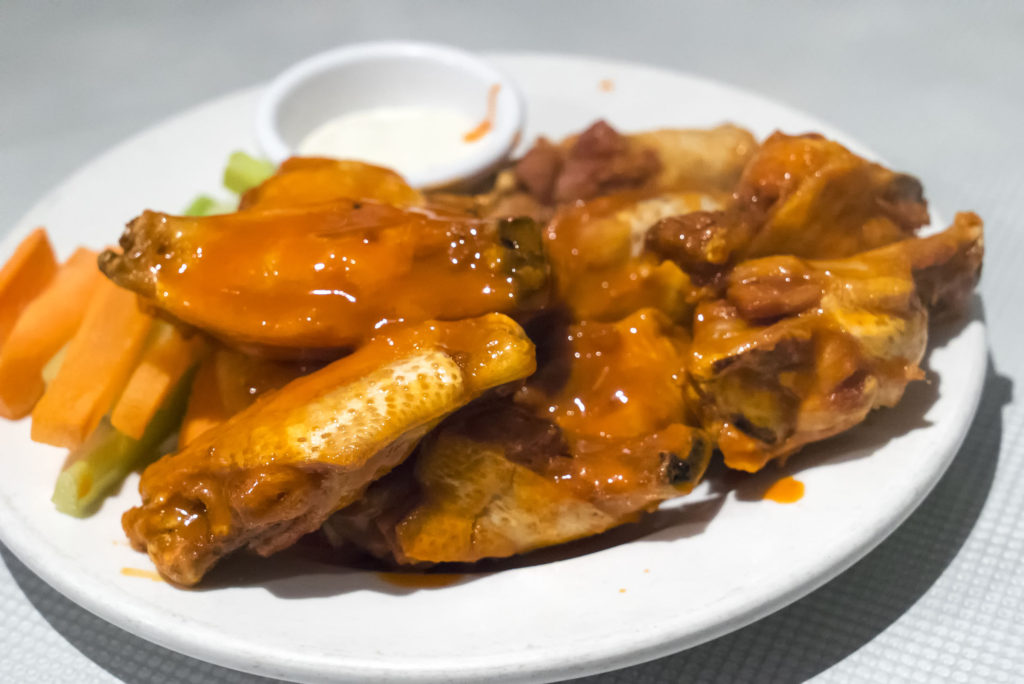
Speaking of Buffalo: the wings. They get fried up to a really nice crisp here – none of that rubbery skin bullshit that you get from other places. And the sauce is really flavorful: you can get mild, medium, hot or hotter. I can take a lot of heat; in fact I enjoy it. So next time I will be trying the hotter wings. This time we went with hot, and it didn’t have us tearing up and sucking down water.
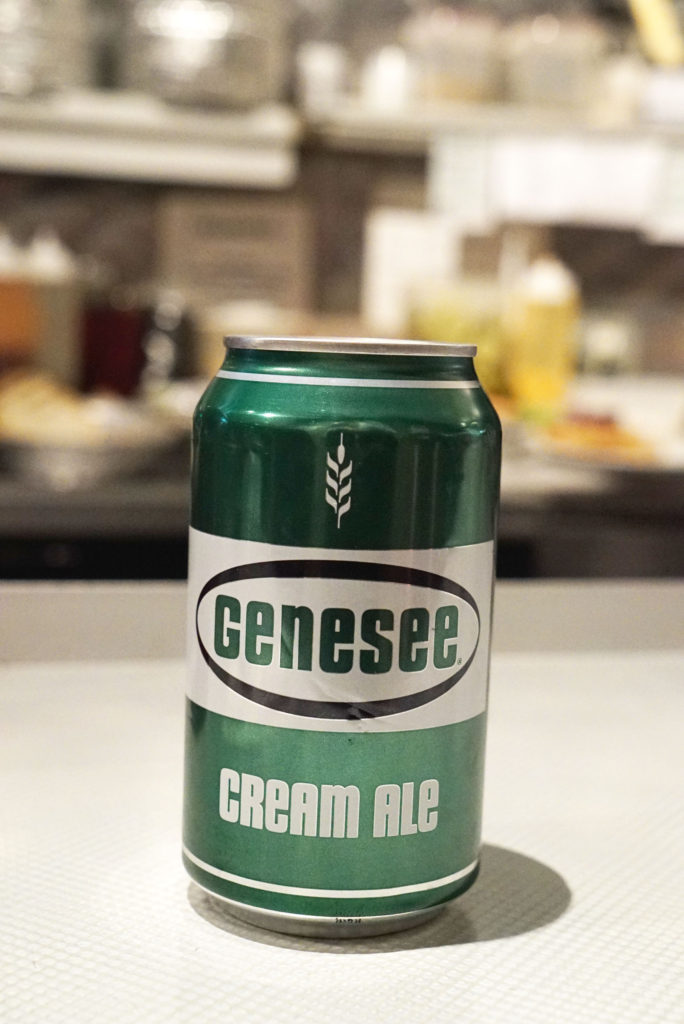
We did suck down a cream ale, though.
These are a great bargain at just $3.50, but if canned beer isn’t your thing, every weekday from 4pm-7pm is happy hour, where drafts are just $4, and they run three or four pretty good handles.
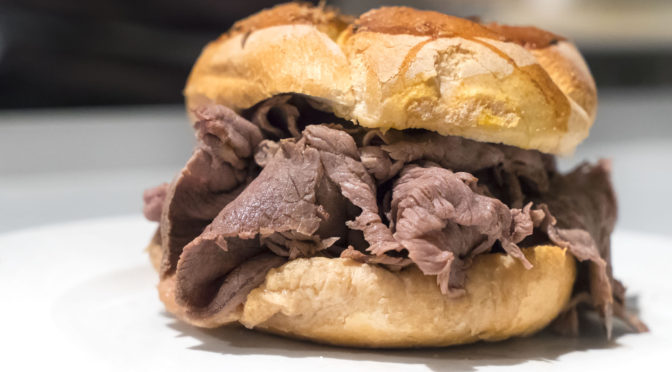
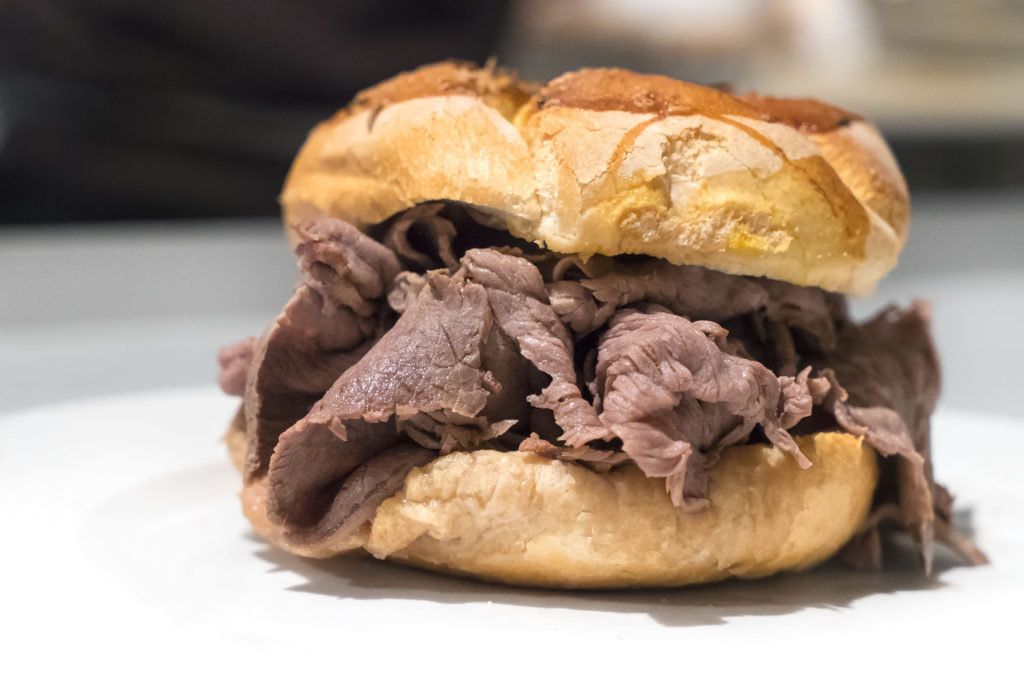
But back to all things Buffalo… Check out this gem: beef on weck!
I love regional food quirks. Beef on weck is one of those quirks that hails from Buffalo, or western New York, generally. Essentially, what you have here is sliced roast beef with horseradish and some meat juice on a kimmelweck roll (kaiser style, with caraway seeds and coarse grain salt on top).
Anyway this fucker was pure and simple. You can mess with it a little if you want, and add jalapeños and cheddar, but then you’re screwing with the integrity of a traditional sandwich.
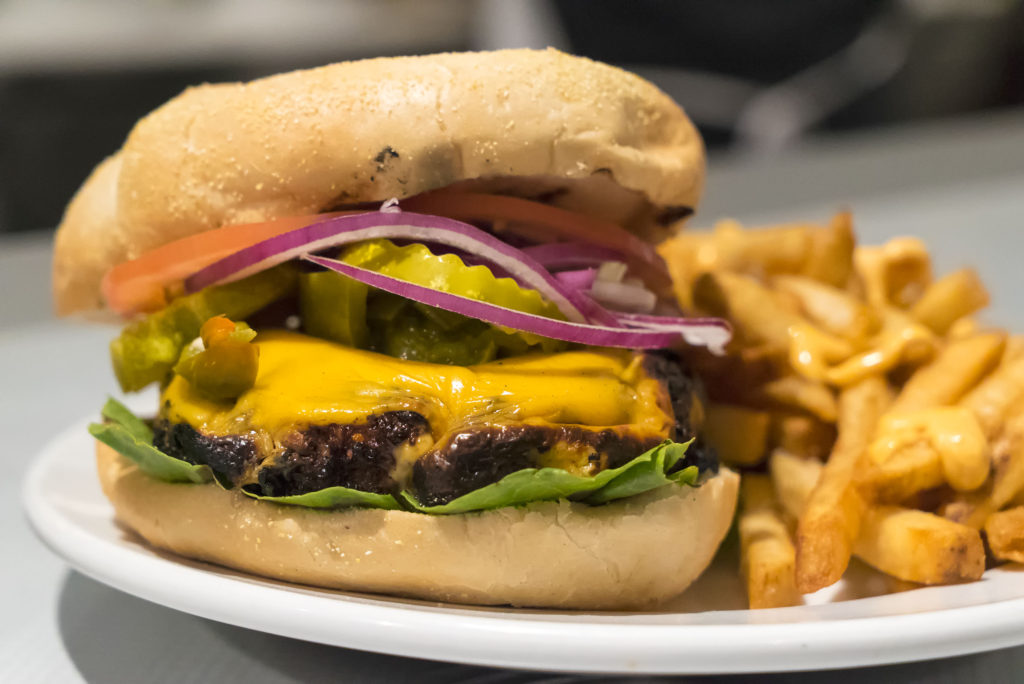
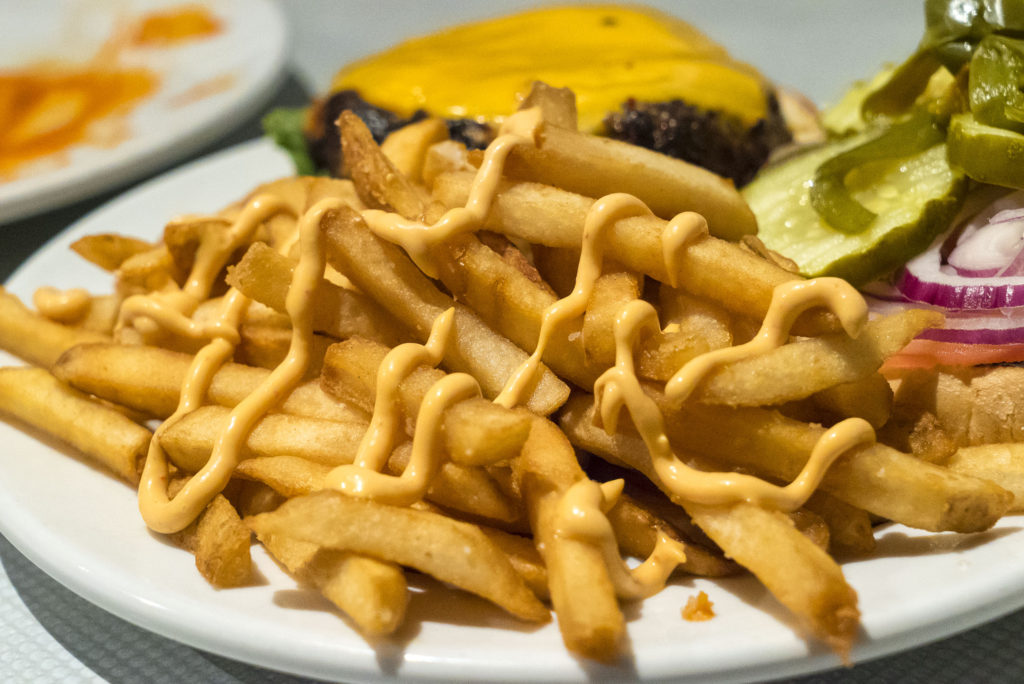
And speaking of traditional, by now most of you know how I like my burgers: simple, nothing fancy. The classic American cheeseburger reigns supreme. So that’s what I got here.
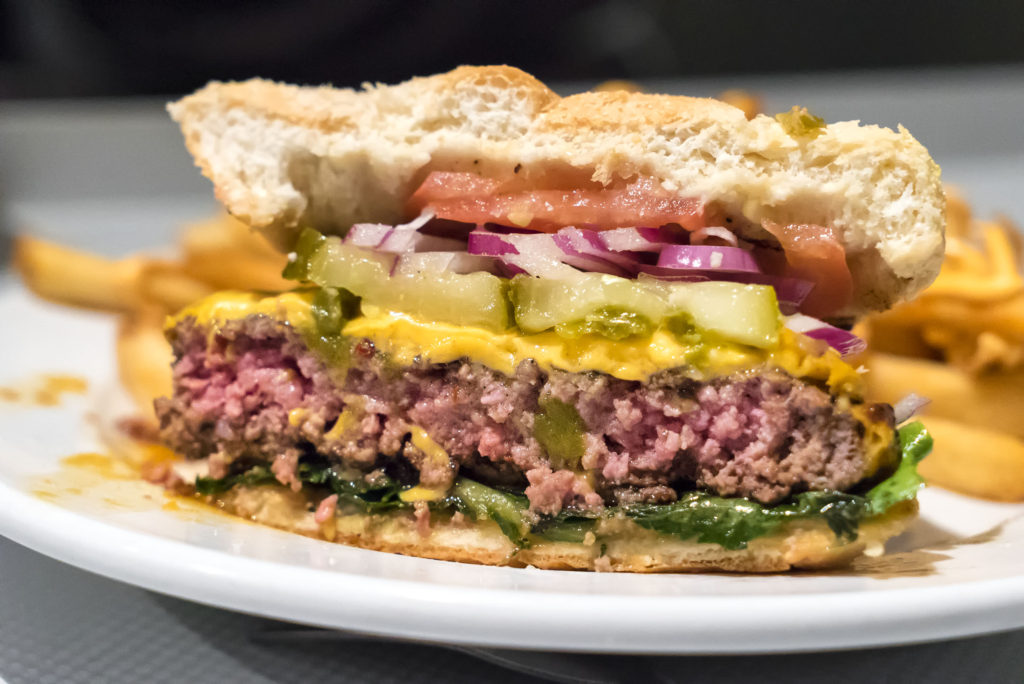
The patty is 80/20 lean/fat, so the masters at Bonnie’s develop a really great crisp on the outside of the burger. The cheese melts down so nicely and surrounds the patty with even more crisp.
There’s a ton of free toppings you can go with. I went with lettuce, tomato, red onion, pickles and jalapeños. By the way: cheese is even a free topping here. But the kicker for me was that these guys kinda read my mind when it comes to the toppings. Notice how thin the tomato and onion slices are? I hate when the toppings end up making a burger eight inches tall. This was perfect.
And speaking of perfect… the fries!
Golden and crisp, and deftly seasoned with salt. And the chipotle mayo is a great way to enjoy them.
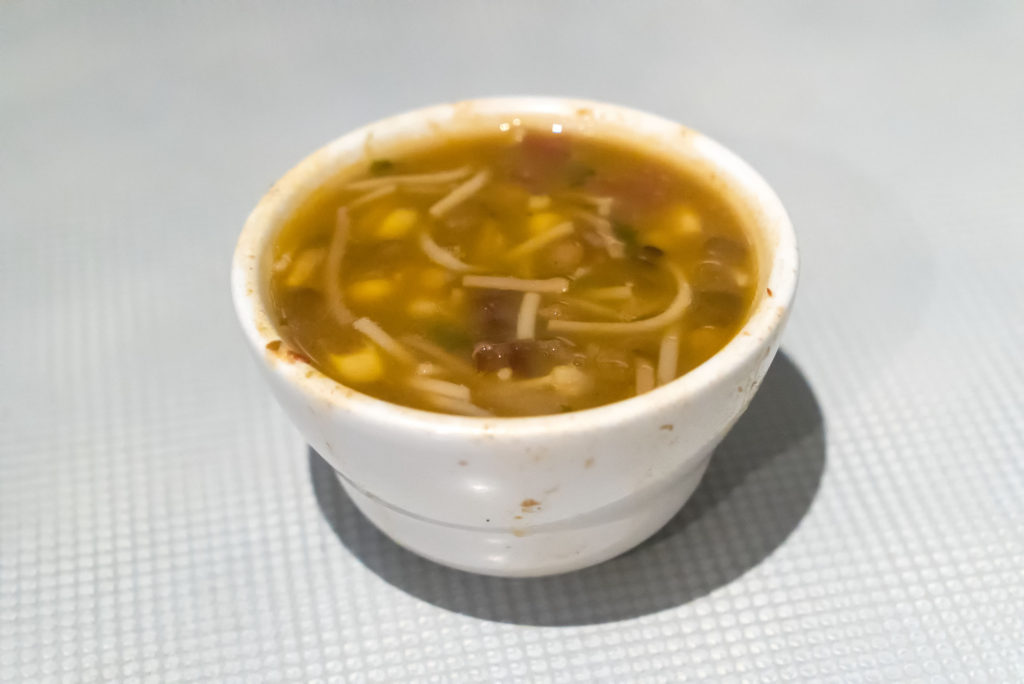
Another side I tried was the soup of the day, which was lentil and sweet corn. Very hearty and soulful.
I can’t say enough positive things about this place. I just wish it was closer to my apartment! I’m near Central Park and this is near Prospect Park. But I highly recommend this place. So freaking good, and the staff are all really nice – ask for Alex and Rick when you go.
My buddy Jeff from @foodmento organized a nice influencer meal here and invited me to tag along. Bob’s is a chain steak house that hails from Texas. They just recently opened shop at the Omni Berkshire Place hotel on 52nd and Madison. Since Texas knows beef, I was really excited to try this out. Here’s how it went down:
Flavor: 8
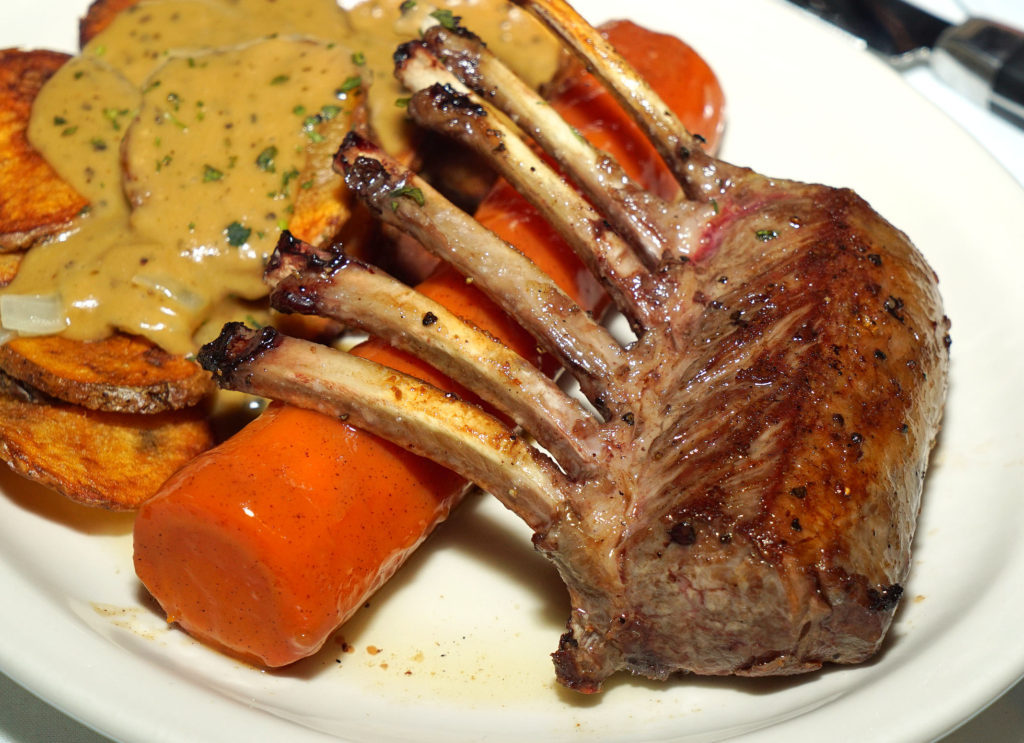
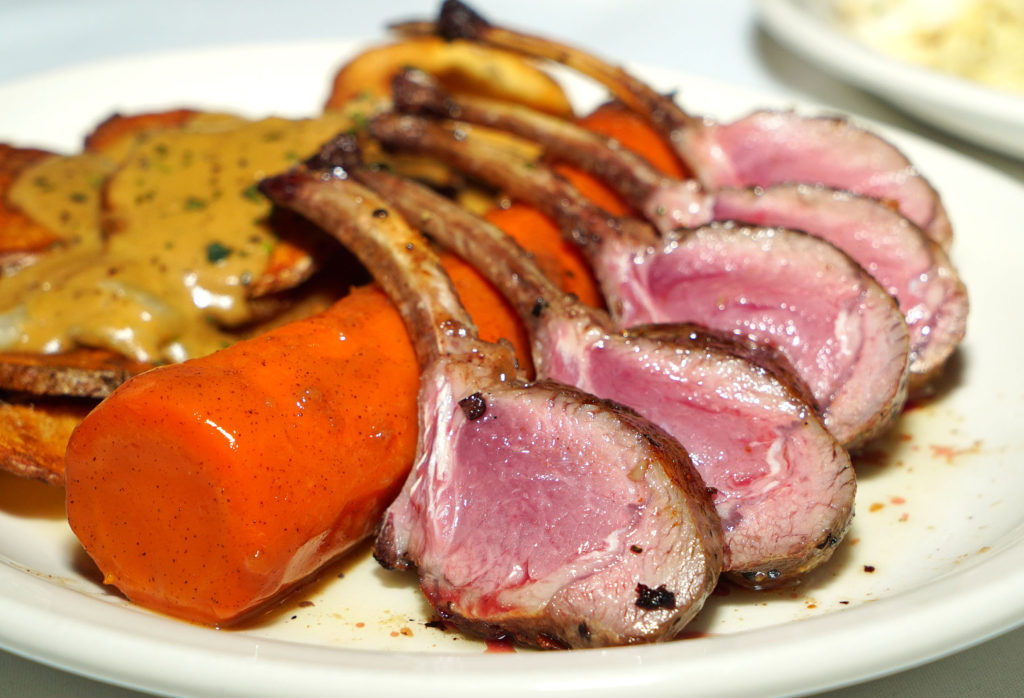
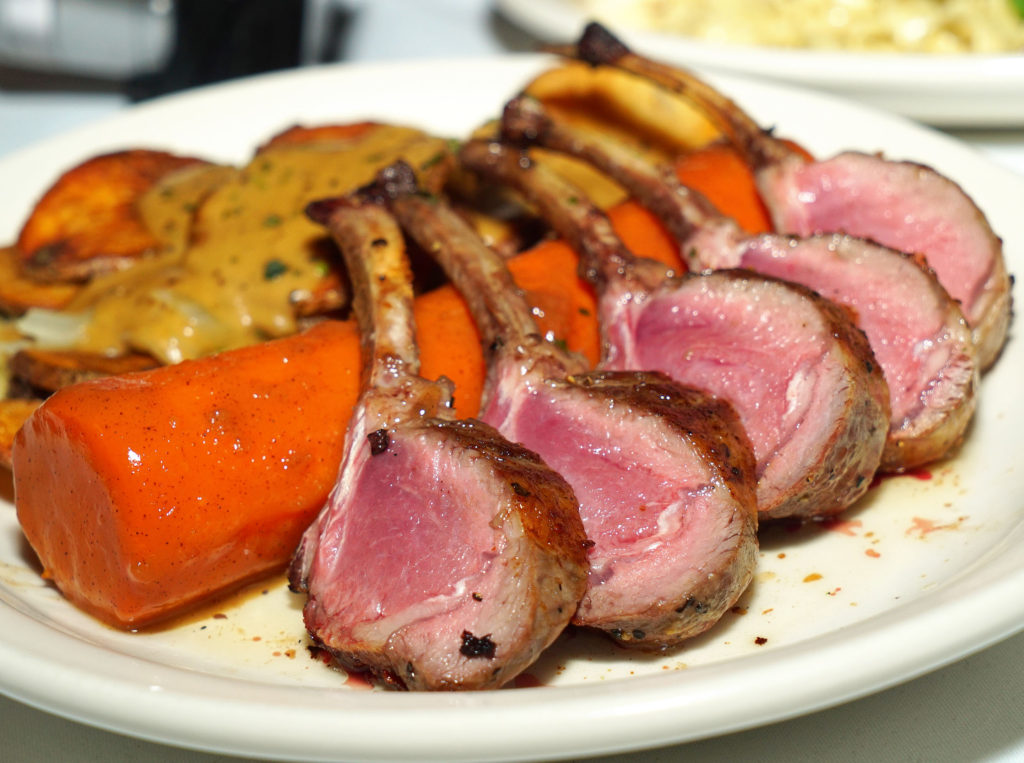
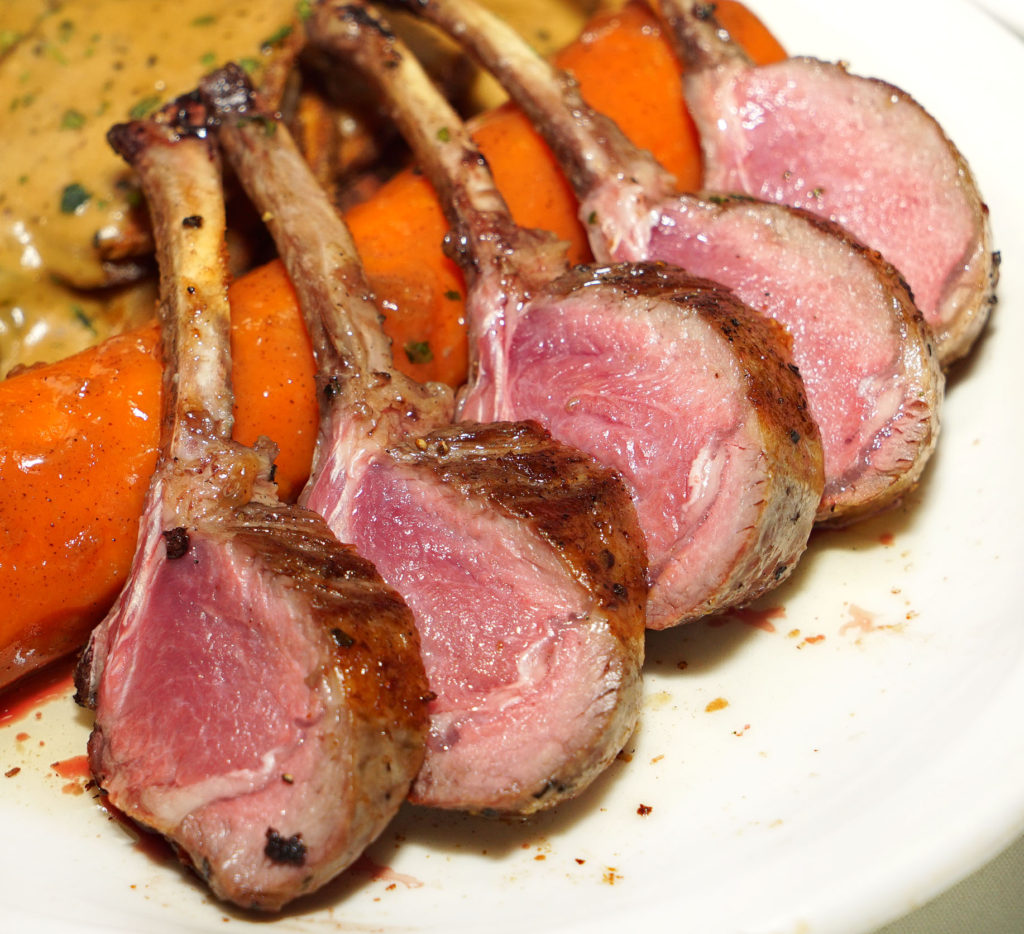
We had two beef items and lamb. I’ll focus on the beef here and discuss the lamb later.
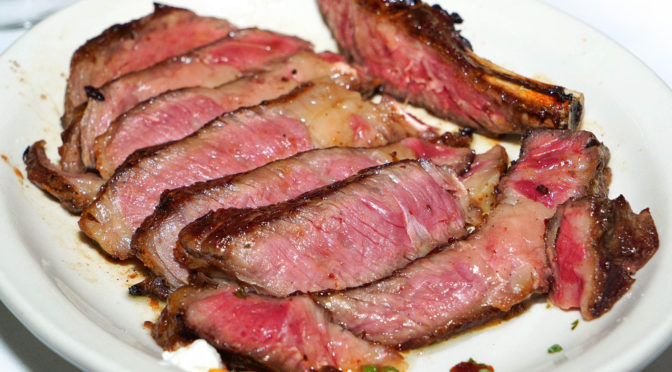
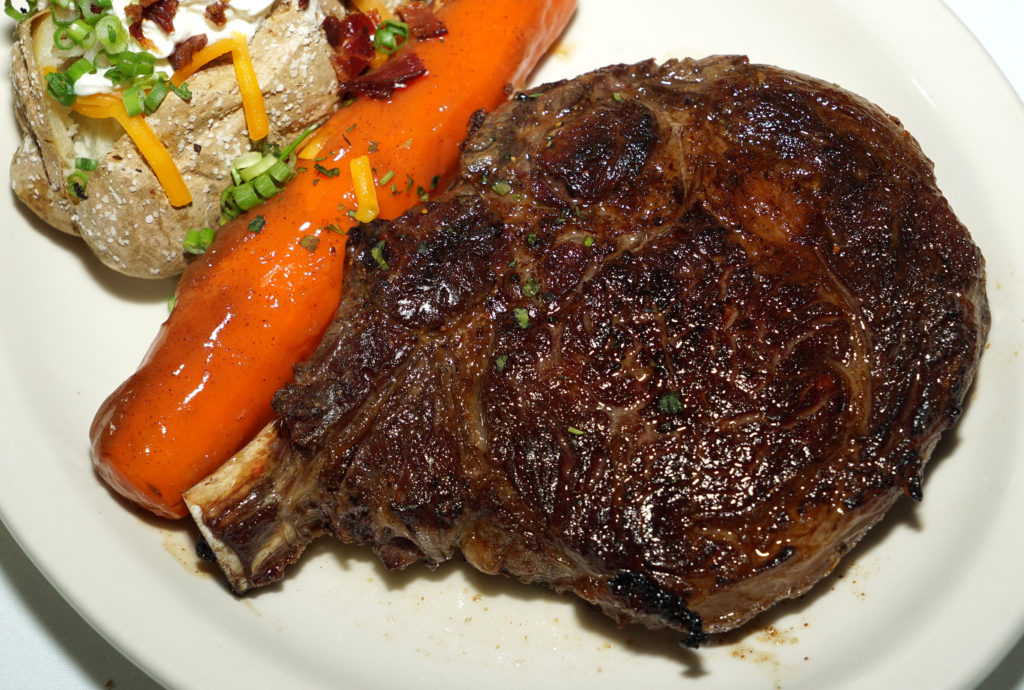
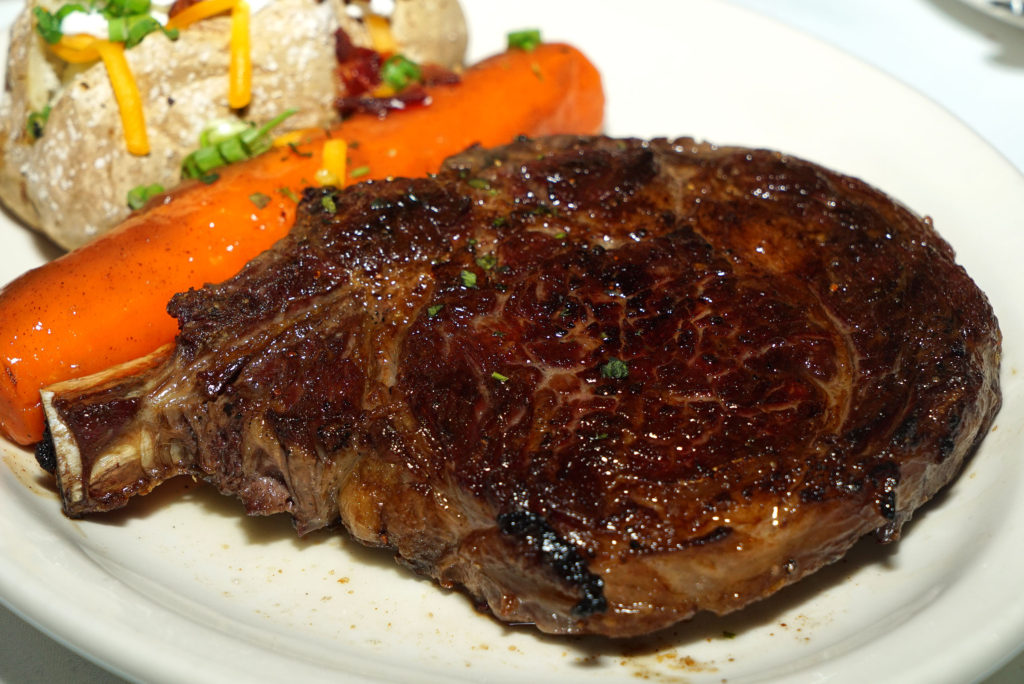
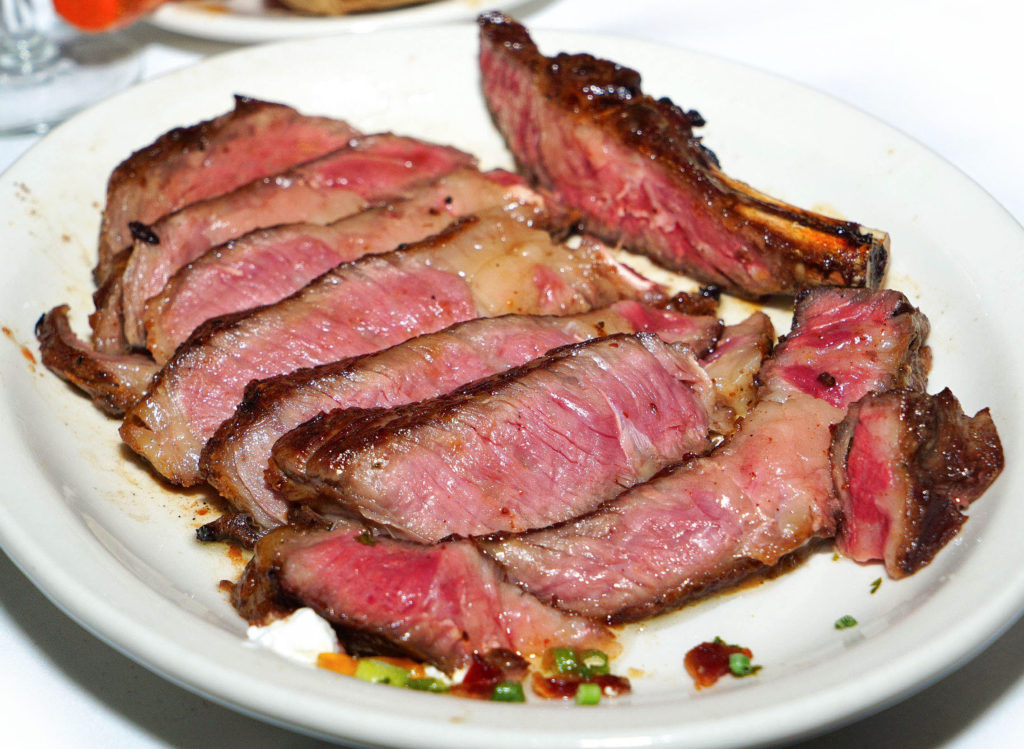
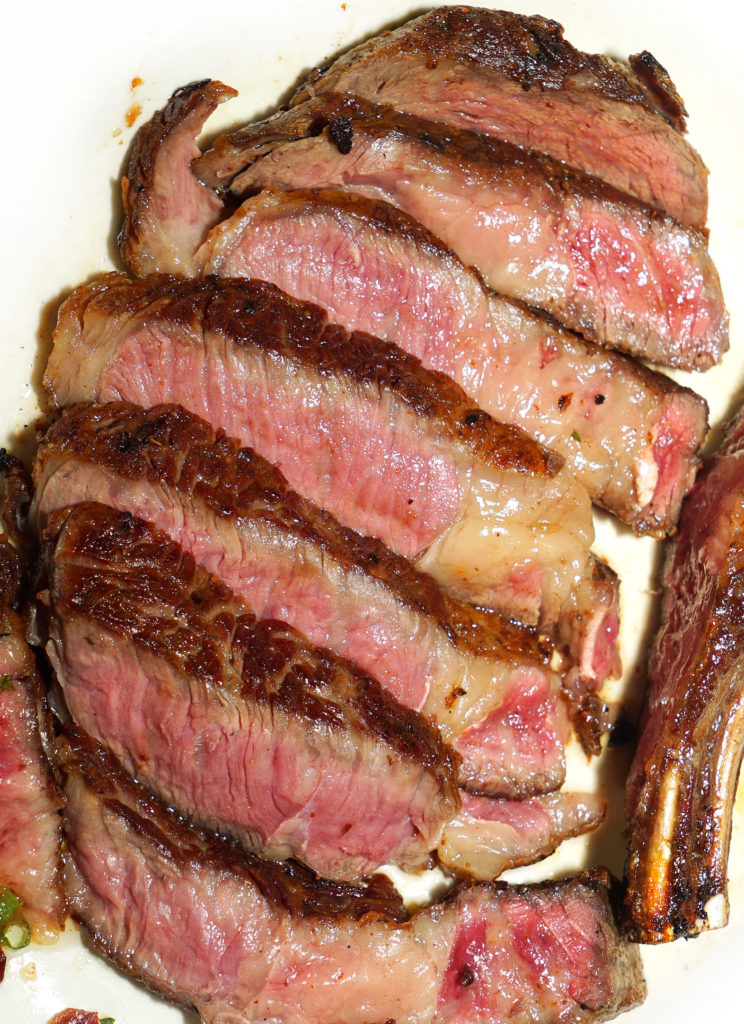
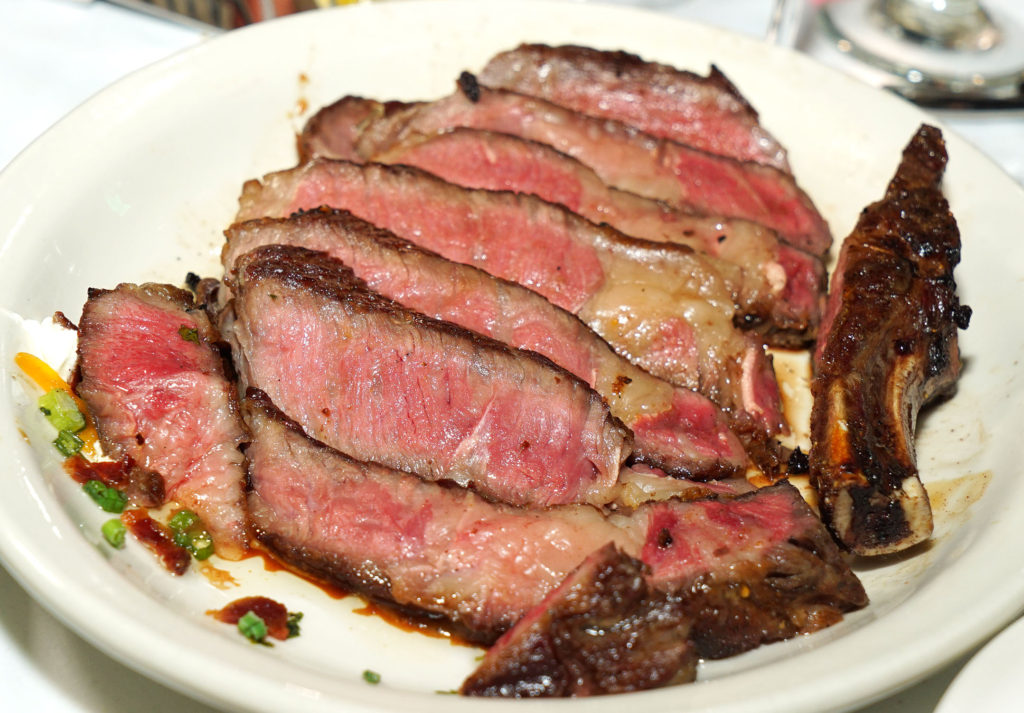
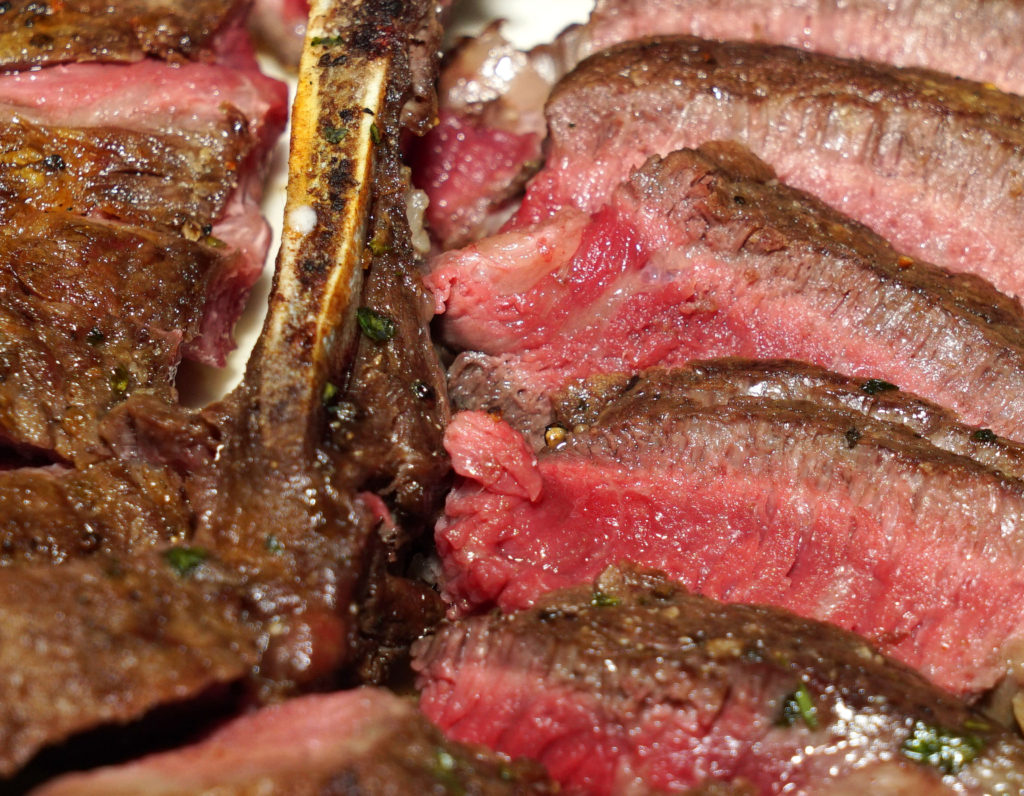
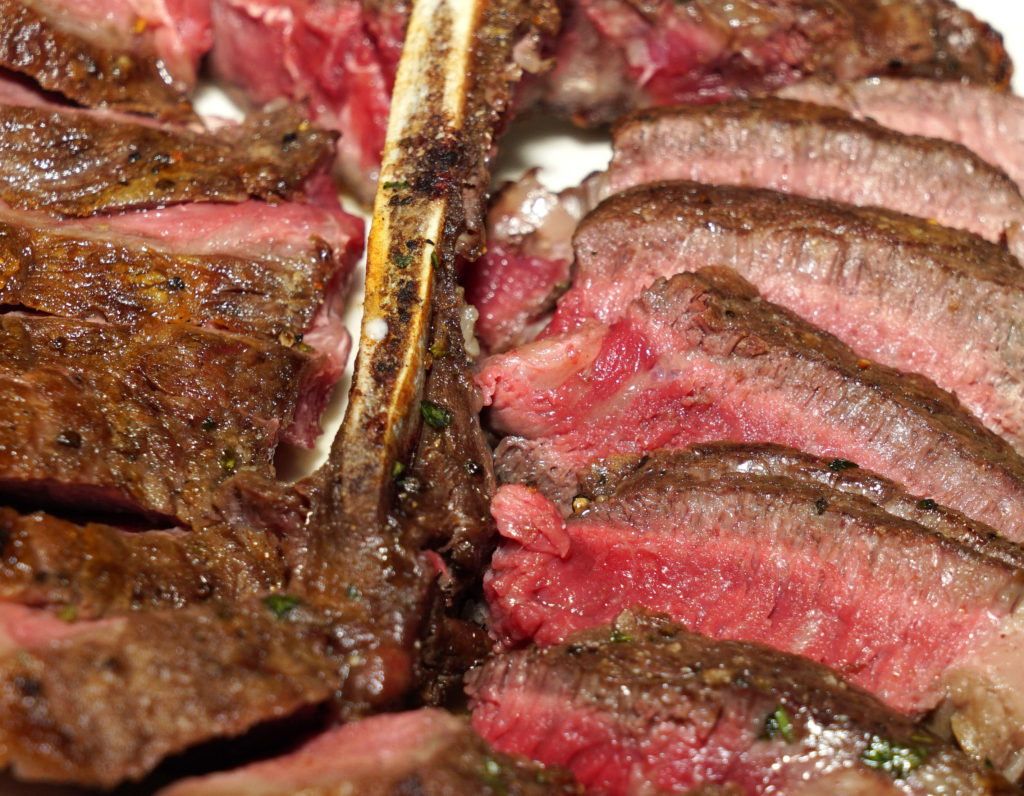
The 22oz cote de boeuf rib eye was the better of the two steaks we had. It was cooked perfectly to medium rare, with a nice crust on the outside that was packed with good, simple seasoning. 9/10.
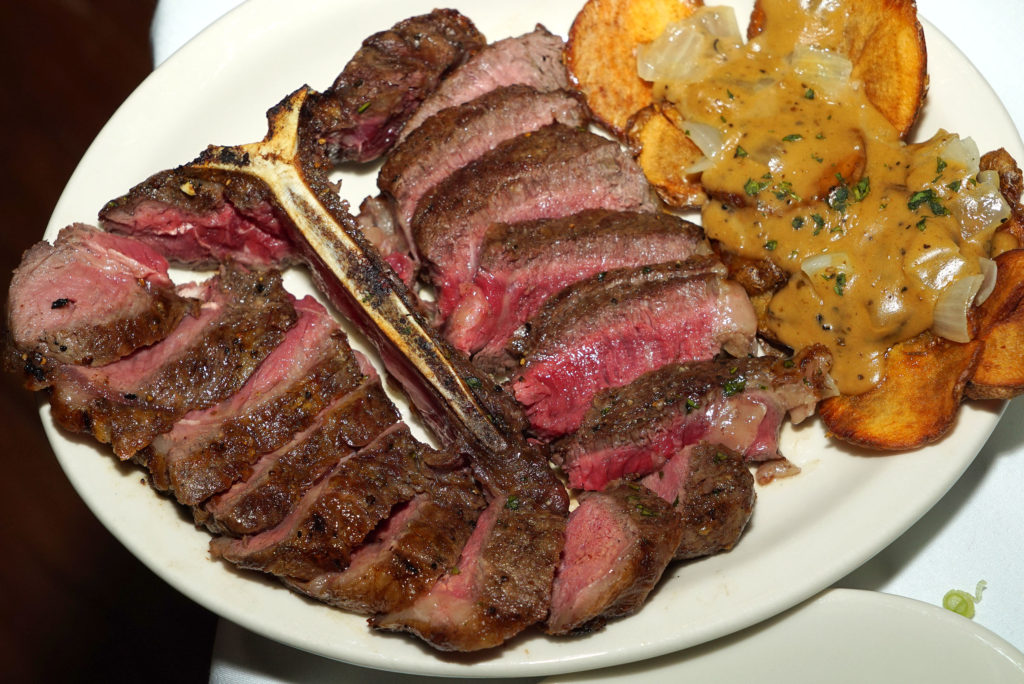
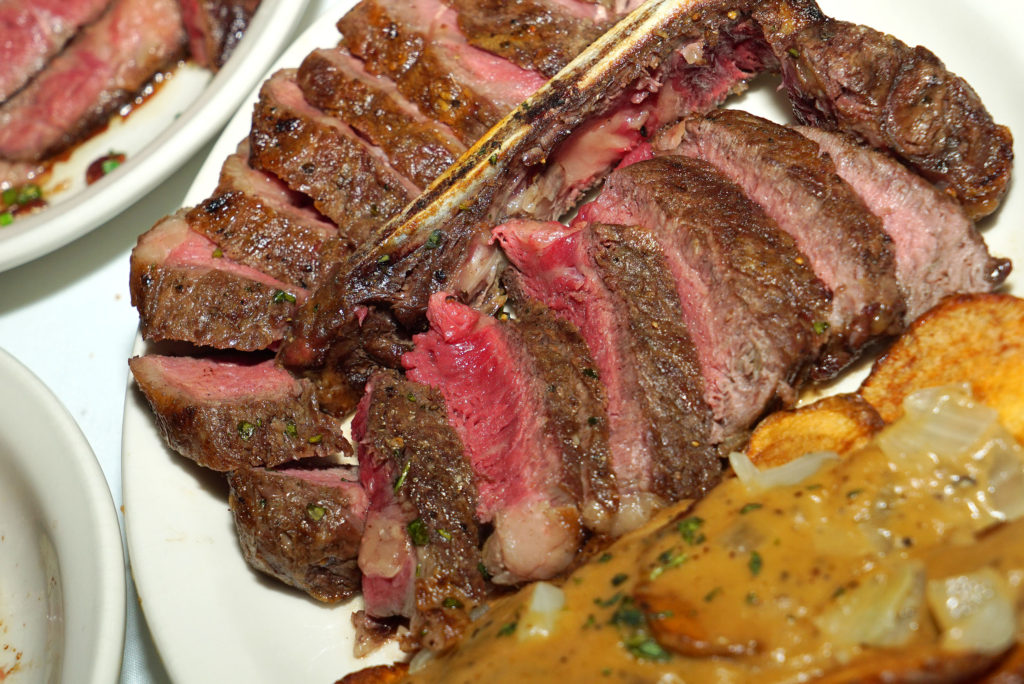
The 28oz porterhouse had a slightly different flavor profile to it that I wasn’t really feeling. It was still good – don’t get me wrong – but going back and forth with the rib eye created a stark and noticeable difference. 7/10.
Choice of Cuts & Quality Available: 9
There’s a lot of variety here. Three different sized rib eyes, filets and strips, and a t-bone as well as a porterhouse. Excellent showing. All the cuts are wet-aged for 28 days, so the flavor is a bit different than the standard dry aged cuts at many NYC joints.
Portion Size & Plating: 8
Portions here run slightly small for the steaks in relation to the pricing. The cuts themselves are good sizes, though, and so are teh other items like sides and apps.
Price: 7
My meal was comped, as I was here for an influencer gig to promote the restaurant. The prices, however, are a bit high for the sizes, with a 22oz “cote de boeuf” being $62 and prime porterhouse being $75. Luckily the quality is pretty much on point.
Bar: 9
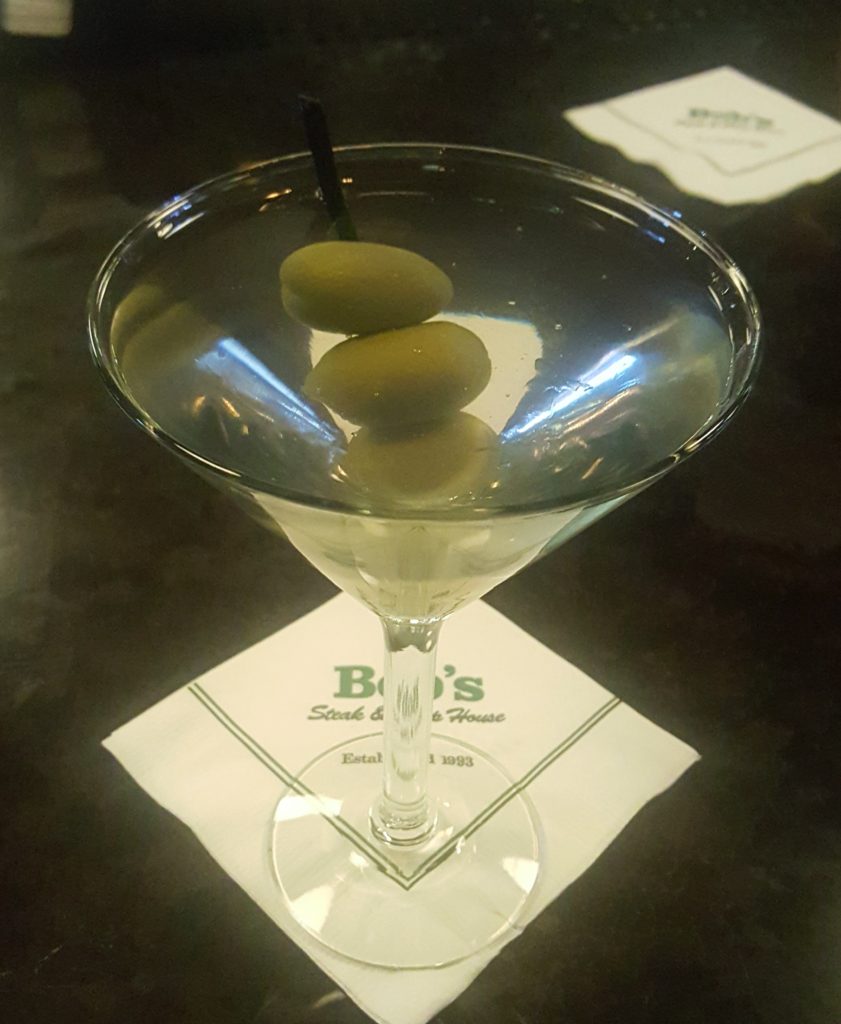
The bar is great. It’s a big rectangle with a bunch of high top tables situated along the windows that look out onto 52nd Street. Definitely a spot you can hang at for a bit. They also mix a good martini with blue cheese stuffed olives. Hendricks is $16, which is very fair in my opinion.
Specials and Other Meats: 10
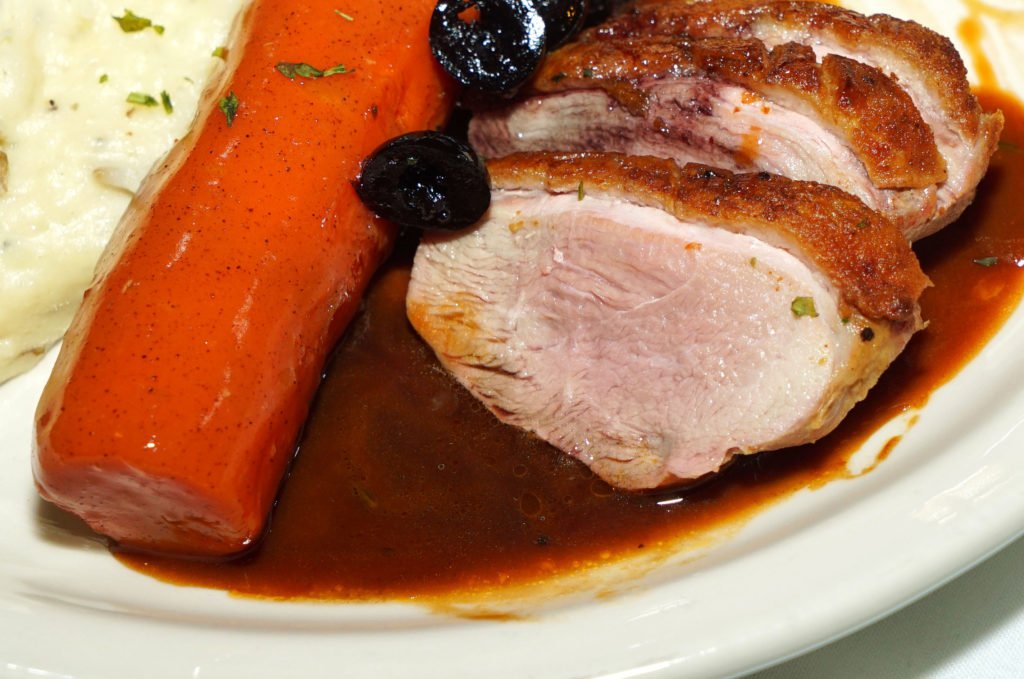
This joint has a solid variety of other non-beef meats. They offer lamb, duck, pork, and veal (the other white beef). Fuck chicken. We tried both the lamb and the duck, and both really stood out as exemplary menu items that are totally worth trying. These would even be great as appetizers to share with the table.
Apps, Sides & Desserts: 9
We tried a lot of shit, and if I go deep into each with descriptions, this will be a long fucking review. So let me just rattle them off and highlight a little here and there.
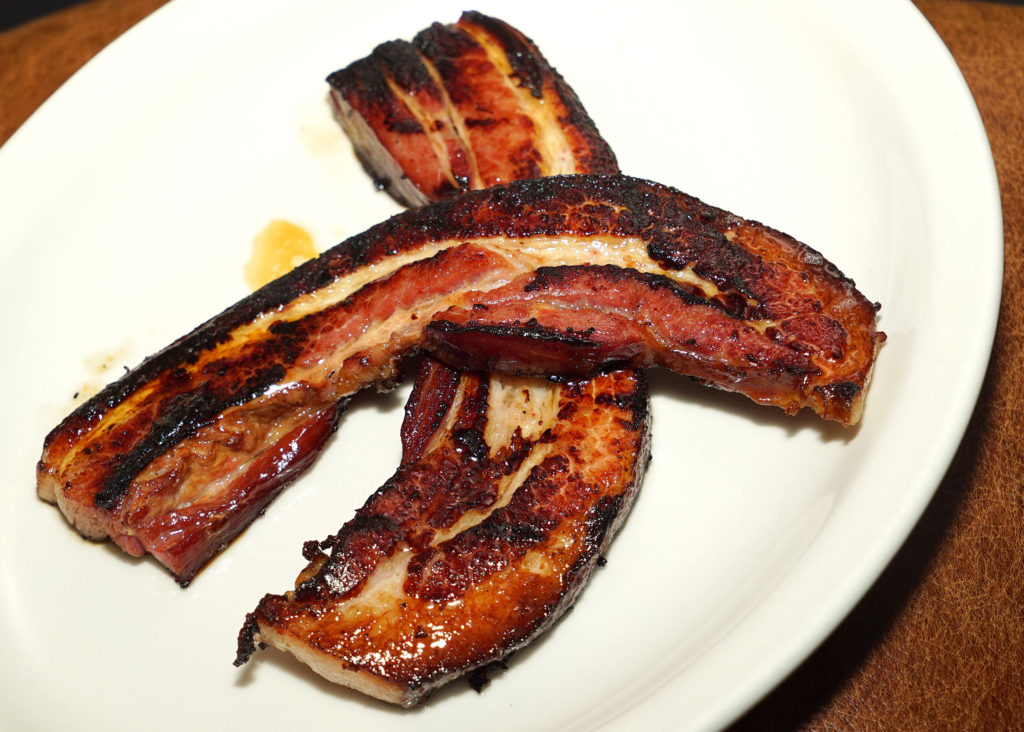
Bacon: (thick cut slabs of Neuskes – outstanding):
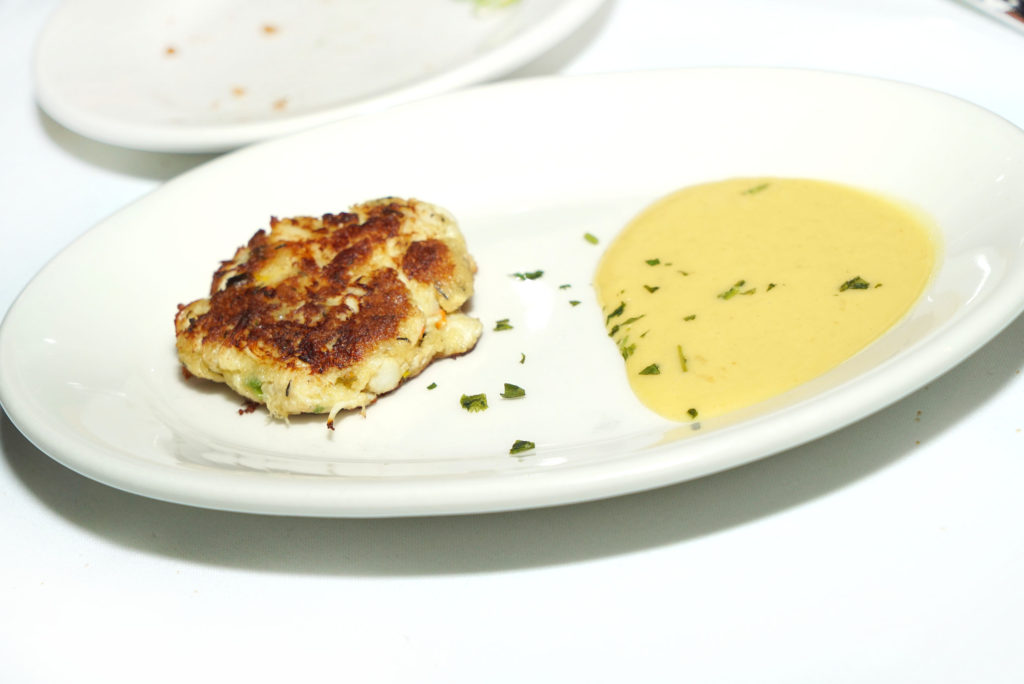
Crab cake (great honey mustard sauce):
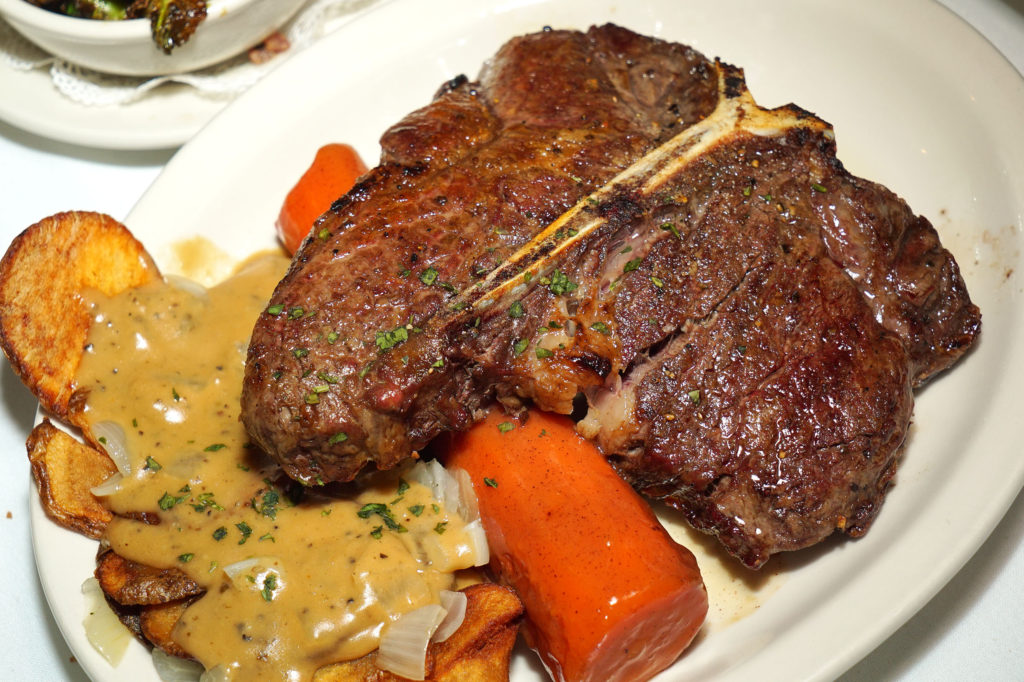
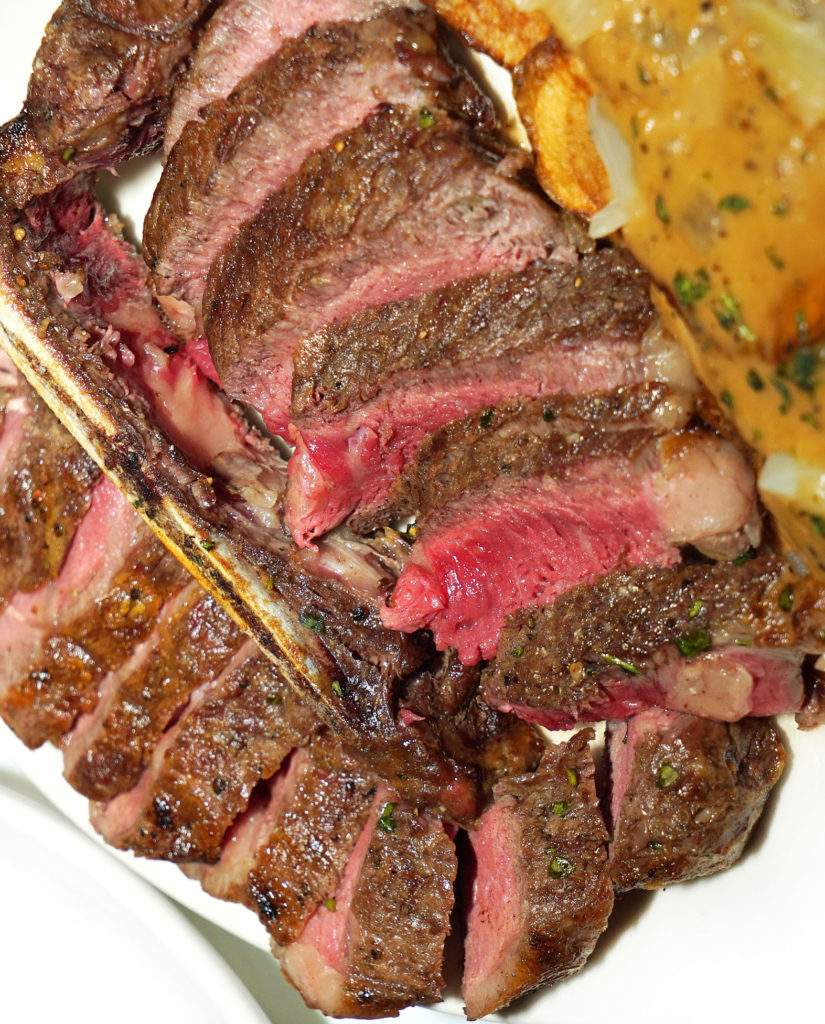
Potatoes (these were incredible – you can see them on the bottom right side of the steak here, sliced like thick potato chips, baked to a crisp, and covered with cheese sauce and onions):
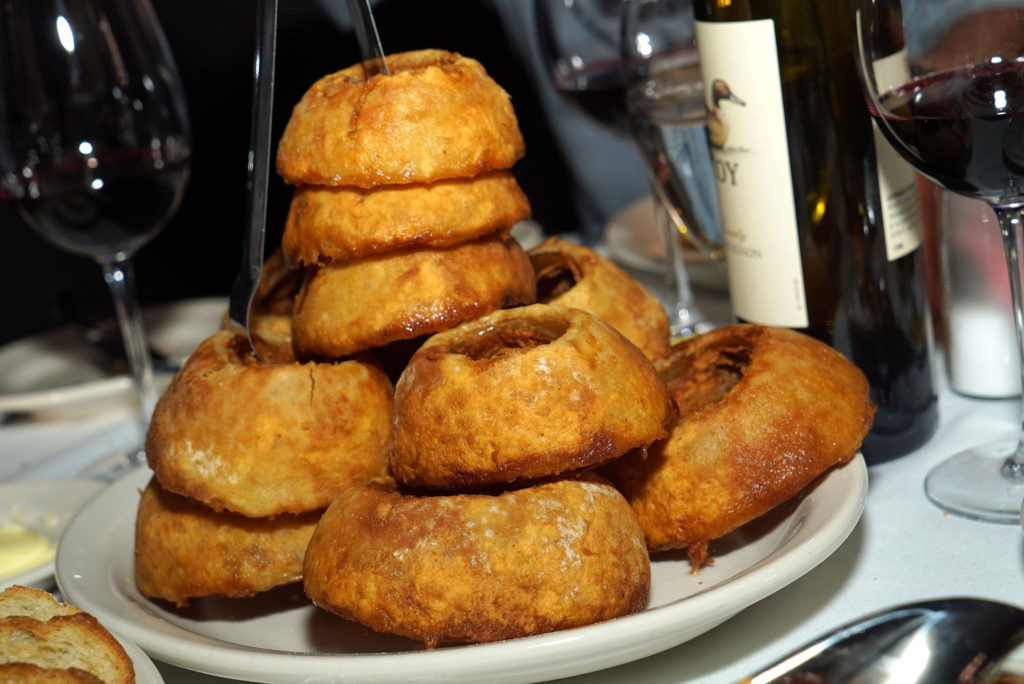
Onion rings (amazing stack and perfectly cooked):
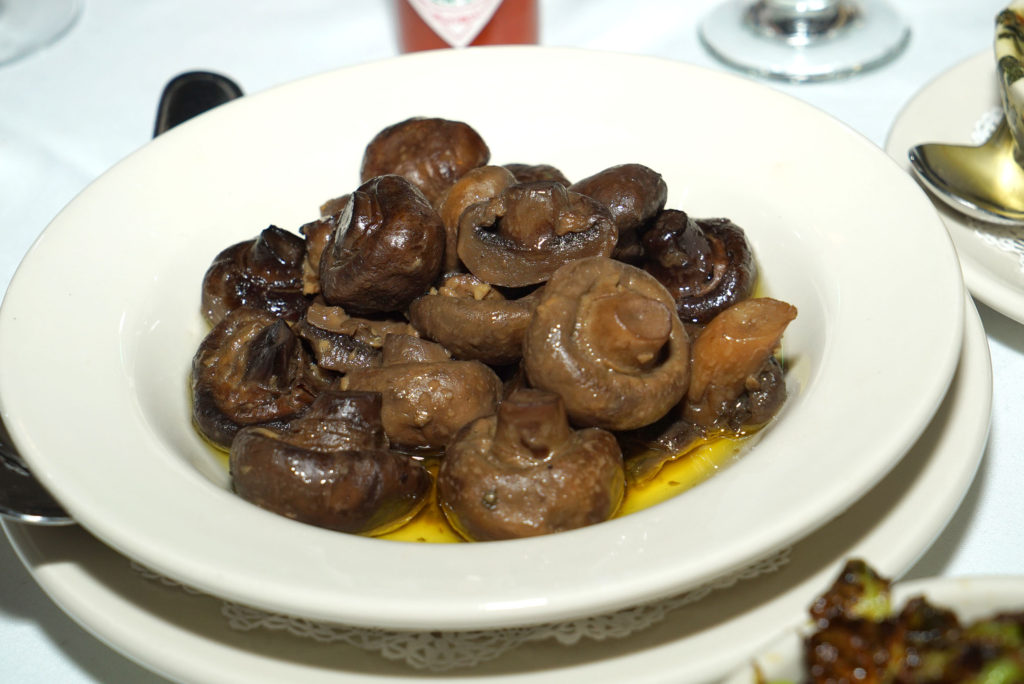
Mushrooms:
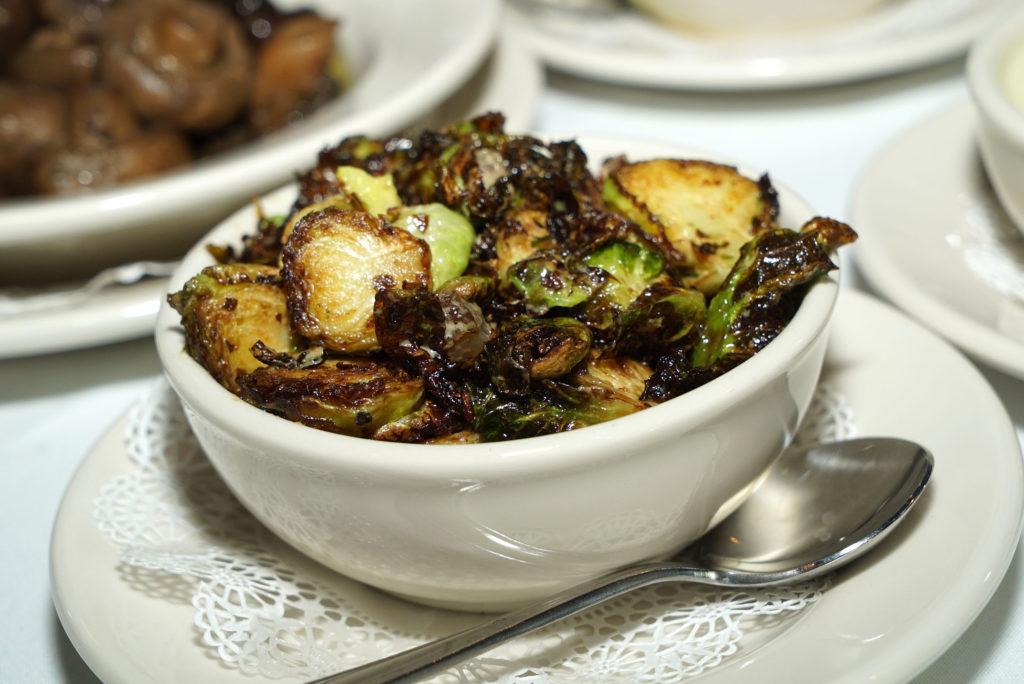
Roasted Brussels (because you need a little green sometimes):
Creamed Corn: I didn’t get a pic but it was excellent.
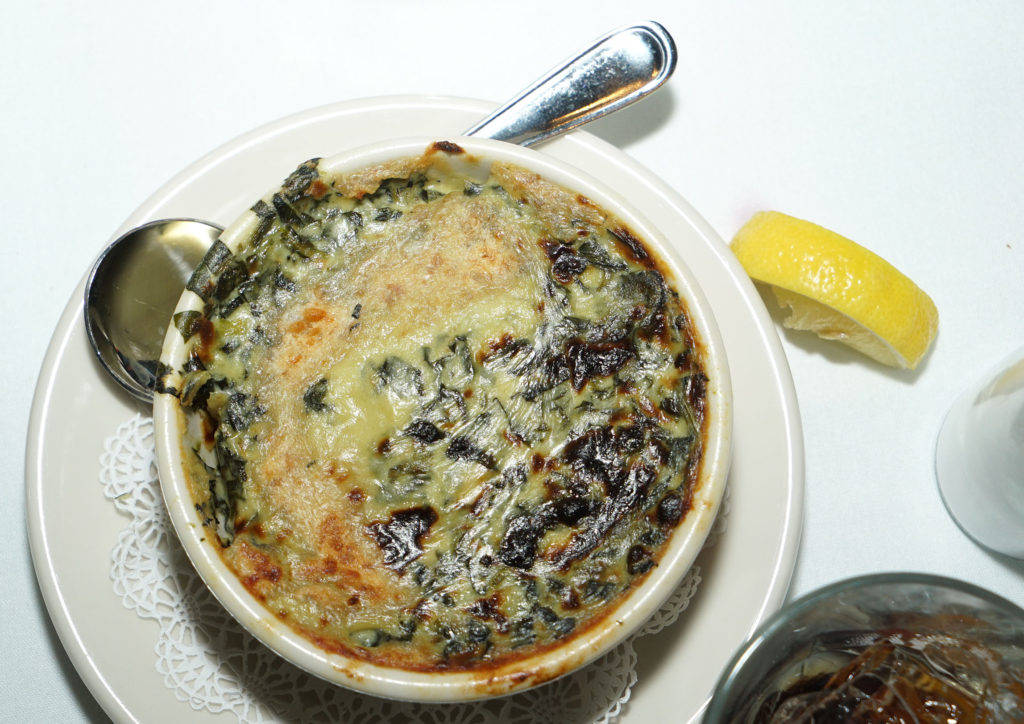
Creamed Spinach:
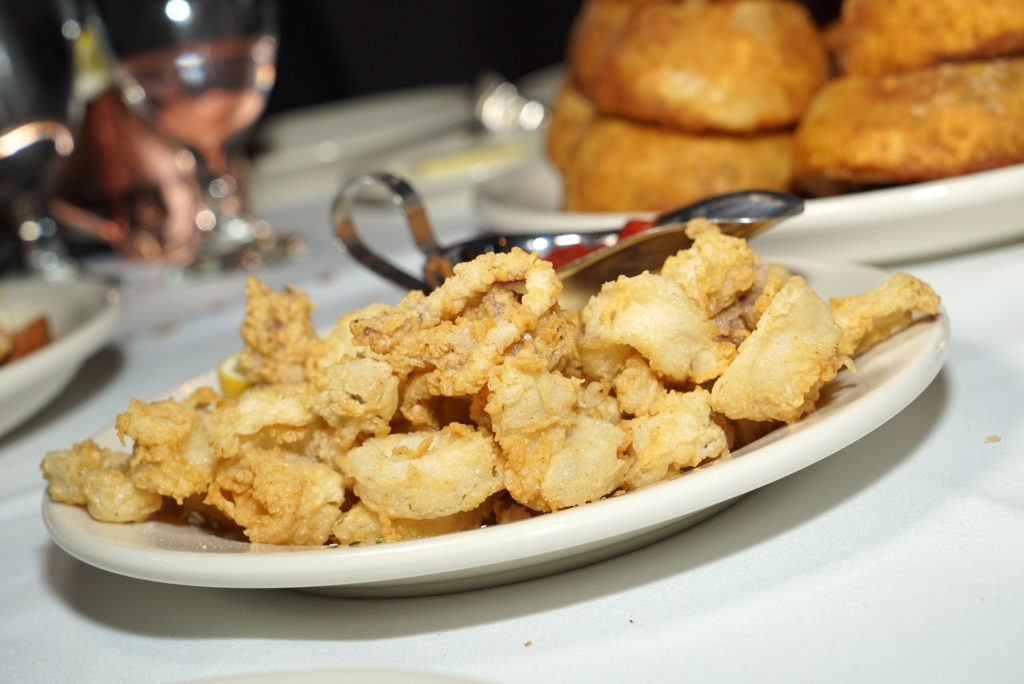
Fried Calamari (great crispy batter):
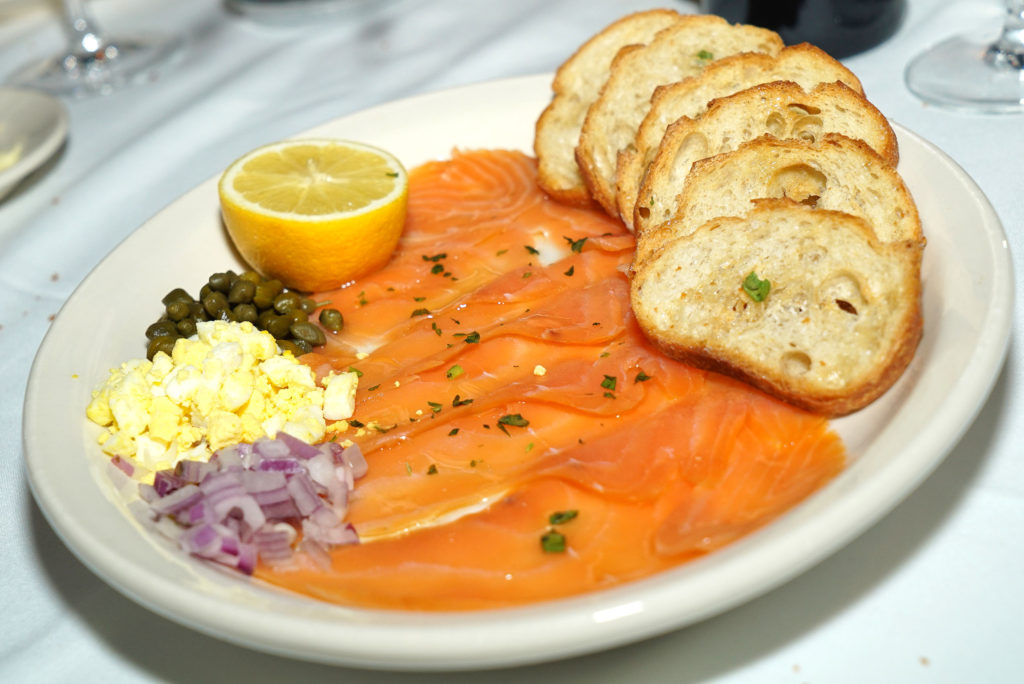
Smoked Salmon (the prosciutto of the fish genre – excellent):
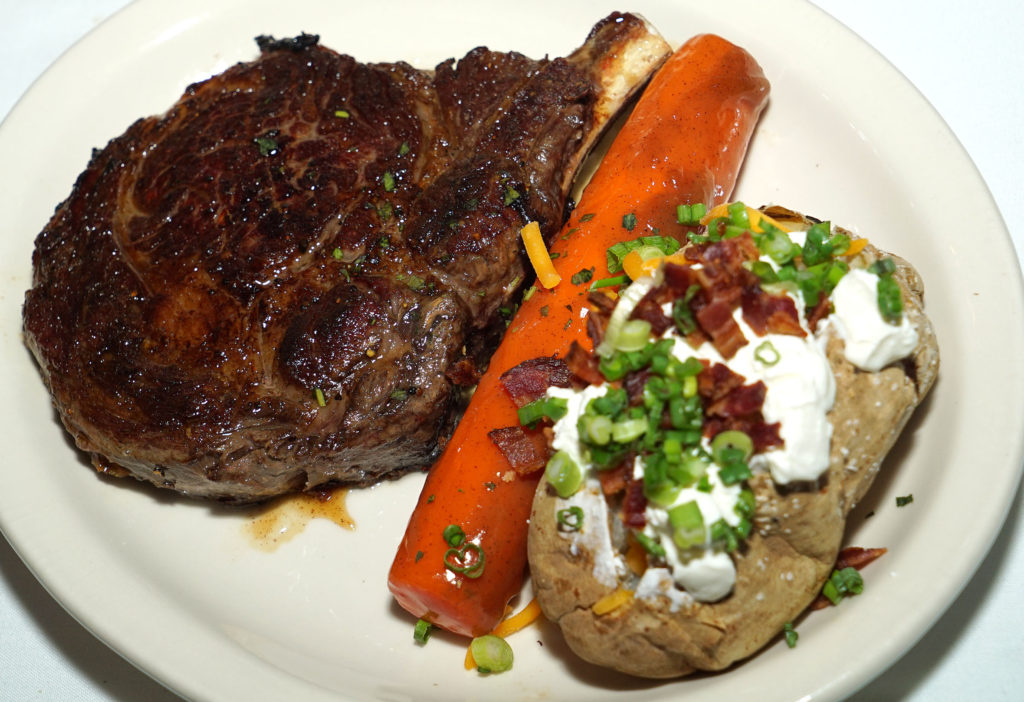
Baked Potato & Carrot: See pics of the composed dishes above. The thick, long, and obviously phallic carrot is prominently placed on each plate, it seems, like the raging boner that hides within Donald Trump’s pants. You can just imagine the jokes that went around the table with that.
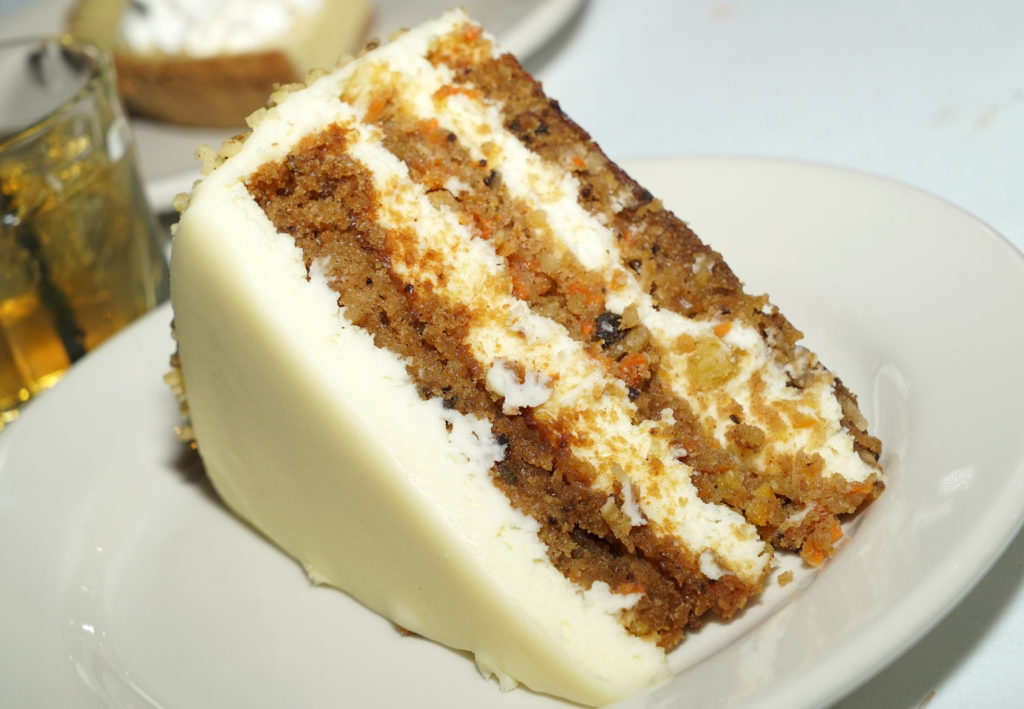
Carrot Cake (very moist and tasty):
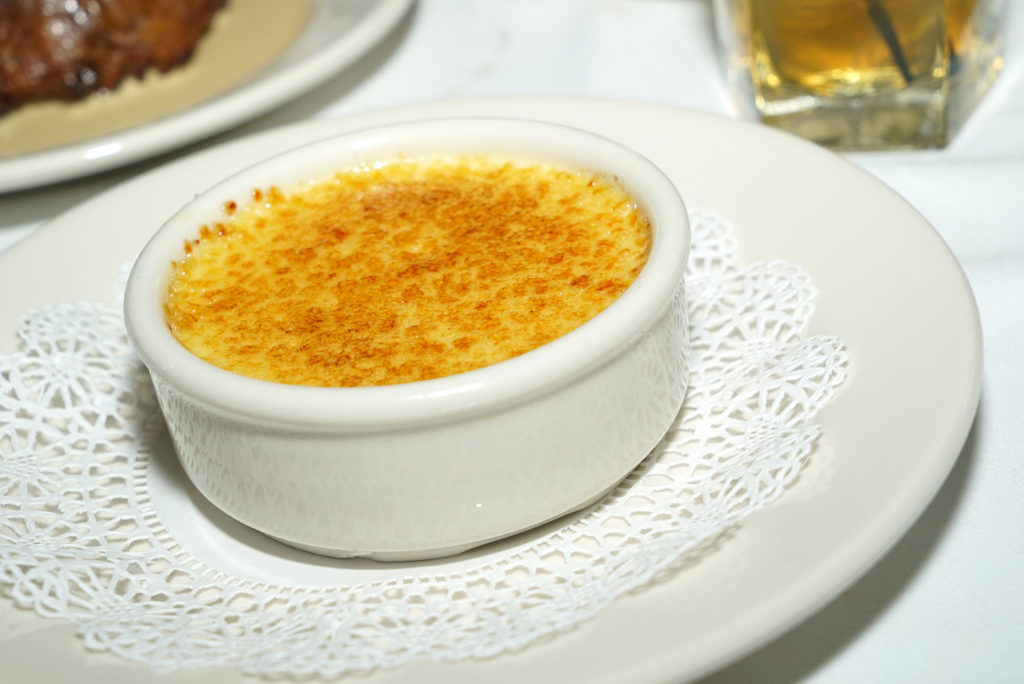
Creme Brûlée (perfect execution):
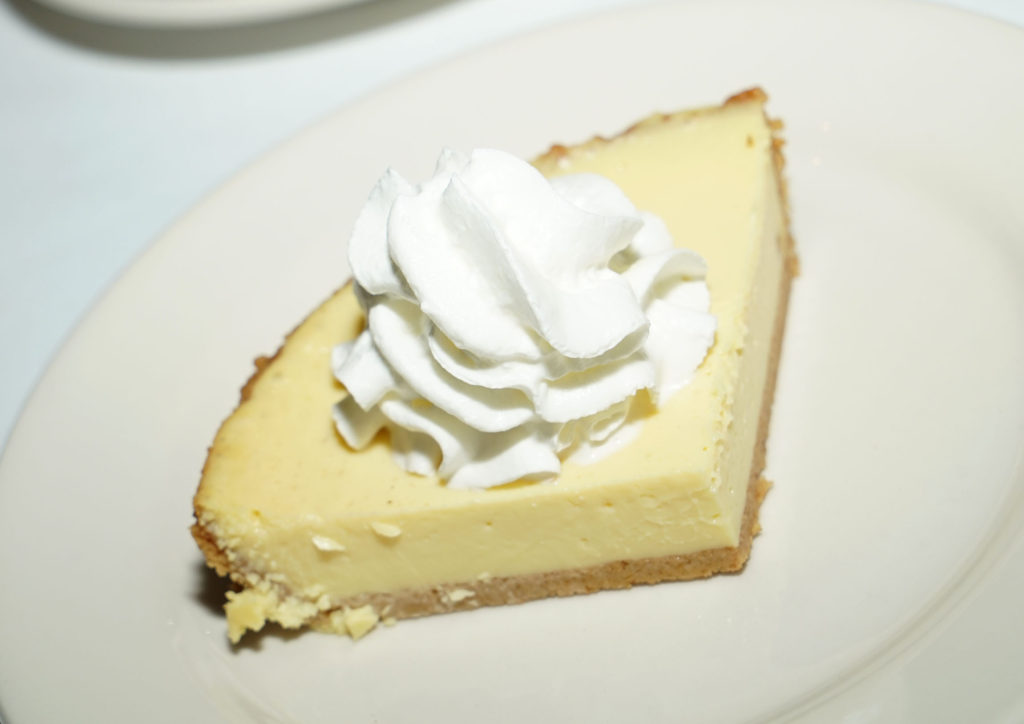
Key Lime Pie:
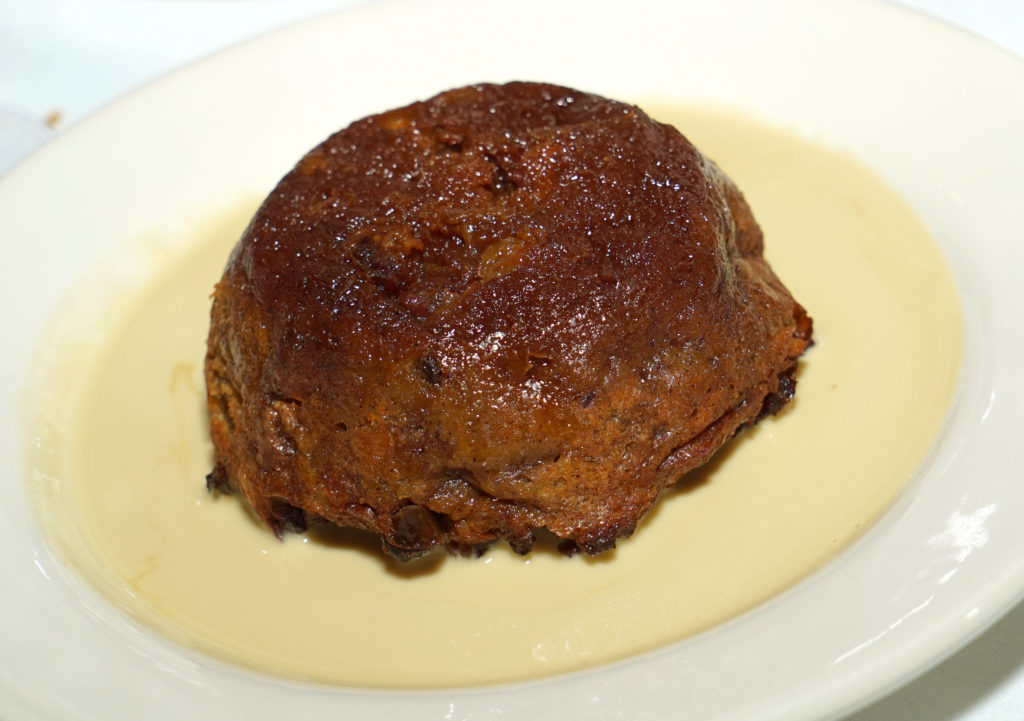
Bread Pudding:
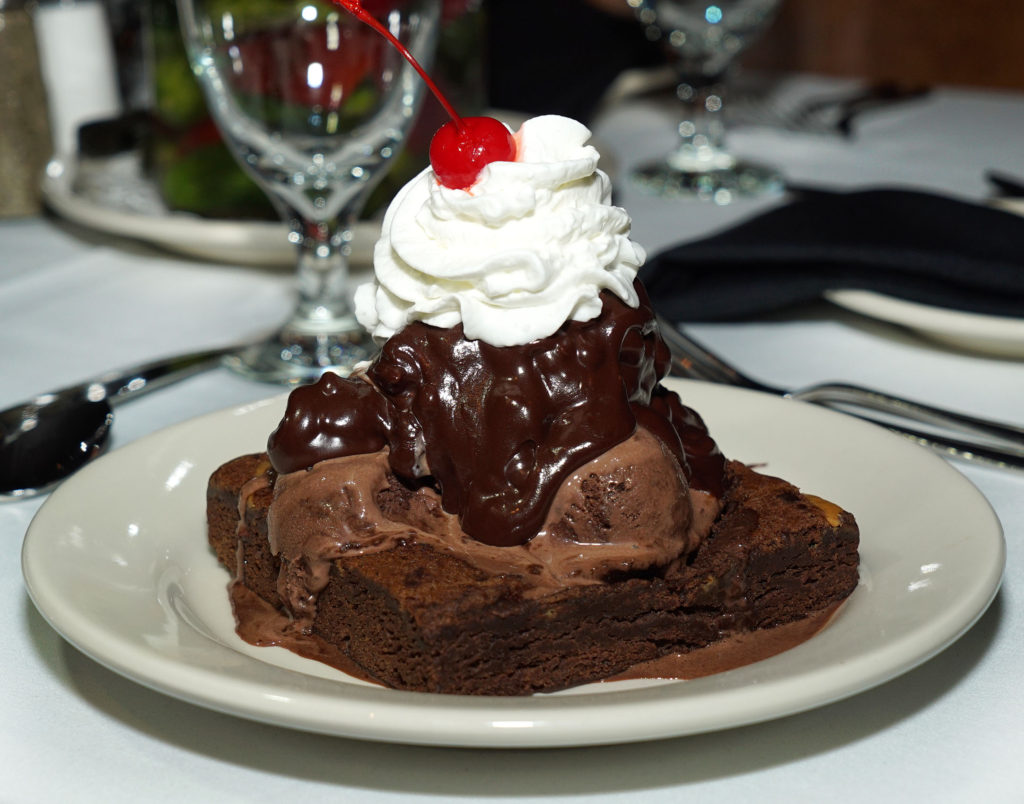
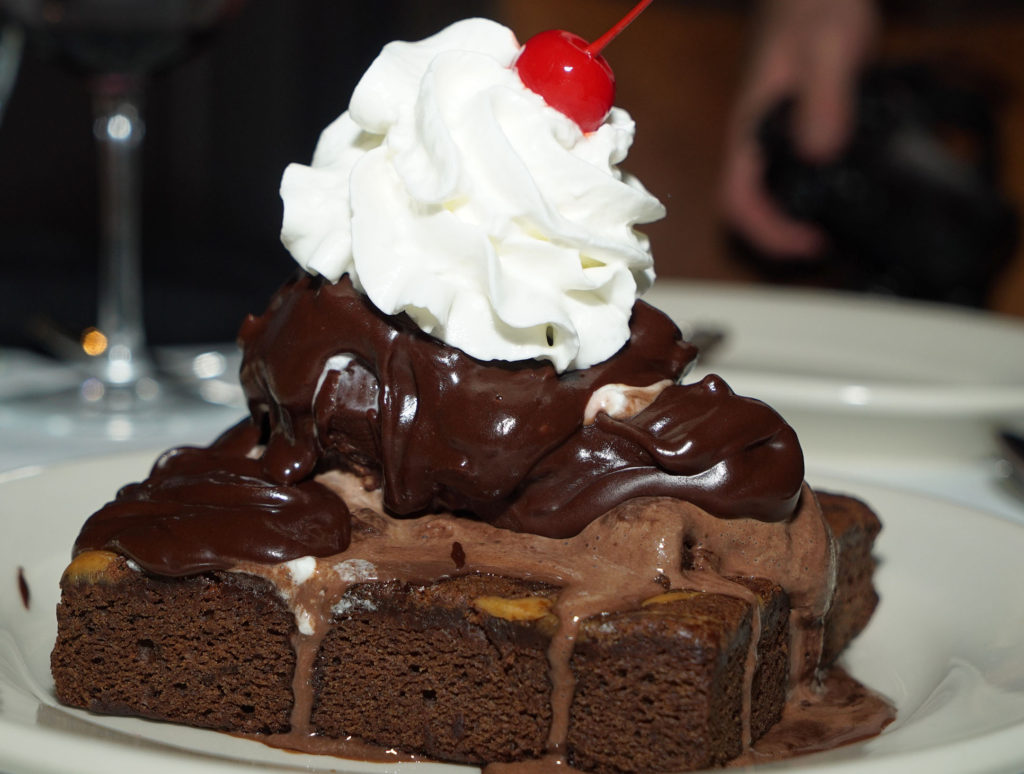
Chocolate Brownie Cake:
Seafood Selection: 9
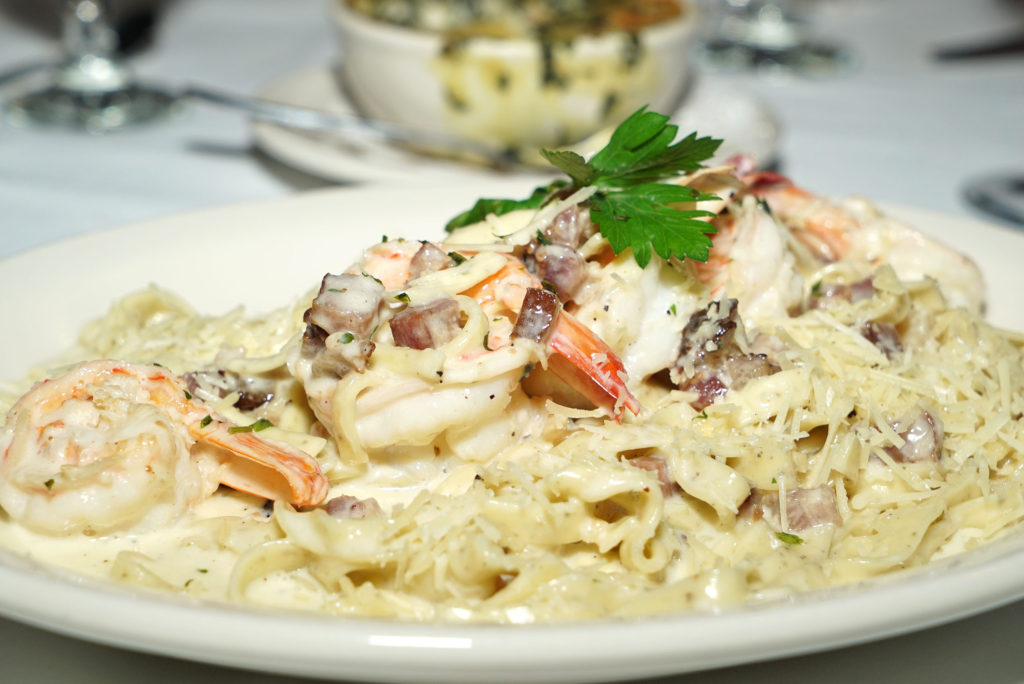
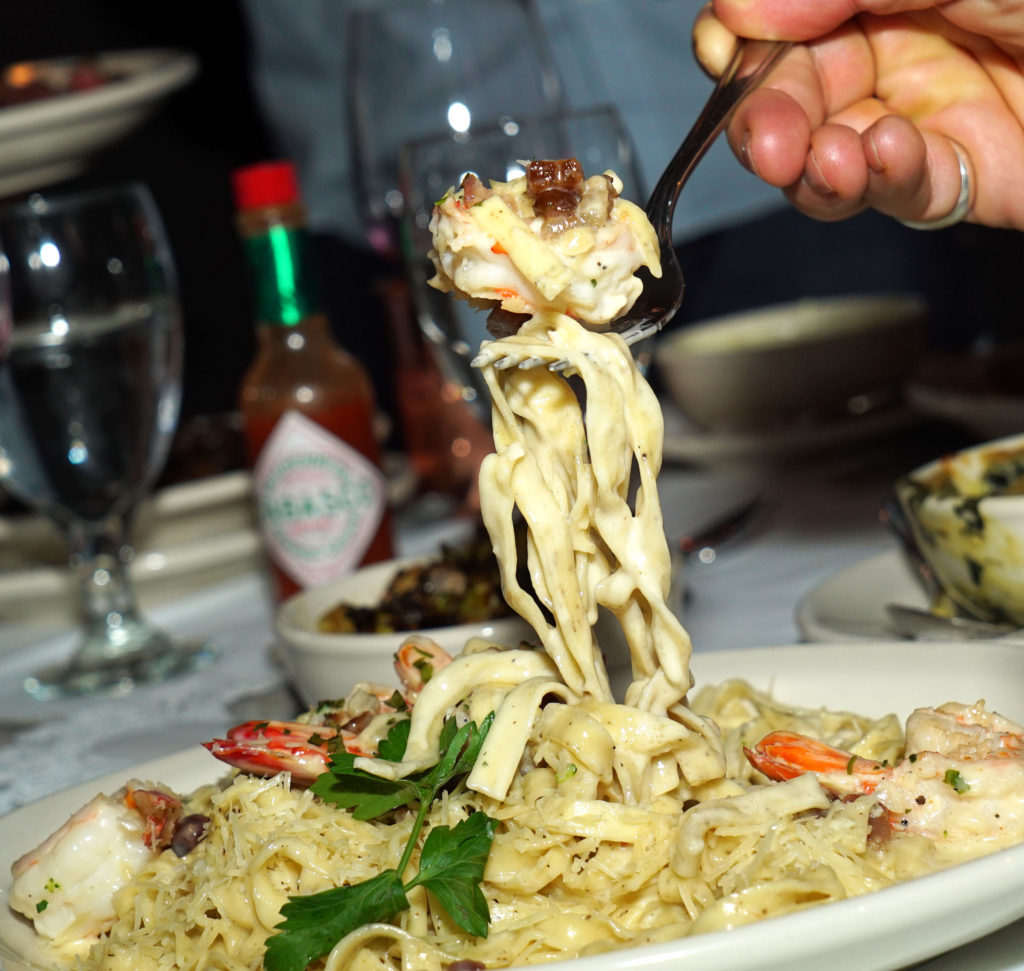
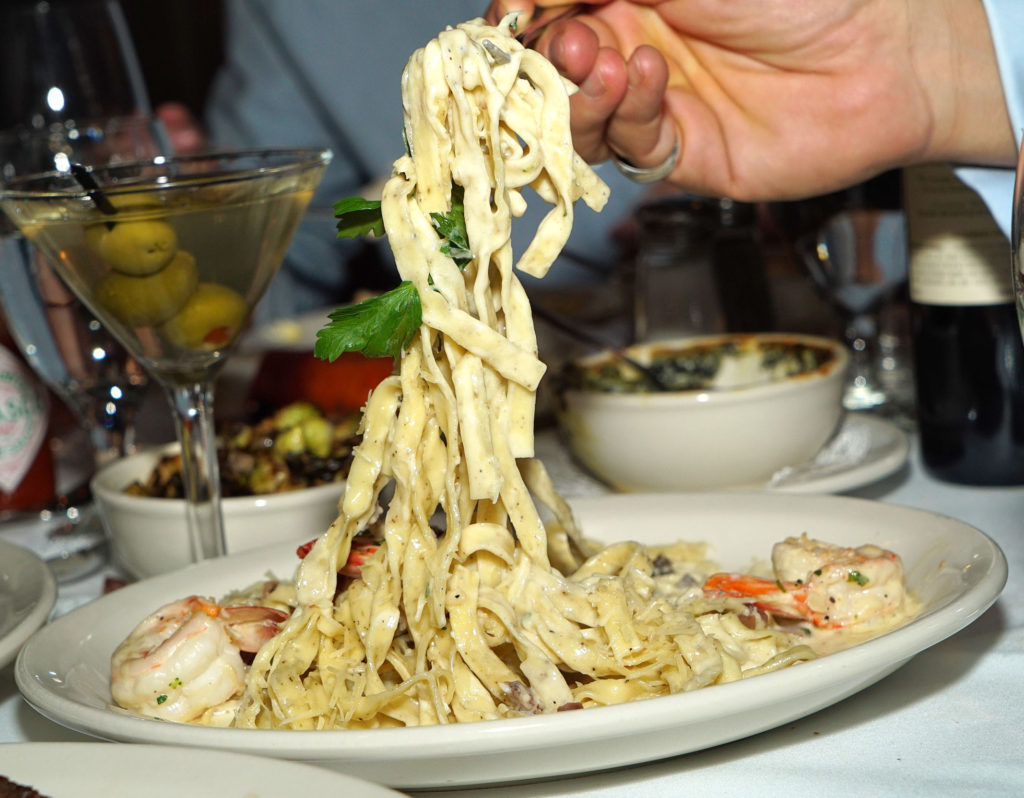
There’s salmon, shrimp (scampi or fried jumbos), crab cakes (entree portion), lobster tails and fresh fish of the day available. Not a whole lot, but it certainly will get the job done for the assholes who aren’t ordering meat. In fact, we ordered the shrimp scampi with black pepper pasta, and it was fantastic.
I kept going back in for more and more, bite after bite.
Service: 10
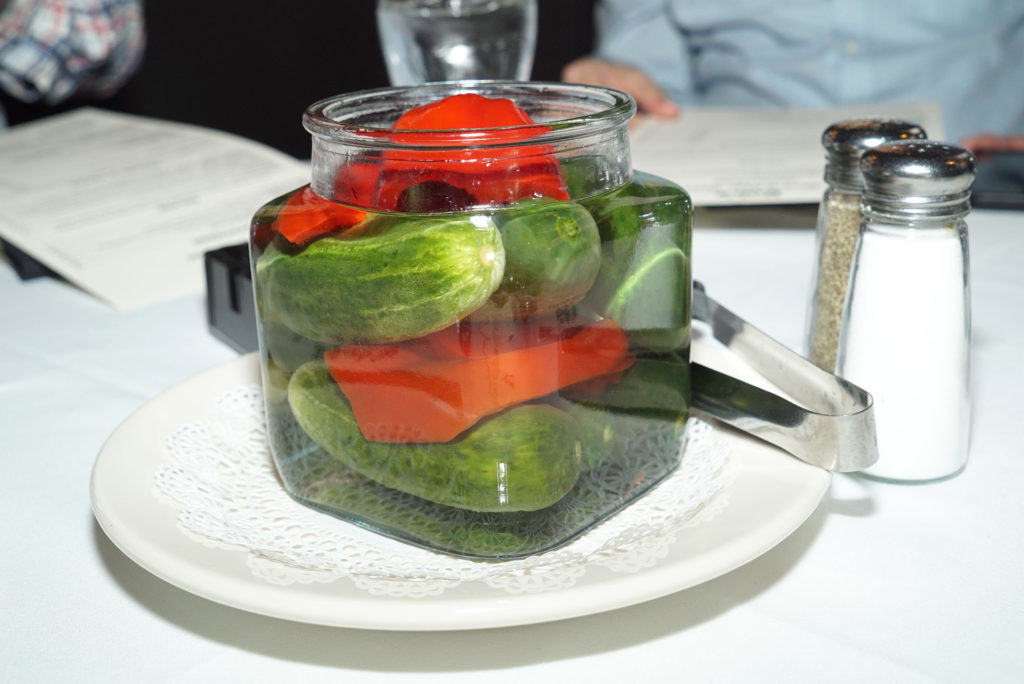
Impeccable. Everyone here is amazing and attentive. They know their menu well, and make excellent suggestions. Worth mentioning here is the amazing jar of pickles and peppers that comes out to every table. Careful or you might fill up on this instead of steak!
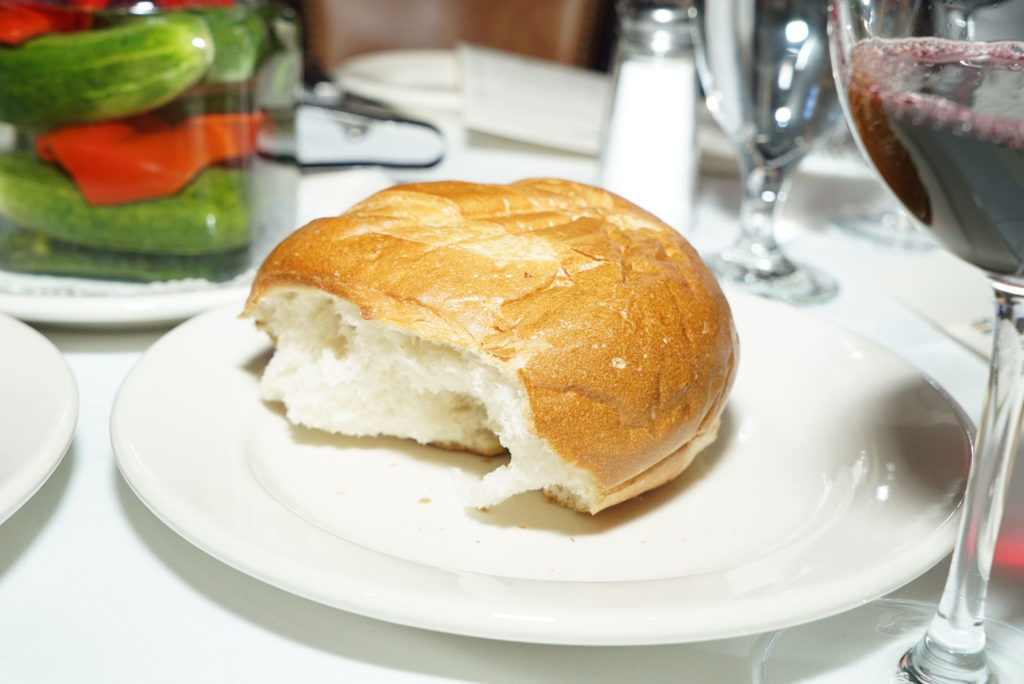
The table bread was warm and flakey, like a large dinner roll.
Ambiance: 9
I like the large, open feel to this place. Finally, you can stretch out in Manhattan and not hit the back of someone’s head. Also the decor is beautiful with warm grey paneled walls and beautiful table settings.
BOB’s STEAK & CHOP HOUSE
21 East 52nd St
New York, NY 10022