Empire Steakhouse East overall score: 85
The Empire Steakhouse empire just opened a midtown east location.
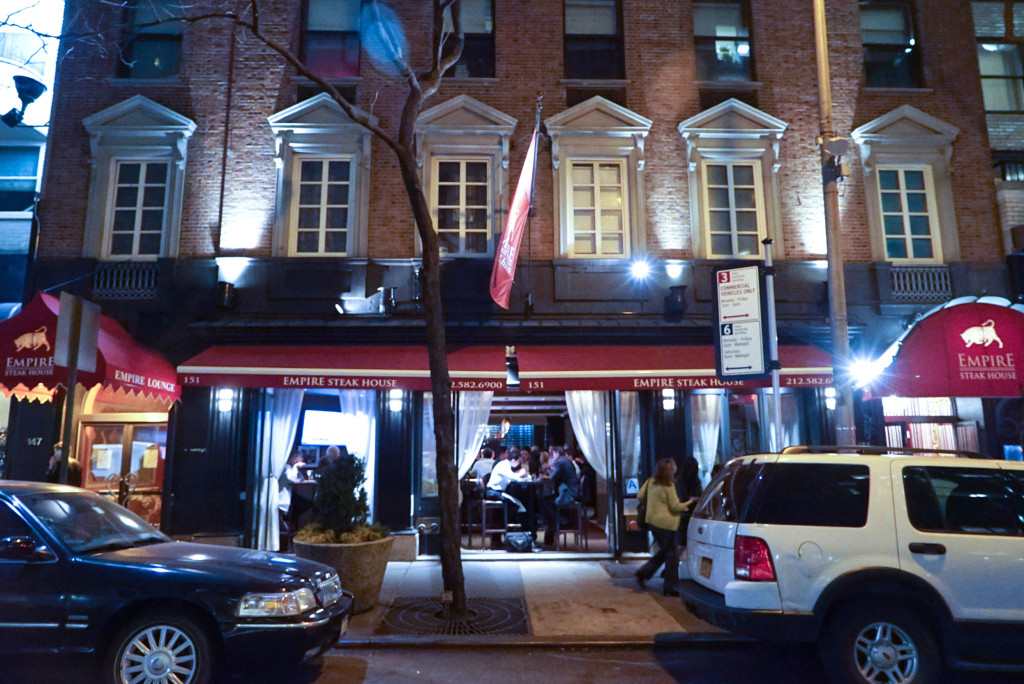
My friend Matt was asked in for a press meal and he graciously invited me to tag along. We were able to try a bunch of stuff with our group, so I will get right to it.
Flavor: 9
We tried two cuts: the tomahawk rib eye, and the “Emperor’s cut,” which is a T-bone steak from the rear portion of the animal that has a much larger tenderloin side. I’m not quite sure how this is different than a porterhouse, unless what they offer as a porterhouse is more accurately described as a T-bone, which generally has a smaller tenderloin side.
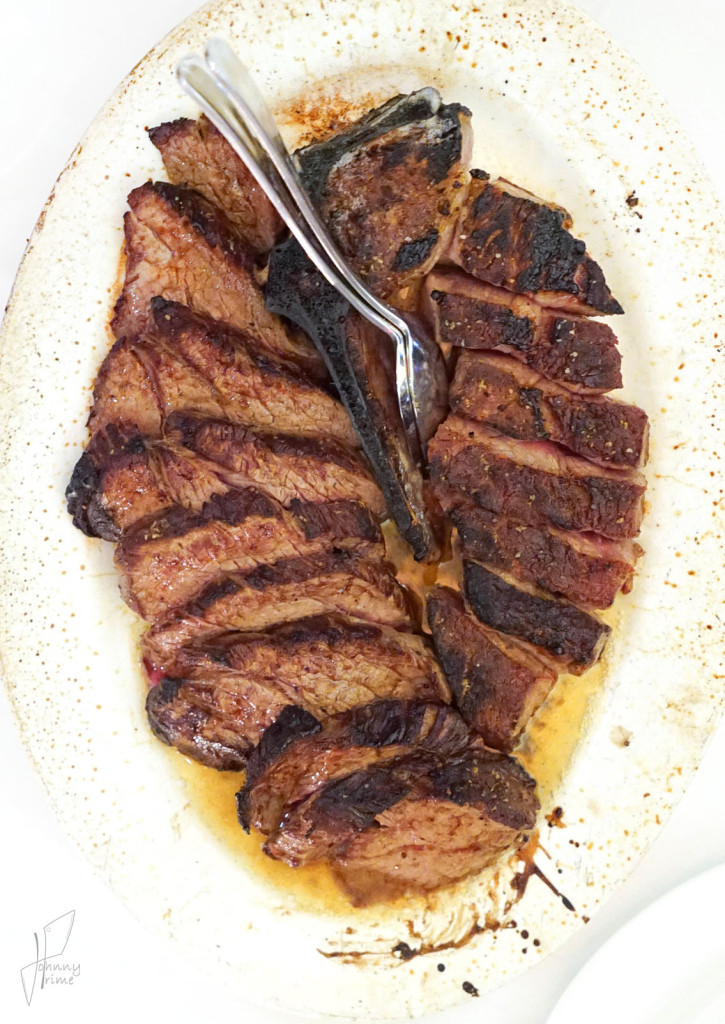
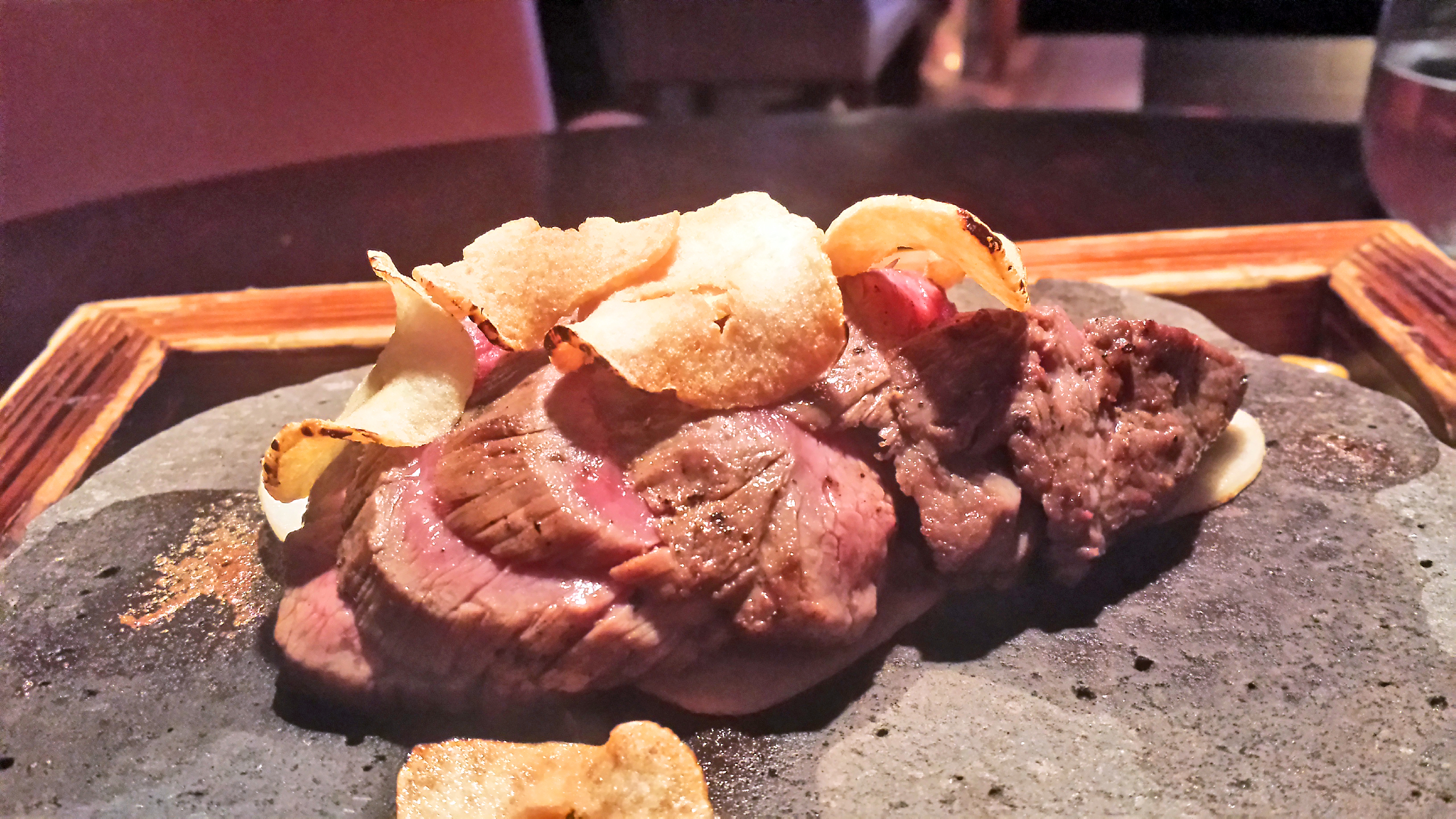
As you can see above, it looks a bit overcooked. With such a large hunk of beef, that is always a concern. Pair that with the hot plate presentation and some graying of meat is bound to happen. Much of the cut was fine, however, and the large tenderloin was very flavorful. The sirloin side was a little tougher, but this was a welcome texture change from the super soft tenderloin side. Flavors were very meaty, there was a great sear on the outside with a good crust, and the steak was well seasoned. In any case, I’ve decided to also include this cut on my porterhouse page even though it is also on the “other cuts” page as a T-bone. I feel like some diners may expect this was a porterhouse. I do, however, think the price tag on it is a bit hefty when compared to their porterhouse for two. I’m curious about the porterhouse and why it is so much cheaper that this cut. Is the porterhouse on the menu actually a T-Bone, which would mean that the emperor cut is actually the true porterhouse? 8/10.
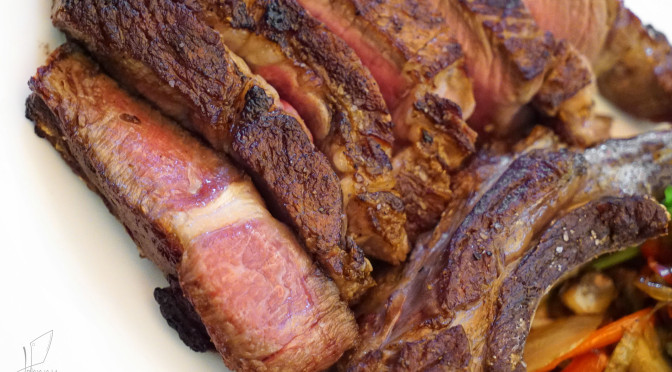
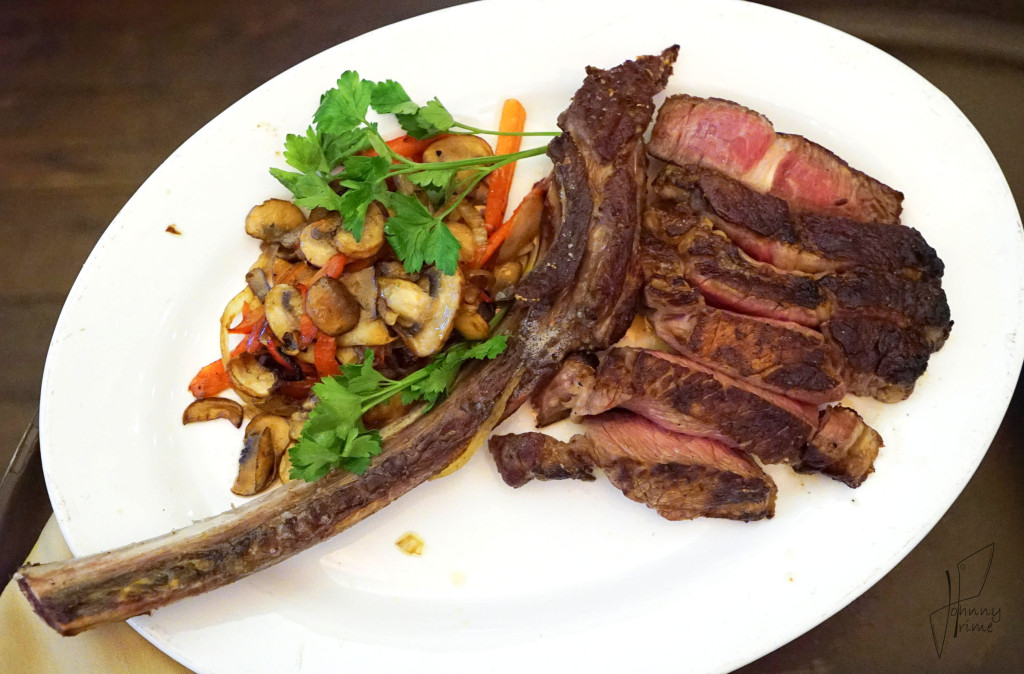
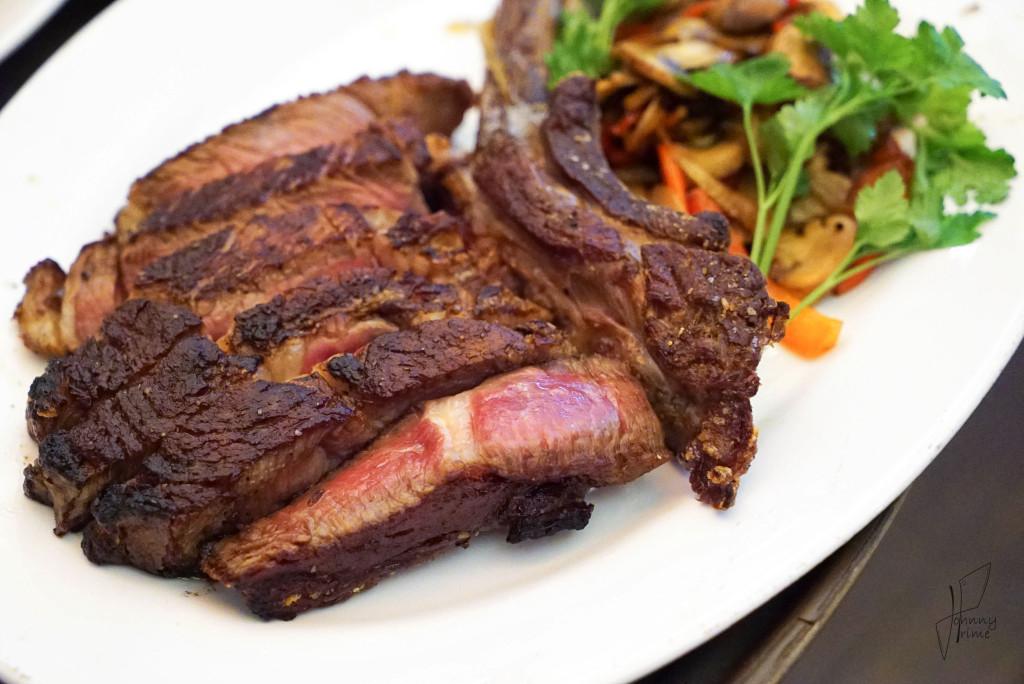
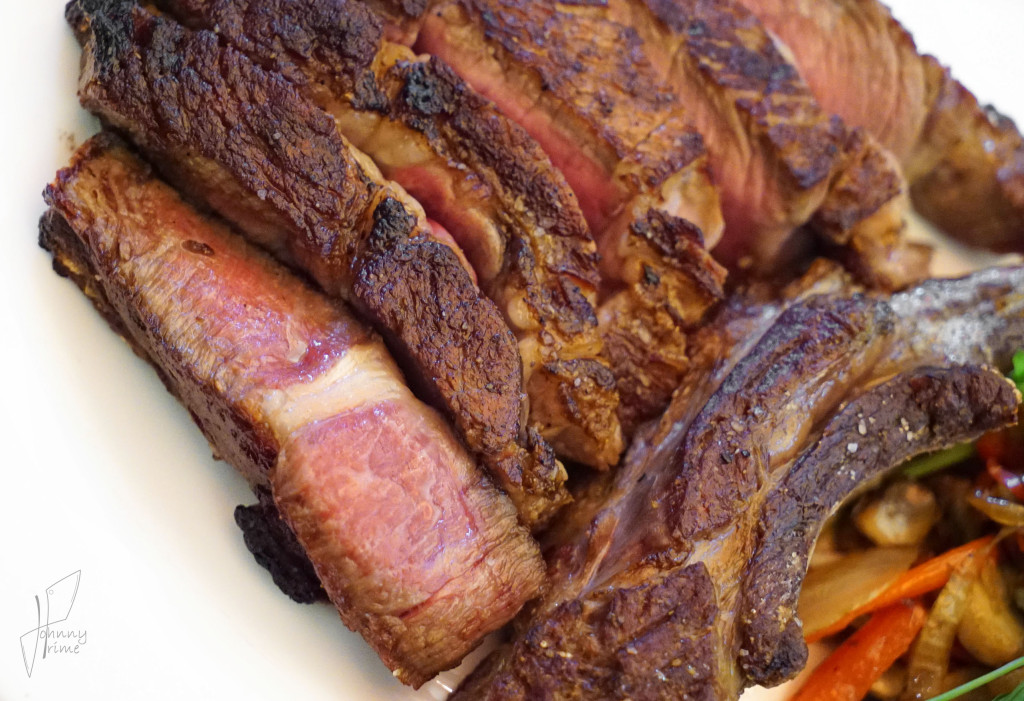
The tomahawk rib eye was by far the better steak at 9/10. There was a good amount of funk to it, likely from the aging process, and it was cooked perfectly to the specified medium rare. The fat cap was a good size too, as you can see from the up-turned slice below. There is almost an equal portion of eye as there is cap.
Choice of Cuts & Quality Available: 10
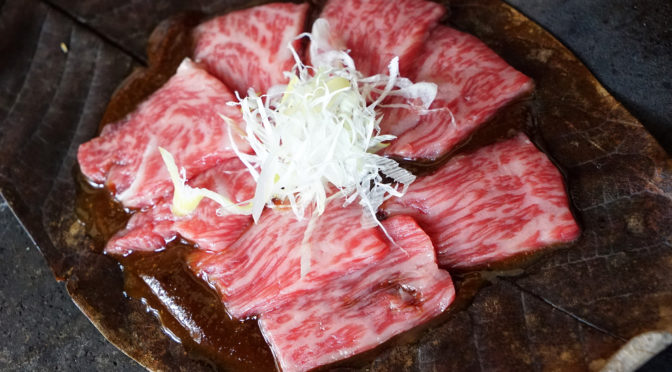
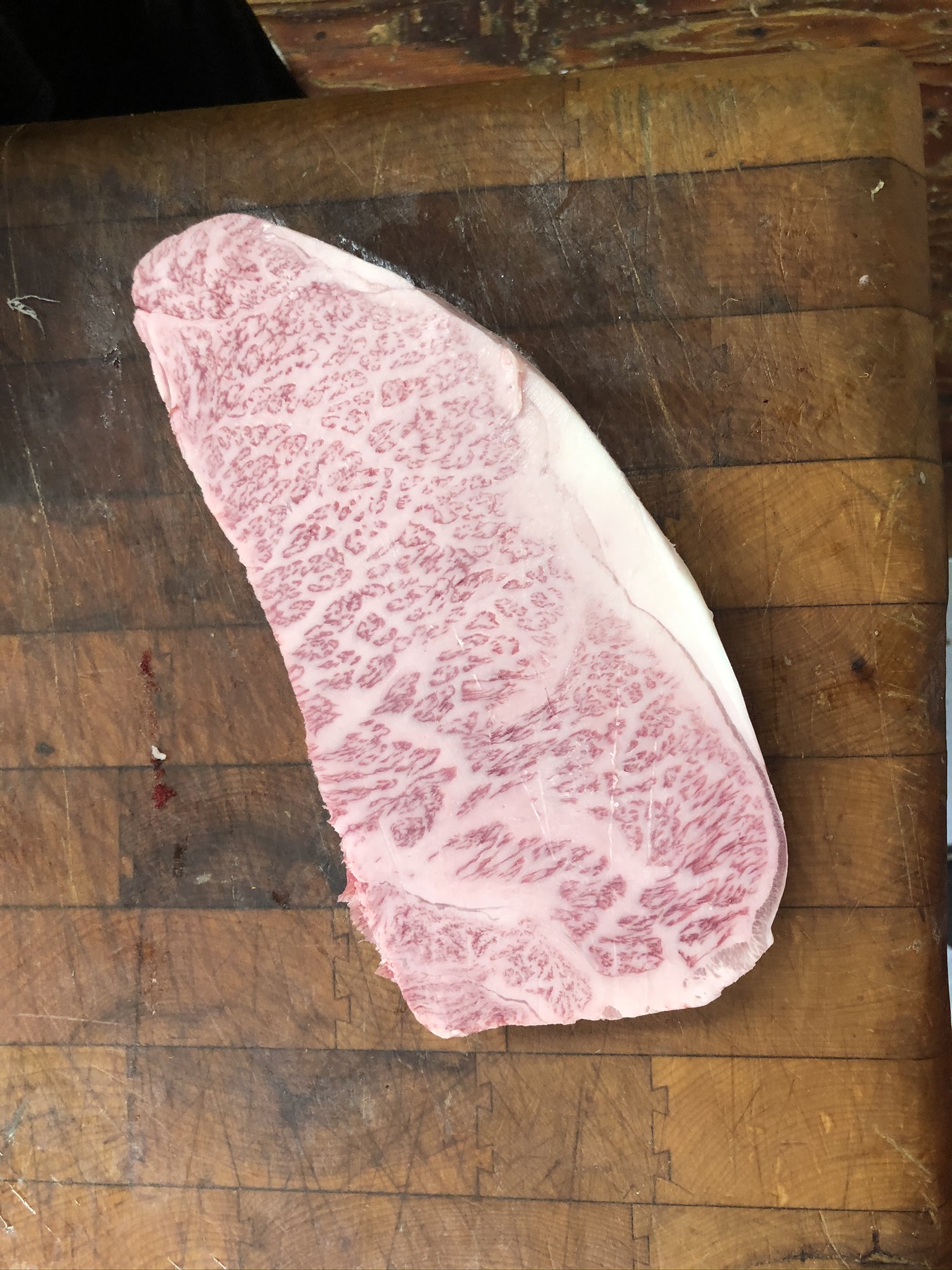
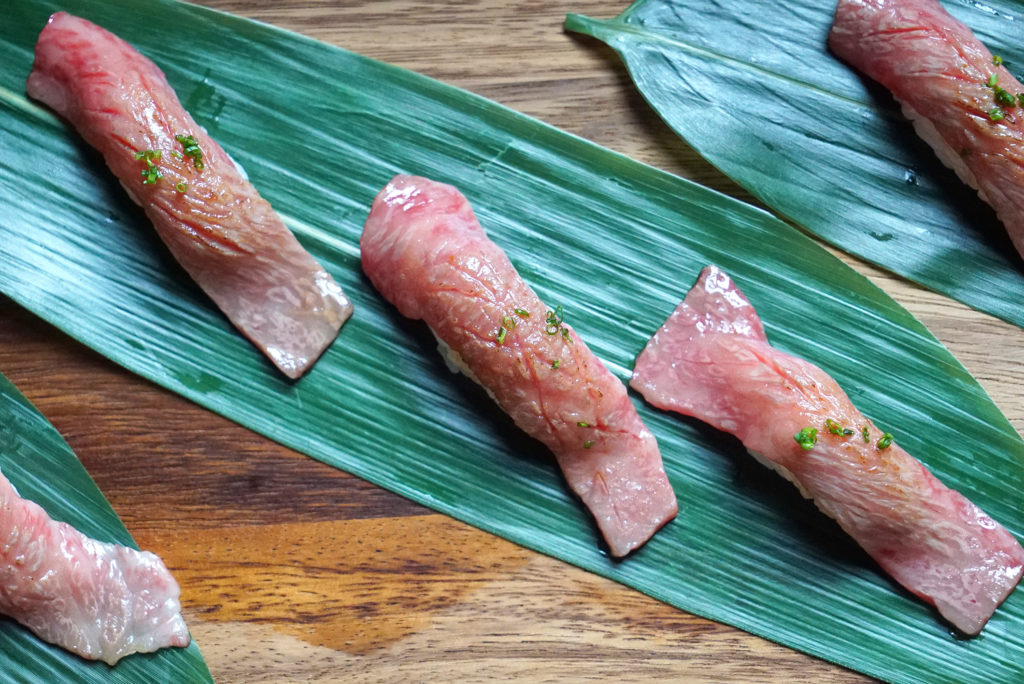
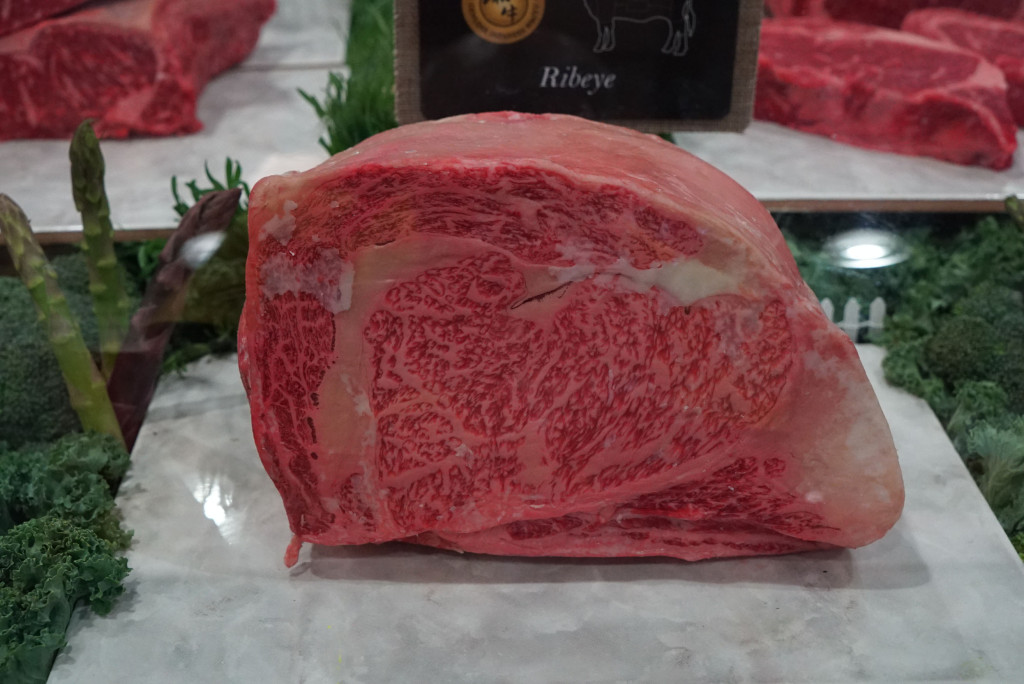
All of the major cuts are prime and/or dry aged. The quality here is definitely a cut above (knee-slap). There are many sizes of porterhouse, multiple versions of the rib steak, several filets and even some off-cuts like the T-bone. In addition they offer A5 grade Kobe Wagyu filet and rib eye, imported from Japan.
Portion Size & Plating: 8
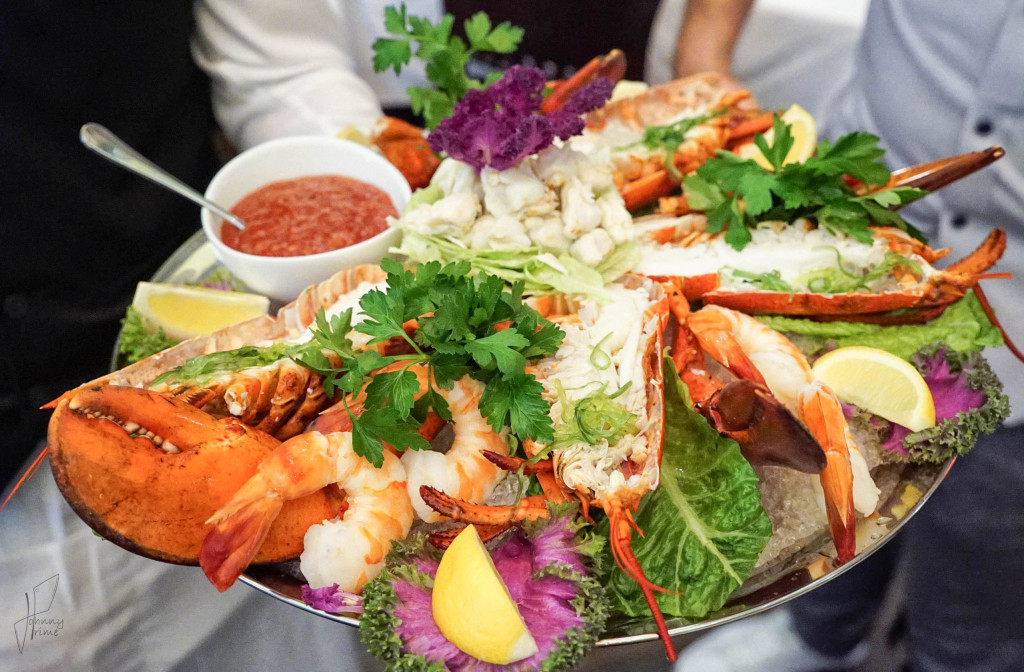
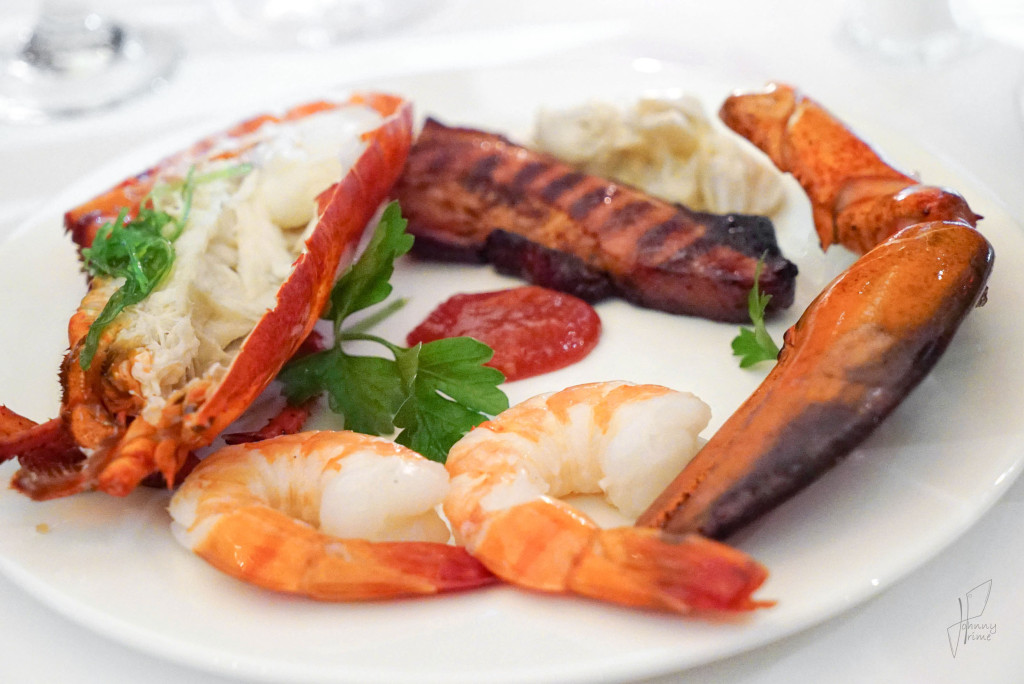
Portions here are all fairly large, and plating is simple, without too much flourish. For some items, however, they do make a solid attempt at beauty. The seafood platter, for example, is gorgeous (see below). And all plates were cleaned and wiped of any splash before coming out to the table.
Price: 9
Menu prices seem to be pretty good. There are some items that are very fairly priced, like a porterhouse for two for $96. I think the tomahawk steak ($65), and the emperor’s steak for two ($120) are a bit steep, but there are other alternatives. For example, if you want a rib eye you can choose the regular bone-in at $49, which is under the average price point for midtown steak joints. The porterhouse might be a cheaper alternative to the emperor’s steak, but, like I said above, if you’re all about the tenderloin, then that emperor’s cut might make more sense. The cool thing here is that you are getting great quality for that price either way.
Bar: 8
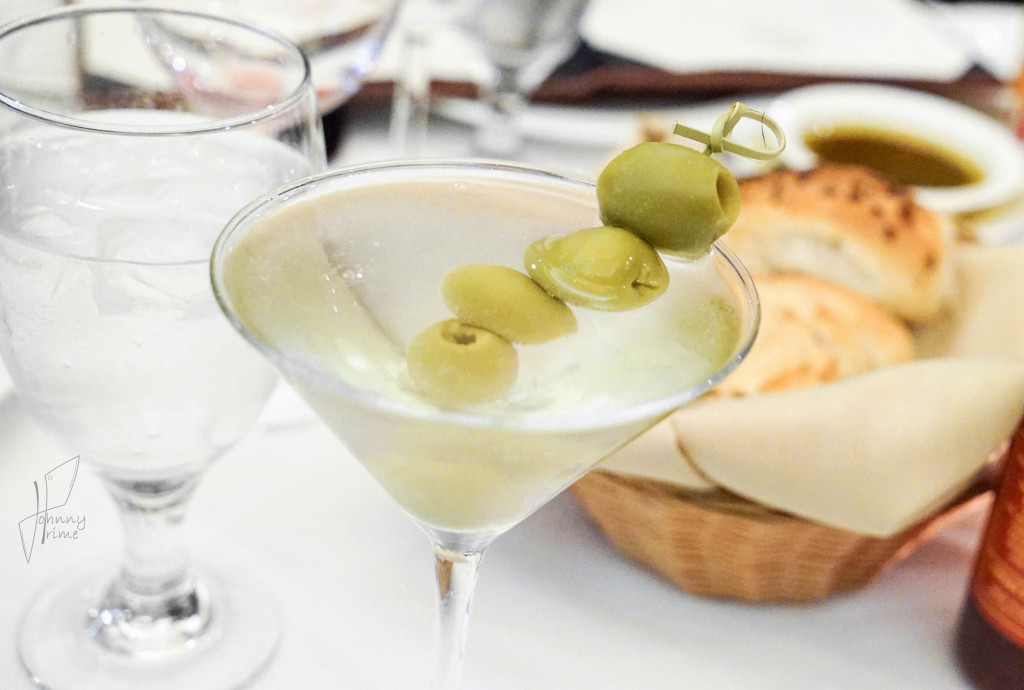
The bar area is pretty nice. It’s not huge, but it makes the best of the space, with street-side high tops and large door-sized windows that open out to the sidewalk. The bar has a good selection of single malts as well, and they make a good martini.
Specials and Other Meats: 8
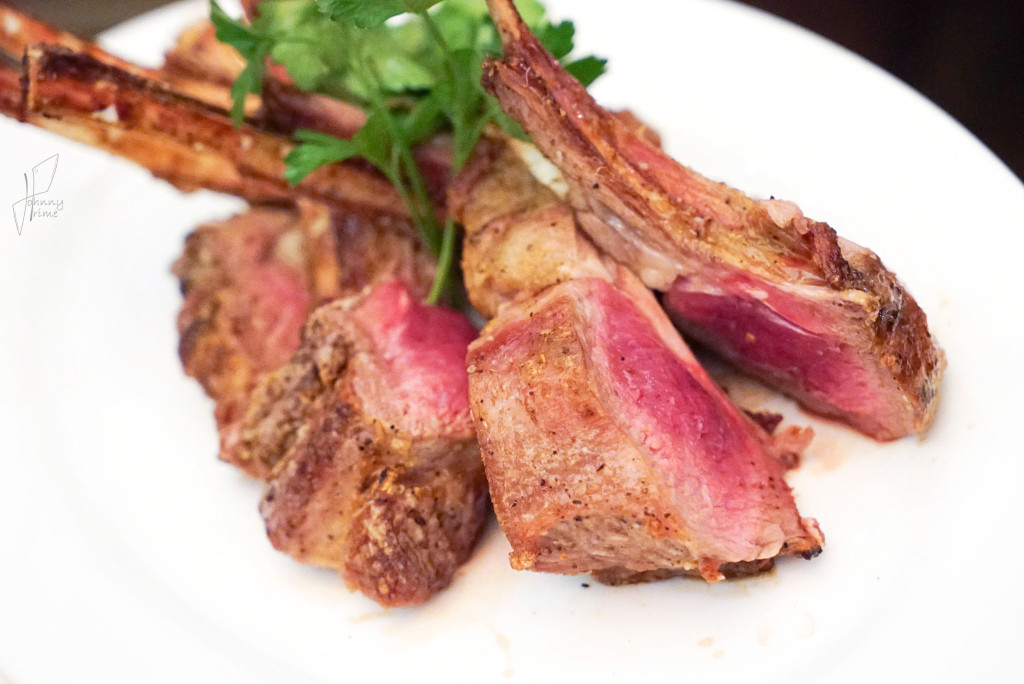
There were no specials read to us, but this place does offer a fair amount of alternative meats, like lamb, veal and chicken. I didn’t notice any pork other than our bacon app. We tried the rack of lamb. This shit rivaled the beef. It was super flavorful, really well seasoned and perfectly cooked.
Apps, Sides & Desserts: 7
I’ll just fire these off quick. First the seafood platter. I was a little bummed that there were no clams, oysters or mussels. Also, the lobster was completely flavorless, as were the shrimp. That was probably the only thing lacking in this meal, and that’s what is dragging down the score here. But the lump crab meat was absolutely delicious. No lack of flavor there. Also, it was beautiful when it came out to the table.
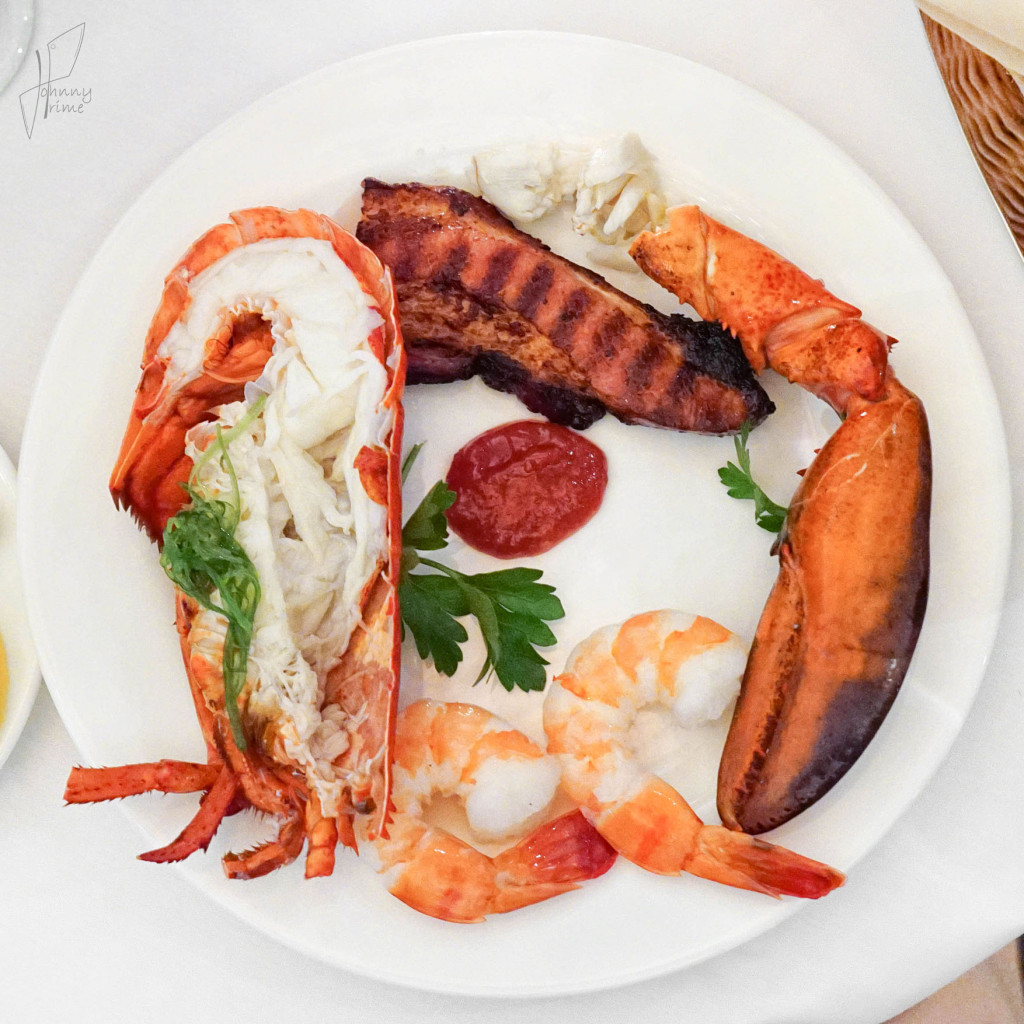
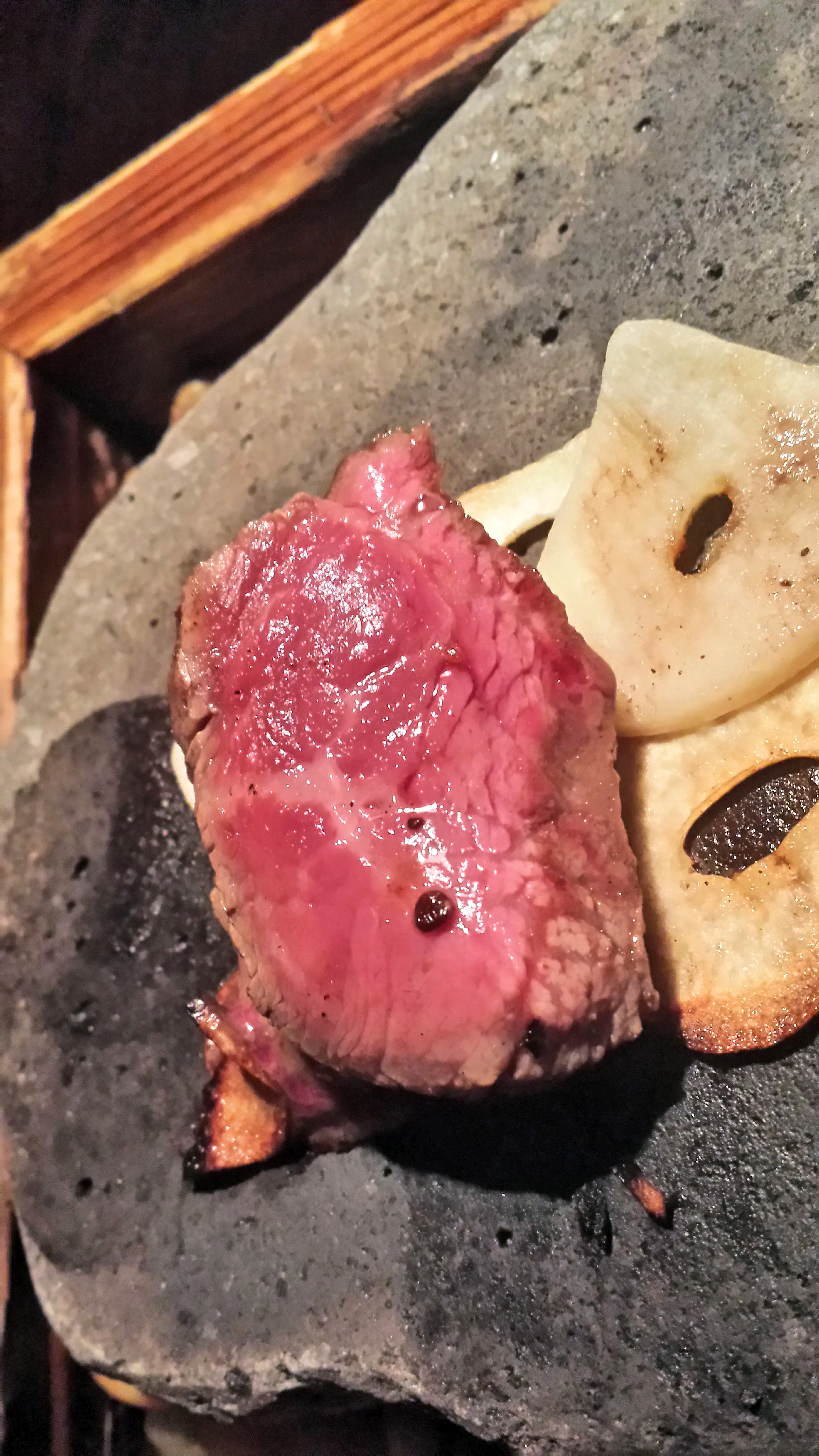
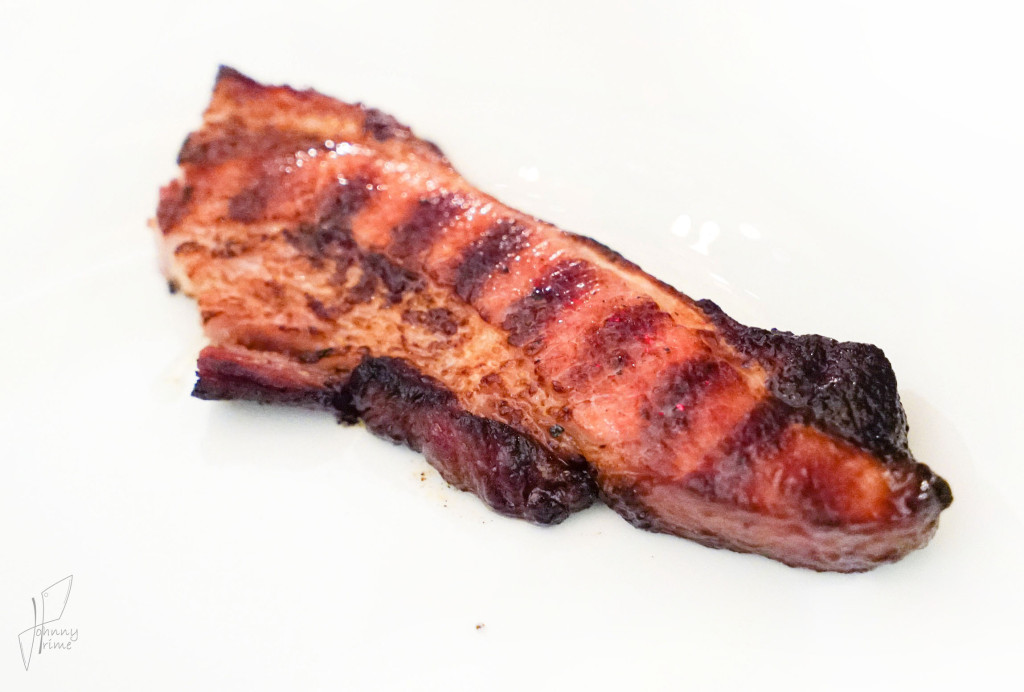
As you can see we also tried the Canadian bacon. This was great. I highly recommend this when you come here, as there are very few other bacon apps that are quite as good. Pictured below is just a half of one slice (we ordered two slices to share among four people).
We also tried the creamed spinach and truffle mac & cheese. Both were excellent. In fact I was wishing I wasn’t so full on meat, because I wanted more of that mac & cheese!
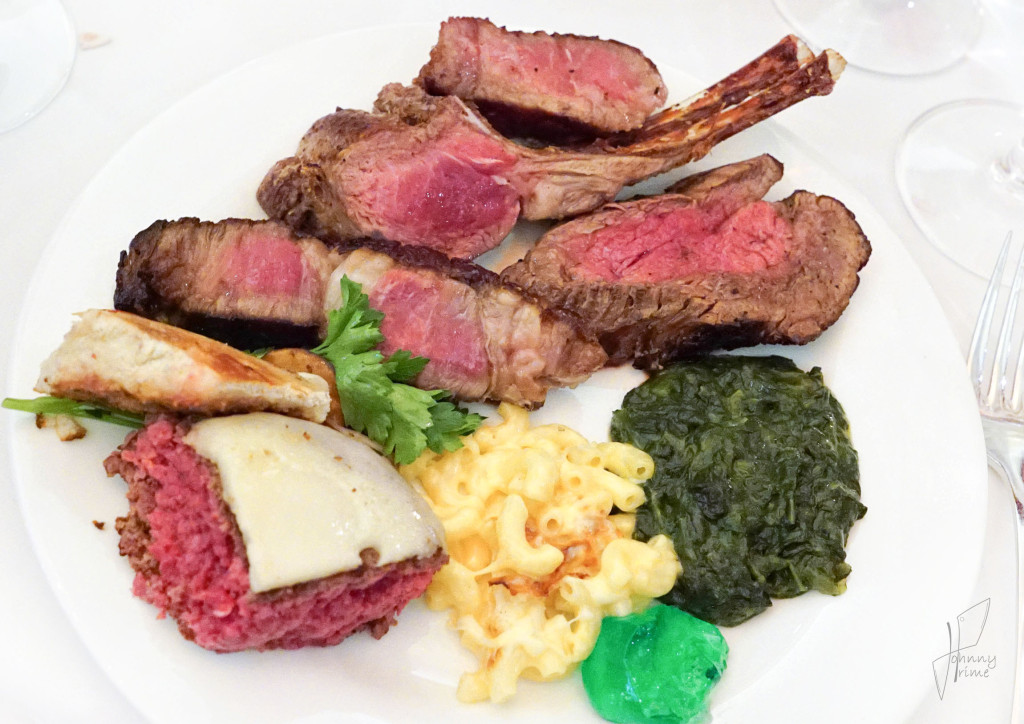
Last, we also had some onion rings. These were lightly battered on the outside, tender on the inside, and lightly seasoned. We all liked them a lot.
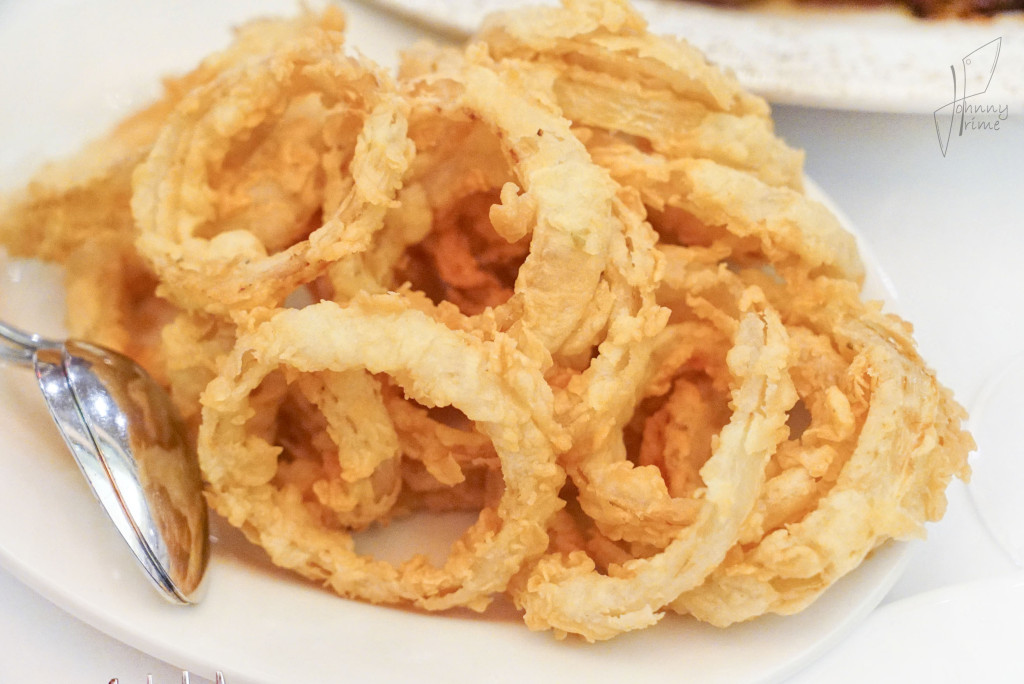
For dessert, we shared an apple strudel and a slice of chocolate mousse cake. Both were amazing. The chocolate mousse cake was light and fluffy, not overly sweet, and had a really nice oreo cookie crust on it. Delicious.
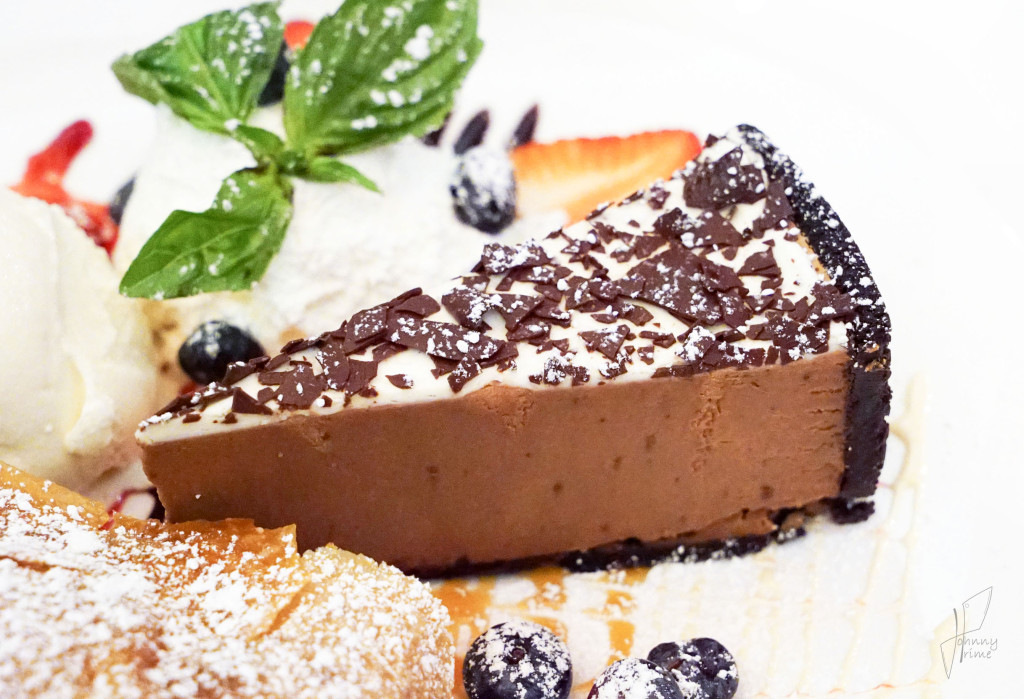
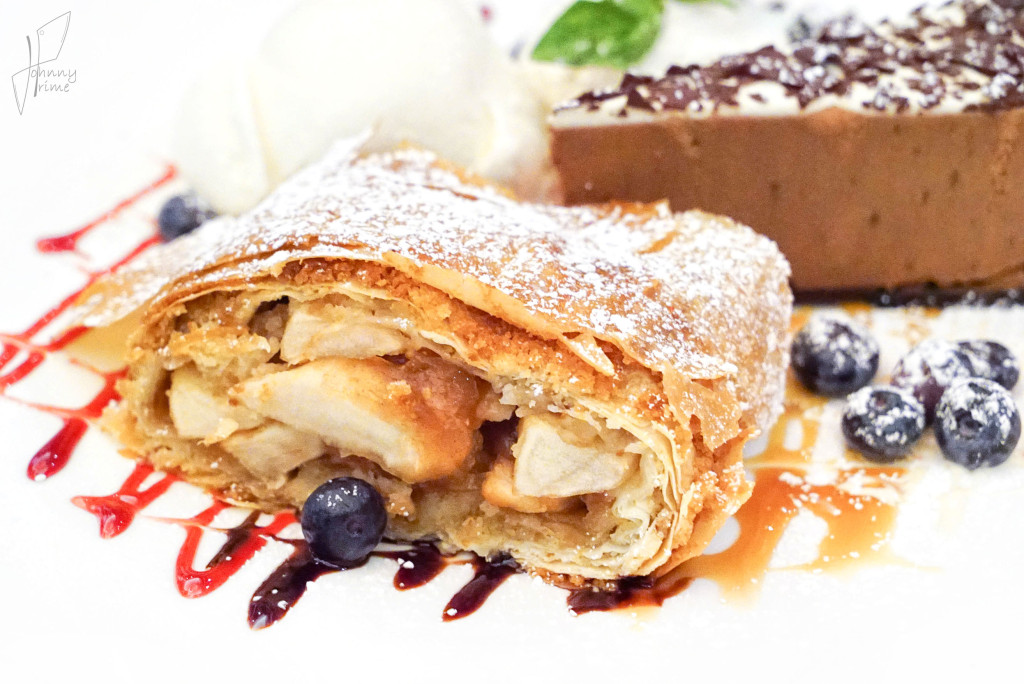
The strudel was even better, in my opinion. The flaky dough was crisp but not hard, so you could eat it with a fork without having bits of crust shatter and fly all over the table. The apples had a nice hint of cinnamon and nutmeg to them. Just perfect.
Seafood Selection: 6
There’s a shitload of fish to choose from here, but from the small amount we had (shellfish app) I am concerned. That lobster and those shrimp… so disappointing. But entree fish is a whole different ballgame. Bass, salmon, sole, tuna, crab cakes, shrimp, scallops and lobster (up to 4lbs) are all on the hot menu here. Since I didn’t try any, I can’t really opine on anything except for the shrimp, lobster and crab meat from the appetizer. Giving the benefit of the doubt for the actual fish, I have split the baby here with a 6/10.
Service: 10
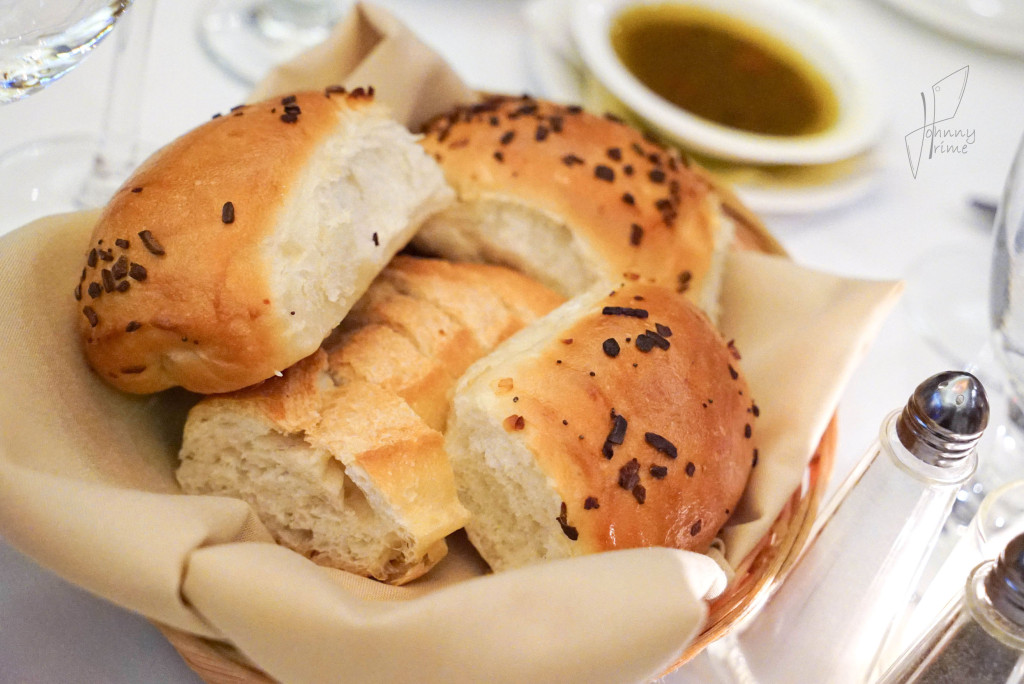
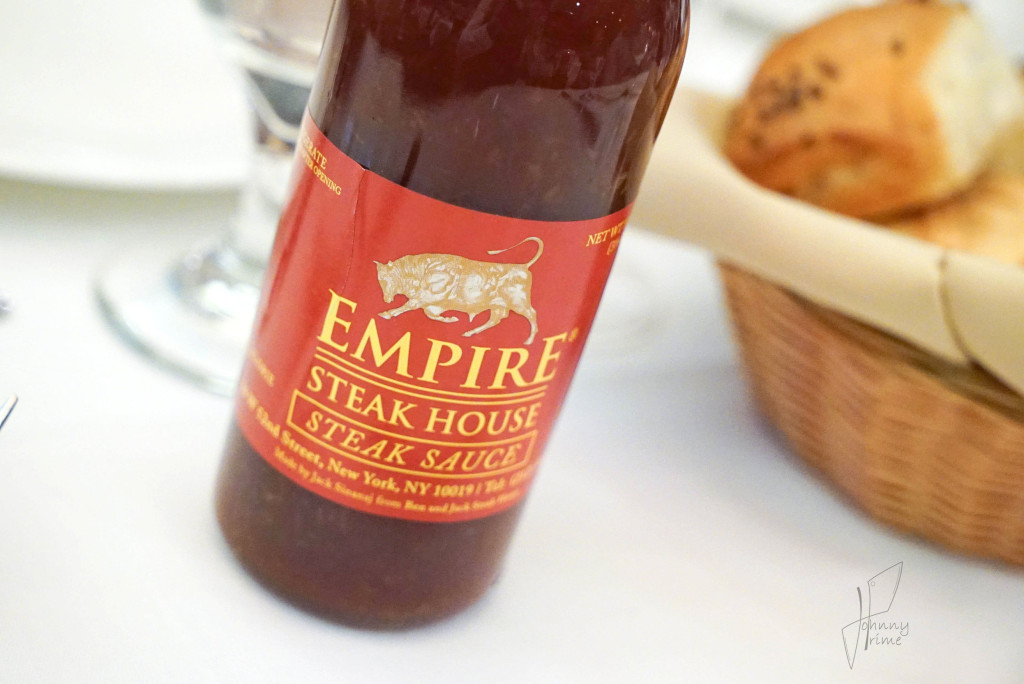
Impeccable. The guys here really know their cuts, and they are super attentive without being in your face. They were very patient with our photo-taking as well. HAHA! I may as well mention the bread and sauce here too. Same as the other location, they serve up nice warm onion bread rolls, and the steak sauce is pretty good!
Ambiance: 10
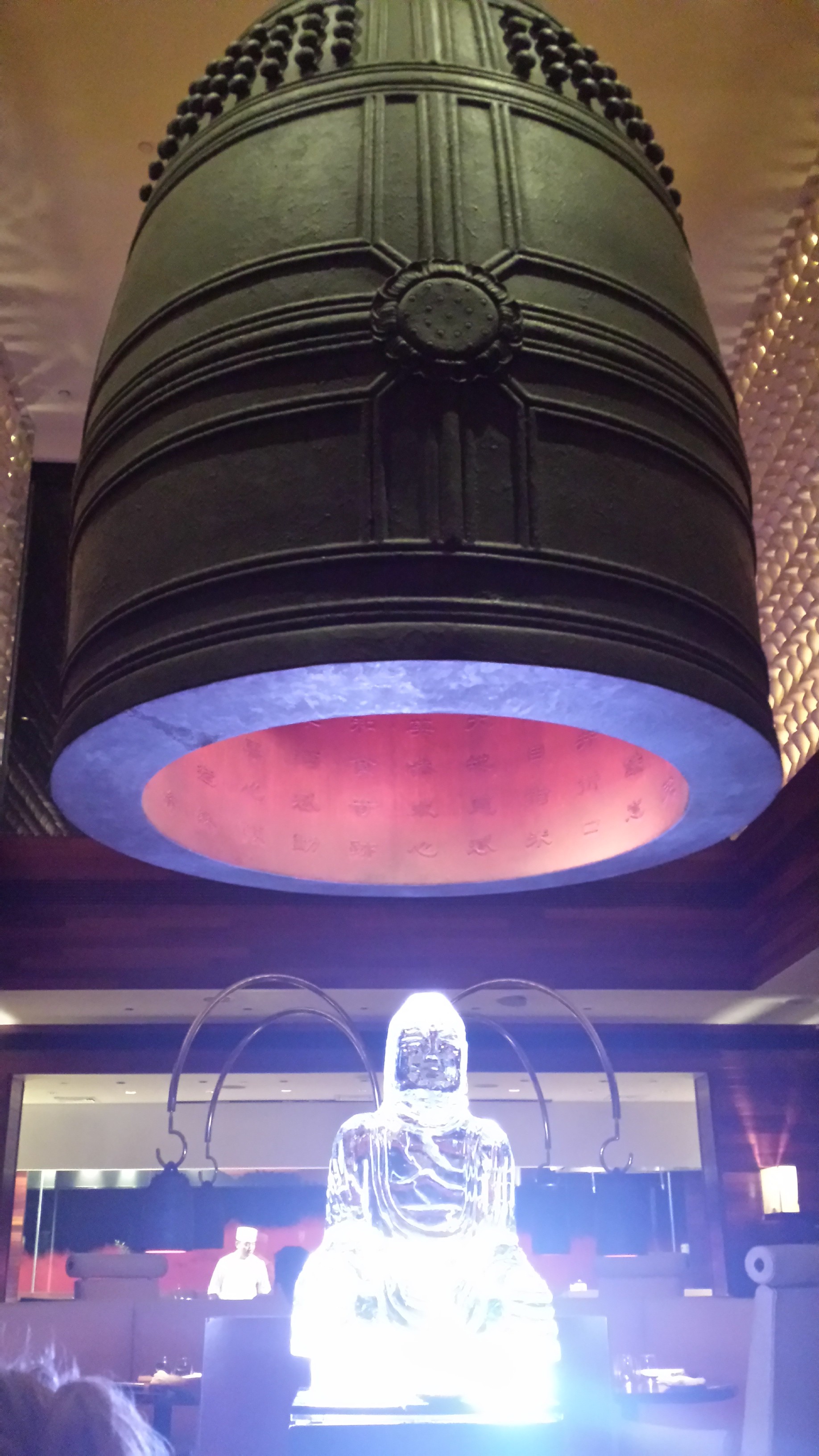
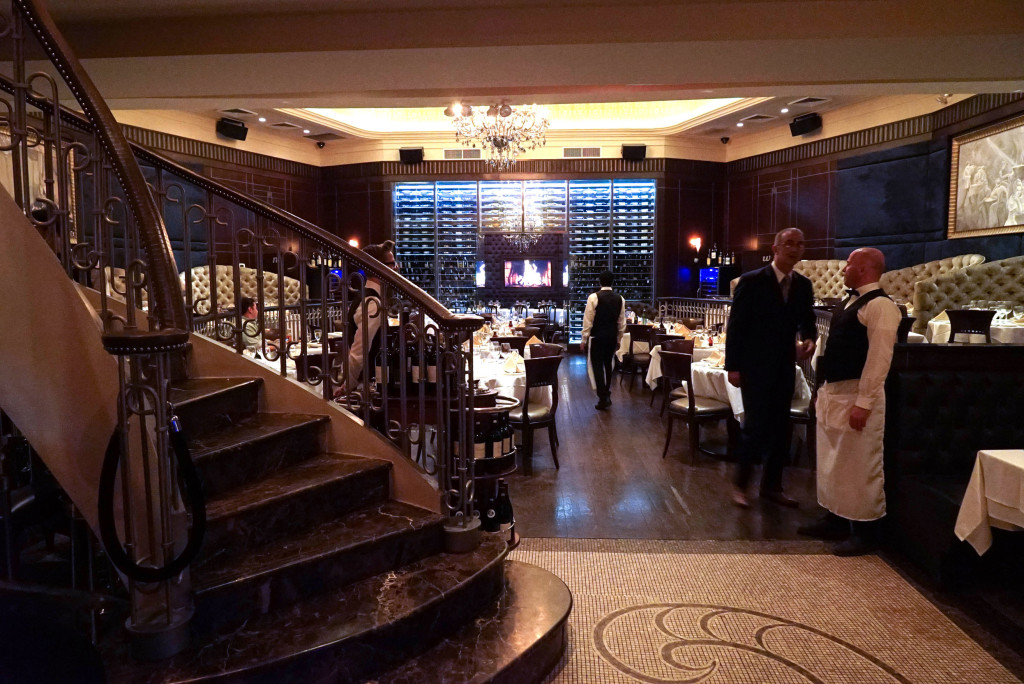
This place is absolutely gorgeous inside. There’s a beautiful spiral staircase just past the bar that goes up to what I assume is a private dining area. There’s also a nice back room with a long “last supper” style table for somewhat isolated large groups, with a large screen TV that plays a digital fireplace video. And beautifully upholstered booths and elegant tables are arranged under what has to be a 25ft ceiling in the main dining room. The back wall has a glass, temperature-controlled wine shelf that goes from floor to ceiling.
THE 1LB KOBE BURGER
You may have noticed a portion of a burger in one of my shots above. Well, when you’re eating with one of the guys from the Gotham Burger Social Club, you fucking try a burger.
Special thanks to Jill for taking this great shot of the guys:
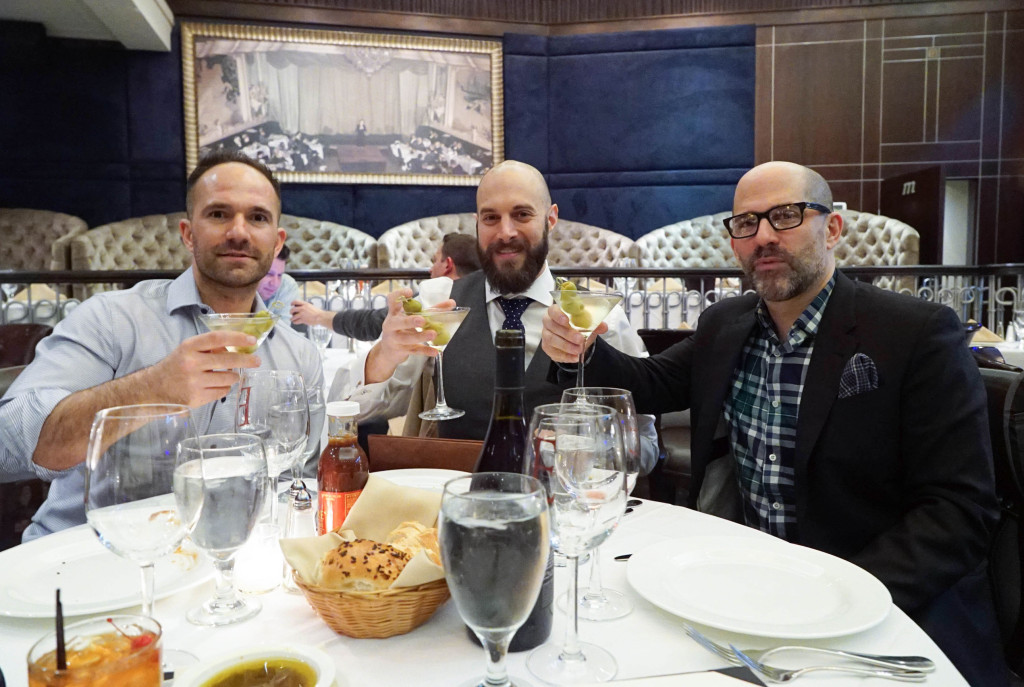
Anyway here’s the burger:
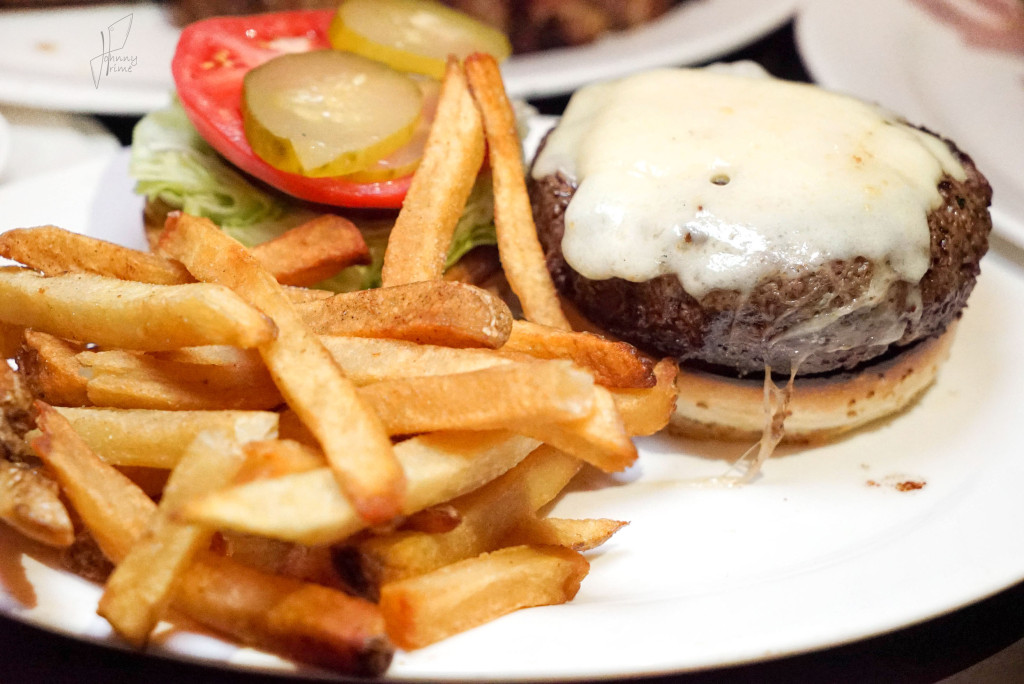
This baby was juicy as fuck. I thought the patty might be too big at a full pound, but I was wrong. It didn’t overwhelm the bun or build up too high, somehow. The inside was cooked somewhere between rare and medium rare.
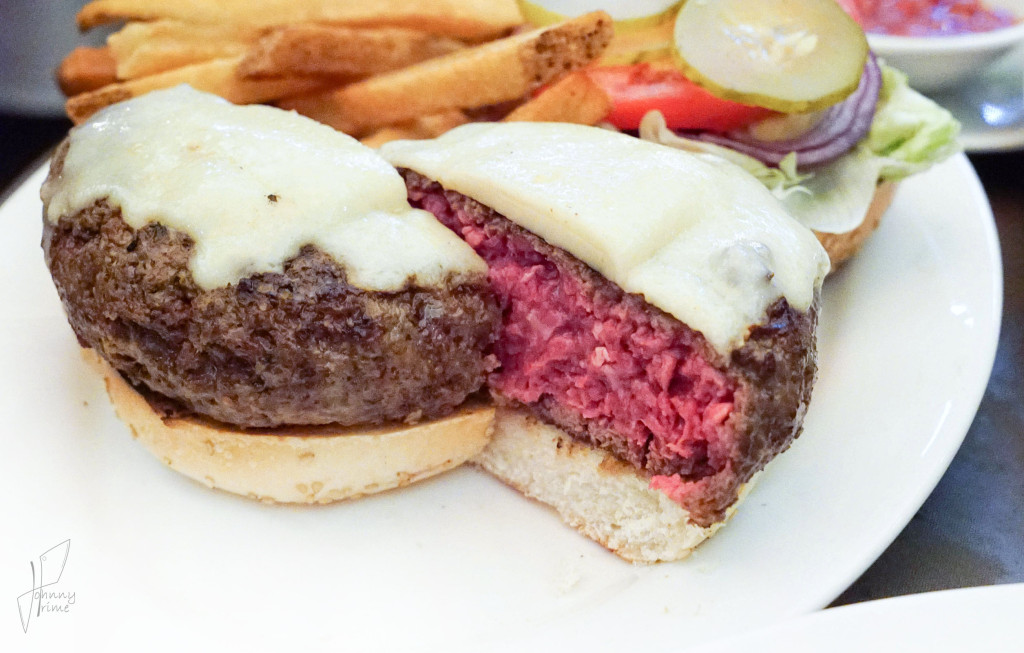
There was a great beefy, full flavor to it, as it is Kobe quality. We went with a mild cheese, Swiss, that wouldn’t overpower the meat flavors. This was really fucking good. At $37 (with fries and toppings) I guess it better be! They also offer a standard burger at the bar for $17.
To sum up, this place edges out the other location by a point, and has better marks for flavor, but it may end up being a bigger spread if I ever get back in to try a seafood entree. That section definitely has some wiggle room.
EMPIRE STEAKHOUSE
151 E 50th St
New York, NY 10022