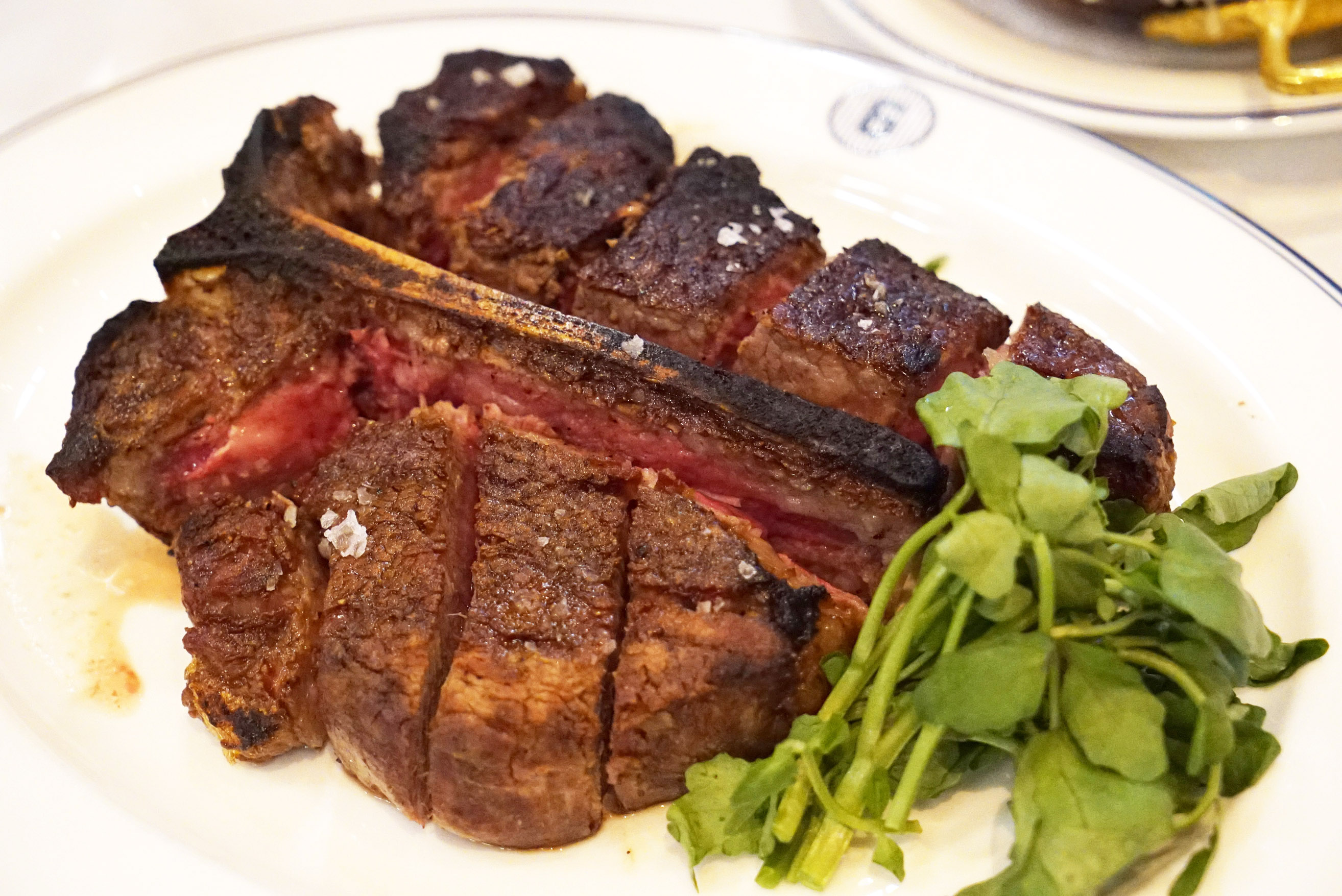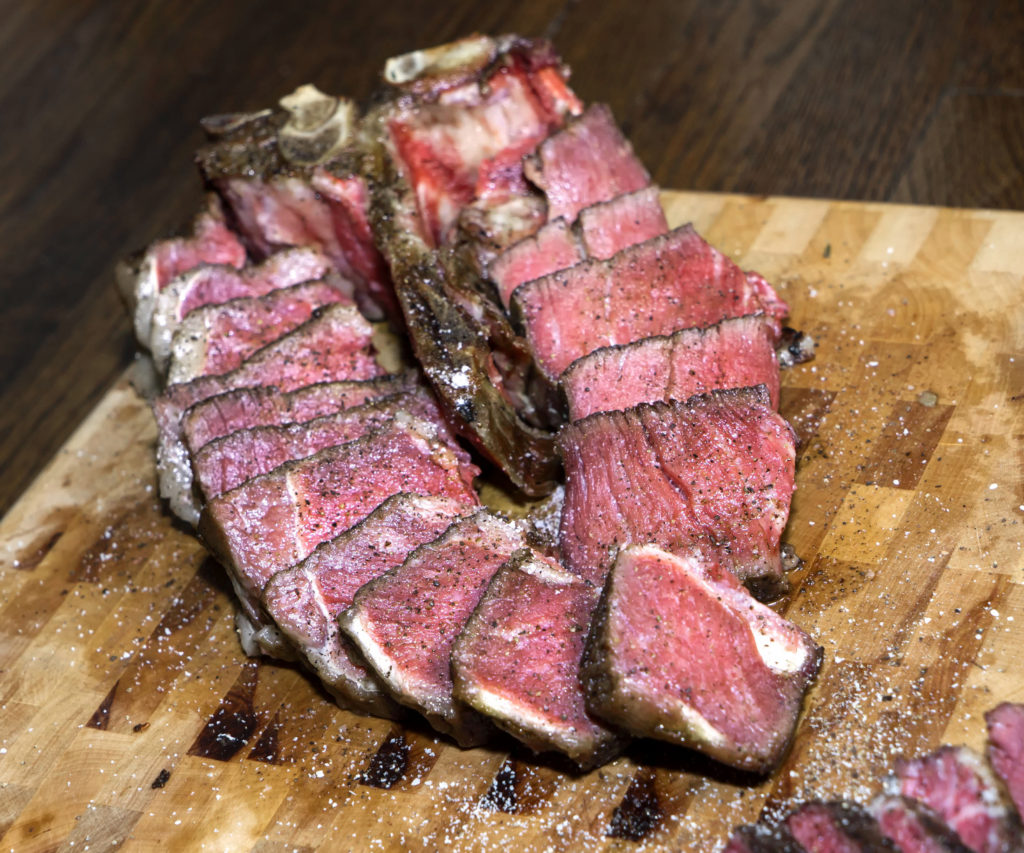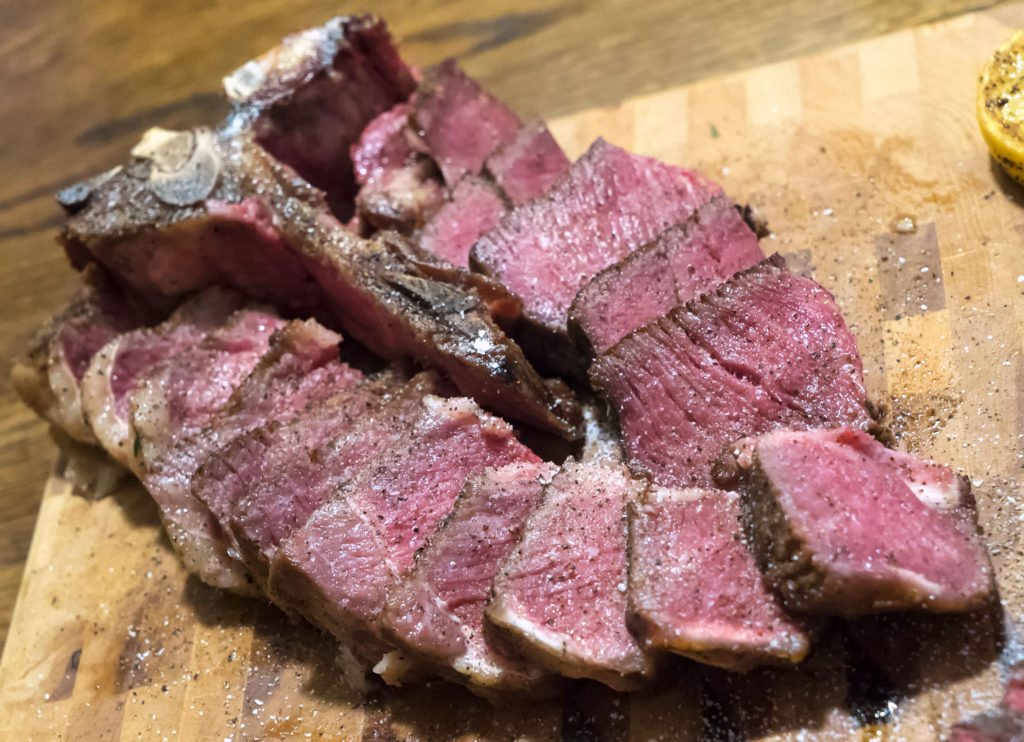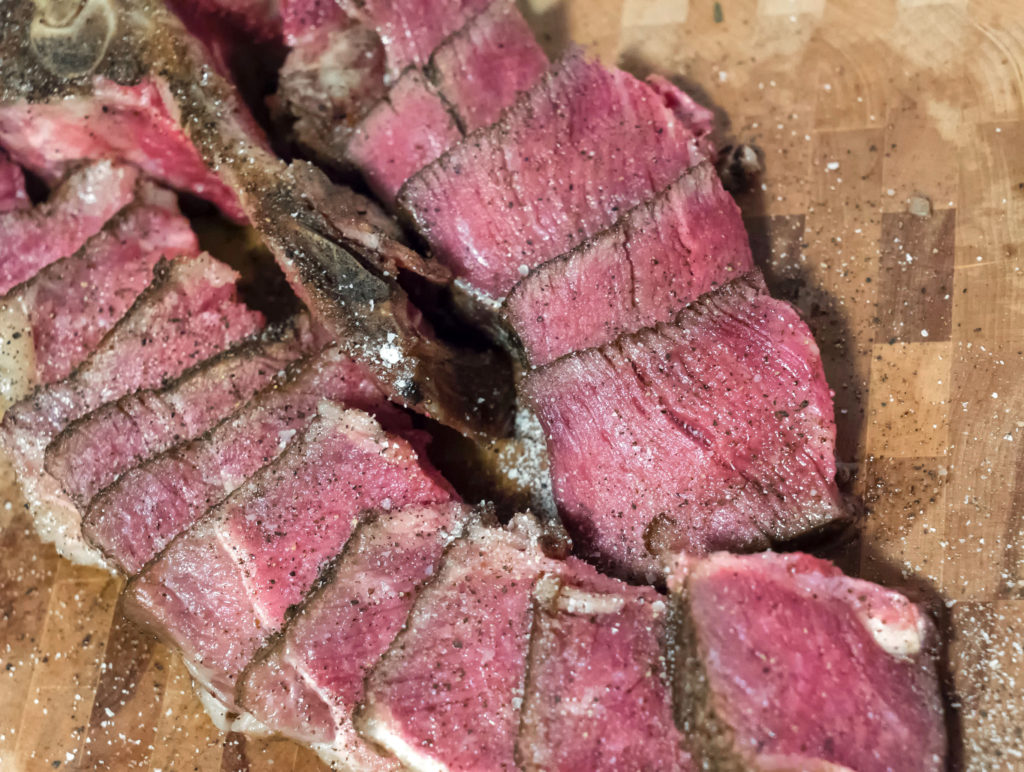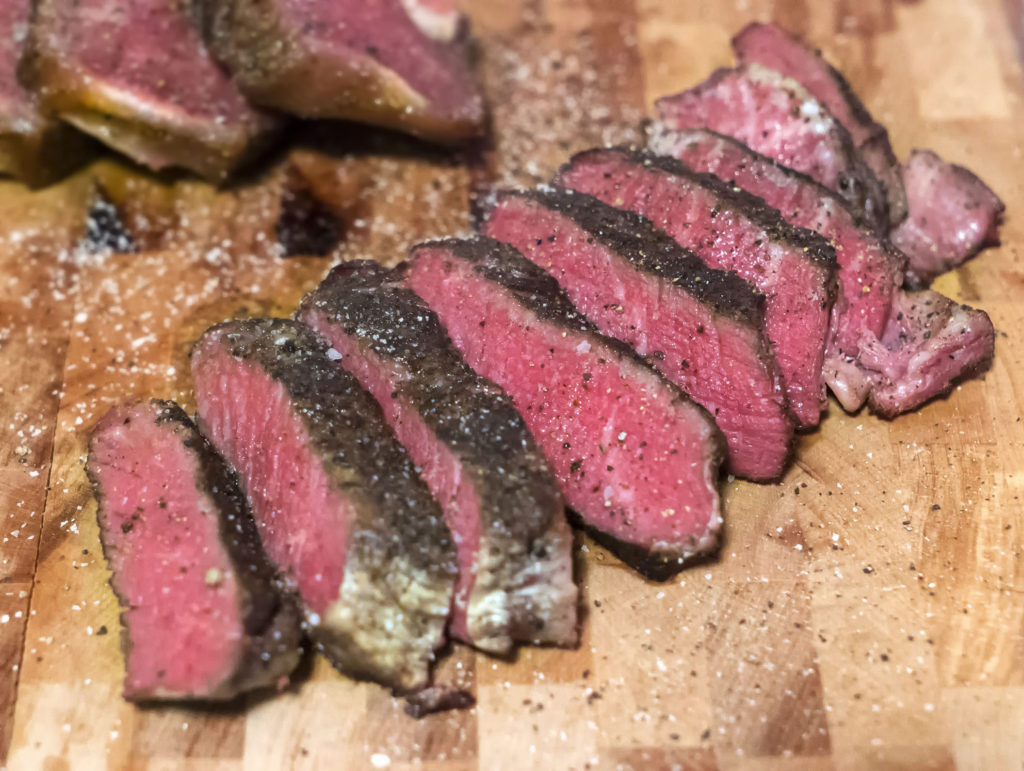
Tag Archives: rib-eye

Filet Mignon & Tenderloin

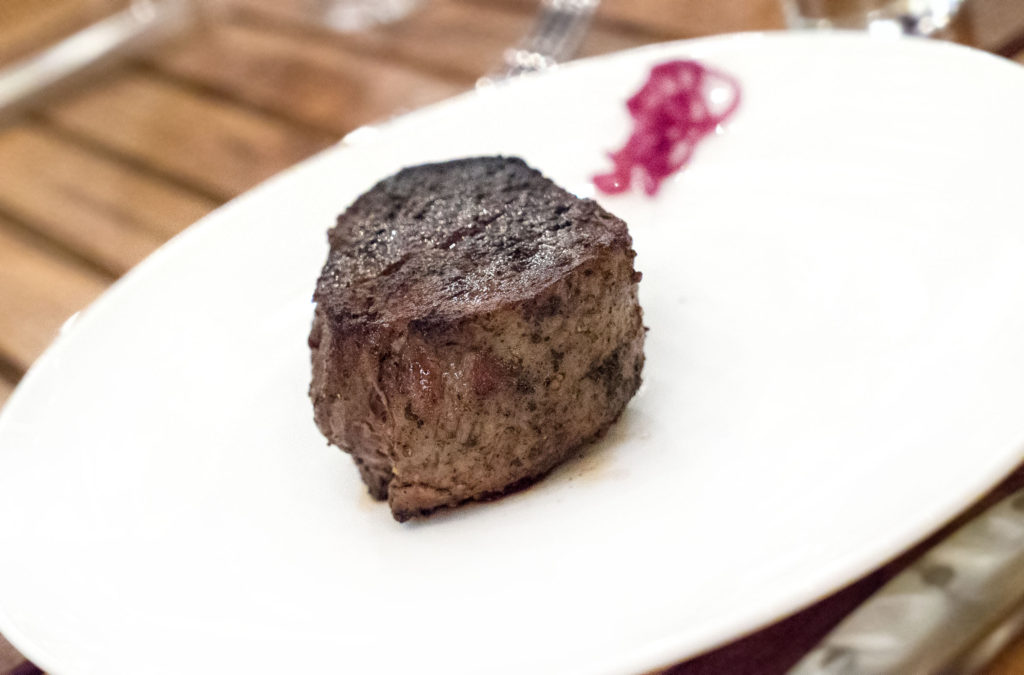
Etymology: Filet, in culinary terminology, means boneless. Mignon, in French, means dainty or small. As such, this is a steak ideally suited for chicks: small/dainty, and with no bone.
DSC05717

Occasionally on a steakhouse menu you will see a “bone-in filet.” Given what I just mentioned above, that phraseology is completely self-defeating and confusing, as it simultaneously means both “bone-in” and “boneless.” However, it seems this sort of language is becoming commonplace. If it were up to me, I would prefer “bone-in tenderloin” to be listed on menus instead. There is no wording conflict with that phrasing, and it is an accurate description of what is being presented. In other words: all Filet Mignon is tenderloin, but not all tenderloin is Filet Mignon.

Anatomy: Traditionally, a Filet Mignon was cut from the anterior end of the tenderloin. In the beef chart image below, you can see a portion of the tenderloin section highlighted in red.
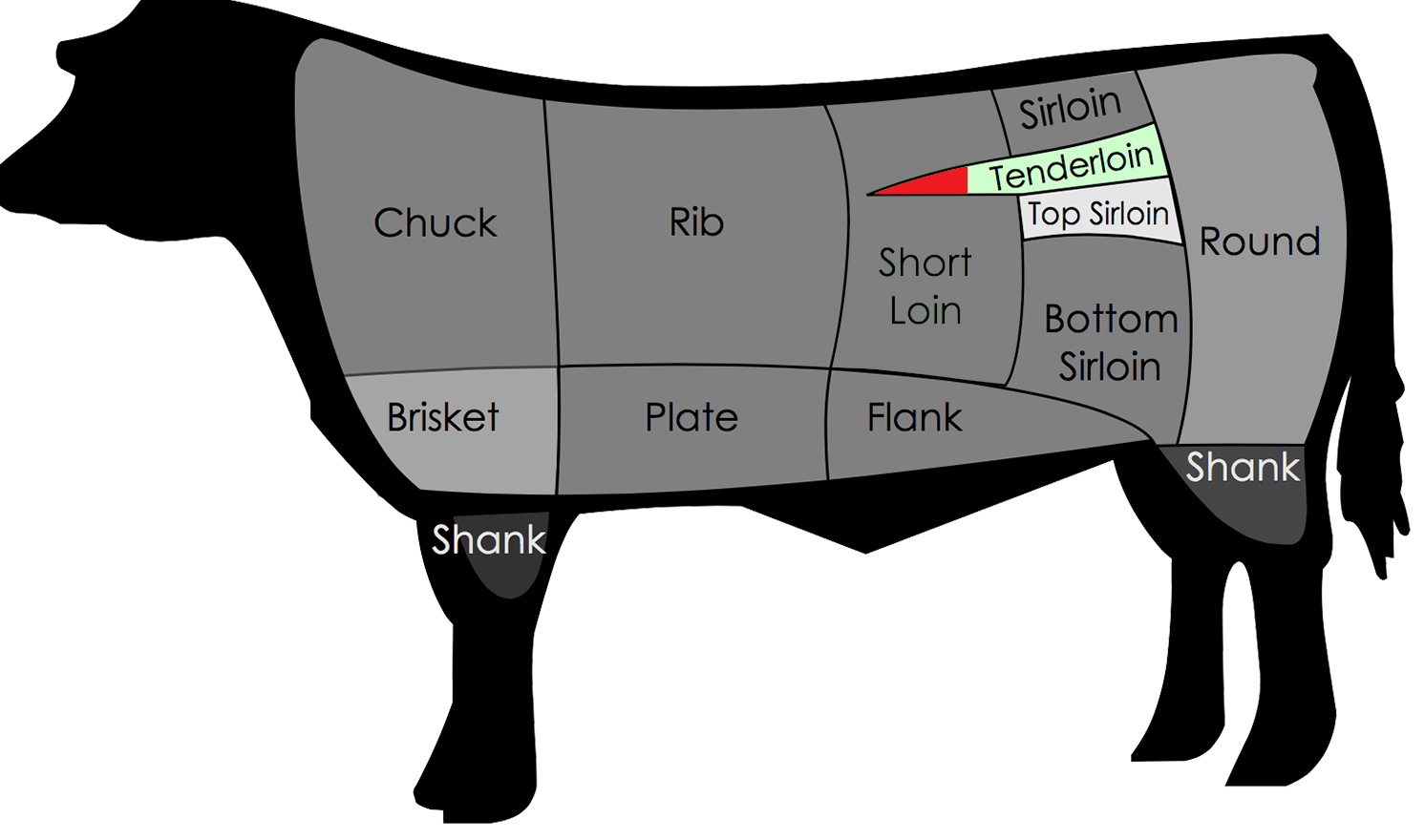
diagram-filet-cut-1500

That is where Filet Mignon was typically located, though most butchers label all steaks cut from the tenderloin as Filet Mignon (this allows for larger portions). The tenderloins run along both sides of the spine. They taper from thick, in the posterior of the animal, to thin in the front.

In their unbutchered form, they contain what’s called the “silver skin” still attached to the flesh. This is a thick connective tissue that is pretty much inedible. When butchering the full tenderloin, you will want to slice that off (it is NOT tender).

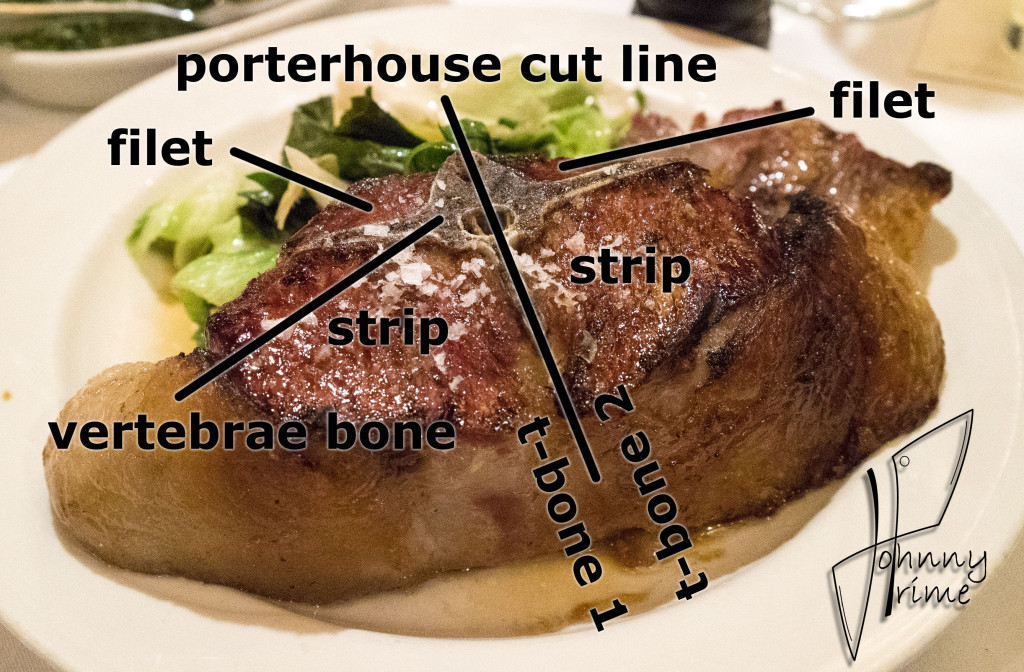
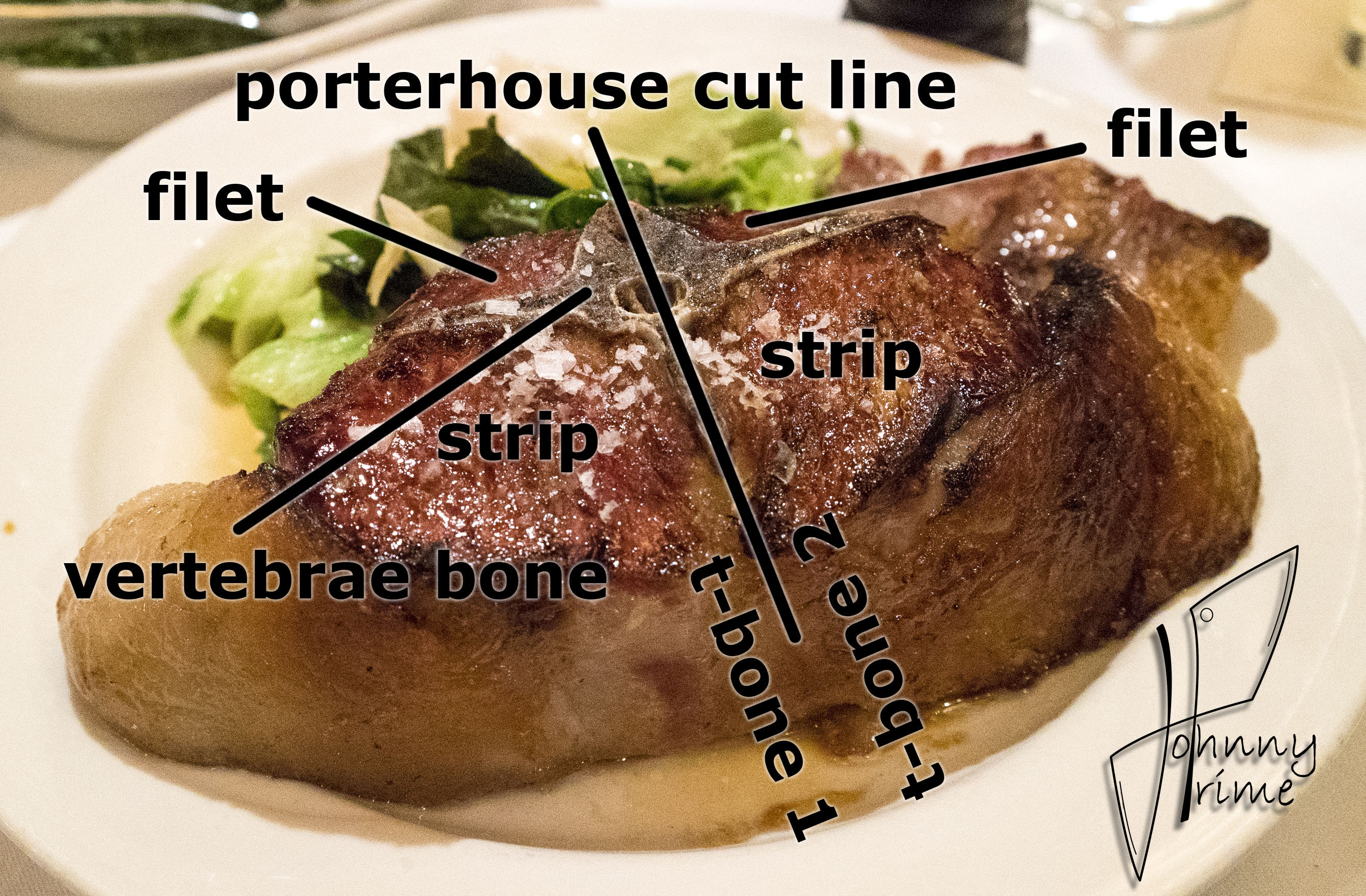
While this next photo is a repeat shot of a lamb vertebra Barnsley chop (the mutton chop from Keen’s), the anatomy is exactly the same for beef. This will illustrate exactly where the filet comes from. Essentially this is a double porterhouse, with a filet and a strip on each side. In addition to understanding the Filet Mignon, this image is useful in demonstrating the anatomy of the Strip and Porterhouse cuts as well, since they all come from the same place – the vertebrae of the animal:
DSC02003 illustrated watermark

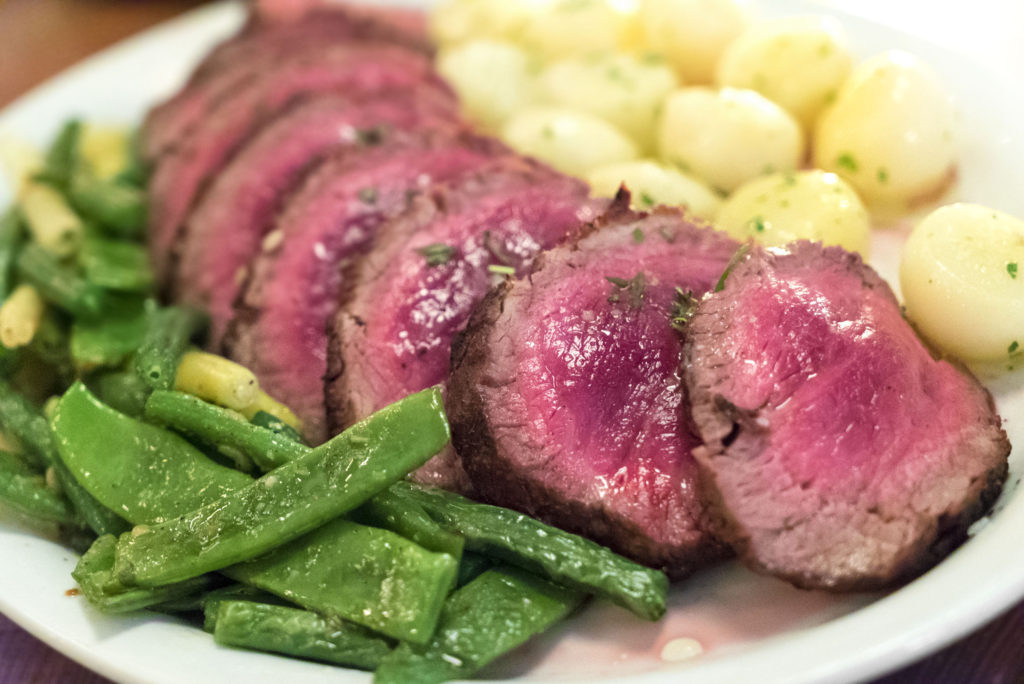
Preparation: Preparations of this cut vary greatly. You may see this cut sliced thin and pounded flat, served raw for carpaccio. You may also see it finely chopped for tartare. A simple pan sear with butter and herbs, however, is probably the most common preparation.

Yet another style is Chateaubriand, which is a large section of the thick portion of the tenderloin that is roasted boneless, then sliced and served with a reduction sauce.
DSC03866

There is also Beef Wellington, which is a portion of tenderloin that has been coated with pate and then wrapped in puff pastry dough prior to cooking.

Flavor: Widely considered the most tender and least fatty cut of beef on the animal, the flavor should be uniform from one end to the other, with very tender and soft texture the whole way through. There is hardly any fat content in the standard cut of Filet Mignon. Some chefs will wrap the filet in caul fat (a lacy, fatty, web-like membrane that surrounds the stomach of an animal) before cooking. The webbing melts away during cooking and imparts a fat flavor into the meat. But it is more common to use things like butter, or to wrap a filet in bacon to add the fat flavor into the meat.
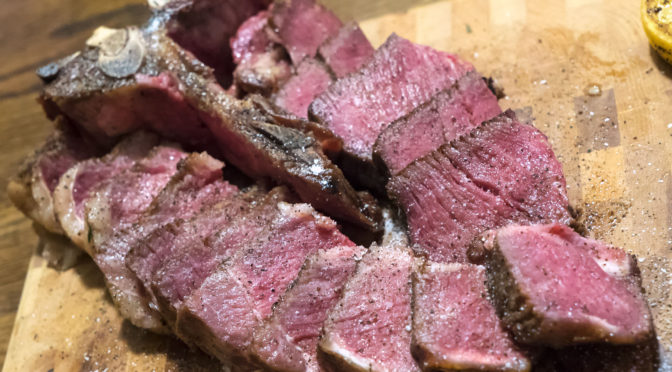
The Porterhouse Steak

Etymology: There is some difference of opinion on the origin of the word “Porterhouse,” with several restaurants and cities claiming to have created the name. For example, Martin Morrison served large T-bones in his Pearl Street (Manhattan) “Porter House” around 1814. This history was popular in the late 1800’s, but some say a Cambridge, Massachusetts proprietor by the name of Zachariah B. Porter added his name to the steak. Still, others argue that the Porterhouse name stems from various 19th Century U.S. hotels or restaurants called Porter House, such as the Porter House Hotel in Flowery Branch, Georgia.

Anatomy: The Porterhouse is a cut of steak from the short loin portion of the animal that contains both strip loin and tenderloin meats. See the highlighted portion in the diagram below:

It is cut from a lumbar vertebra that is sawed in half through the vertebral column.

The downward prong of the “T” is a transverse process of the vertebra, and the flesh that surrounds it (spinal muscles) makes up the meat of the Porterhouse.

DSC02003 illustrated watermark

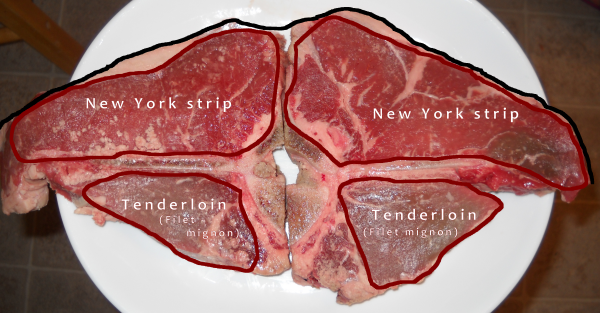
Essentially, it is a large T-bone steak from the rear of the animal that has two different types of meat (tenderloin and strip loin), one on either side of the “T.” In the picture below, the strip loin or Strip Steak is on the right, and the tenderloin or Filet Mignon is on the left.

DSC03188

The small semicircle at the top of the ‘T’ is half of the vertebral foramen, which is the name of the hole that passes through each vertebra for housing and protecting the spinal cord. They run the whole way up the back, all the way up to the brain of the animal.

The anatomy of a Porterhouse differs from that of a T-bone only in that the Porterhouse contains a larger portion of tenderloin than its T-bone counterpart.

This is primarily due to the fact that Porterhouse steaks are cut from further in the rear of the animal, from lumbar vertebrae, where the tenderloin is much thicker. Experts differ, however, on how large the tenderloin must be to differentiate a Porterhouse from a T-bone. The U.S. Department of Agriculture’s Institutional Meat Purchase Specifications state that the tenderloin of a Porterhouse must be at least 1.25 inches thick at its widest, while that of a T-bone must be at least 0.5 inches.

Here is a shot of a short loin with multiple vertebrae still intact and not portioned out into individual Porterhouses and T-bones.

photo credit: http://f.tqn.com/y/culinaryarts/1/W/M/f/-/-/short-loin-2500.jpg

You can see on the left there is a good sized, thick portion of tenderloin. That thins down as you move the the right, and seems to disappear by time your eyes reach the far end of the cut.

Just to drive home the anatomy a little more, here is a great excerpt and image from Russ Cooks:

“Up close and personal, this is where the T-bone fits.

t-bone-illustration
photo credit: http://www.russcooks.com/images/t-bone-illustration.png

The black line across the top of the two T-bones pictured here is the outside (top of the back) of the steer. You can see the T-bone in the schematic illustration higher up on this page as the topmost part labelled Rib. Above the ribs, what you touch if you pat the steer’s back, is the New York strip. Beneath the ribs is the tenderloin from which a filet mignon is often cut. T-bone steaks cut closer to the shoulder are known as Porterhouse while those cut closer to the loin are just T-bones.”

Preparation: Most times, T-bones and Porterhouses are either grilled, seared in a pan, broiled or blasted with high heat in specialty steak ovens made for charring the outside of the meat without over-cooking the inside. Butter is essential, and heavy seasoning is important as well. Herbs and garlic help boost the flavor too.

DSC07247

Flavor: Since this cut contains both the Filet Mignon and the Strip Steak, I refer you to the flavor sections for those cuts below, with a notation that the bone being left in often adds a more robust flavor while helping to retain tenderness and juiciness. These are very popular items at steakhouses because they can be cut large enough to feed anywhere from two to four people. Additionally, with two different types of meat in one steak, one can vary the flavors that one experiences with each bite.

Philip Marie

I picked up a Groupon for this place because they were offering a steak dinner for two with wine for a fairly low price. It doesn’t take much to get me motivated to try another steak, so this was a no-brainer purchase for me.

Let’s get down to business. The Groupon got us the following, in addition to two glasses of wine:

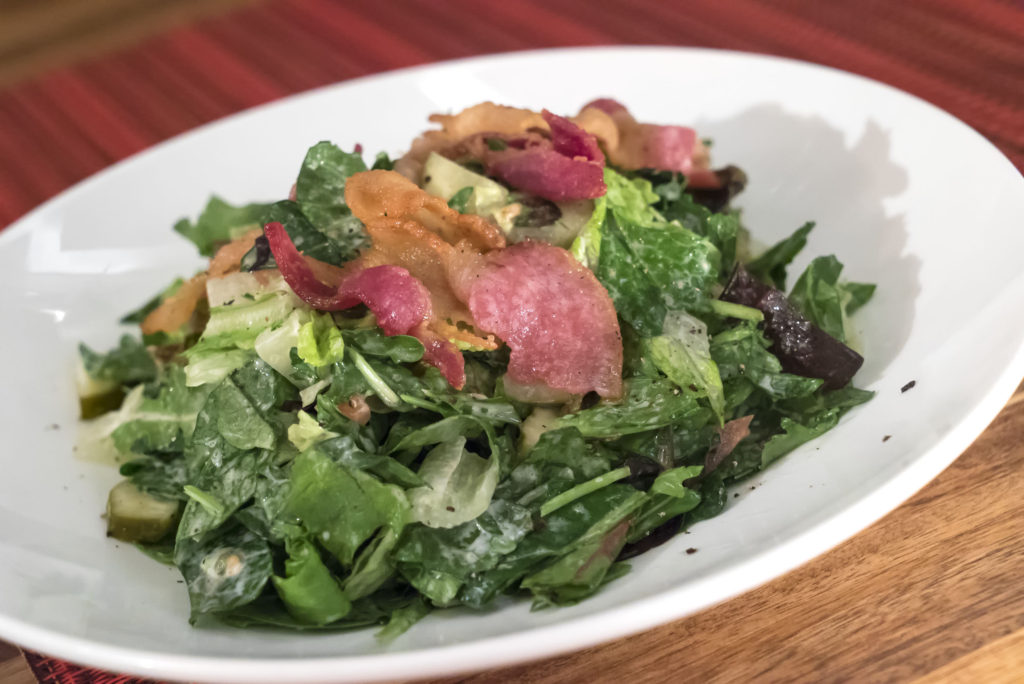
Chopped Salad for Two: This was a BLT salad and probably one of the top salads I’ve eaten in a while. Obviously it contained bacon, lettuce and tomato, but it also had a great pop from pickles and the right kind of dressing that made you think you were actually eating a BLT without the bread.

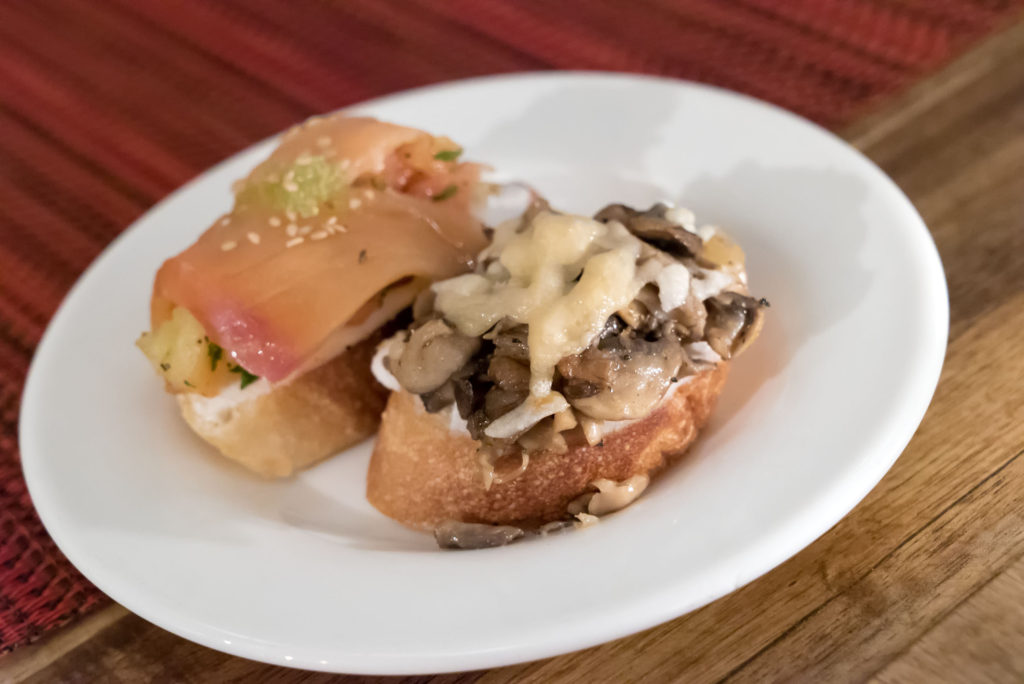
Crostini for Two: Mushroom and cheese, and salmon with goat cheese. Both of these were really good, fresh and crisp with great pops of flavor. Unfortunately I focused my lens on the uglier of the two. The salmon one was very pretty.

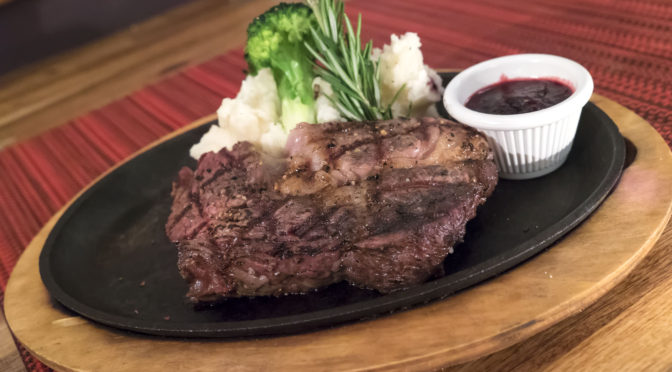
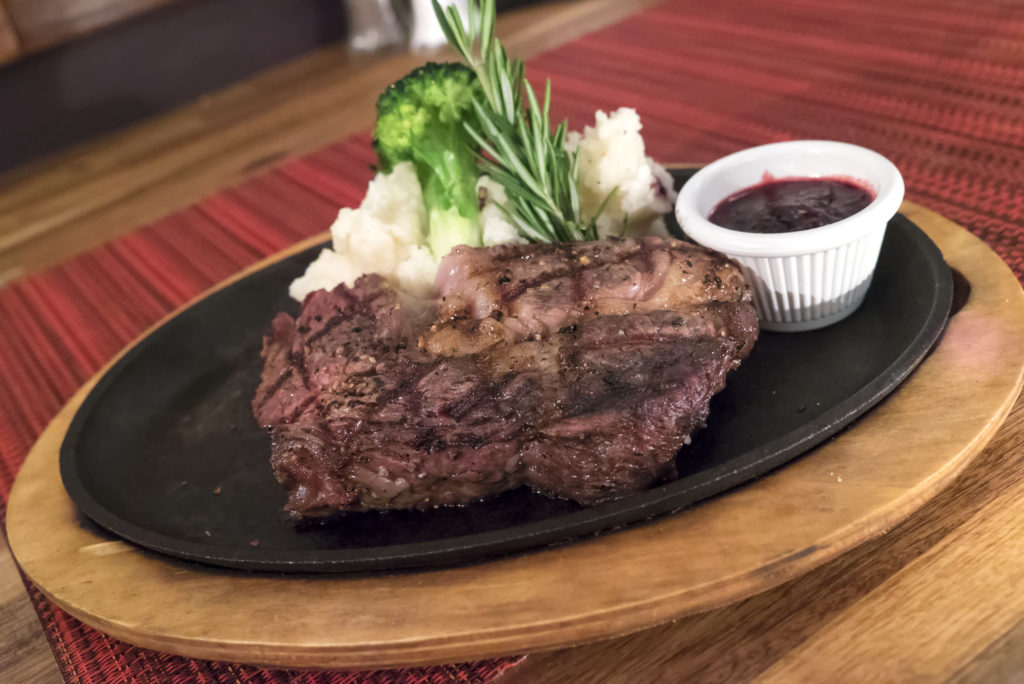
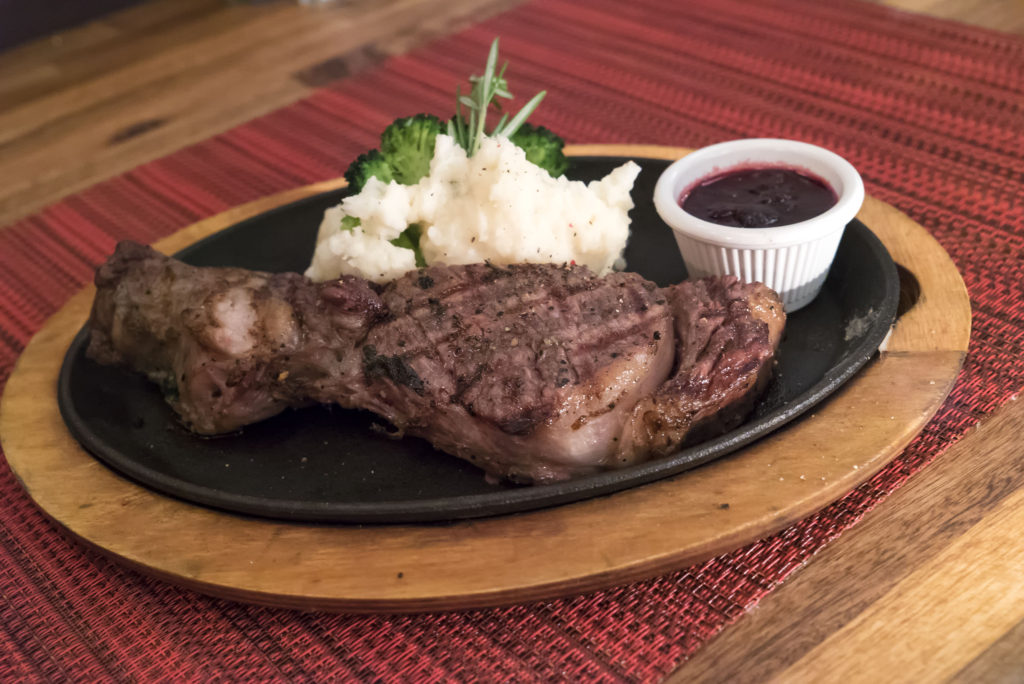
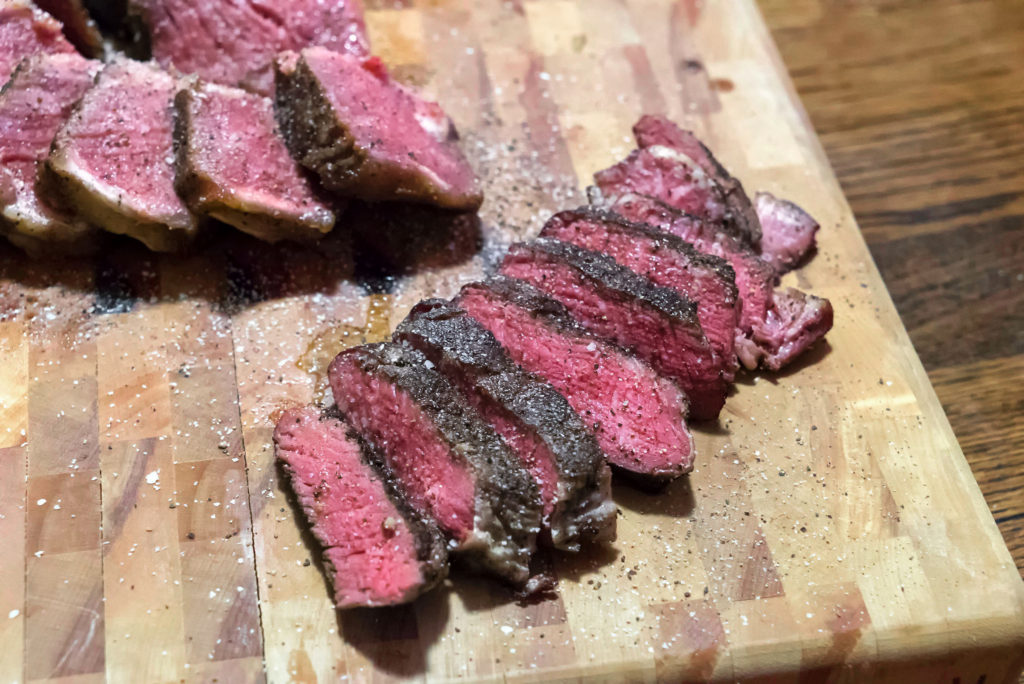
24oz Steak with Grilled Veggies and Mashed Potatoes for Two: The rib eye was cut into two portions rather than served family style and pre-sliced, which was a bad move. As you can see from the pics below, one side was all cap with a little eye (top) and the other side was all eye with a little cap (bottom).

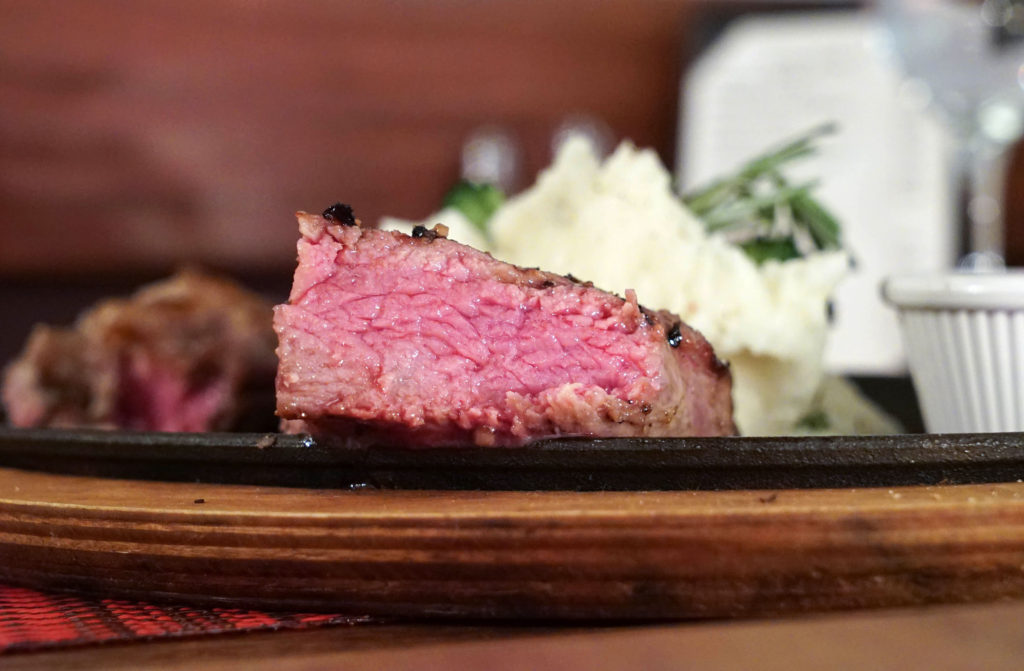
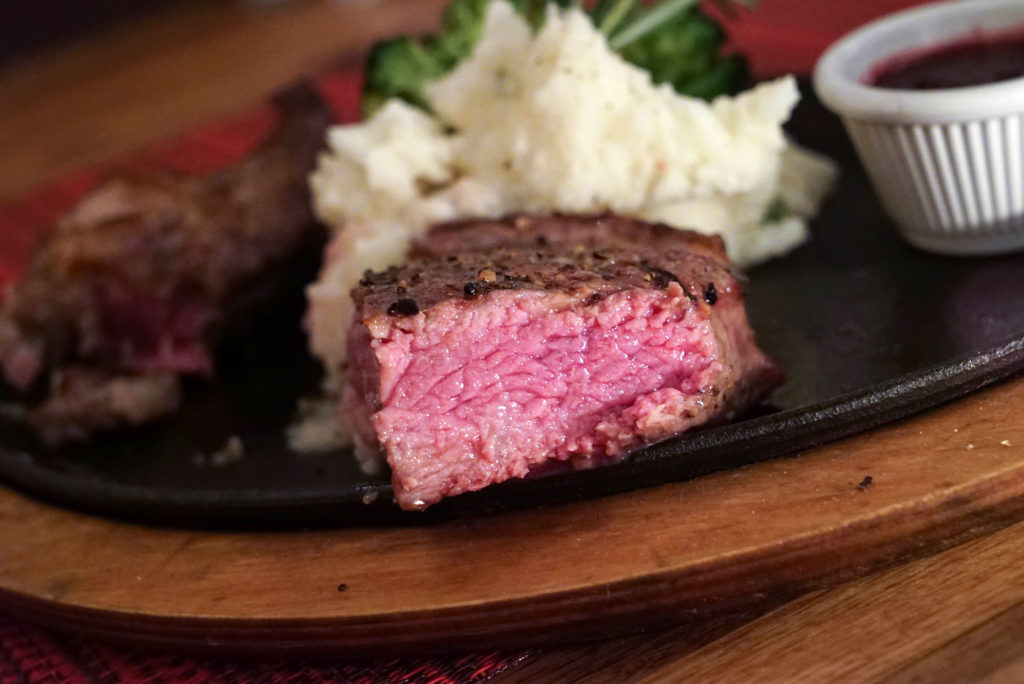
In any event, it was served beautifully on a hot skillet. The grilling method meant less seared edges, but at least they hit medium rare nicely; pretty much dead on.

There was some gristle and inedible fat, but not an overwhelming amount. It could have used a bit more seasoning as well. 6/10.

As for the veggie sides; I felt that they skimped on the broccoli. We each had 1 small head, and it was a shame because the broccoli was actually tasty and not a throw-away. The mashed potatoes were a little on the dry side but not intolerable.

To sum it up, this was a decent deal. I probably wouldn’t do it again, but I’m not bummed that I purchased it. I think it runs about $80, but if you’re considering getting it, make sure you have a good coupon code to knock back the cost a bit.

PHILIP MARIE
569 Hudson St
New York, NY 10014

Sea Grill

The Patina group of restaurants is awesome. If you sign up for their email list they send you a $50 credit to use for your birthday, and they give you a pretty big window of time to come in and use it. We used my wife’s credit for a dinner at Sea Grill recently.

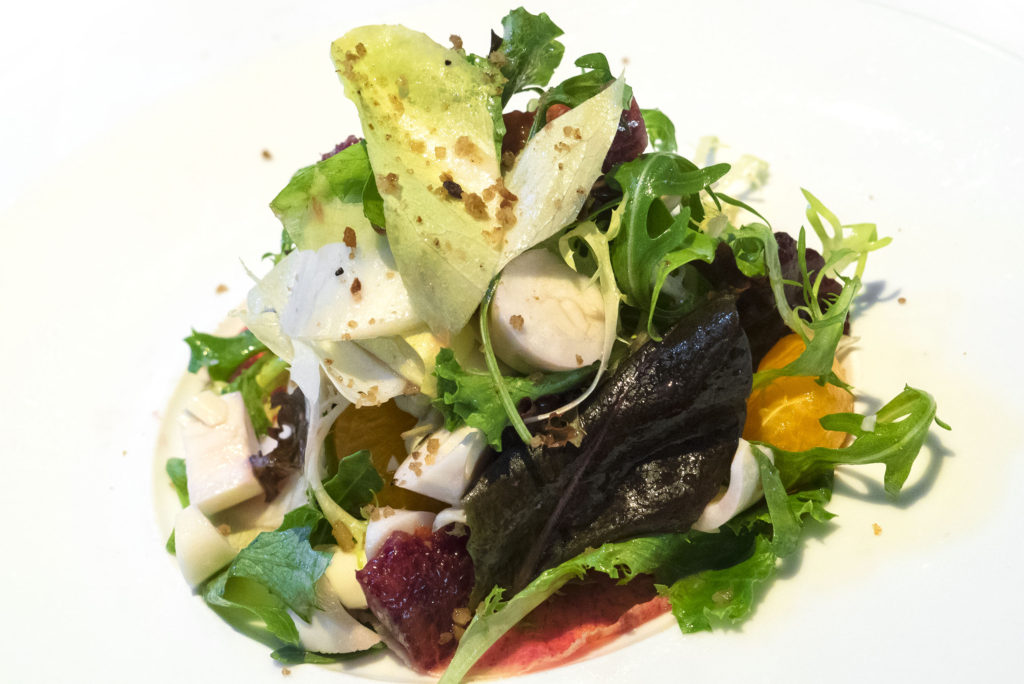
I started with a hearts of palm salad. I was hoping for more hearts of palm, expecting less leafy greens, but it was good nonetheless; just a bit tangy from all the citrus.

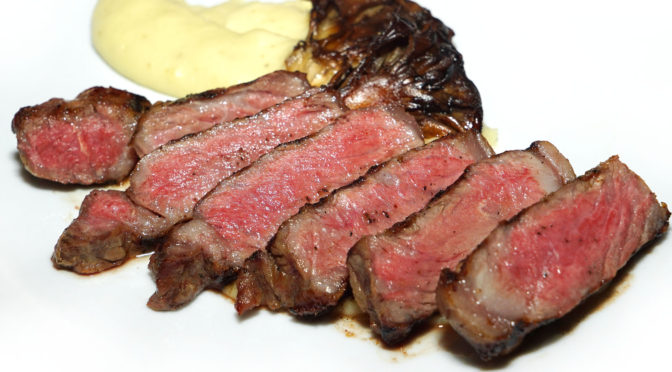
I had the wagyu strip loin for my entree. At $56 this is a very small portion. The meat was tender and perfectly cooked, however, so that’s a plus. The cut could have used a bit more char on the edges, but it still comes in at a 7/10. It would have been an eight if it wasn’t for the price/size ratio, even with wagyu in mind.

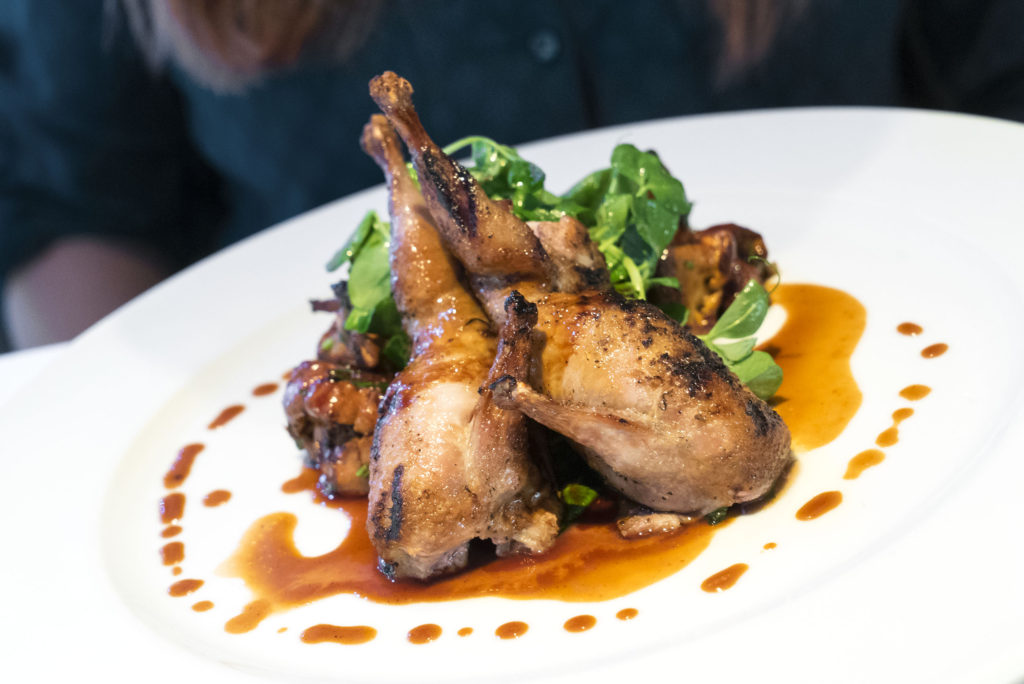
My wife tried the oyster stuffed quail. It sounded really interesting, but ultimately the flavor combination was a bit odd. The bird itself had a nice game, iron and blood flavor, which is exactly what you want sometimes when getting down on game birds. I think those oysters just threw it off for me.

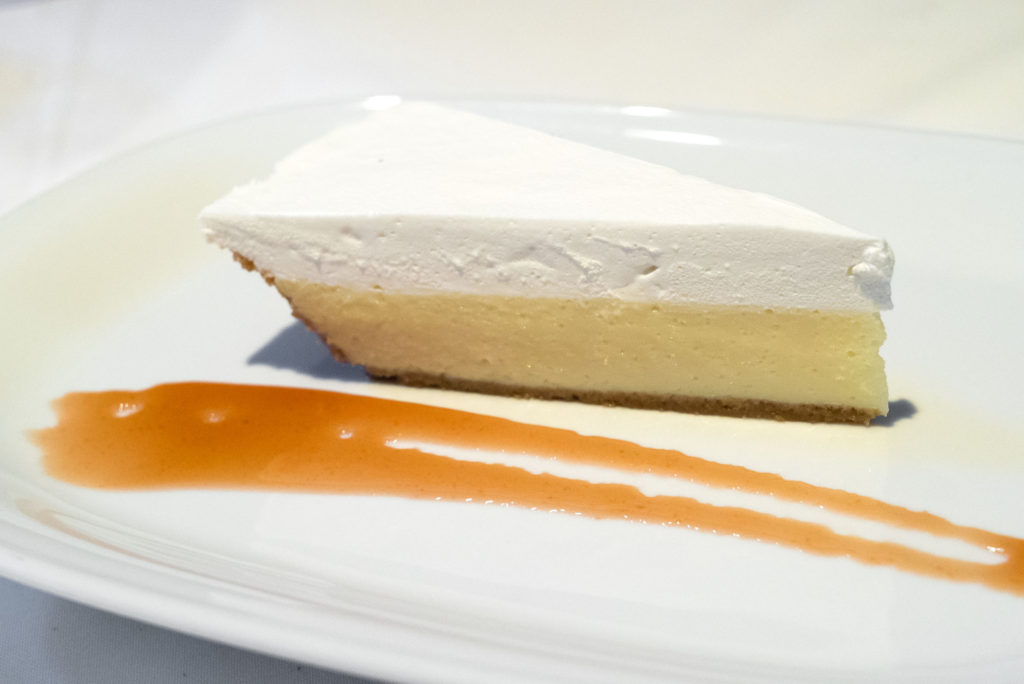
For dessert we shared the key lime pie. This was tangy and tart, and it was a generous-sized piece; easily good for sharing.

SEA GRILL
Rockefeller Center
19 W 49th St
New York, NY 10020

Ikinari Steak

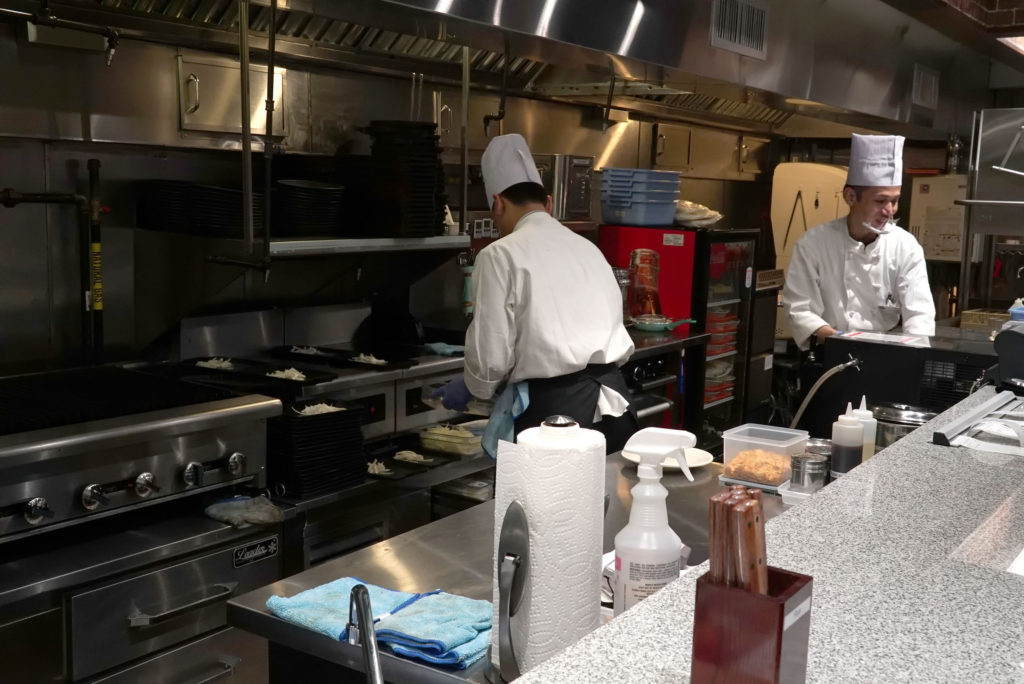
Formerly the location of Prime & Beyond, Ikinari switches up this dedicated steak spot from Korean to Japanese, only this joint lowers the price tag “big league” and creates a casual, standing-only environment.

What a great bargain for good quality meat! All of their beef is choice grade from Aurora Packing in Illinois, and wet-aged at least 40 days. Most importantly, the beef is cooked properly and treated with respect. But what’s surprising is that, for a “fast food” style joint, this place can actually compete with mom and pop restaurants (and even some big name steakhouses) on quality and flavor, for sure. And definitely on price.

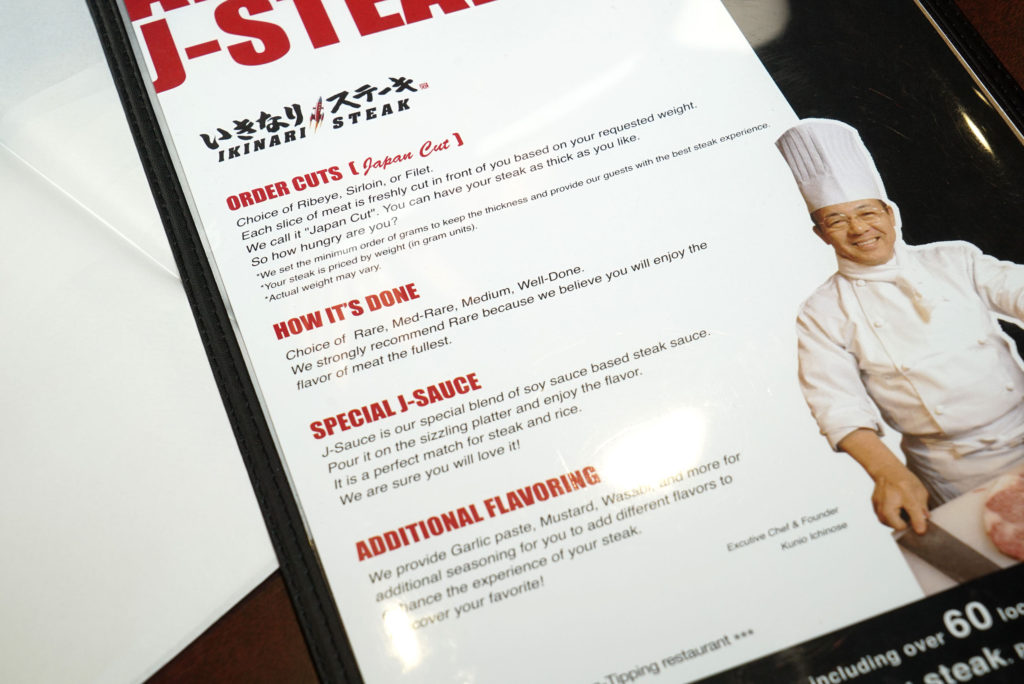
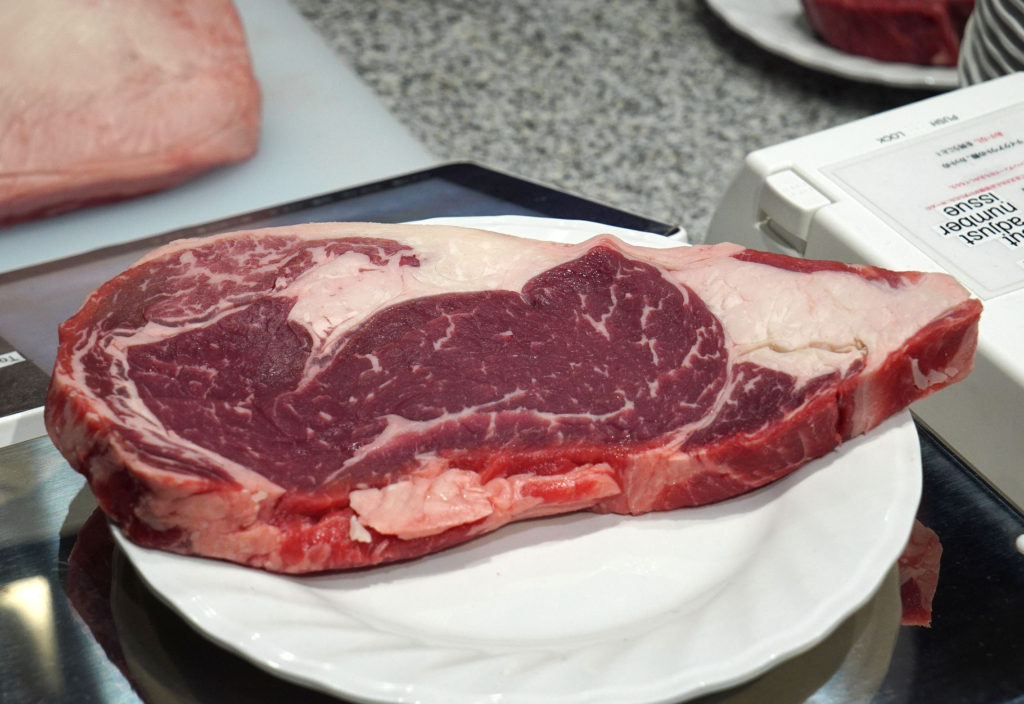
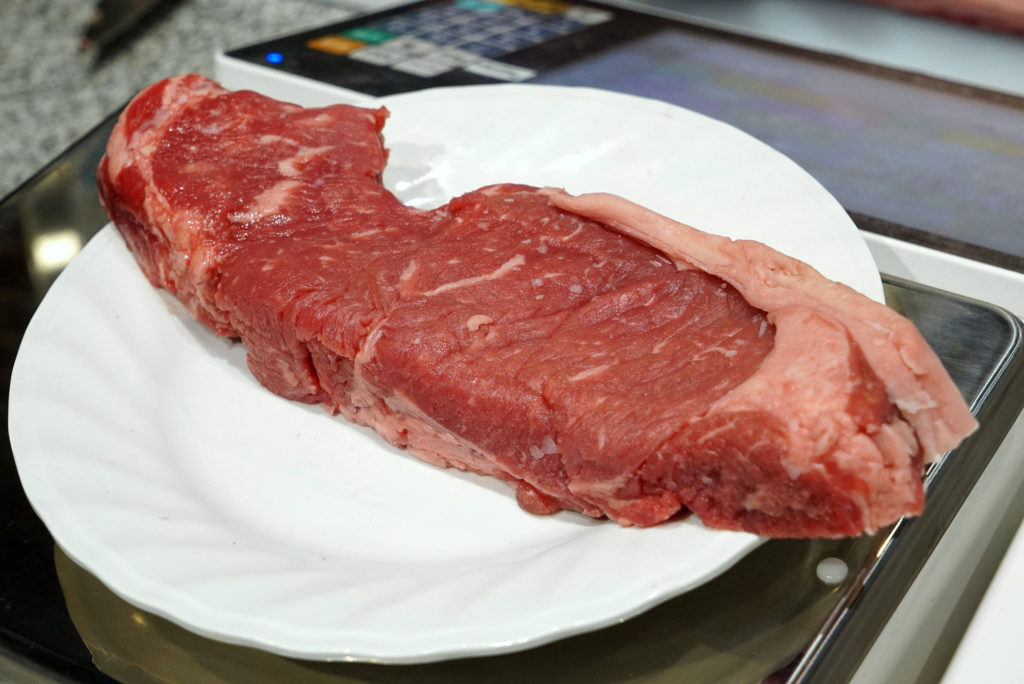
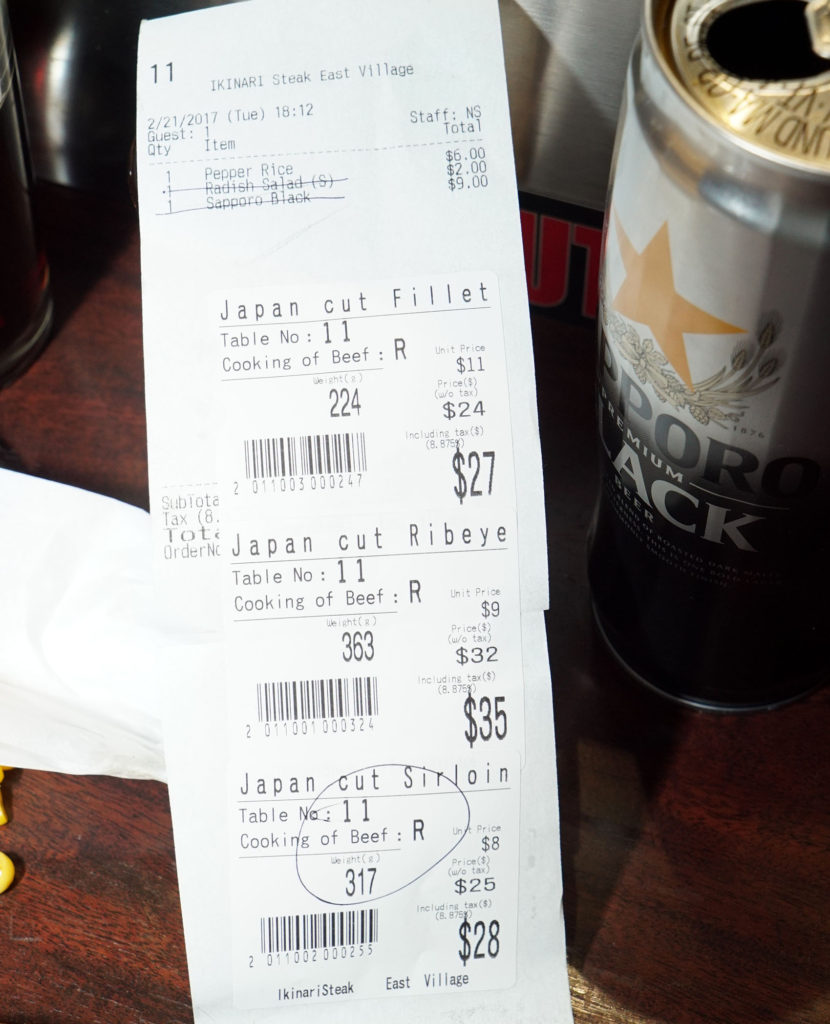
Here’s how it works: You pay 8-11 cents per gram, telling the butchers exactly how thick you want your cut of steak. They offer filet, sirloin and rib eye.

Naturally, I had a proper sized steak cut from each:

I’m fat. Here’s what my bill would have looked like, had this not been a press/media event:

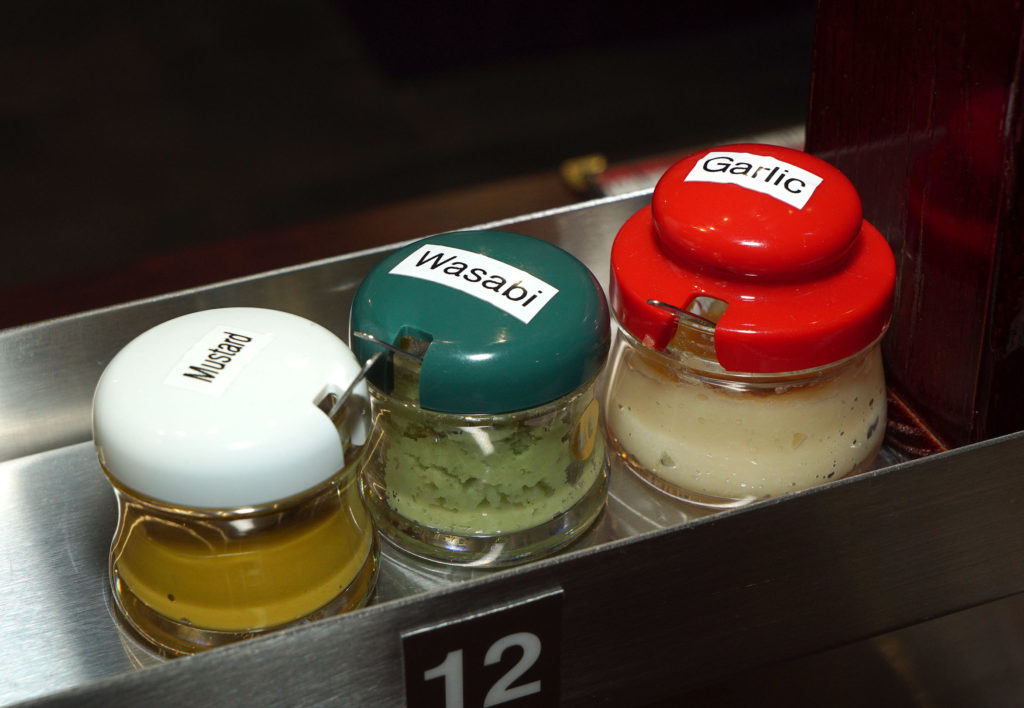
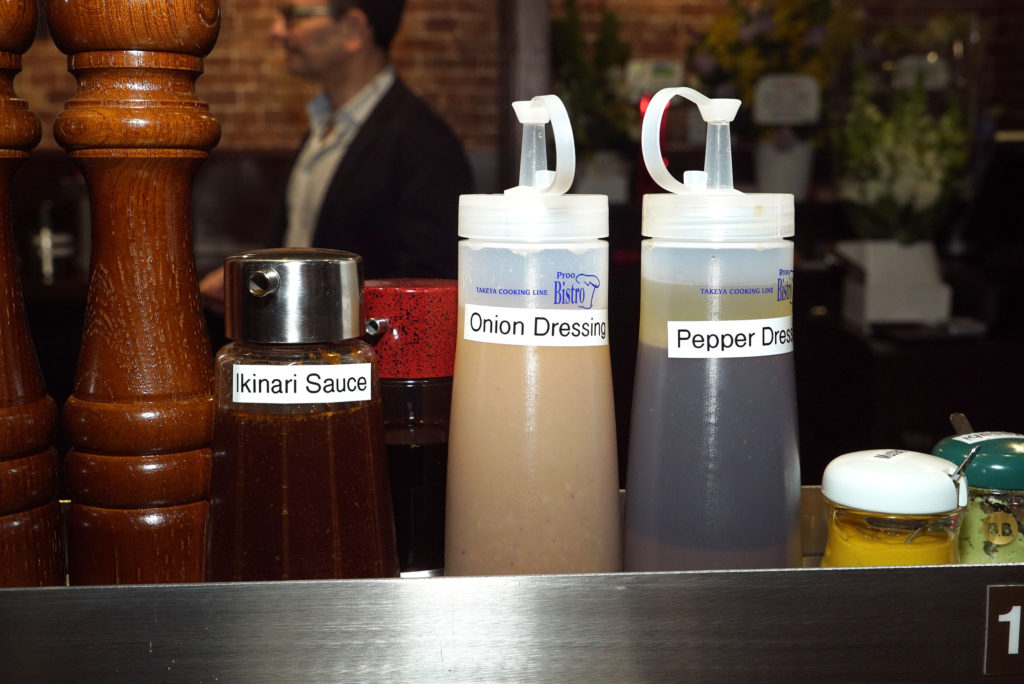
There are a variety of sauces and condiments to use for both your salads/sides and steaks. I was prone to keep hitting the wasabi.

The Ikinari sauce is thicker and sweeter, while the hot steak sauce has a little bit of spice and is a thinner liquid. Both are soy based.

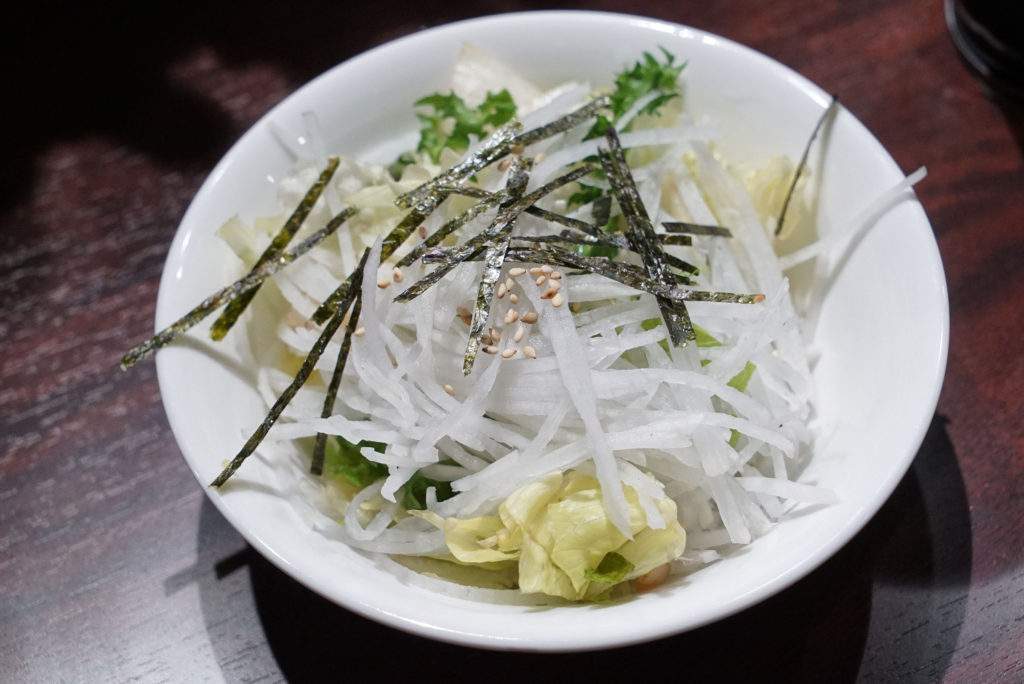
The onion and pepper dressings went nicely with the radish salad. This was a small size:

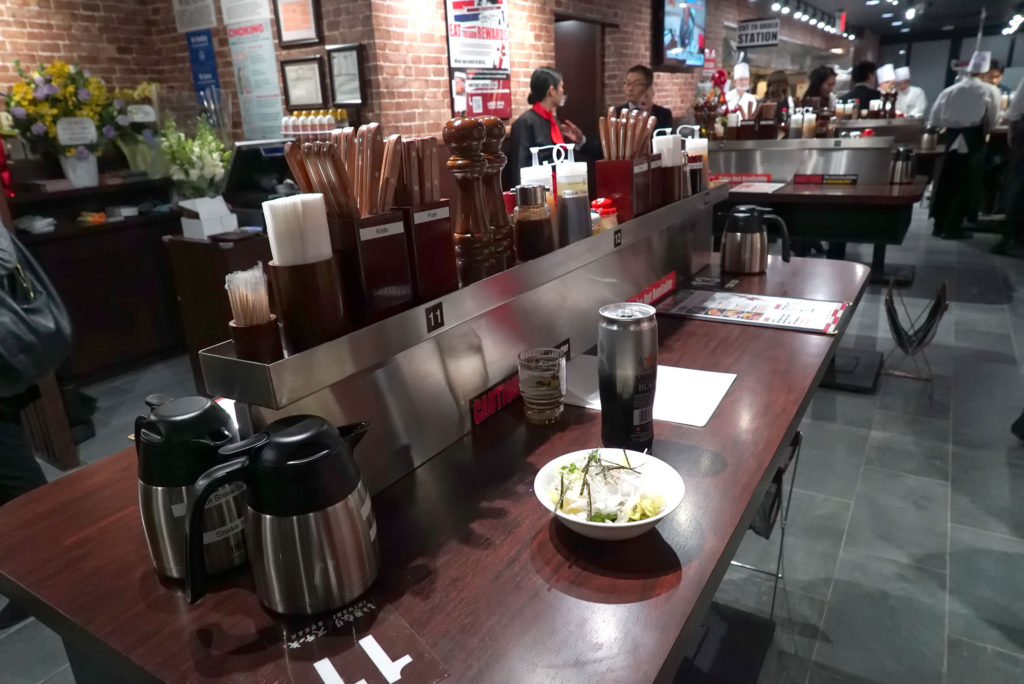
So after choosing your cuts, the guys cook it up for you and you wait for them to bring it over to your standing/eating area.

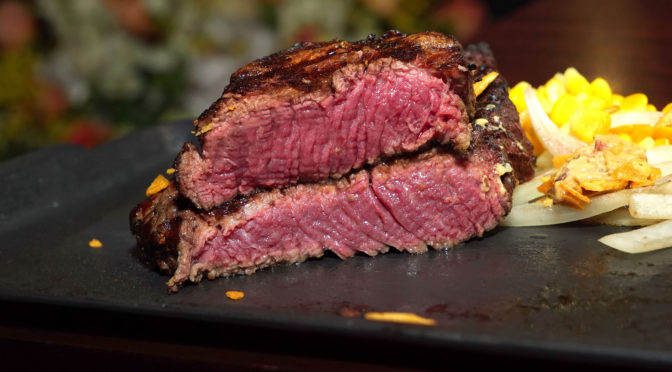
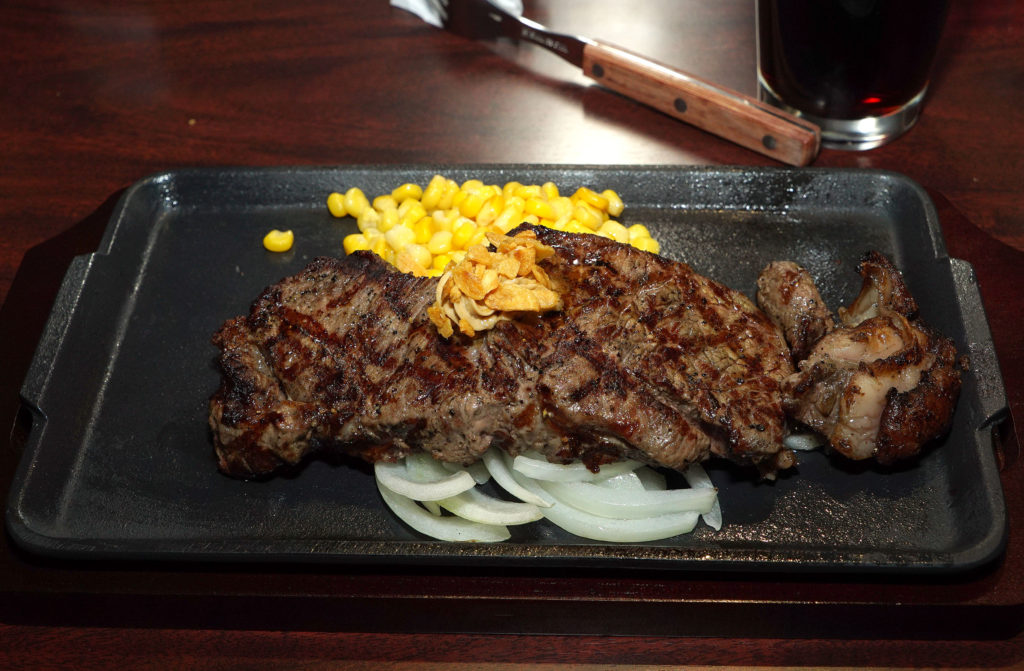
Very casual! The steaks then come out sizzling on a cast iron plate with corn and onions.

Here are some more shots of that sirloin:

They serve the steaks rare, so that you can continue to cook it to your desired temperature directly on the hot skillet. I pretty much left mine as-is.

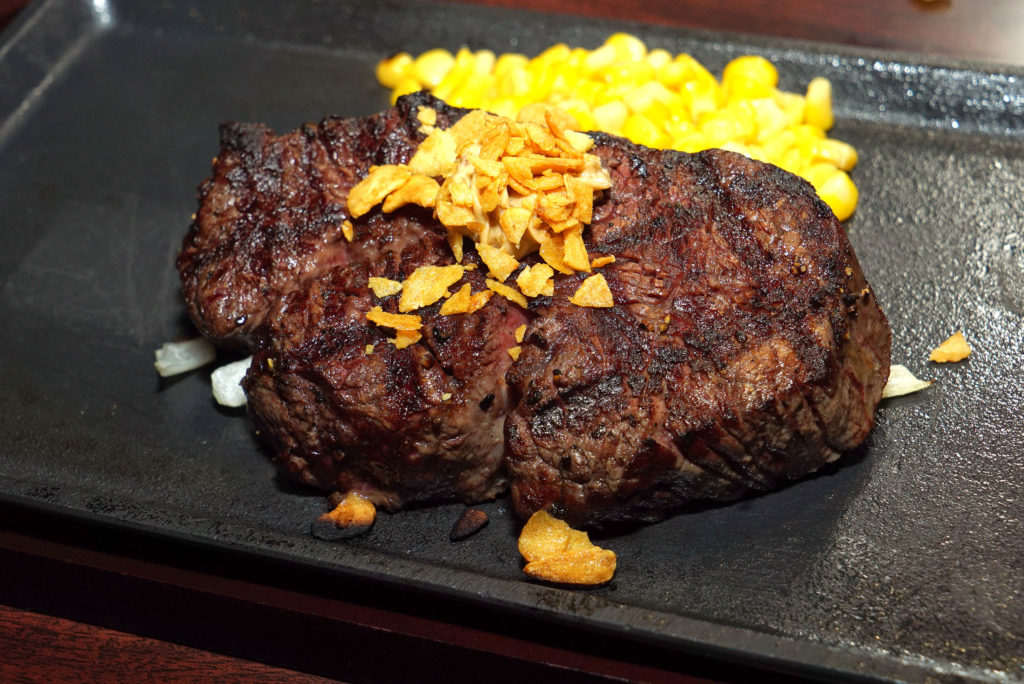
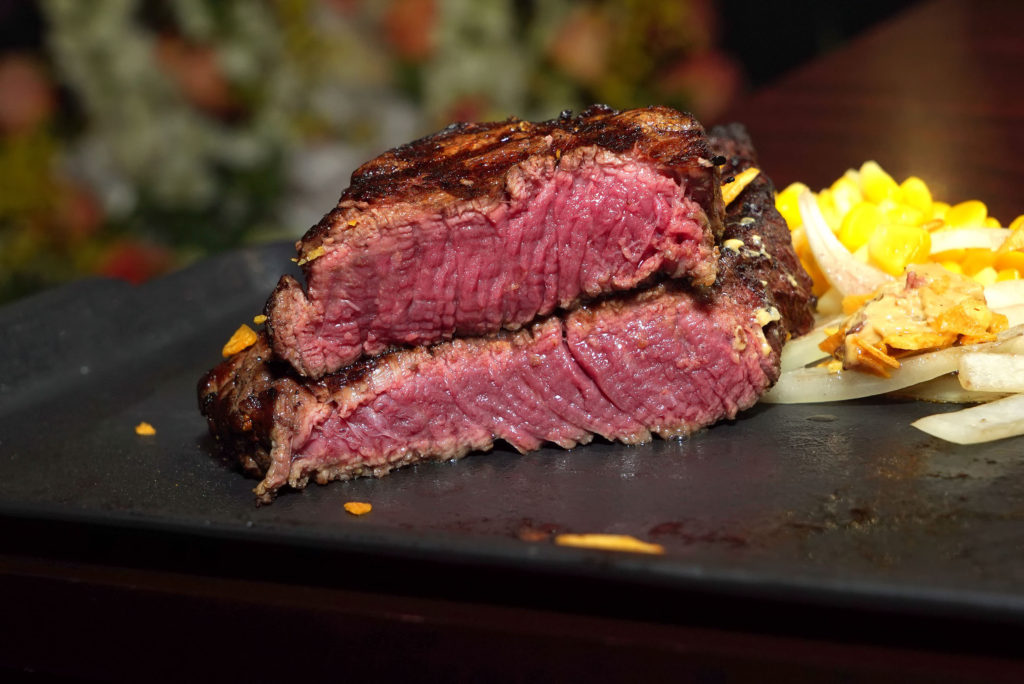
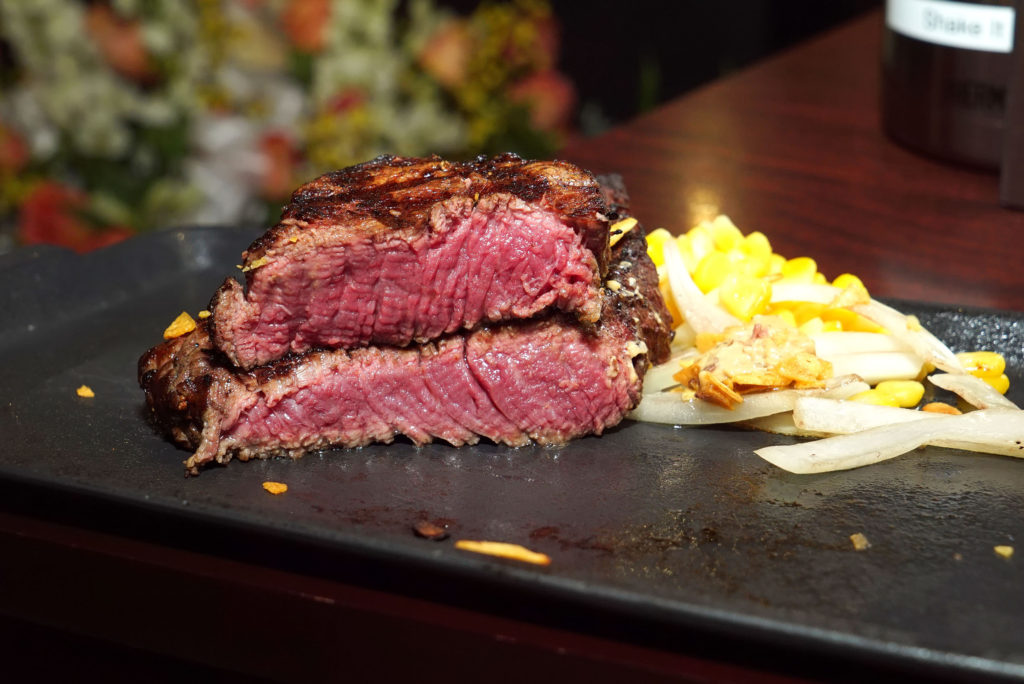
Here’s the filet:

Freaking HUGE for just $27.

And cooked perfectly inside.

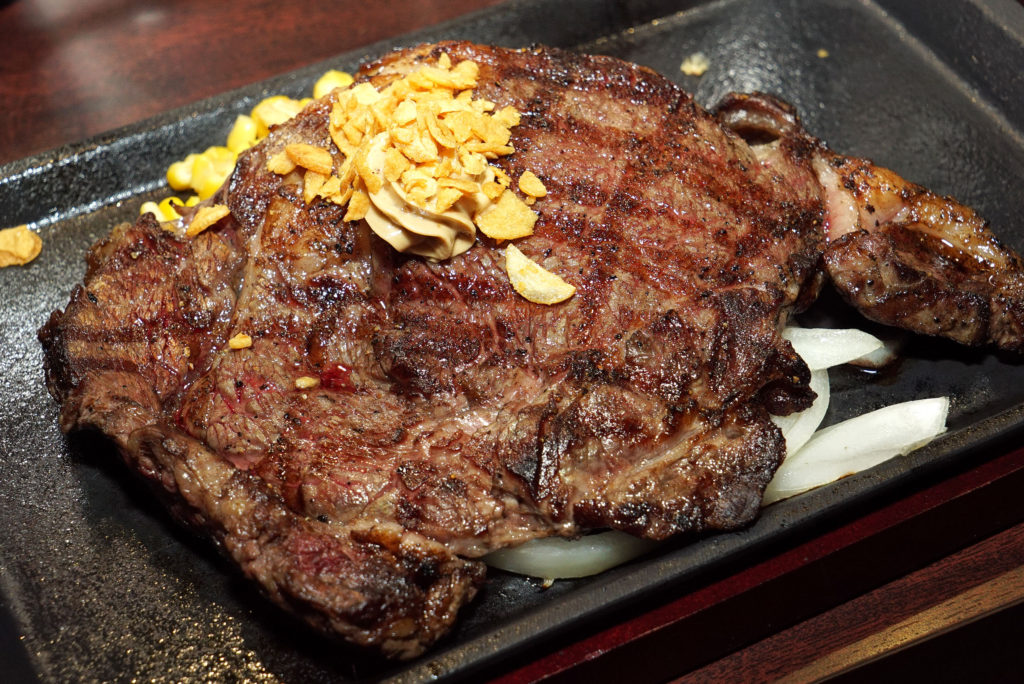
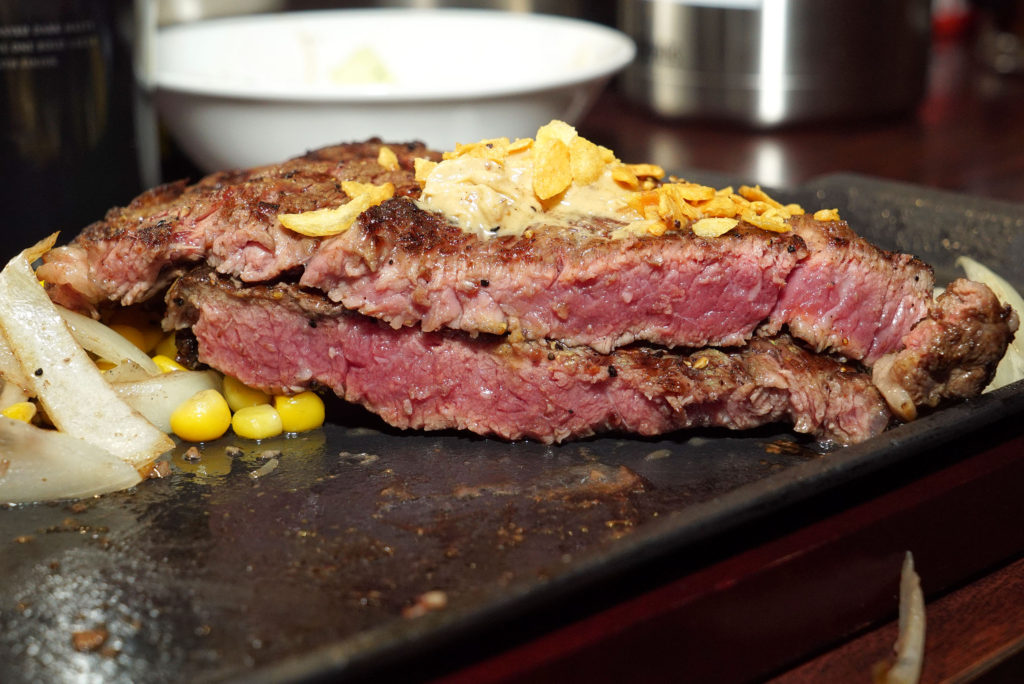
My rib eye was cut a bit on a diagonal, and thinner than the other two, but no matter. It was excellent, and since I ate all of these steaks myself, like a real man, I didn’t mind so much.

The filet was tops, with rib eye close behind (if not tied), and sirloin next. If I had to put numbers on them, they’d all be in the upper 70th percentile for flavor, especially if you add some of the earthy sauces into the mix.

When you think about how much steakhouses are charging for on-par and sometimes lower flavor scores than these, it makes you question the entire steak scene!

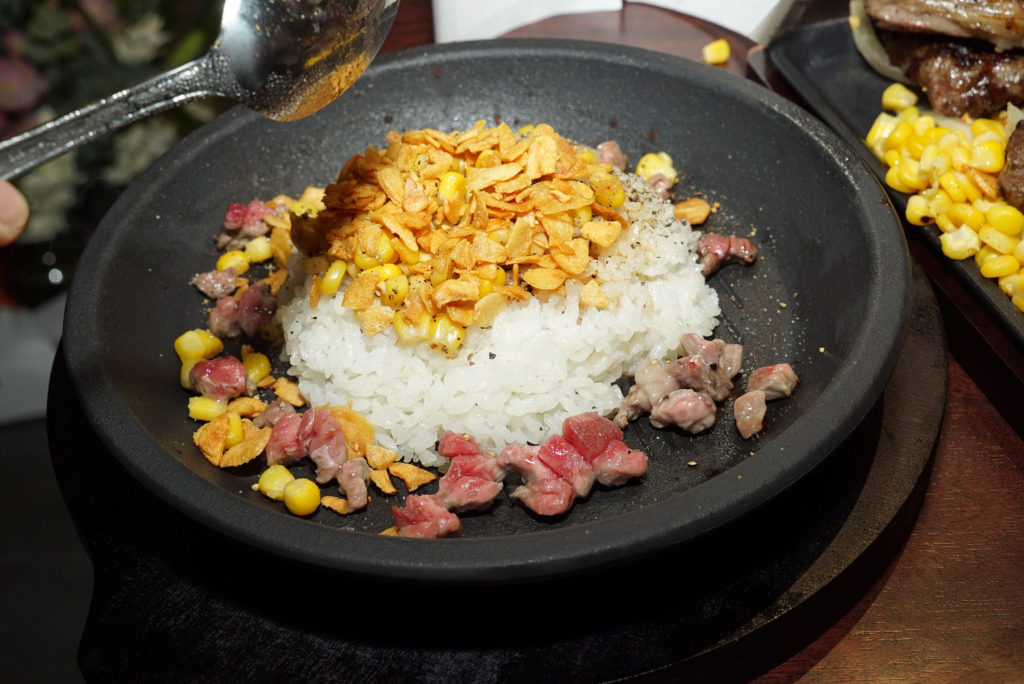
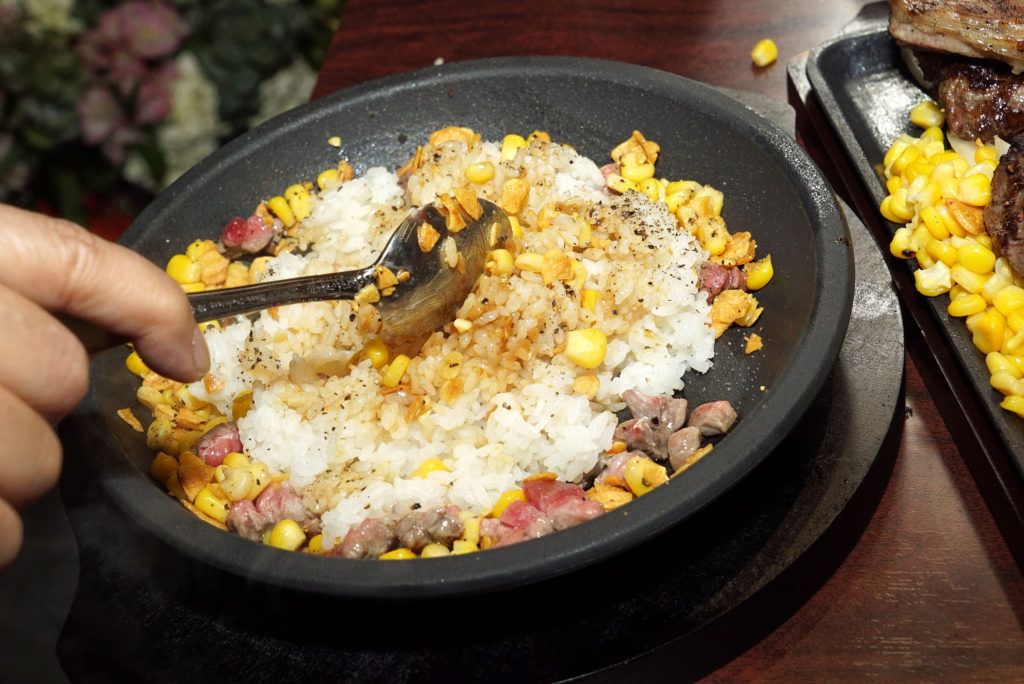
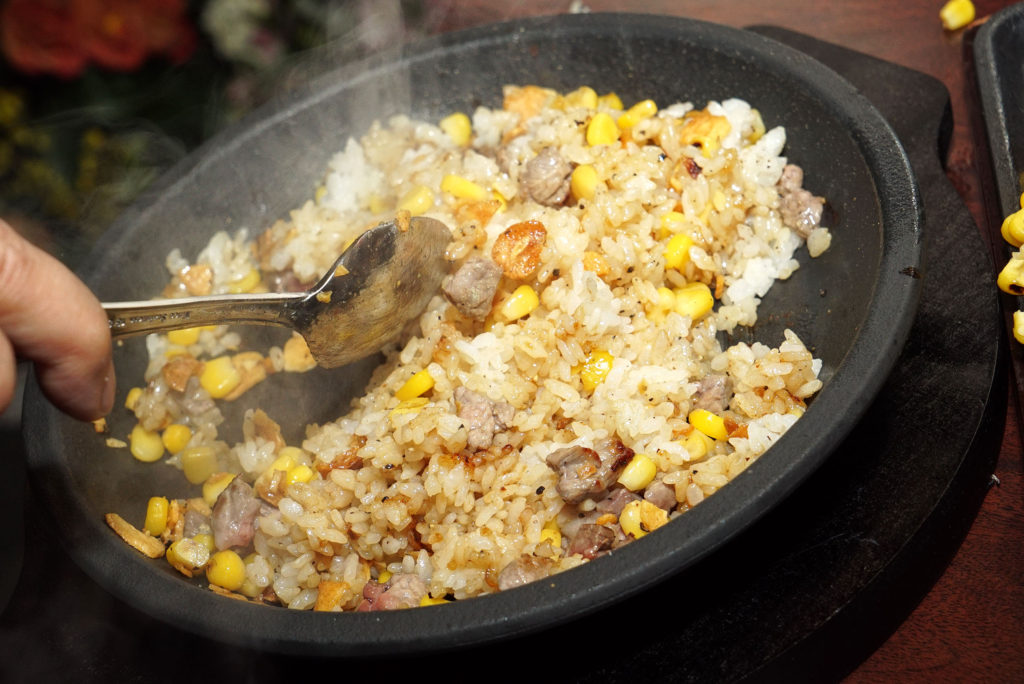
Another thing worth mentioning: the pepper garlic rice was wildly tasty! It even had bits of steak thrown into it, and it also comes out on a sizzling cast iron plate.

Mix it all up and then let it sit and sizzle, so that a good, tasty crisp develops on the bottom of that rice.

Essentially, this place is everything that you wish Tad’s could be. You go into a place like Tad’s (do you even go in?) with high hopes and a hunger for steaks while you’re on the go. But, without question, it fails you, every time. The meat sucks, and  it’s cooked like garbage.

Ikinari won’t let you down. I’ve eaten hundreds and hundreds of steaks in this great city, and I can tell you that this is a fantastic value, striking a bizarre but fascinating and attractive balance between steakhouse quality and budget dining. Give it a shot! Just don’t go there when your feet ache, because, as I said earlier, STANDING ONLY!

IKINARI STEAK
90 E 10th St
New York, NY 10003

Butcher & Singer

Butcher & Singer overall score: 90

My wife and I were in Philly for the weekend to see family and take in some sights. After a long day of walking around, we hit Butcher & Singer for a late evening carnivorous meal.

Flavor: 9

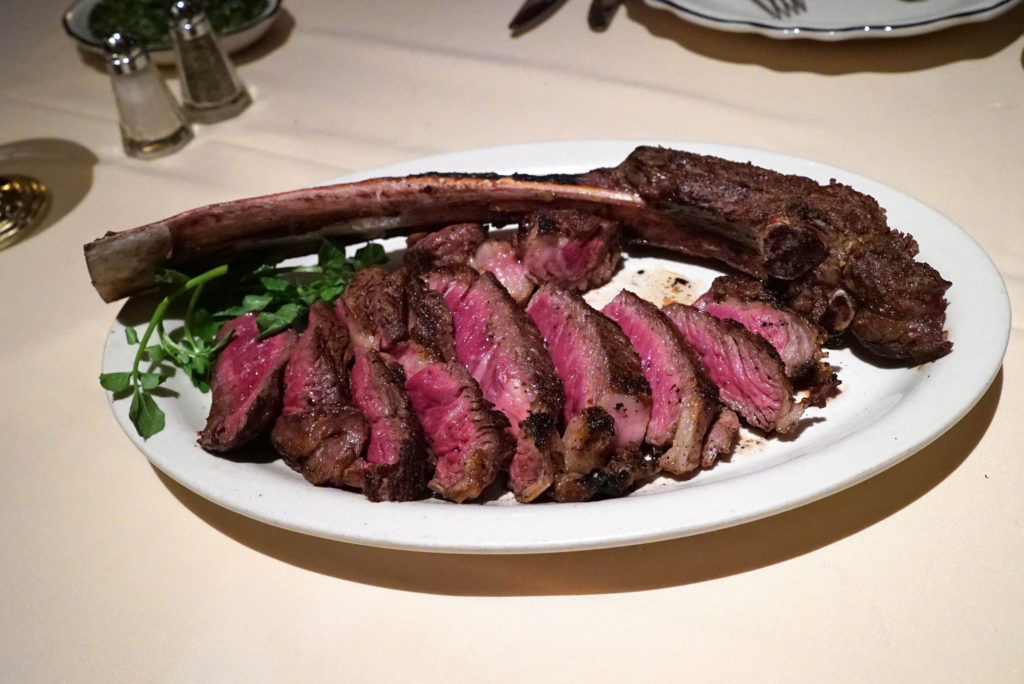
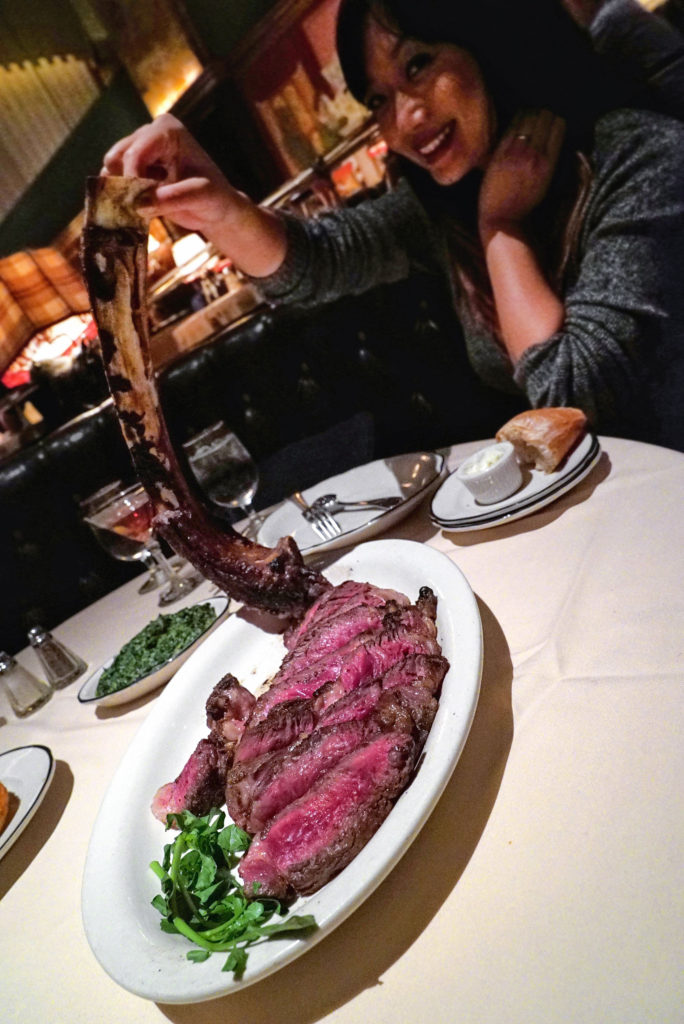
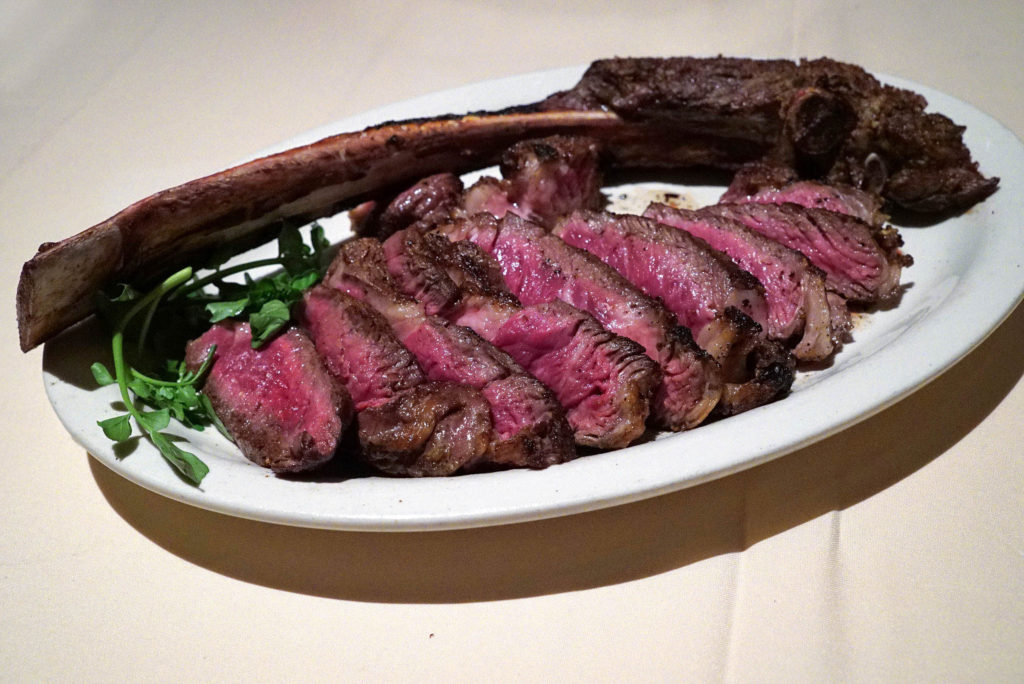
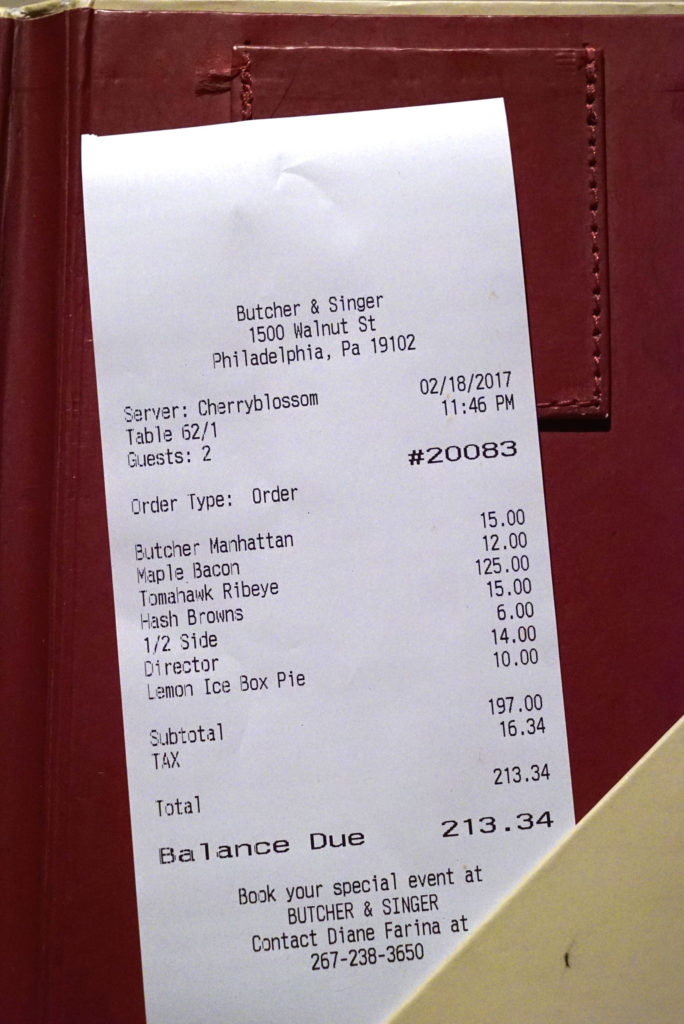
We ordered their Pat LaFrieda 50oz tomahawk rib eye. This thing was monstrous.

But, as you can tell, it was cooked to a perfect medium rare.

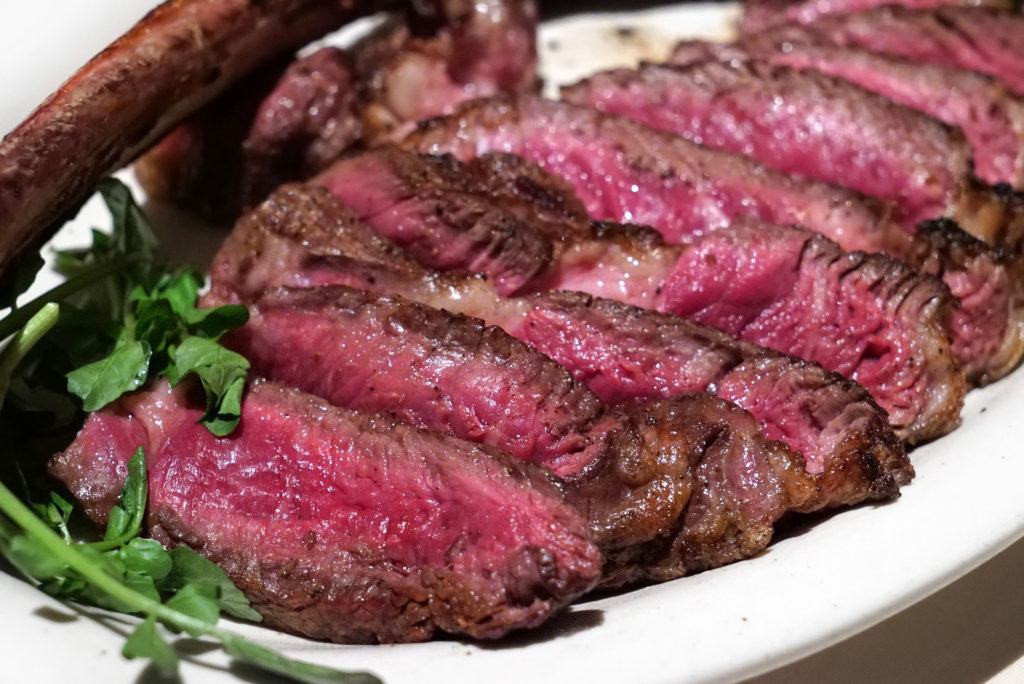
Let’s get right in there:

Gorgeous. And they did a fine job on this thing, especially considering there was no aging done to the cut. That bone adds a lot of flavor into the meat though. It was perfectly seasoned with a good crust on the outside, and the flavor penetrated deep into the muscle tissue for a nice even bite. I just missed that aged funk a bit.

Choice of Cuts & Quality Available: 9

A strip, two filets, two rib eyes, and multiple sized porterhouses are available here. Not too shabby, but also nothing over and above. In addition, there are no dry-aged selections. They do a great job cooking these fuckers though, so that’s a plus. And all the meats are LaFrieda, so you know you’re getting top notch quality here.

Portion Size & Plating: 9

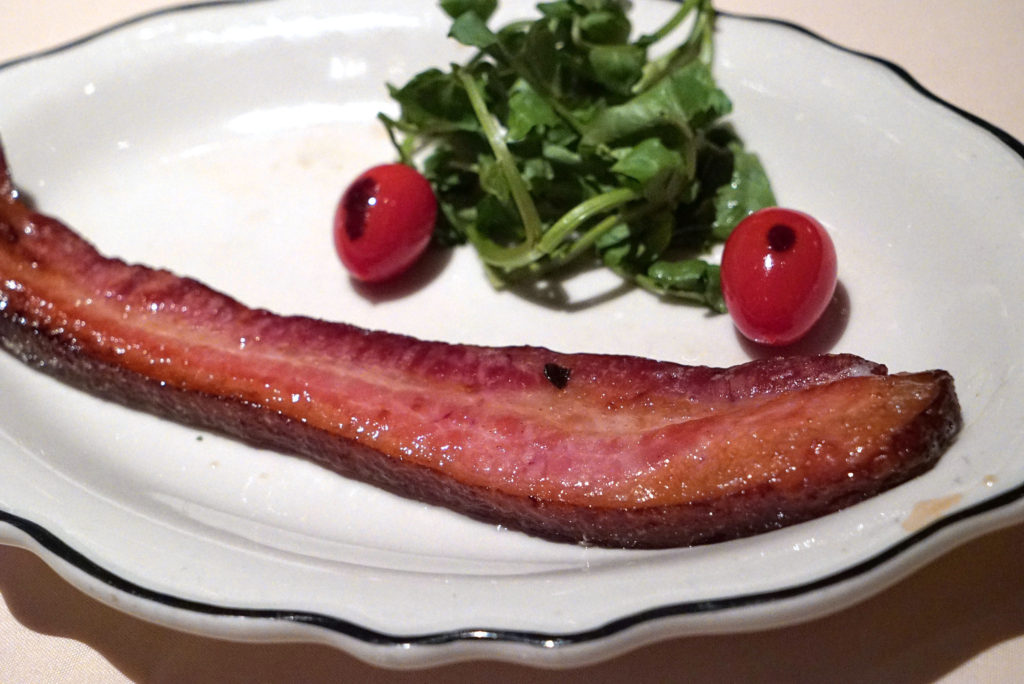
Portions are all nicely sized here, with the exception of the bacon. I felt there could have been two strips for $12. Plating is simple and basic – nothing fancy.

Price: 9

I mentioned the bacon above. In addition, I felt that the tomahawk was a bit pricey for a non-aged cut at $125. Their porterhouse seemed to be a better deal for two diners. In any event, it was still well worth the shell-out, and they ended up comping our dessert, which was very nice of them.

Bar: 9

I wish this bar was bigger, because I would definitely give it a 10 based on the quality of the cocktails alone. There was some lounge seating as well, which was nice, but ultimately this bar was a bit small for such an immensely high-ceilinged joint.

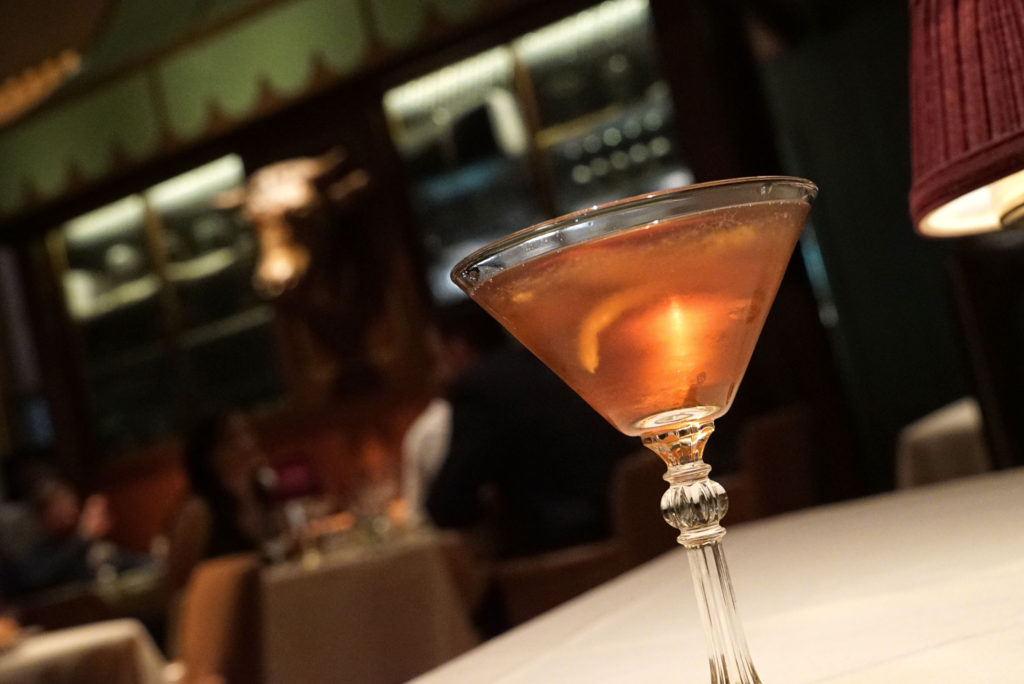
In any event they mixed a perfect martini.

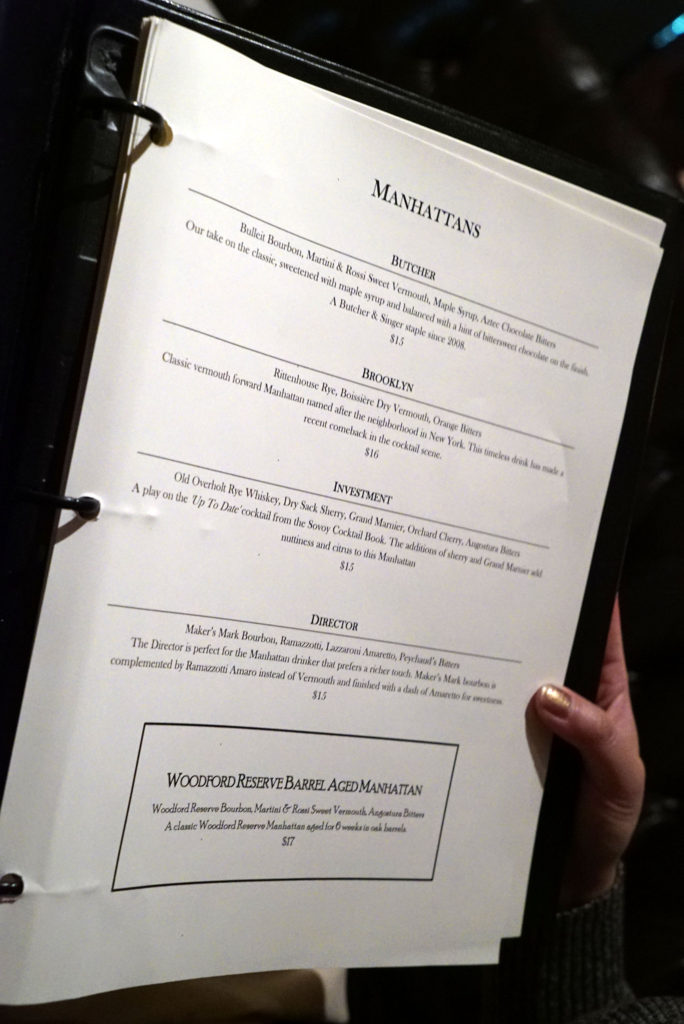
And they sported an awesome cocktail menu, with an entire page dedicated to Manhattans.

Definitely a cool place to hang out, even if you’re not eating.

Specials and Other Meats: 8

There are pork chop and lamb chop selections here, as well as a girly chicken entree. Not bad, but I’ve seen better.

Apps, Sides & Desserts: 8

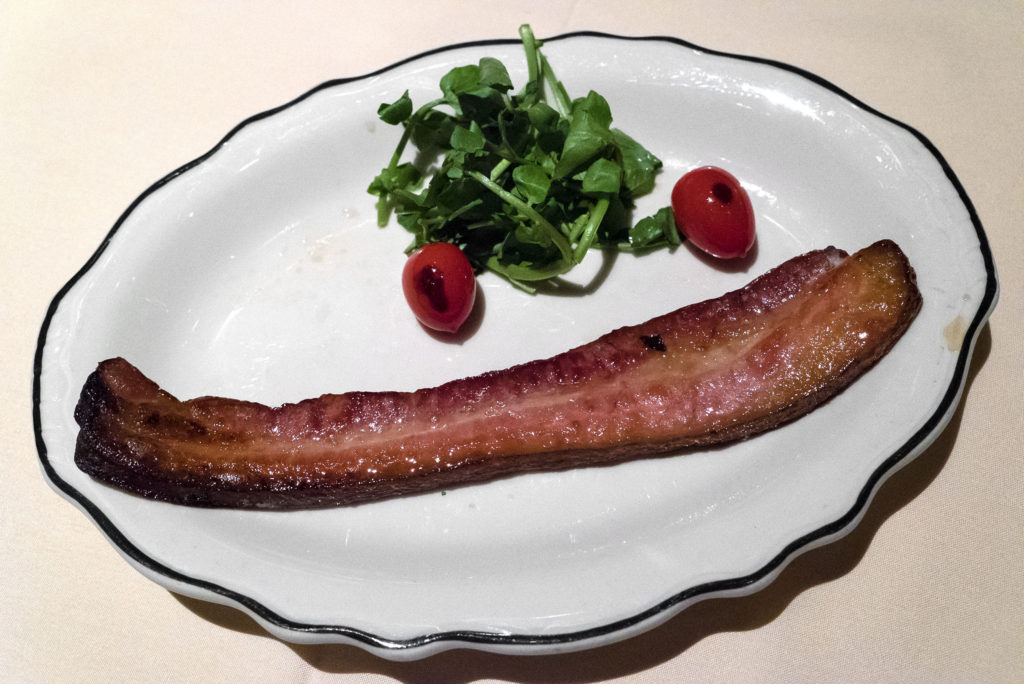
We started with the thick cut maple bacon, which was awesomely sweet and savory at the same time.

Yes, that bacon is smiling at you.

I wish there was one more slice for that price of $12. Oh well.

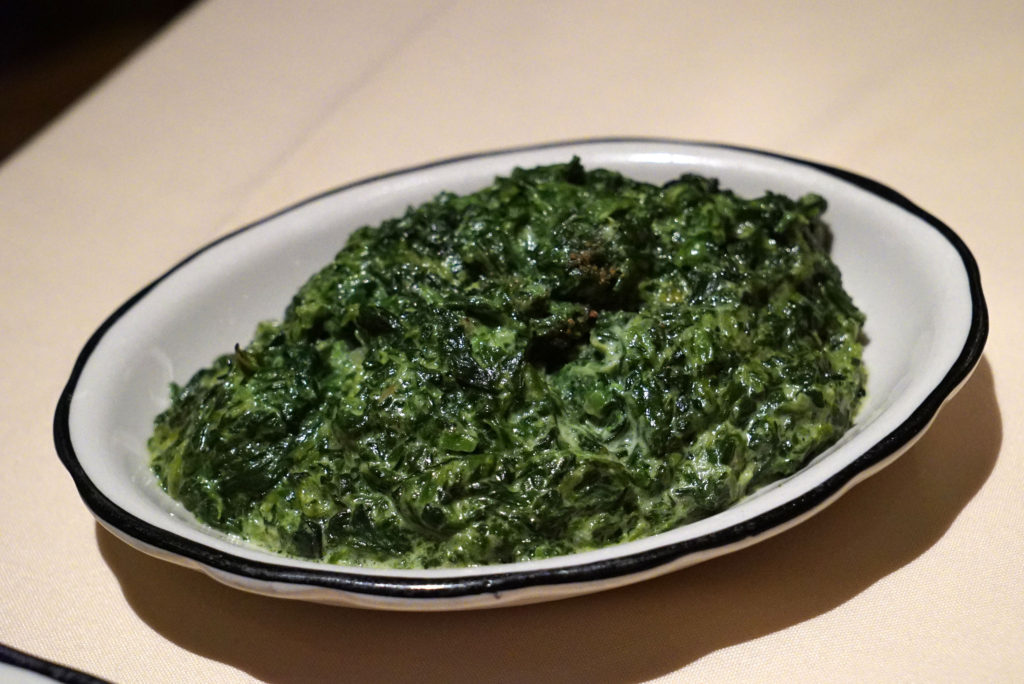
For sides we went with a half portion of creamed spinach, which was generous for just $6. This was just okay. It did the job.

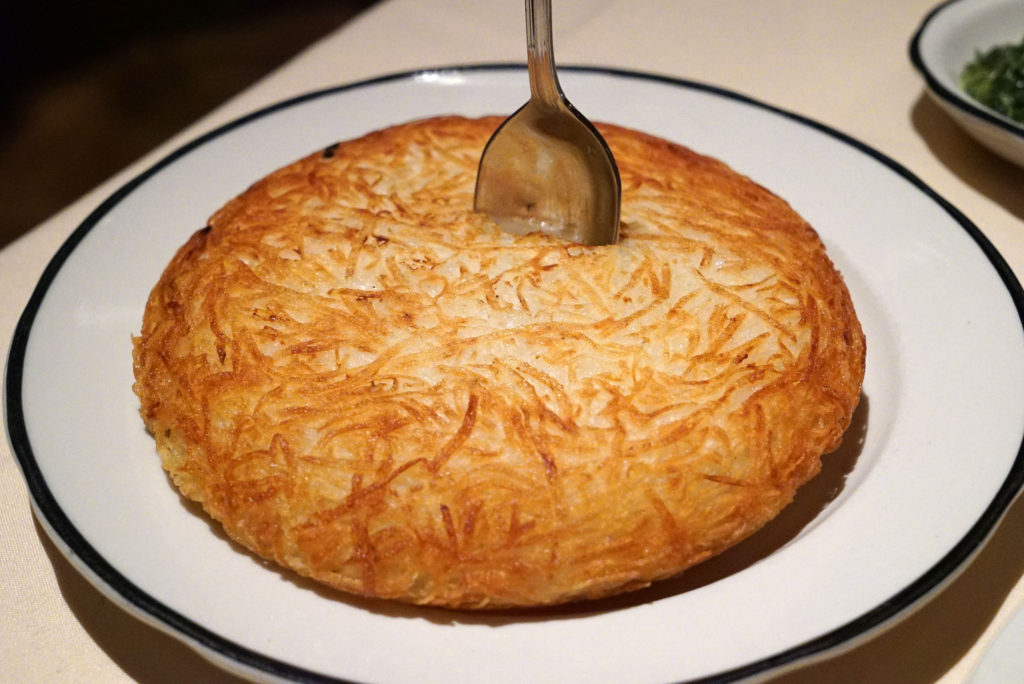
The stuffed hash browns were excellent. This was basically a latke of shredded potatoes with chunks of diced potato and sour cream inside. Fried to a crisp. Excellent for leftovers with fried eggs on top.

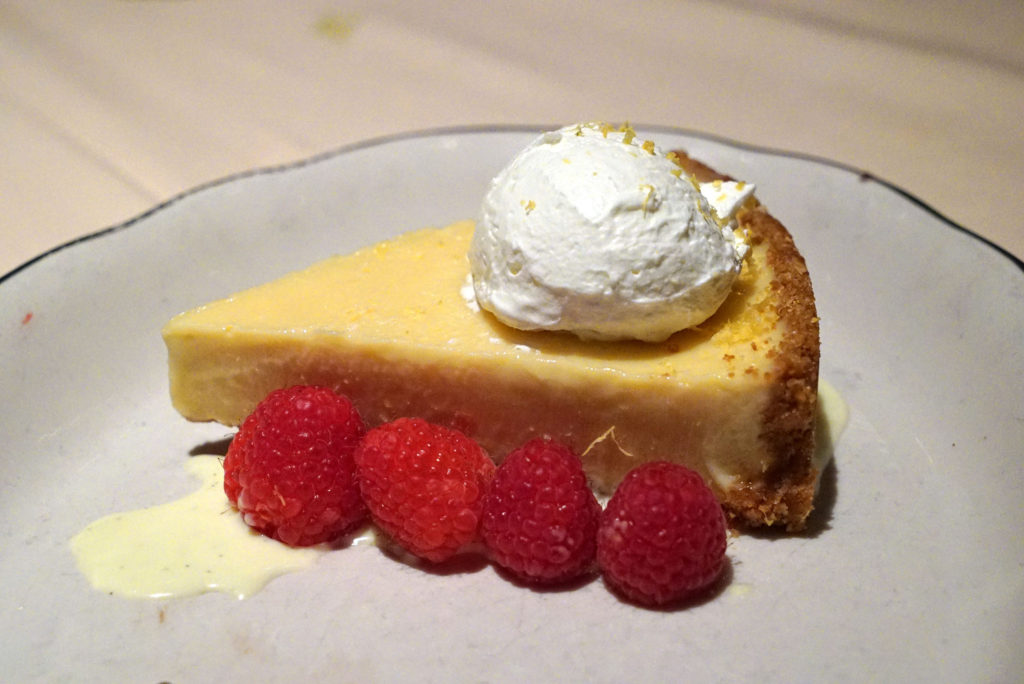
For dessert we went with the ice box lemon cake, which was similar to a key lime pie, only frozen. I liked this very much.

Seafood Selection: 9

There’s a great deal of nice looking seafood on the menu. Branzino, swordfish, shrimp, lobster and salmon. We also got a peek at the seafood tower app from across the restaurant and it looked marvelous. Not to mention they also had some east and west coast oyster varieties that were being offered on special.

Service: 10

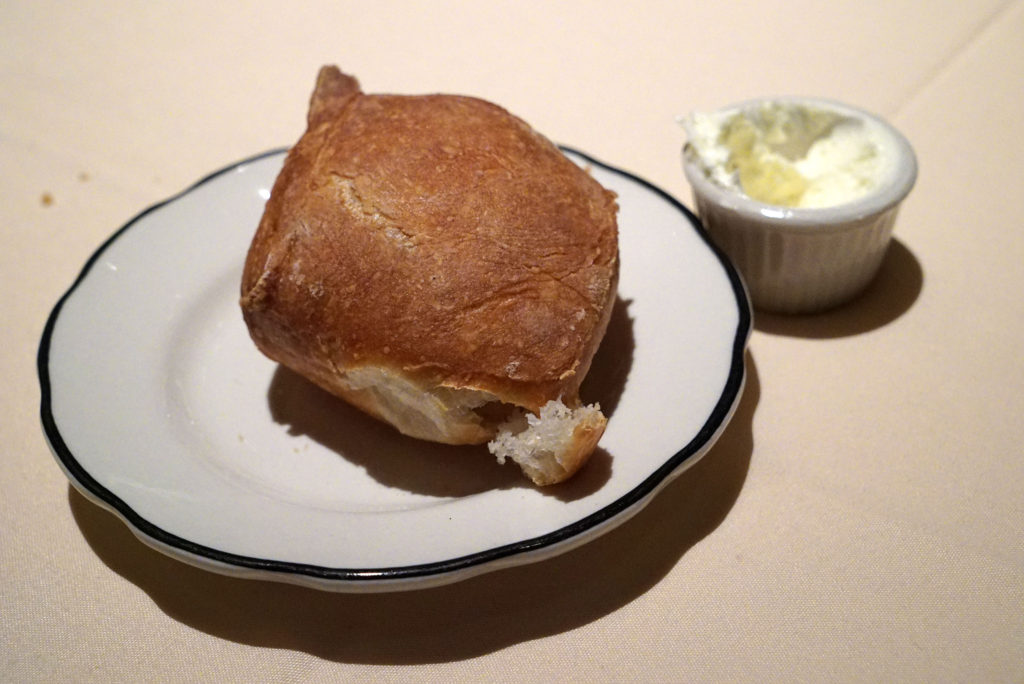
Our waitress was awesome. She knew her meats in and out, and she was quick with answers to my questions about the beef itself, where it came from, whether it was aged, etc. Also, the bread was good. It was served with a soft, whipped butter, and it was warm and fresh.

Ambiance: 10

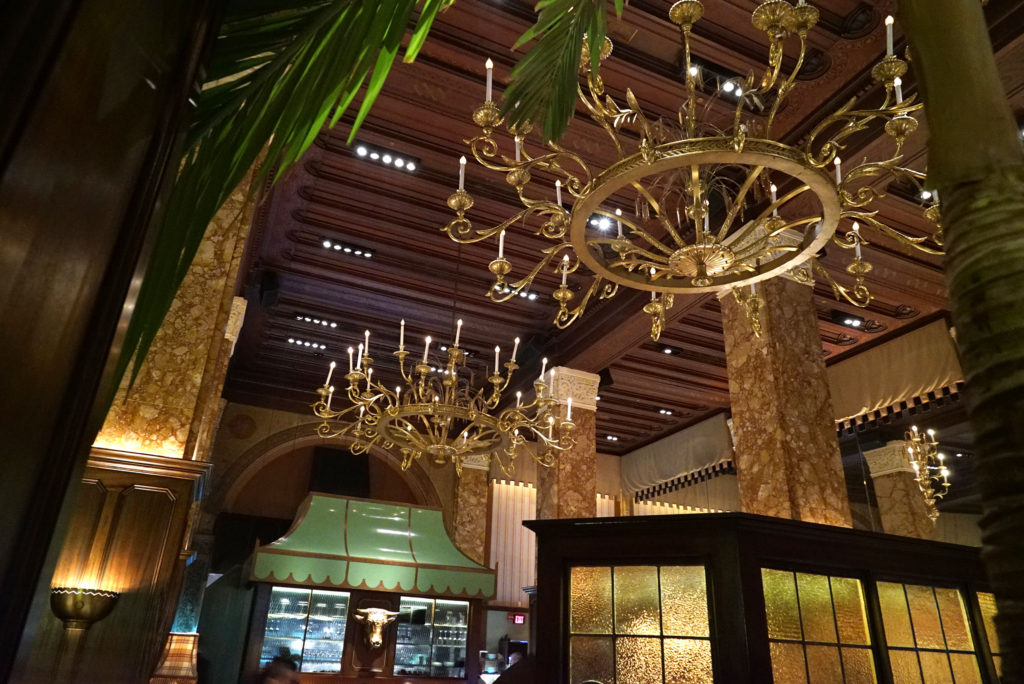
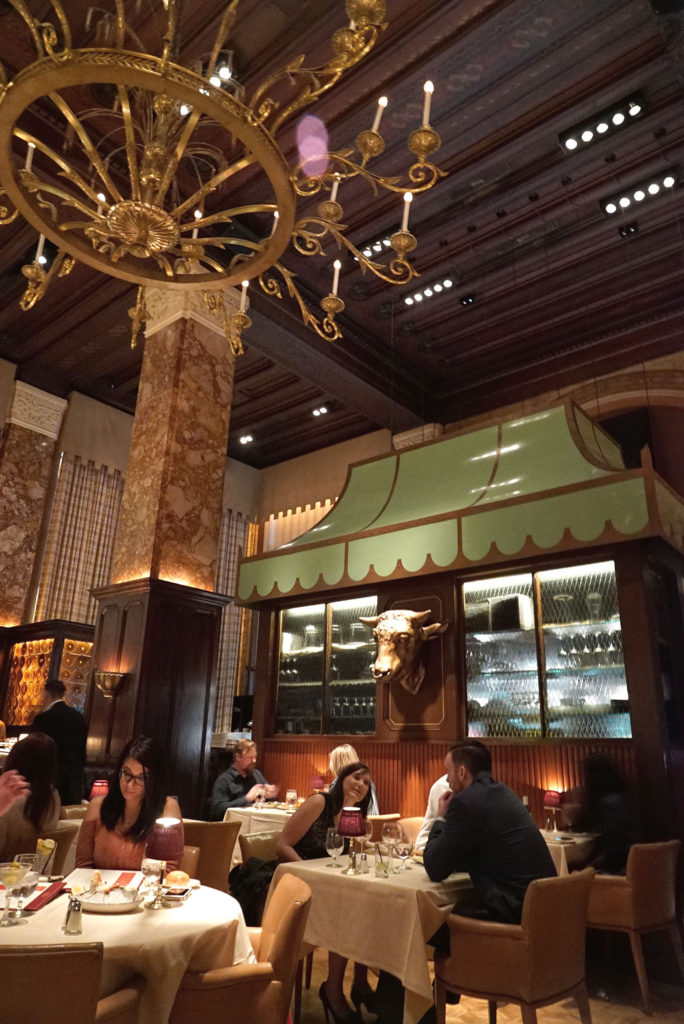
Fantastic. I am guessing this was an old bank that was converted into a steakhouse due to the incredibly high ceilings.

And they’ve got a nice bull head in the rear.

They play fancy 1920’s music, which is a nice change up from the typical trendy bullshit I’m hearing in NYC these days. Bravo.

BUTCHER & SINGER
1500 Walnut St
Philadelphia, PA 19102

Jubilee

Jubilee is a gorgeously decorated midtown east French restaurant that was founded by Eric Macaire, and is co-owned with Chef Luc Holie and his spouse Ilda. When you step into this joint, you feel like you’ve entered someone’s home, and are dining in their living room. Not only is the decor and atmosphere inviting, but the staff is very warm and friendly as well.

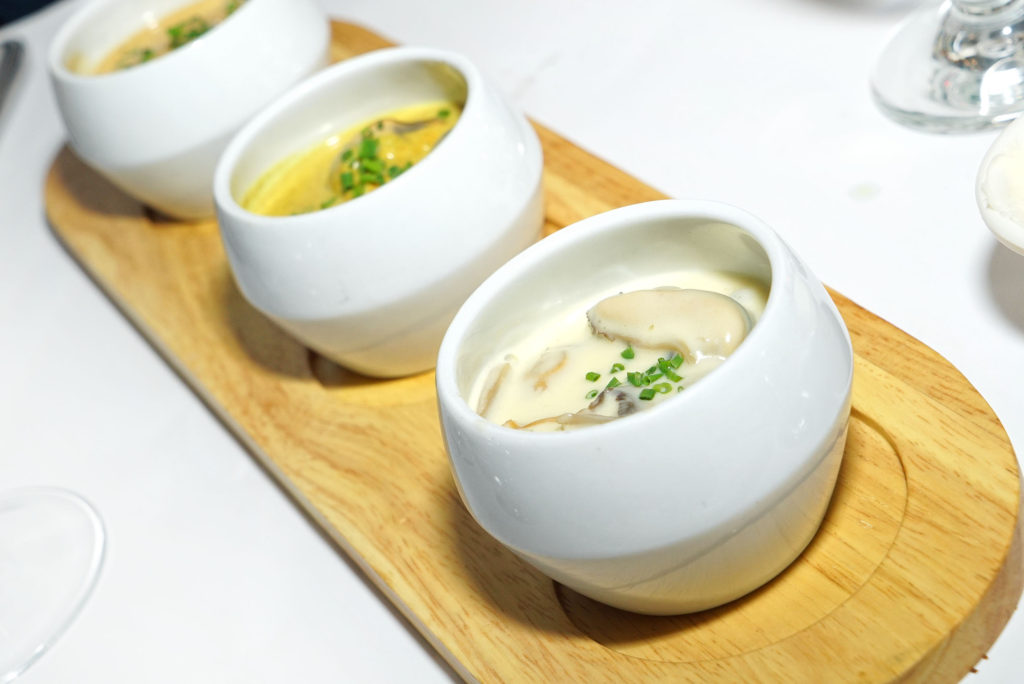
Jubilee is known for offering a variety of fresh steamed mussels in delicious sauces. There’s even a special, separate menu that’s dedicated to just mussels! If you’re like me and you can’t decide between the nine sauces, you can get a trio of mini pots to try. I suggest going with a group of people, that way you can get three trios to share as an app; you’ll be able to try all nine varieties!

My wife and I had the dijonnaise, curry and truffle chicken sauces. All were excellent but we liked the truffle chicken the best. What’s cool about the trio is that they remove all the mussels from their shells, so the juicy bivalves are swimming in pure flavor. And there’s a LOT of them in each cup; don’t be deceived!

A full size order of these will come with shells on, in a pretty metal pot. That’s more traditional. But I think the trio is a better value.

They also have some excellent prix fix offerings, both for lunch and dinner. For example, the dinner prix fix includes two courses and a beer/glass of wine. Not bad at all, considering they don’t cut corners on the selections or portion sizes. I’ll take mussels, a hanger steak with fries and a beer any day for under $30. That’s great!

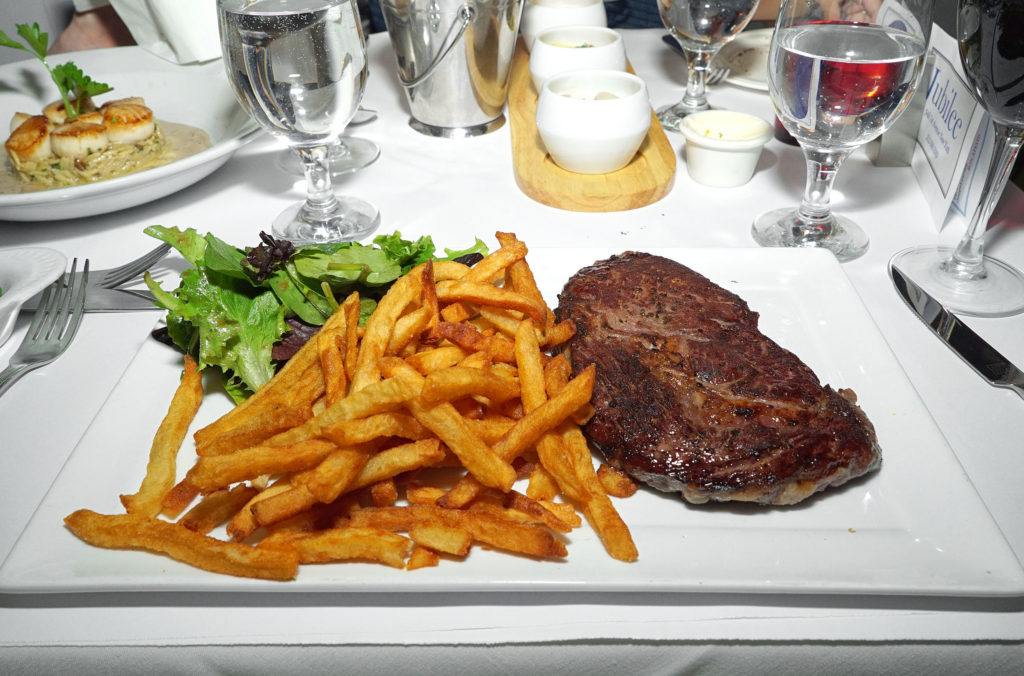
Speaking of steak and fries, they serve up a pretty great boneless “cote de boeuf” rib eye frites here.

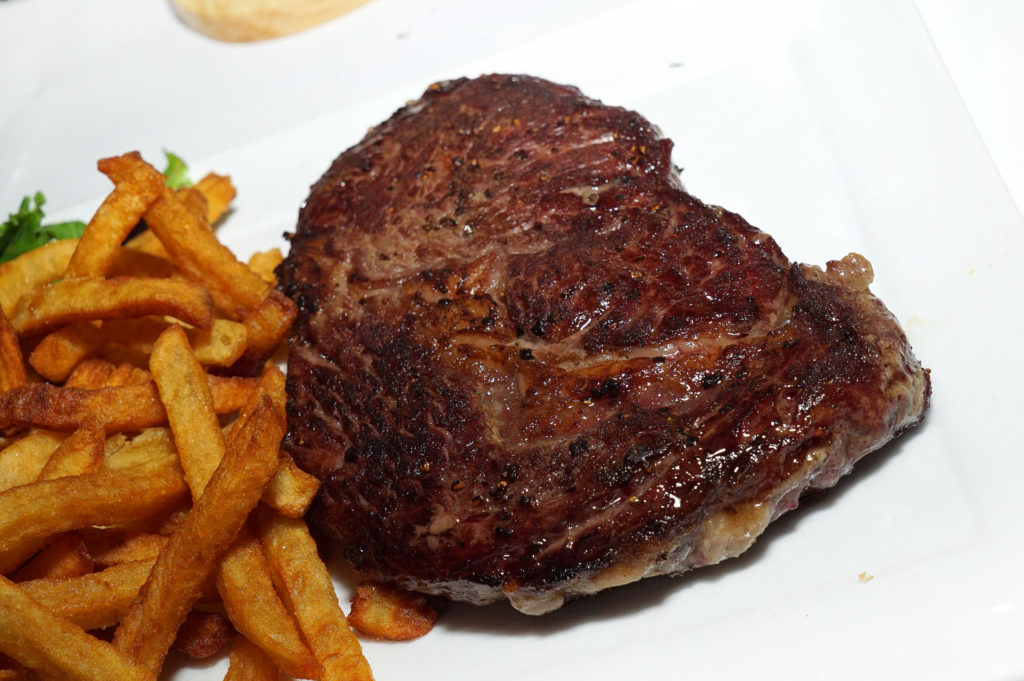
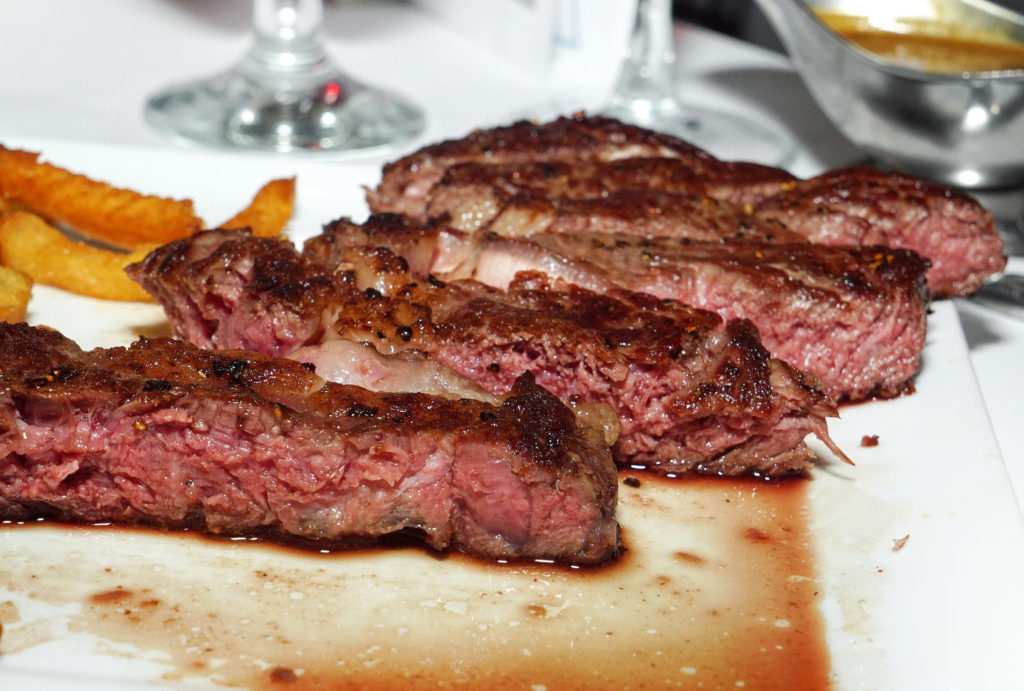
That’s a lot of fries! And they are perfectly golden crisp, to boot, and well seasoned. The steak is about an inch thick and 14oz. It had a great sear on the outside but maintained a perfectly pink medium rare on the inside. 8/10. Better than many midtown steakhouses.

Add the complimentary green peppercorn or bernaise sauce on top and you’re in heaven. Those sauces are great for fry dipping too.

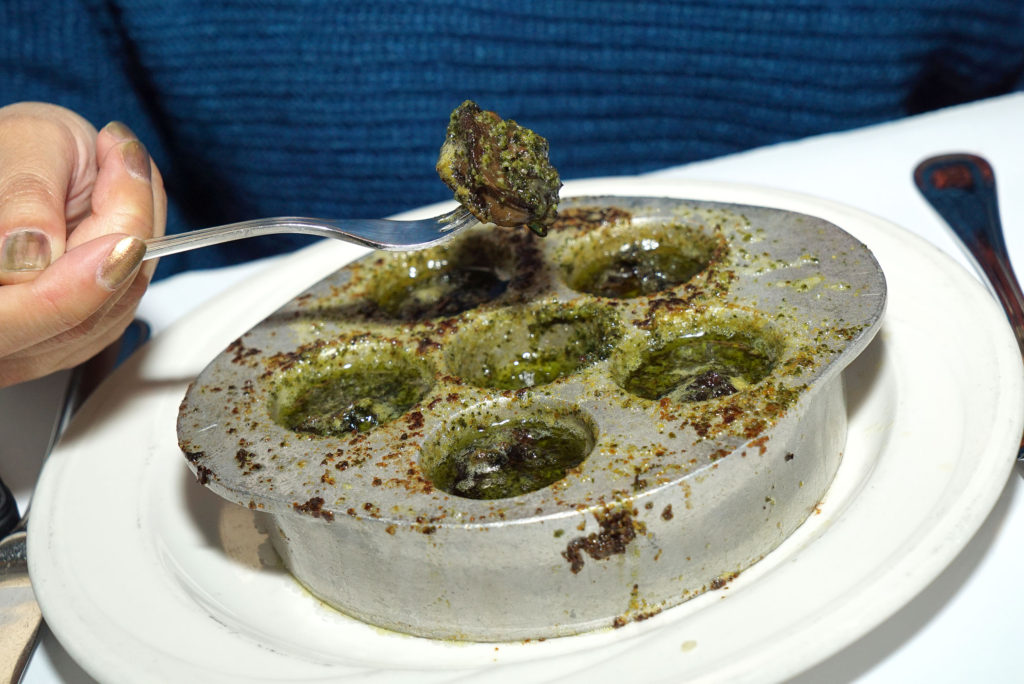
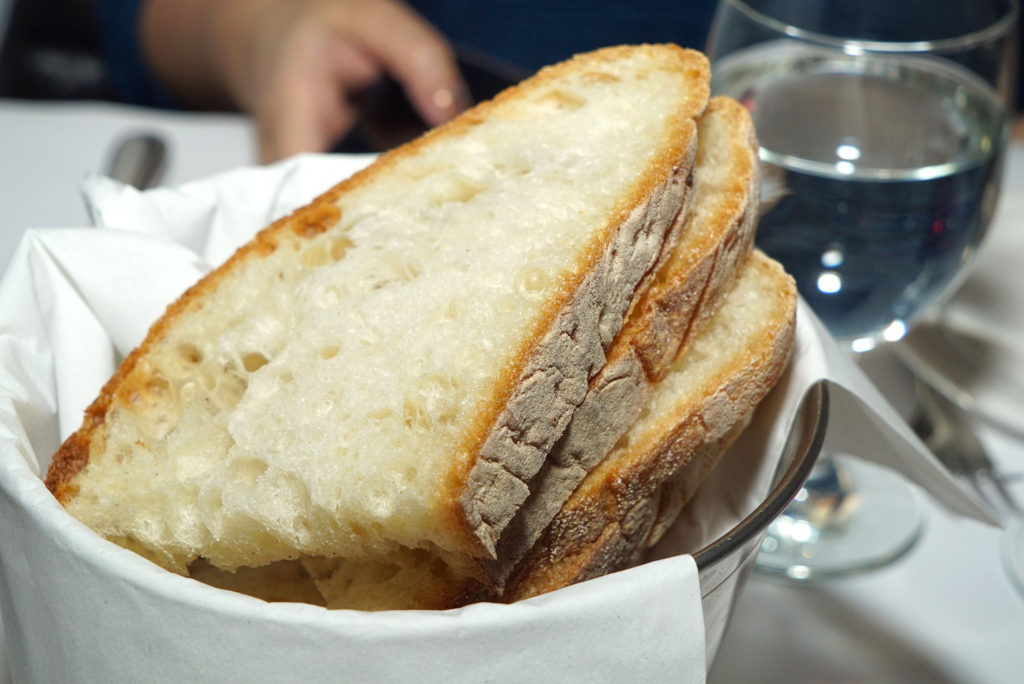
Speaking of dipping, I couldn’t stop myself from dipping the fresh country style table bread into my wife’s platter of escargot that she got for her app. The buttery, garlicky, herby sauce was addicting!

And speaking of the bread, it was served with a smooth, spreadable soft butter. I hate when the butter is hard!

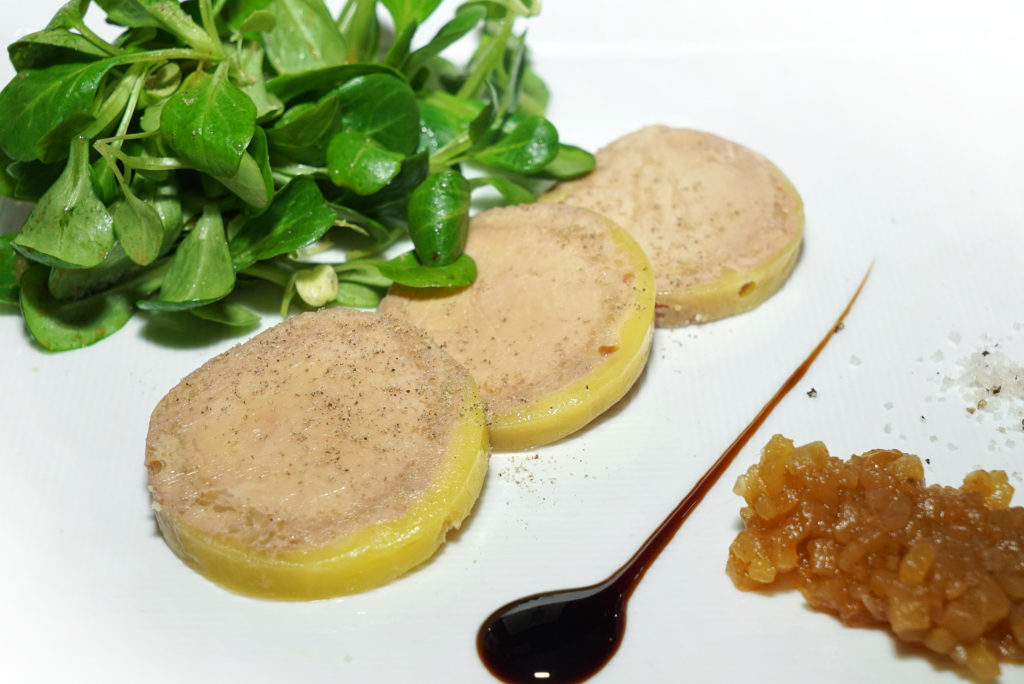
But I can’t forget to tell you about my app: the foie gras terrine. It was so incredibly smooth and flavorful, and so incredibly velvety and decadent. I highly recommend it.

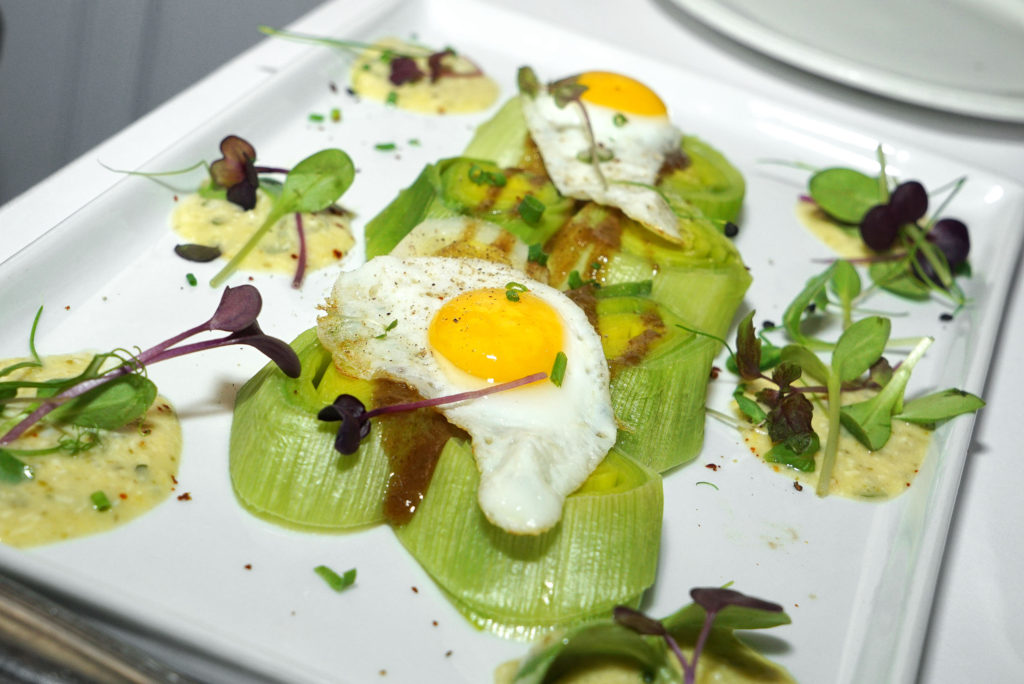
We also sampled the grilled leek salad, which comes topped with a pair of fried quail eggs for good measure. I’m typically not a fan of leek texture – a bit too woody for me – but these took on an almost braised quality, and, as such, were super tender and flavorful.

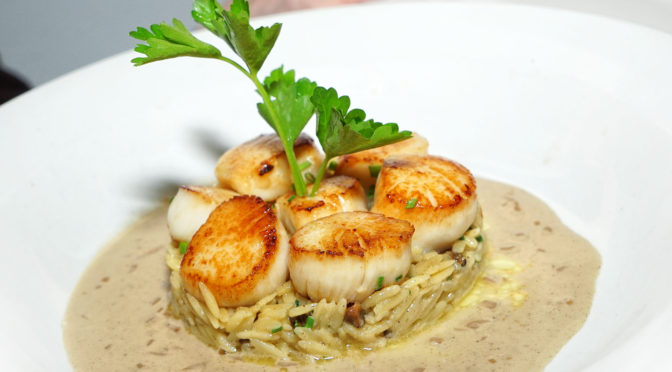
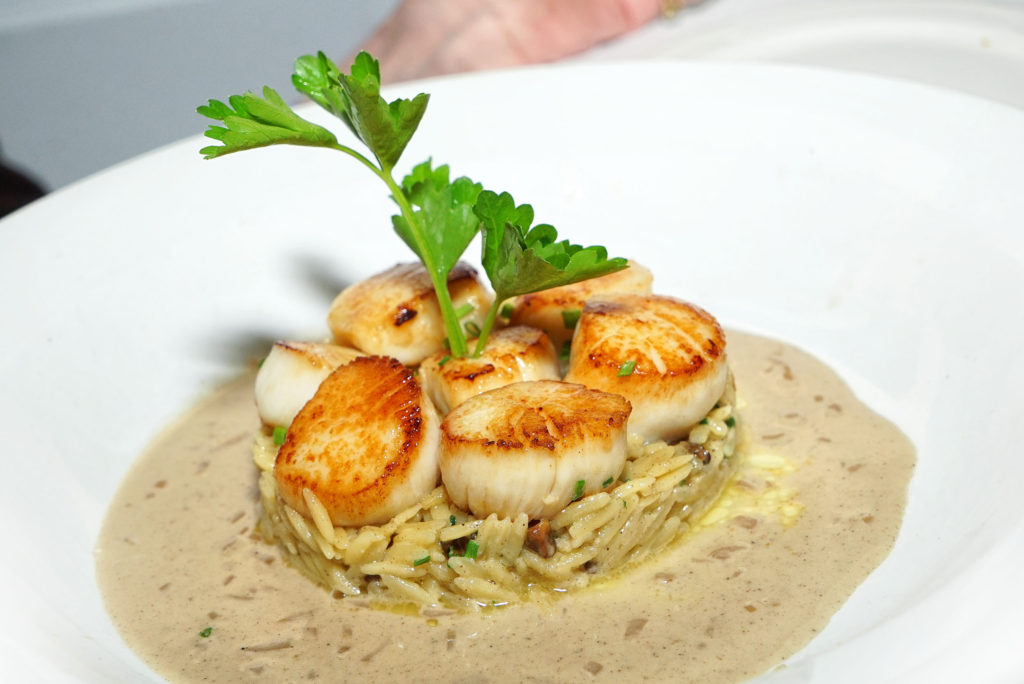
Not only was the food good here at Jubilee, but it was also beautifully presented and plated. For example, take a look at this sea scallop and orzo dish.

Absolutely stunning, not to mention the perfect sear on those babies. And that sauce you see around the risotto was an earthy truffle and porcini blend that was drinkable.

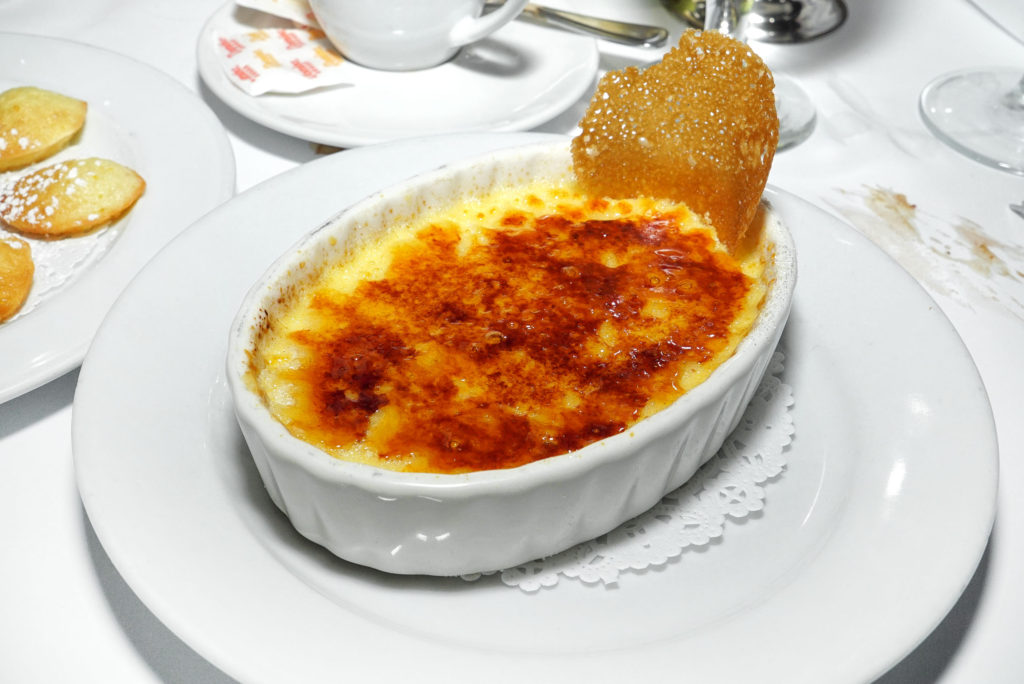
No French meal would be complete without some house made French desserts. For me, creme brulee is an old standby that never disappoints. Here, it was smooth, rich with flavor, and perfectly caramelized on top.

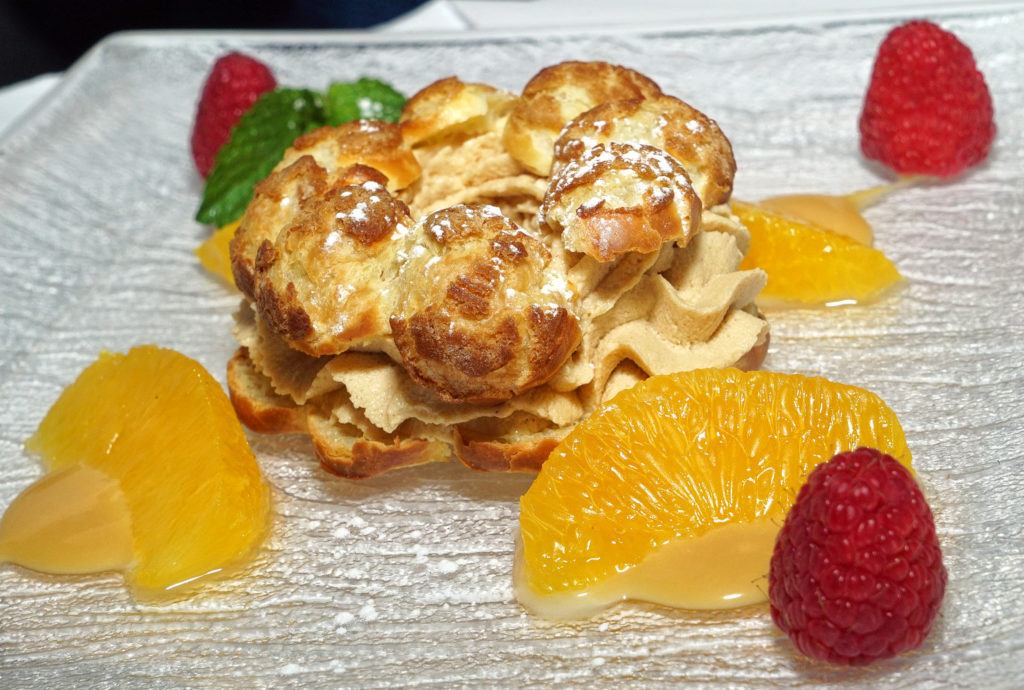
But, rarely seen on menus is a Paris-Brest. I was excited to see it here. It was so light and airy, yet it still packed a walloping punch of flavor. That might have been my favorite of the desserts. It was really pretty, too.

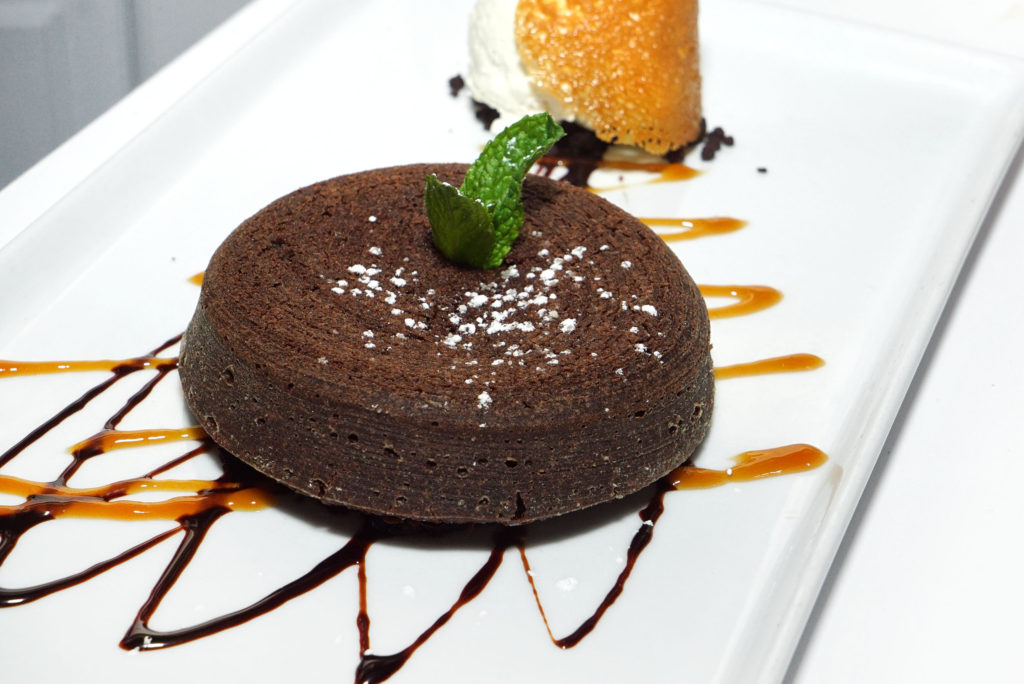
And finally, warm chocolate cake with ice cream. Pure decadence. It was so soft and chocolately inside. It was kind of hard to pull away from this and eat the other stuff.

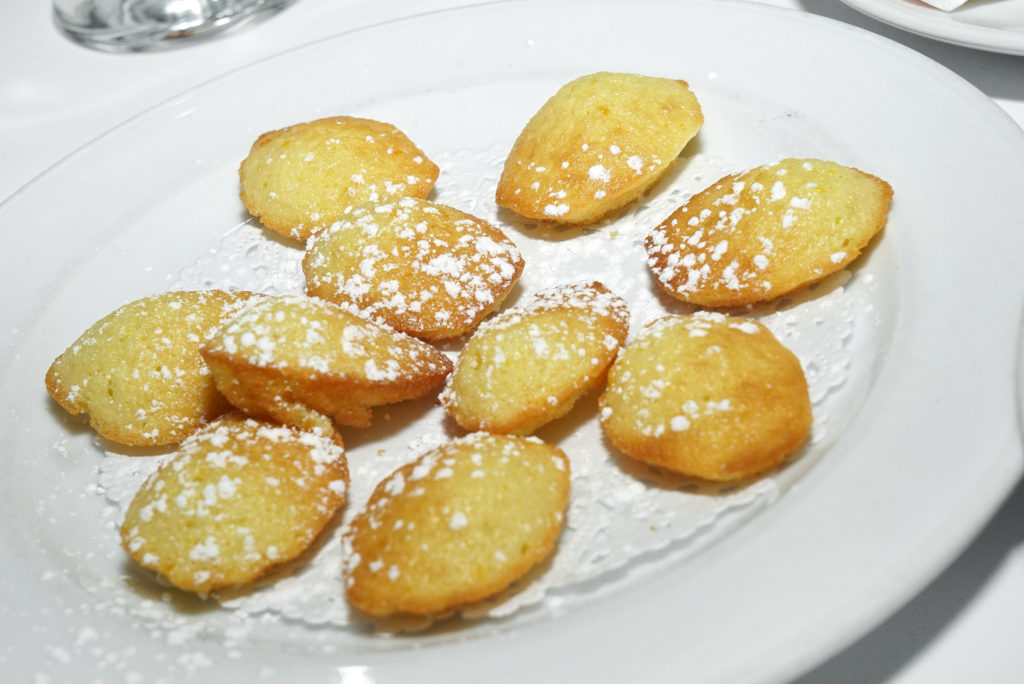
Dessert also came with these tiny little soft lemon cookie/cake hybrids. There’s a fancy French name for them, but a big, doofy, arrogant, proud American ogre like me doesn’t know it off hand and is too lazy to go looking for it.

In any case, this place is one of my favorite French restaurants now. They have weekly specials mapped out for the entire month. Right now is coq au vin, and later in the month there’s a beef bourgignon. I may have to go back very soon! I hope you go as well.

JUBILEE
948 1st Avenue
New York, NY 10022

Oro

I was recently invited to Oro by the owners to try out some of the classic and modern Italian fare that they serve at their spacious, beautifully appointed Long Island City restaurant.

Oro means “gold” in Italian, and the food equivalent of gold is just what they’re serving you here, especially when you indulge in some of the highlights that I mention here in this review.

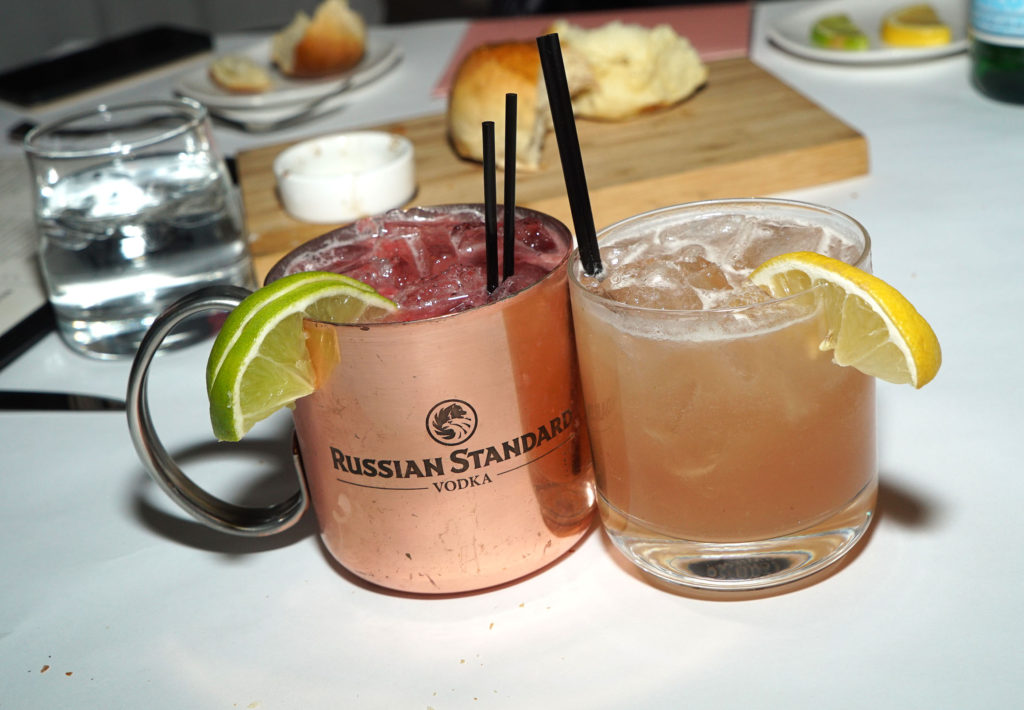
First off, there’s an excellent cocktail menu. I went with a blueberry and bourbon drink that was really nicely executed. My wife went with a selection from their Moscow Mule menu. Also excellent.

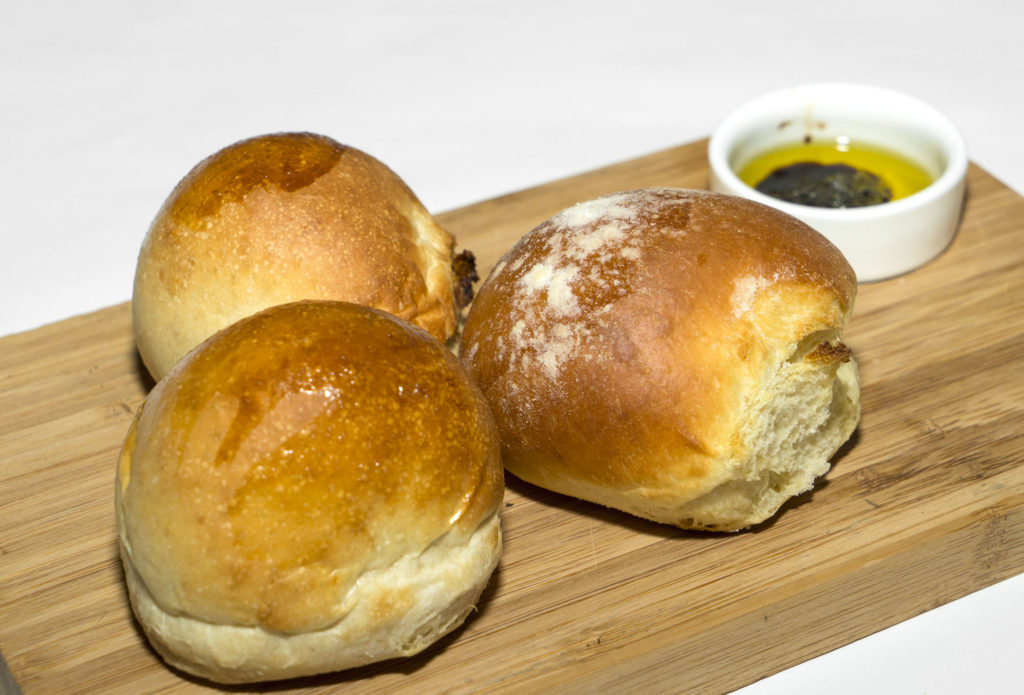
The waiter will bring out some fresh house made bread next. It’s toasty warm and served with a dish of EVOO and vinegar.

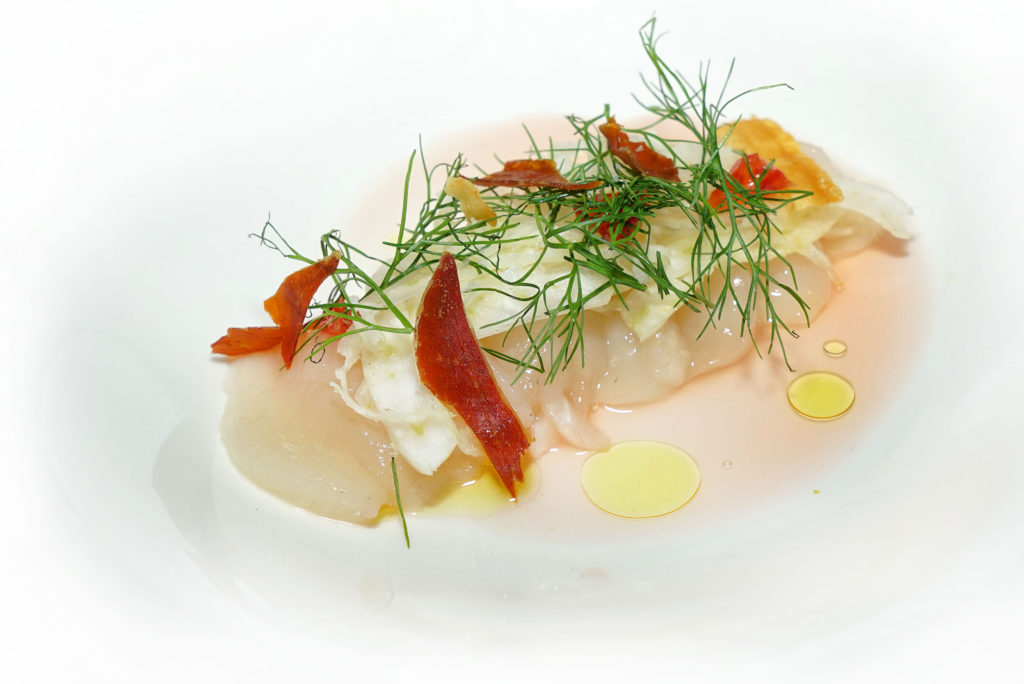
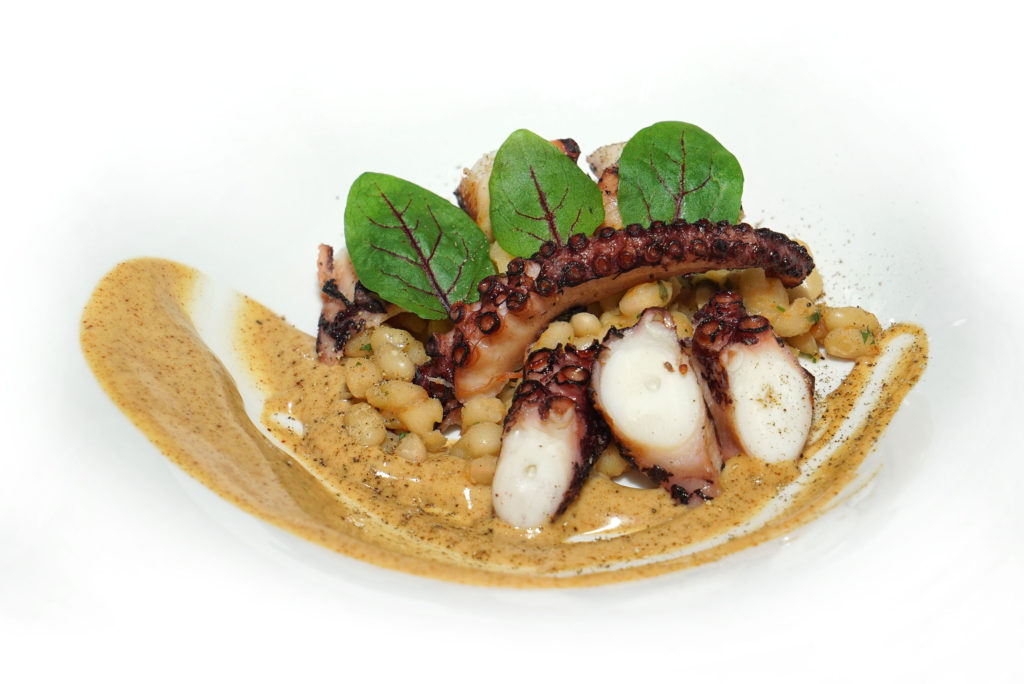
We started with two nice, fresh and delicate apps: scallop crudo with crispy prosciutto in a grapefruit sauce, and charred octopus. Both were perfect. The scallop crudo was really fresh, light and crisp. I wish we ordered two!

The octopus has a great flavor and still kept a slight firmness without being too soft or too chewy – a sweet spot middle ground. There was a good spice kick to it as well.

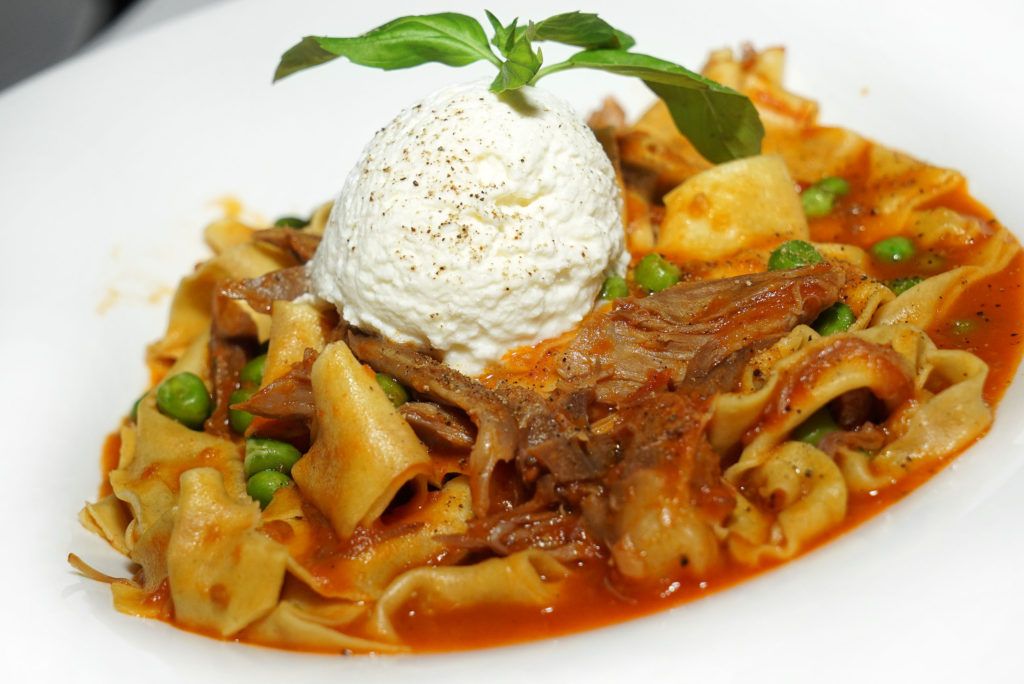
We shared the duck bolognese pappardelle pasta (which was good, but just needed a bit more salt):

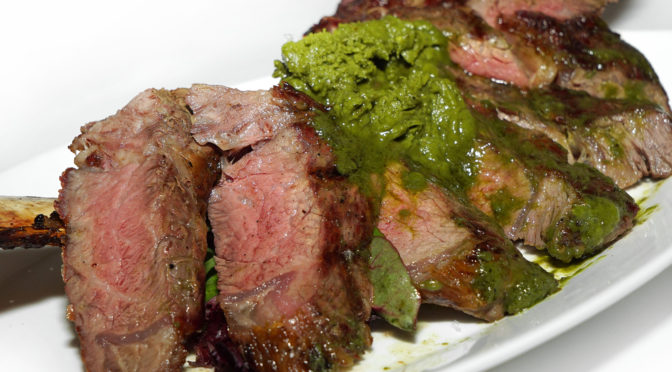
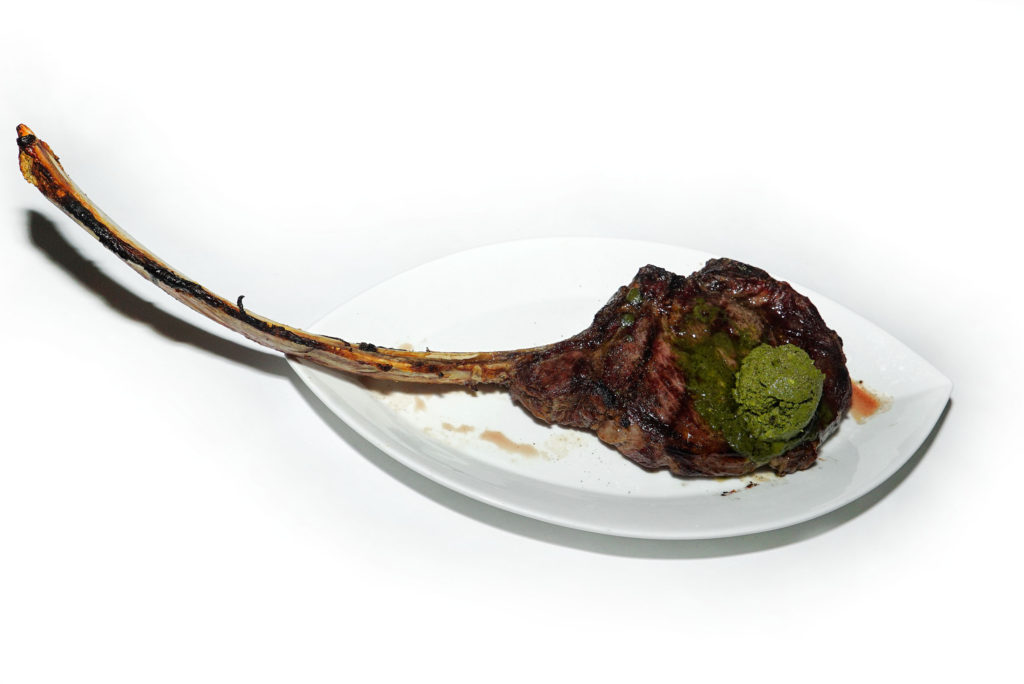
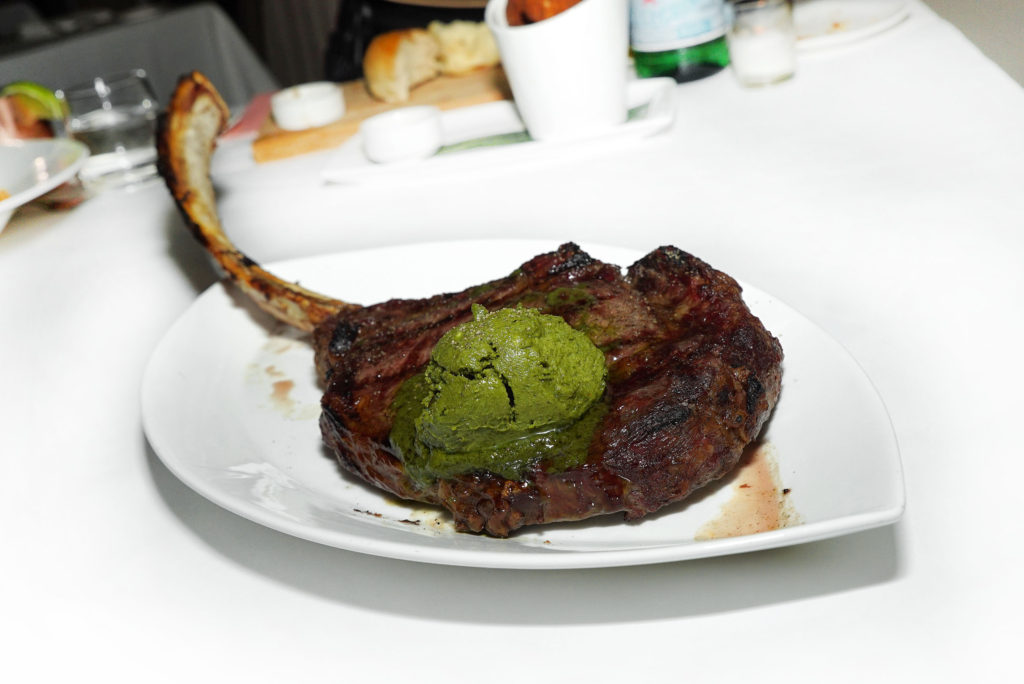
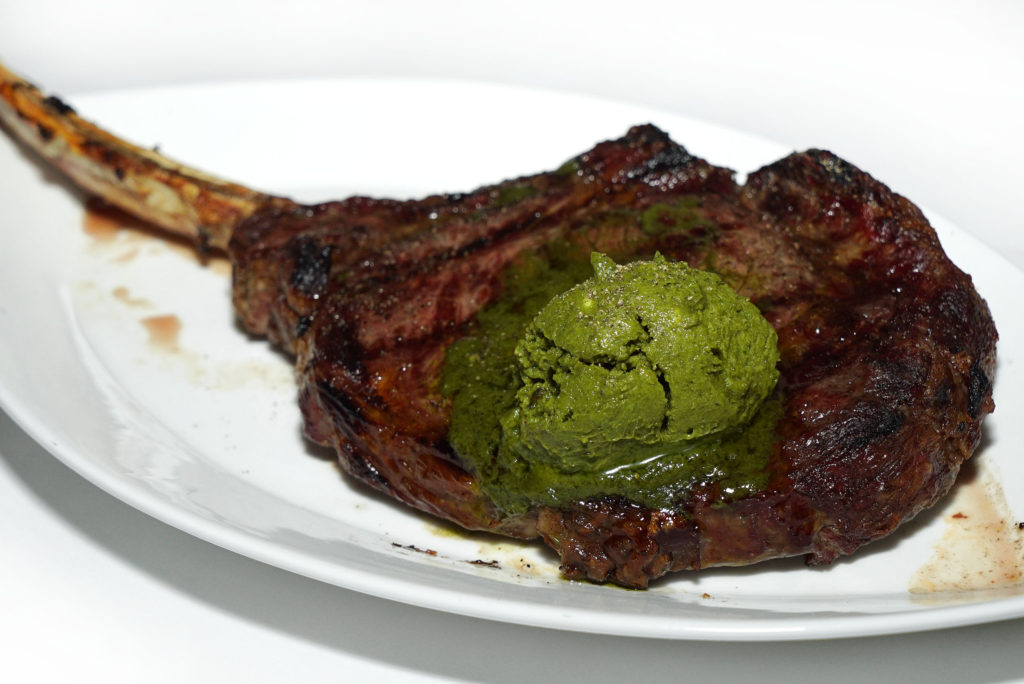
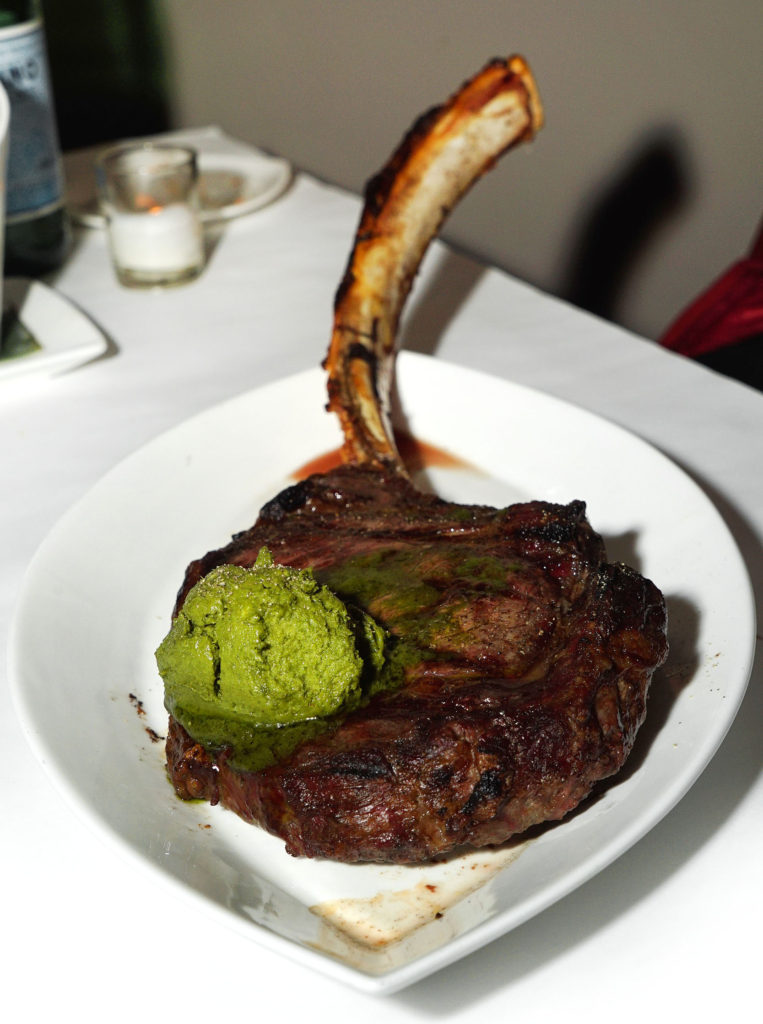
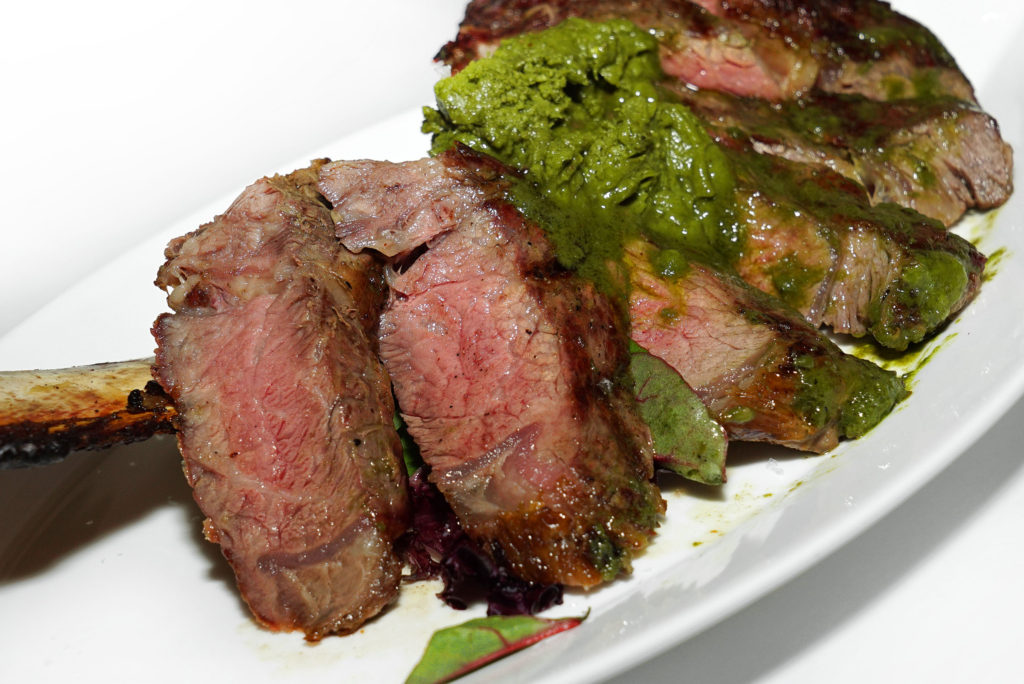
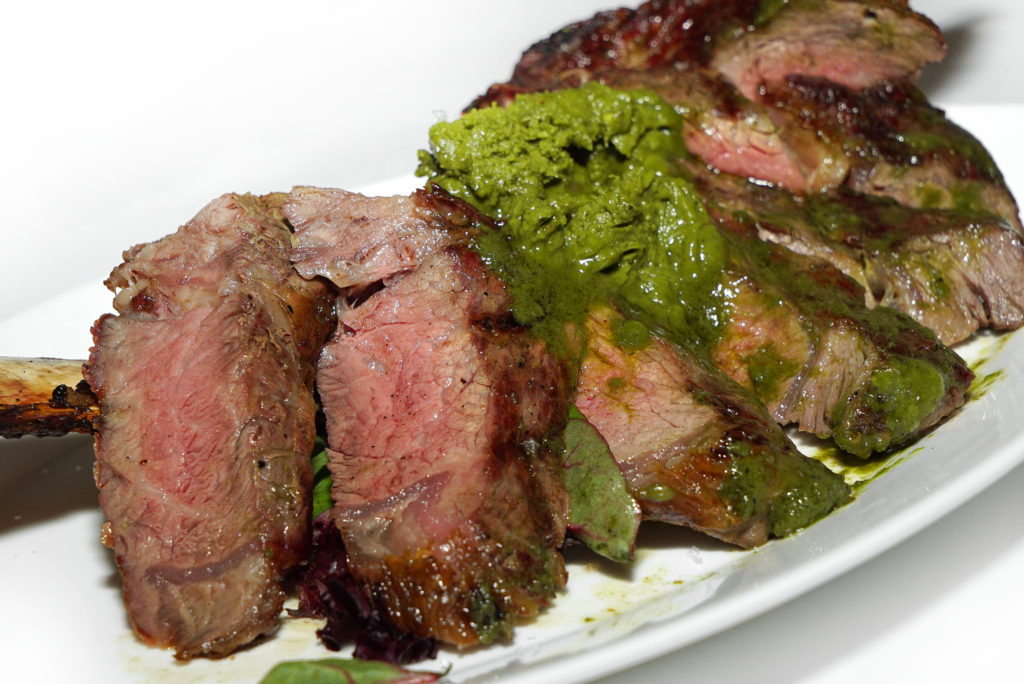
And the 28oz tomahawk ribeye:

That blob you see is an herb butter, which added a green-tasting freshness to each bite.

The meat itself hails from Snake River Farms, which is not only a purveyor of fine standard meats, but also American Wagyu. The owners of Oro are friends with the people at Snake River, so you know the cuts will be of high quality.

The cut itself was cooked a slight bit over from what I would have preferred, being more towards medium than medium rare.

But no matter. The flavor was still good, and the fat cap was delicious. Not to mention that at a price of $52, you’re saving big money and you’re just one stop into Queens from midtown Manhattan. At a place like Cut downtown, that Snake River Farms steak is going to run you almost $100. Crazy discount here. And this can be shared with a second diner, so even better. 7/10.

The steak selection here is pretty impressive. As soon as next week, as a matter of fact, there will be even more of a “butcher’s block” selection here, which will include a 36oz porterhouse as well as what’s already on the menu (filet, strip, tomahawk, and pork chops).

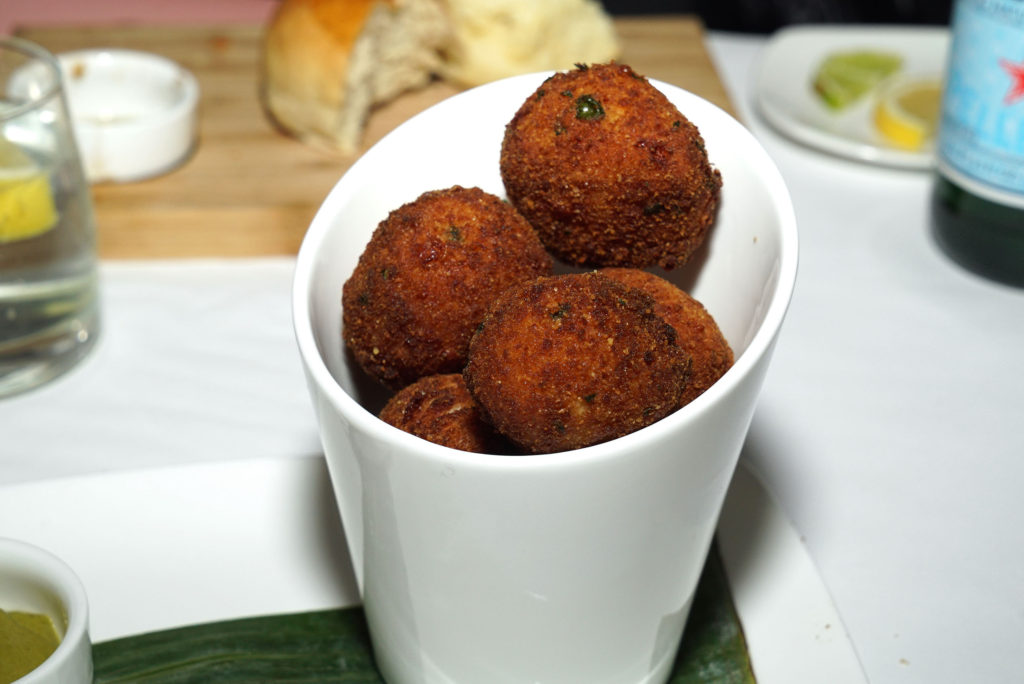
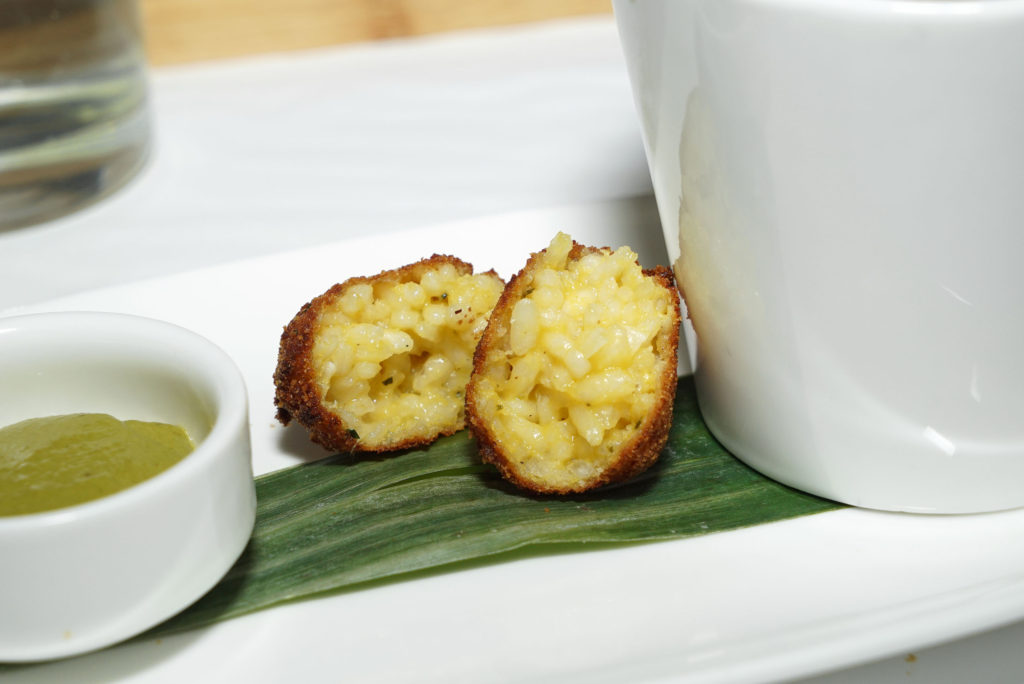
On the side we had some arancini, or fried rice balls, which were fun and tasty.

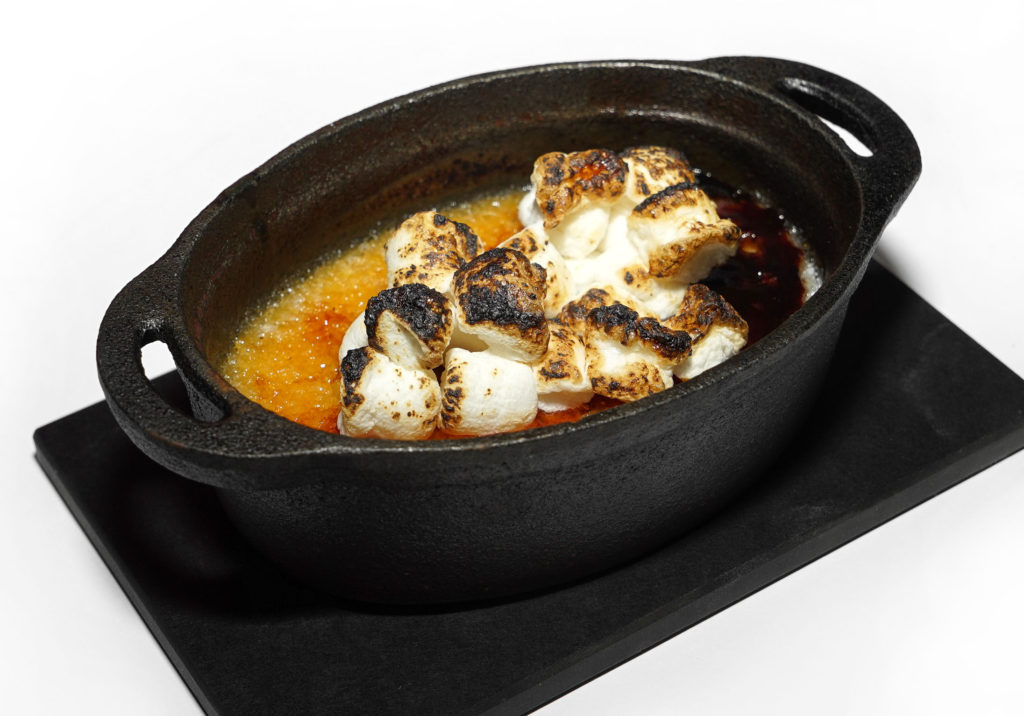
We also had the sweet potato creme brulee. I didn’t think I’d like it when we were told about it by the waiter. As such, we didn’t order it. But the waiter brought it out for us to try anyhow. It turned out to be my favorite item of the night!

It was sweet without going overboard, and the brulee crunch and marshmallow topping was just thrilling. I even remarked that if you plop a scoop of vanilla ice cream on top of it, it would make for a perfect dessert. Do yourself a favor and get this when you come here. It is unbelievable.

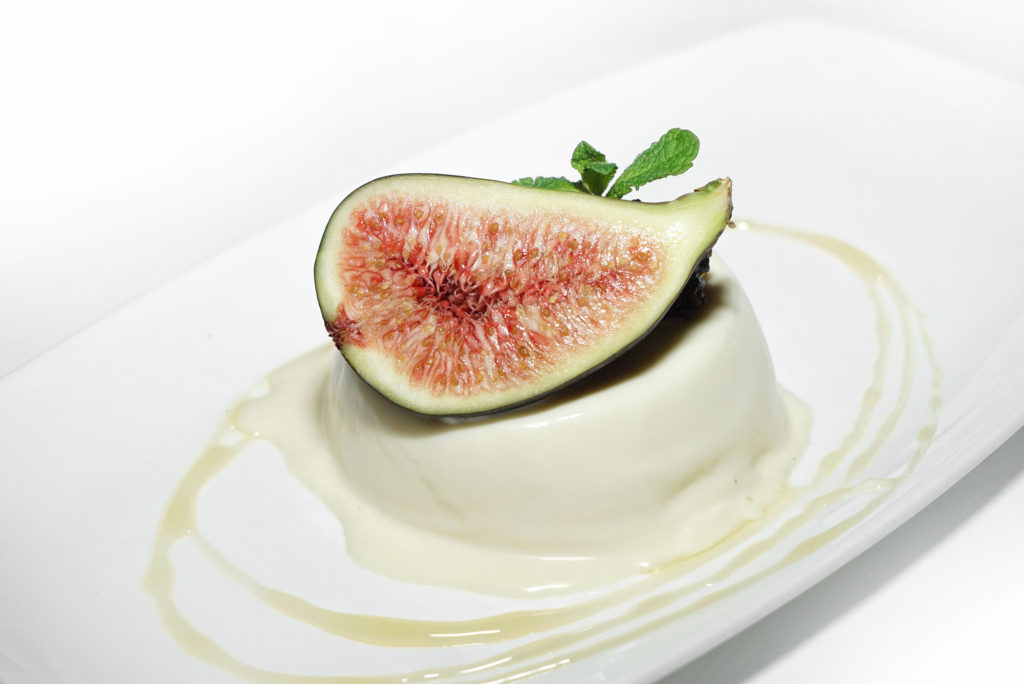
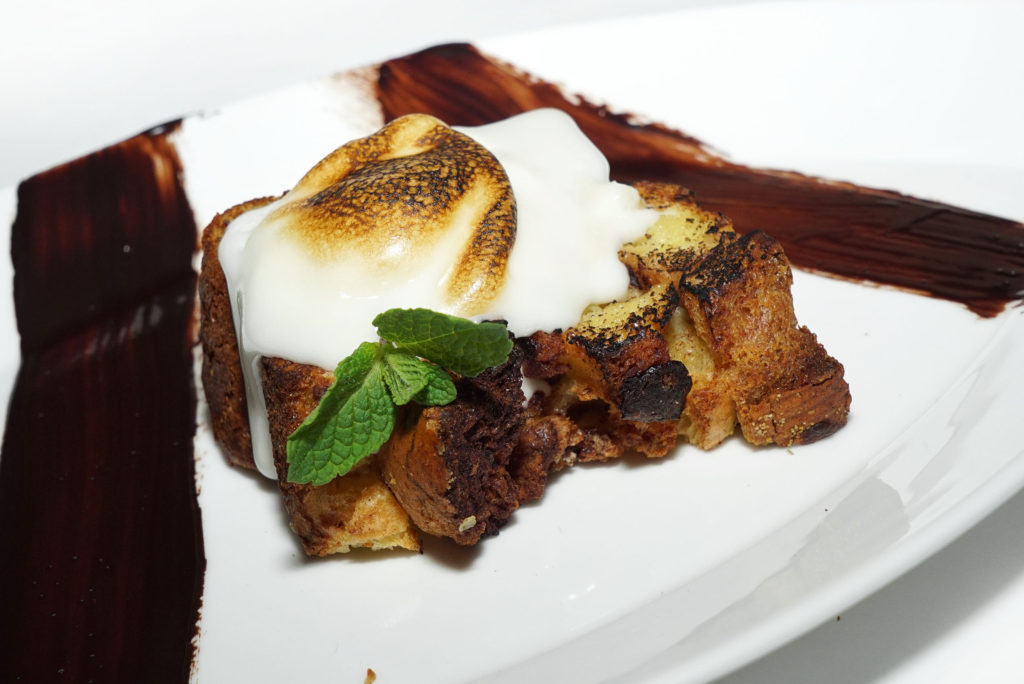
For our proper desserts, we tried the fig panna cotta and nutella bread pudding with homemade fluff. Both were incredible, but I give the edge to the panna cotta. So silky, smooth and light, but packing a big flavor punch.

ORO
41-17 Crescent St
Long Island City, NY 11101

Pat LaFrieda Meats: A Steak Feast At Home

Pat LaFrieda. You’ve all probably seen the name before, and you’ll definitely see it again – especially because I’m about to publish a feature article on LaFrieda early next month for my “Meet Your Meat” series. But the man is a top notch, high quality beef purveyor with a rich family tradition of killing it in the meat biz. He provides the goods to the restaurants and chefs that make my favorite steaks.

He recently sent over two cuts of steak for me to enjoy at home; both dry-aged for 60 days, both prime, and both 2.5″ thick. One was a porterhouse, and the other a rib eye.

A video posted by Johnny Prime (@johnnyprimecc) on

This stuff is not just set aside for restaurants and hotels! You can order it for home delivery right here.

So, what to do with all this beef? I mean, I would have loved to eat it all myself, but that’s just rude. Instead, I invited over a handful of foodie friends and cooked up a feast for them.

Here’s how it went down:

Appetizers

For starters, I sliced up some truffle salami and made a very basic wedge salad with iceberg, grape tomatoes, thick bacon and a crumbled blue cheese and black truffle oil dressing.

Main Courses

I decided to cook the porterhouse in the sous vide machine, and then finish it off with a hard Searzall blowtorch sear. I loaded the sous vide bag up with some truffle oil (I froze this ahead of time, that way the contents in the bag were dry when I sealed it), rosemary and thyme. I also seasoned the steak with salt and pepper before sealing it up.

After about four hours in a 128 degree bath, I pulled it out and dropped it into some ice water to stop the cooking process. After a few minutes, I removed it from the bag, dried it off and blasted it with the Searzall to get that nice outer crust.

Before serving, I sliced it up and plated it, then drizzled black truffle oil on top, and hit it with some finishing salt and fresh cracked black pepper.

I picked up an extra filet from the grocery store as well, which I cooked the same way. This was mainly as extra meat, in case we didn’t have enough, and also as a control group to compare the meat quality from a nice grocery store cut against Pat LaFrieda. The cut I picked from Morton Williams looked nicely marbled and it was reasonably thick for just under $12.

When comparing the filet side of the LaFrieda porterhouse to the grocery store filet, the LaFrieda steak was hands down WAY better. There is no question about it. That 60-day dry-aging process really infuses an incredible amount of flavor into the meat.
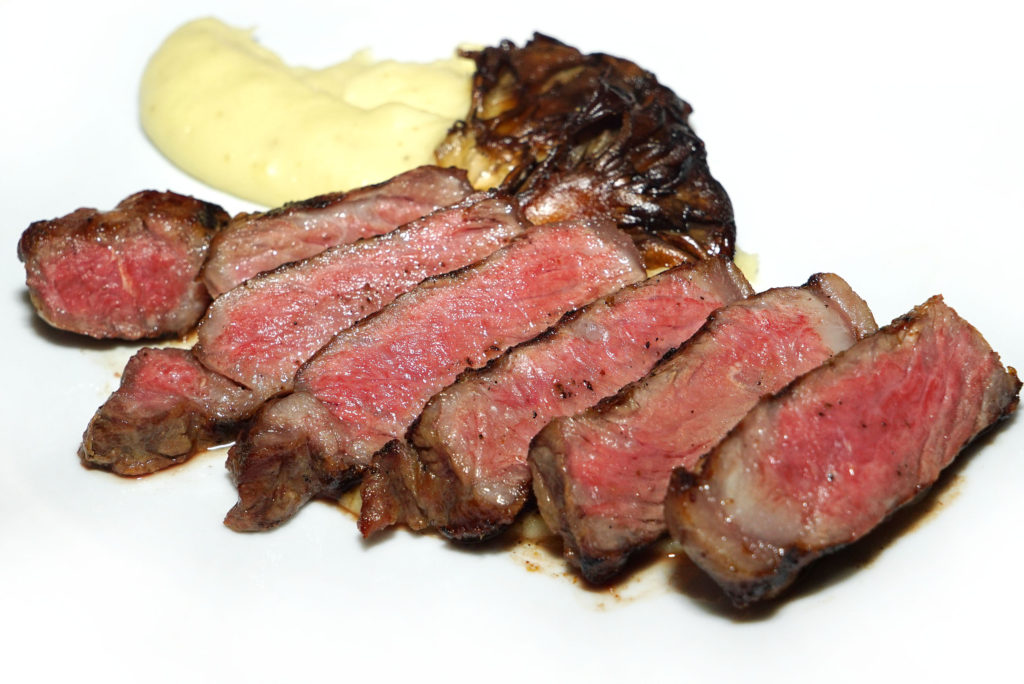
If you are a beef lover, then Pat LaFrieda cuts are the way to go. In fact, one of my friends cooks up Pat LaFrieda steaks every Friday, and he calls it “LaFrieda Fridays.” HA!

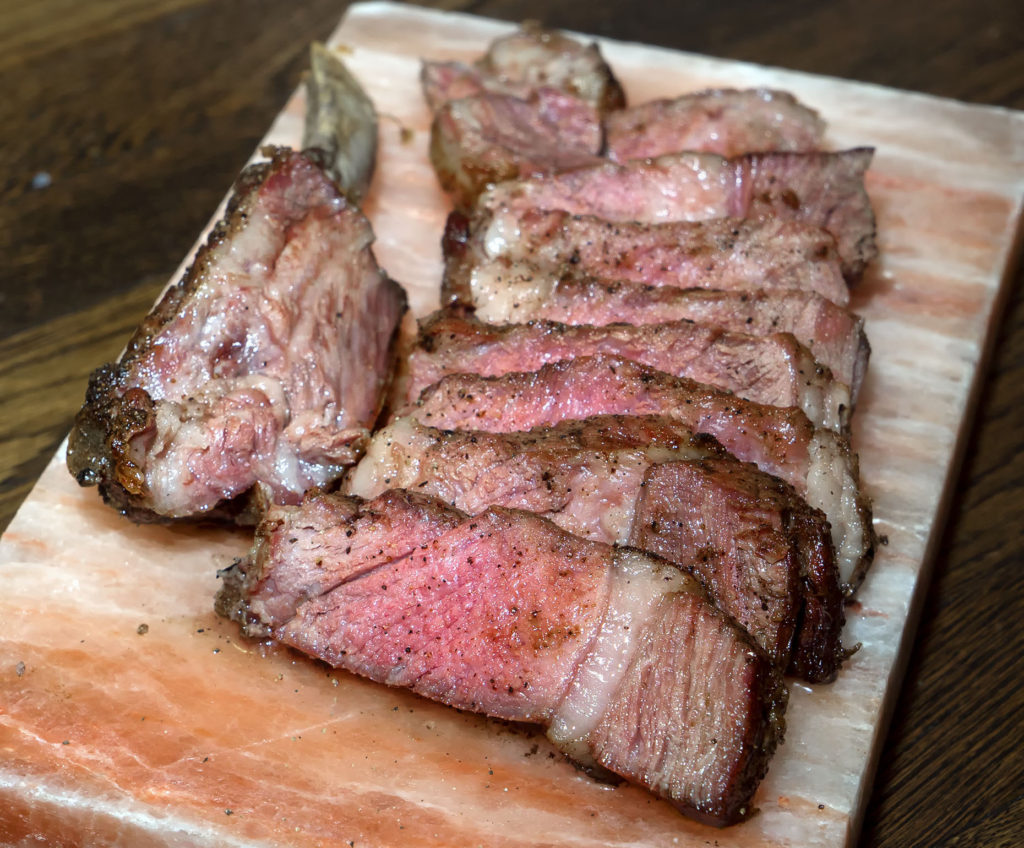
For the rib eye, I went with a traditional cast iron skillet sear with maple bacon fat and herbs, and then I finished it in the oven. I let it rest, and then sliced that up and served it on a salt block, also with a drizzle of truffle oil.

Unfortunately for me, the temperature jumped from 120 to 145 WAY faster than it was climbing while going from 68 to 120. I turned around to snap pics of the porterhouse and BOOM. The steak went beyond medium rare. Lesson learned. In any event, it was still incredibly delicious at medium. The fat cap was heavenly!

To go with these steaks, I roasted some bulbs of garlic for slathering onto the meat and grilled some lemons.

Sides

I put together a nice side of roasted mushrooms and onions, sauteed broccolini (got to have something green I guess), and made a big bowl of tater tots.

Dessert

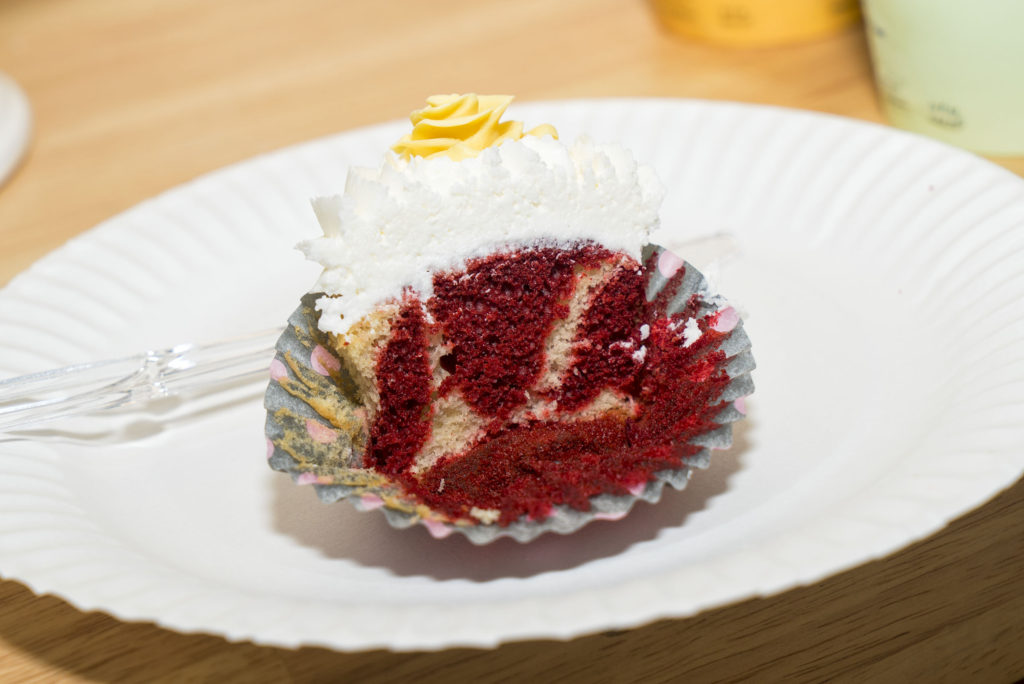
But no meal at Johnny Prime’s Food Research Lab would be complete without a dessert by The Cake Dealer!

The inside of the cupcakes were marbled vanilla and red velvet, which was perfect to represent the marbling of good prime beef!

Or it was just because Valentine’s Day is right around the corner…

Oh and by the way, here are the foodies that came by. Check out their profiles for pics of the feast, if you have a chance:

@thecakedealer (she’s always there, because she’s my lovely wife)
@thedishelinguide
@theninabobo
@rebecca_chews_nyc
@dequinix

Tri-Tip & Newport Steak

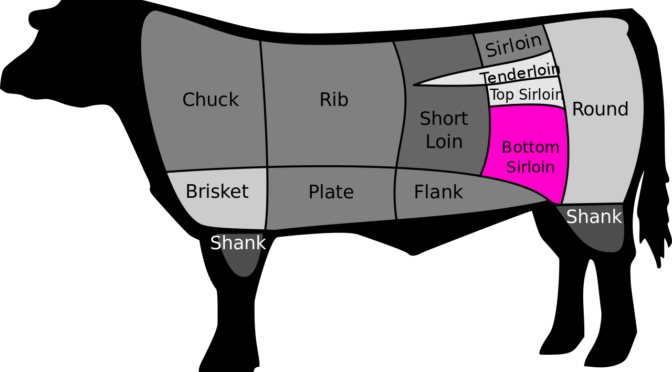
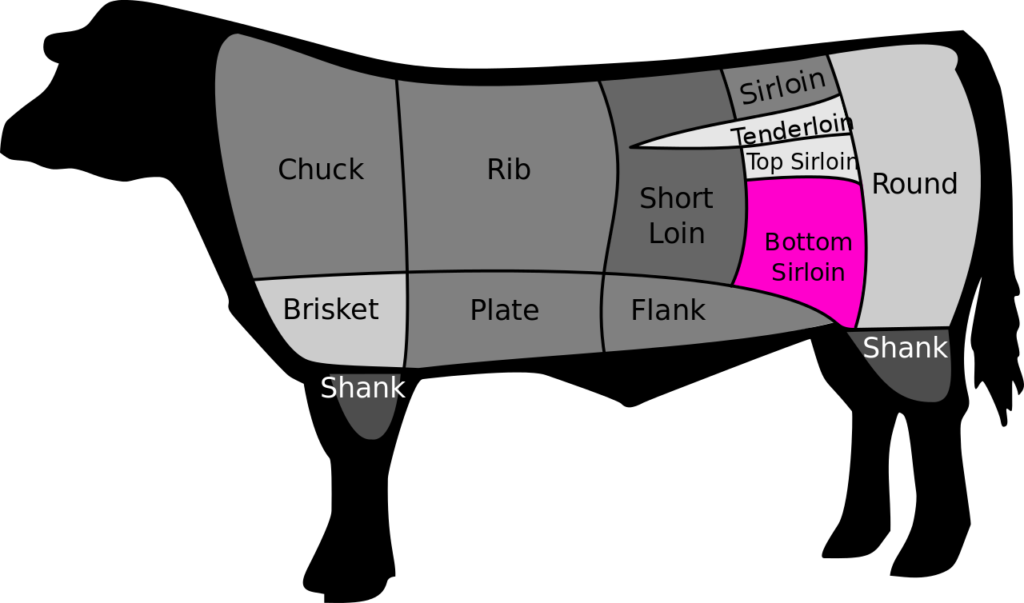
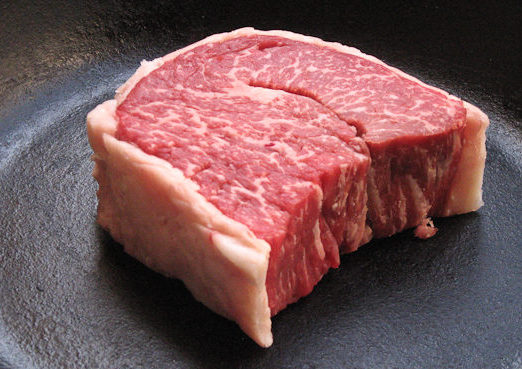
Newport steak, aka “the apartment steak,” is essentially part of a tri-tip steak, which hails from the bottom sirloin portion of the animal.

Tri-tip is usually butchered into larger sizes for people to use on the grill or in BBQ style smoker preparations. A single tri-tip cut can feed a few people. It has a definitive grain direction and can be very tender and flavorful if cooked, sliced and served properly. For a nice write-up on how to properly execute a tri-tip on the grill, check out this post from BBQ Pitstop.

Photo Credit: BBQ Pitstop, https://bbqpitstop.com

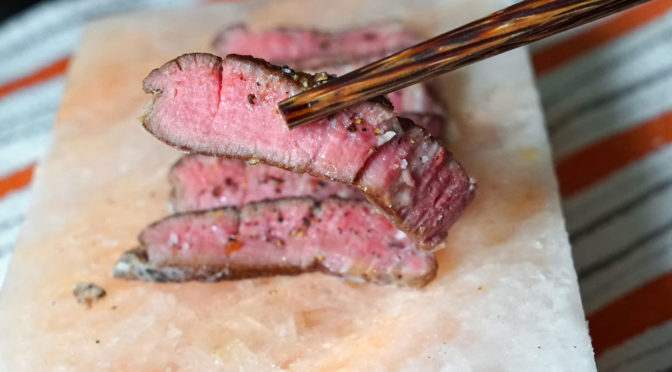
If you like the flavor and texture of tri-tip, but only need to feed yourself, you can get a Newport steak, especially if you’re living in Manhattan. In New York City, Florence Meat Market in the west village has popularized the “Newport” cut, which is a single serving size of steak that has been butchered from the tri-tip.

Photo Credit: Kathryn McGowan, https://blog.kathrynmcgowan.com

It also has been called the “NYC Apartment Steak” by food blogger and recipe historian Kathryn McGowan. I think this is a fun reference to the small NYC apartments near the butcher shop in which it is nearly impossible to cook. She provides a recipe as well – check it out. Very simple to execute.
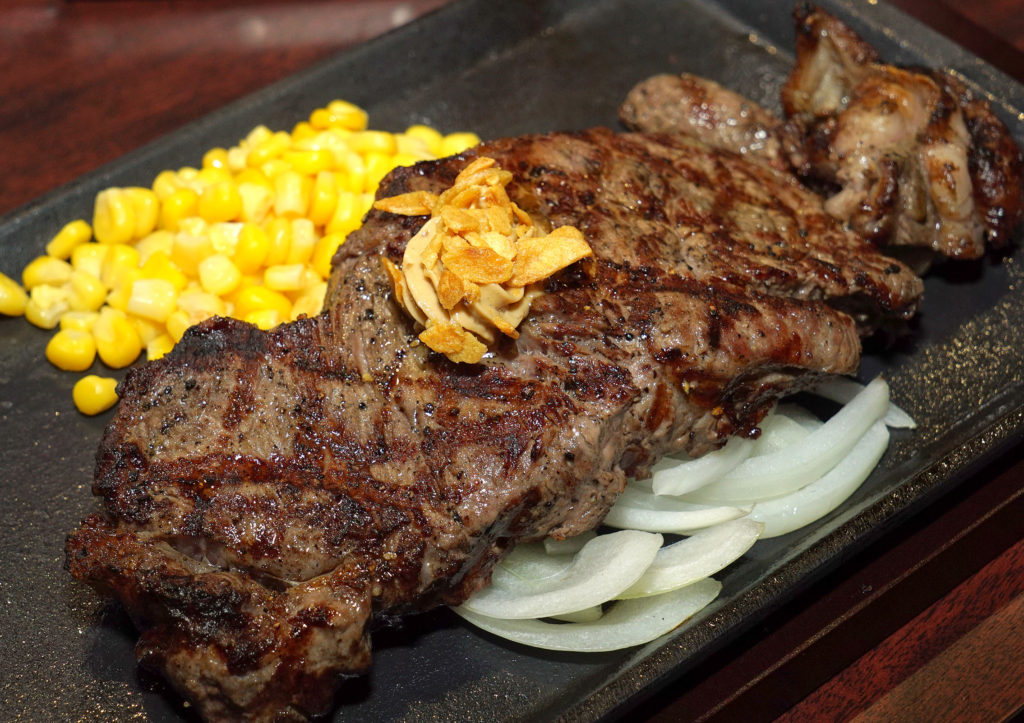
This cut is meant to be easy to cook, and small enough to fit into your small pans, set upon your small stove top in your small kitchen, within your small apartment for which you’re paying a large rent.