Tag Archives: meat

Blu on Park

Blu on Park overall score: 90

NOTE: THIS PLACE IS NOW CLOSED

This joint just opened up on 60th Street, just east of Park (not actually ON Park, but close enough). Owner Amir is having a great first few weeks after opening, with a packed house on most nights. Chef Russell slings the food here, after doing a 12 year stint at The Boathouse in Central Park. Impressive.

Flavor: 10
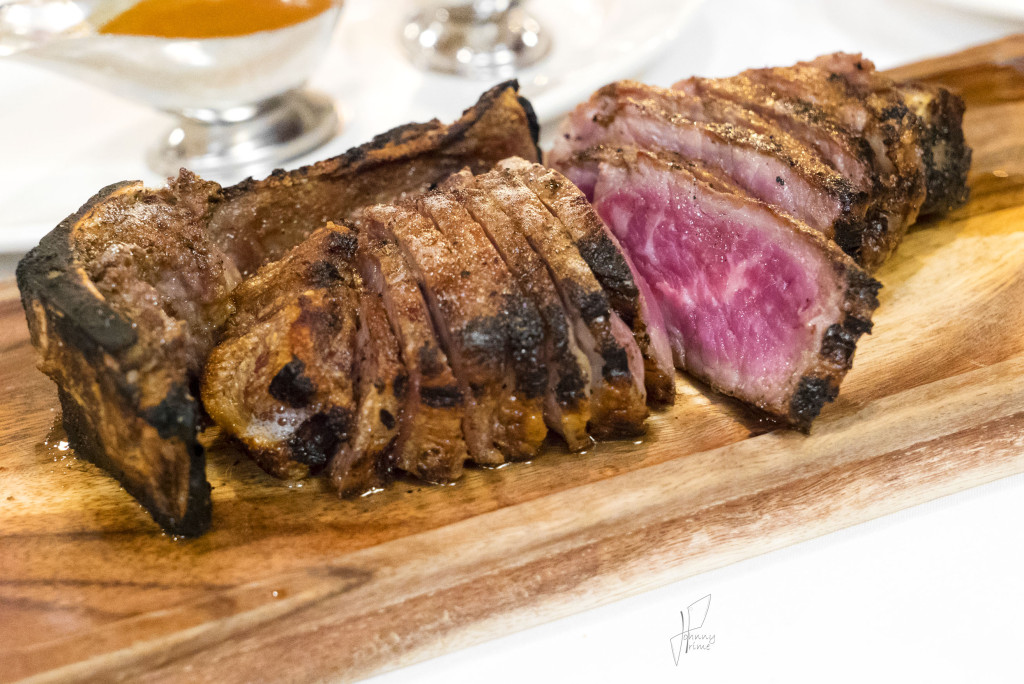
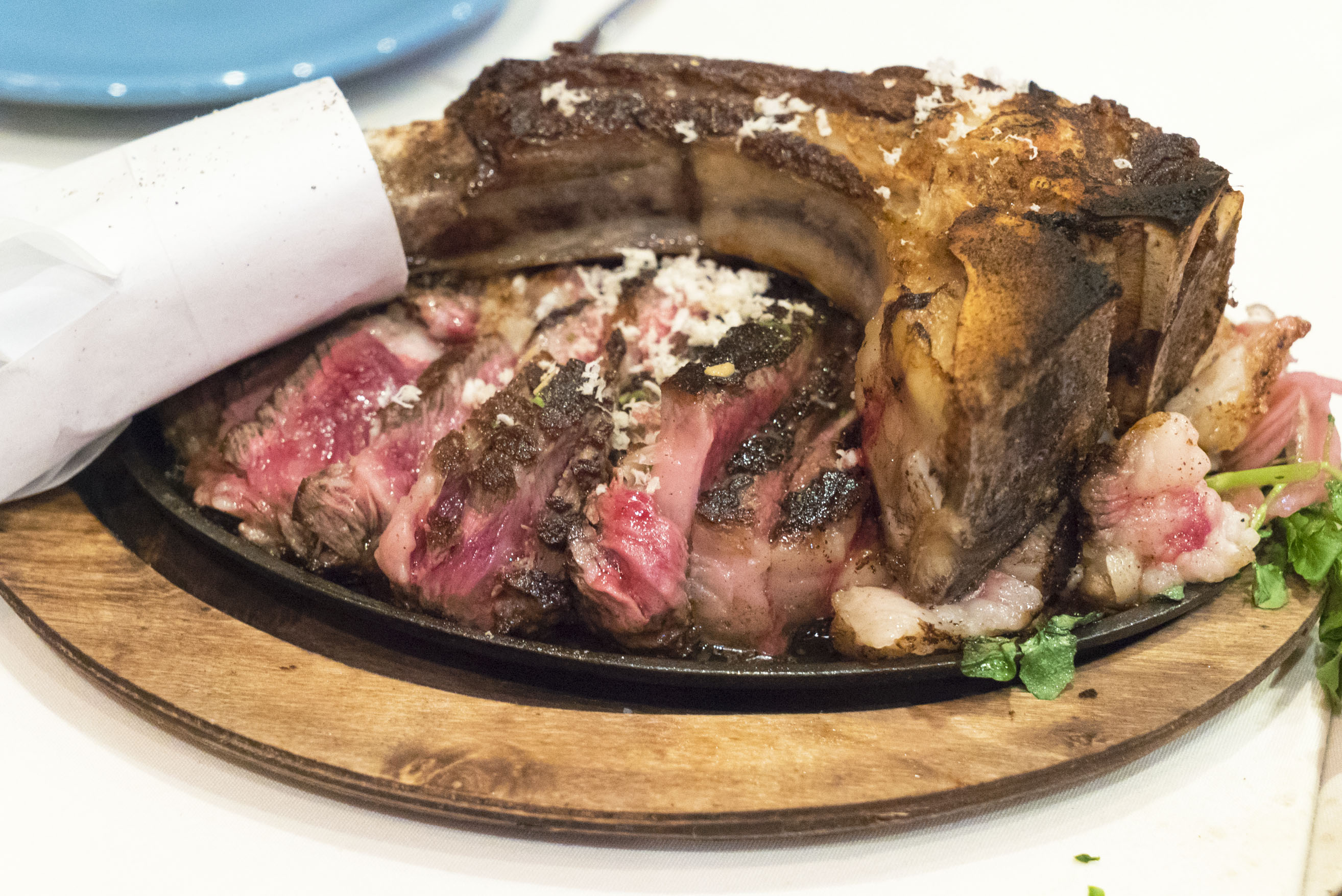
I ate here with my wife, sister in law and brother in law, so we got to try a good amount of food. For our steaks, we went with a 40oz tomahawk rib eye for two, as well as a porterhouse for two. Let me first discuss the tomahawk:

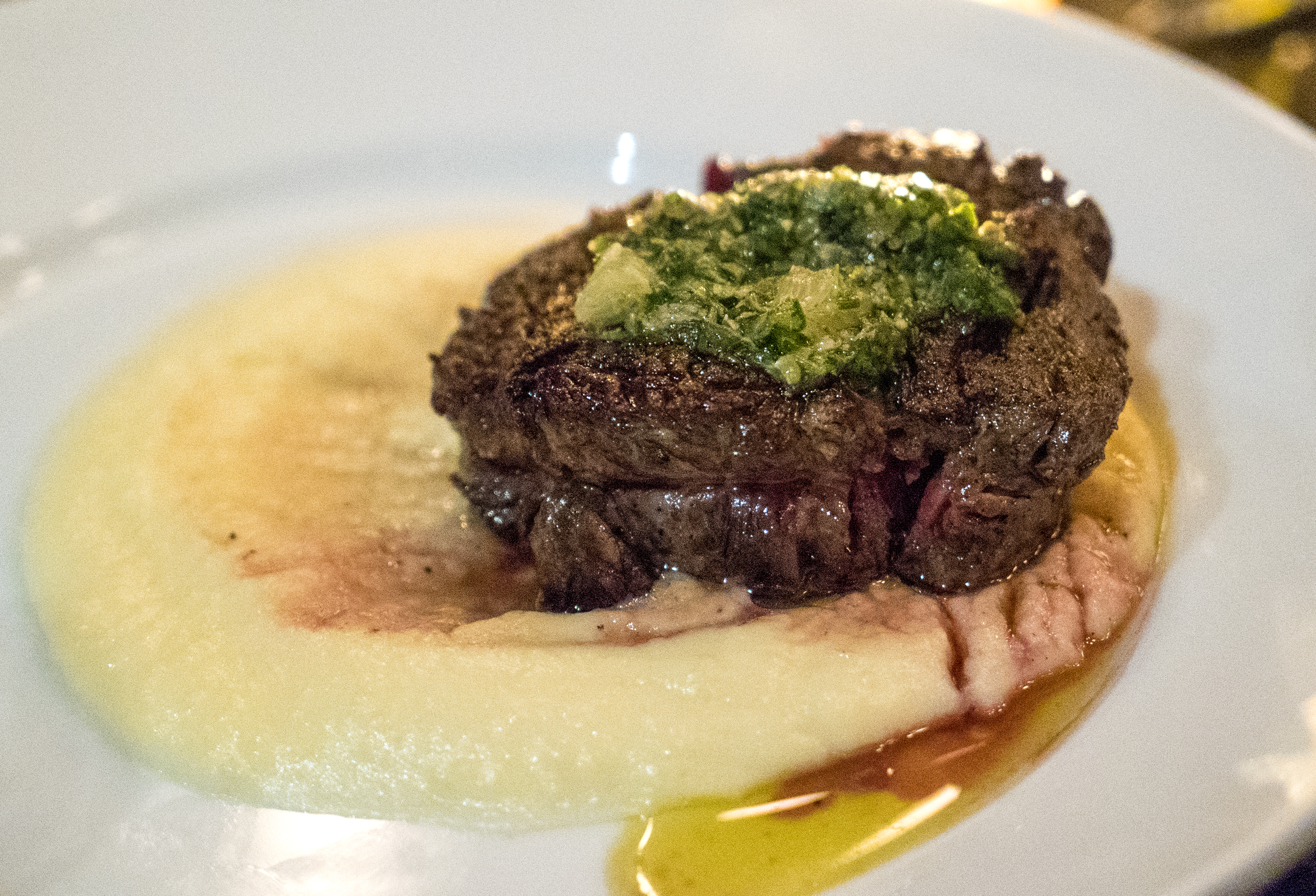
DSC09627

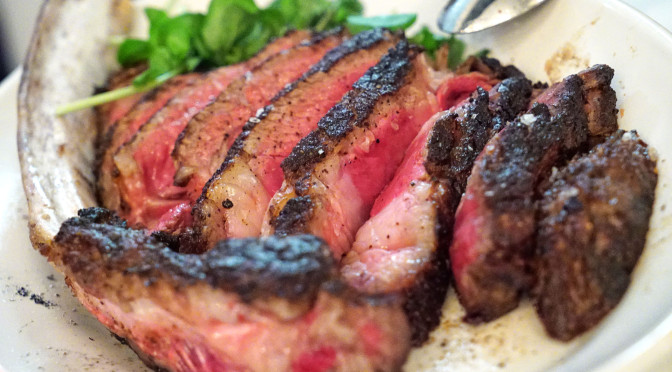
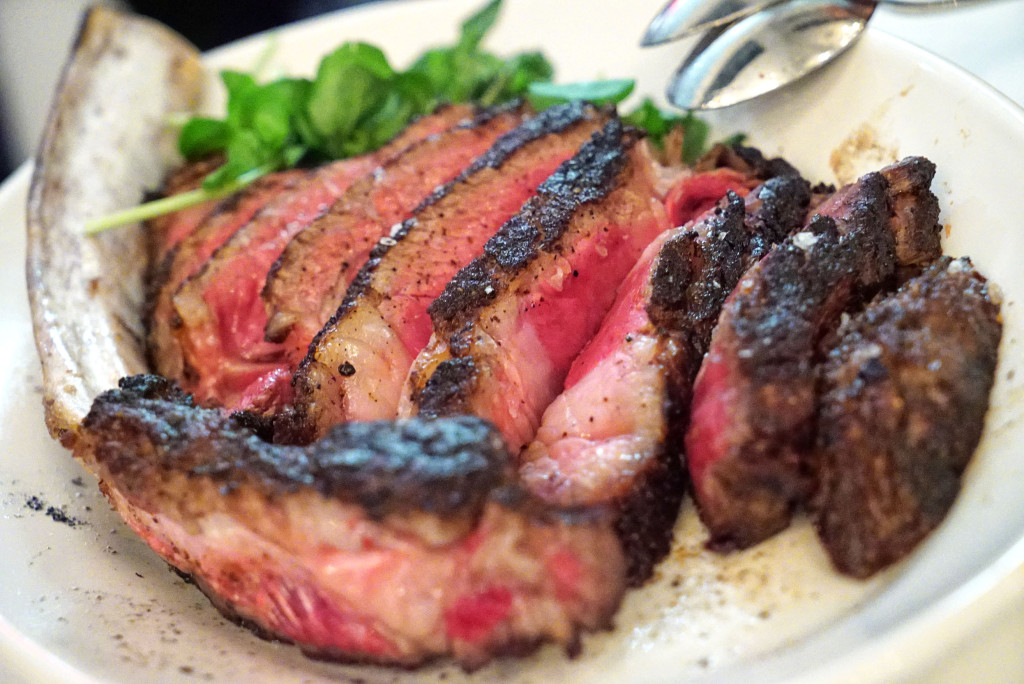
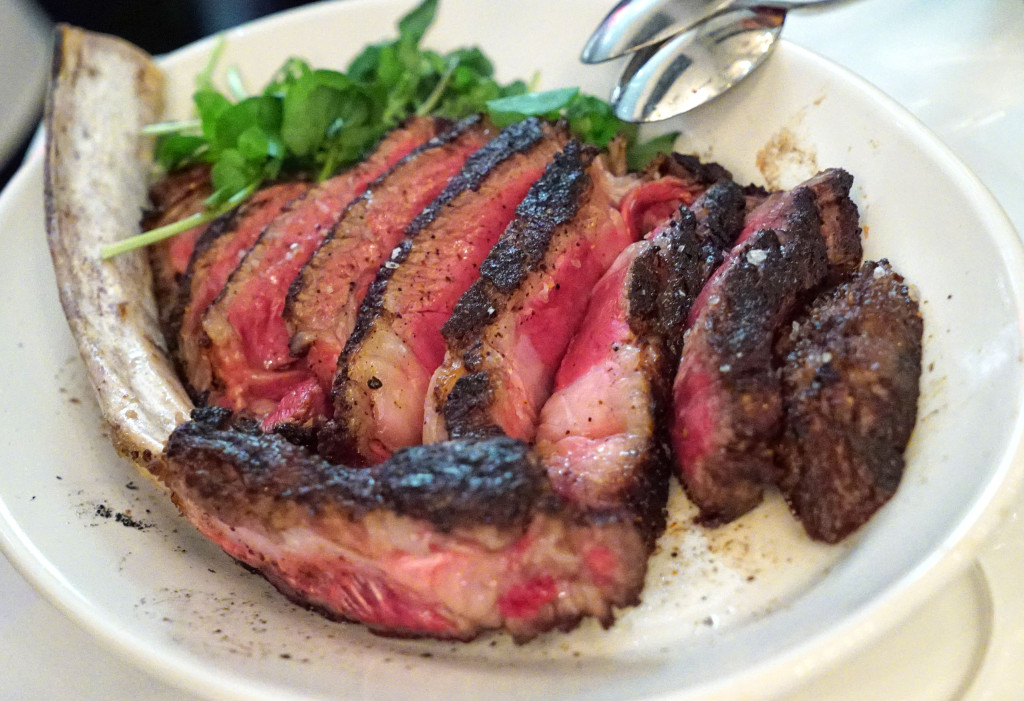
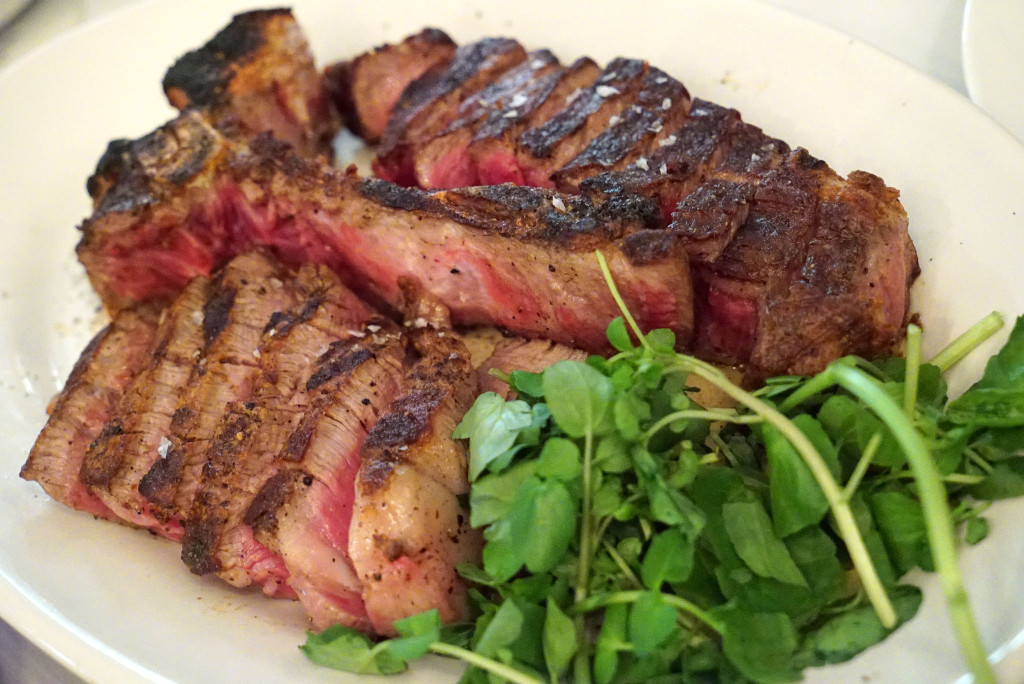
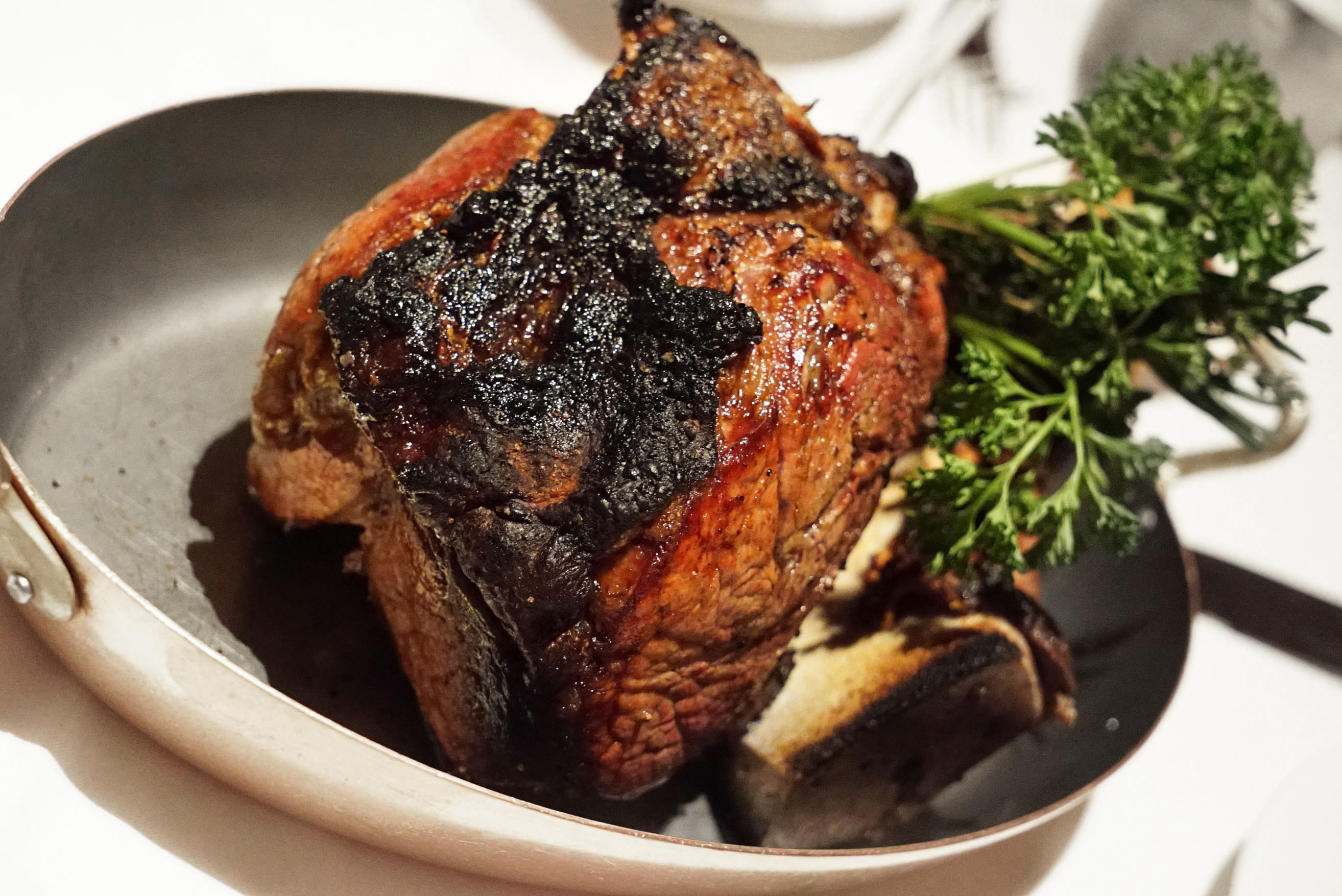
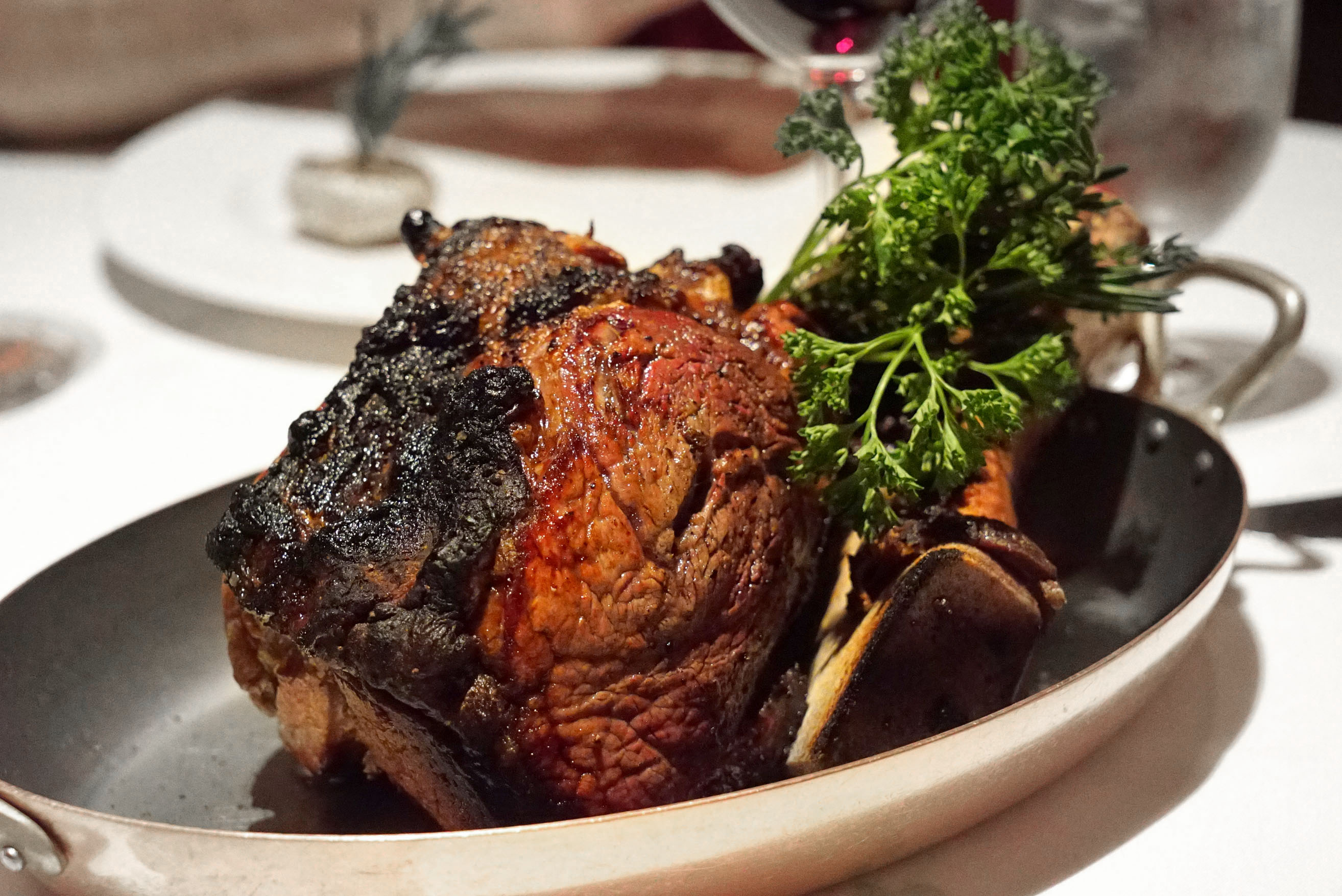
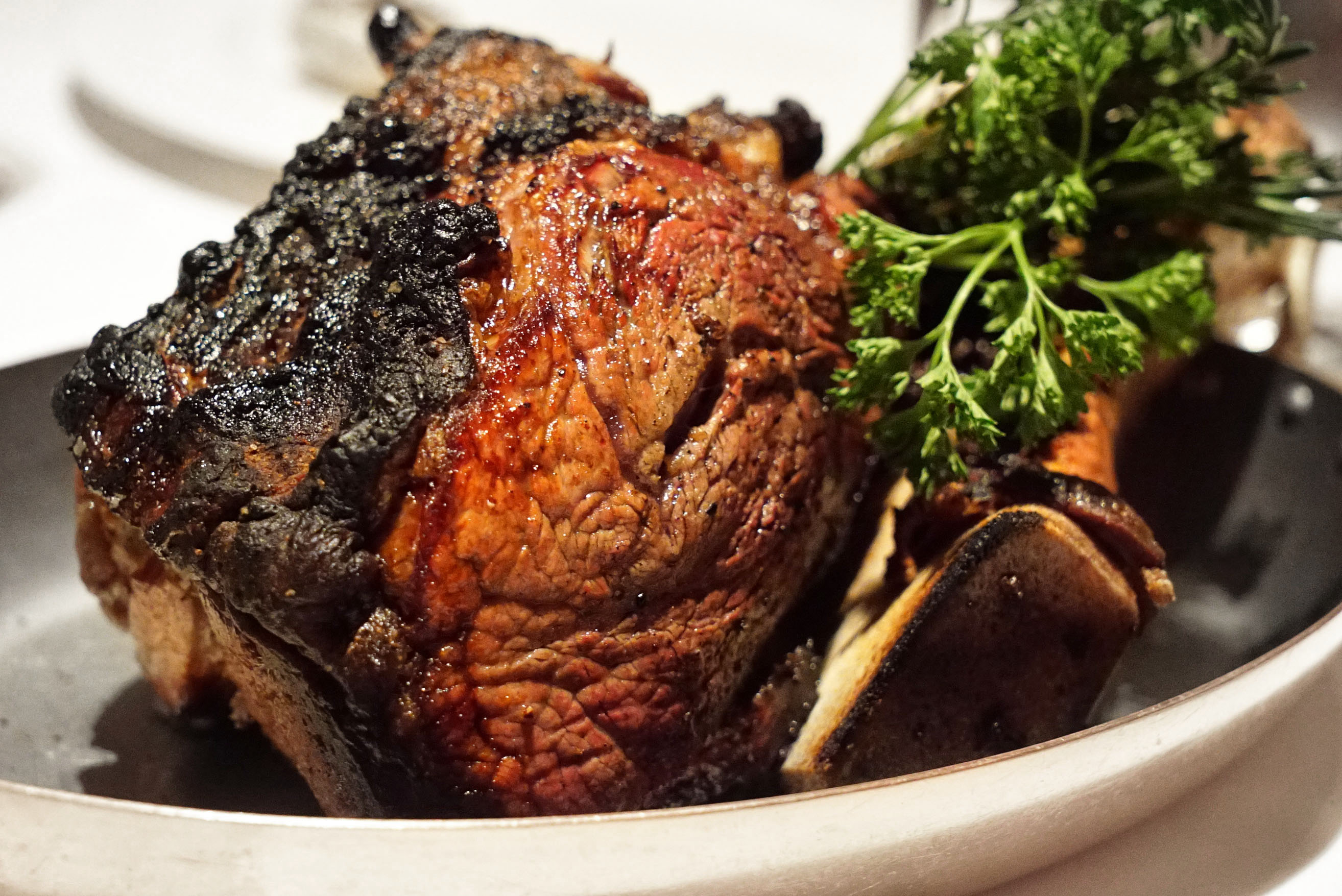
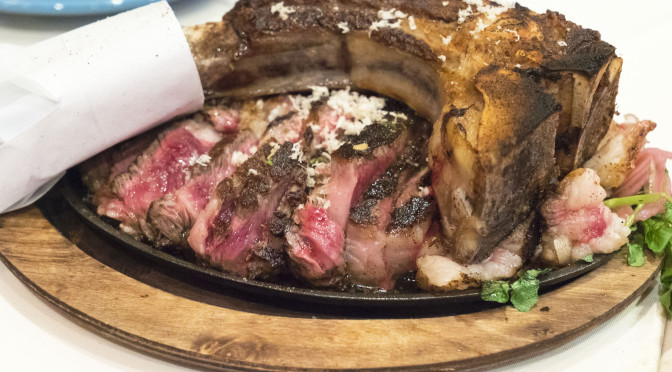
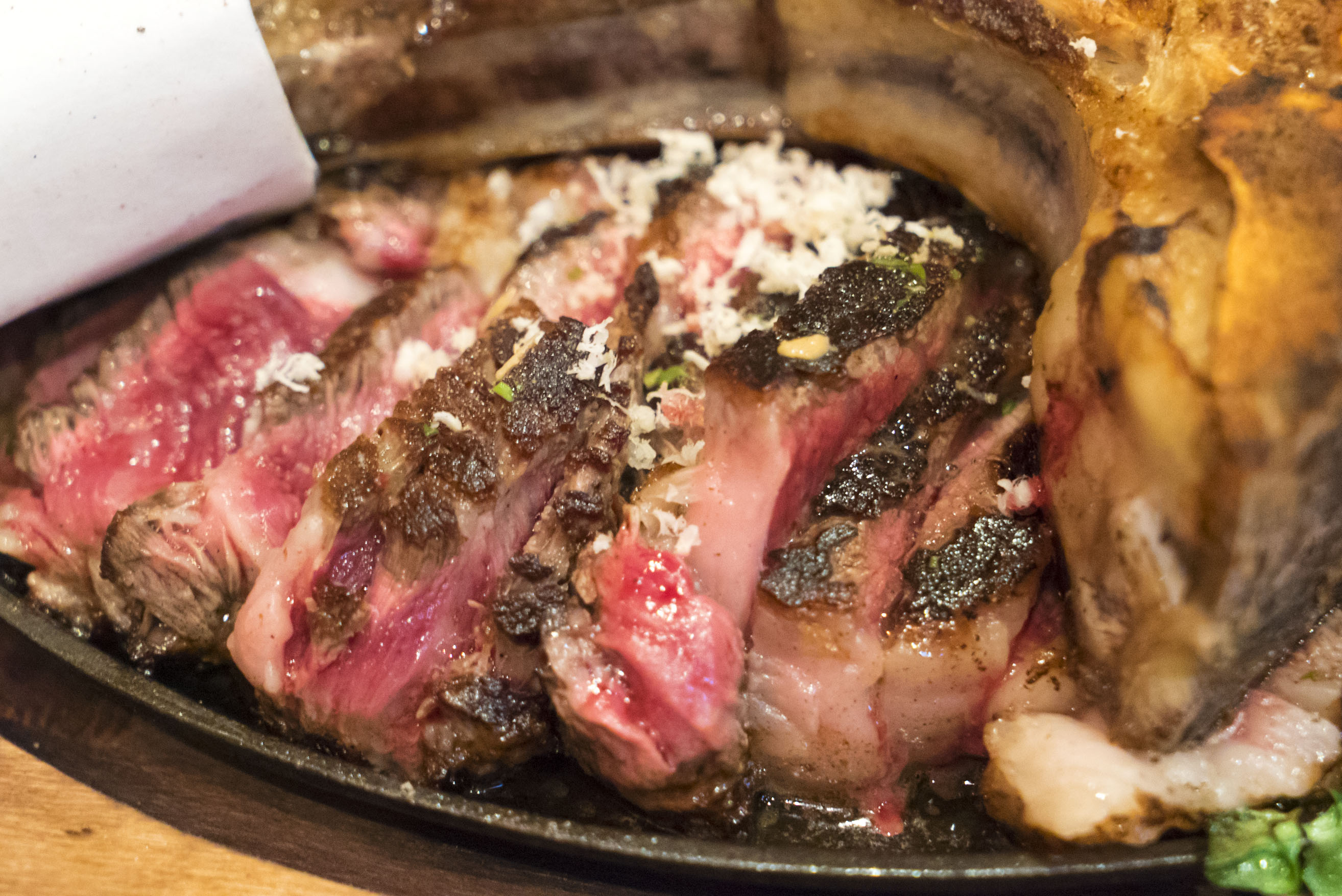
This fucker was cooked perfectly. You can see that nice bright pink medium rare awesomeness  stretch from end to end. The crust had ample and robust seasoning, which was kept simple to course salt and cracked pepper. Even the far end of the fat cap was still a perfect medium rare; I was really impressed with that.

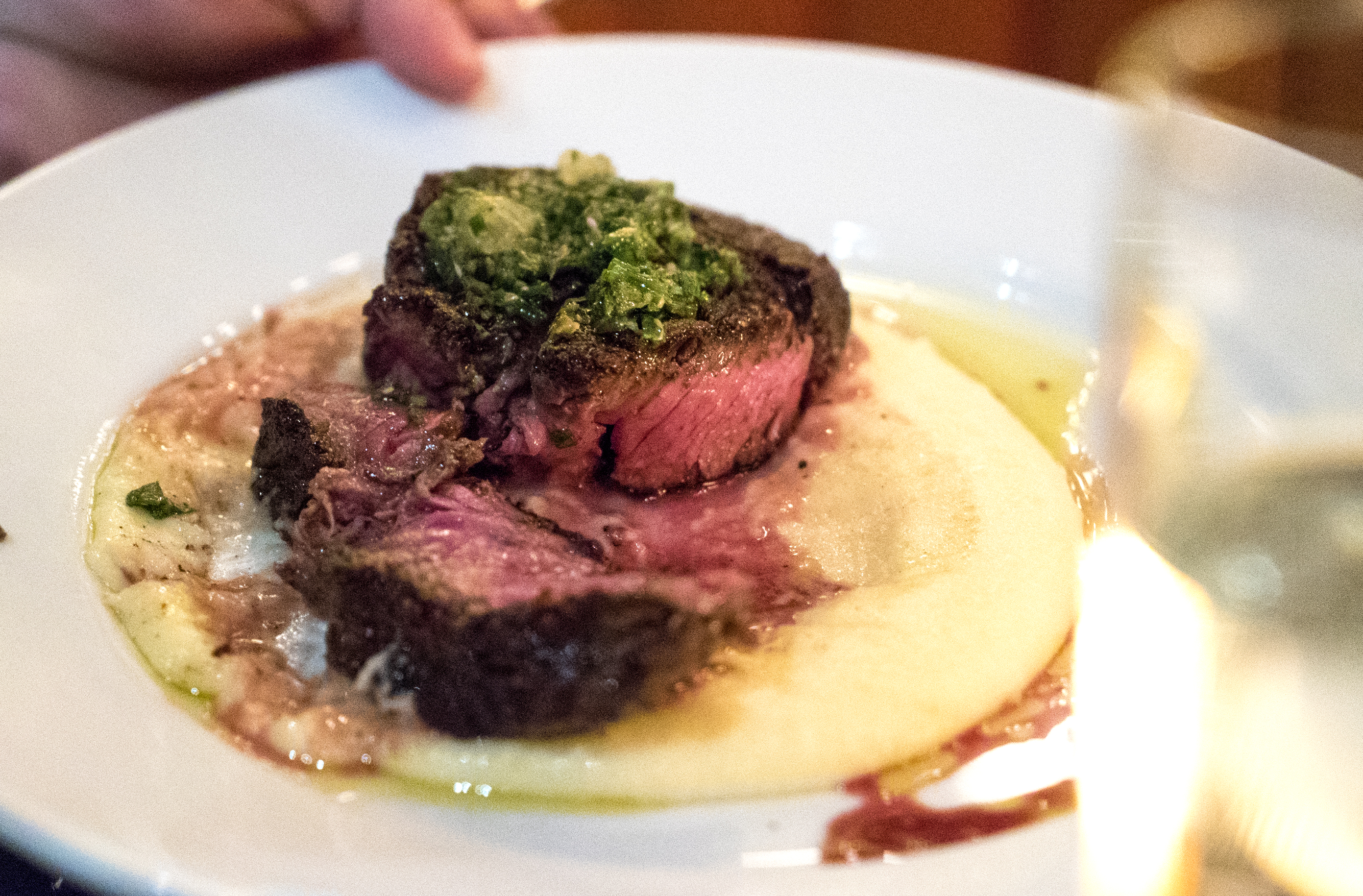
DSC09620

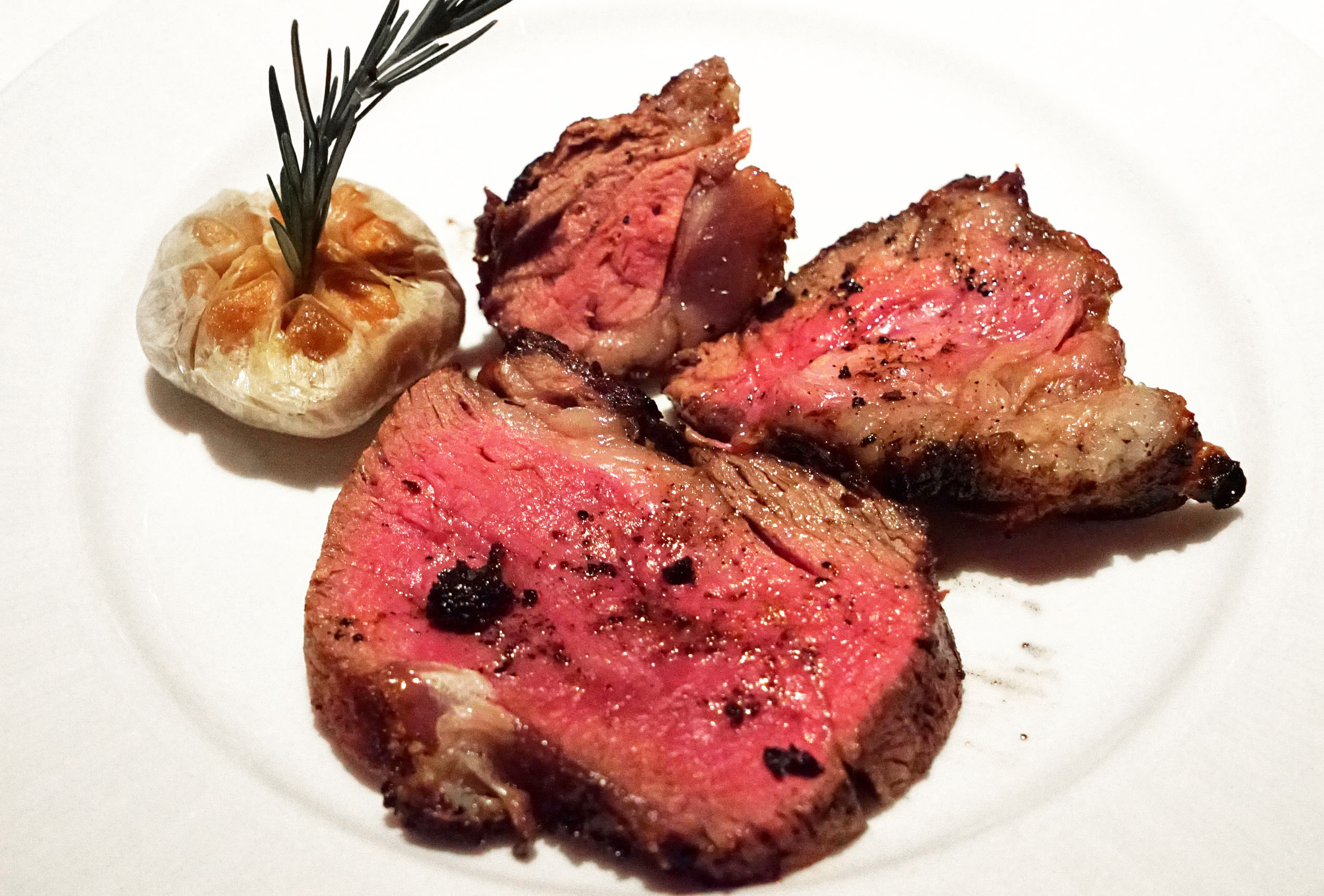
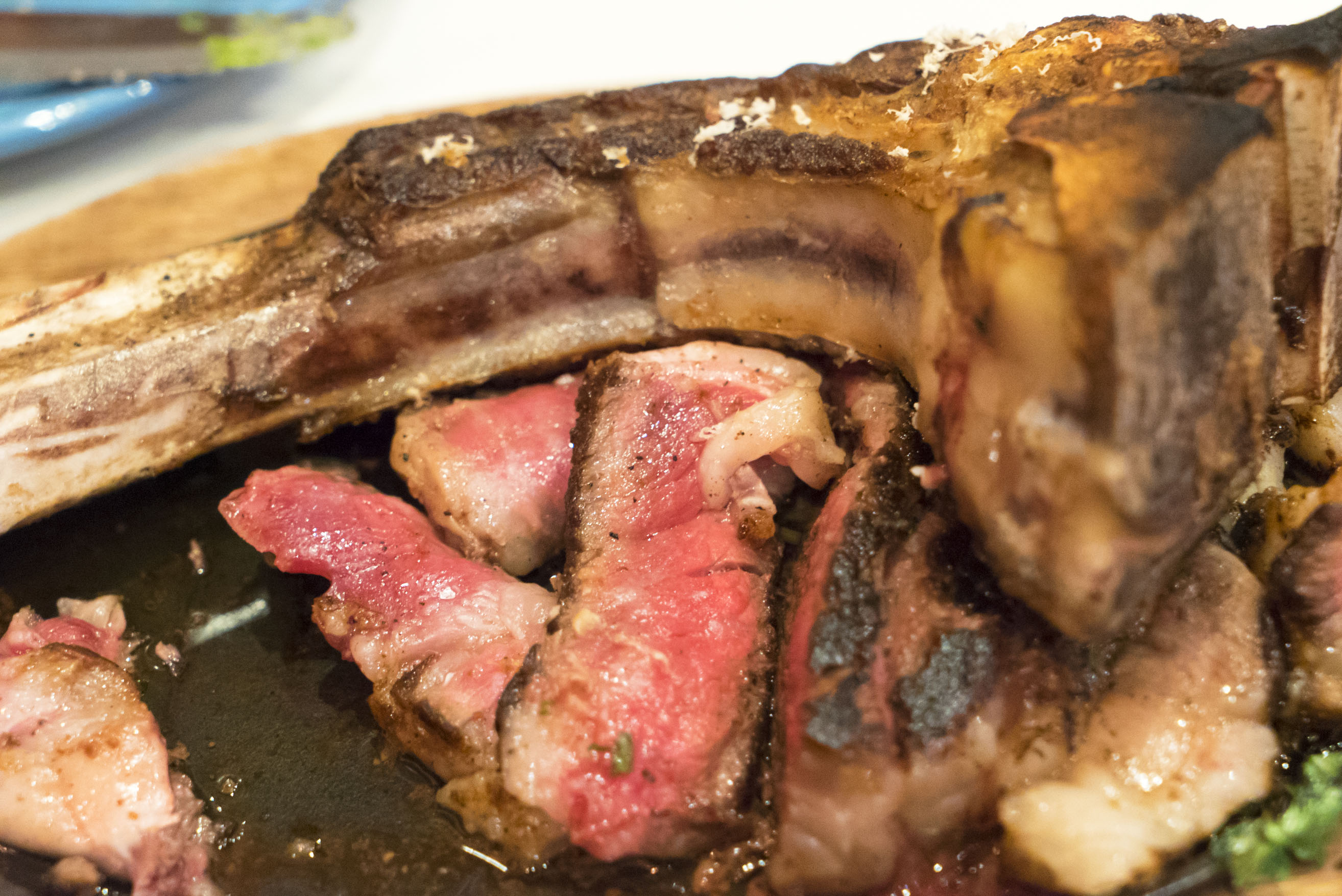
The porterhouse was similarly pro-executed. In fact, in the first few bites, we couldn’t readily identify which side was which between the filet and the strip – THAT’S how tender the strip side was!

DSC09629

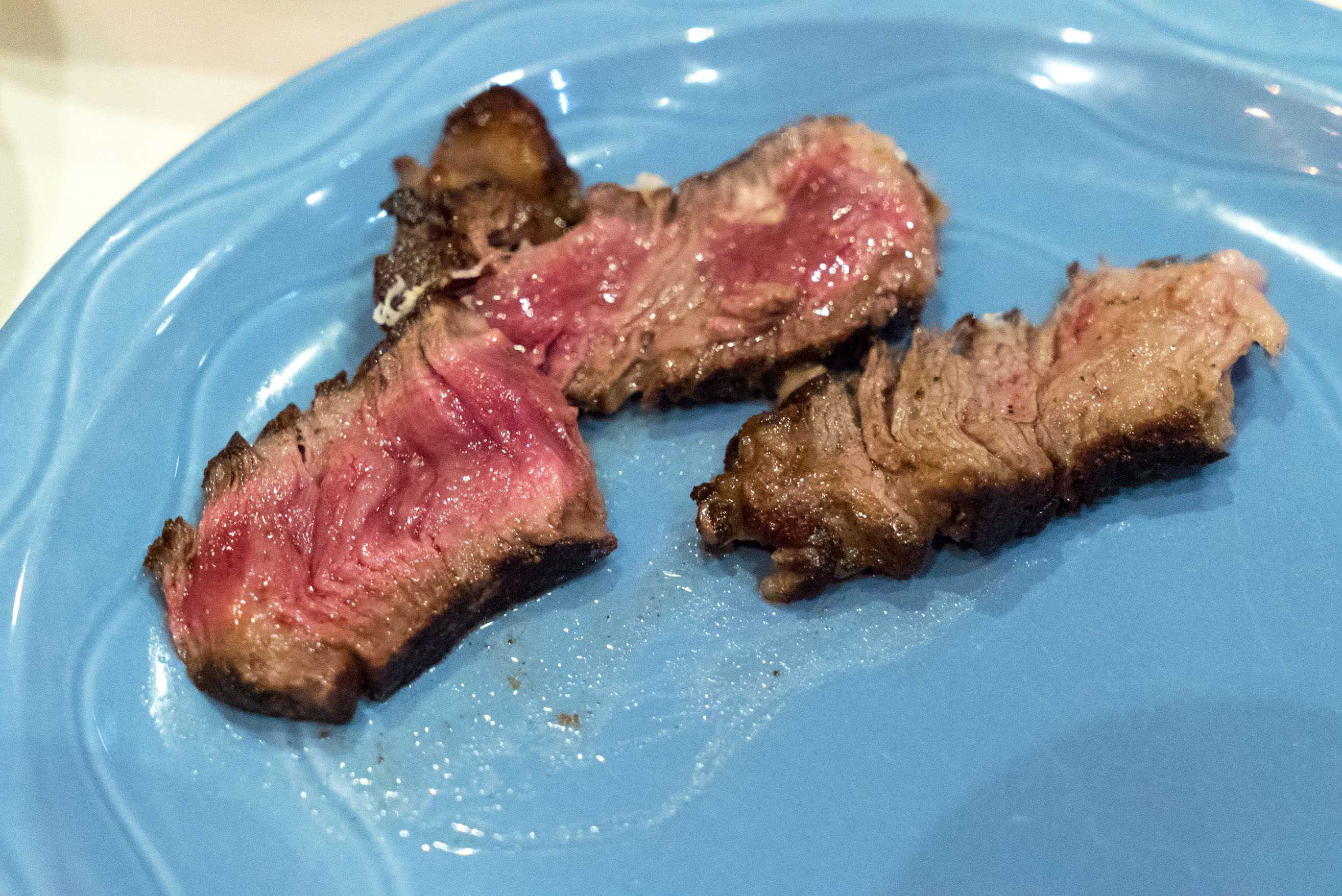
On second glance it’s clear that the top is strip and the bottom is filet, but the filet side was quite generous.

Choice of Cuts & Quality Available: 10
Blu offers two sizes of filet, two sizes of rib eye, multiple sizes of porterhouse and a strip. Everything is aged for about 28 days (with the exception of the filet) and is prime quality. These babies come from Master Purveyors in the Bronx. I’m familiar with their products and I can tell you they are top notch.

Portion Size & Plating: 10
Portions are all generous here, from apps on up the chain to entrees and desserts. The plating is simple and elegant, no fuss.

Price: 8
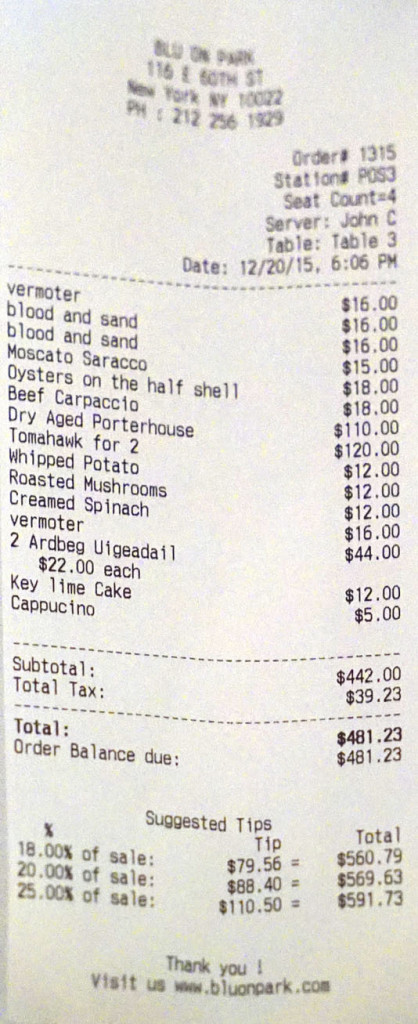
The prices here seem to be on par with other steakhouses in the area. It was a hefty bill, but I didn’t feel ripped off. In fact, it was the opposite: I was really happy with the meal and was happy to fork over money for a well-worth-it meal.

DSC09640

Bar: 8
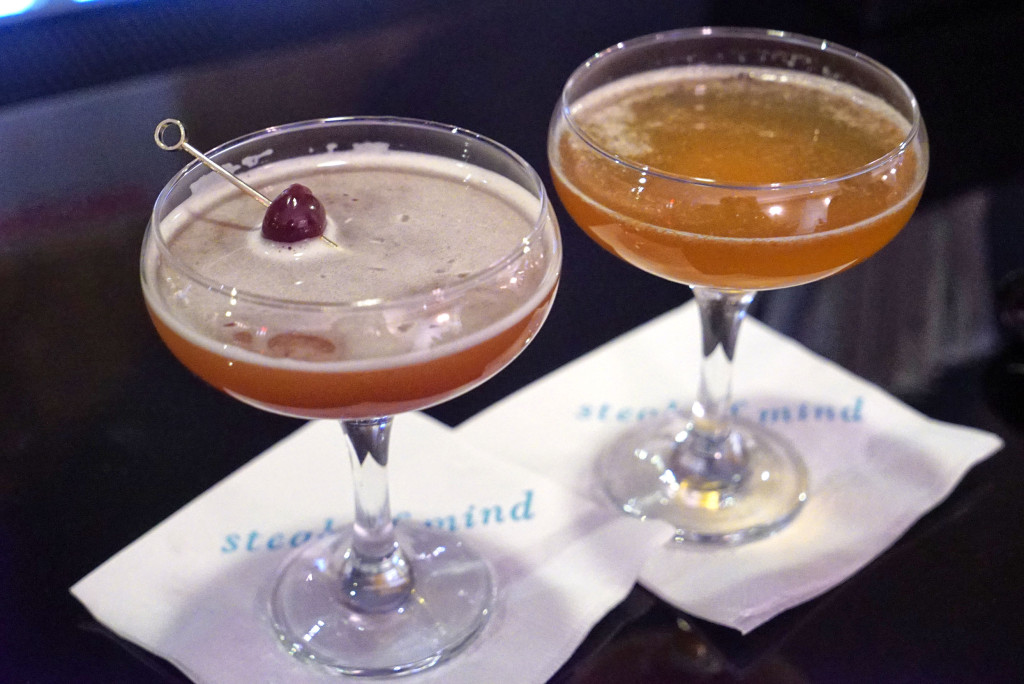
This place puts up some really great cocktails, and it has a killer selection of scotches, like Ardbeg Uigeadail – a super smoky and peat-infused islay whisky.

DSC09610

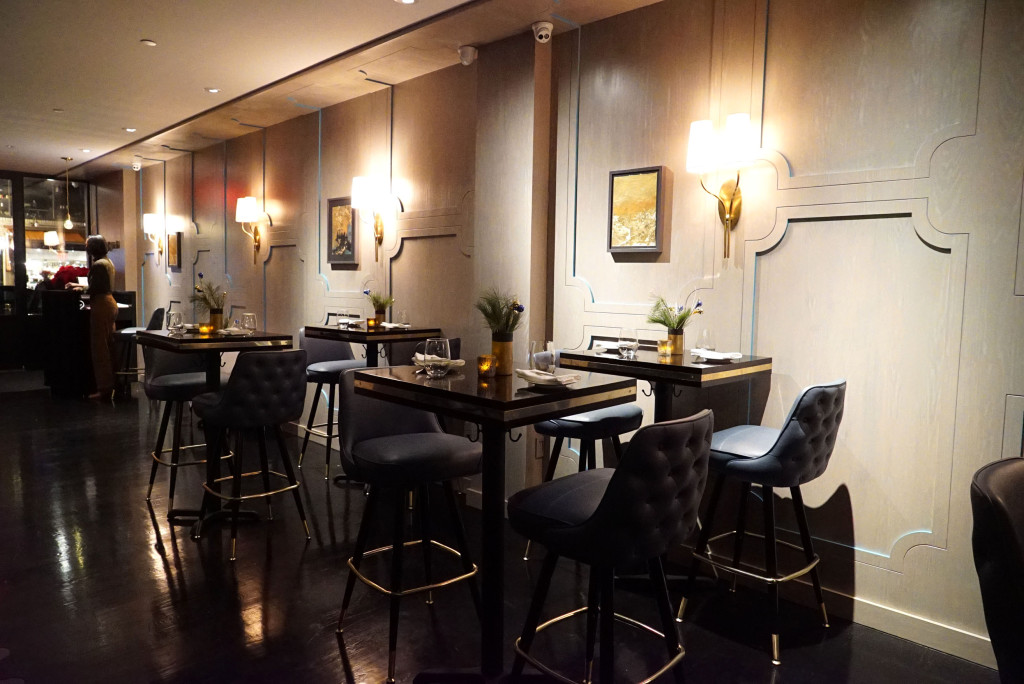
The bar is a beautiful black quartz topped stretch that is clean and chic, with gorgeous high tops and seating nearby.

DSC09607

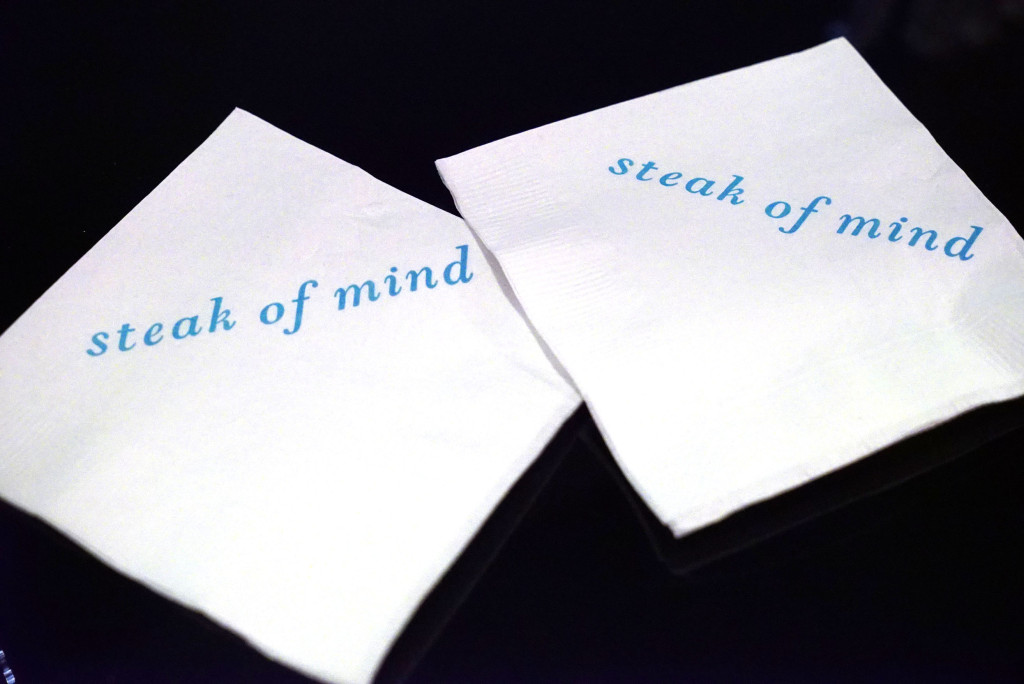
Definitely a cool place to hang out, especially with cocktail napkins like these – haha!

DSC09609

Specials and Other Meats:7
There were no specials just yet, as the joint is pretty much brand new! The only other selection aside from beef was veal – the rest is seafood. I don’t mind that one bit – it’s just one spot where I need to deduct some points.

Apps, Sides & Desserts: 8
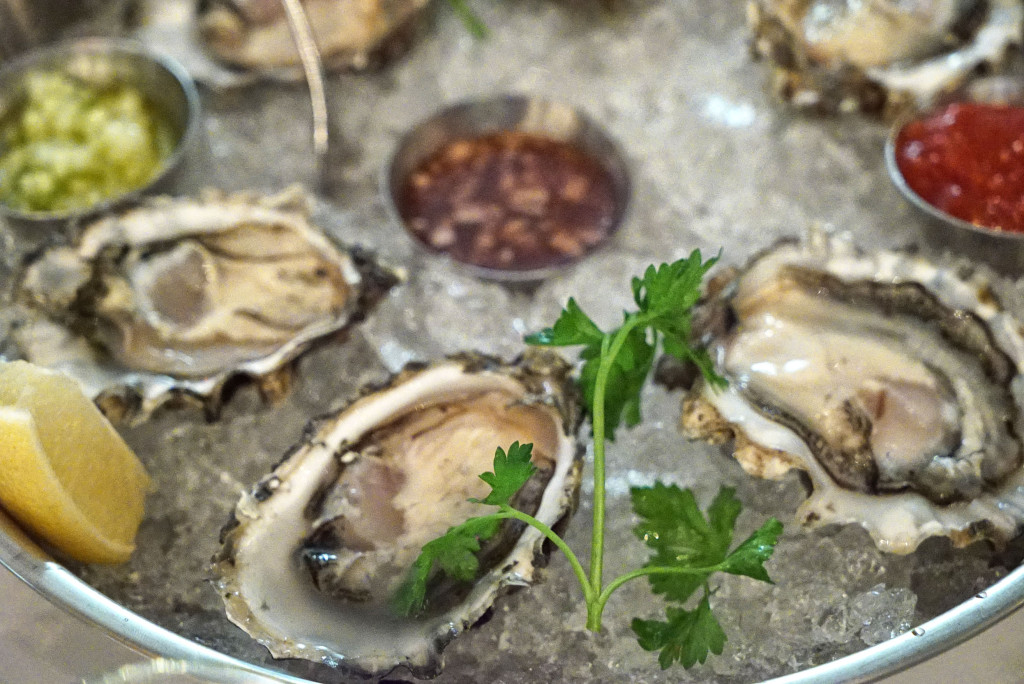
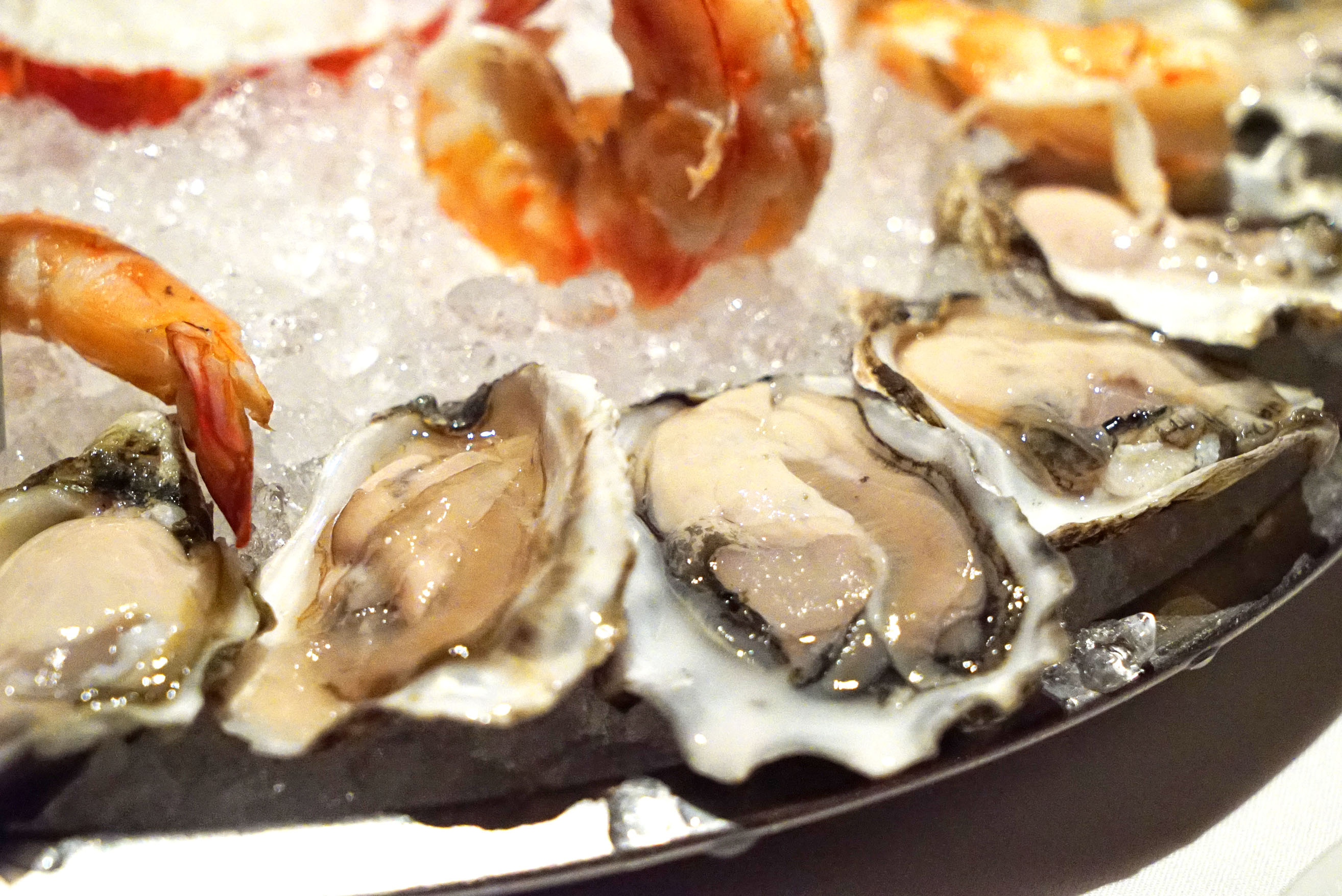
We tried some oysters and the beef carpaccio for starters. Both were incredible. The oysters were west coasters that were meaty, clean and crisp:

DSC09613

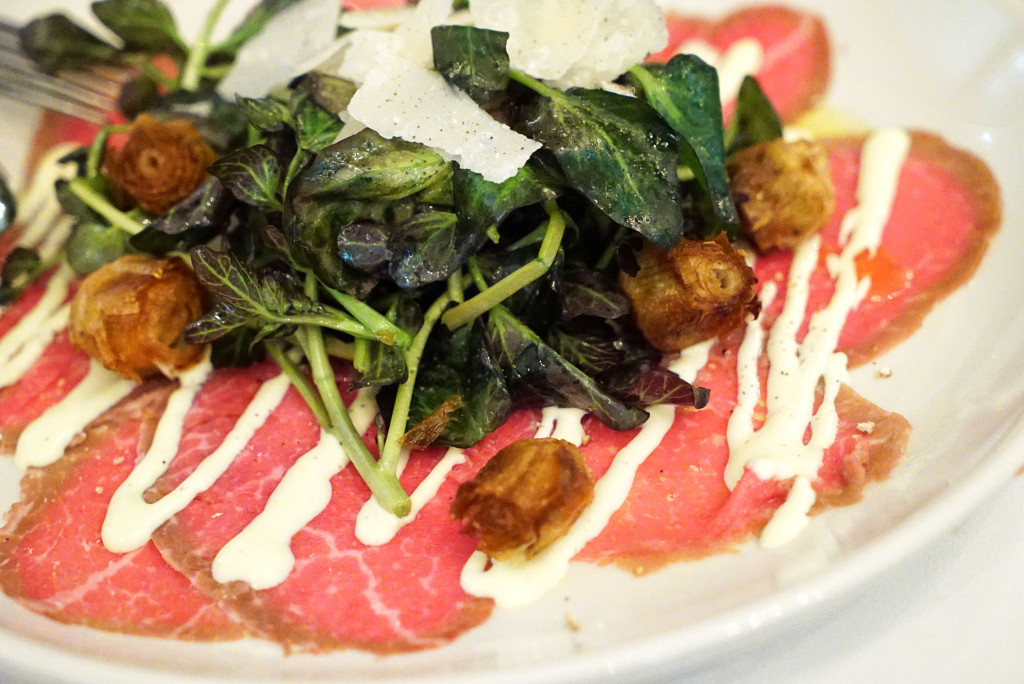
The carpaccio was filet that was sliced thin and topped with some watercress greens, meyer lemon, crispy fried artichokes and shaved cheese. Great way to prime up for more meat.

DSC09616

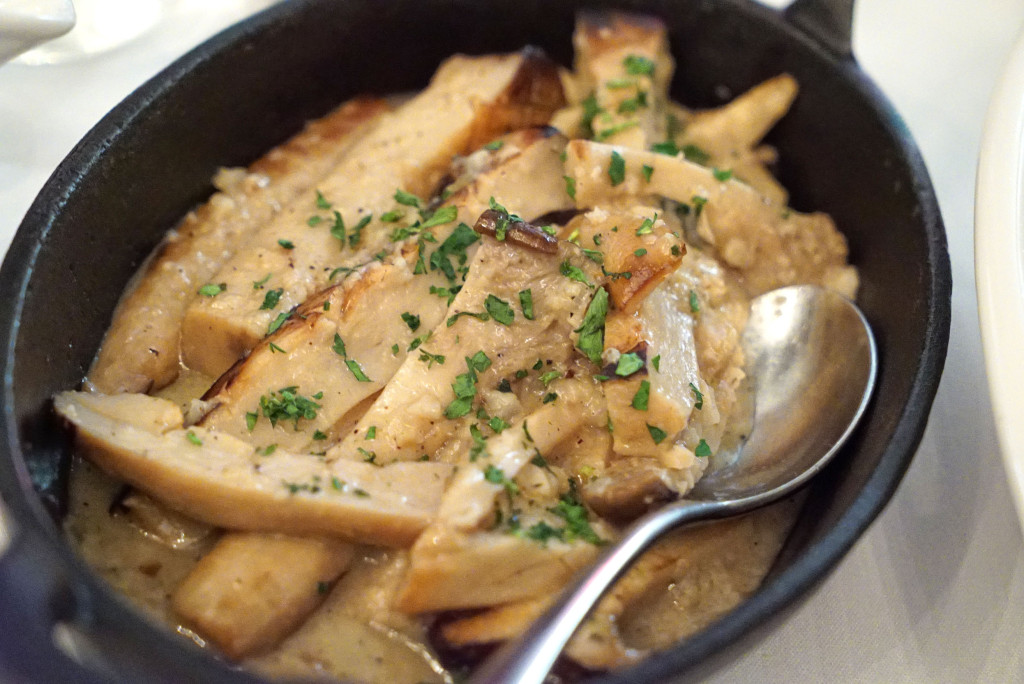
For sides, we went with creamed spinach, whipped potatoes and roasted king oyster mushrooms. Let’s start with the best – the mushrooms.

DSC09622

I typically pass on mushroom sides at steakhouses because they generally seem to be a huge waste of money. They’re usually some crappy-ass button mushrooms that are overly buttery and mixed with onions. They may taste fine, but I can do that at home for $3. Here, the king oyster mushrooms, first off, are expensive and more rare. Second, they’re meaty and earthy, a great compliment to a piece of steak. They roast them with garlic here and they come out absolutely perfect. Third/last, at just $12 I find this to be a great buy. I’ve seen these ‘shrooms go for $24-$32/lb in some grocery stores. They also offer these “unsliced” and with a few other sides as a main, vegan option entree. Great idea.

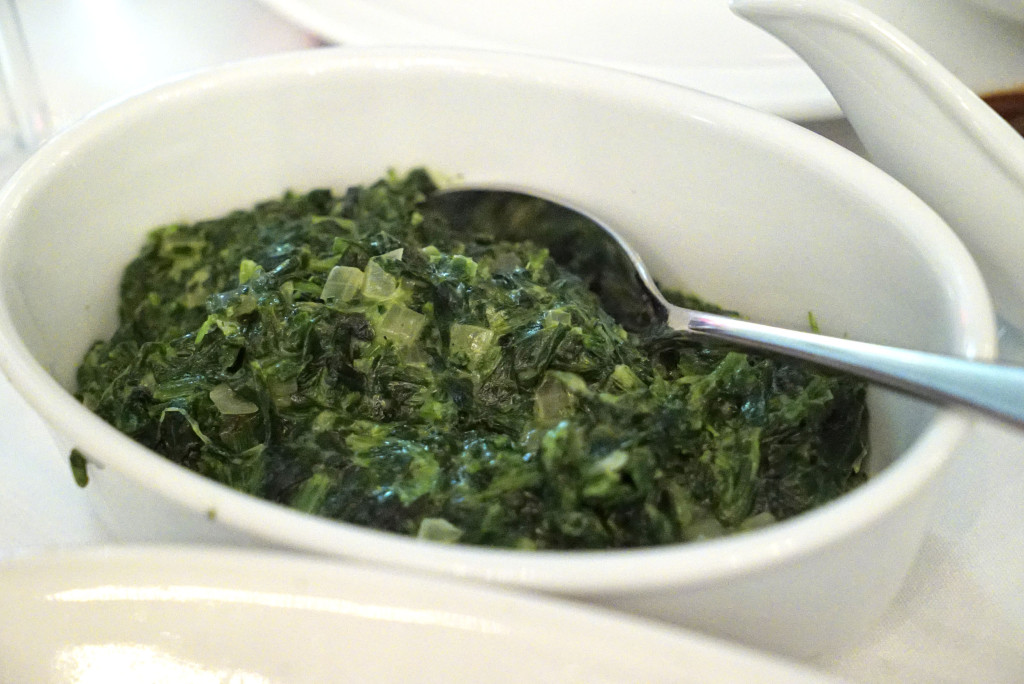
The creamed spinach was a bit lacking for me, but my wife and I both agreed that we enjoyed the texture, which was broken up here and there with some crispness.

DSC09624

The mashed potatoes, which I didn’t photograph, were creamy and smooth, but they were nothing to necessarily write home about. When I visit again, I’ll stick with the mushrooms and maybe try the french fries instead.

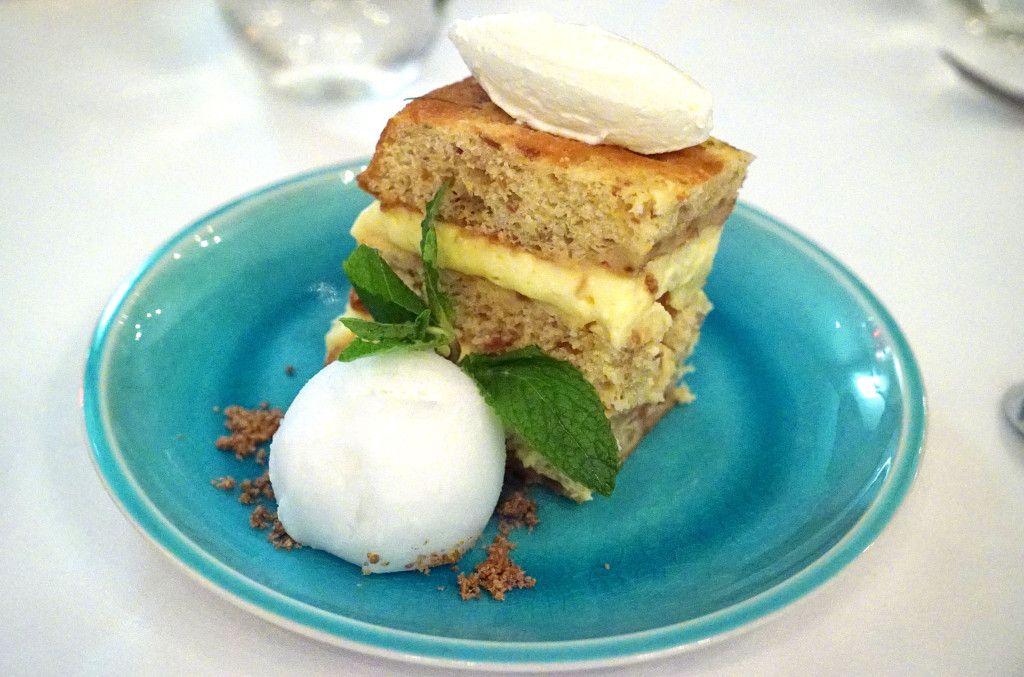
For dessert we shared a key lime pie that was more like a layer cake than pie. My wife and I really enjoyed the change-up for this dish. The cake had an almost nutty quality, with the texture of carrot cake. It came with a scoop of coconut sorbet that was really icy and mild – not too sweet.

DSC09632

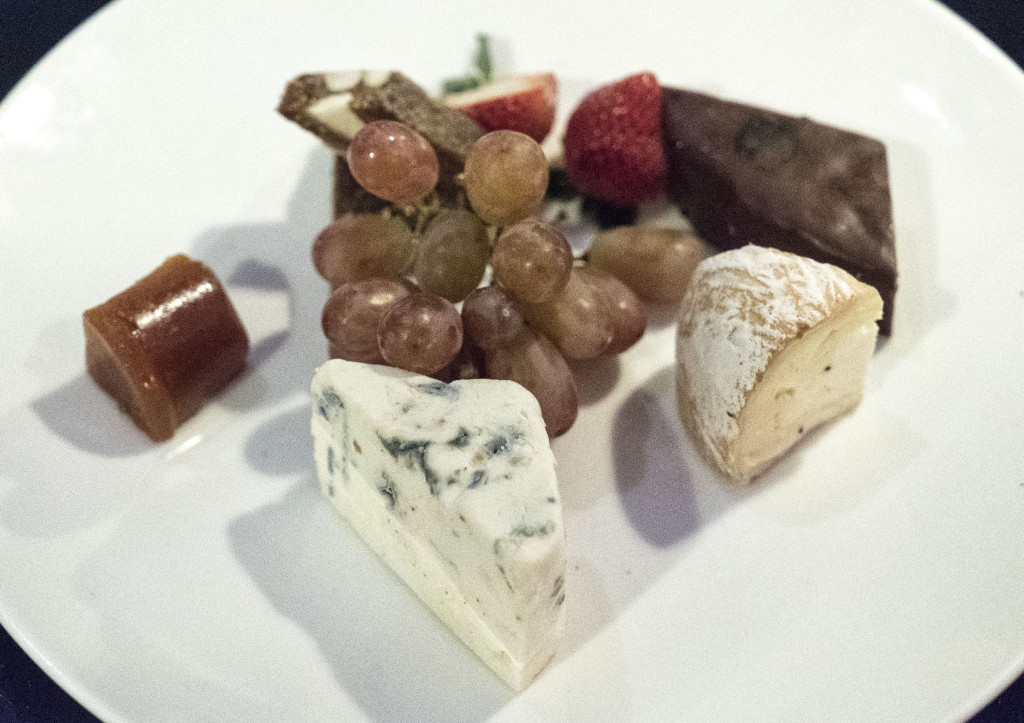
The manager, Carlos, was a real gentleman. He sent over a complimentary glass of after dinner dessert port for each of us, as well as a follow up reception at the bar with glasses of champagne and a cheese platter! We were blown away.

DSC09644

DSC09649

DSC09646

DSC09647

If you lack a sweet tooth, like I sometimes do, then this cheese plate is the way to go. The blue cheese on there is incredible! Especially when you mix bites alongside the fig cake.

Seafood Selection: 10
There’s a shitload of awesome, fresh fish on the menu. Salmon, branzino, sea bass, tuna and lobster all grace the menu in entree format. The apps are chock full of shellfish offerings (as mentioned above), and the plateau selections looked amazing.

Service: 10
I already mentioned Carlos’ amazing hospitality above, but I have to say that everyone here is great. All the way from owner to management, from front to back and the bar in between. Our waiter, Johnny, was a real gent (nice name too). And everyone was dressed really nice and sharp – waiters had nice suits with bow ties, and the table service was highly attentive without being in-your-face all the time. Well done guys!

DSC09611

DSC09612

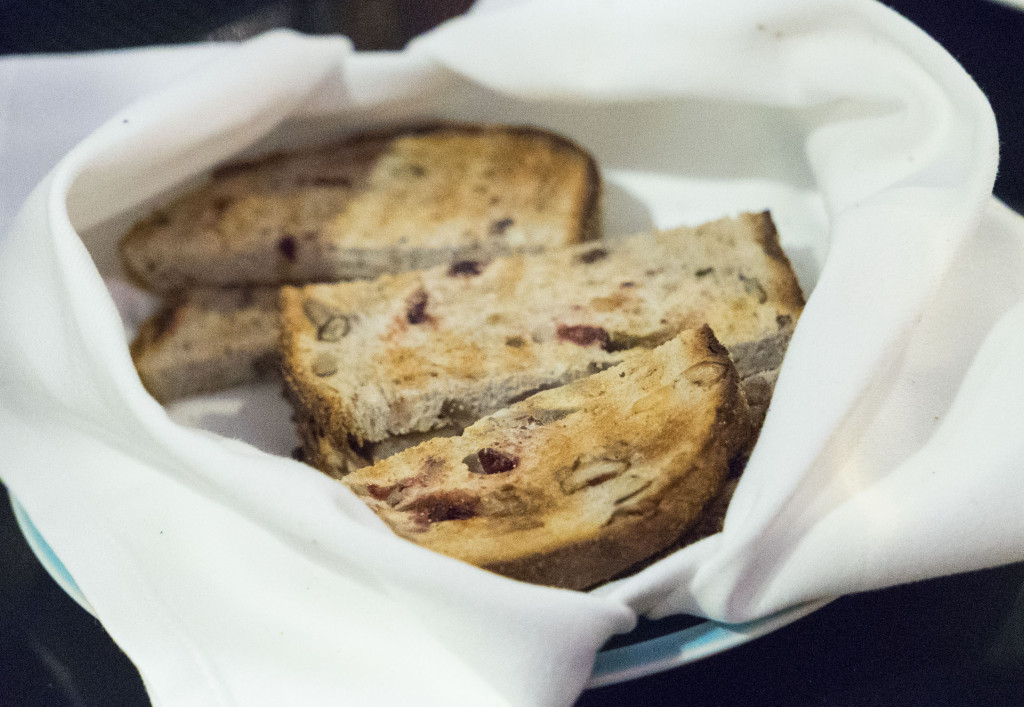
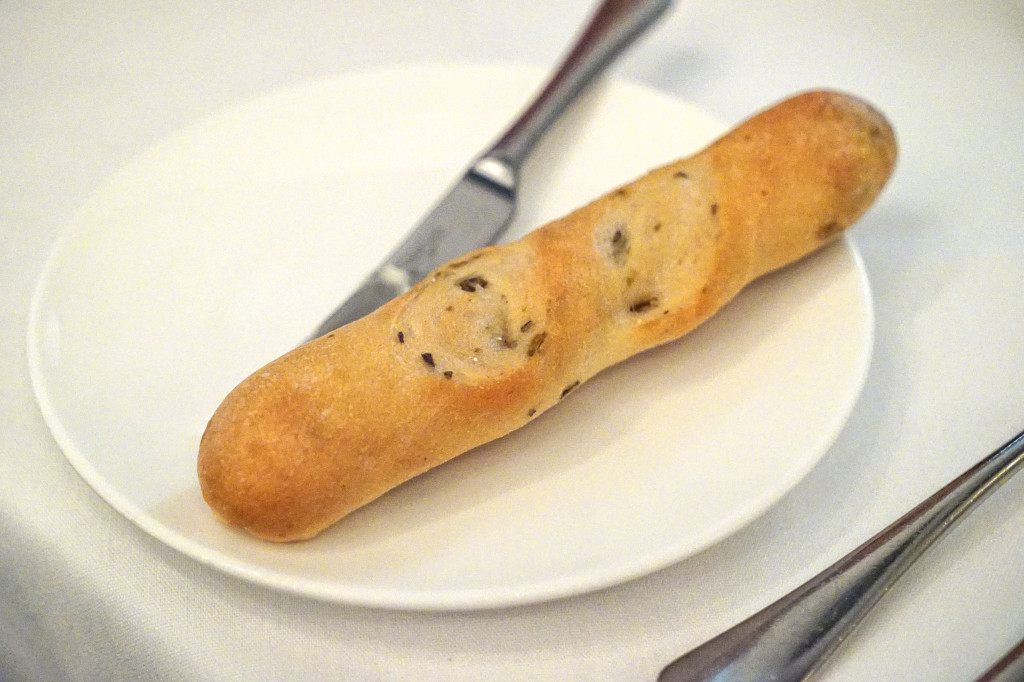
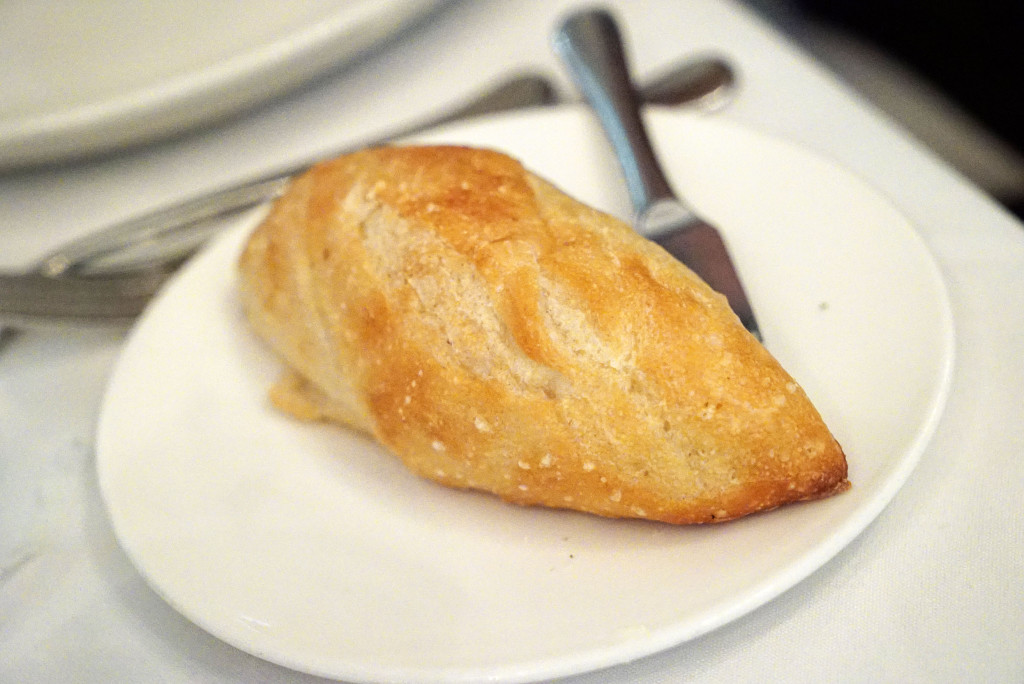
The bread was warm and fresh – olive stick or white dinner roll – and the butter was soft and easily spreadable.

Ambiance: 9
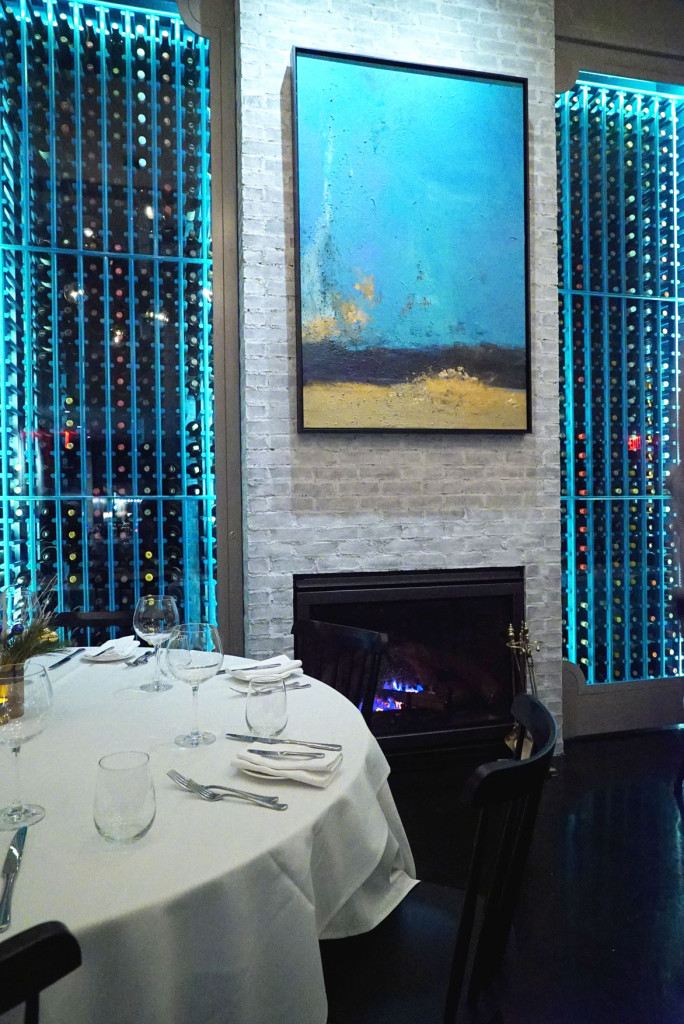
Amir has curated an absolutely incredible renovation from what was once a Chinese food restaurant and an office space into a really elegant and inviting two-floor steak joint. The downstairs is perfect for hanging out and sipping cocktails. Up a half a floor is a nice small dining area with a fireplace and high ceilings, with impressive wine shelving all over the walls.

DSC09617

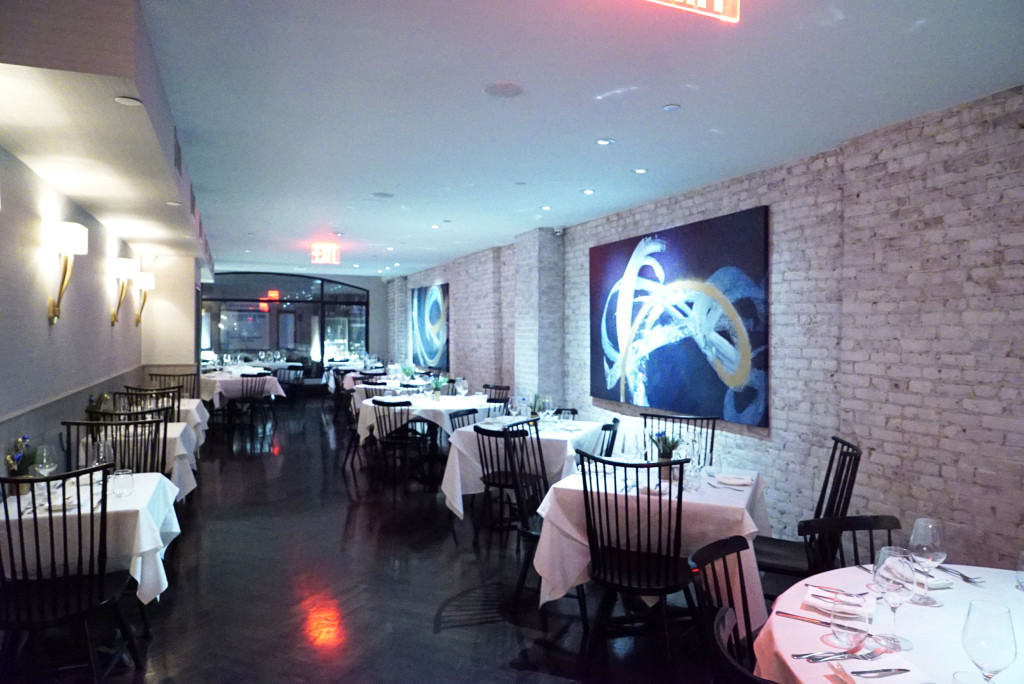
Then up another half level is a long stretch of beautiful dining space that overlooks a huge full-front-of-the-building window and nicely painted exposed brick walls. There’s even a small private dining room that can probably seat about 20 for events.

DSC09652

GREAT new spot. Check it out and tell them I sent  you.

BLU ON PARK
116 E. 60th St.
New York, NY 10022

Columbus Salame Secchi

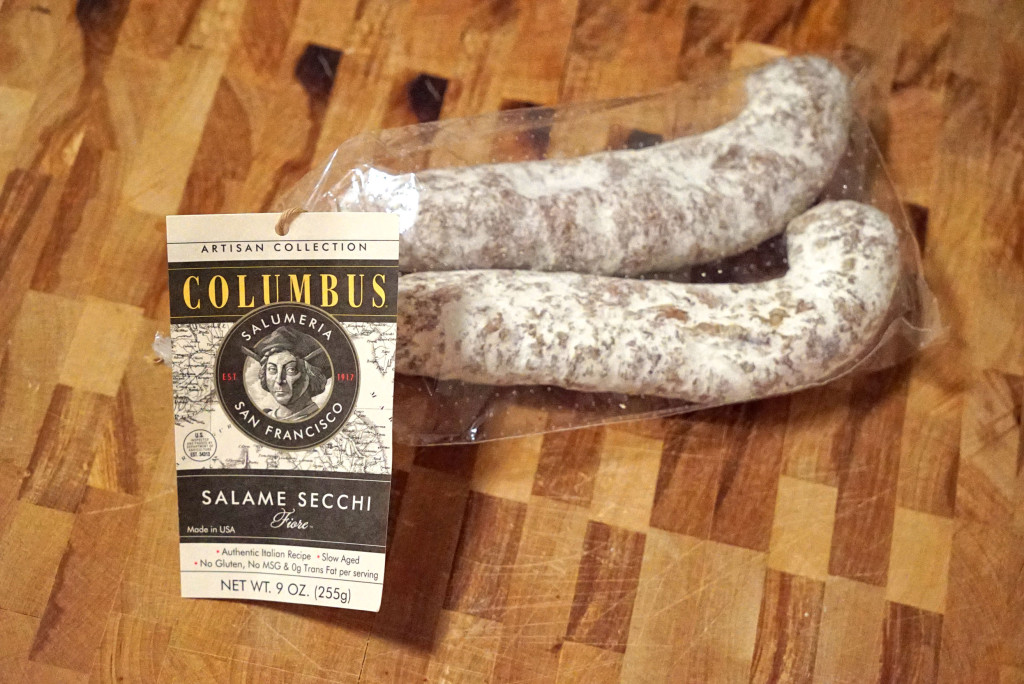
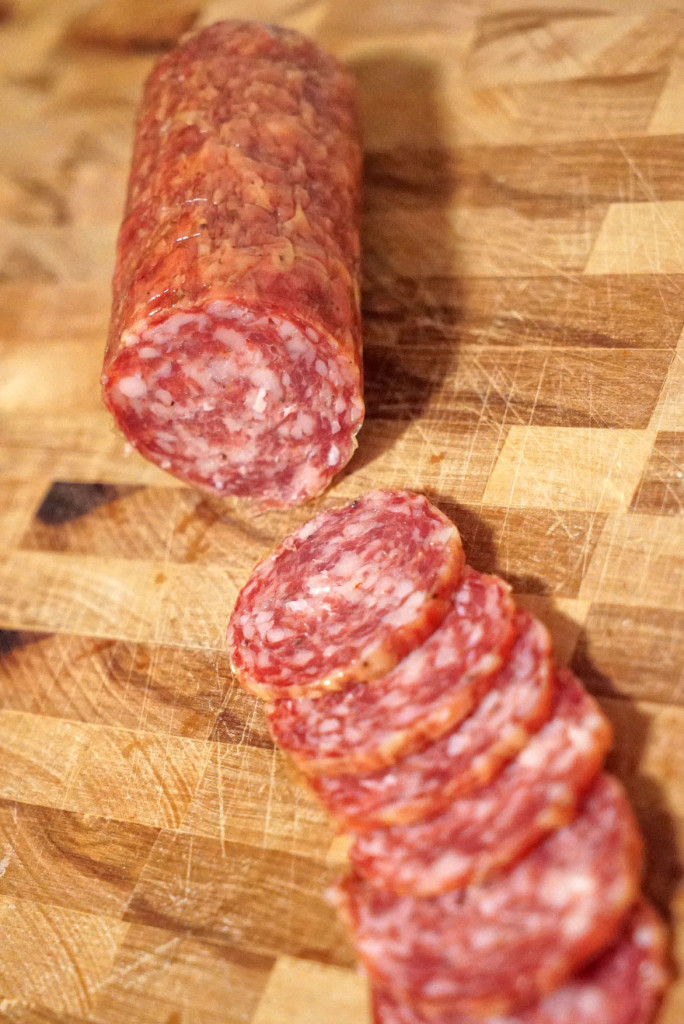
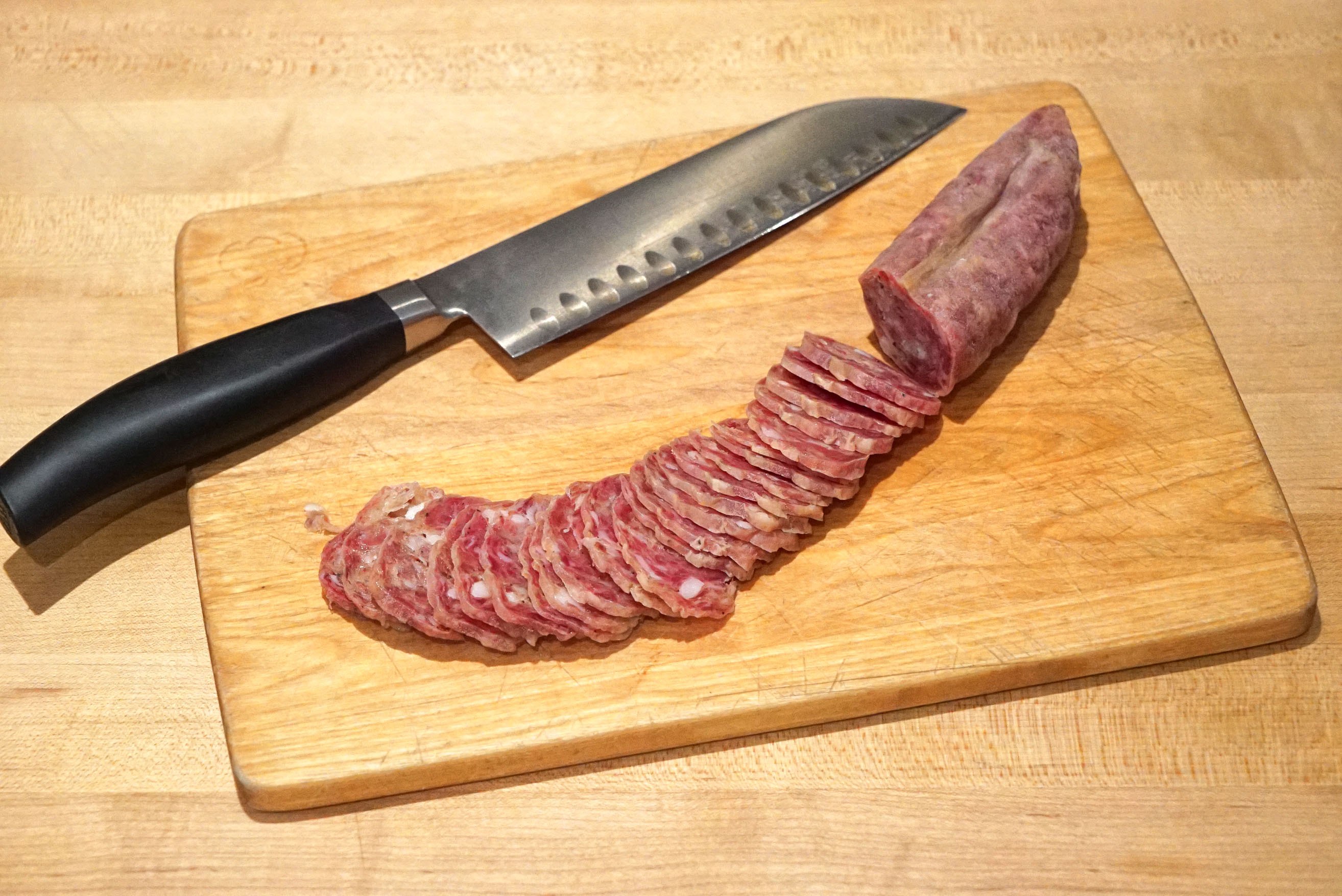
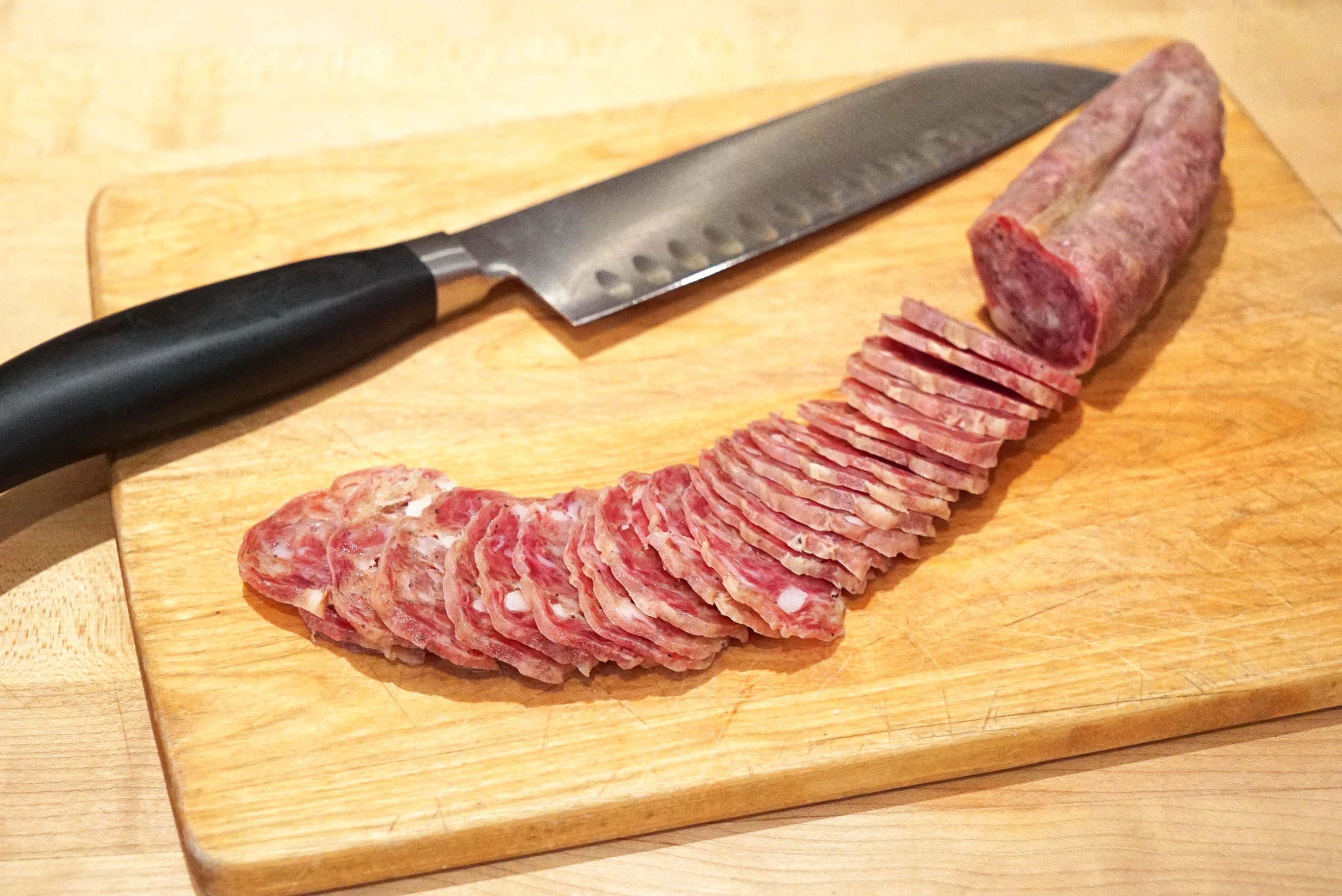
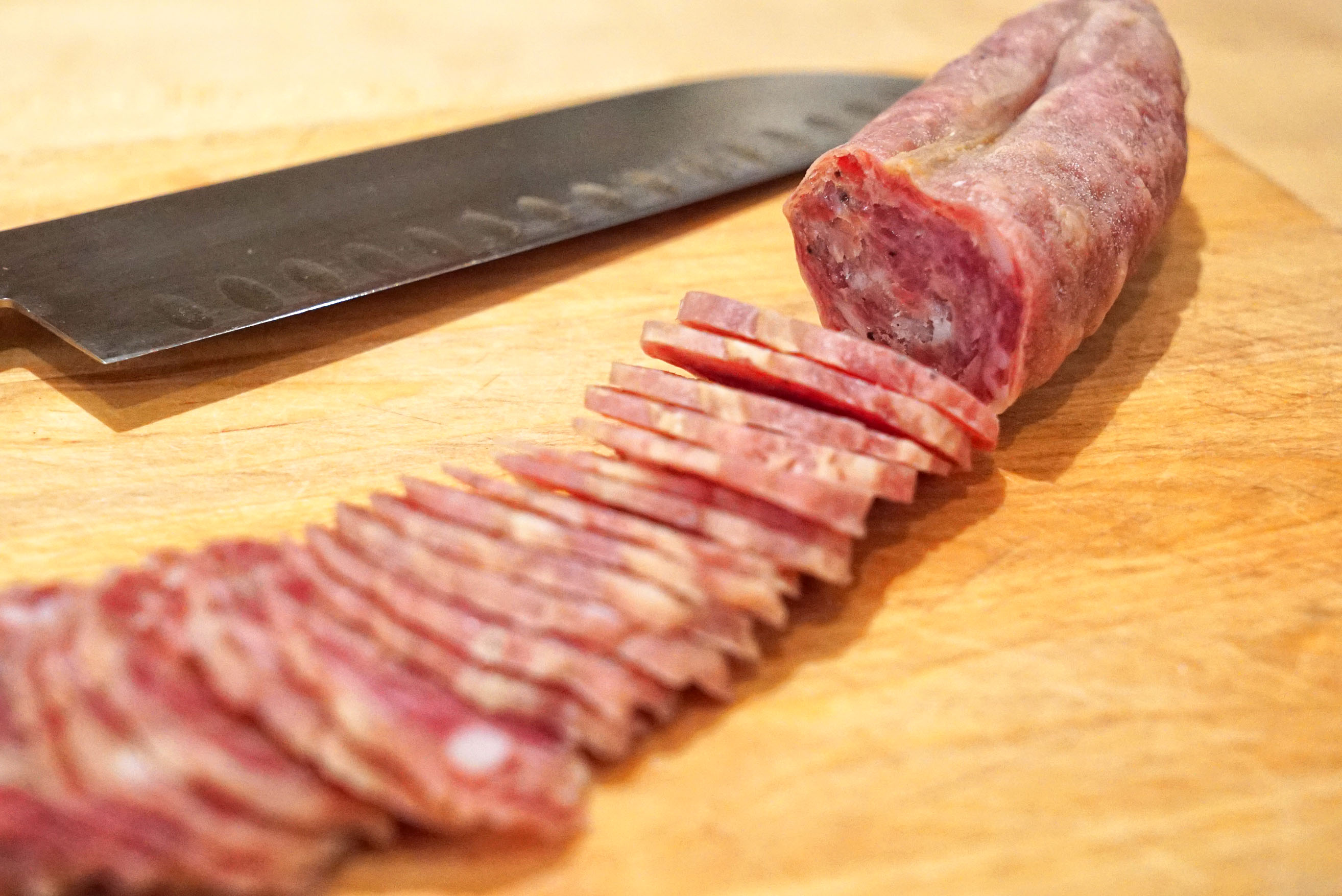
I just posted another salami review where I noted that Trader Joe’s always hits the mark, it seems, in providing high quality for low cost. This Columbus brand “Salame Secchi” is no exception:

DSC09581

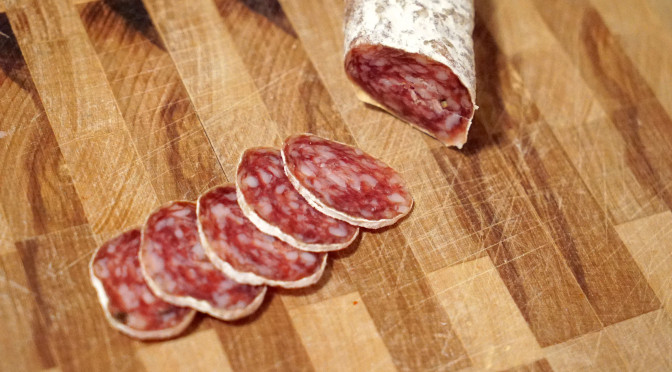
This was mild and lean, hard and dry.

DSC09585

It sliced easy and had a great, slightly sweet flavor to it.

DSC09589

I initially went to Trader Joe’s to try their truffle salami, but they were all out. I picked this up, along with the Volpi sopressata, just because I was craving hard meat (commence jokes).

DSC09591

I was definitely happy with the purchase. This style ran me $8 for 9oz. That’s not bad at all.

Volpi Sopressata

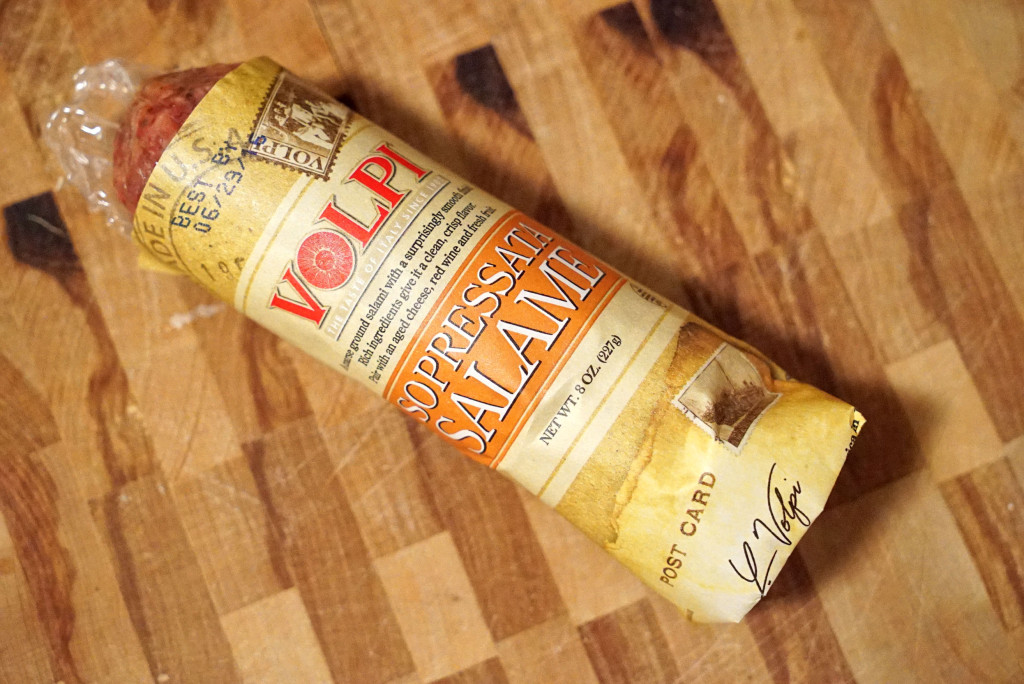
Once again Trader Joe’s offers up a high quality product for low cost. This Volpi brand log of Italian style sopressata cost me only $5 for 8oz, and I was thoroughly pleased:

DSC09584

DSC09592

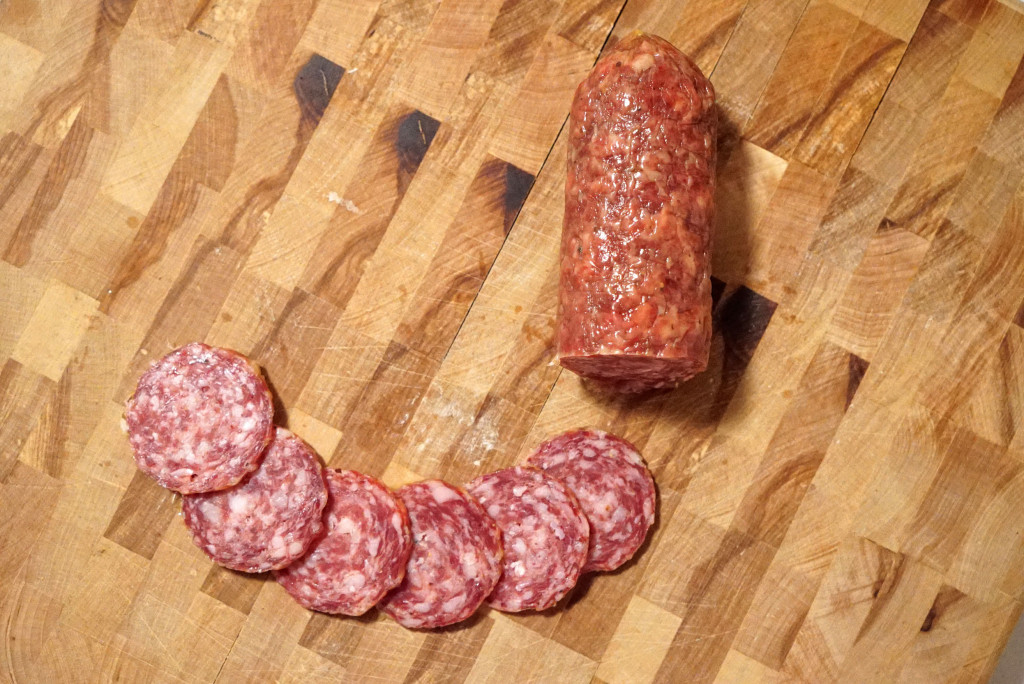
It had a peppery flavor, not too lean and not too fatty.

DSC09595

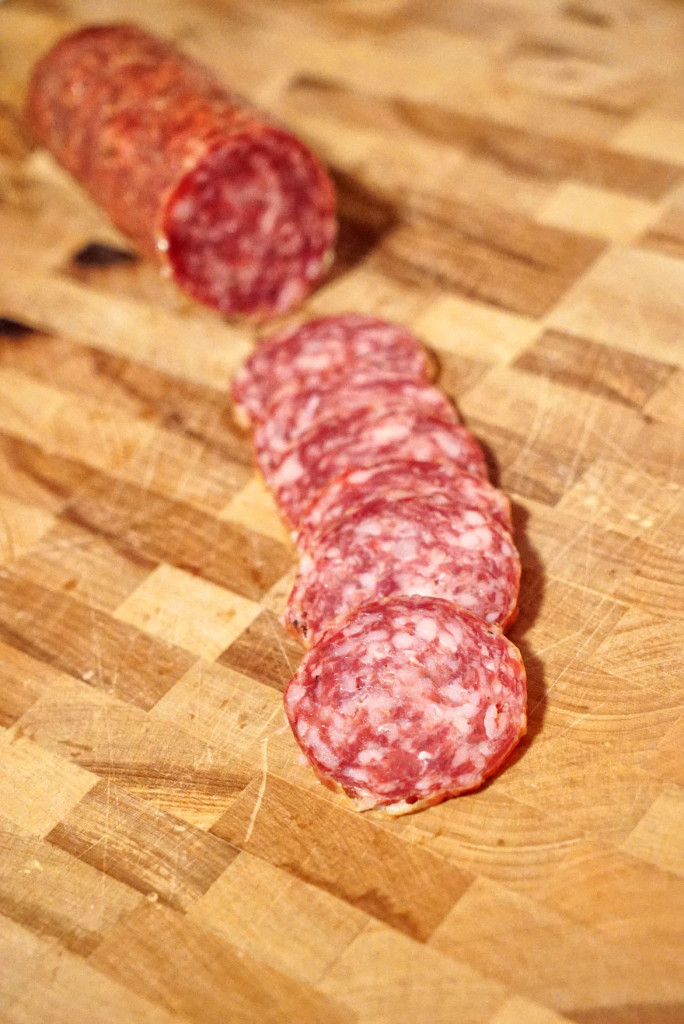
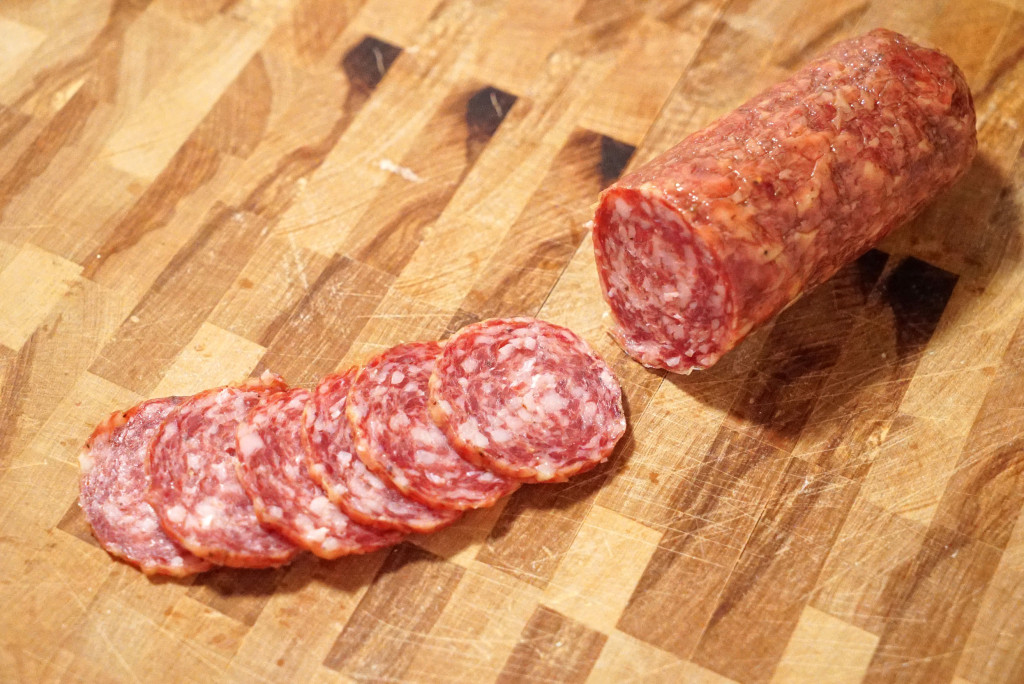
It was a wet style salami, as opposed to dry and super hard. This was a bit softer, easier to slice than other hard, cured meats:

DSC09601

DSC09603

I highly recommend, plus it hails from St. Louis, a known meat town.

DSC09605

Field Trip Jerky

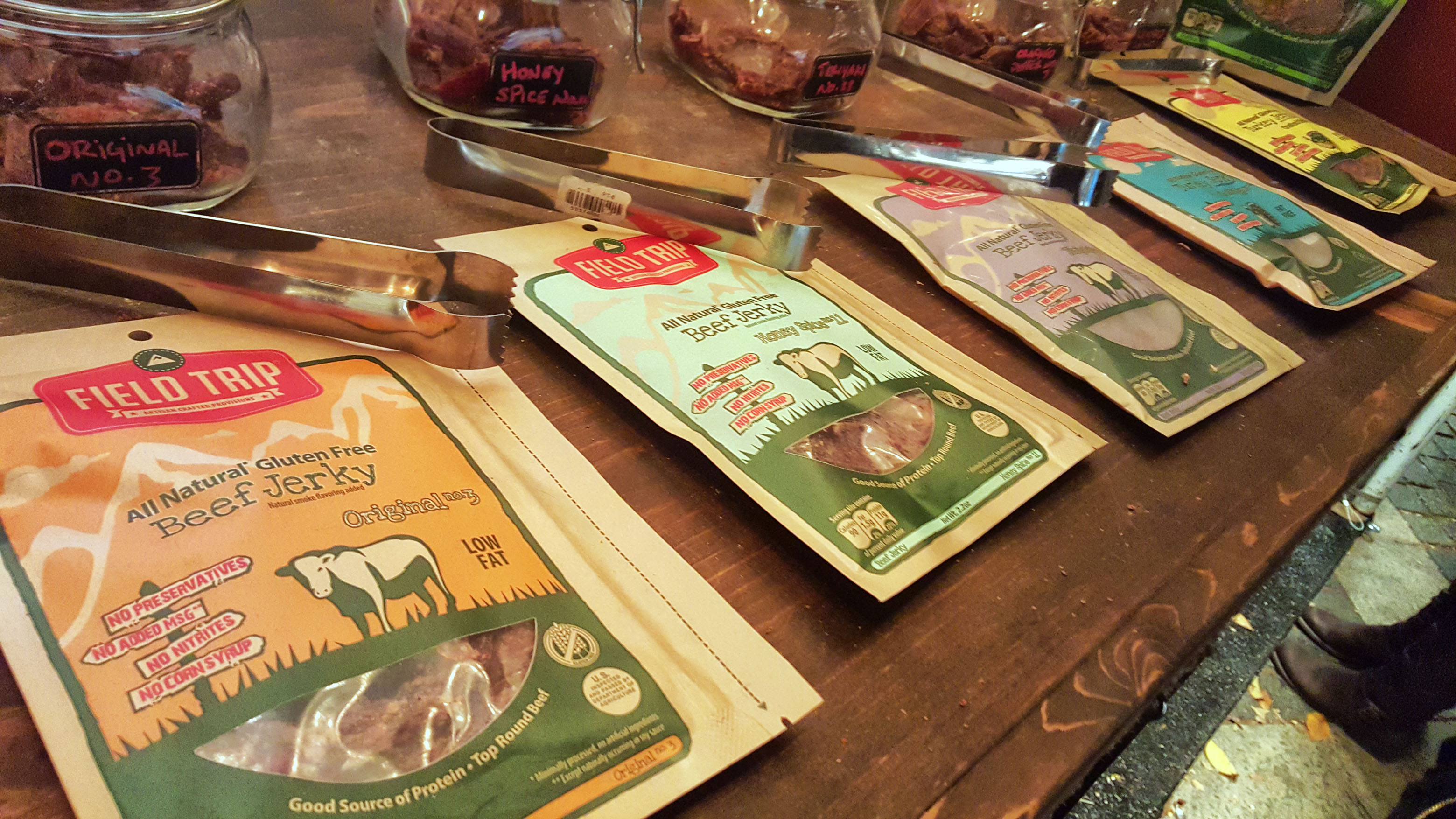
My wife and I came across this jerky at the Columbus Circle Holiday Market the other day.

20151206_175358

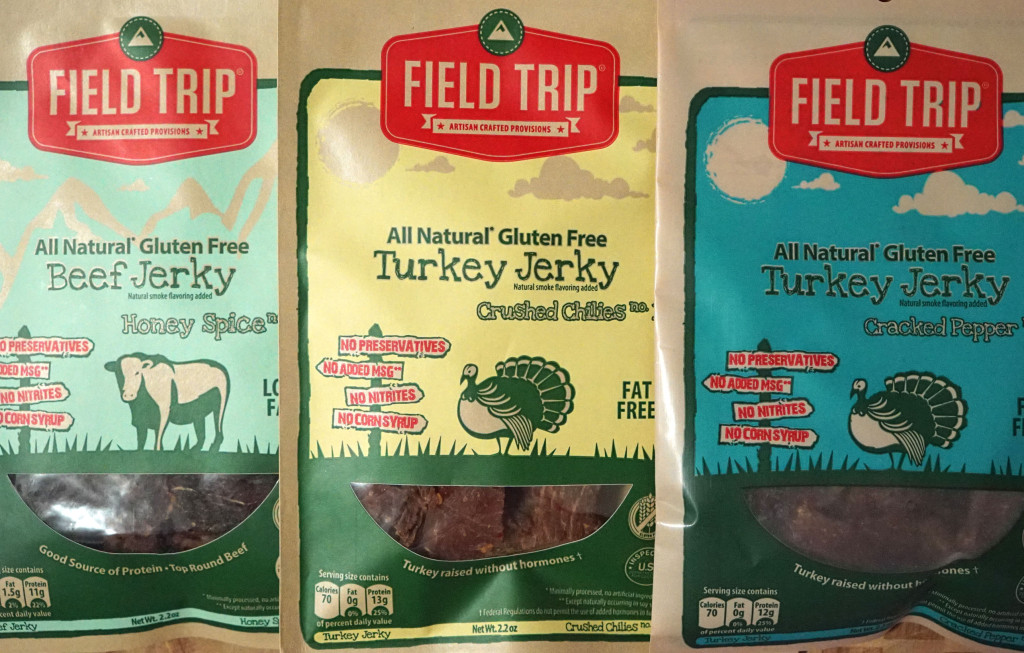
We sampled a few flavors and picked out our top three for purchase; they were offering three bags for $20. This seems to be pretty average pricing for jerky, which is expensive in general (especially for the good shit).

DSC09410

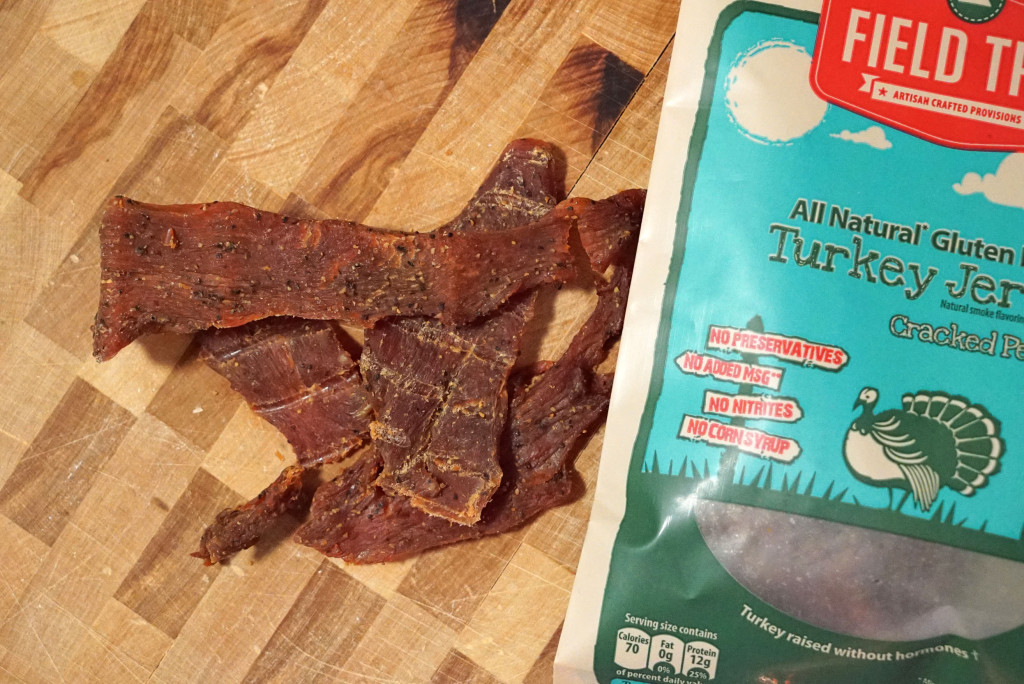
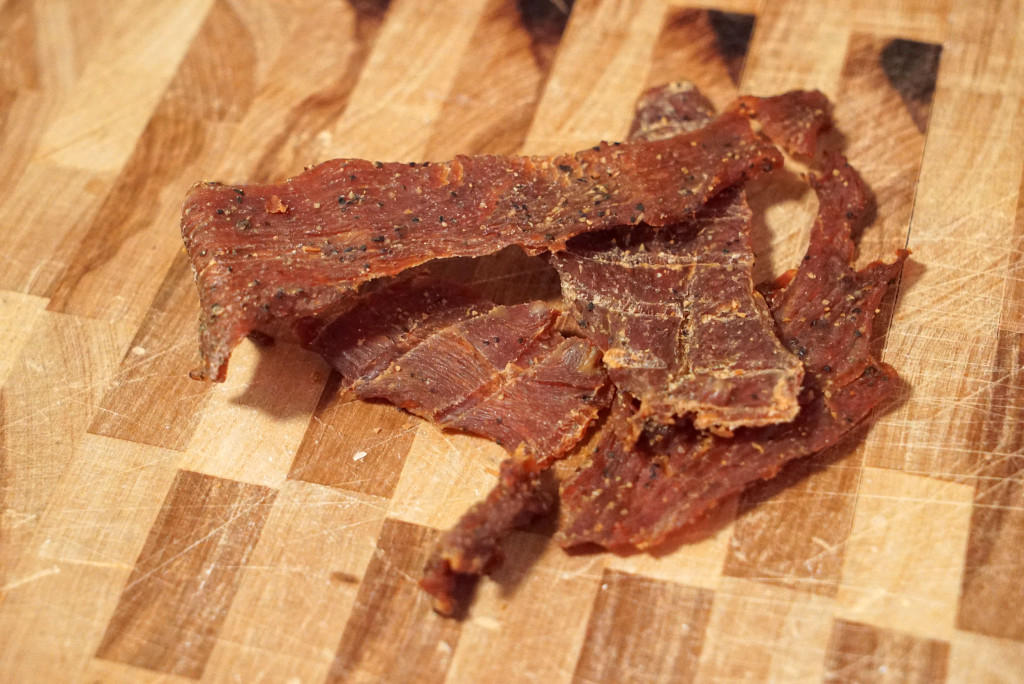
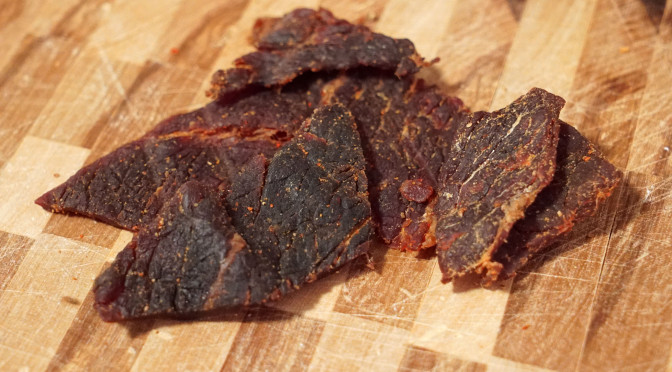
So we picked up cracked pepper turkey jerky, which is nice and tender, really flavorful and addicting. Probably our favorite.

DSC09413

DSC09415

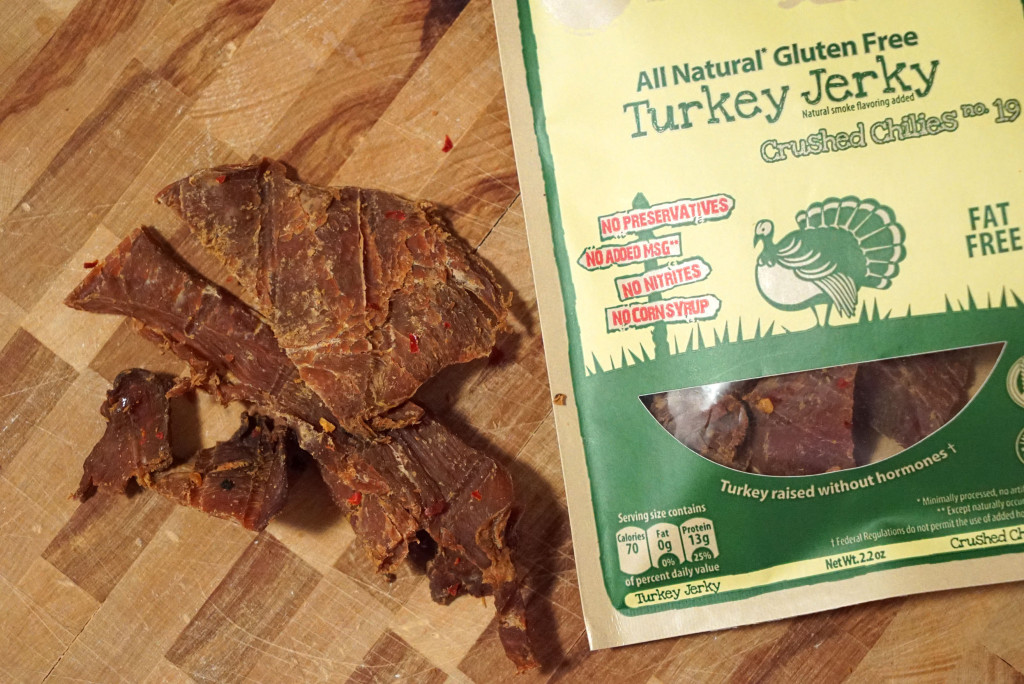
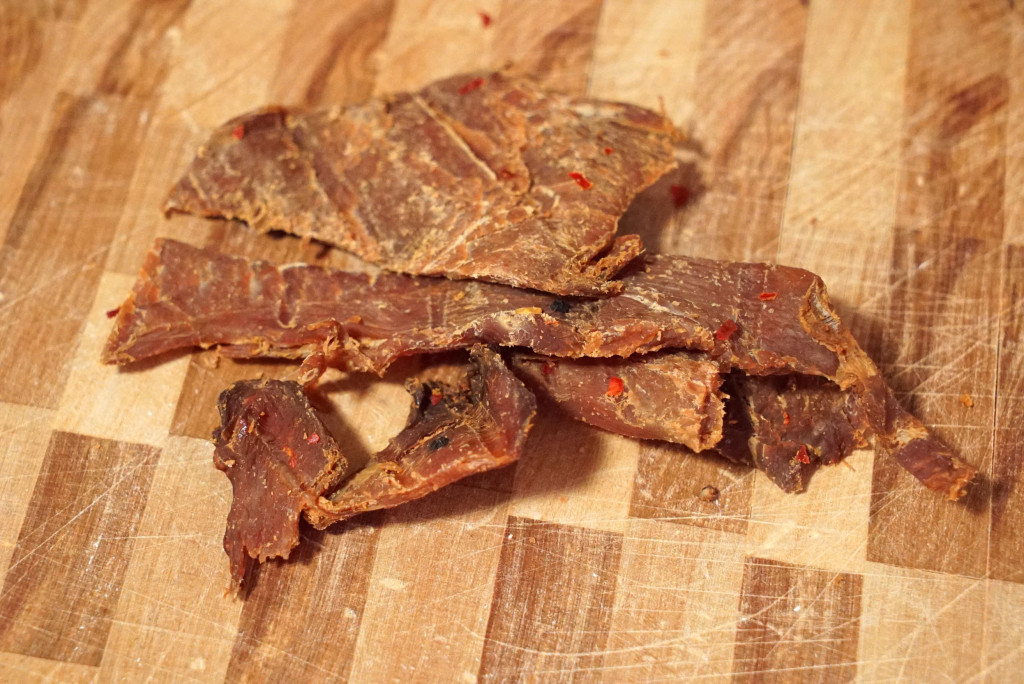
The second was this crushed chili flake turkey jerky, which had a good spice level to it and also very tender.

DSC09417

DSC09419

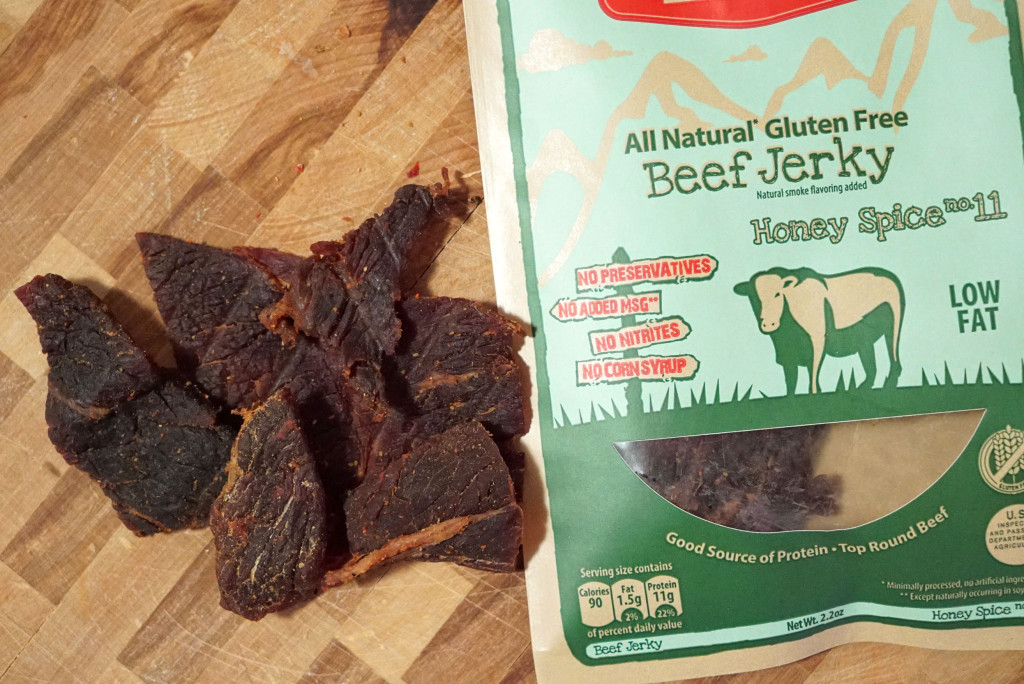
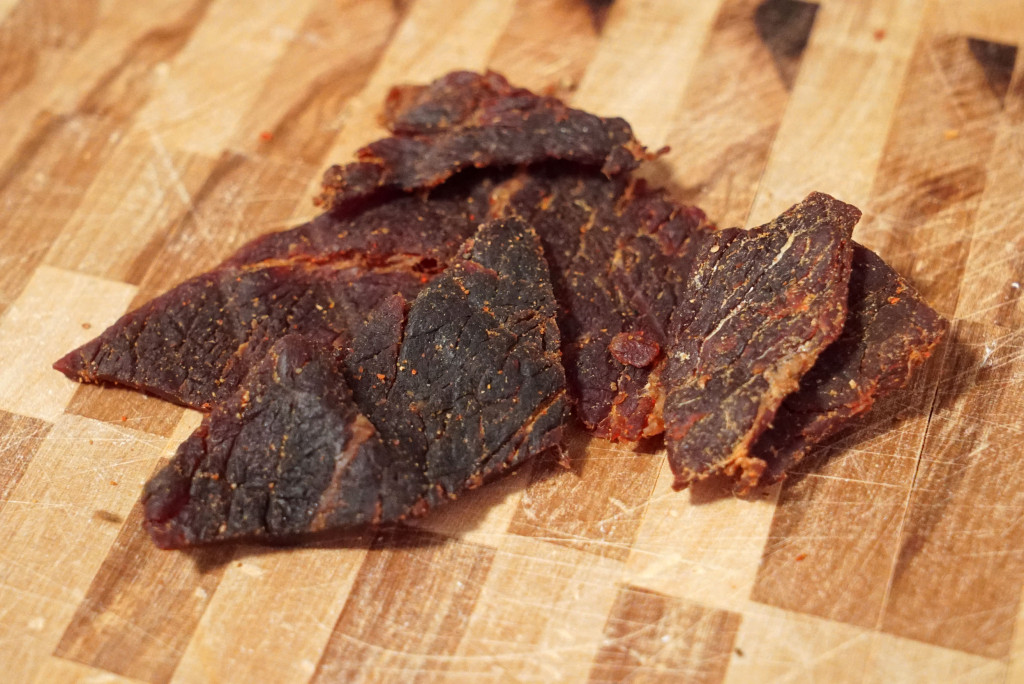
Last was the spiced honey beef, which was sweet with a hint of spice at the end.

DSC09420

DSC09423

All very good. I recommend this if you see it. Grab a pack! The cracked pepper turkey is my favorite of the three.

Meat 201

Meat 201 is an advanced examination of the four major cuts of beef that you’re likely to see at a steakhouse. The four major cuts are Filet Mignon, Strip Steak, Porterhouse and Rib Eye. For more general information about these cuts, and for information about other cuts of beef, please see my MEAT 101 and MEAT 102 posts.

1. Porterhouse

Etymology: There is some difference of opinion on the origin of the word “Porterhouse,” with several restaurants and cities claiming to have created the name. For example, Martin Morrison served large T-bones in his Pearl Street (Manhattan) “Porter House” around 1814. This history was popular in the late 1800’s, but some say a Cambridge, Massachusetts proprietor by the name of Zachariah B. Porter added his name to the steak. Still, others argue that the Porterhouse name stems from various 19th Century U.S. hotels or restaurants called Porter House, such as the Porter House Hotel in Flowery Branch, Georgia.

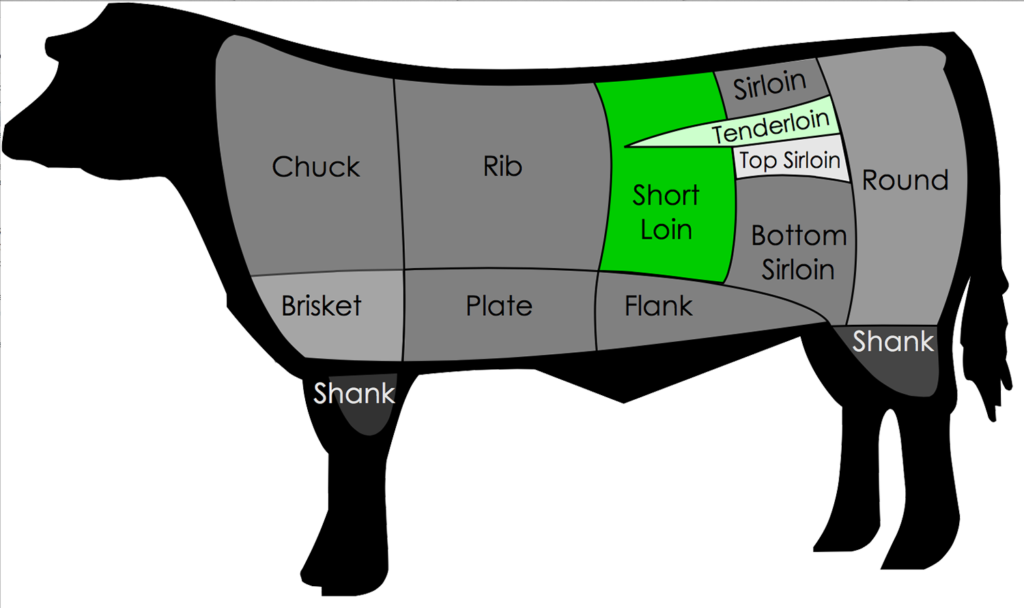
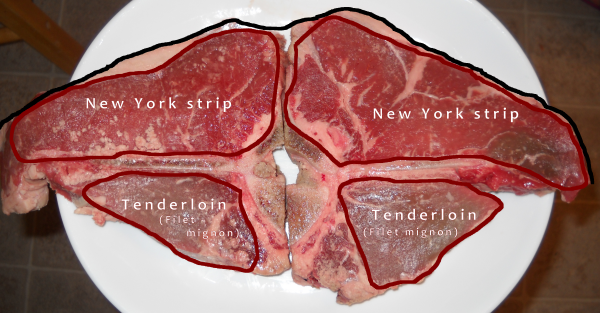
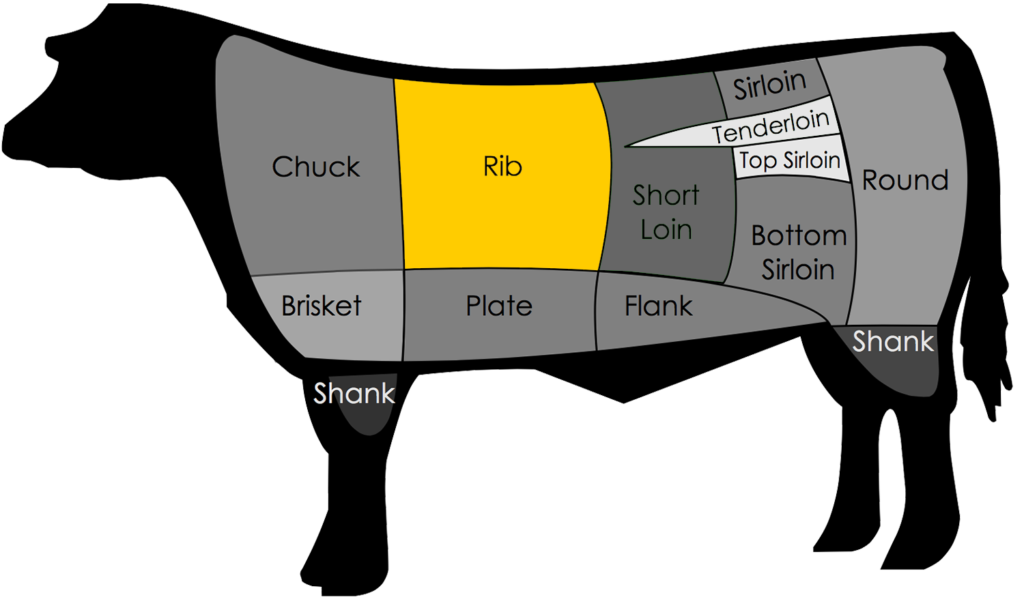
Anatomy: The Porterhouse is a cut of steak from the short loin portion of the animal that contains both strip loin and tenderloin meats. See the highlighted portion in the diagram below:

It is cut from a lumbar vertebra that is sawed in half through the vertebral column.

The downward prong of the “T” is a transverse process of the vertebra, and the flesh that surrounds it (spinal muscles) makes up the meat of the Porterhouse.

DSC02003 illustrated watermark

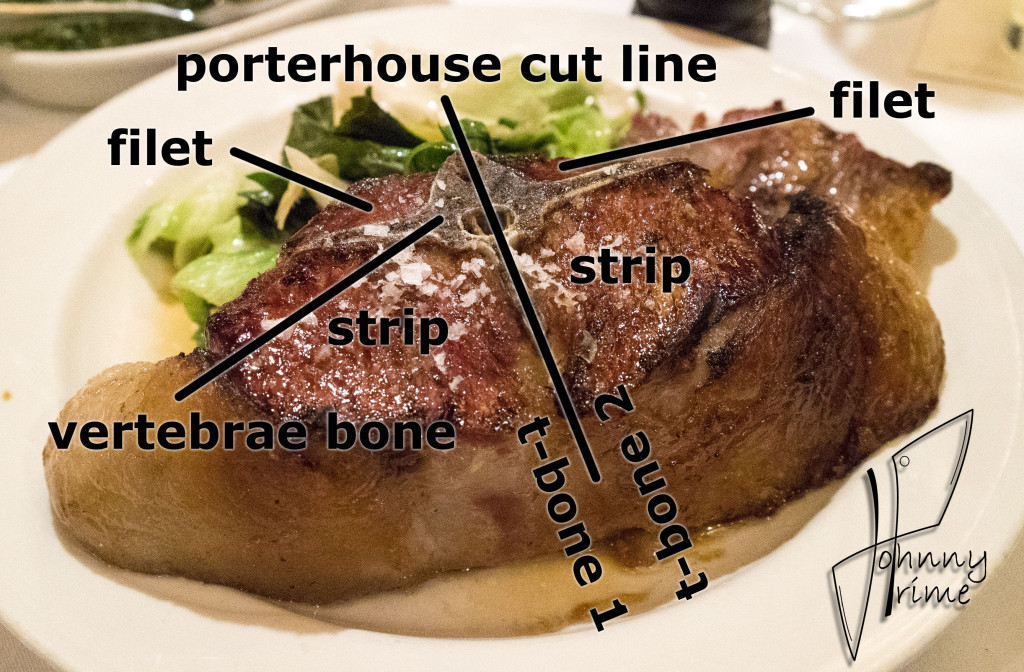
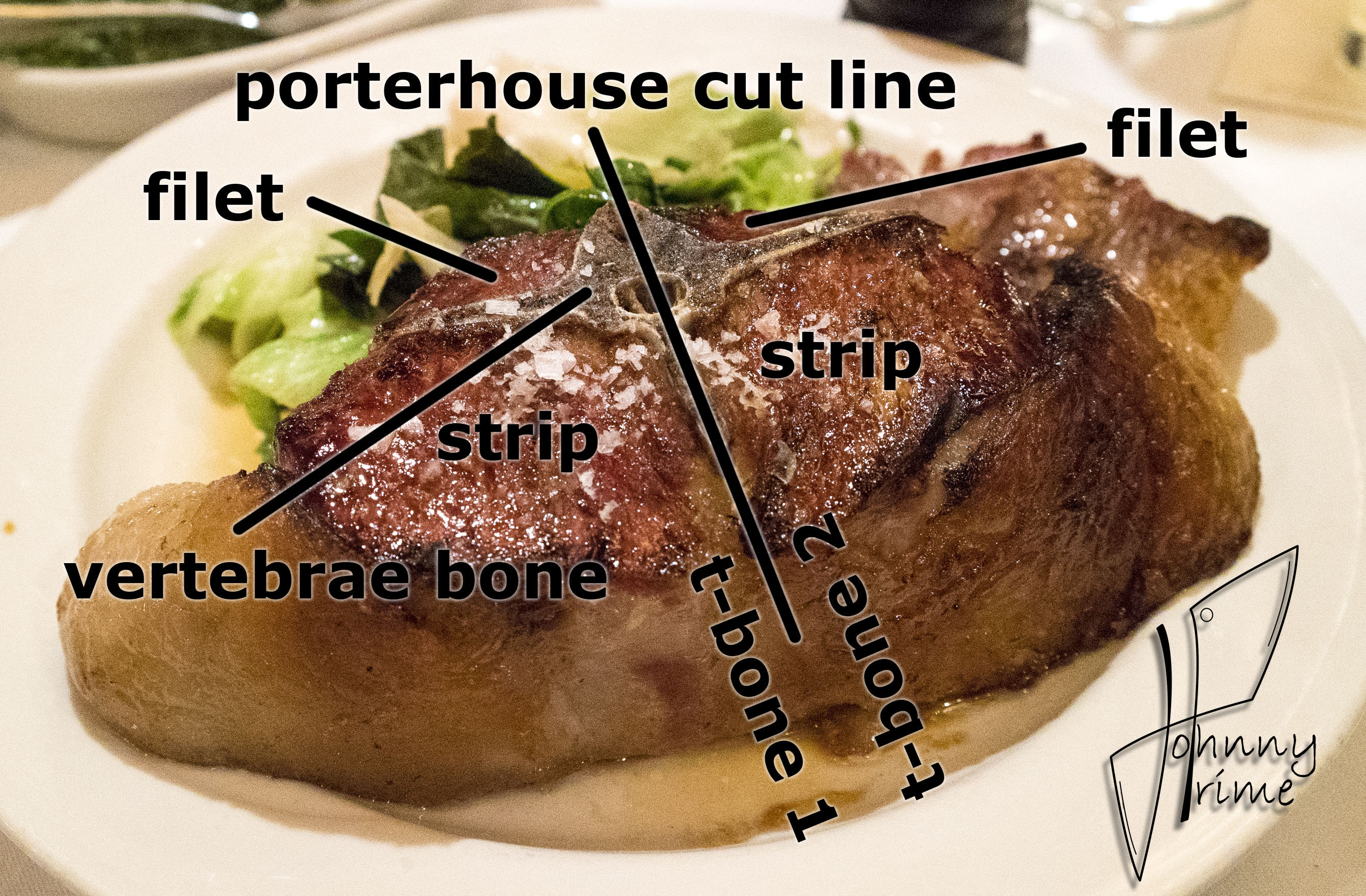
Essentially, it is a large T-bone steak from the rear of the animal that has two different types of meat (tenderloin and strip loin), one on either side of the “T.” In the picture below, the strip loin or Strip Steak is on the right, and the tenderloin or Filet Mignon is on the left.

DSC03188

The small semicircle at the top of the ‘T’ is half of the vertebral foramen, which is the name of the hole that passes through each vertebra for housing and protecting the spinal cord. They run the whole way up the back, all the way up to the brain of the animal.

The anatomy of a Porterhouse differs from that of a T-bone only in that the Porterhouse contains a larger portion of tenderloin than its T-bone counterpart.

This is primarily due to the fact that Porterhouse steaks are cut from further in the rear of the animal, from lumbar vertebrae, where the tenderloin is much thicker. Experts differ, however, on how large the tenderloin must be to differentiate a Porterhouse from a T-bone. The U.S. Department of Agriculture’s Institutional Meat Purchase Specifications state that the tenderloin of a Porterhouse must be at least 1.25 inches thick at its widest, while that of a T-bone must be at least 0.5 inches.

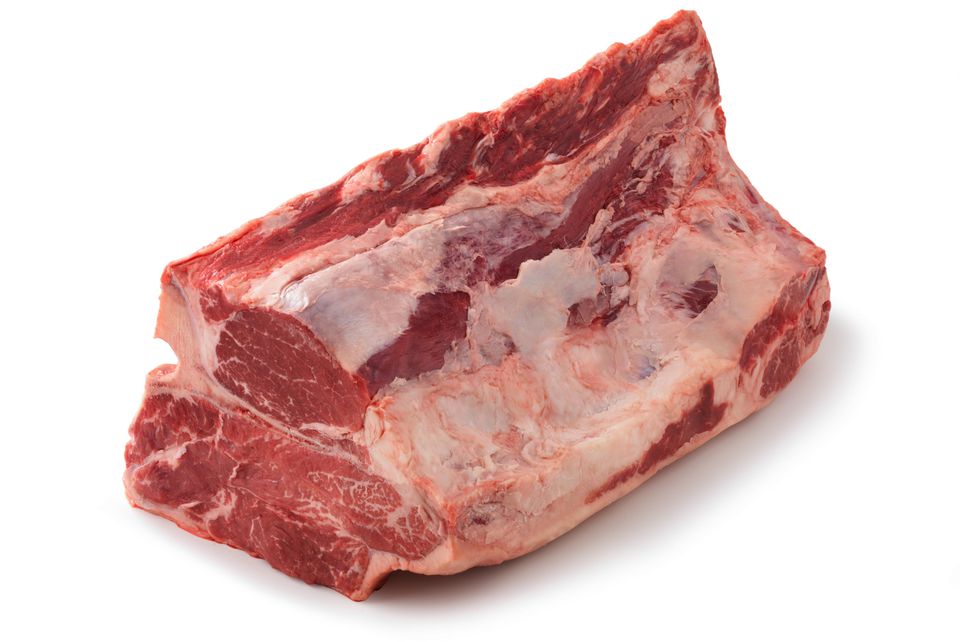
Here is a shot of a short loin with multiple vertebrae still intact and not portioned out into individual Porterhouses and T-bones.

You can see on the left there is a good sized, thick portion of tenderloin. That thins down as you move the the right, and seems to disappear by time your eyes reach the far end of the cut.

Just to drive home the anatomy a little more, here is a great excerpt and image from Russ Cooks:

“Up close and personal, this is where the T-bone fits.

t-bone-illustration
photo credit: http://www.russcooks.com/images/t-bone-illustration.png

The black line across the top of the two T-bones pictured here is the outside (top of the back) of the steer. You can see the T-bone in the schematic illustration higher up on this page as the topmost part labelled Rib. Above the ribs, what you touch if you pat the steer’s back, is the New York strip. Beneath the ribs is the tenderloin from which a filet mignon is often cut. T-bone steaks cut closer to the shoulder are known as Porterhouse while those cut closer to the loin are just T-bones.”

Preparation: Most times, T-bones and Porterhouses are either grilled, seared in a pan, broiled or blasted with high heat in specialty steak ovens made for charring the outside of the meat without over-cooking the inside. Butter is essential, and heavy seasoning is important as well. Herbs and garlic help boost the flavor too.

DSC07247

Flavor: Since this cut contains both the Filet Mignon and the Strip Steak, I refer you to the flavor sections for those cuts below, with a notation that the bone being left in often adds a more robust flavor while helping to retain tenderness and juiciness. These are very popular items at steakhouses because they can be cut large enough to feed anywhere from two to four people. Additionally, with two different types of meat in one steak, one can vary the flavors that one experiences with each bite.

2. Filet Mignon

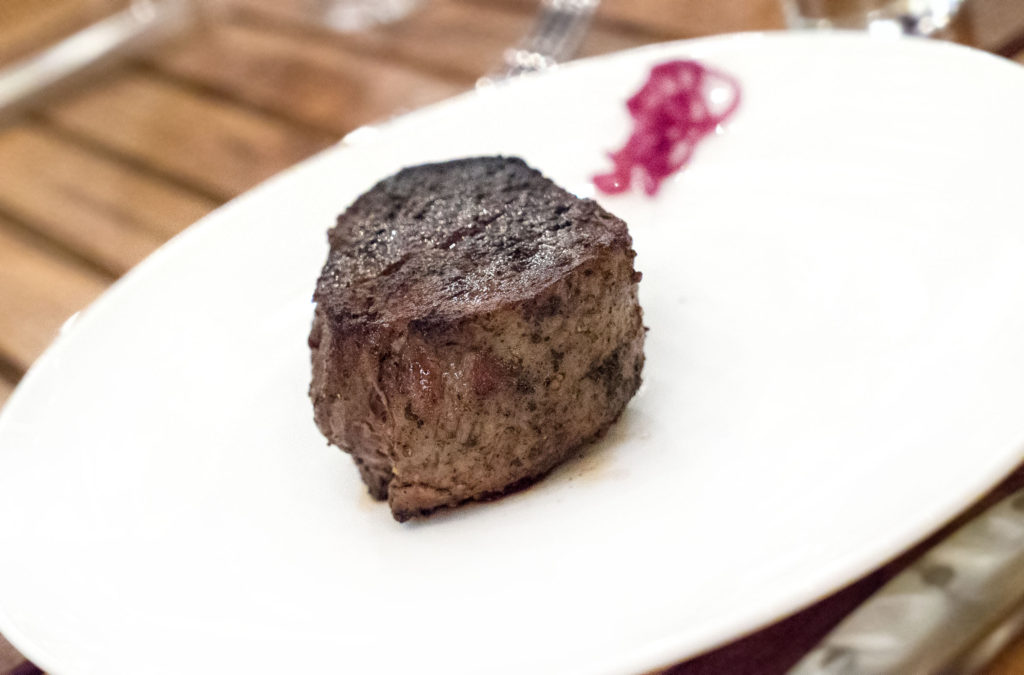
Etymology: Filet, in culinary terminology, means boneless. Mignon, in French, means dainty or small. As such, this is a steak ideally suited for chicks: small/dainty, and with no bone.

DSC05717

Occasionally on a steakhouse menu you will see a “bone-in filet.” Given what I just mentioned above, that phraseology is completely self-defeating and confusing, as it simultaneously means both “bone-in” and “boneless.” However, it seems this sort of language is becoming commonplace. If it were up to me, I would prefer “bone-in tenderloin” to be listed on menus instead. There is no wording conflict with that phrasing, and it is an accurate description of what is being presented. In other words: all Filet Mignon is tenderloin, but not all tenderloin is Filet Mignon.

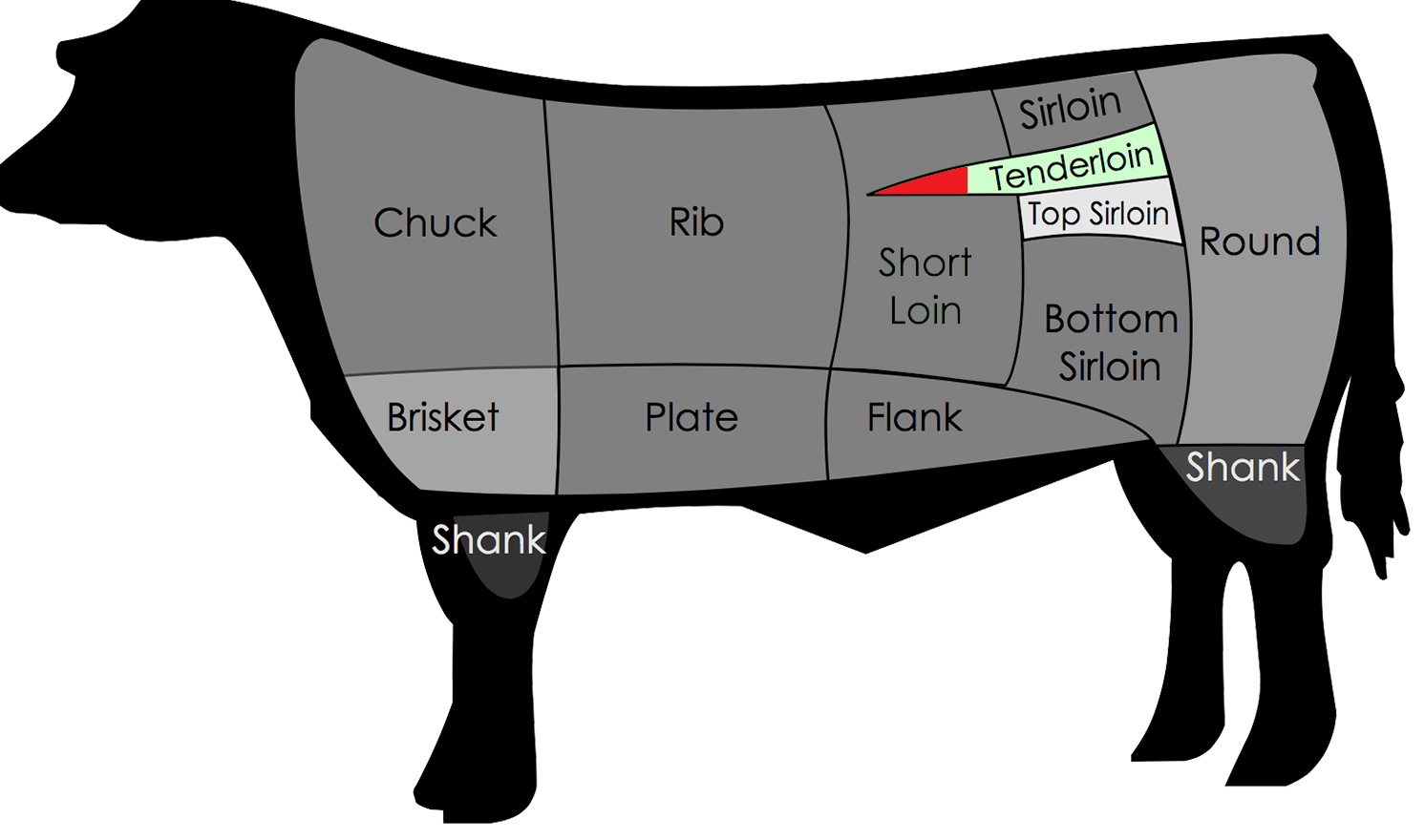
Anatomy: Traditionally, a Filet Mignon was cut from the anterior end of the tenderloin. In the beef chart image below, you can see a portion of the tenderloin section highlighted in red.

diagram-filet-cut-1500

That is where Filet Mignon was typically located, though most butchers label all steaks cut from the tenderloin as Filet Mignon (this allows for larger portions). The tenderloins run along both sides of the spine. They taper from thick, in the posterior of the animal, to thin in the front.

In their unbutchered form, they contain what’s called the “silver skin” still attached to the flesh. This is a thick connective tissue that is pretty much inedible. When butchering the full tenderloin, you will want to slice that off (it is NOT tender).

While this next photo is a repeat shot of a lamb vertebra Barnsley chop (the mutton chop from Keen’s), the anatomy is exactly the same for beef. This will illustrate exactly where the filet comes from. Essentially this is a double porterhouse, with a filet and a strip on each side. In addition to understanding the Filet Mignon, this image is useful in demonstrating the anatomy of the Strip and Porterhouse cuts as well, since they all come from the same place – the vertebrae of the animal:

DSC02003 illustrated watermark

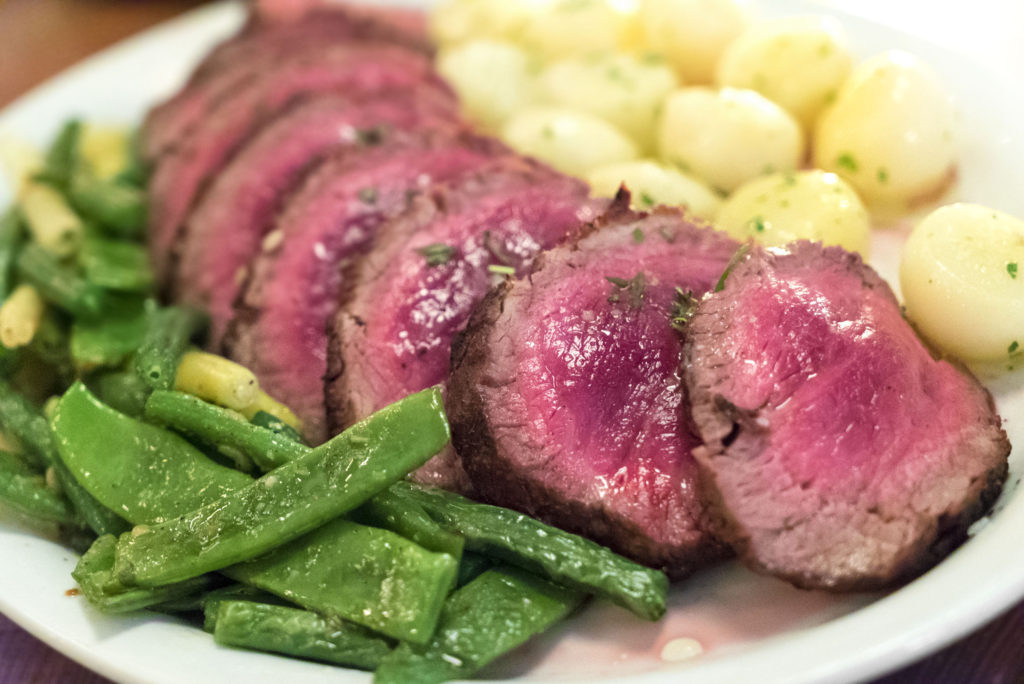
Preparation: Preparations of this cut vary greatly. You may see this cut sliced thin and pounded flat, served raw for carpaccio. You may also see it finely chopped for tartare. A simple pan sear with butter and herbs, however, is probably the most common preparation.

Yet another style is Chateaubriand, which is a large section of the thick portion of the tenderloin that is roasted boneless, then sliced and served with a reduction sauce.

DSC03866

There is also Beef Wellington, which is a portion of tenderloin that has been coated with pate and then wrapped in puff pastry dough prior to cooking.

Flavor: Widely considered the most tender and least fatty cut of beef on the animal, the flavor should be uniform from one end to the other, with very tender and soft texture the whole way through. There is hardly any fat content in the standard cut of Filet Mignon. Some chefs will wrap the filet in caul fat (a lacy, fatty, web-like membrane that surrounds the stomach of an animal) before cooking. The webbing melts away during cooking and imparts a fat flavor into the meat. But it is more common to use things like butter, or to wrap a filet in bacon to add the fat flavor into the meat.

3. Strip Steak

Etymology: According to the National Cattlemen’s Beef Association, this steak is marketed under various names, including Ambassador Steak, Club Steak, Hotel-Style Steak, Veiny Steak, Kansas City Steak and New York Strip Steak. Delmonico’s offered Strip as a signature dish way back in the early 1800’s. Due to the cut’s association with NYC, the New York Strip Steak name was born.

Anatomy: The Strip is cut from the other side of the tenderloin, across the vertebra on the T-bone or Porterhouse.

DSC02821

Also known as strip loin, the Strip Steak is cut from the short loin part of the animal, from a muscle that does little work, like the Filet Mignon. It is generally more tender than the similarly situated but more posterior-located sirloin section of the animal. While it is essentially the same kind of meat as sirloin, the muscles in the rear do a bit more work than the short loin, so can be a bit more tough.

Preparation: For me, the Strip is best at medium rare, to preserve the tenderness and reduce any mealy or grainy textures that can develop from overcooking. It is always best to get a really great quality cut for this chop, something prime+, as all the intra-muscular fat, or marbling, will become soft and the muscle will tenderize all over.  You will often see it marinated or rubbed with spices, to impart additional flavors, but grilling and broiling in the traditional style is fantastic as well, especially with butter and herbs.  It can be served bone-in or boneless. Leaving the bone in will impart more flavor and help with the cooking process, since the bone conveys heat into the center of the meat while locking in juices.  At home, marinade this puppy in something like soy sauce and garlic, and slap it on the BBQ for a few minutes on each side and you will have the perfect home-cooked steak.

Flavor: This cut contains fat in levels that are somewhat in between the tenderloin (virtually none) and the Rib Eye (plenty of good, melty fat). Like the tenderloin, there is little variation throughout the cut, so the flavors and textures are more uniform for the Strip Steak, unlike the Rib Eye which has varying textures and flavors from one end of the cut to the other. The texture of a Strip can sometimes be a little bit grainy or mealy, and a bit more tight than a Filet Mignon or a Rib Eye – especially if it’s cooked too much.

4. Rib Eye

I’ve saved the best for last. The Rib Eye is the most ultimate of steaks, period. It is an awesome cut of beef.

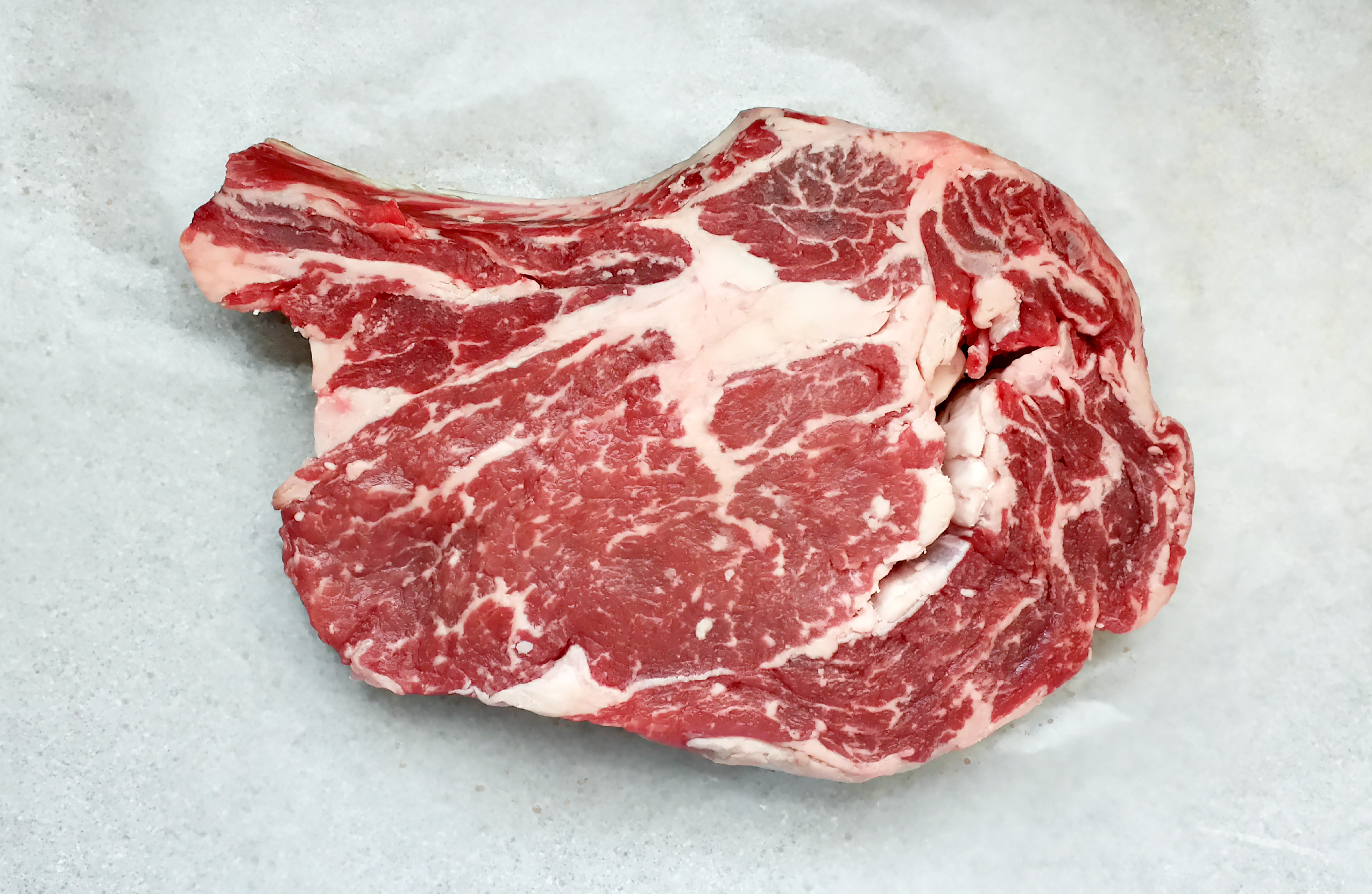
Etymology: The etymology on this is pretty self-explanatory. The “rib” part of the name is because this cut of meat is connected to a rib bone. The “eye” part of the name is a reference to the circular, more centrally located portion of the cut that is more uniform than the outer portions of the cut. You will likely see the Rib Eye steak, or rib chop, called by many names.

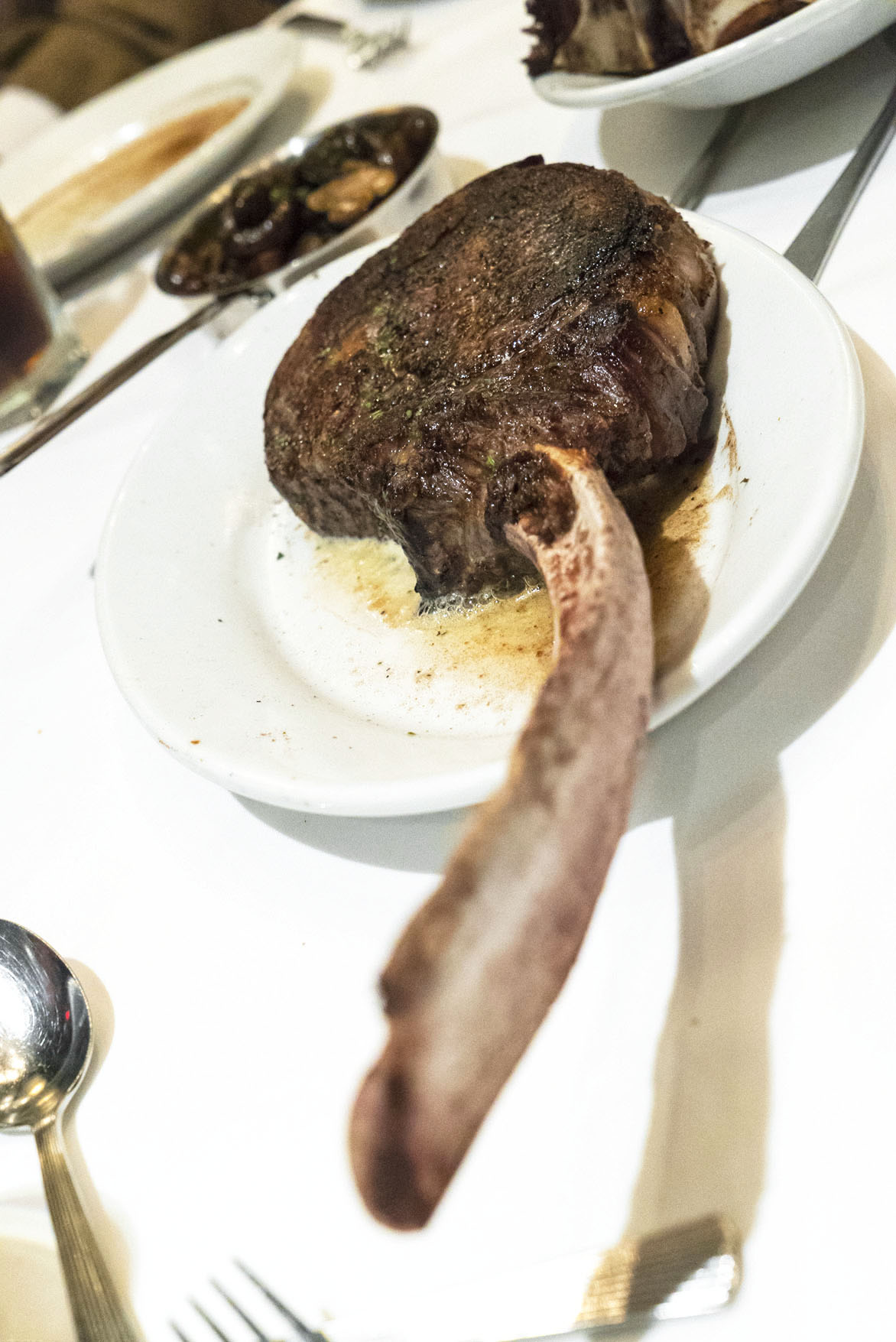
For example, the Cowboy Rib Eye is a bone-in version of the cut:

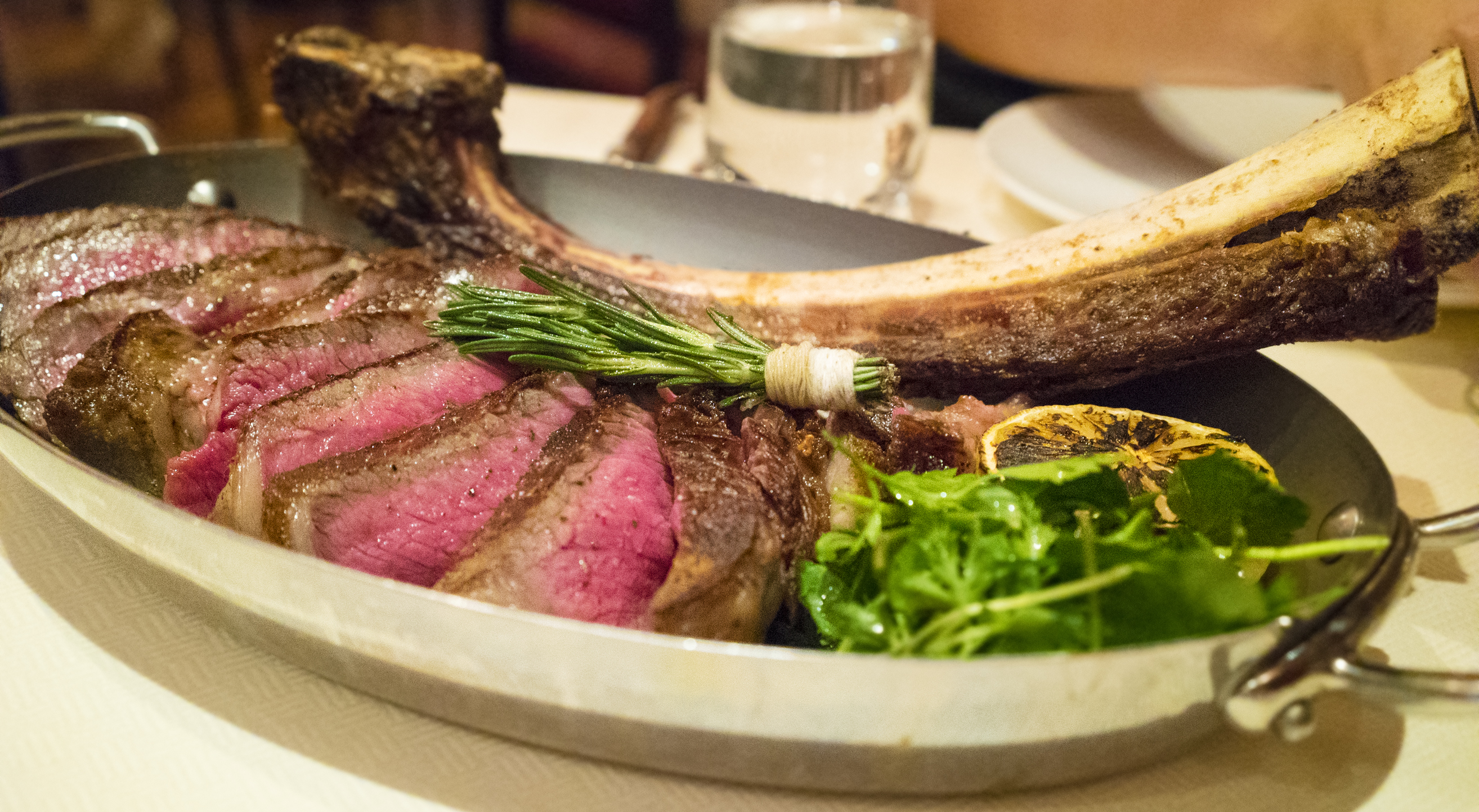
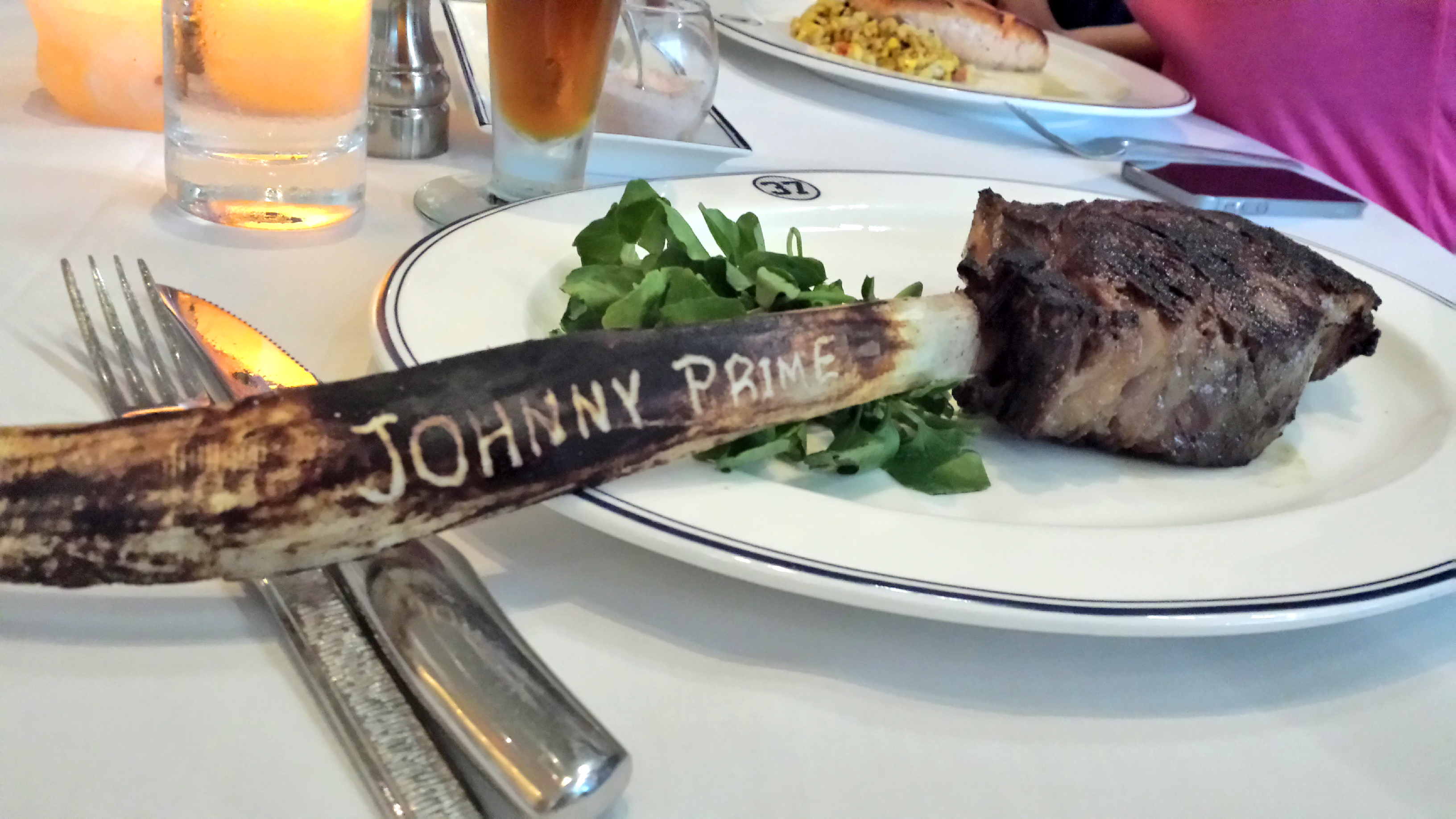
There’s also the Tomahawk Rib Eye, which is so named for its resemblance to a Tomahawk-style hatchet. When butchered, a long “handle” of rib is cut clean to expose the bone (it is “Frenched,” as they say), and the steak meat is left at the end of the handle to form the hatchet blade:

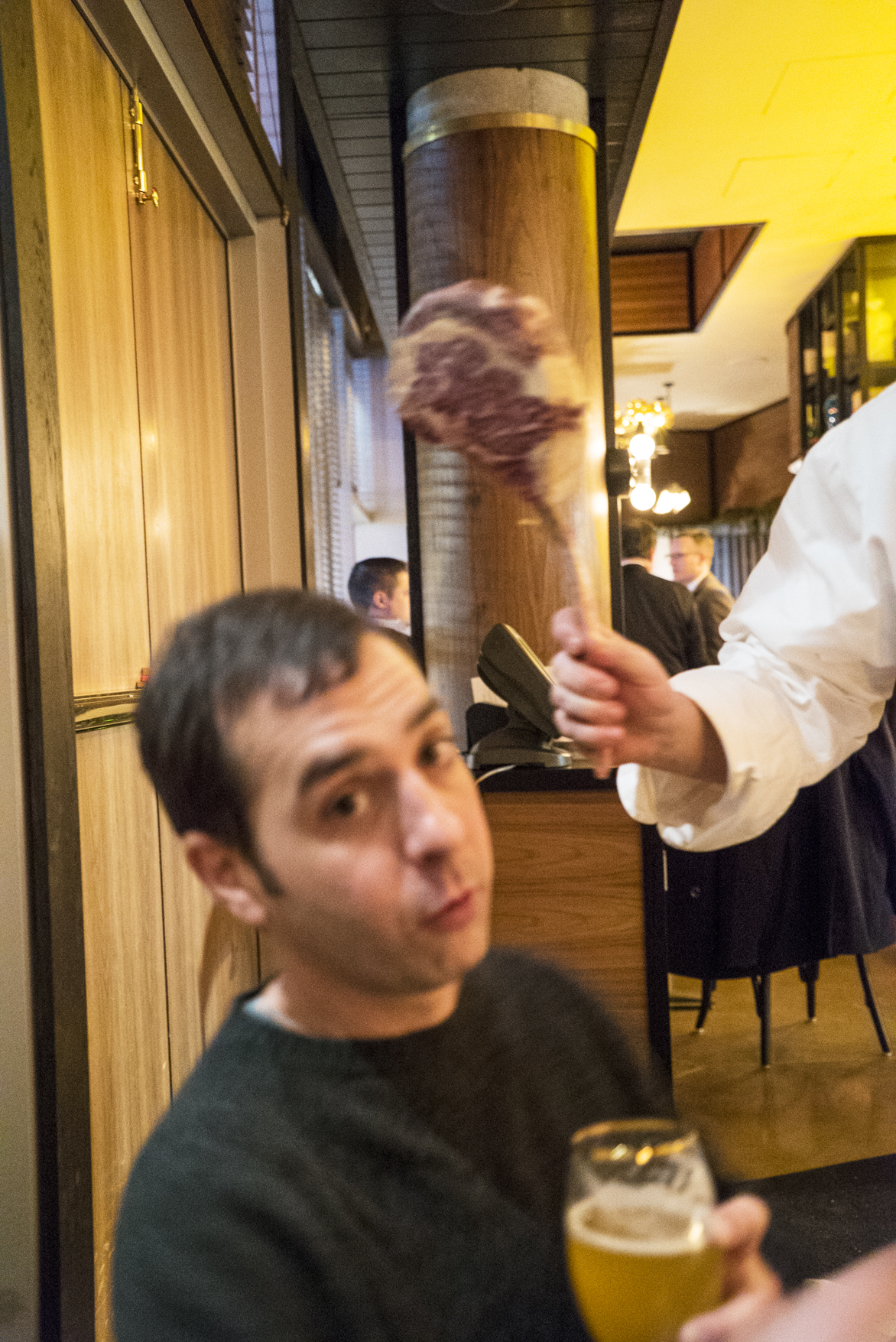
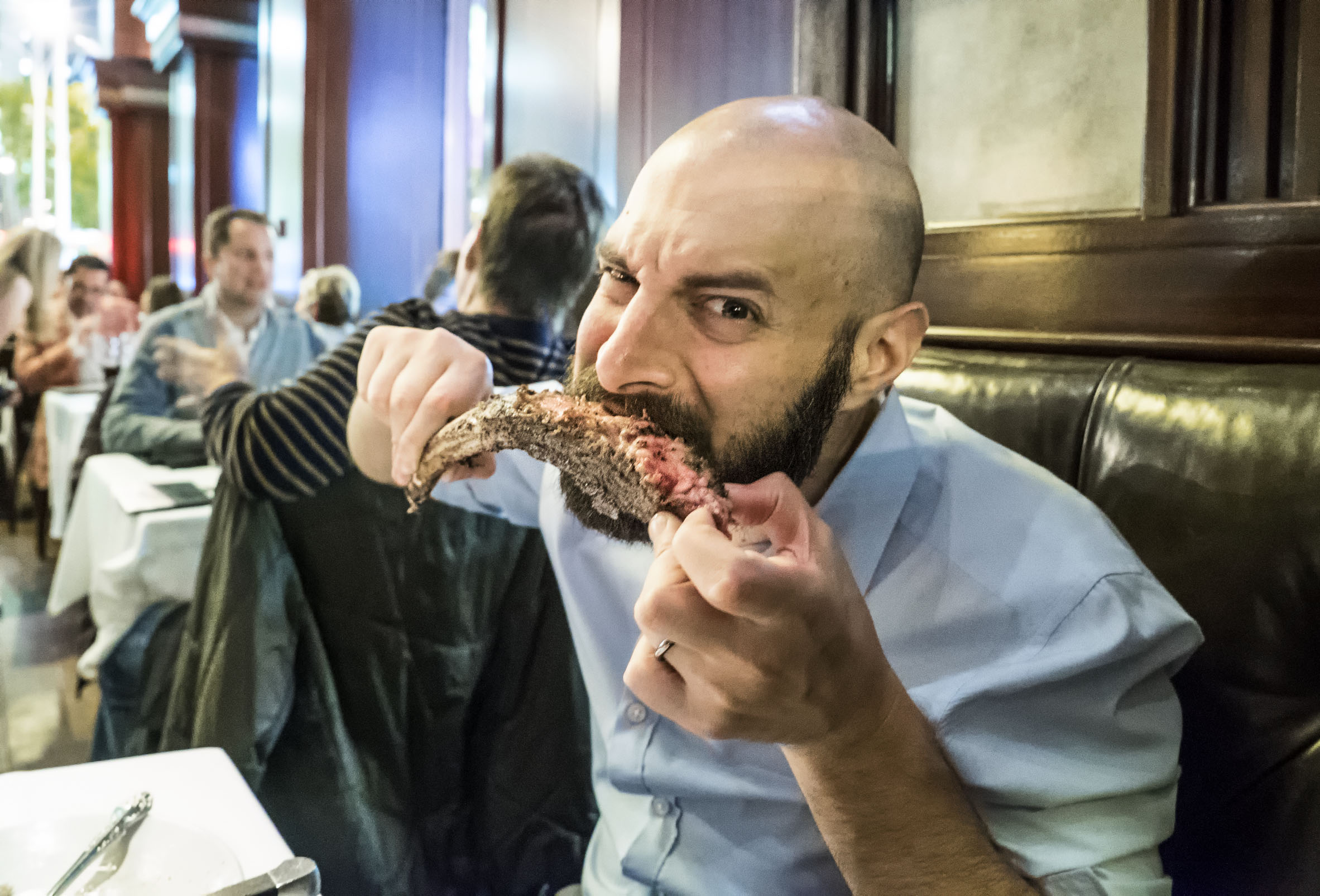
Here’s a shot of my buddy; he’s about to get clobbered with a Tomahawk Rib Eye by Chef Josh Capon at Bowery Meat Company:

There’s also the Delmonico cut, otherwise known as a Scotch Filet. Applying what you’ve learned here, you can probably guess that this cut is boneless (filet means “boneless” in French). Delmonico’s claims this cut as their own because they named a house special boneless cut Rib Eye steak after their restaurant, way back in the early 1800’s when they first opened.

Anatomy: The rib section of beef spans from ribs six through twelve, and, obviously, hails from the rib section of the animal.

Rib Eye steaks are mainly composed of the Longissimus dorsi muscle (the “eye” portion of the steak) and the Spinalis dorsi muscle.

The more anterior your cut, the more Spinalis you’ll find in the steak. The Spinalis is the coveted cap of meat that wraps around the fatter end of the steak and usually has much more marbling than the rest of the Longissimus eye, or interior of the steak. That “fat cap” is also sometimes butchered away from the remaining eye.

photo credit: http://www.acookblog.com/wp-content/uploads/2011/03/IMG_7574.jpg

Highly skilled butchers know how to remove it from its position across an entire standing rib roast section of ribs, so as to keep it all together as one giant cut. But then that ruins the rib chop, in my opinion, since you’re taking away the best part. Some steakhouses have taken to tying several Spinalis cuts together in a spiral formation to create an all-fat-cap steak. Bowery Meat Company has one such cut, which they call the Bowery Steak:

STK also offers one on special from time to time:

DSC05705

DSC05726

The Spinalis has a more intense marbling, and, thus, much more flavor and tenderness. If you are so bold, the next time you order a Rib Eye at a steakhouse, ask for an anterior “chuck side” cut that has more of this fantastic Spinalis muscle.

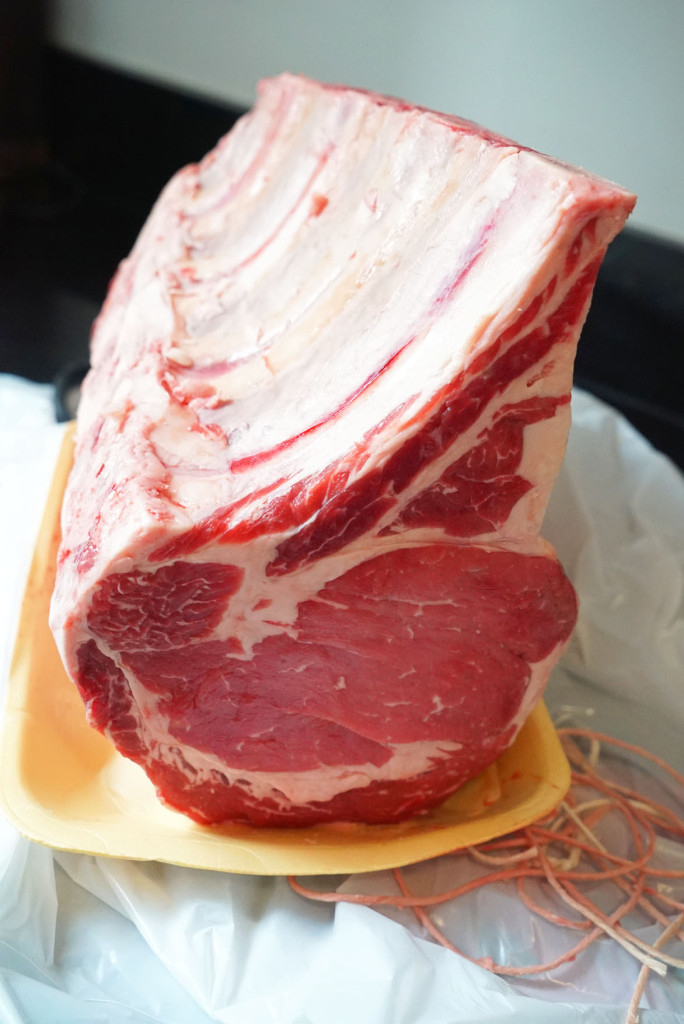
Preparation: There are a ton of ways to prepare a rib steak. The most comon forms are searing in a pan, grilling, or broiling. Another common method of preparing this kind of meat is roasting. A “standing rib roast” is a section of Rib Eye steaks that has not yet been portioned into individual steaks.

DSC08474

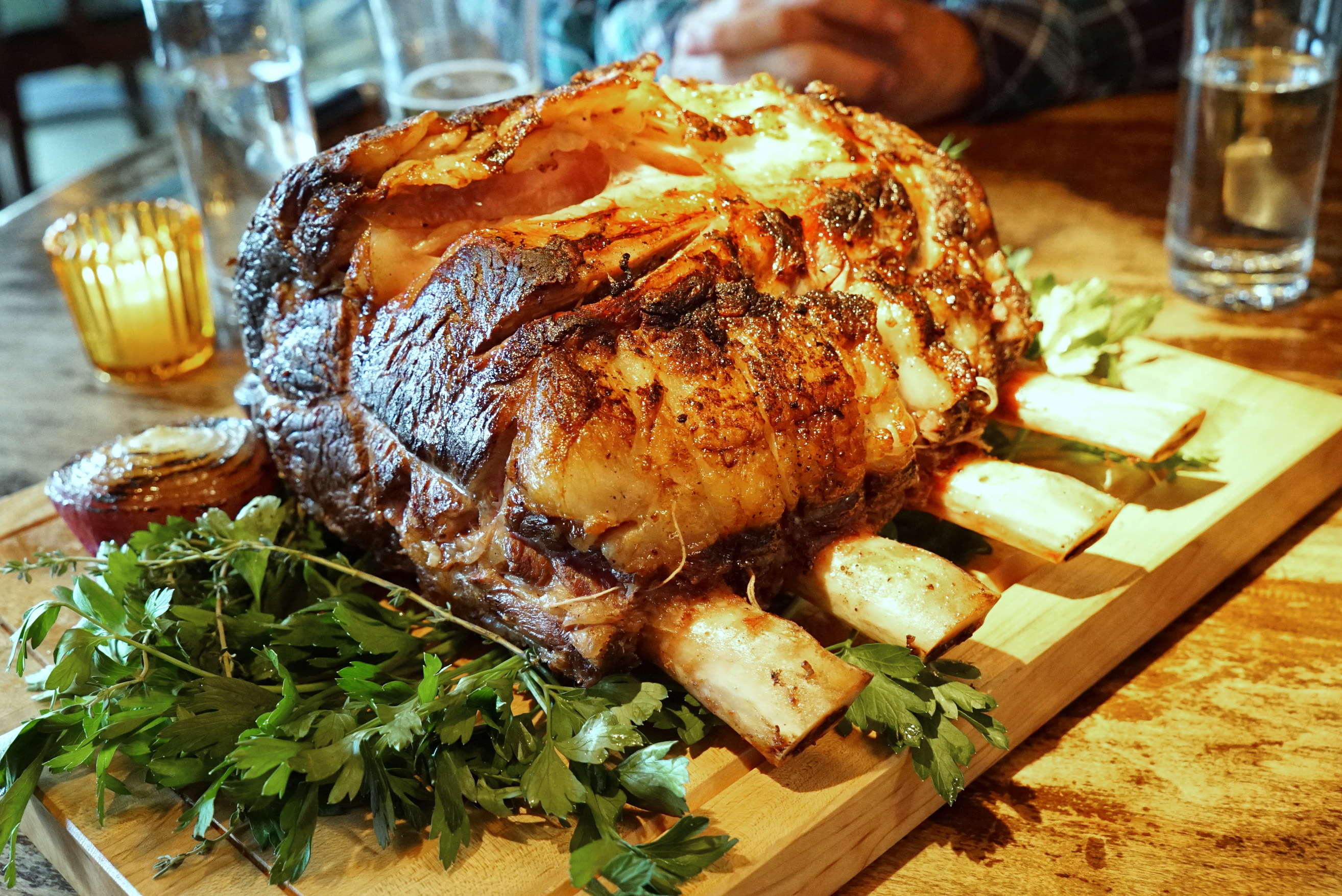
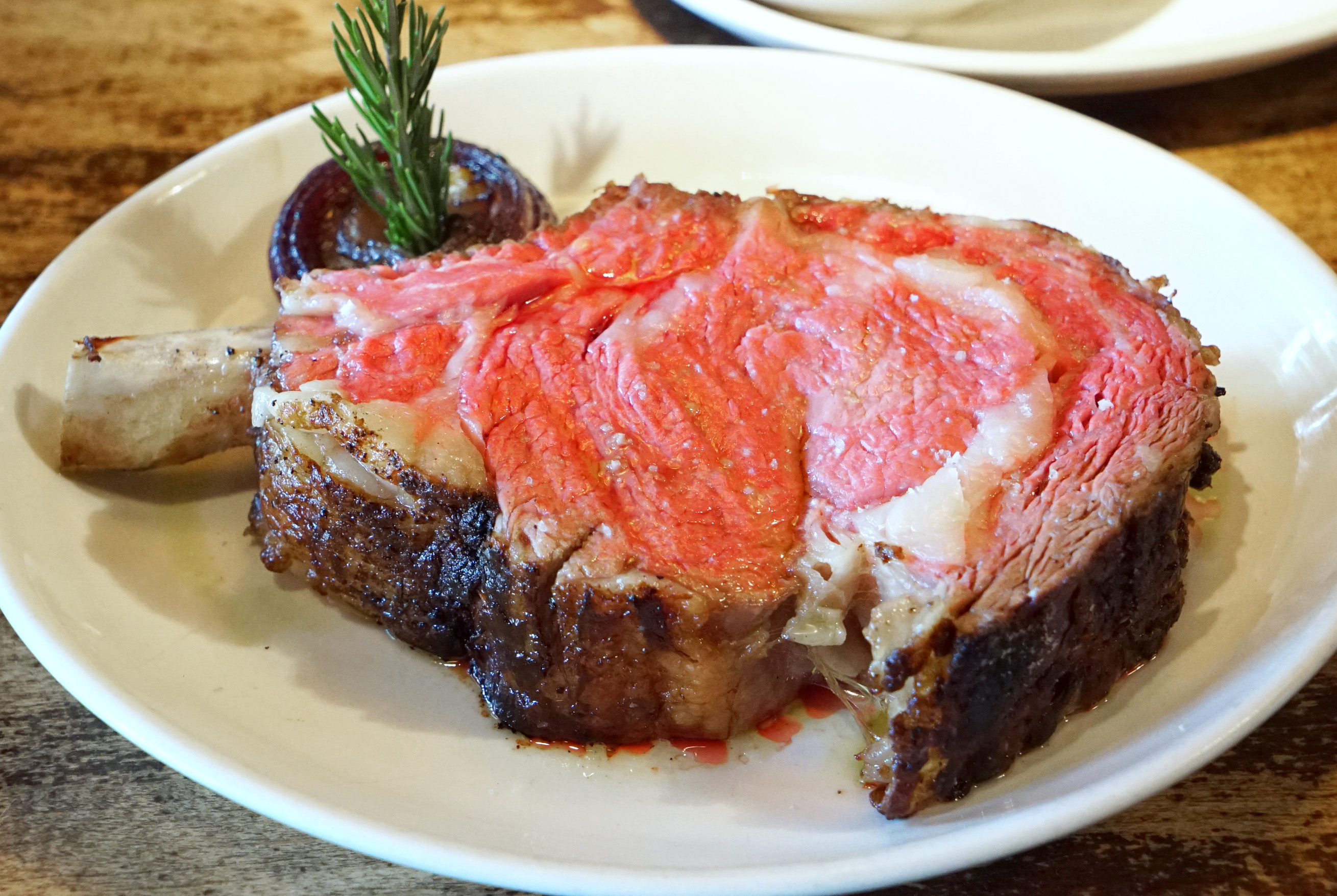
When this rack of ribs is roasted slow and low to a pink medium rare, the end product is called Prime Rib.

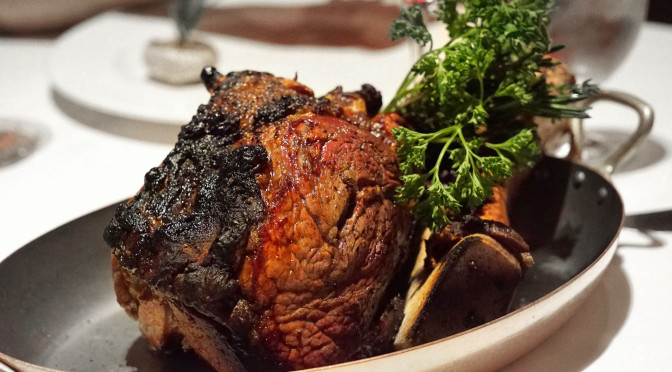
It then gets sliced out into portions for individual consumption. This is a mammoth cut that we got from Burger & Barrel:

I know what you’re wondering, and the answer is Yes: Prime Rib and Rib Eye steak are the same exact thing. They are just prepared differently, using different cooking methods.

Cheaper cuts of rib steaks are actually the most common type of beef found in Philly Cheesesteaks as well. The meat is cut super thin and then cooked on a flat top with cheese, onions and other toppings, then shoved into long sandwich bread (incase you’re an asshole who has no fucking clue was a cheesesteak is).

Side Bar: is a Philly Cheesesteak better than a Cheeseburger? I think so… Man… Now I’m hungry for both…

Flavor: This steak has a high fat content, and that makes it very important to have a quality cut of beef, or an aged cut of beef. In high quality and aged cuts, this fat will render out or melt away much easier during the cooking process. This will impart a tremendous amount of flavor into the steak, and it will leave the remaining flesh with a very tender and soft texture. Don’t be afraid of the fat. Fat is not the same as gristle. Fat is good. Fat is your friend. Any good butcher will get the gristle off and leave the good fat behind. And when that good fat is REALLY good, it’s like having a delicious beef jelly with each bite of steak.

As discussed above, the Rib Eye is really like having two steaks in one (The small Spinalis or fat cap, and the larger Longissimus eye). The Spinalis is soft, tender, has lots of fat flavor and sometimes develops a crisp during cooking. The eye is more dense, but still well marbled so that it retains intense flavor. The eye is more uniform than the Spinalis. So: two steaks in one, kind of like the Porterhouse. Plus, there’s a nice, meaty beef spare rib to gnaw on at the end, if you order a bone-in chop.

Since there is generally more fat and marbling in this cut across its entirety, you will get better flavors than with the tenderloin or Strip, in my opinion. Clearly, high fat content is not for everyone. If you want to avoid fats in your diet, then go with the tenderloin. I actually really enjoy the flavor of fat. Fat, now, is sometimes referred to as the sixth flavor sensation. There were always four: (1) savory, (2) sweet, (3) bitter and (4) sour. “Umami” claims to be the fifth, and is meant to encompass the earthy, funky, fermented flavor sensations that you experience with mushrooms, truffles, aged beef and blue cheese. I just dislike the word “umami,” so I use “earthy” instead. The sixth is “fat,” apparently, as decreed by various food people who get paid to sit around and do these things. I’m not sure how it works, but I seem to be able to recognize a distinct sensation on my tastebuds, along with a buttery flavor and slippery feel, whenever I eat shit like pork bone ramen or a Rib Eye steak. Maybe there’s something to it?

Anyway, I hope this was an informative and educational post for you meat minions out there. Knowing this shit, I think, is very important.

Ramen Guide

With ramen season kicking into high gear, I suppose it’s high time that I put out a guide to ramen for all of you cold, hungry fucks out there looking to get your soup on. This should serve as your singular, all-encompassing resource for all things slurp. This is more of an informational page, clearly, so if you’ve landed here looking for my ramen reviews, you should go to the Ramen-Ate-R page, where you can read about the tremendous shitload of ramen that I’ve eaten.

There are a bunch of things you need to keep in mind when thinking about ramen. Namely, you need to think about the thickness of the broth, how the broth is made, how it is seasoned, what kind of noodles are used, the toppings, and, finally (if you’re into food knowledge), where the ramen style was developed and the history behind the dish. So let’s get into it:

BROTH THICKNESS

This is classified as either assari (light) or kotteri (rich). Assari broths are generally thin or clear, as they are typically flavored with vegetables, fish or seaweed. If animal bones are used at all, they are usually just simmered lightly for a short amount of time.
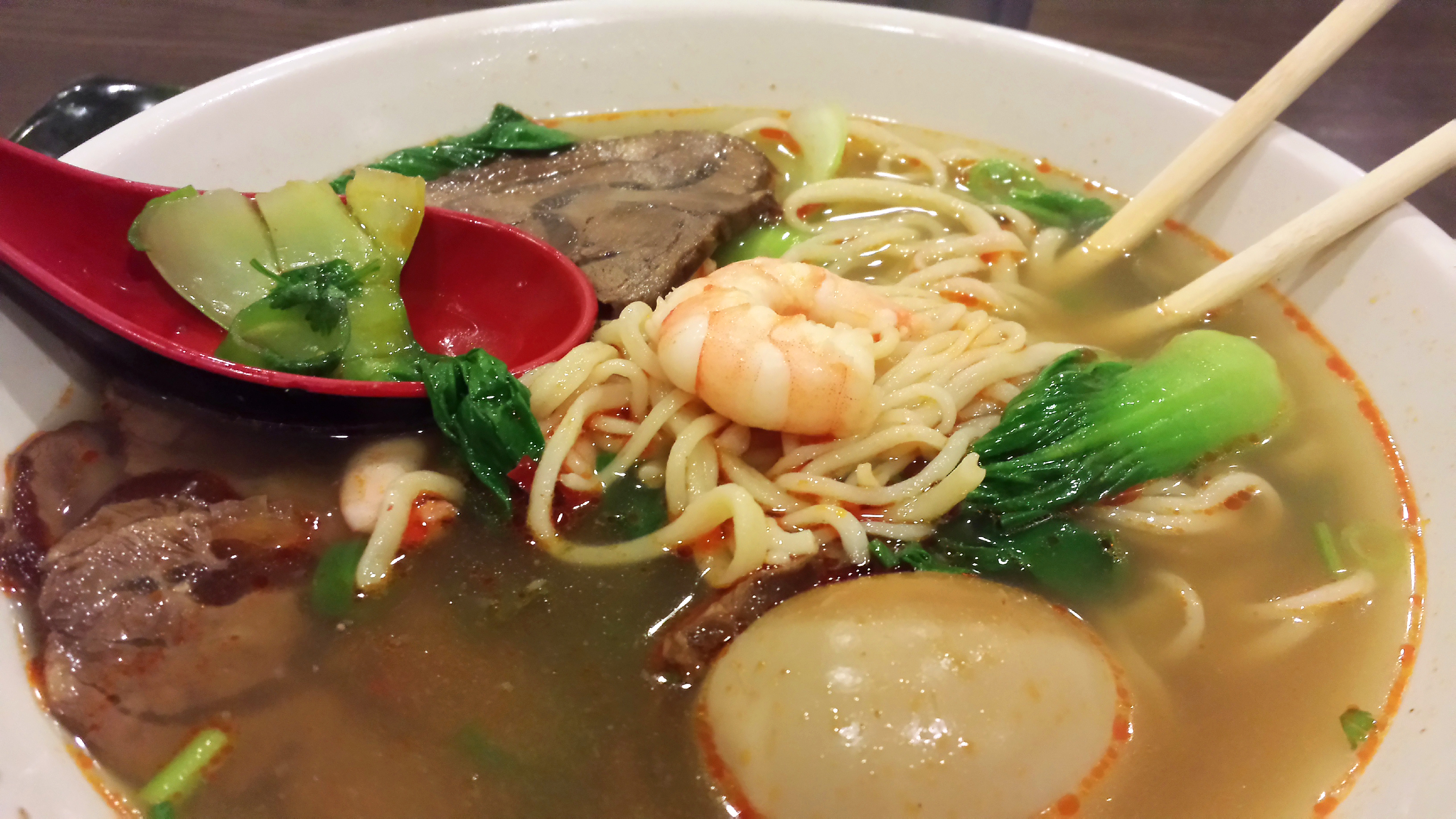
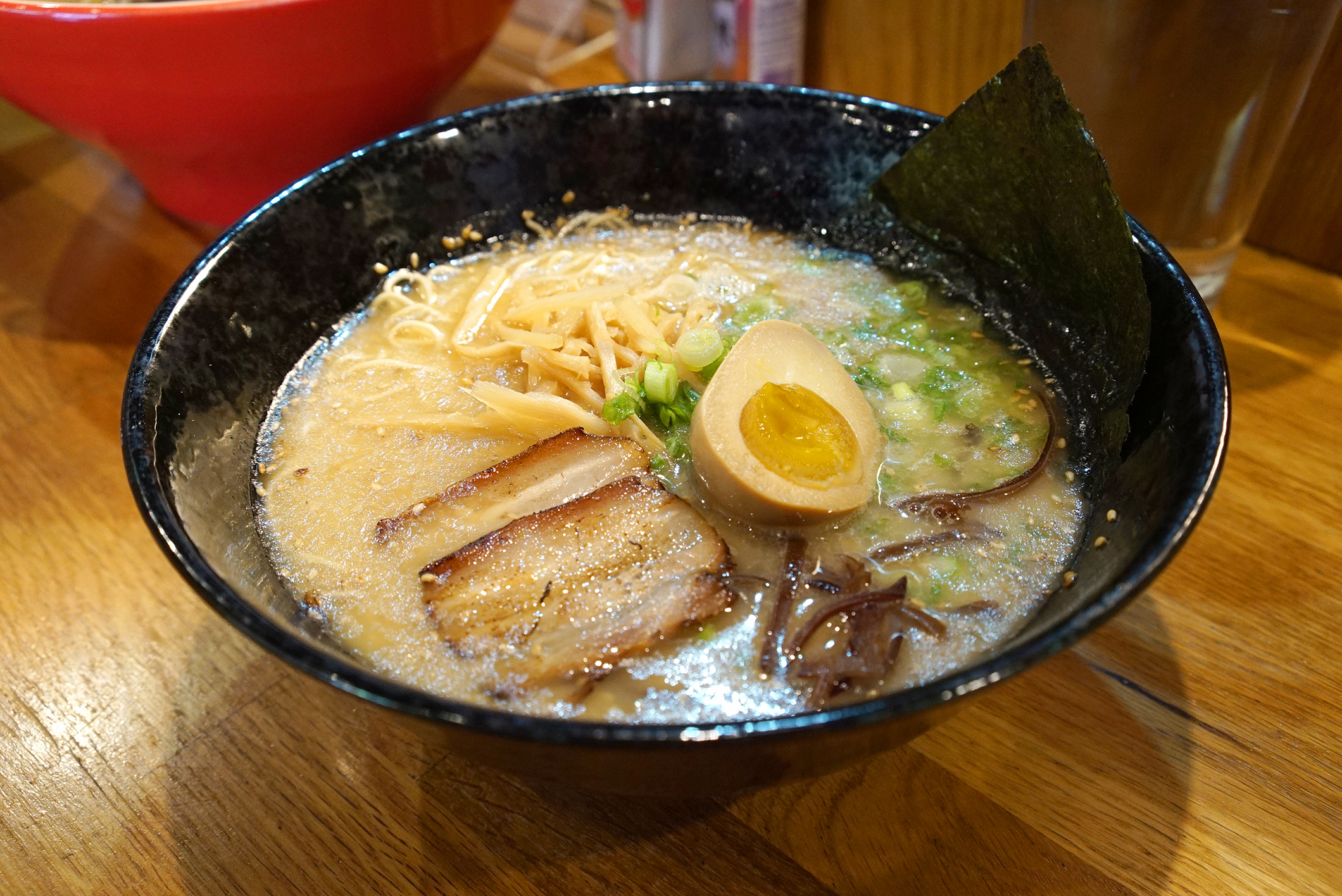
Kotteri, on the other hand, are thick and usually opaque, due to all the emulsified fats, proteins and minerals that are rendered from boiling animal bones for long periods of time. That makes them stocks, technically, not broths. Kotteri are also known as Paitan (from the Chinese). Paitan translates to white broth, which makes sense, given that they are usually cloudy in color and thick in texture.
SOUP BASE

Ramen soup bases are classified by the main ingredients that are boiled or simmered to make the soup stock (if bones are used) or broth  (if no bones are used). As expected, a stock can be made from animal bones (chicken, beef, pork, fish). But lighter broths can be made with dried seafood or kelp/seaweed (like dashi – a broth made from dried, smoked bonito flakes and kelp), and sometimes even just straight up roasted veggies and mushrooms + water.
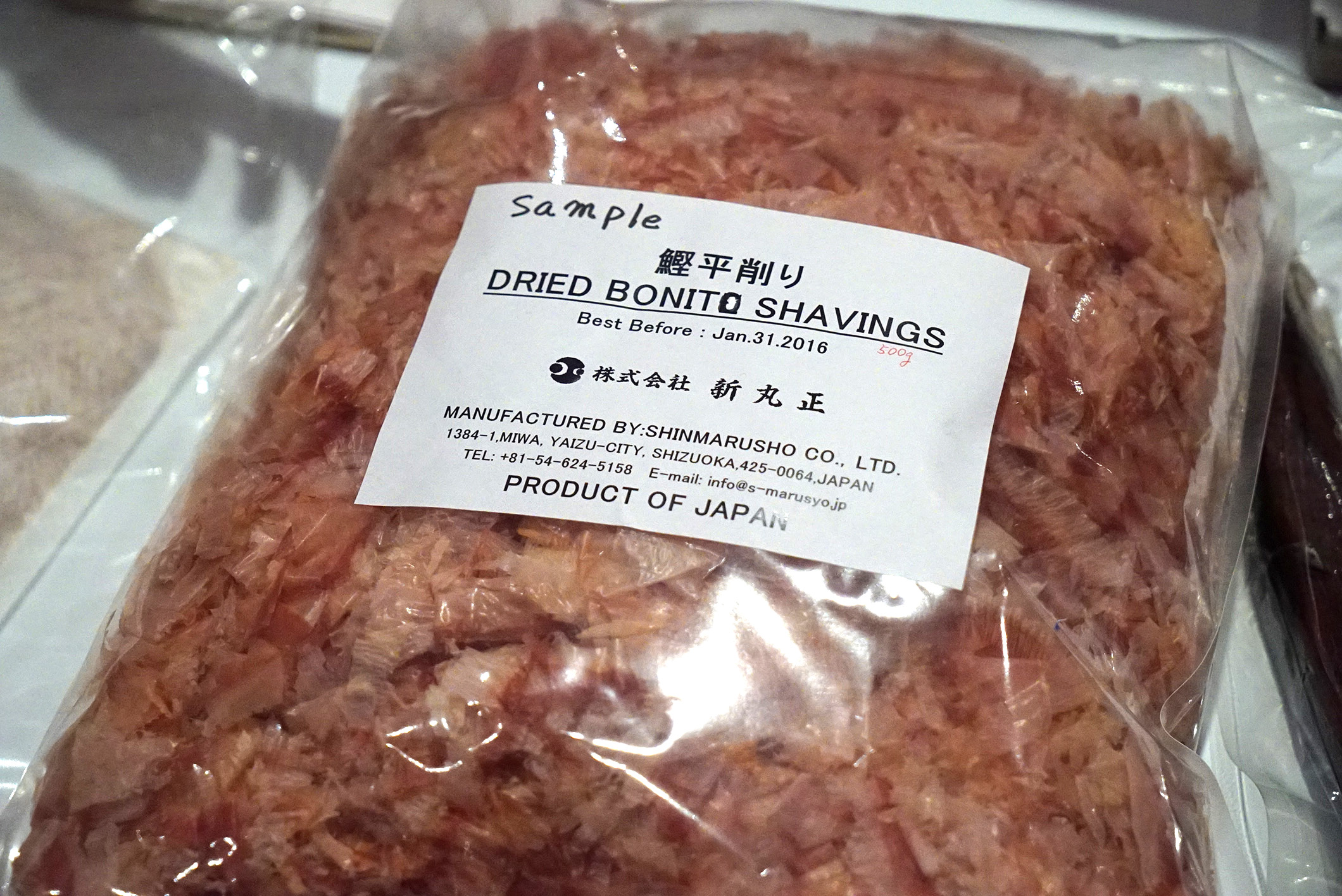
An example I will use to illustrate here is tonkotsu. “Ton” means pork, and “kotsu” means bones. Thus, the tonkotsu ramen base is a kotteri style thick stock made from pork bones, which would then need to be seasoned with a salty or savory component, which is covered in the next section.

SEASONING

Tare or kaeshi is the seasoning – the main savory element or source of salt – that is used to flavor the ramen. Ramen seasoning comes in three major varieties: Shoyu, Shio and Miso.

Shoyu: This, simply, is soy sauce. If you didn’t know, soy sauce is made from a paste of fermented and boiled soybeans, roasted grains and seasoned water.

Shio: Sea salt. Pretty straightforward. As you can imagine, sea salt as a seasoning is nicely suited for thinner, assari style broths.

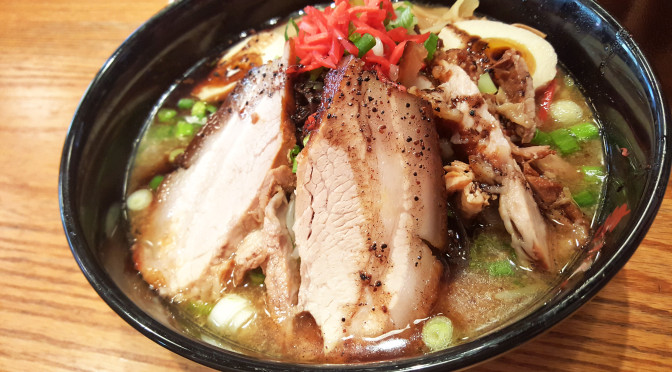
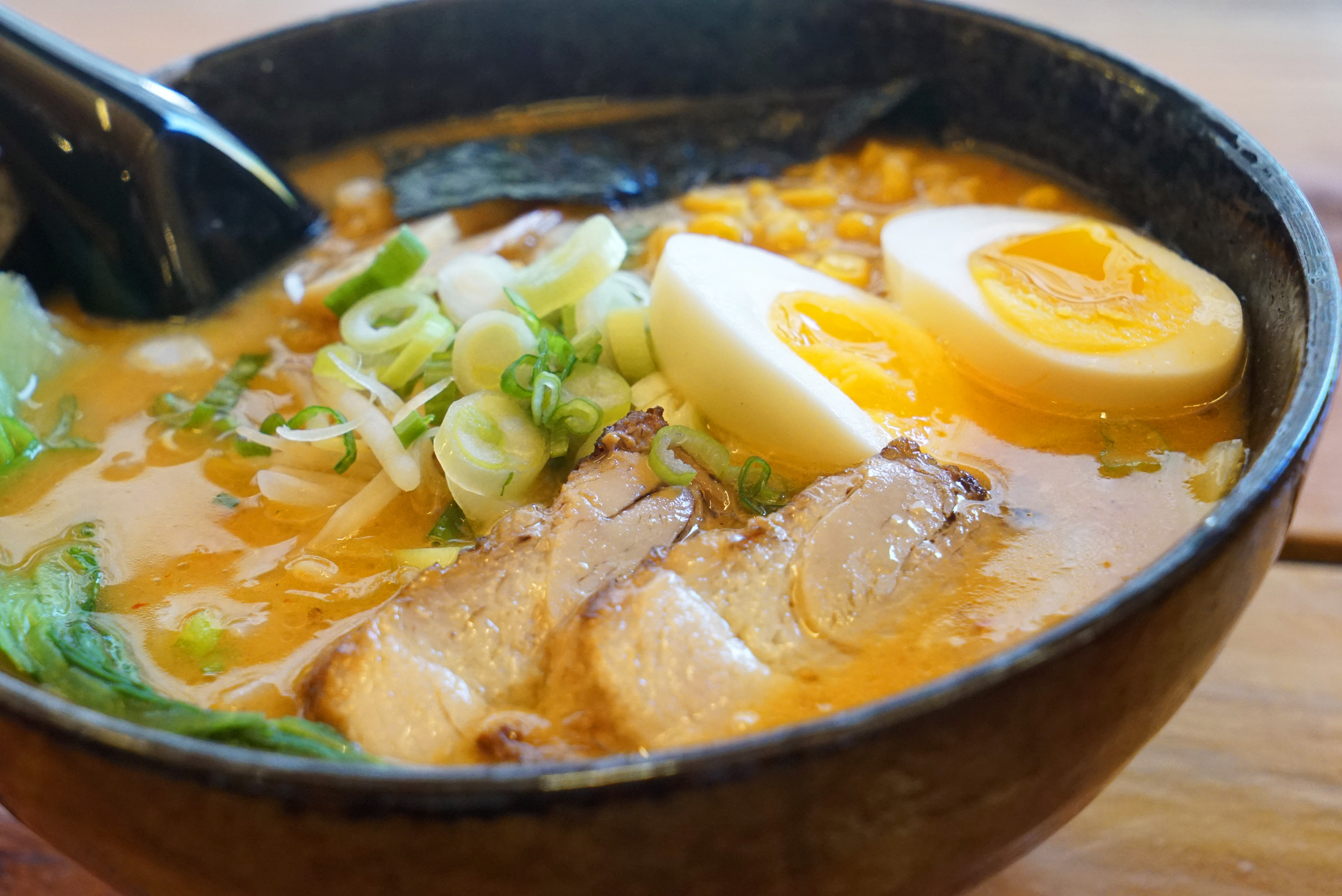
Miso: This is an earthy flavored, thick, fermented soybean paste. Seasoning with miso will almost always result in a thick, kotteri style broth, as you can see below:
NOODLES

Ramen noodles are made with wheat flour, water, salt and kansui, an alkaline water which gives the noodles their yellow color and characteristic bounce. In China, it’s more common to see ramen made with eggs instead of kansui.
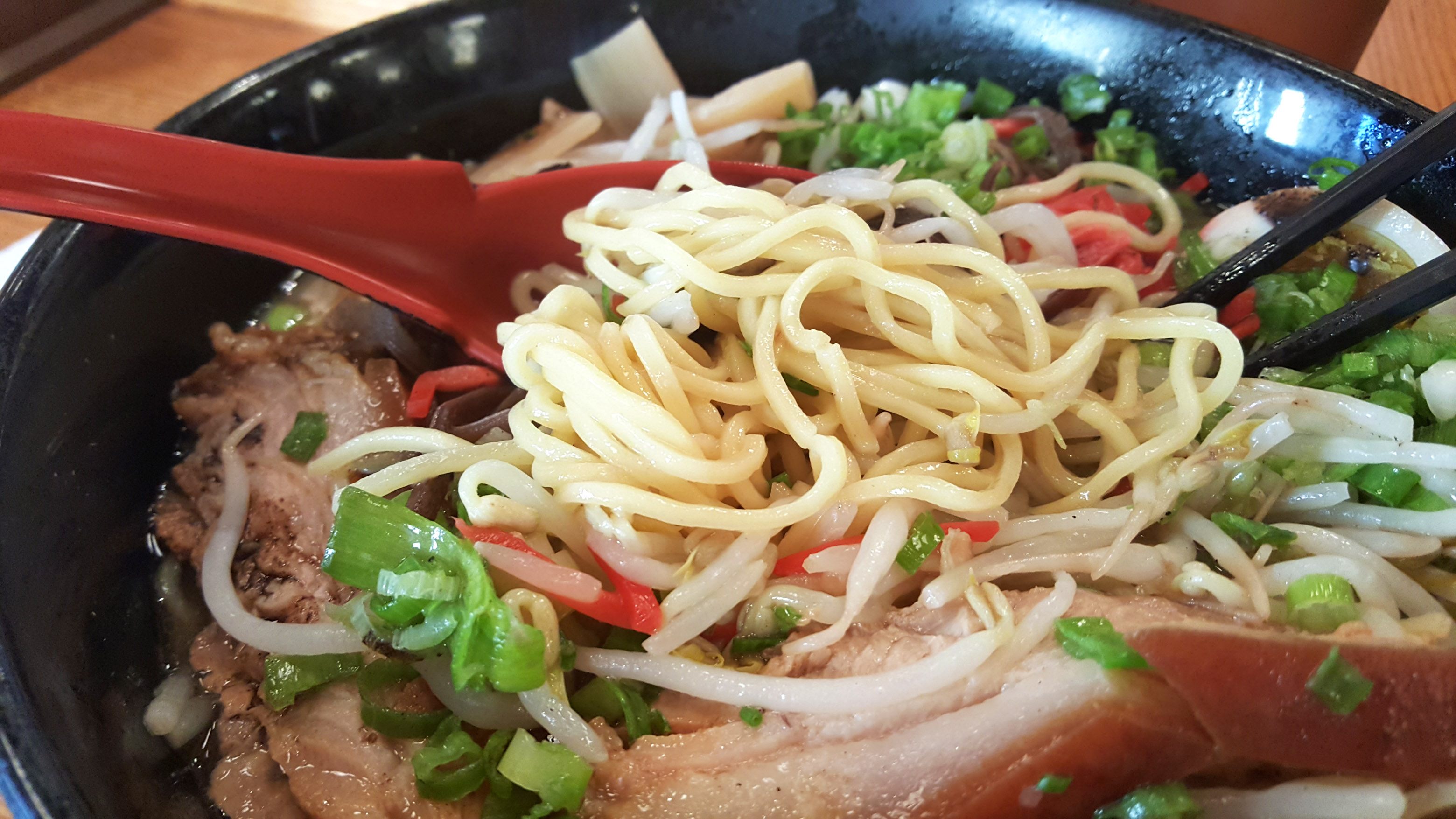
Depending on the soup they’re added to, ramen noodles can range from wavy to straight, thick to thin, flat, round or square. The type of noodle selected for a bowl of ramen is based on its broth-clinging characteristics, its bounciness and its texture. For that reason, one noodle style may be better suited for a particular soup base or broth thickness than another.
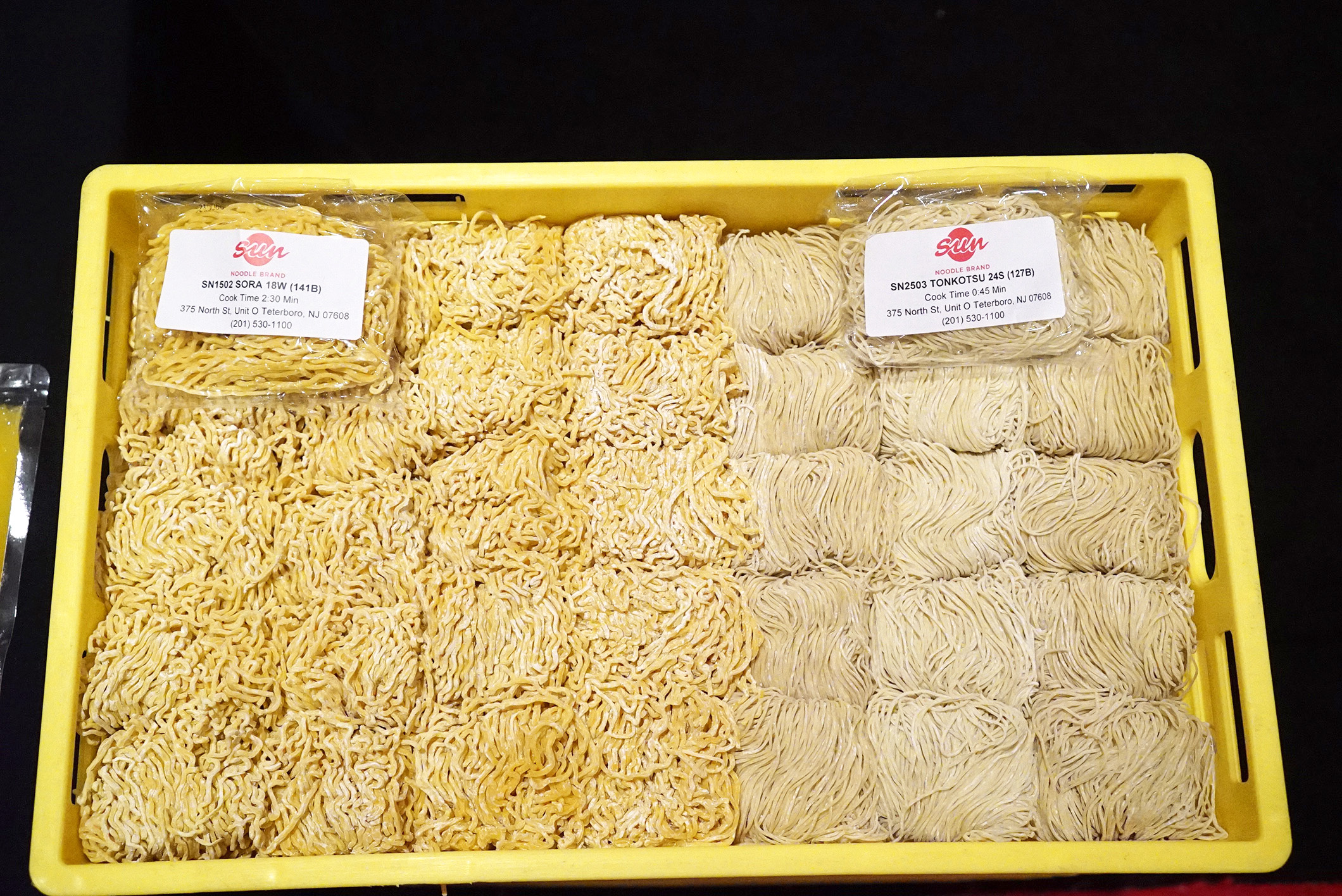
Depending on the noodles used, cook times will vary as well. In addition, their ability to last for a while, soaking in the soup broth, will vary. After a few minutes certain noodles will lose their spring and bounce, and the texture will change.
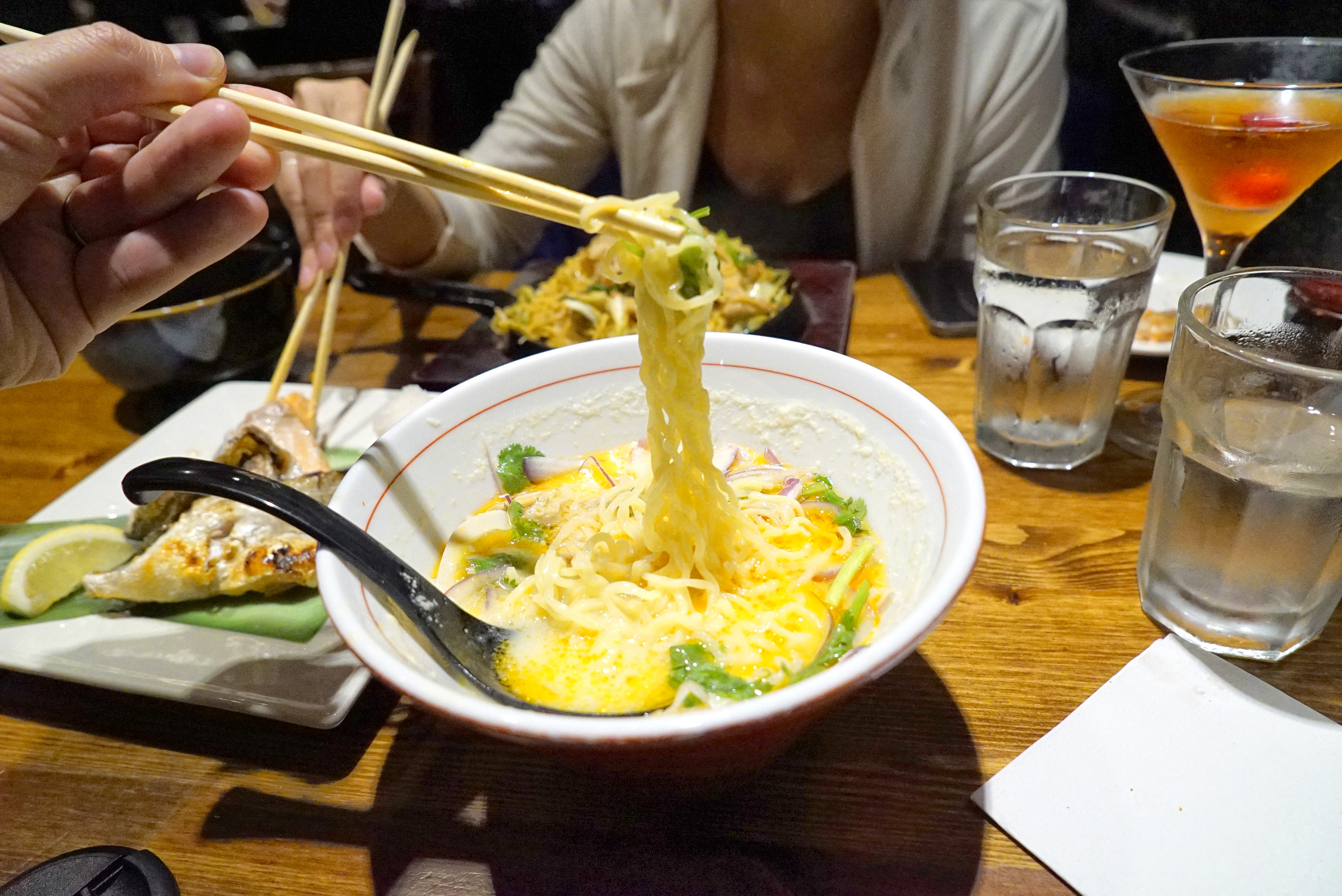
Just an FYI here: if you need more noodles while you are eating, yell out kaedama!

TOPPINGS

We have a bunch of categories to discuss here. Let’s start with the most important one: meat.
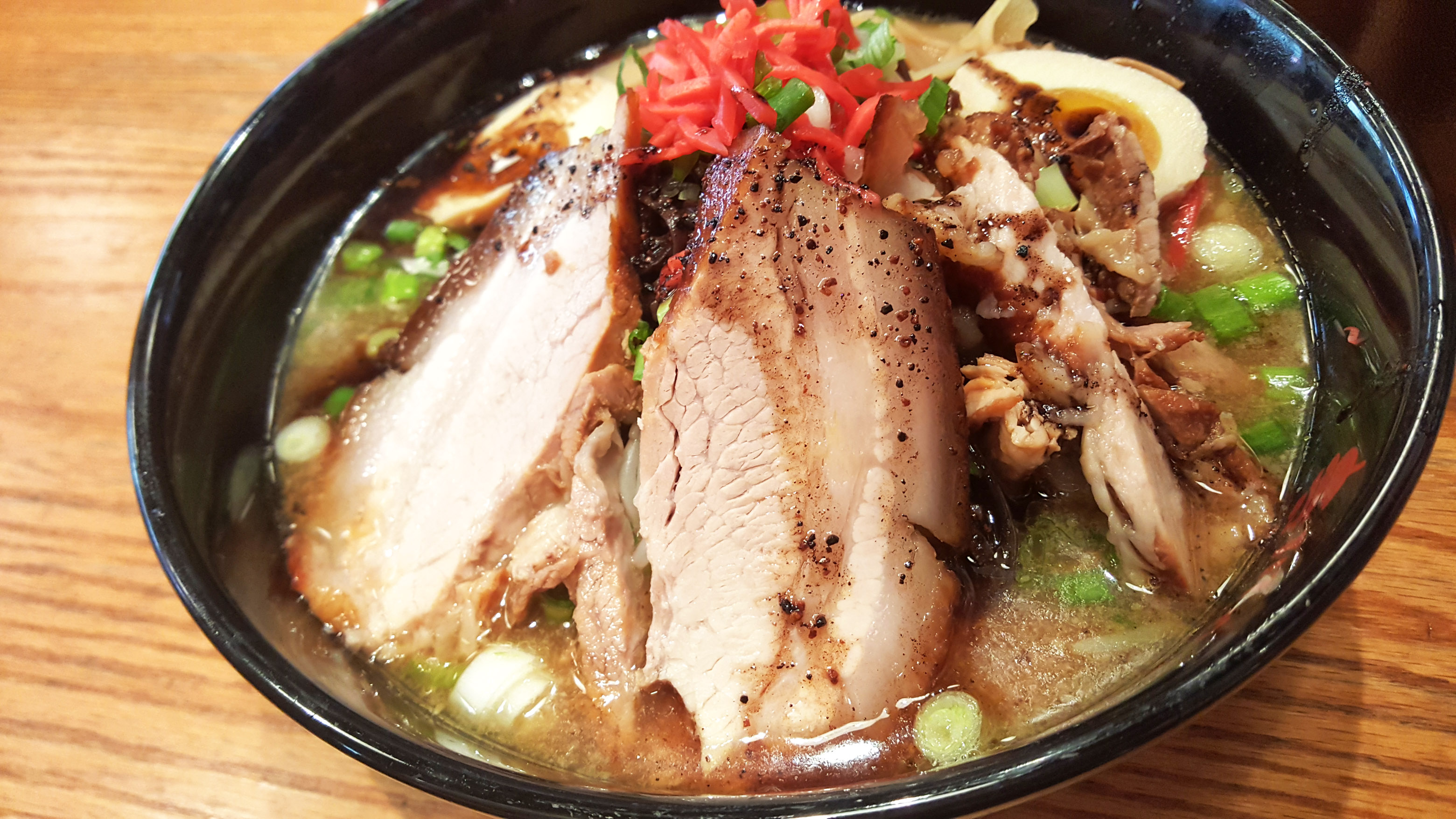
Obviously if a ramen base is made with animal bones, it only makes sense to use the same animal meat as a topping for the soup. Tonkotsu should have copious amounts of kakuni (pork belly), or chashu (rolled pork loin or belly that is cooked slowly in a sweet soy and mirin sauce, stew-style, then sliced and sometimes charred or grilled afterward for texture). Clearly, chicken is a good topper for your chicken-based ramen. But some chefs get creative. For example I’ve had beef ramen that was topped with crispy beef intestines. I’ve even had chicken broth that was topped not only with chicken but with ground pork as well. Mixing is not a bad thing and it is quite common, as you’ll learn below.

In addition to meat, ramen broths also contain aromatics, such as garlic (fresh, charred, fried or fermented), onions (charred, pickled or raw), ginger (either pickled – beni shoga – or fresh), leeks (fresh or charred), scallions (usually fresh, typically sliced or shredded) and mushrooms (both dried and fresh, and a ton of different types). These can also be incorporated into the creation of the soup base at the start, not just as toppings that are added at the time of serving.
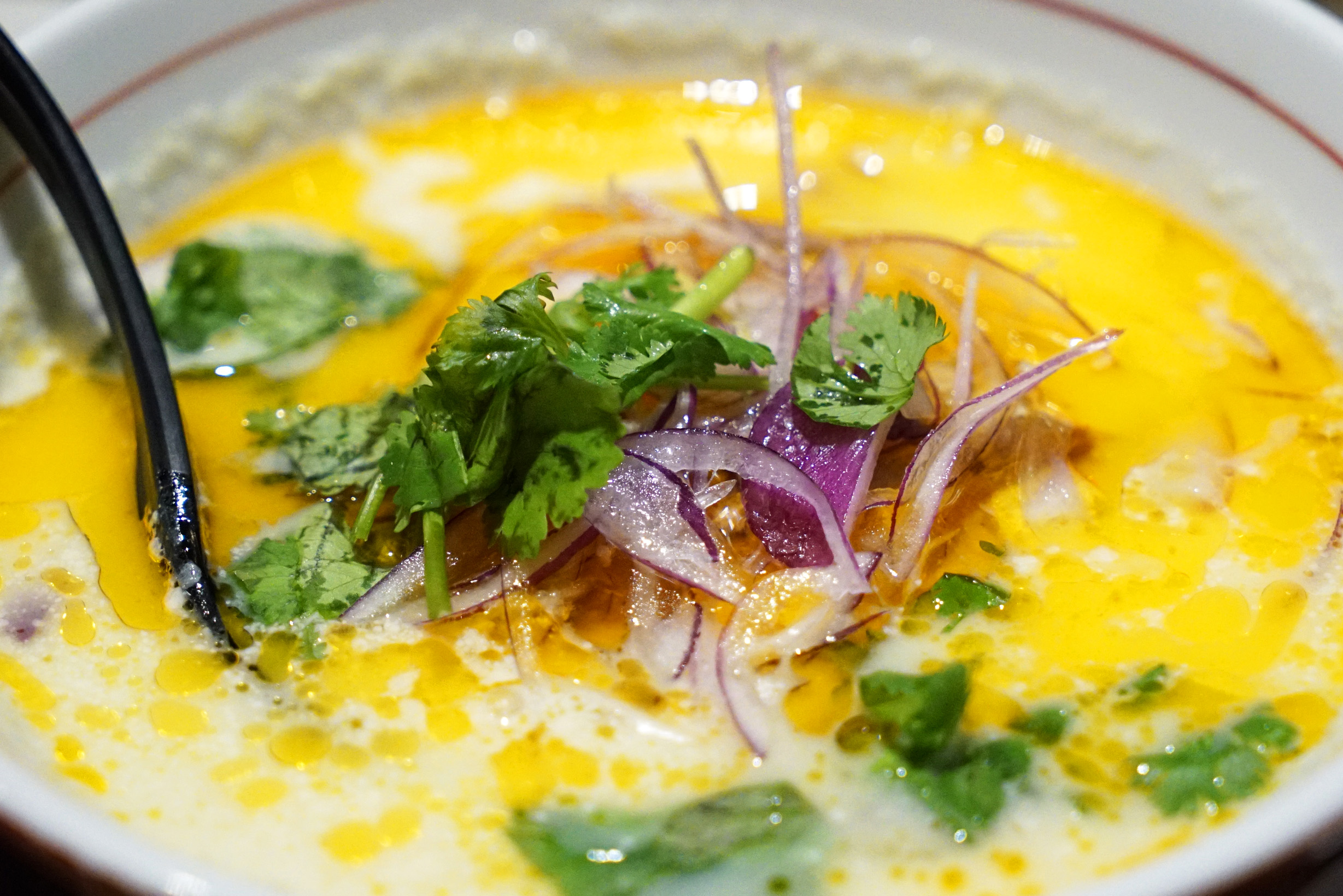
Other common toppings include seasoned soft boiled or hard boiled eggs, sliced fish cakes (naruto), bamboo shoots, corn, cabbage, seaweed, bean sprouts, spice pastes, butter and various oils, such as chili oil, onion oil, pepper oil, garlic oil or sesame oil (and certainly sesame seeds, too, for that matter).
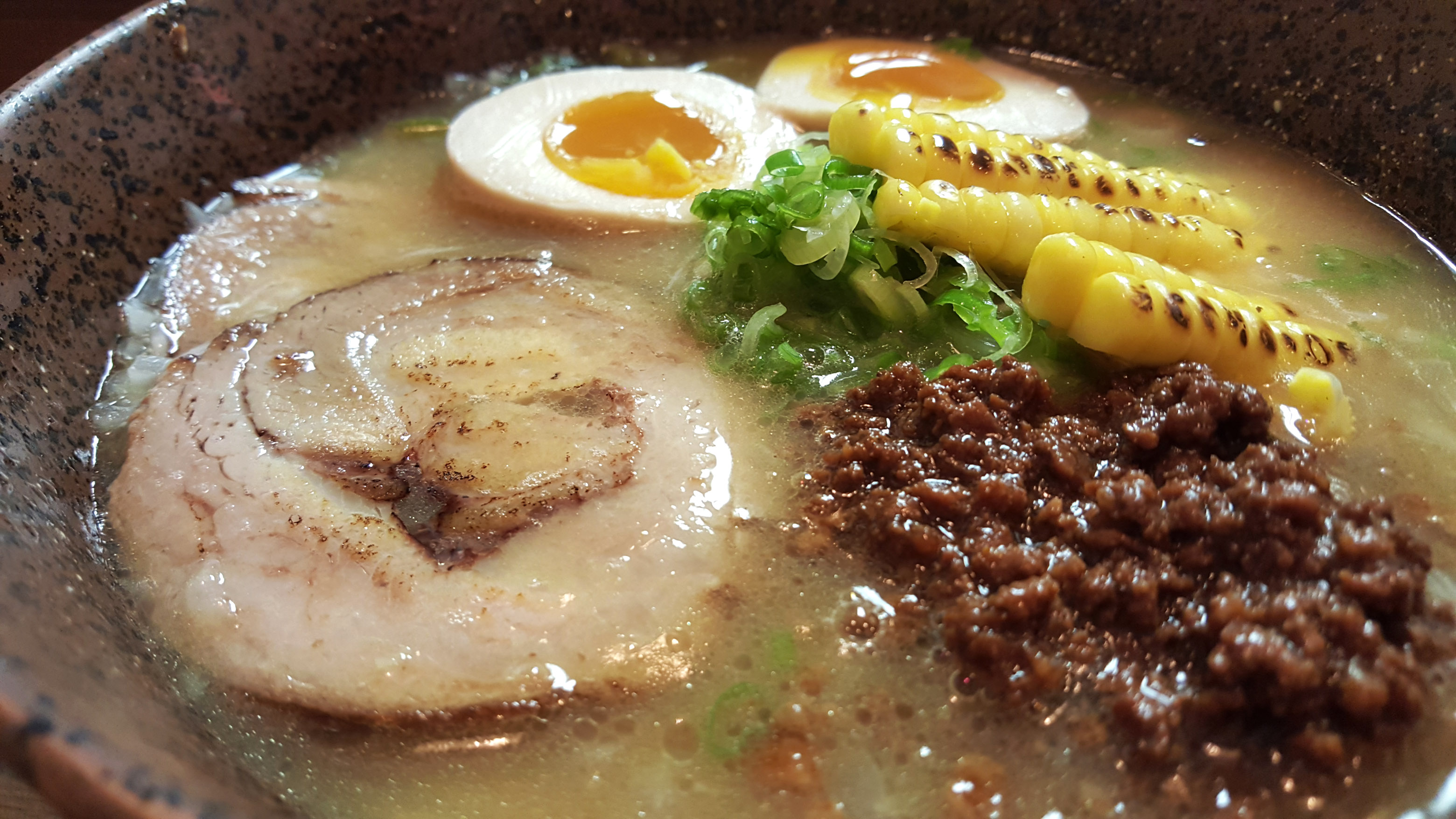
On many occasions, the toppings you see will depend on the region in Japan from which the ramen hails.

REGIONAL STYLES

Japanese ramen varies greatly by region. Some areas focus on thinner fish- and seaweed-based broths, while others tend to be hearty and thick animal bone soups. I’ve highlighted some of the regional styles below, alphabetically:

Akayu: A sweet and mild ramen soup is topped with a spicy dollup of miso mixed with chili and garlic. Chewy, thick, wavy noodles grace this style, and it is usually served with powdered seaweed as well.

Asahikawa: Asahikawa is Hokkaido’s second-largest city, and is located at the base of the mountains in the middle of the island. Its ramen is a mix of chicken, pork and seafood broth, with a shoyu base. The soup is topped with a layer of melted pork fat to seal in the soup’s heat in the colder months, as well as pork meat, bamboo shoots and scallions.

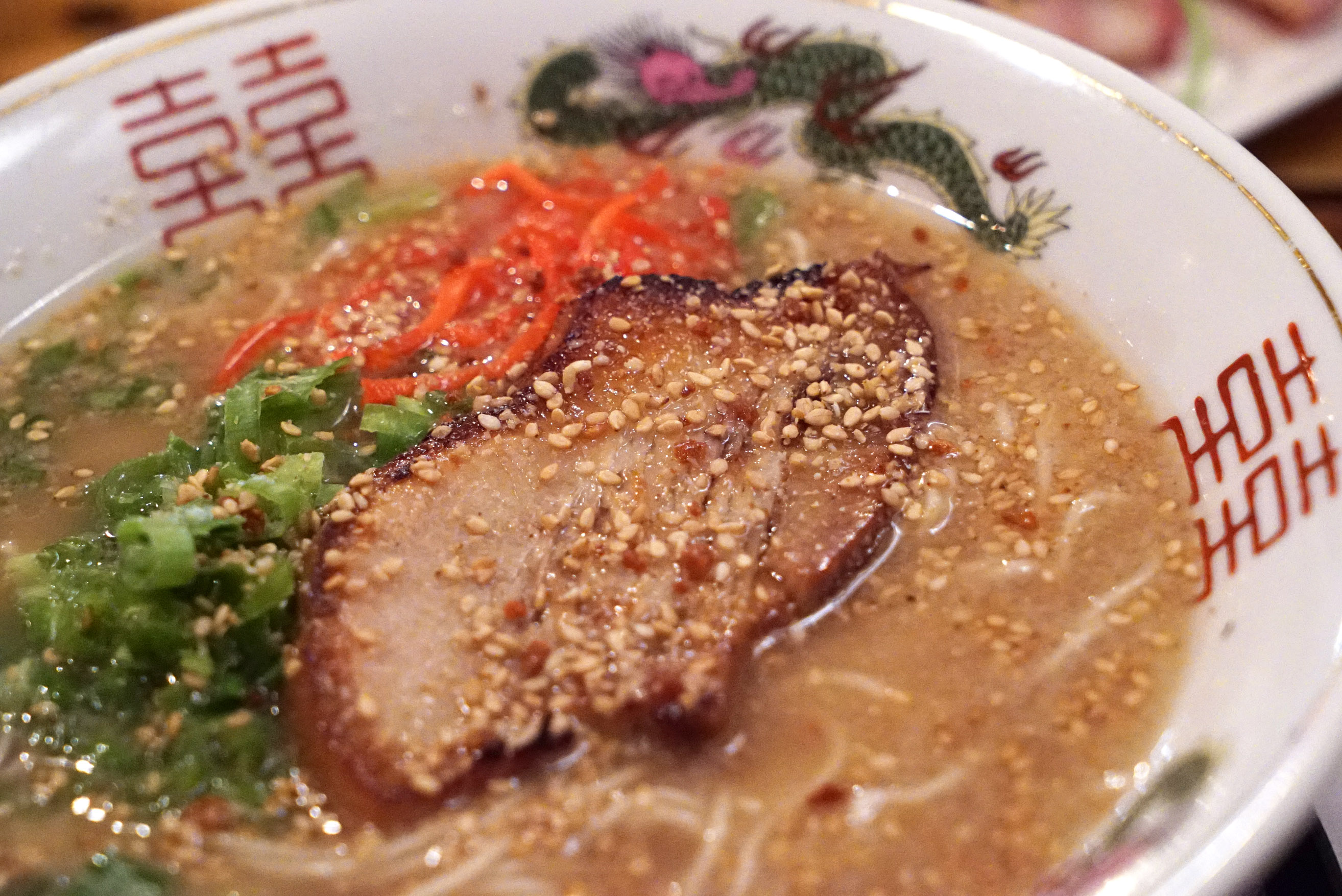
Hakata: Also known as Nagahama ramen, this style comes from Fukuoka, a prefecture in Japan’s southern island of Kyushu, which is famous for its pork dishes. This is my favorite of ramen styles, because it is a thick, fatty, pork bone broth with thin, al-dente noodles. Toppings usually include sesame seeds, pink pickled ginger and fried garlic.
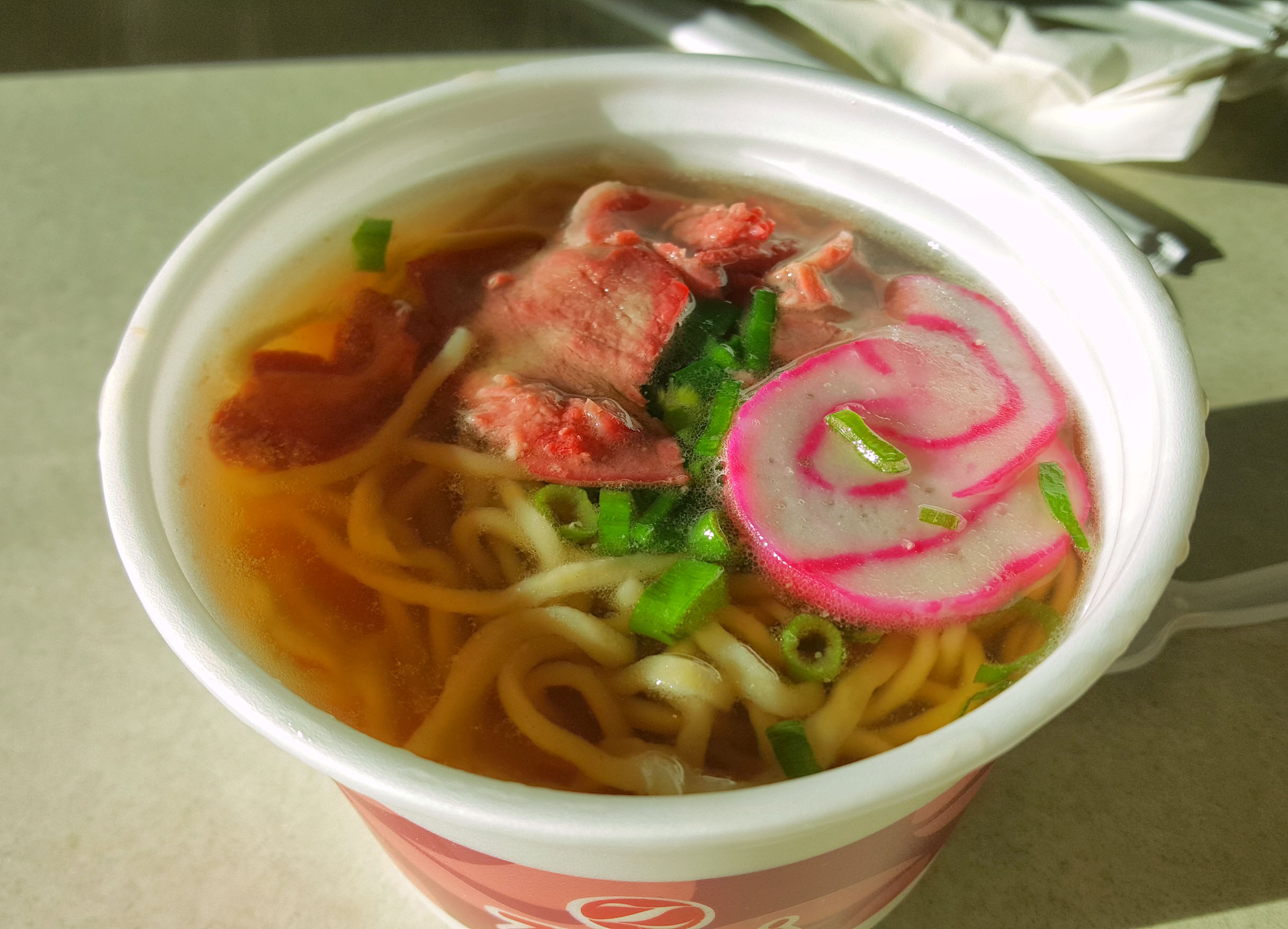
Hakodate: Ramen arrived in Hakodate from China. The soup is thin and light, and the shio-seasoned broth had a mild pork and chicken base. Noodles are usually soft, with toppings like roast pork, bamboo shoots, scallions, nori, fish cakes and spinach.
Kagoshima: Kagoshima is known for its Berkshire pork-like black pigs, yet the ramen is a mild mix of both veggies and chicken, combined with the black pork bone stock. The broth then gets finished off with burnt onions and seasoned with soy sauce. The noodles are soft, and toppings consist of pork meat (obviously), scallions, wood ear mushrooms (kikurage) and bean sprouts.

Kitakata: Kitakata is famous for a clean, light soy-based breakfast soup. In the bowl there’s usually a serving of chewy, wide, flat and curly hand-cut noodles with pork, scallions and bamboo shoots.

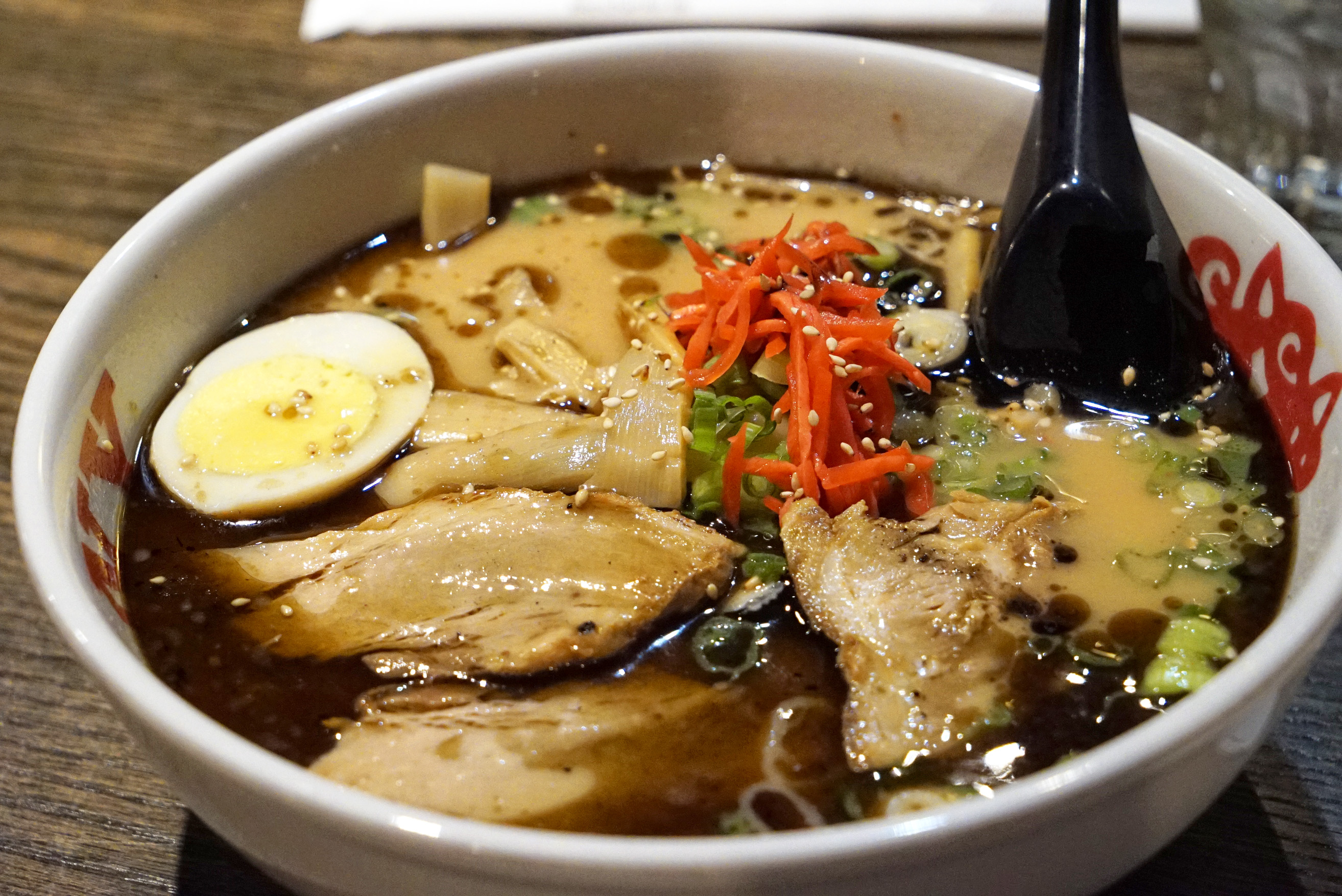
Kumamoto: When tonkotsu ramen arrived in Kumamoto prefecture from Kurume, the locals started cutting it with chicken broth. It’s also served with straight noodles, though they’re softer and thicker than the Kurume style. Most bowls have pickled mustard greens, sliced wood-ear mushrooms, bean sprouts, and cabbage on top, but the unique thing about Kumamoto ramen is the use of garlic. You’ll see fried garlic chips and mayu, the black liquid made from garlic that’s been burned in sesame oil. That shit is delicious.
Kurume: This town on the southern island of Kyushu is the birthplace of tonkotsu. Melted bone marrow, fried lard, sesame seeds, pickled ginger and garlic give Kurume ramen a unique and pungent style. Toppings include pork meat, scallions, nori, and spicy mustard greens, in addition to those just mentioned above.

Kyoto: Kyoto’s home to two distinct types of ramen: a thinner assari shoyu ramen, and a thick kotteri chicken soup. The thin version is a blend of pork and chicken broth, with a dark soy base. The thick version is a rich porridge-like chicken soup, topped with garlic, spicy bean paste, chives and odoriferous local onions called kujnoegi. Both are seasoned with shoyu, but the toppings vary for each.

Nagoya “Taiwan” Ramen: “Taiwan Ramen” is Nagoya’s reimagined version of Taiwanese danzimian, which has lots of ground pork, Chinese chives, hot peppers, green onions and garlic. This shit is for people who like spicy soup.

Onomichi: Take a bit of pork, a heap of chicken, some local seafood and a big mess of lard and you’ve got Onomichi ramen. The soup has a shoyu base and is served with chewy, homemade, wavy, flat noodles. It’s usually topped with roast pork, bamboo shoots, scallions and pork fat.

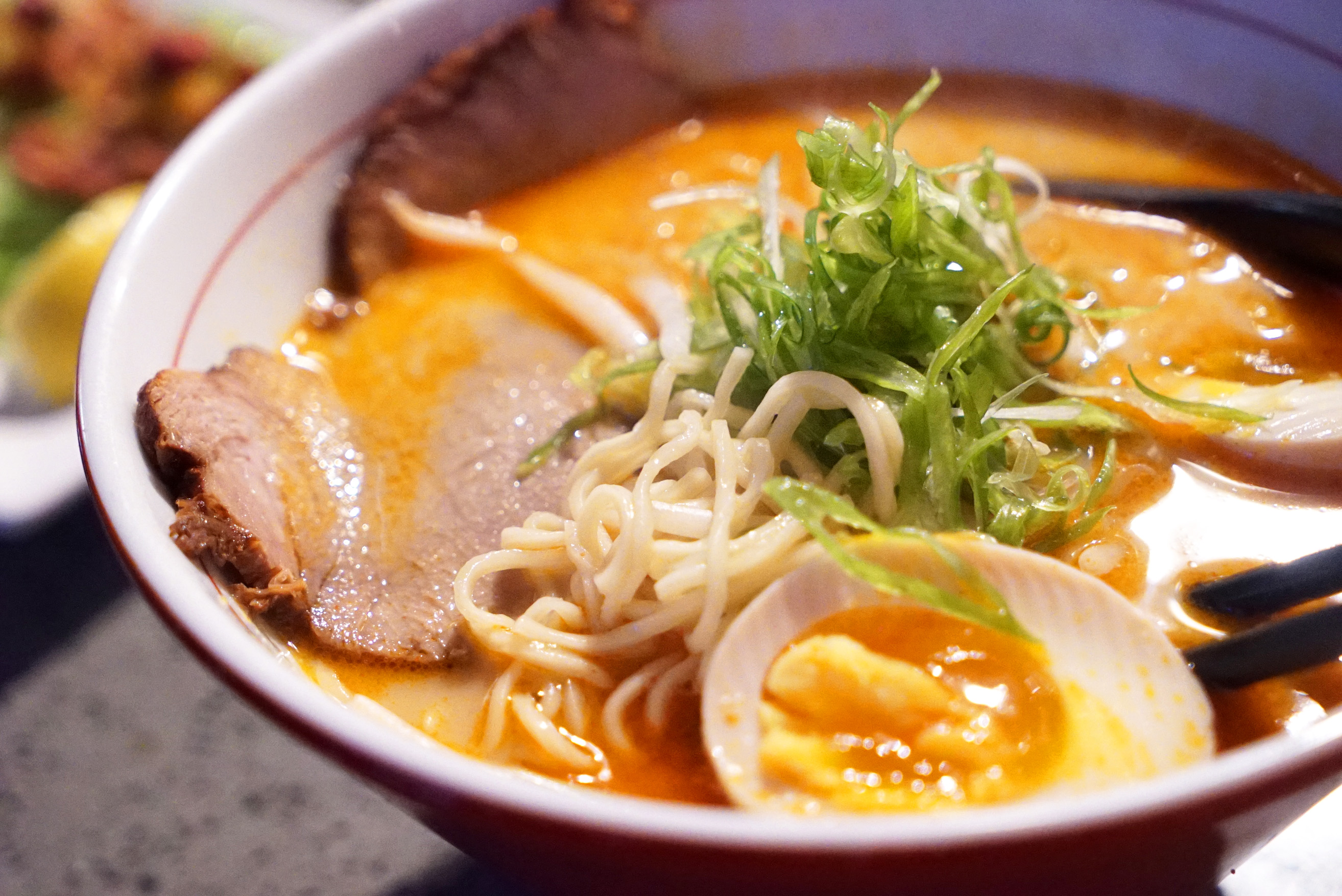
Sapporo: Sapporo-style ramen hails from Japan’s northernmost province, Hokkaido, which is the birthplace of miso ramen. Sapporo miso ramen generally has thick, strong noodles and is commonly topped with bean sprouts, sweet corn, cabbage and ground pork. Soft boiled eggs and thick slices of chashu pork are also common, as well as pats of butter.
Shirakawa: This town developed a refined ramen typified by light, simple soup and hand pulled noodles. It features a shoyu broth, but local mineral ­water makes for springy noodles with a good chew. Toppings include roast pork, bamboo shoots, fish cake, scallions, seaweed, spinach and even wontons.

Tokushima: Shikoku is the smallest of Japan’s four main islands, and udon is the preferred noodle. But Tokushima prefecture has an aged, extra strong shoyu soup that originated with tonkotsu stocks made from leftover pork bones from nearby ham factories. This is similar to Wakayama ramen. Ramen shops here will add a few strips of thinly sliced pork belly and break a raw egg on top. Tokushima ramen is sometimes divided into “yellow,” “black,” and “white” styles (how racist) of varying strengths. Other toppings for this ramen consist of scallions, bamboo shoots and bean sprouts.

Tokyo: This ramen is usually made with pork and chicken broth and typically features slightly curly, somewhat wide noodles. Very often in Toyko you’ll find broths that are flavored with dashi (broth made from aged bonito flakes and sea kelp). This style of ramen is generally seasoned with shoyu and has a medium-thickness. It’s similar to Yokohama ramen, though that tends to be heavier and meatier than the dashi broths of Tokyo ramen.
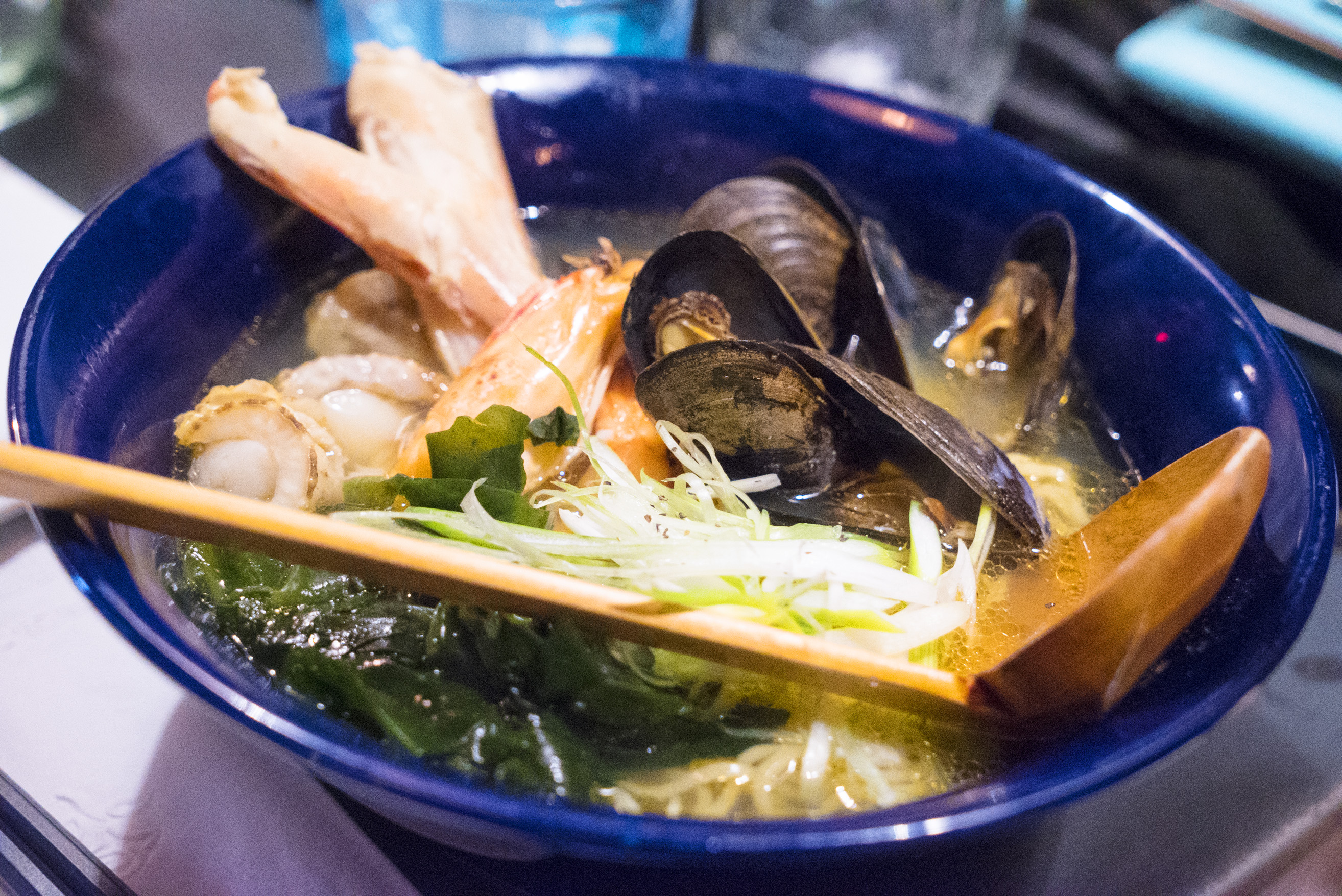
Tsubame-Sanjo: The cities of Tsubame and Sanjo are in a freezing cold area, and the ramen from this spot is bizarre and unhealthy. The hearty stock is made of chicken, sardines and pork bones, and the bowls are blasted with tons of pork fat (common in soups from the colder climates). There’s thick, flat noodles in this shoyu-based soup, and toppings include pork meat, bamboo shoots and lots of chopped white onions.

Wakayama: This is the median between thick, rich tonkotsu, and thin, clear broth. Wakayama ramen has a strong shoyu tare seasoning with a long-simmered tonkotsu base. The noodles resemble the thin, firm and long threads of Hakata style ramen, but you also get fish cakes like those in Tokyo style ramen. These soups are also topped with the seemingly ever-present and most common of toppings: roast pork, scallions and bamboo shoots.

Yokohama Ie-Kei: Yokohama is known for ie-kei ramen, a viscous, salty, and fatty tonkotsu shoyu style of ramen. When ordering, diners can designate how firm they want their noodles, the amount of fat they like on top, and the saltiness or strength of the soup. This is my kind of ramen – catering specifically to each unique diner. The toppings for this style of ramen usually include sheets of nori (seaweed paper), spinach, garlic, spicy bean paste and ginger.

RAMEN-LIKE DISHES

Although these dishes are not quite ramen, they’ll still be able to satisfy the most intense need for a ramen fix.

Abura Soba: The name of this soupless noodle dish translates to “oil noodles.” It consists of cooked ramen noodles dressed with flavored oil and tare (usually shoyu). It often comes topped with an egg, and diners are meant to stir everything together in the bowl to form a creamy, fatty, thickened sauce. One can also add vinegar, chili oil and other shit before slurping. Hot peppers, mayonnaise, fried noodles, chopped garlic and pork fat are also crowd favorites to add in.

Chanpon: This originated in Nagasaki and is made by boiling thick noodles directly in a thick pork and seafood soup. It’s viscous, and eats more like stew than ramen.

Hiyashi Chuka: This literally means “cold Chinese.” As such it’s a dish made with cold ramen noodles and various toppings like fried egg, ham, carrot, cucumber and chicken. It is usually dressed in a light soy-vinegar sauce. I’ve even seen fish sauce used in some versions around NYC.
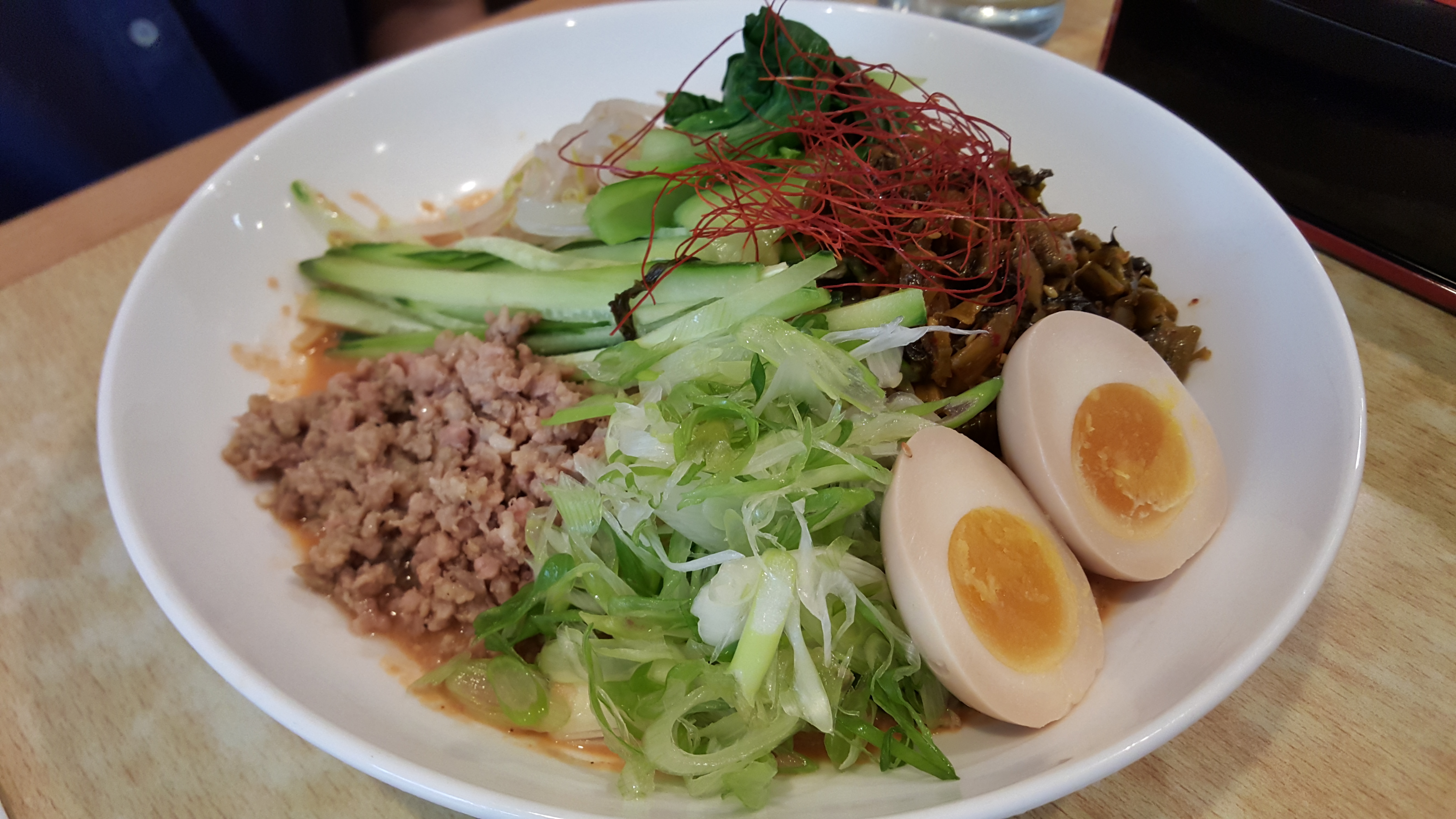
Mazemen: This is a hearty “dry” ramen, characterized by thick noodles and weird toppings like cheese. Similar to Abura Soba, this is essentially cooked noodles with a small amount of strongly flavored sauce on the side for dipping. Toppings and sauces can vary a great deal, and are often experimental in nature.

Tantan-Men: This is an off-shoot of Chinese dandan noodles. Based on a pork broth, it comes with a scoop of heavily spiced ground pork and is generally served with bok choy and/or spinach.

Tsukemen: This, like Mazemen, is also a “dipping” ramen. Cold, undressed (nekkit) noodles are served alongside a hot, concentrated ramen broth. You dip the noodles into a bowl of broth as you eat, grabbing the toppings whenever you choose to.
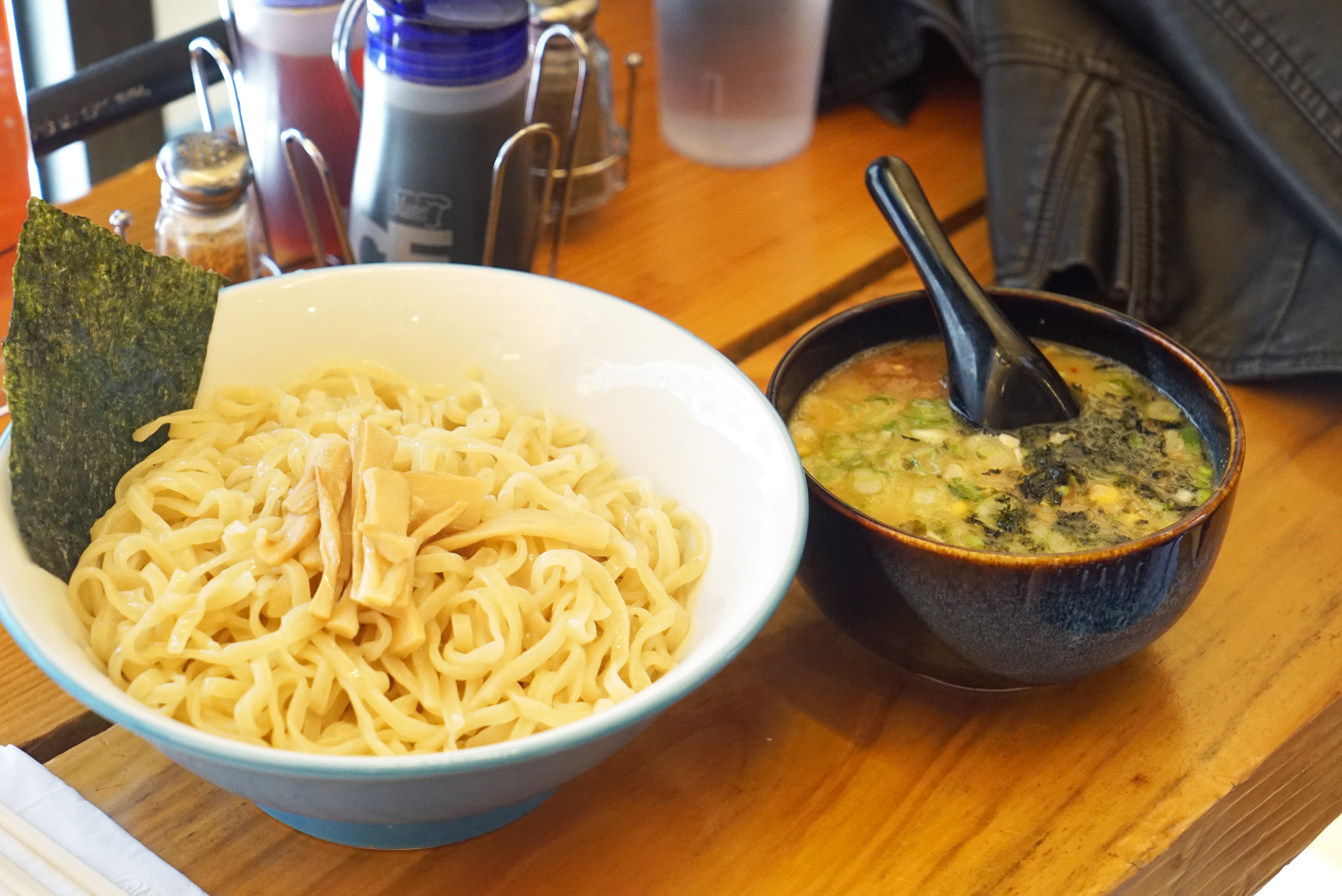
Yakisoba: This is the Japanese version of Chinese fried noodles. It’s made with egg noodles that get stir-fried with veggies and occasionally meat or seafood. This shit then gets hit with a Worcestershire style anchovy and vegetable sauce. It’s often topped with shaved bonito flakes and pickled ginger (beni shoga).

FUSION RAMEN

All around NYC we are seeing various kinds of fusion ramen items being offered, which makes a lot of sense given that the history of ramen in Japan involves a lot of Japanese-Chinese fusion.
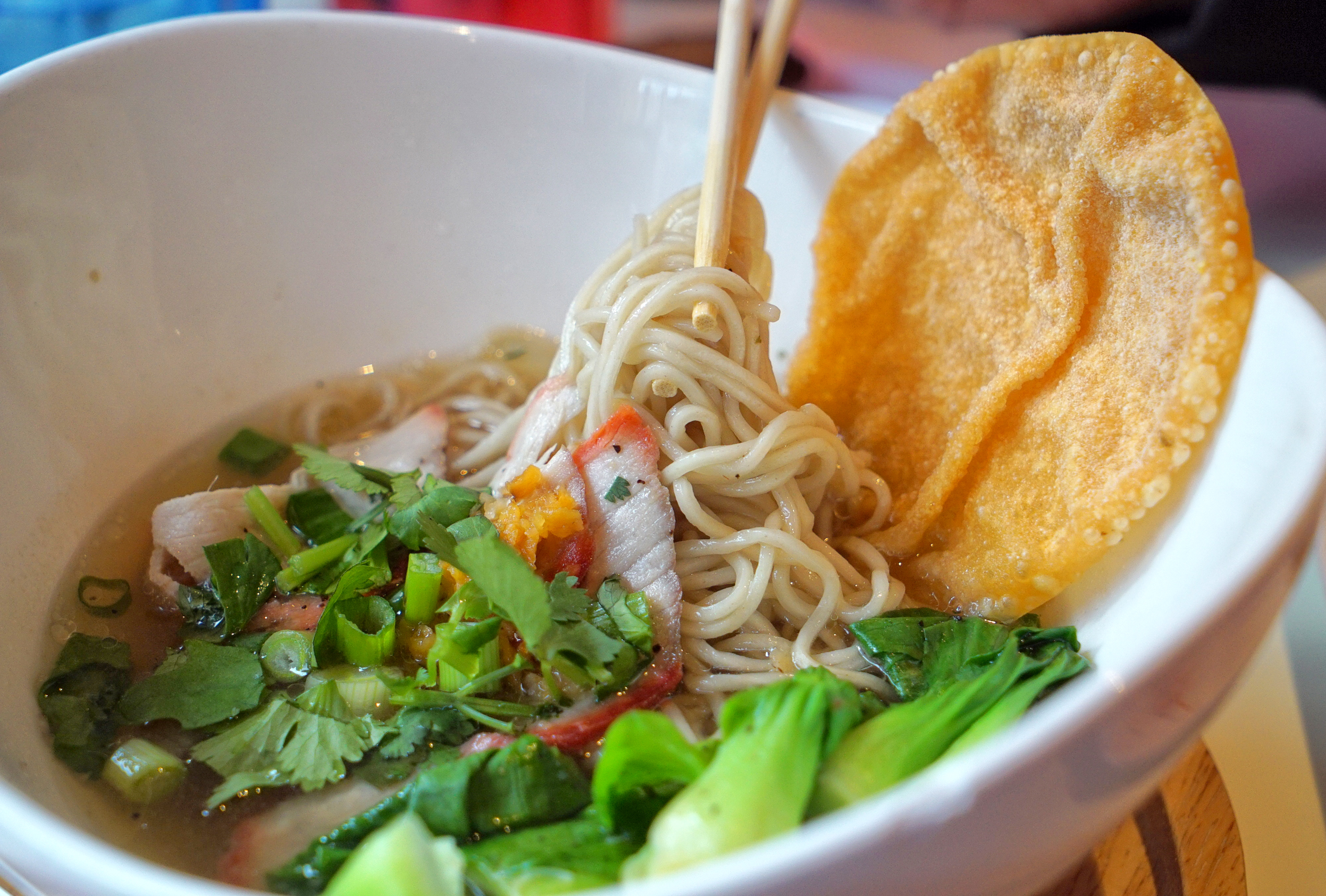
However some of the more wild examples I’ve seen in NYC include:

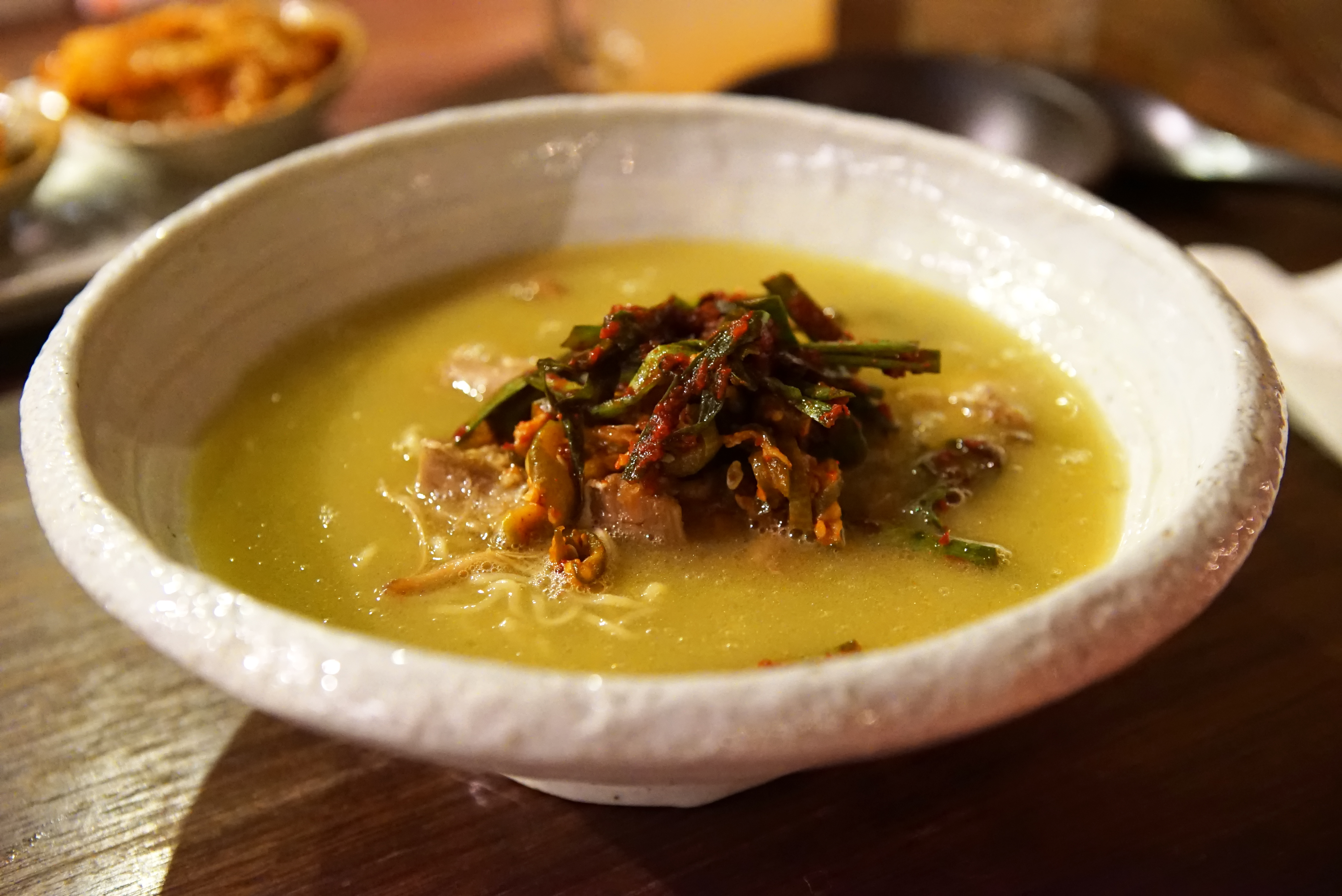
Korean-inspired kimchi ramen (Mokbar):
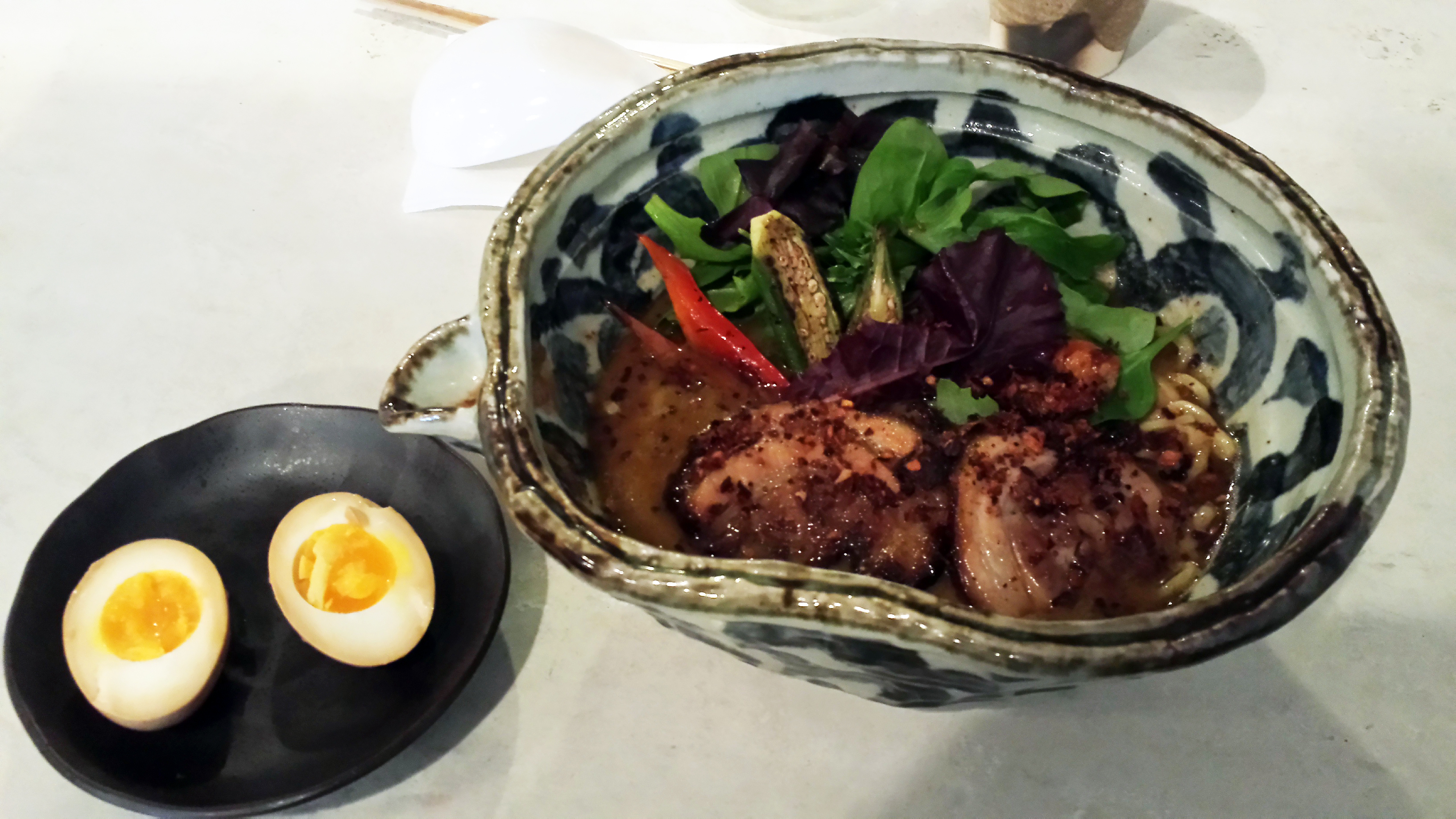
Thai green curry ramen (Bassanova):
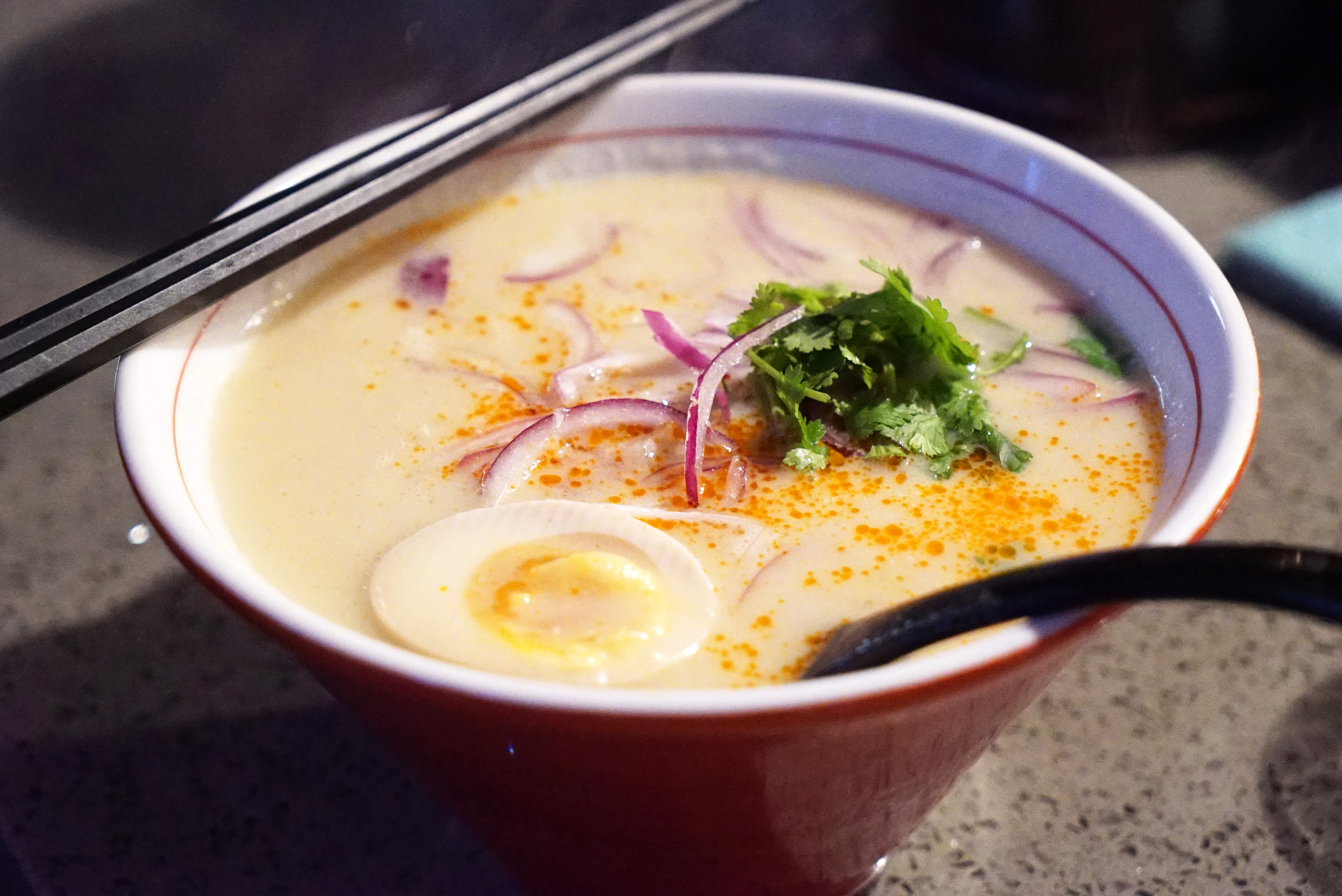
Flavors common to Burmese cuisine that feature coconut milk in the broth base (Tabata):
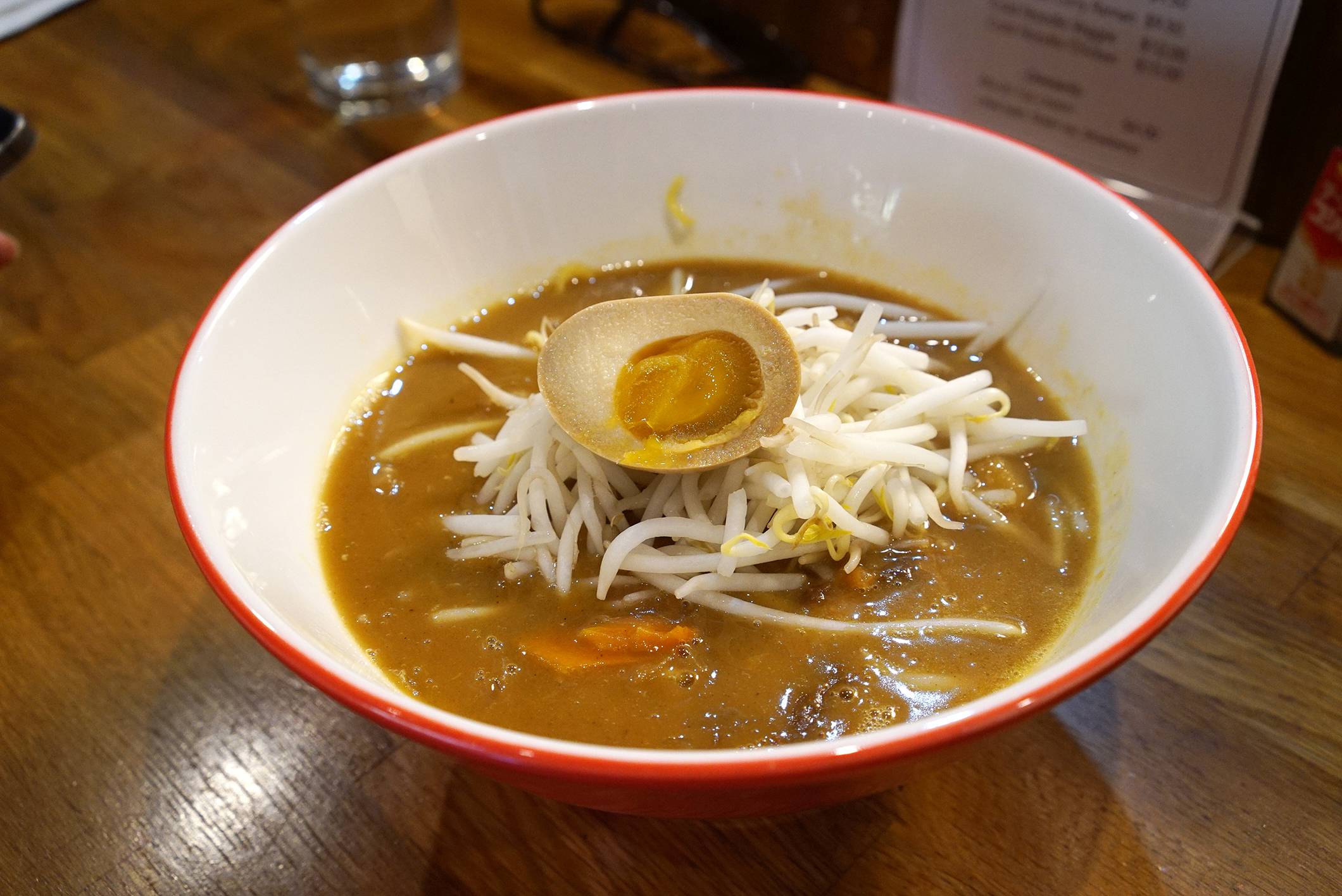
Indian-inspired massaman curry ramen, even complete with potatoes and carrots and (Yasha):
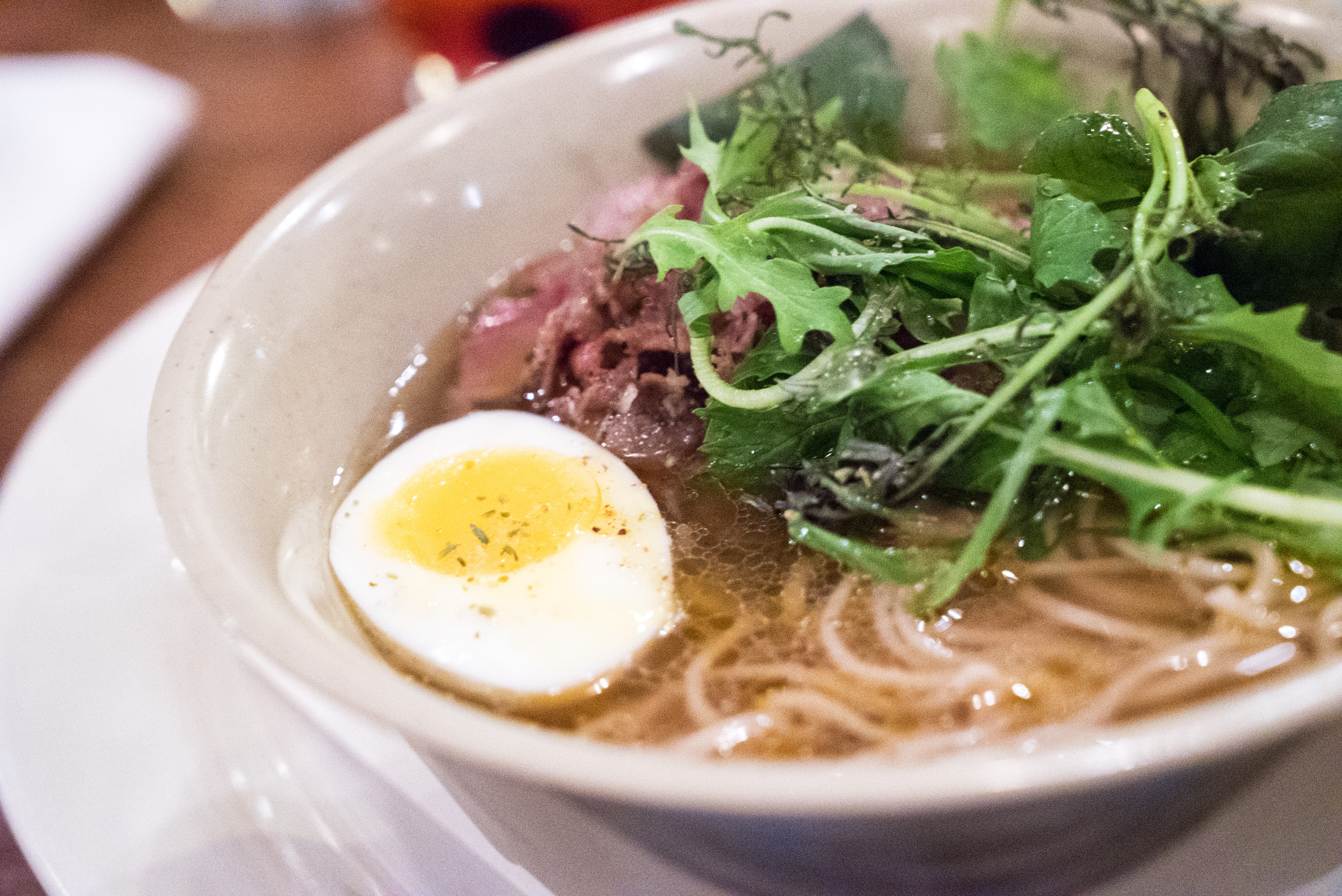
Italian spaghetti ramen, with pepper oil, arugula and crispy porchetta (Maialino):
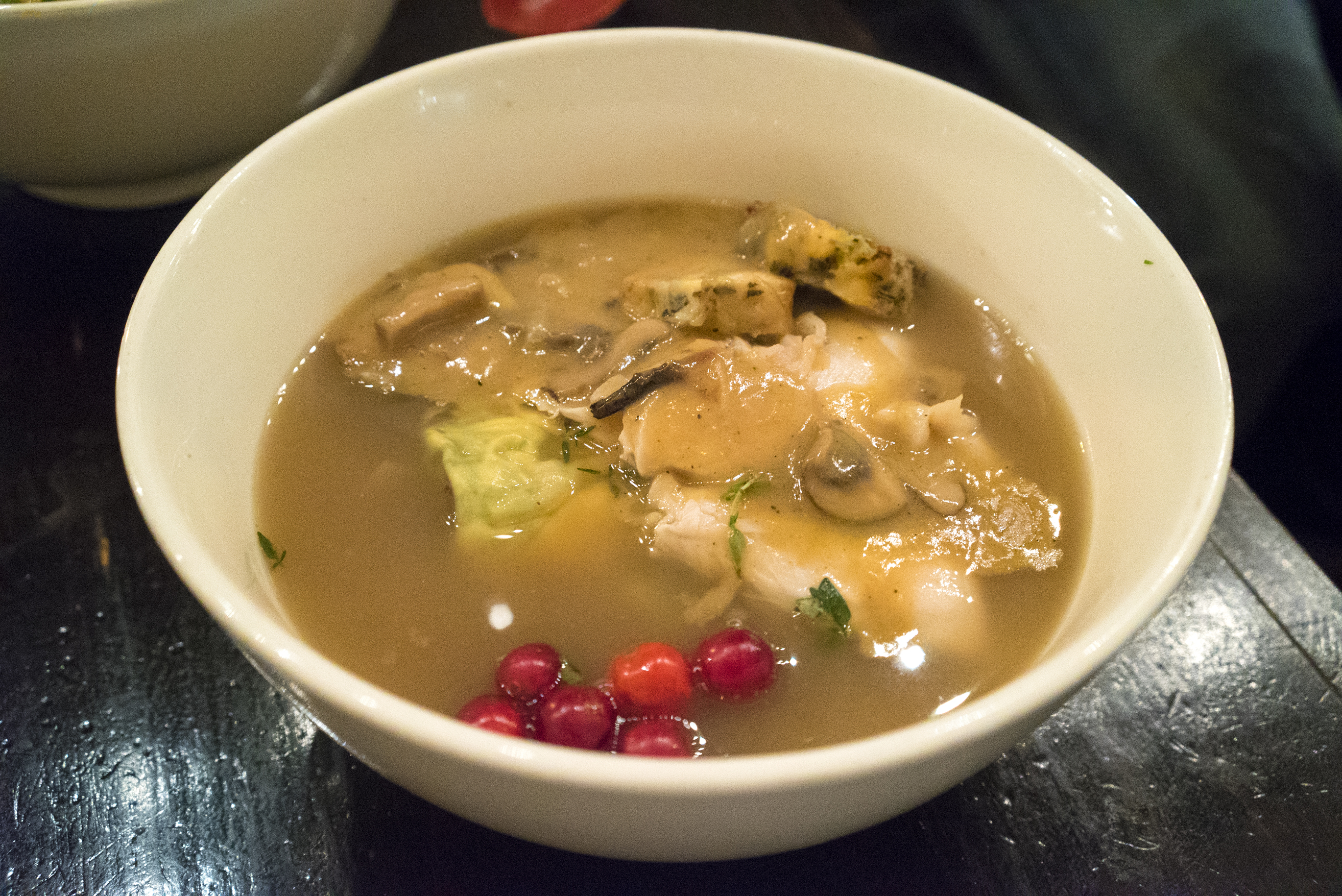
Thanksgiving turkey ramen, with gravy, mushrooms, stuffing and cranberries, of course (Talde):
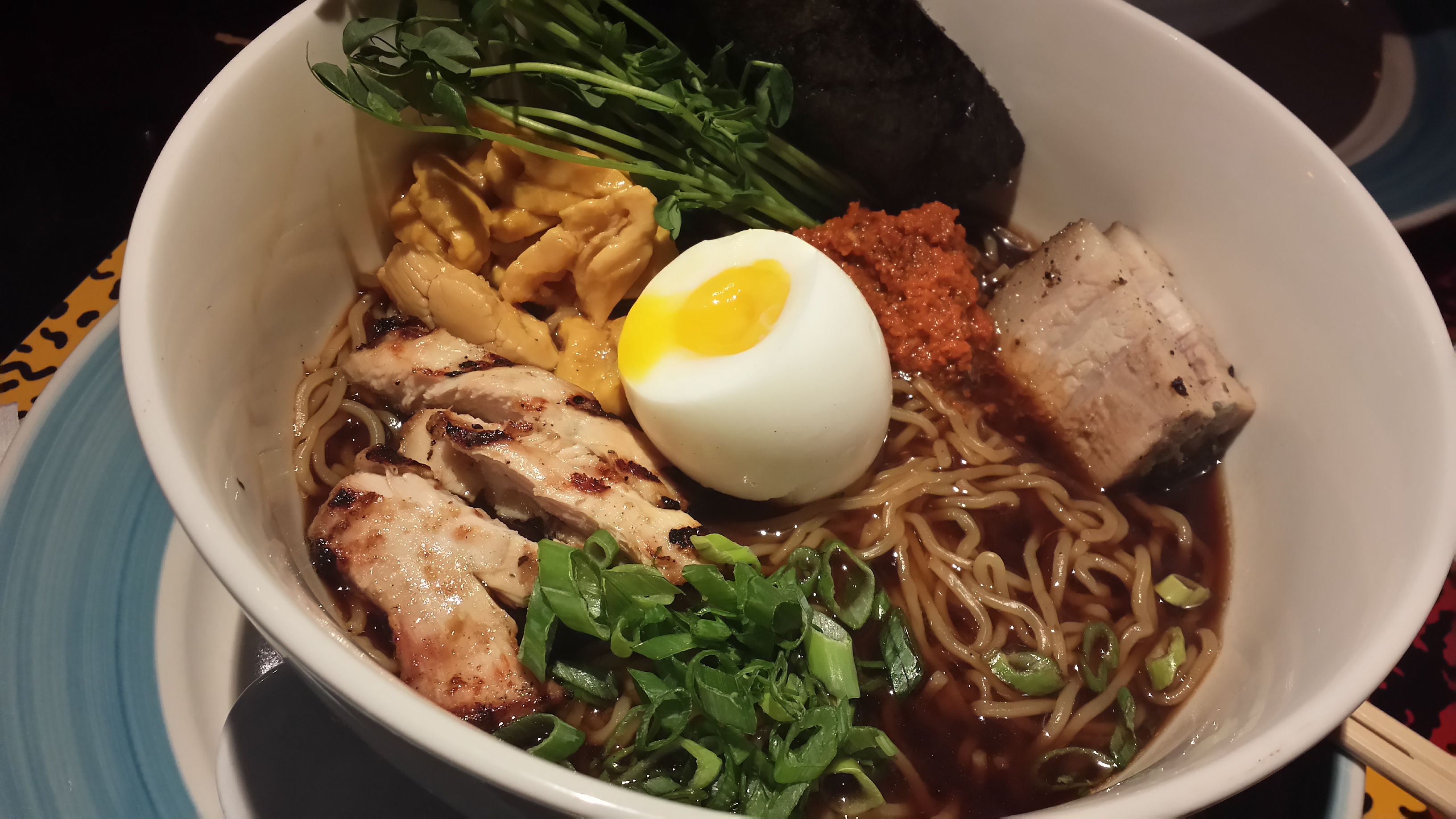
And Jamaican jerk chicken ramen (Miss Lily’s 9A):
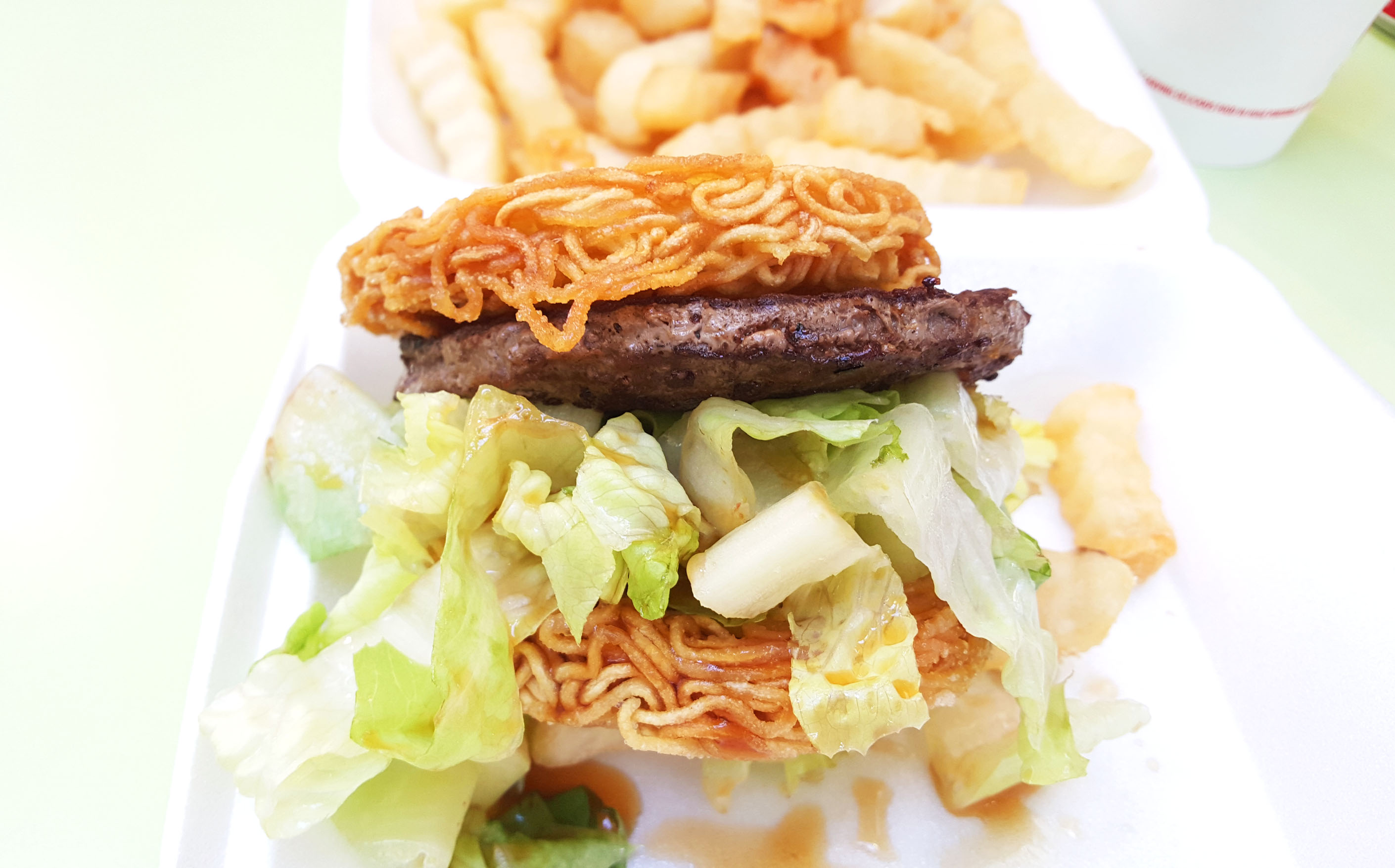
There are even ramen burgers (L&L Drive Inn, among others)…
…and now ramen cake (courtesy of my wife, The Cake Dealer).
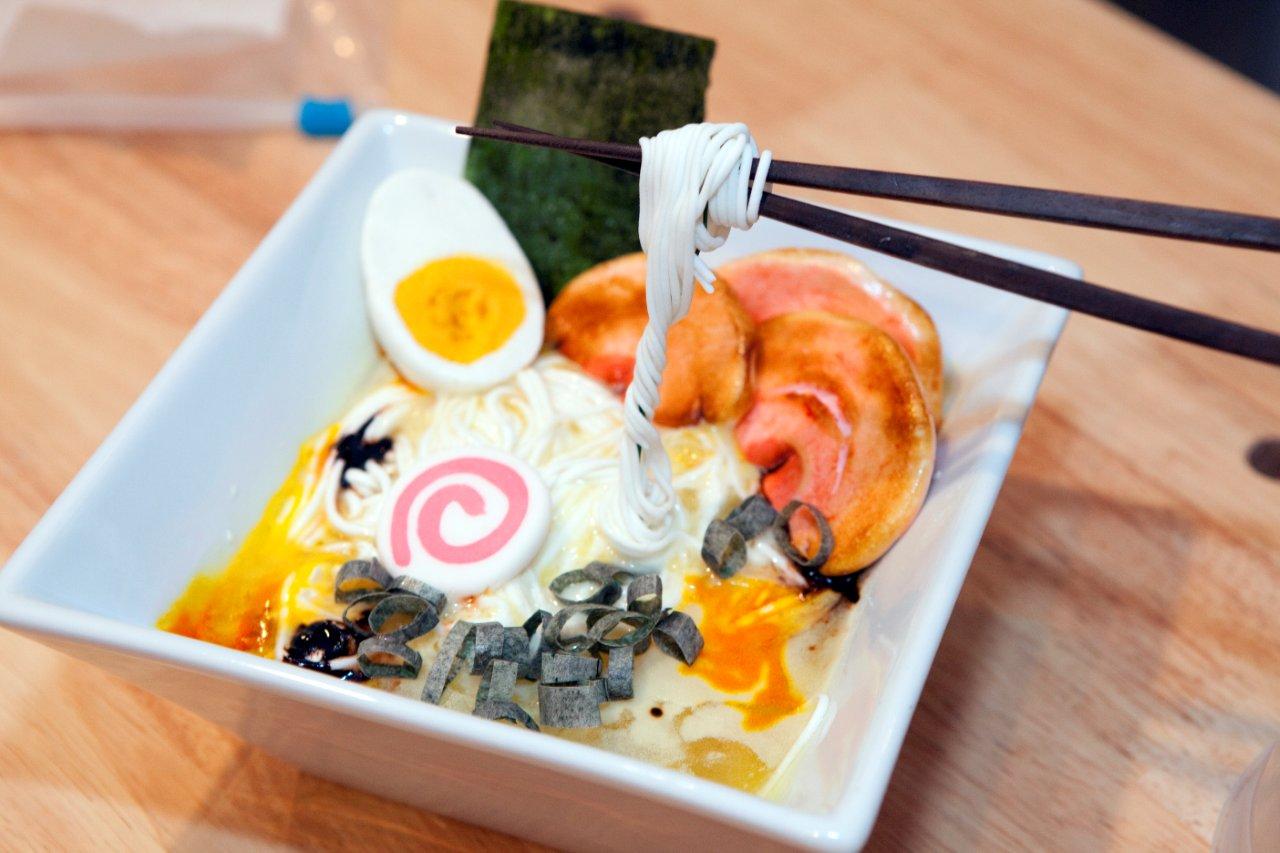
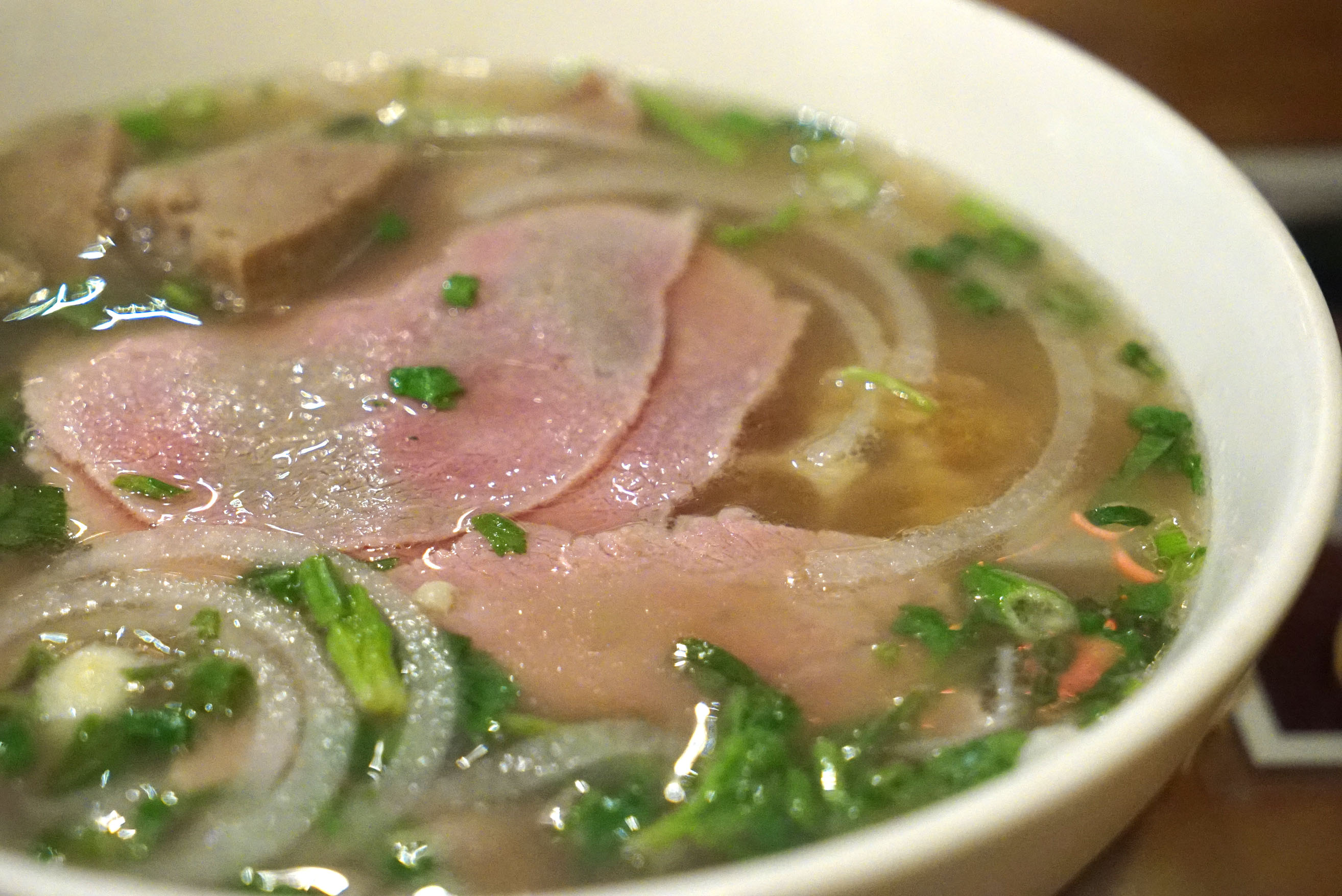
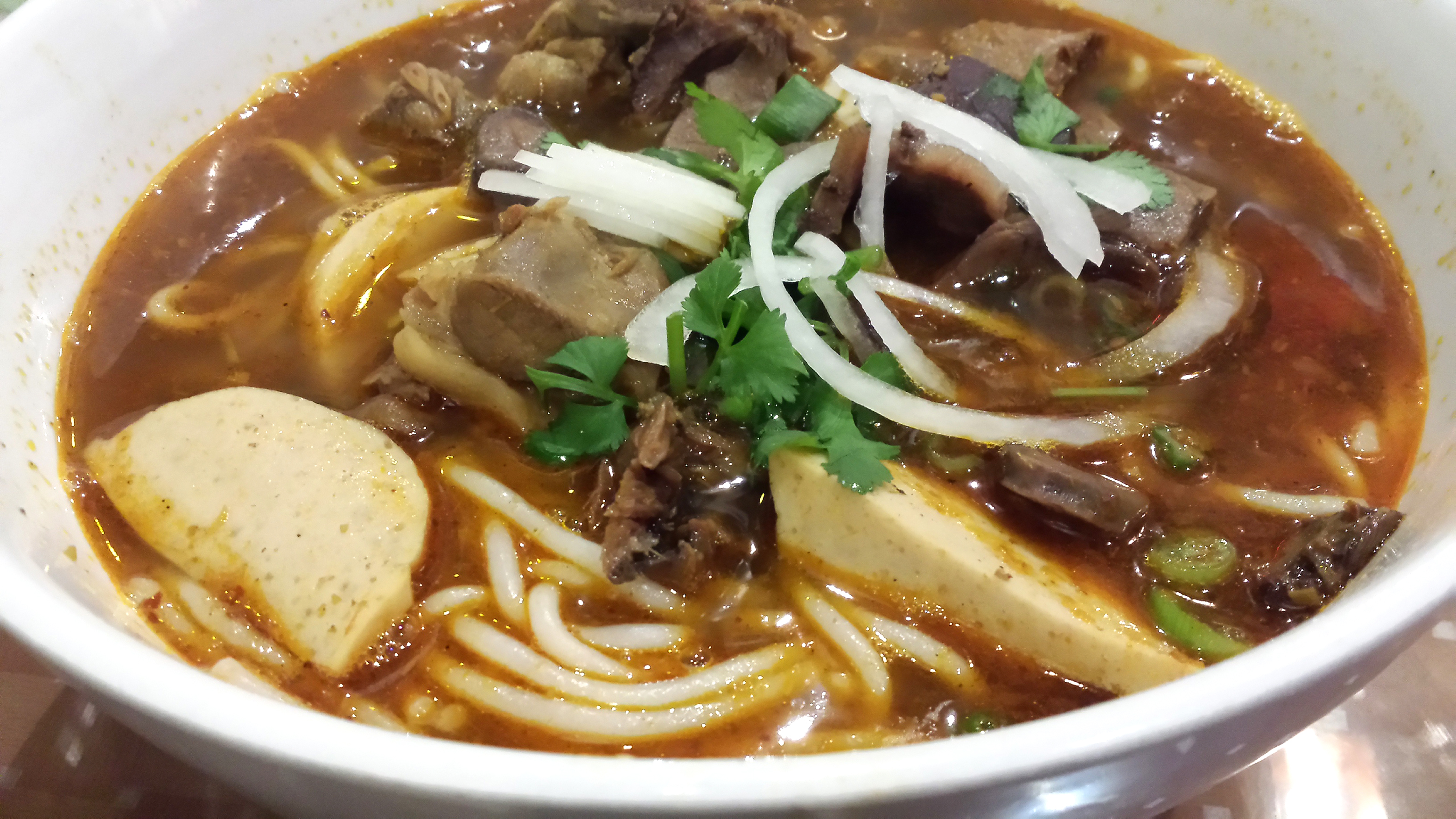
So that about does it here. If ramen isn’t your thing, but soup most definitely IS your thing, as a general matter, then there’s always pho, bun bo hue and laksa out there to soothe your hot soup needs in the cold winter weather that’s about to strike.
Strip House

Strip House overall score: 96

I’ve heard lots of good things about Strip House over the years, and I was psyched to go there and use a gift card I received for my birthday (Thanks Jackie & Mike!). Check the verdict (about as close to perfect as you can get). On my second visit, Jackie & Mike took us out for a b-day/anniversary celebration. Things are still incredible here. See the italics text below for new updates.
Flavor: 10
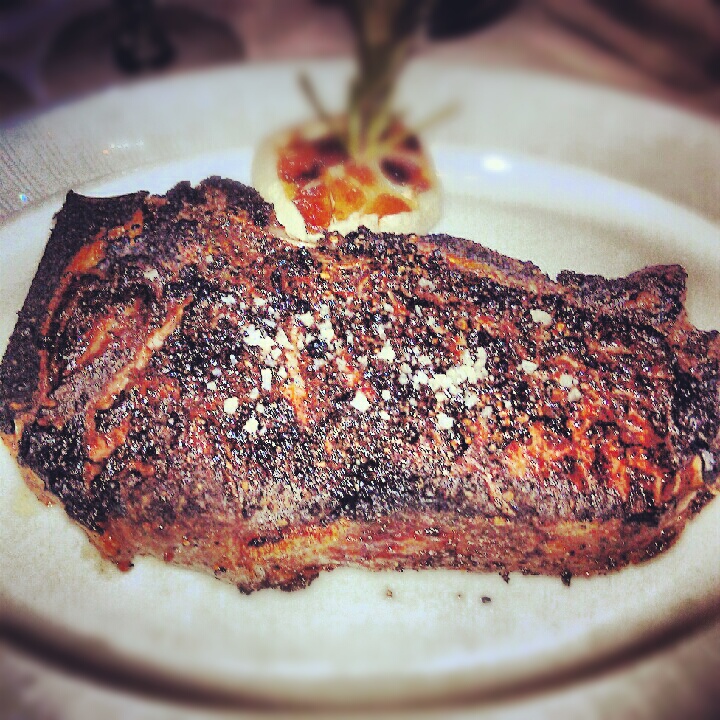
This place lived up to its expectations, and then some. The ribeye was perfectly cooked. It had a great crispy sear on the outside, and it was the perfect pink color and temperature from edge to bone, no uneven cooking, no change in texture, nothing. It had a great fat cap, and all the fat was soft and edible. There was nothing left on the bone at the end of the meal. Aside from the meat, everything else was perfect as well. This place is fucking legit. On the second visit I had the bone-in strip, and it was on par with the ribeye: amazing. Perfectly cooked, very flavorful and juicy. I tried smearing some of the mushy garlic onto a few bites and it really enhhanced the taste. I suggest trying it a little bit here and there. I had a taste of the special bone-in filet as well, and it is top notch.
Choice of Cuts & Quality Available: 9
Strip house has all four of the basics covered; porterhouse (only offered for two), ribeye, filet mignon and strip. In addition they have a Chateaubriand for two. There was no mention in the menu or on the website regarding what grade or quality the beef is, but based on the flavor I’d say it is prime. On special they even had a bone-in filet (aka “the conundrum”). A wide variety of meat sizes and flavors. The only thing missing was a porterhouse for one. On special for the second trip they also had a boneless dry aged 16oz ribeye on the menu.
Portion Size & Plating: 10
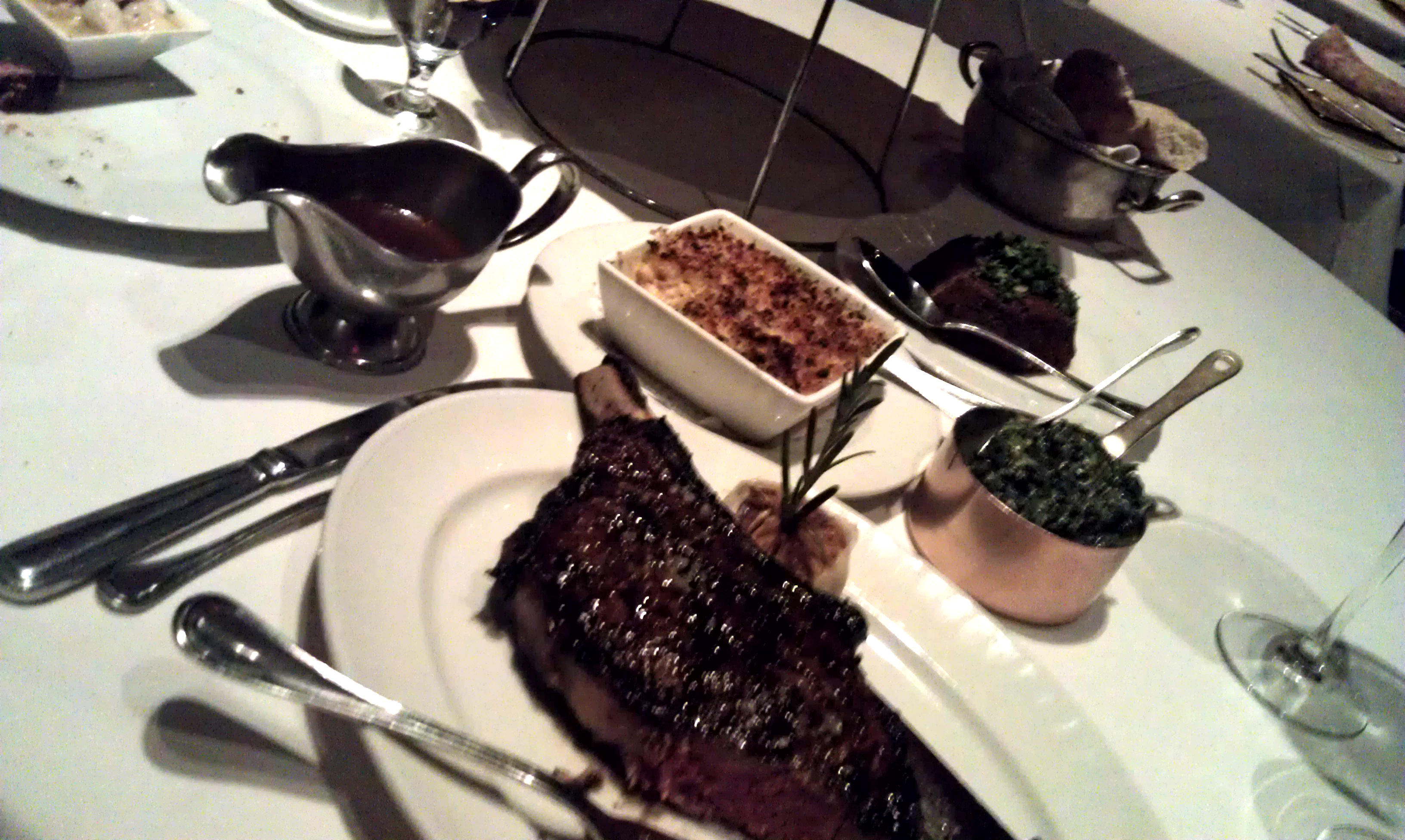
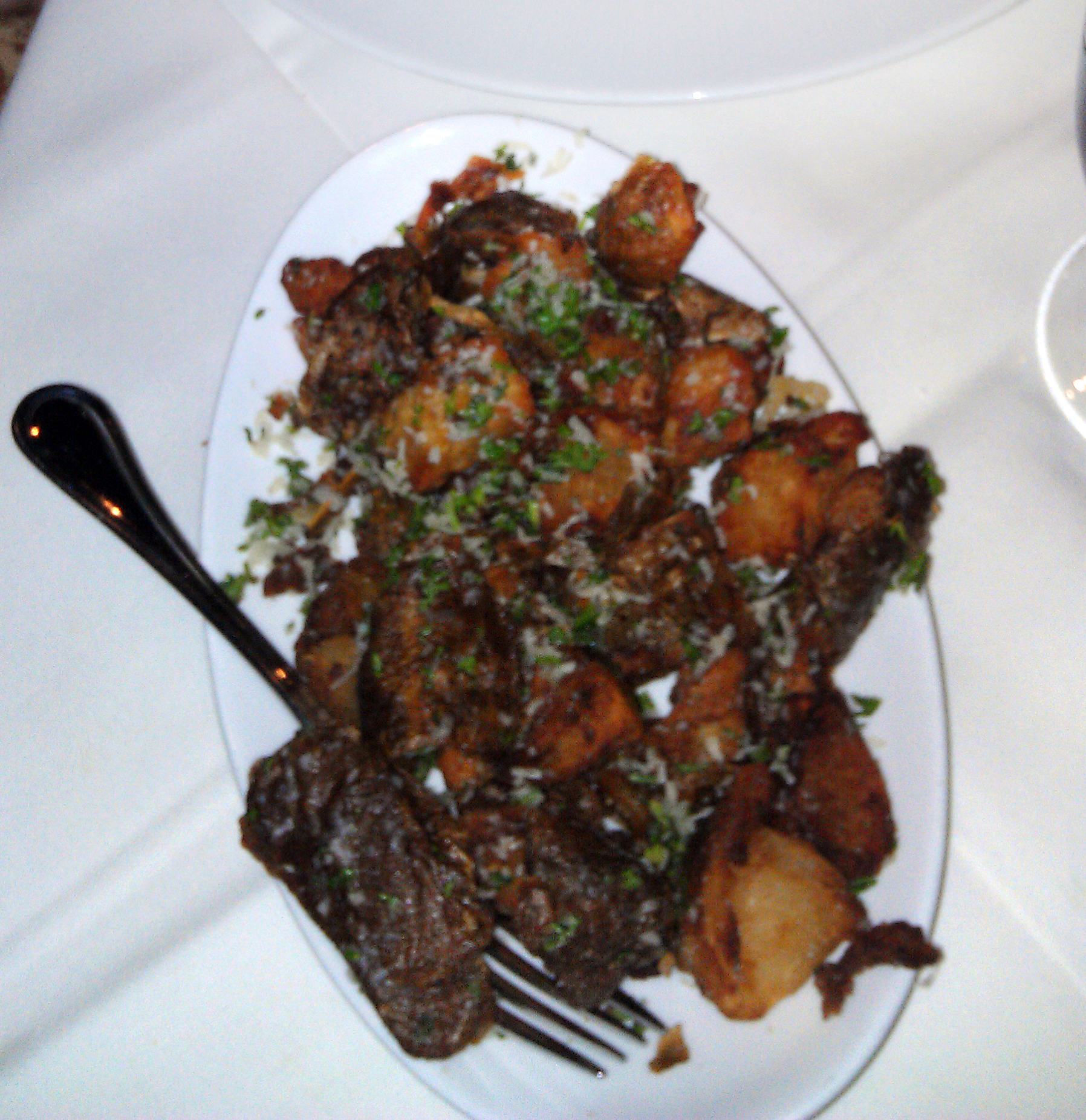
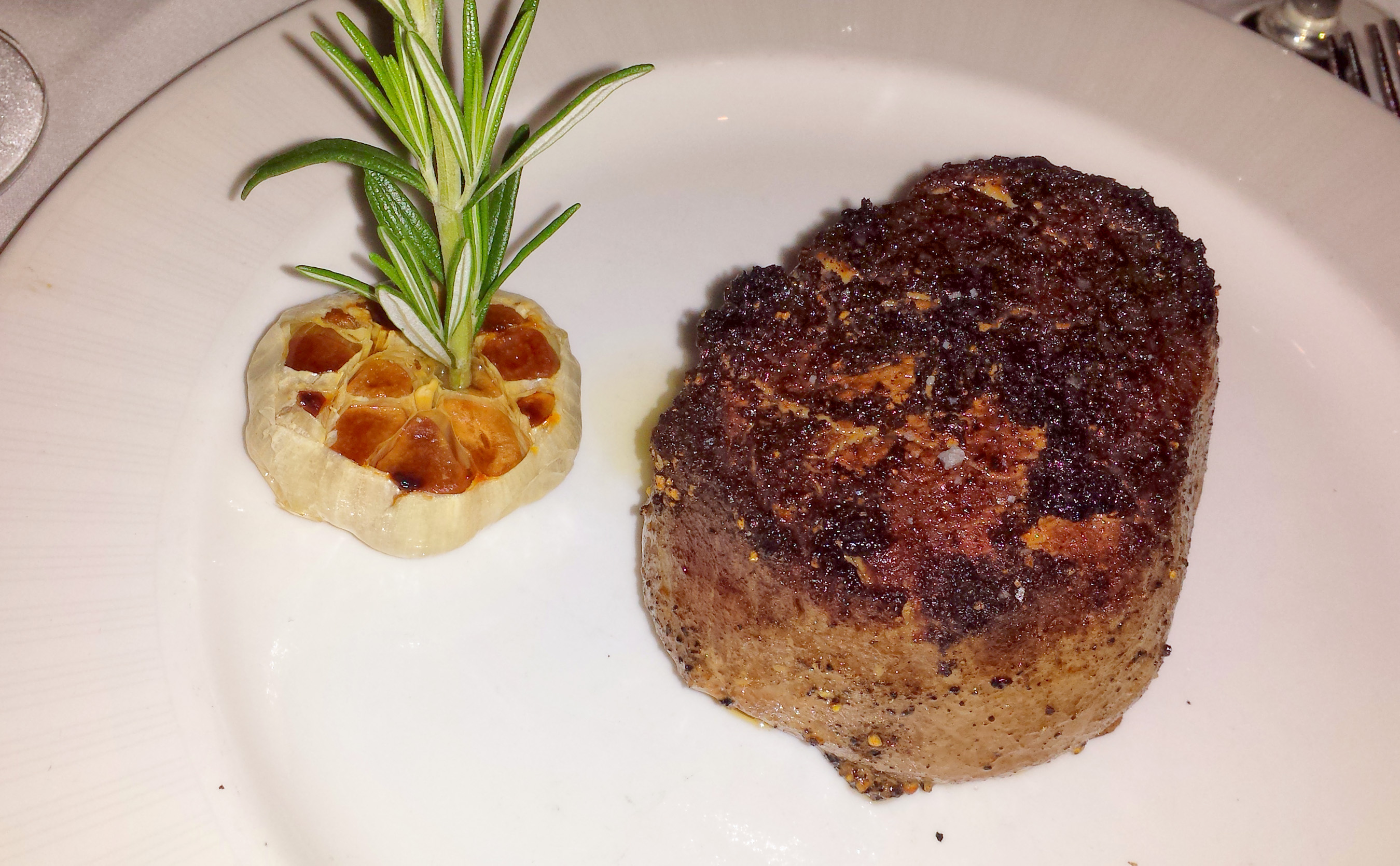
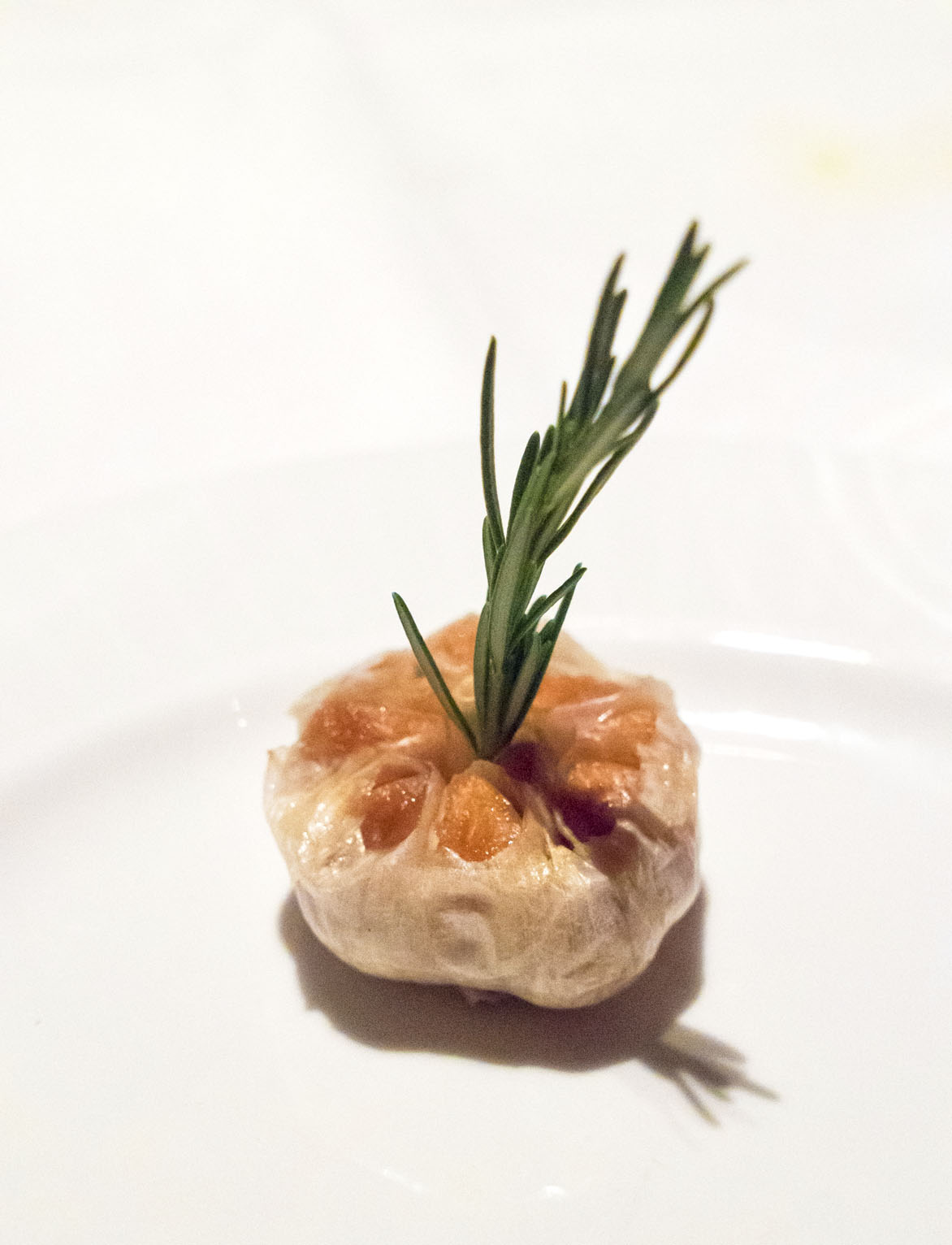
Portion sizes are just right for the steaks. The strip comes in 16oz or 20oz (bone-in) portions; the filet is either 8oz or 12oz; and the ribeye is 20oz (bone-in). The porterhouse for two is 38oz, and the Chateaubriand for two is 24oz. The garnish on the plate was a nice roasted bundle of garlic, within its paper, sealing in all the heat to make it nice and spreadable. I didn’t delve into it too much, but it was a nice touch, and it even had a sprig of rosemary sticking out so it looked like a little pine tree (rosemary) with the roots wrapped (garlic bushel). Speaking of garlic, it seemed to be a common theme on many of the plates. For example, in the crispy goose fat potato dish, garlic was sliced and fried, and placed on top with a little bit of parsley. There was also some minced garlic cooked into the sear on the steak (nice!). The garlic wasn’t overpowering at all; just prevalent. The sides were a bit on the small side in comparison to other places I’ve been, but to be honest there is enough to feed two people on any one dish. The ripped potato app is a fairly large portion, however. See pic below:
Price: 9
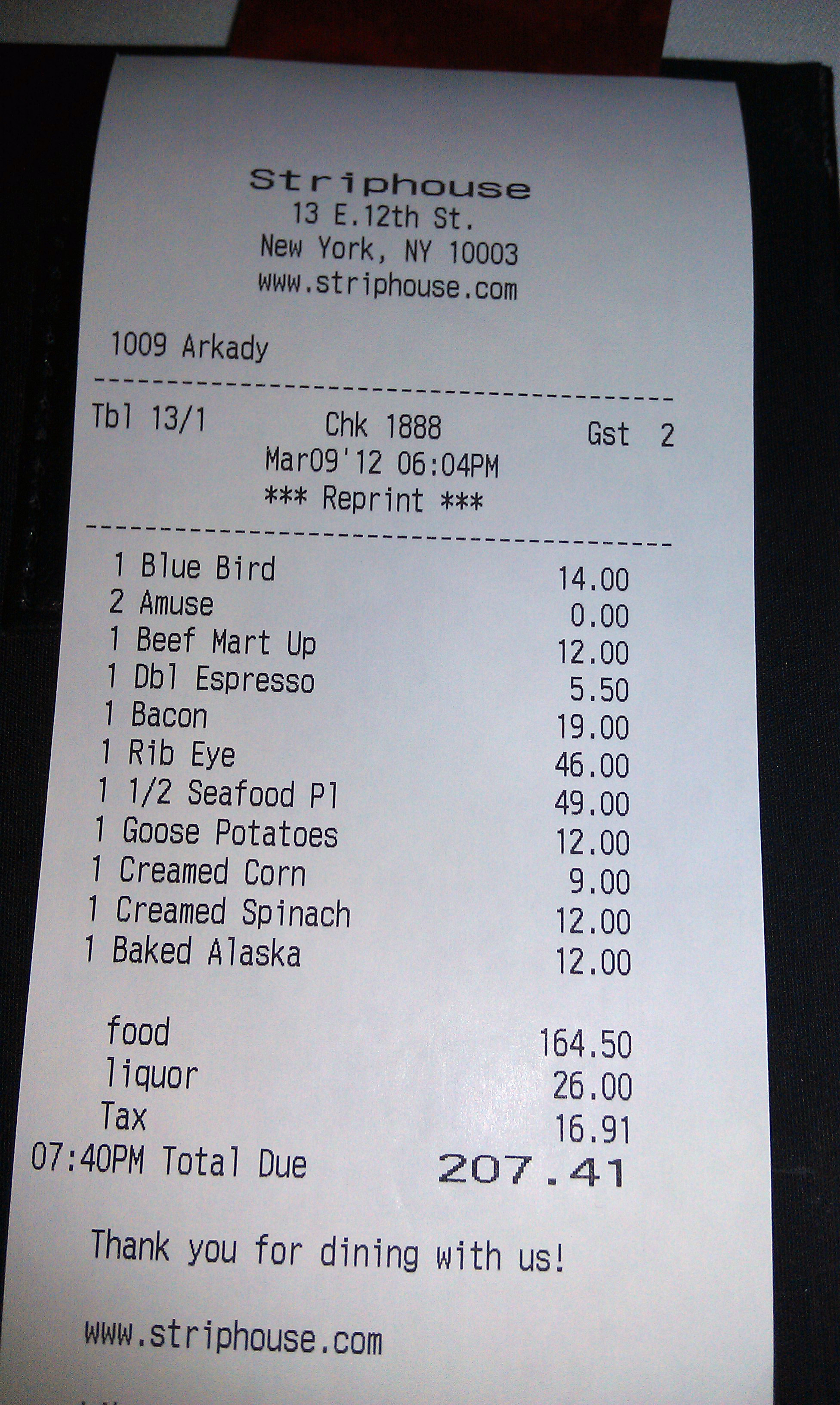
At Strip House, the price for beef ranges from $41 to $49. The filets are $41 and $45; the ribeye is $46; and the strip is $45 and $49 – the larger of the two strips (bone-in) being the most expensive cut on the menu. The porterhouse runs $45pp, and the Chateaubriand is $43pp. The special bone-in filet was $52. Apps are $11 to $19, sides $8 to $12. A martini costs $12, which I thought was fair. These numbers are about right. The total bill, after tax, tip and deduction of gift card, came to under $200. A good deal indeed, though the sides were a bit small for their respective prices. Be sure to snack on some of the candied pecans that come in a small dish with the check – they are incredible.
Bar: 9
The bar is really nice. First, the martini was made perfectly. The bartender chilled a glass while preparing the drink, and he even had the courtesy to ask if I wanted it shaken or stirred, up, or on the rocks. The decor is awesome, and the tables and couch near the bar make for a cozy yet elegant and swanky old time feel, with a nice view of the wine room near the entrance. I can definitely see myself hanging out here for a drink. I just don’t know if anyone else would be there since it isn’t in the most jumping location (though there is plenty to do nearby). The cocktail menu has a few new style drinks; interesting mixes rather than the traditional old time types of classics, but they are still good. My wife had a “bluebird sing,” which was a nice blueberry flavored drink. On my second trip they didn’t chill the martini glass, and it only came with two olives instead of three. Also noteworthy is that it went up in price by $1. I also noticed that the end of the bar is very close to the ring-up station where all the waiters and servers hang by the registers and computer screens. It can get tight over there, but the lounge seating area makes up for that.
lounge seating
Specials and Other Meats: 9
Also on the menu is a Colorado lamb rack and a veal rib chop. This place is pretty much beef and seafood only; I don’t really mind so much, but a slab of pork or some chicken would round it out better. I say man up or shut up though. Off the menu, on special, they had something for each course: a spicy crab and lobster salad, the bone-in filet, and grilled asparagus. They also had two types of oysters (east and west coasters). On special for the second trip they also had the bone-in filet again, a dry aged boneless 16oz ribeye, a spicy tuna tartare, and a seafood tower for two. We tried three of those. Mike had the bone-in filet (delicious), I had the spicy tuna tartare (very nice – spicy, cold, wrapped in thinly sliced cucumber, and dressed just right), and the ladies had the seafood tower (though the waiter was helpful in telling us it is cheaper and better to order two seperate towers for one, as you get more food for less money).
Apps, Sides & Desserts: 10
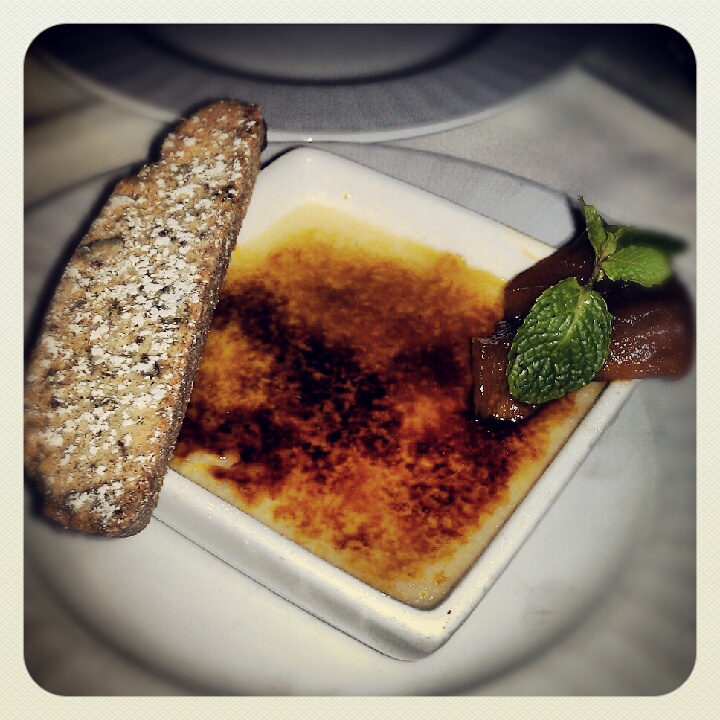
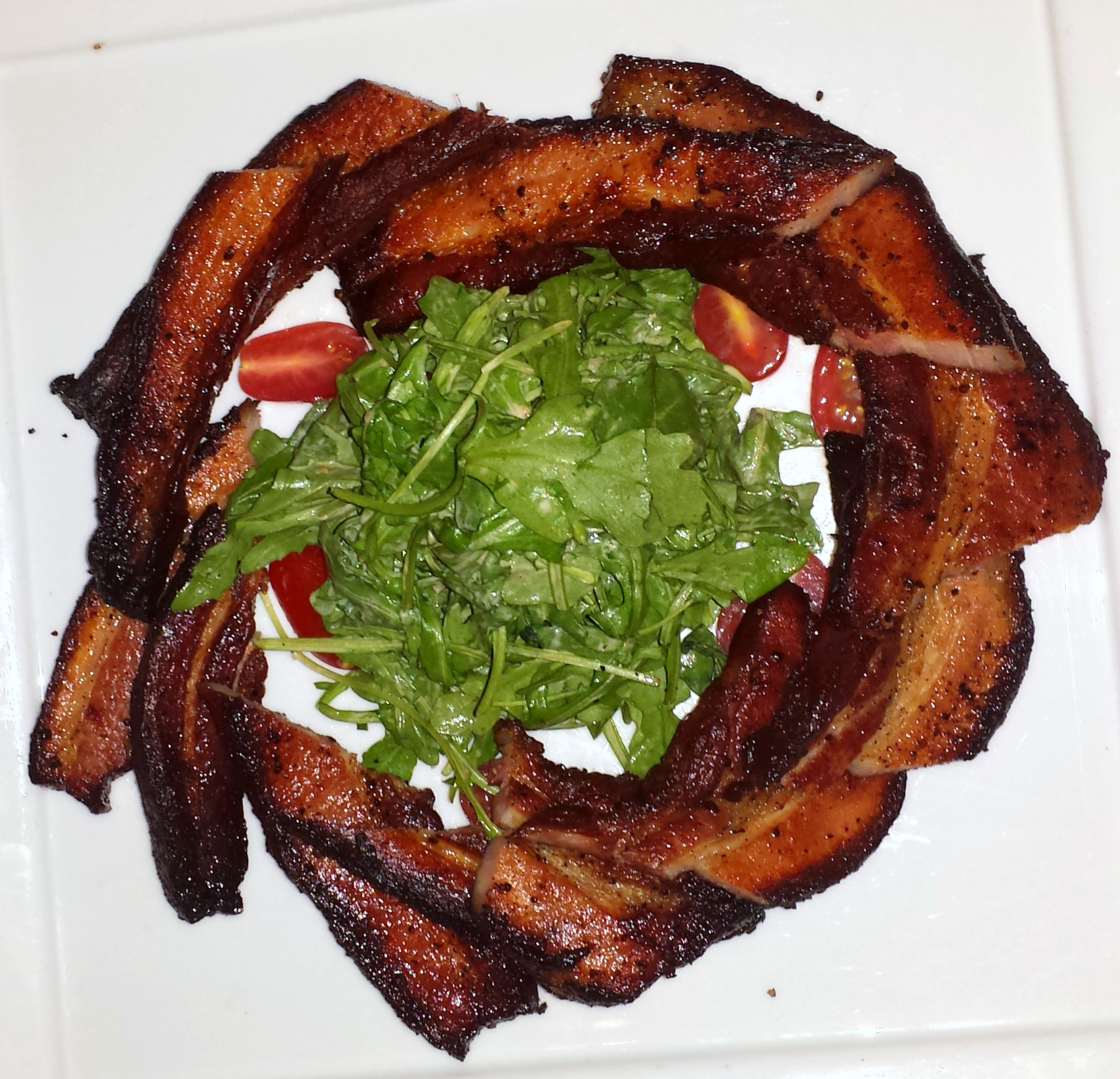
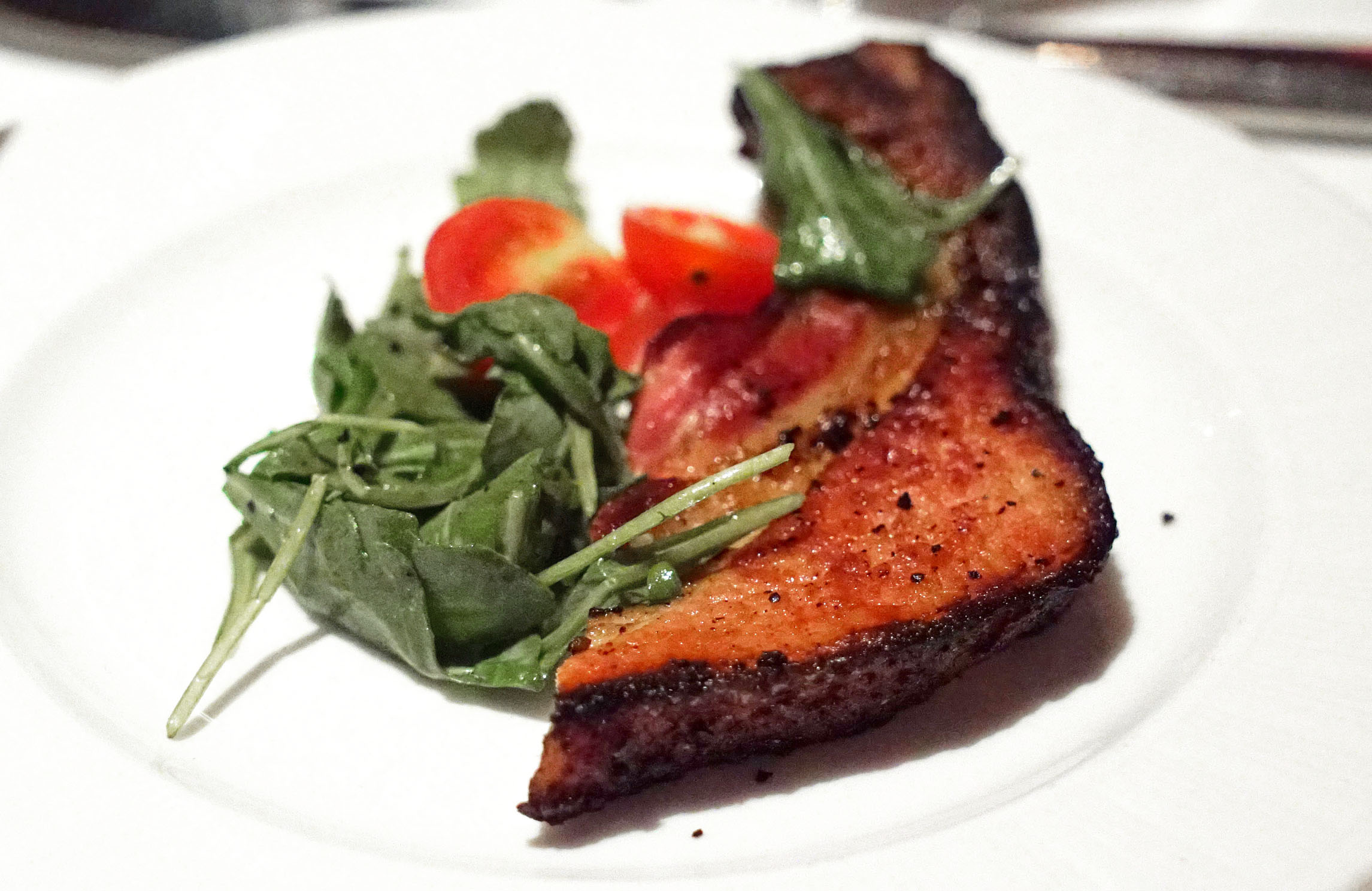
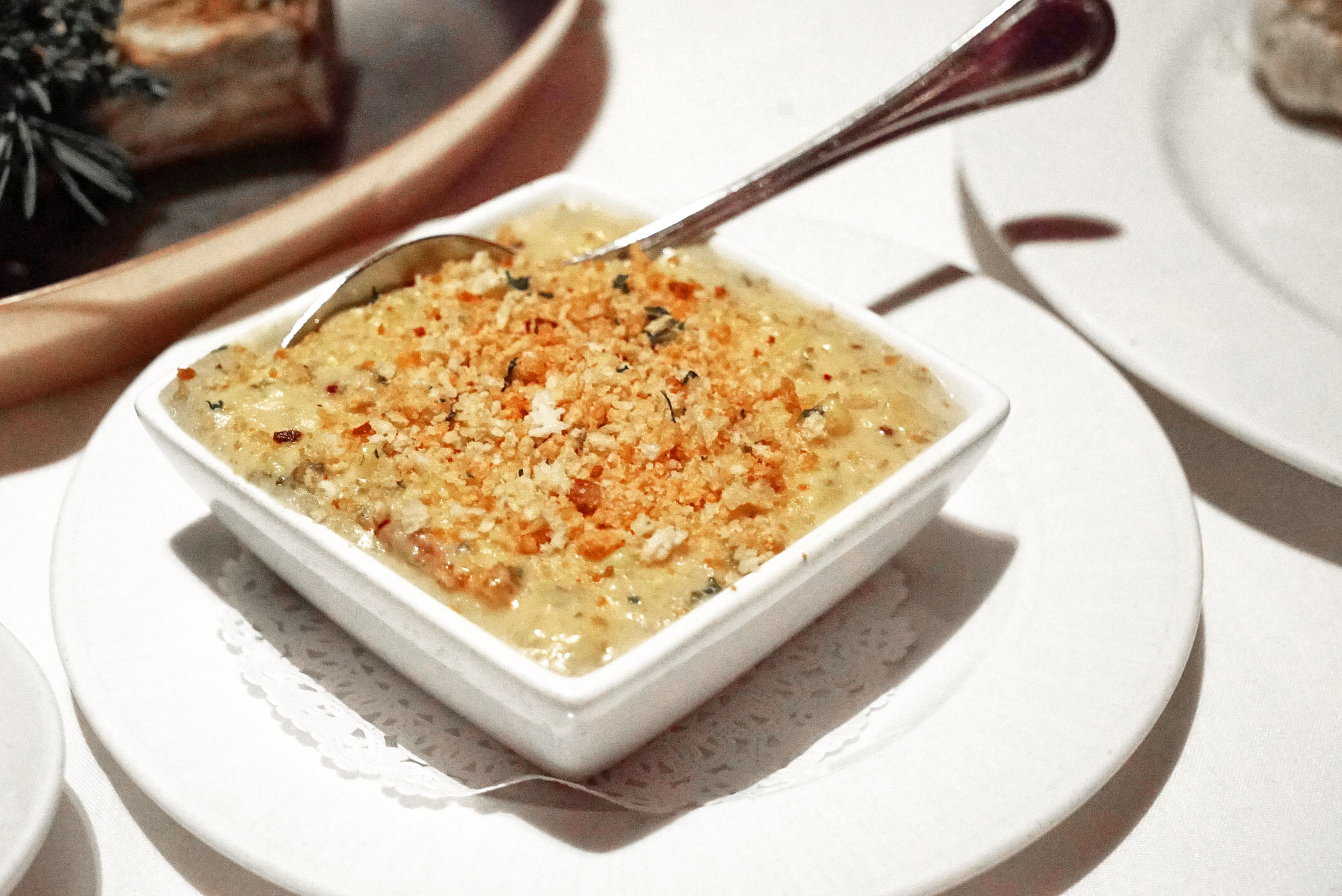
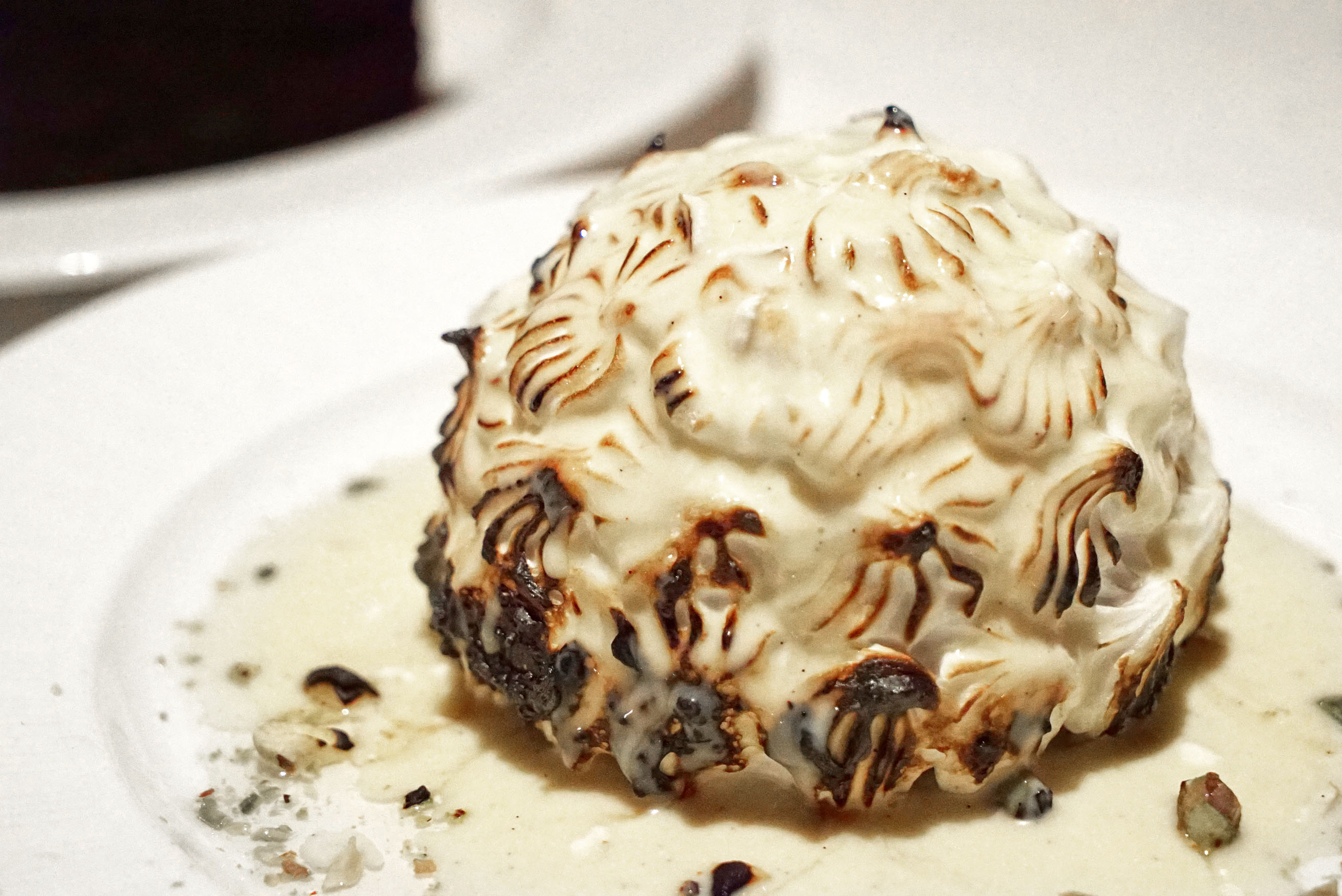
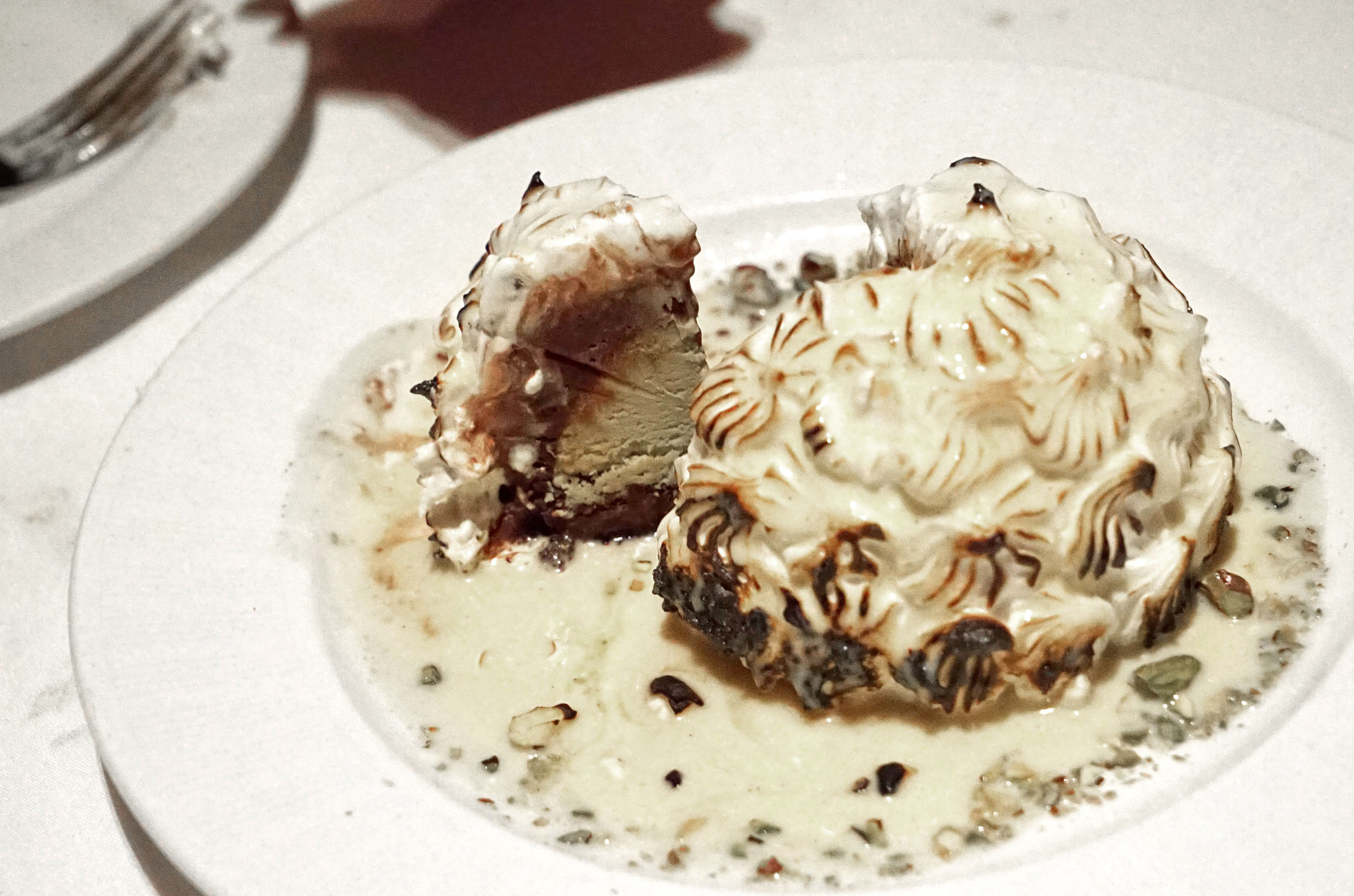
I heard a lot of really great things about the apps at Strip House before going, so I was determined to make room for a serious order. It started to become really difficult to choose. Ultimately we went with the roasted bacon for an app. It was amazing, and a good portion to match the hefty $19 price tag. It came with a nice sized arugula salad, perfectly coated with a homemade thousand island type of dressing, with halved grape tomatoes on the side. Next we had the black truffle creamed spinach, which was rich and creamy but not overpowering. You could definitely taste the truffle in there, and it was served in a cool miniature copper pot. Then the creamed corn with pancetta; it was deliciously topped with a crispy crumble, like mac & cheese. And finally an order of the crispy goose fat potatoes. Yum! They seemed to be baked in a ramekin of some kind, because every side of the upside-down-pie-shaped disc was perfectly crisped to a brown color. The potatoes themselves had a rich goosey flavor, with a heavy dose of rosemary infusion. We were temped to order the ripped potatoes too (baked potato, ripped apart and deep fried with a rosemary salt). For dessert we had baked Alaska; chocolate ice cream with layers of pistachio, topped with brulee’d meringue and sitting in a pool of pistachio cream. One thing to note was that the menu online was different than the one at the restaurant (changes for the better, for the most part). One item missing was the house cured beef jerky, which I would have liked to try. For round two the only new item we tried was the ripped potato for an app. It was really crunchy on the outside, soft on the inside, seasoned just right. Delicious.  It may have benefitted from a little dish of sour cream on the side though (see a pic under the “portion size” section). For dessert we had the creme brulee (which I thought was more like flan and not as thick as I like it inside). It was okay, but a little too thin for my liking.
creme brulee
Seafood Selection: 10
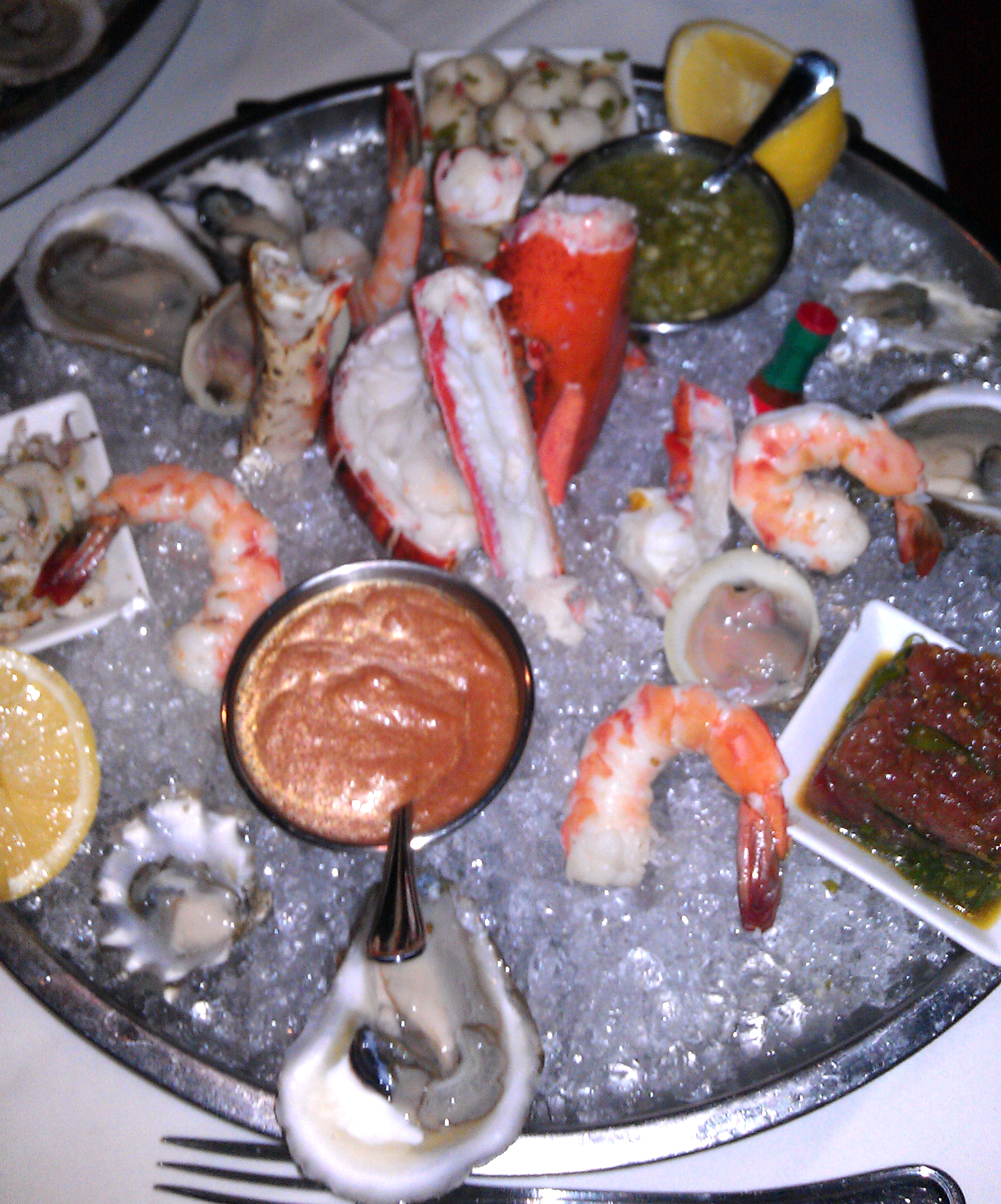
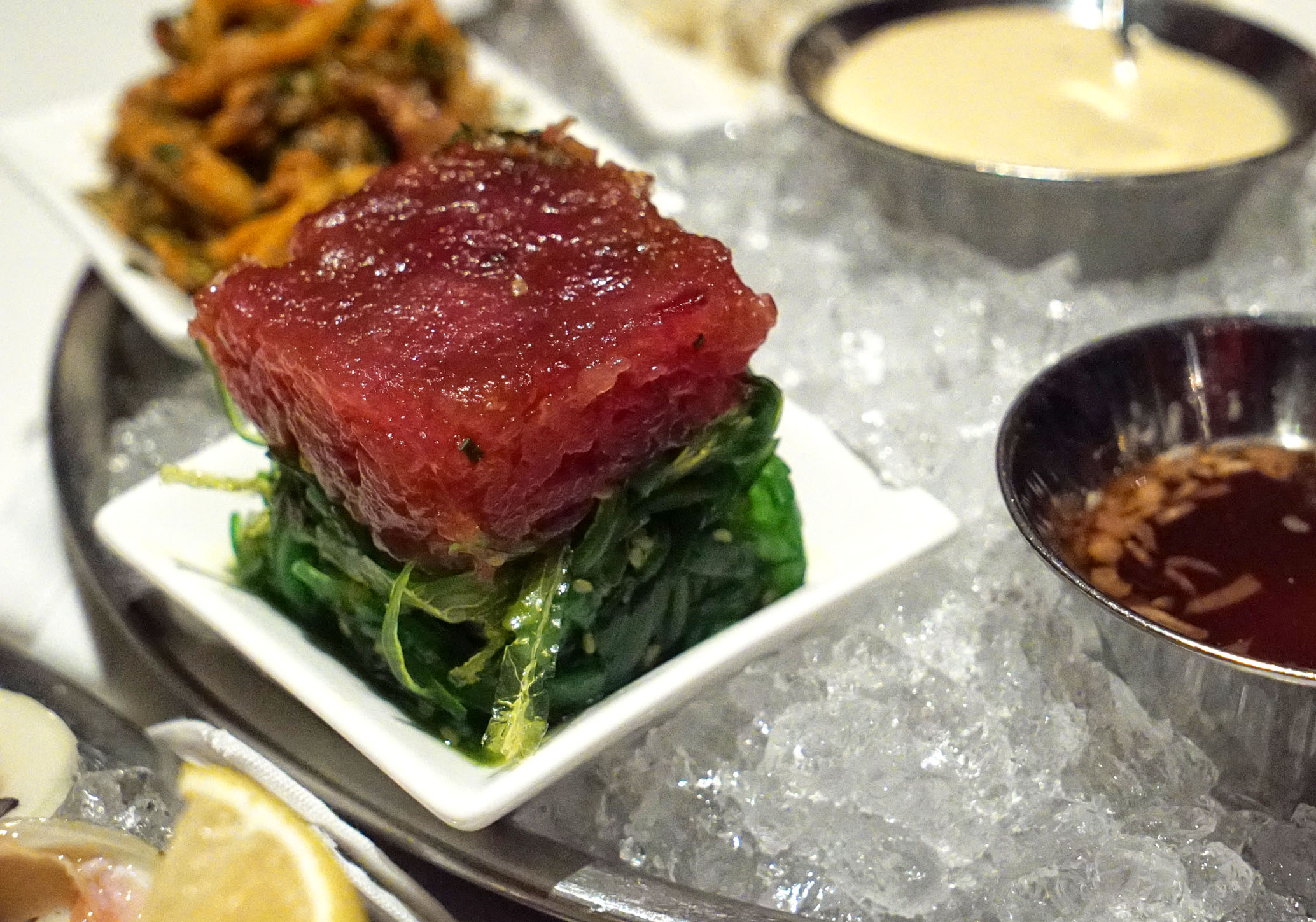
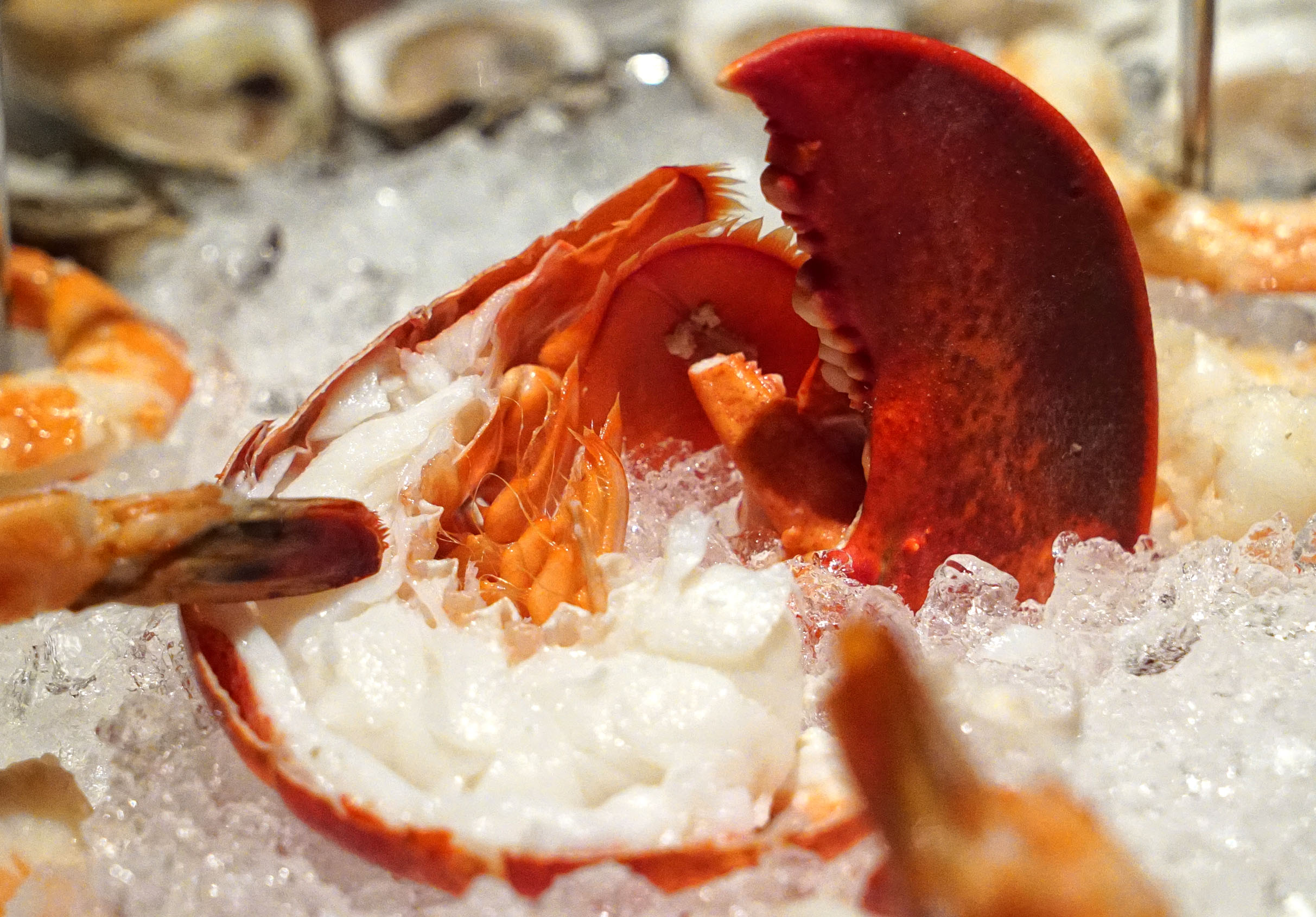
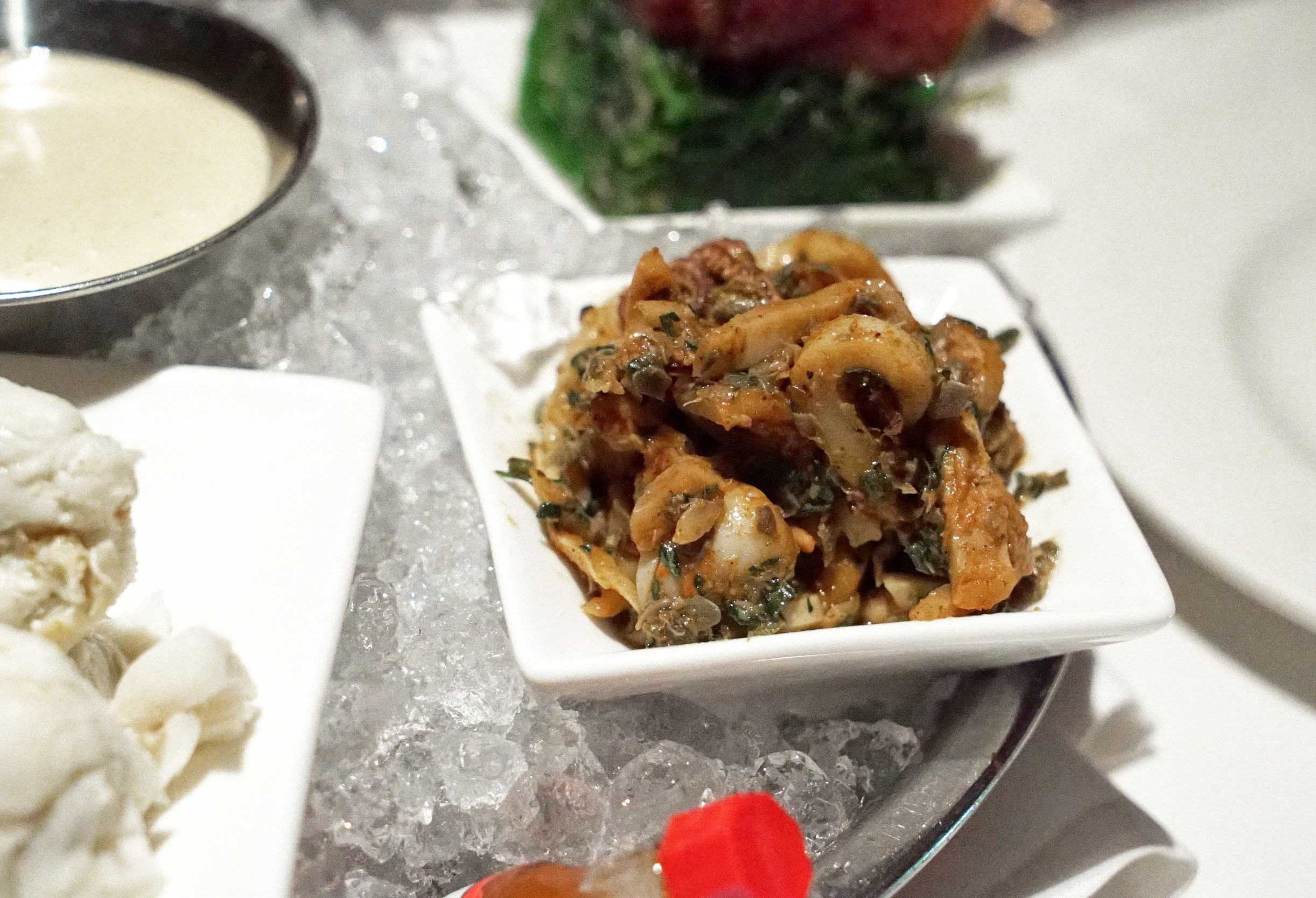
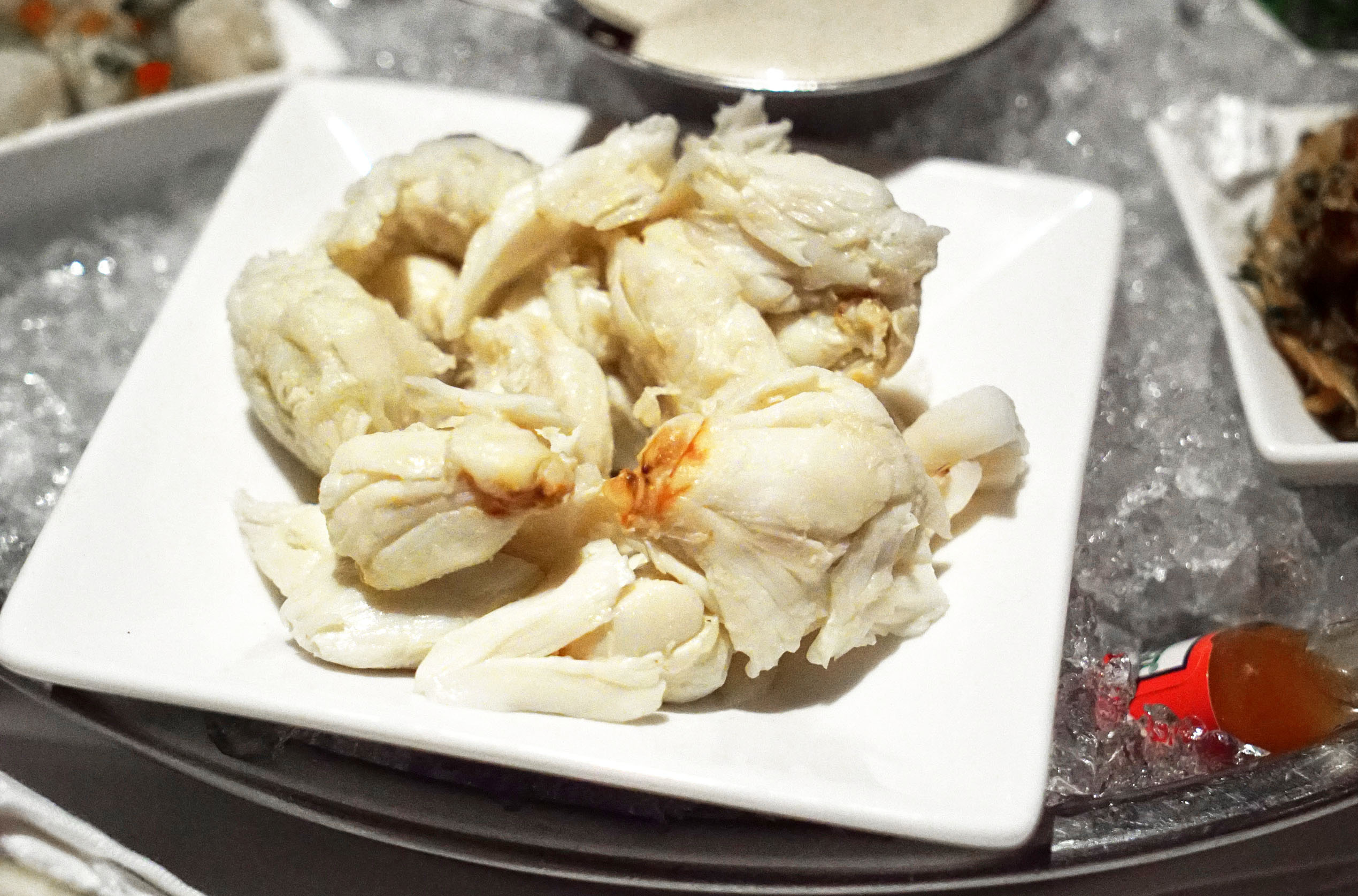
Strip House has a nice seafood selection. Shrimp, crab cakes, scallops, and a seafood plateau for apps (along with lobster bisque); Yellow fin tuna and red snapper were mentioned on the menu online, but in the restaurant they had crispy skin Scottish salmon, and a sea bass entree. Solid change up. They also had Maine lobster (2- and 3-pounders) for entrees (along with a lobster linguine). They had a good selection of oysters and shellfish too, but the real kicker was the seafood plateau. Holy shit, my friends. Here is what was on the saucer of goodness: tuna tartare on a bed of seaweed salad; grilled calamari salad; lump crab meat ceviche; shrimp cocktail; a half lobster; a generous amount of Alaskan king crab legs; east and west coast oysters; and littleneck clams. It seemed never ending, and totally worth the $49 price tag. It came with an array of amazing sauces; a home made cocktail sauce that was creamy and generous with freshly grated horseradish; a cucumber vinegar bath; and of course the steak sauce (not with the plateau), which really was amazing with the seafood rather than the meat. Let’s put it this way: it makes Luger’s sauce look like bottled ape shit.
Service: 10
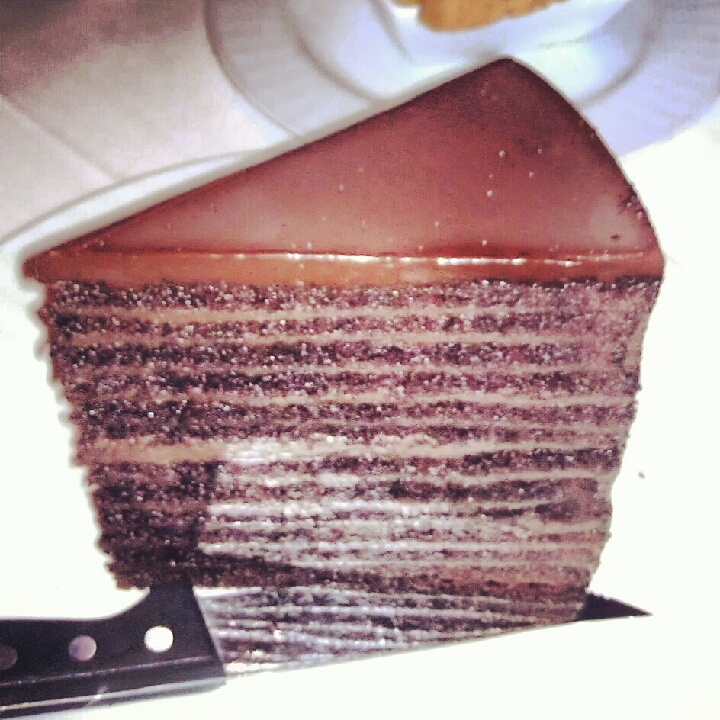
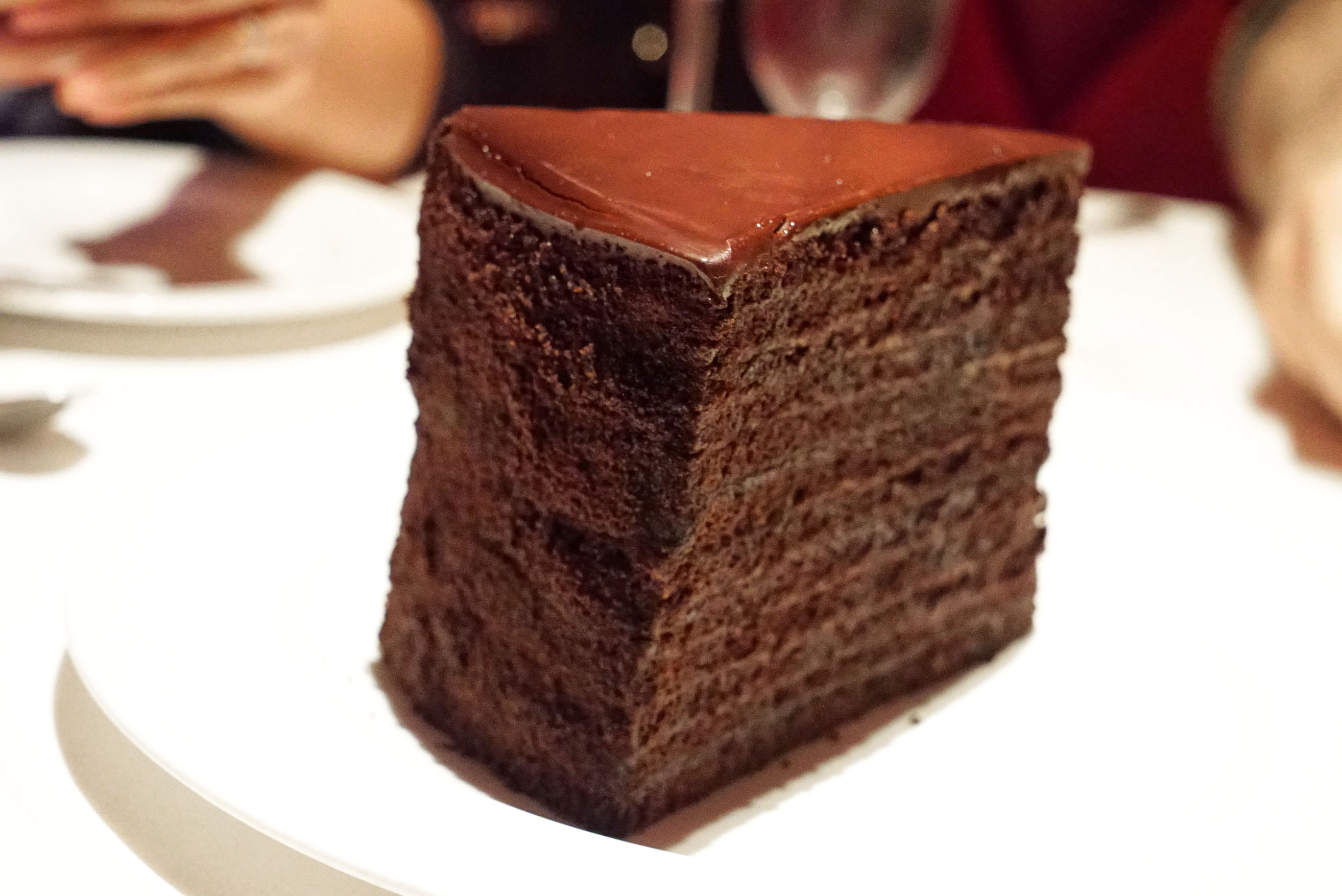
The service was fantastic. The waiters (and waitress) all had old fashioned period piece white jacket tuxedos on, and they all knew their shit when it came to meat, their preparations, etc. They were attentive but not annoying, and EVERY SINGLE PERSON WE WALKED PAST said HAPPY ANNIVERSARY to us, just because we mentioned it when making an online reservation. These people are classy. Our meal came with an amuse too – a shot of hot potato soup that was bacony and smoky as heck. Really delicious, though it could have been a bit smoother. The table breads were not only good, but they were REPLENISHED after we finished them (butter was a little hard though). There was an everything style onion roll with fresh charred onions and spices on top, a crispy raisin bun, and a log of salty bagel bread. The second trip was no different as far as service goes; only this time the amuse was a cool gazpacho instead of a warm potato soup. One bonus was that the waiter informed us it was cheaper and better to order two seperate seafood towers for one instead of the special tower for two – thanks buddy! In the lead up to the meal, a BR Guest PR person on Yelp found my reviews of Primehouse and Strip House, and wrote a nice response email to me. We had a conversation and it came out that I was about to eat at Strip House again that evening. She poked around the guest list and discovered that we were celebrating a birthday, so I knew we were in for some extra attention. As it turns out, they sent us a free slice of 24 layer chocolate cake. See below:
Service here never misses the top marks. When I came with a group of five guys, our waitress Asthma really knew her stuff and was incredible. I even noticed that when the sommelier helped us choose between two bottles of wine, he didn’t try to upwell us on one just because it was $5 more. He actually told us he preferred the cheaper bottle better and told us why. I like that.
Ambiance: 10
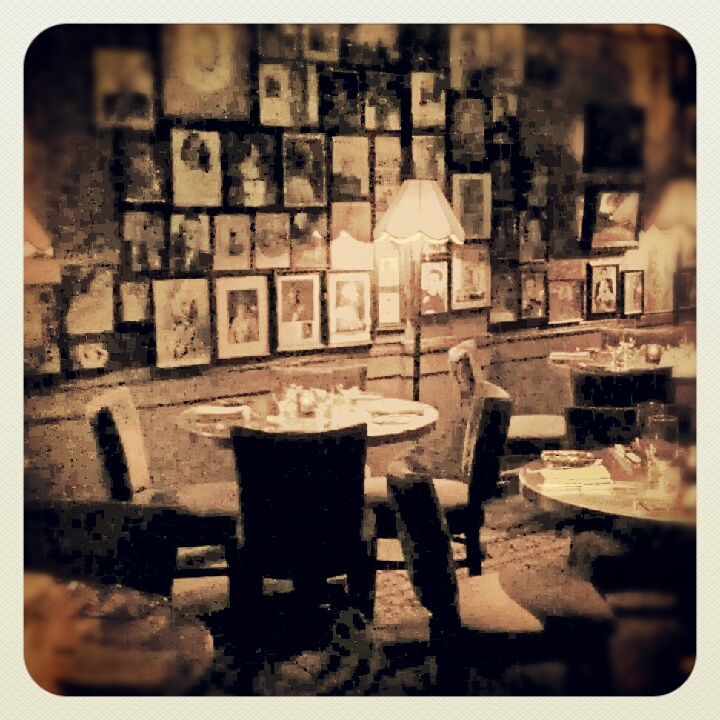
When you walk in, you feel like you just entered a movie set, or a place ripped right out of the old days. The walls are a deep wall-papered and patterned red. It is cozy and warm, but elegant. The filigree wallpaper even matches the cloth napkins at the table, and framed portraits of old timey nekkit ladies grace the walls, covering nearly every square inch with history. The cushions on the wall seats are a pillowed red; very art deco. The only thing that seemed out of place was the high-school style speckled large-tile floor. The bathroom was nice and fancy, old fashioned too, but a little small.
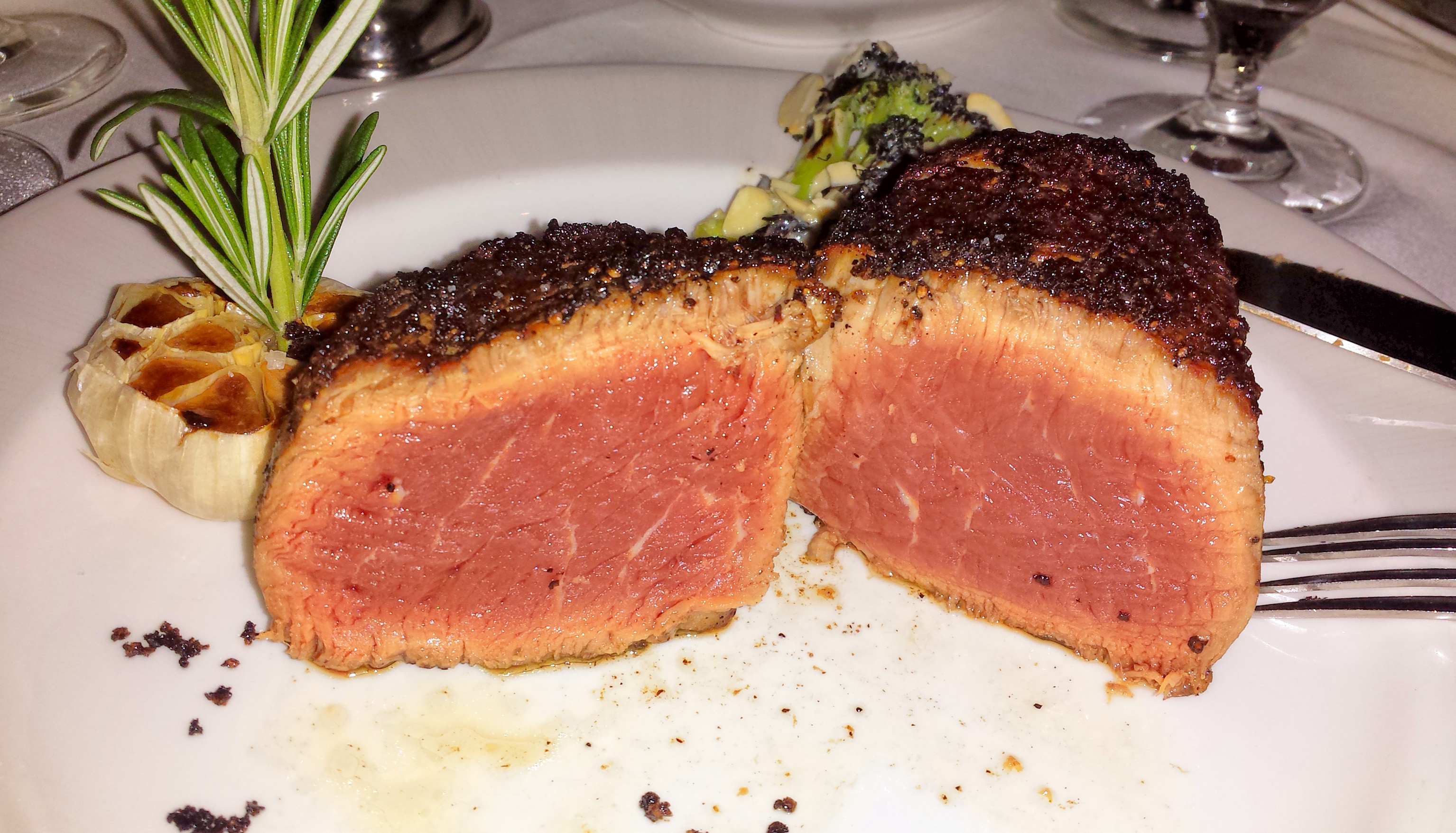
On my last visit, I had the filet mignon cooked crispy on the outside and rare on the inside. It was perfectly executed to my specifications.
strip house filet
strip house filet cut
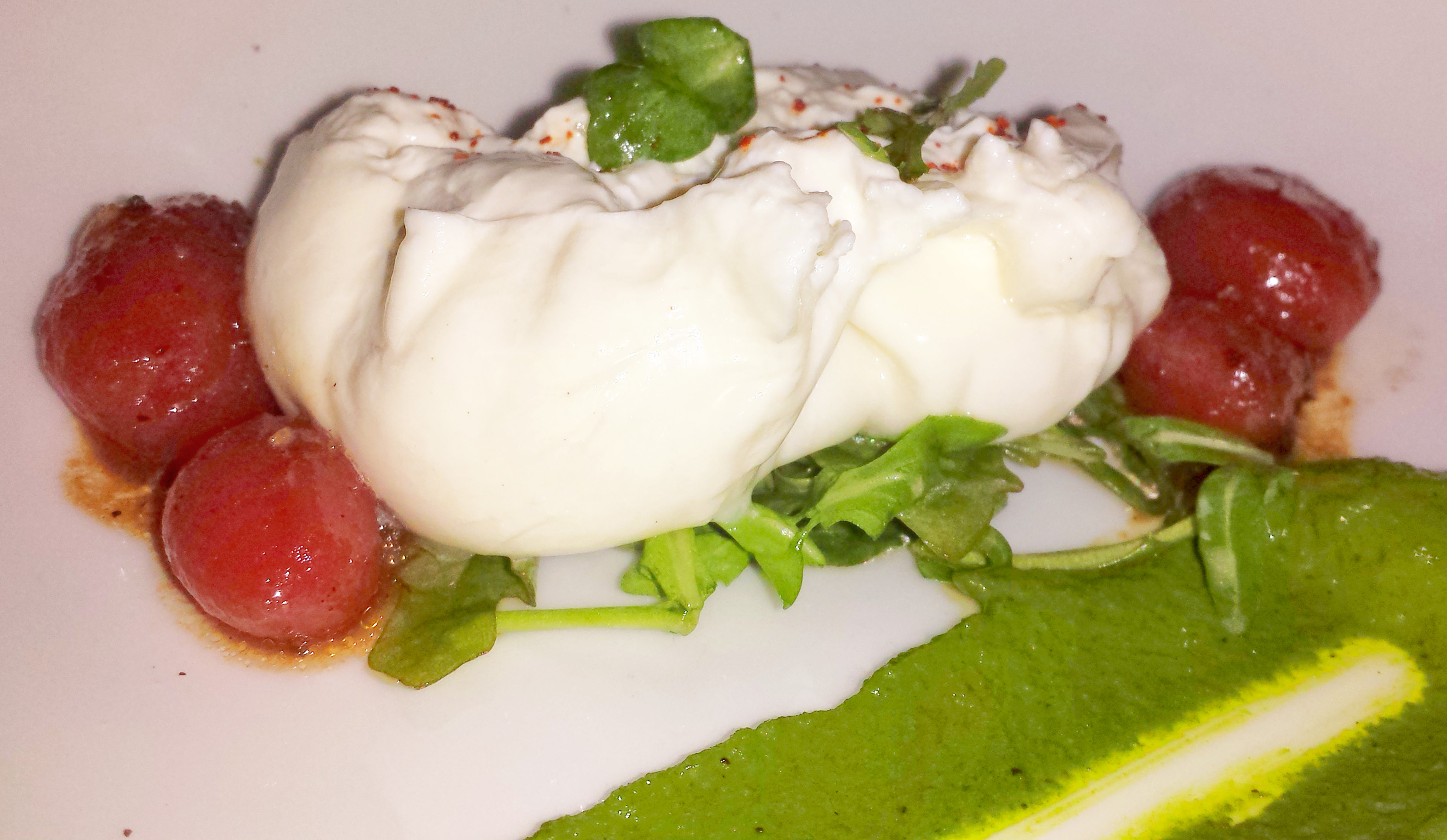
My buddies and I tried the burrata app, which was super soft and flavorful. I could eat this every day and never get sick of it.
strip house burrata
As always, the bacon was incredible as well:
strip house bacon

UPDATED REVIEW AND PHOTOS as of 12/4/2015

My wife shared an article with me that detailed Chef Michael Vignola’s new 60oz bone-in filet mignon. At a cost of $183, I immediately took to the phones to set one aside for a group of four meat enthusiasts: me, The Cake Dealer, The Dishelin Guide and Matt Bruck.

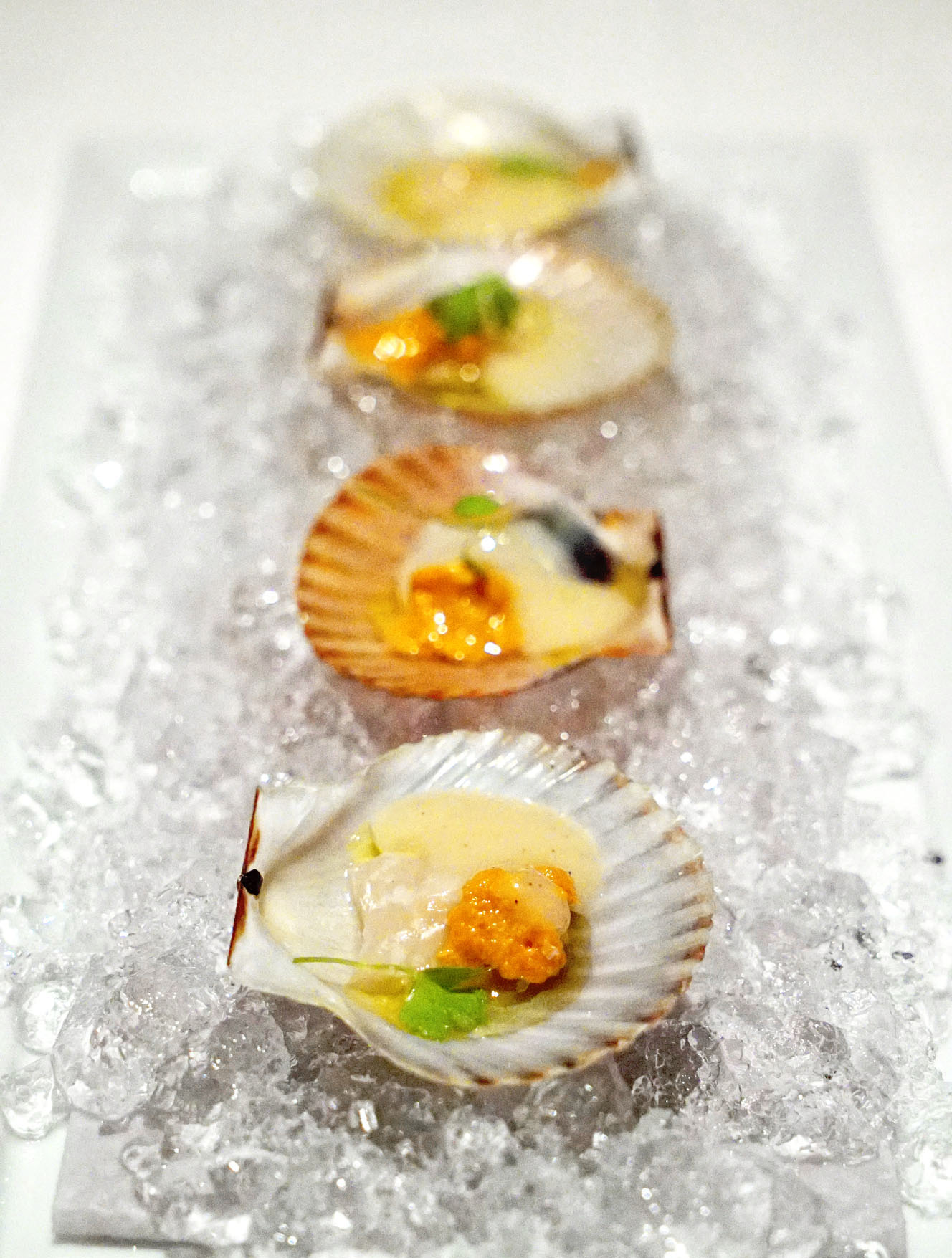
Chef Vignola passed the torch off to Chef Andreas Seidel for the evening. Really great guy – Andreas and his team treated us like absolute kings! He brought out some really nice scallop crudo with uni and yuzu cream sauce for us to try. Very smooth and bright.

DSC09310

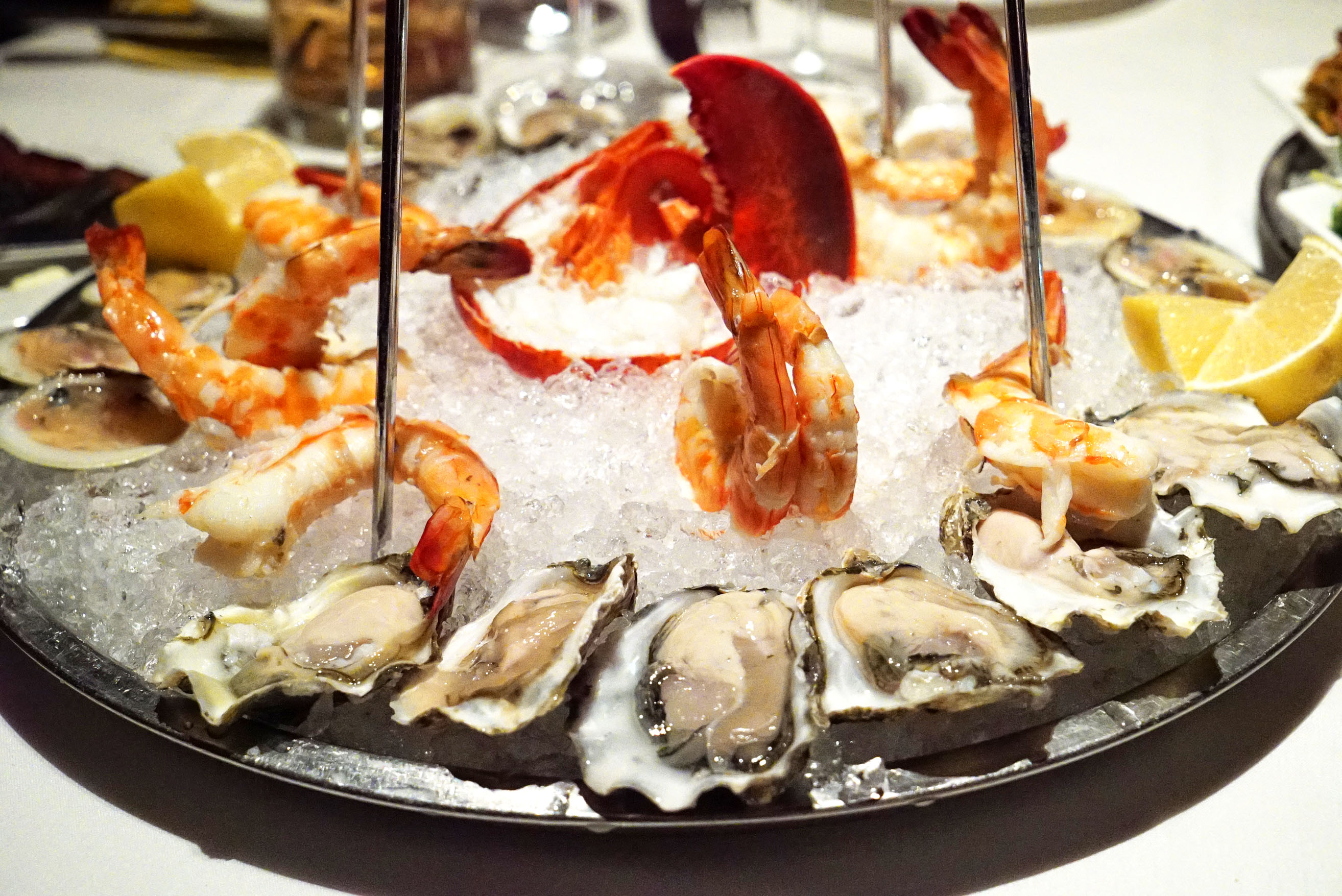
We also ordered the large seafood plateau.

DSC09318

DSC09319

DSC09320

DSC09321

DSC09322

DSC09323

DSC09324

Everything on it was top quality, super fresh and very tasty.

Andreas also brought out some bacon for us to gnaw on. Always a great thing…

DSC09326

Here’s the filet – that massive hunk of delicious, tender meat – prior to the table side slicing.

DSC09329

DSC09332

DSC09334

60oz Filet Mignon Slicing & Serving Video:

Standard issue plating at Strip House is this buttery smooth roasted garlic with a sprig of rosemary. I love this…

DSC09327

Here’s my plate:

DSC09345

There was a ton of flavor on the outside crust, but that meant I had to cut and portion carefully so as not to have a bite of all center with little seasoning. The meat was super tender and absolutely fatless. It was aged, so any fat that may have been in there melted away, leaving behind a dense, meaty and super soft hunk of beef.

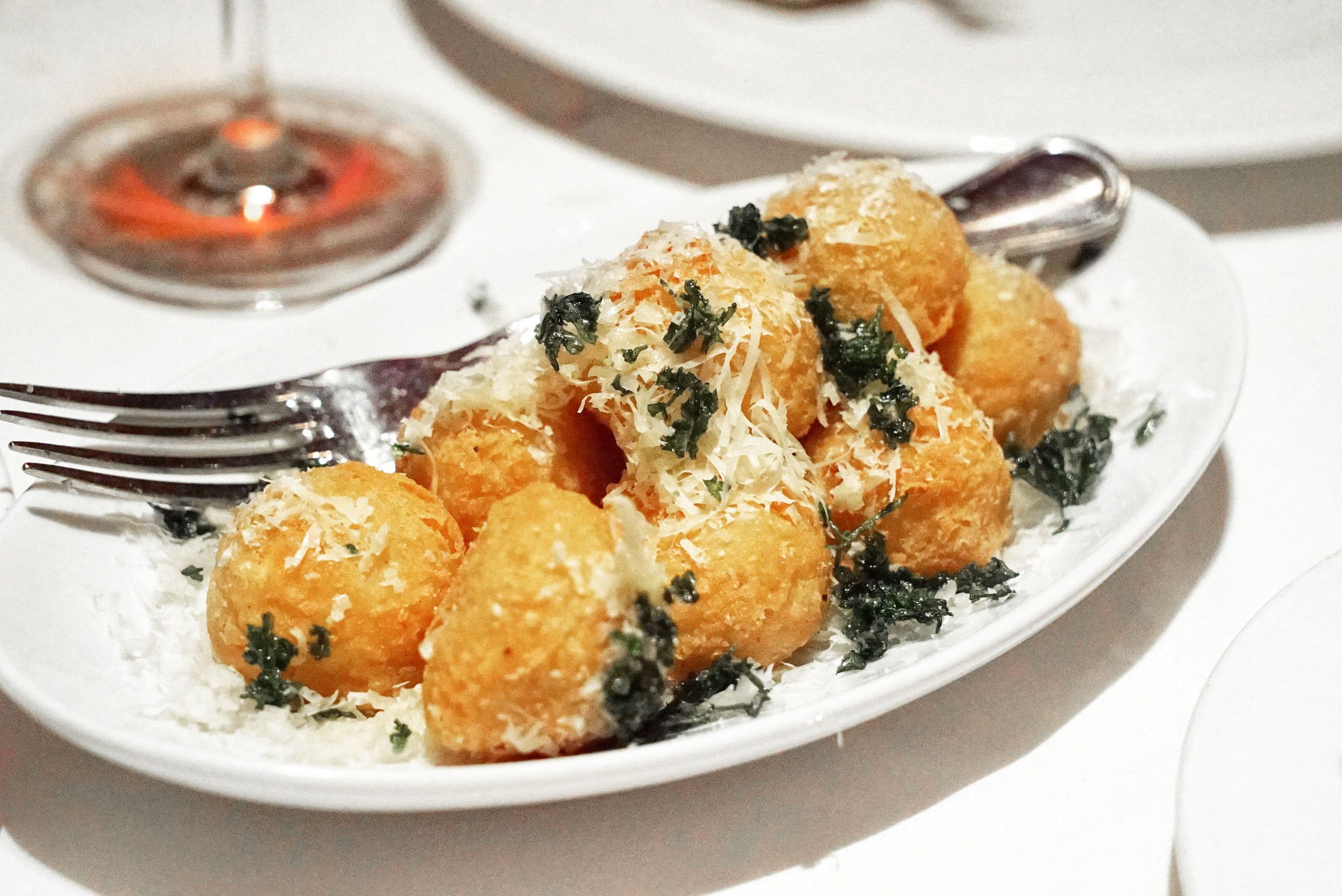
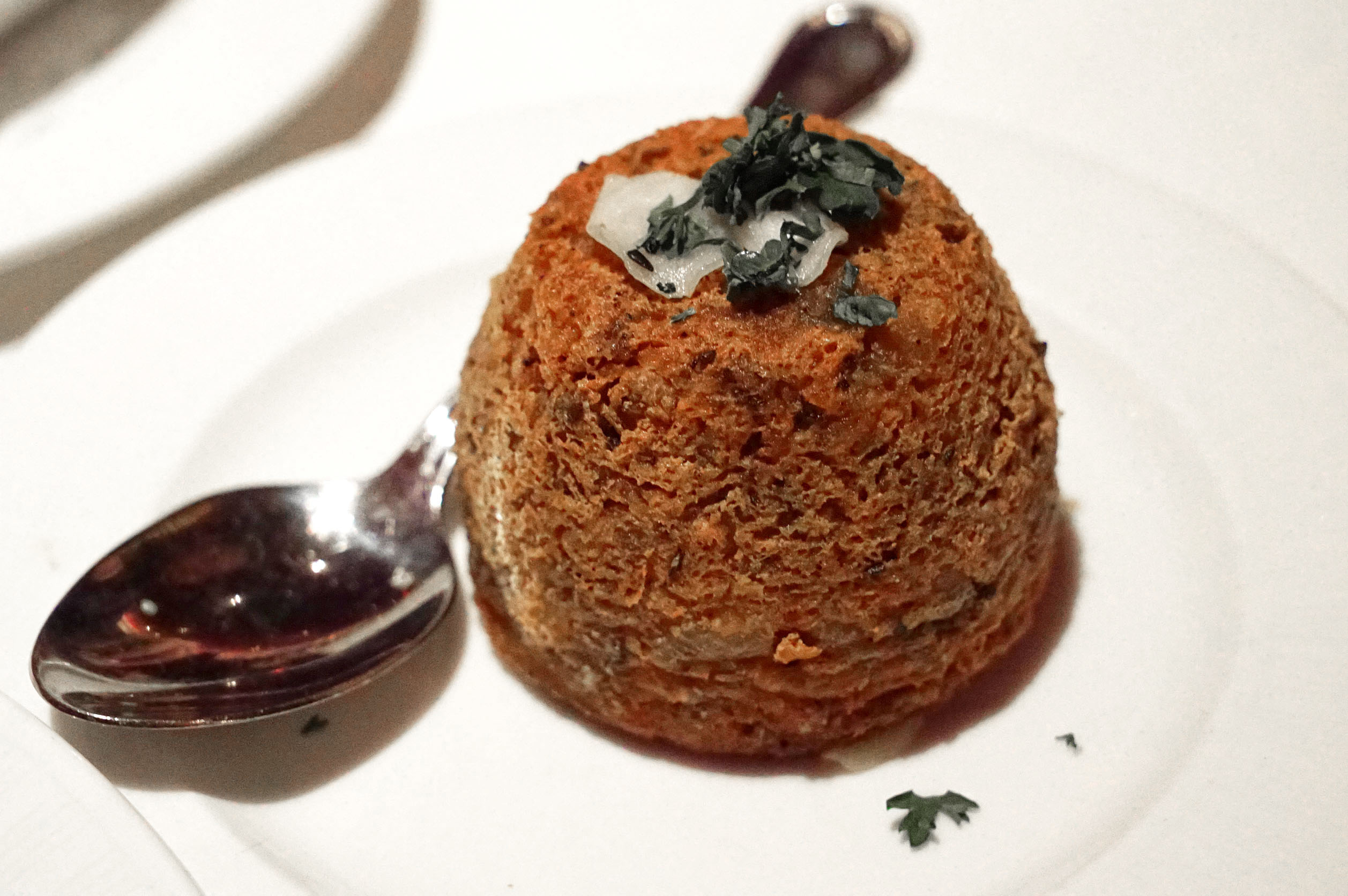
On the side we tried the Pommes Dauphine (tater tots with aged gouda and crispy parsley). These were super soft inside, like mashed potatoes, but nice and crisp on the outside. I am now in love with crispy parsley too. It actually had flavor, which is so unlike parsley!

DSC09337

We also ordered creamed corn with pancetta. Great side. Probably the best on the menu here.

DSC09340

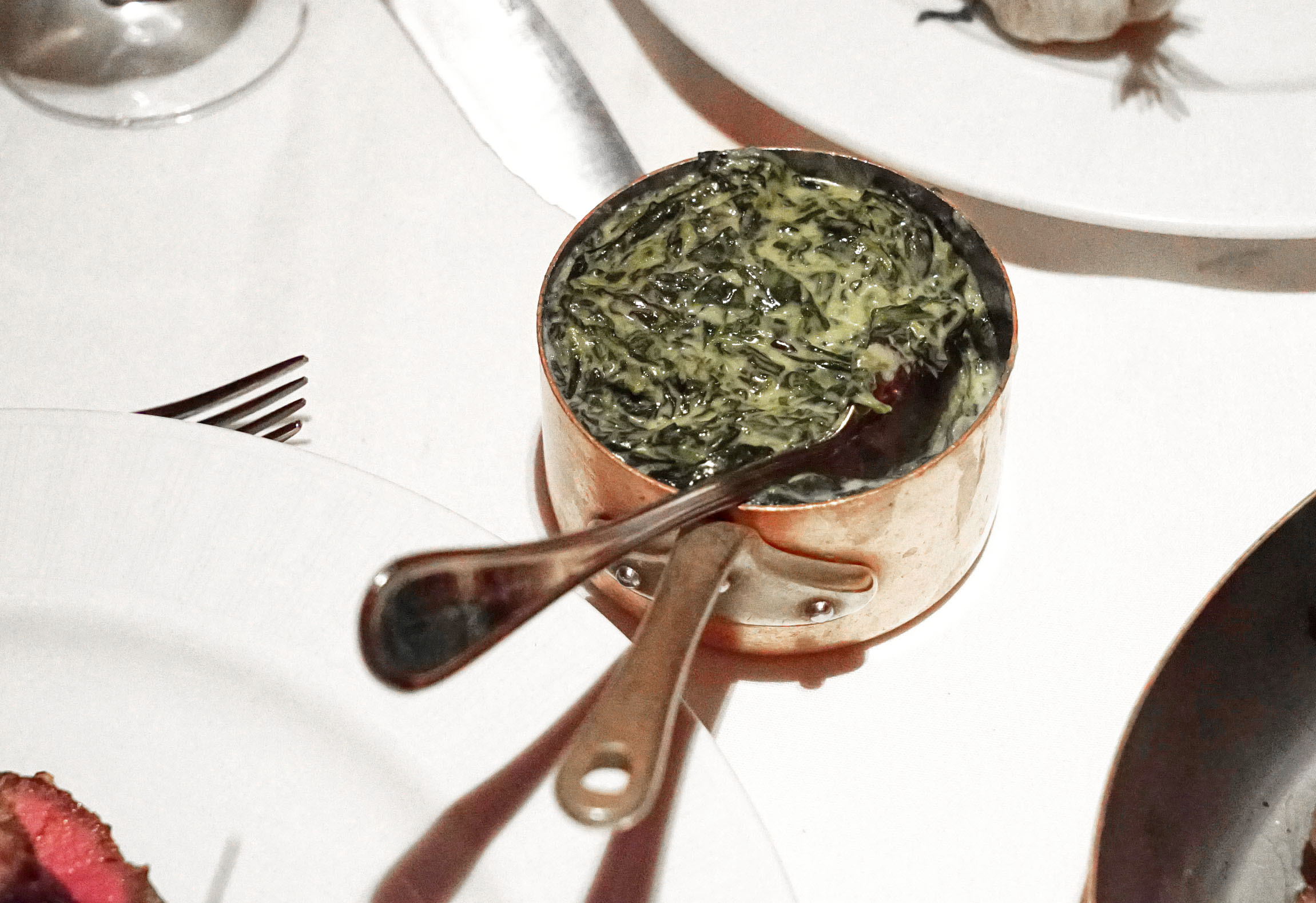
The chef also brought out some truffle creamed spinach as well. Very earthy and savory. This went really well when slathered onto the steak with each bite.

DSC09341

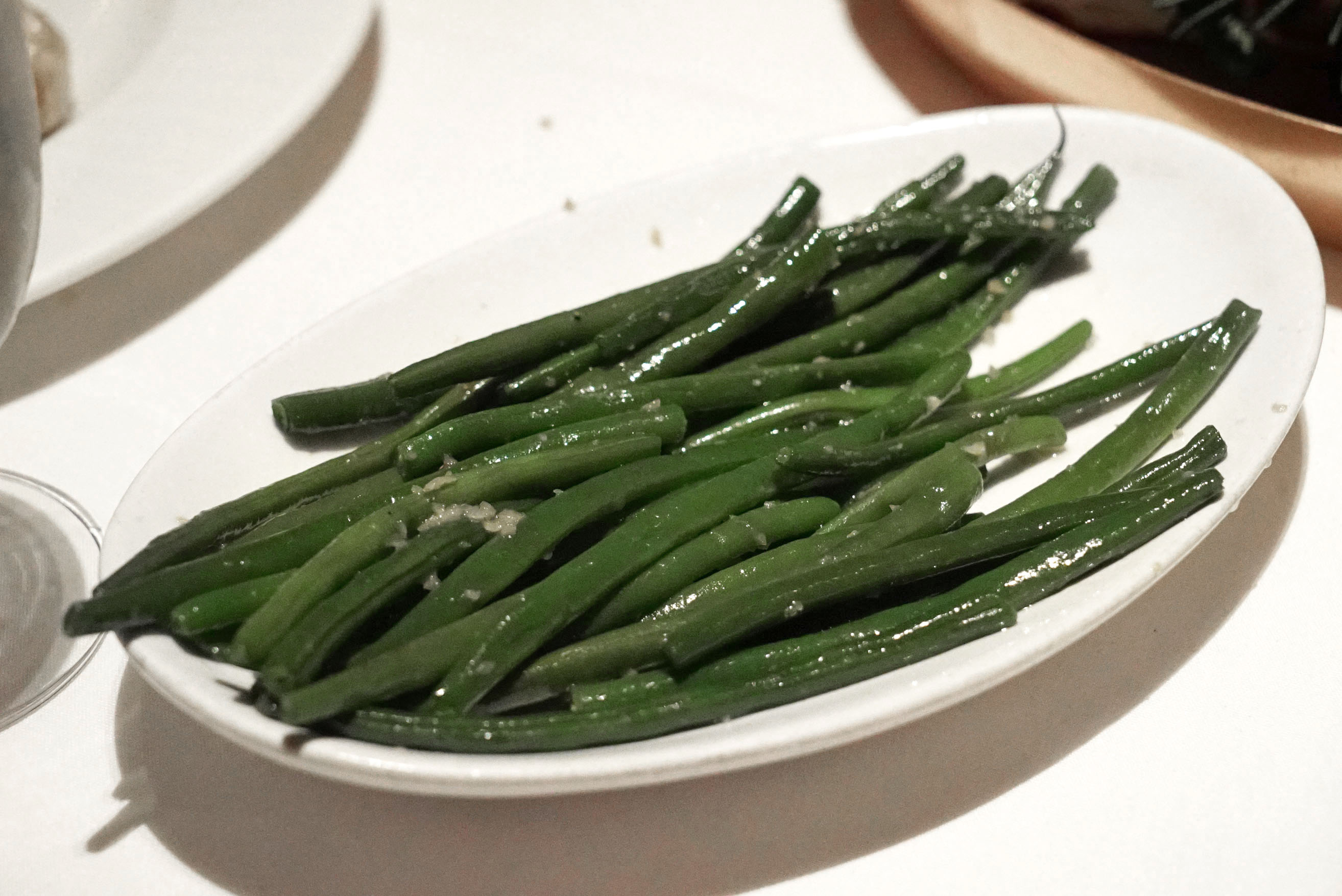
Green beans. Simple, but really well executed.

DSC09349

Andreas also sent out some crispy goose fat potatoes – delicious!

DSC09350

The chef also sent out two desserts for us. First was this beautiful Baked Alaska. Watch the service here:

DSC09354

Really nicely done. You could taste the booze but it wasn’t overpowering, and the marshmallow outside was perfectly seared.

DSC09360

There was also more of that massive 24-layer chocolate cake!

DSC09358

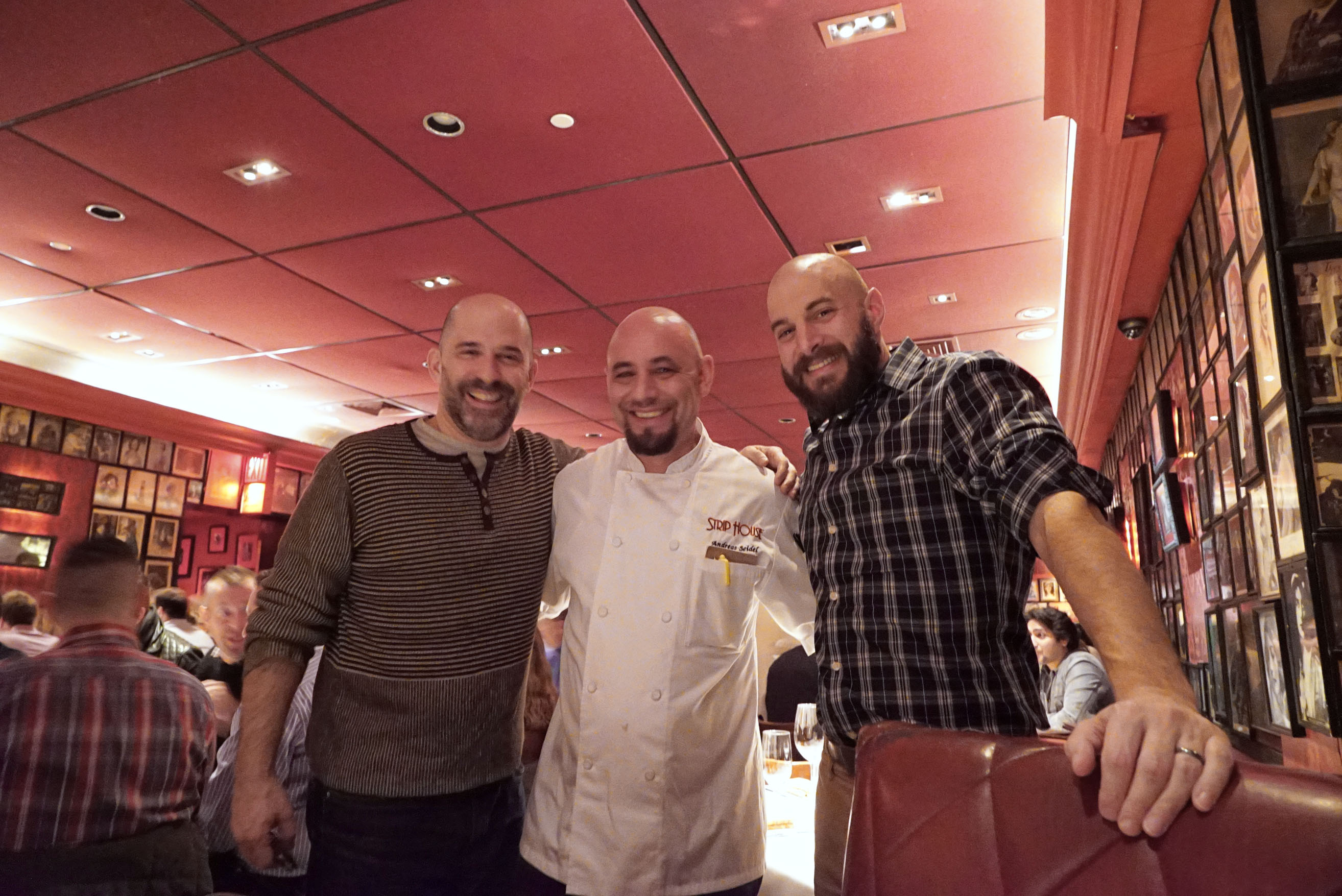
Here’s a shot of Team Bald – me and Matt Bruck, with chef Andreas Seidel. Great guy and a great sport!

DSC09339

STRIP HOUSE
13 E. 12th St.
New York, NY 10003

Charlito’s Cocina

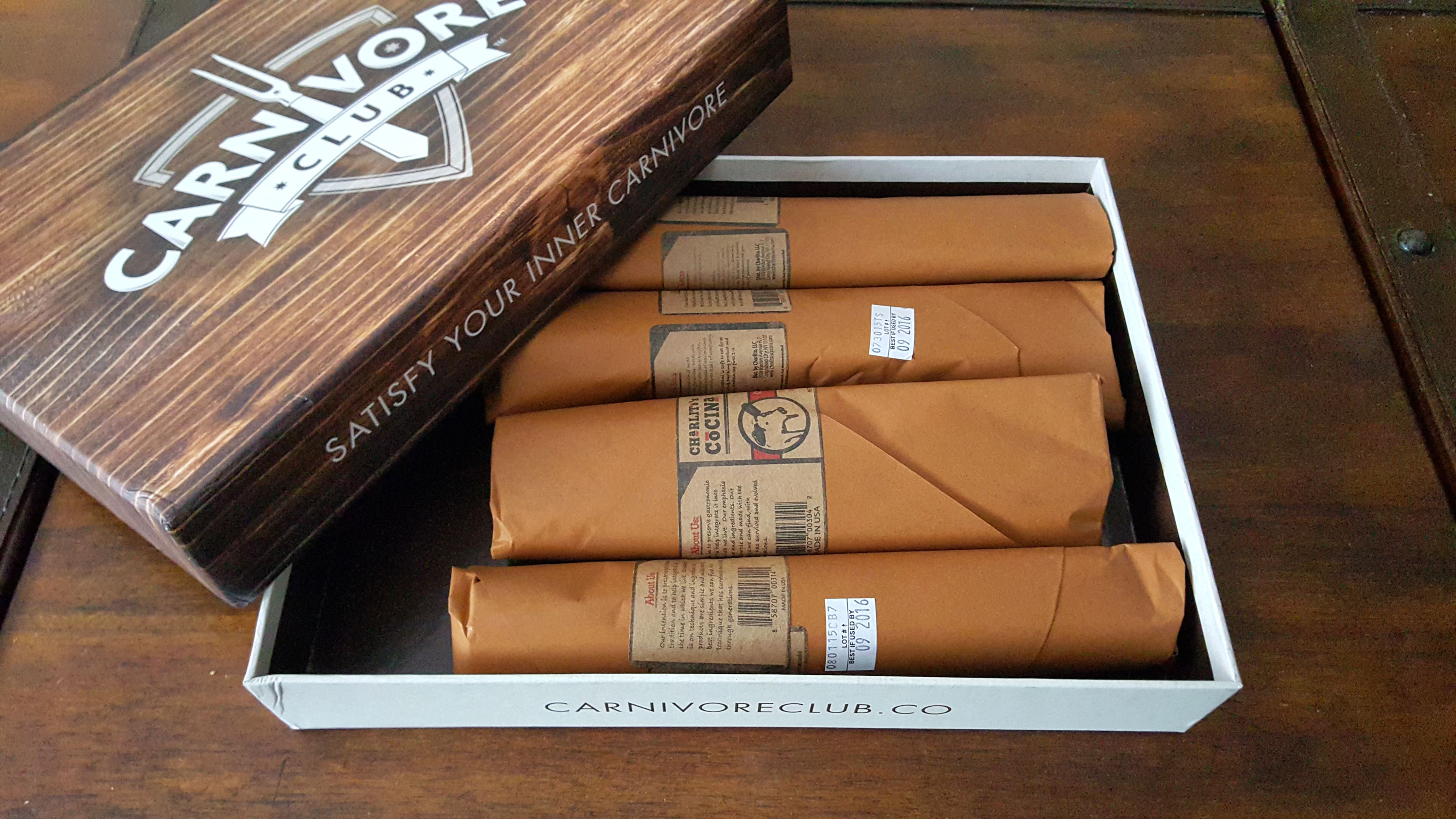
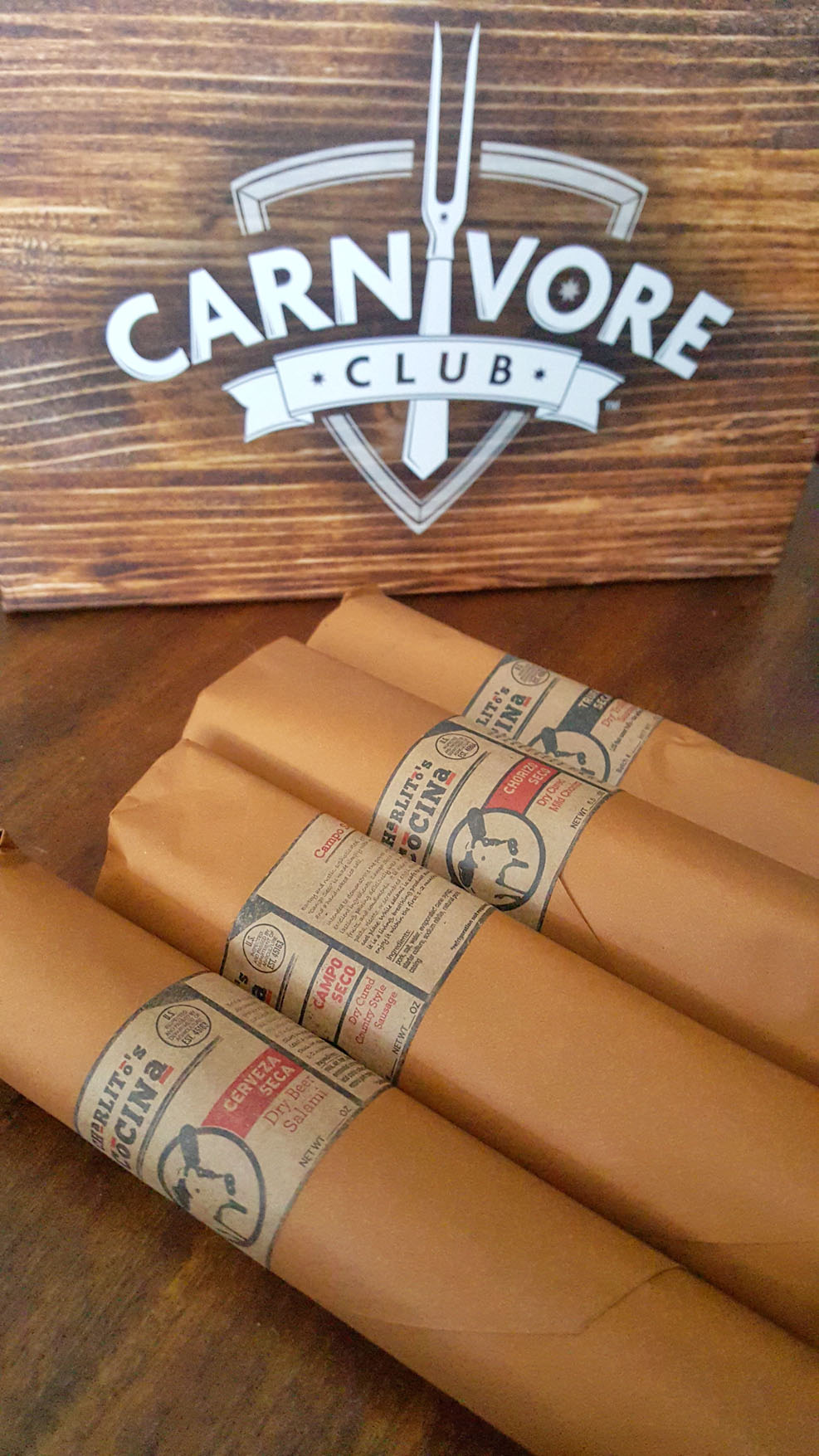
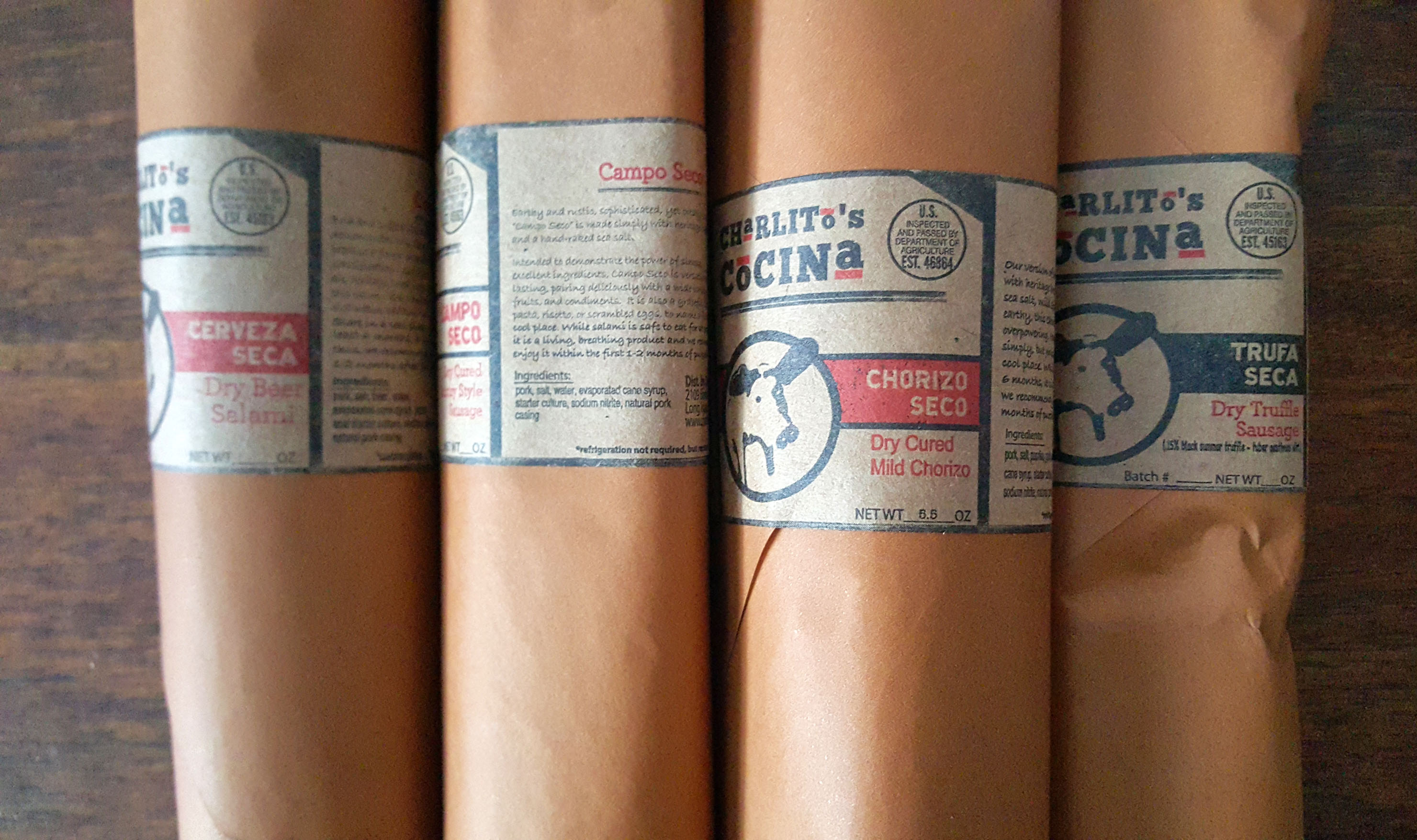
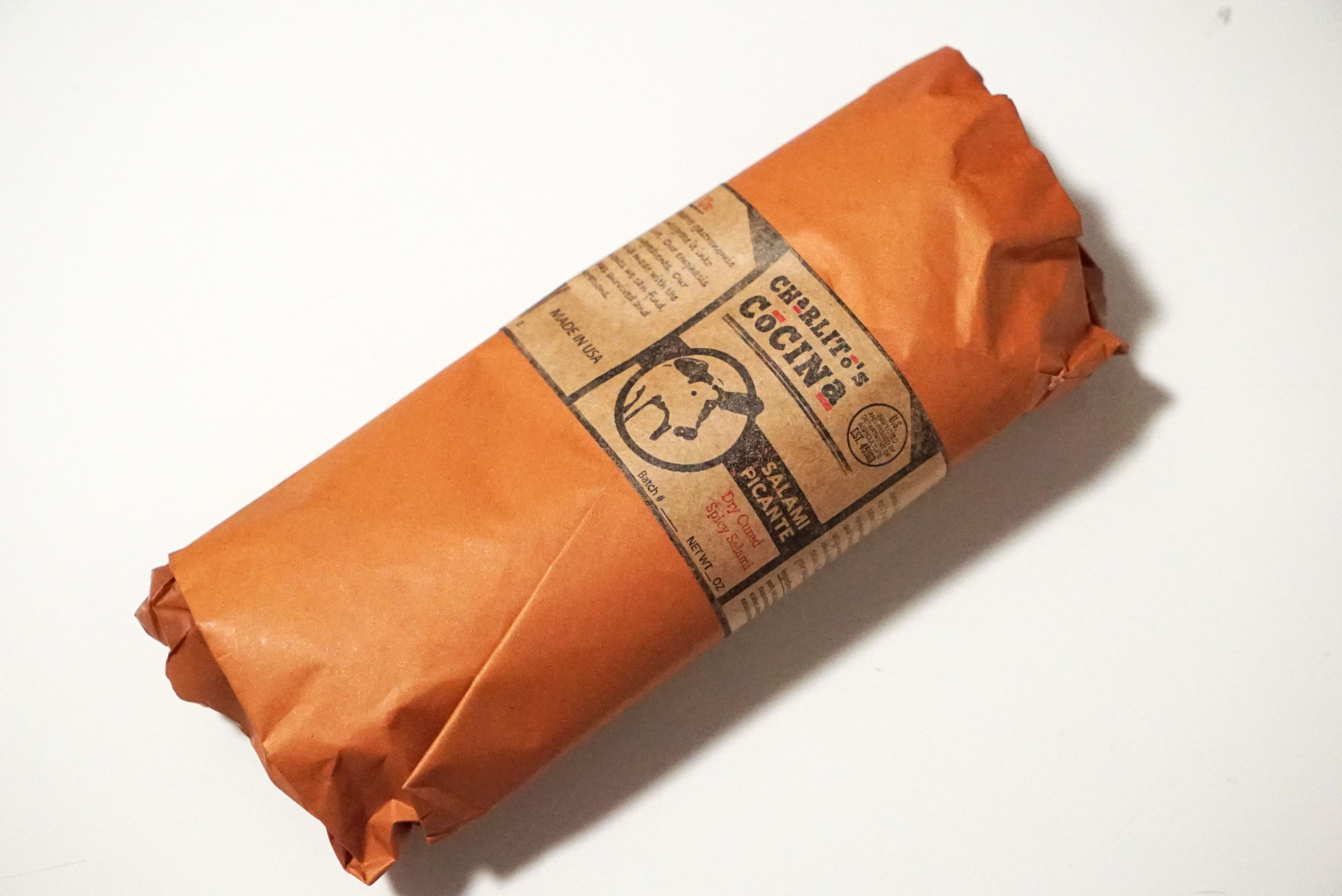
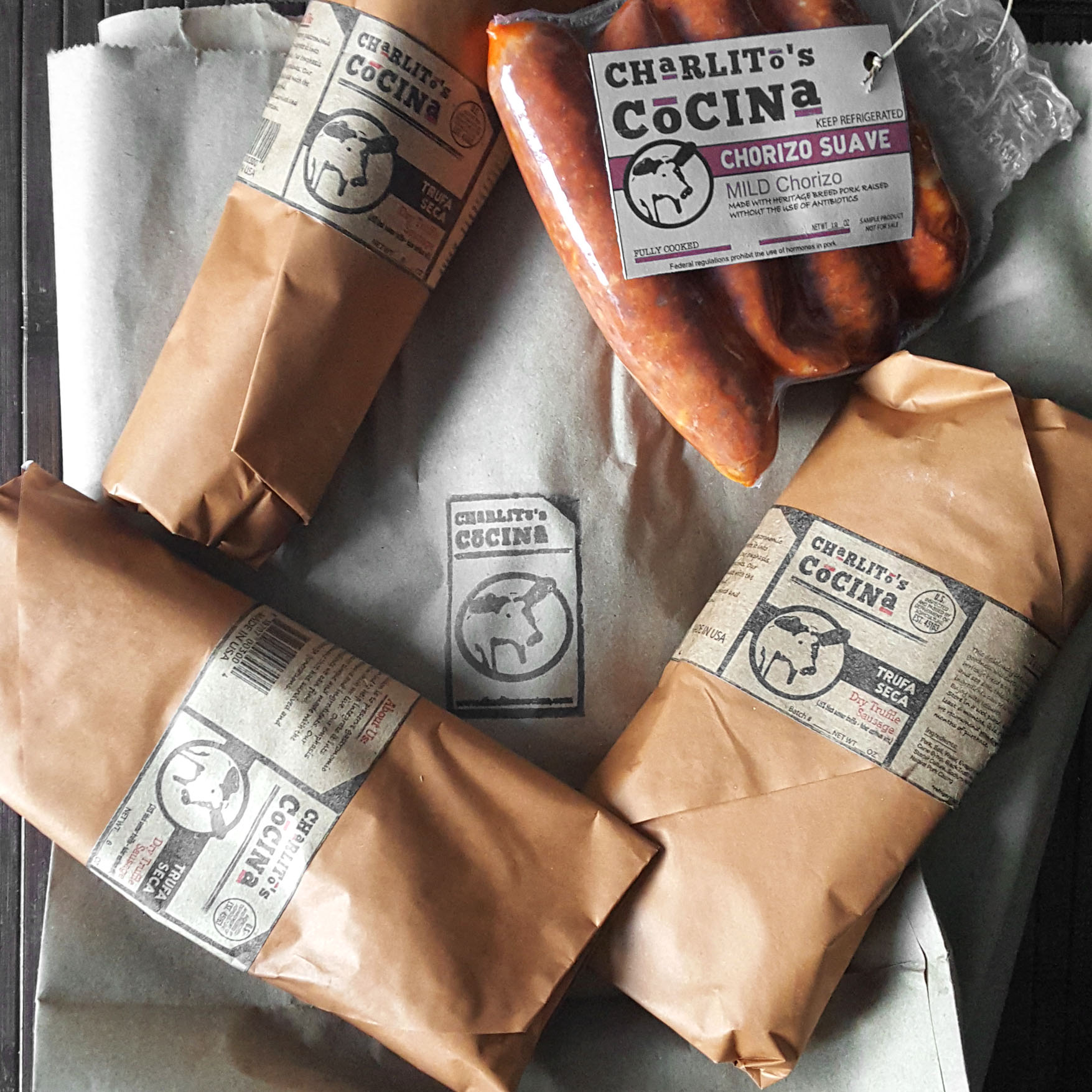
Since I had a credit with Carnivore Club, I ordered a regular box. The quality is once again incredible. Take a look at the unboxing below. This time I had four sausage items from Charlito’s Cocina:

20151008_170330

20151008_170404

20151008_170538

20151008_170618

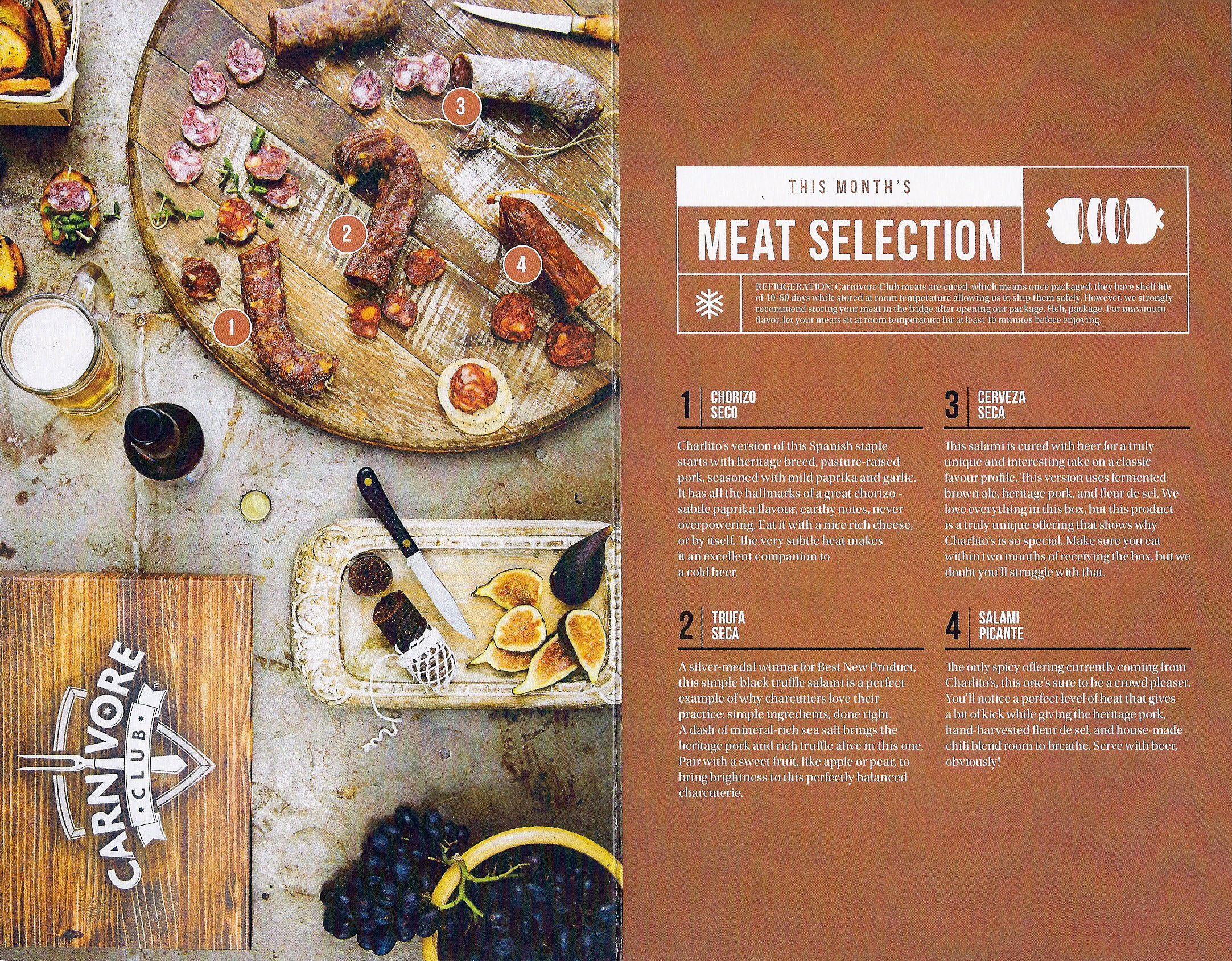
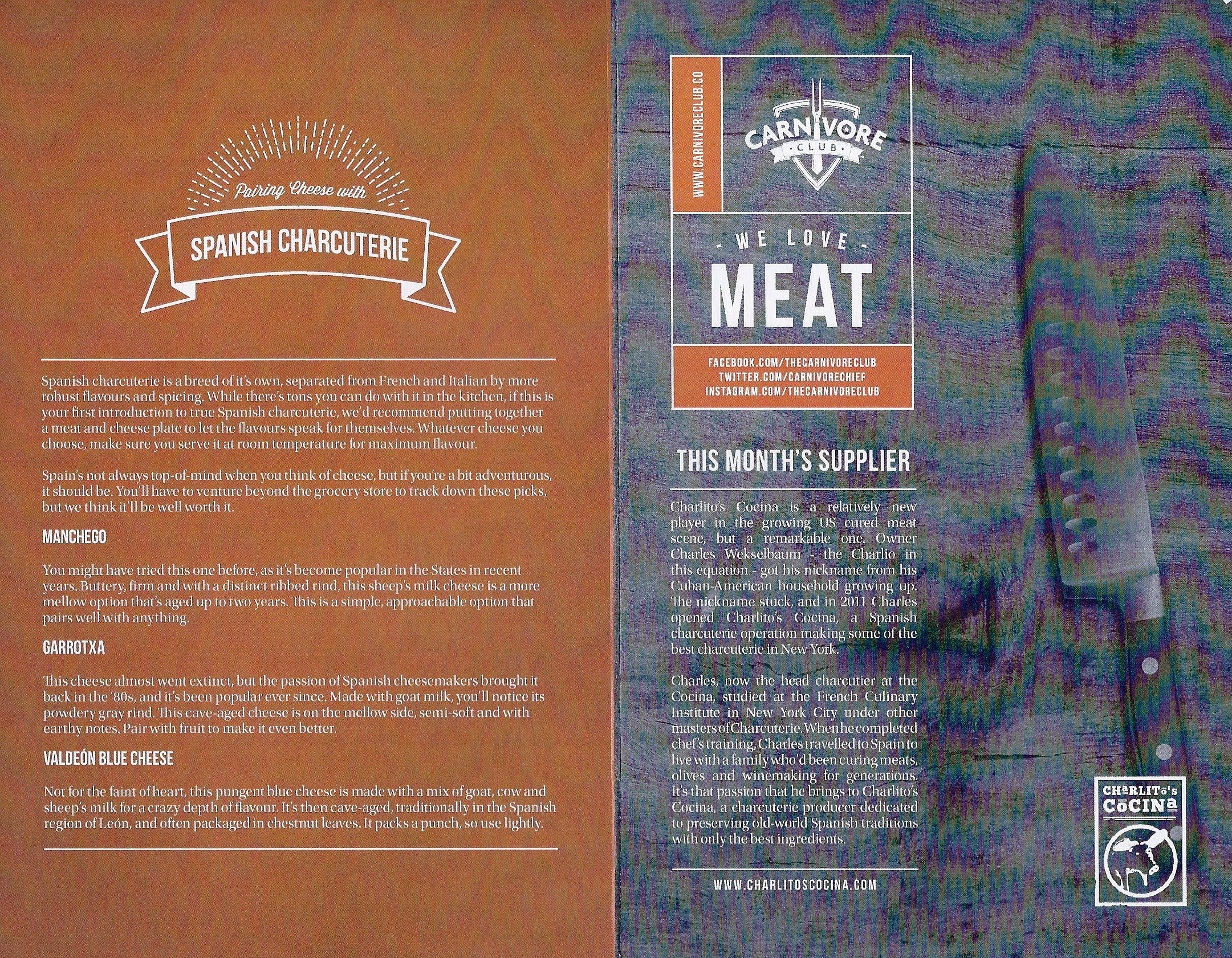
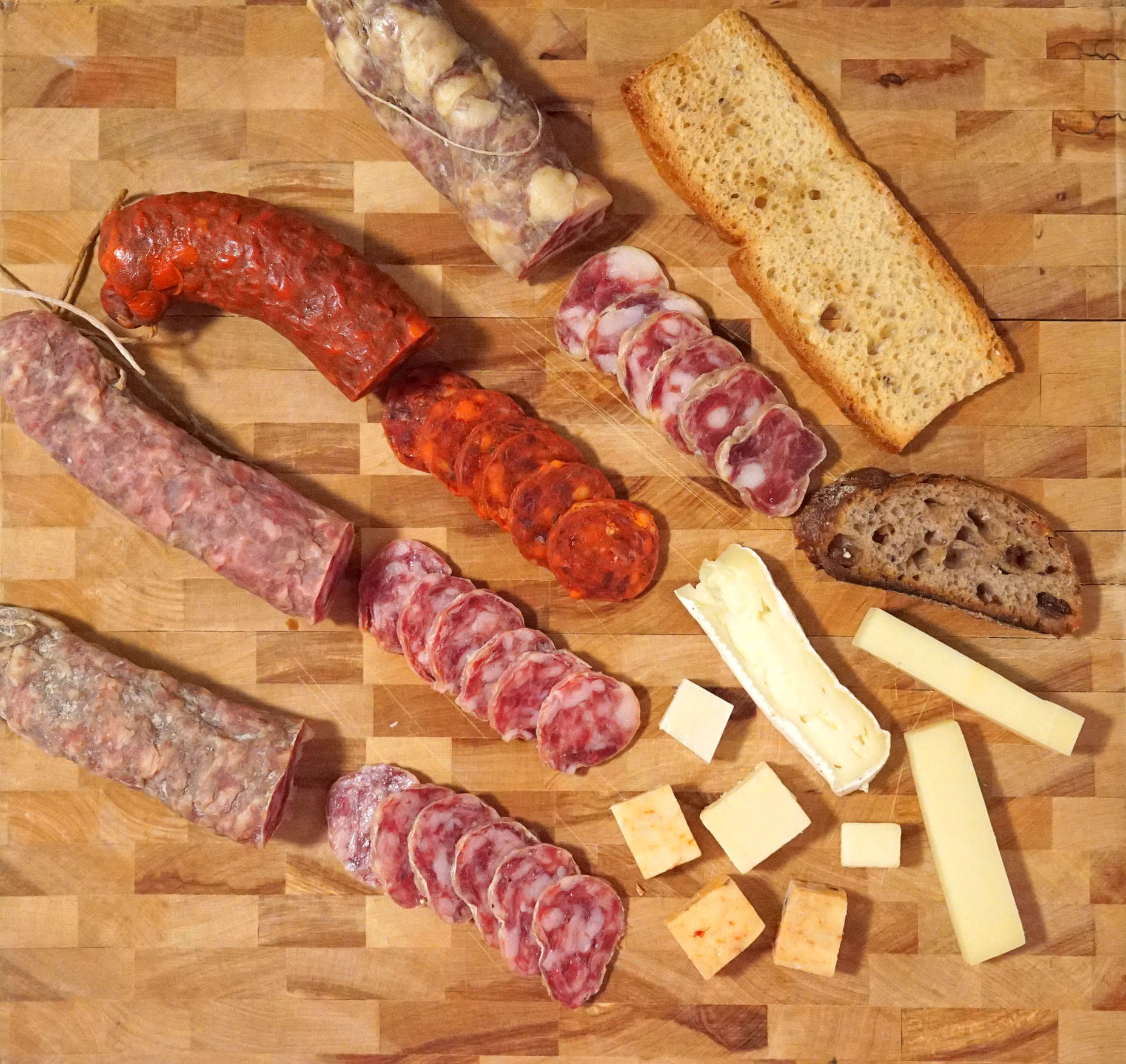
Inside, there is a card that tells you all about the meats you are about to eat, along with suggested pairings like cheeses.

Scan_Pic0021

Scan_Pic0022

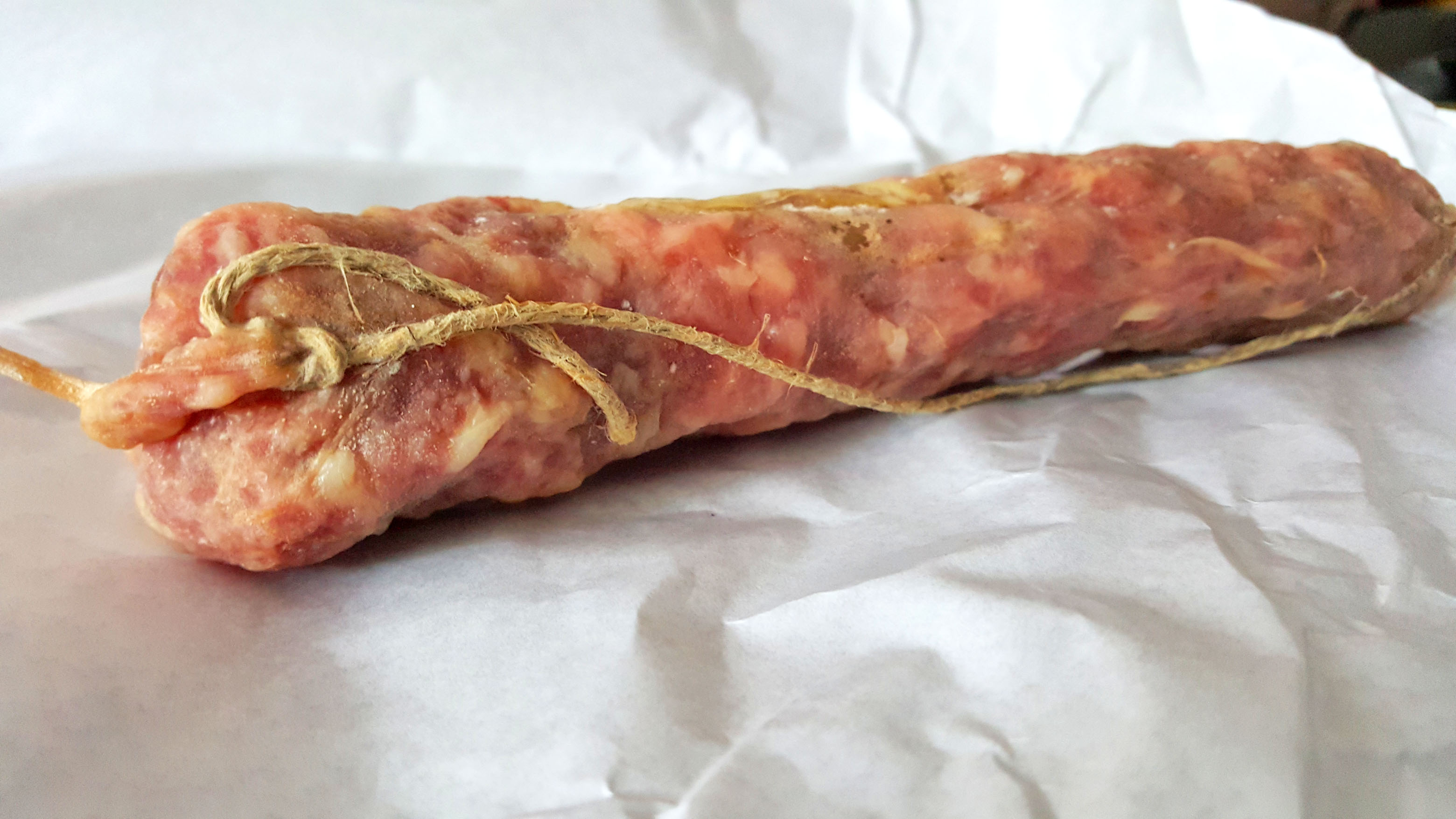
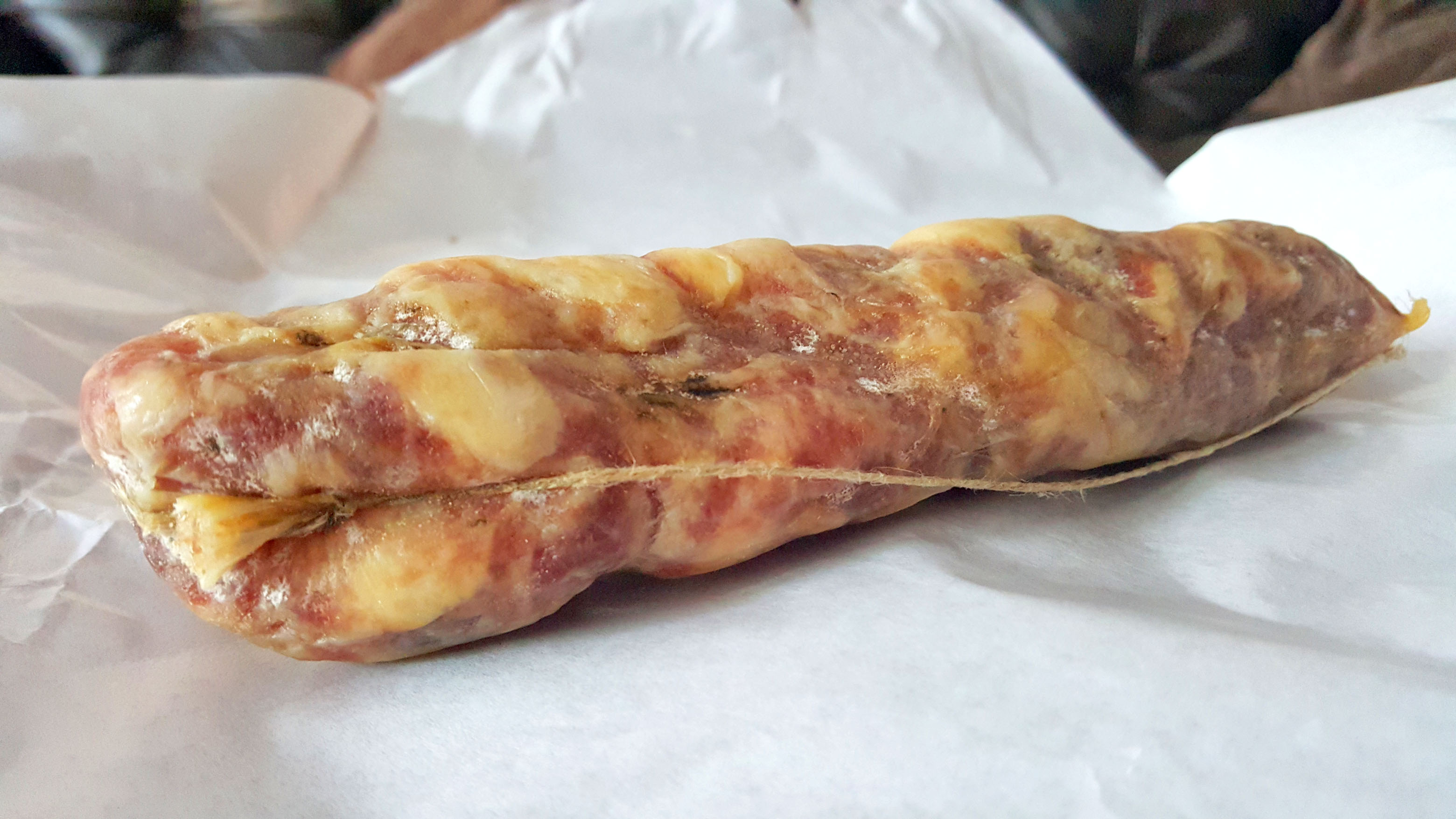
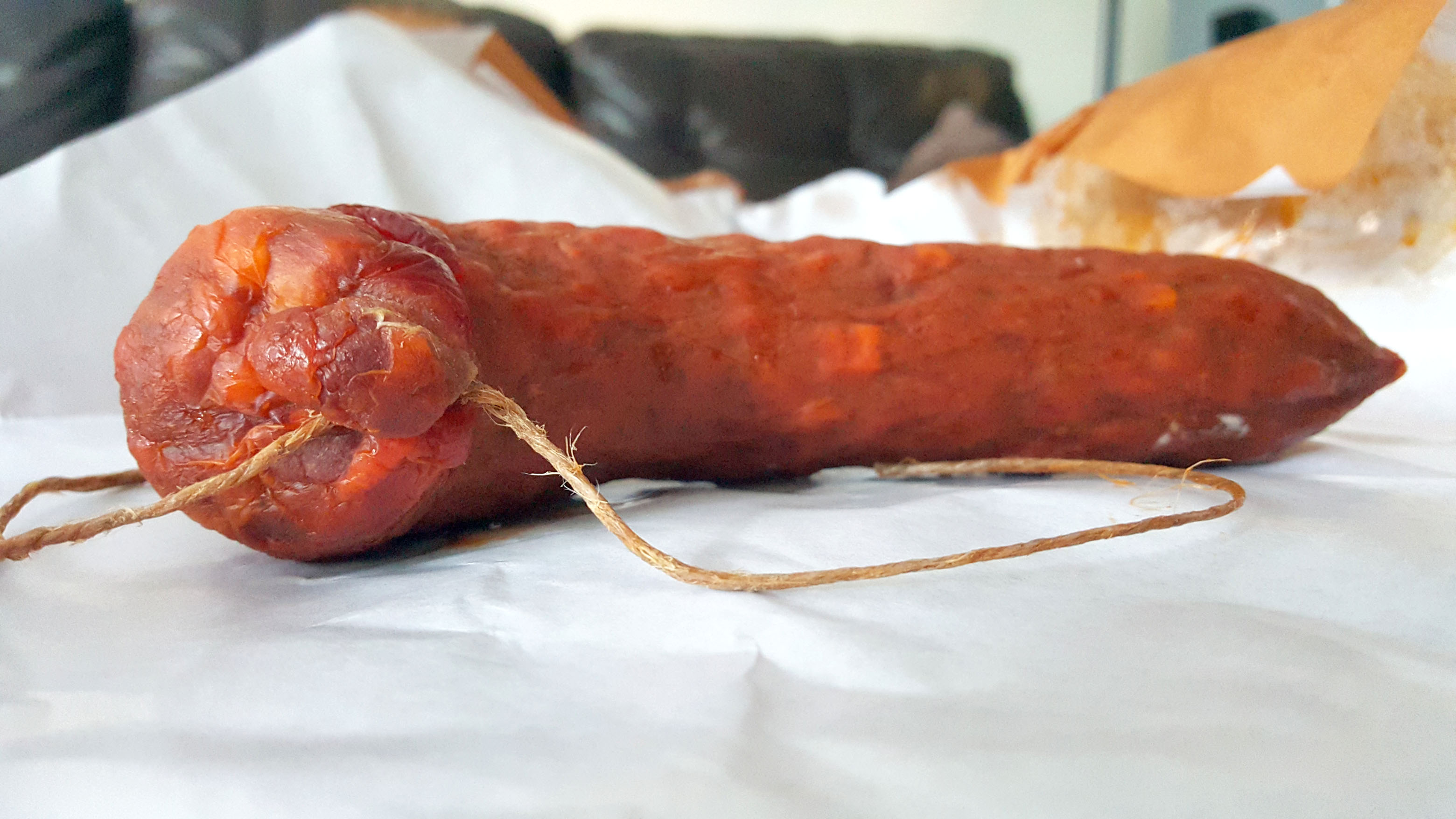
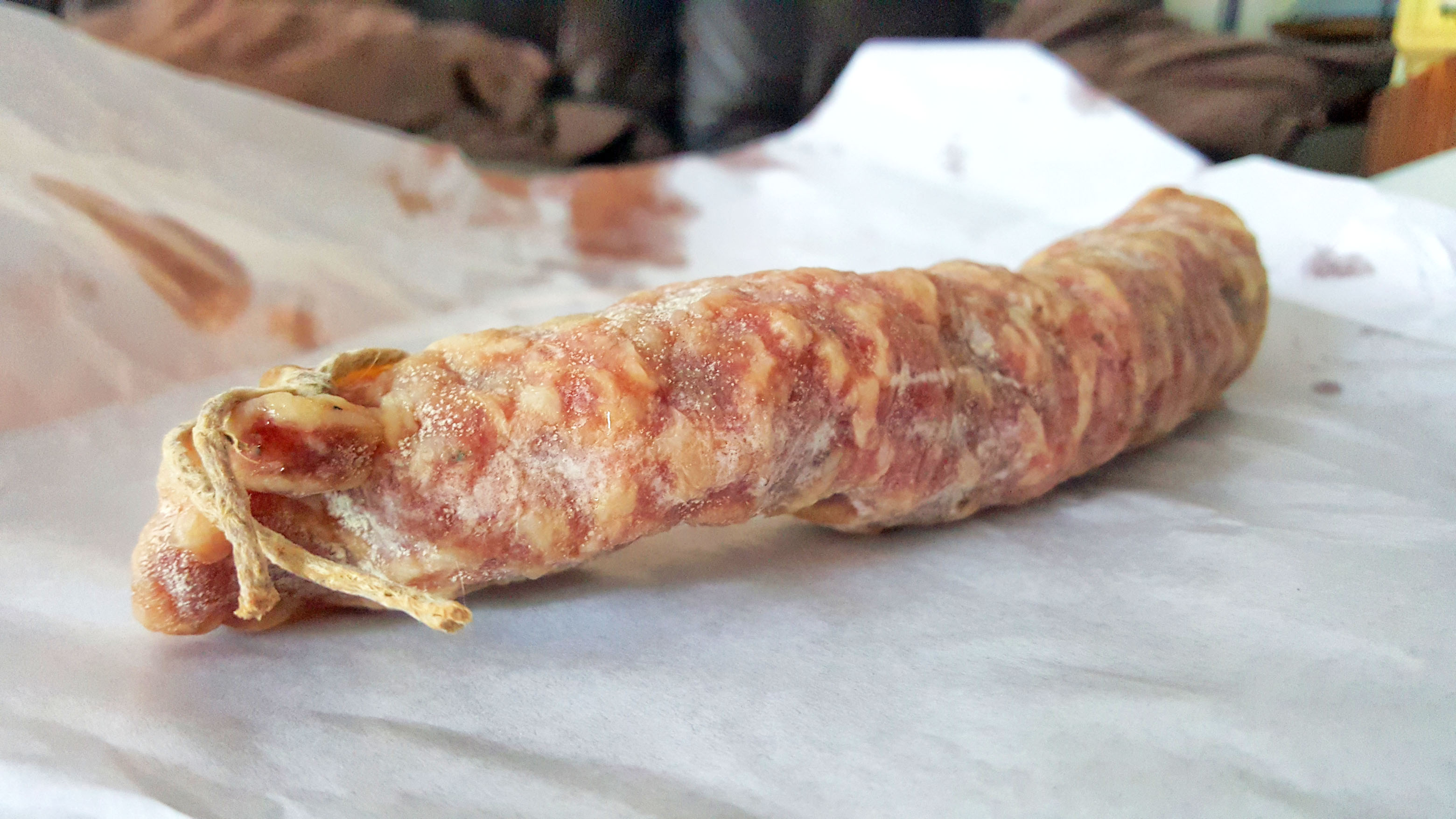
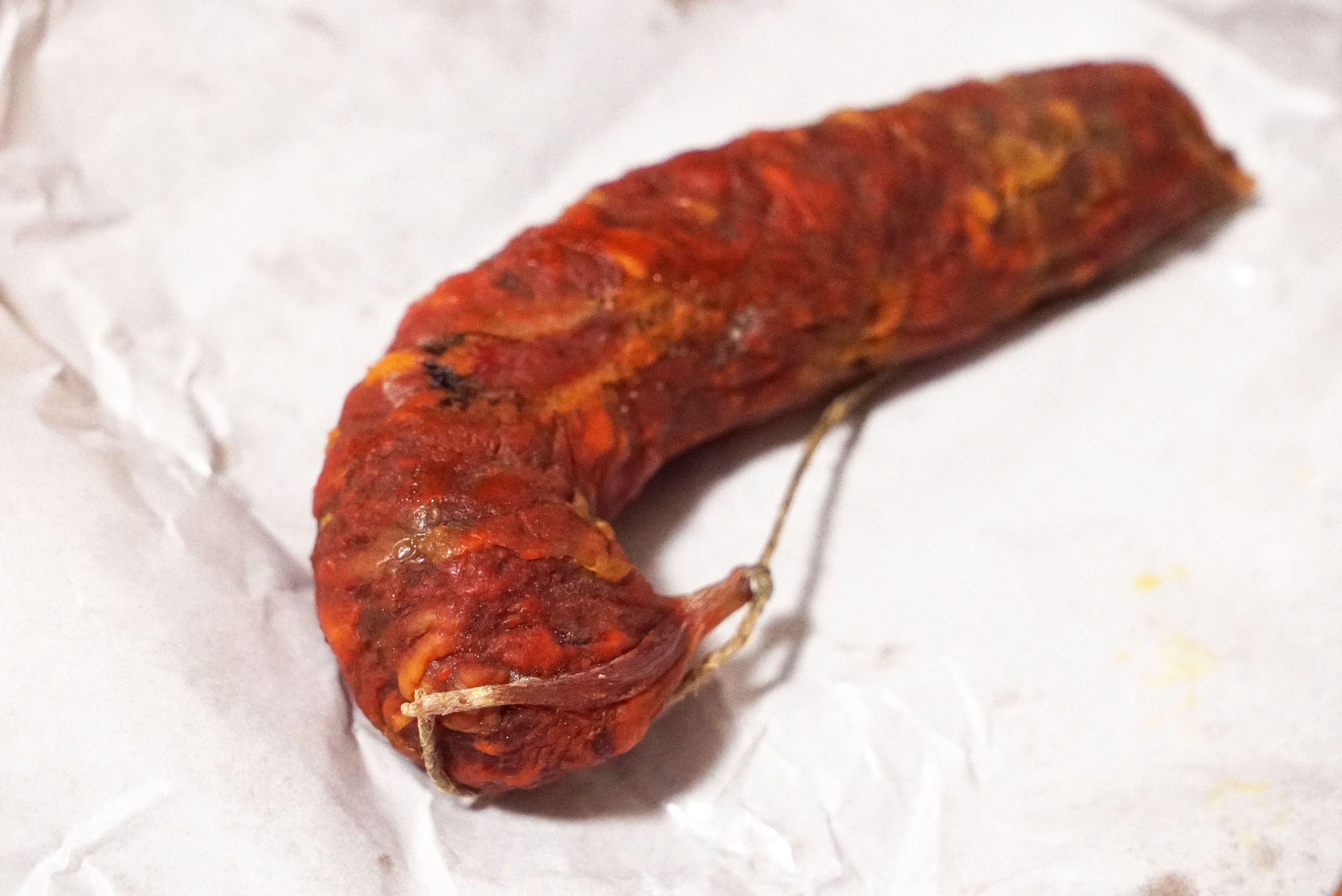
Here’s what they look like unwrapped – like shriveled penises:

20151008_170832

20151008_170951

20151008_171127

20151008_171237

While a shriveled penis is admittedly not the greatest look in the world, I’m pretty certain that these taste much better than a shriveled penis. If any of you have had both, give me your opinions.

DSC08043

So as I was going over my note card along with my packaged meats, I noticed something. The “salami picante,” #4 on the note card, was swapped out for “campo seco.” It seems the provider ran out of the salami picante and substituted the campo seco instead, but Carnivore Club was unaware and unable to update the note card in time for the shipment.

DSC08049

No bother to me, really, other than the fact that campo seco and cerveza seca were somewhat similar in both look and flavor. Cerveza seca was a bit leaner, however, while campo seco had large blobs of delicious fatty white spots throughout – most of which were surprisingly tender.

DSC08058

The chorizo was good. Not too potent and garlicky, as some can be, and it had a mild heat to it that didn’t overpower.

DSC08052

The clear winner by far, however, was the “trufa seca” truffle sausage. It was coated with a sea salt and was vibrantly flavored with that earthy and robust truffle flavor. Absolutely delicious. I’ve never tasted something so unique in this kind of product.

DSC08048

I highly recommend purchasing meat from this supplier, Charlito’s Cocina. And if it isn’t obvious, I am a big fan of Carnivore Club. This box alone would cost WAY more if all items were purchased separately, so you’re getting a good deal along with such great service. I let Carnivore Club know about the swapped sausage issue for #4, and they, along with Charlito’s, insisted on sending me the salami picante even over my protestations. Good people!

DSC08277

DSC08279

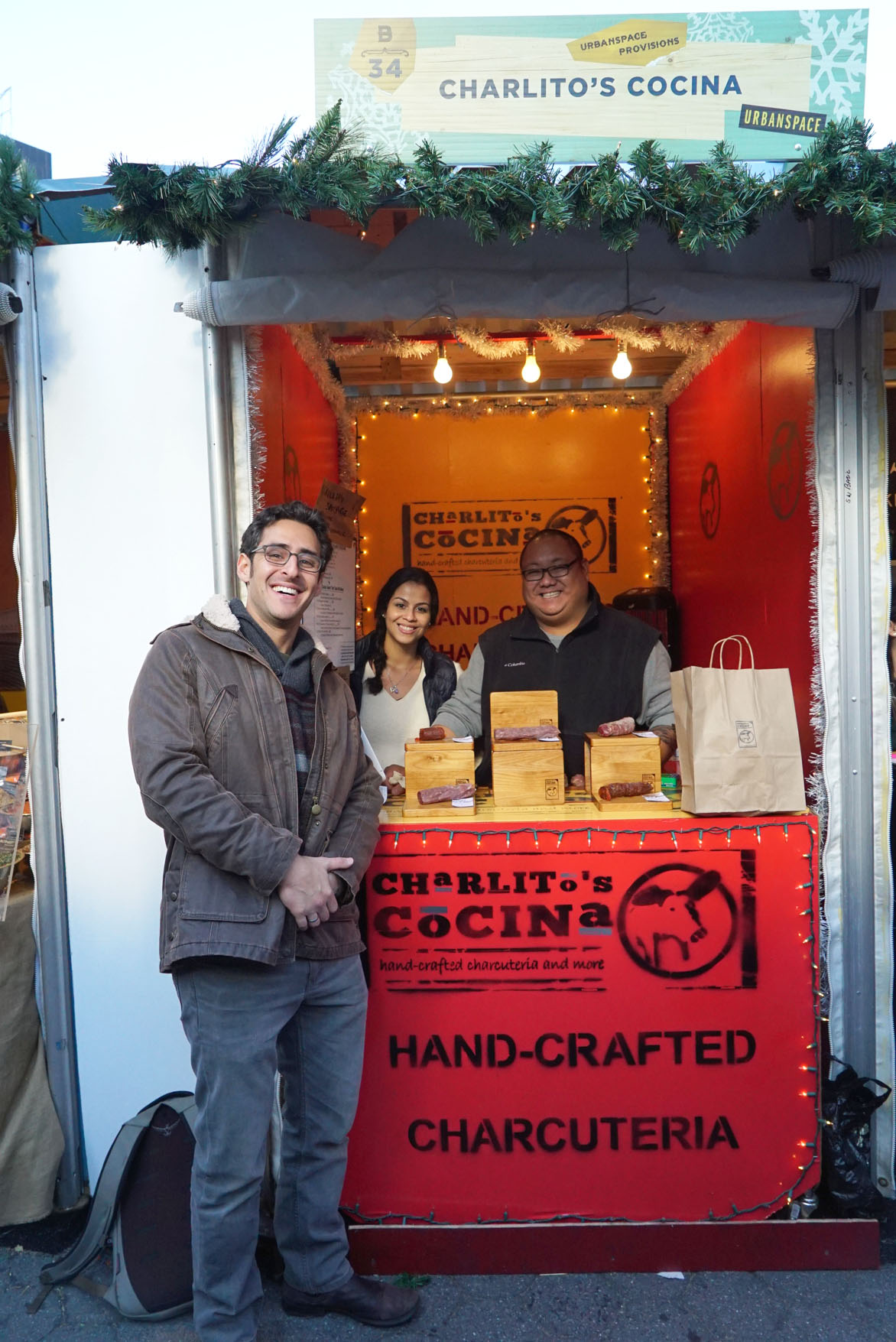
So after keeping a close eye on this supplier, I noticed they set up shop at the Union Square Holiday Market (I am always stalking their Instagram feed) for the 2015 Christmas season.

DSC09099

I went down after I was all out of their delicious sausages and picked up three packages of trufa seca. While I was down there I got to meet the owner and founder, Charles (left). He threw in a package of chorizo for me to sample!!! I am really excited to bring this sausage out to my folks for Thanksgiving!

20151121_142137

DSC09116

DSC09112

DSC09113

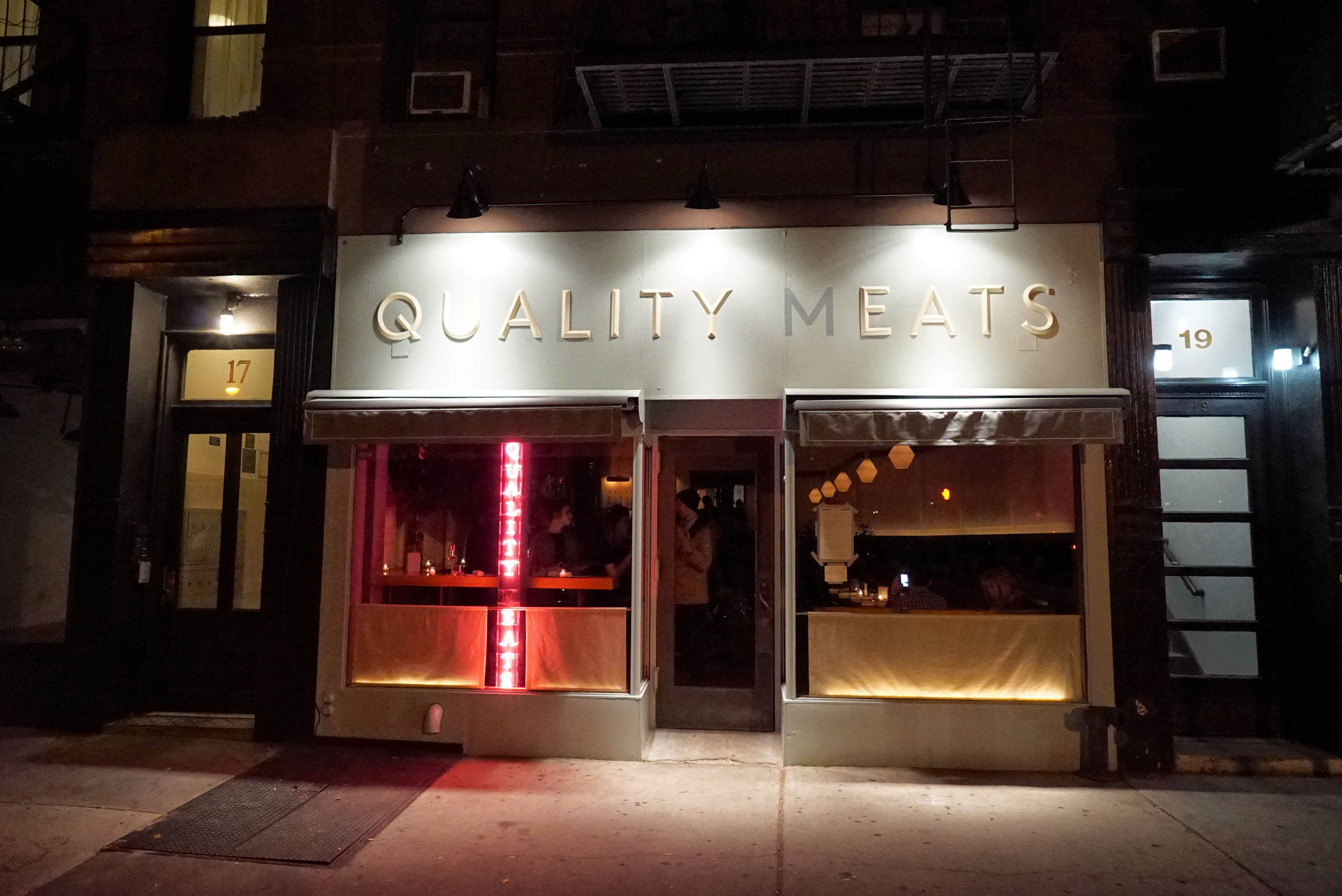
Quality Eats

Quality Eats overall score: 85

Fourth Wall Restaurants, who’s group includes Smith & Wollensky, Maloney & Porcelli, Quality Meats and Quality Italian, has just opened up this new casual joint.

DSC08830

Is it a steakhouse? Maybe. I say yes in some ways, and no in others. I’ve decided to treat it like both a regular restaurant and a steakhouse, despite the fact that certain steakhouse review categories will ultimately be scored low due to a more minimalist menu and a completely different selection in terms of meat cuts. They focus on non-traditional cuts of meat here, so be prepared for something unique and different. Also be prepared for that Fourth Wall level of quality and excellence that you’ve come to know and love from them. The word “quality” is purposeful in this group of restaurants. Everything is always good at these places. That’s consistency, people… and I’m not talking about texture.

Flavor: 10
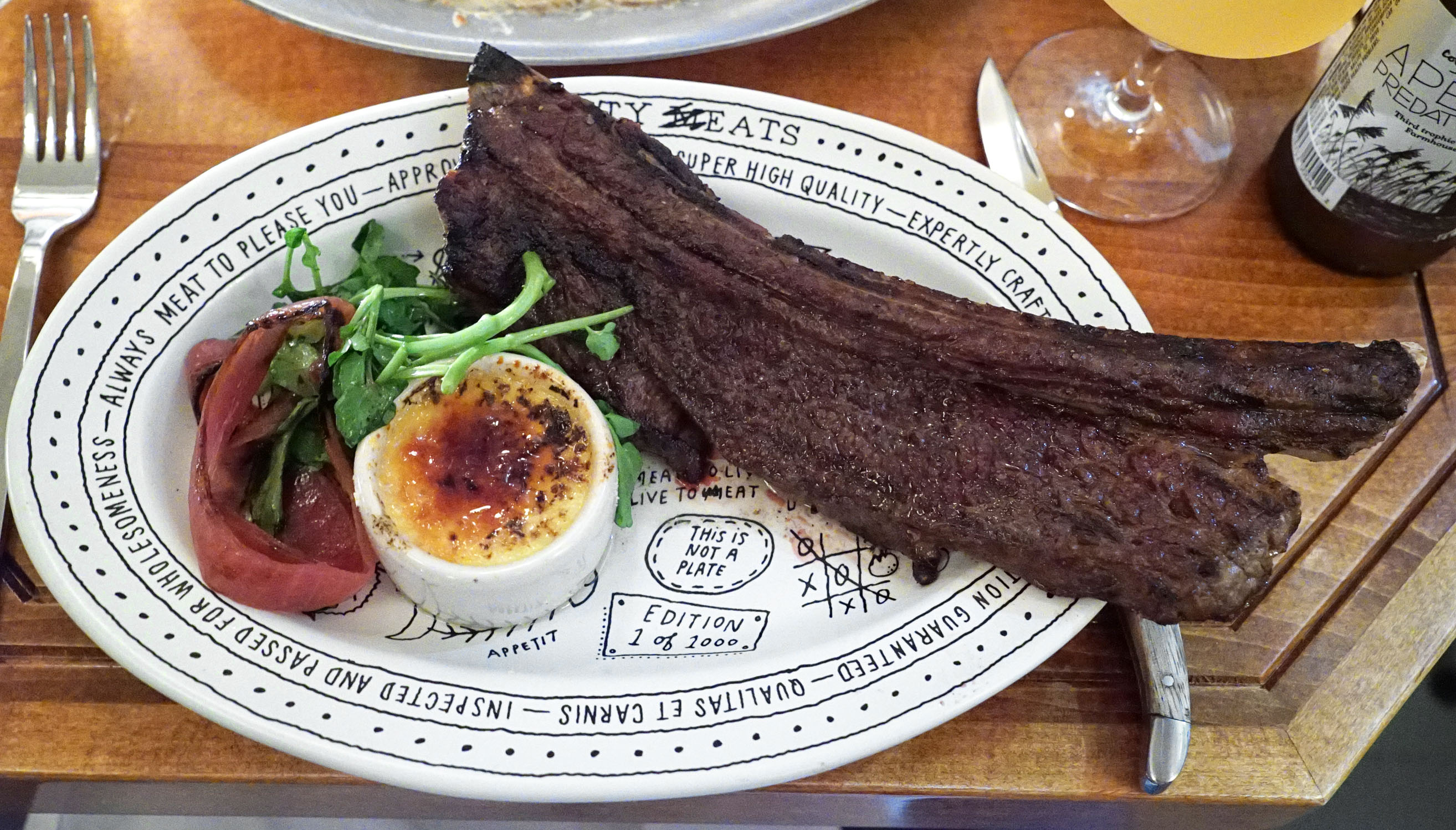
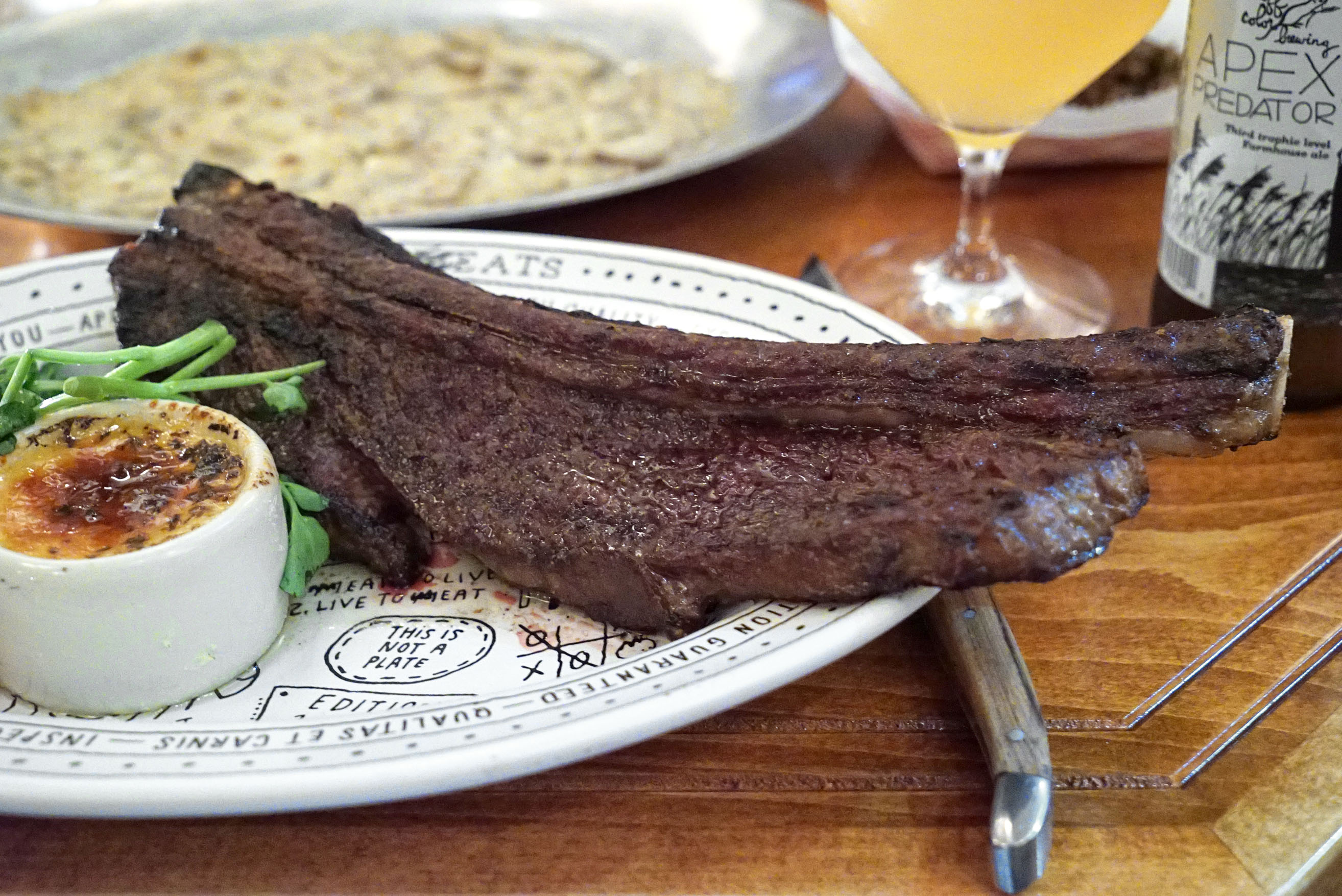
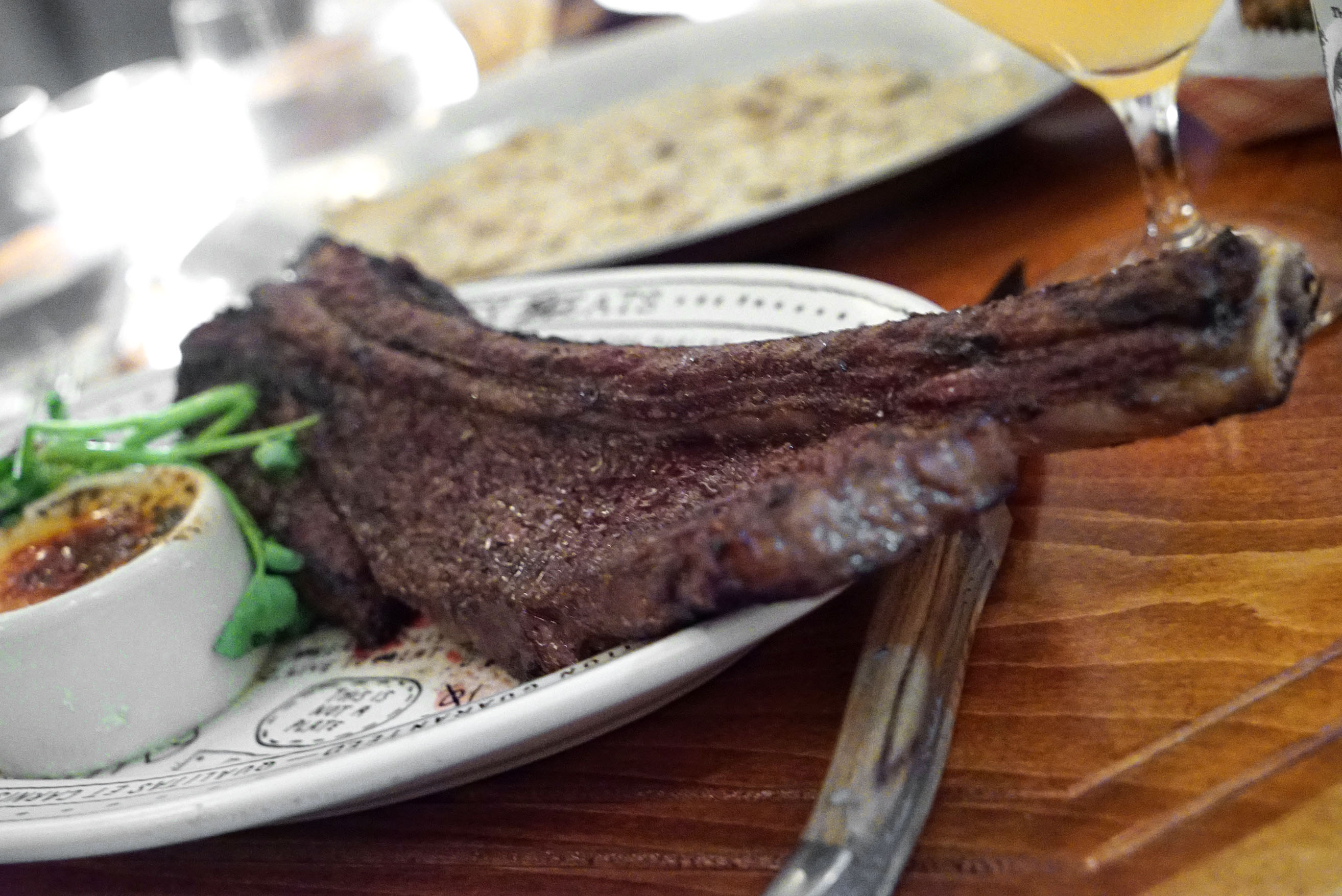
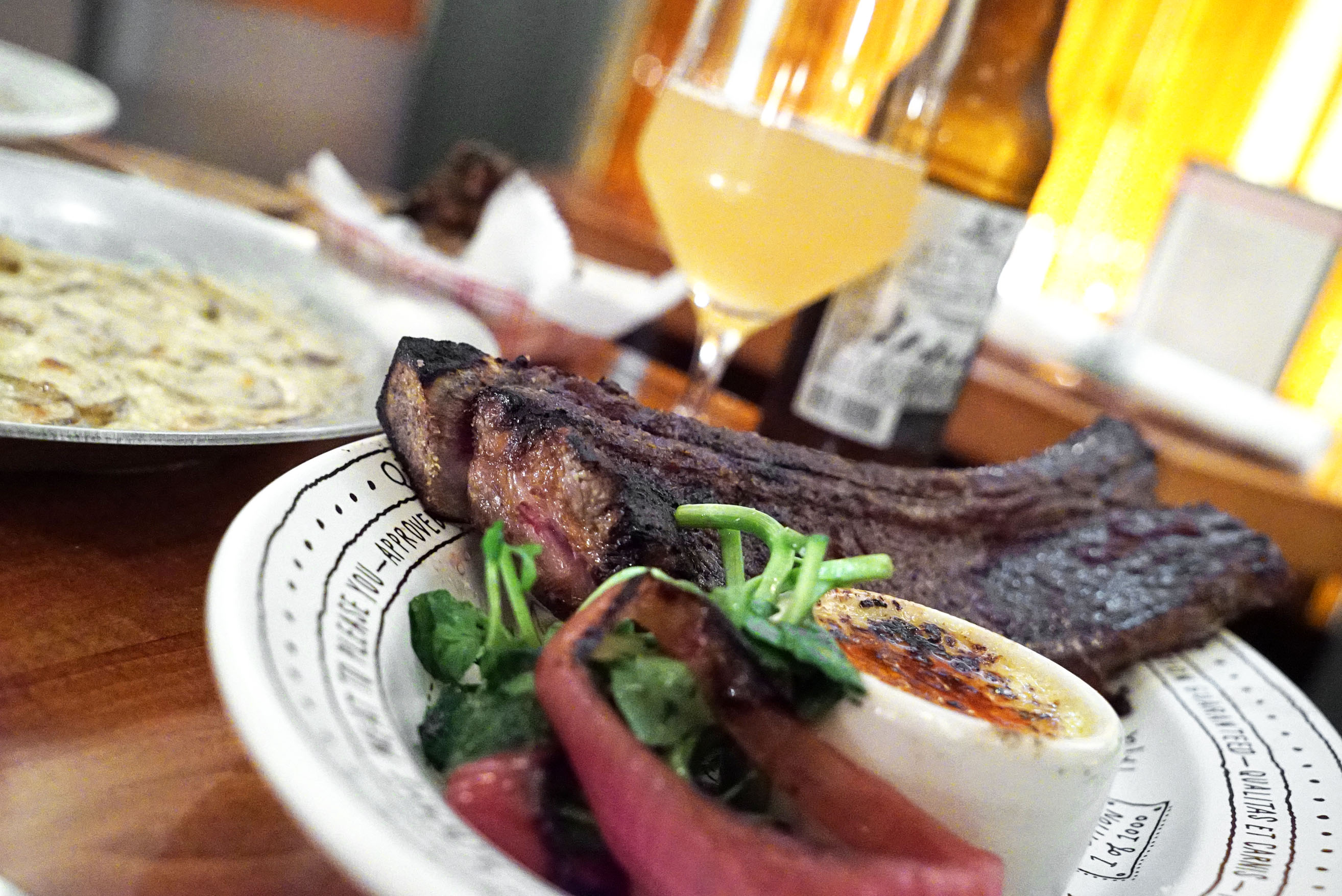
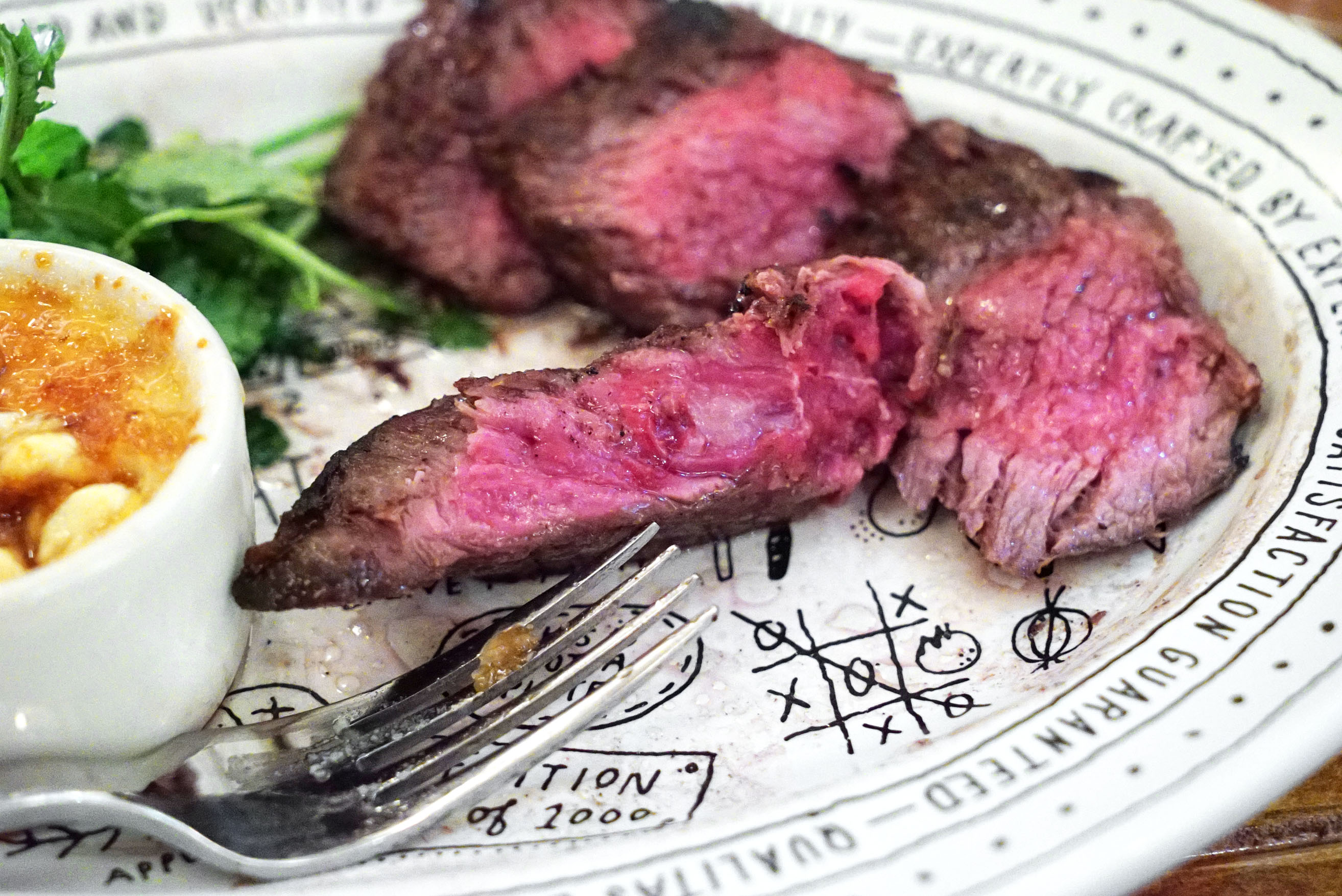
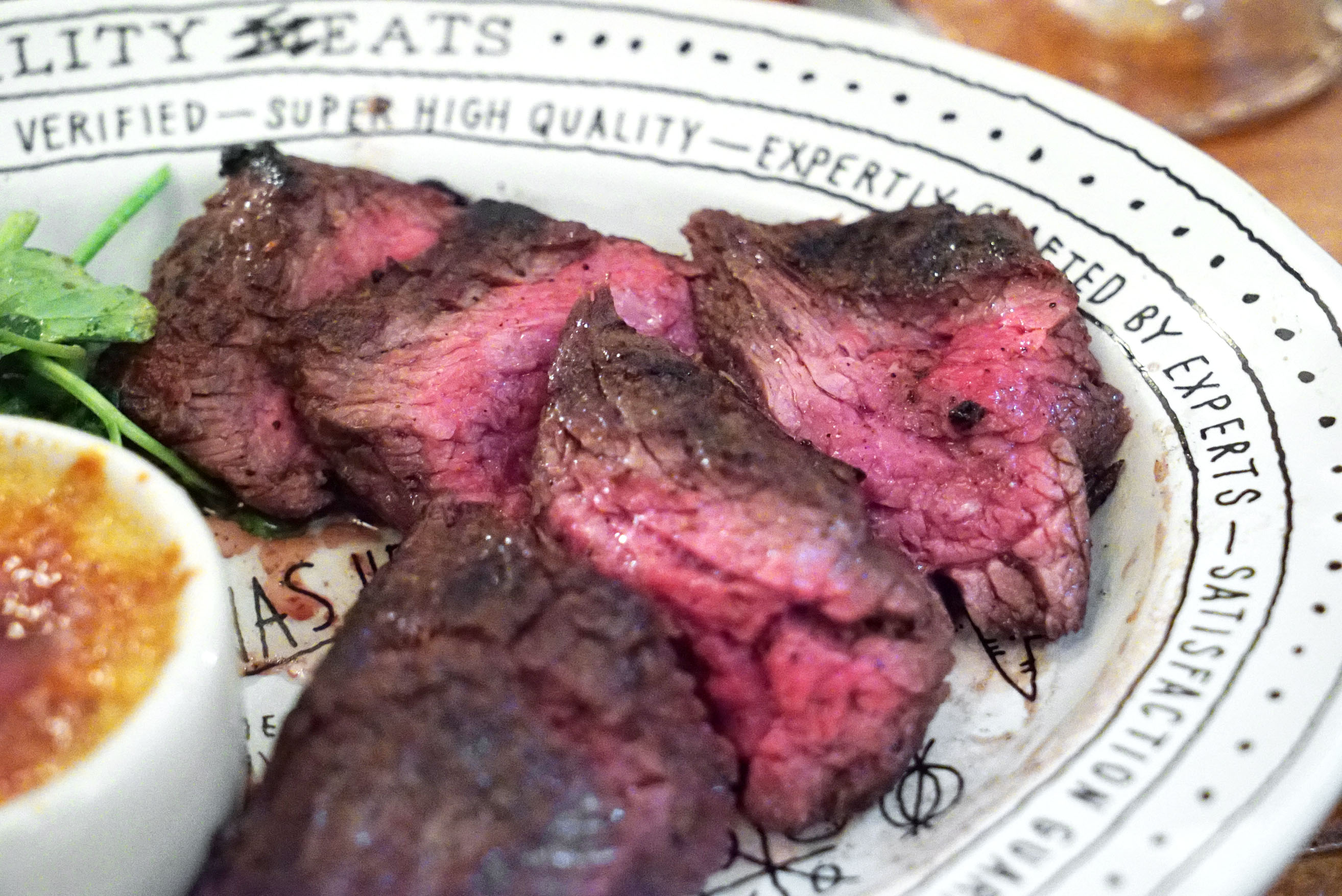
We had the bavette cut and the long bone short rib steak. Both were cooked to a perfect medium rare, both had tons of awesome beefy flavor, and any fat content was completely edible and tasty. Here are some quick angles of the long bone short rib:

DSC08882

DSC08884

DSC08885

DSC08889

They only allow you to order this cut “pink or grey.” Due to the high marbling and location along the bone, this meat can get chewy if not correctly cooked to either of those temperatures. Clearly I went with pink, and I was a very happy camper. These guys are masters in the kitchen.

DSC08896

If you’re wondering what it tastes like, think of the really flavorful bits near the bone of your rib eye steak, or the kind of meat you eat with cross-cut Korean style BBQ short ribs. So good.

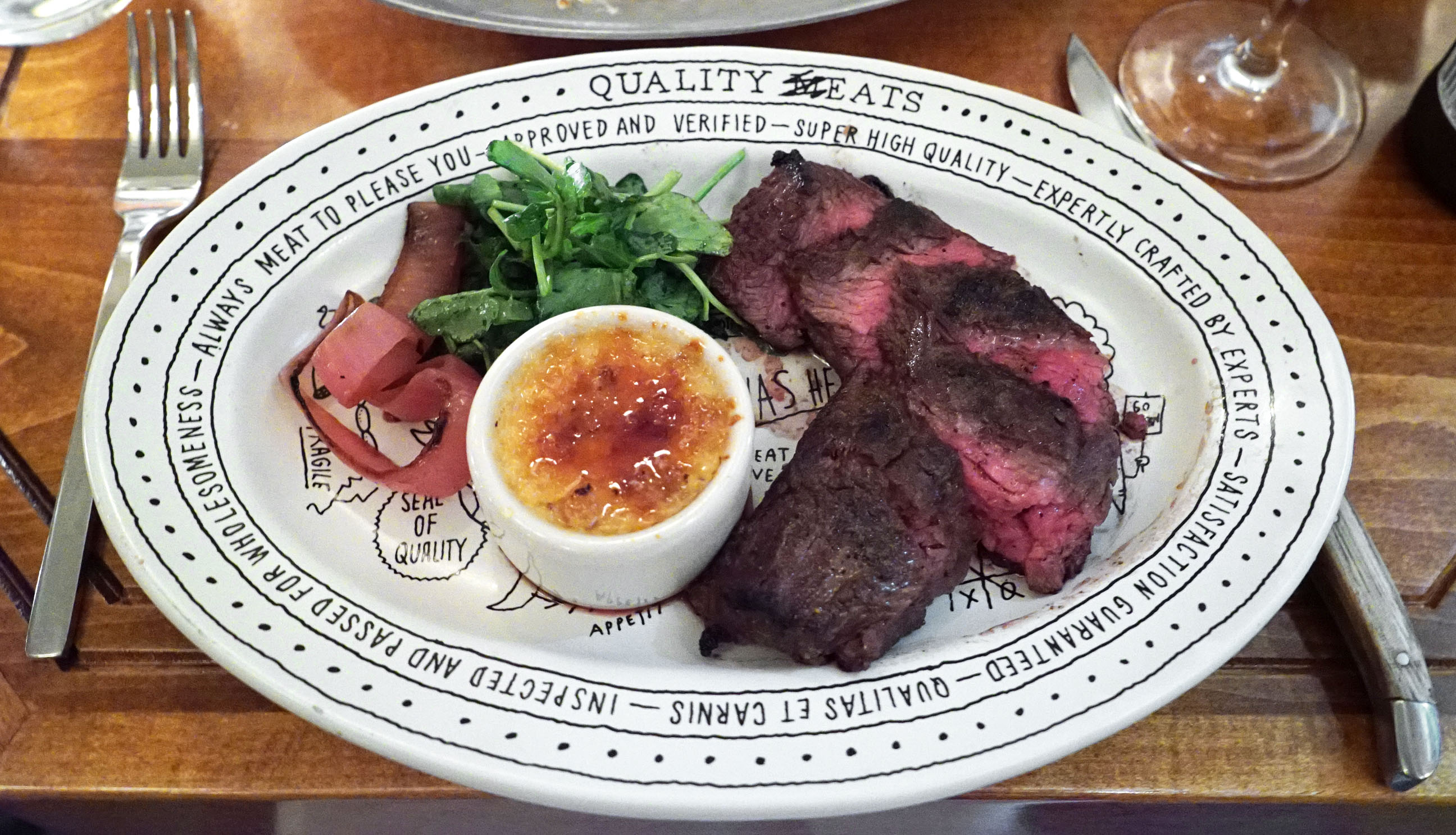
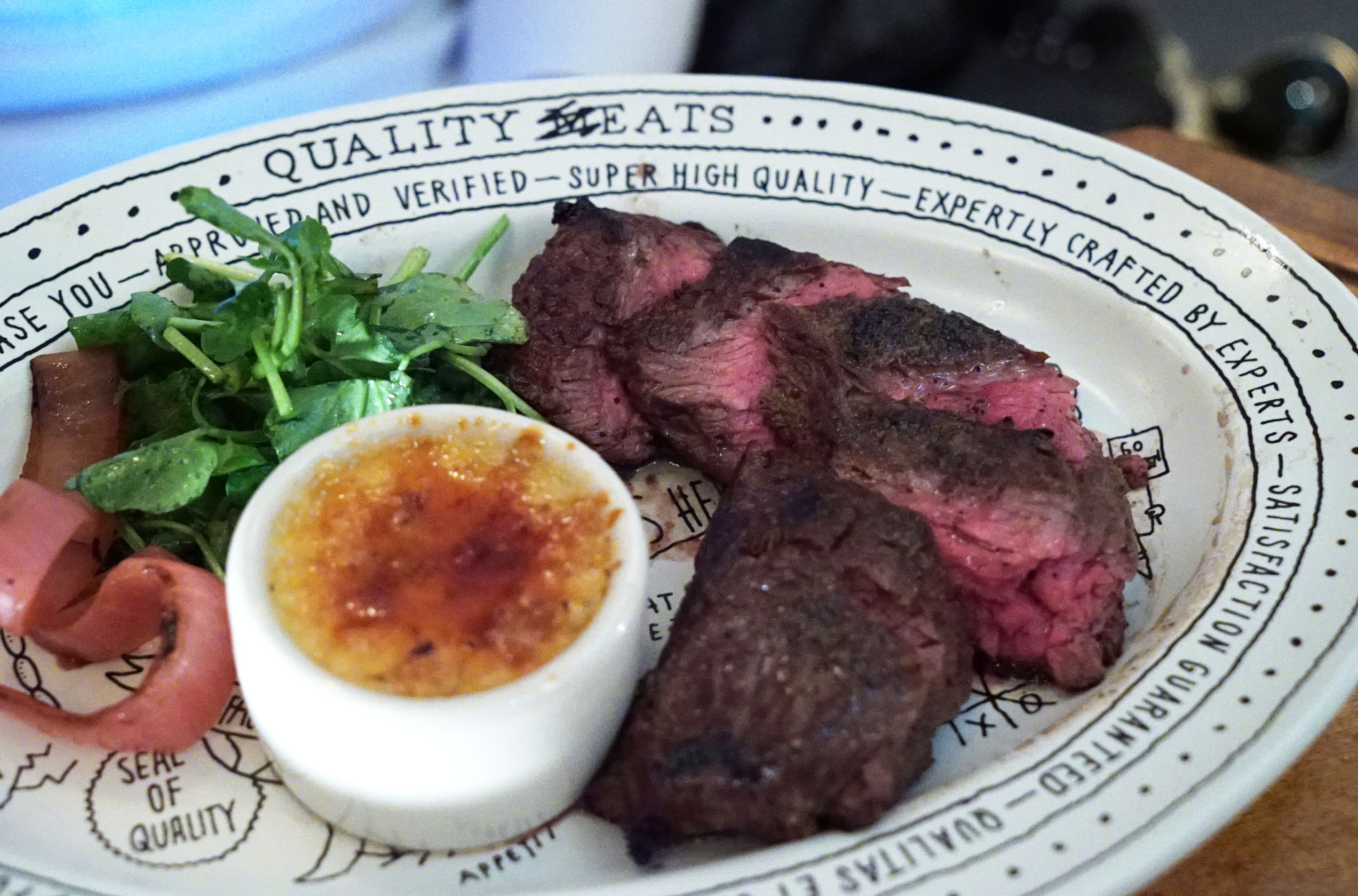
Here’s a look at the perfectly cooked, beautifully charred bavette steak. Both plates came with a cup of corn creme brûlée – sweet yet savory, and creamy as fuck – and some pickled red onion. I explain a little bit about this bavette cut down in the next section.

DSC08890

DSC08866

DSC08894

This was nice. It’s a smaller portion, but at $19 it’s a steal because of how delicious it is. The flavor and texture is similar to a hanger or a very soft flank. It gets cut on the bias, against the grain of the meat and muscle striations, to increase textural tenderness.

Choice of Cuts & Quality Available: 7
Don’t let the low score here fool you. This place offers more affordable, less common cuts of beef, but the quality is still extremely high. They don’t have a rib eye, a NY strip or a porterhouse. As such, points must be removed for each missing item. Instead, however, they have a bone-in short rib steak (the meat that rides along the length of the bone as opposed to the eye meat. They have a hanger steak, which is relatively more common. But they also serve a bavette, or flap steak, which is an extension of the T-bone and Porterhouse steaks. It is officially part of the short loin section, in the belly of the animal. They also have top sirloin, skirt steak, and a specially prepared filet with mustard peppercorn sauce called the “Don Ameche” – that’s Mortimer Duke from Trading Places! So they make up for not having those pricey cuts. I wonder what made them glorify Don. It’s funny because I always thought a theme steakhouse or restaurant called “Duke & Duke” or “Winthorpe & Valentine” would be a great idea (located somewhere by Wall Street).

Portion Size & Plating: 9
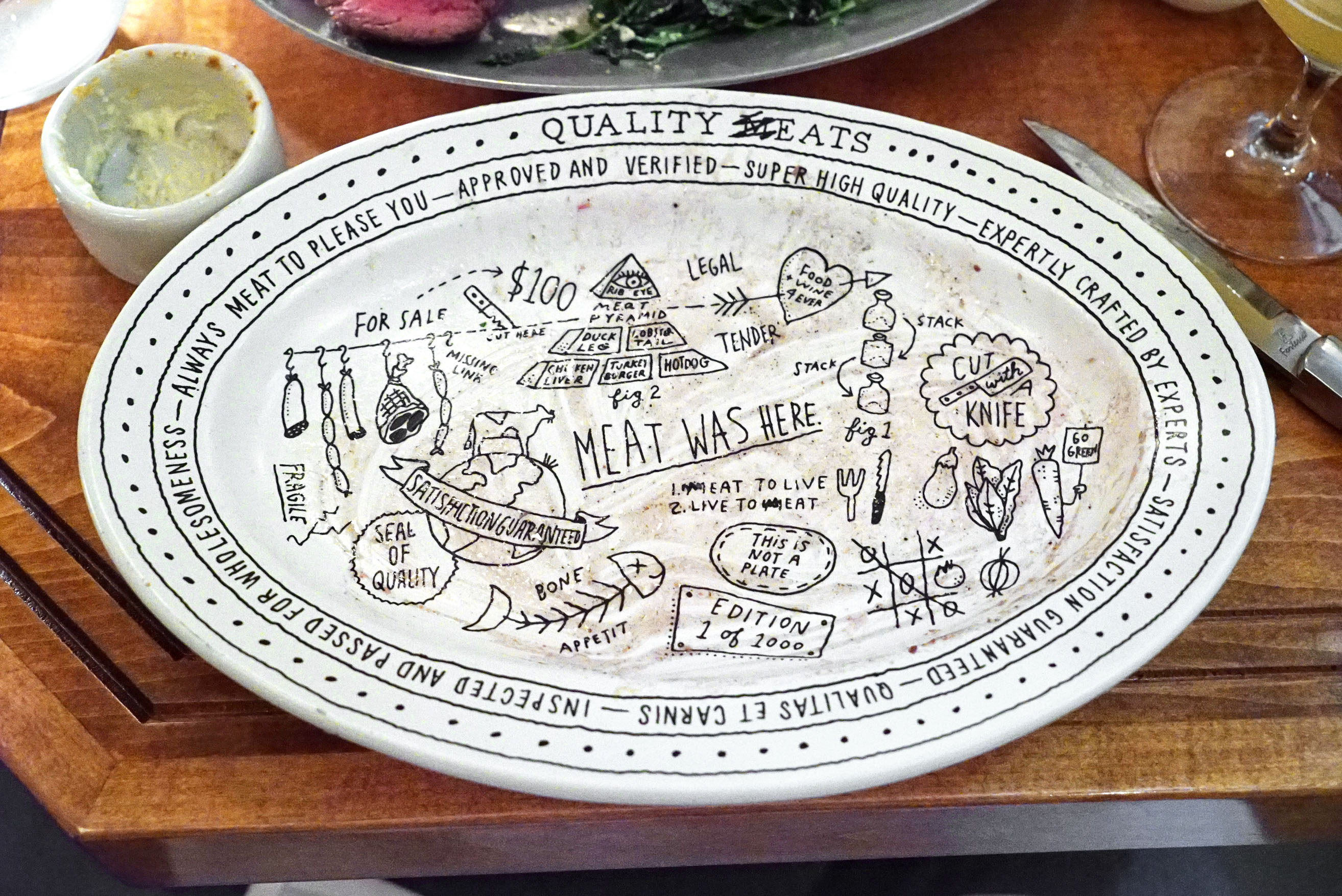
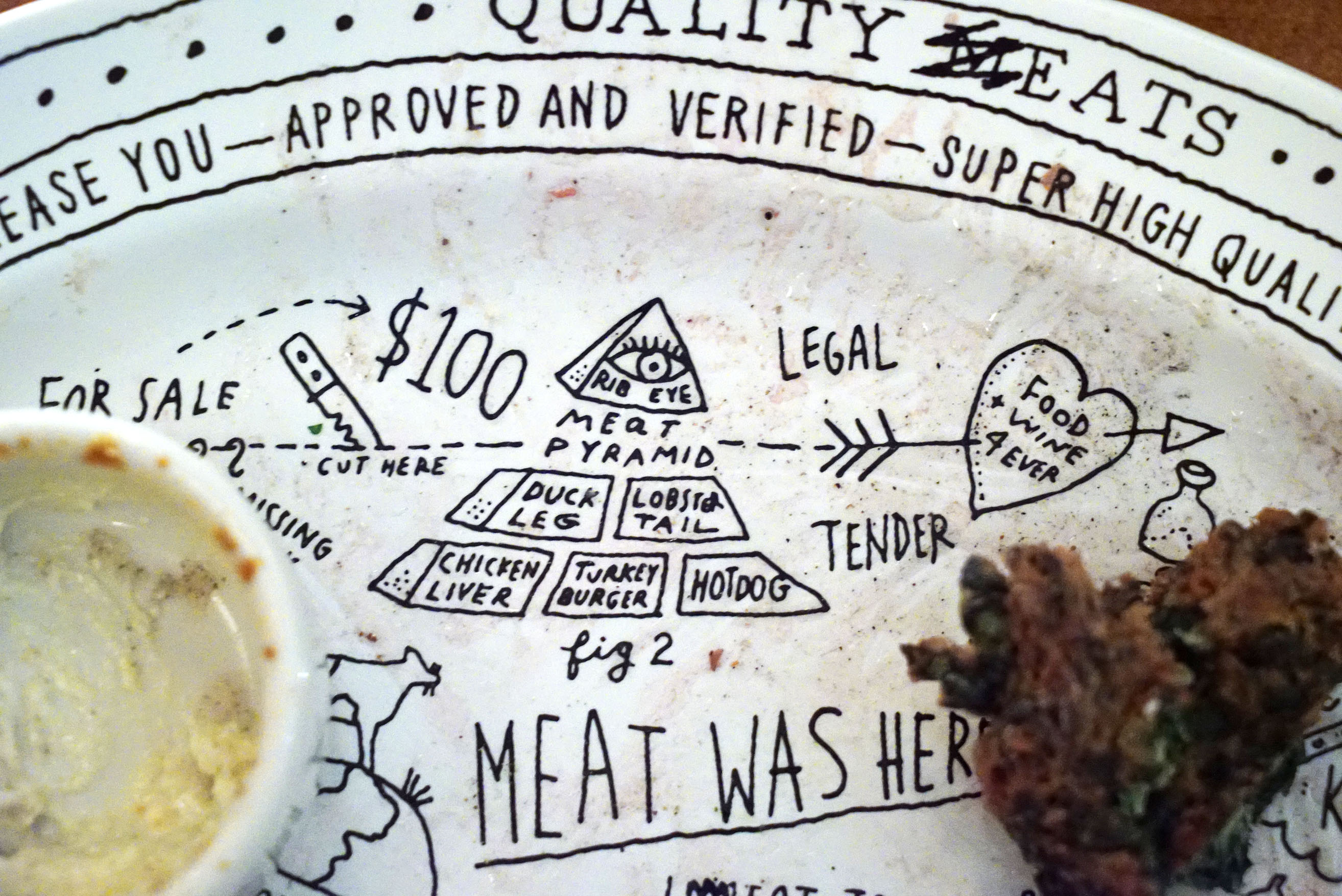
Portions are naturally a bit smaller for some of the less common cuts of beef, but the plating is really fun. They’ve got these line drawings all over the plates that match the decor of the restaurant.

DSC08902

DSC08912

Price: 10
This is the most budget friendly of the Fourth Wall restaurants. The most expensive steak is $29, the cheapest is $19. Wonderful! I think you get your money’s worth here. You save a good amount when you eat here, and while doing so you get to try some steak cuts that you would ordinarily not see on other steakhouse menus. We had two apps, two entrees, two sides, two desserts and three drinks. Our total was $151, before tip.

Bar: 8
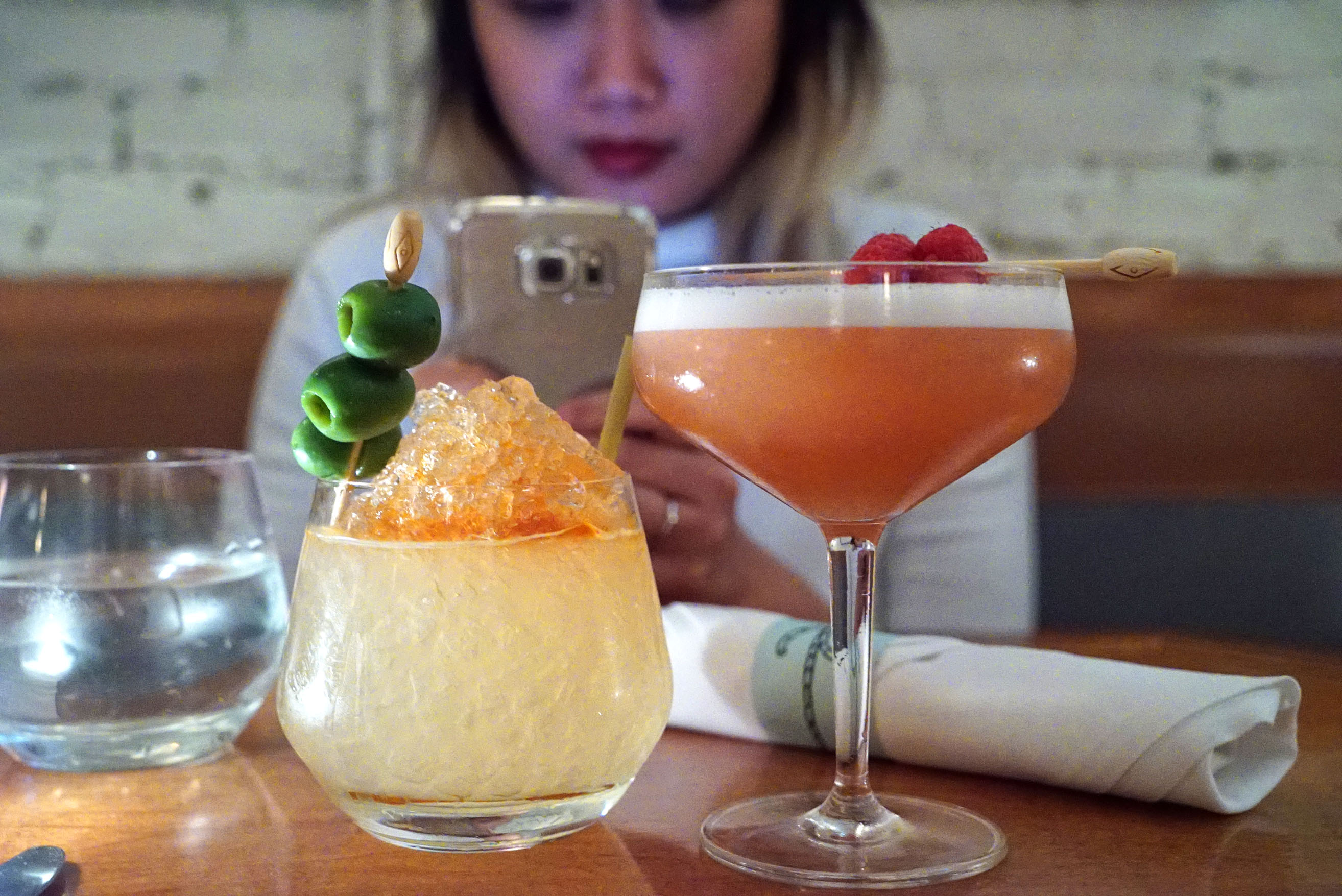
This bar has a great selection of unique cocktails, and some more hard to find beers. The bar area was pretty hopping on Friday evening when we went, in the 6:00 to 7:30 time frame.

DSC08842

DSC08880

Specials and Other Meats: 6
Since the menu is not massive, you’re limited to chicken and pork here in terms of non-beef meats. There were no specials offered by our waitress.

Apps, Sides & Desserts: 9
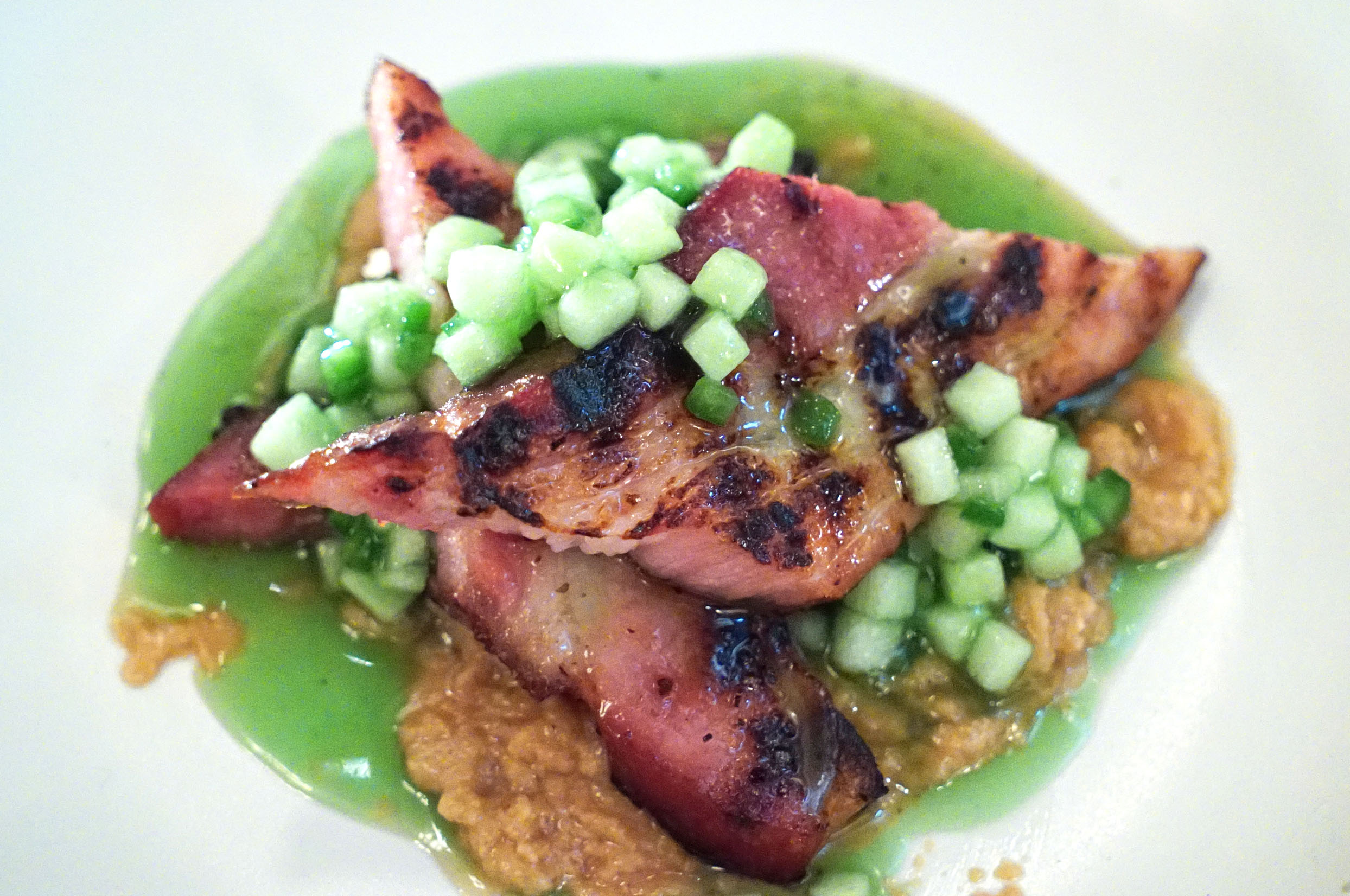
We did the PB&J bacon. Yes. It’s peanut butter and jalapeño jelly, with bacon. It was stupendously good. The jelly was spicy and sweet at the same time. If moms pack this on a sandwich in their kids’ lunch boxes, those kids will probably grow up to be UFC fighters or something. That’s how badass it is.

DSC08855

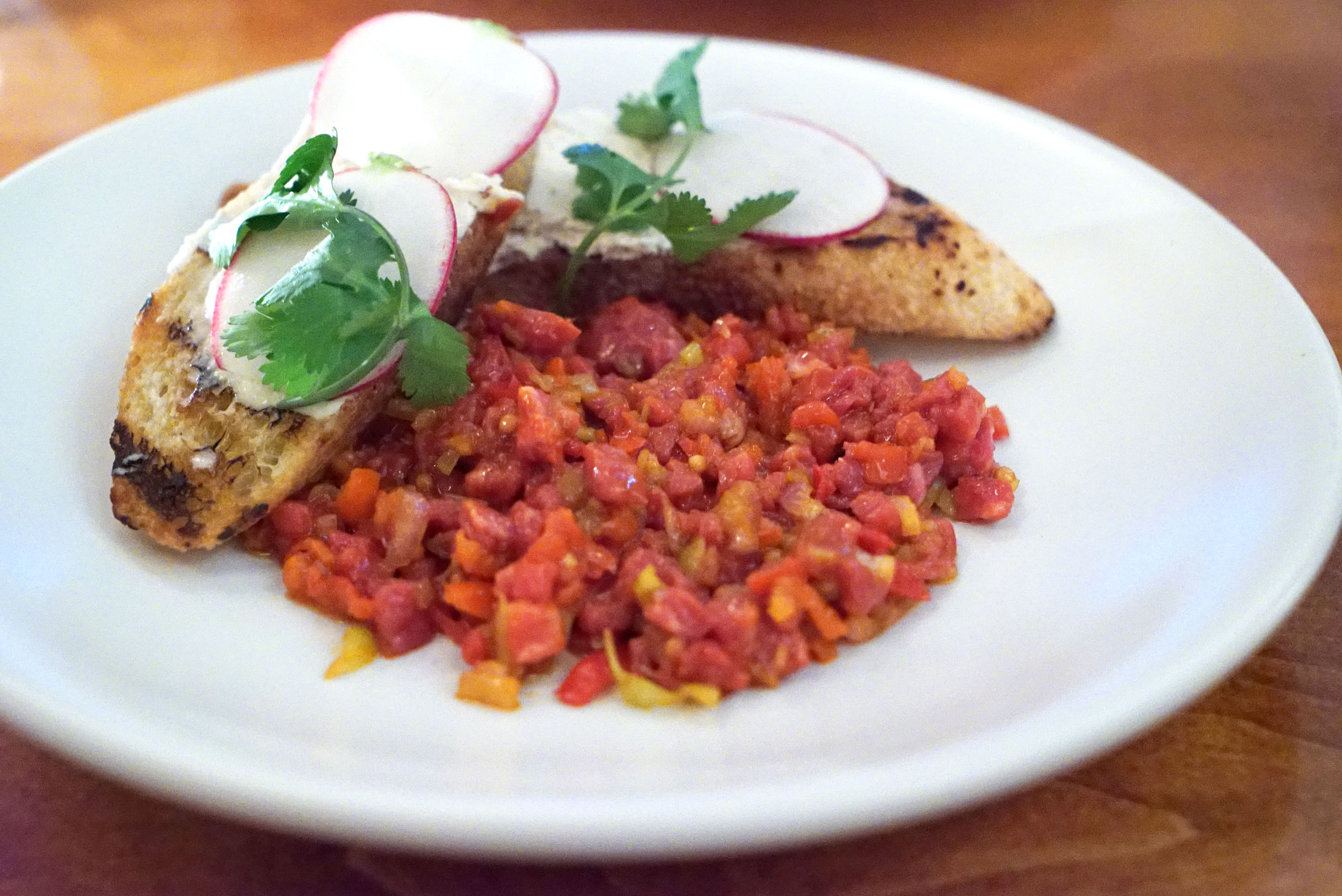
Our other starter was the steak tartare, because what is better to begin a steak meal with than raw steak?

DSC08849

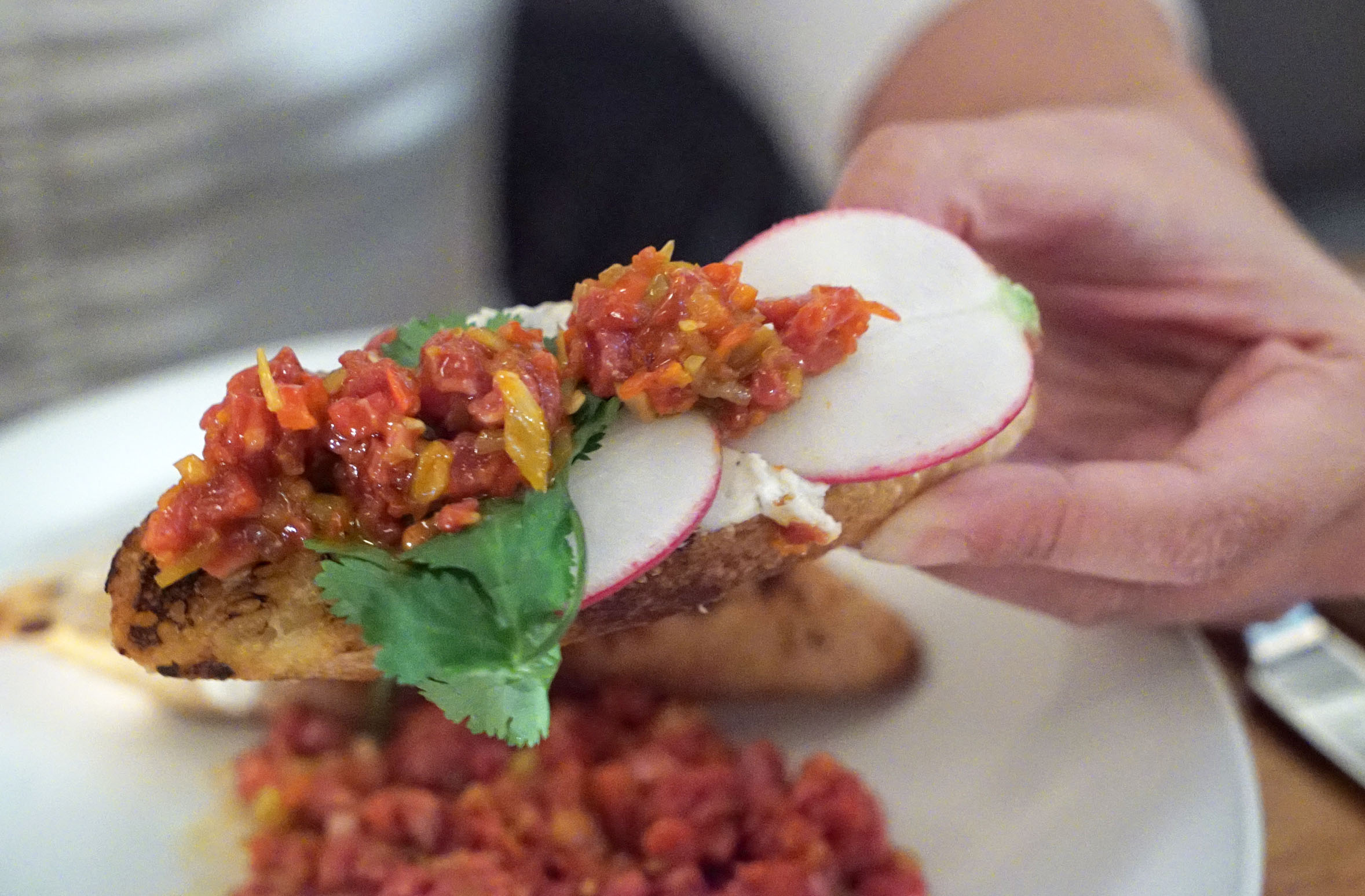
The toast came with a marrow butter and radishes. The butter was really creamy and beefy, and the radish added a little bit of crunch element and a bright pop to the bite. The meat texture was soft and delicate, very tasty.

DSC08860

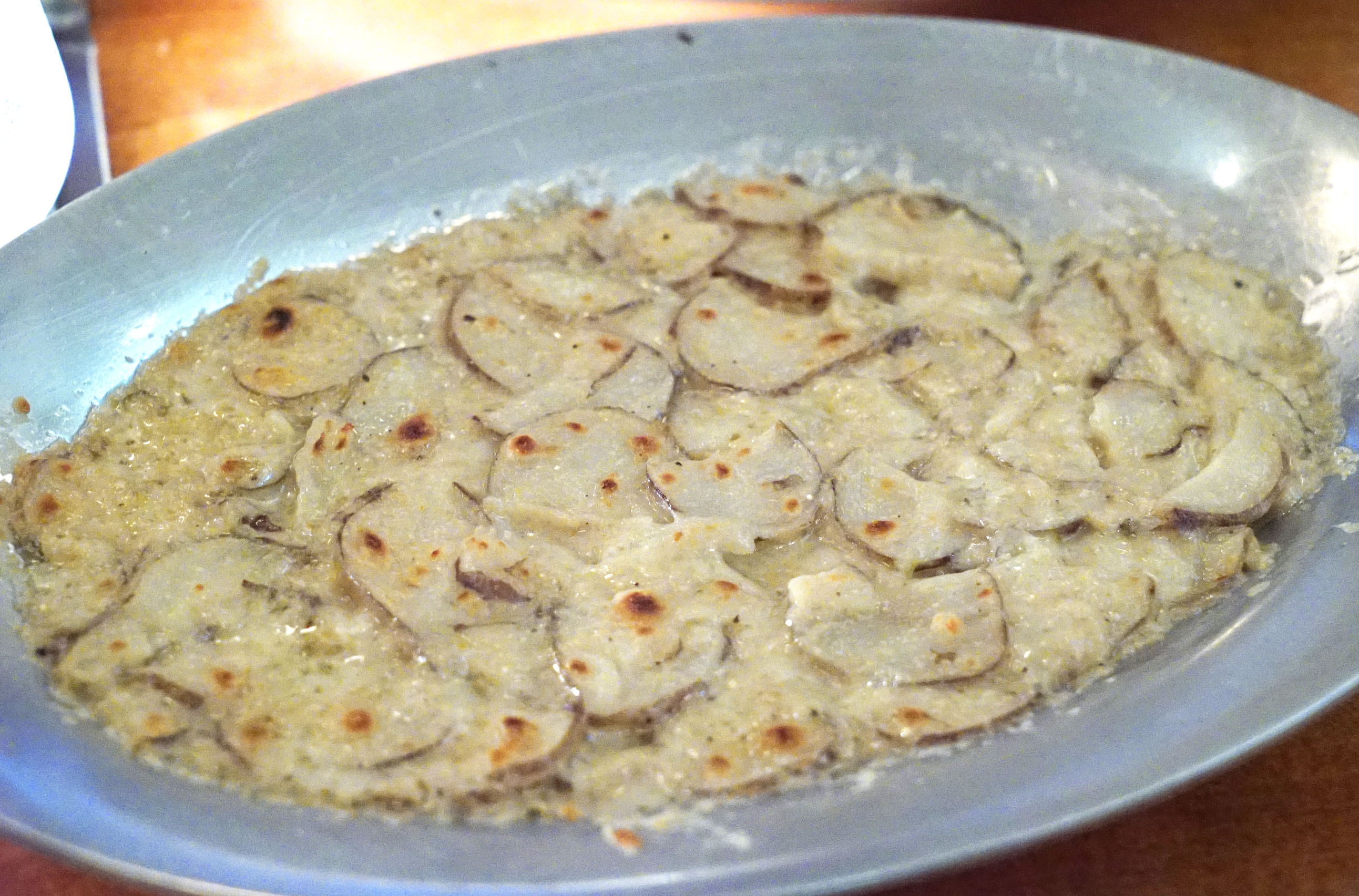
For sides, we first tried this scalloped sunchoke.
DSC08872

Sunchoke is the root of a sunflower. If you’ve never had it before, it tastes like a mix of artichoke and potato. It is one of my favorite starch-veggie items in the world. This was done beautifully, like a scalloped potato dish with some broiled cheese on top.

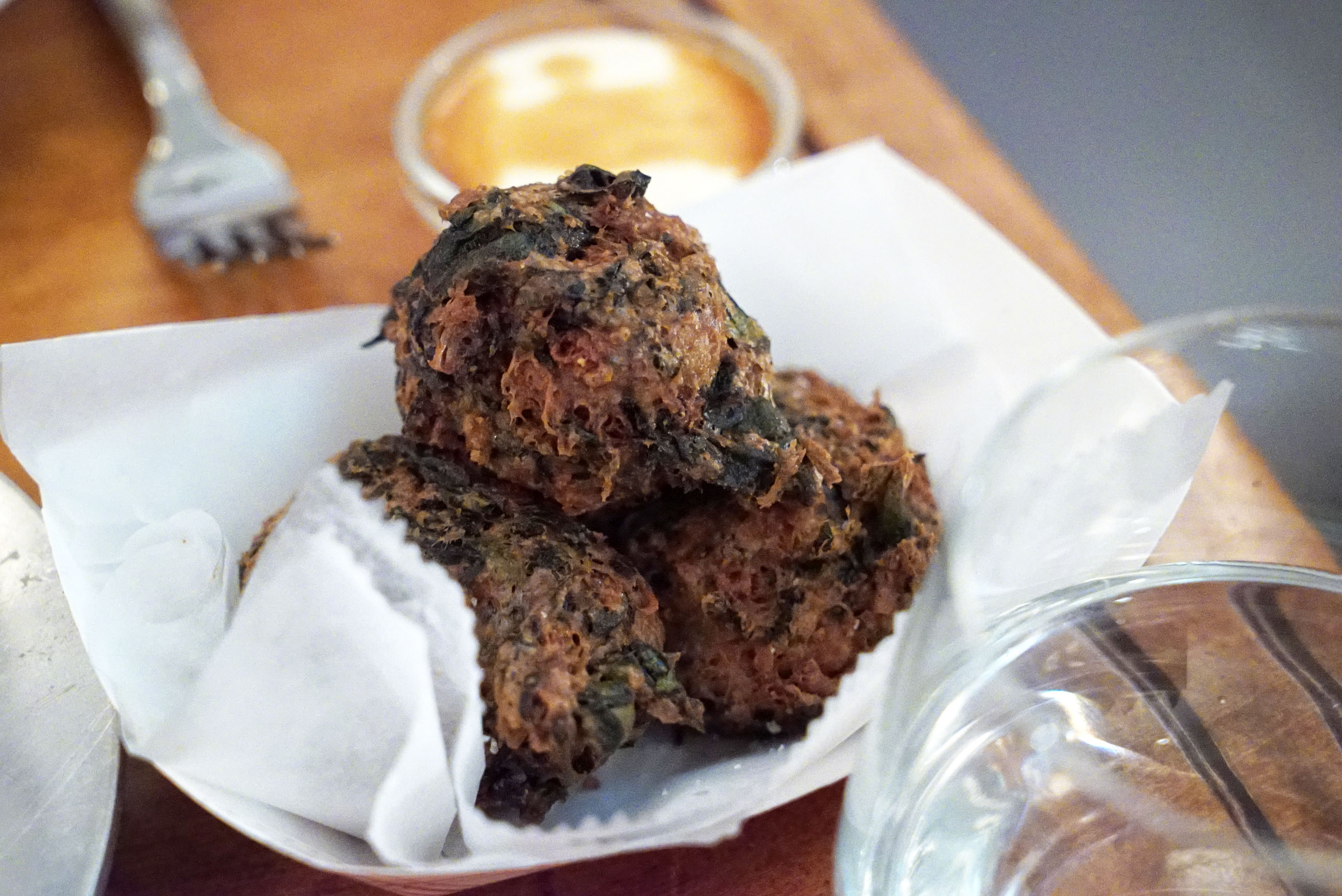
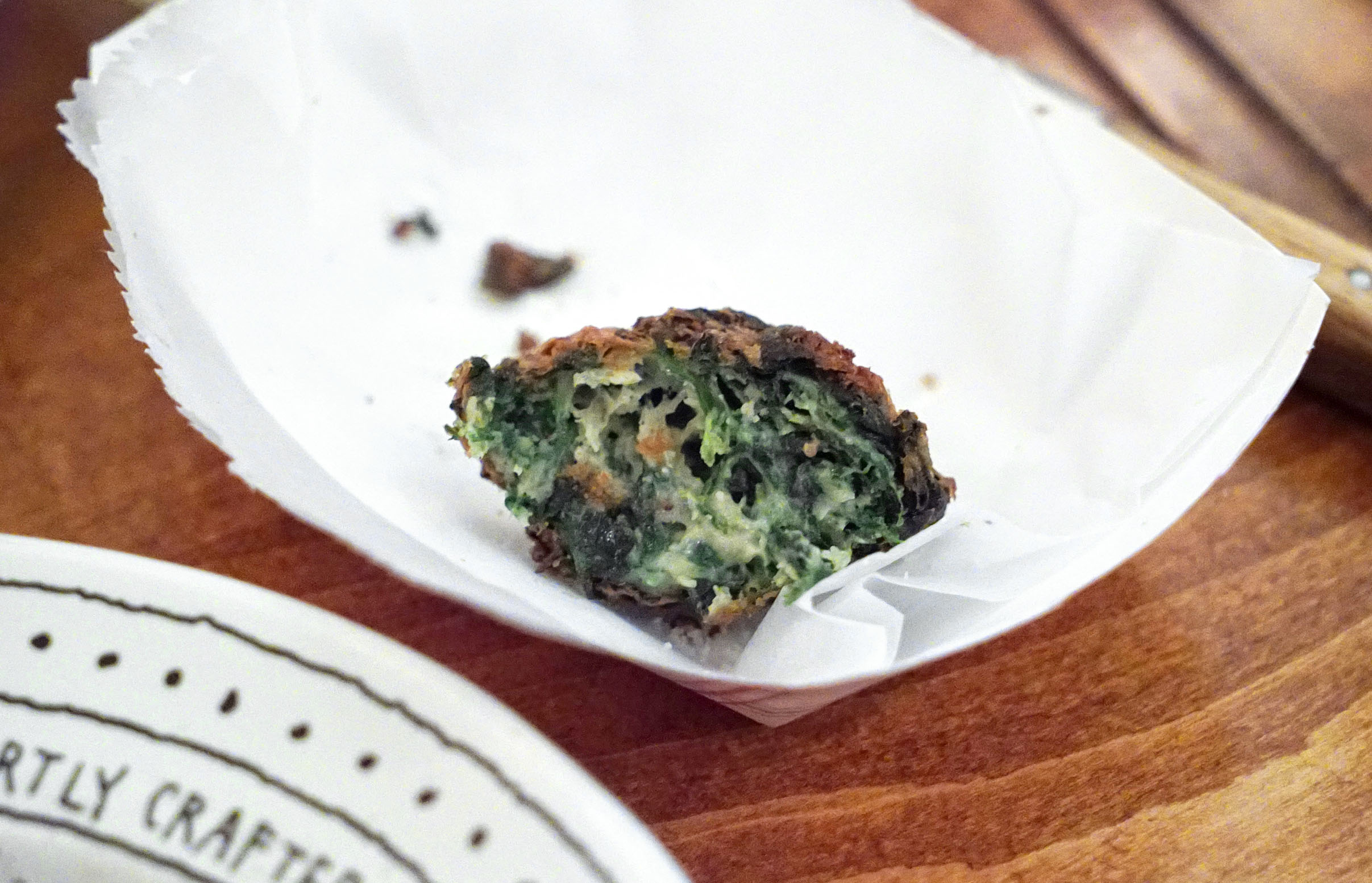
We also tried the creamed spinach hush puppies. These were pretty interesting:

DSC08875

A bit more dense and moist than your average hush puppy, the spinach inside added a juicy element to each bite.

DSC08905

It was also served with a beef jus mayo for dipping.
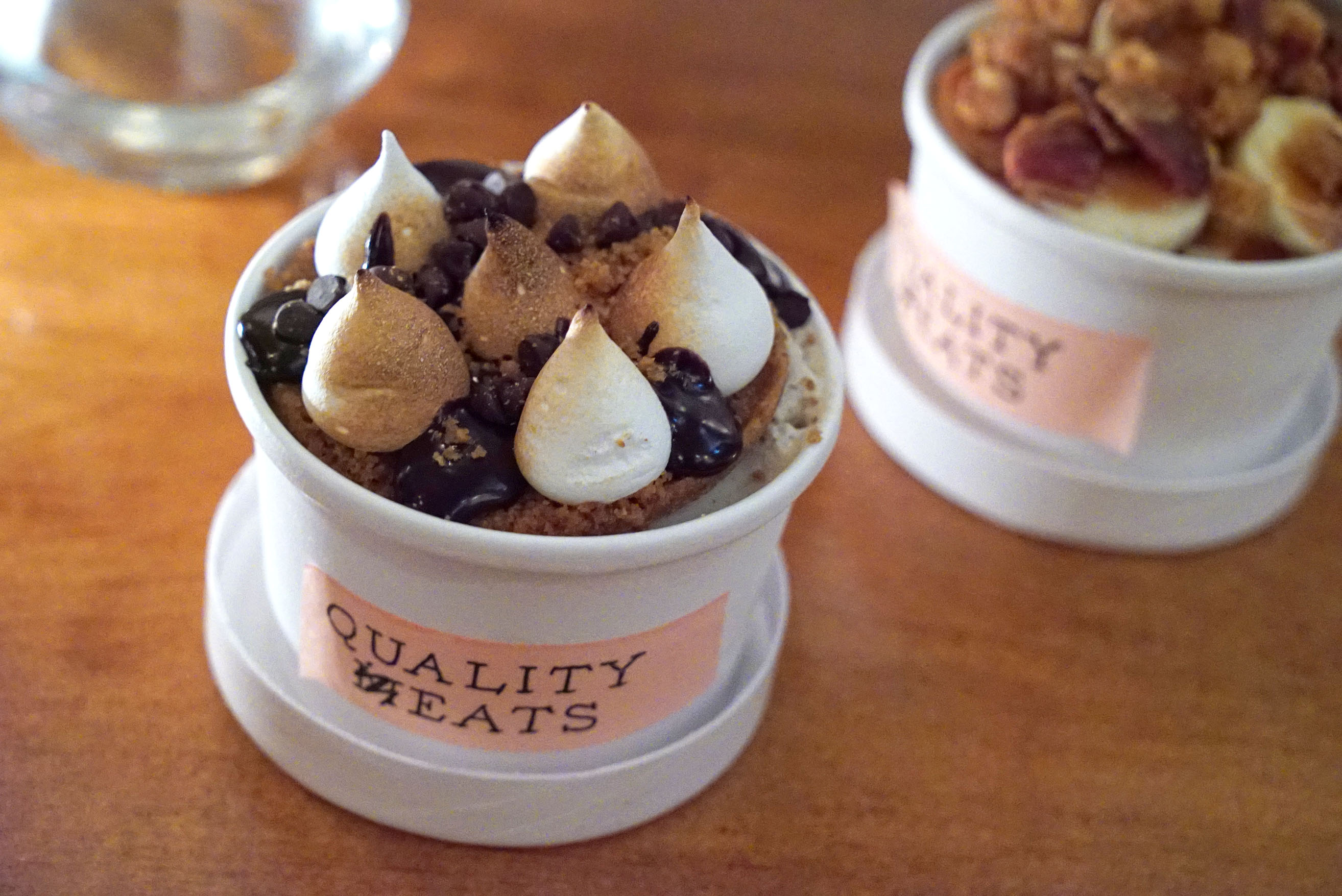
The dessert menu offered an array of interesting selections. We went with two ice cream items. First is my burnt marshmallow ice cream s’mores, with graham cracker shortbread, toasted marshmallows and a fudge swirl. Awesome. I declare that burnt marshmallow flavored ice cream needs to be in every grocery store, ASAP. Each bite tasted like a campfire or post-grilling snack.

DSC08918

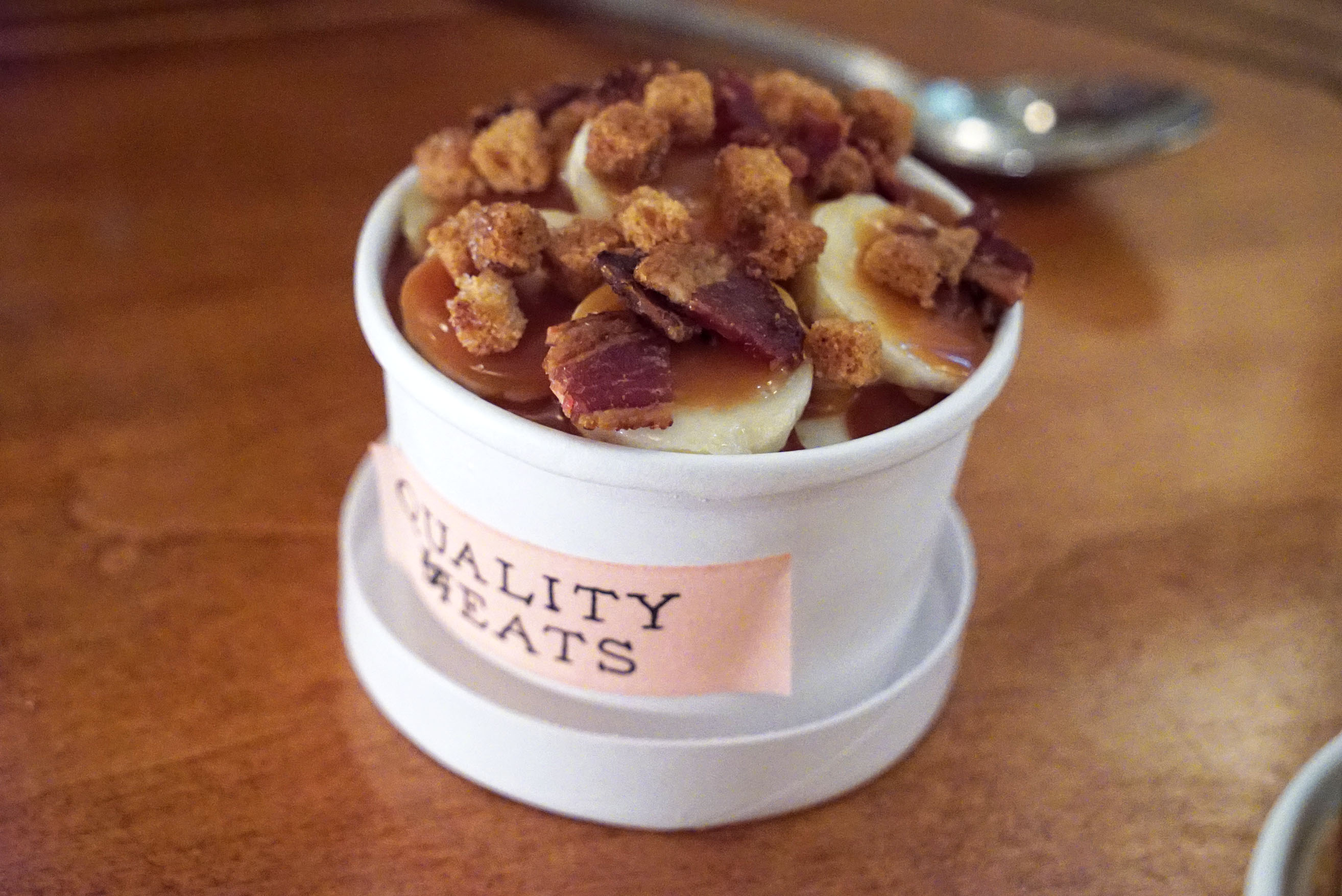
My wife had an item called “This Shit is Bananas.” It’s roasted banana flavored ice cream with peanut butter caramel, candied bacon and cinnamon toast. ELVIS HAS ENTERED THE BUILDING!

DSC08920

I liked mine better, and my wife liked hers better. So that worked out.

Seafood Selection: 7
There’s octopus, branzino and scallops for main course seafood items. However, you have some seafood on the app menu as well, like hamachi crudo, crab and shrimp. Since we didn’t try any of these, I will be using a placeholder score of seven for now.

Service: 10
Our waitress was fun, bright and informative. We never felt rushed or slowed down, and the manager and kitchen staff each visited our table a few times to check in on us. This is the kind of service that I expect and have become accustomed to with Fourth Wall. They’re great people.

Ambiance: 9
This joint does well with the small space. As you stroll past the bar you can go up to a back room area that has more seating. The lighting all over is warm and dim, comforting, but the walls are vibrant and interesting.

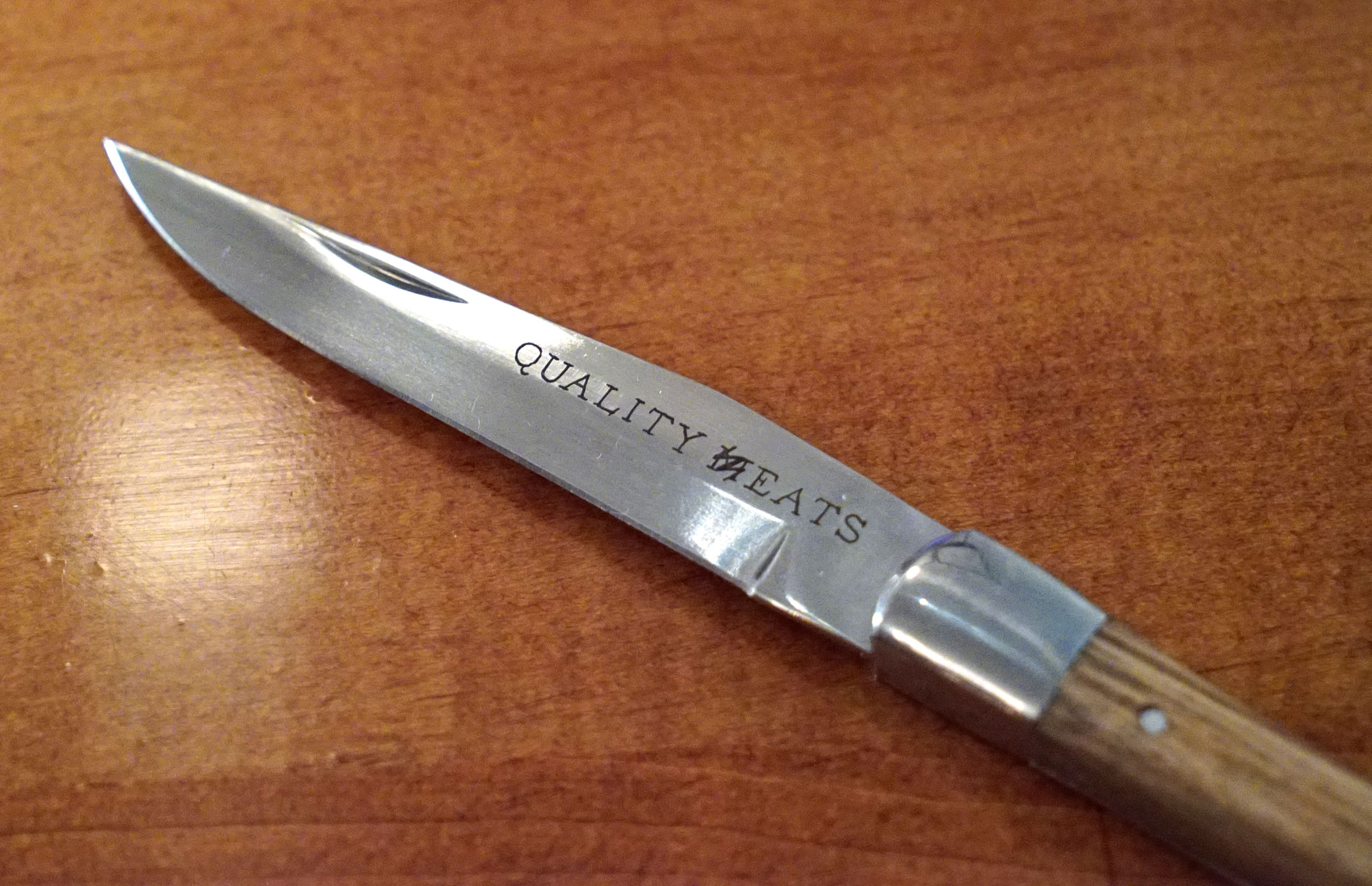
The details they put on everything, from the walls to the ceilings, to the cutlery and bathroom tiles, is all fun and light hearted (like the plates above). I like how the M on “Quality Meats” is made to look like it was scratched out or missing on all their logos and signage.

DSC08865

There’s even some some meat- and drink-related tile work in the bathroom. It’s like an Atari game from the 80’s.

20151113_194354

20151113_194403

20151113_194408

UPDATE FOR UPPER EAST SIDE LOCATION 9/9/17

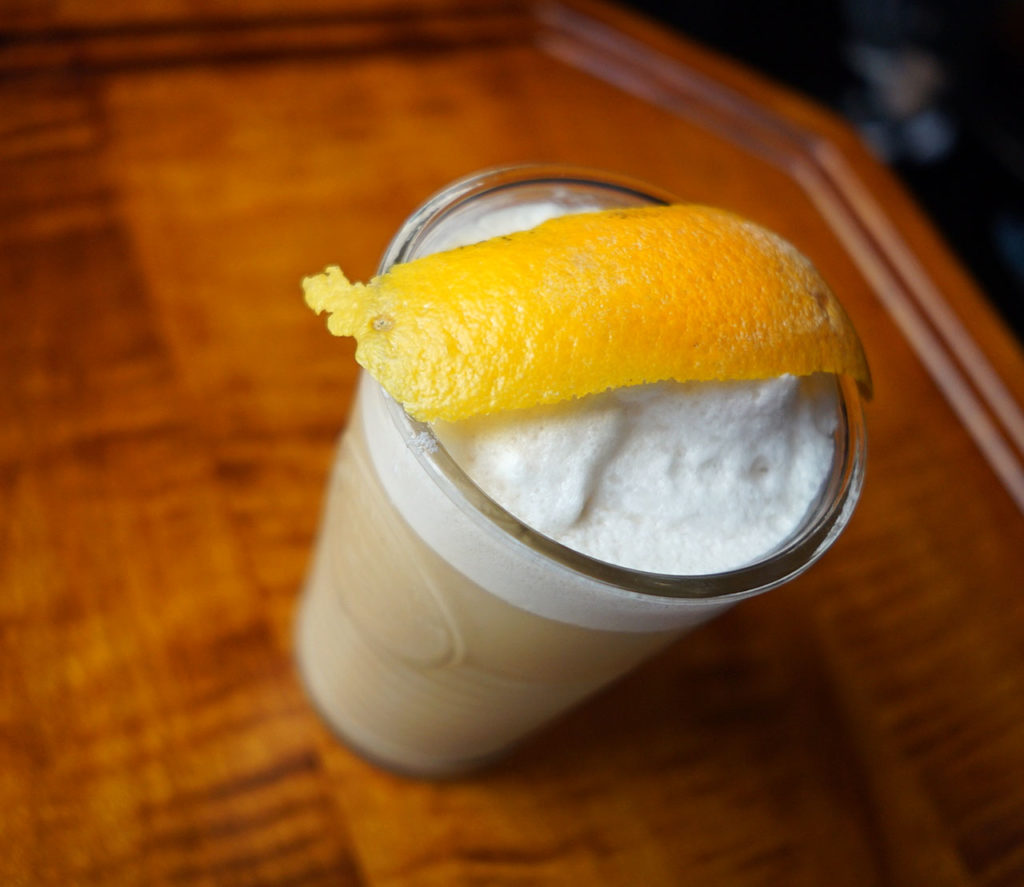
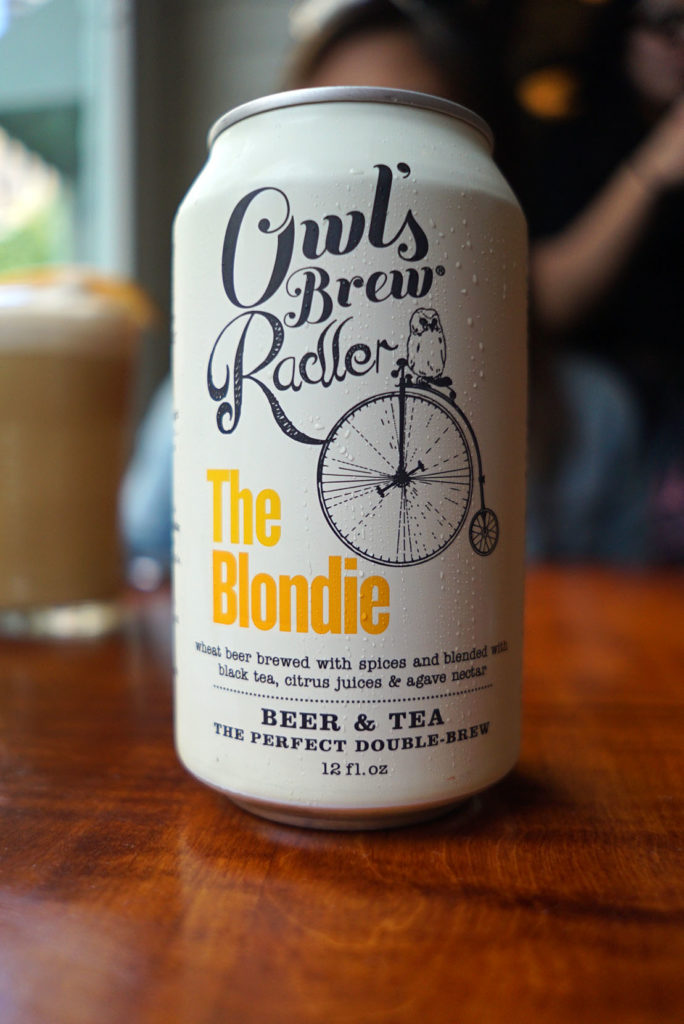
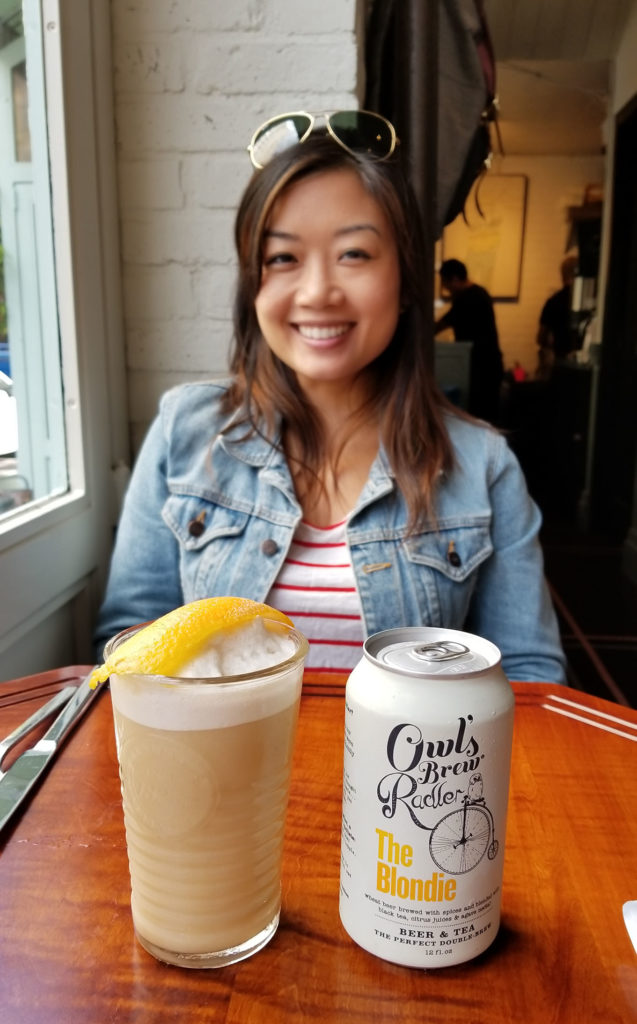
My wife and I stopped into the upper east side location for brunch. We started with a pair of drinks.

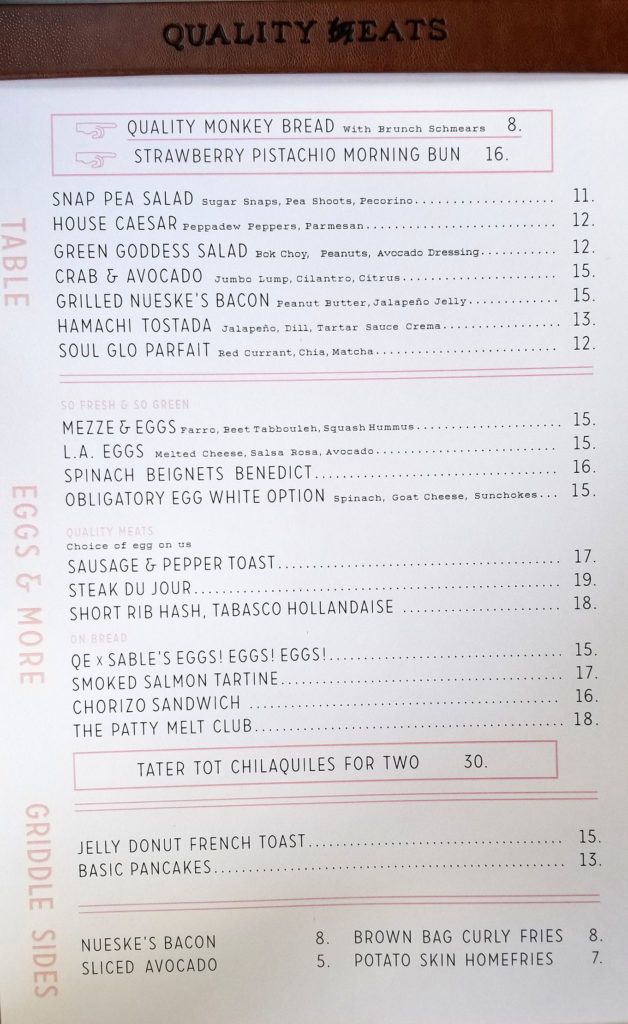
The menu here is fairly similar to the downtown location.

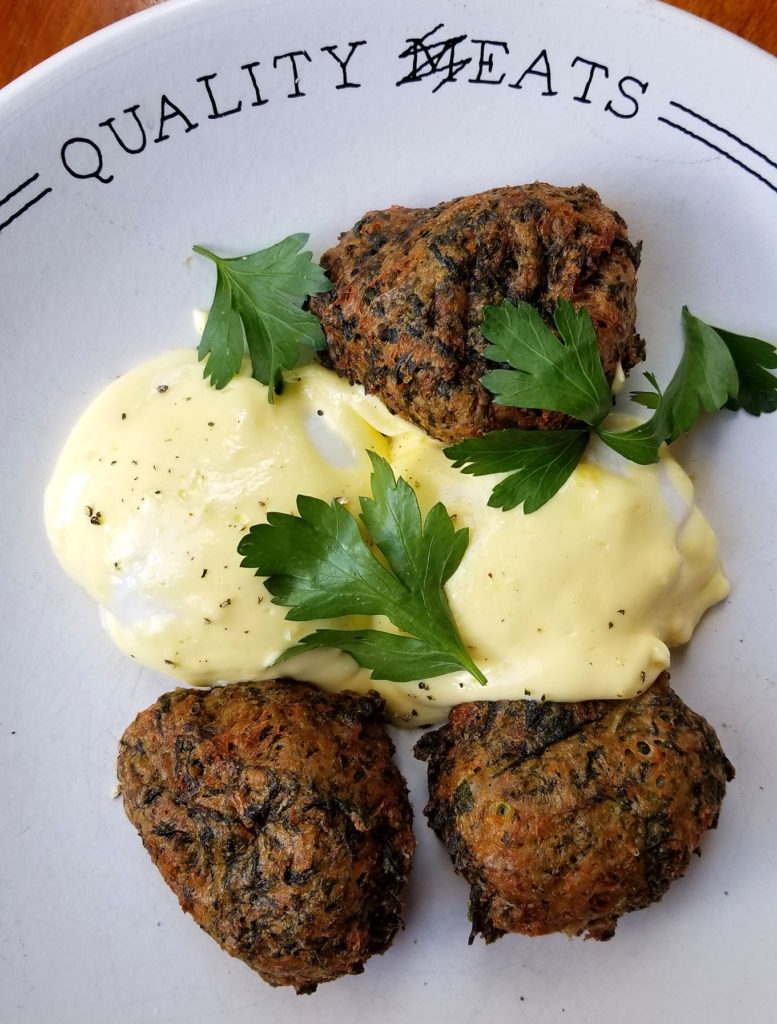
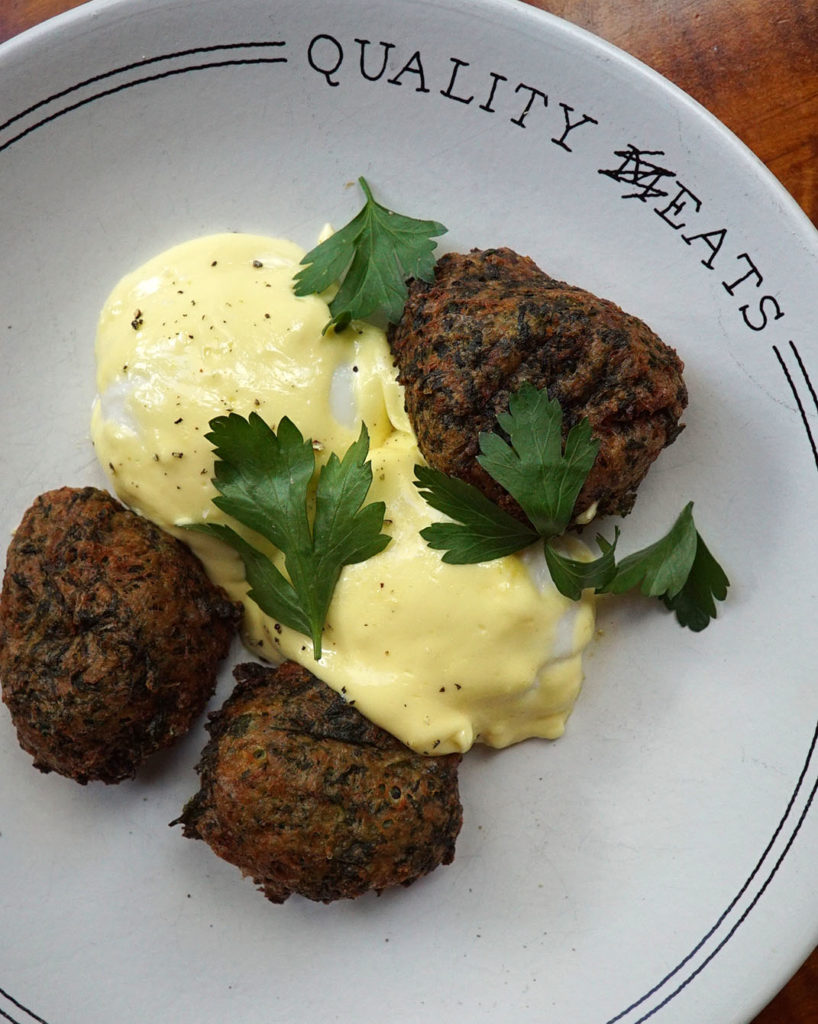
My wife got the spinach beignets, which were pretty much the exact same thing as the creamed spinach croquettes.

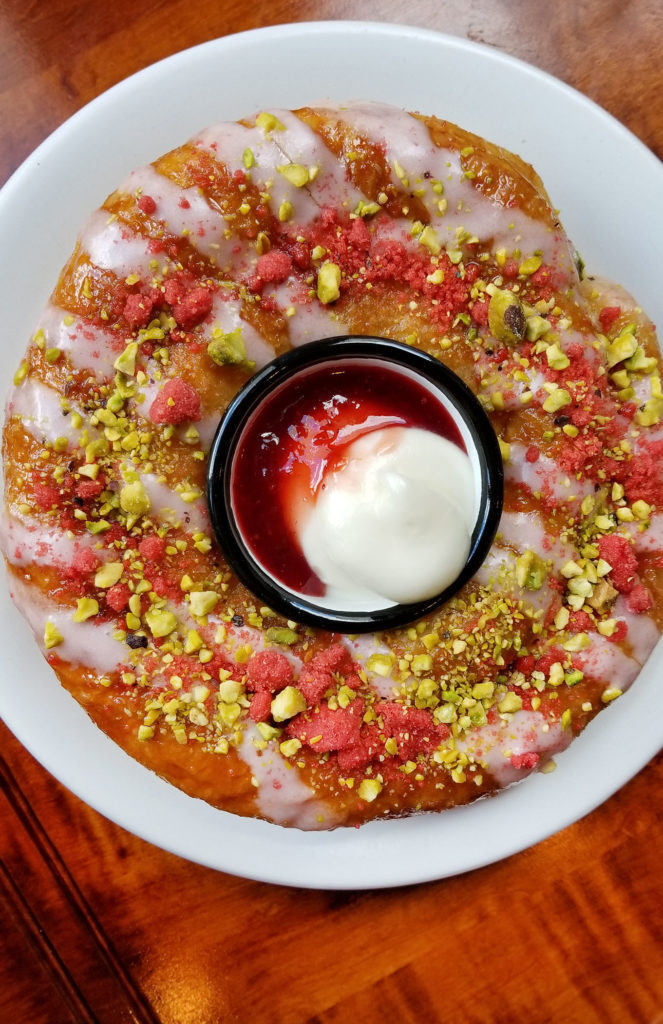
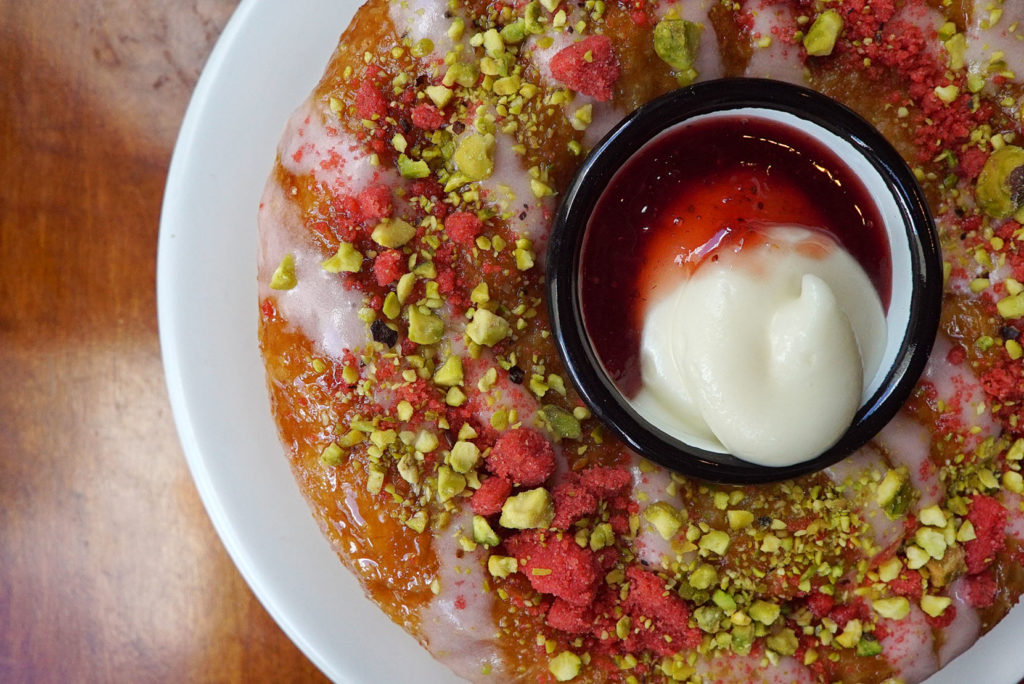
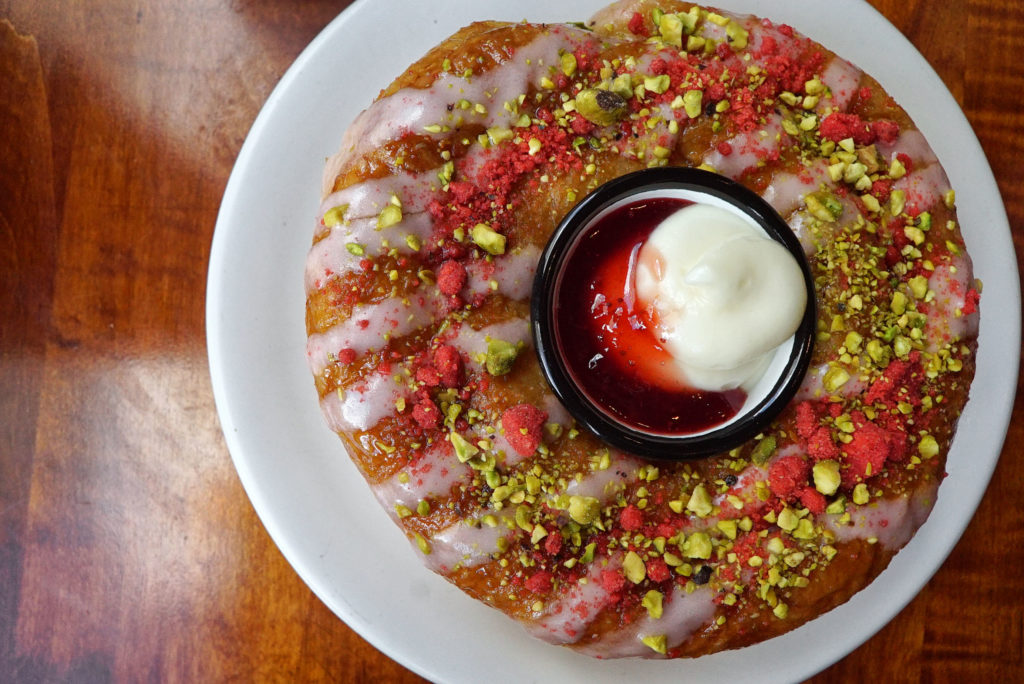
I went with the strawberry and pistachio morning bun, which was essentially a huge cinnamon bun made of croissant bread.

Delicious, but pricey at $16.

QUALITY EATS
19 Greenwich Ave.
New York, NY 10014

K*Rico

K*Rico overall score: 92

This is a relatively recent addition to the smaller scale steakhouse scene. The cuisine here is Latin American/South American style, but with a focus on steak, being a steakhouse and all.

DSC08770

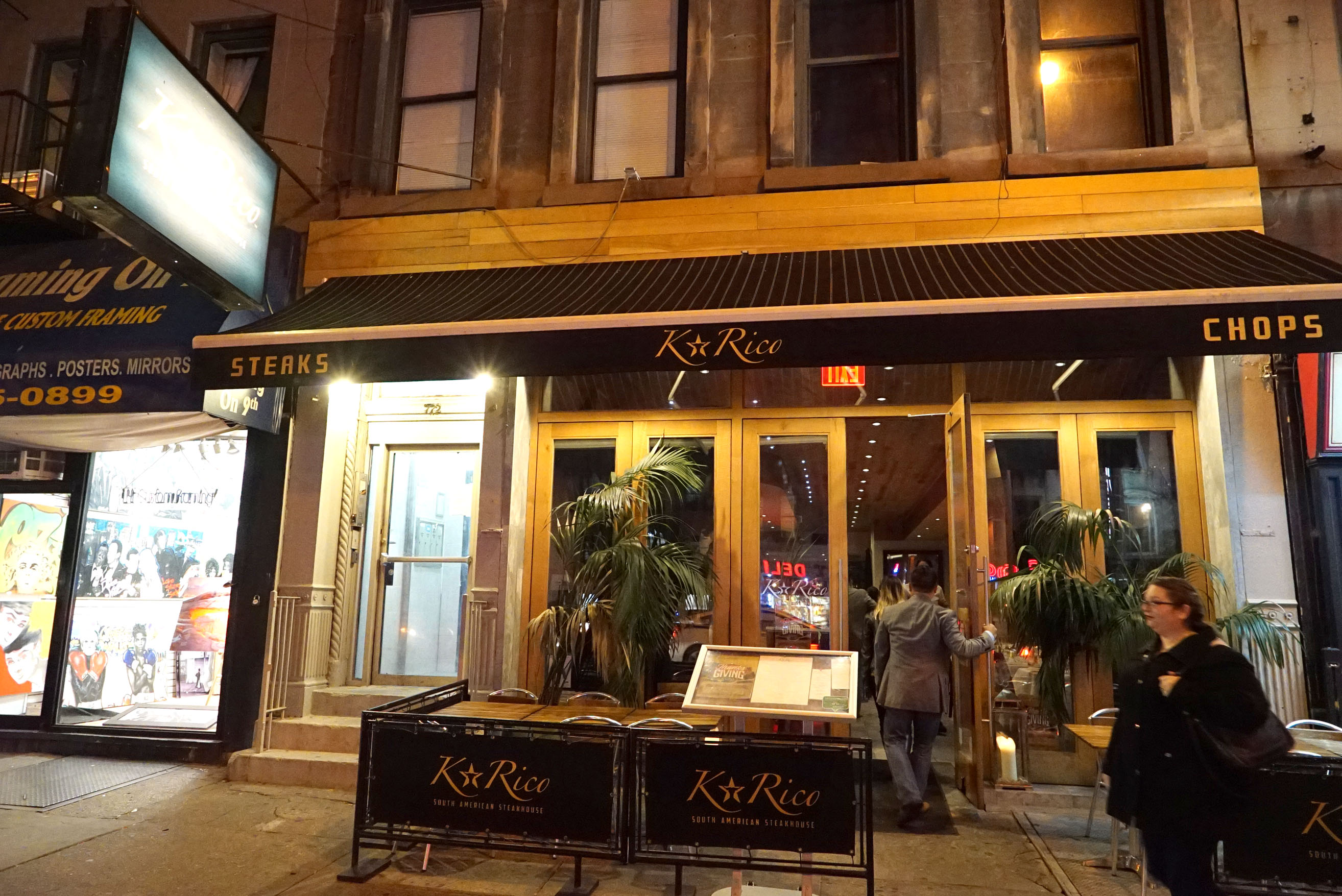
DSC08771

This time we had three people dining, so we were able to sample a bit more than usual. Here’s the breakdown:

Flavor: 9
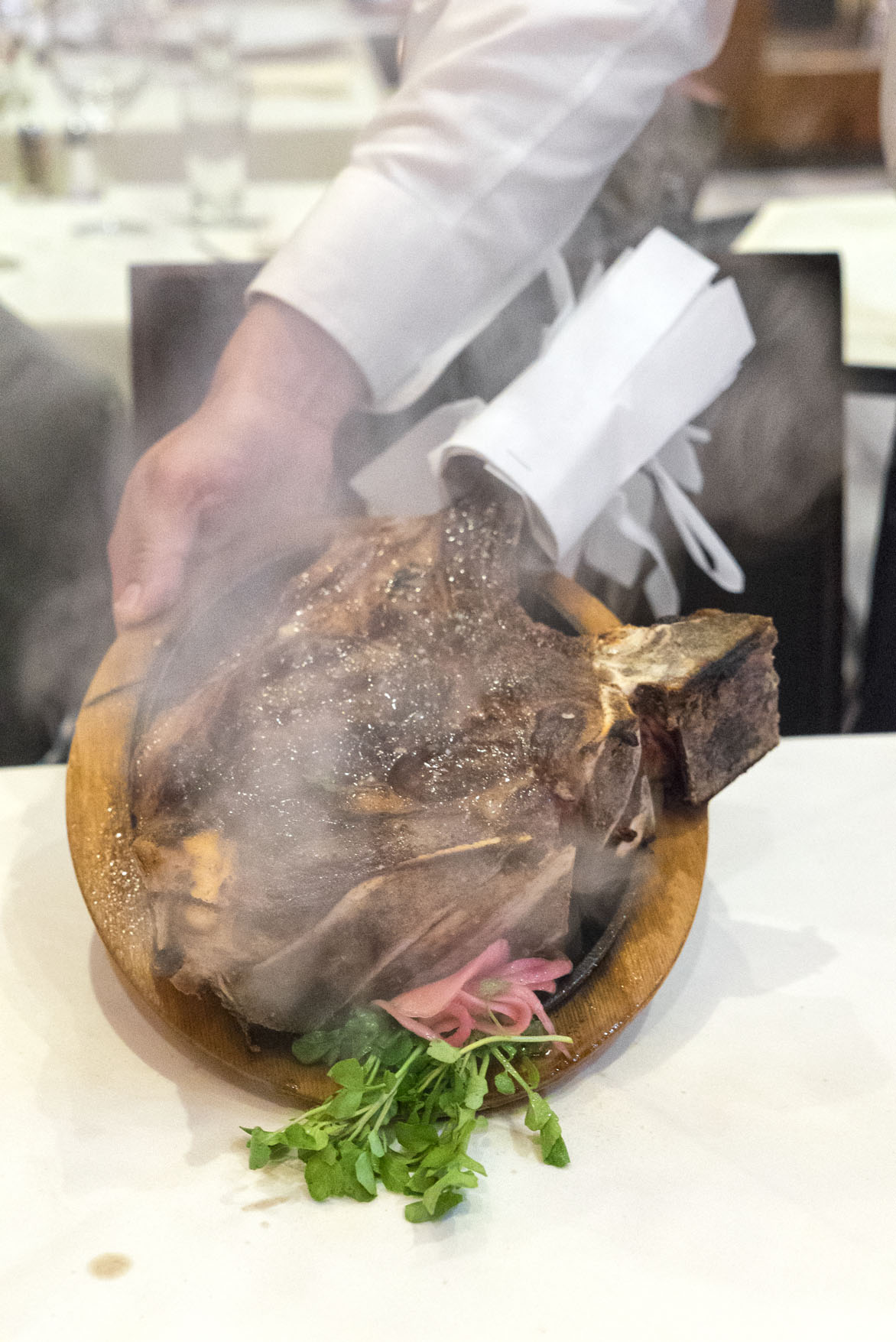
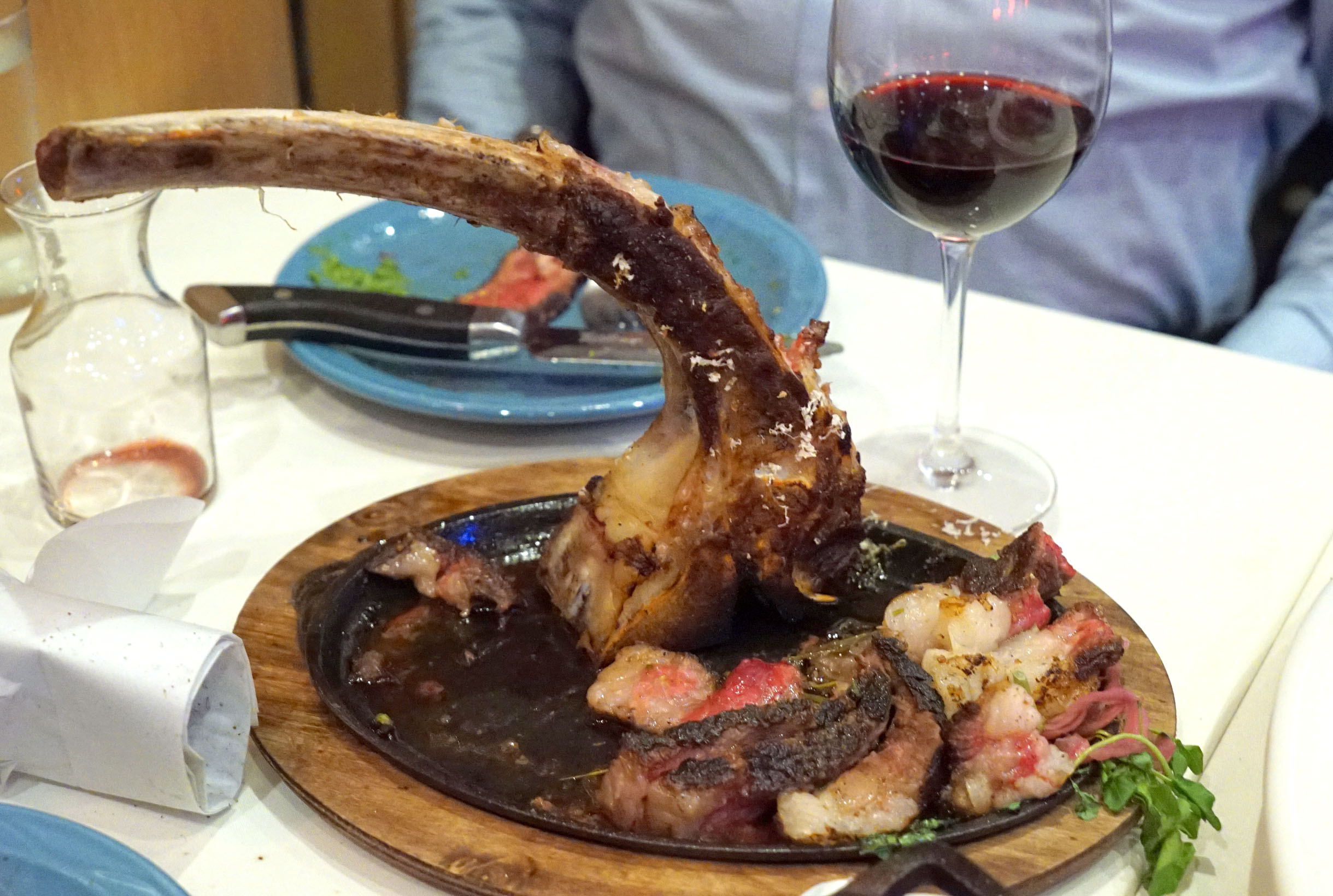
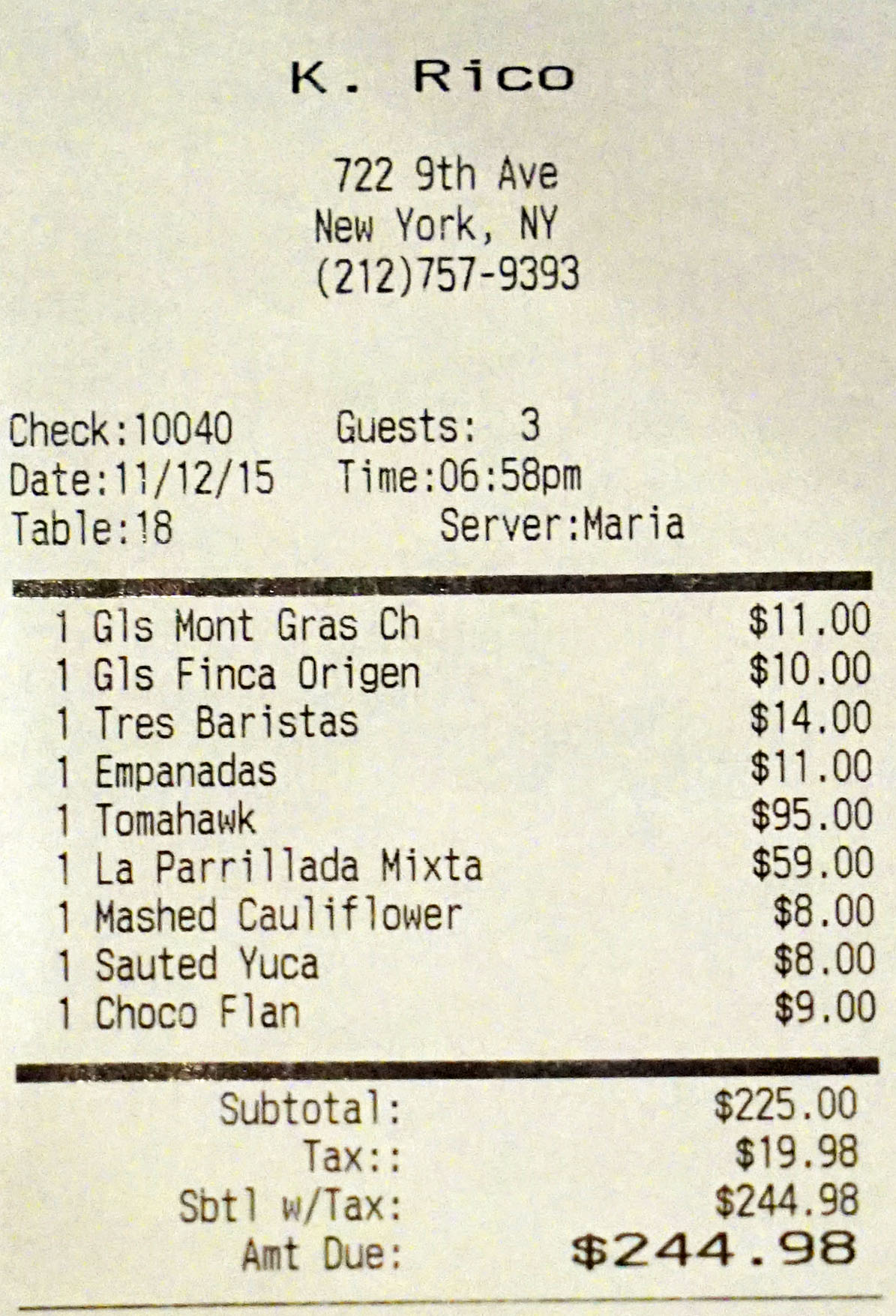
We had this massive 40oz tomahawk rib eye that was dry aged for 70 days. This is on special right now for $95, so if you like what you see, go get it while supplies last!

DSC08785

They bring it out to the table while it’s still sizzling hot. Then they take it back and let it rest before slicing and plating.

DSC08807

DSC08804 (2)

DSC08805 (2)

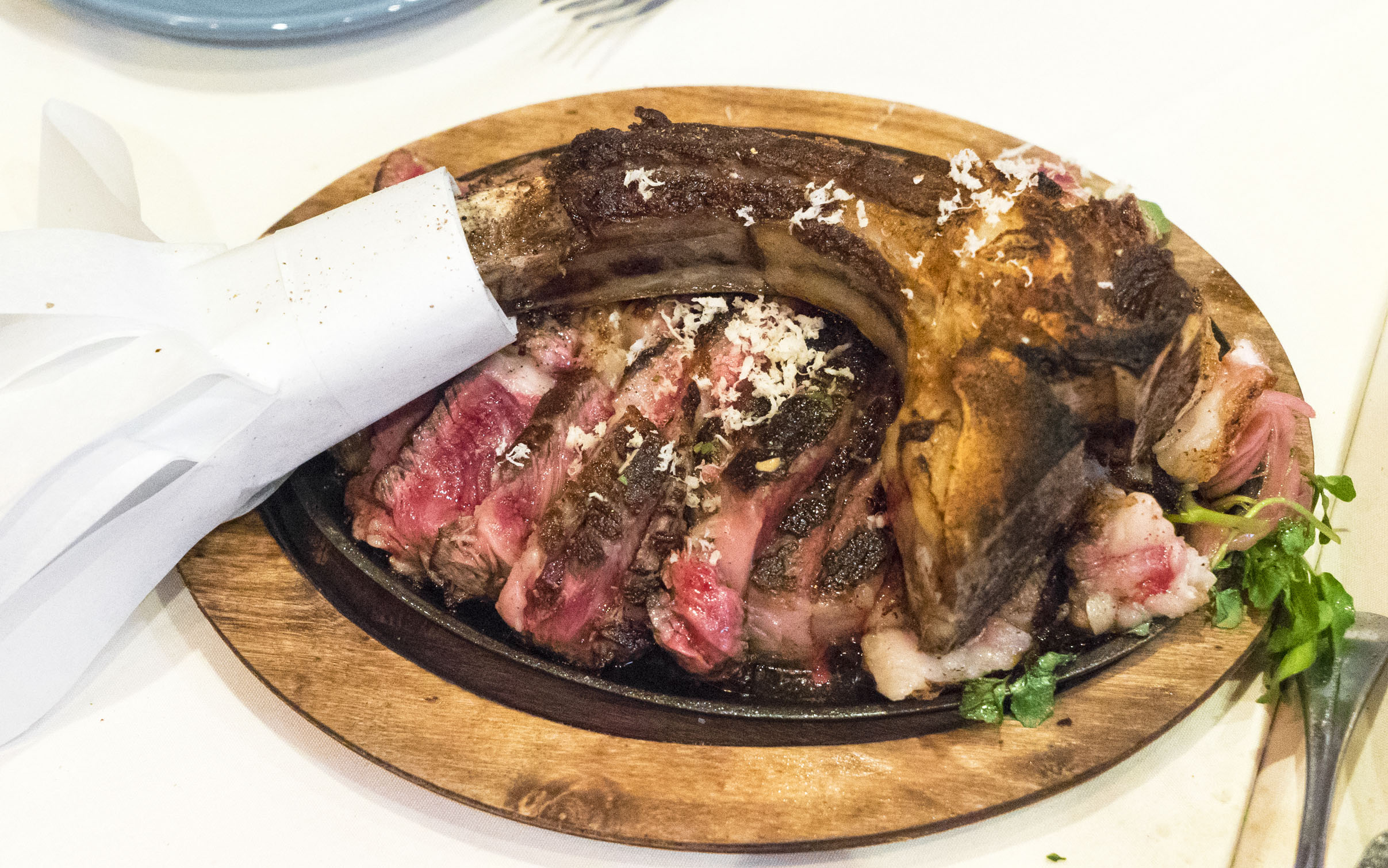
The meat was incredibly tender and flavorful. I held back from full points only because I think it needed a little bit more seasoning.

DSC08817

DSC08813

Both the cap and the eye were delicious and cooked perfectly to medium rare. Here’s a shot of the remaining hunk of bone:

DSC08819

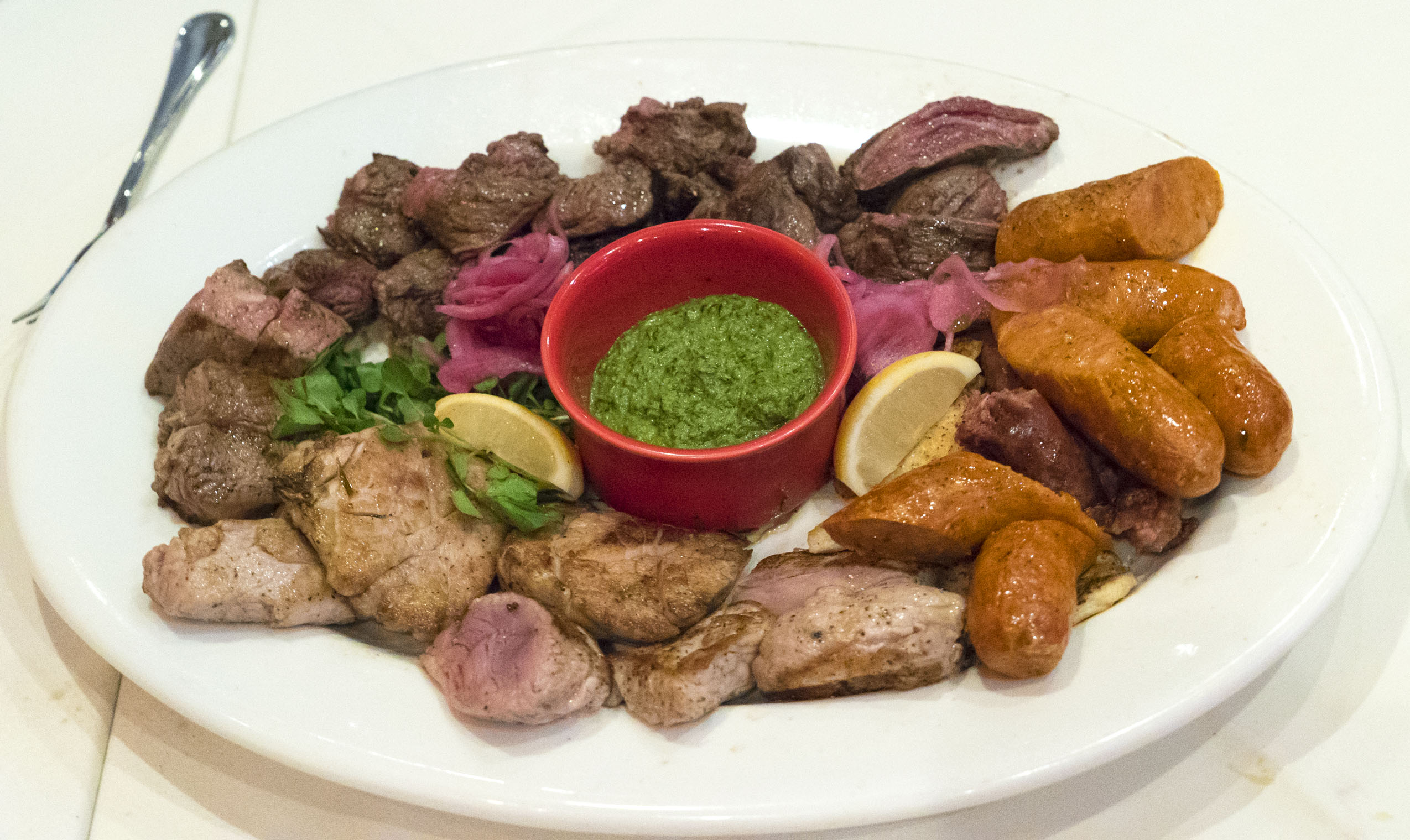
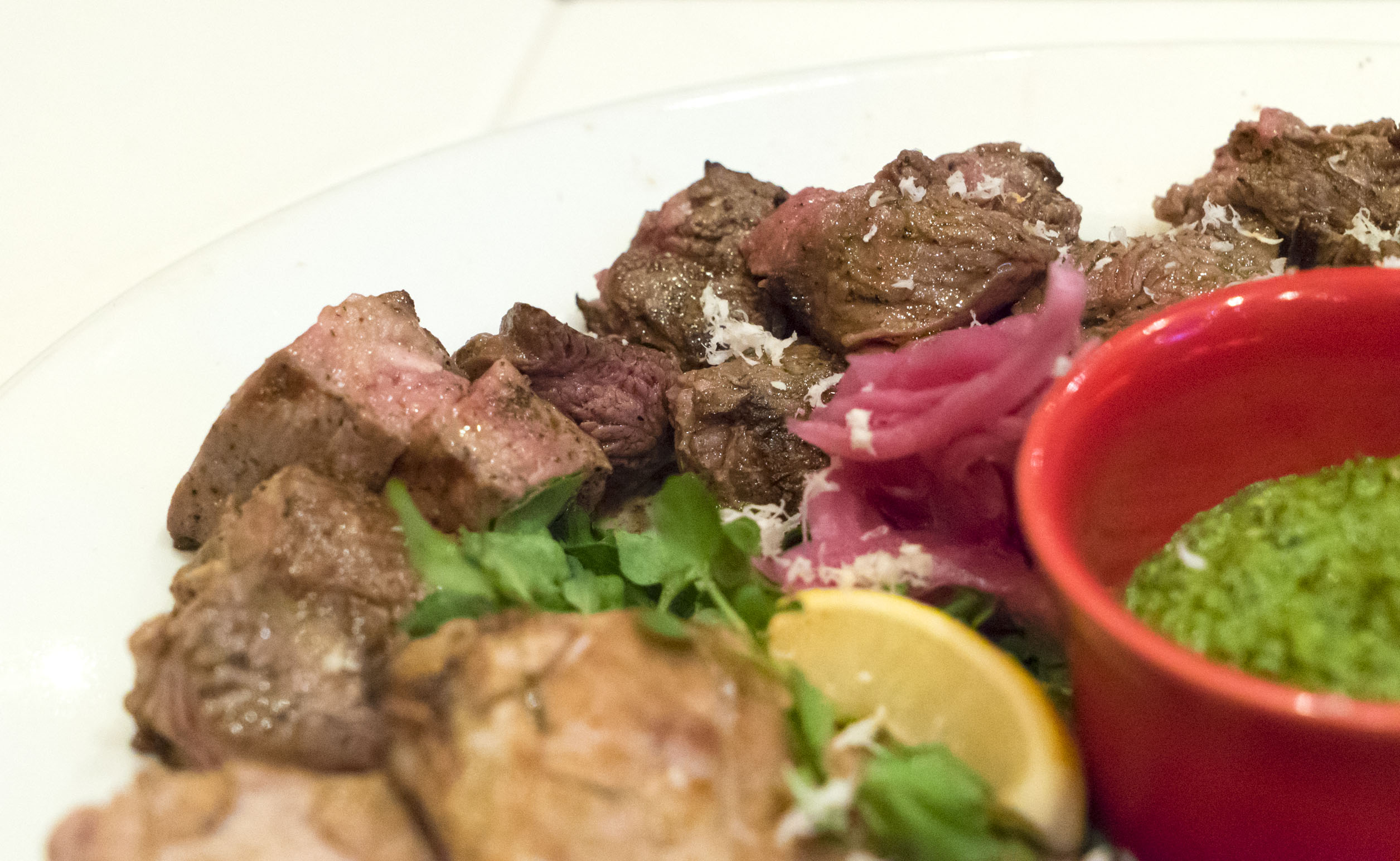
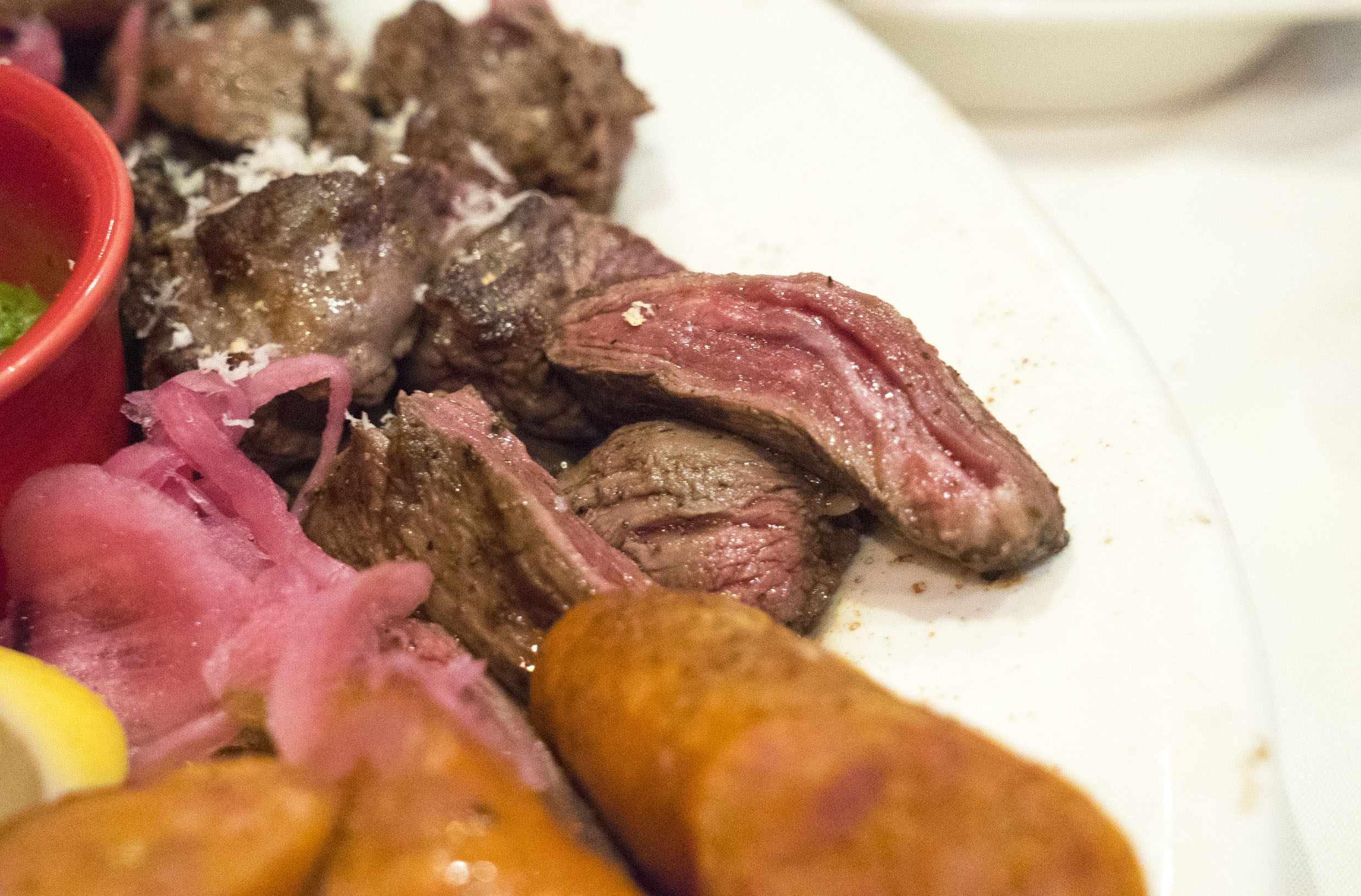
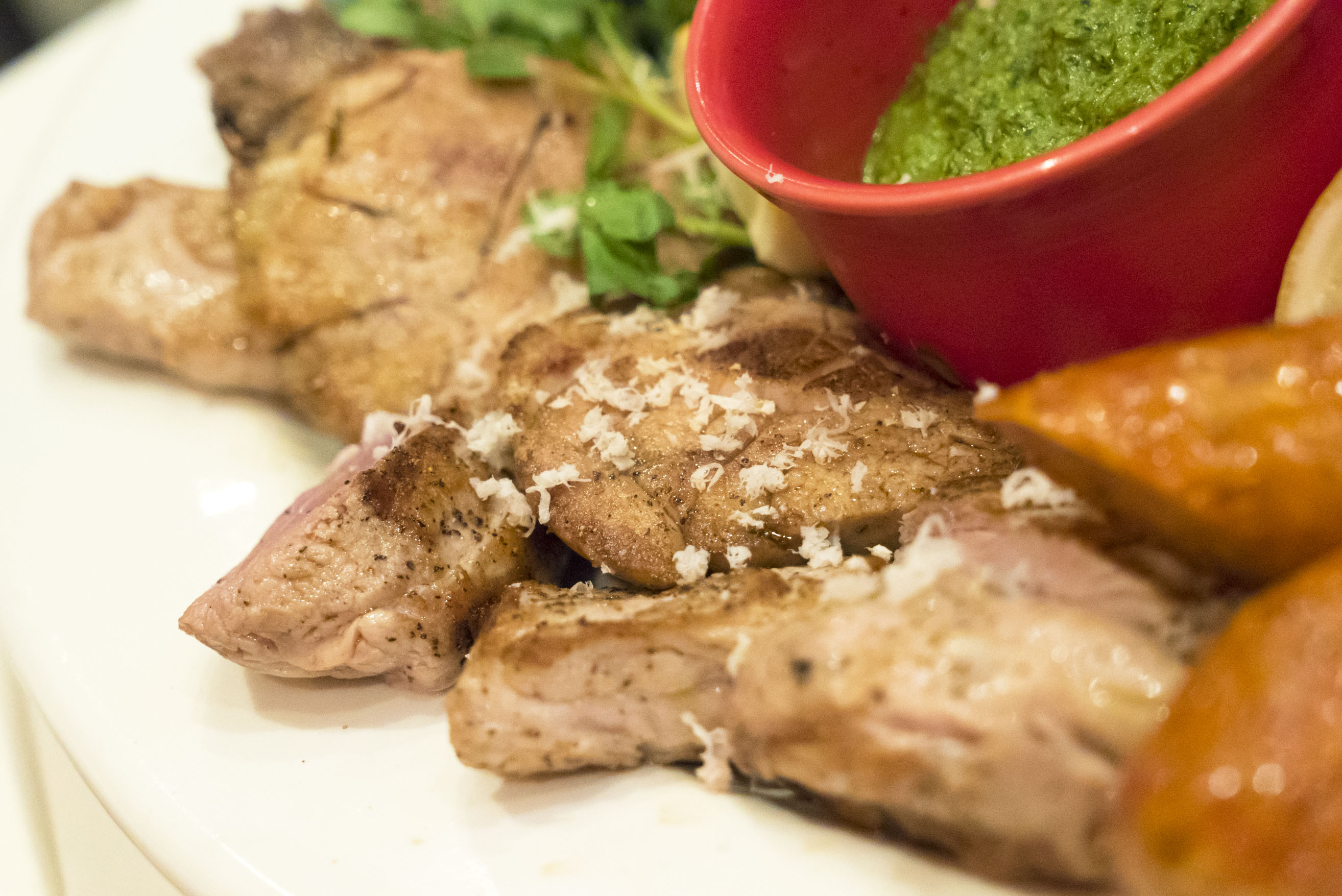
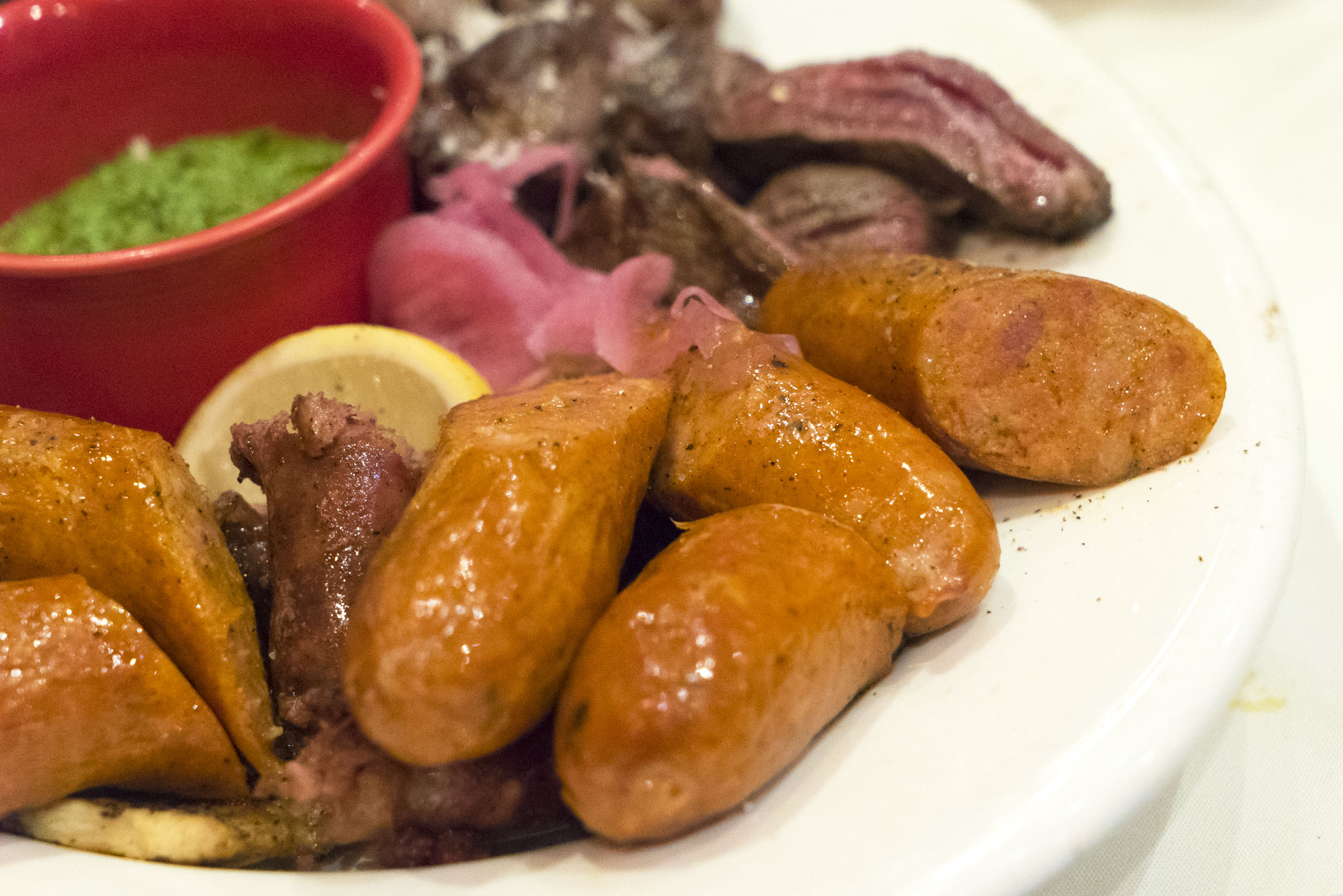
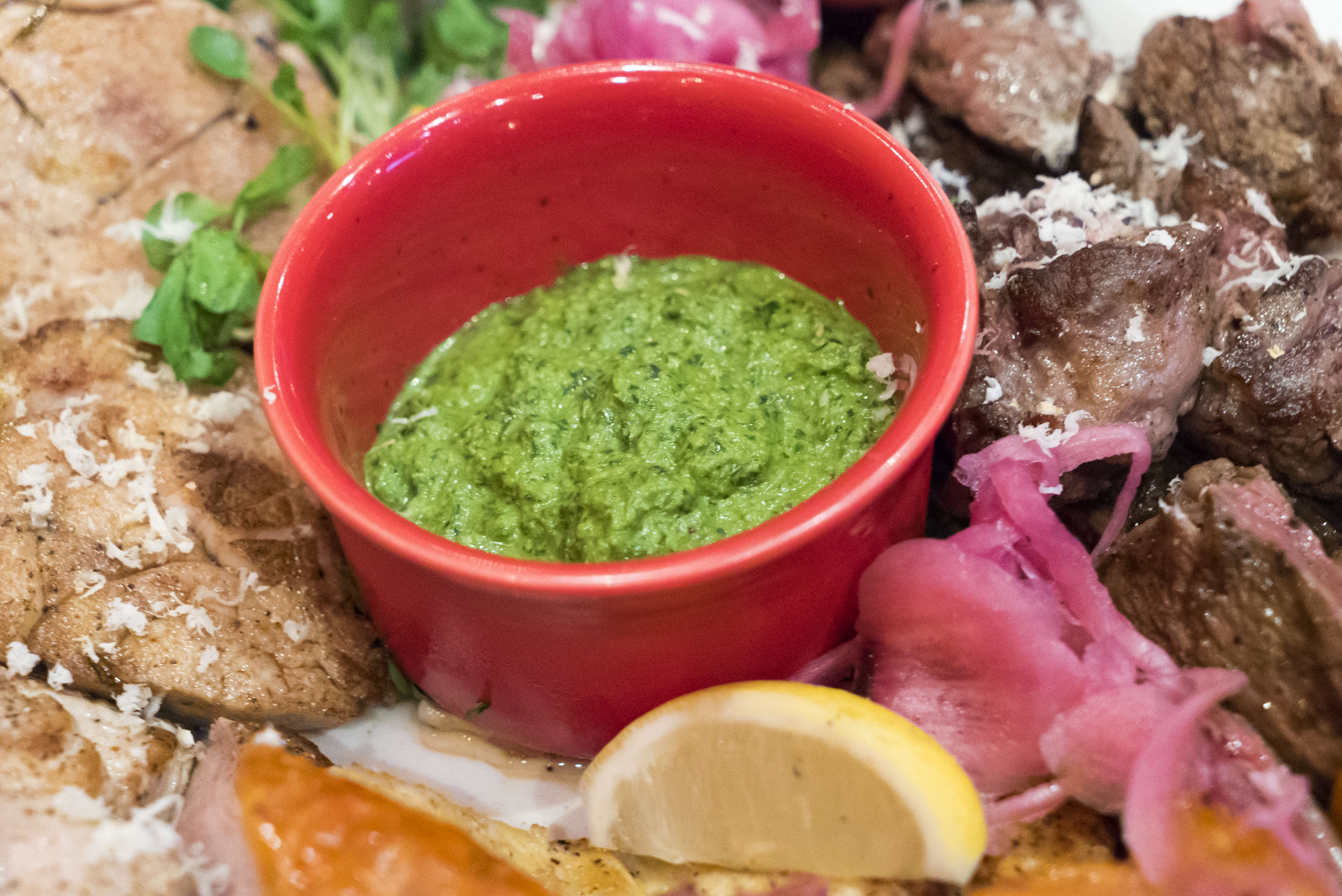
We also did a mixed grill item (parrillada mixta) for $59, which came with skirt steak, languica (sausage), sirloin, pork belly, pork tenderloin, chicken and blood sausage. For non-discriminating meat lovers, this is totally the way to go.

DSC08787

DSC08788

DSC08791

DSC08792

DSC08793

That green sauce is a cilantro based spread that specifically goes well with the pork and chicken.

DSC08811

Choice of Cuts & Quality Available: 10
This place regularly offers skirt, two strips (48oz bone in, and a 16oz), rib eye (22oz), two filets (8oz and 14oz), porterhouse for two, and a mixed grill for two. In addition, they also offer daily specials from the meat department. That’s a full blown 10. Plus all steaks are prime and grilled on an authentic plancha.

Portion Size & Plating: 10
Portions are large for the price. As you can see above, presentation is very nice as well. They’ve elevated the traditional steakhouse minimalist plating concept to something that pops.

Price: 10
Prices are really fair here, though slightly different in the restaurant than they are online (not by much). Most porterhouses for two are coming in at around $100 now, but here it is listed at $79. Also the massive 48oz sirloin steak for two is under $50, and the 22oz rib eye is listed at just $42. These are great deals if you’re on a budget but still want some good quality meat.

DSC08828

Bar: 9
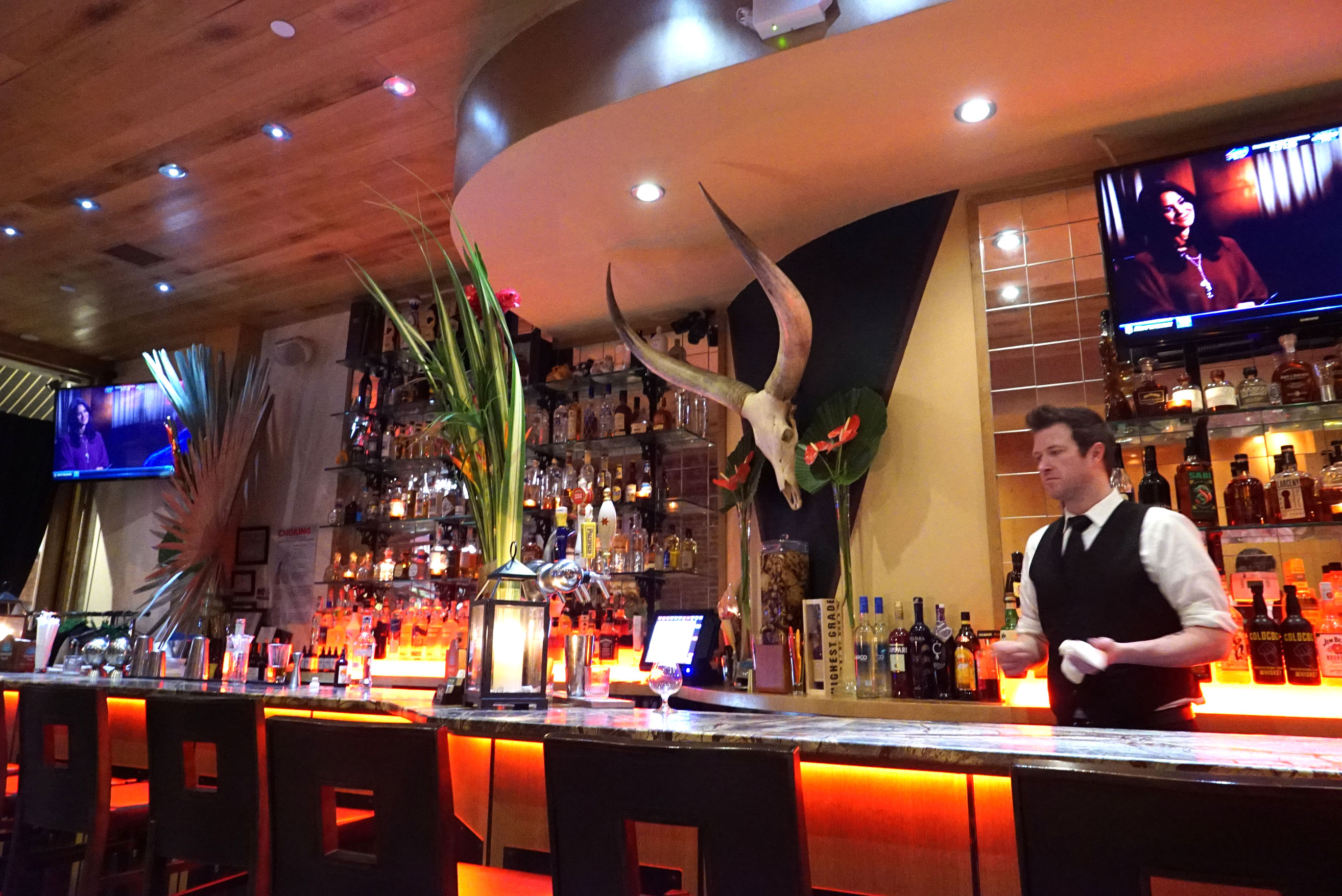
This bar is massive. It stretches almost the full length of the restaurant from front to back. While you do not have window seating, there is ample room and a beautiful decor to take in. Just take a look at that skull and horns center piece!

DSC08772

DSC08780

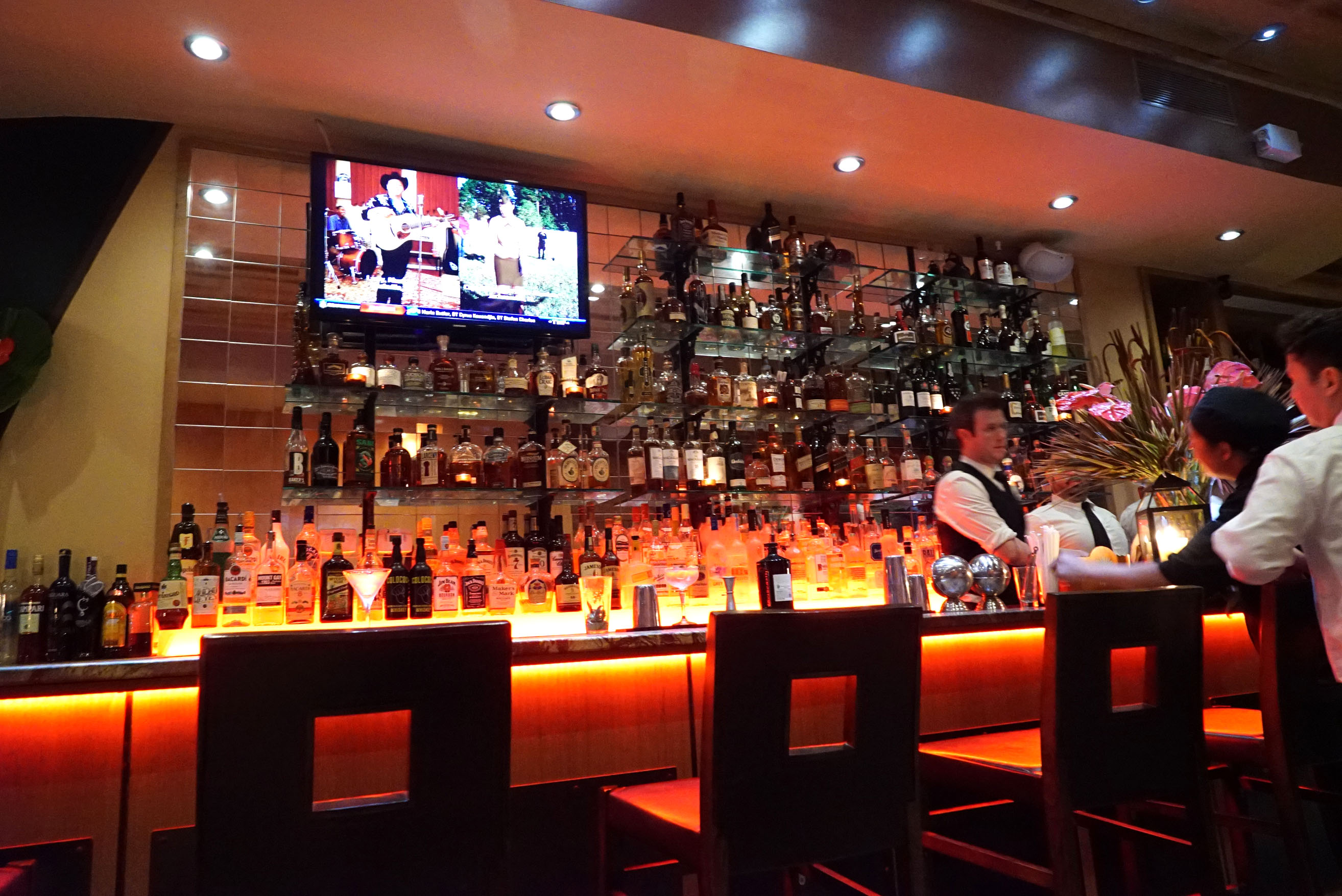
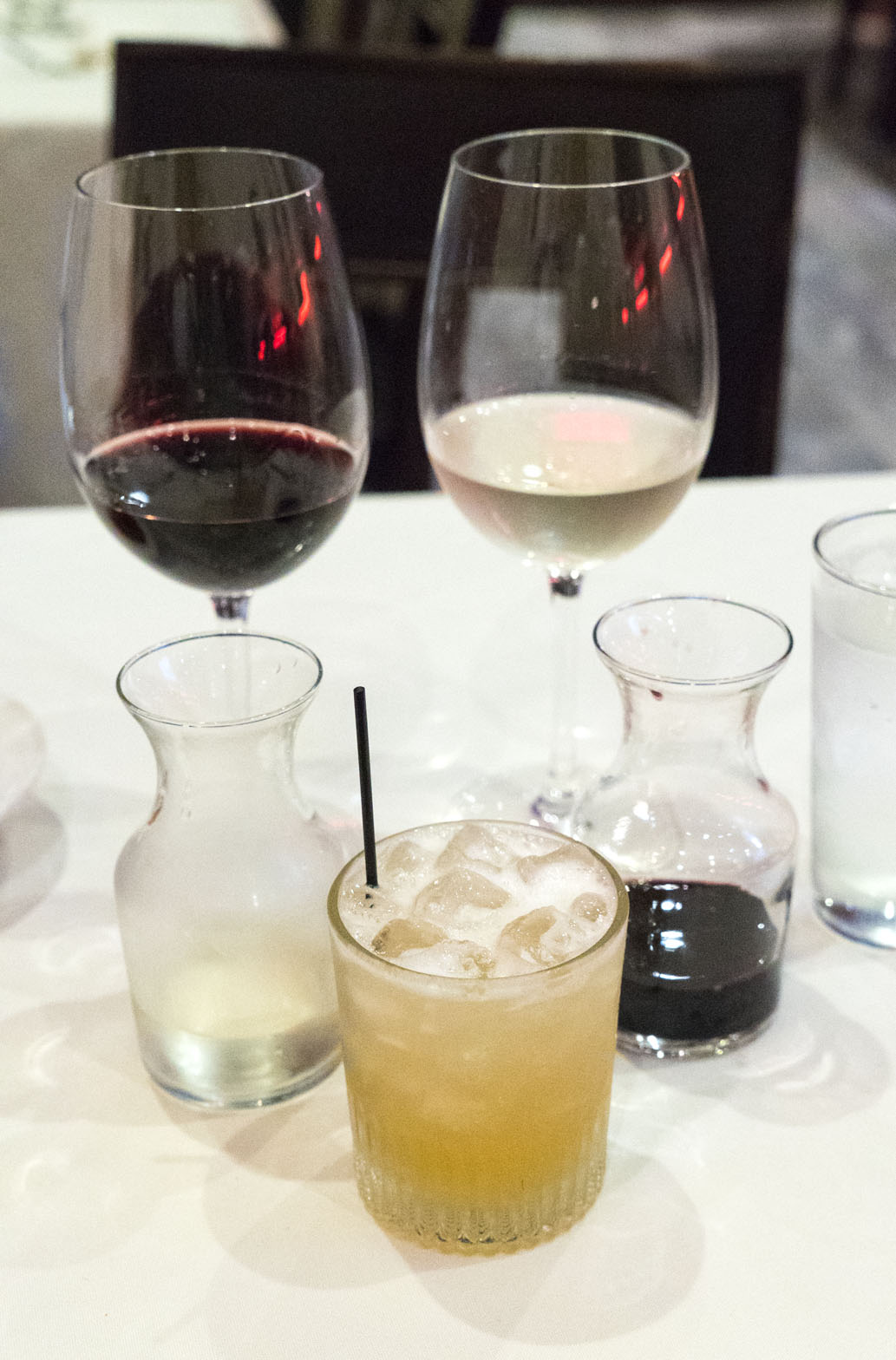
There’s a great selection of Argentinian wines and some really nice cocktails as well.

DSC08775

Specials and Other Meats: 9
There’s a 20oz double cut pork chop, Peruvian roasted chicken, and a mixed grill for two that comes with a host of tasty shit. As mentioned above, we ordered the special tomahawk chop that was offered. Amazing meat-centric place! Just missing lamb and veal.

Apps, Sides & Desserts: 8
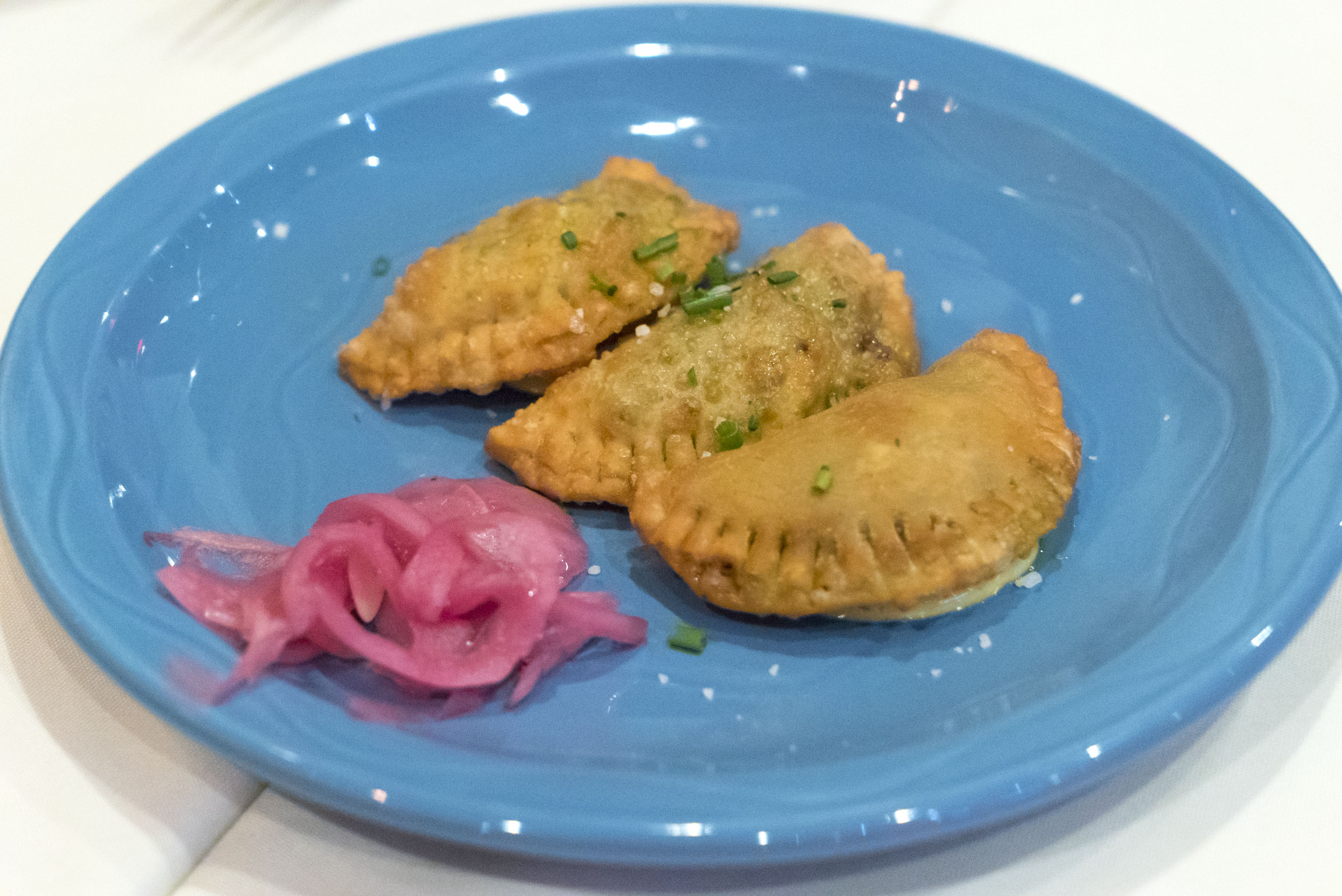
We started with some empanadas, which were filled with prime beef, raisins, cilantro and aji amarillo aioli. These were perfectly crisp on the outside and juicy on the inside. Not too hot where you burn your mouth, and the flavors were really well balanced when eating with some of the pickled red onion.

DSC08777

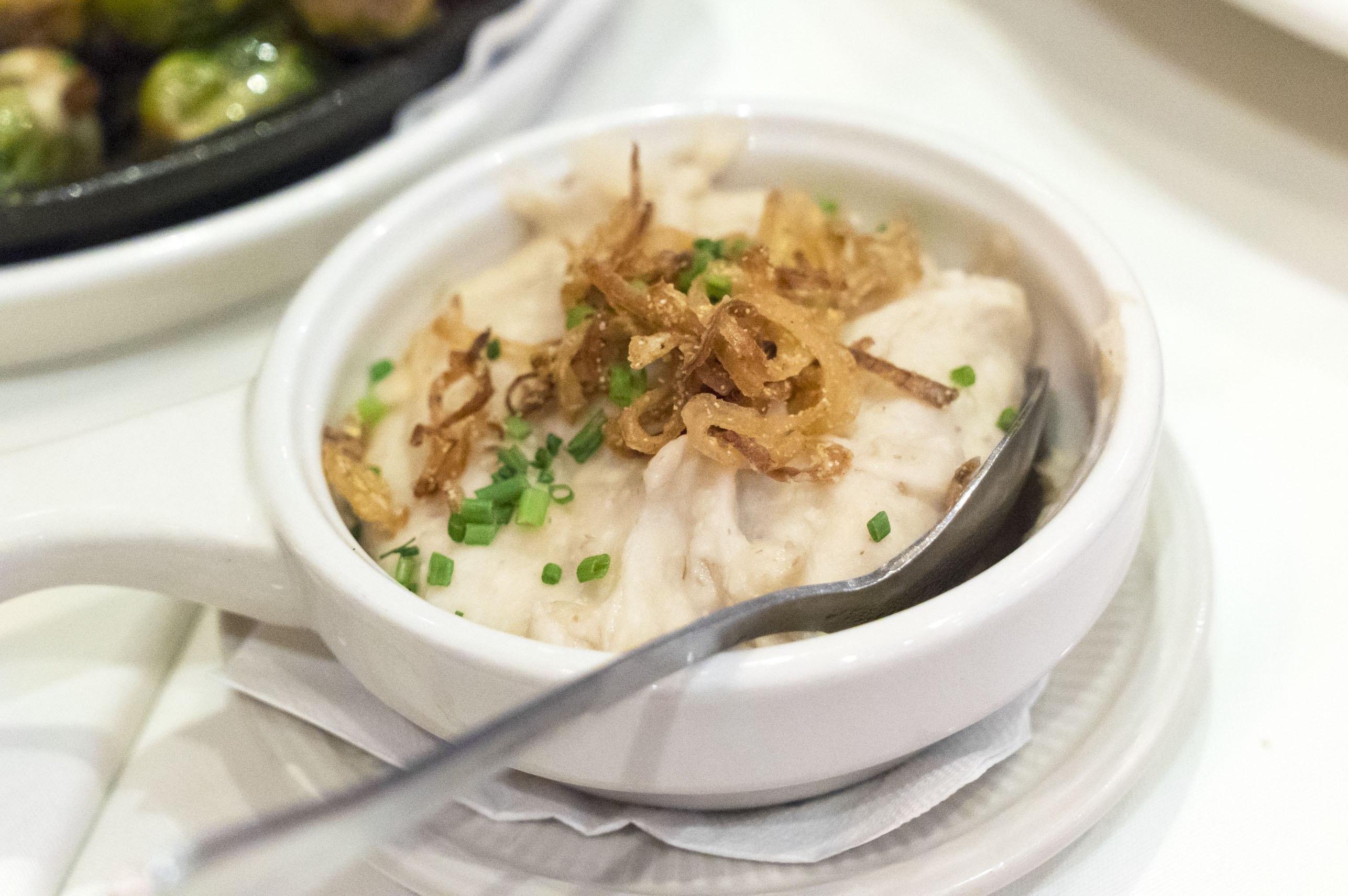
On the side we had the cauliflower mashed potatoes, which were creamy and flavorful. You’d never know you were eating a healthier version of the standard mashed potato dish.

DSC08798

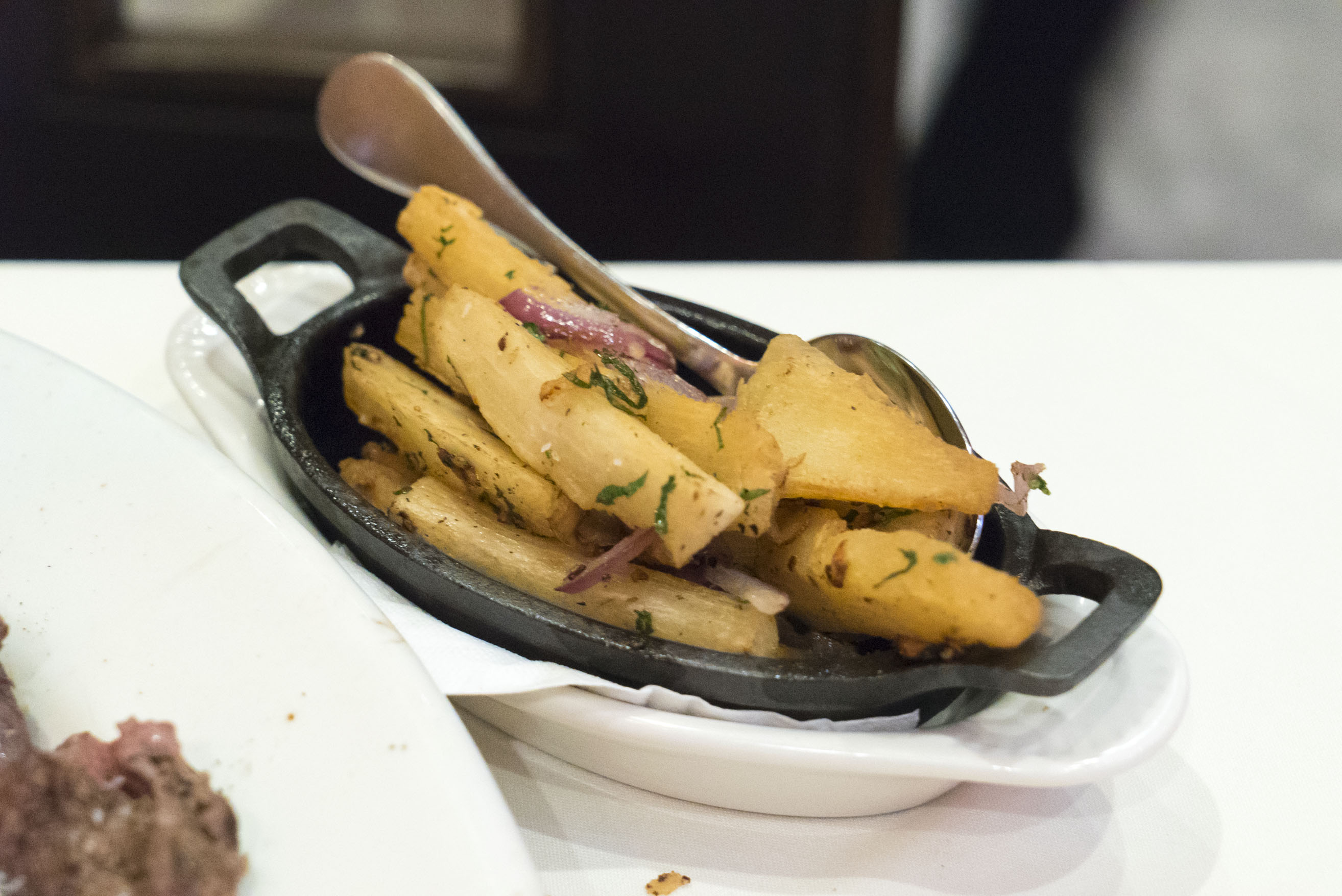
We also tried the sauteed yucca. These were a little dry and under-seasoned, but the crunchy texture was great.

DSC08802

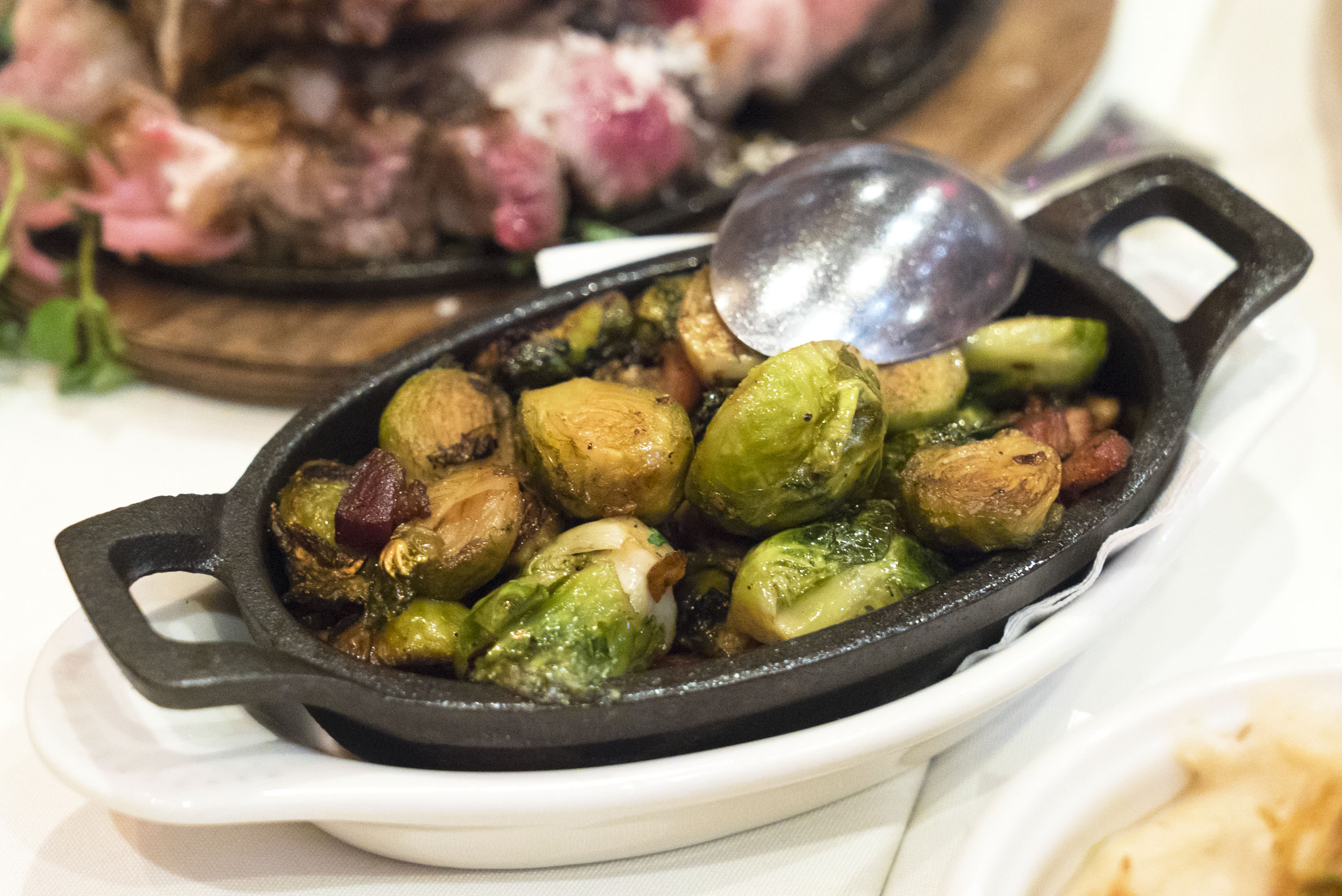
The brussels with bacon were perfect. Great char, good flavor. This is the ideal side for a meat eating extravaganza, because it comes with additional meat in the form of thick bacon. We actually didn’t order this: it was complimentary – nice surprise!

DSC08800

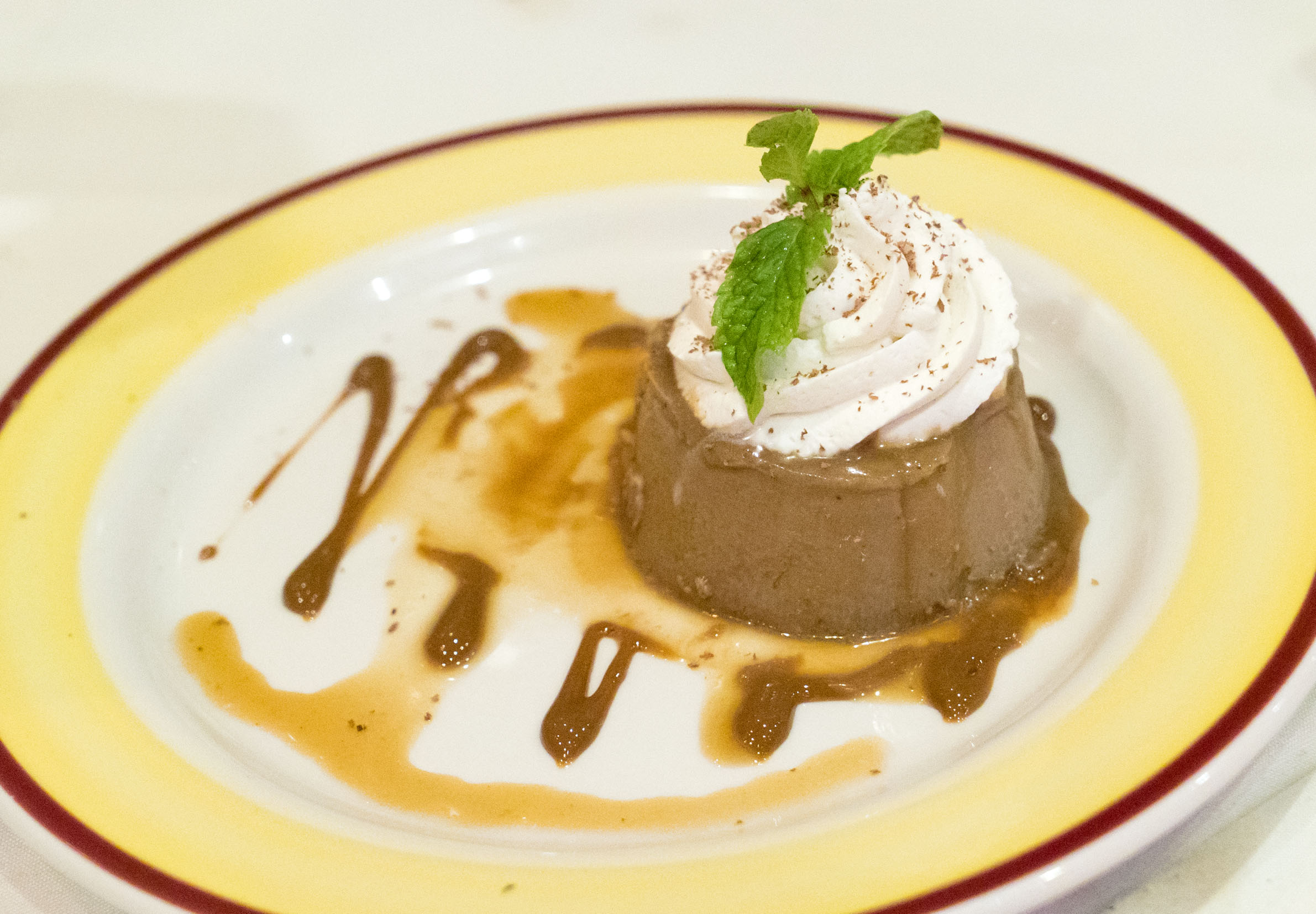
Since we were busting-at-the-seams full, we all shared a dessert. Espresso flan. This had a nice even and smooth texture, with a very nice, not-too-sweet coffee flavor.

DSC08826

Seafood Selection: 8
There’s cod, corvina and seabass in entree form, in addition to the apps of ceviche, grilled octo, calamari, mussels, shrimp and oysters. Really great showing! When I come back for the giant bone-in sirloin, I will be definitely giving the ceviche and octopus a try. Until then, I have to score this with a placeholder of eight. I’m sure it will be a higher score once I sink my teeth in to actually try the seafood.

Service: 10
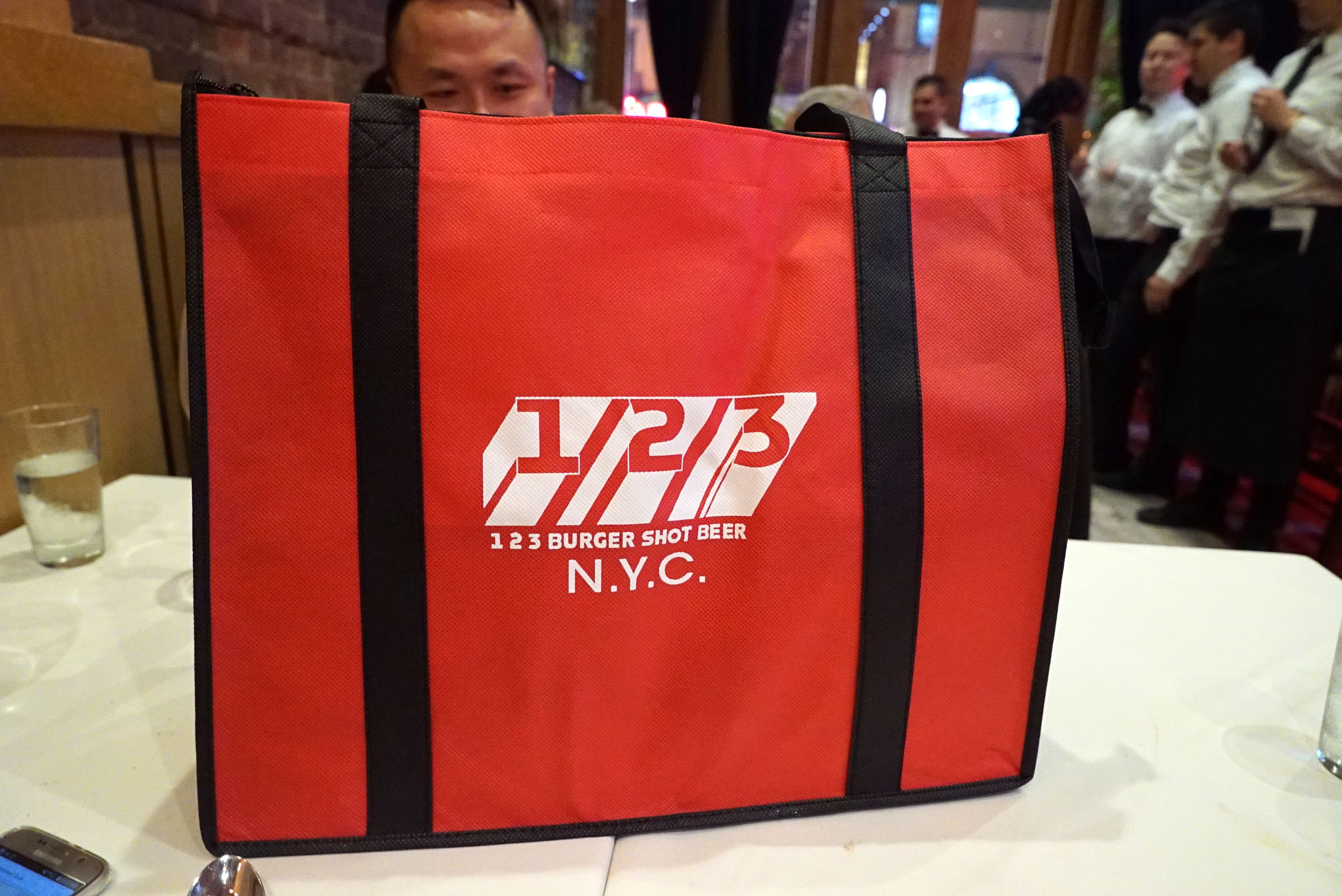
Owner Tommy and waitress Maria were both fantastic. In fact all of the staff was warm and helpful. Maria offered great menu suggestions, and really knew her shit. It was interesting to learn from Tommy that his brother is the chef, and that they also own 1 2 3 Burger Shot Beer, just nearby, as well as a spot downtown. Our “doggie bag” was from there:

DSC08822

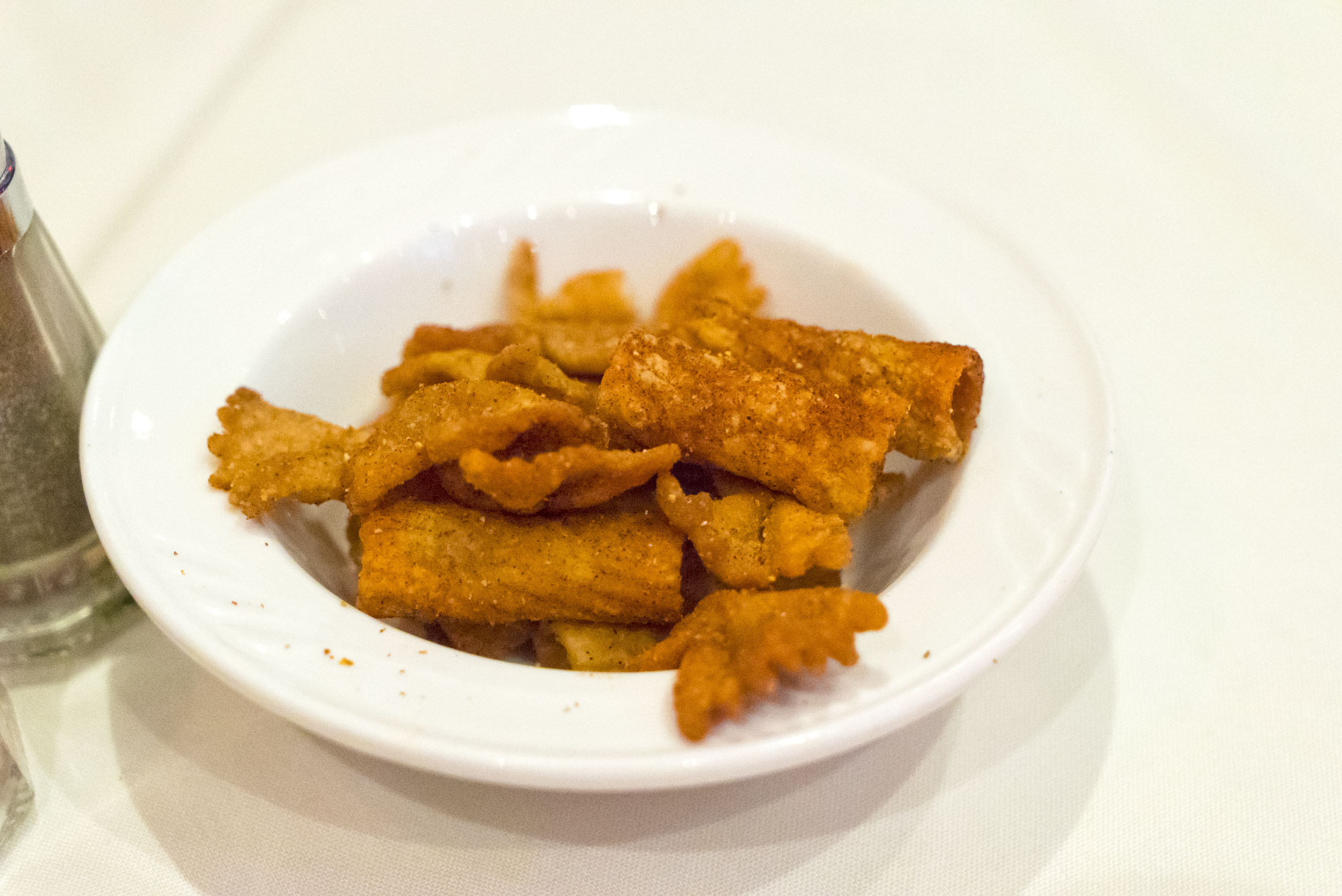
I may as well mention it here: the table bread here is actually fried, flavored pasta! Really crunchy and good.

DSC08773

Ambiance: 9
They’ve really made the best out of this typically narrow, storefront/brownstone location on 9th Avenue. They’ve done such a great job that this place easily contends with some of the gigantic, fancy steakhouses in midtown. The decor here is really classy and elegant. It’s Latin American/South American, but it’s not hitting you over the head with that fact. It’s subtle. The smaller size of this joint allows you to enjoy a more intimate or low key experience. However it’s great for dates as well as large groups, because once you get beyond the bar, the restaurant opens up to a wider dining space. Since the kitchen is a massive expanse down at the basement level, K*Rico takes full advantage of every square foot of space on the main dining floor. Very smart use of space.

K*RICO
772 9th Ave.
New York, NY 10019