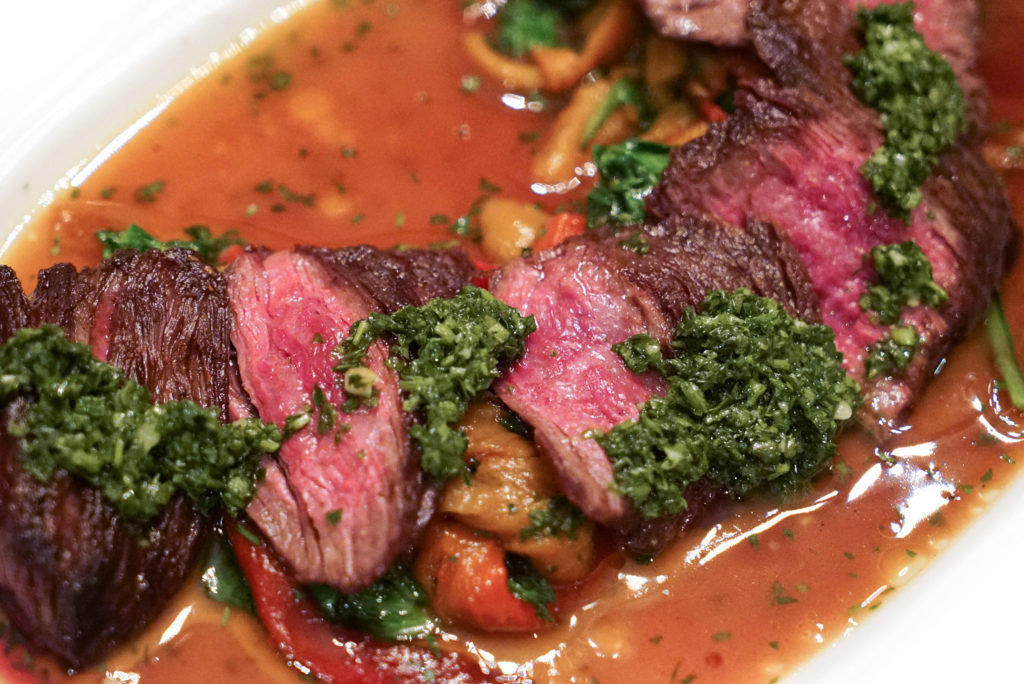
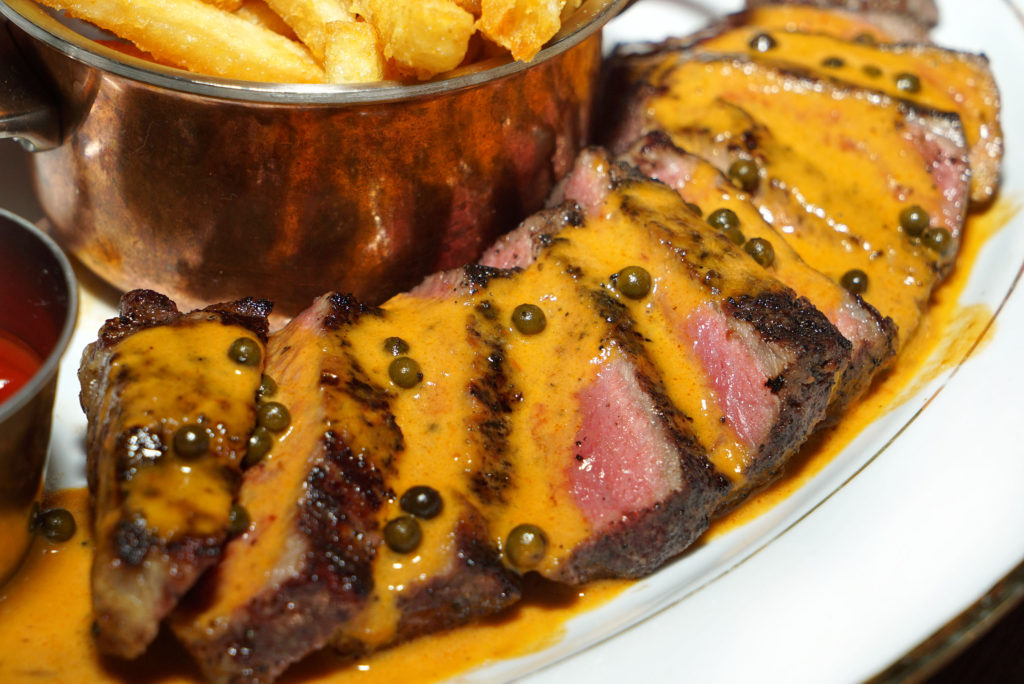
I was recently invited to Oro by the owners to try out some of the classic and modern Italian fare that they serve at their spacious, beautifully appointed Long Island City restaurant.
Oro means “gold” in Italian, and the food equivalent of gold is just what they’re serving you here, especially when you indulge in some of the highlights that I mention here in this review.
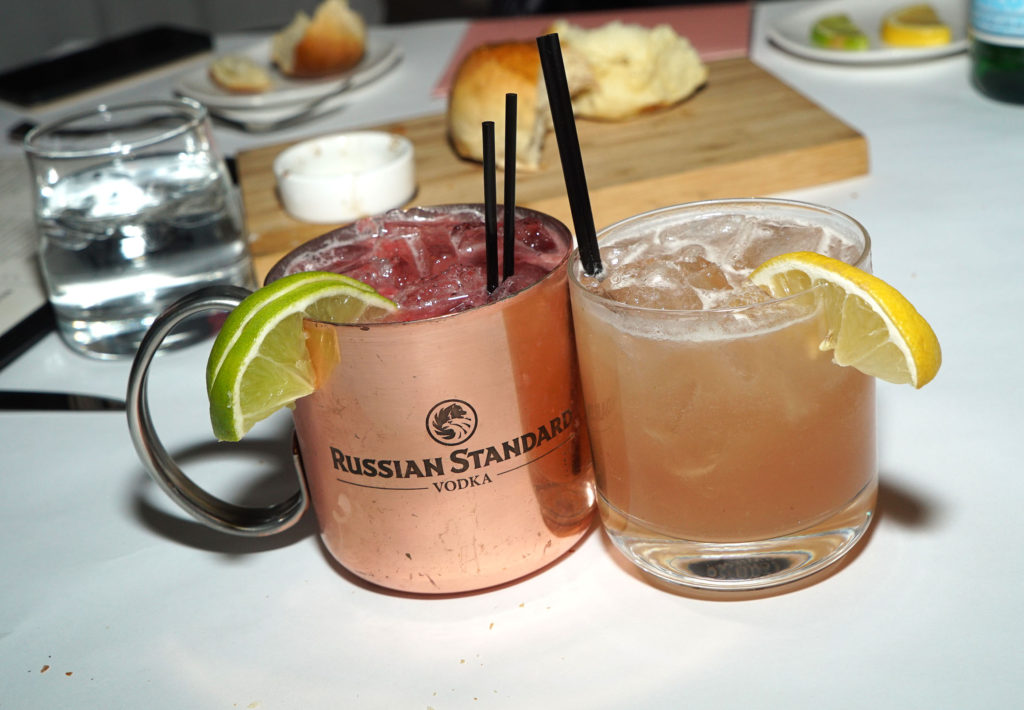
First off, there’s an excellent cocktail menu. I went with a blueberry and bourbon drink that was really nicely executed. My wife went with a selection from their Moscow Mule menu. Also excellent.
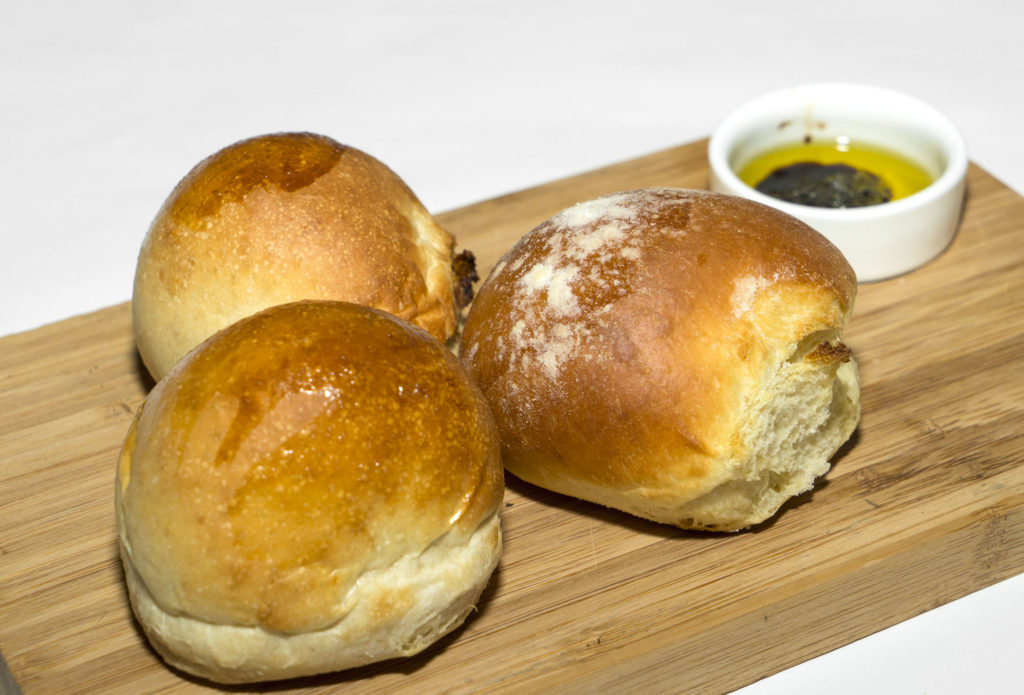
The waiter will bring out some fresh house made bread next. It’s toasty warm and served with a dish of EVOO and vinegar.
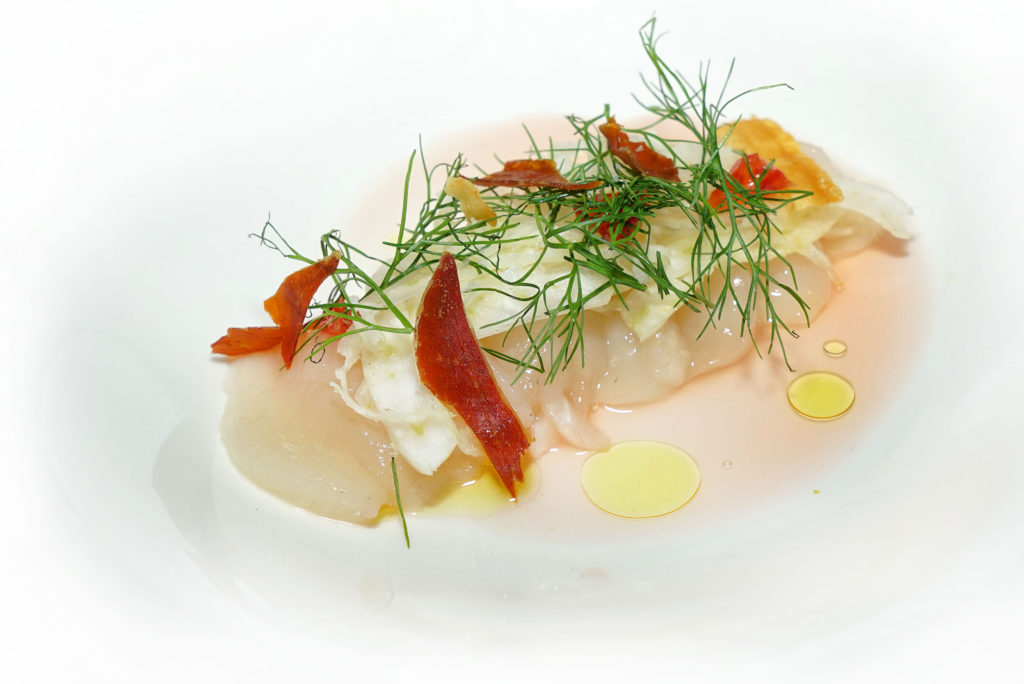
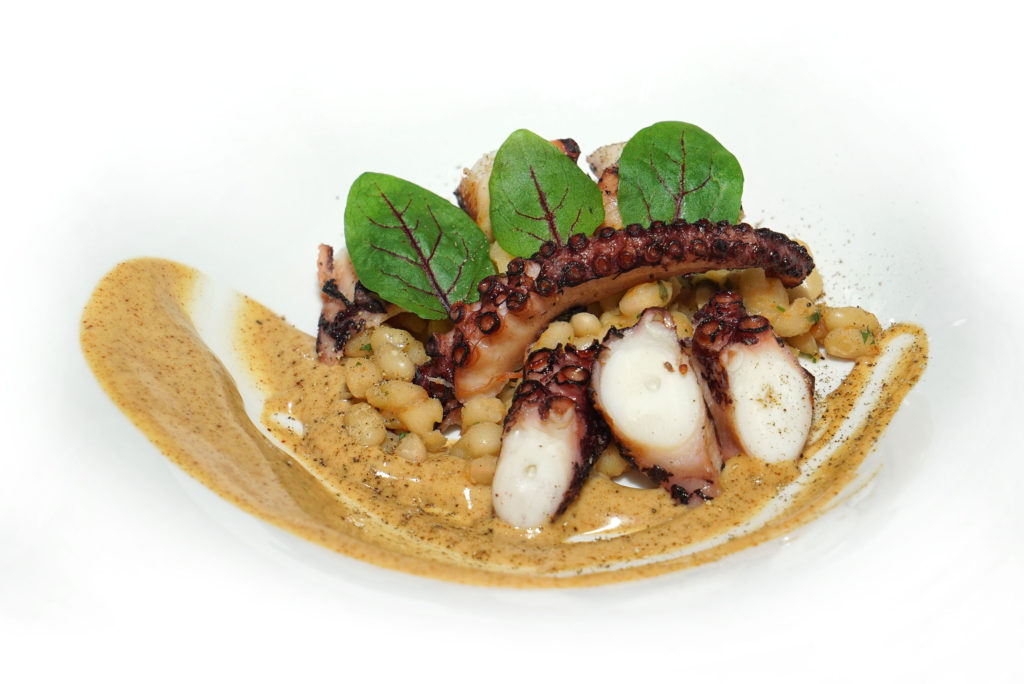
We started with two nice, fresh and delicate apps: scallop crudo with crispy prosciutto in a grapefruit sauce, and charred octopus. Both were perfect. The scallop crudo was really fresh, light and crisp. I wish we ordered two!
The octopus has a great flavor and still kept a slight firmness without being too soft or too chewy – a sweet spot middle ground. There was a good spice kick to it as well.
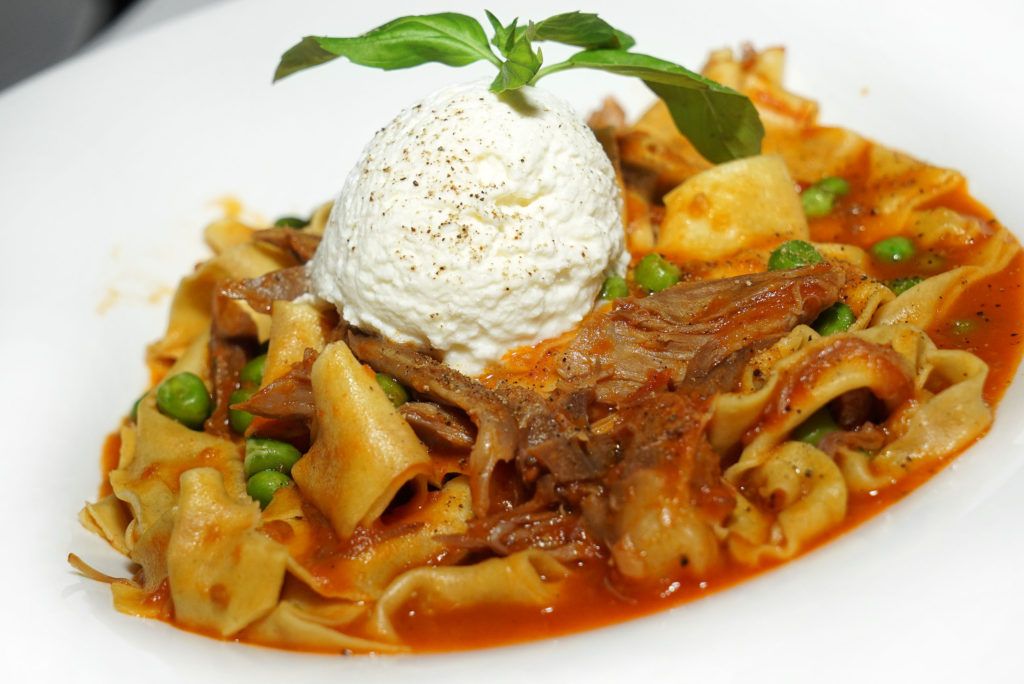
We shared the duck bolognese pappardelle pasta (which was good, but just needed a bit more salt):
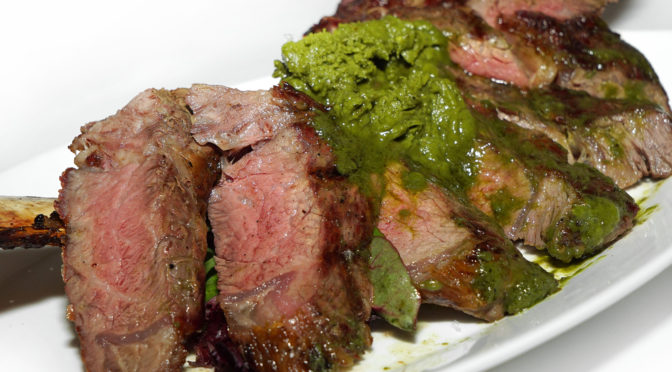
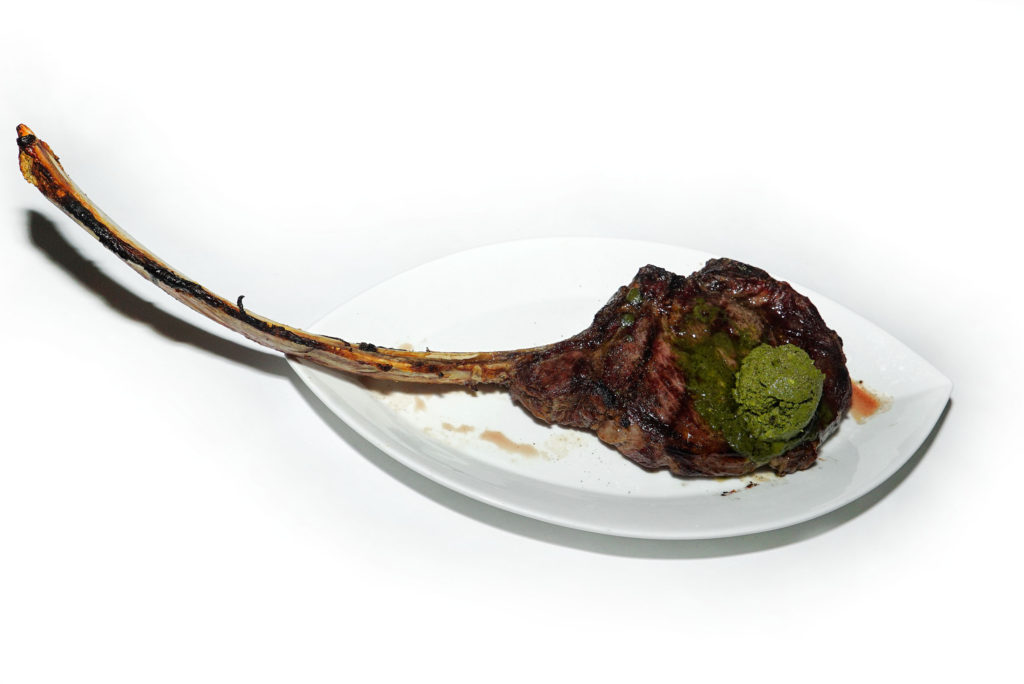
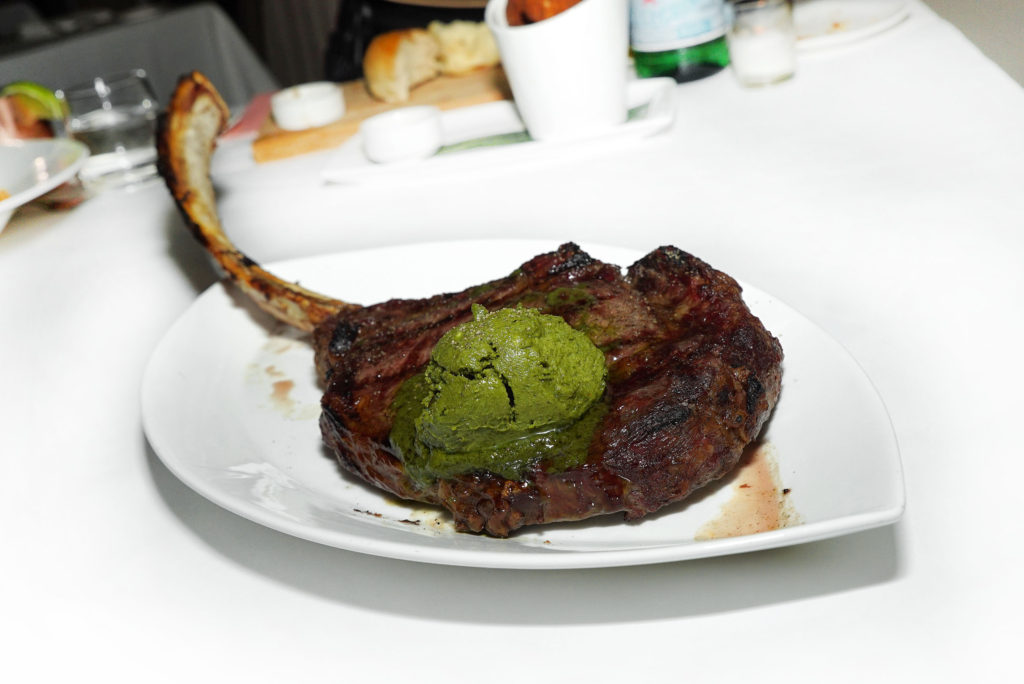
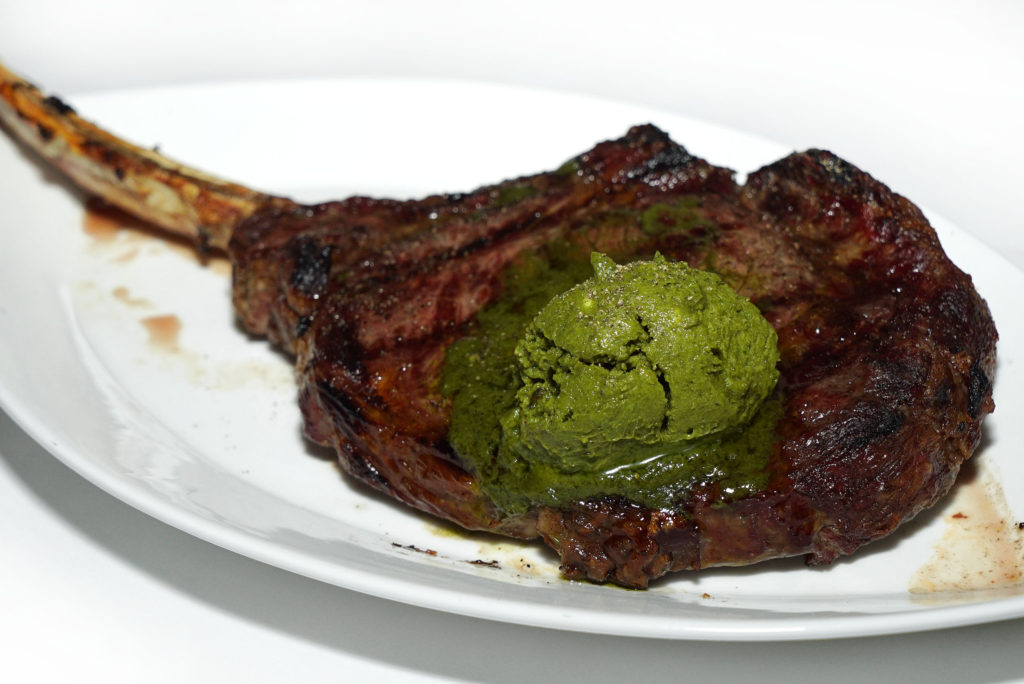
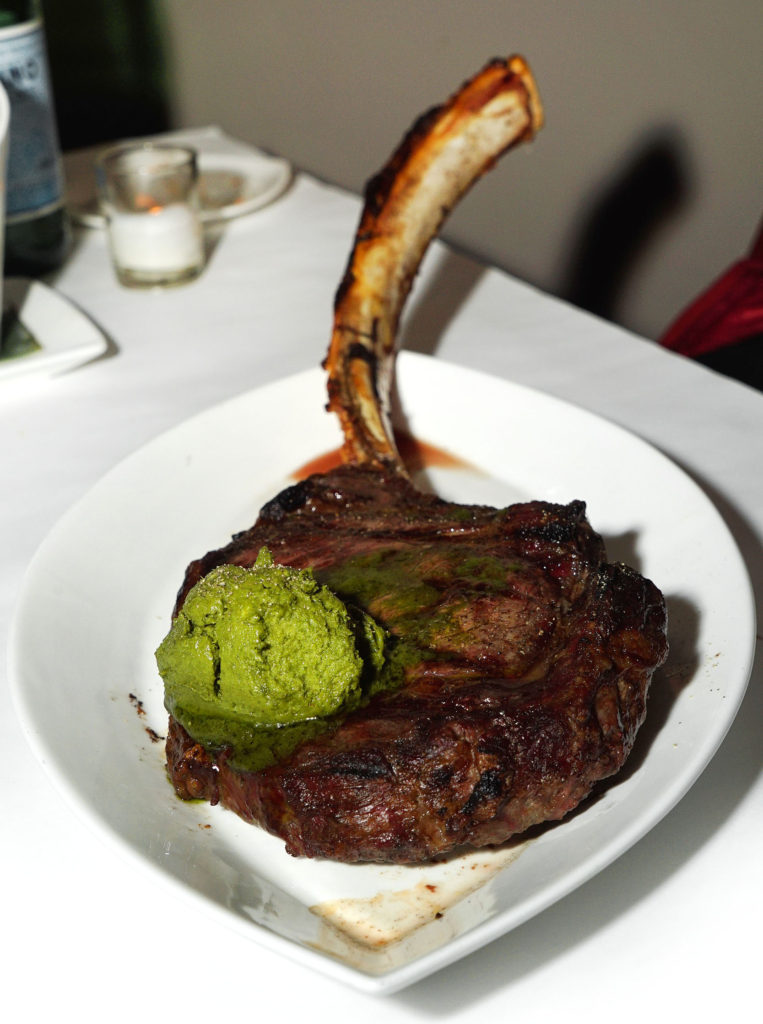
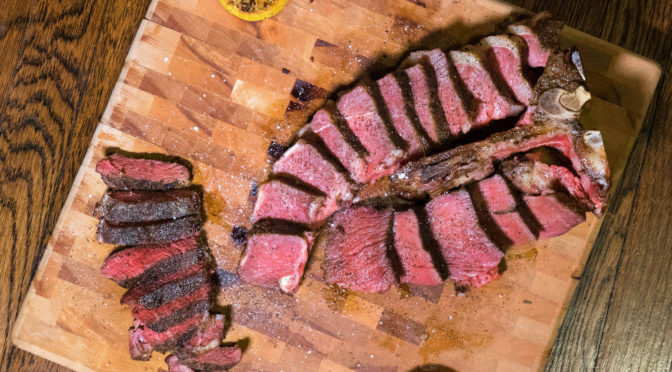
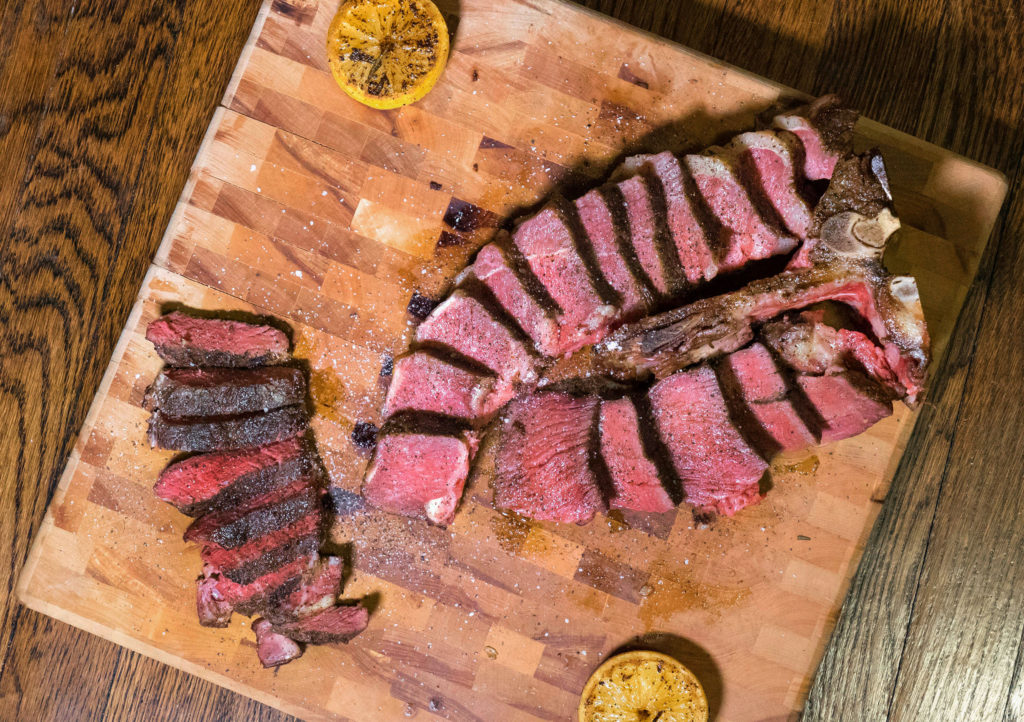
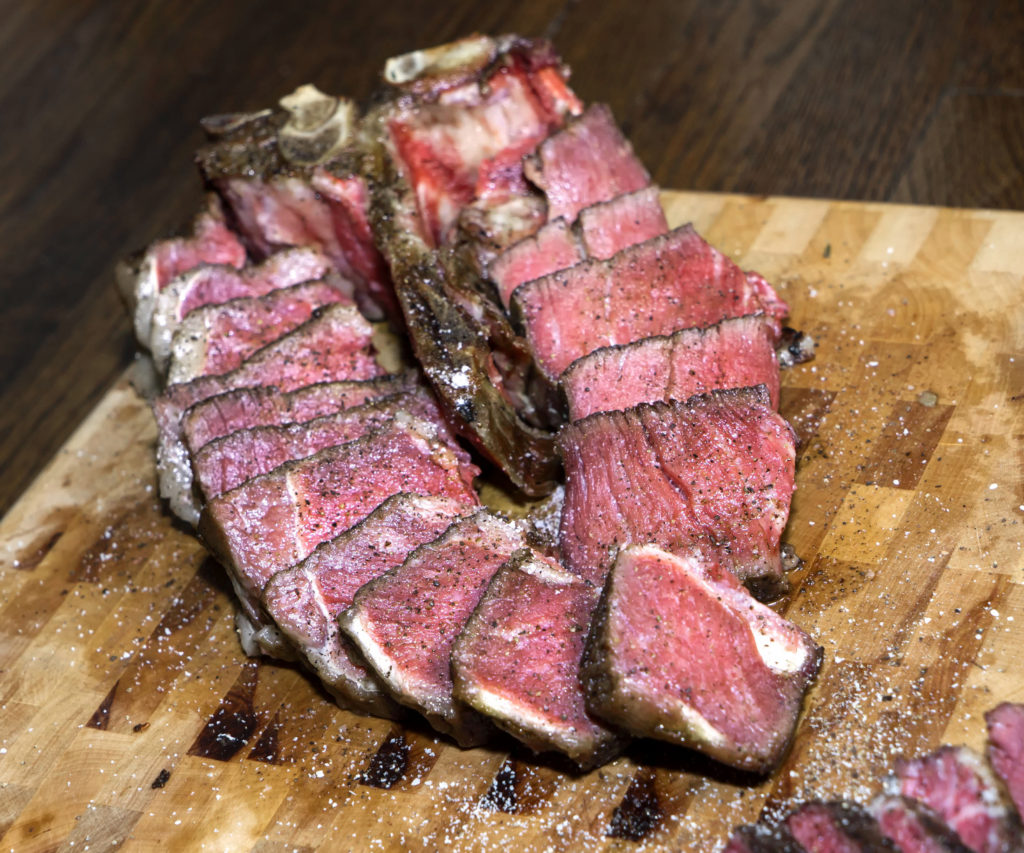
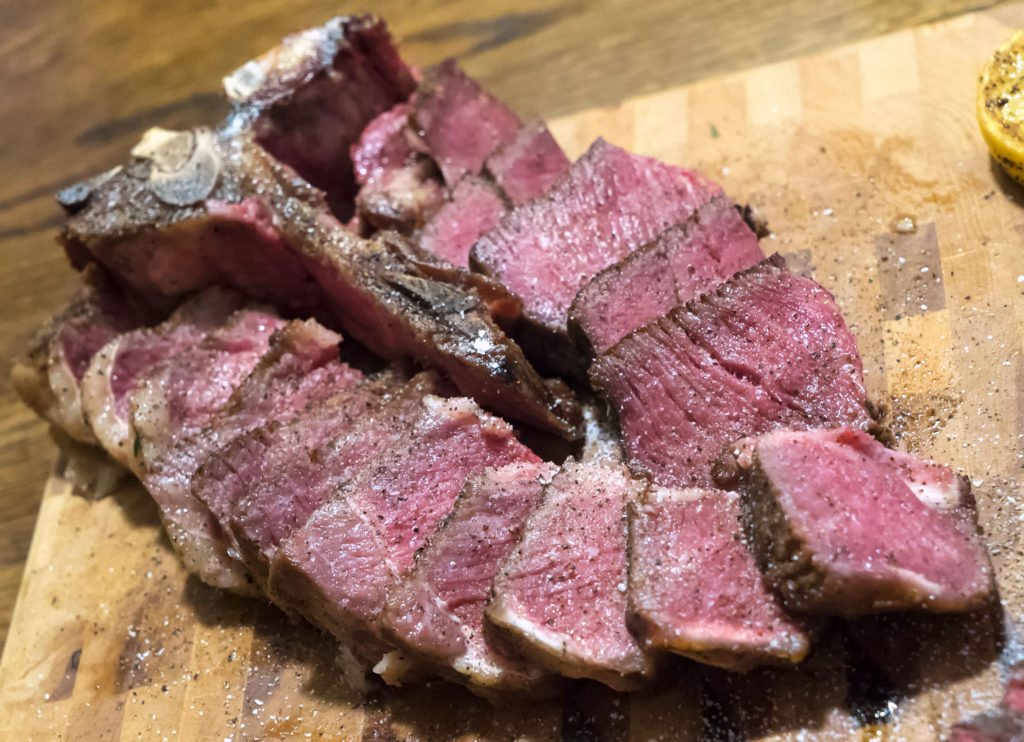
And the 28oz tomahawk ribeye:
That blob you see is an herb butter, which added a green-tasting freshness to each bite.
The meat itself hails from Snake River Farms, which is not only a purveyor of fine standard meats, but also American Wagyu. The owners of Oro are friends with the people at Snake River, so you know the cuts will be of high quality.
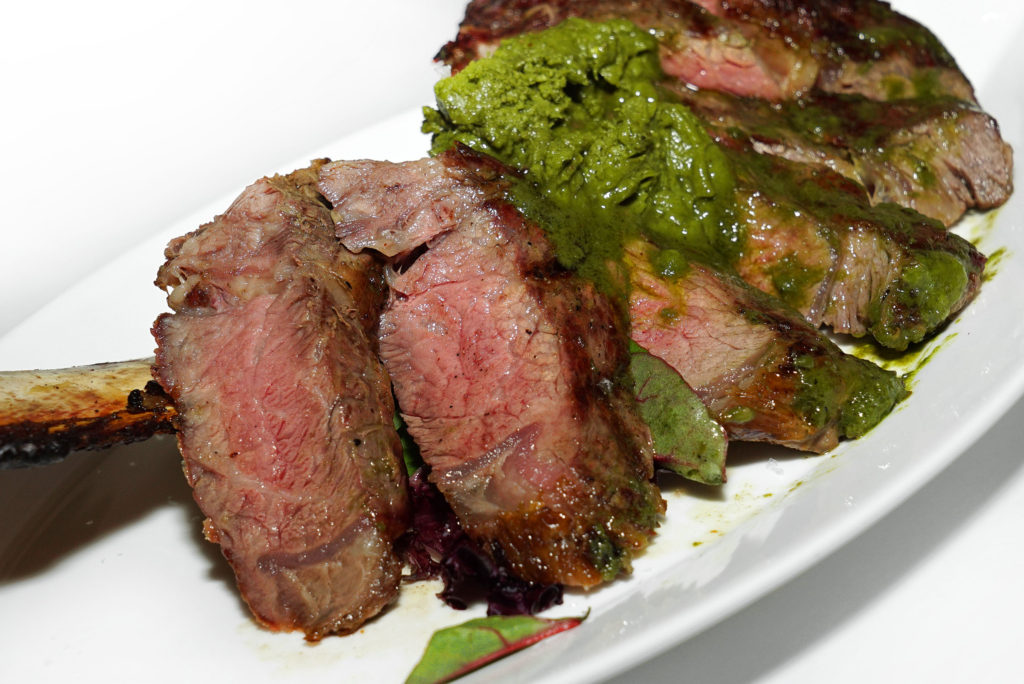
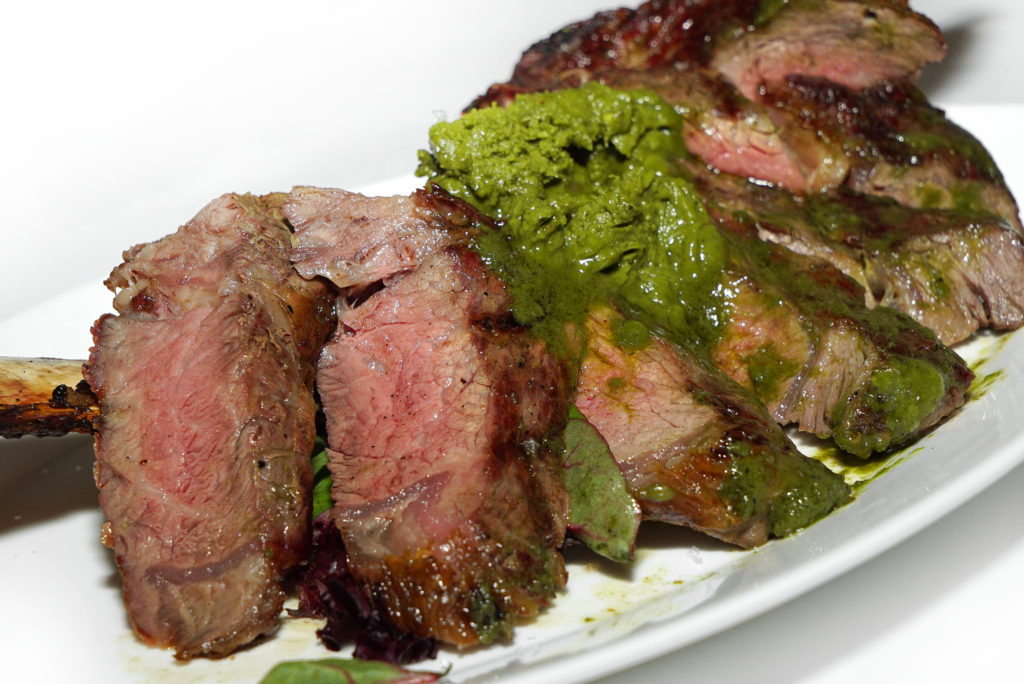
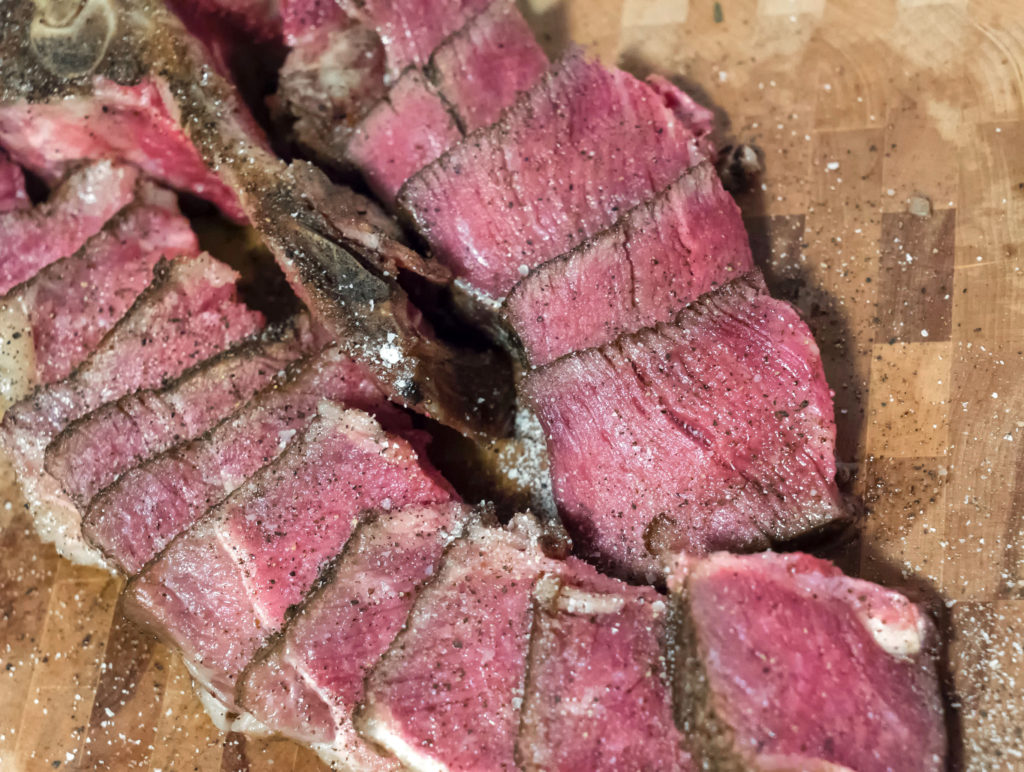
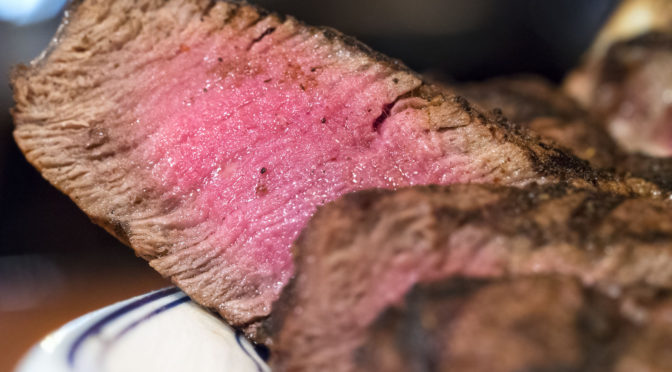
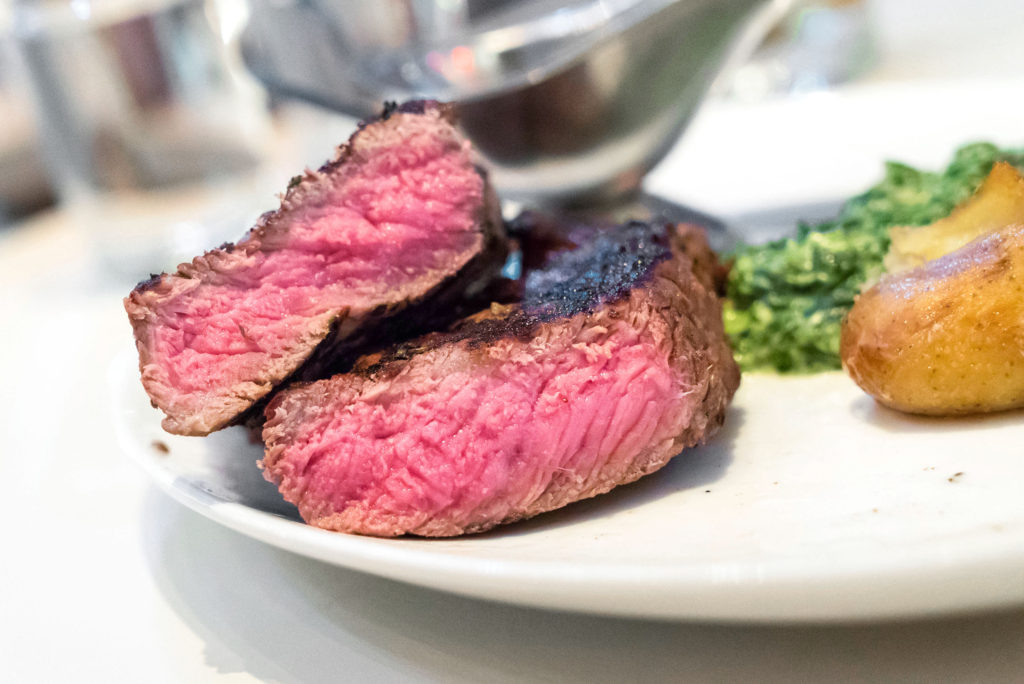
The cut itself was cooked a slight bit over from what I would have preferred, being more towards medium than medium rare.
But no matter. The flavor was still good, and the fat cap was delicious. Not to mention that at a price of $52, you’re saving big money and you’re just one stop into Queens from midtown Manhattan. At a place like Cut downtown, that Snake River Farms steak is going to run you almost $100. Crazy discount here. And this can be shared with a second diner, so even better. 7/10.
The steak selection here is pretty impressive. As soon as next week, as a matter of fact, there will be even more of a “butcher’s block” selection here, which will include a 36oz porterhouse as well as what’s already on the menu (filet, strip, tomahawk, and pork chops).
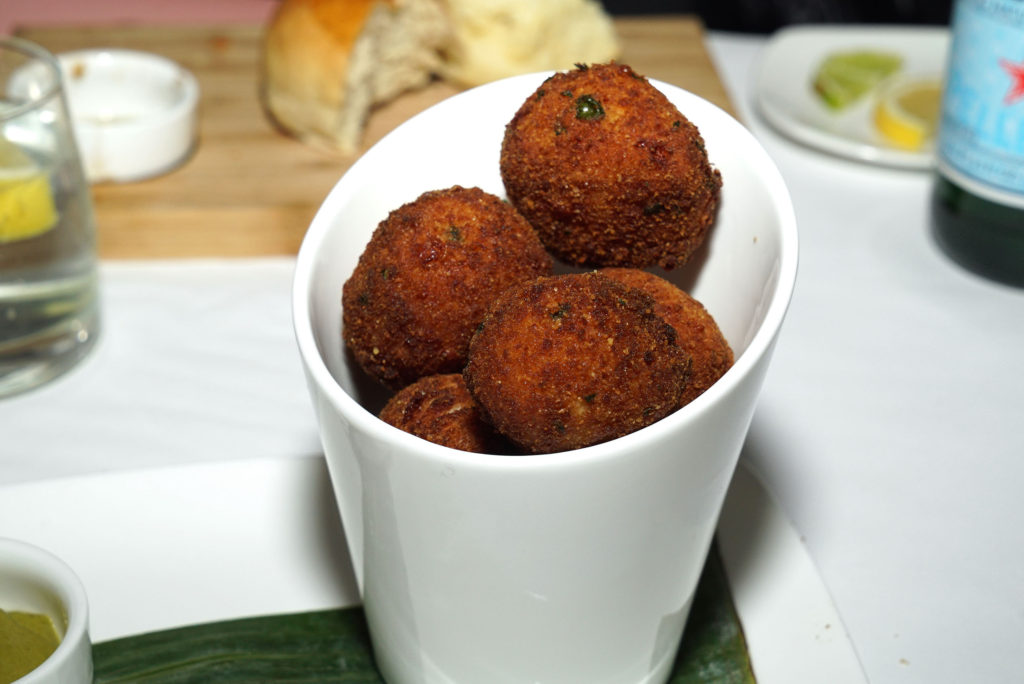
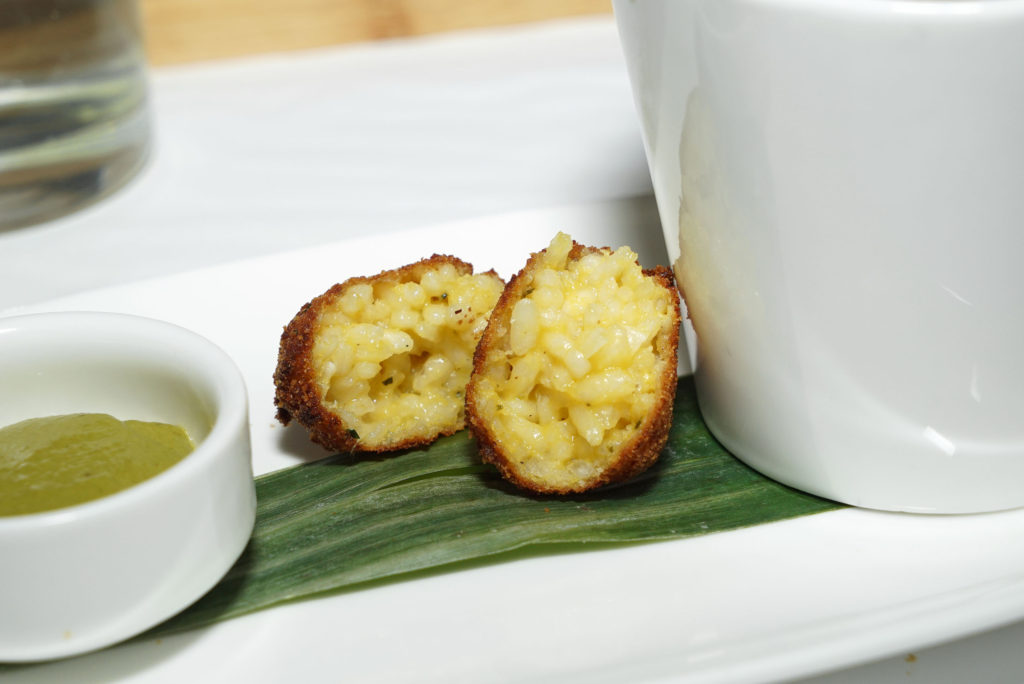
On the side we had some arancini, or fried rice balls, which were fun and tasty.
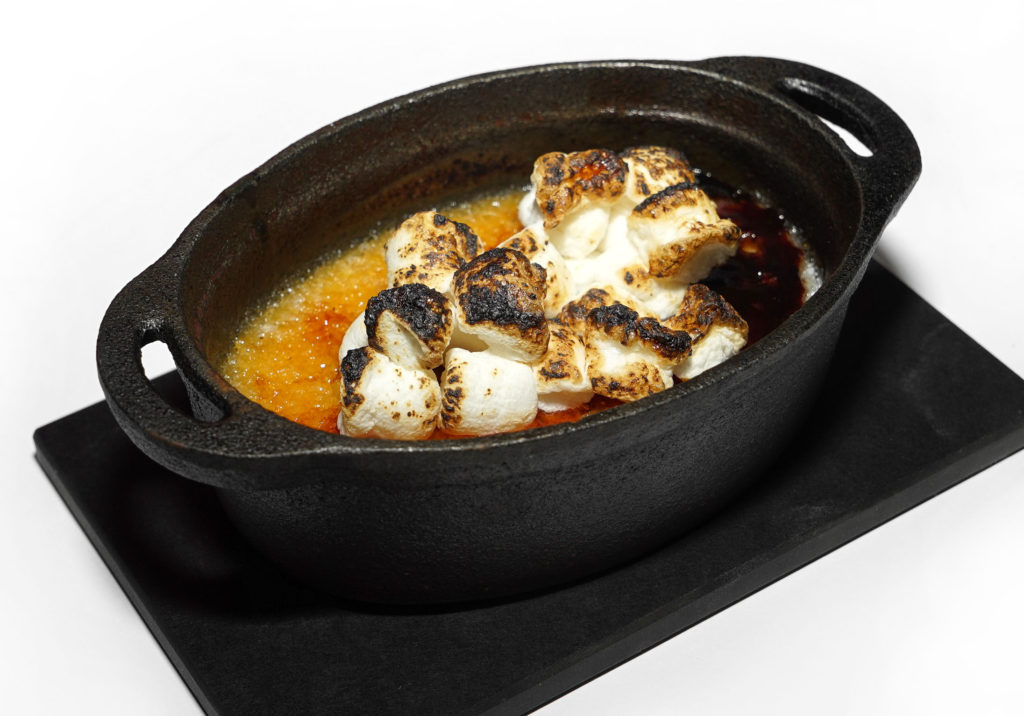
We also had the sweet potato creme brulee. I didn’t think I’d like it when we were told about it by the waiter. As such, we didn’t order it. But the waiter brought it out for us to try anyhow. It turned out to be my favorite item of the night!
It was sweet without going overboard, and the brulee crunch and marshmallow topping was just thrilling. I even remarked that if you plop a scoop of vanilla ice cream on top of it, it would make for a perfect dessert. Do yourself a favor and get this when you come here. It is unbelievable.
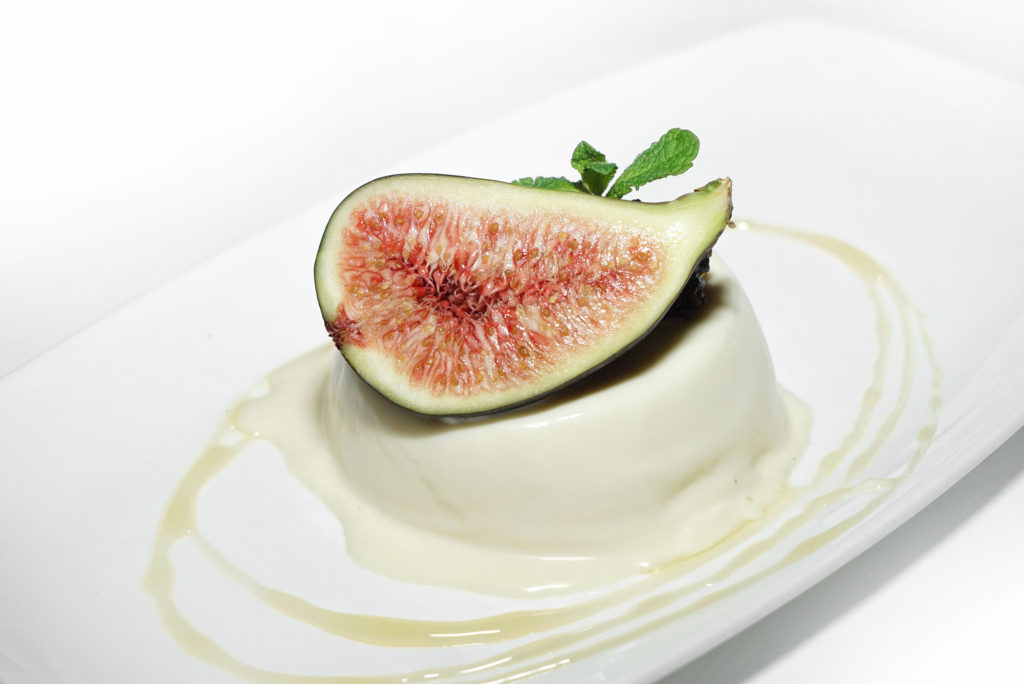
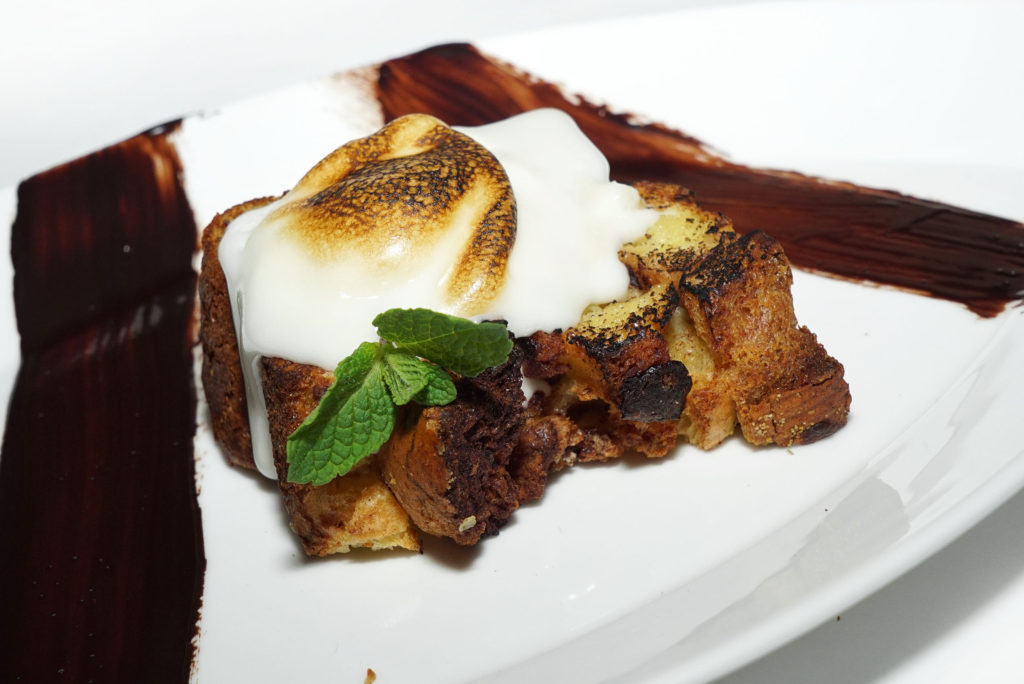
For our proper desserts, we tried the fig panna cotta and nutella bread pudding with homemade fluff. Both were incredible, but I give the edge to the panna cotta. So silky, smooth and light, but packing a big flavor punch.
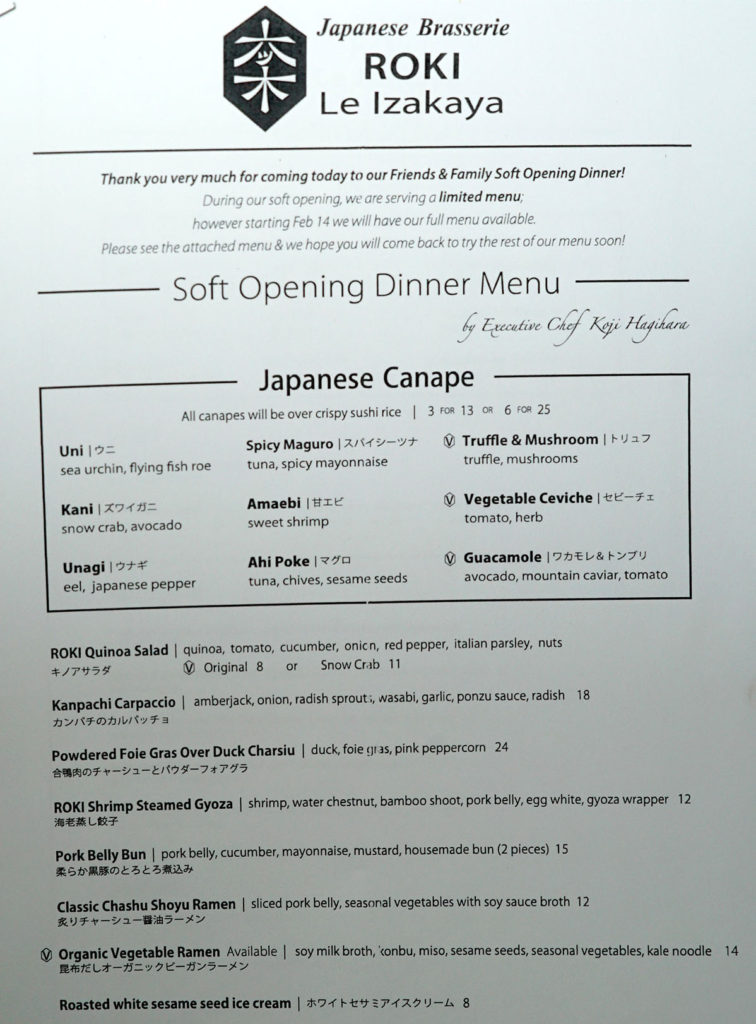
Japanese Brasserie ROKI Le Izakaya held a soft opening this past weekend. The menu features some really great stuff.
We tried pretty much everything that you see on the menu above, except for the veggie ramen. It sounds pretty good, though, and I’d like to go back and get it soon.
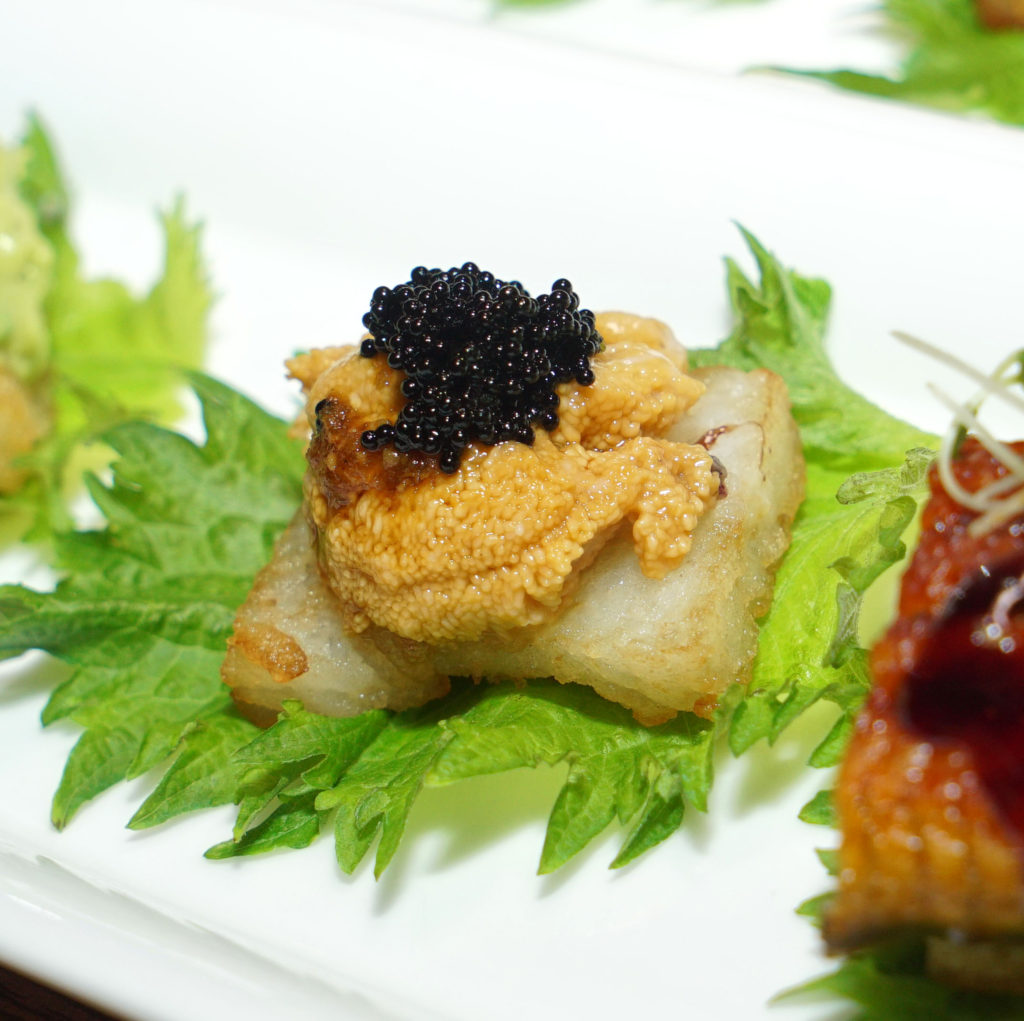
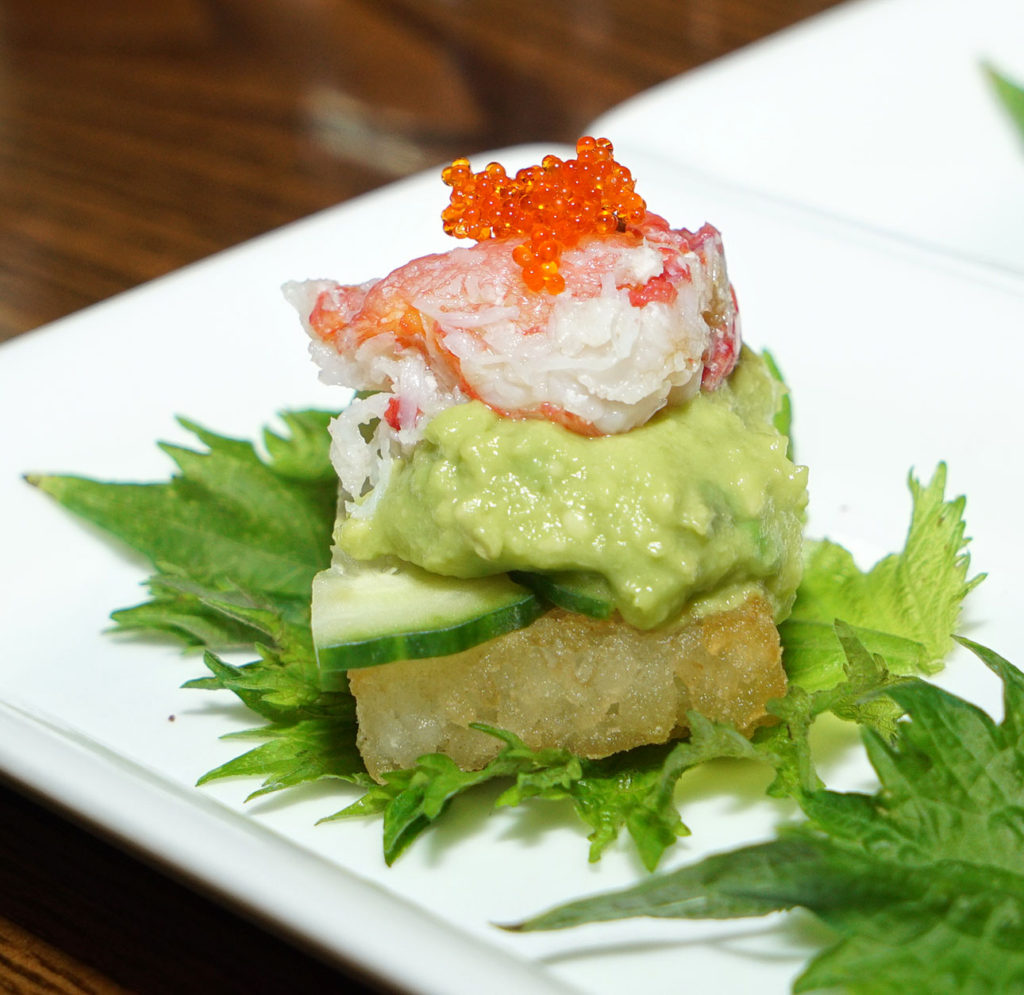
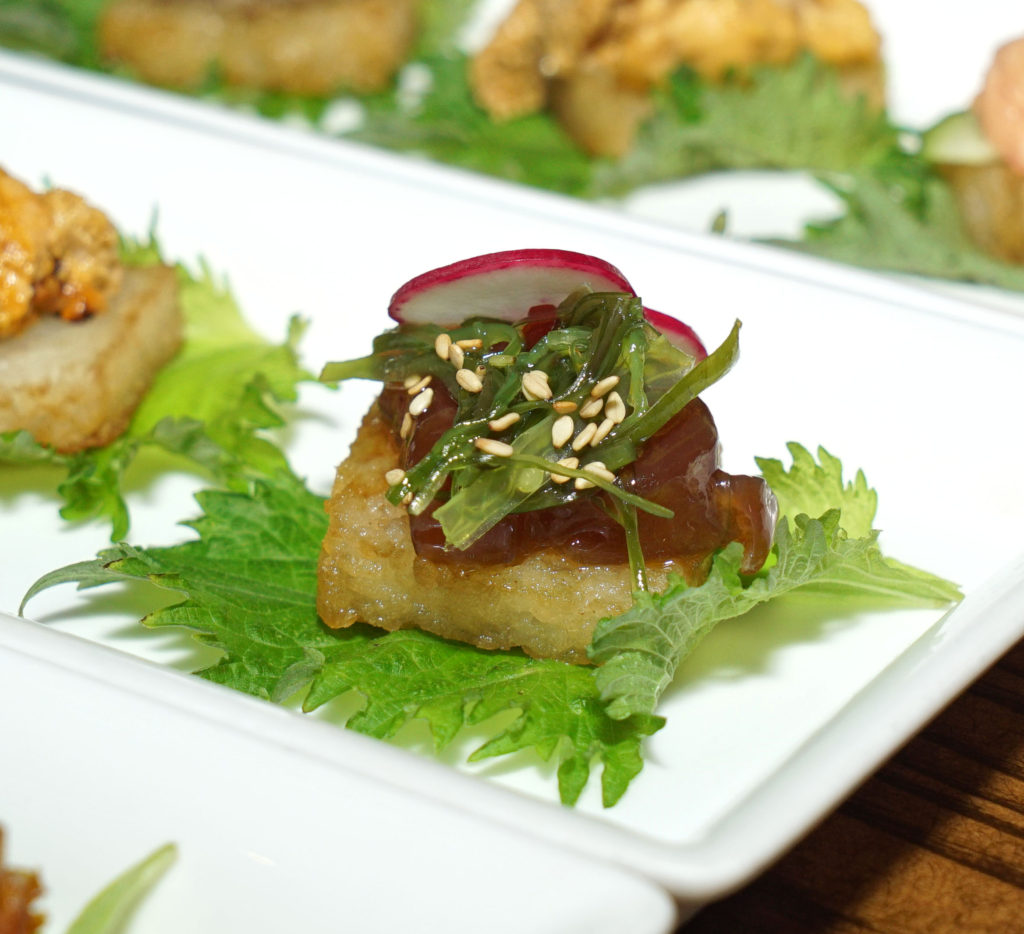
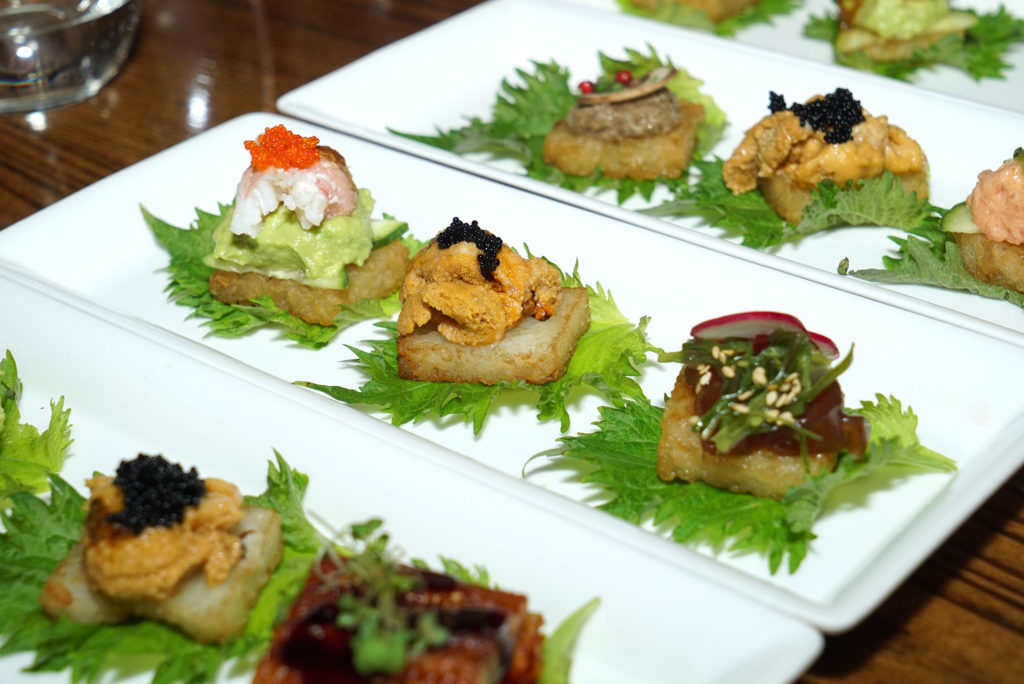
Canape are small bites of proteins set atop a bed of fried sticky rice. Each one is like an amuse, or hors. I tried three: uni (sea urchin), kani (crab) and ahi poke (dressed tuna). All were excellent, especially when eaten with the shiso leaf, but my favorite was the uni.
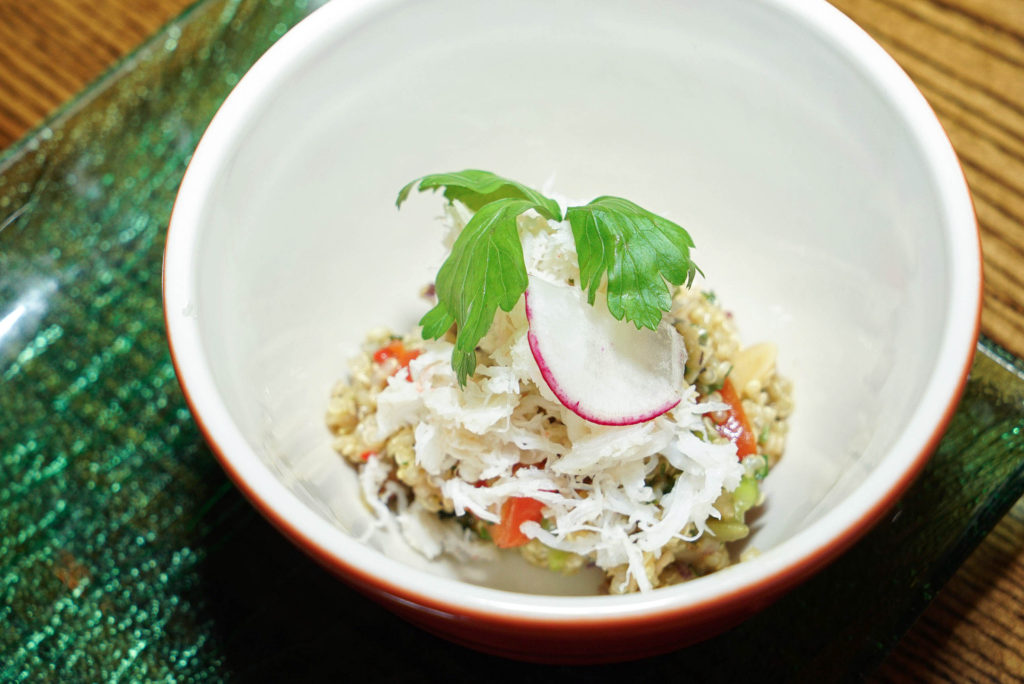
The quinoa salad with crab meat was the only menu item that seemed a bit out of place. It had a cumin spice to it, and it felt more middle eastern than Japanese. It was still very good, however.
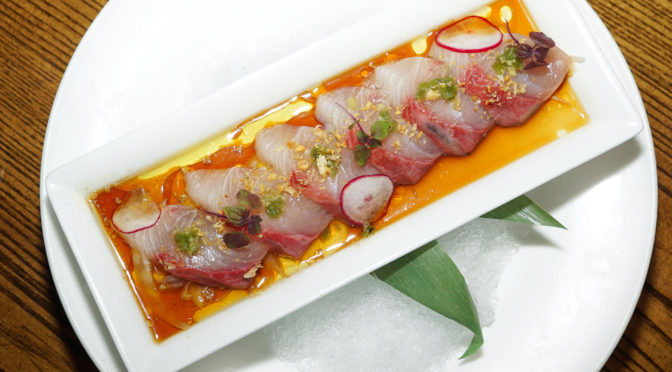
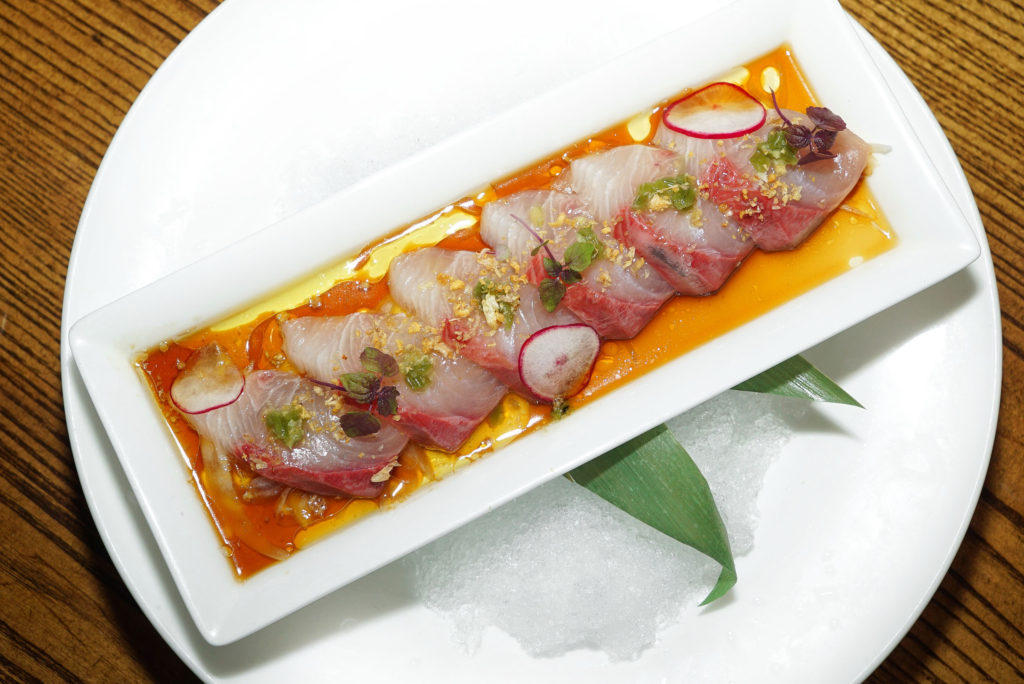
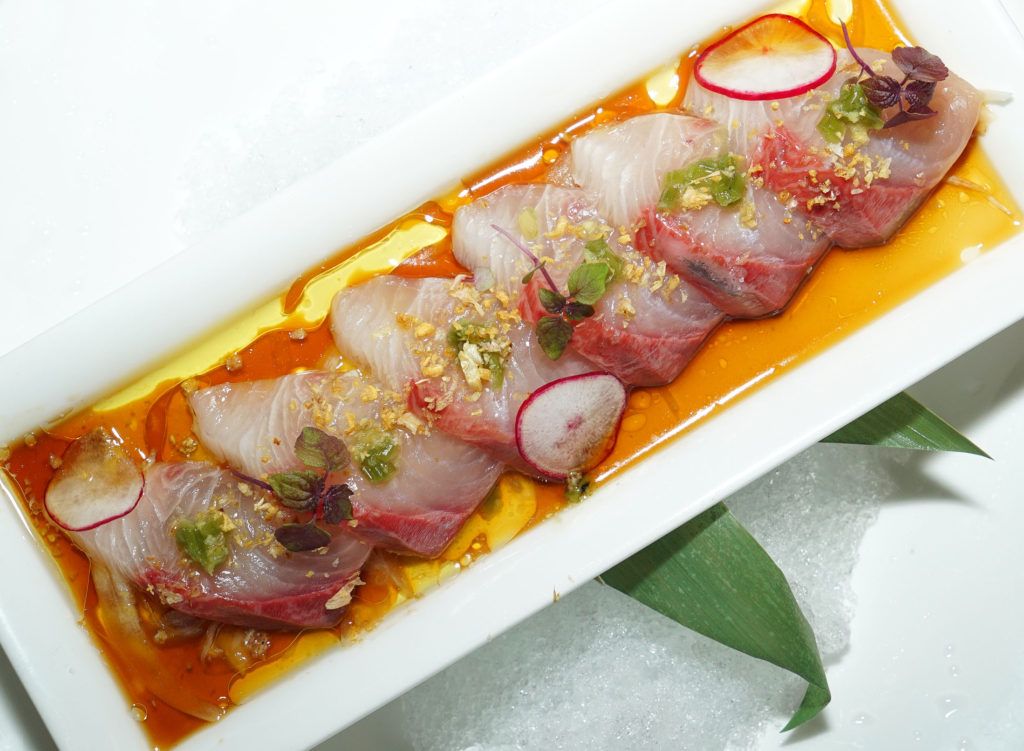
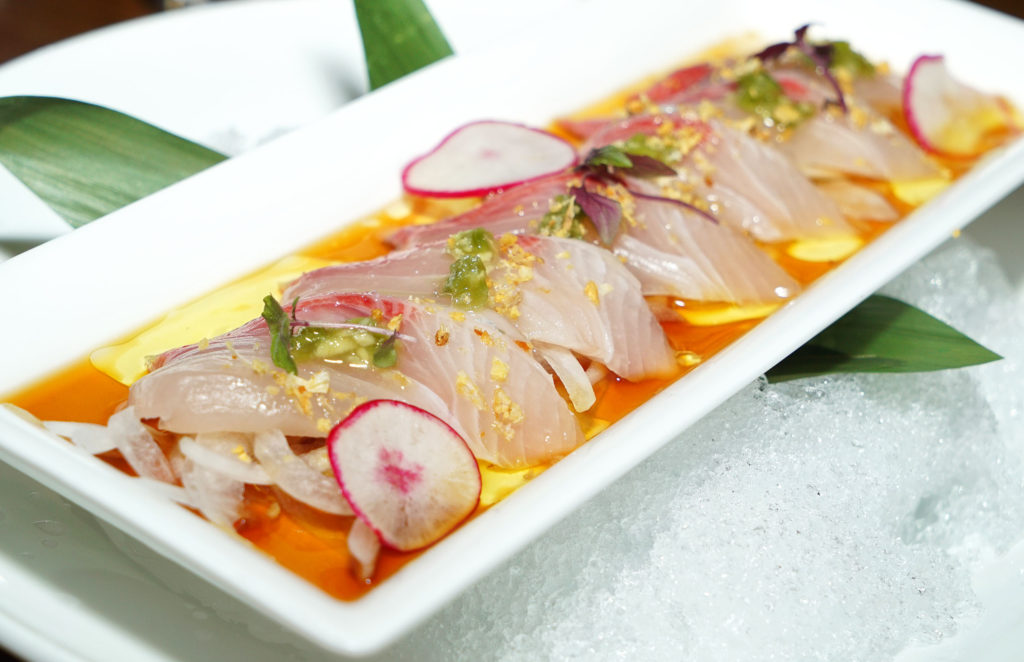
Next up was the amberjack carpaccio. This was so clean and flavorful. t was perfectly dressed. I could eat this all night!
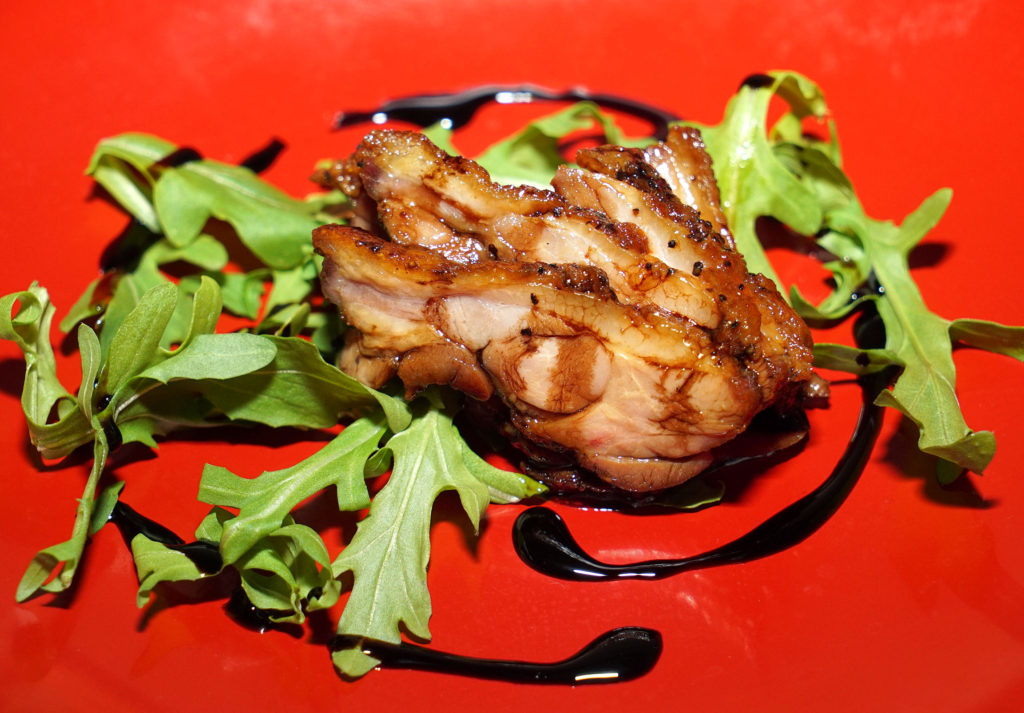
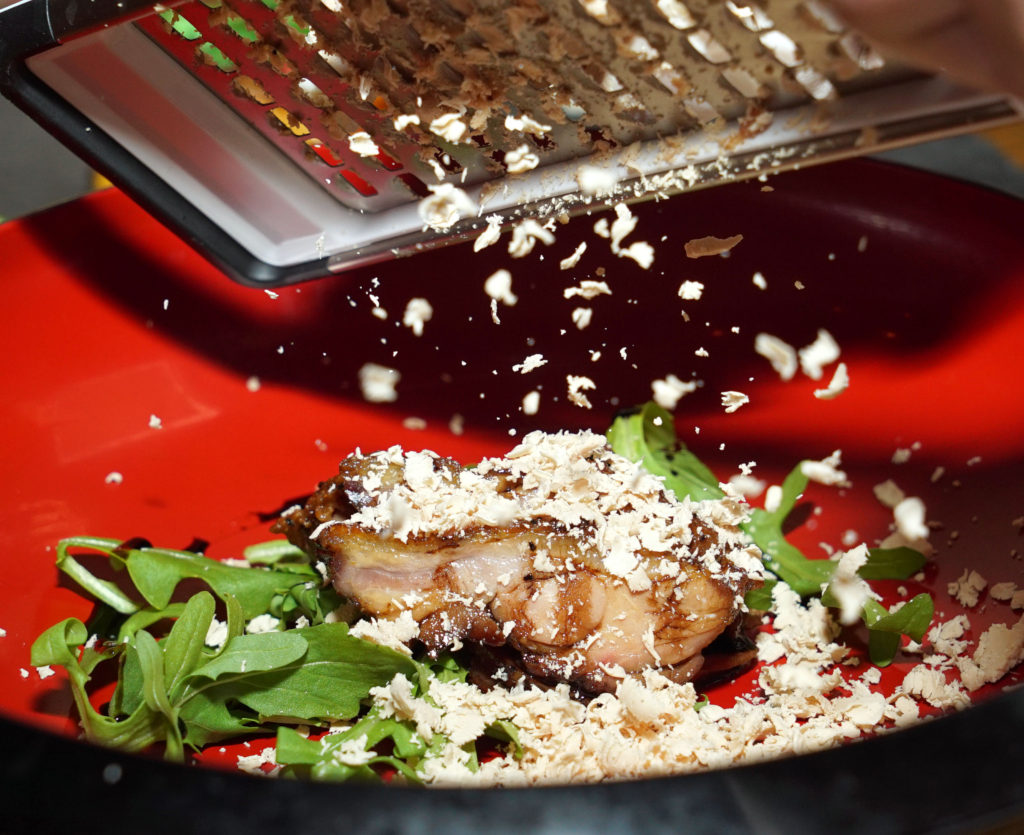
The duck chasiu was intense! And when the waiter came over with shaved foie gras on top, I knew I was in heaven.
Let it snow, let it snow, let it snow…
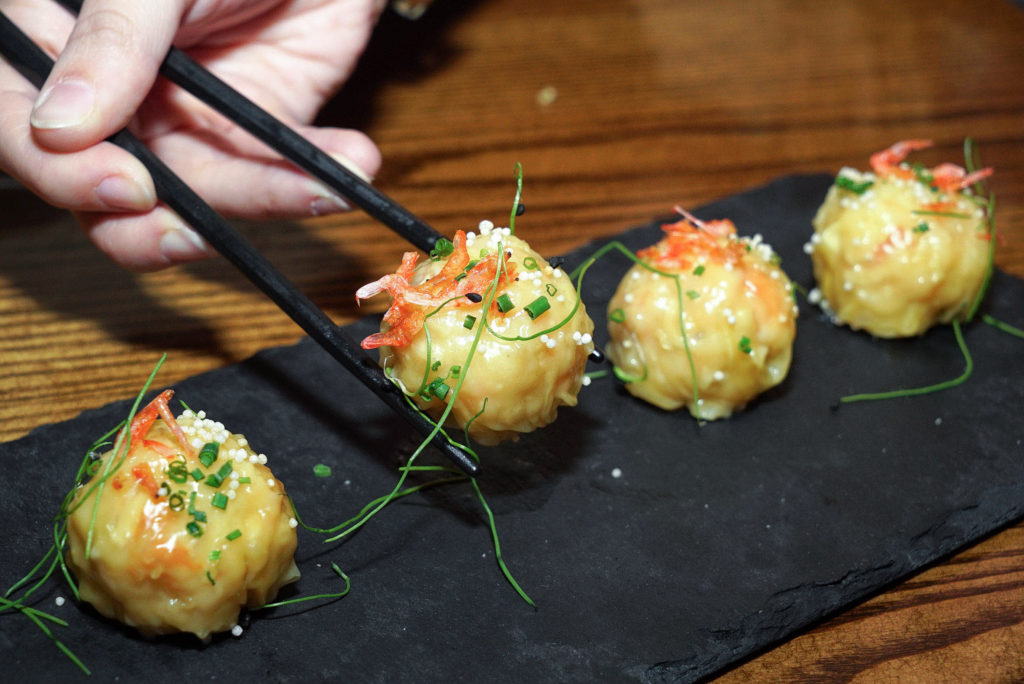
Shrimp gyoza were next. These were tasty and perfectly cooked.
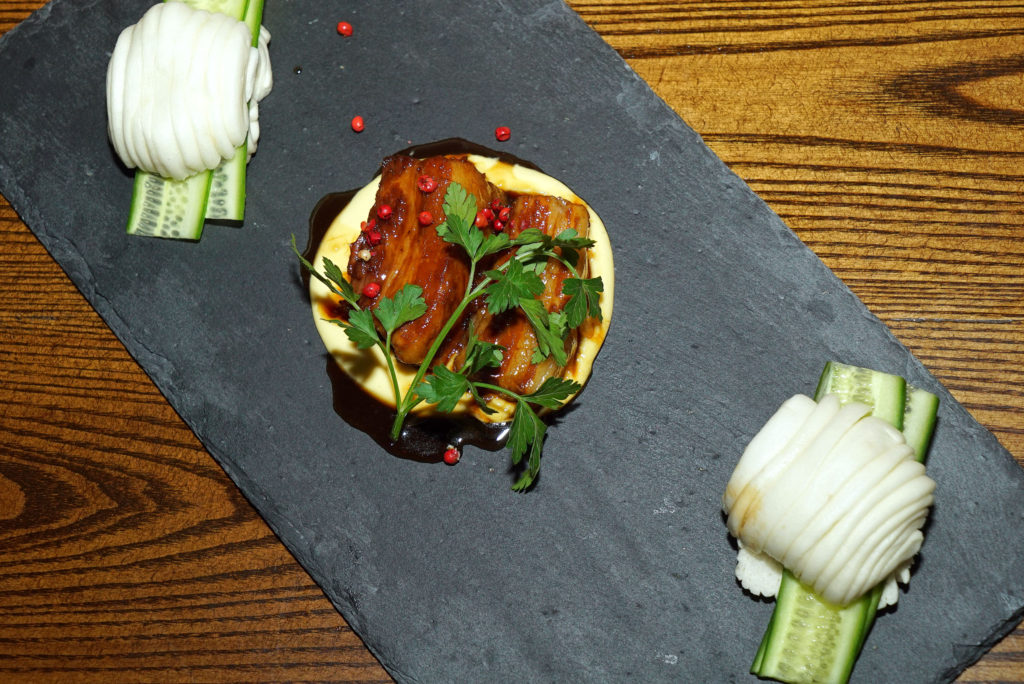
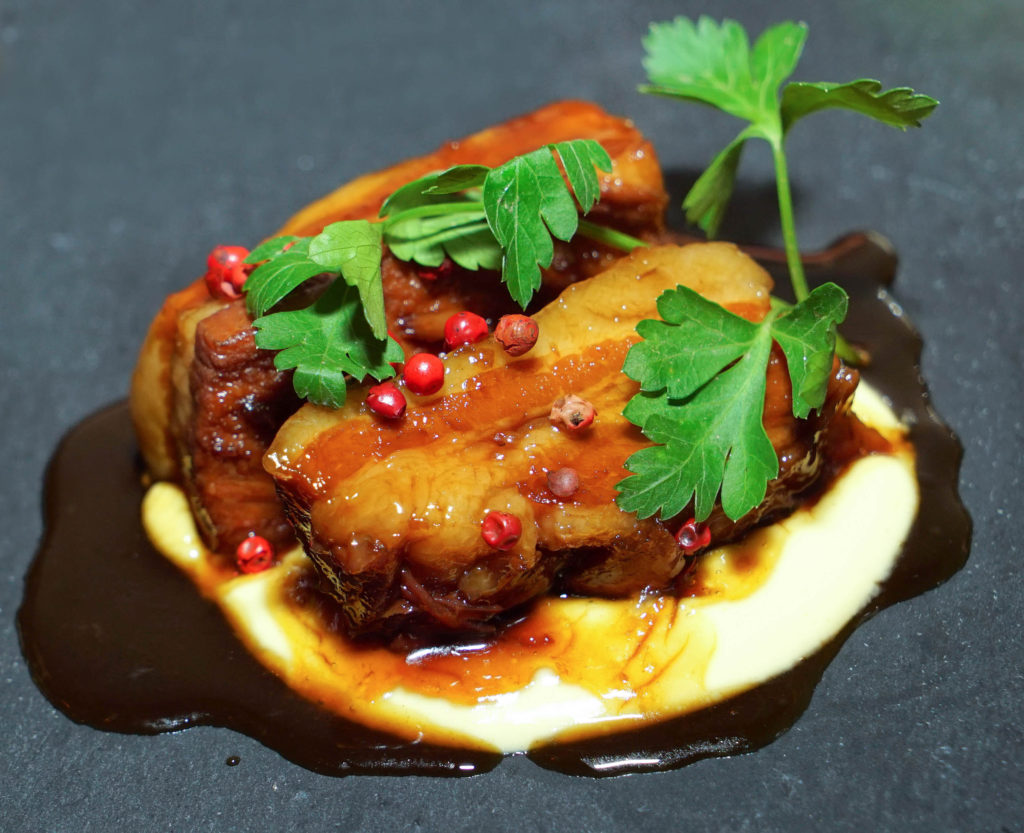
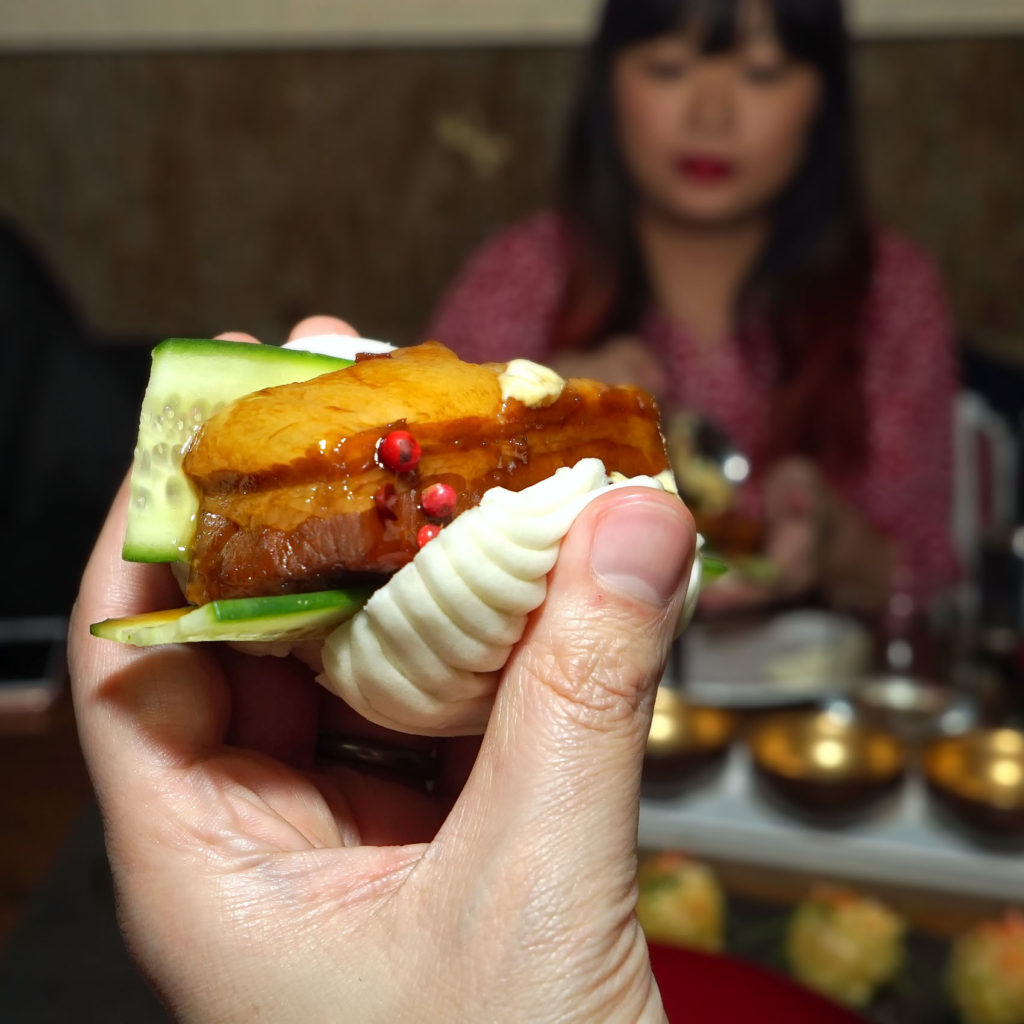
A big crowd pleaser, though, was the pork buns item.
They were decadent and so tender. I mean look at that meat!
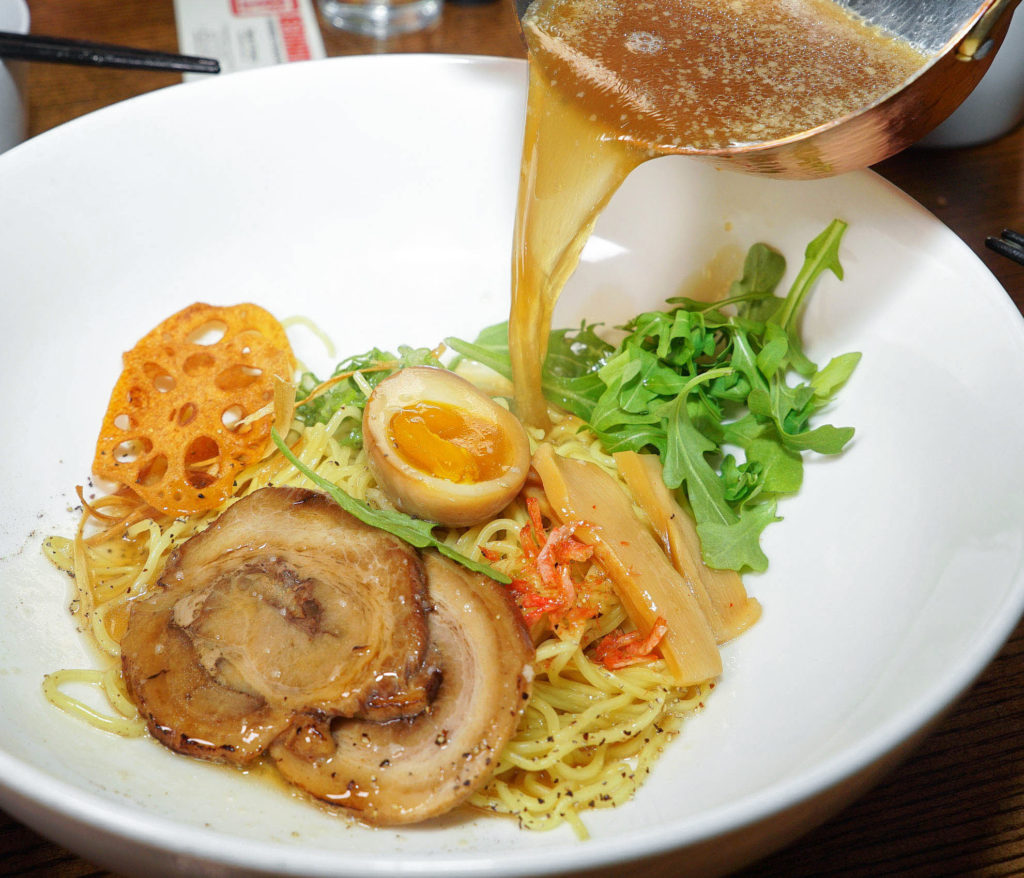
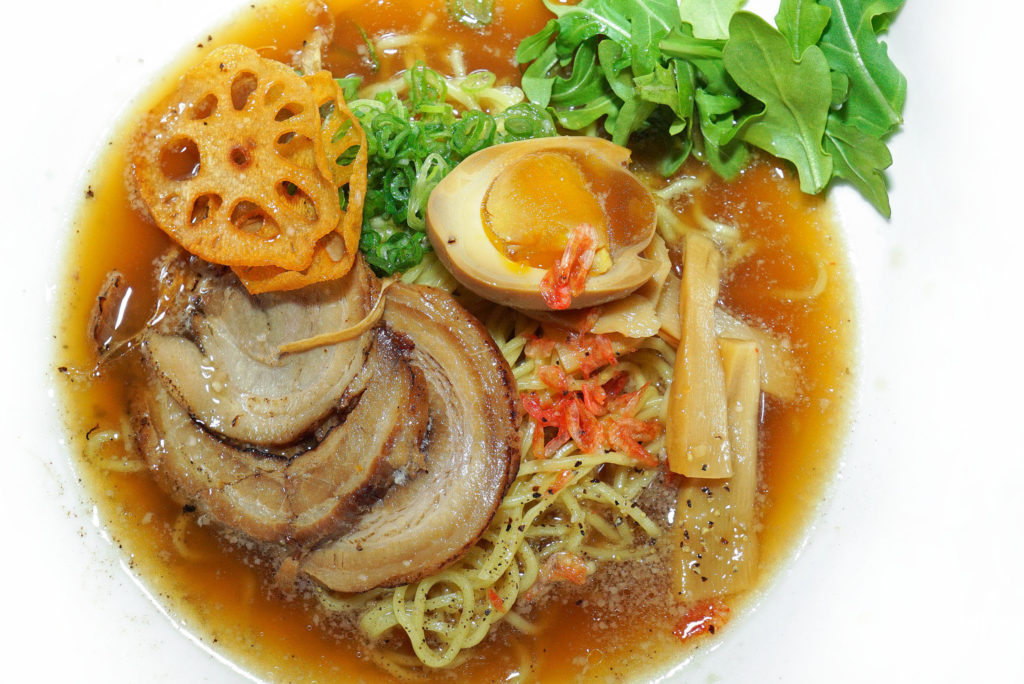
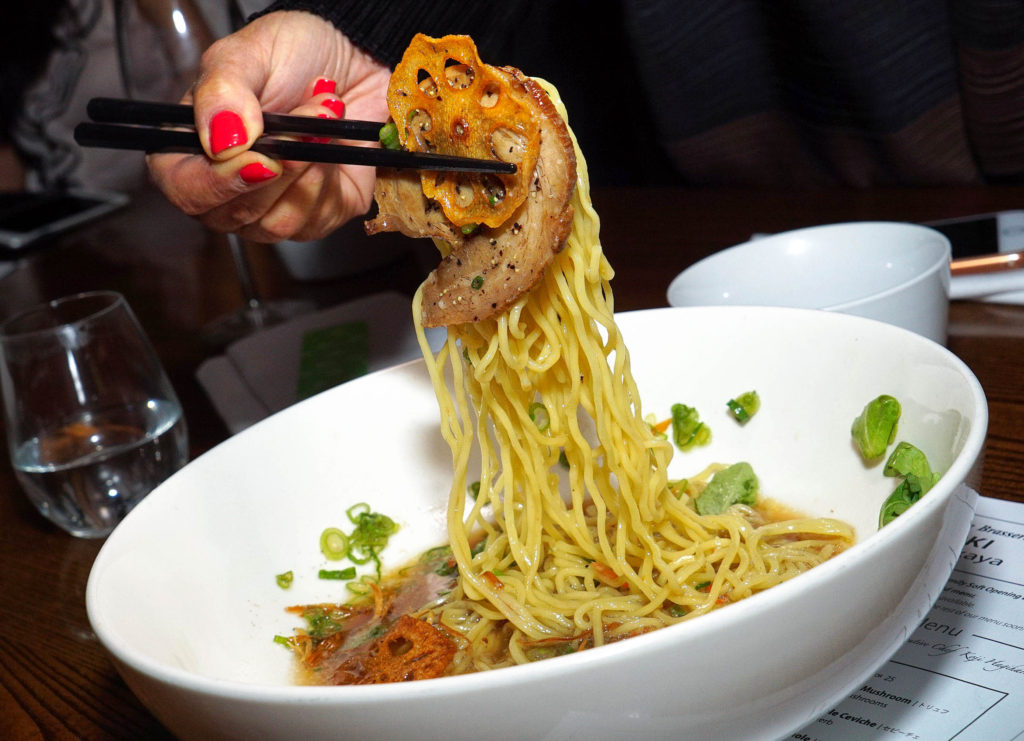
The star of the night, for me, was the ramen. I typically don’t get down on shoyu broths. I prefer a tonkotsu (which they will have on their full menu – this was just a soft open with a limited menu selection). But this shoyu broth was deep and rich! I loved it.
The toppings were also really fun. Fried lotus root, bamboo shoots, arugula, fresh pepper, fried crispy baby shrimp and char siu pork. Oh and of course, that perfect egg…
I can use a bowl right now, actually, as I sit here writing this review.
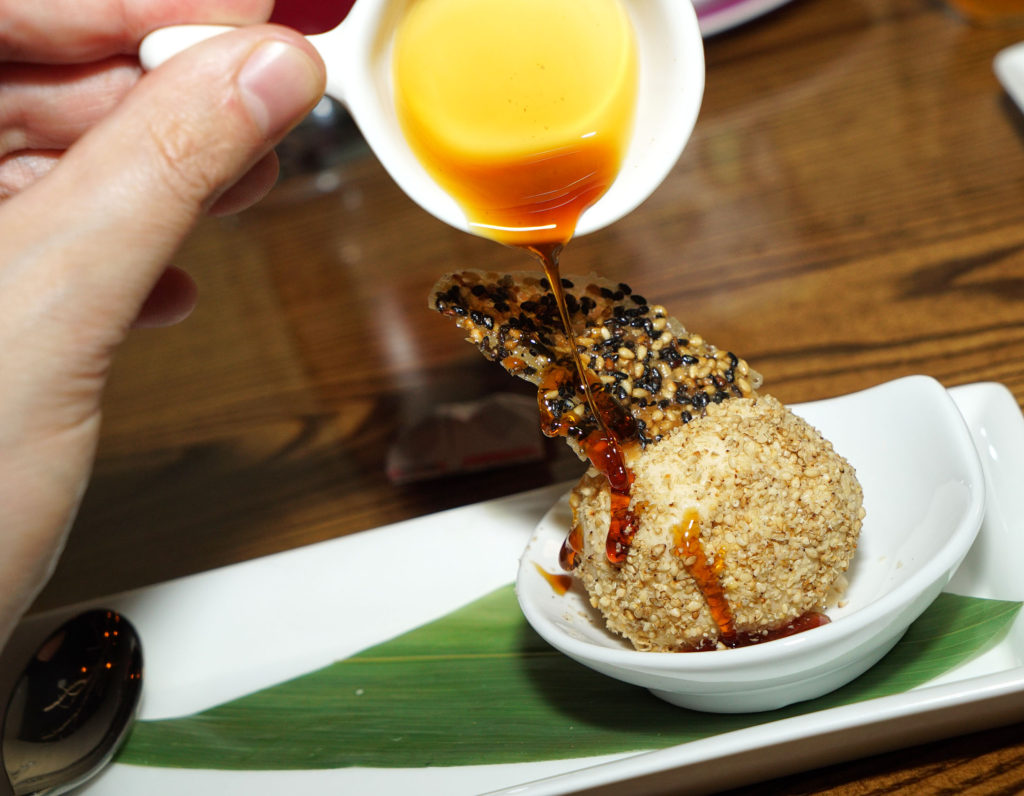
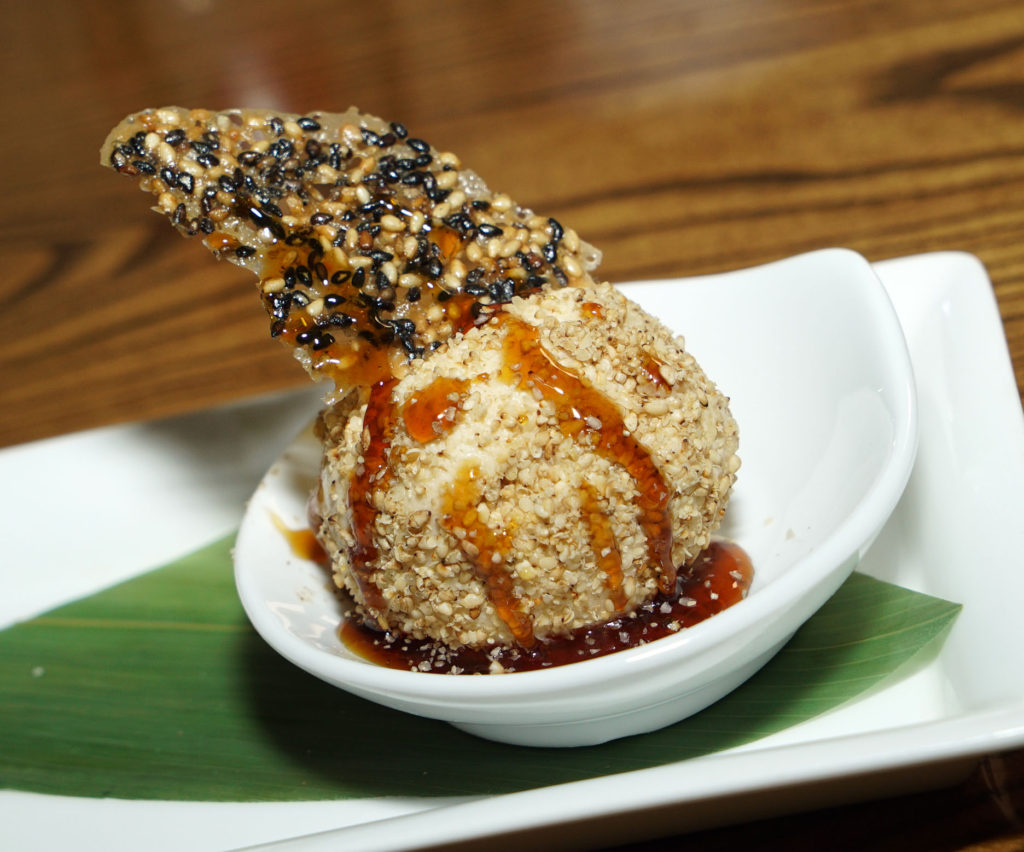
The roasted white sesame seed ice cream was awesome! It was just right for dessert – not too sweet at all. It was coated with a nice crisp, and then topped with a sesame and honey cracker. And drizzle that thick sauce on top to bring it home!!!
I will definitely be back here soon. This was a fantastic meal!
ROKI LE IZAKAYA
12 West 21st Street
New York, NY 10010
Pat LaFrieda. You’ve all probably seen the name before, and you’ll definitely see it again – especially because I’m about to publish a feature article on LaFrieda early next month for my “Meet Your Meat” series. But the man is a top notch, high quality beef purveyor with a rich family tradition of killing it in the meat biz. He provides the goods to the restaurants and chefs that make my favorite steaks.
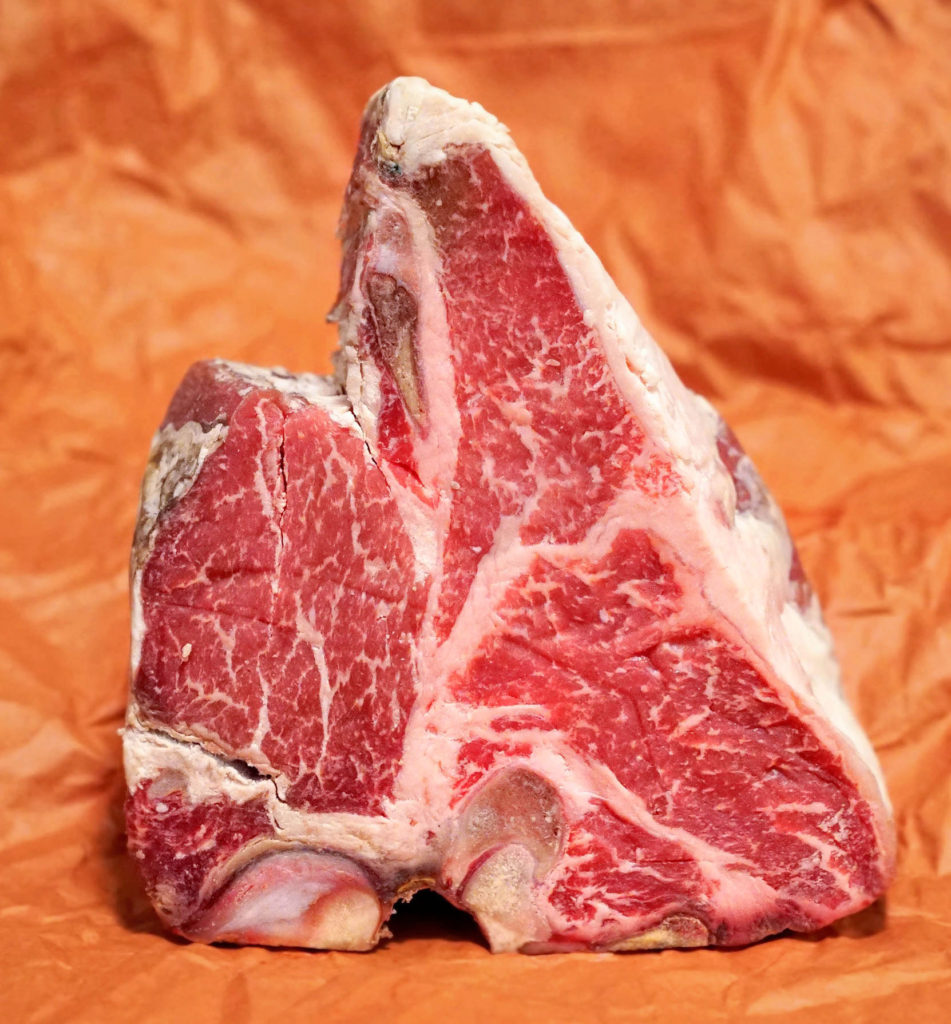
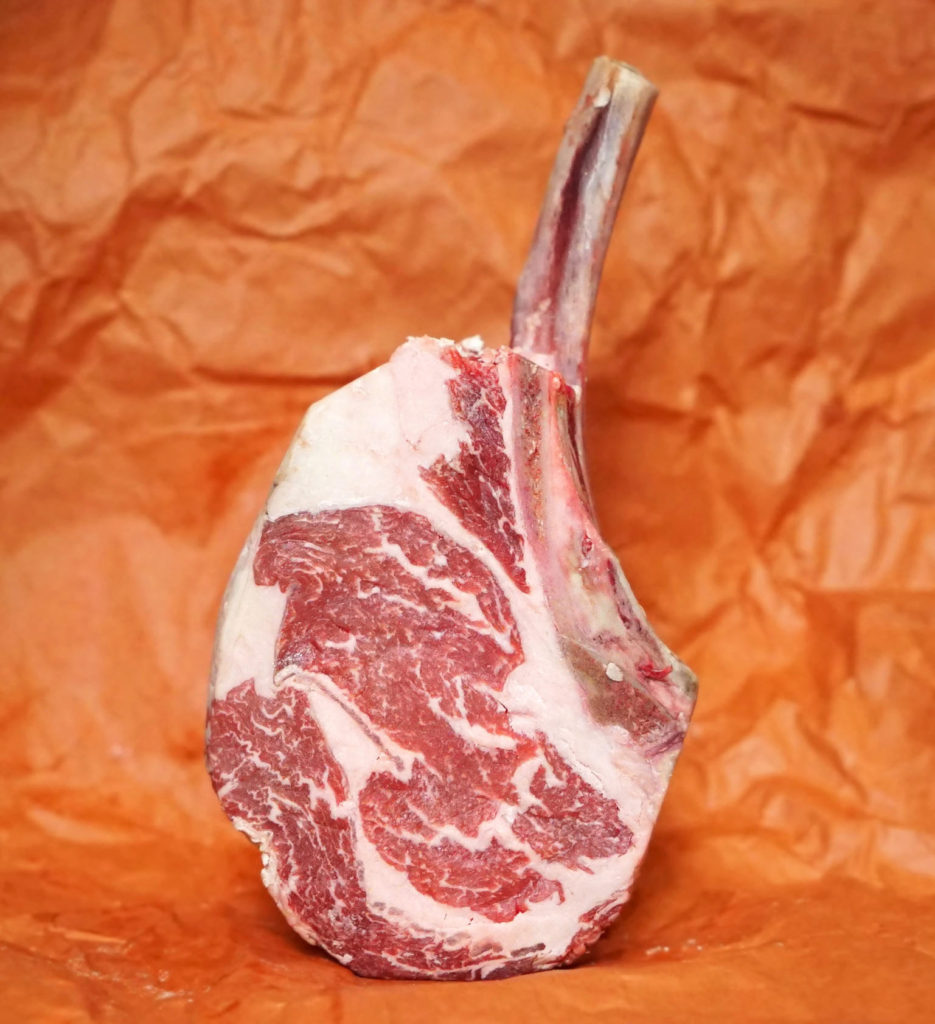
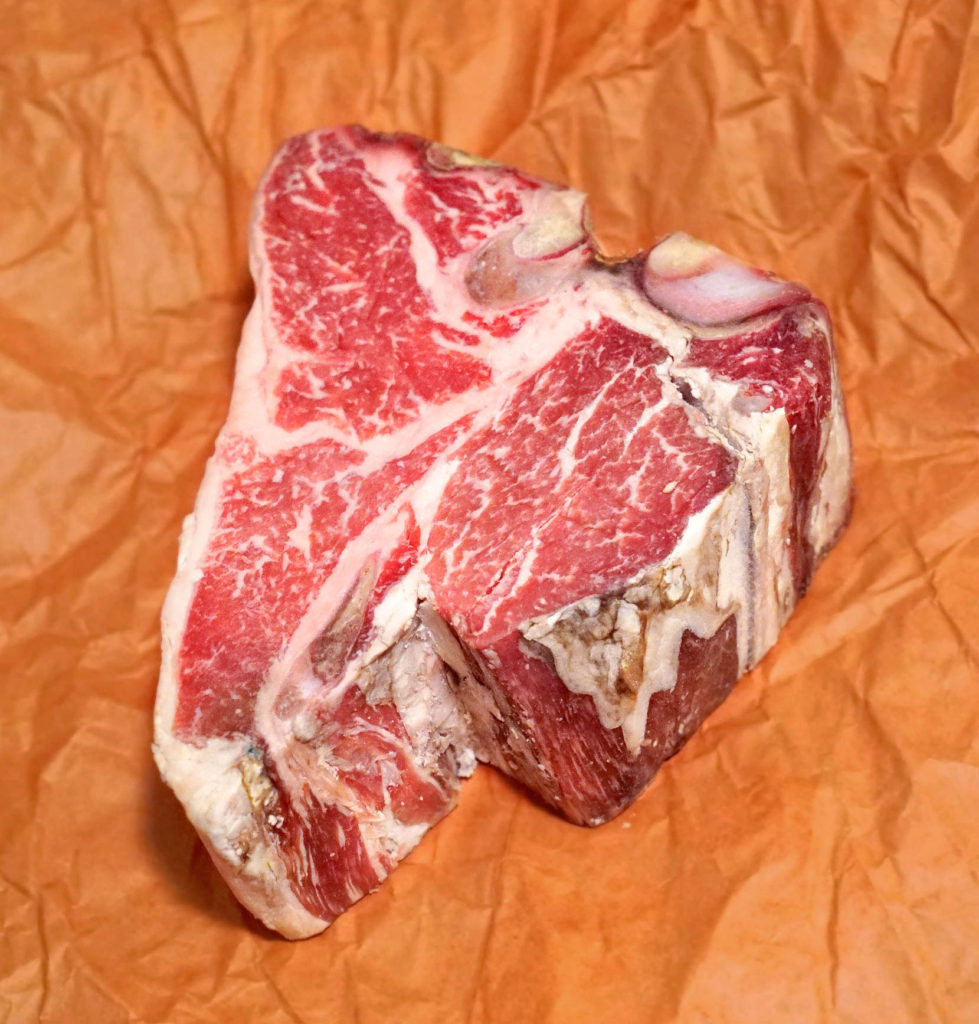
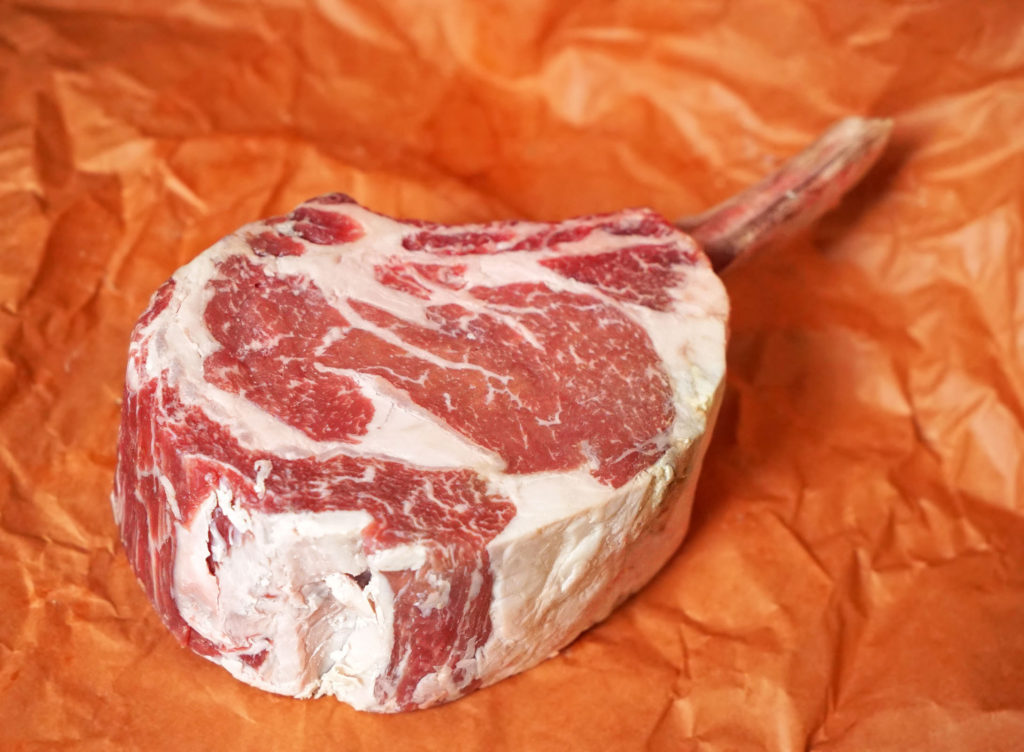
He recently sent over two cuts of steak for me to enjoy at home; both dry-aged for 60 days, both prime, and both 2.5″ thick. One was a porterhouse, and the other a rib eye.
This stuff is not just set aside for restaurants and hotels! You can order it for home delivery right here.
So, what to do with all this beef? I mean, I would have loved to eat it all myself, but that’s just rude. Instead, I invited over a handful of foodie friends and cooked up a feast for them.
Here’s how it went down:
Appetizers
For starters, I sliced up some truffle salami and made a very basic wedge salad with iceberg, grape tomatoes, thick bacon and a crumbled blue cheese and black truffle oil dressing.
Main Courses
I decided to cook the porterhouse in the sous vide machine, and then finish it off with a hard Searzall blowtorch sear. I loaded the sous vide bag up with some truffle oil (I froze this ahead of time, that way the contents in the bag were dry when I sealed it), rosemary and thyme. I also seasoned the steak with salt and pepper before sealing it up.
After about four hours in a 128 degree bath, I pulled it out and dropped it into some ice water to stop the cooking process. After a few minutes, I removed it from the bag, dried it off and blasted it with the Searzall to get that nice outer crust.
Before serving, I sliced it up and plated it, then drizzled black truffle oil on top, and hit it with some finishing salt and fresh cracked black pepper.
I picked up an extra filet from the grocery store as well, which I cooked the same way. This was mainly as extra meat, in case we didn’t have enough, and also as a control group to compare the meat quality from a nice grocery store cut against Pat LaFrieda. The cut I picked from Morton Williams looked nicely marbled and it was reasonably thick for just under $12.
When comparing the filet side of the LaFrieda porterhouse to the grocery store filet, the LaFrieda steak was hands down WAY better. There is no question about it. That 60-day dry-aging process really infuses an incredible amount of flavor into the meat.
If you are a beef lover, then Pat LaFrieda cuts are the way to go. In fact, one of my friends cooks up Pat LaFrieda steaks every Friday, and he calls it “LaFrieda Fridays.” HA!
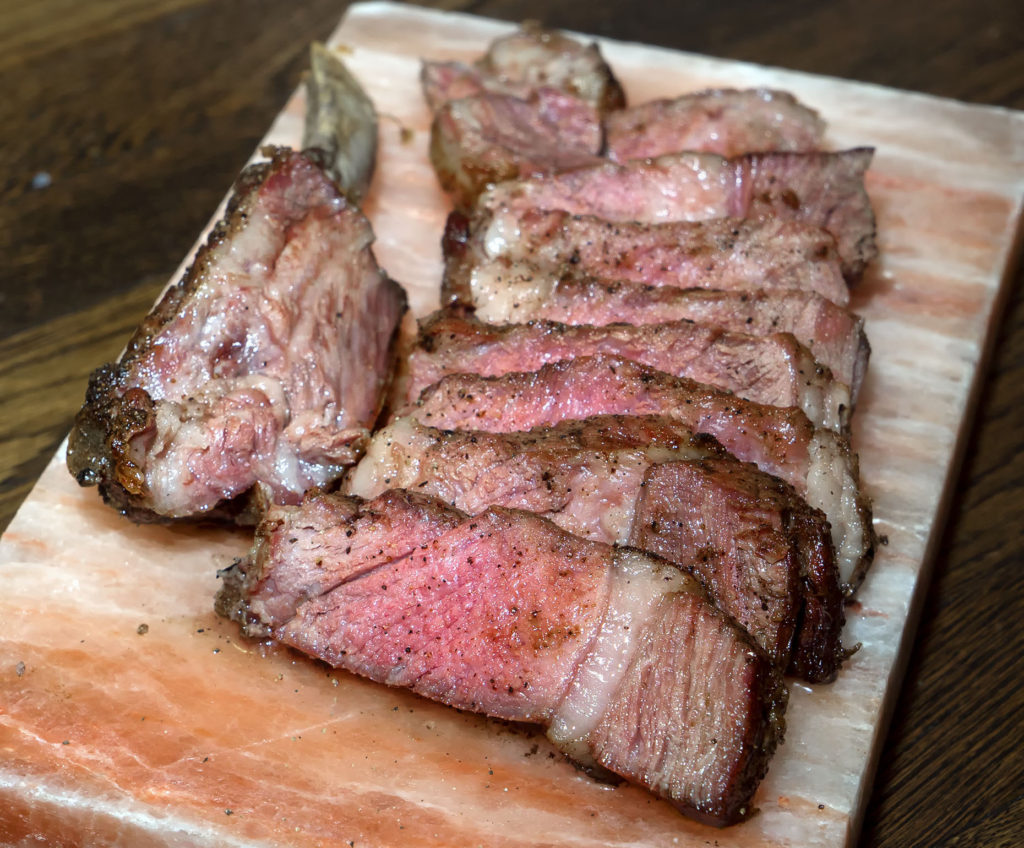
For the rib eye, I went with a traditional cast iron skillet sear with maple bacon fat and herbs, and then I finished it in the oven. I let it rest, and then sliced that up and served it on a salt block, also with a drizzle of truffle oil.
Unfortunately for me, the temperature jumped from 120 to 145 WAY faster than it was climbing while going from 68 to 120. I turned around to snap pics of the porterhouse and BOOM. The steak went beyond medium rare. Lesson learned. In any event, it was still incredibly delicious at medium. The fat cap was heavenly!
To go with these steaks, I roasted some bulbs of garlic for slathering onto the meat and grilled some lemons.
Sides
I put together a nice side of roasted mushrooms and onions, sauteed broccolini (got to have something green I guess), and made a big bowl of tater tots.
Dessert
But no meal at Johnny Prime’s Food Research Lab would be complete without a dessert by The Cake Dealer!
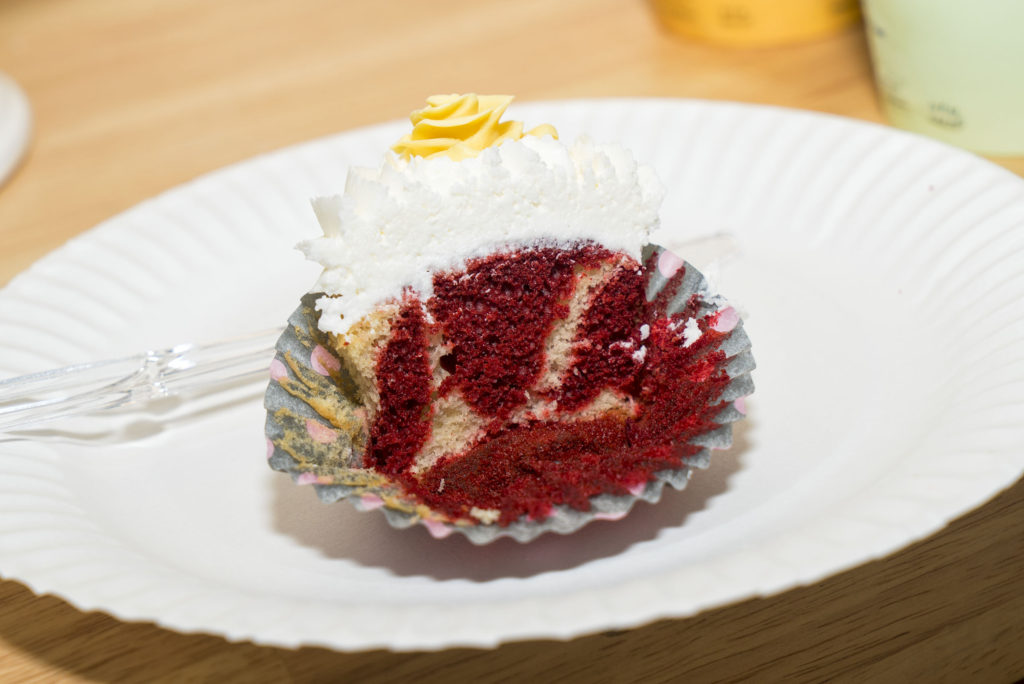
The inside of the cupcakes were marbled vanilla and red velvet, which was perfect to represent the marbling of good prime beef!
Or it was just because Valentine’s Day is right around the corner…
Oh and by the way, here are the foodies that came by. Check out their profiles for pics of the feast, if you have a chance:
As many of you know, I occasionally gather with various friends to devour entire carcasses of animals. We call ourselves The Carcass Club. This latest “meating” went down at a joint aptly called Feast.
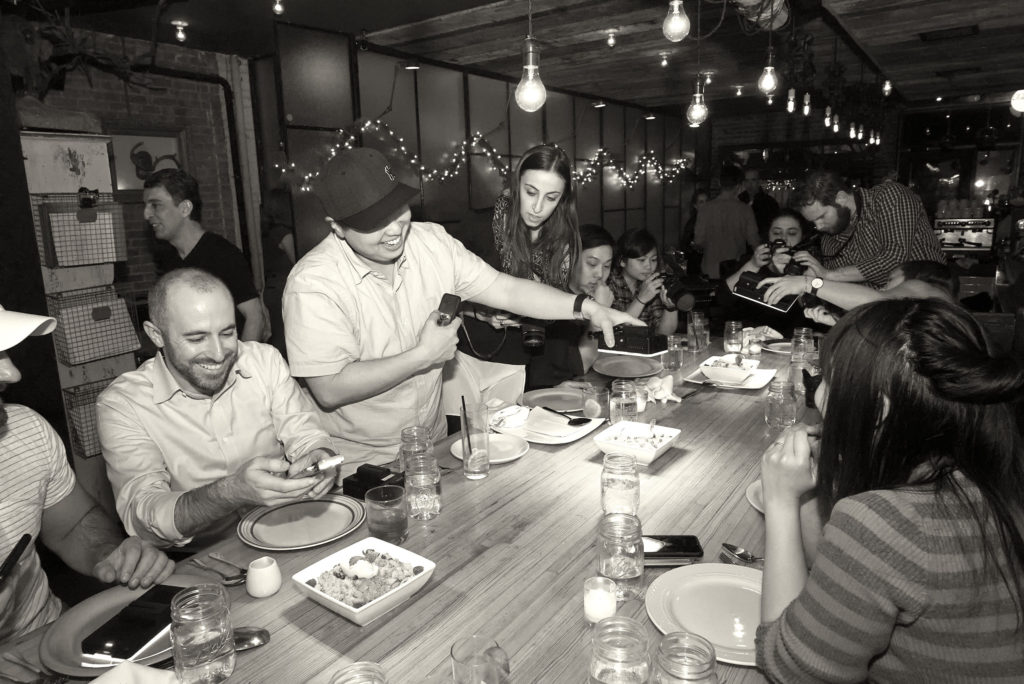
A buddy of mine, NYCFoodFomo, organized this as an Instagram influencer meal. It was on the house, given that we were going to glaze Instagram’s face with our “cam-shots” from this “pork-fest.”
I used “quotes” there so that you knew I was actually making a reference to something else besides food photos…
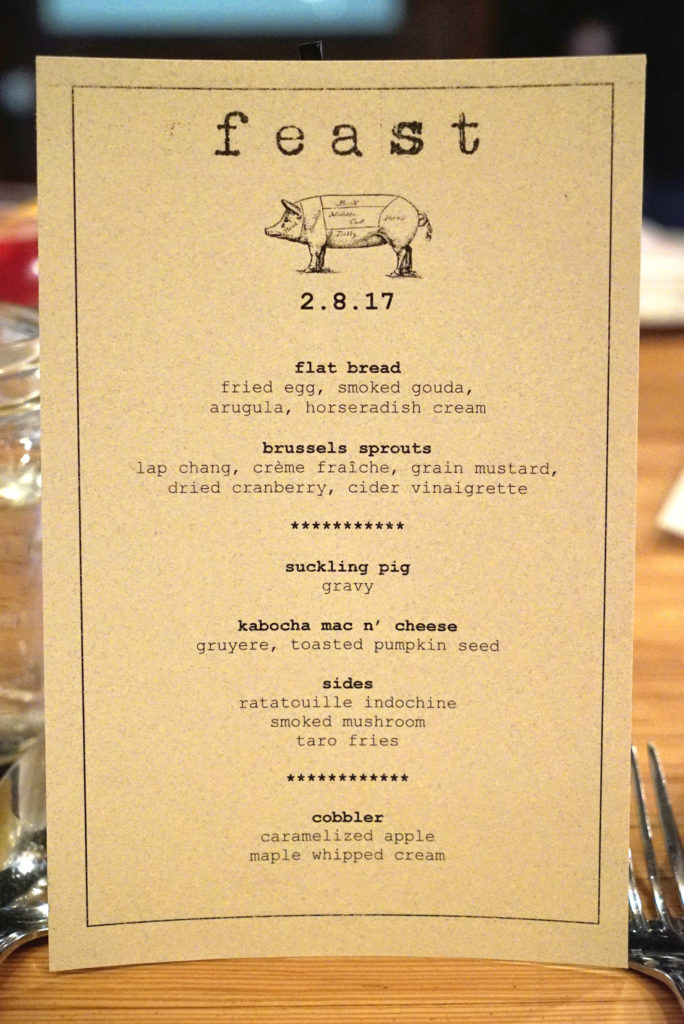
Anyway, here’s what you get at Feast, for just $75/pp:
First Courses
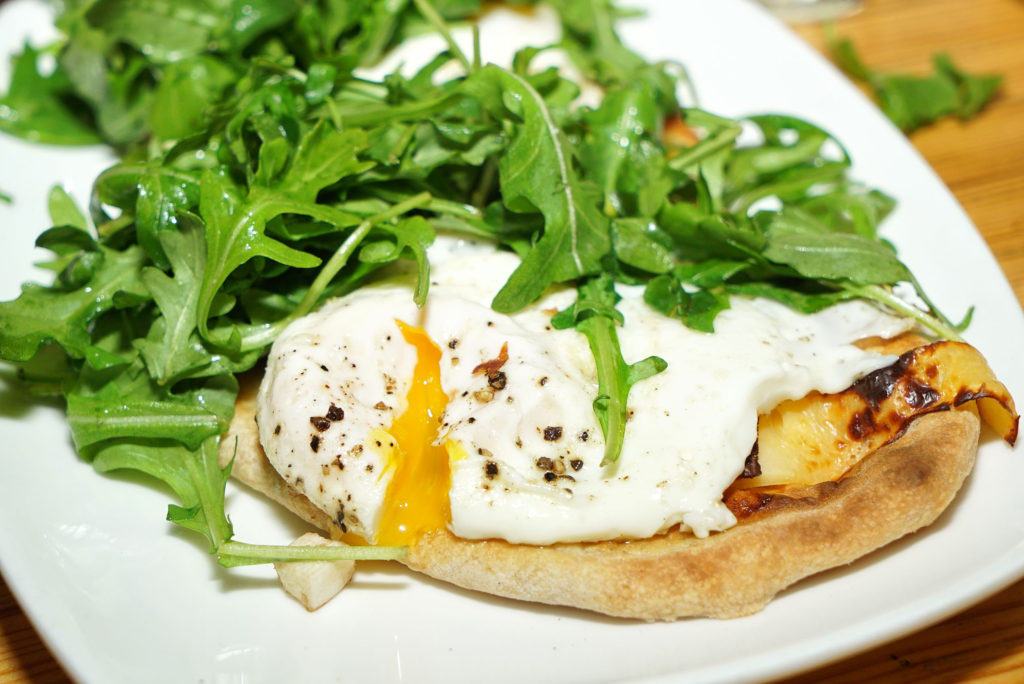
Flat bread with fried egg, smoked gouda, arugula and horseradish cream.
This was nice and crispy, and the arugula is even lightly dressed, which was very nice. This dish would make for a great breakfast, actually.
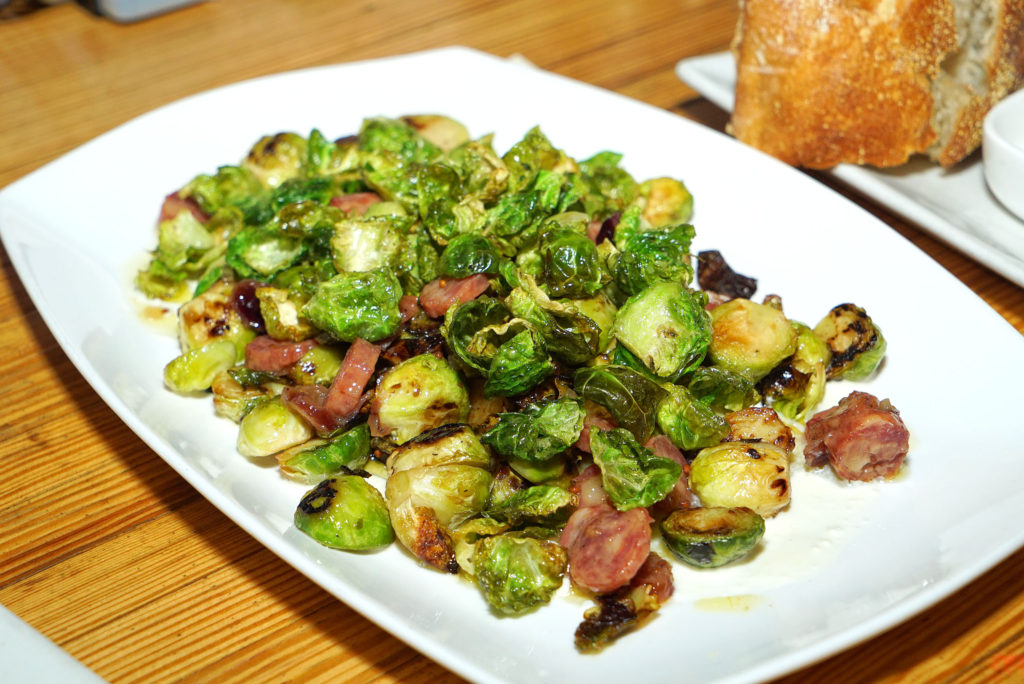
Brussels sprouts with lap cheong sausage, creme fraiche, grain mustard, dried cranberry and cider vinaigrette.
The sausage really works perfectly with the sprouts. Instead of the typical bacon, this swap for lap cheong was smart, because it has a similar meaty sweetness.
Second Courses
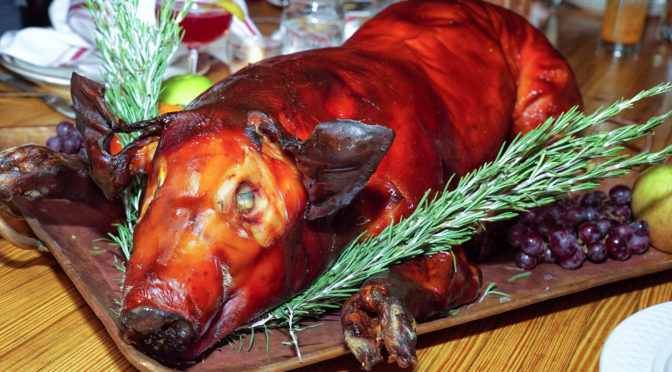
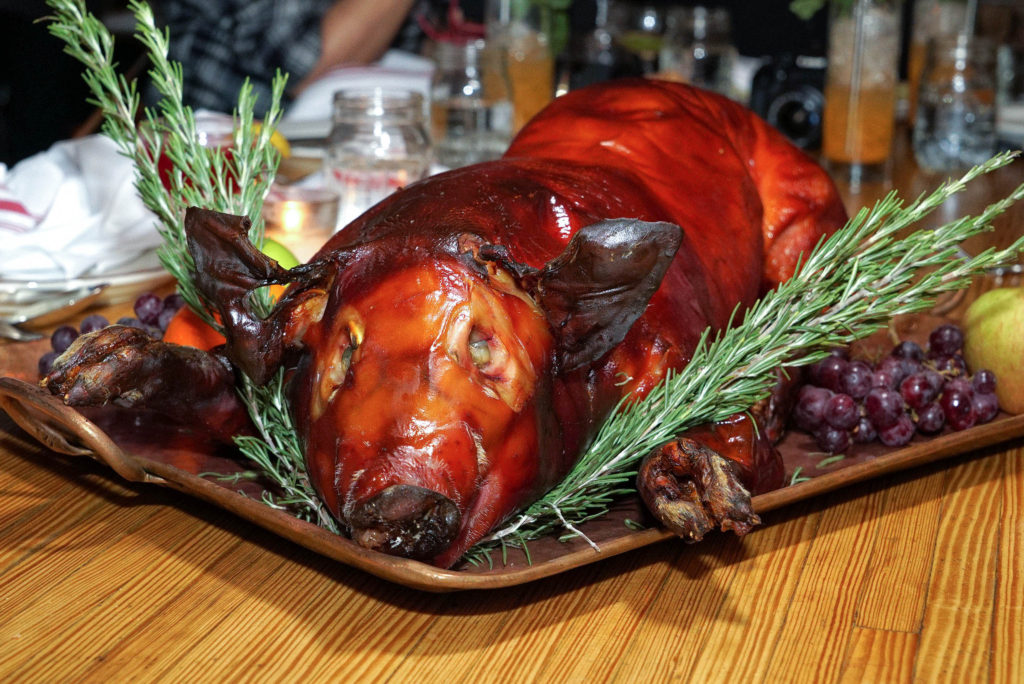
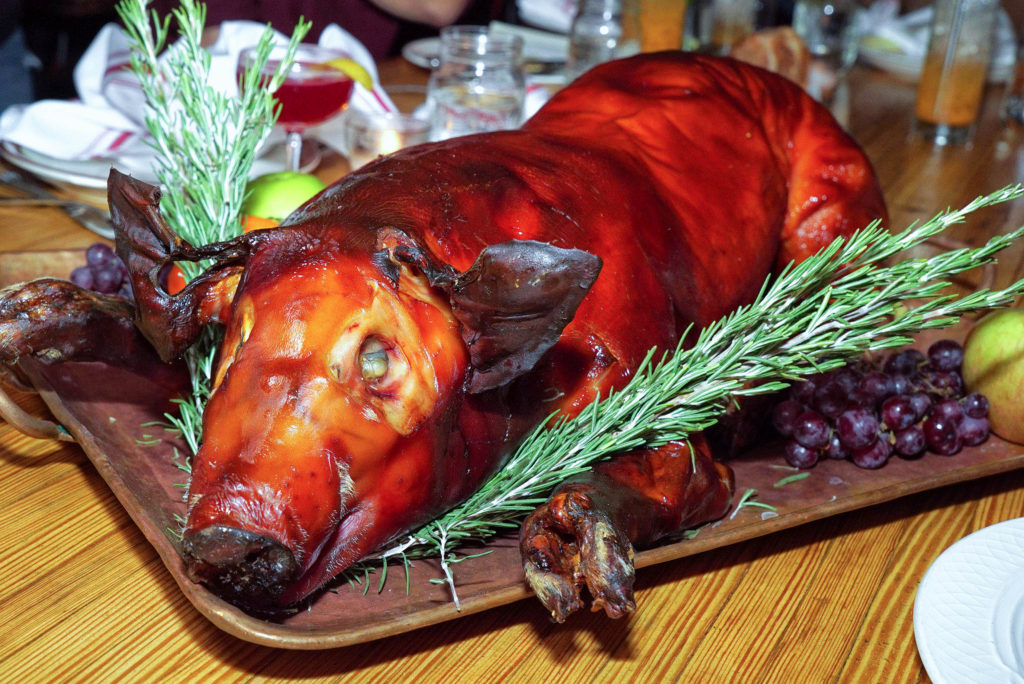
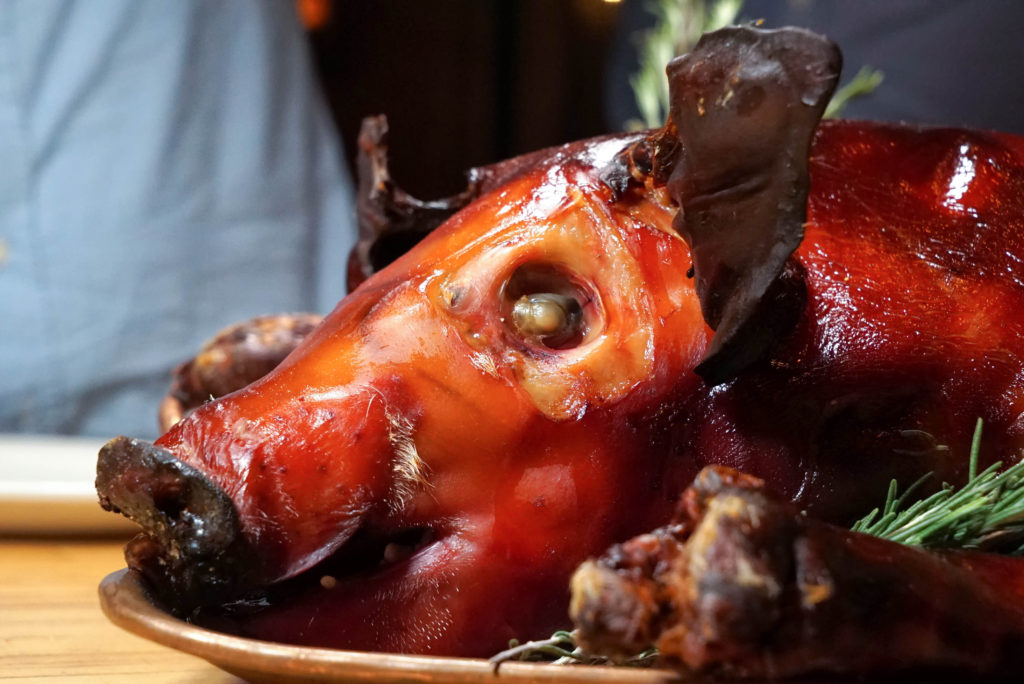
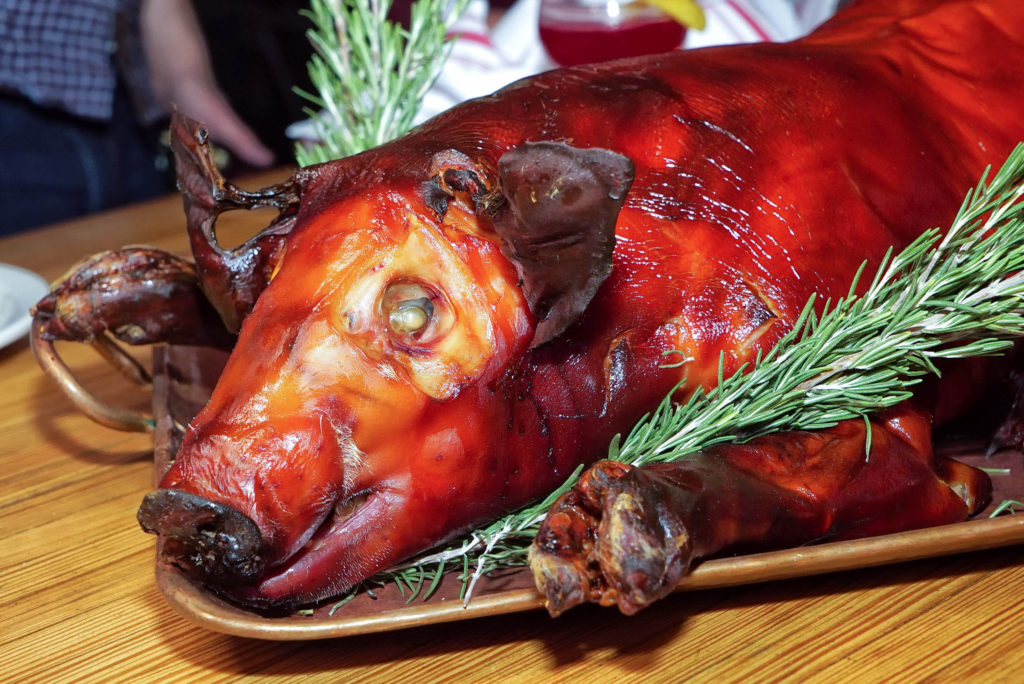
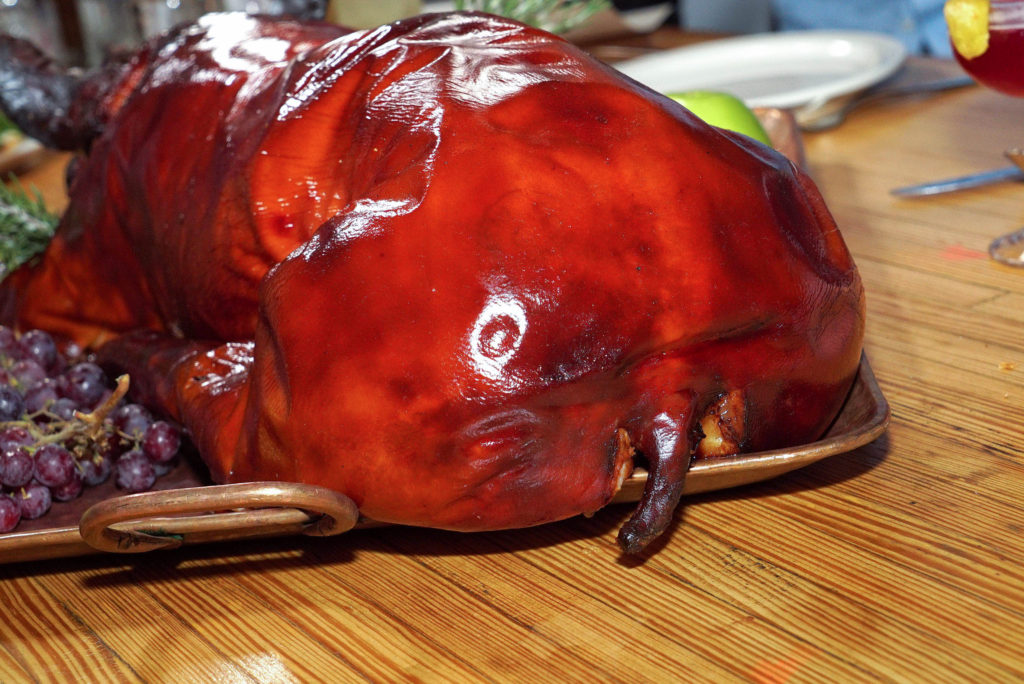
Suckling pig with gravy.
I was shocked at how well the flavor of their 24-hour brine penetrated the flesh of this 28lb pig. The meat really took on the peppercorn flavors. And one of their secrets is to use the whey byproduct from their homemade cheese making process as a tenderizer in that brine. So awesome.
They break the pig down for you and plate it into sections: head area, shoulder area, rib area, and ass/legs area. Apologies for not getting a shot of that stuff for you. It wasn’t super pretty, but it was pretty cool to see piles of meat and a pig skull.
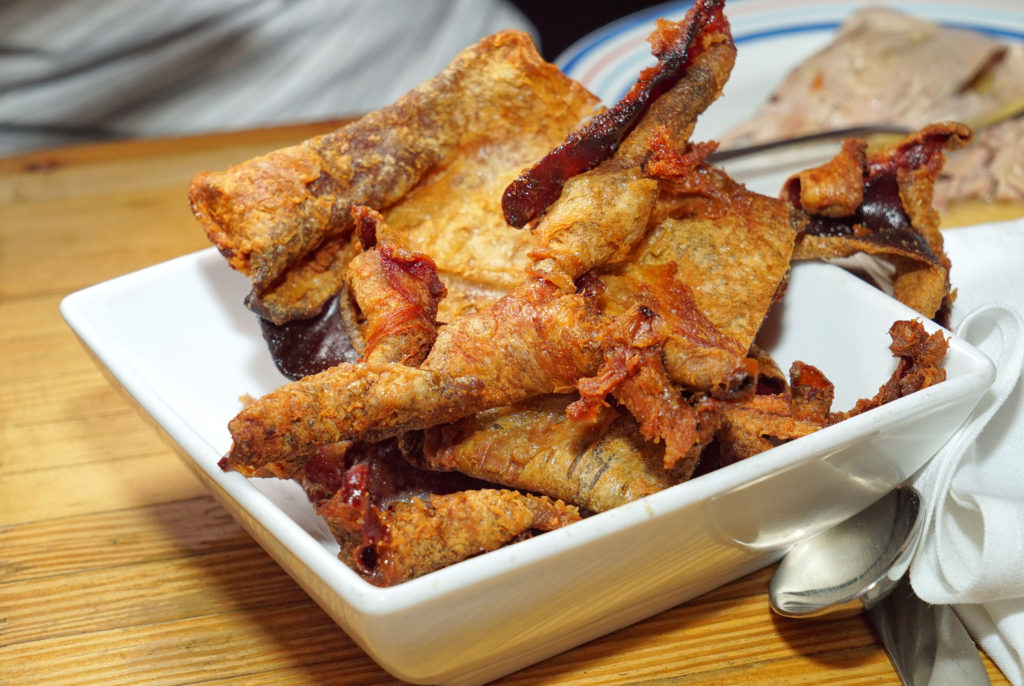
Chicharrones with lime.
They also give you a bowl of the crispy fried skin, which some would say is the best part of the suckling pig.
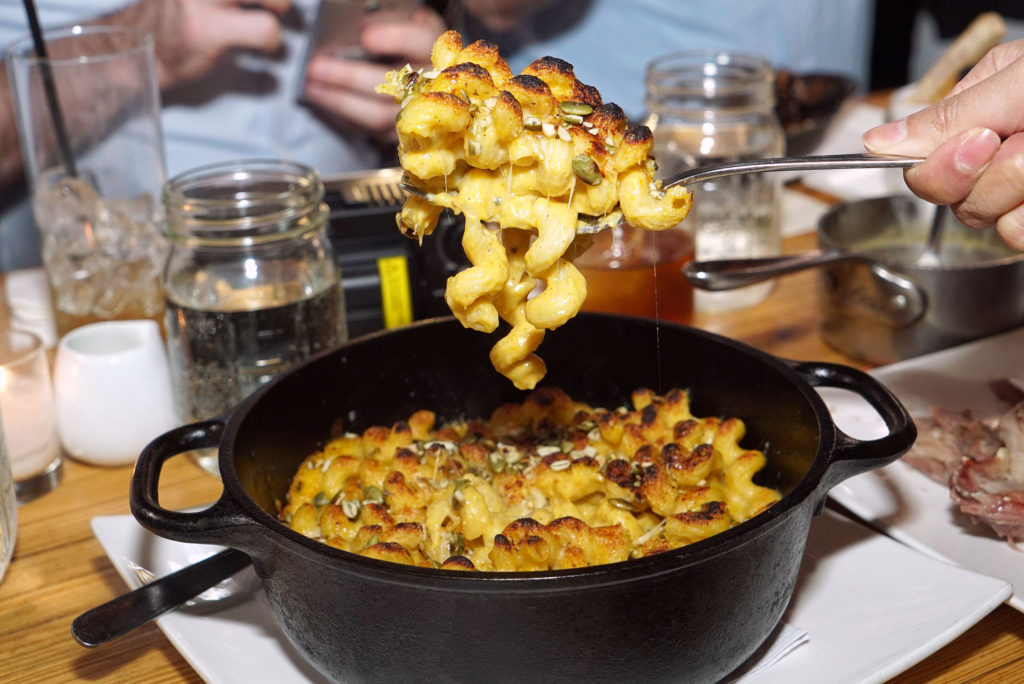
Kabocha mac n’ cheese with gruyere and toasted pumpkin seed.
The sweetness of the pumpkin in this dish threw me off a bit. Perhaps I just needed to be in the Thanksgiving holiday zone to fully appreciate this one. Nonetheless, it was tasty.
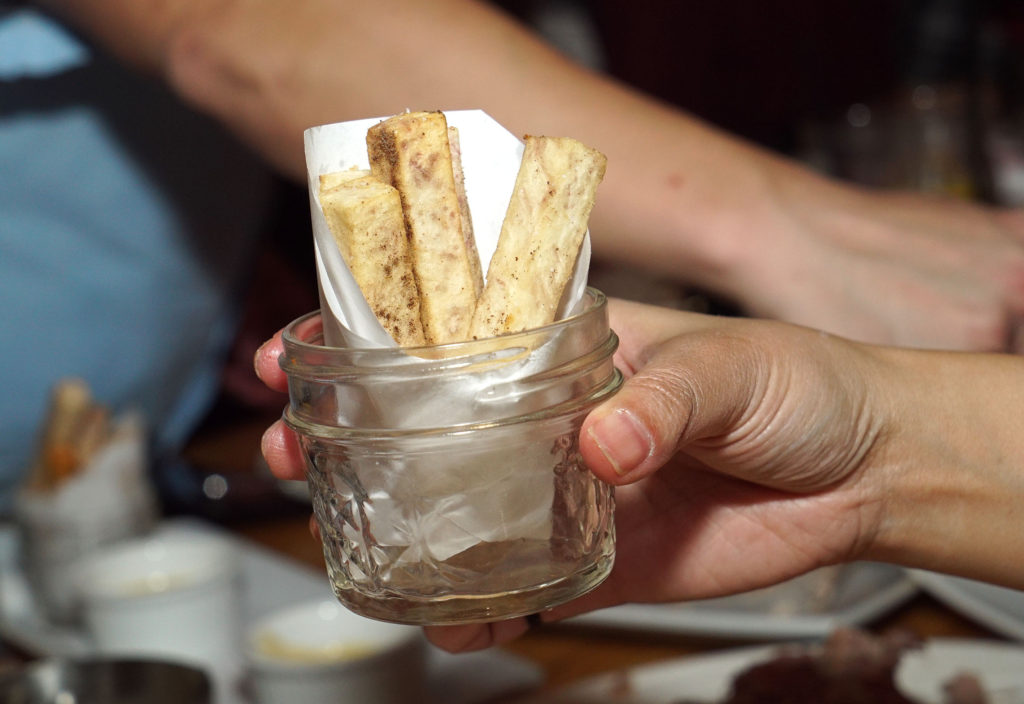
Taro fries with miso aioli.
It’s always a challenge to get taro fries good and crispy. The sauce was excellent, but the fries themselves were more like mashed potato logs. Not a bad thing: just not crispy like a French fry.
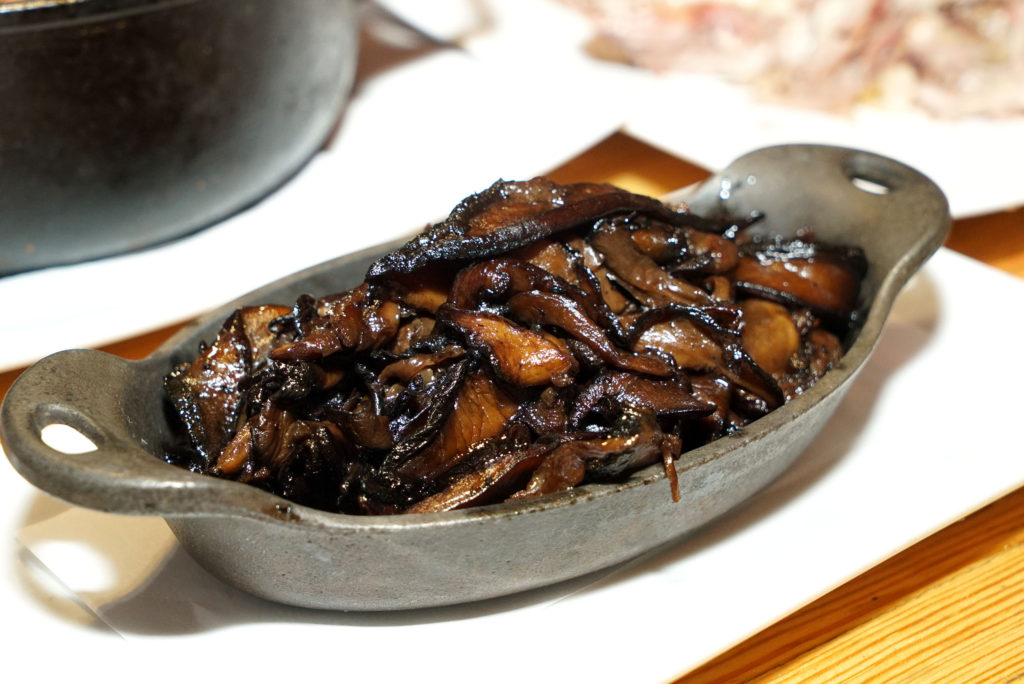
Smoked mushrooms with a soy glaze.
These were fucking incredible. The smoke added such a great woodsy flavor to an already earthy and woodsy mushroom (oyster). This was my favorite item of the night.
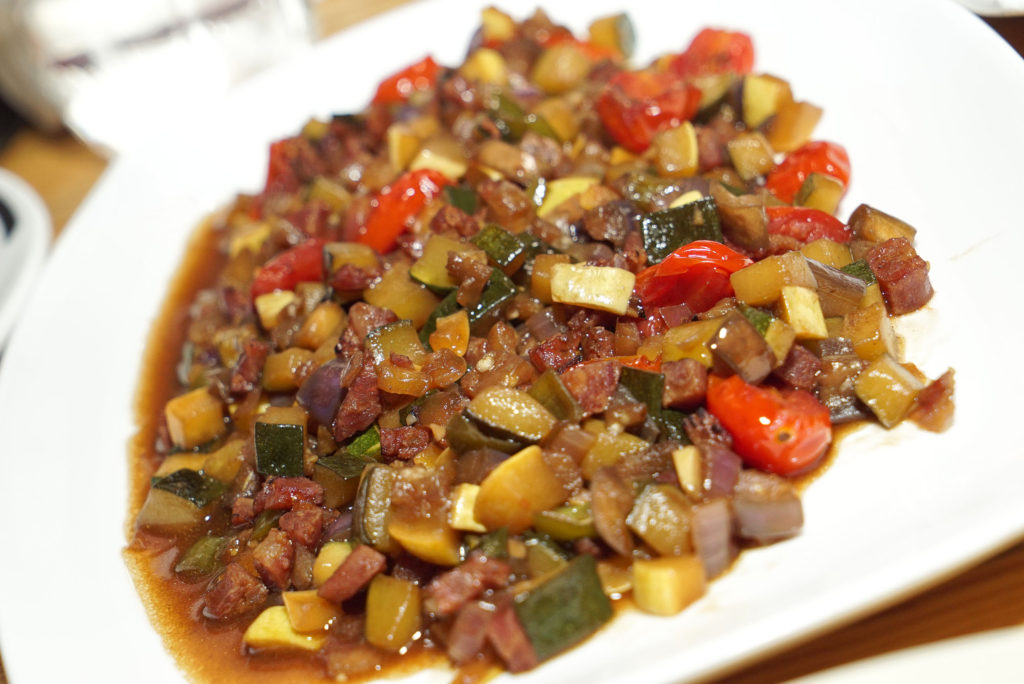
Indochine ratatouille.
I’m generally not a huge fan of ratatouille, but this had some nice robust and savory flavors.
Dessert Course
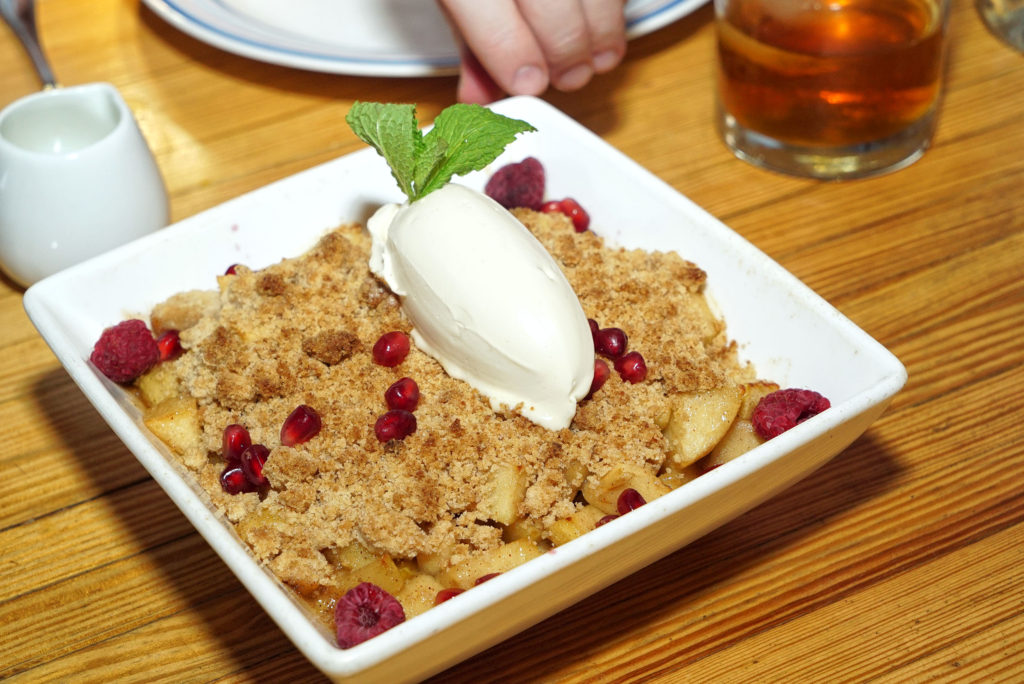
Chef’s seasonal selection, which, during this visit, was a caramelized apple cobbler with cold maple whipped cream and pomegranate seeds. I think there was even some diced up zucchini mixed into this unique dessert.
That about does it. I highly recommend giving this feast a go. You’ll need a minimum of eight carnivores to take it down.
I decided to go bonkers this year on Superbowl Sunday with some Omaha Steaks tenderloin cuts that my wife and I received as a gift from her father. It had been a while since I used my sous vide machine, so I knew I wanted to use that.
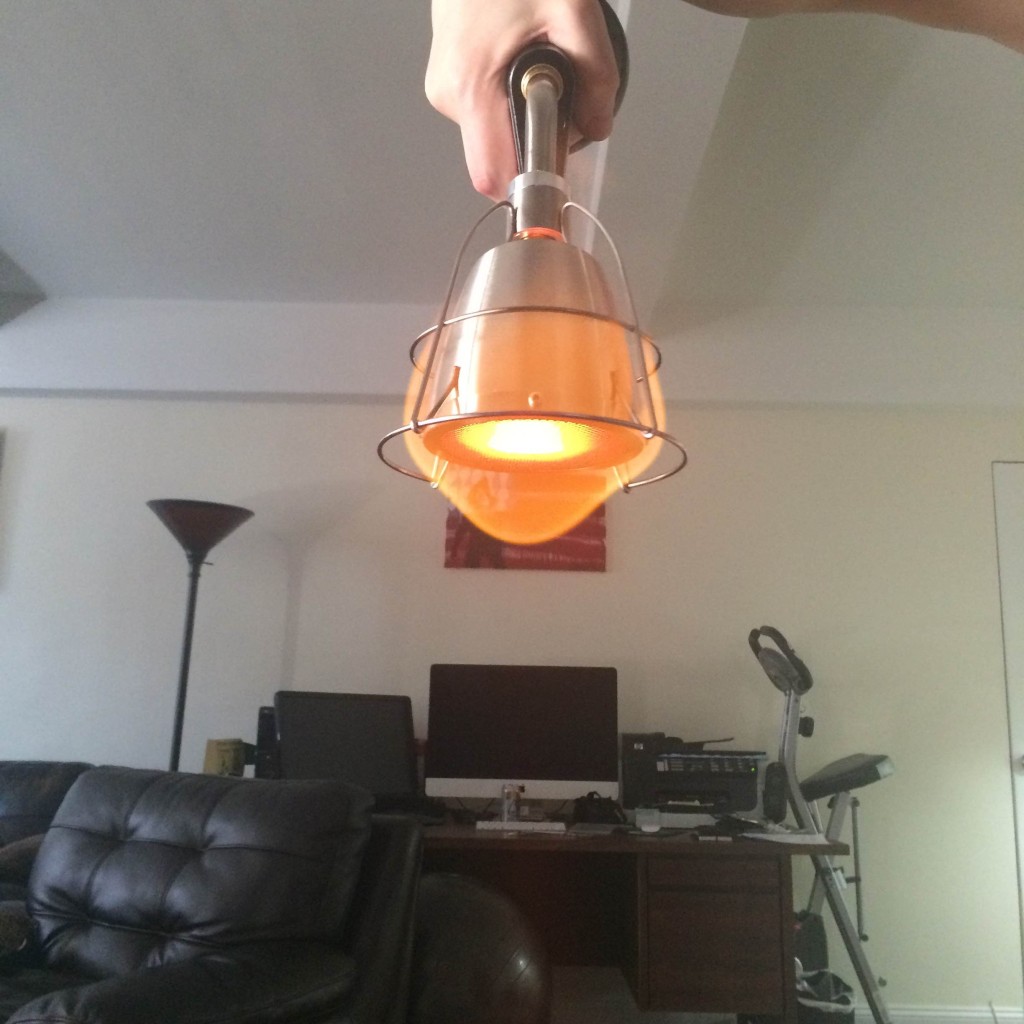
I also figured this would be a good time to bust out the Searzall again, since the cuts were only about an inch thick, and, fearing a blasphemous overcooking, I didn’t want to put them in a pan to get that coveted sear on the outside.
Nothing new there. I’ve given you recipes for that before. The ringer here, for this meal I envisioned, was the Bitterman Salt Co. Himalayan salt block that I had chilling in my freezer. I keep it cold for serving sliced sashimi and raw fish items, but I thought it might be nice for medium rare, seared, thin-sliced tenderloin as well.
Essentially, I cooked the steak to rare at 130 degrees in the sous vide machine, right from the sealed Omaha Steaks bags (no seasoning beforehand). Then I popped the steaks into an ice bath to cool them down quickly and halt the cooking process. I know that the Searzall can continue to cook the steak’s interior with prolonged exposure, so I wanted them rare when they came out of the sous vide machine.
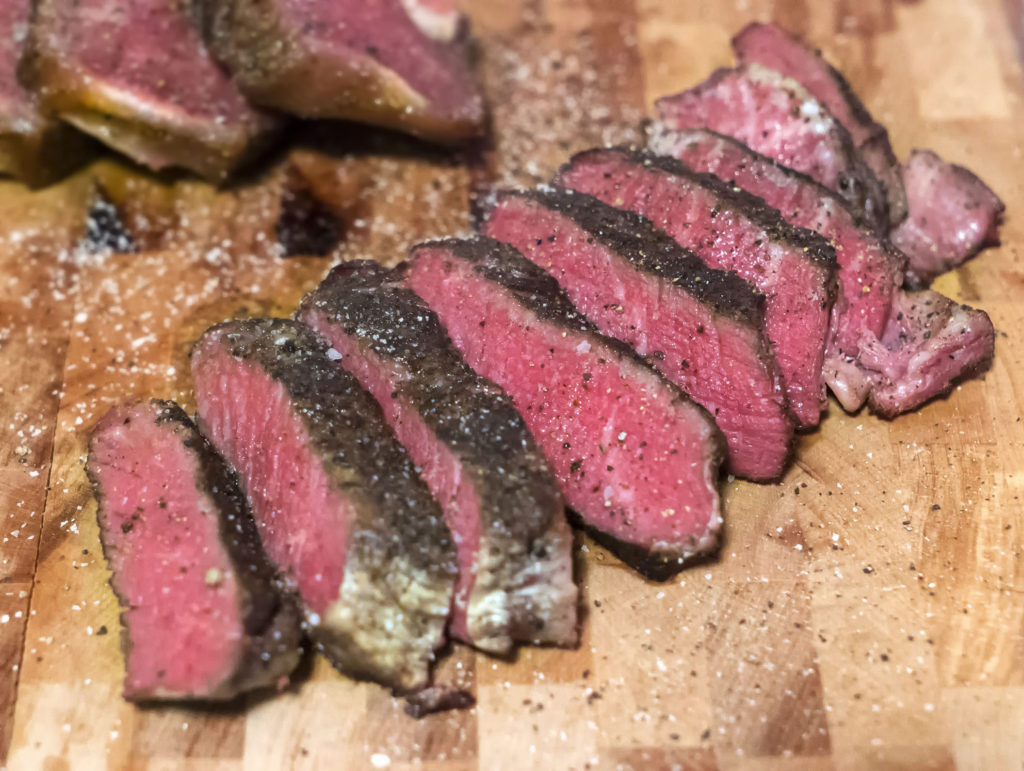
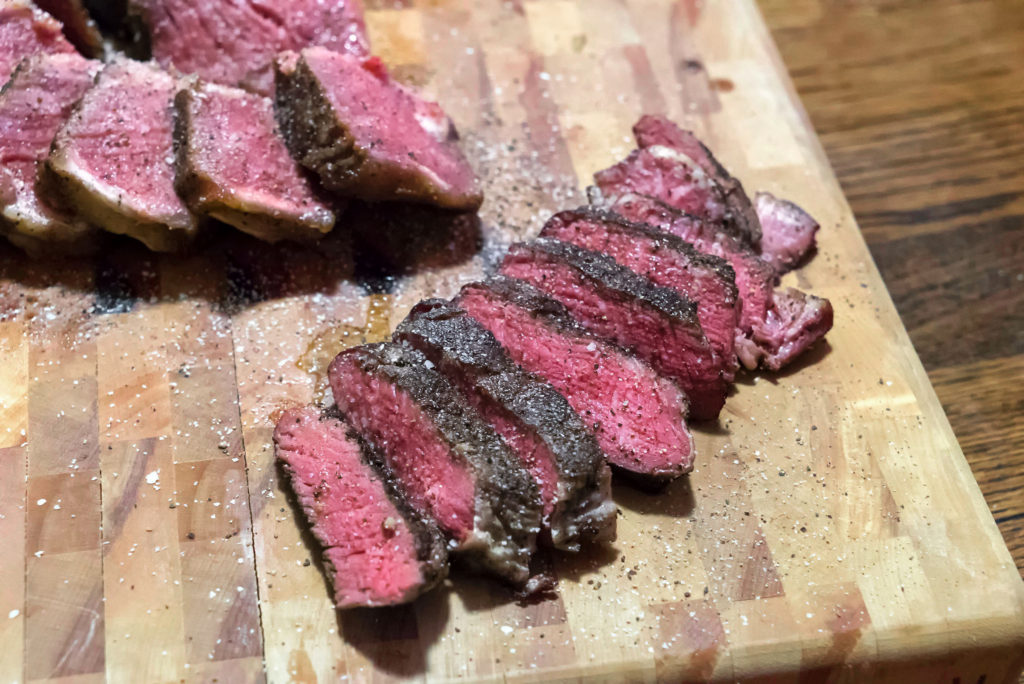
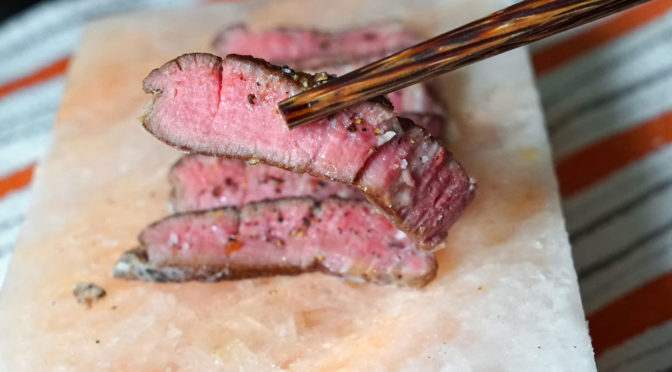
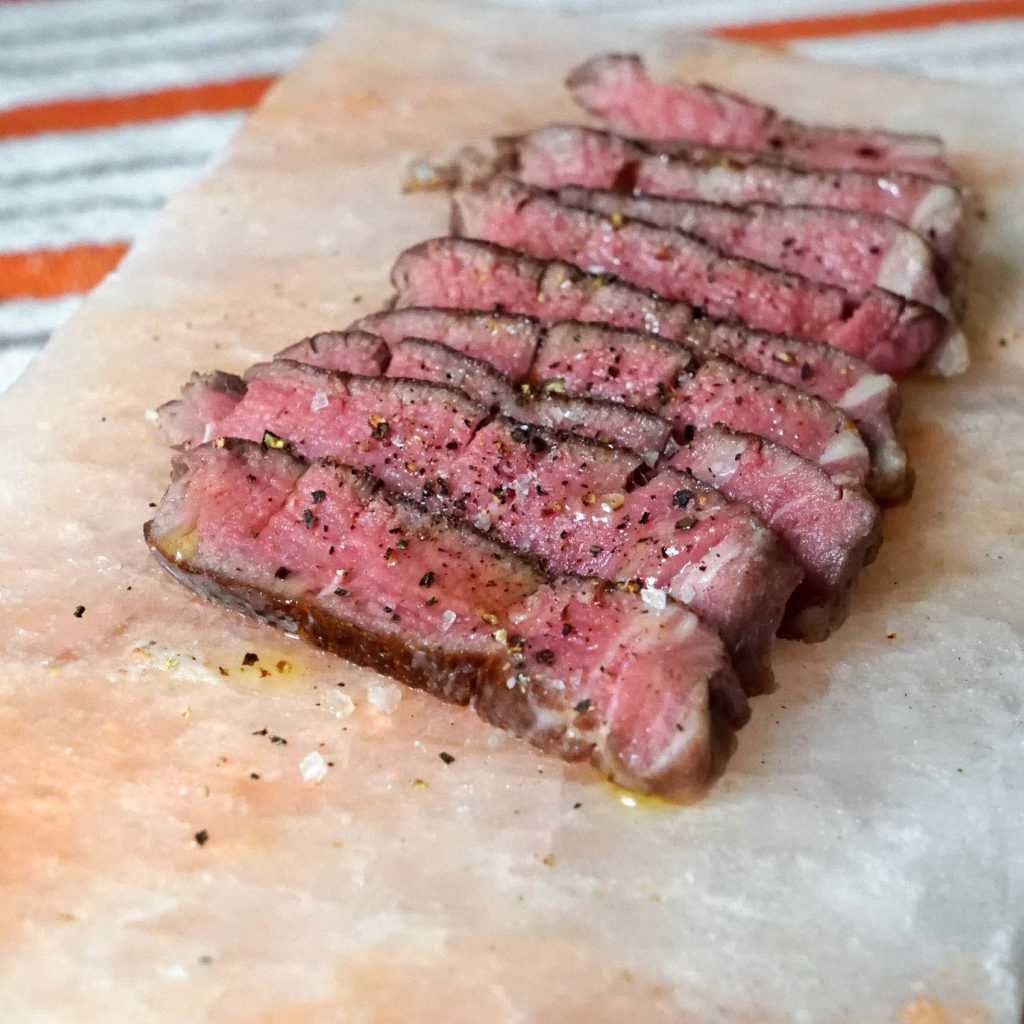
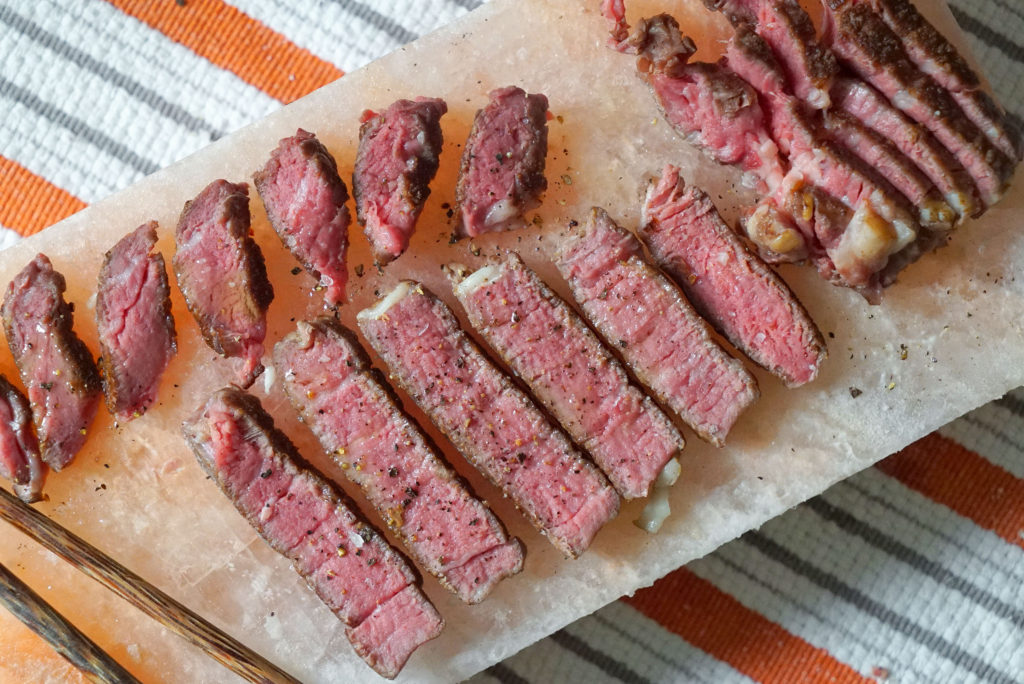
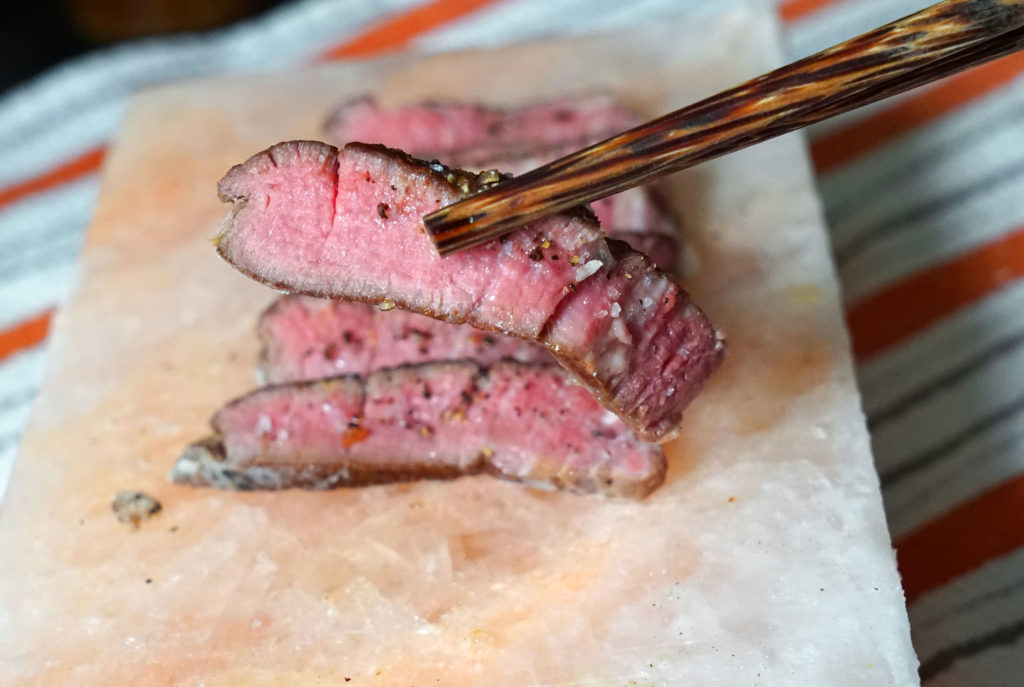
After blasting them with the Searzall, I had a good crisp on the outside and a perfect medium rare pink on the inside. Then I sliced them on the salt block, using that as a serving platter. I finished them off with a drizzle of Trader Joe’s black truffle oil, a few cranks of fresh cracked black pepper, and some ground sea salt.
Check out the video demo that I posted on youtube:
And some photos of the finished product:
It was a great, cool-temperature, lean beef dish that really packed a delicious flavor profile. The truffle oil was a great way to bring out the earthy flavors from the steak. Simple but robust. Try it at home!
I recently had dinner with a friend of mine who had just gotten an angioplasty. If you don’t know what that is, it’s when surgeons open up blocked arteries and restore normal blood flow to the heart. If your arteries stay clogged, you can have a heart attack and die. Duh.
My friend’s doctor obviously cautioned him to avoid saturated fats and bad cholesterol. That doesn’t mean he can’t have a steak once in a while, and that’s exactly what he wanted for dinner on the night we hung out. I have that effect on people…
So there were two steaks on the menu; a NY strip and a skirt. My buddy asked the waitress, “which one is more fatty?” She said the strip, which, all things equal in terms of grade and cooking prep, is completely false. I informed my buddy why she was wrong after she stepped away, so as not to embarrass her. But I figured I would share that knowledge here with you guys, too. Here’s why she was wrong:
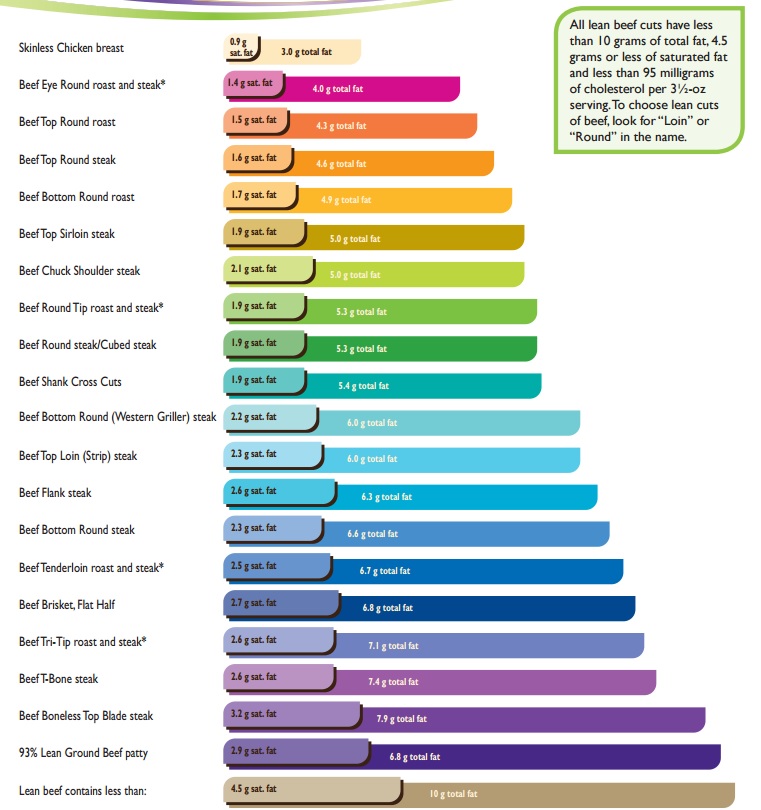
NY strip steak is a strip loin cut of beef, which is the most prized part of the sirloin. Sirloin is considered a lean cut of beef. In fact, any time you see the word “loin” in describing a cut of beef, that means it’s lean. The one caveat I’ll give is that fat content also depends on the grade of beef, not just the location of the cut. Prime has more intra-muscular fat (marbling) than choice, for example, and something like Kobe has more than prime.
The term “lean” means that the beef has 4.5g or less of saturated fat per serving, and 10g or less total fat per serving. About 66% of beef cuts are considered lean cuts. That’s pretty fucking good!
Skirt hails from the “plate” or diaphragm muscle of the bovine anatomy. It’s not listed above because it isn’t within the definition of lean. It has more fat content than a strip steak, especially after a strip is trimmed by a restaurant. Most of the fat on a sirloin lies on the outside of the muscle, as opposed to the inside marbling (which, by the way, contains “good fats,” like olive oil and avocados do). But when external fat is trimmed away, you’re down to low fat content.
The real question, then, becomes: How is the steak prepared? Does it come with a cream sauce? Is it cooked with tons of butter? Is it simply seasoned and grilled? All of this matters tremendously in terms of calculating the total fat content of a particular dish.
Why do I mention this? Because the method of cooking could flip these fat levels very easily. If the strip is being cooked in a pan filled with butter and then smothered in a cream sauce, while the skirt is simply seasoned and grilled, then maybe it’s best to get the skirt if you’re trying to be mindful of overall fat content. It all depends, like adult diapers.
My advice: don’t ruin good beef with a sauce. I love the flavor of beef, so I don’t like to mask it with sauces of any kind. Simply season and fire it up. If you live by those rules, then you can take the fat content of lean cuts at face value and be confident that you’re eating a low fat, lean beef meal that’s both nutritious and delicious.
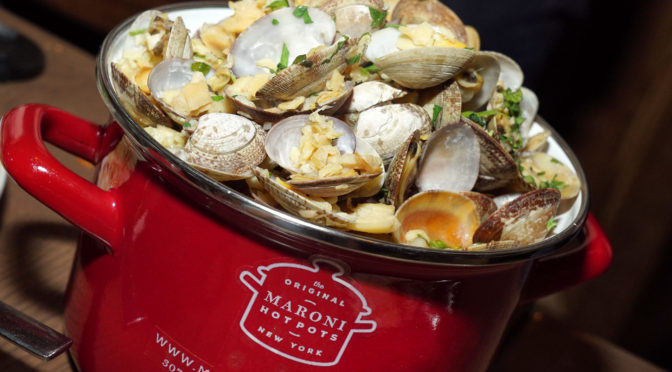
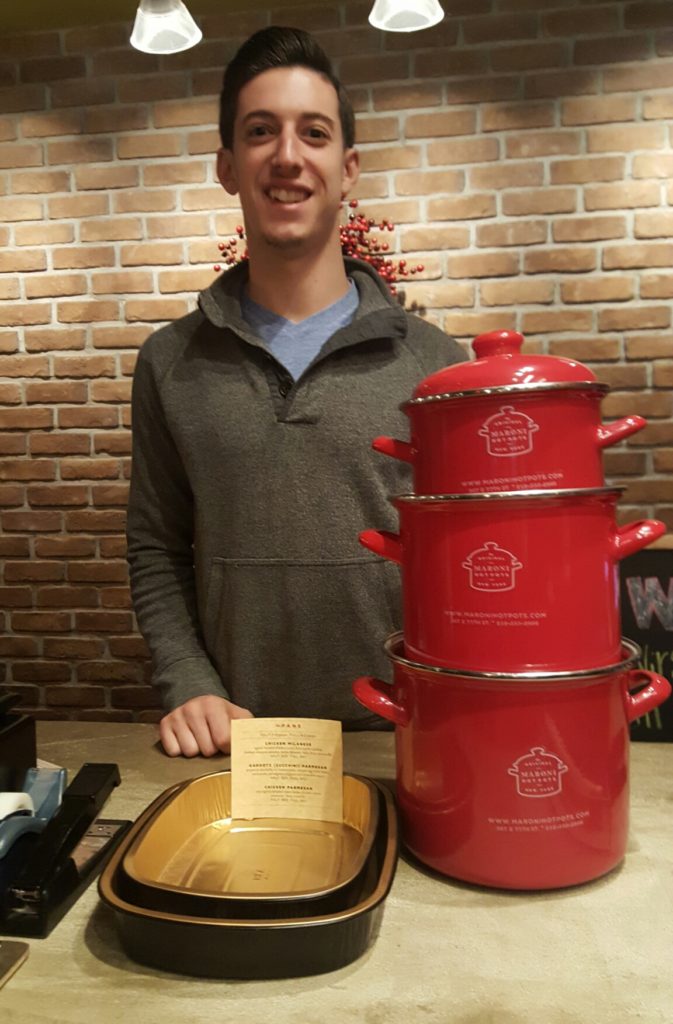
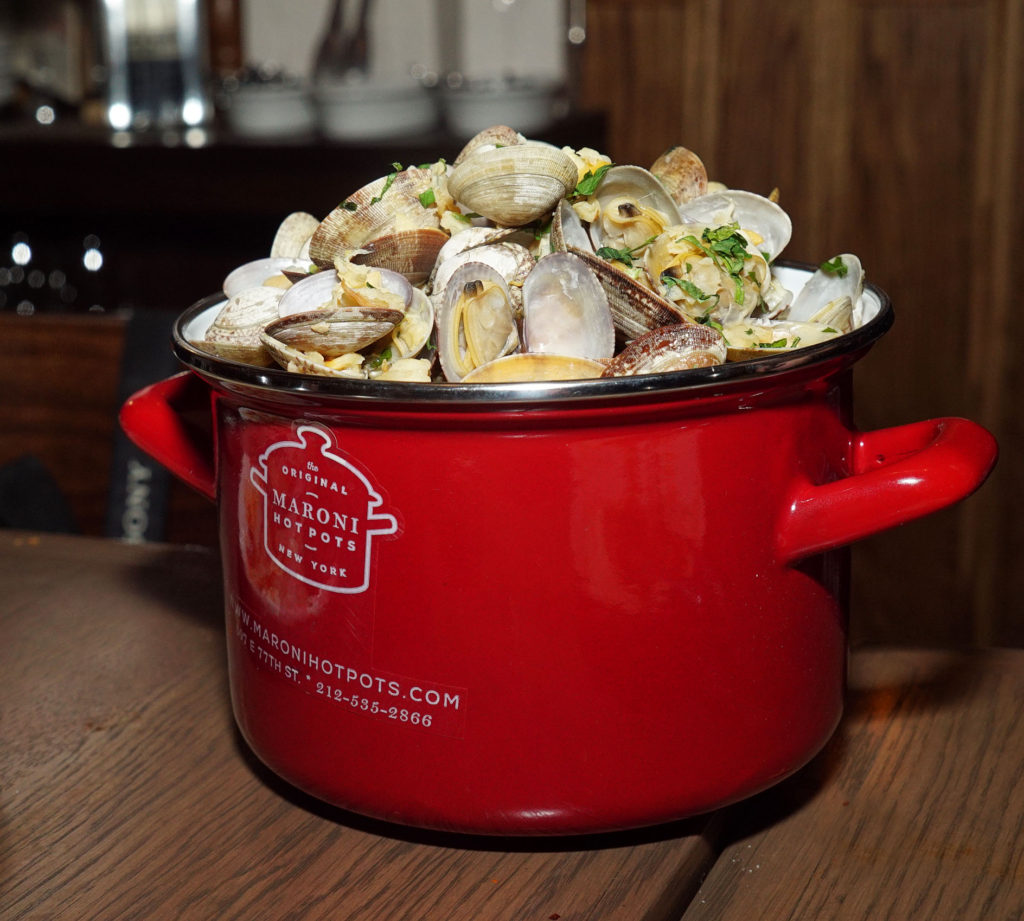
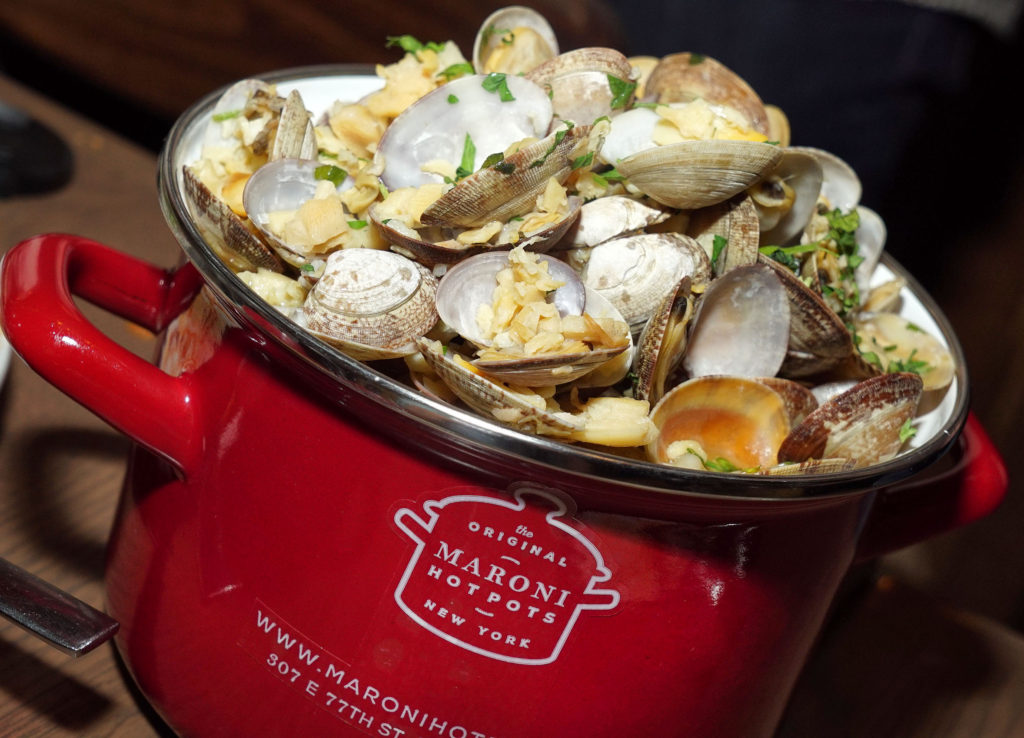
There’s a very interesting little concept restaurant on the upper east side called Maroni Hot Pots. The joint is mainly aimed at providing delivery service, but there’s still a handful of tables set up inside the beautiful little space. So what makes this concept unique? The pot.
Many of their dishes are served (and delivered!) in really nice keepsake metal pots. Yes – you get to keep them.
I’m not sure how useful they’d be on your stove top, but they’re definitely not cheap, crappy items by any means. At the very least you can use them as planters.
Okay, but enough about the pots. We tried a lot of different items.
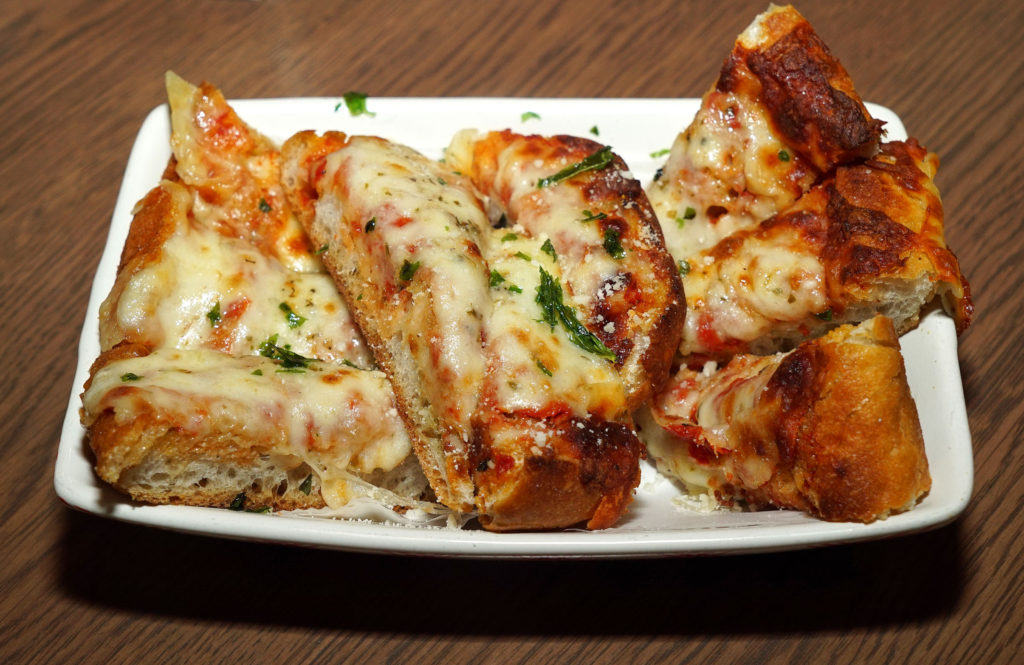
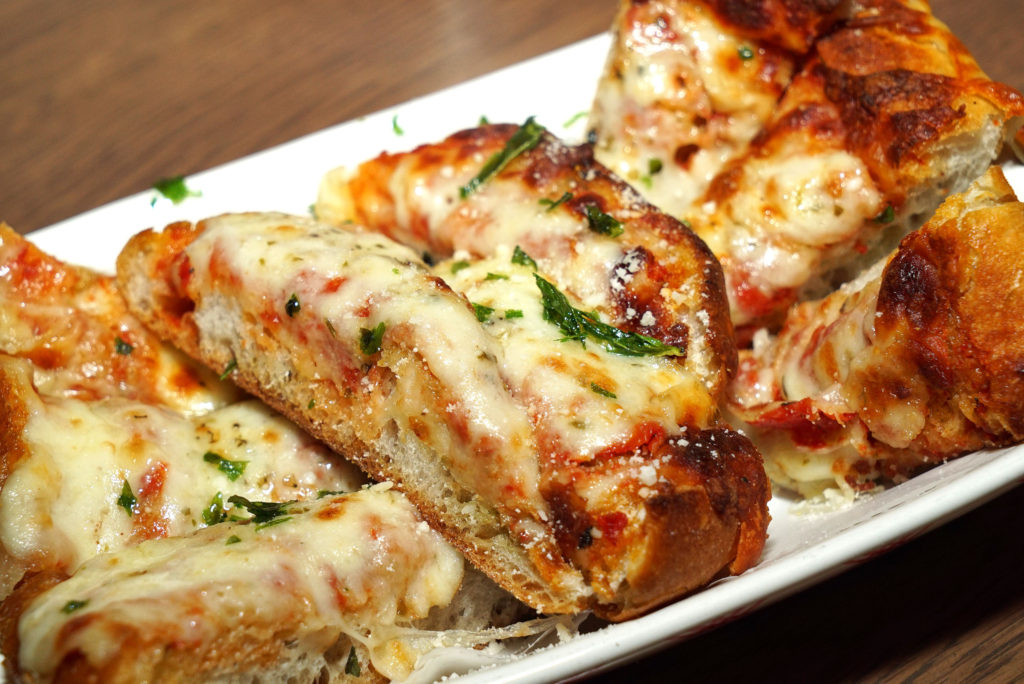
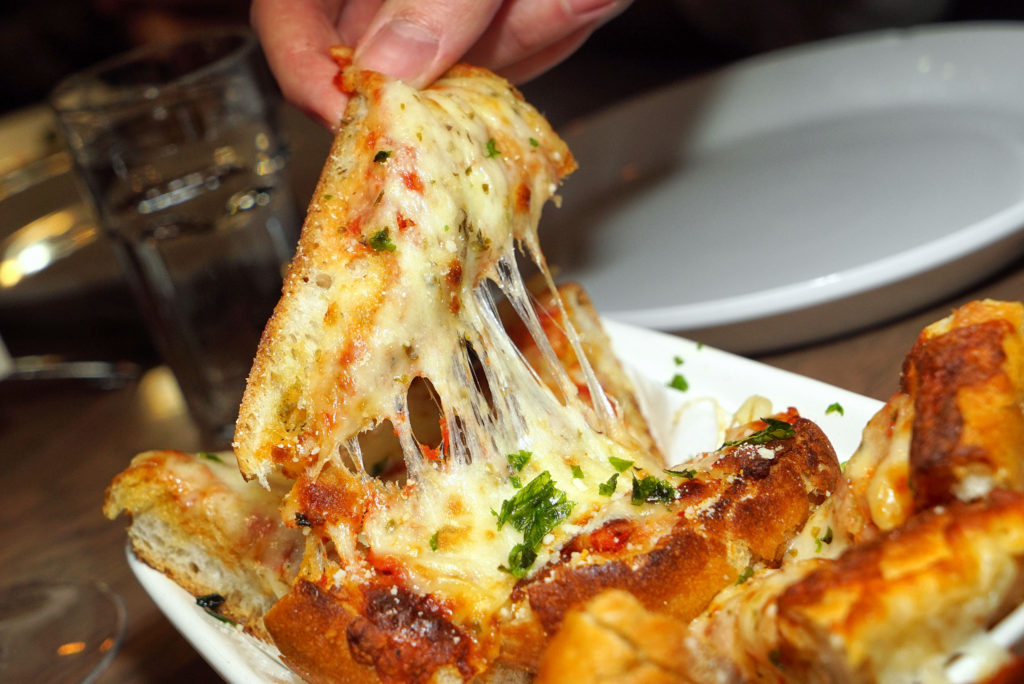
First up, pizza bread. This is more like a garlic bread with cheese and sauce topping as opposed to your standard NYC style pizza. A more puffy, doughy pie.
It’s served in a nice glass dish and it’s seasoned generously, topped with herbs as well. Essentially, it’s like a Sicilian pizza.
I should say now that the cheeses here are all incredible. They don’t harden after a few minutes – they stay nice and stretchy. I shot this probably 15 minutes after the pizza came out:
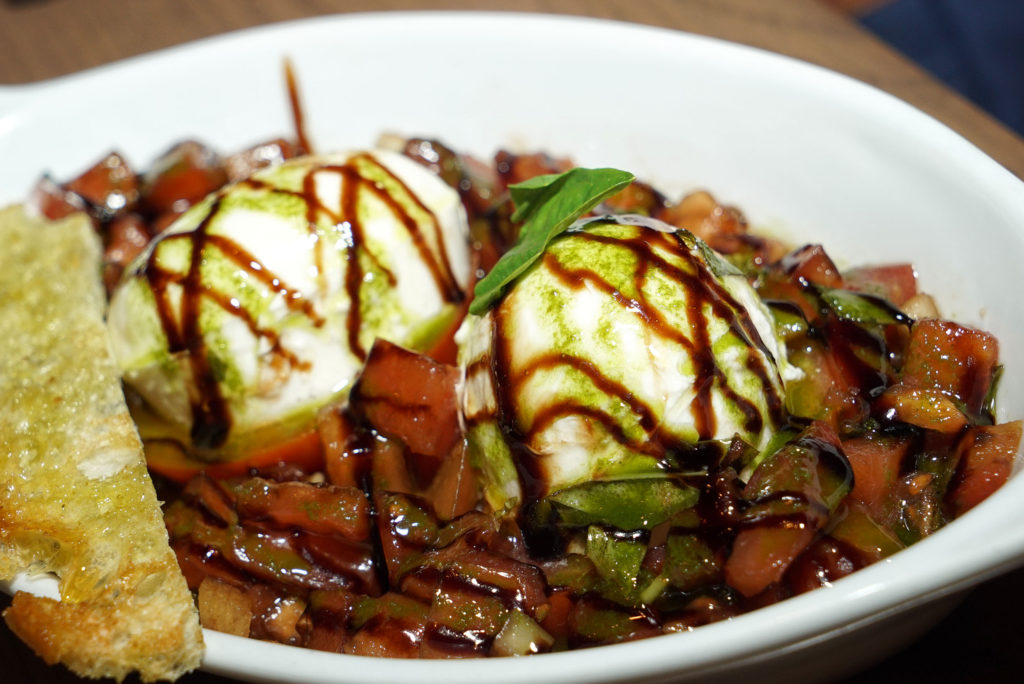
The fresh mozz caprese salad also exhibits stellar quality cheese, and the diced tomato, dresed with a nice balsamic, was a nice change of pace from an ordinary caprese salad.
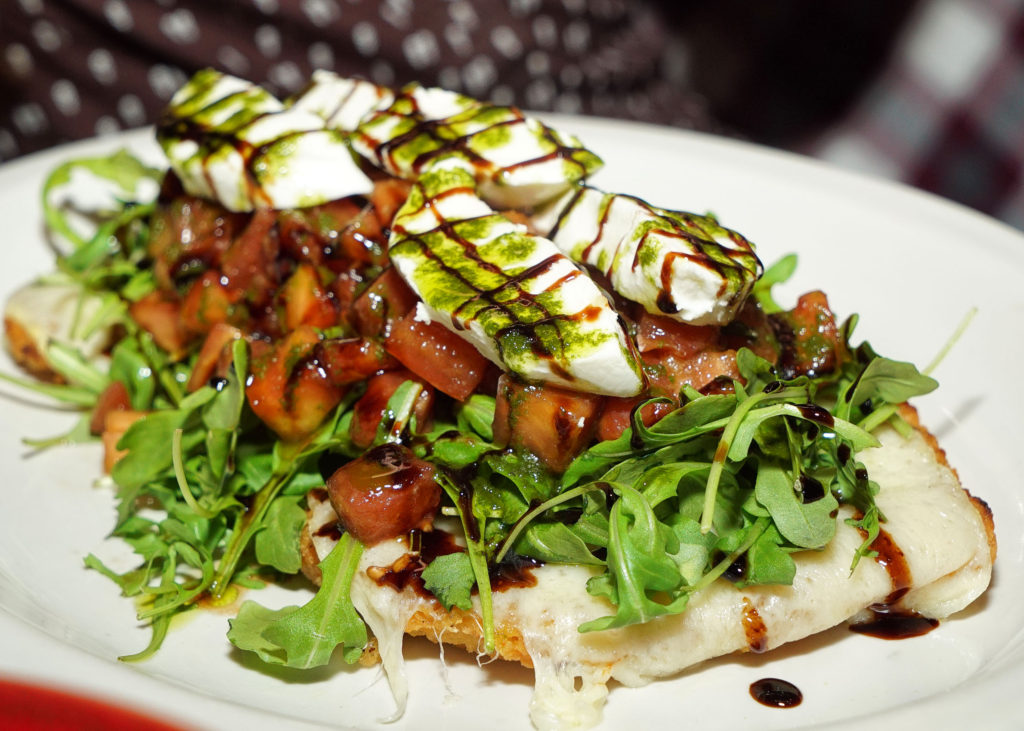
Throw that on top of a lightly breaded chicken cutlet with some arugula, and you have their delicious chicken milanese dish.
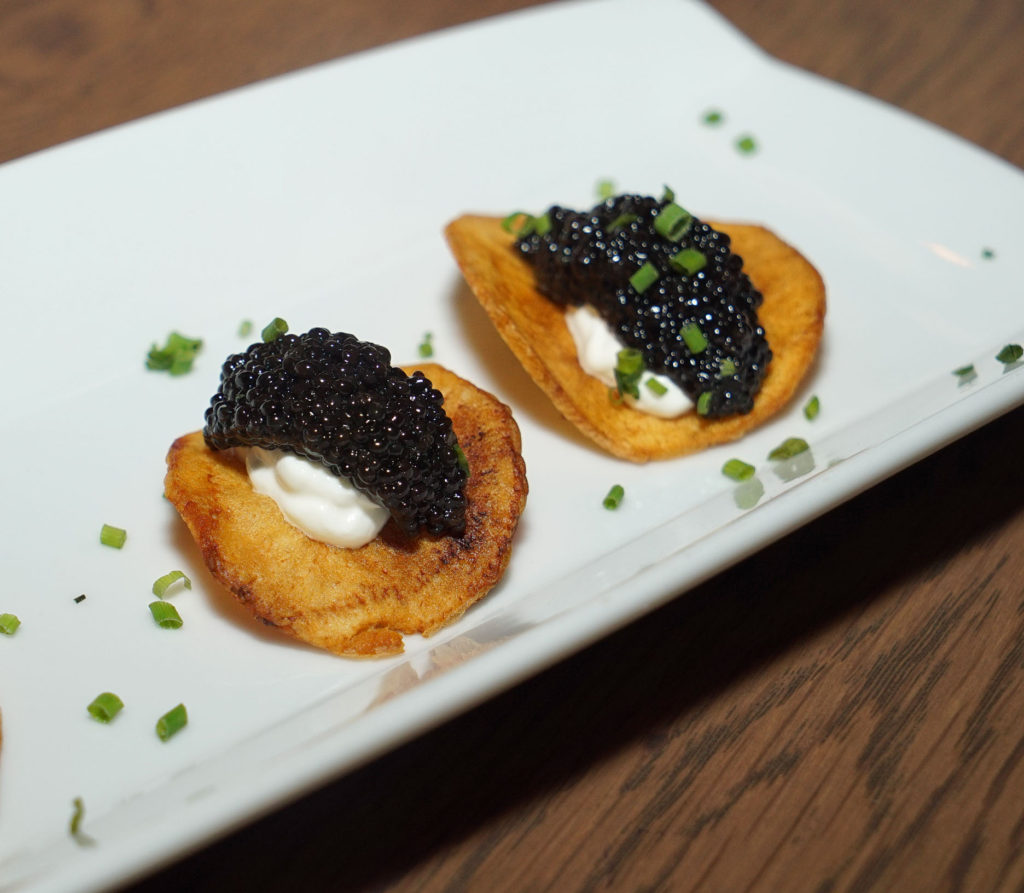
But one starter they have become known for is their million dollar potato chip. A thick cut, fried potato crisp, topped with fresh cream and caviar. Very tasty.
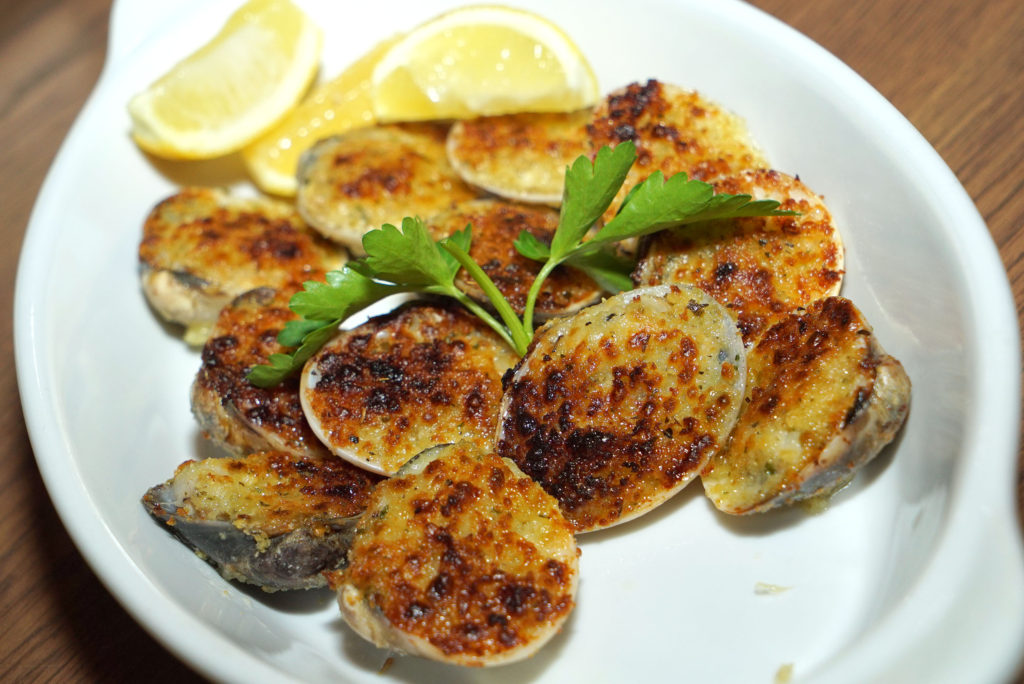
And it’s not often that you see baked clam dishes use high quality little necks or cockles like they do here. Most baked clam dishes use giant bait clams, with minced up meat inside. No thanks. These were whole clams, nicely breaded and stuffed, and then baked to perfection.
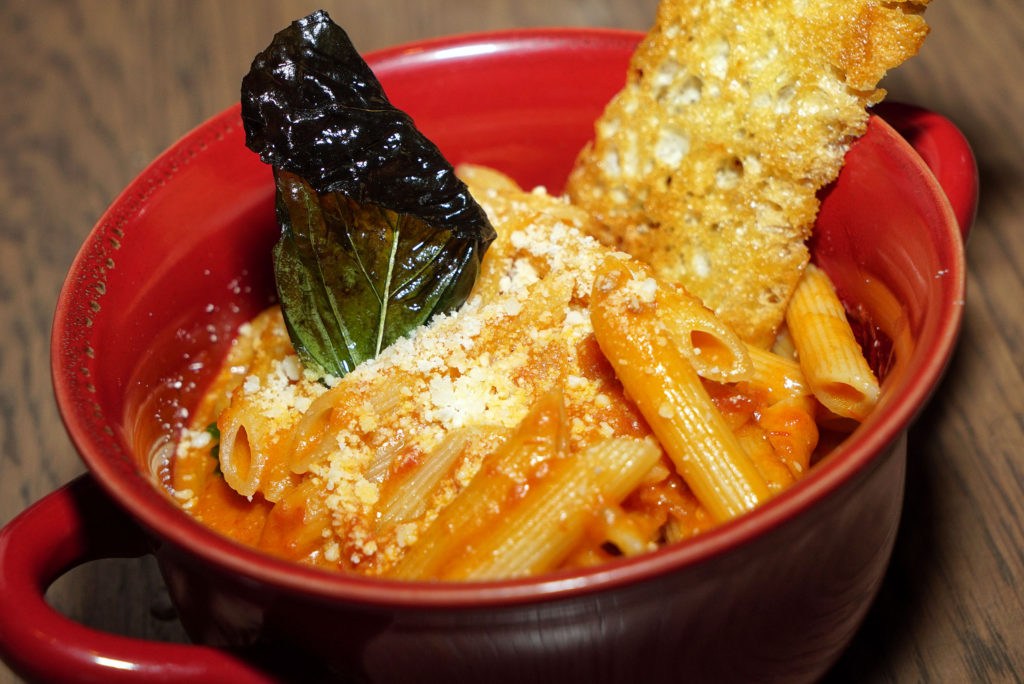
Okay now for the pasta dishes. We tried a bunch. I’ll start with my favorite, the penne a la vodka.
What I liked about this sauce was that it was more buttery than typical vodka sauces I’ve had in the past. The pasta was cooked perfectly in this dish too.
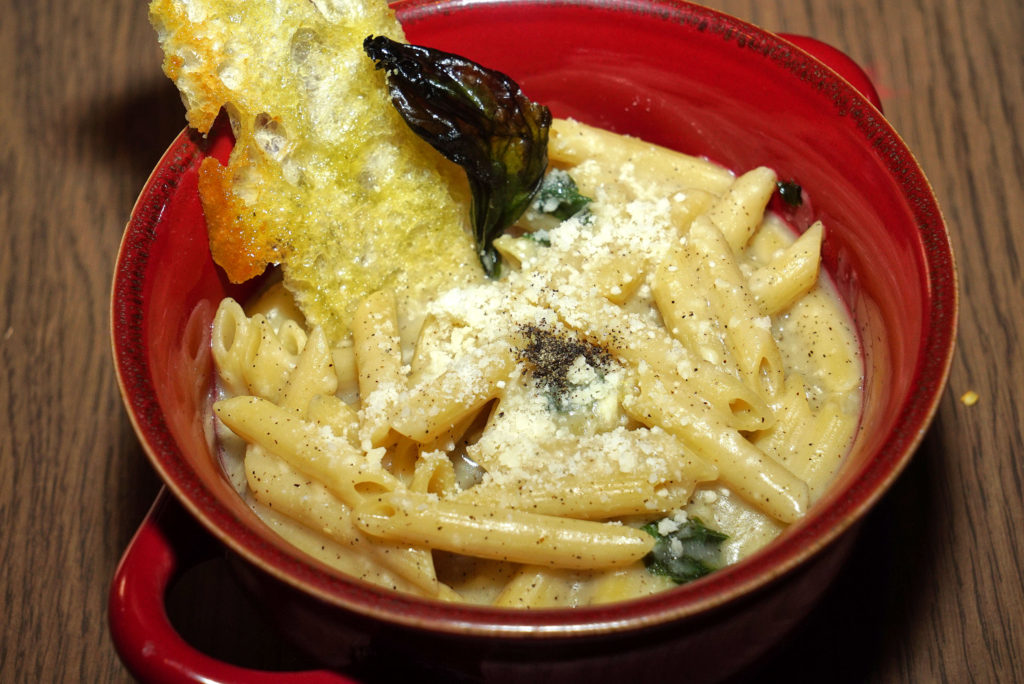
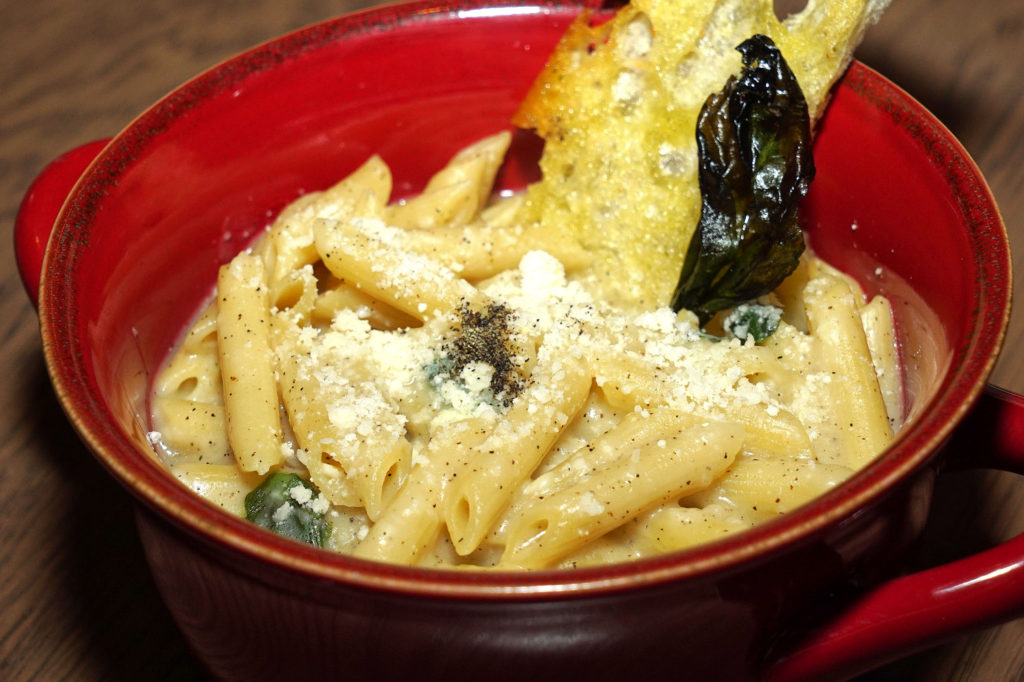
Their cacio e pepe is nice, but having just come back from a trip to Italy, I was a bit too spoiled to truly appreciate the dish. Cacio e pepe in Rome is just insane. Nothing quite comes close. I did, however, get a bunch of nice pics. As you can see, they used a penne pasta here as well.
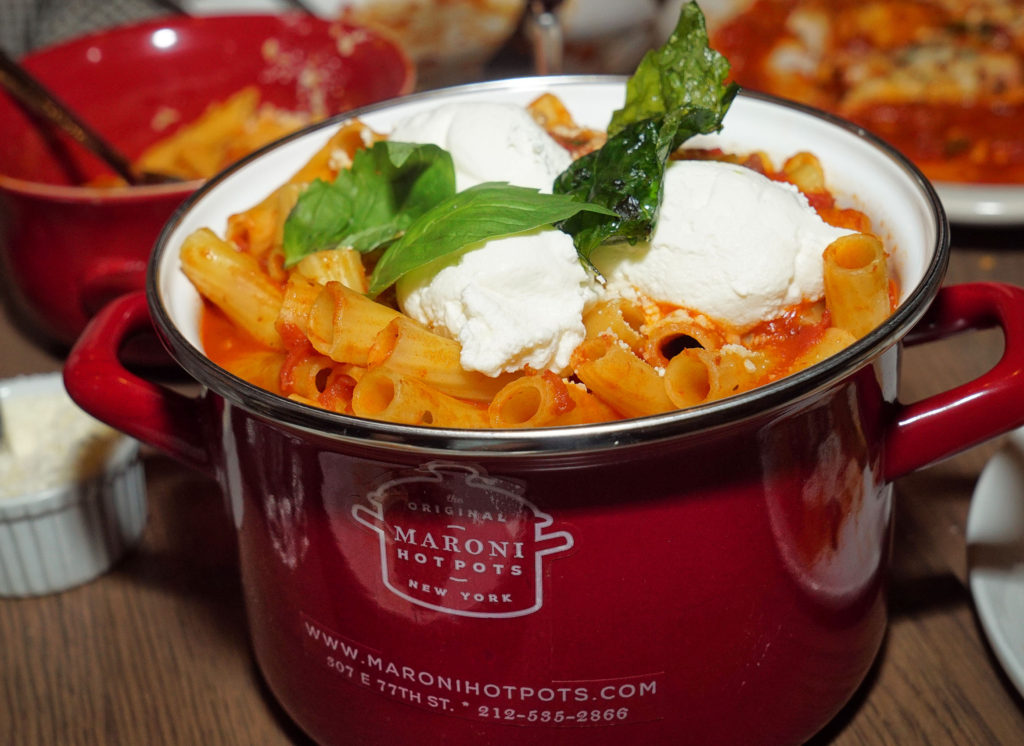
One specialty they’re known for here is their cognac sauce. They hit their tomato sauce with some cognac, burn it off, and simmer it down. What they’re left with is a nicely sweetened sauce. They serve that with rigatoni and a generous glob of ricotta for mixing into the sauce. Amazing. This dish has even been featured on local news stations. I highly recommend it.
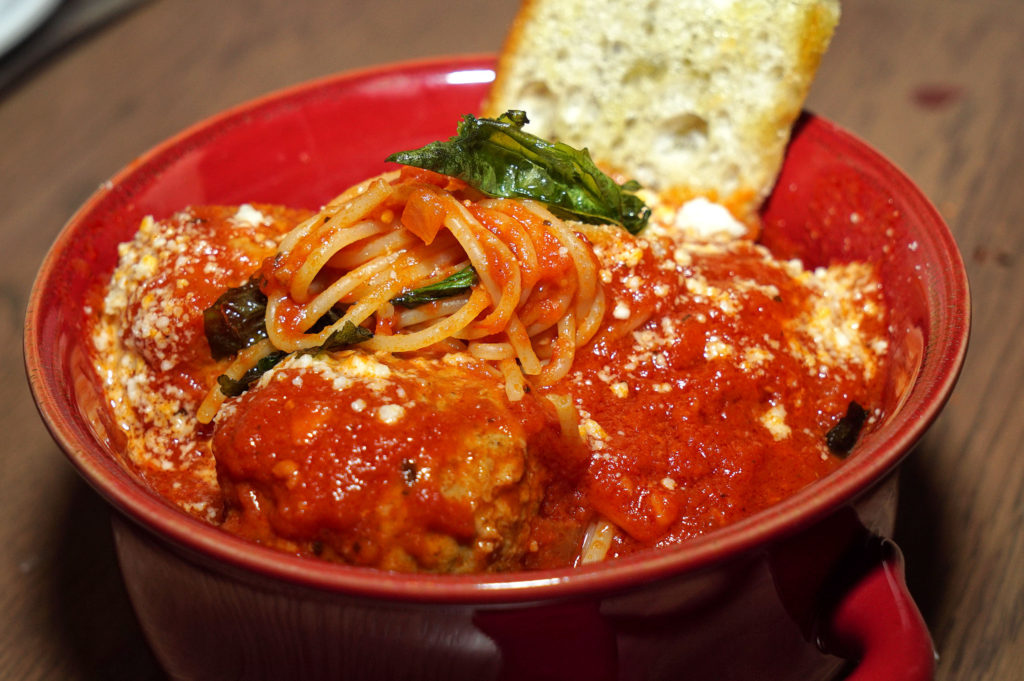
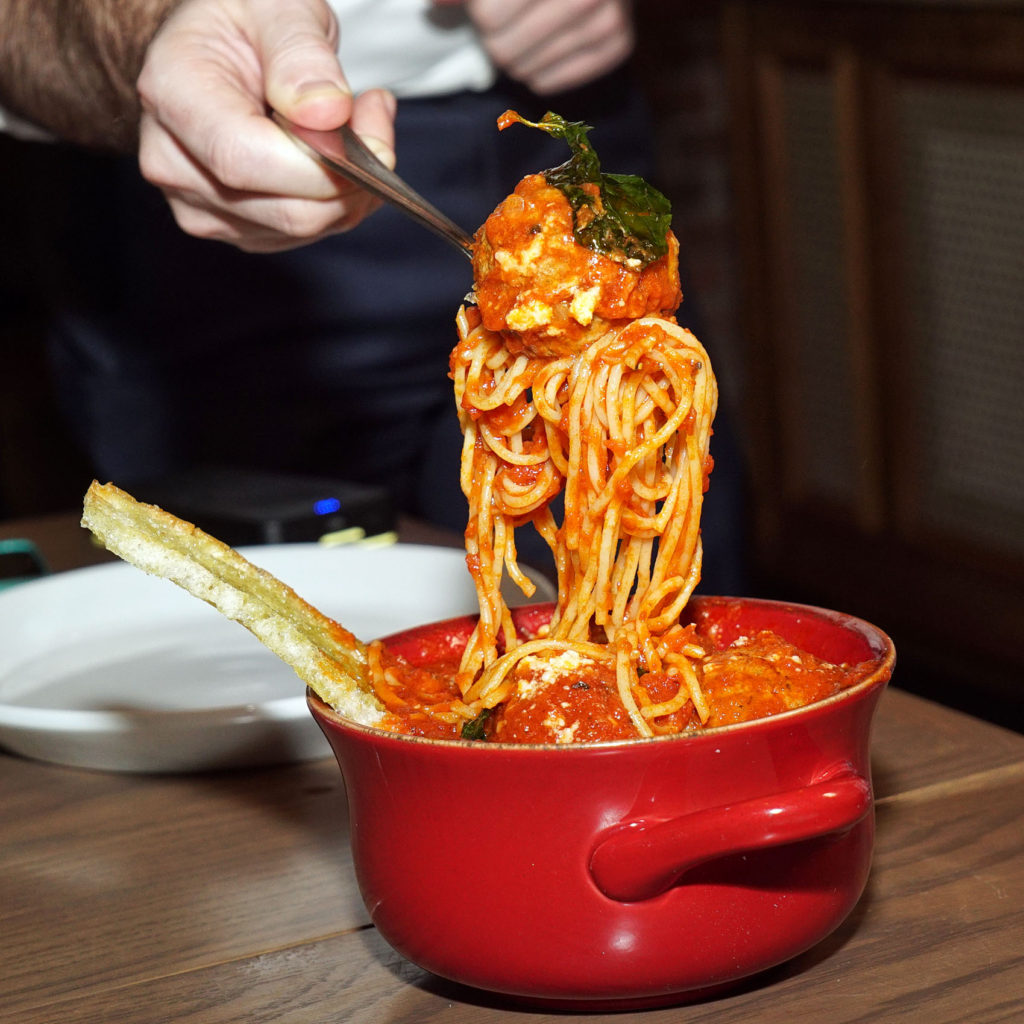
Last pasta dish: spaghetti and meatballs. This classic tasted great.
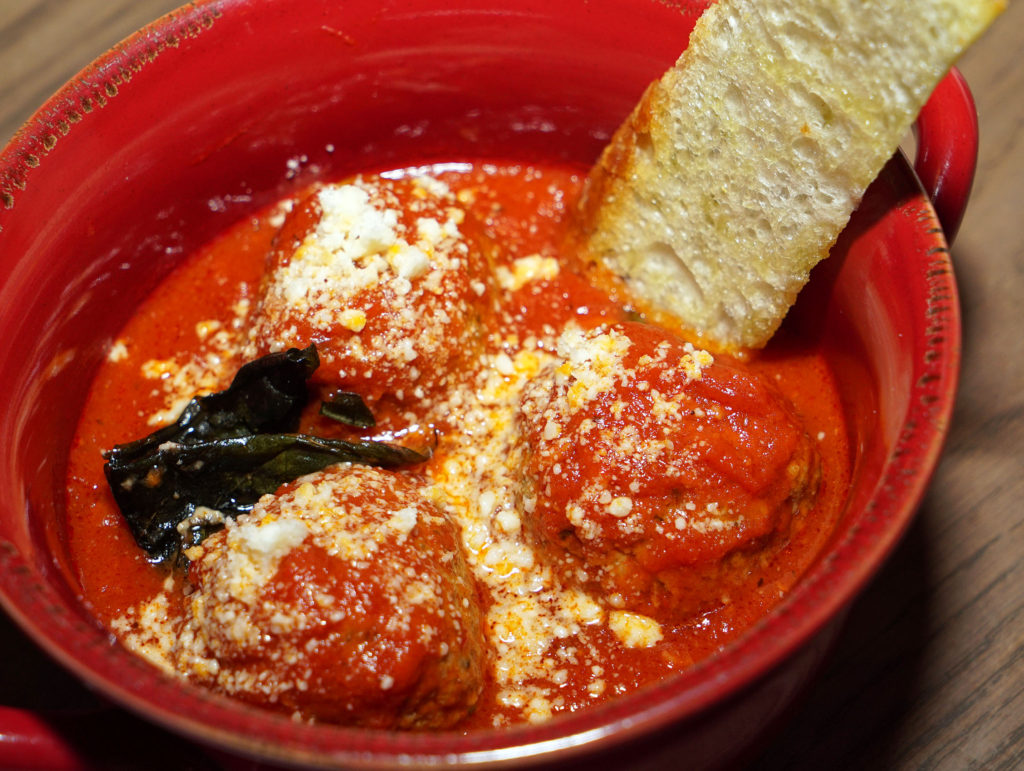
And while nothing beats mom’s homemade meatballs, these were pretty tasty. We had an order sans spaghetti as well.
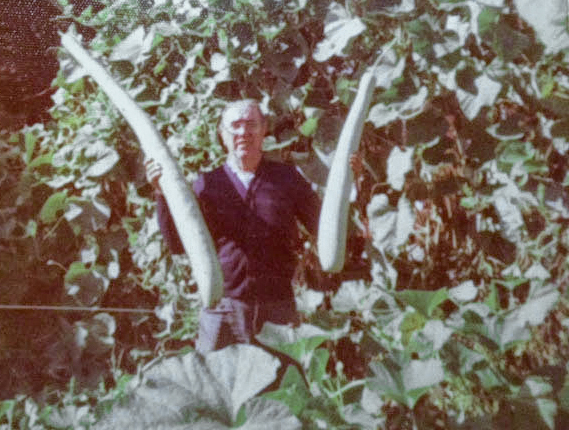
Like any Italian meal, there’s always more. We also tried their chicken parm and gagootz (zucchini) parm. The last time I heard that word was probably when my grandfather was featured in the news for growing the biggest one in Long Island history out of his backyard garden, which, at one point, was more like a small farm.
Here’s a shot of my grandfather’s massive gagootz (not the actual prize winning squash, however; that one was like 15ft, and we are still trying to locate the photo).
FYI, the word “gagootz” is a dialected, faster way of saying the word “cucuzza” in Italian, which is a kind of squash. The word “gagootz” is typically used by Italians to refer to all types of squash, though, including zucchini, as is done here at Maroni Hot Pots.
In any case, both parms were excellent, and both essentially looked the same, so I’m just using one picture to showcase them. Can you guess which one this is?
The beatles are all over this joint, by the way, and the music is a great mix of classic rock. Anyway, I really enjoyed the gagootz parm. I’m not an eggplant fan, so swapping that out for zucchini is a great idea. The skin is much more pleasing, and the texture of the vegetable’s flesh itself is firmer and more snappy.
I was so full at that point that I put my camera away, thinking we were done… but Italians… Bless our hearts, and stomachs…
So dessert came out. Chocolate mousse with a toasted marshmallow topper, cannoli and tiramisu. All excellent. Here’s a nice shot of them, taken by my wife:
The Maroni family also owns a high-end, multi-course “tasting menu” style restaurant in Northport, Long Island. I’ve heard amazing things about this place, and, from what I understand, a reservation has to be made a month in advance because it is so well received. I plan to visit soon with my cousins. Stay alert for updates!
The head honcho over at Let’s Dutch reached out to me to introduce himself and his service. Essentially it’s a place where people can host and organize group activities, and one of the things they facilitate is large format dining. That’s right up my alley, given my creation of Carcass Club, in which I and some friends try to get together to take on the various whole beast feasts that are peppered throughout this fine city.
Naturally, I was interested. The service is great for both city newbies, who are looking to meet new people with similar interests, and old fogies like me and my wife, who are just looking for seats at the feast when it’s becoming increasingly difficult to peg down a date and time among all of our friends that might be interested.
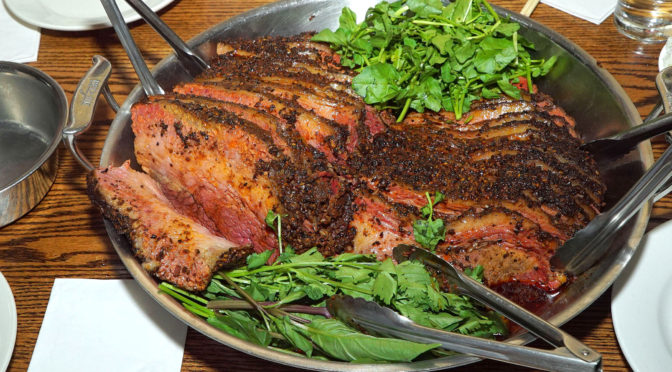
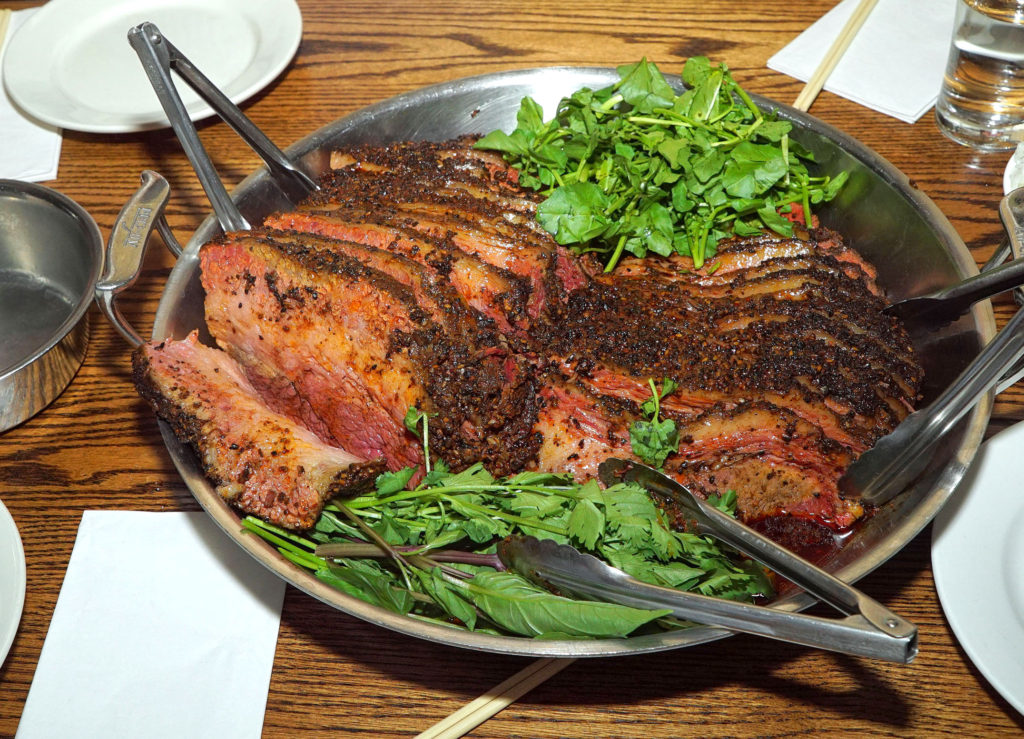
I was especially pumped when Vincent (the aforementioned head honcho) informed me that they’d be doing the new brisket feast for 10 people at Momofuku Ssam Bar. Fuck yeah.
So the meal is pretty simple. You get a massive hunk of delicious, tender, slow cooked brisket, along with lettuce for making wraps, and various sauces and kimchi items for toppings.
I highly recommend this meal to anyone who loves brisket or BBQ, as it is quasi-BBQ in nature. They even created a secret seven-spice blend for this baby. I absolutely loved it.
You may already know that I’ve been to Momofuku for their large format feasts in the past: duck and rib eye. This brisket feast is the best of the three I’ve tried, and I think they’ve also added a fourth, pork shoulder (bo ssam). I’ll have to try that one soon.
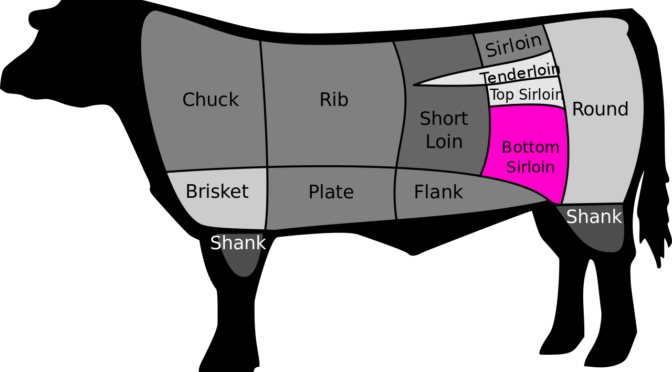
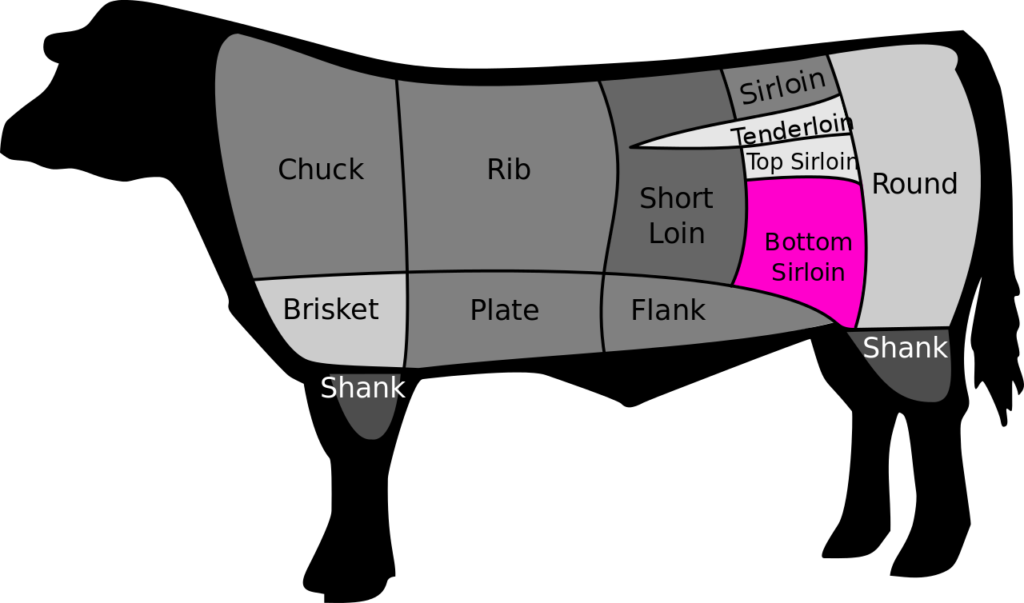
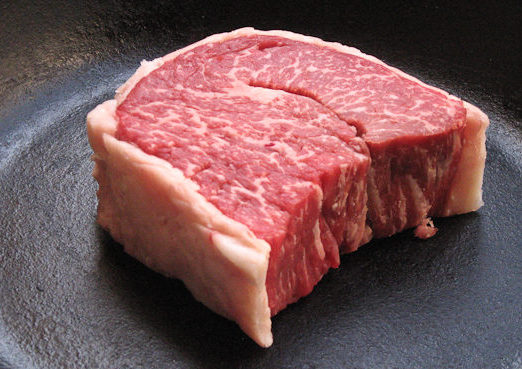
Newport steak, aka “the apartment steak,” is essentially part of a tri-tip steak, which hails from the bottom sirloin portion of the animal.
Tri-tip is usually butchered into larger sizes for people to use on the grill or in BBQ style smoker preparations. A single tri-tip cut can feed a few people. It has a definitive grain direction and can be very tender and flavorful if cooked, sliced and served properly. For a nice write-up on how to properly execute a tri-tip on the grill, check out this post from BBQ Pitstop.
Photo Credit: BBQ Pitstop, https://bbqpitstop.com
If you like the flavor and texture of tri-tip, but only need to feed yourself, you can get a Newport steak, especially if you’re living in Manhattan. In New York City, Florence Meat Market in the west village has popularized the “Newport” cut, which is a single serving size of steak that has been butchered from the tri-tip.
It also has been called the “NYC Apartment Steak” by food blogger and recipe historian Kathryn McGowan. I think this is a fun reference to the small NYC apartments near the butcher shop in which it is nearly impossible to cook. She provides a recipe as well – check it out. Very simple to execute.
This cut is meant to be easy to cook, and small enough to fit into your small pans, set upon your small stove top in your small kitchen, within your small apartment for which you’re paying a large rent.
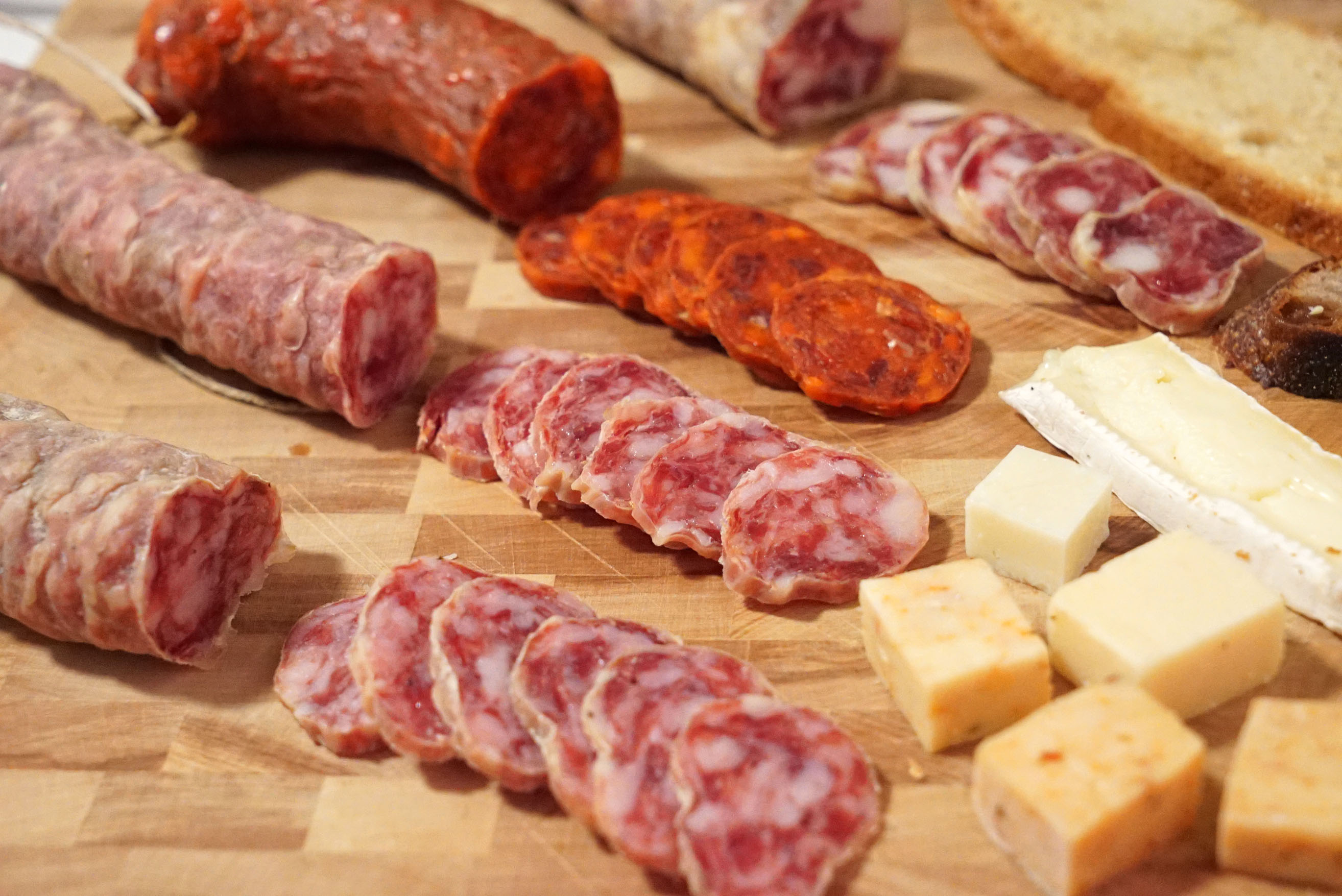
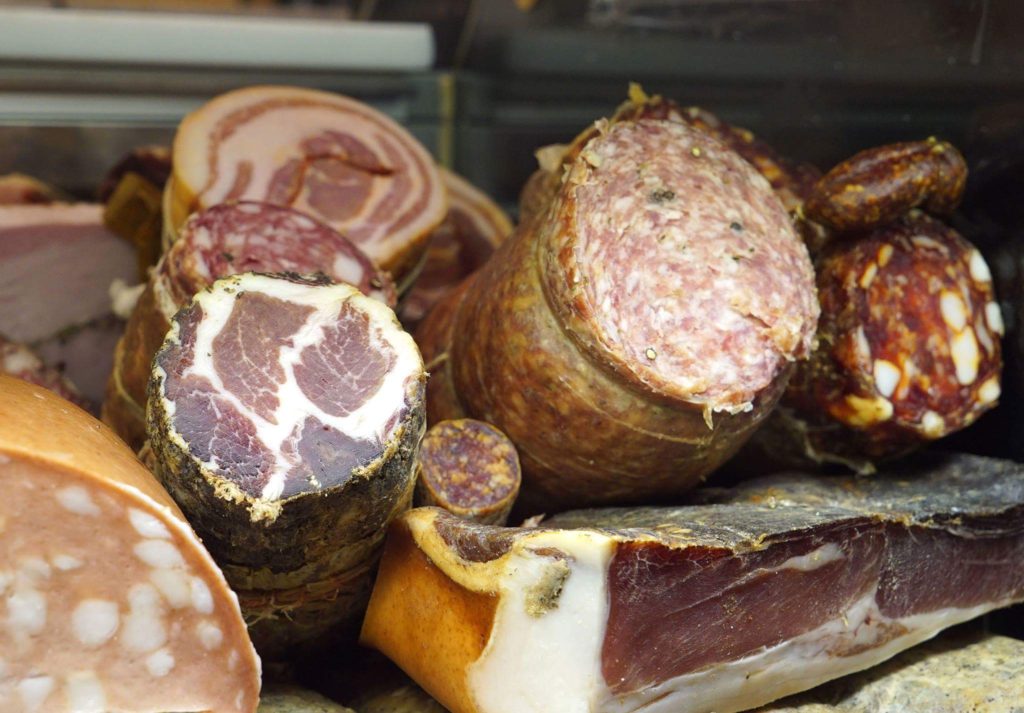
A recent trip to Italy renewed my interest in, and appreciation for, all things “sliced meaty.” I thought I’d seize the opportunity, capitalize on my rekindled passion for this delicious shit, and dive a fuckload deeper into the various types of salumi with a detailed-as-balls educational post for you assholes.
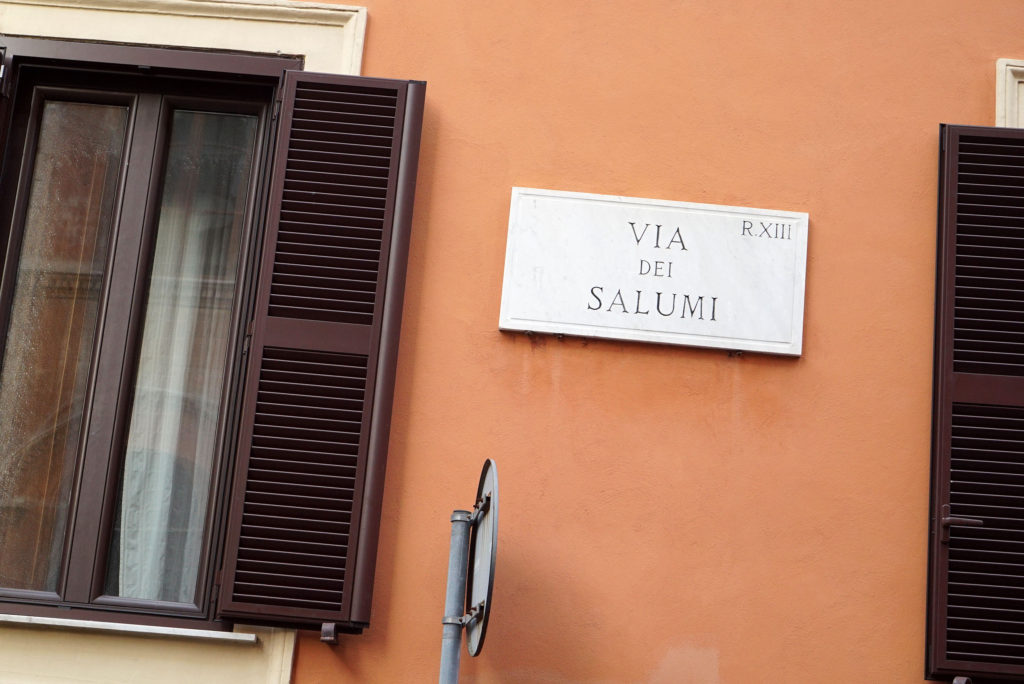
Check it out you savages. This was an actual street name in Trastevere, Rome:
In case you’re a complete dunce, that means “Street of Salumi.” I like to call it Meat Street, if you will, which is where I’m about to take your ass right now.
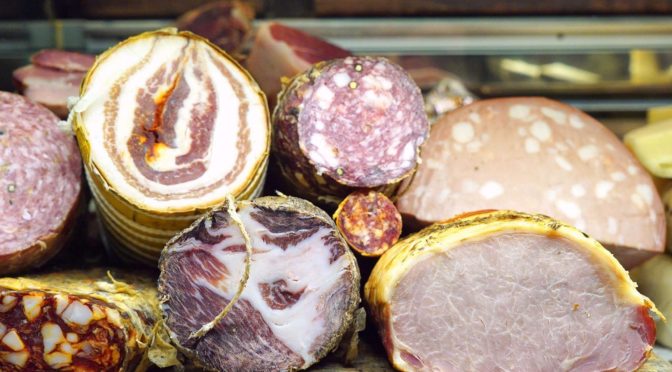
So just what exactly is salumi? Generally, it’s any food product made from pig meat (usually), especially cured meats, such as salami. That’s not super explicit, and some salumi even involve beef, but essentially we’re talking Italian pork-based “cold cuts” here.
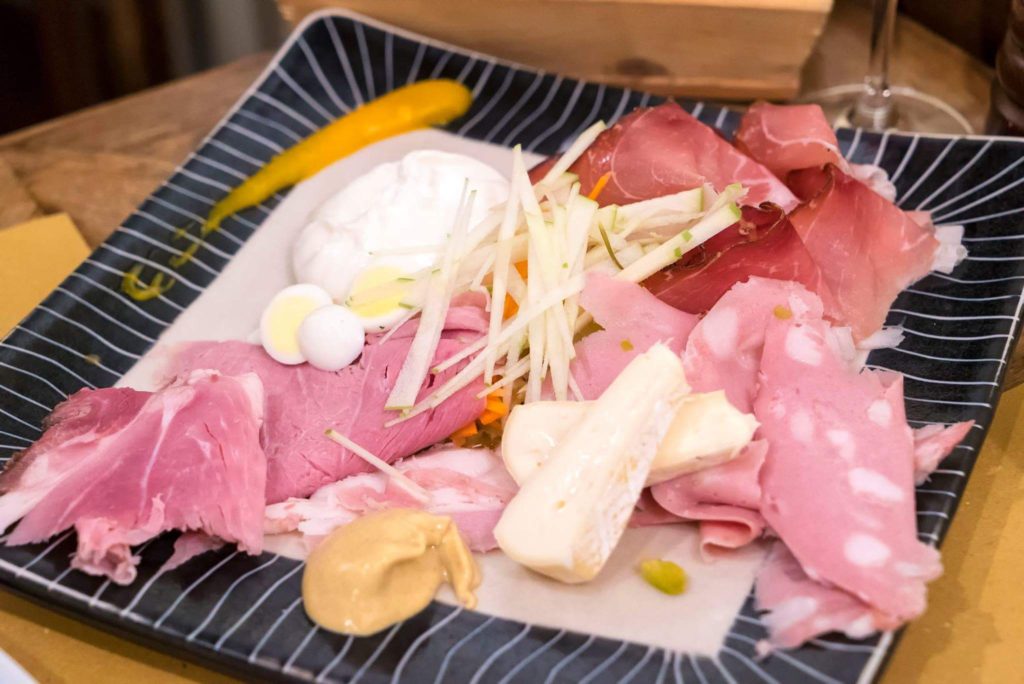
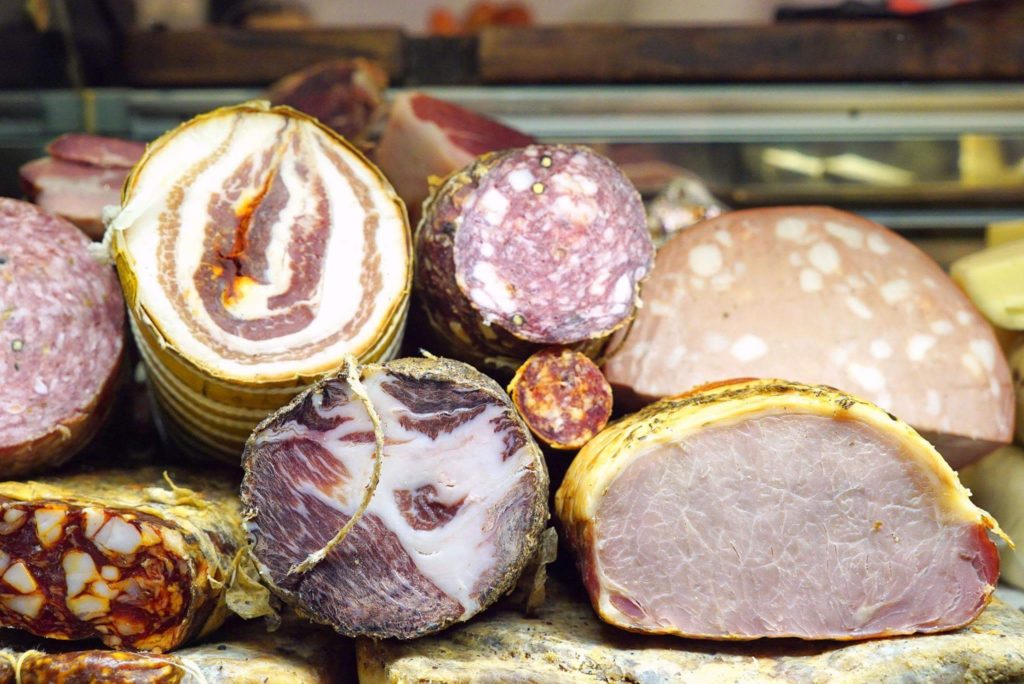
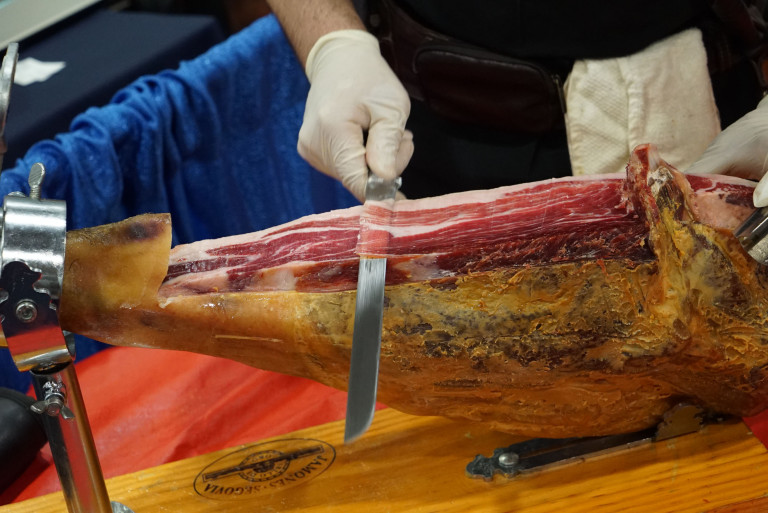
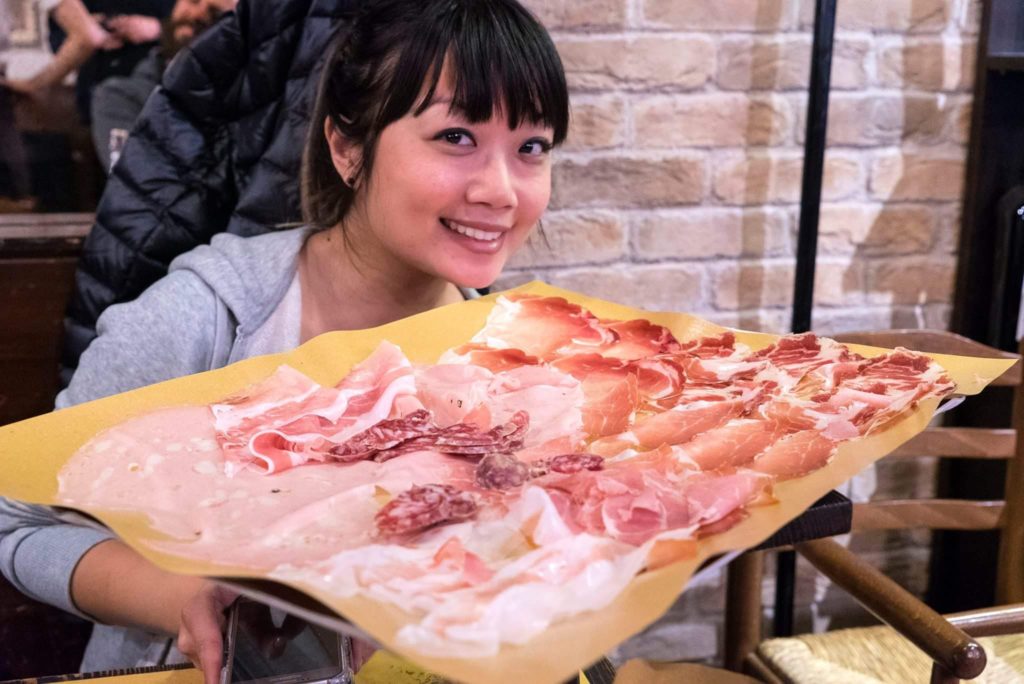
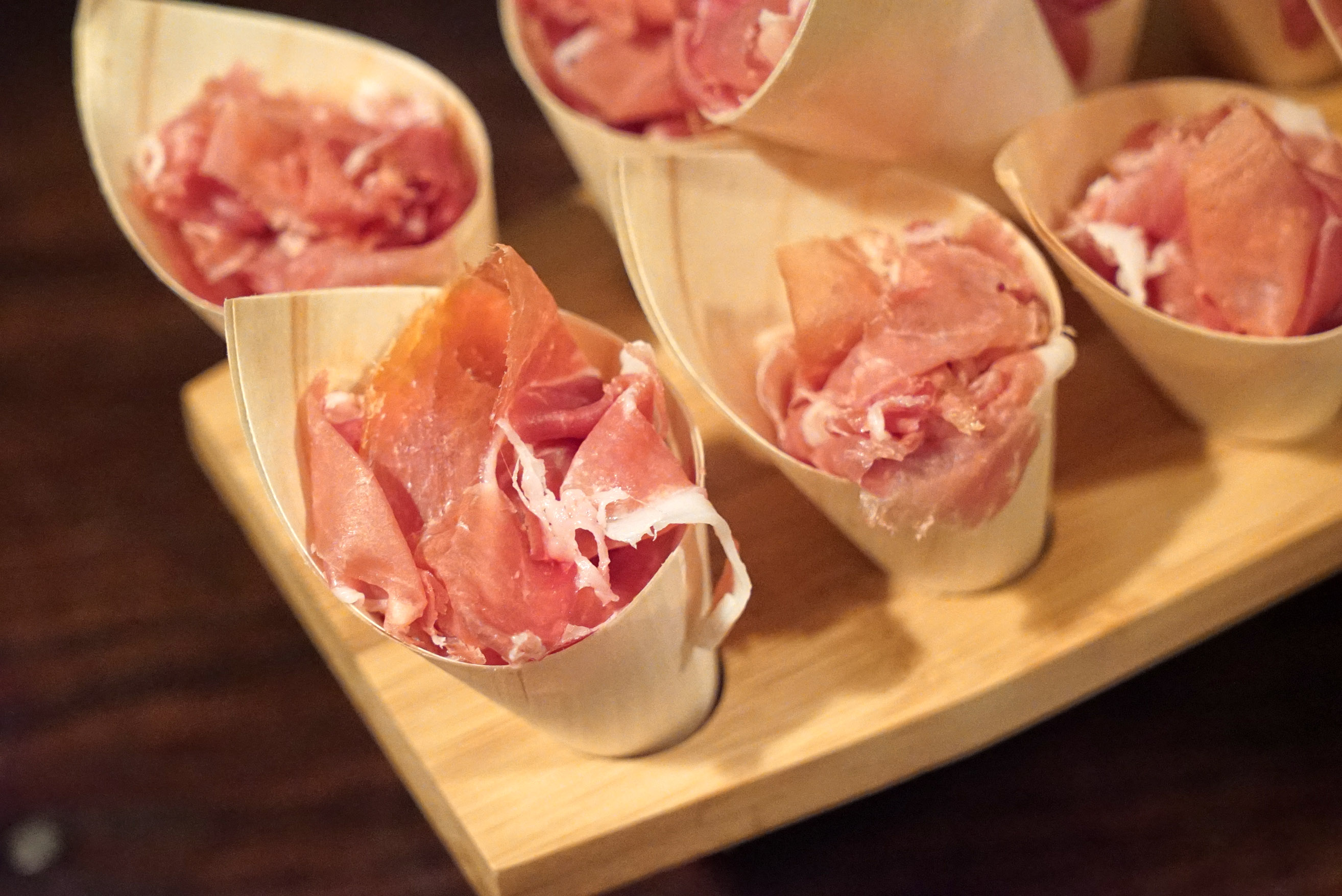
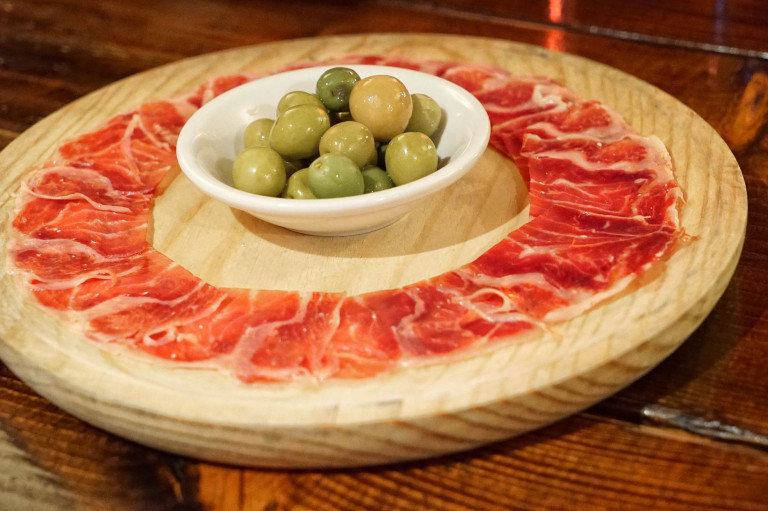
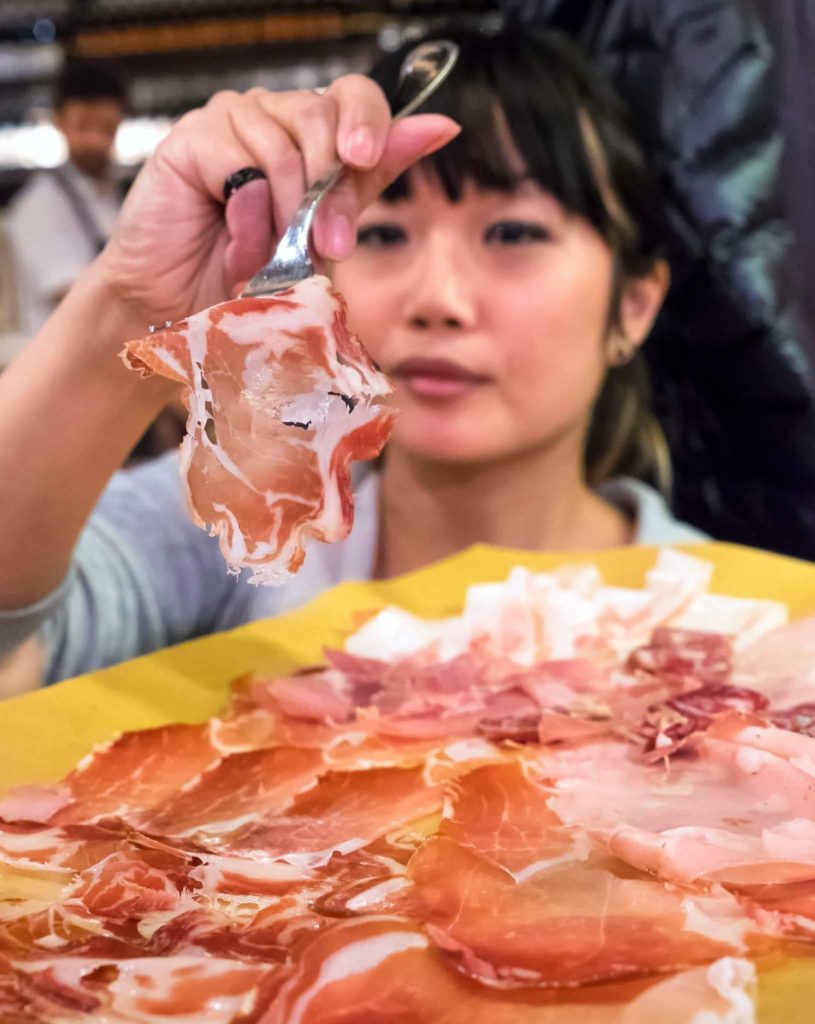
One thing we all love is prosciutto. Prosciutto is a TRUE salume (singular of salumi), meaning it’s a whole cut of animal, usually a leg or shoulder. A leg gets hung to cure, and later it is sliced and eaten.
Then there are items that involve ground meat, like salami and salsicce (sausage). Salami are smoked, air dried or salted, and then left to age. Salsicce is either raw or cooked slightly, and is a kind of salame (singular of salami).
Okay so salumi, salami: is that like potayto, potahto? Nope. Salumi is more of an umbrella term. All salami are salumi, but not all salumi are salami. Get it? Of course you don’t, because it’s fucking confusing. You had to go back and read that twice, didn’t you? I did. Maybe a Venn Diagram will help illustrate the point better:
Okay so let’s ignore the umbrella salumi term, since it’s kind of useless for our purposes here. I’m going to give you some info about the two major types of Italian meats: true salumi and salami.
TRUE SALUMI
As mentioned earlier, these are cured meats that have been made from a whole cut of animal, usually a leg/thigh or shoulder.
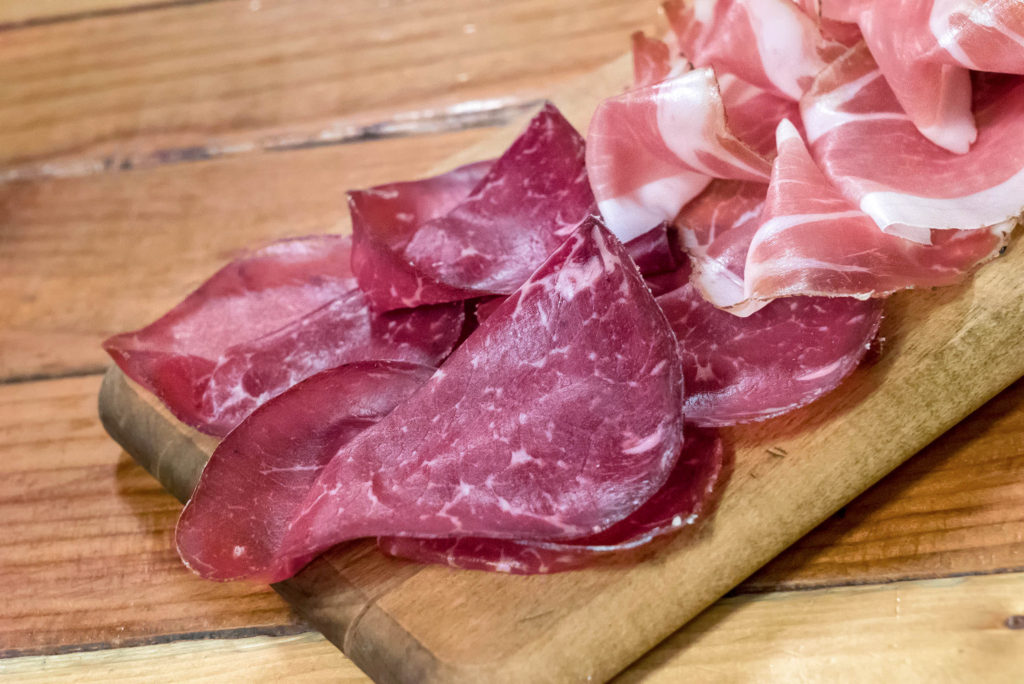
Prosciutto
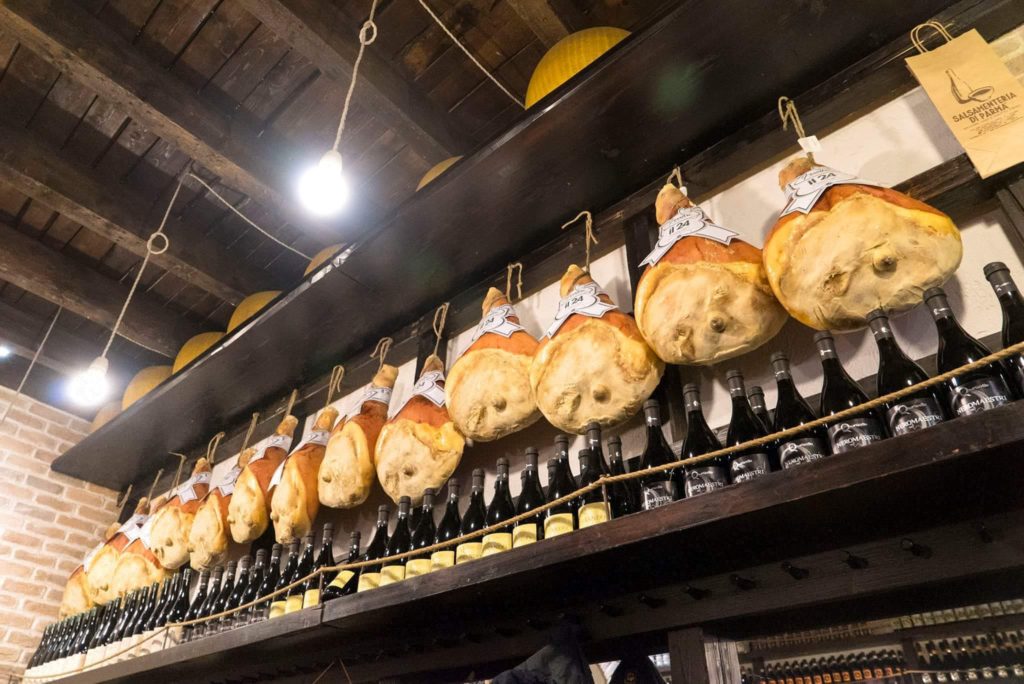
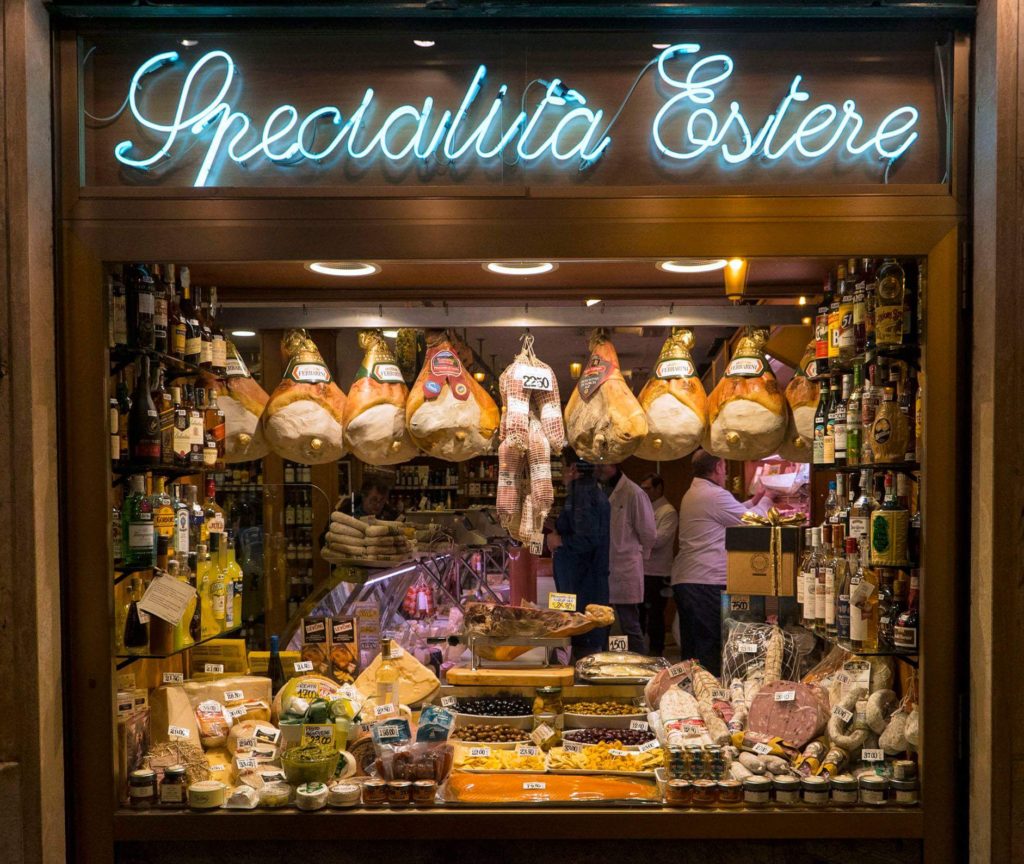
Prosciutto is a dry-cured leg o’ pig, and is probably the most common salume. These legs actually hang in Italian salumeria shops like decorations. It’s amazing.
Prosciutto crudo is the uncooked version, while prosciutto cotto is the cooked version.
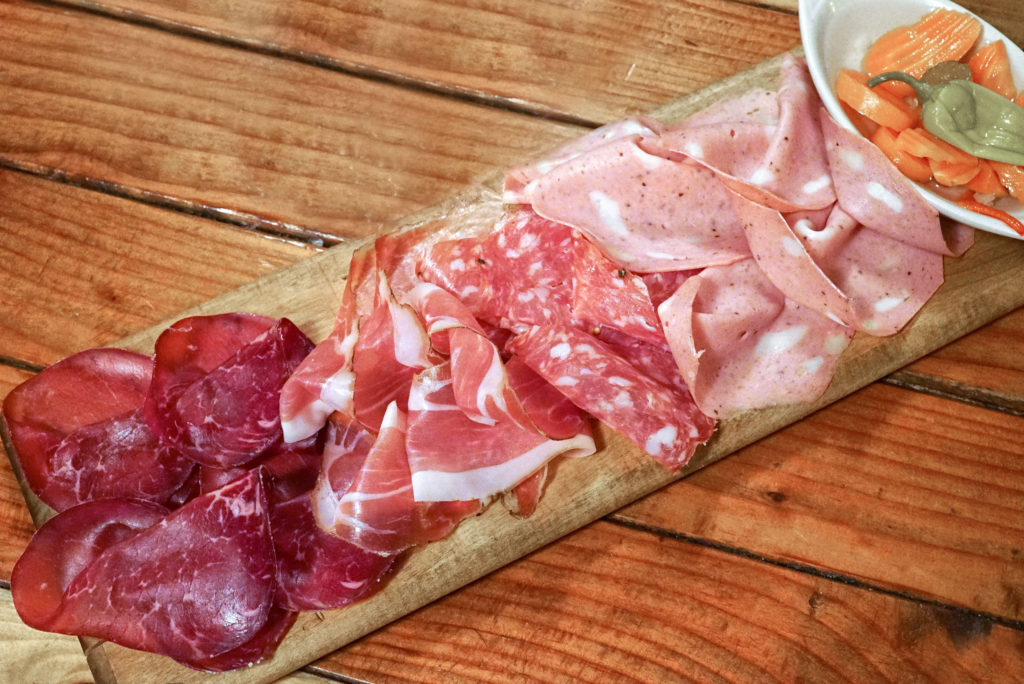
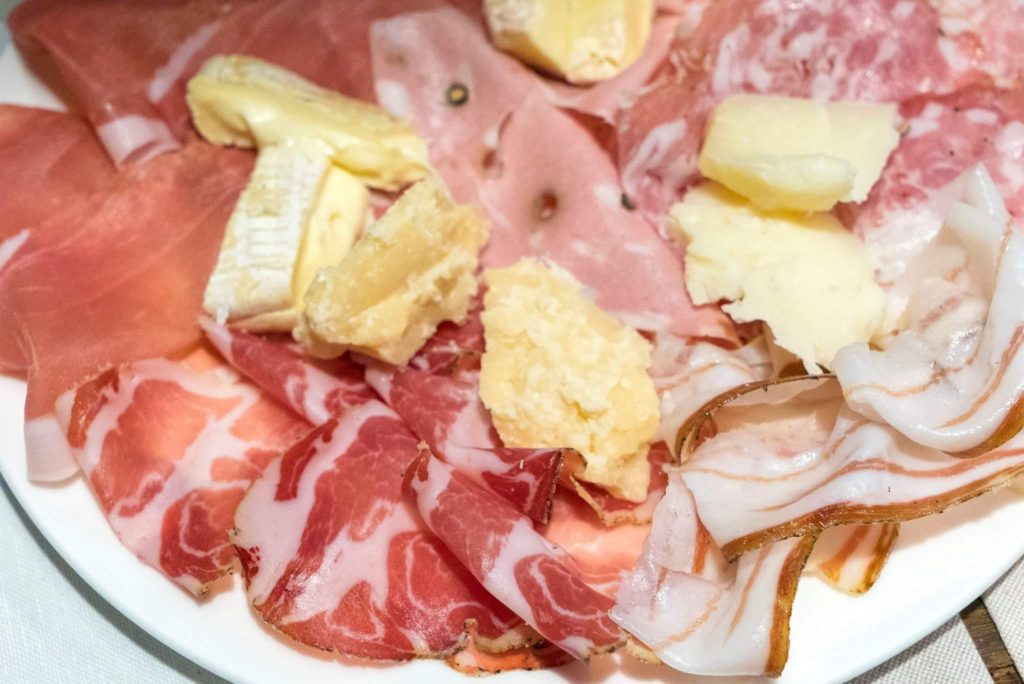
For crudos, you’ll often see differences in the aging time based on the regions in Italy from which the ham hails. For example, Prosciutto di Parma is usually aged about 10-12 months, while San Daniele is 15-18 months. Some regions will age their hams longer, like 24 months, to impart different flavors, increase sweetness levels, etc.
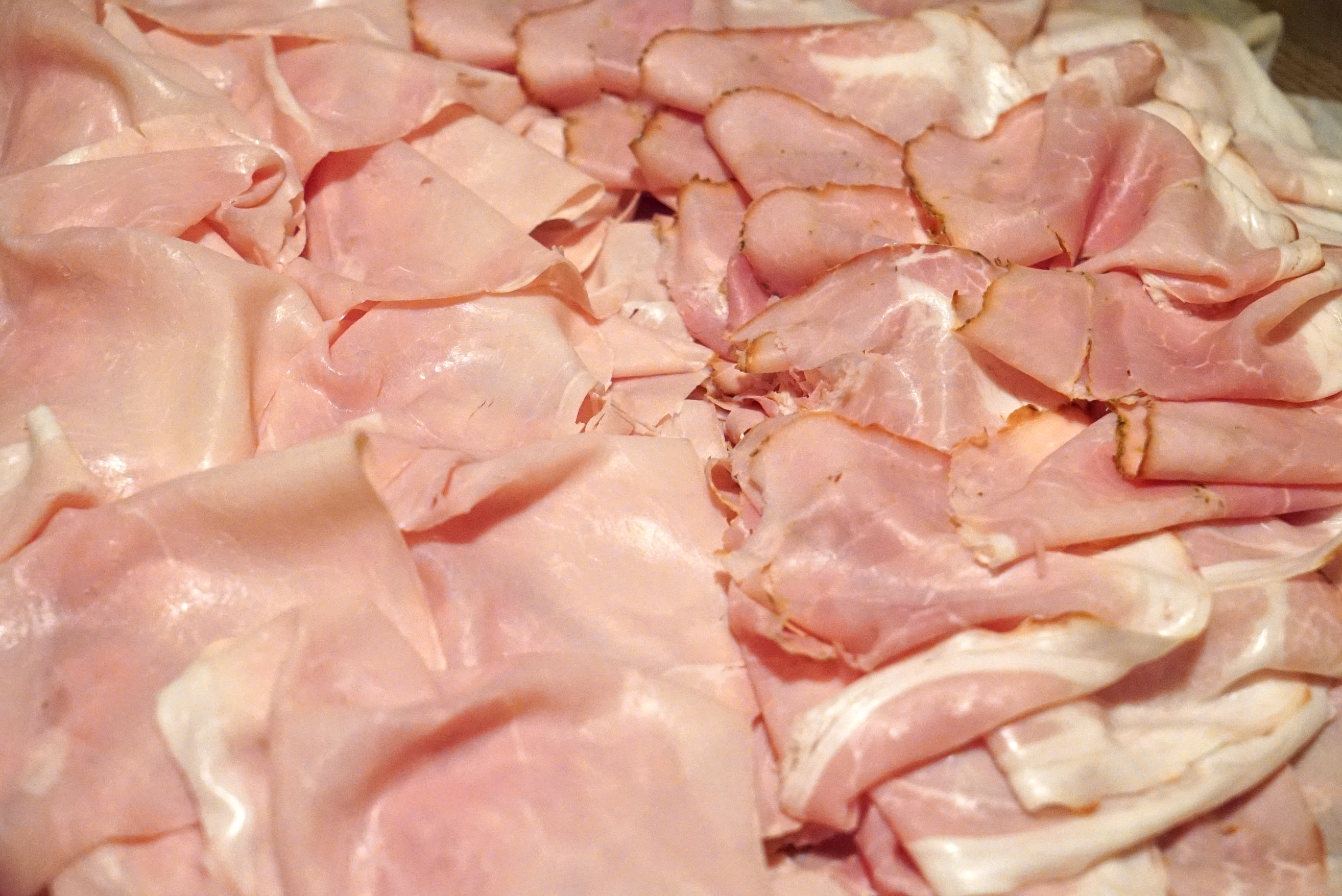
As for prosciutto cotto, think of it like a traditional cooked ham.
Speck
Speck is a type of prosciutto that’s smoked (as well as dry-salted and aged), so it has a stronger, more unique flavor.
Capocollo
This salume is usually lightly seasoned with garlic, herbs, spices and wine, but the execution differs by region. The meat is then salted, stuffed into a natural casing, and hung for up to six months to cure. The meat itself is whole muscle from the neck and shoulder areas, so it is a salume despite being stuffed into a casing.
Fun side note: You may have seen capocollo spelled coppa, capicollo, capicola or capicolla. It’s even referred to as “gaba-gool” by NY/NJ area Italians and the show The Sopranos (or in this case, MadTV):
Pancetta
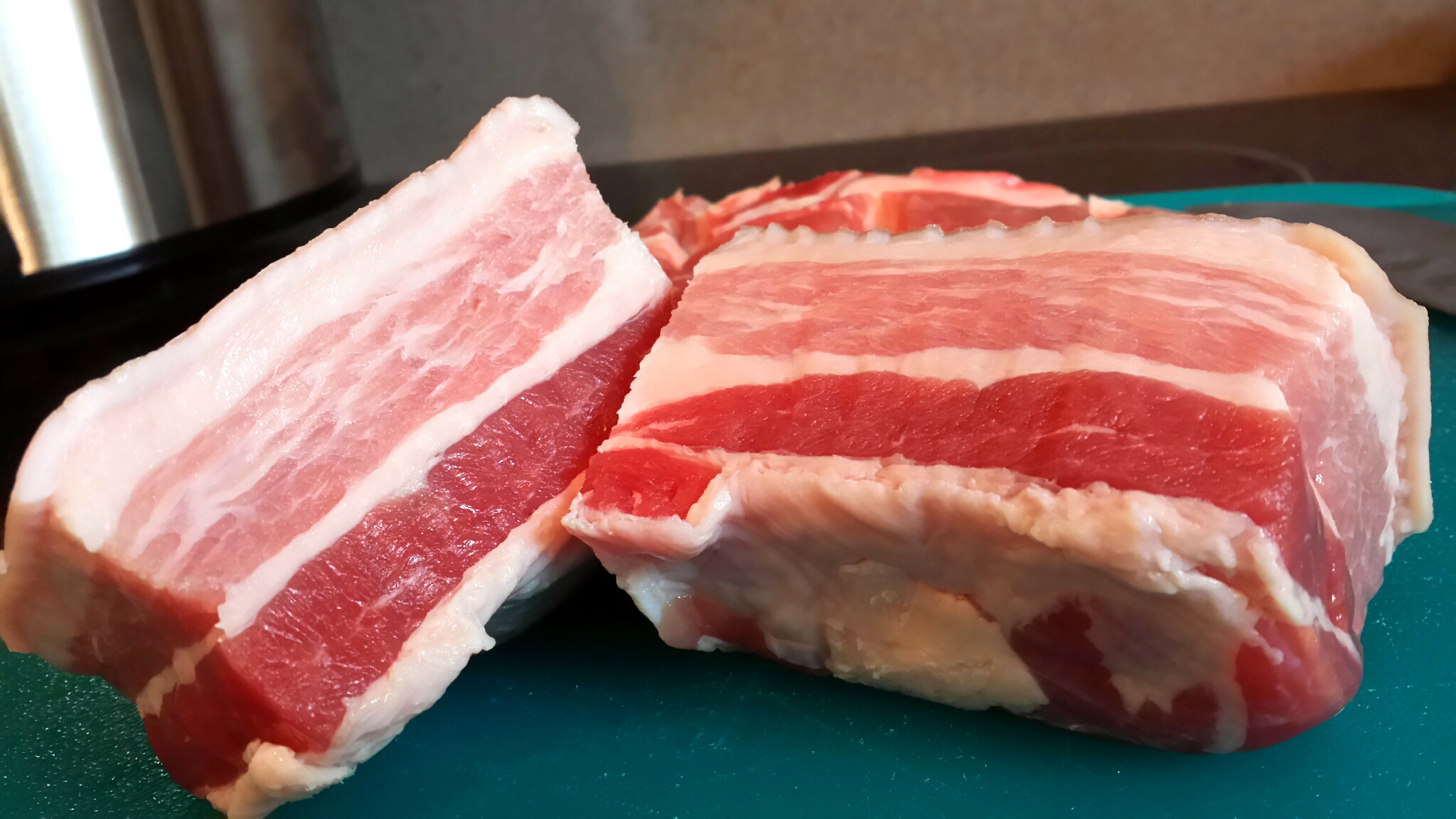
This is Italian pork belly (bacon). It’s usually cured and sometimes spiced. They slice it thin and eat it like cold cuts over in Italy. While technically not the same, you will often see pancetta swapped out with guanciale (pork cheek) or lardo (pure fat) in many Italian dishes that traditionally call for pancetta.
Bresaola
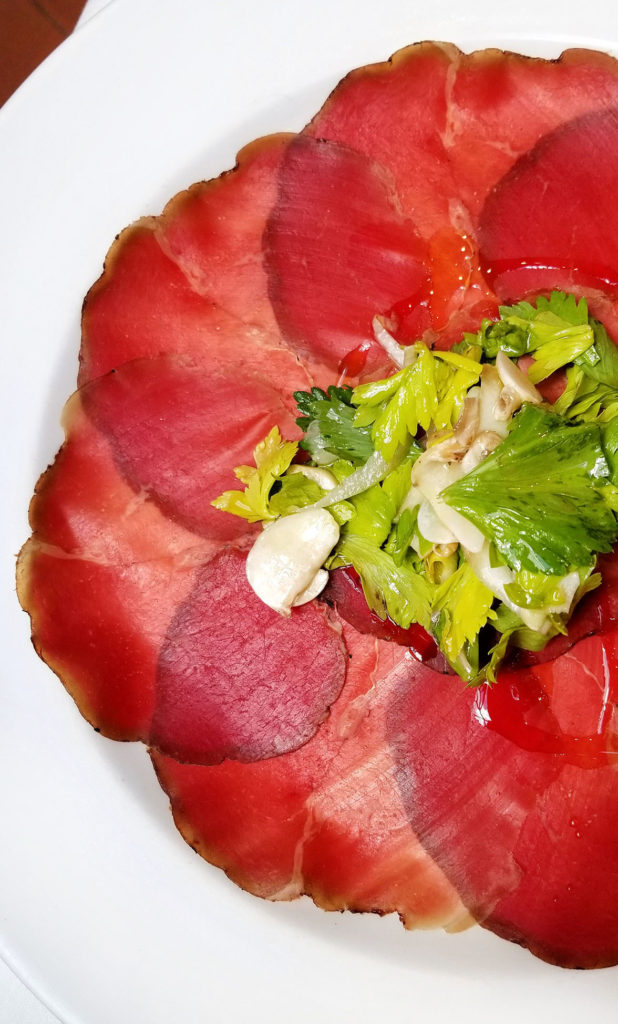
Bresaola is a cured, lean cut of beef, often times filet mignon.
You can see it here in my wife’s video from a salumi shop in Rome called La Prosciutteria, which I refer to as fucking heaven. There are a few selections of bresaola across the top right, immediately as the video begins:
While this may not necessarily be a salume, it is very often found in Salumeria shops throughout Italy. With that said, and the fact that this shit is delicious as fuck, I figured I’d mention it here.
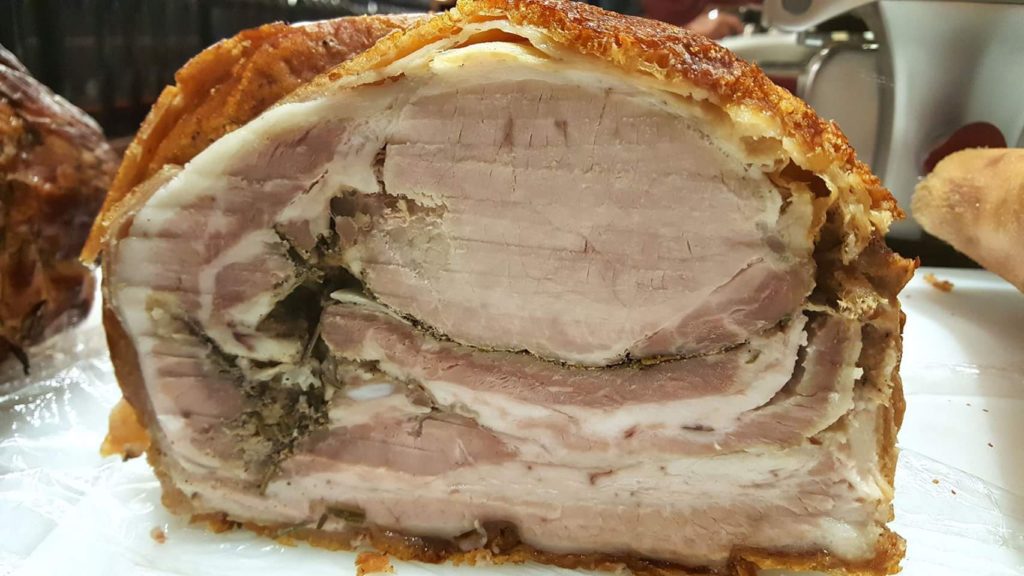
Porchetta is a savory, fatty, and moist “pork roll.” It’s essentially a boneless pork roast whereby the pig is gutted, de-boned, arranged carefully with layers of stuffing, then rolled, wrapped in skin, and spit-roasted over a flame. Stuffing usually includes rosemary, fennel, garlic and other herbs, and porchetta is usually heavily salted.
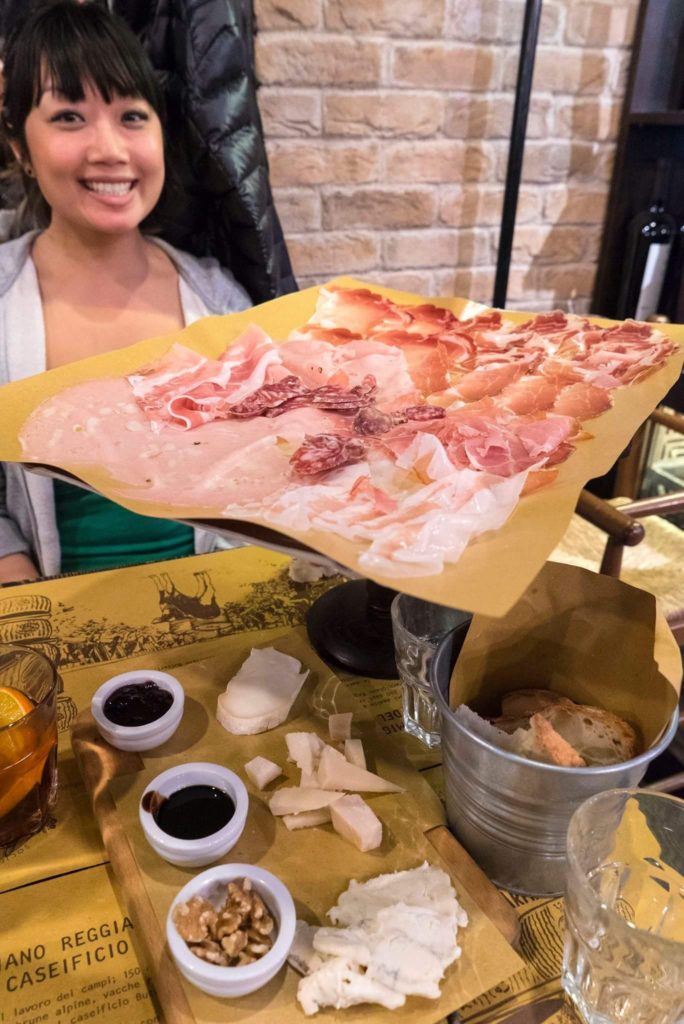
It is typically served hot, cut thick, and eaten like a main course dish with a fork and knife. However it’s also common to see it sliced thinly after cooling. It’s then put into sandwiches or served on wooden meat board platters like the other salumi discussed above.
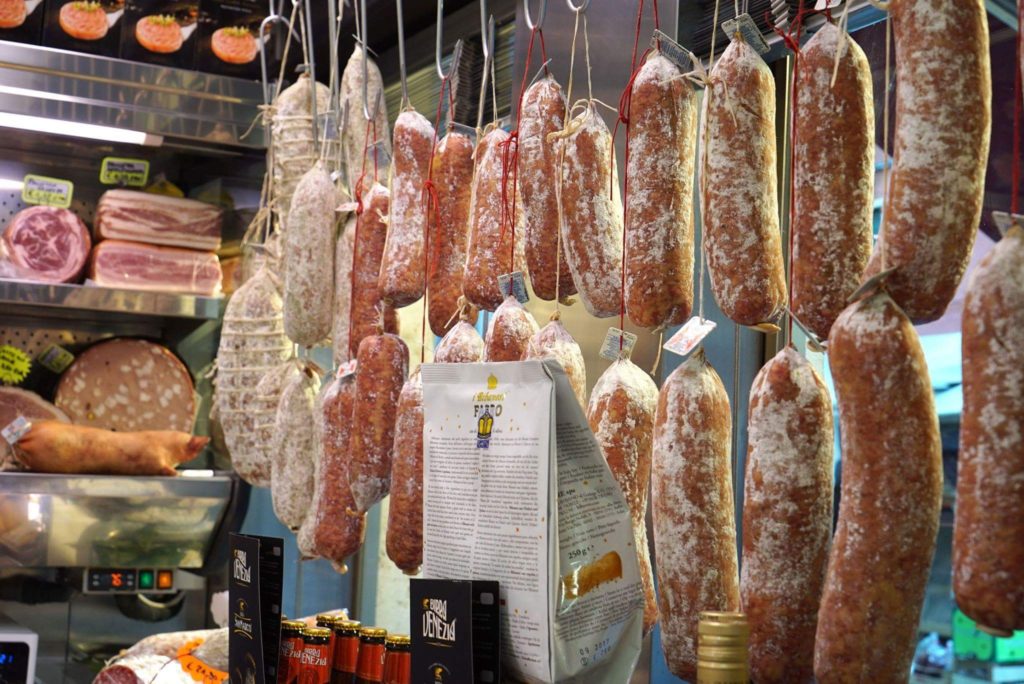
Okay, so a recap: Salami are ground meat, encased products that are smoked, air dried or salted, and then left to age.
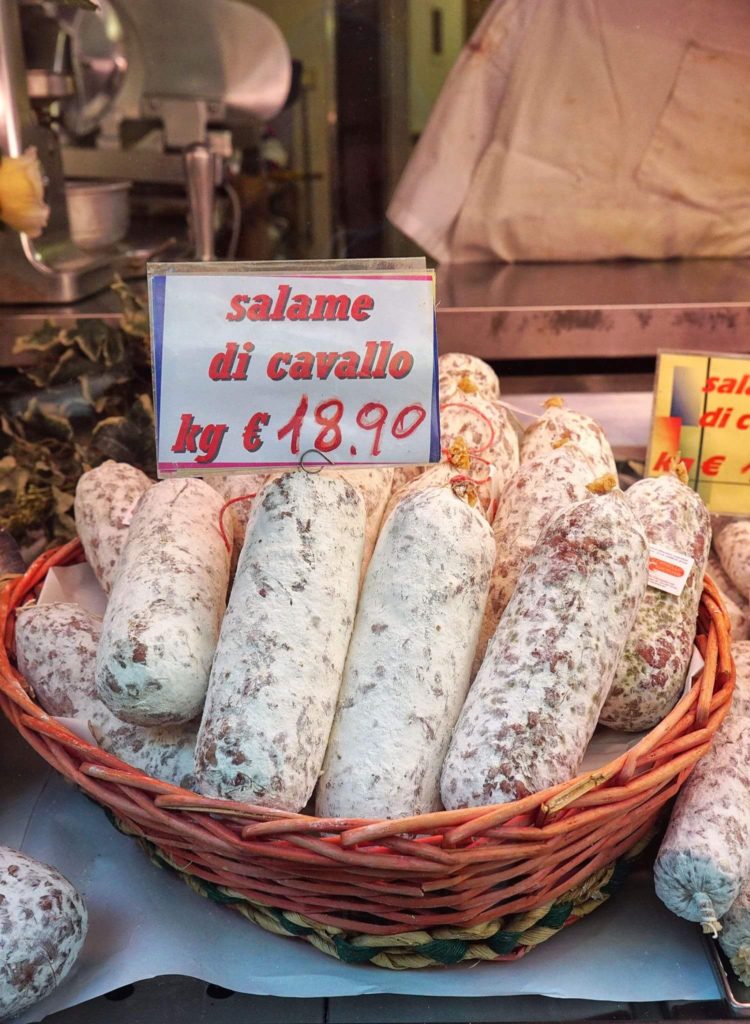
If you’ve ever eaten an Italian hero, you’ve eaten some of these meats. Ingredients and parts can vary. In some cases you may even see non-pig versions, like venison or elk. In Venice, I even saw horse salami:
Regional Salami
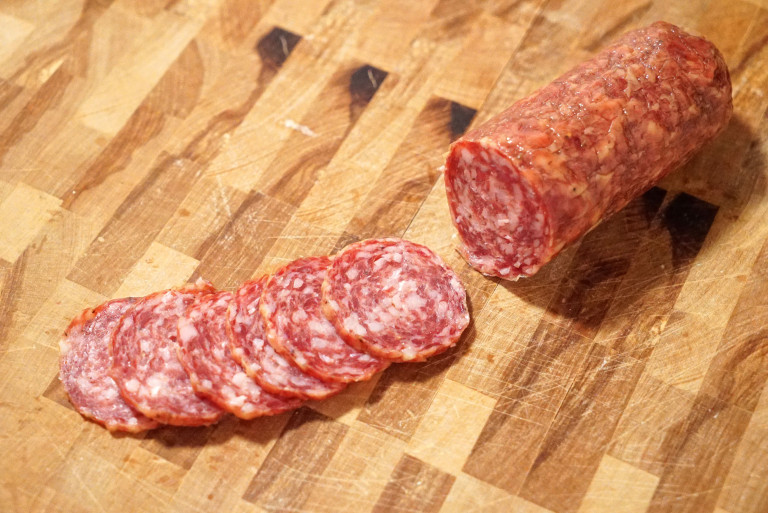
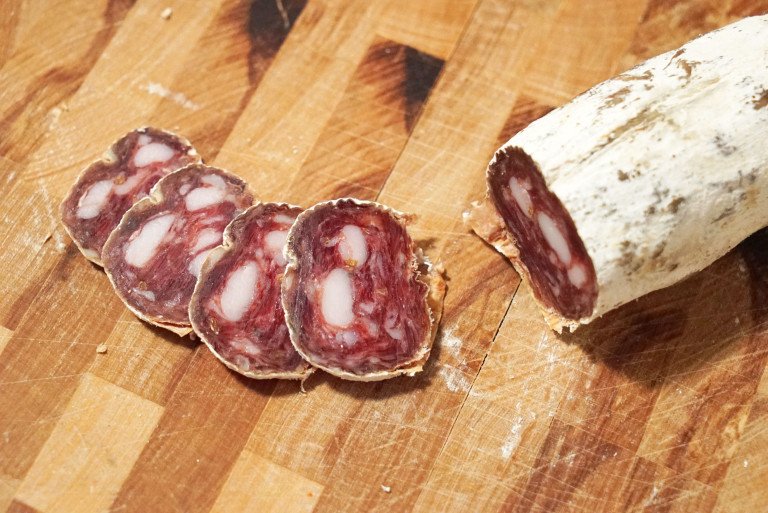
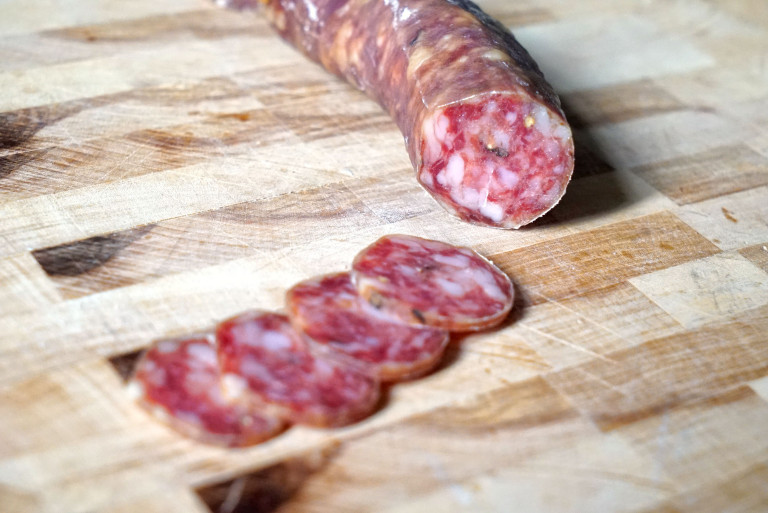
Salami varies greatly by region. In some areas of Italy, the meat is finely ground with tiny flecks of fat visible.
Other regions use a more coarse grind, use larger chunks of fat, or add spices and herbs.
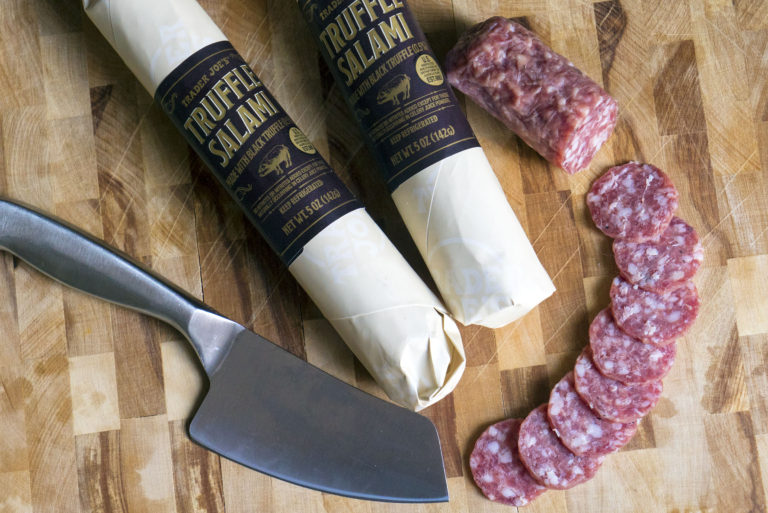
My favorite varieties are the ones in which truffles are added.
Salame Piccante
The pepperoncino pepper is a mildly spicy variety of chili pepper. That pepper is what makes a salame “piccante” (spicy), as it is mixed up into the grind when making salami piccante. In the US, salami piccante is typically called “pepperoni.” However, in Italian, the word “pepperoni” actually means “bell peppers.”
Soppressata
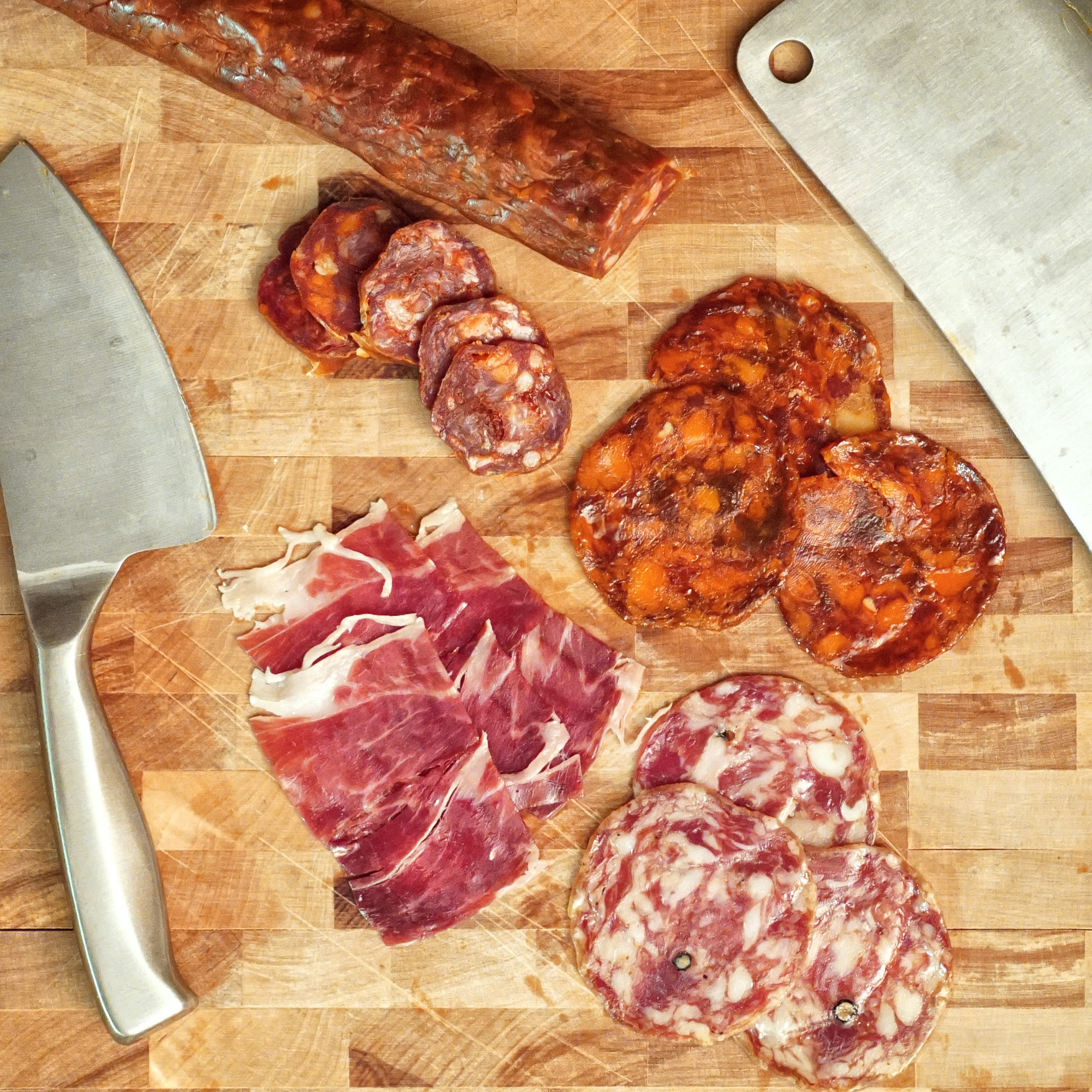
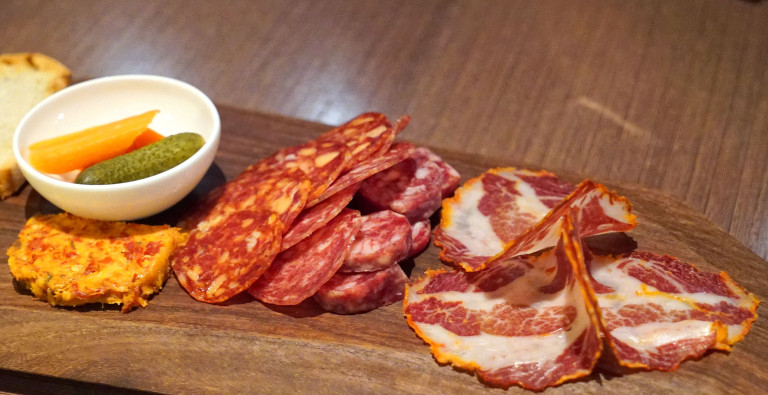
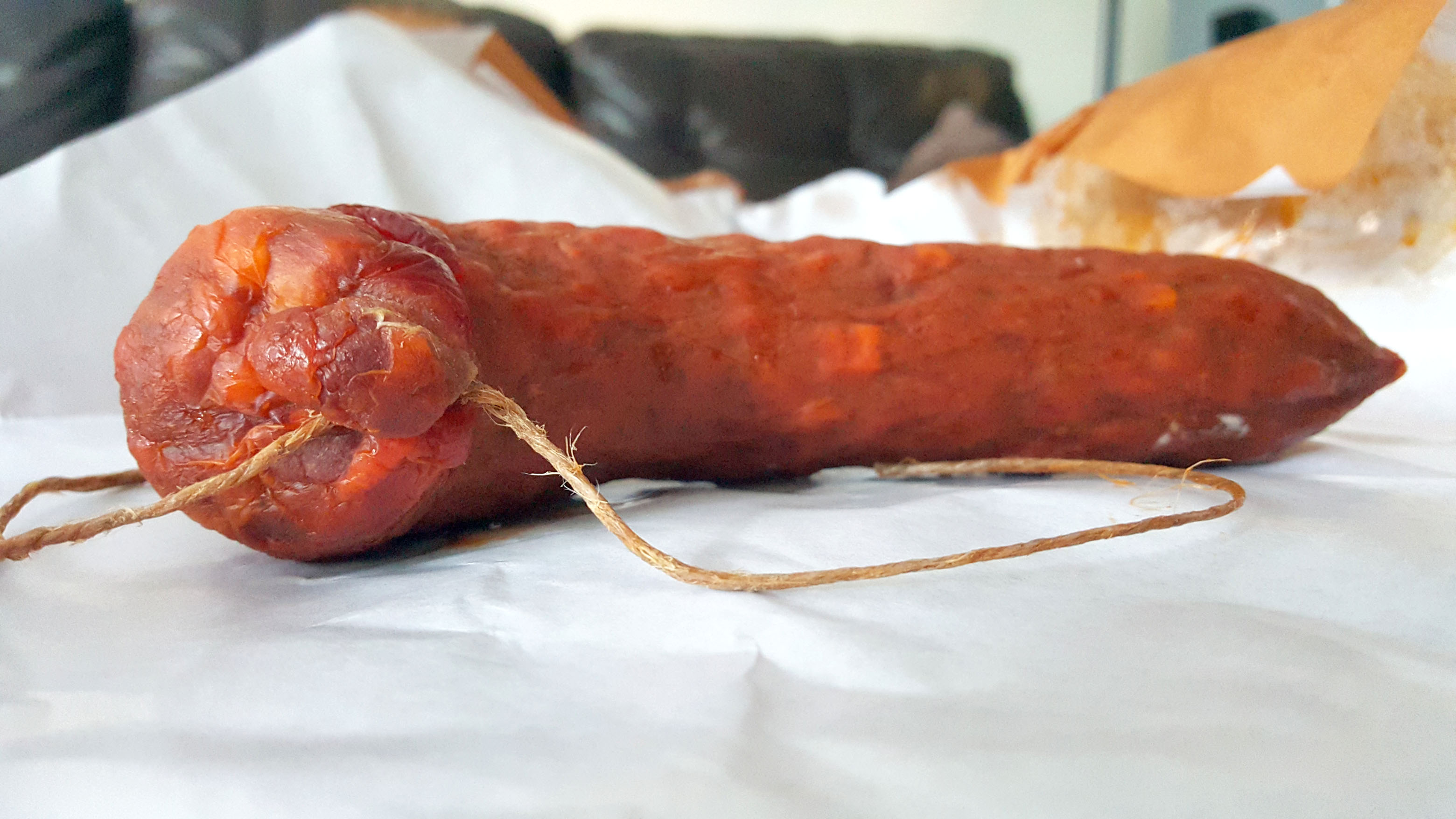
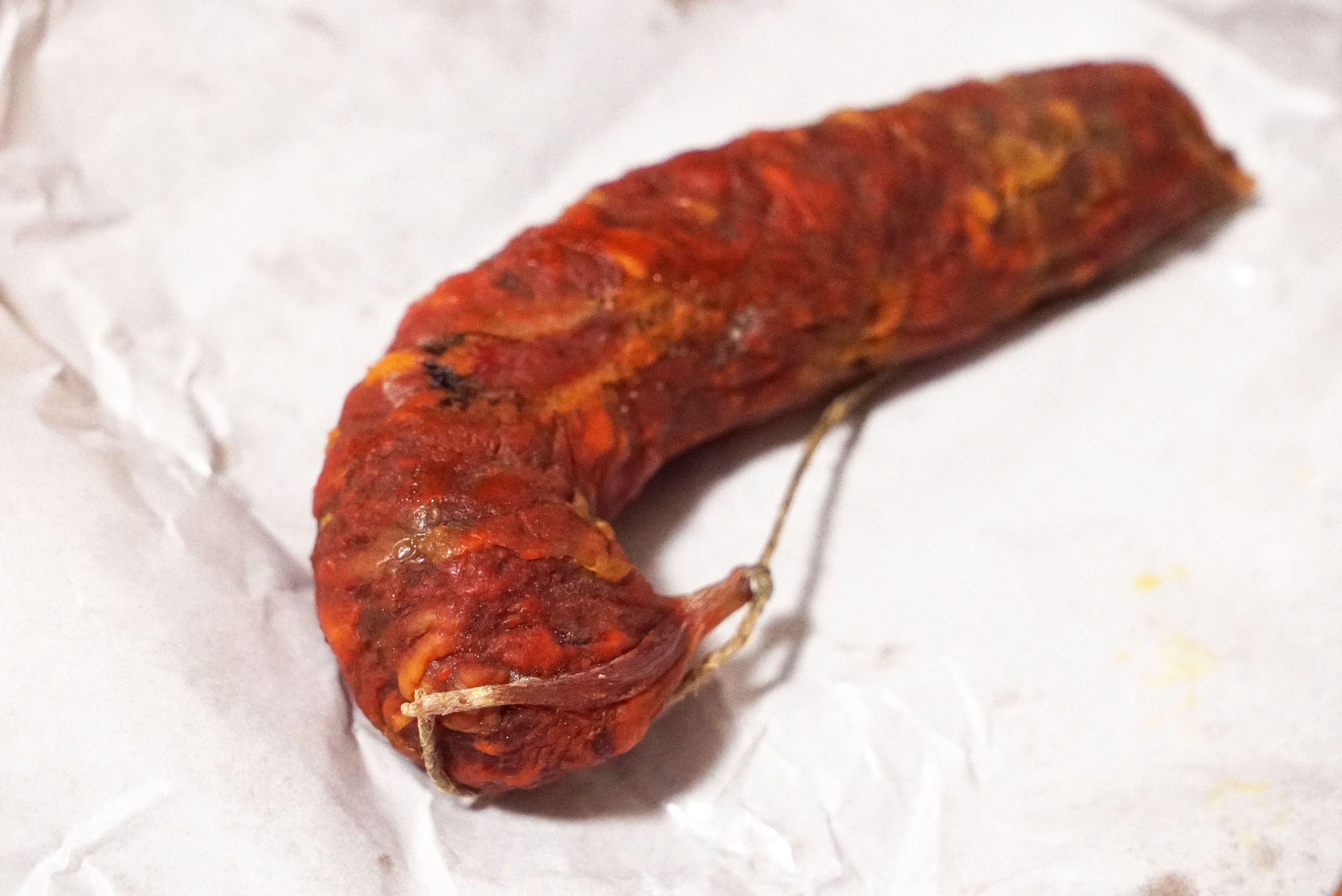
Soppressata also varies by region and exists in different sizes and shapes, but the spice level and red coloring are both universal traits. It is almost always more coarsely ground than salami.
All that said, one can still find varieties of soppressata that aren’t quite as “hot.” While these pictures show a thinner chub, the most common forms I have seen were thicker, like three or four inches in diameter (like a giant’s penis).
‘Nduja
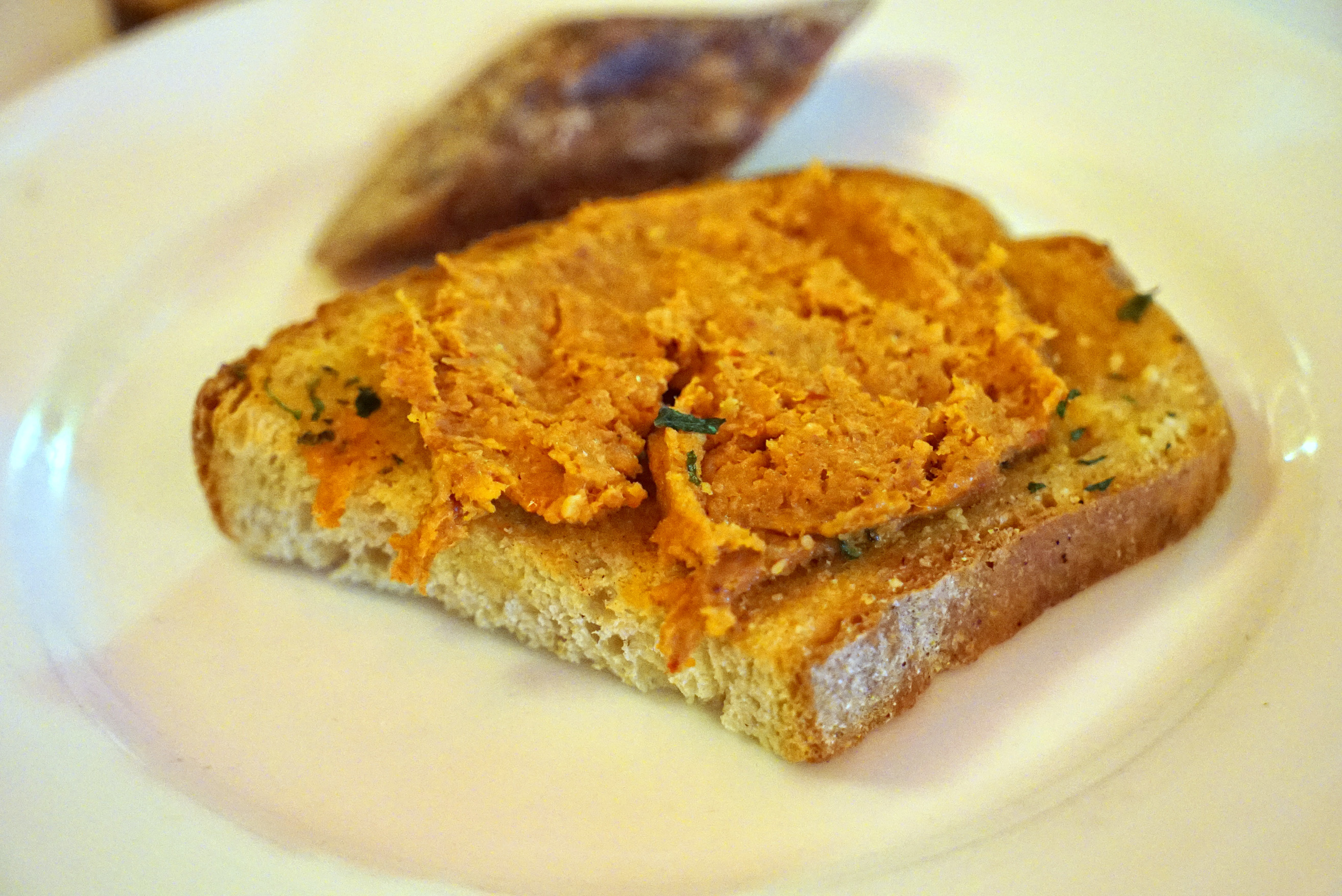
This delicious shit generally comes from southern Italy. It’s an aged, spicy, spreadable salami “paste” that’s made from various parts of a pig. The spice levels are pretty hot in this product, and since it’s so soft, it is often spread onto bread like butter, or thrown into tomato-based sauces to kick them up a little bit.
Mortadella
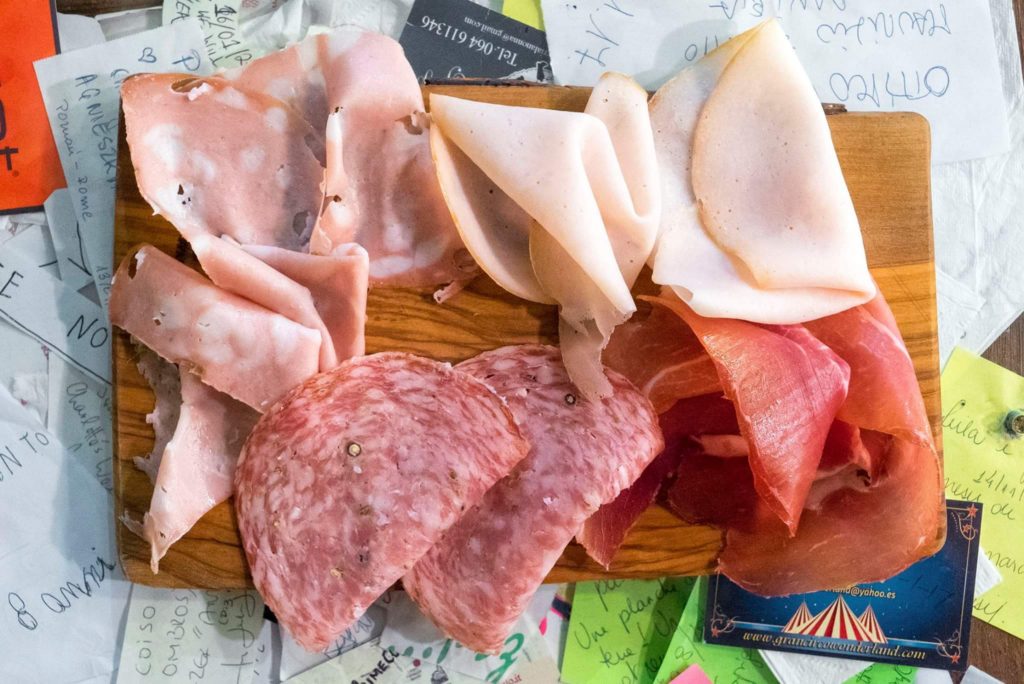
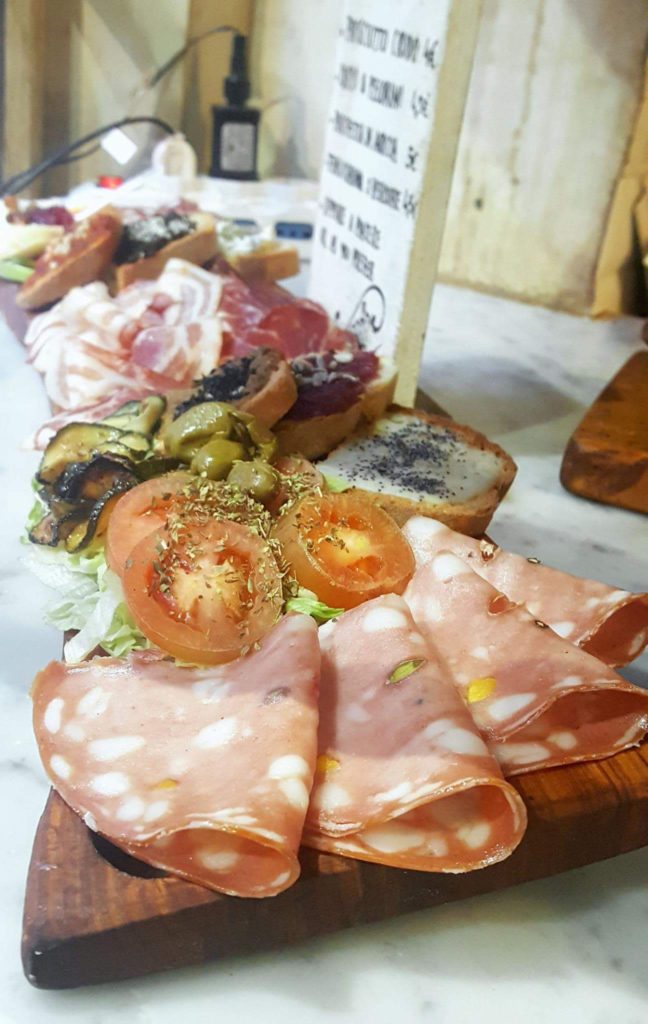
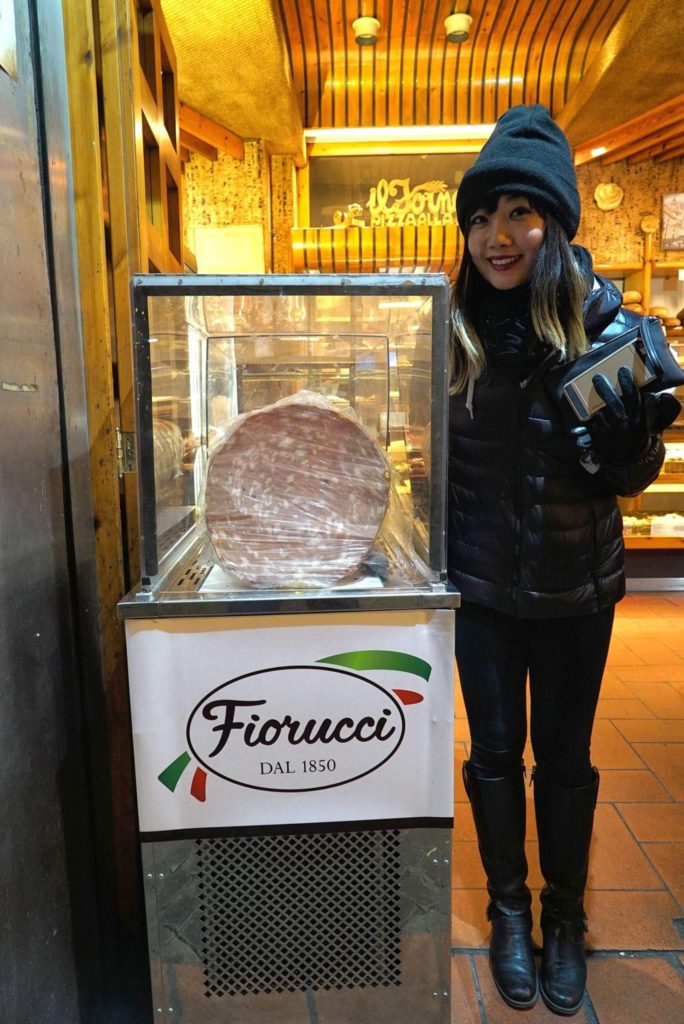
This might be my favorite of the lot, and that’s a bonus for me, because it is usually the cheapest to buy in stores. The meat itself is similar to bologna in texture (in fact it IS bologna, since it hails from the town of Bologna). It’s extra finely ground (almost like it was processed by machine) heat-cured pork, which incorporates small cubes of pork lard.
I think mortadella is more smooth and soft than standard bologna here in the US, and it has a real porky flavor. Sometimes truffles, pistachios, olives and garlic are added for flavoring as well. Those are the best kinds. Also, lots of times these meats are formed into HUGE logs that are upwards of a foot in diameter.
Salsicce
Sausage party! The main difference here is mainly that, most times, salsicce is raw, uncured, or un-aged and needs to be cooked prior to eating. But some sausages are smoked and, thus, can be eaten as-is (like a hot dog or kielbasa).
So that about covers most of the common types of salumi you’ll see out there. I hope this information was helpful. If it wasn’t, then I should add that I don’t really give a fuck. Either way, go forth and eat this delicious meat. It will make you happy.