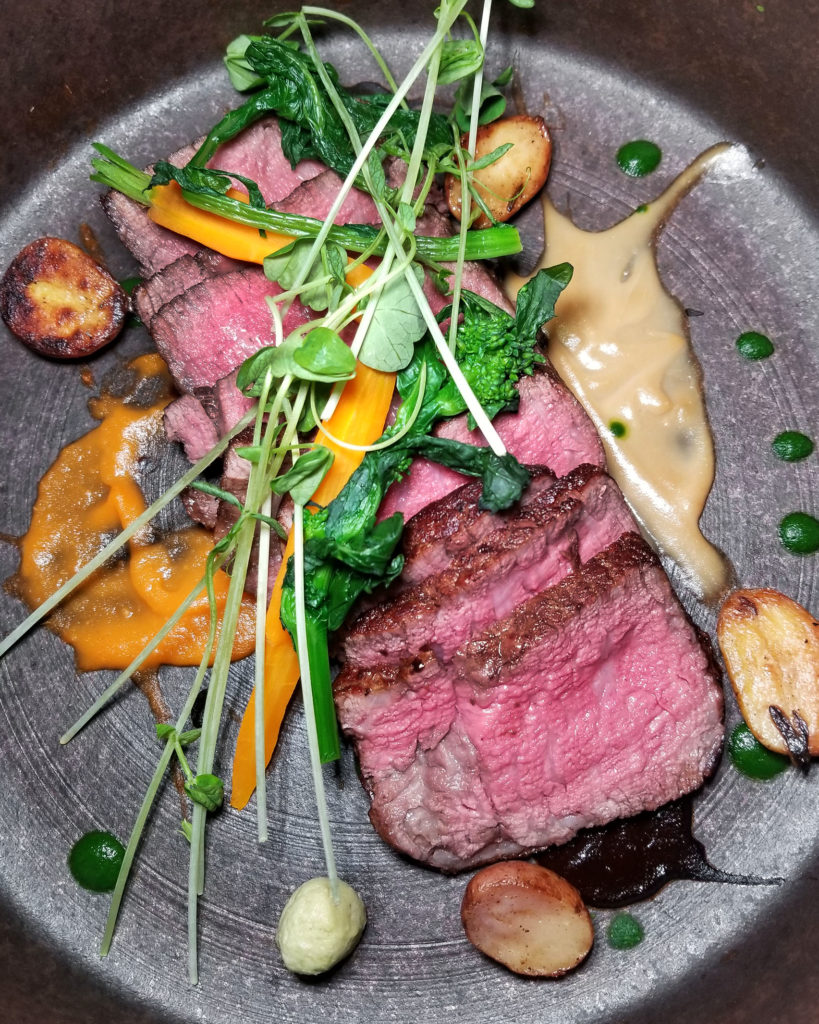
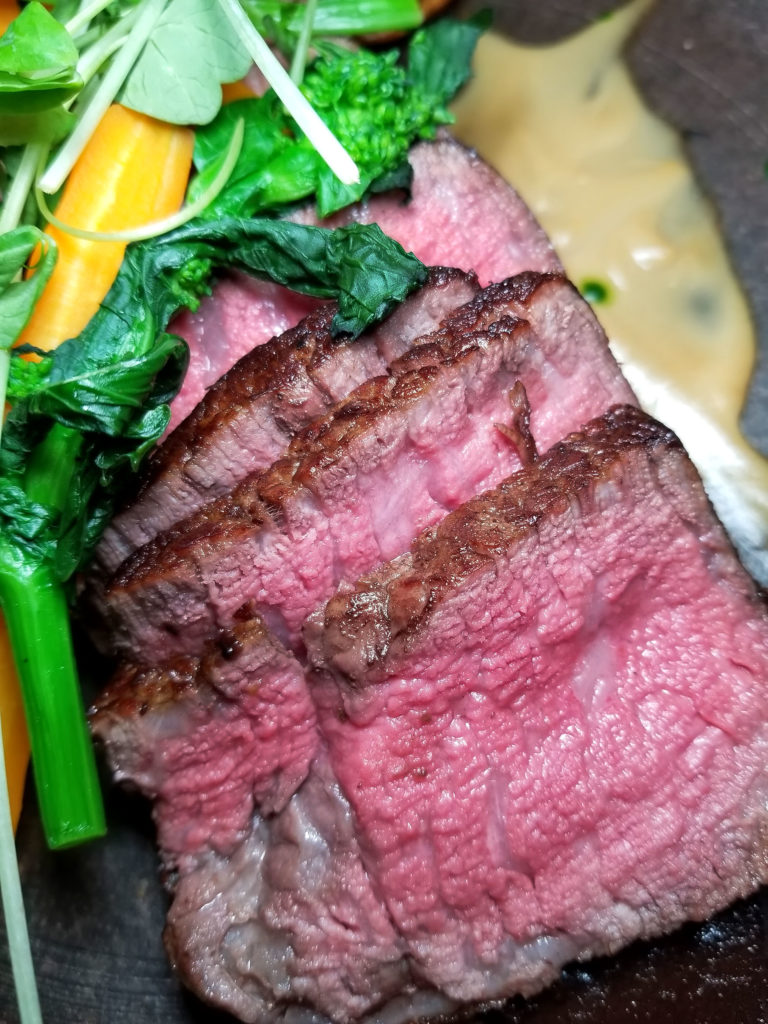
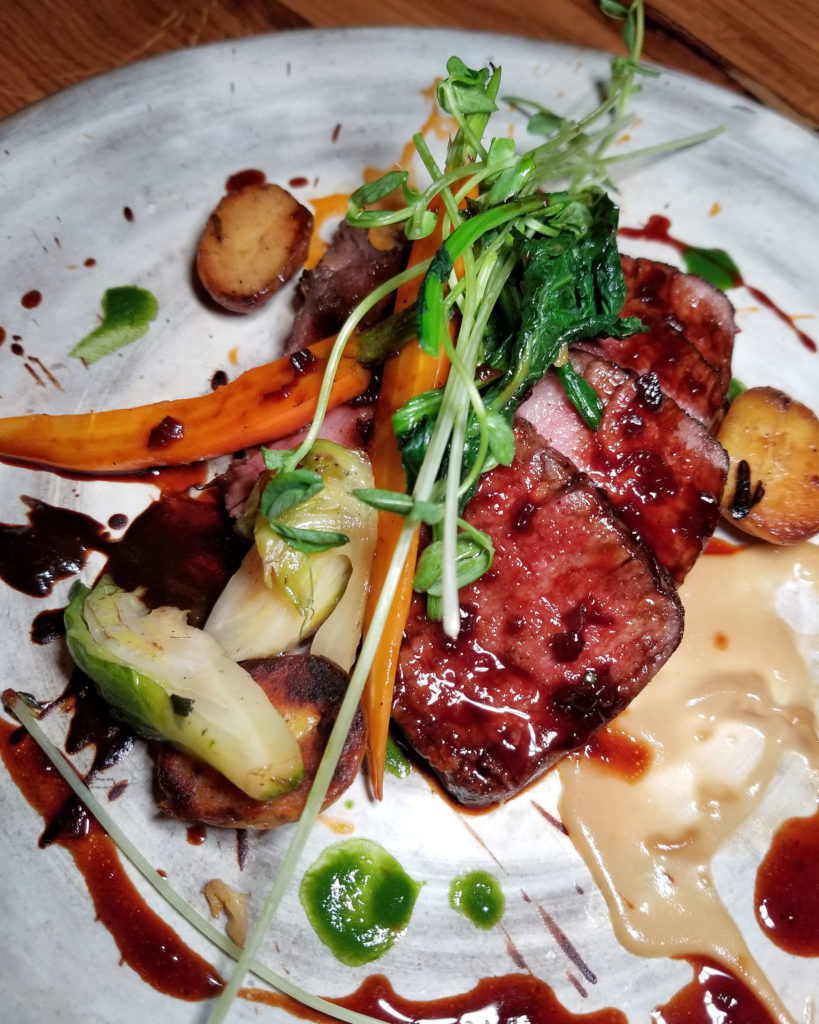
My wife and I came here with her sister and brother in law for a nice duck meal.
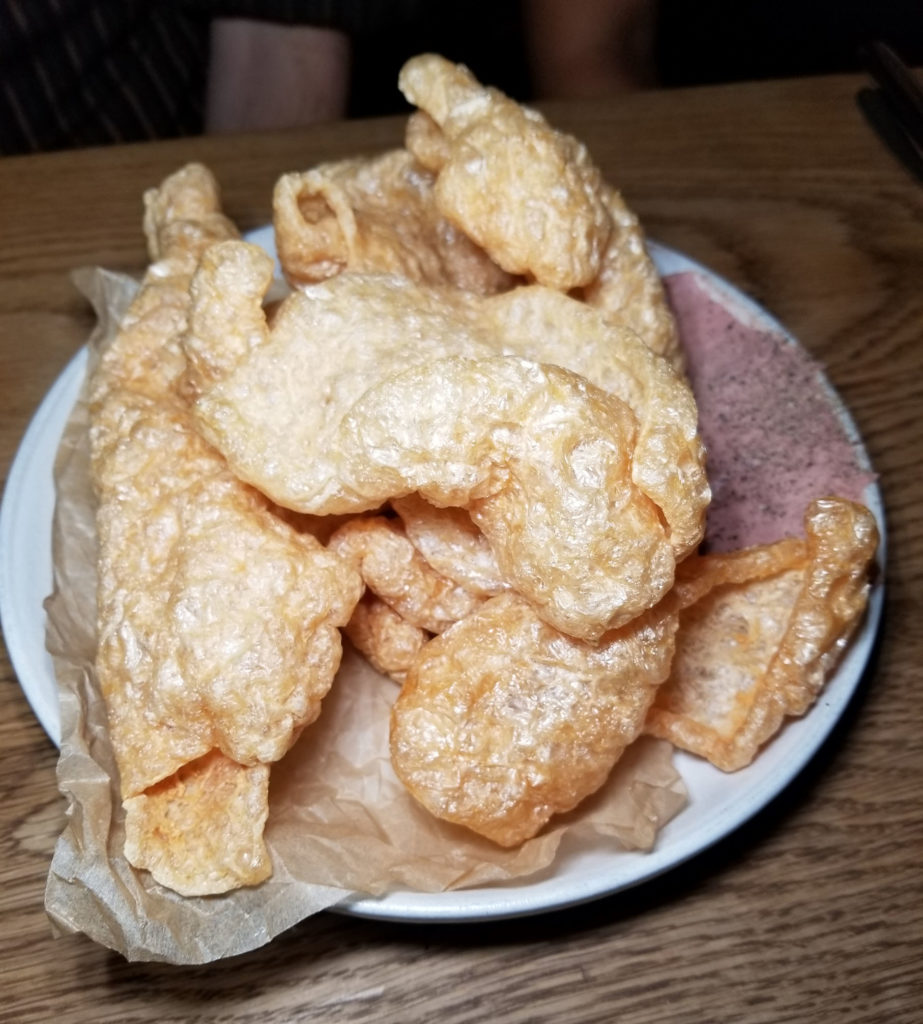
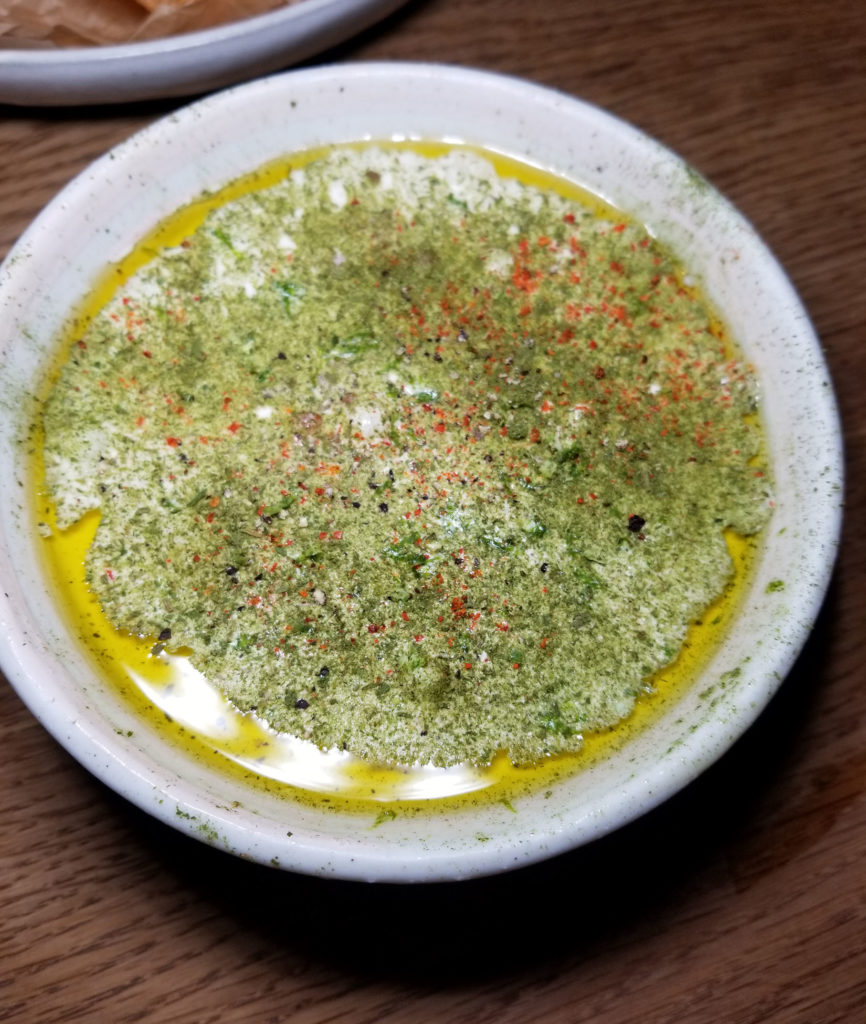
We started with the chips and dip, which are pork rinds served with a chicken liver mousse:
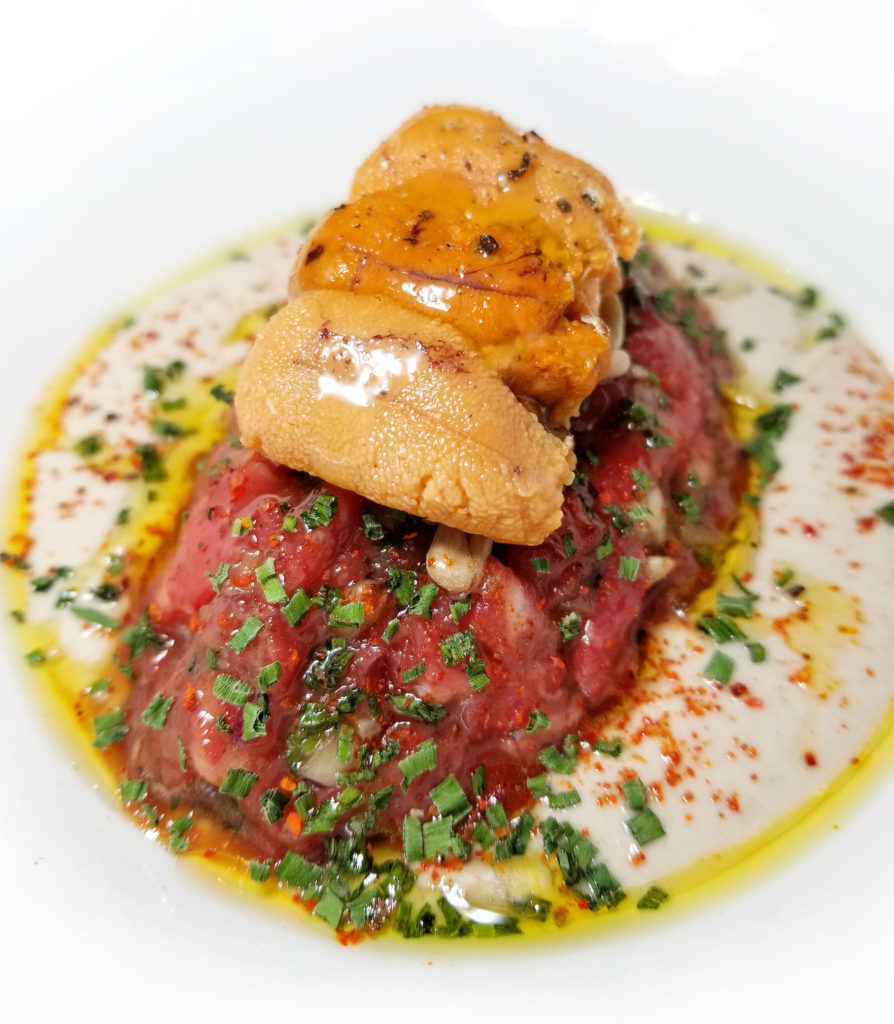
These were fantastic, but my favorite item of the night was this wagyu and uni tartare dish.
Just absolutely perfect. This wasn’t on the menu, and it was compliments of the house!
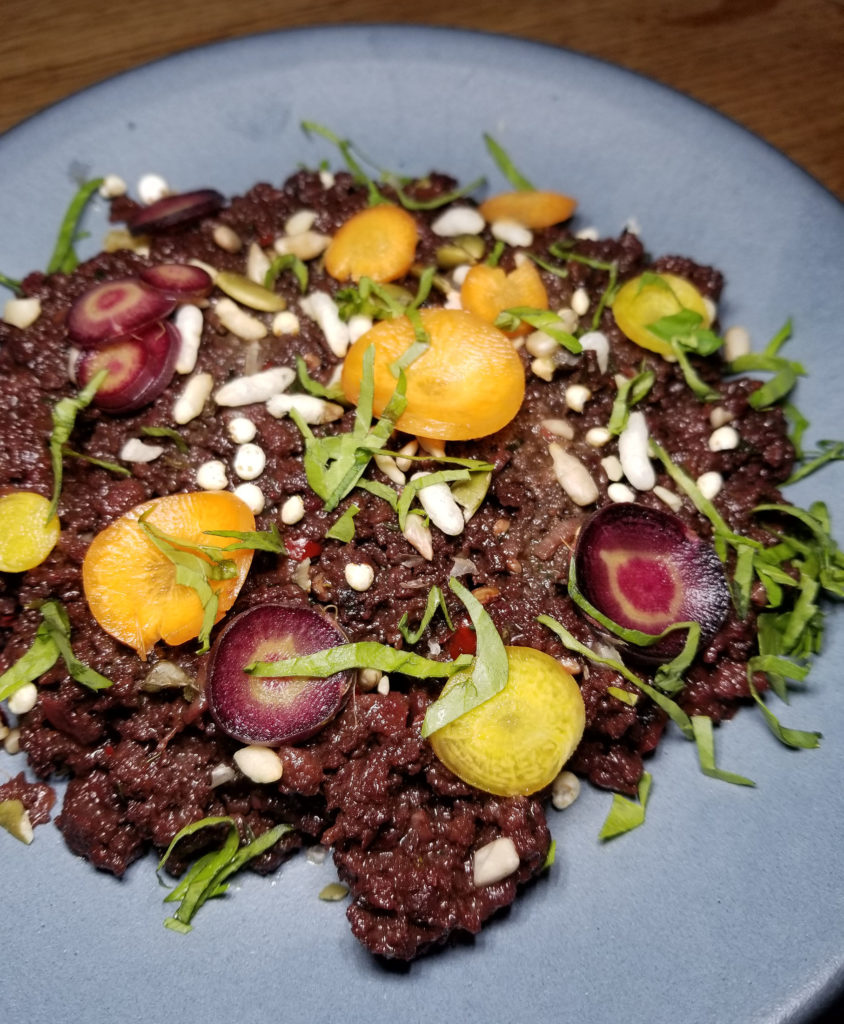
Next up was this really tasty blood sausage dish, which was probably one of the best blood sausage plates I’ve ever had. It was not encased, not too salty, and mixed with some delicious toasted seeds and oats.
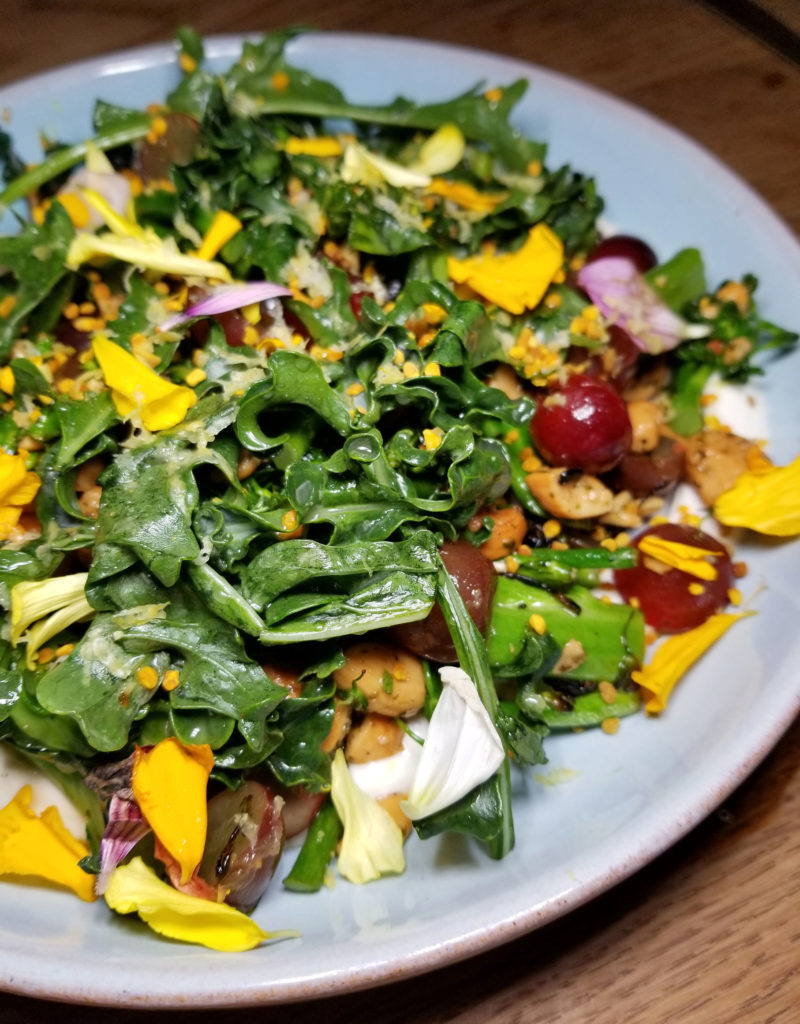
The charred broccolini wasn’t too charred, and mostly stalks and stems as opposed to the florette heads, but I really liked the addition of grapes to this.
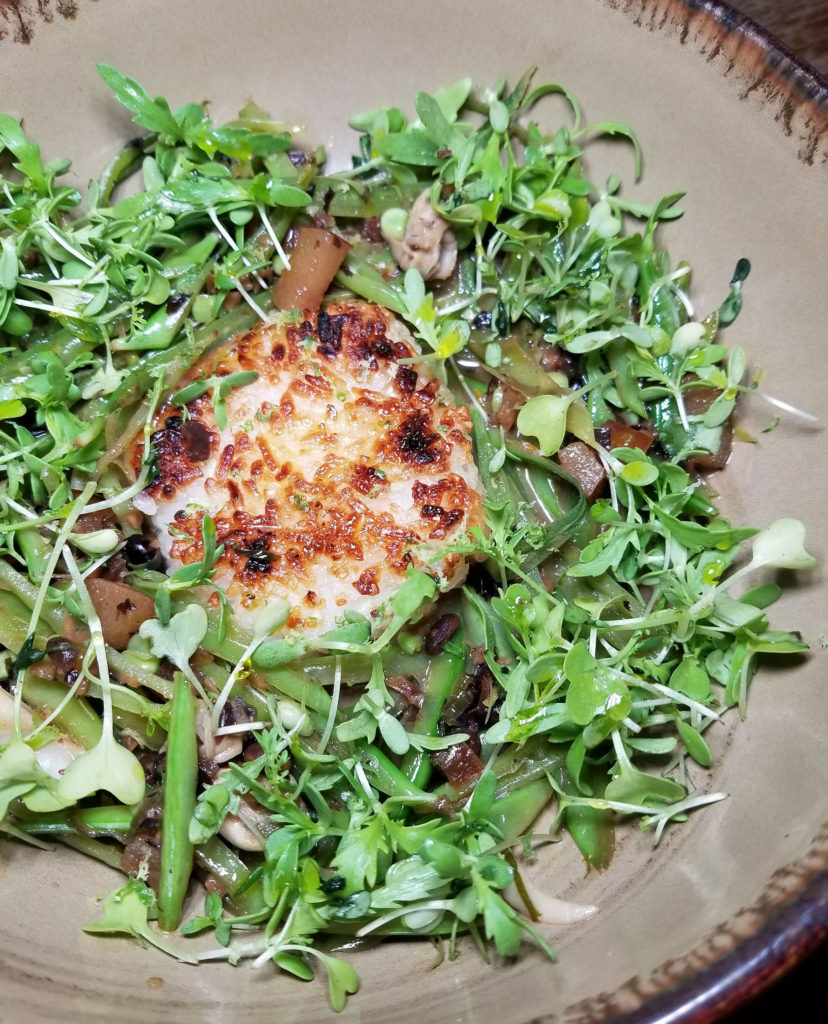
The snap pea salad with clams, black bean and rice cake was nice as well. We didn’t even order it!katskatsu
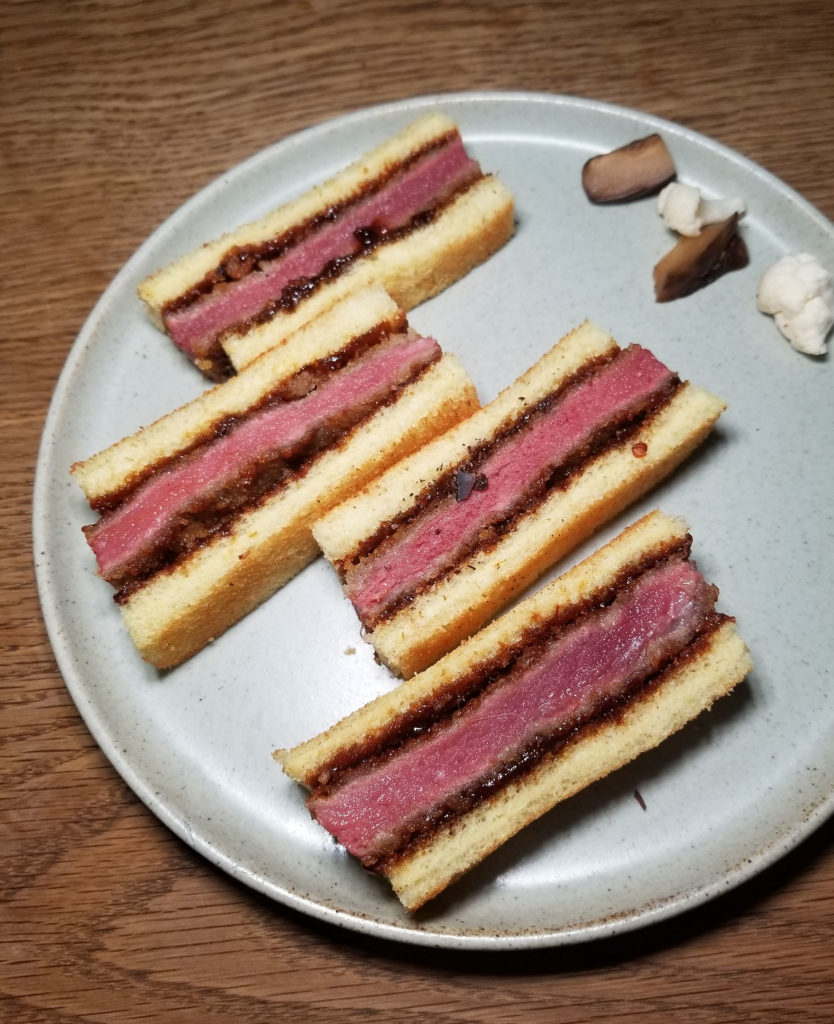
One of the other stars of the night was this iberico “katsu sando” pork sandwich. These things are getting popular in NYC, typically with expensive wagyu beef, but this pork version was excellent and we didn’t blow the bank account to try it.
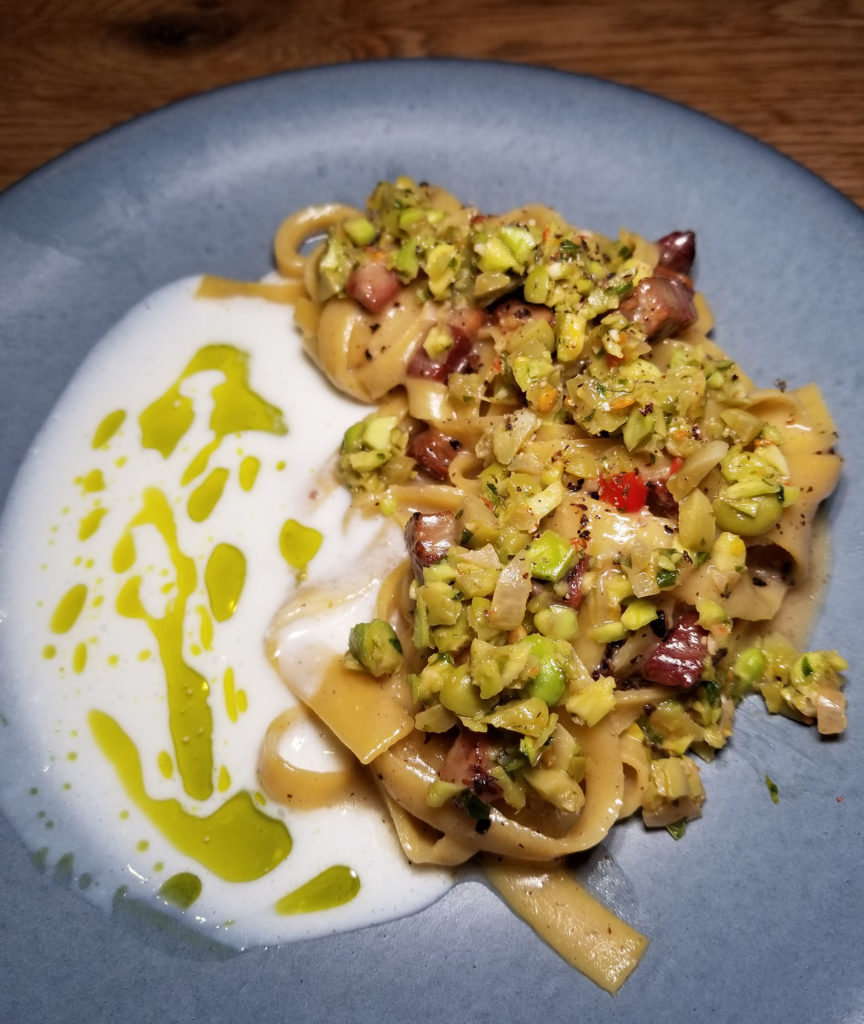
Next up was lamb belly pasta, which was really nice and reminded me of the killer pasta dish my wife made with minced lamb belly.
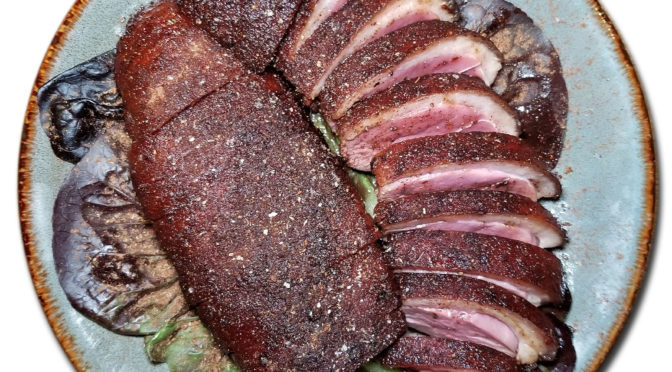
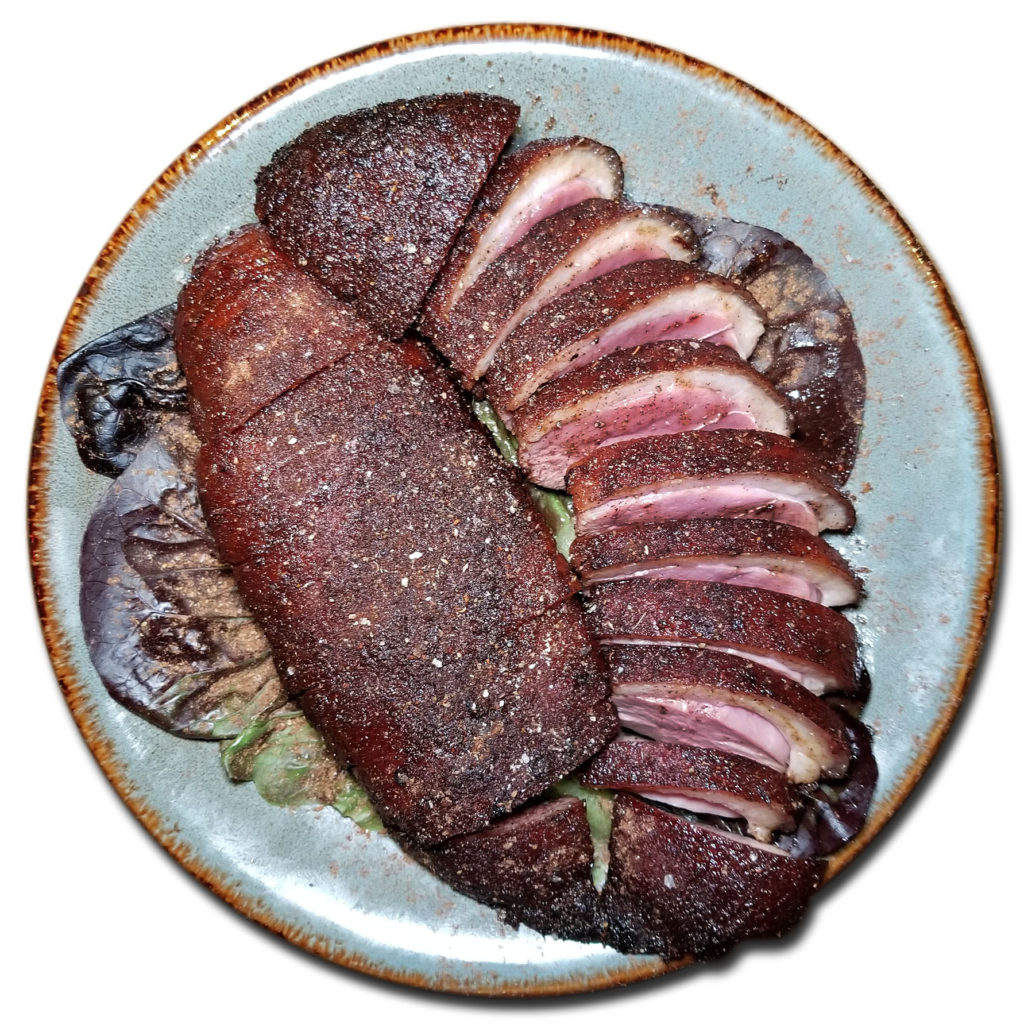
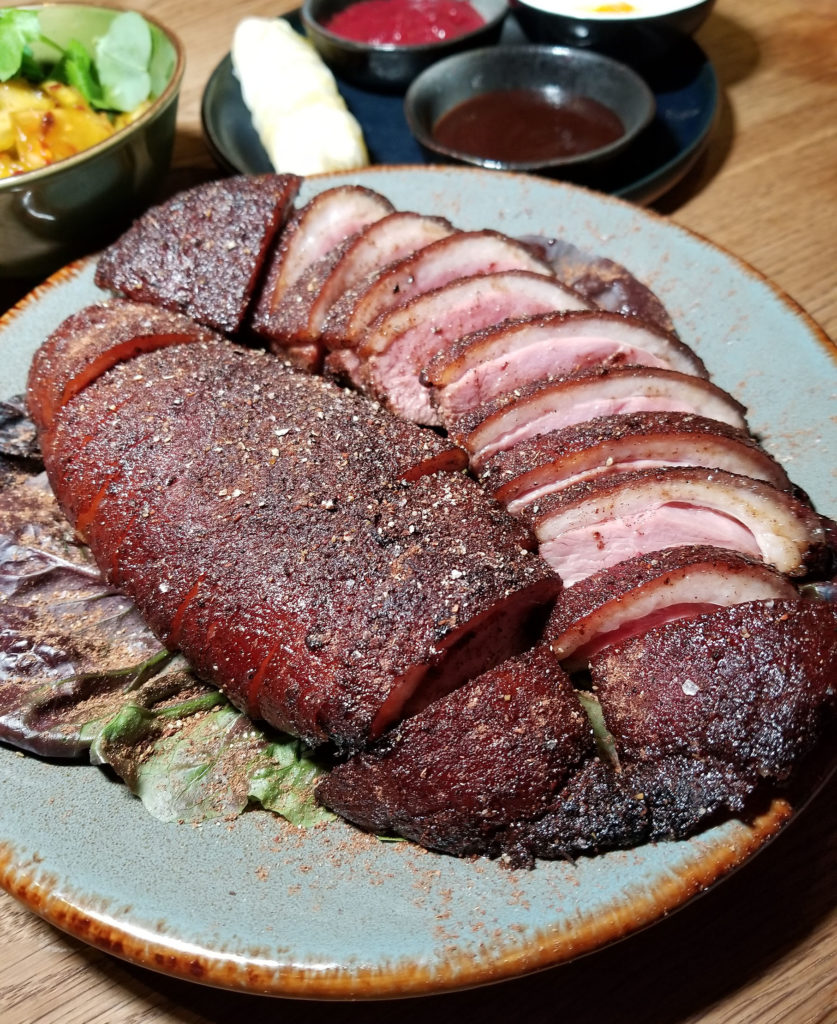
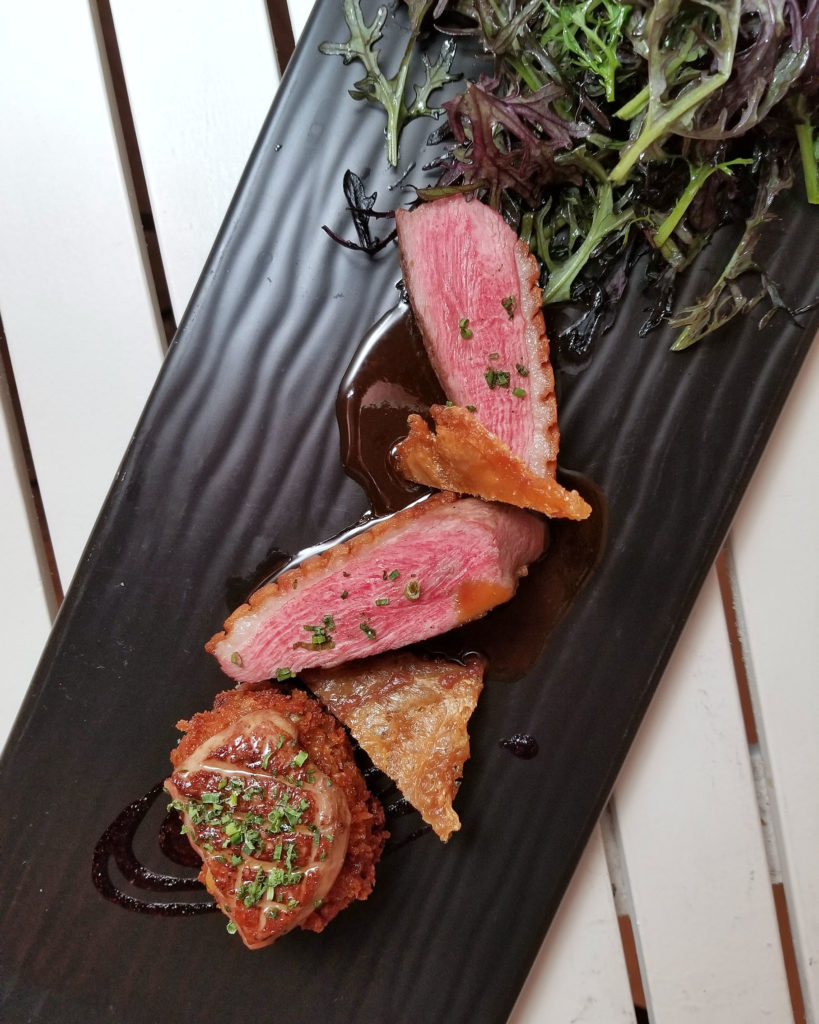
And for the final star dish of the night, the Crown of Duck.
This is a full breast of duck cooked up to a perfectly crusted Chinese five spice -laden crisp.
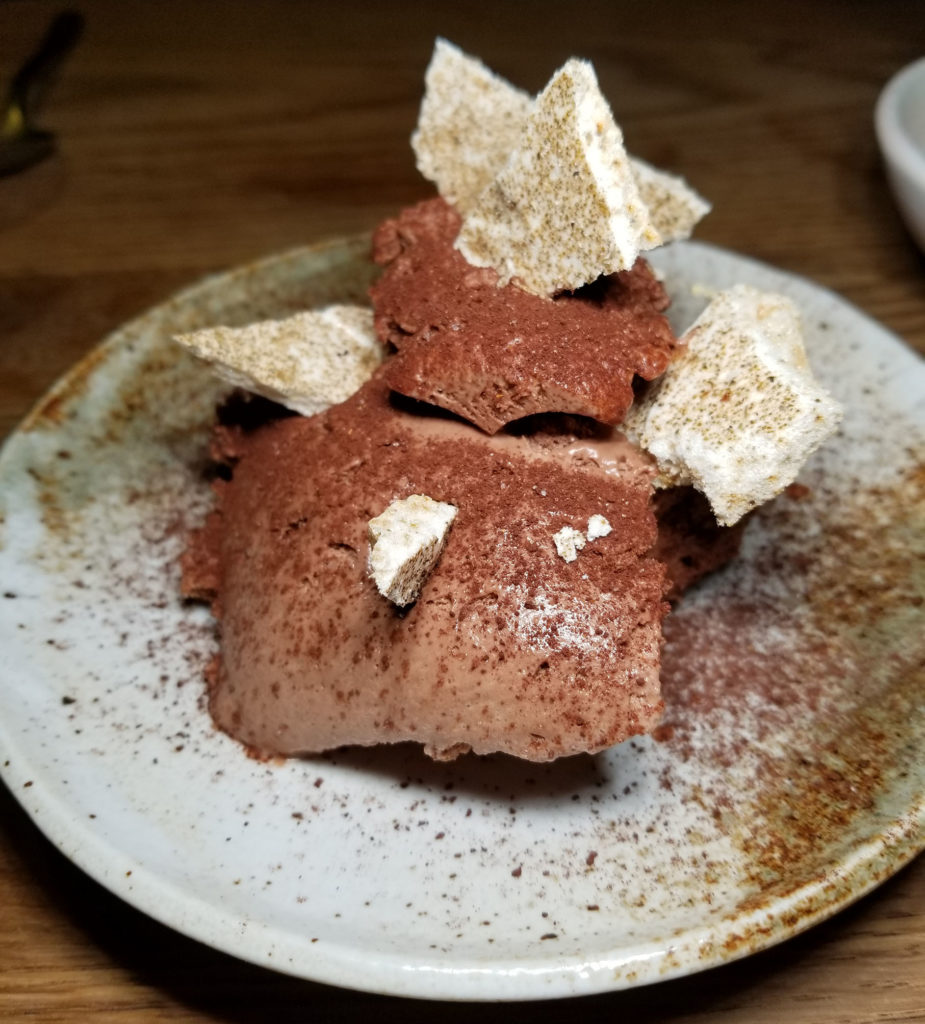
Awesome. We didn’t order dessert, but two items came out to us anyway! Seriously great service here. First was chocolate mousse.
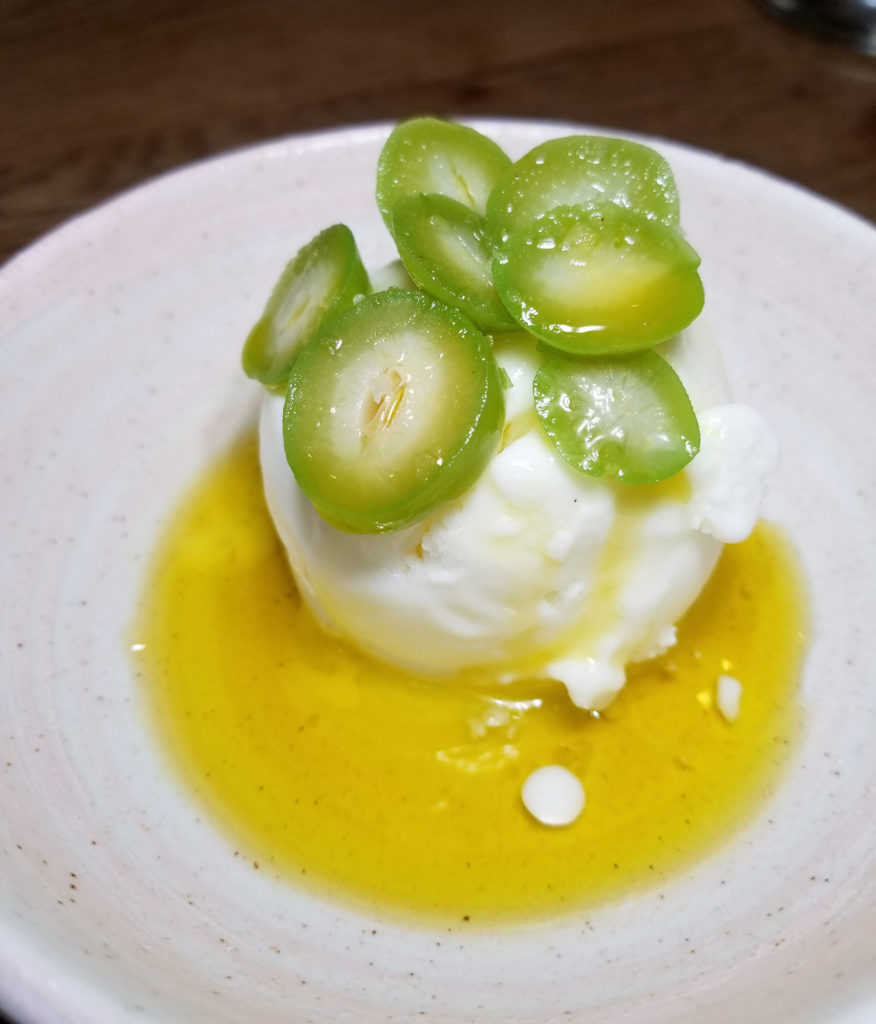
Next was yuzu ice cream with sea salt and olive oil. I loved this!
I will definitely be back here to try more dishes, and to try the menu as it changes with each season.
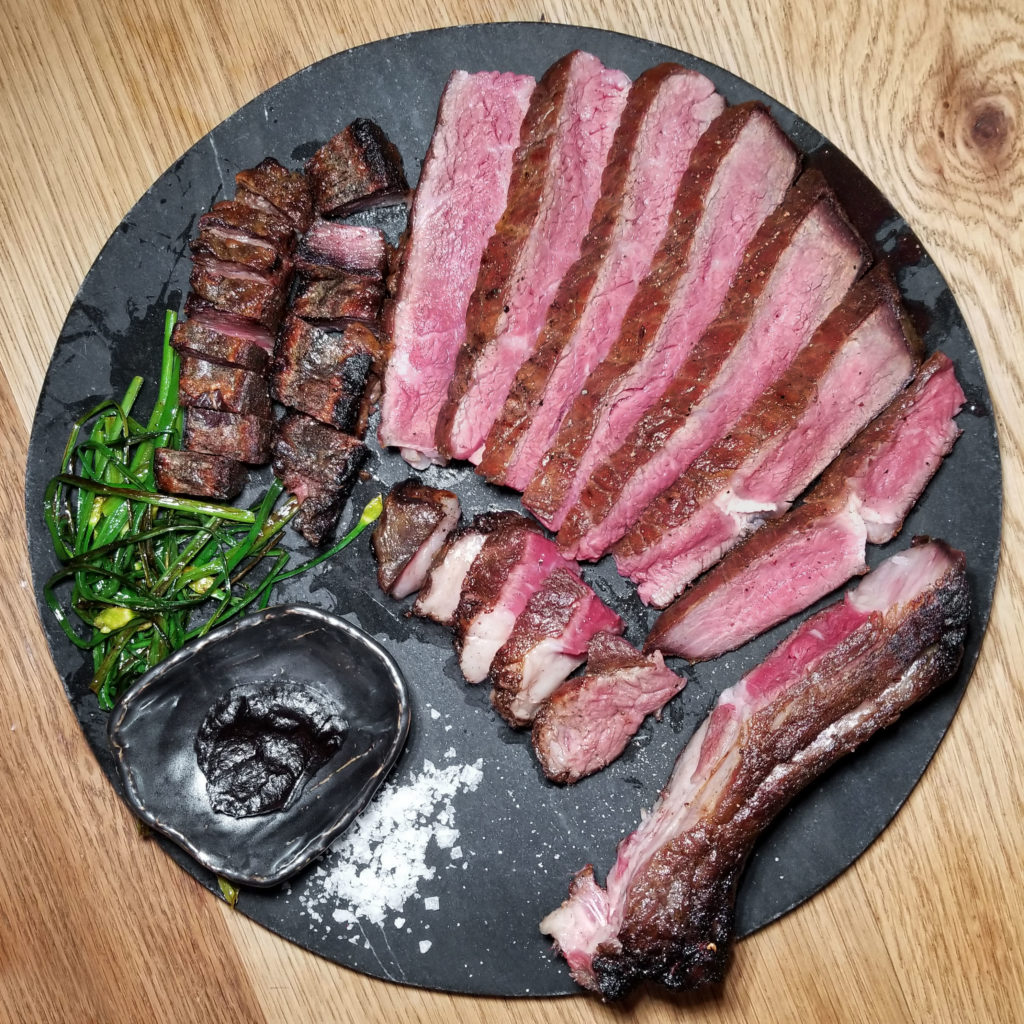
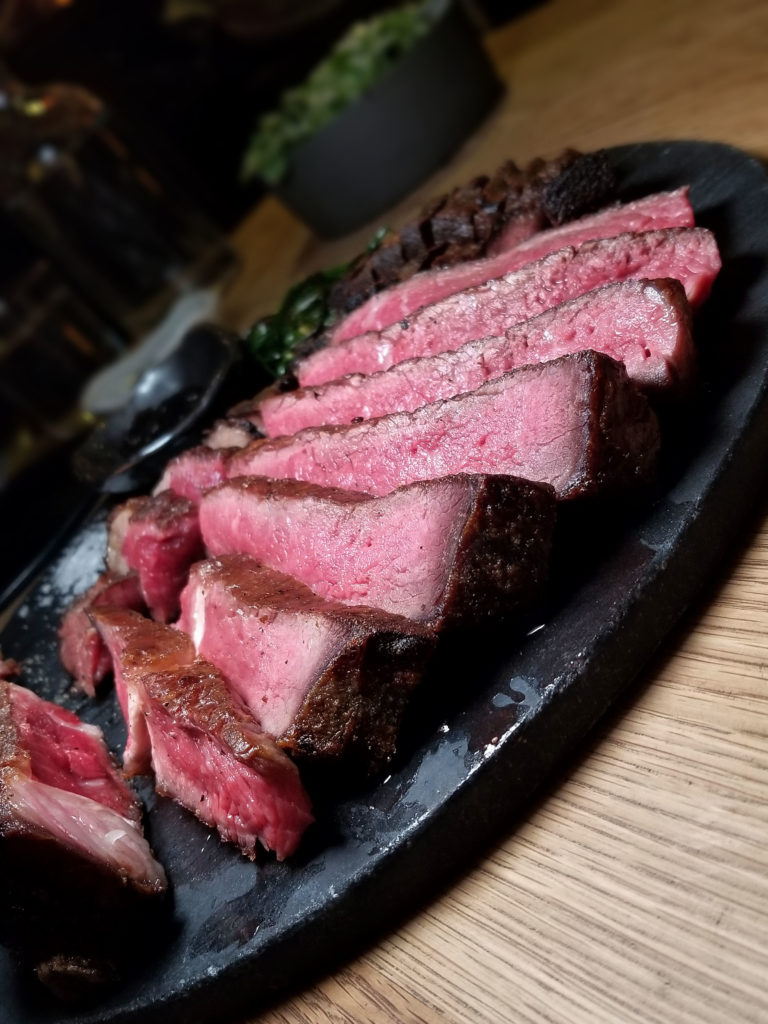
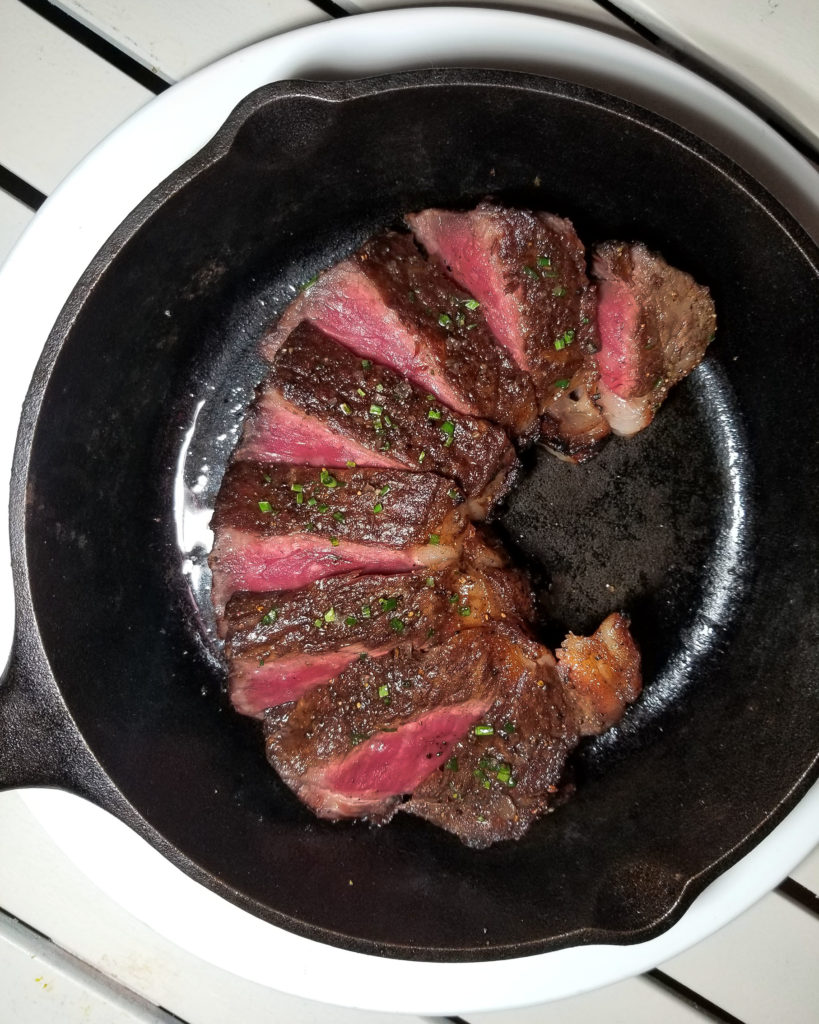
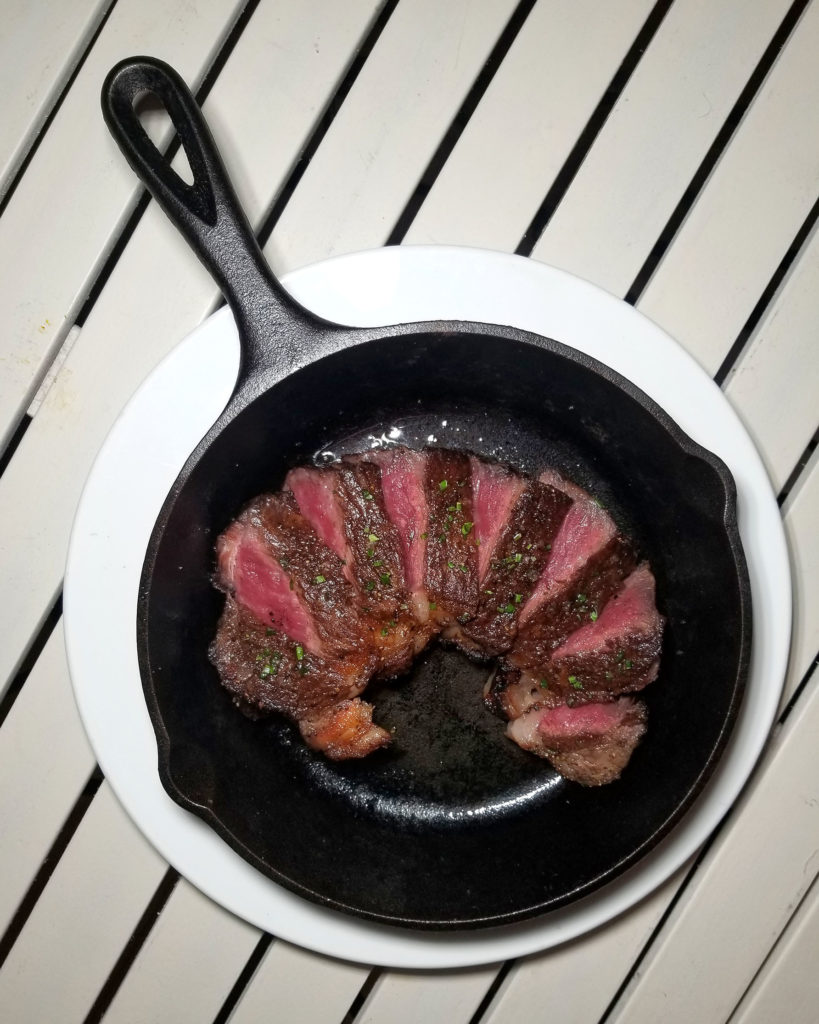
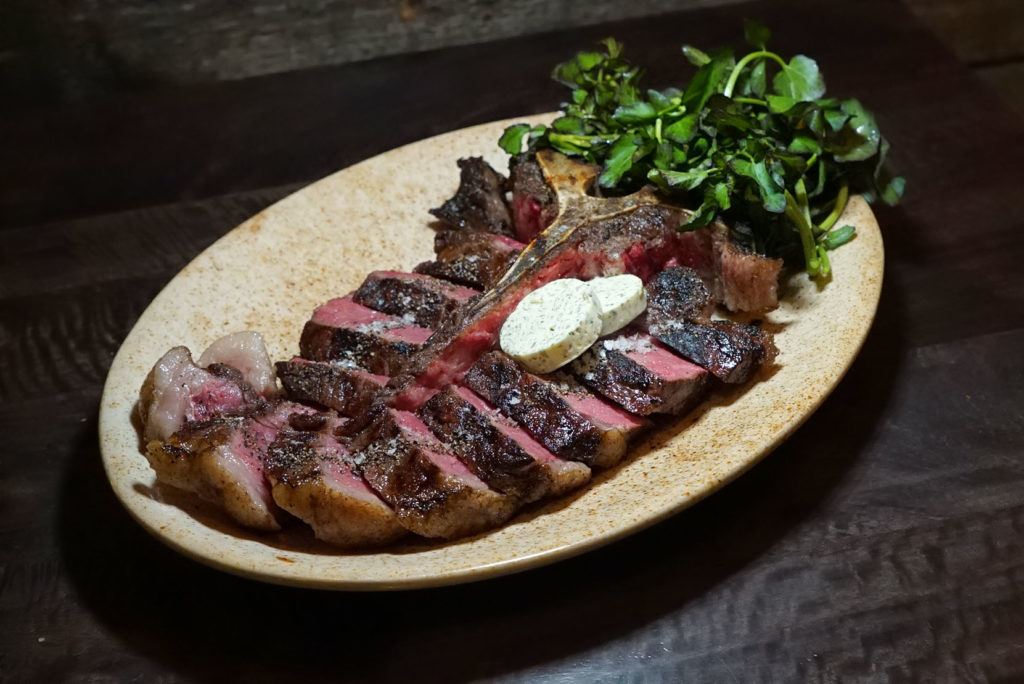
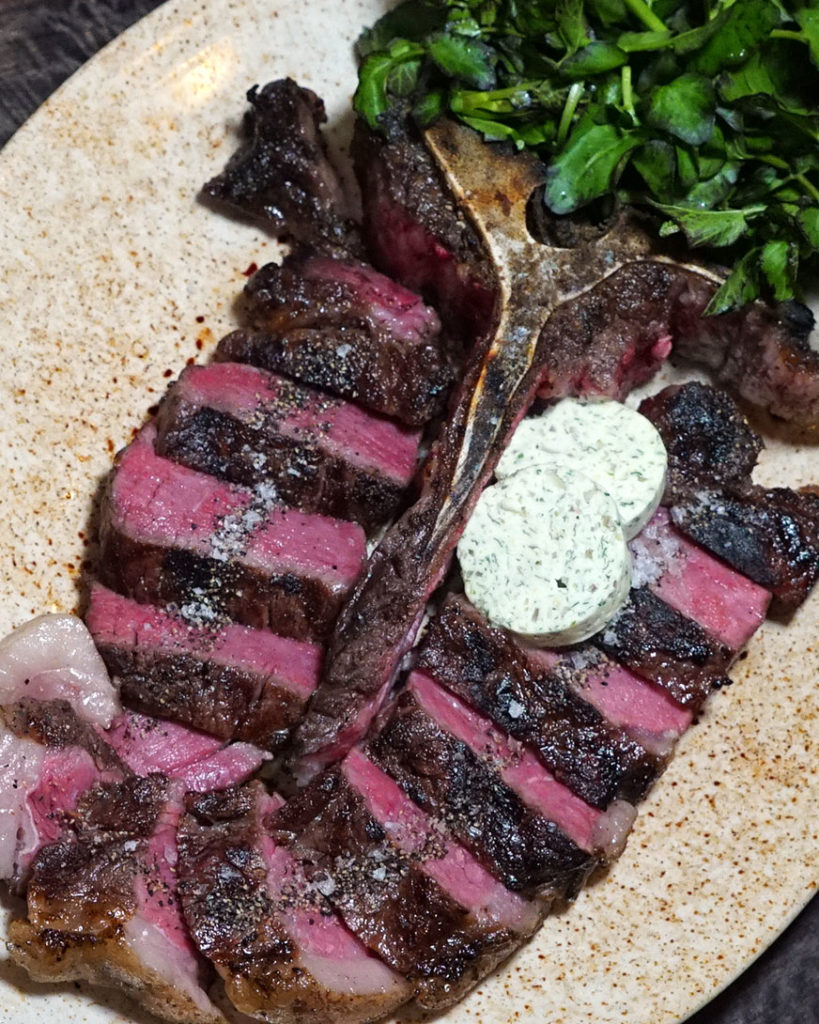
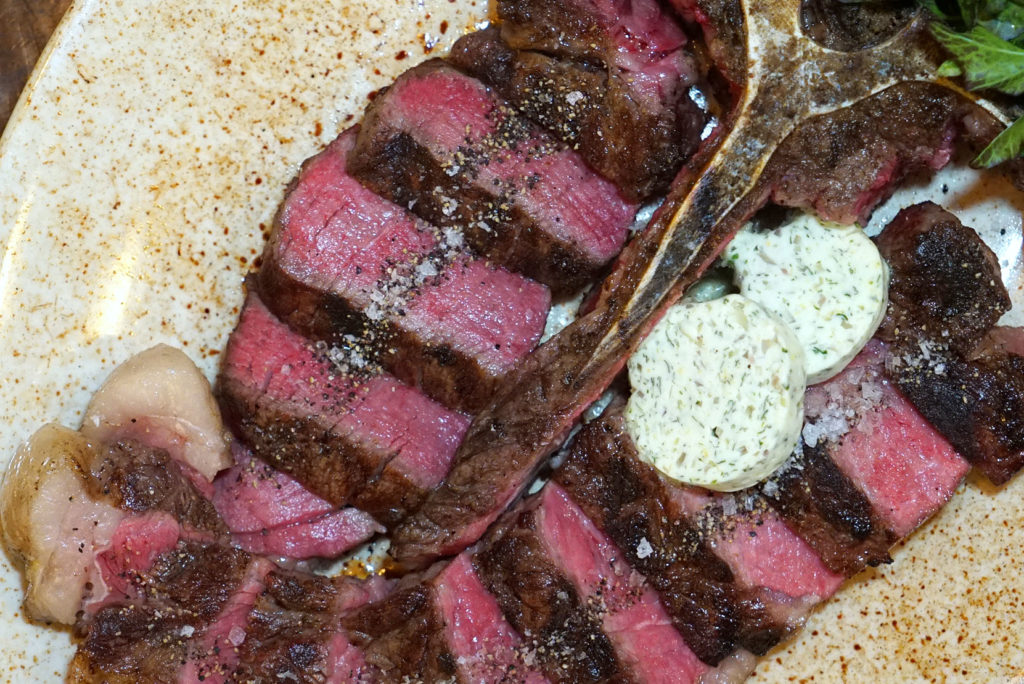
The cote de boeuf was 8/10. Nice aged flavor.
The price tag was just too high (about $186). I took a point for that.
Banzarbar is a tiny speakeasy on the second floor of Freeman’s.
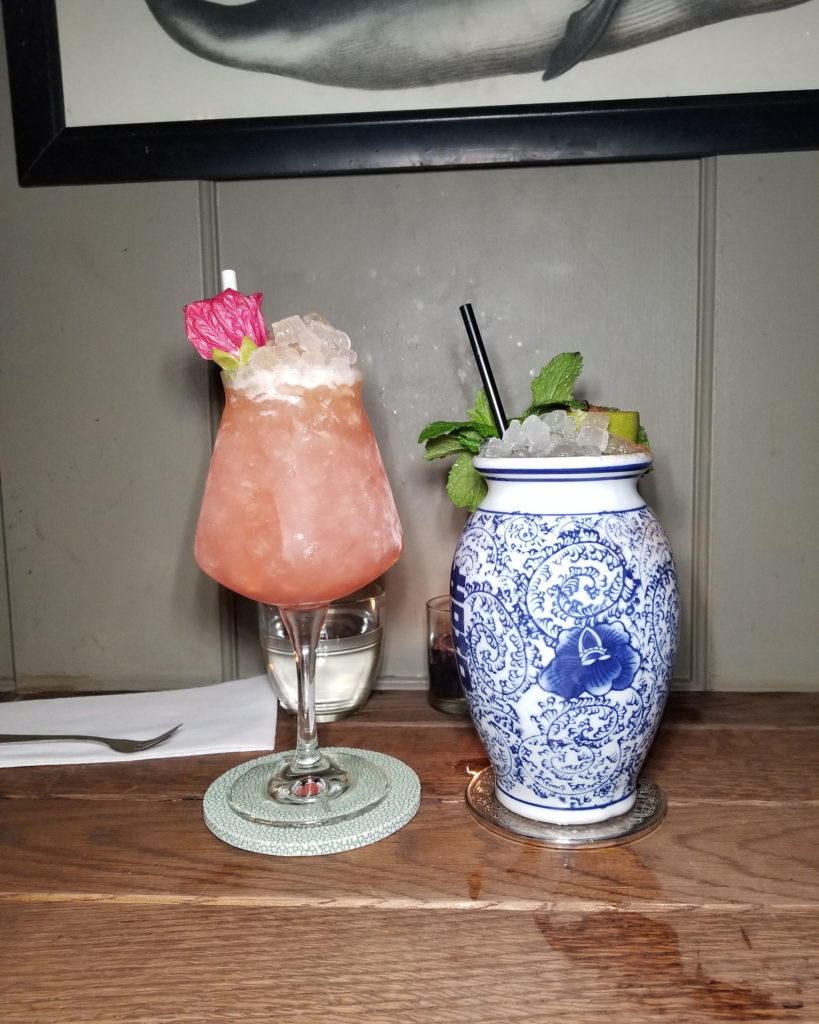
Behind a sliding wood door lives a dark, cozy bar with a handful of small tables. The food menu is slim. A handful of apps, an entrée or two, and a small tasting menu. The specialty cocktails are truly special. My wife and I tried three:
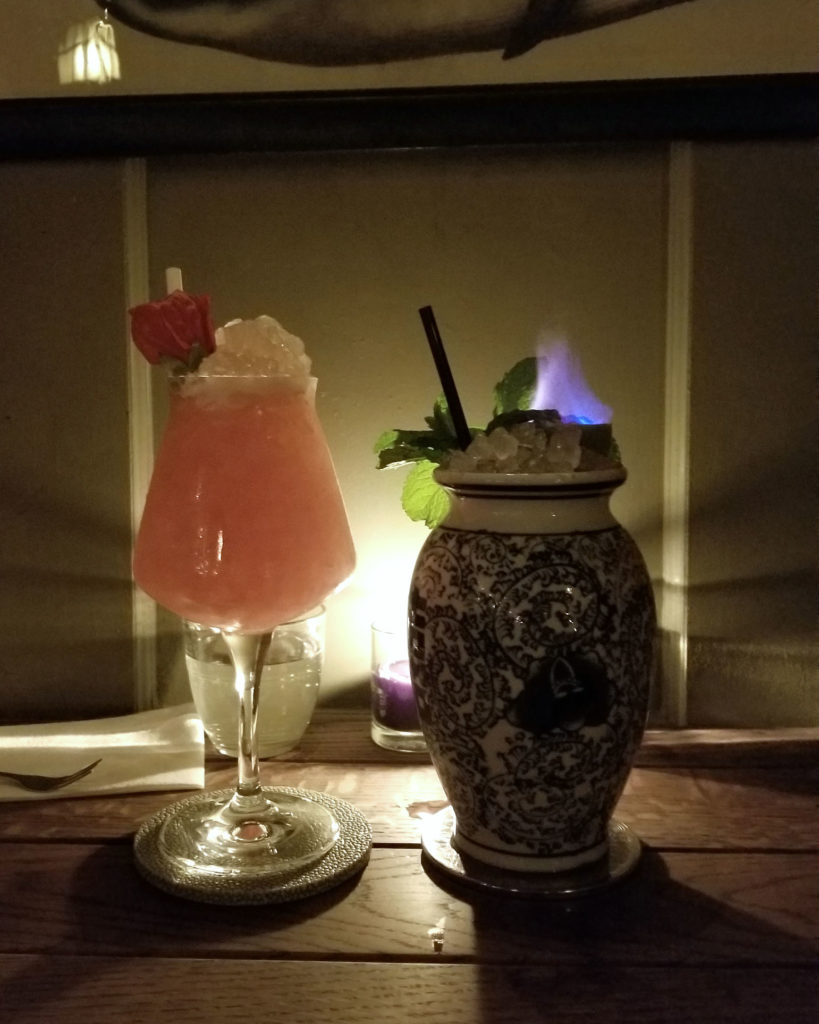
Shackleton’s Urn: old tom gin, navy strength gin, Jamaican rum, green chili, aperol, passion fruit, cinnamon, peach and lime. This one comes to the table on fire.
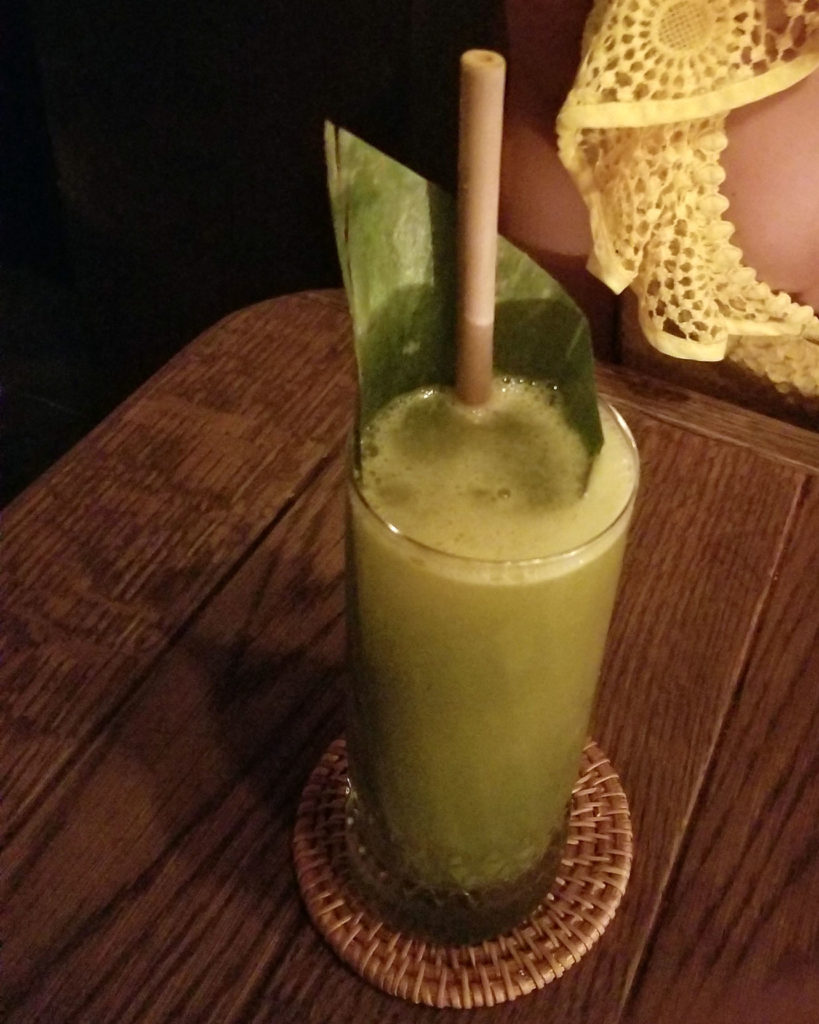
Tour Through Khari: tequila, mescal, vermouth, turmeric, curry leaves, ginger and lemon. This one is dusted with flammable spices and ignited before your eyes at the table.
All were excellent, really well balanced and both beautifully and uniquely presented.
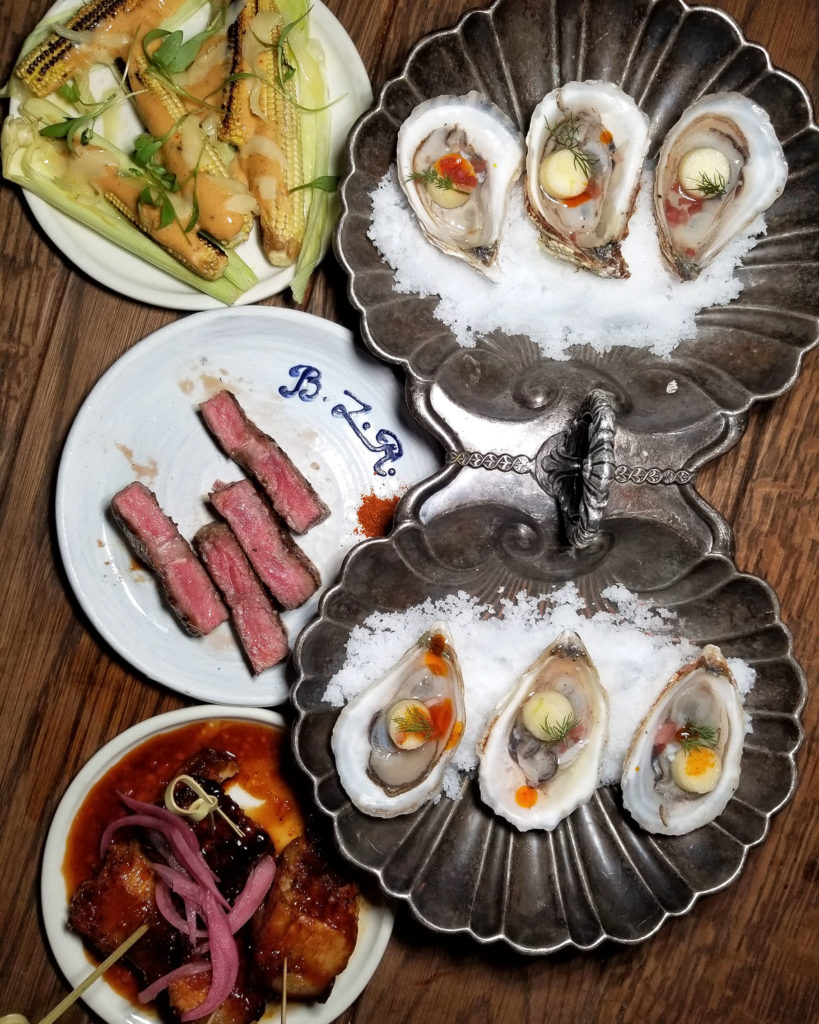
We decided to forego the tasting menu. We ordered four appetizers:
A half dozen oysters, braised pork belly, baby street corn and 40-day dry-aged beef. As you can see from the photo, the beef app is a bit pathetic for the $22 price tag. Four measly slices. While it was tasty, I liked the pork belly the best, and felt that it was a much fairer value at $15. The oysters and corn were both delicious despite being a bit overpriced as well.
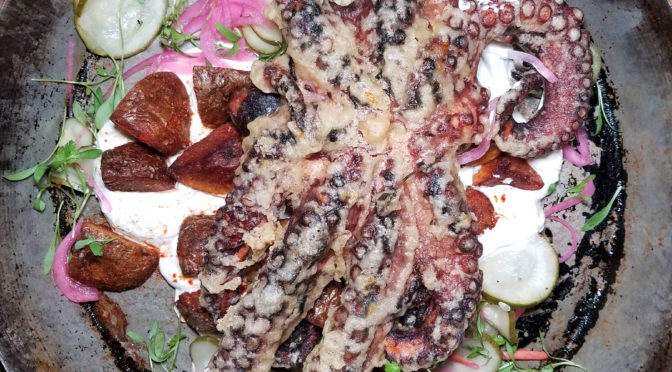
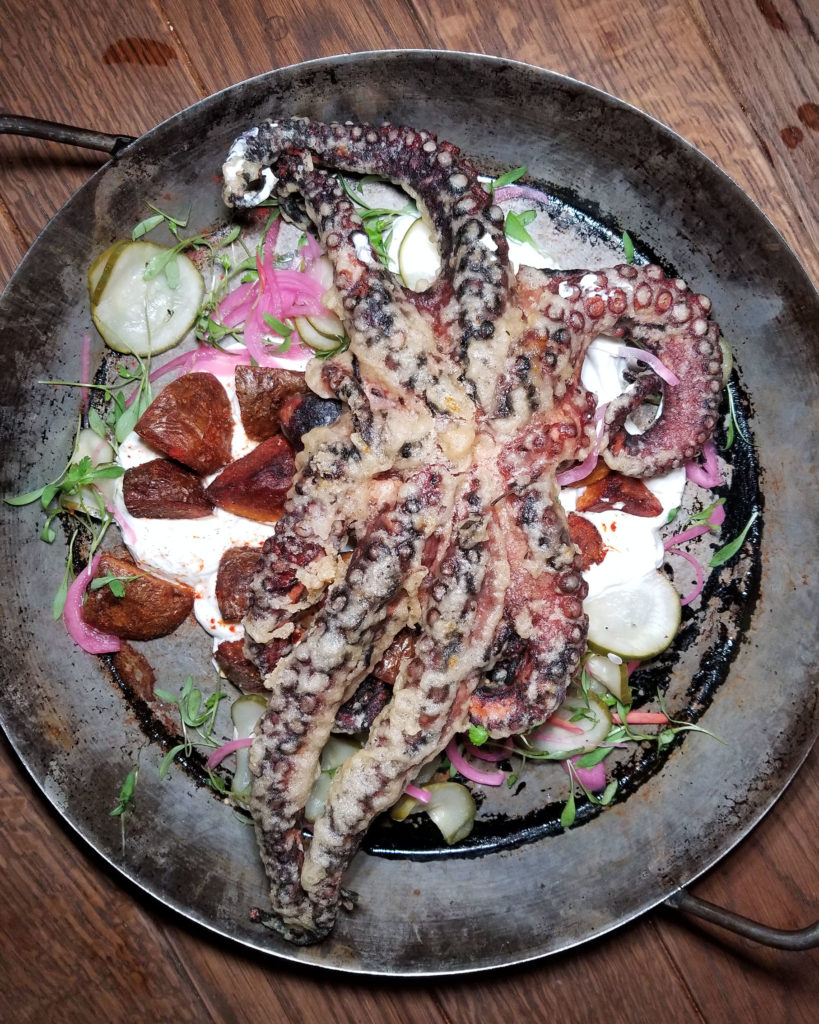
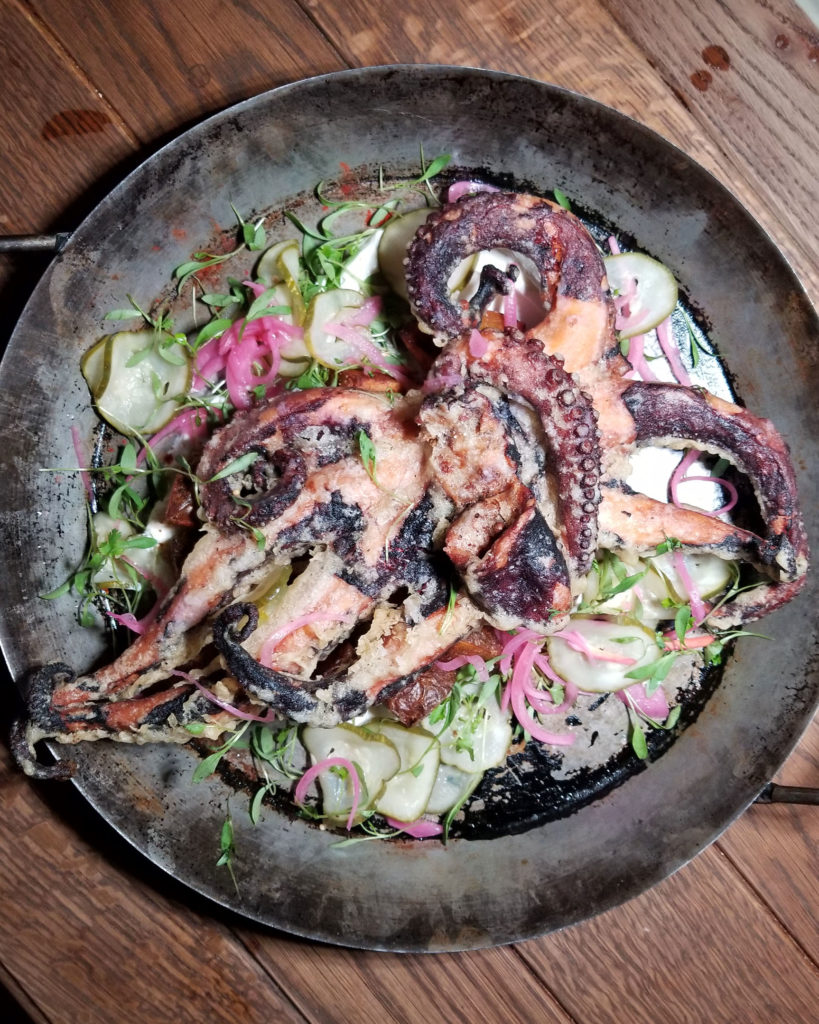
We had The Kraken for our meal. This is a whole tempura fried octopus, accompanied by a yogurt sauce, roasted potatoes, pickled and pickled red onion.
This is easily one of the best dishes I’ve had all year. This joint is owned by the same folks as Le Turtle, just around the corner. They, too, have an incredible octopus dish, so it’s no surprise that they nailed it here as well.
The flesh was tender but meaty. The batter was crisp and well-seasoned. It was truly amazing. I highly recommend this dish, but a pro tip: make an early reservation if you plan to order this. There are only a few available each night, and they sell out very fast.
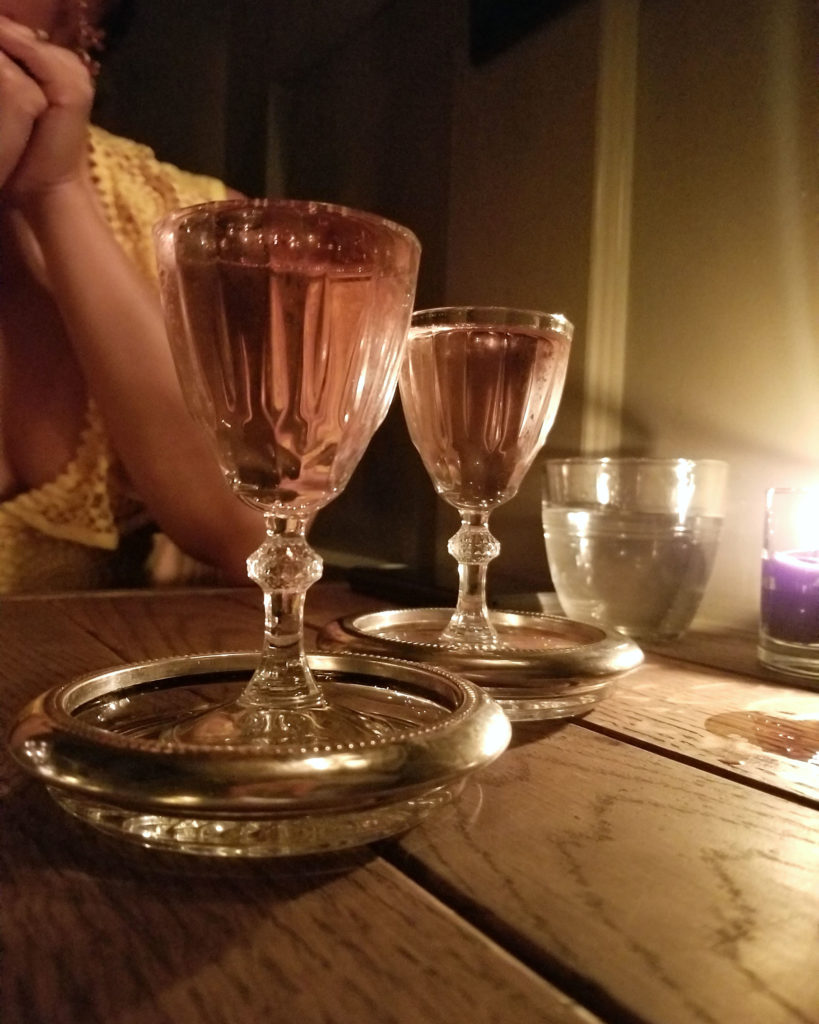
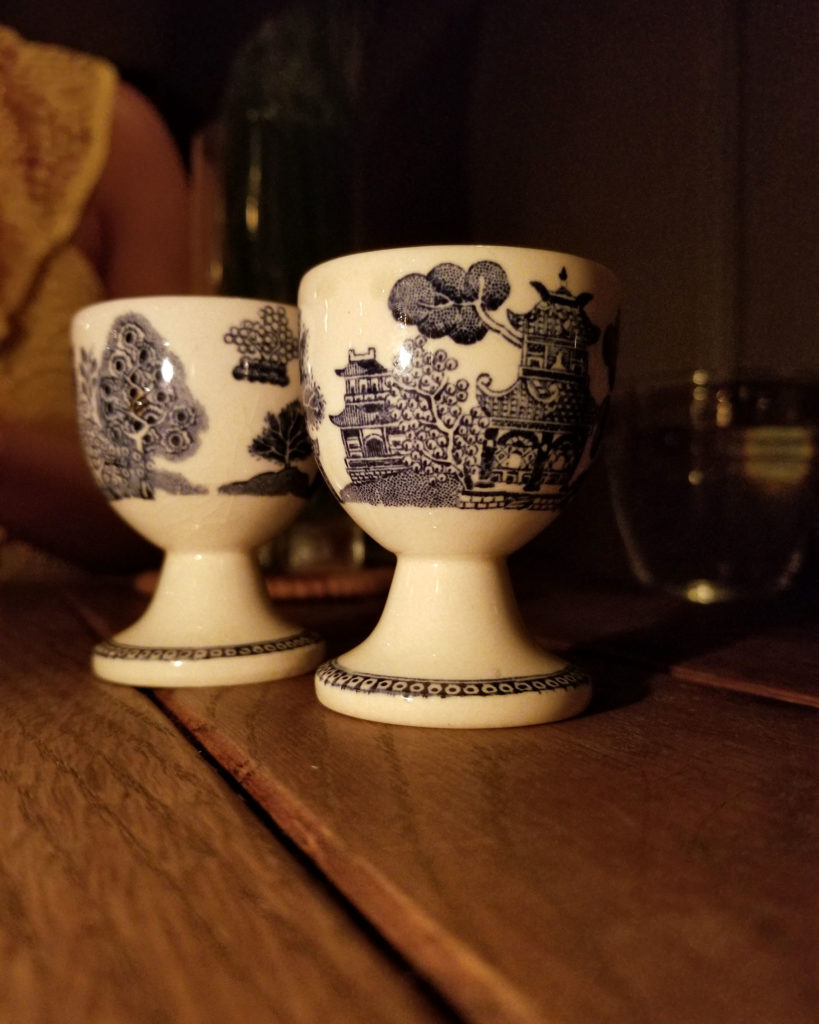
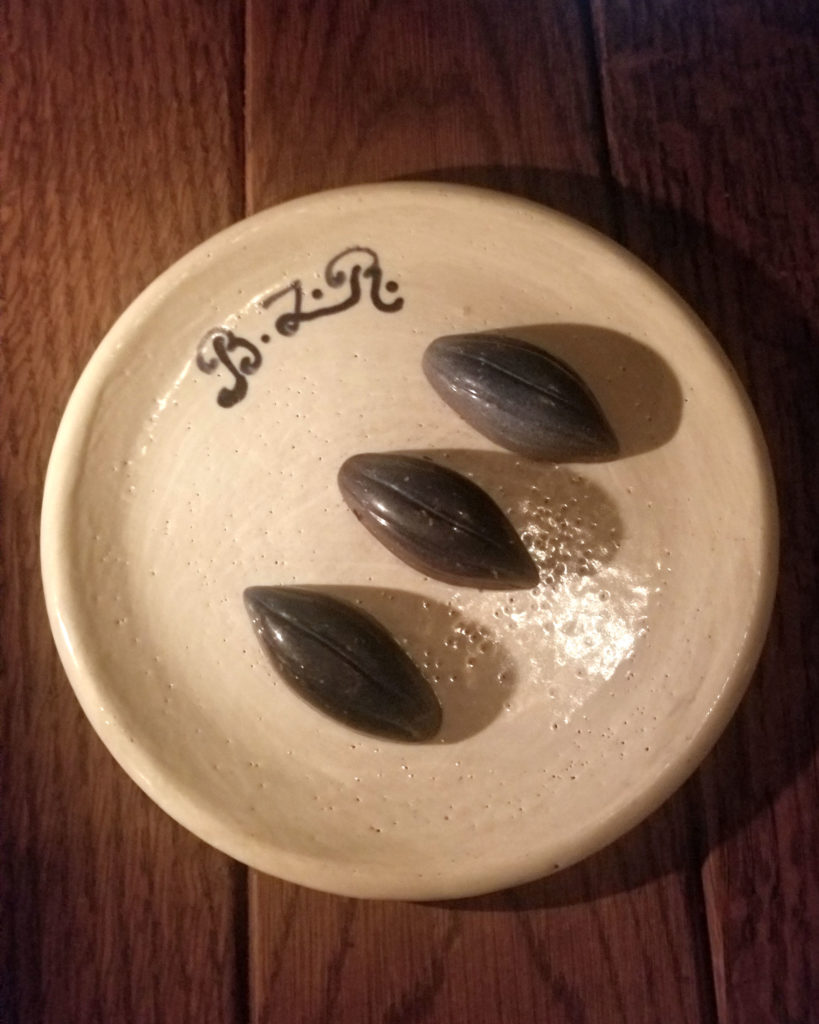
The staff was really kind. They brought us out two complimentary small drinks, and a plate of three dessert chocolate bon bons as well.
My wife and I plan to go back to try the tasting menu soon, so stay tuned for more on this spot.
Brasserie Seoul is a Brooklyn French restaurant where Chef Park is using Korean ingredients to execute his dishes.
I hesitate to call this ppace fusion, since the menu is decidedly French. However I suppose the heavy use of Korean ingredients takes it comfortably into that category.
I came in with two other Instagrammers to shoot some photos of their popular dishes. Here’s what we had:
FIRST ROUND
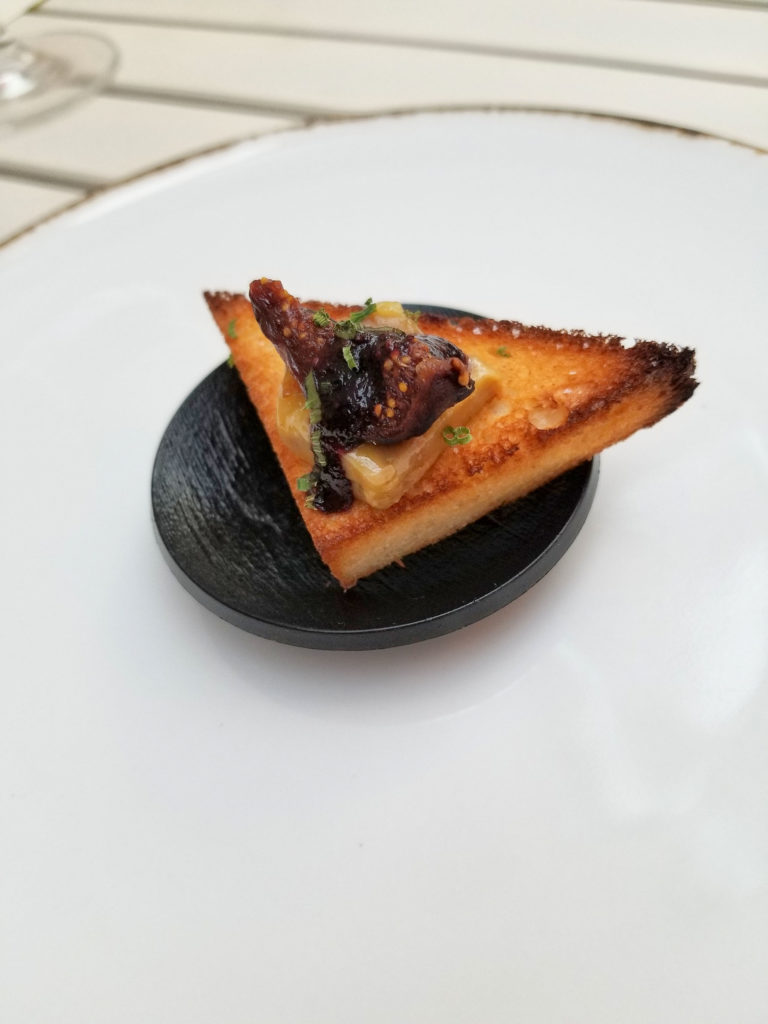
Foie Gras Amuse: cherry puree and grilled grapes on brioche.
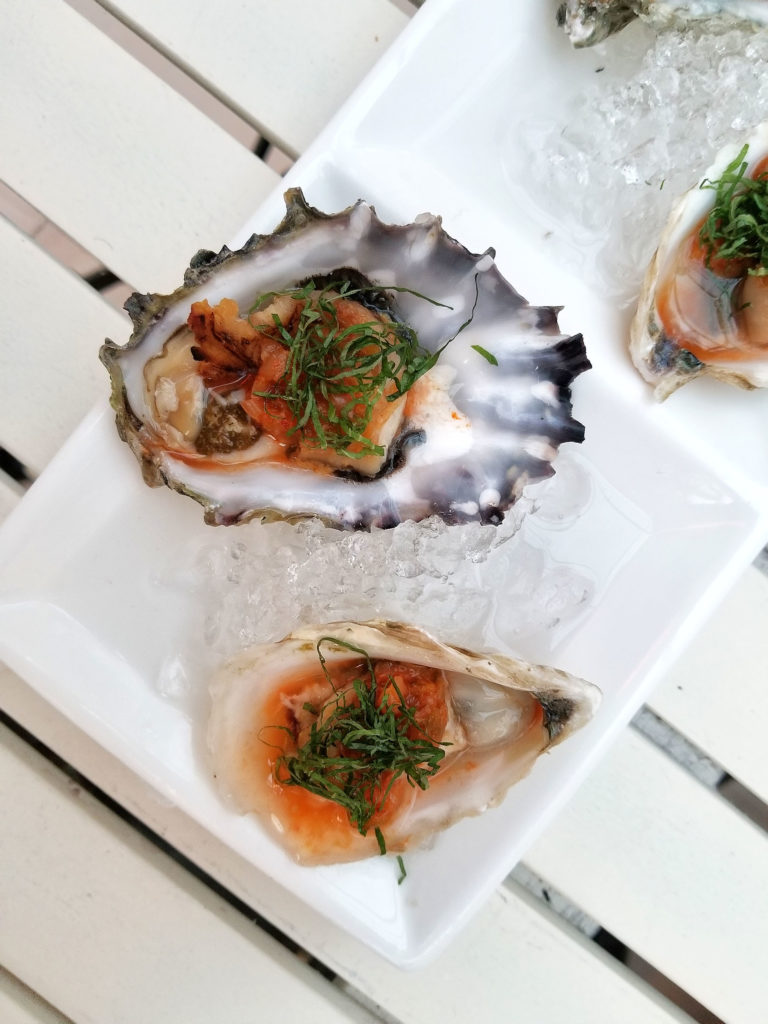
Oysters with Pork Belly: five spice pork belly and chopped kimchi dressing both east and west coast varietals.
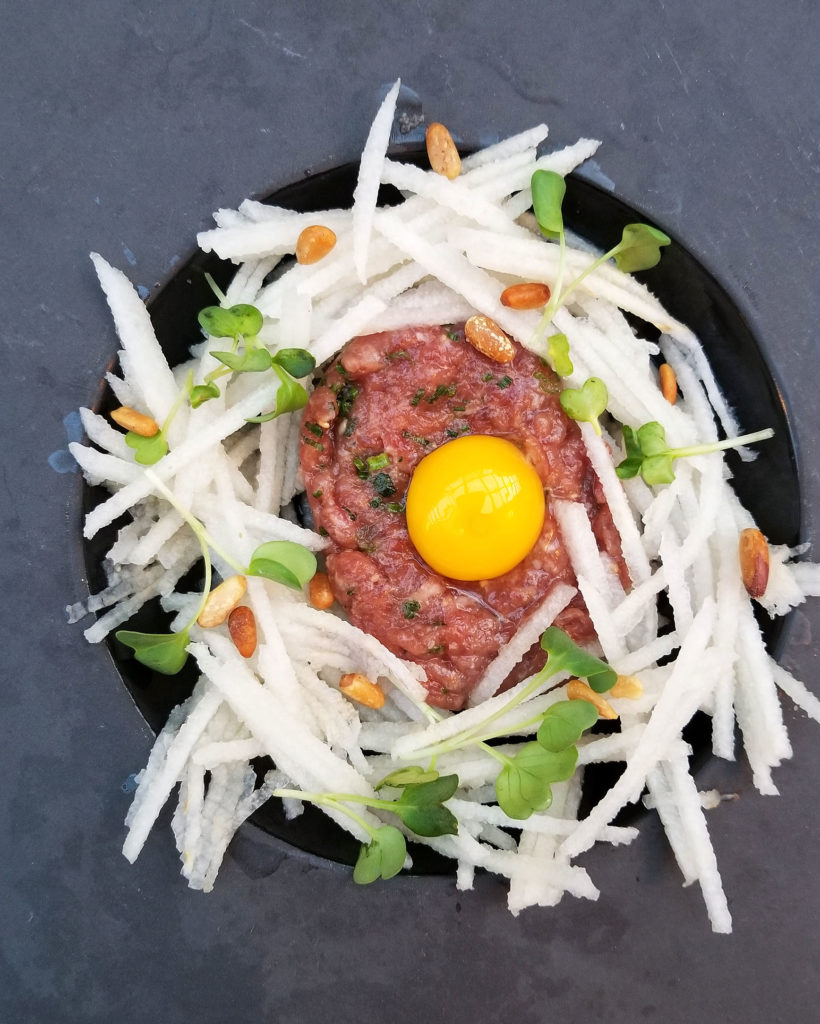
Wagyu Beef Tartare: wasabi oil and Korean pear with pinenuts and quail egg.
That was really good. Probably my favorite dish of the night.
SECOND ROUND
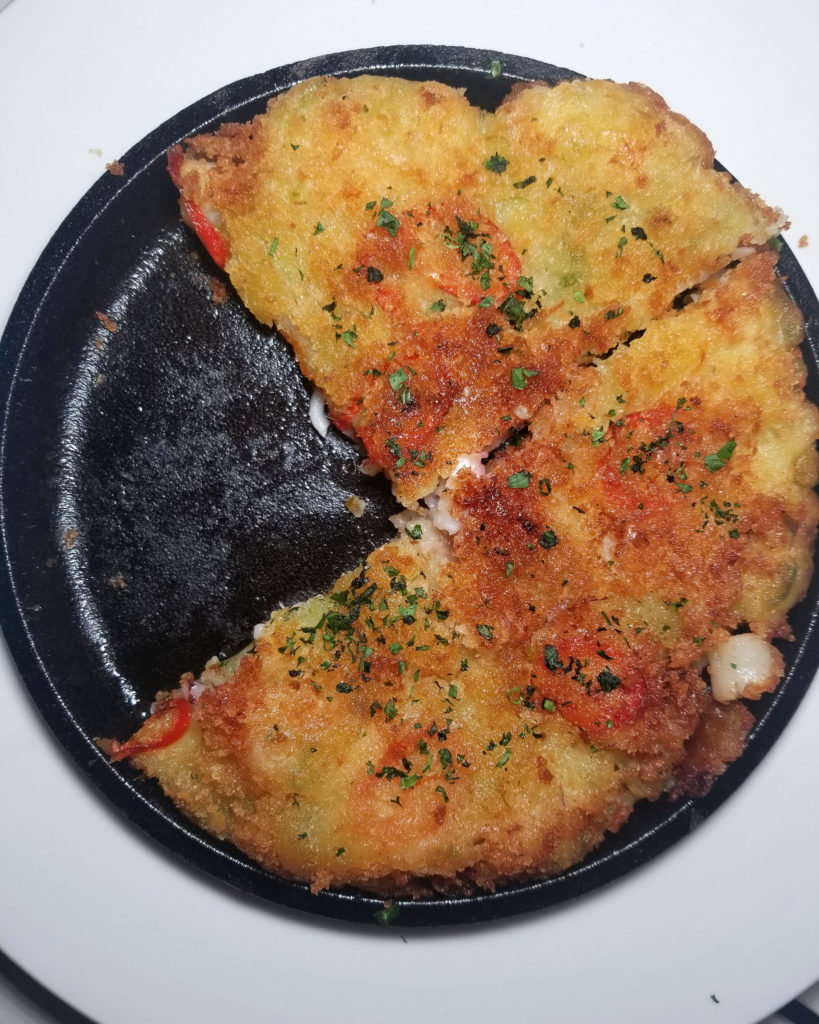
Seafood Pancake: bay scallops, shrimp, squid and scallions with a ginger soy aioli.
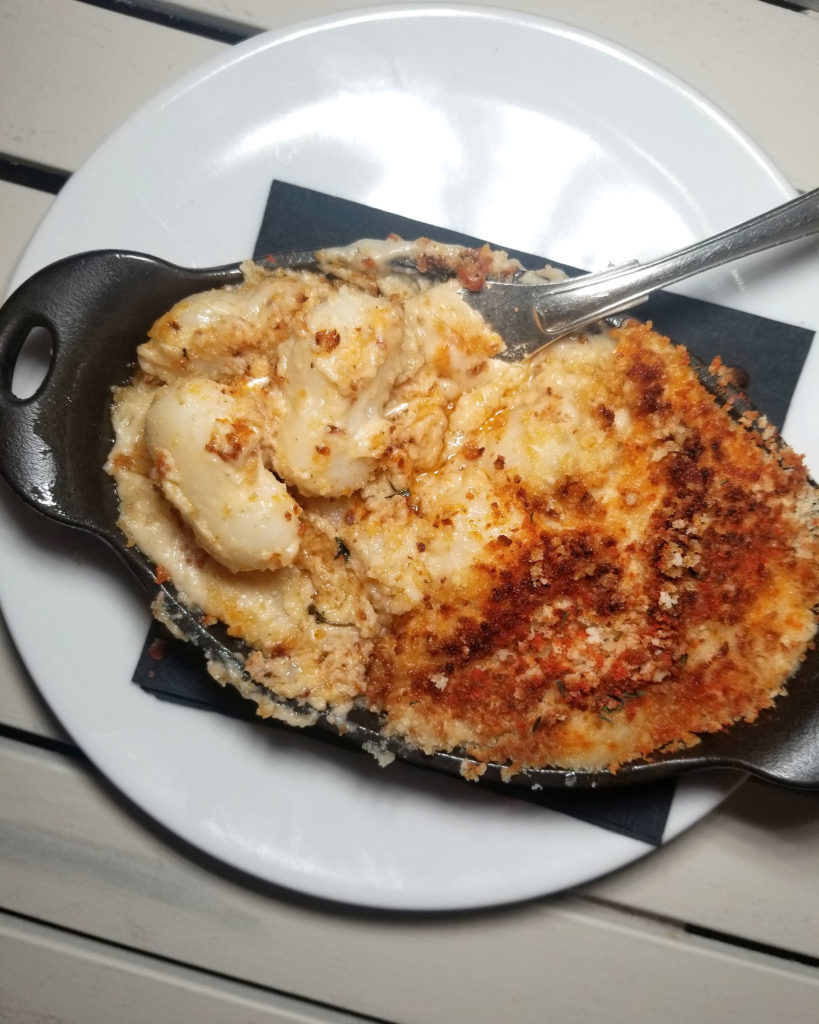
Truffle Tteok & Cheese: rice cakes with three-cheese bechemel, white truffle oil, panko and gochugaru (a red pepper flake blend).
Duck Trio: fried duck confit, breast, crispy skin and foie. More like duck four ways I guess. Blood orange gastrique with cherry puree and candied ginger.
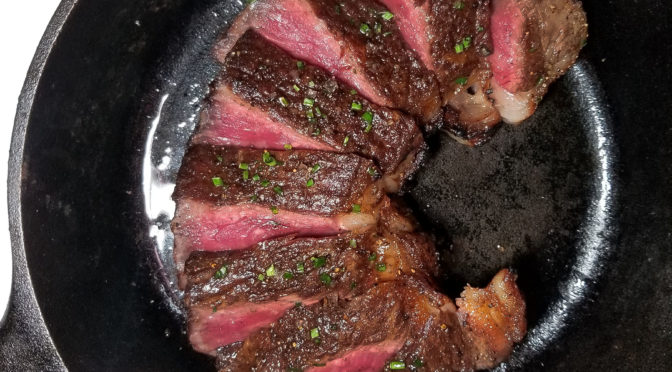
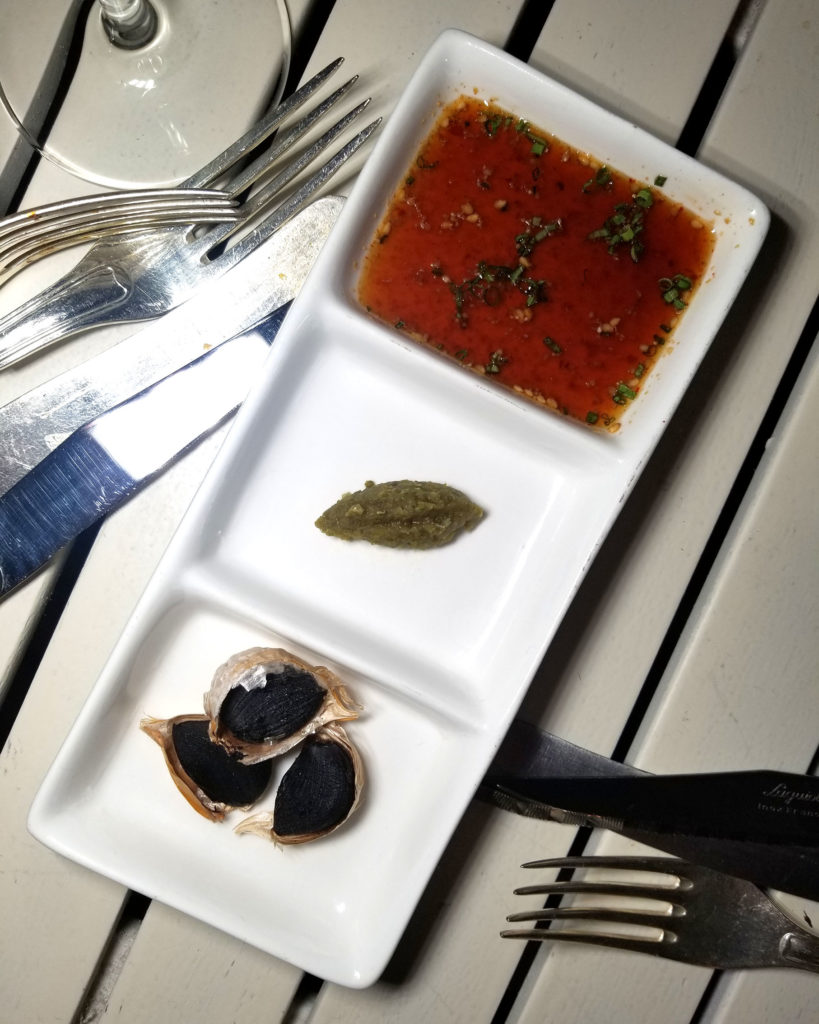
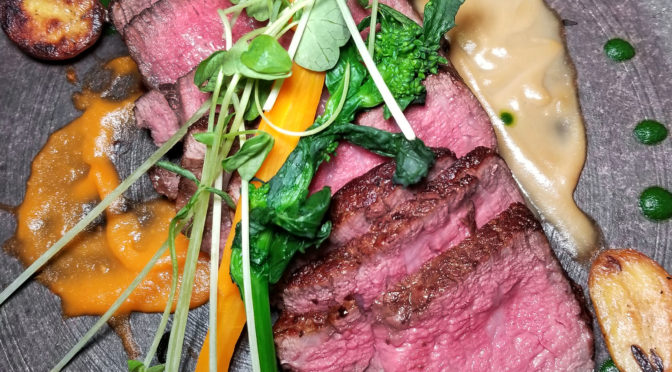
Wagyu NY Strip Steak: black garlic, Korean sea salt, green chili puree and citrus cho ganjang (vinegar soy sauce). 7/10. This was a bit leaner than I expected from wagyu. The flavor was nice, but I’ve had much better prime strips at half the price (this will run you $80).
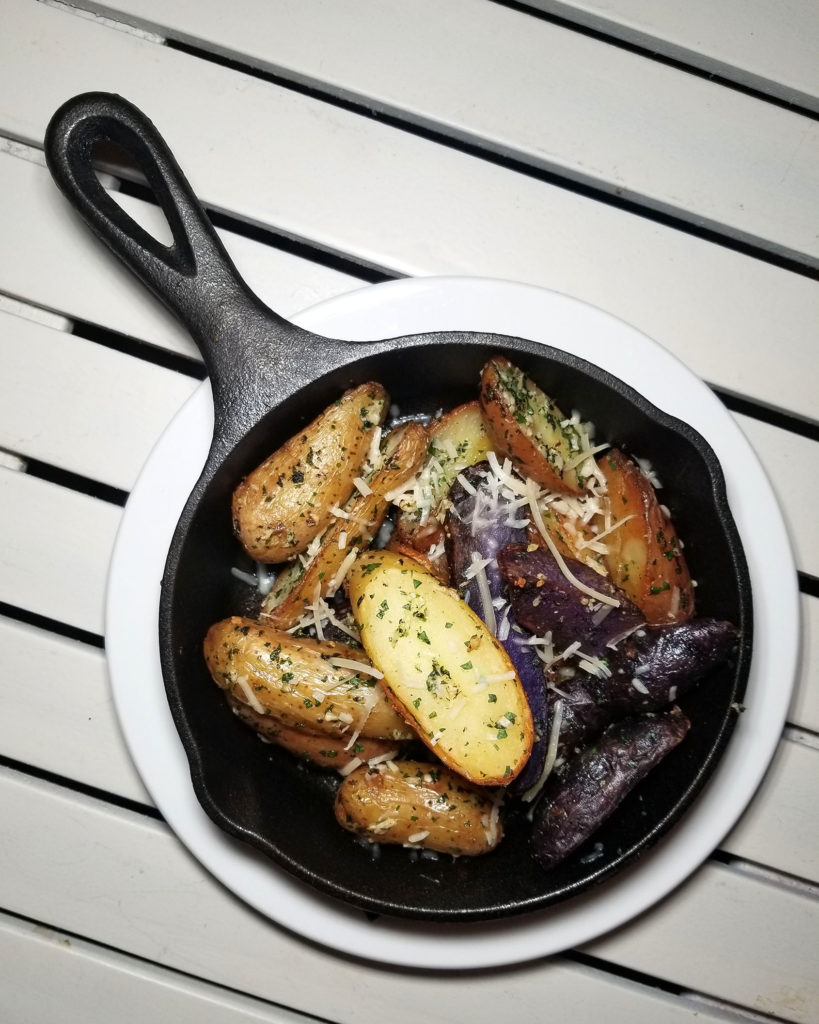
This steak came with roasted fingerling potatoes:
This place is pretty good. I’m not sure I’d hoof it all the way out to Brooklyn for a second visit, but the tartare, seafood pancake, tteok & cheese and duck dishes were all fantastic.
BRASSERIE SEOUL
300 Schermerhorn St
Brooklyn, NY 11217
I was invited into Mifune with my wife to sample some of their meat dishes and post some photos on Instagram. But we started with some cocktails, because Shingo Gokan, the man behind the cocktail menu, is an award winning “mixologist.”
This is the Seven Samurai, which is made with rye, aged sake, East India sherry, bitters and smoke:
Pretty beautiful, and really tasty. The smoke aroma was as intoxicating as the booze, and it was similar to a smoked old fashioned.
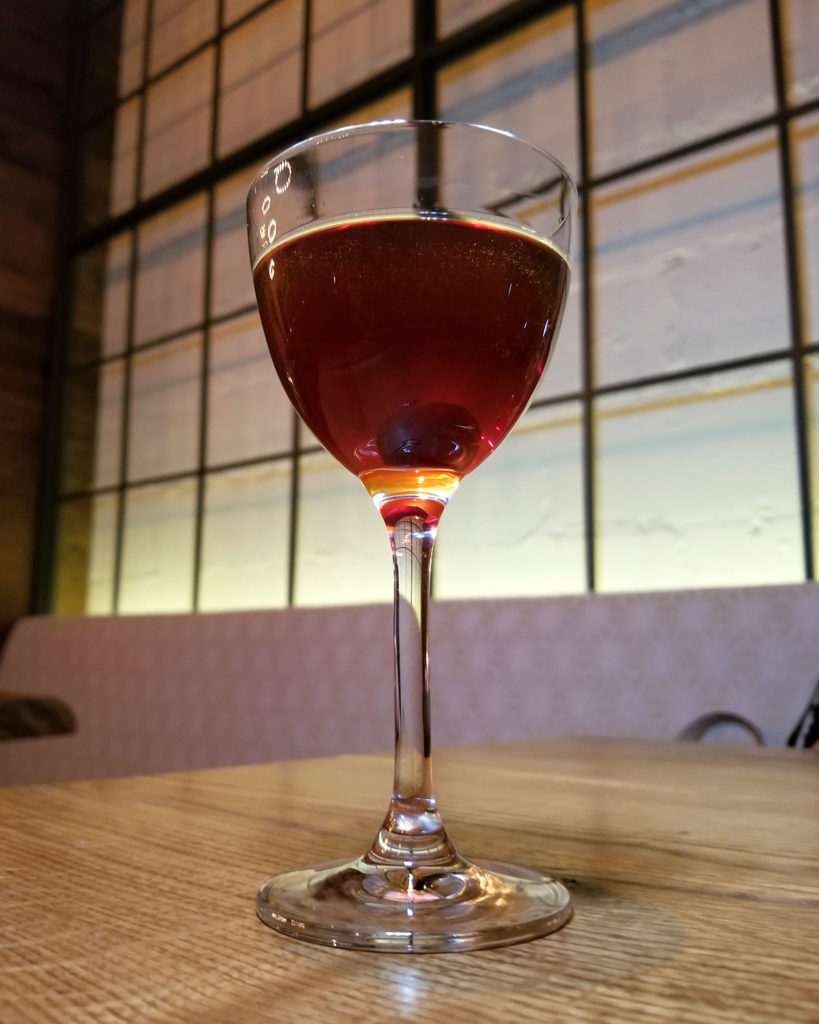
The Throne of Blood is made with Japanese whisky, Bourbon Antica, Torino and bitters. This is similar to a Manhattan.
The Hidden Fortress, made with bourbon, milk, honey shrub, orange cordial and bitters, is super smooth and tasty.
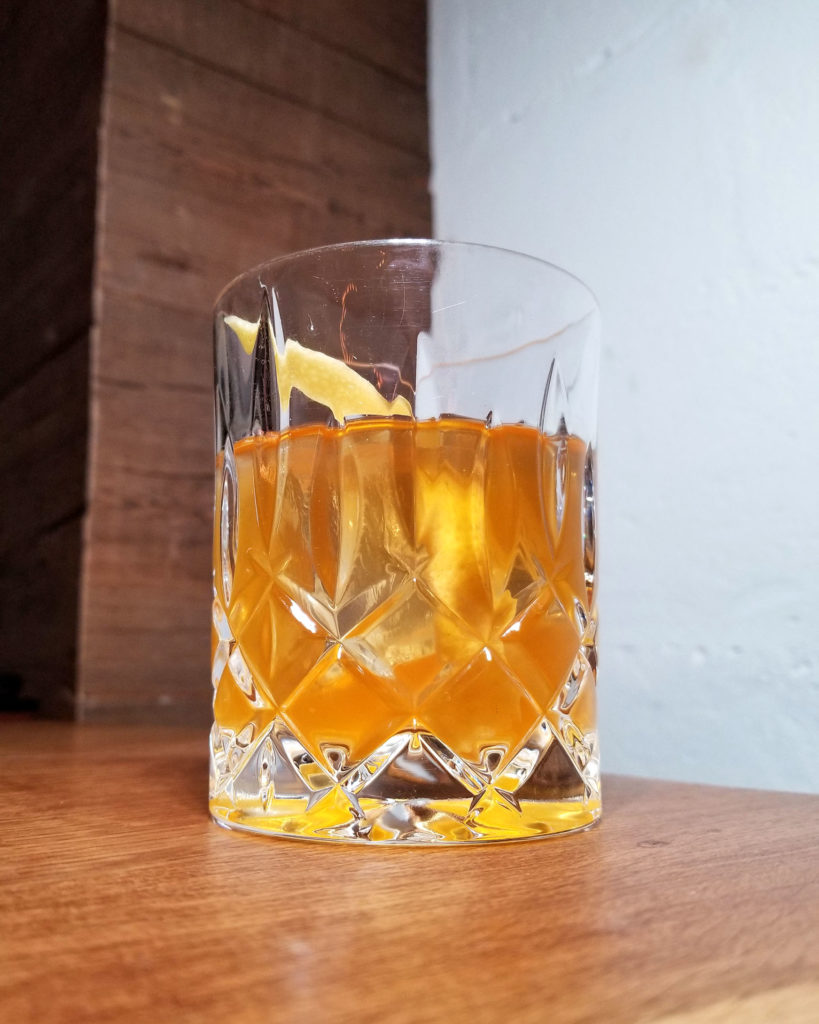
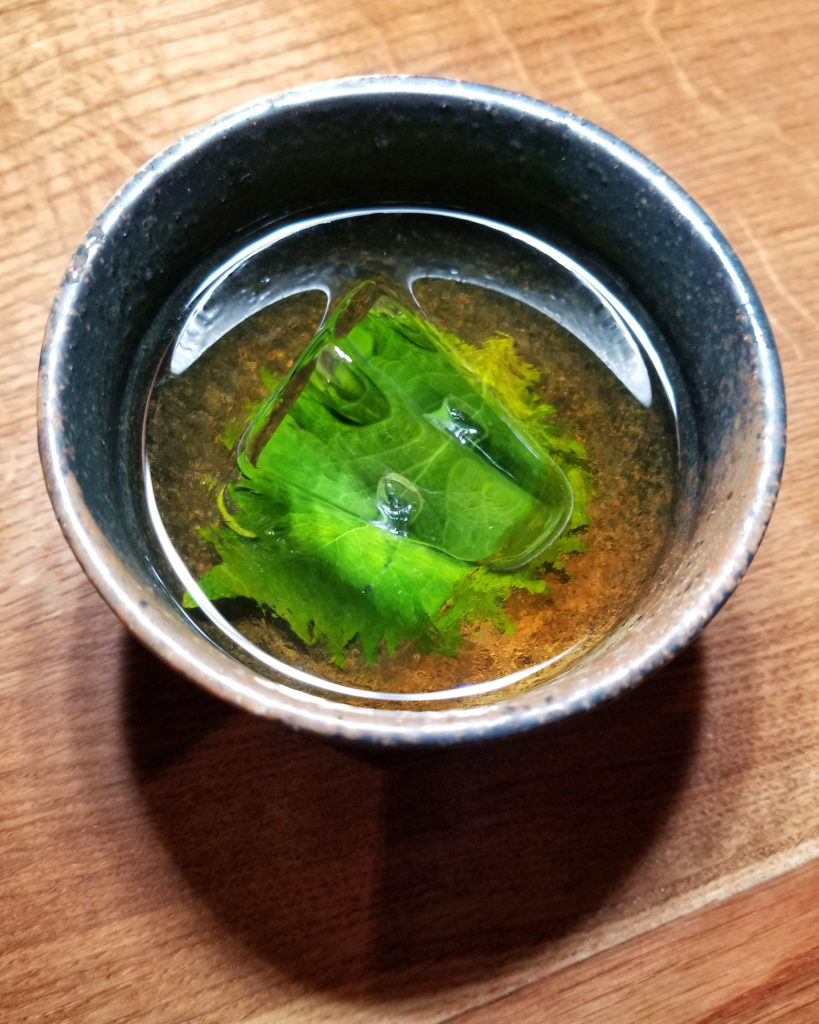
Finally, we tried the Drunken Angel, made with Hibiki, Umeshu and shiso. This was also great. Very light and crisp.
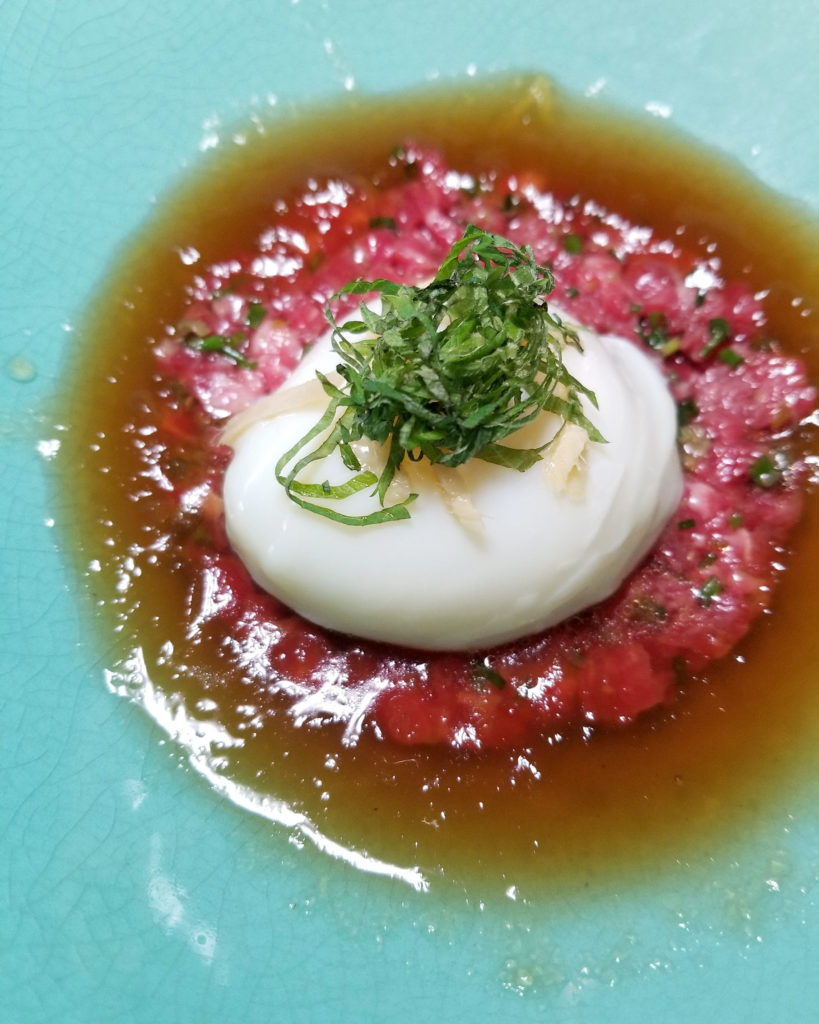
Now on to the food. The first thing we tried was the steak tartare.
This is made with Angus beef, poached egg and tosazu sauce (a seafood style vinegar). Watch the video as the egg breaks into the tartare:
It was delicious. More like a beef tartare soup – very interesting.
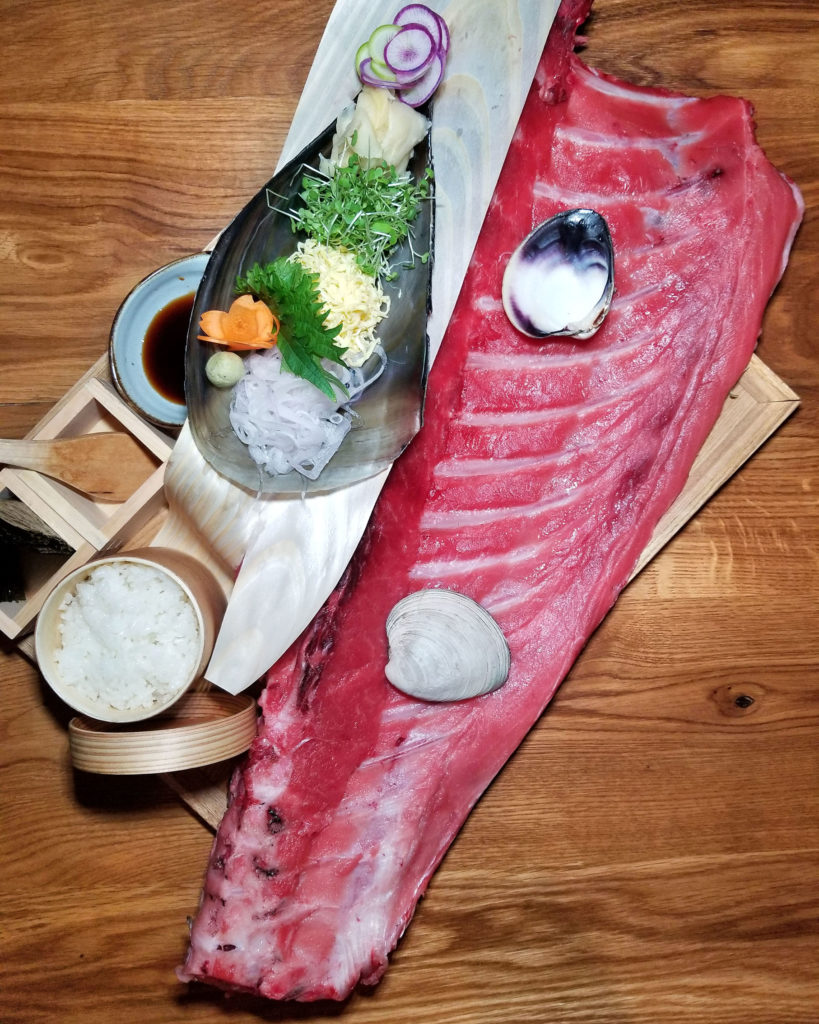
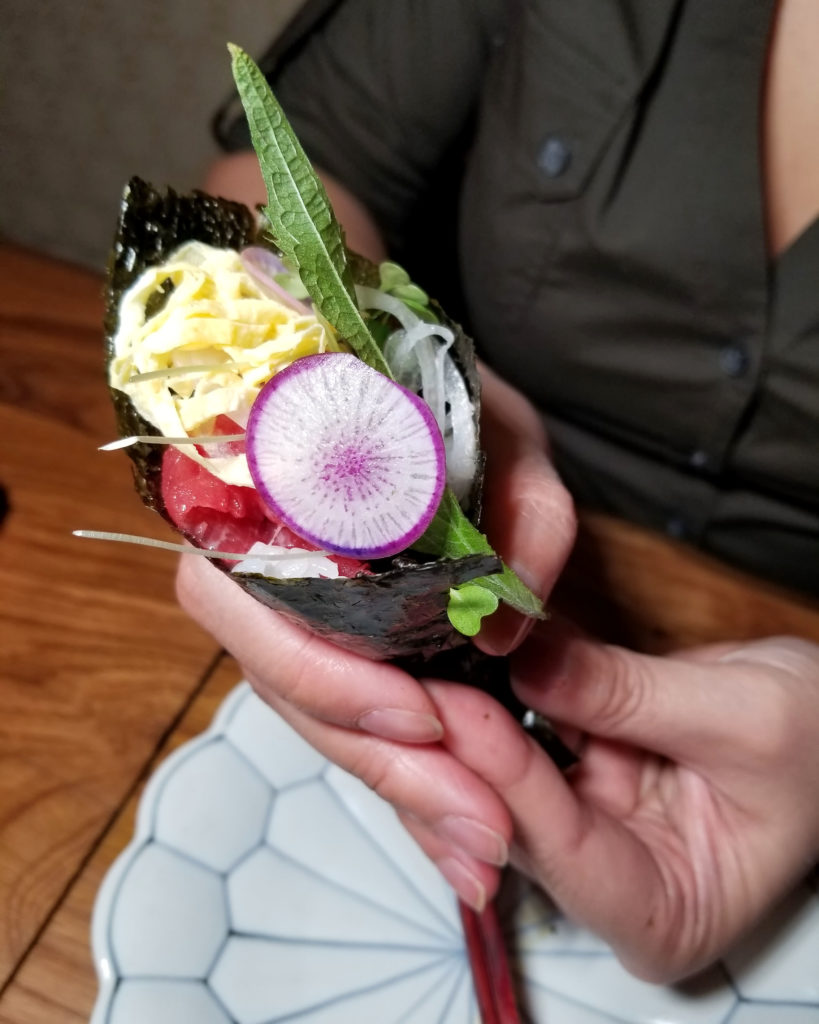
This next item was on special: bluefin tuna temaki. It’s a rib section of bluefin tuna, served with seashells for scraping the meat out and making hand rolls with all the fixings.
Check out this video. Pretty insane!
At just $40, this is a great deal. We probably got about 10 or 12 hand rolls out of this baby.
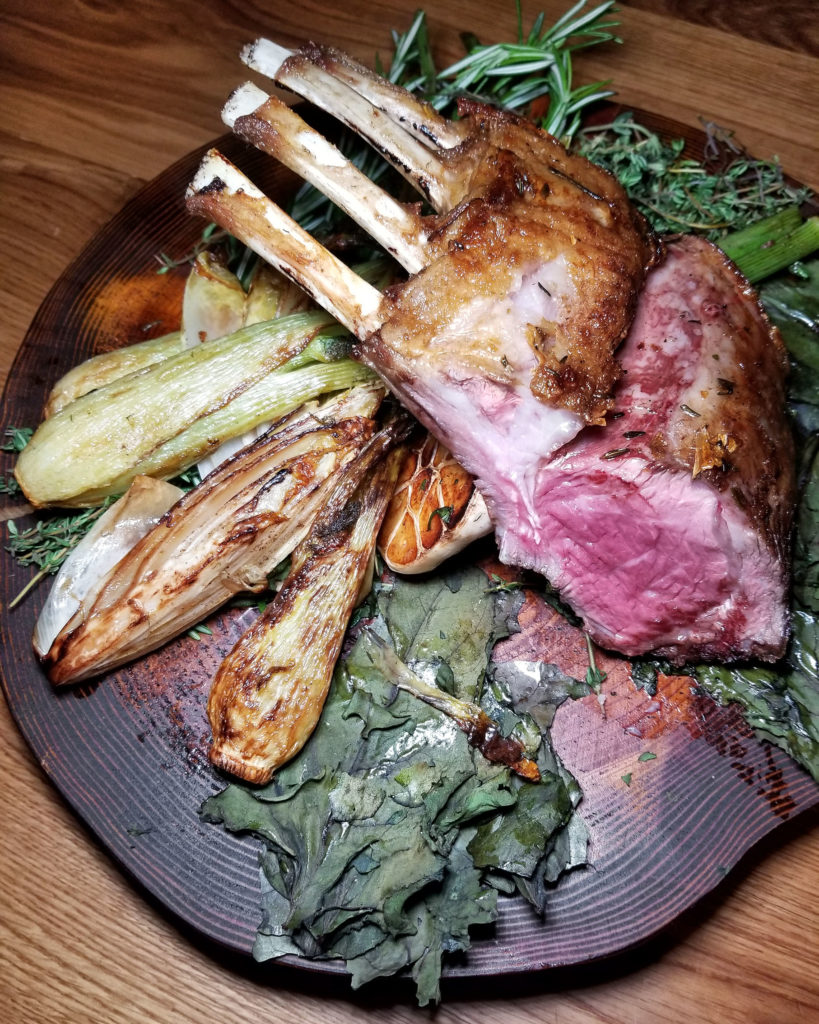
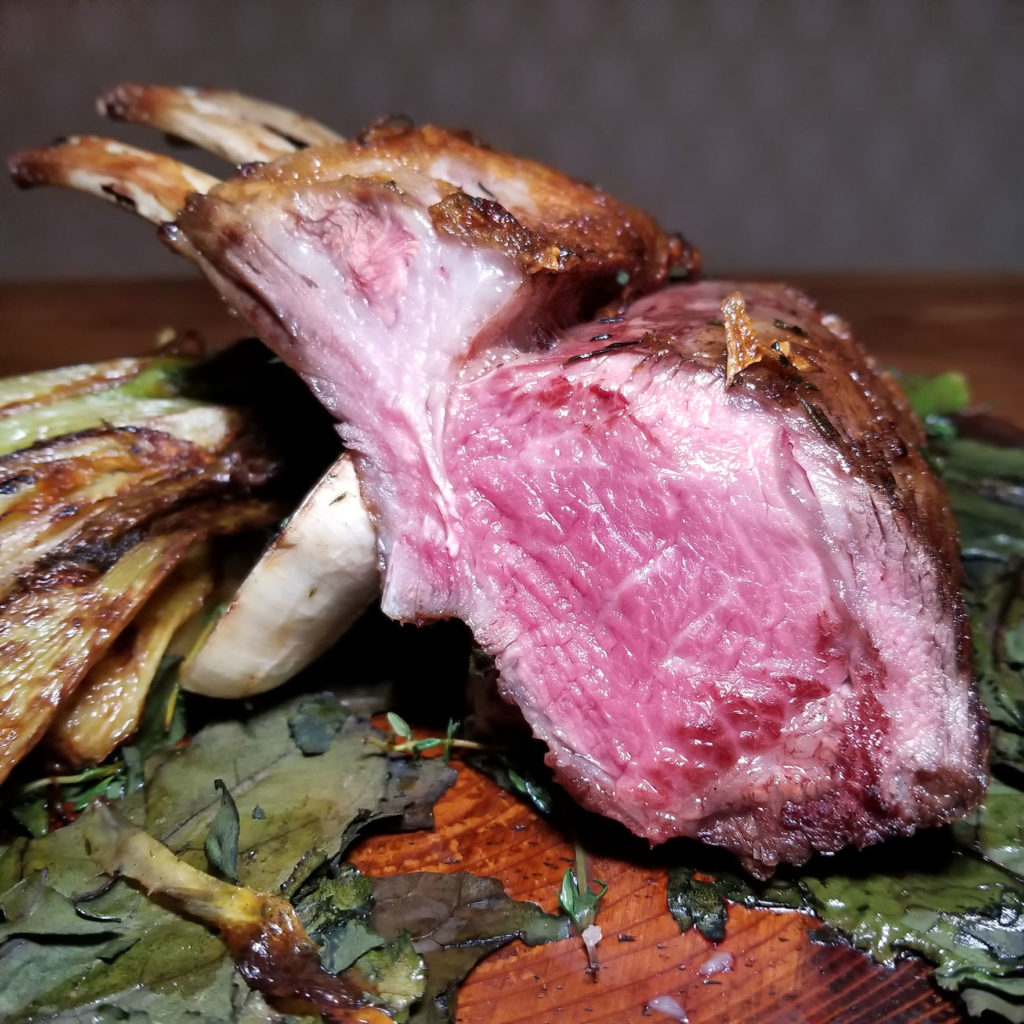
Okay now on to the meats! First, a straw smoked rack of lamb!
The lamb was perfectly cooked to medium rare.
It came with roasted garlic and grilled fennel. But the real treat about this dish is that when it comes to the table for eating, it’s served in a clay dish that has a smoking chamber underneath, so you get to smell that awesome straw smoke aroma the whole time while you eat.
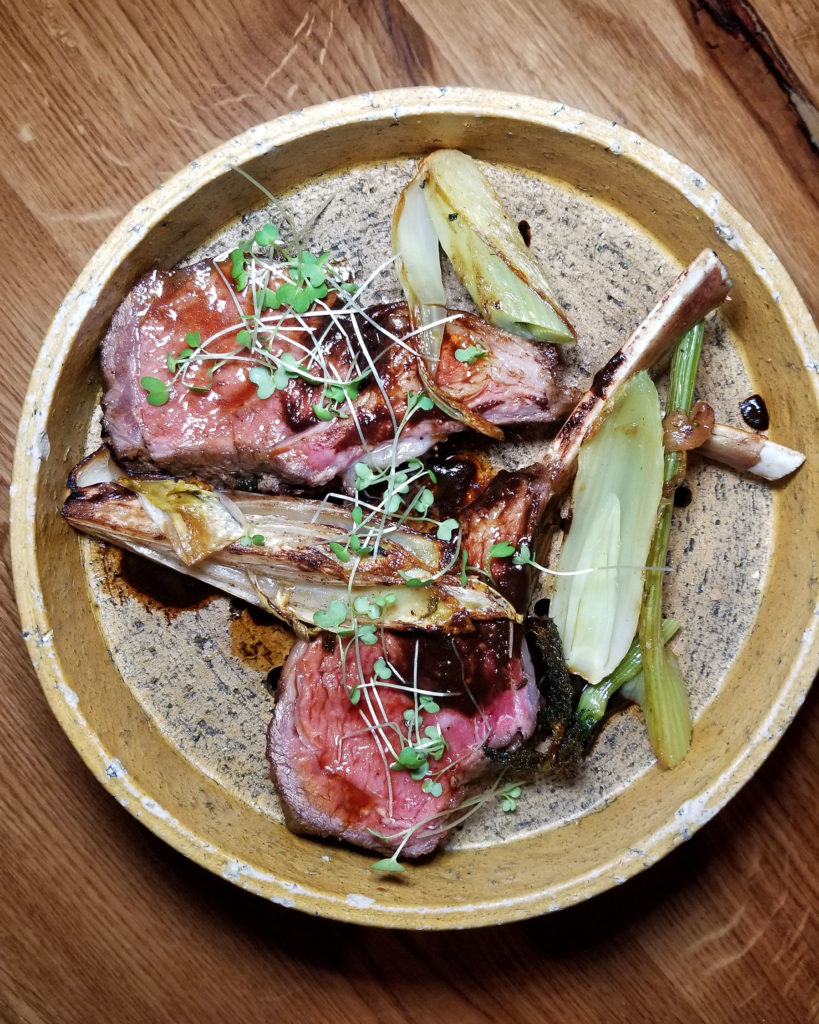
Next up was washugyu tenderloin.
Washugyu is an American Black Angus and Japanese Wagyu cross breed that achieves a great balance of beefy flavor and tender marbling. This is the same stuff I sell in my shop, pretty much. Anyway, it was incredibly tender and flavorful. They got a nice sear on the meat too. 9/10.
It’s plated up with a shallot puree and some roasted veggies.
This was easily one of the best meals I’ve had in a while. I highly recommend this place, especially for that bluefin tuna temaki. You should go ASAP if you have any interest, because I don’t know how long that will be available on special.
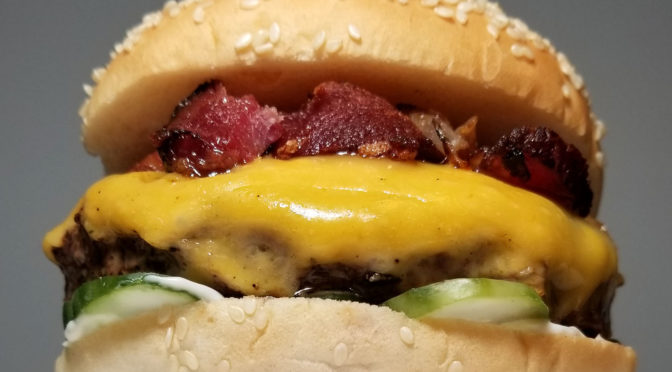
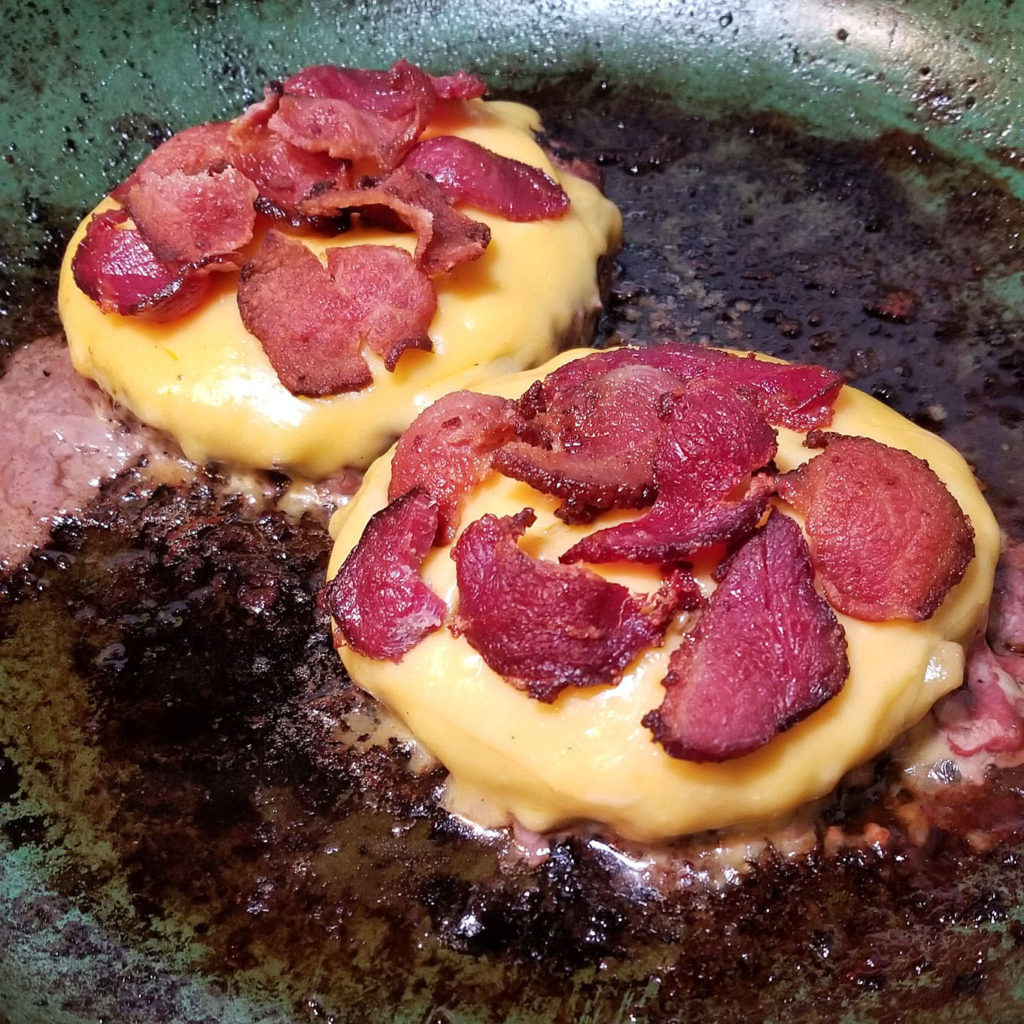
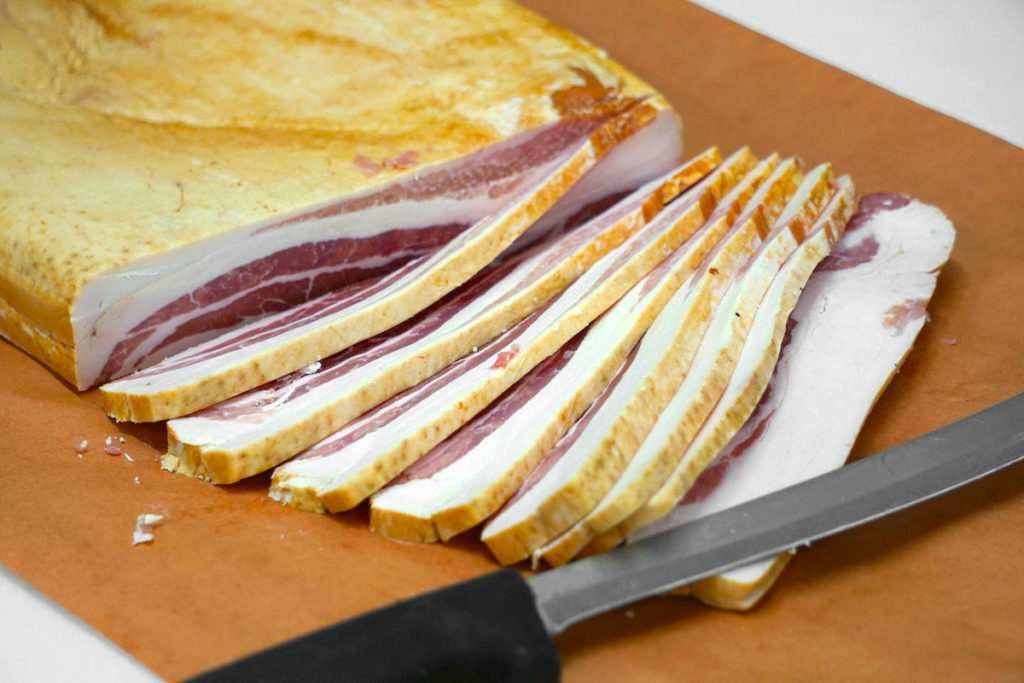
Me and the butchers put together a nice bundle just in time for the big game. Five pounds of wagyu burgers (ten individual half-pound patties) and three one-pound packs of thick cut Duroc bacon for just $74.99 (discounted from $94.92 for you damn animals).
This wagyu is ground fresh from whole muscle meat and sourced from a top shelf domestic Wagyu/Angus breeding program. This is not “Kobe-style” grocery store BS!
And of course, if you’ve had my Duroc bacon in the past, you know just how sick it is.
Get on it, guys! Your eight pounds of heaven is RIGHT HERE! Order now so you can impress your friends on game day.
After having a discussion with some food pals about beef marbling scores for Japanese beef, I realized that there’s a lot of confusion surrounding the subject. As such, I figured it was time for a more detailed article about this shit. Here goes…
There are three things to understand when it comes to marbling scores:
In many ways quality and marbling overlap each other, since it usually follows that highly marbled beef is also high quality beef. But lets break it down here one at a time.
(1) The A-B-C’s of Yield
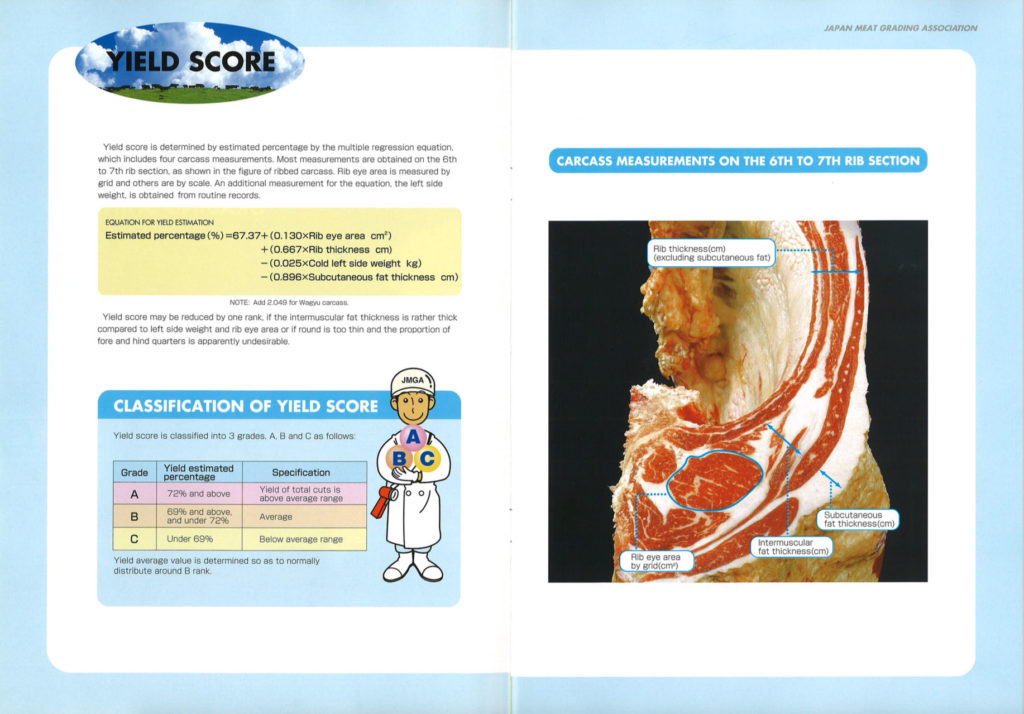
I like to think of this as the quantity component, as opposed to quality. A yield rating is a percentage figure that objectively describes the cutability of an animal, or the amount of the animal that can be harvested from a particular area of the carcass.
In particular, this score is determined by carefully measuring shit once a cut is made between the 6th and 7th rib, on the rib eye. The score is assigned after plugging four measurements taken at that cut into a “multiple regression equation.”
The four measurements are: rib eye area; rib thickness; cold left side weight; and subcutaneous fat thickness.
Raters score wagyu as either A, B or C in Japan. A has the highest yield, at 72% or more. B is 69-71%, and this is the most common yield. C is under 69%.
From a business and sales standpoint, it’s better to have higher yields on your animal. So A is better than C in many ways on that angle. For example, a carcass can get knocked down from A to B if the band of outer fat (not the marbling) is too thick, because it lowers the cutability yield (makes the actual rib eye meat smaller). Farmers and ranchers who raise the animals will want to select and breed for good yield traits.
From a consumer’s or diner’s standpoint, however, the yield isn’t, or shouldn’t really be, much of a concern. While a rating of A, B or C makes us instinctively think A is better than C, that would kinda be wrong in this case.
The C grade really just means that, before the meat got to our plate, more of the extrenal fat had to be trimmed away, the rib eye was small, or there was less of that particular cut of meat to harvest from the animal. Or something like that…
Wagyu.org
(2) Quality
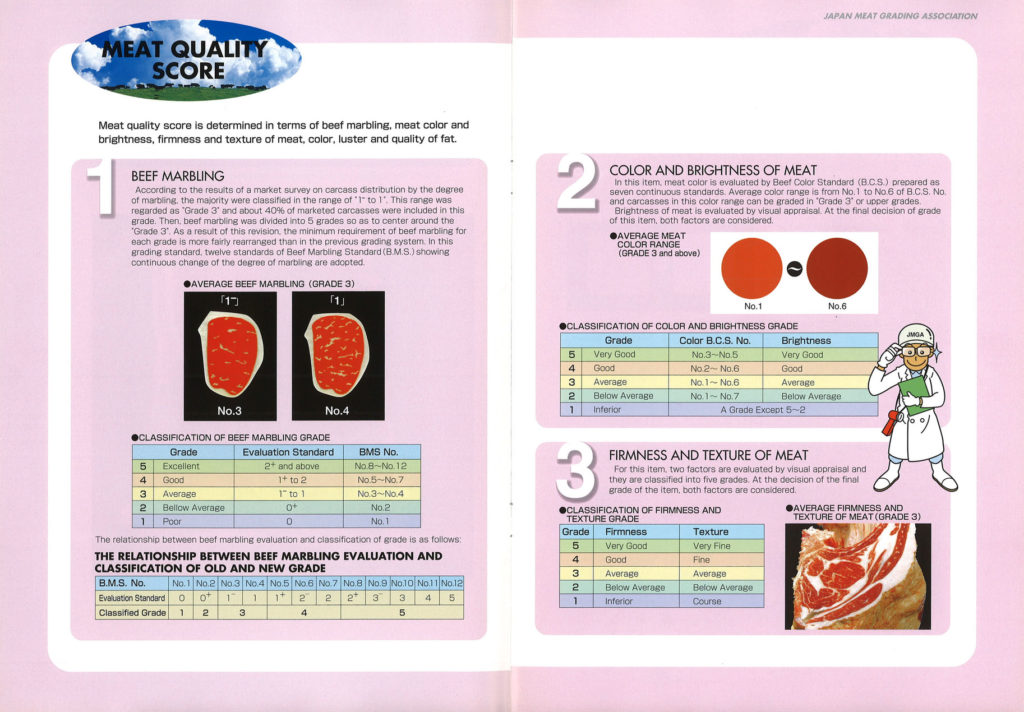
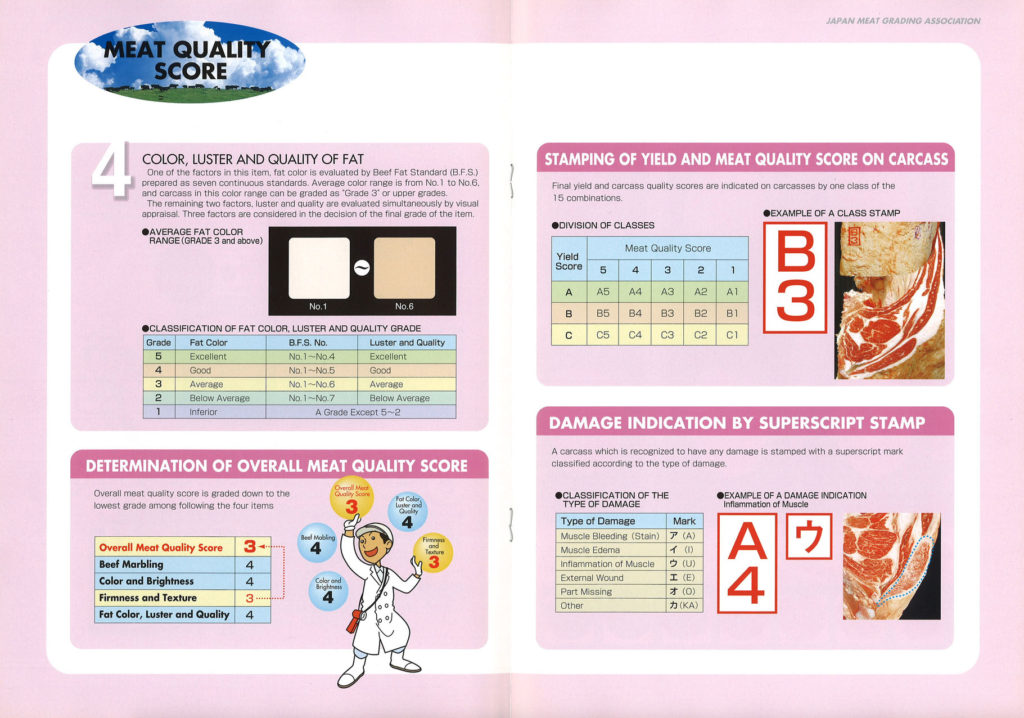
Quality grades describe the meat’s marbling, color, brightness, firmness and texture. It also describes fat quality, color and luster. This score is assigned as a value of 1 to 5, with 1 being the lowest quality and 5 being the highest. A lot of detailed analysis goes into this score.
Wagyu.orgWagyu.org
As you can see, marbling, meat color and brightness, meat firmness and texture, and fat quality, color and luster are all evaluated on separate scales before being plugged into the overall quality score of 1-5. Pretty intense.
Some of the measurements are now starting to be done with cameras and digital image analysis software (like in the US), to more objectively determine the quality scores.
(3) Beef Marbling Standard (BMS)
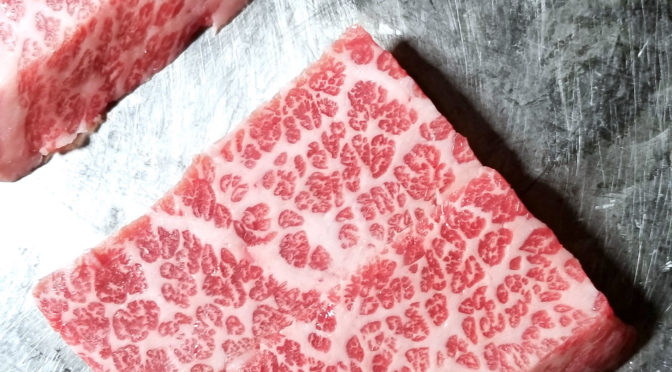
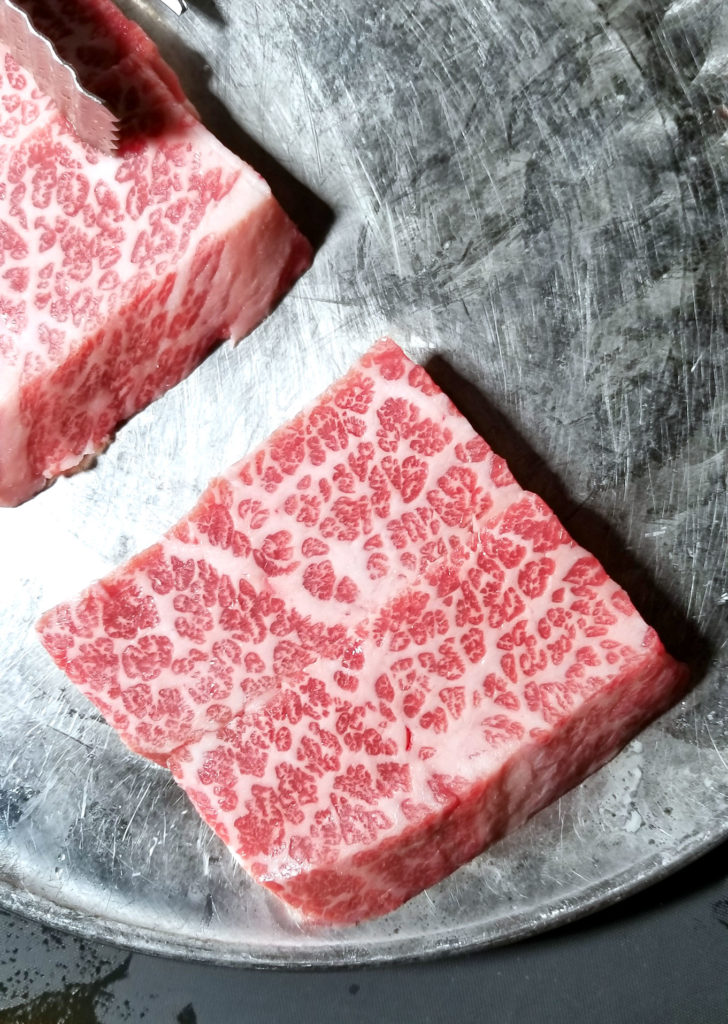
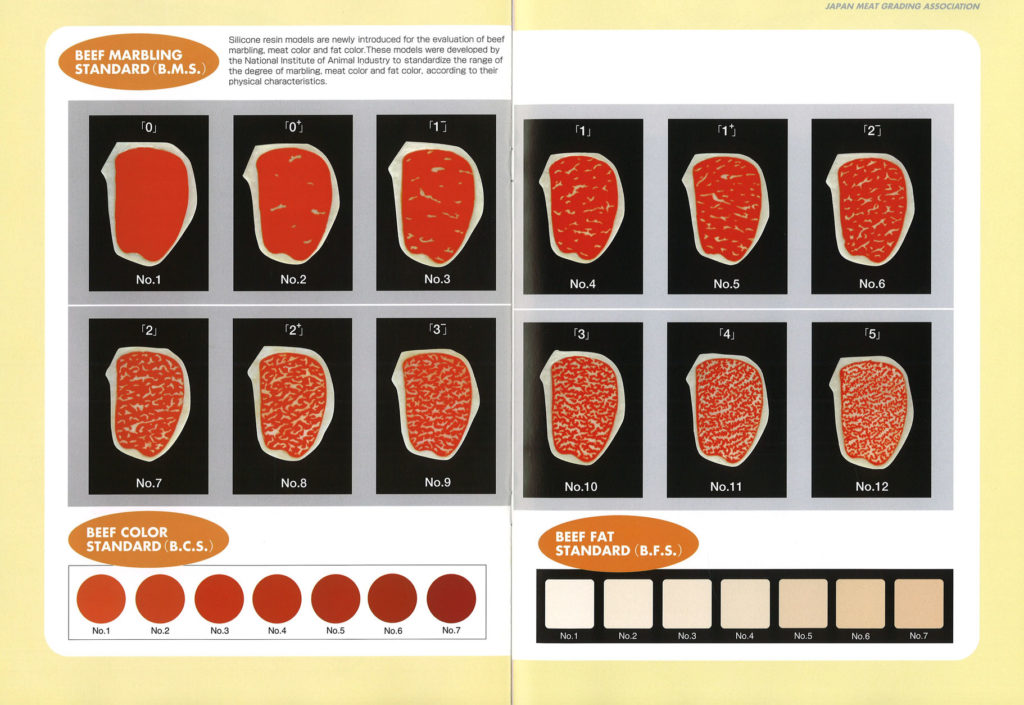
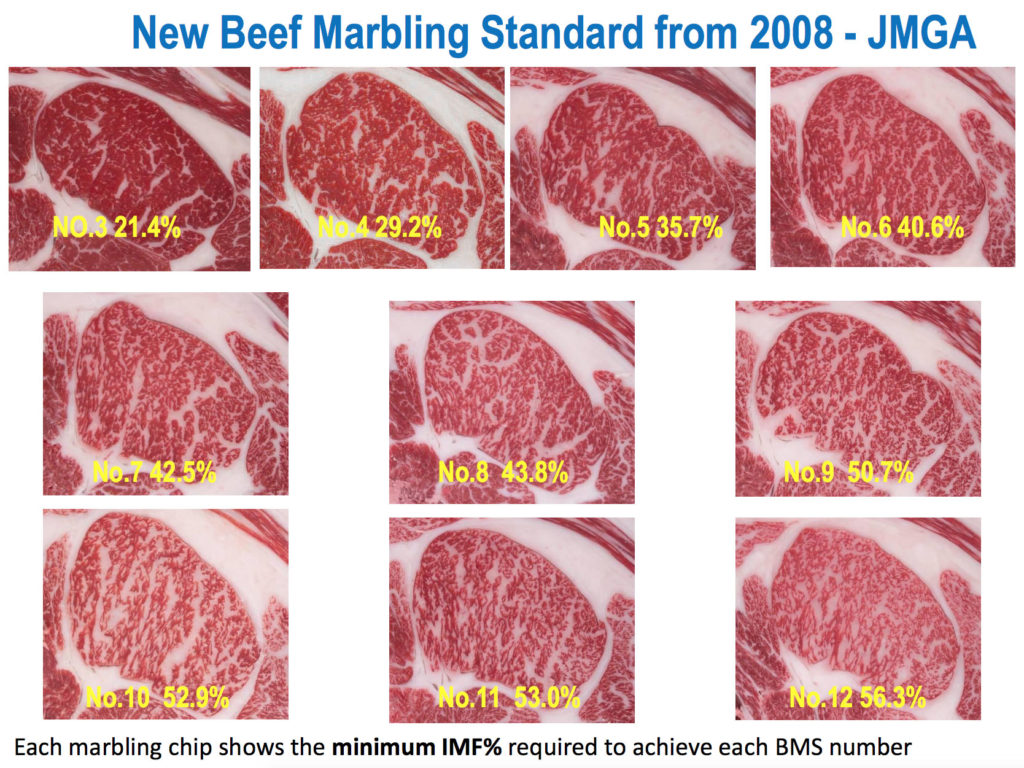
The beef marbling stardard assigns a score to the meat based on how much intramuscular fat (IMF, or marbling) it has. It is scored from 1-12, with 1 being the least marbling and 12 being the most. Here is what that looks like:
Wagyu.orgWagyu.org
There is definitely some interplay and overlap here with the quality score, as marbling is a factor one must consider when assigning a quality score of 1-5 up above. But the BMS score is much a more specific look at the intramuscular fat. Here is the relationship between quality and BMS:
As you can see, a score of 5 covers a wide range when it comes to the BMS scale. BMS 8 is very different from BMS 12, yet they are both a 5 for quality.
You may be thinking, why the redundancy? Well, as I mentioned in the previous section, the quality also takes meat color, fat color, texture and other variables into account. BMS, again, is purely about the marbling.
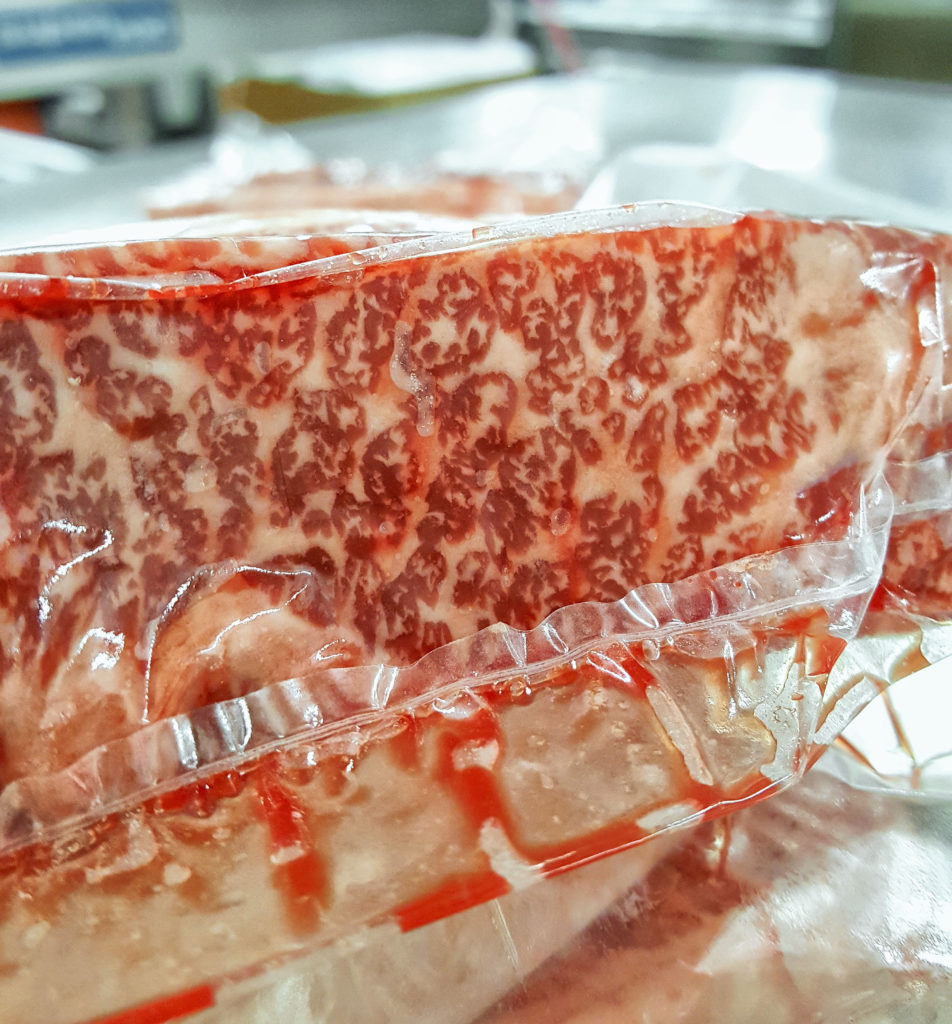
But when I see “A5” on a menu, I want to know the BMS as well. I sell BMS 9 domestic wagyu strip for $75 a pound, whereas I sell BMS 12 Kobe for $200 a pound. Both would be considered a quality of 5. See how the BMS score just within the quality rating of 5 can drastically alter the price? Crazy.
Putting It All Together
Basically the best quality available is A5 BMS 12. The A means that there was very little junk on the animal, and it had a good-sized rib eye. The 5 means it’s the best when assessing all the variables relevant to quality, like color, texture and fat. And the 12 means that it has the most marbling.
But I wouldn’t shy away from B5 or C5 BMS 12 either. Remember the letter grade is more about quantity, at least it seems so to me, anyway. Actually, my sweet spot seems to be around BMS 8 or 9. Anything more than that is like foie gras. It tastes like a completely different protein.
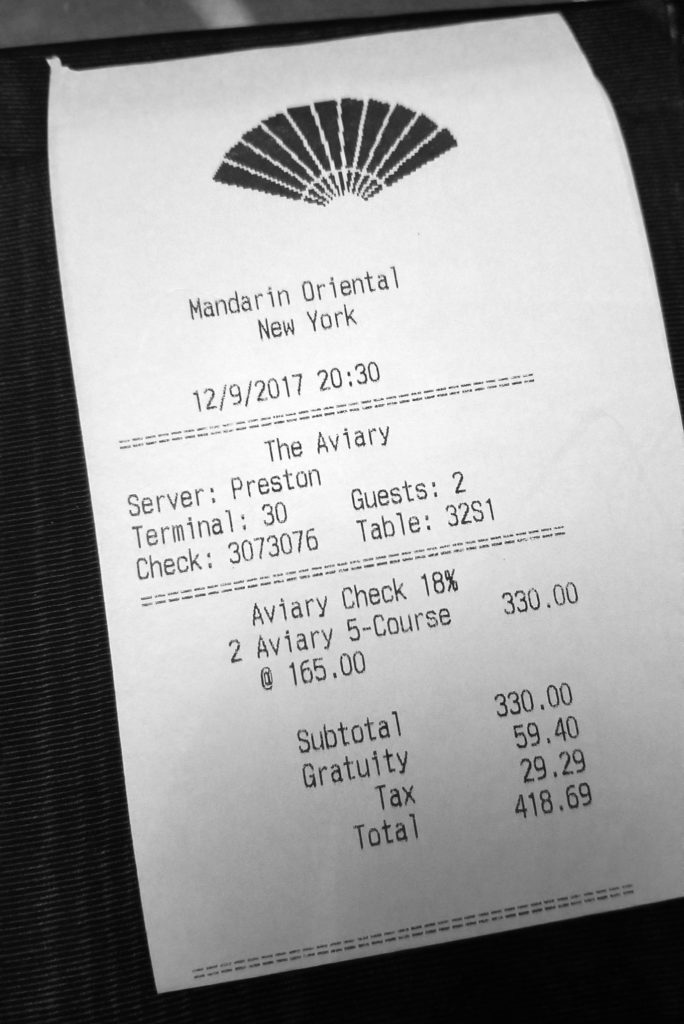
I took my wife to The Aviary as an early Christmas present. I booked the five course “Cocktails & Canapes” tasting menu dinner about two weeks in advance with a $100 deposit. The cost is $165pp, with an 18% gratuity added at the end (and tax, of course).
That’s crazy expensive, but this is truly a unique drinking and dining experience. I drank and ate things I never would have even thought about. In hindsight, five cocktails was aggressive (but awesome). I think when I go back, I will just order a la carte.
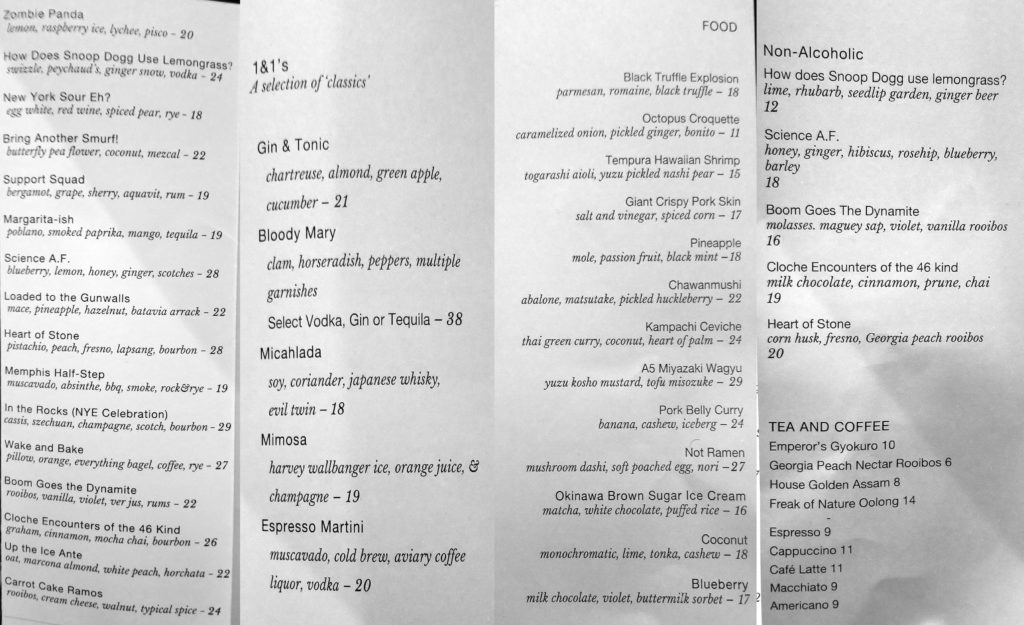
Here is the entire menu, but I will highlight what was selected for us below in the review:
AMUSE
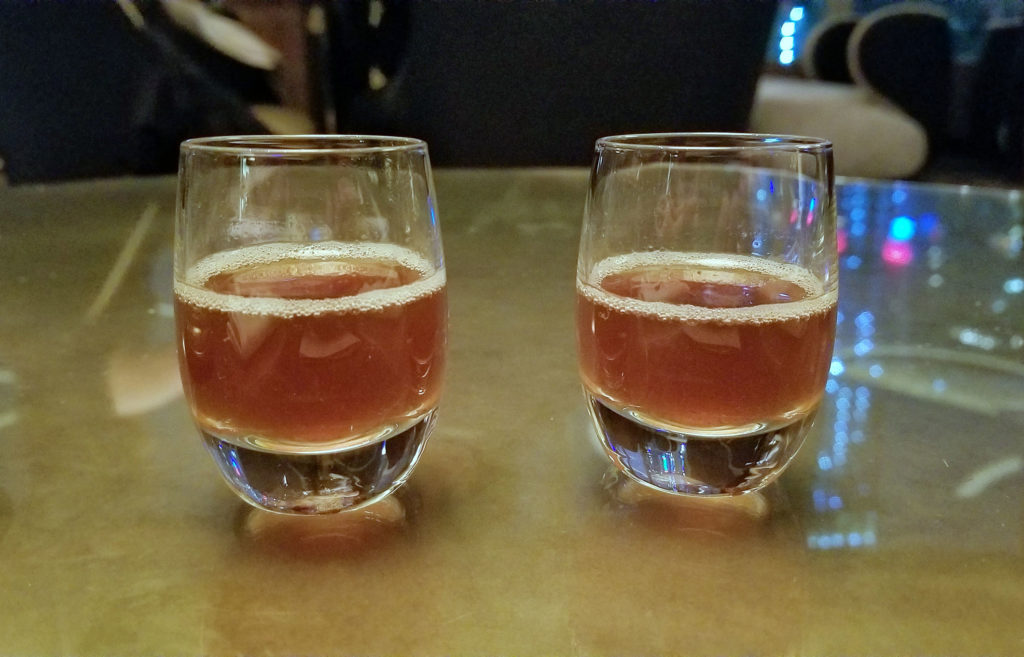
The first thing to come out was an “amuse” drink – a small shot of tastiness that involved lime, rum, and mint.
A few moments later, our first round of cocktails came out with the first course of food.
COURSE ONE
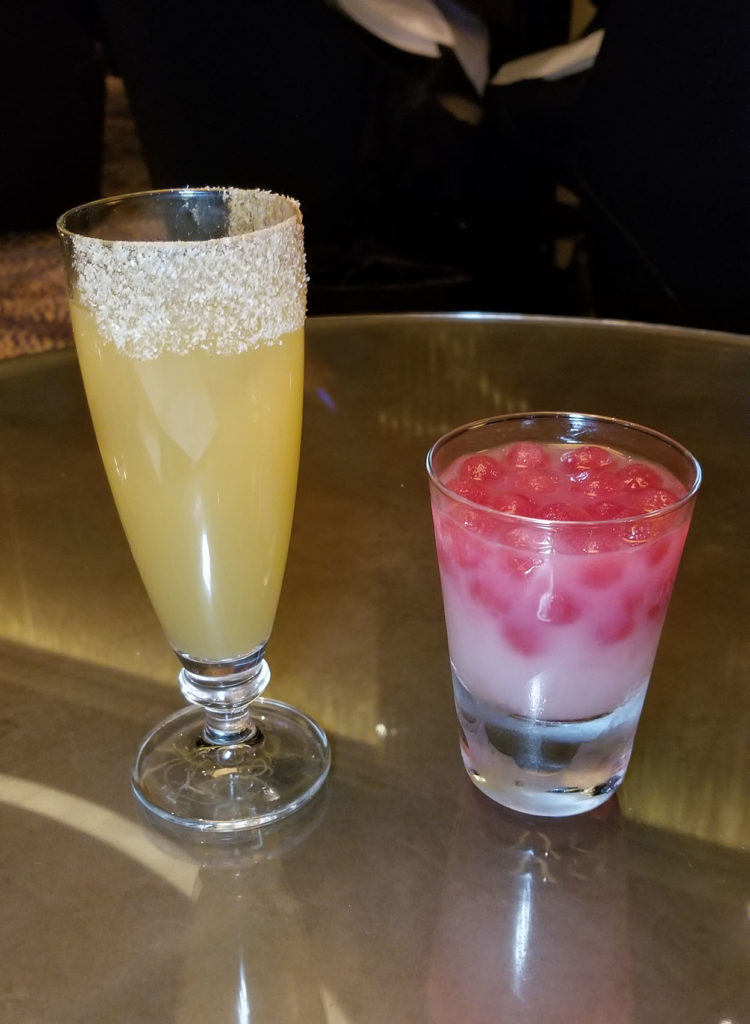
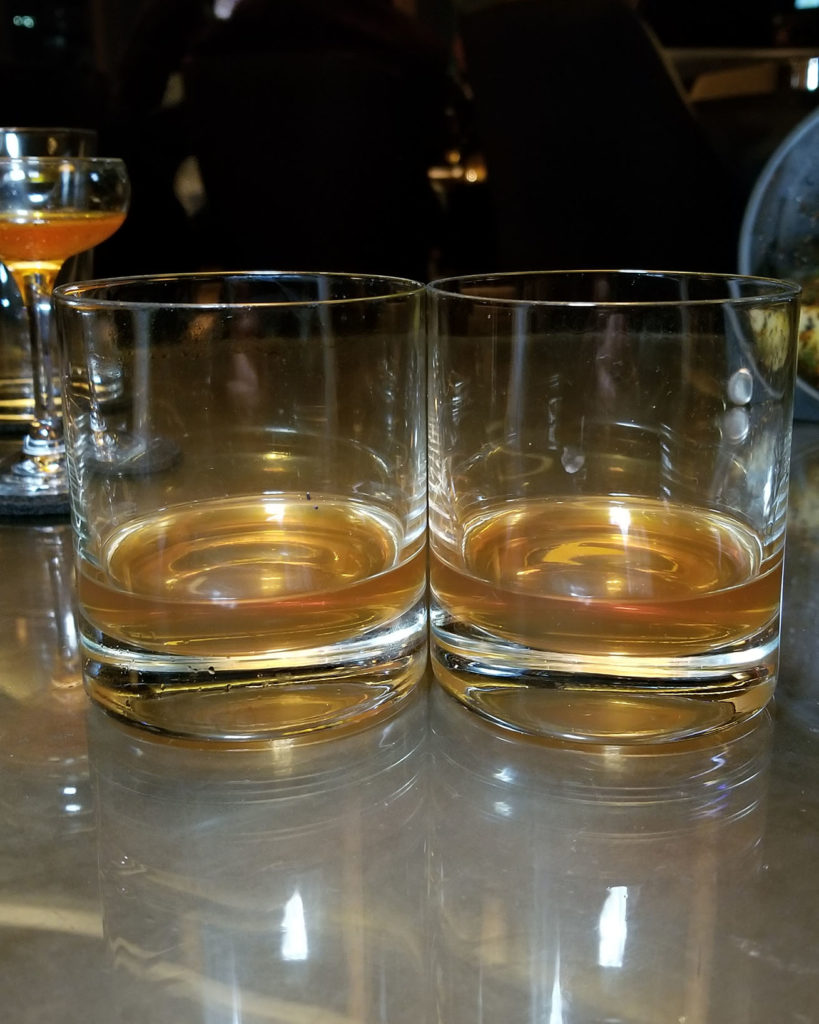
Drinks: Micahlada (left – and yes, that is spelled correctly) and Zombie Panda (right)
Of these two, the Micahlada was my favorite. This is The Aviary’s take on a michelada (beer, spices and tomato juice), made with soy, coriander, Japanese whisky and Evil Twin beer. The Zombie Panda was tart from the lemon, lychee and pisco, and filled with frozen spheres of raspberry juice to sweeten it up.
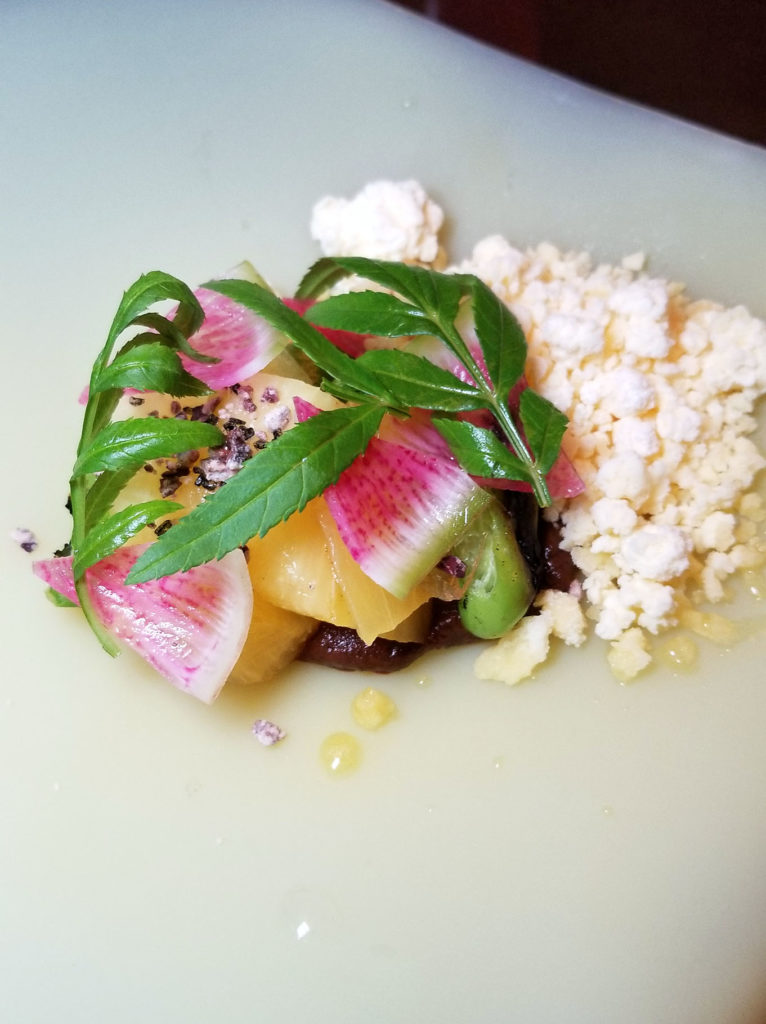
Food: Pineapple Two Ways
This was a nice way to get the taste buds popping. That brown stuff at the bottom was a mole sauce. I liked it a lot, but my wife wasn’t too taken with it. The black mint garnish was tasty and went well with the watermelon radish and passion fruit.
COURSE TWO
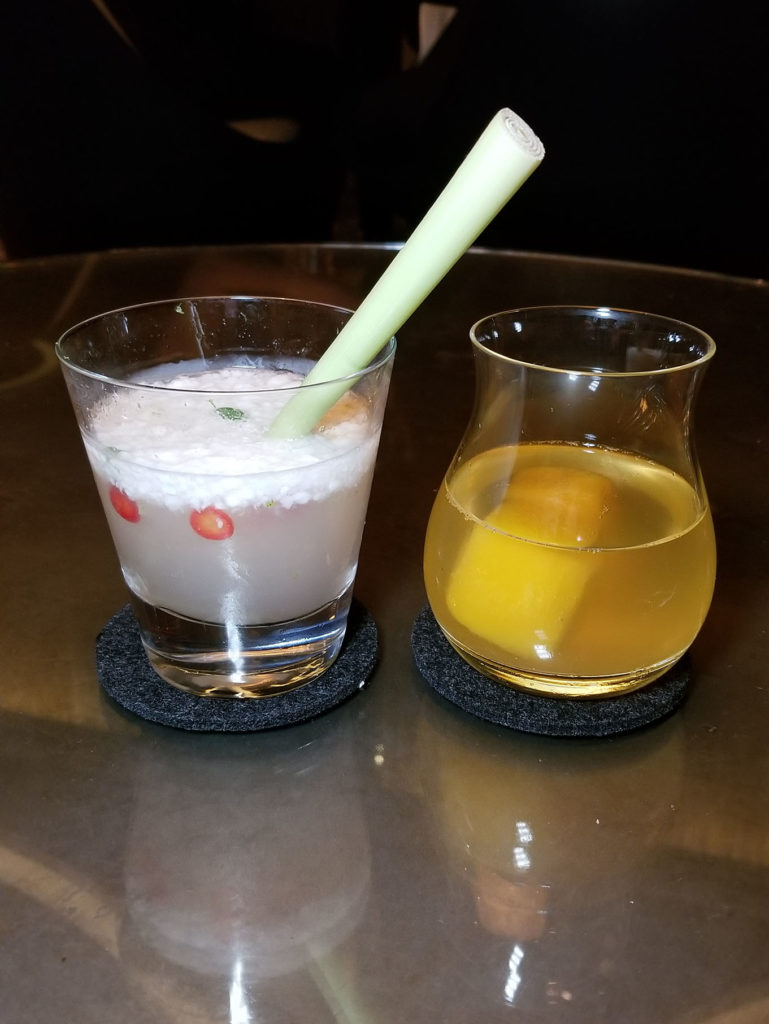
Drinks: How Does Snoop Dog Use Lemongrass (left) and Mimosa (right)
The mimosa was nice because the fruit juice was frozen into ice cubes, so the drink becomes sweeter and more smooth as it sits.
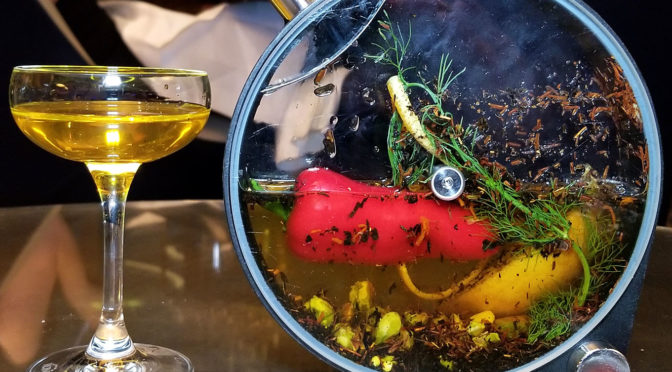
The idea behind the Snoop drink is that Snoop Dogg ends everything with “-izzle” when he talks/raps, so there is a “swizzle” made out of lemongrass, which is used to mix the drink together:
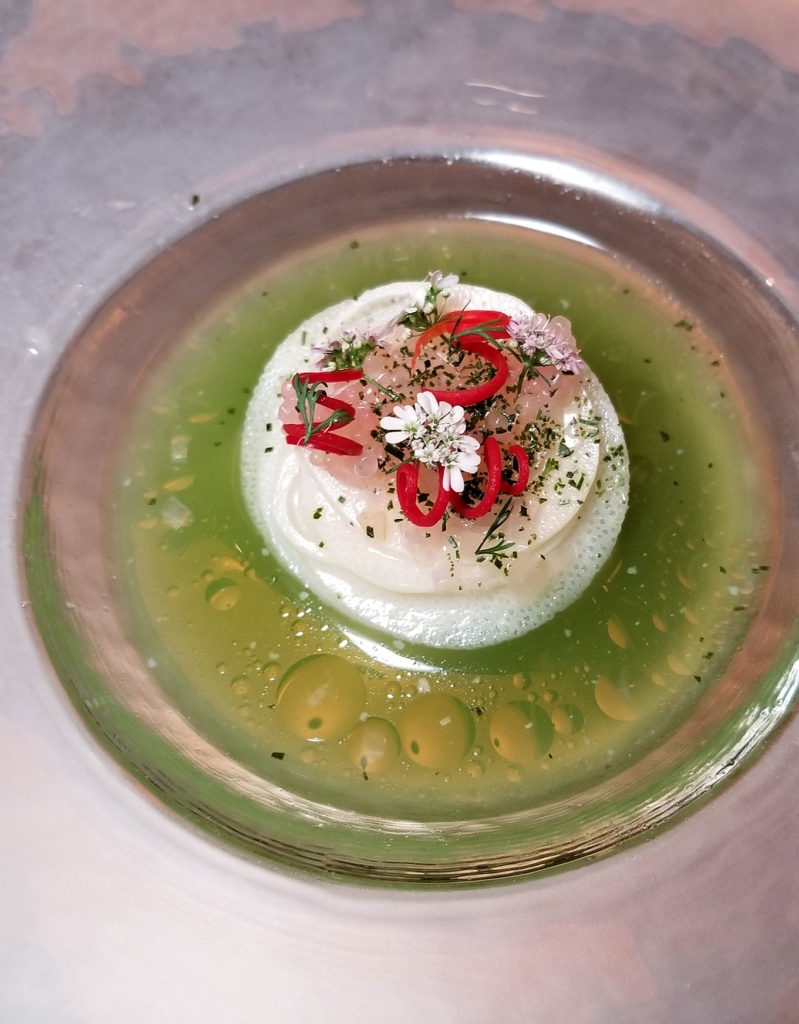
Food: Kampachi Ceviche
This was bright, light and savory, pulling in southeast asian flavors from Thai green curry, heart of palm and coconut. I really enjoyed the briny broth and the coiled peels of red pepper for spice.
COURSE THREE
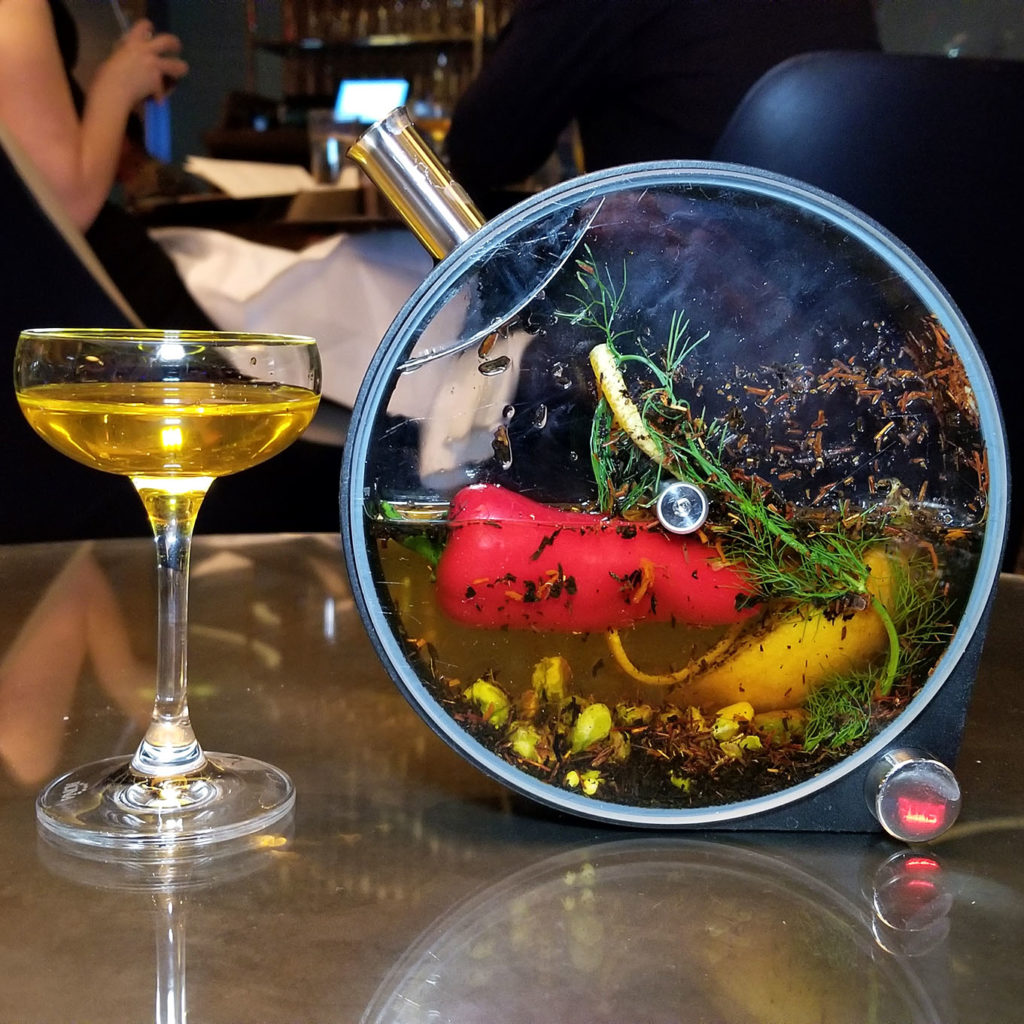
Drink: Heart of Stone
This was the best drink of the night, and you get about six glasses out of the container. That container is filled with bourbon, tea, Fresno chili, pistachio and peach. As it sits there, the flavors infuse deeply into the bourbon, so each time you refill the glass it tastes a little different. More spices come out, more sweetness too. Amazing.
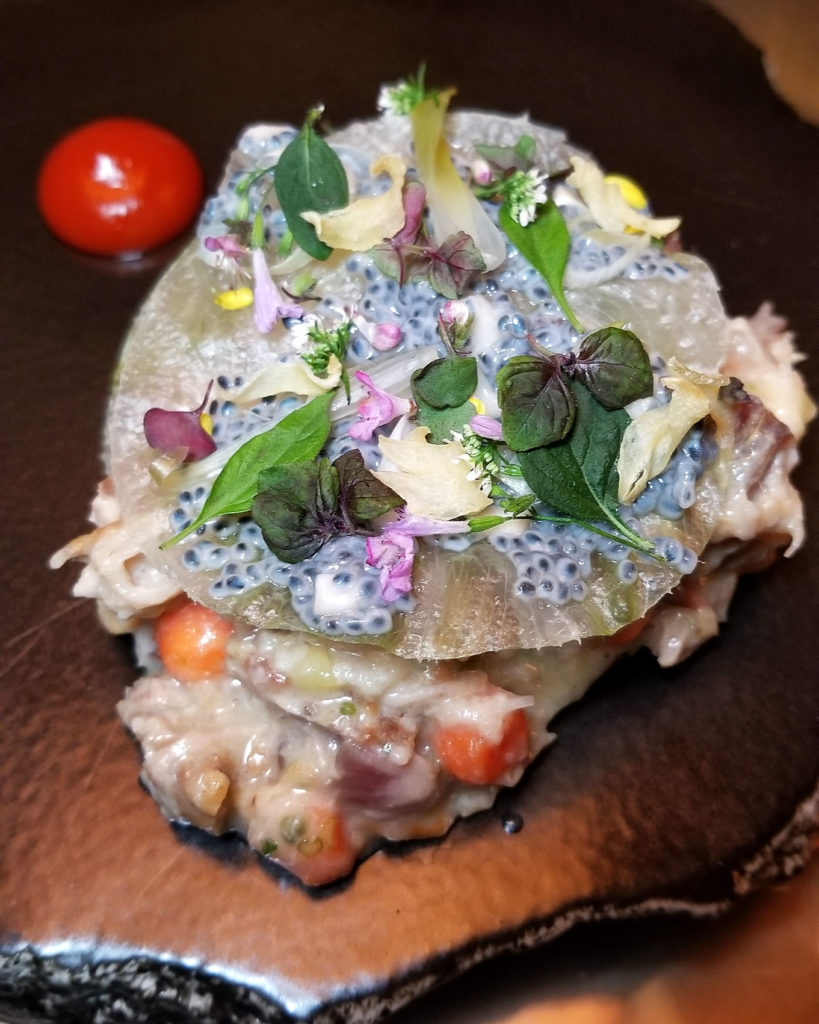
Food: Pork Belly Curry
This dish was really good, but it could have been excellent with a crunch element. I think the iceberg lettuce discs were supposed to be that element, but they fell short just a bit. Perhaps a fried shrimp chip or crispy egg roll wrapper would do the trick. But the pork belly curry itself? Awesome. The banana and cashew are excellent compliments to the savory.
FROM THE CHEF
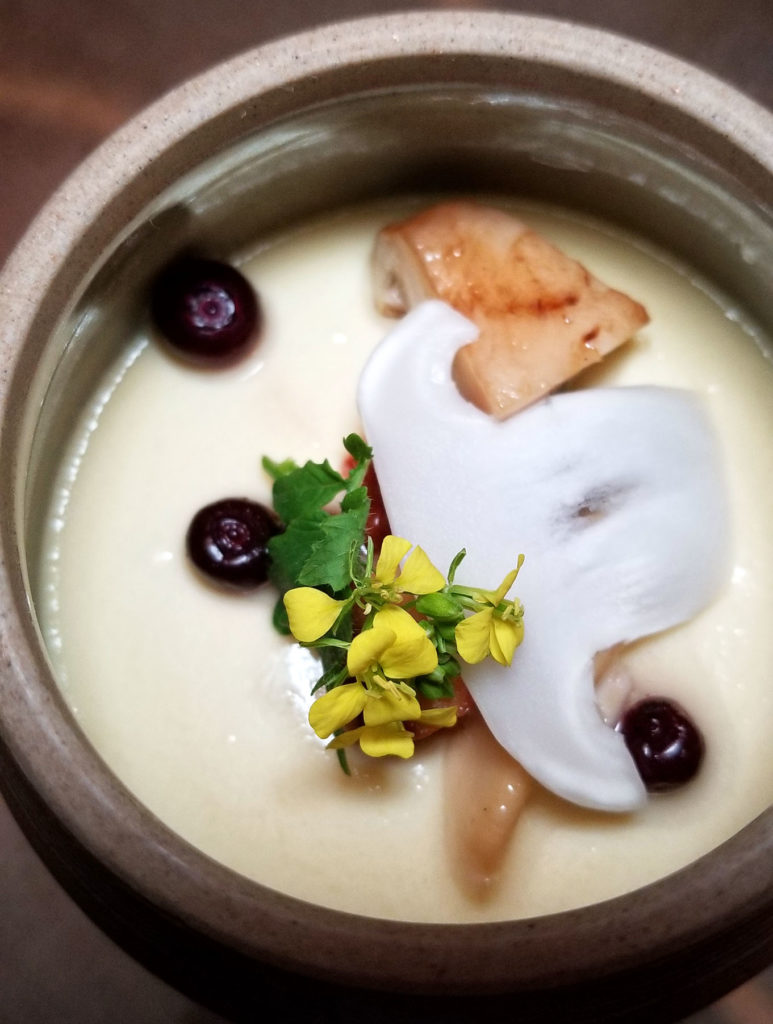
Chawanmushi
They’re experimenting with “all times of day” food here at The Aviary, so this is meant to be a breakfast item. It’s velvety smooth, and the smoked abalone within makes you think you’re eating bacon. The pops of flavor from the pickled huckleberries really brighten and balance this seafood porridge custard dish.
COURSE FOUR
Drink: Memphis Half Step
These glasses come to the table upside down on a charred piece of oak cask, filled with smoke. The aroma is awesome. This absinthe and rye cocktail is super smooth with a hint of sweetness.
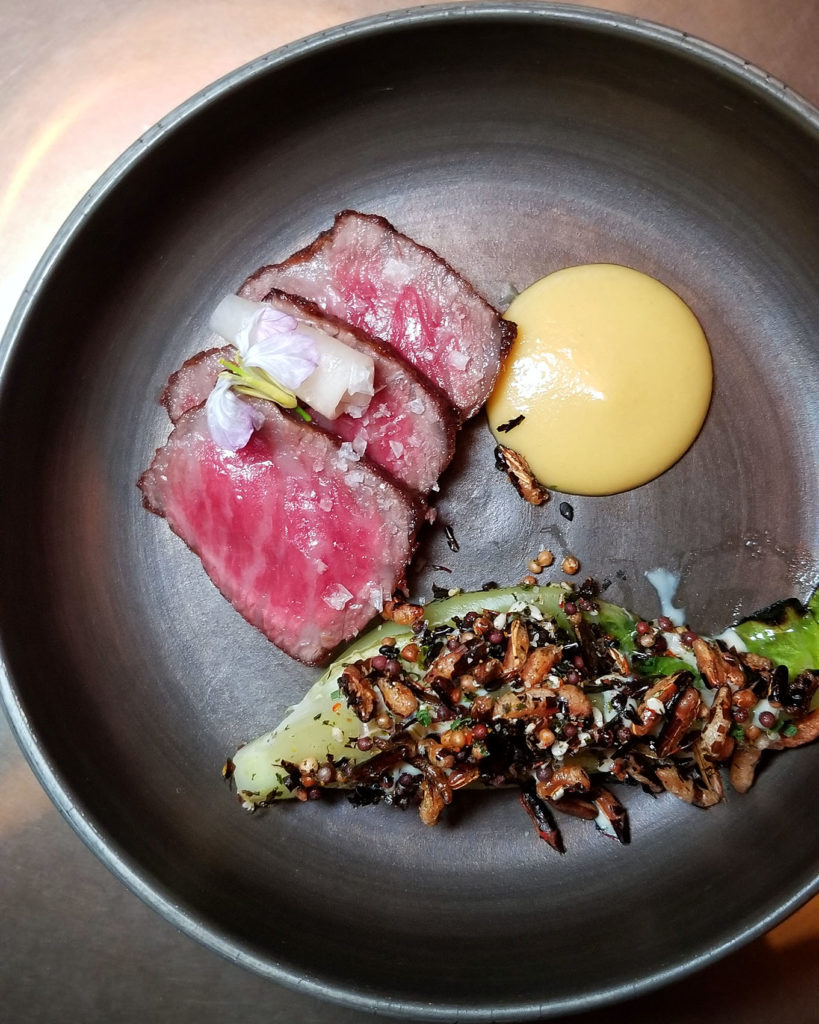
Food: A5 Miyazaki Wagyu Rib Eye
Clearly my favorite food item of the night. The meat was buttery soft, and the grilled romaine with puffed rice was a great textural pop to go with it. That yellow sauce is a yuzu mustard. Possibly the greatest mustard ever. 10/10. Wish I had 16 more ounces of this.
COURSE FIVE
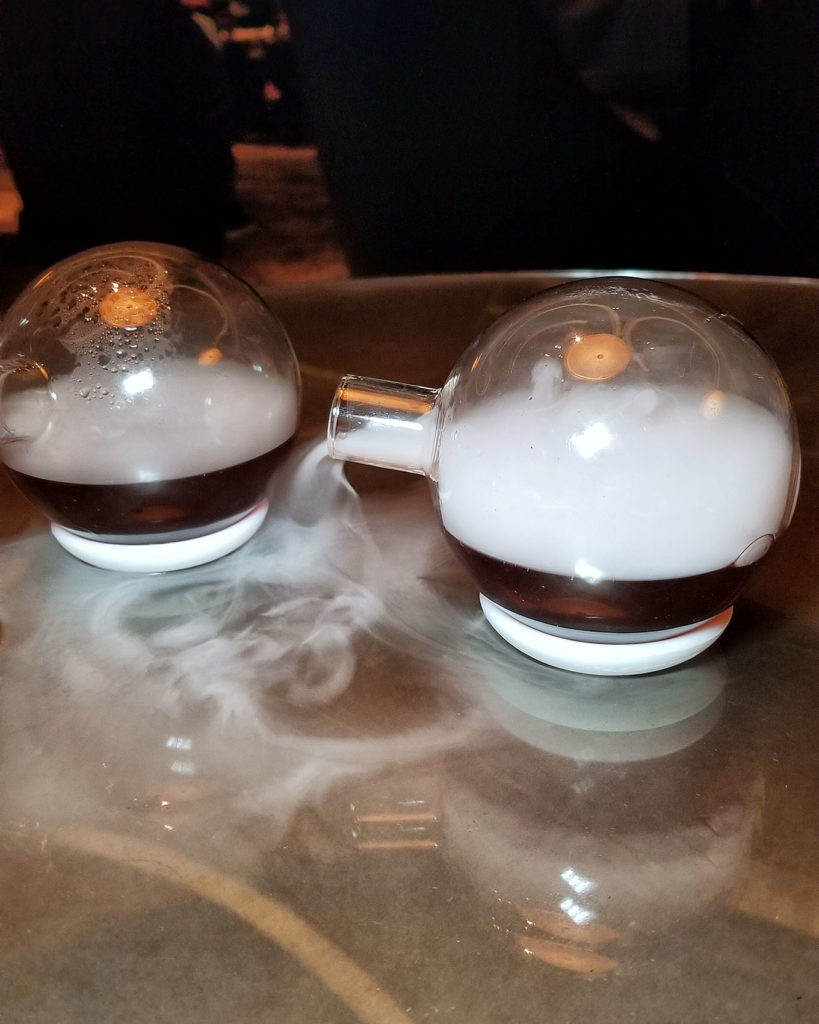
Drink: Boom Goes The Dynamite
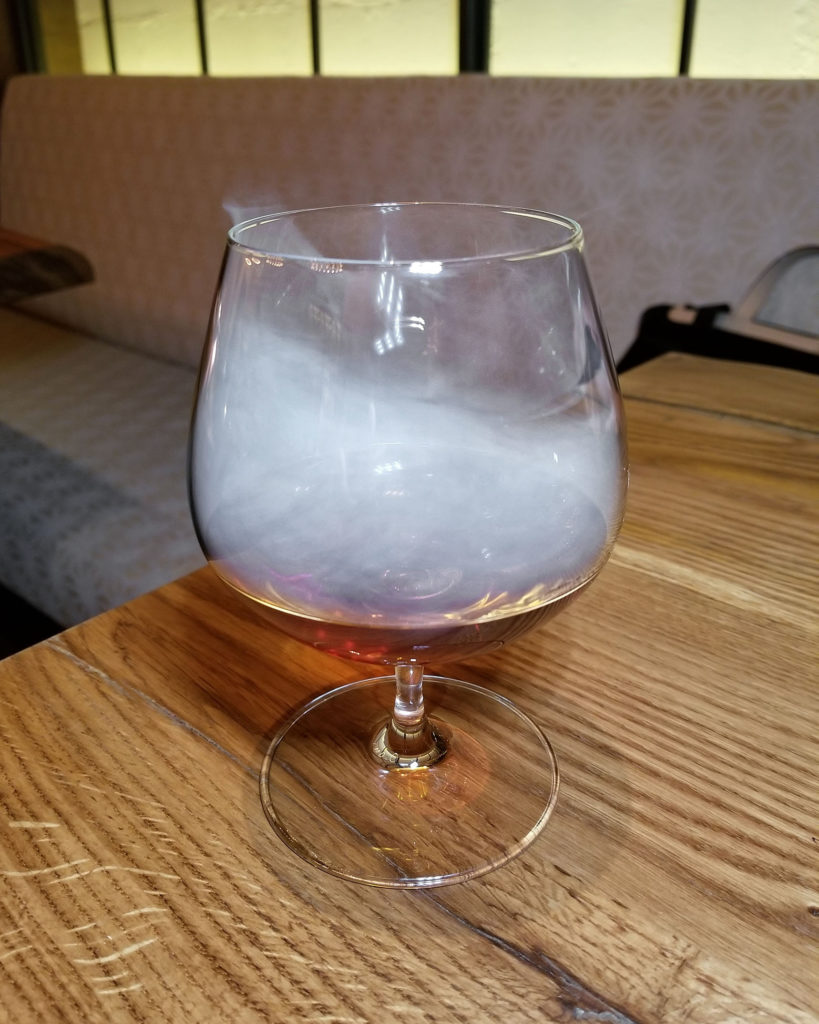
This was sweet and warm, almost like a port or brandy. It was made with rum, vanilla, violet and rooibos… and dry ice for the smoke.
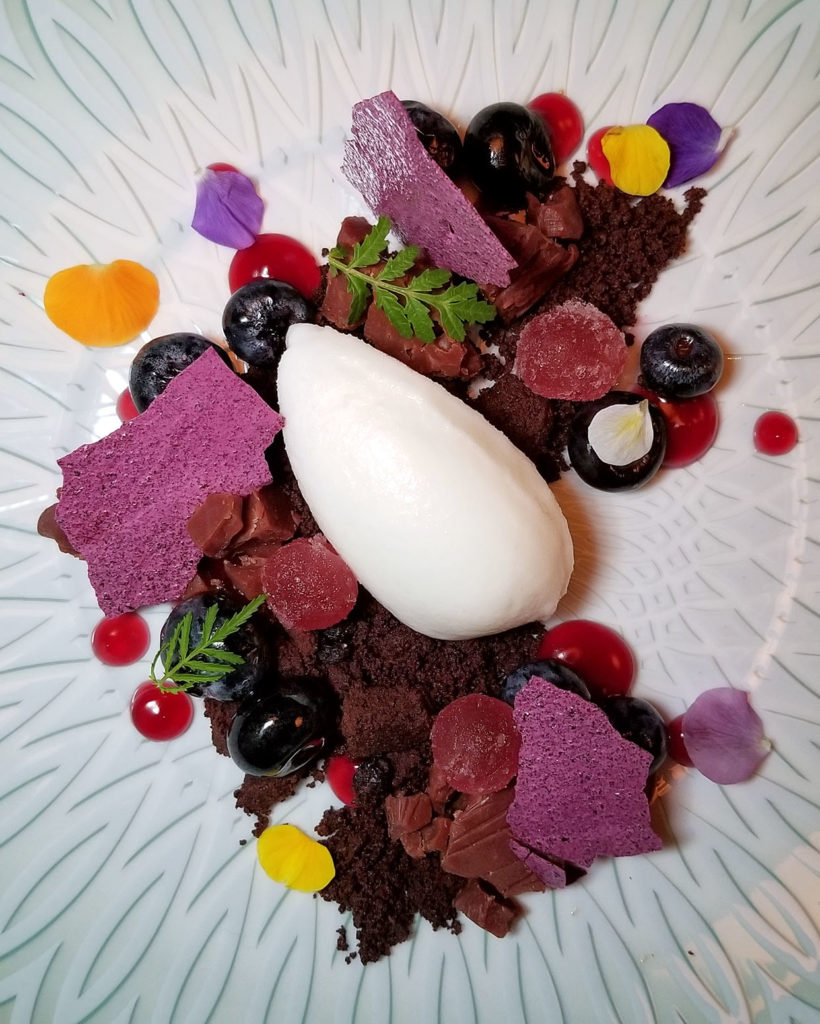
Food: Blueberry
Milk chocolate, violet and buttermilk sorbet make this dessert extra decadent. There were some more spheres of raspberry ice on the plate too, rounding out the meal with a call back to the very first cocktail (Zombie Panda). Really nice.
THE OFFICE
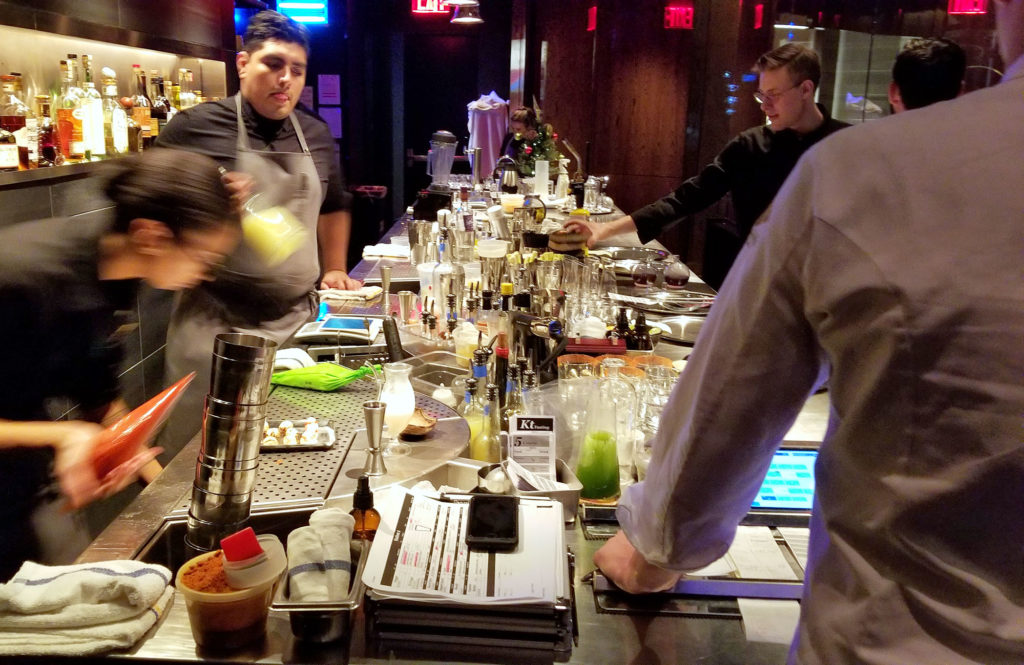
After dinner, our waiter Preston took us on a short tour of The Office, the speakeasy behind The Aviary bar staging area (which looks more like a kitchen than a bar).
Here’s what the inside of The Office looks like:
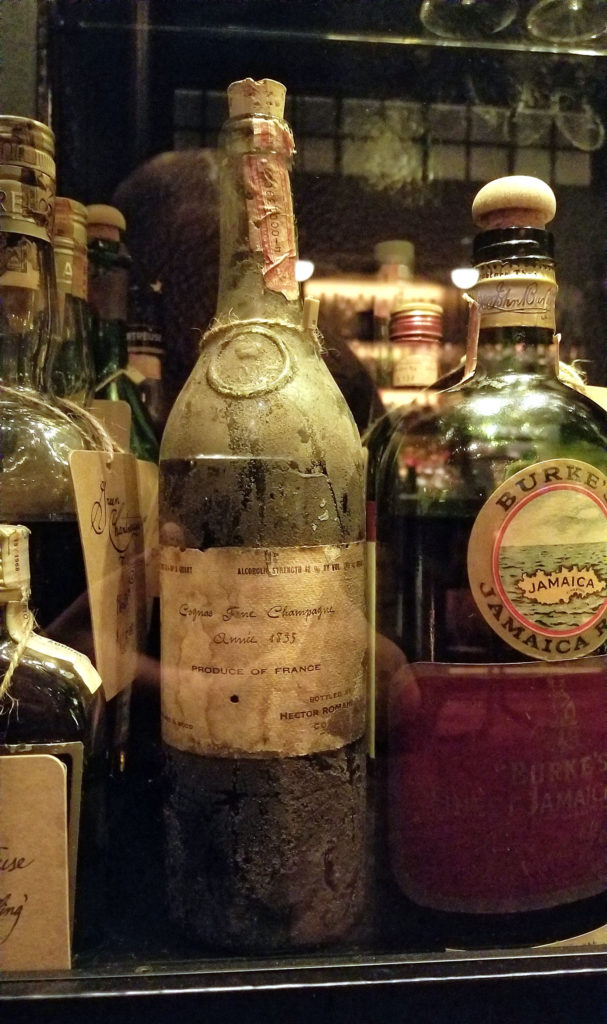
They have a cabinet filled with really old spirits that you can order as well. Super rare.
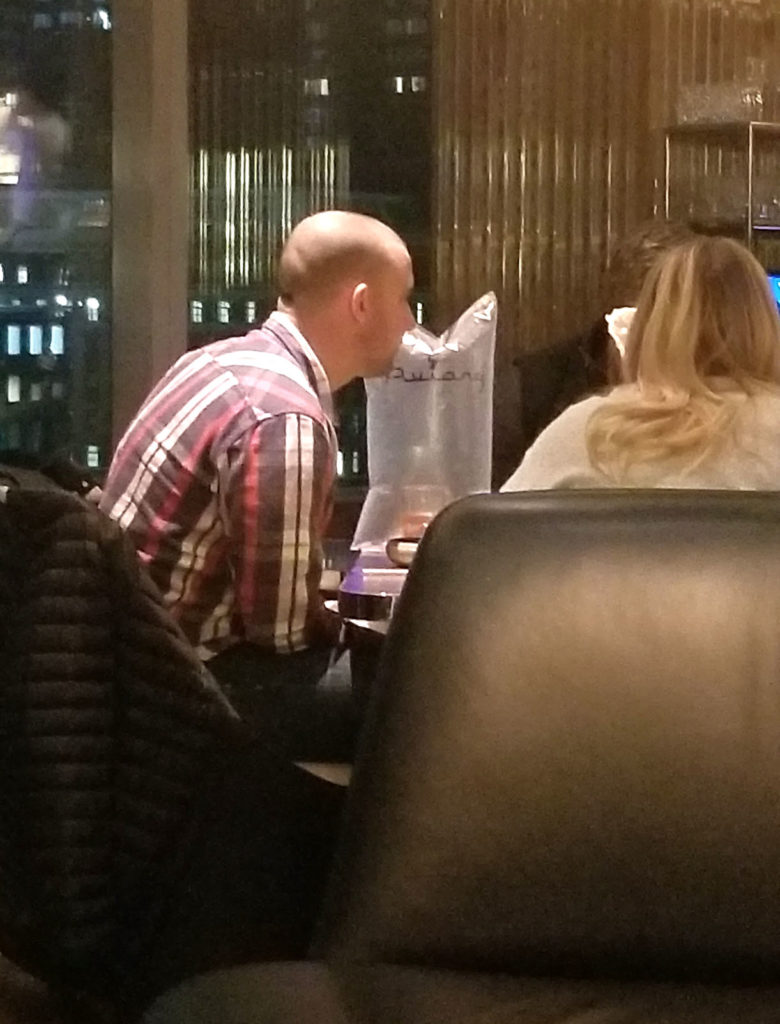
I will definitely be back to try this place, as well as the Aviary again. So many interesting sounding drinks and food items to try, like the “Science AF,” which looks like a chemistry set, or the “Wake & Bake,” which is a pillow filled with smoke and a drink made with orange, everything bagel, coffee and rye. I snapped a photo of it before they opened the bag filled with smoke:
THE AVIARY
Mandarin Oriental
80 Columbus Circle at 60th Street
New York, NY 10023
A food Instagram buddy of mine, @NYCFoodFOMO, set up an “influencer” dinner here, so I was able to try a bunch of stuff. I was really impressed with the meats. It was difficult to fit this review into my standard 10-category format, as some sections just didn’t pan out like they would for a larger steakhouse. With that in mind, you should focus more on the flavor category, as well as the specific notes I made about other food items. Base your decision to go here on the substance and “meat” of the review, as opposed to the total number. I really loved every single item that I ate here, and I will definitely be back again. Anyway, check it out:
Flavor: 9
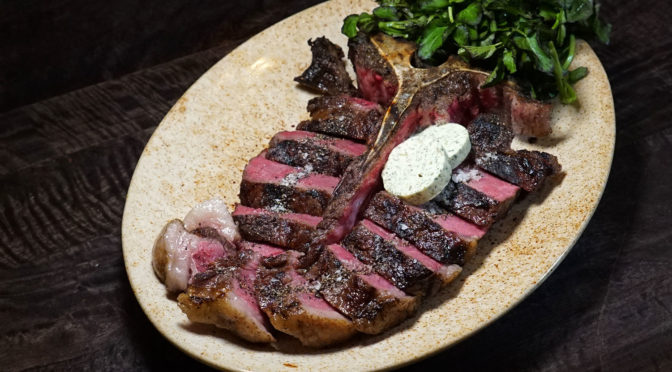
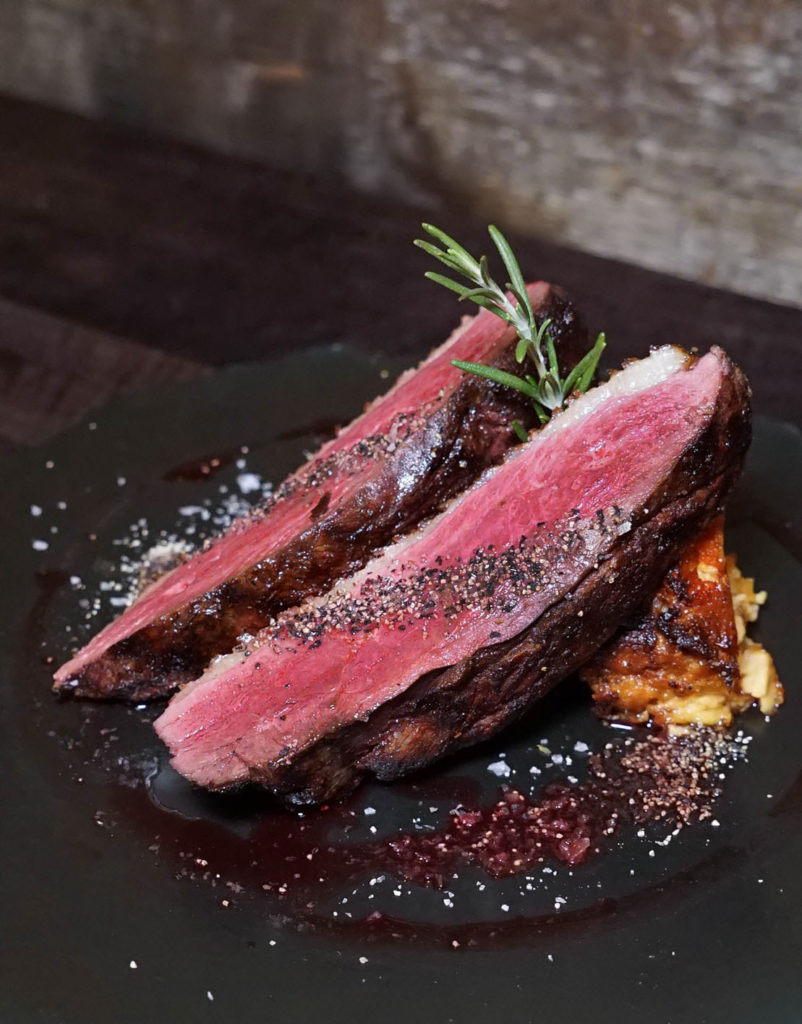
Porterhouse: 8/10. This baby is dry aged for 50 days, so it eats really soft with with a nice outer crust texture for contrast.
The aged flavor was on the milder side, but I really enjoyed it.
Both the tenderloin side and strip side were perfectly cooked and tender.
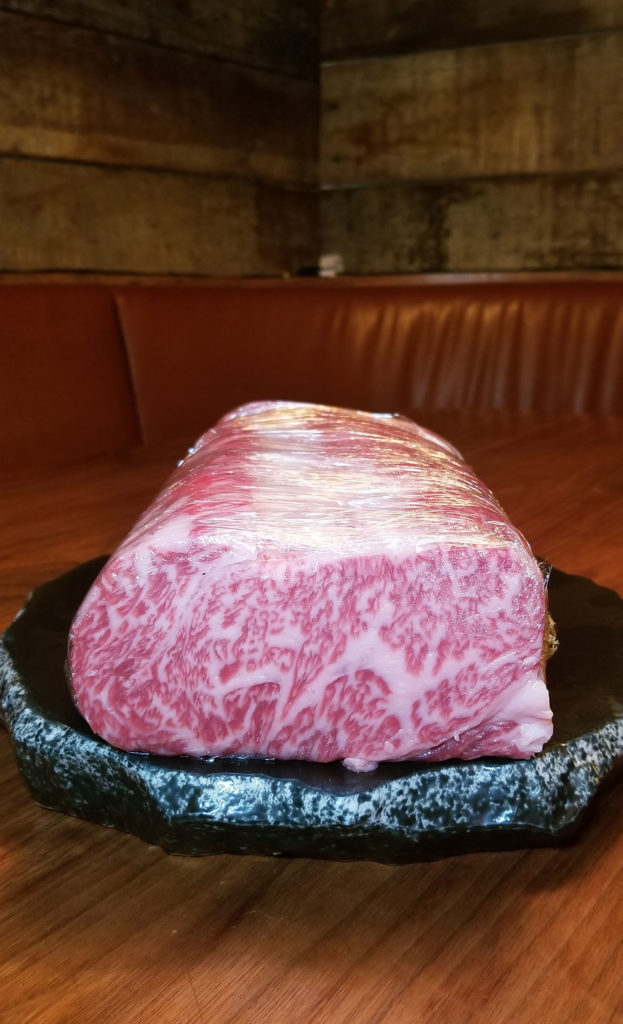
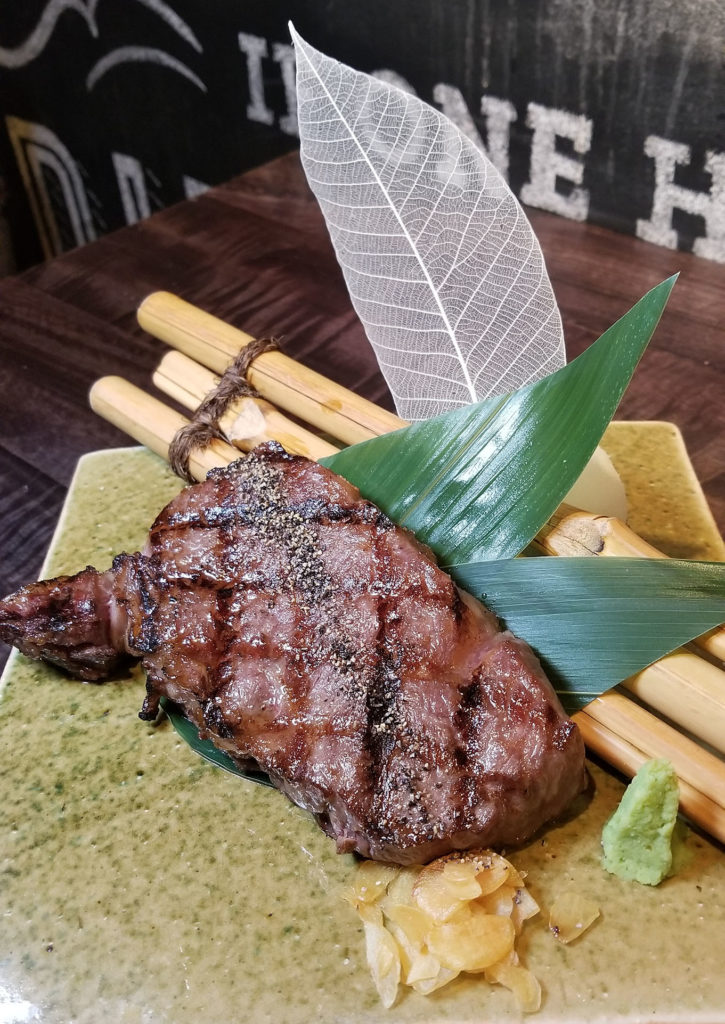
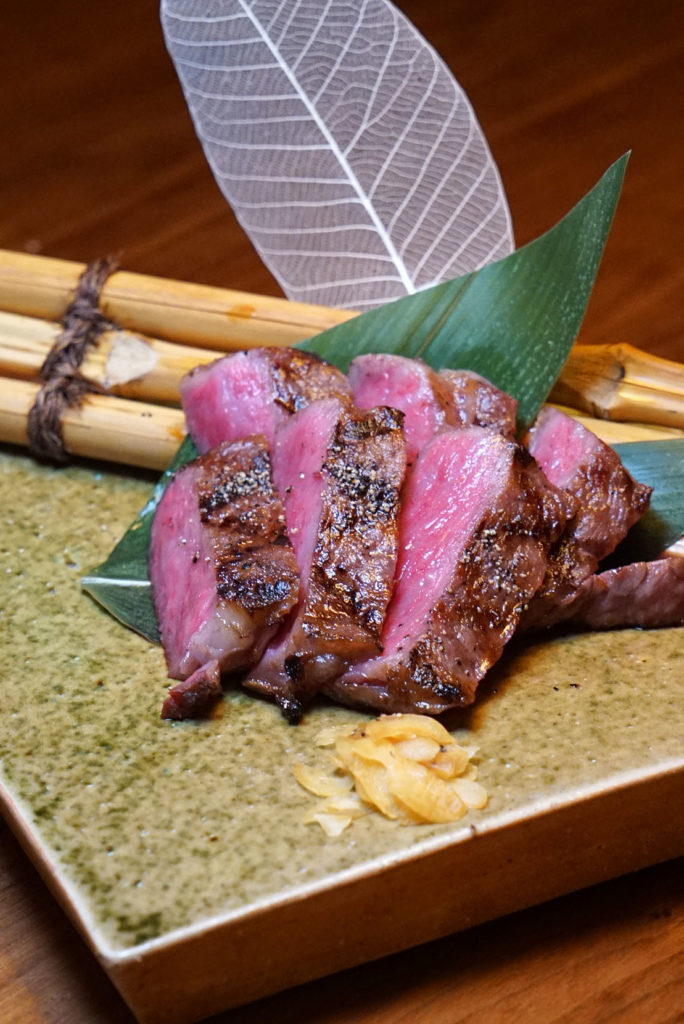
Miyazaki Sirloin: 10/10. Look at this gorgeous slab of beef.
I mean, it’s rare that you find beef that’s really from Japan, so this is a special situation. They cook and serve this very simply – almost like a sushi dish – with ginger and wasabi.
It packs a lot of flavor, and is incredibly tender. A really nice treat.
Choice of Cuts & Quality Available: 7
You don’t have the biggest selection here (porterhouse, strip, off-menu filet, and wagyu sirloin), but the sirloin is highly marbled Miyazaki; the filet is topped with tons of uni; and the other two cuts are dry aged for 50 days. They are in serious need of a rib eye, however.
Portion Size & Plating: 9
Portions are fairly normal here for the pricing, but the plating is gorgeous. Dishes are served in a Japanese aesthetic.
Price: 8
The prices can get steep. This surprised me for a steakhouse outside of midtown Manhattan. That’s the price you pay for high quality beef, though, and the Miyazaki is actually pretty fair compared to other places I’ve seen it.
Bar: 6
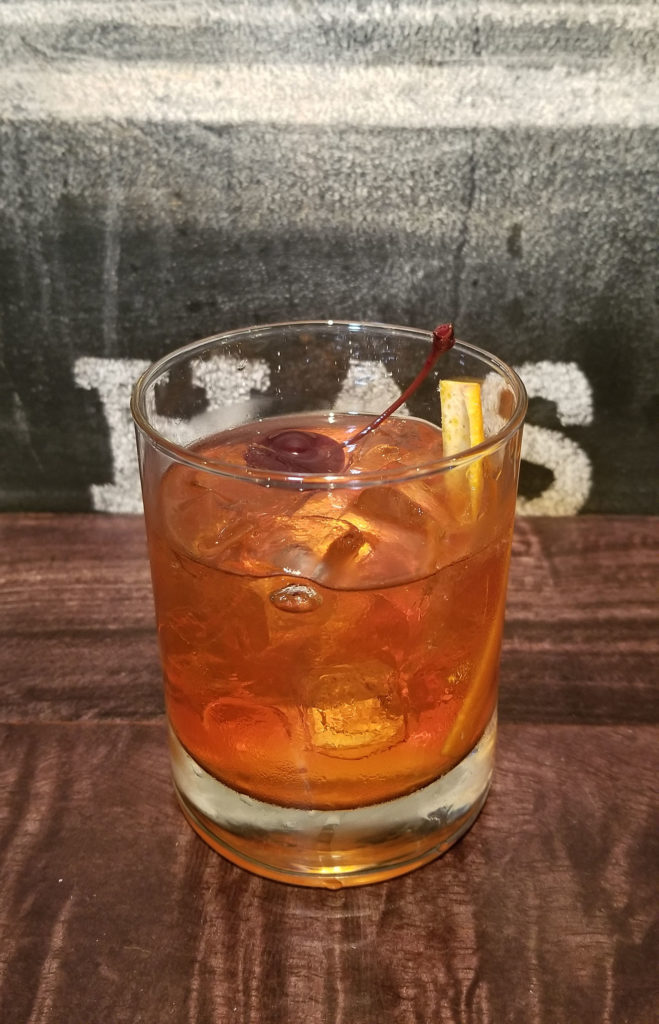
There’s not much of a bar scene to speak of, but the cocktails are certainly well crafted. I had a spin on an Old Fashioned, and I loved it.
Specials and Other Meats: 9
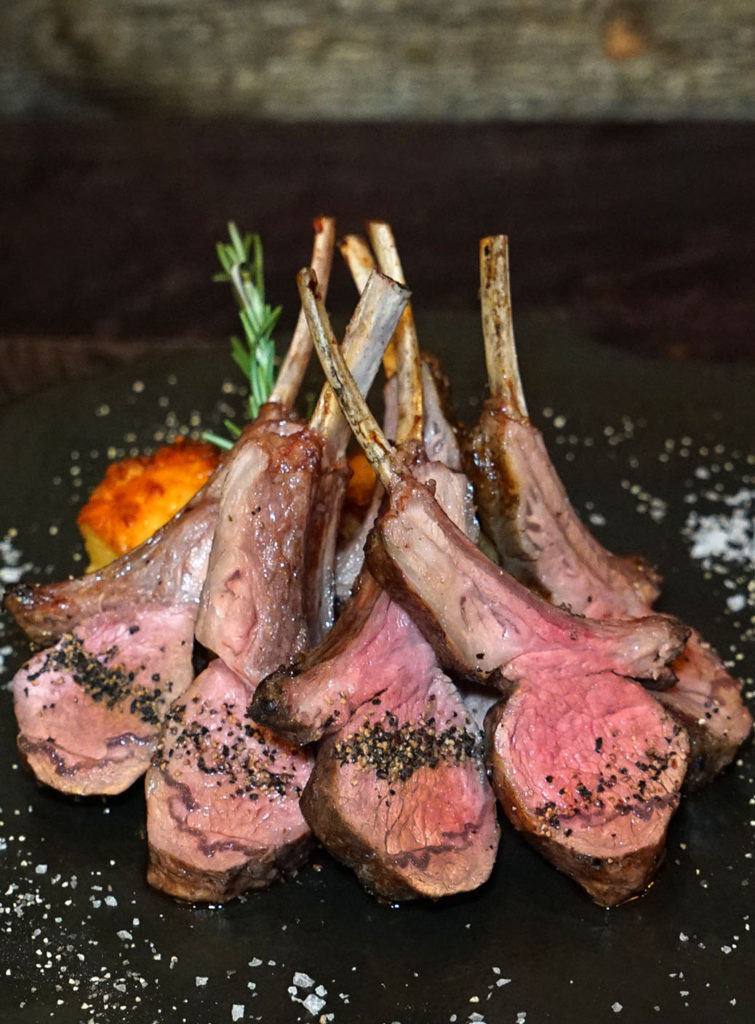
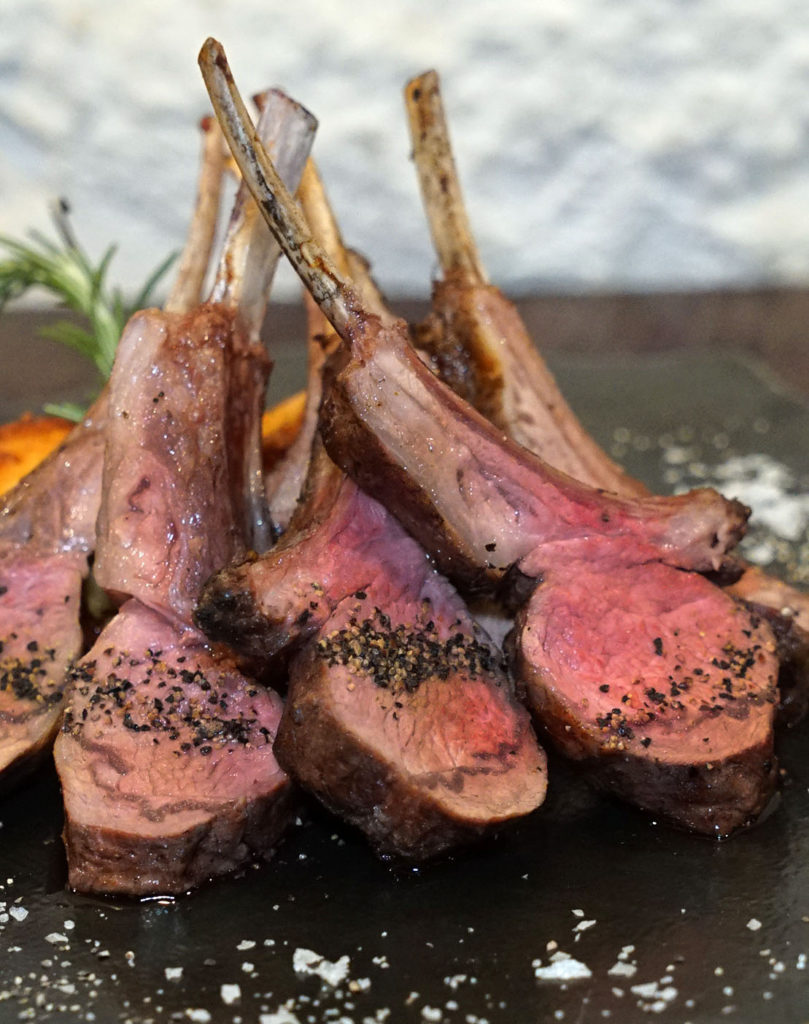
They offer an off-menu filet mignon that’s topped with tons of uni. I didn’t try it, but I’ve heard mixed reviews. I did, however, try their lamb and duck. Both were excellent, and some of the best I’ve ever had. No shame in taking a break from beef to indulge in these two dishes. Hell, they even work as shared apps if you want.
Apps, Sides & Desserts: 10
We tried a delicious trio of apps. First was the wagyu and uni roll. This is similar to the item served over at Takashi, with the accompanying shiso leaf and nori paper.
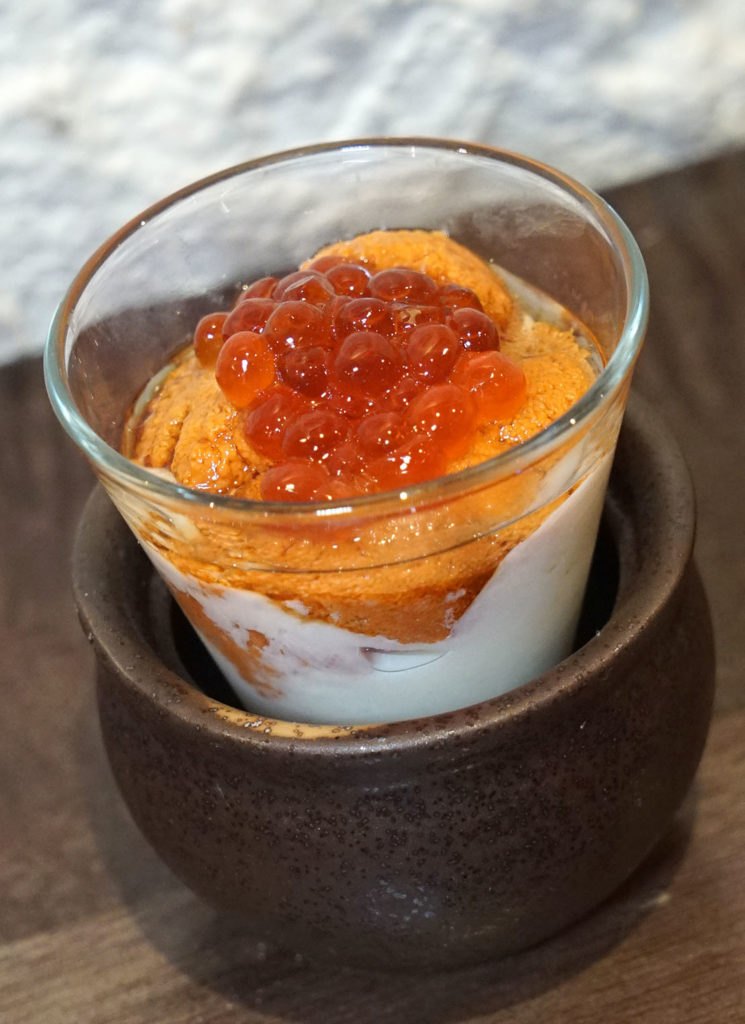
Next up was the uni shooter with poached egg, salmon roe and truffle oil. Delicious, smooth and decadent. I could slam a dozen of these no problem.
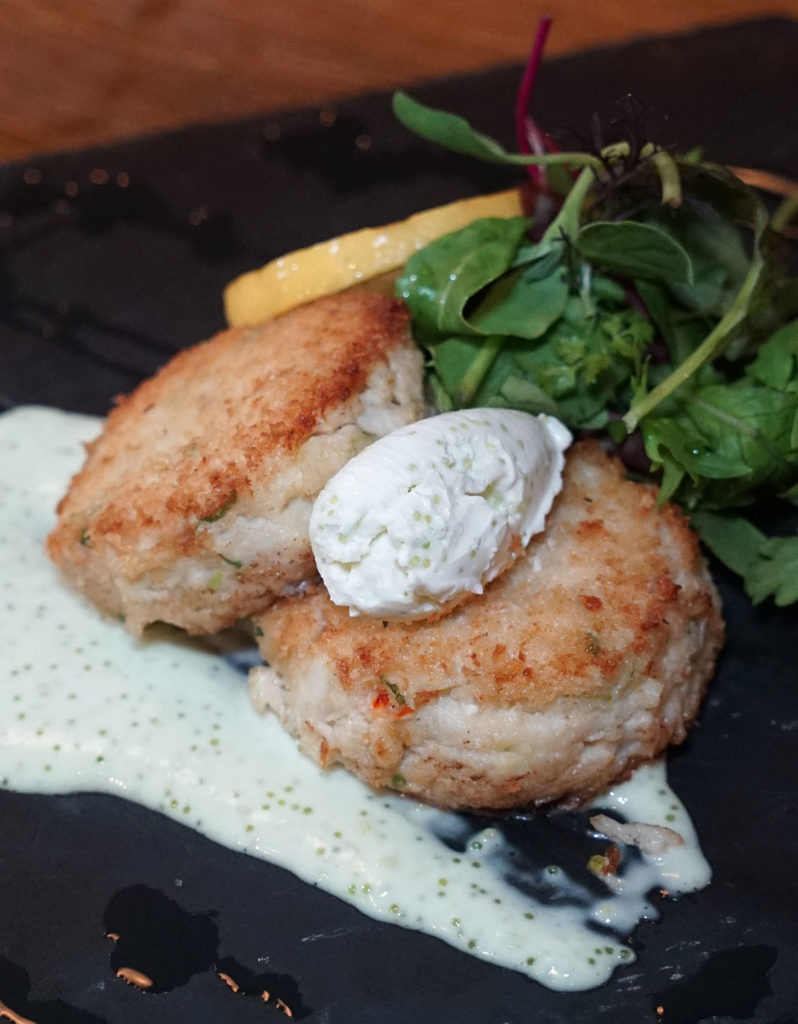
Last but not least, the crab cakes. These were generously meaty with a nice lightly breaded crust. Lovely.
Worth noting here: two of the dishes came with these amazing potato cake sides made of dozens of thinly sliced potato. It was buttery, salty and delicious.
Seafood Selection: 9
There’s a healthy amount of seafood on the menu here, as this joint also serves up some killer sushi. We tried a few rolls and loved them all. No pics though.
Service: 10
The service here is outstanding. Everyone is attentive, yet respectful of your space and privacy.
Ambiance: 8
Beautiful rustic wood tones make for a very cozy, warm and inviting atmosphere. I really liked the open view into the kitchen on the main dining floor. While the restaurant is long and narrow, they make good use of the space. And like a traditional steakhouse, there is a private dining room available downstairs, which is where we ate.
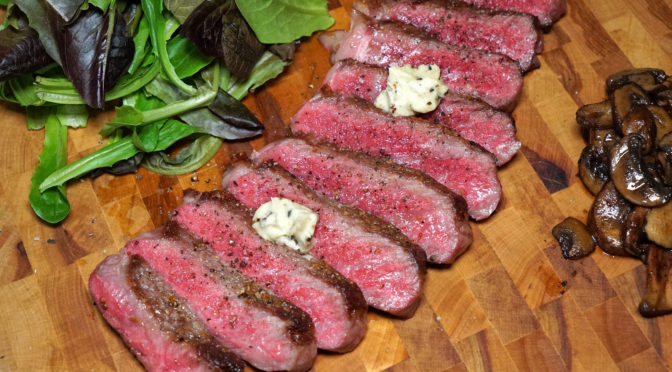
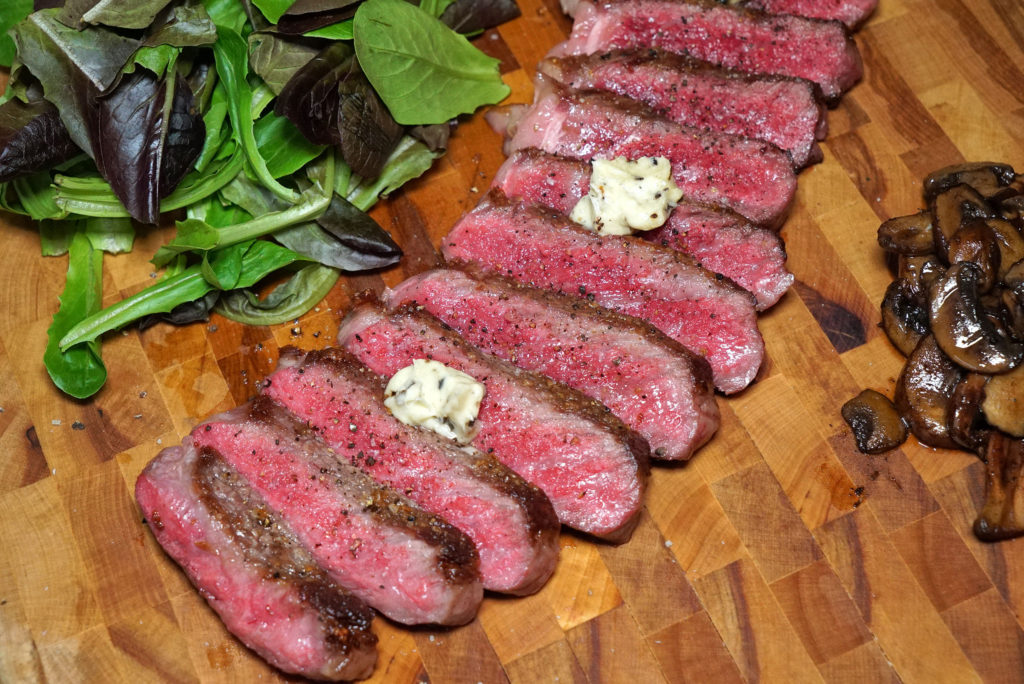
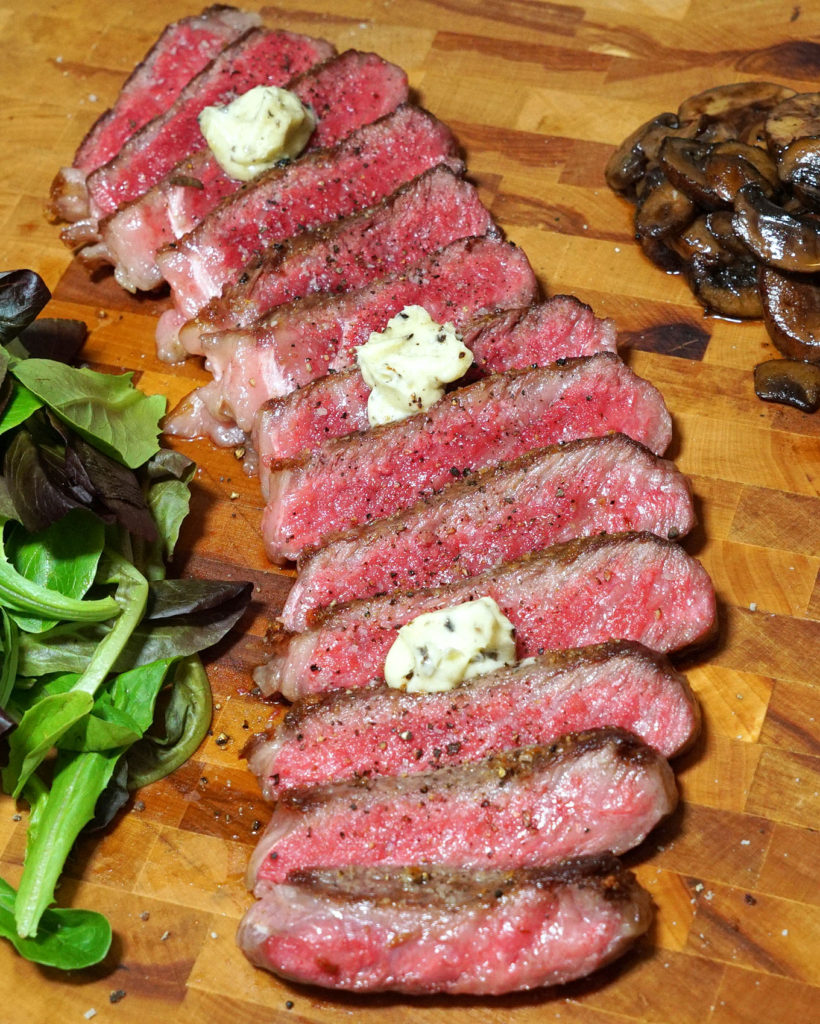
We are butchering a bunch of American wagyu strips into easy-to-grill 12oz portions and selling them at a discount when you buy them in packs of four.
These are really simple to cook: just 2-3 minutes per side in a screaming hot pan with butter, salt and pepper. You will impress the fuck out of your friends and loved ones with these – I promise you. These are the best steaks I’ve ever eaten.
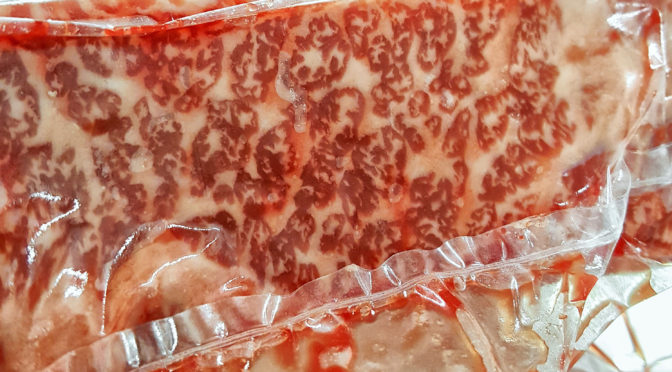
So it happened… I got my hands on some real-deal Japanese Wagyu beef! These are strip loin / New York strip steak cuts, to be precise. Click HERE for the product page in the shop.
I had my guys portion these out so that they’re not too insane on the wallet. Jump on them now and you can get 8oz for $100 (down from $125). Not too bad for the rarity of this beef.
I feel like a half pound is the perfect size for this (you can share with another person, too; 4oz each). Why such a small portion? Because it eats more like foie gras than beef. It’s so tender, so uniform in texture, so juicy, and so rich with delicious, melt-in-your-mouth fat, that you may want a reprieve after a few ounces.
You may want to mix up the textures with another cut. If that’s the case, my suggestion is this: grab one of these, one domestic wagyu strip, and one dry-aged prime porterhouse. Have yourself a taste-off and see which you like the best.