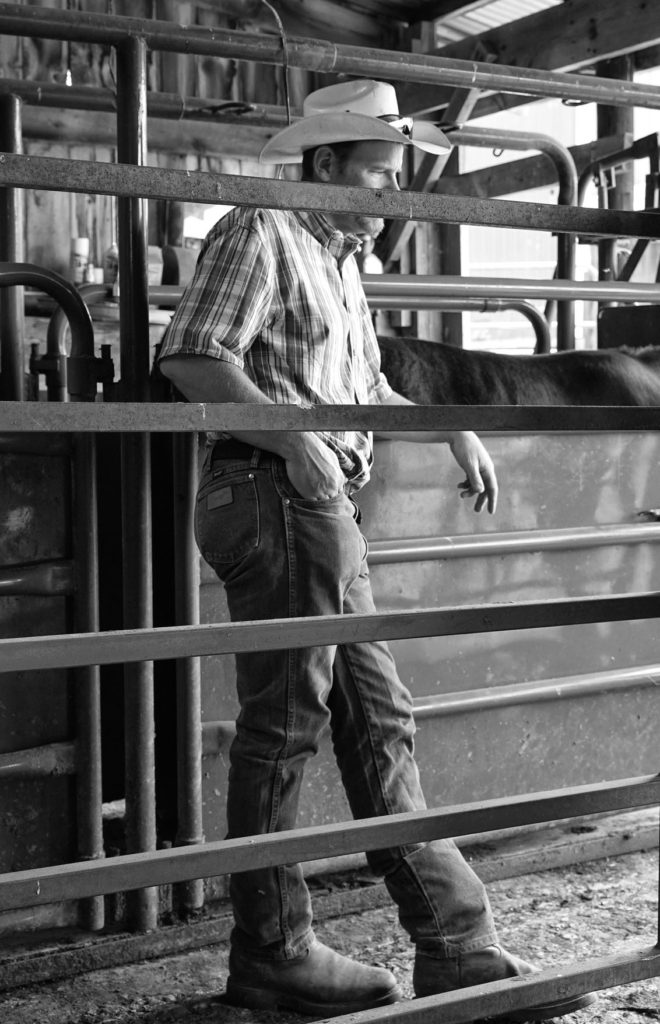
Meet Your Meat posts are a new way for me to introduce my readers to the people responsible for raising and producing our food. Farmers, ranchers, processors, butchers, etc. You get enough chef info in my restaurant reviews, but it’s high time that I start focusing on the people who actually supply restaurants with their delicious beef proteins.
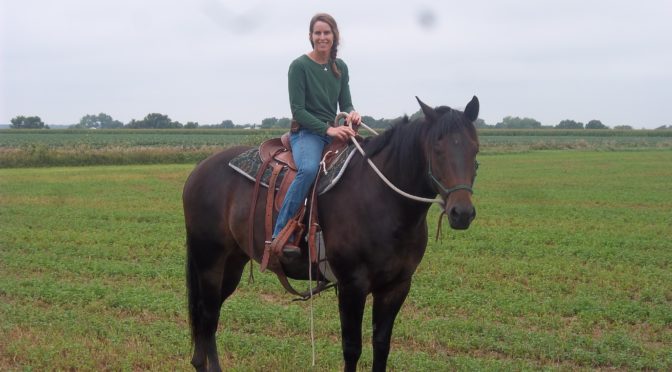
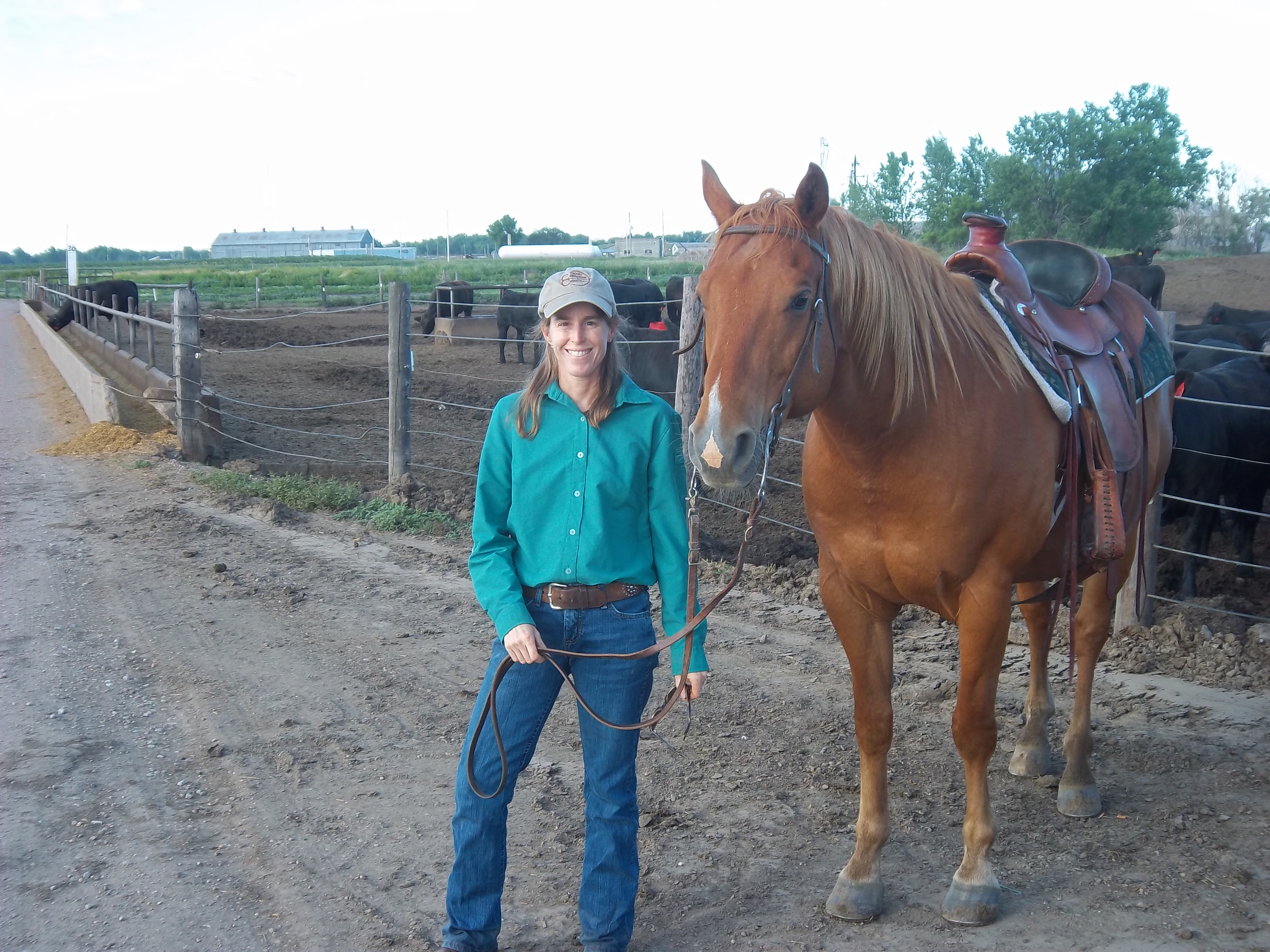
That experience is the subject of a whole other post, so I won’t get too deep into it here, but the point in mentioning it is to anchor your understanding of why I’m choosing Anne Burkholder to be the first person that I spotlight in this new “Meet Your Meat” endeavor. Anne was an instructor at the Top of the Class, and over the course of the two day training program, I got to know her and was inspired to write about her journey.
https://feedyardfoodie.wordpress.com/
Since I and most of my readers are from the NYC metro area, many of us don’t know a lot about farming, or we take it for granted. Most of us are probably still in the dark about what it takes to bring beef to our plates every week. We just don’t get exposed to the process often enough.
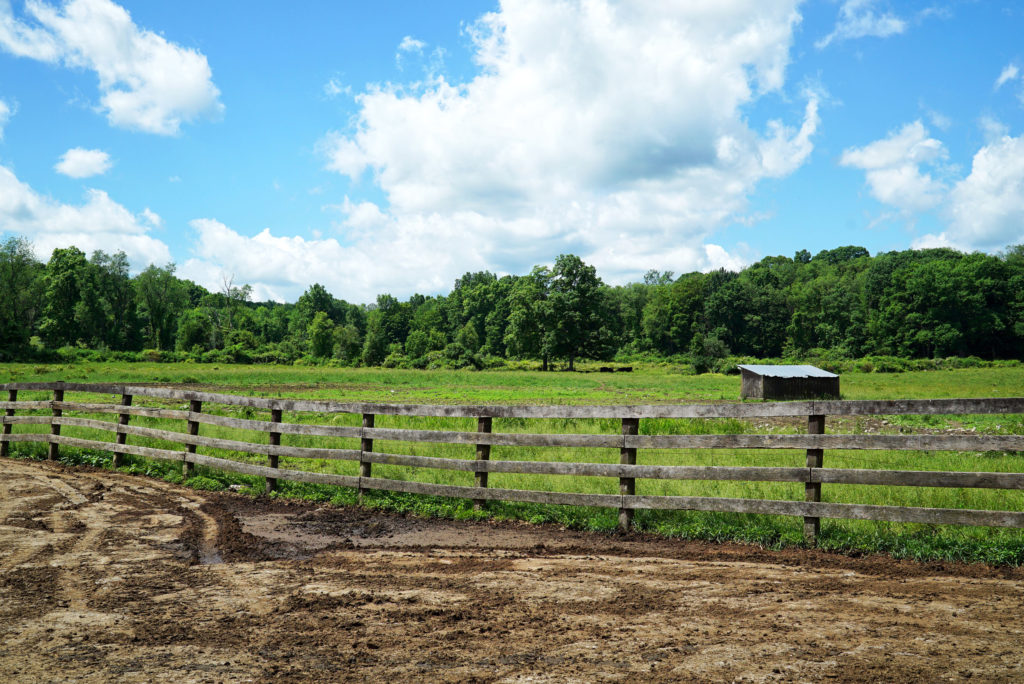
Anne represents all of us urbanites and suburbanites. She grew up in urban Palm Beach County, Florida. While anything “Florida” may sound like a sprawling paradise to us NYC folks, urban Palm Beach is certainly not a farming community; it’s a city!
Smart as a whip and with incredible athletic pedigrees in both cross country running and swimming, Anne attended an ivy league college. She met her husband Matt there, and they later moved back to Matt’s home town in Nebraska.
Matt’s family owned and operated a diversified farm business. What is a diversified farm? Essentially it’s when a farm produces a variety of crops or animals, usually both, with the crops feeding the animals that they raise, in an effort to create a self-sustained farm with little waste or reliance upon other operations. You may recall that Walbridge Farm is like this as well, where they grow sunflowers and raise cattle, with the sunflowers being used to produce both sunflower oil and cattle feed.
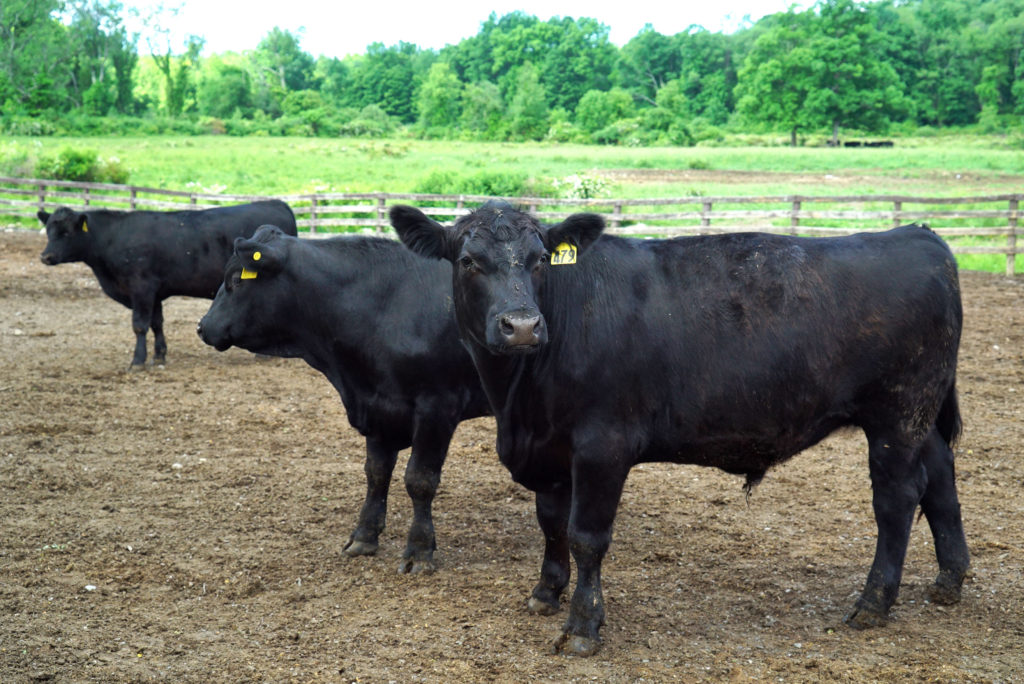
Okay so back to Anne. Soon after graduating cum laude at Dartmouth, she was putting on boots and blue jeans to work at her and her husband’s cattle feed yard, Will Feed, Inc. This is where cattle get fattened up, so to speak, before going off to market. Check out this short video that explains what she does:
See how much space these animals have? Just goes to show you how bogus those myths are about “factory farming.” But anyway, I digress…
Nearly 20 years have passed since Anne moved out to the country, and she still loves what she does. Apparently the beef community loves what she does as well:
In 2009, she was awarded the Beef Quality Assurance Producer of the Year Award for her volunteer work in beef farmer education concerning animal welfare and food safety. In 2013 she was voted to Vance Publishing’s 40 under 40 in Agriculture, and in 2014 she was awarded Beef Magazine’s Trail Blazer Award. Both awards were given for her work in consumer outreach through her blog, Feed Yard Foodie.
She’s a member of the Tyson Fresh Meats Animal Well-being Committee for Farm Check, the National Beef Quality Assurance Advisory Committee, a Director of the Nebraska State Beef Council, and an avid advocate for the cattle industry. She’s constantly and actively improving cattle welfare and beef safety. She is an irreplaceable asset.
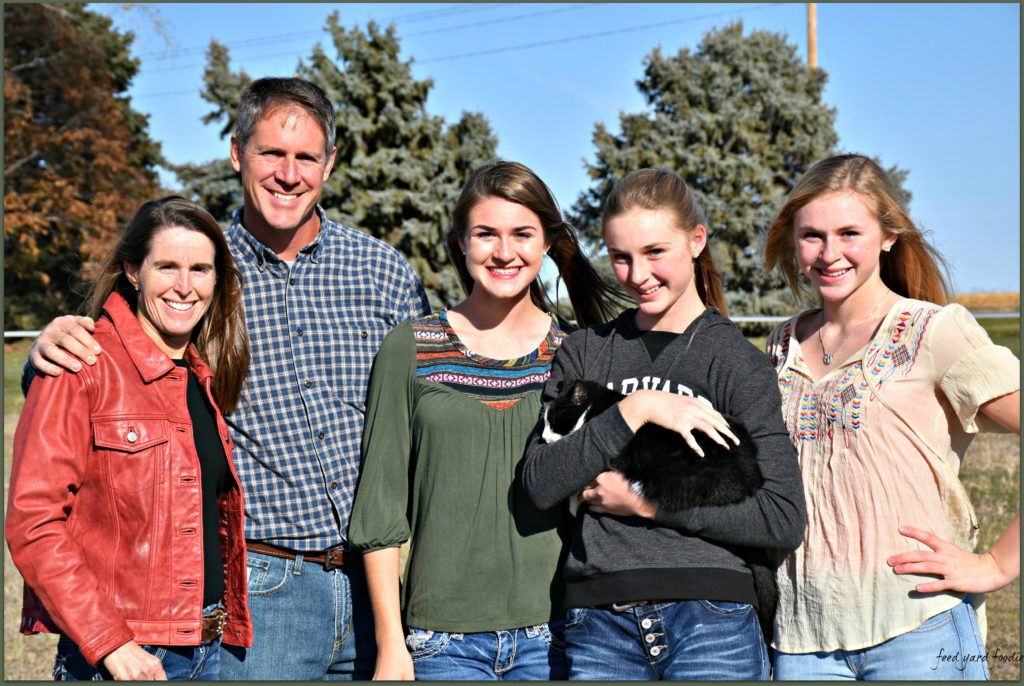
The best part is that Anne’s operation is a family farm, and she loves the personal responsibility that her three daughters learn from taking care of their land and animals. So not only is Anne working to improve all-things-beefy, but she is setting a great example so that the next generation can do so as well.
In addition to running cattle on grass in the spring and summer, Anne is soon to start a new job with Beef Marketing Group and Innovative Livestock Services. Her role will be in communications, and she will also be helping take on various animal welfare projects for four Nebraska feed yards. She’s looking forward to implementing her animal care ideas to impact a larger number of animals.
I encourage you all to follow her blog and check out her insightful posts. She’s a wonderful person and an inspiration.
My wife signed up for some crazy credit card that rewarded her with a free five day stay at Atlantis in the Bahamas. Then she used some of her frequent flyer points to secure us our flights. It was just a matter of paying for food at that point.
I’m sure you have no interest whatsoever in seeing my amazing vacation photos, so I’ll share with you, instead, some pics of the food we ate at the resort.
This resort is known for having very expensive food. We tried to avoid that a bit by hitting some of the cheaper joints for lunch, and supplementing hunger pangs with the assortment of snacks that we packed into our suitcases. This place is indeed expensive, with some joints even costing more than what we are accustomed to, even as NYC food lunatics.
Murray’s Deli
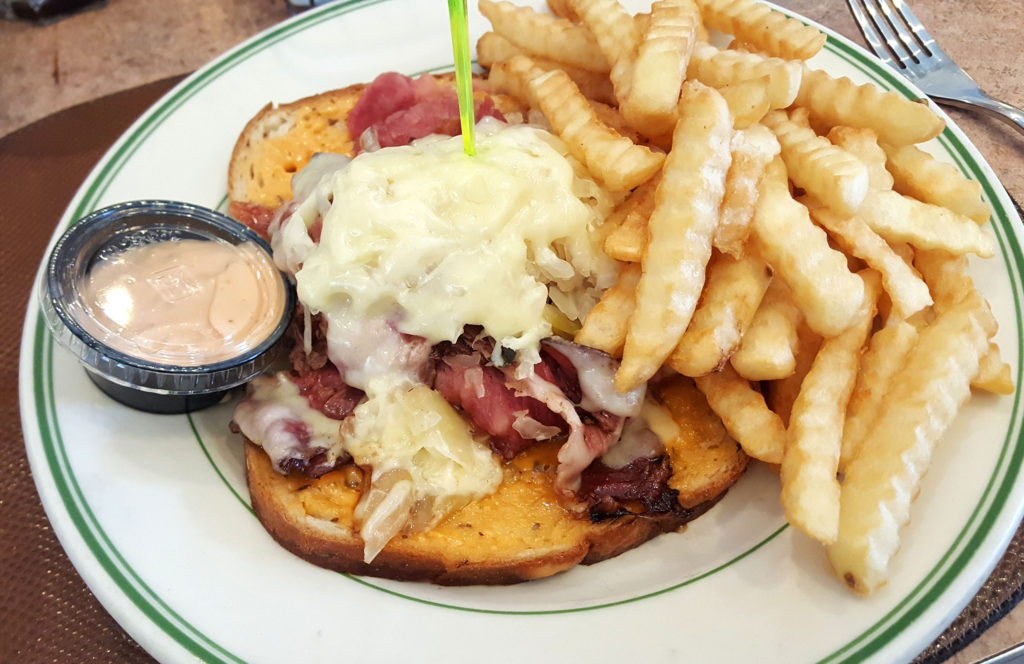
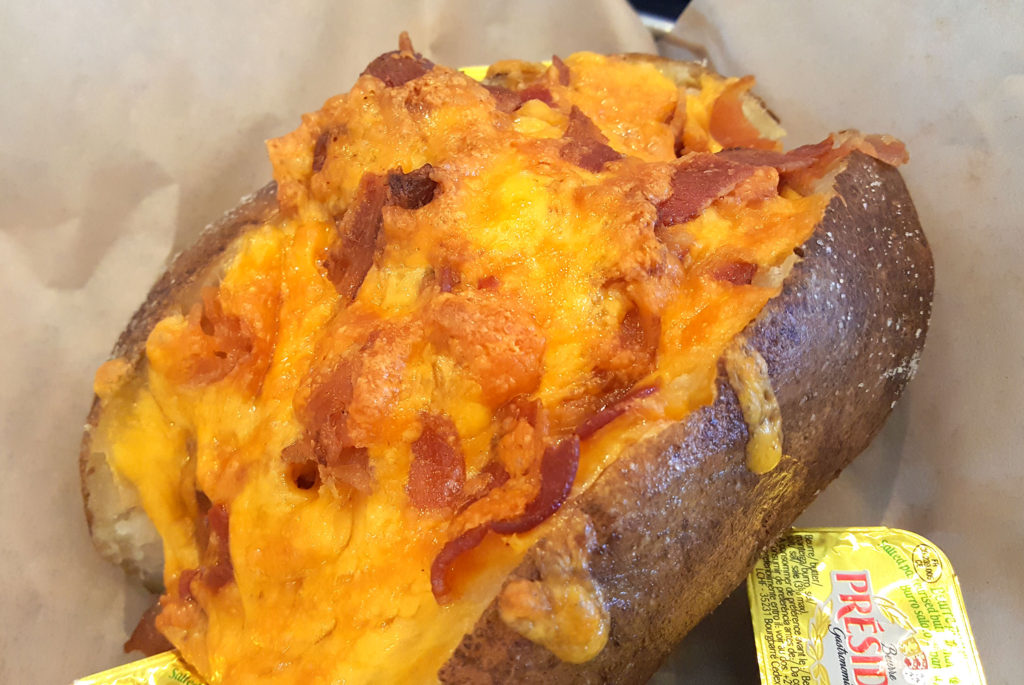
This is a classic NYC style Jewish deli. We had a massive loaded baked potato and a pastrami/corned beef open faced sandwich. We just couldn’t get enough in New York, so we had to eat some while in the Bahamas.
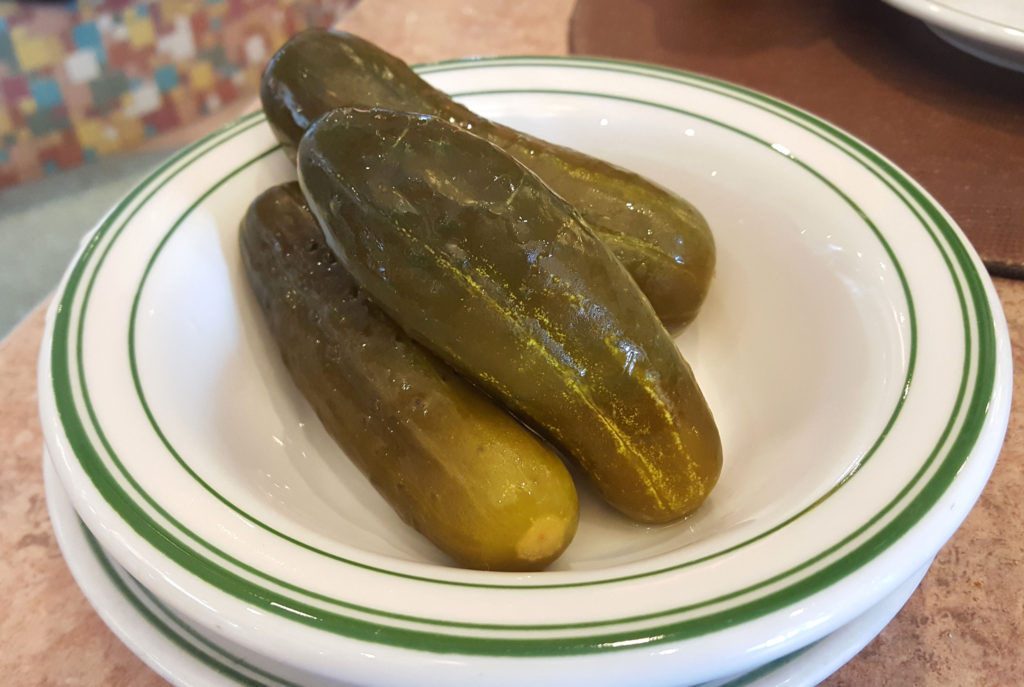
Oh and the pickles…
This place was pretty good.
Burger Shack
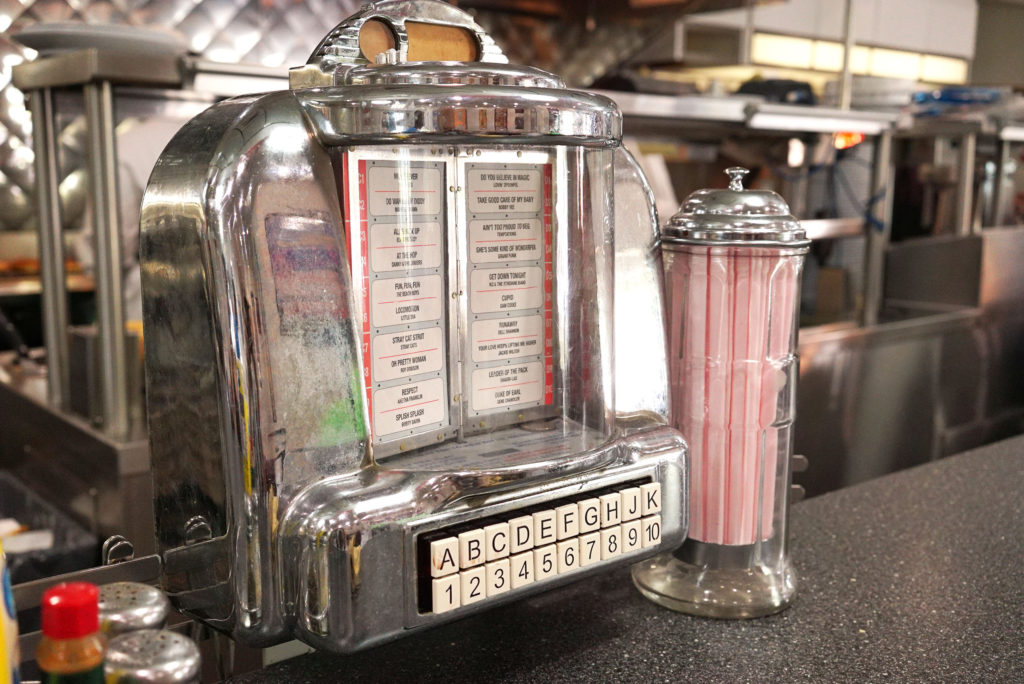
Classic American style diner with burgers, dogs, fries and other comfort foods.
We actually ate here twice because the place we intended to visit prior to our second trip (Bimini Road – Bahamian food) was closed.
First Meal:
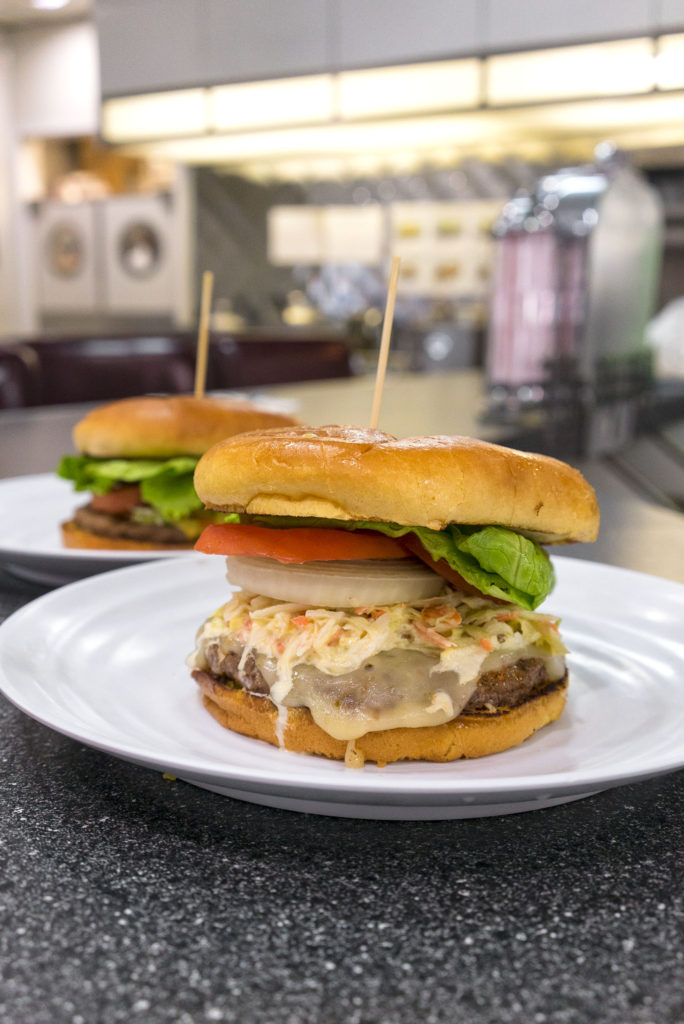
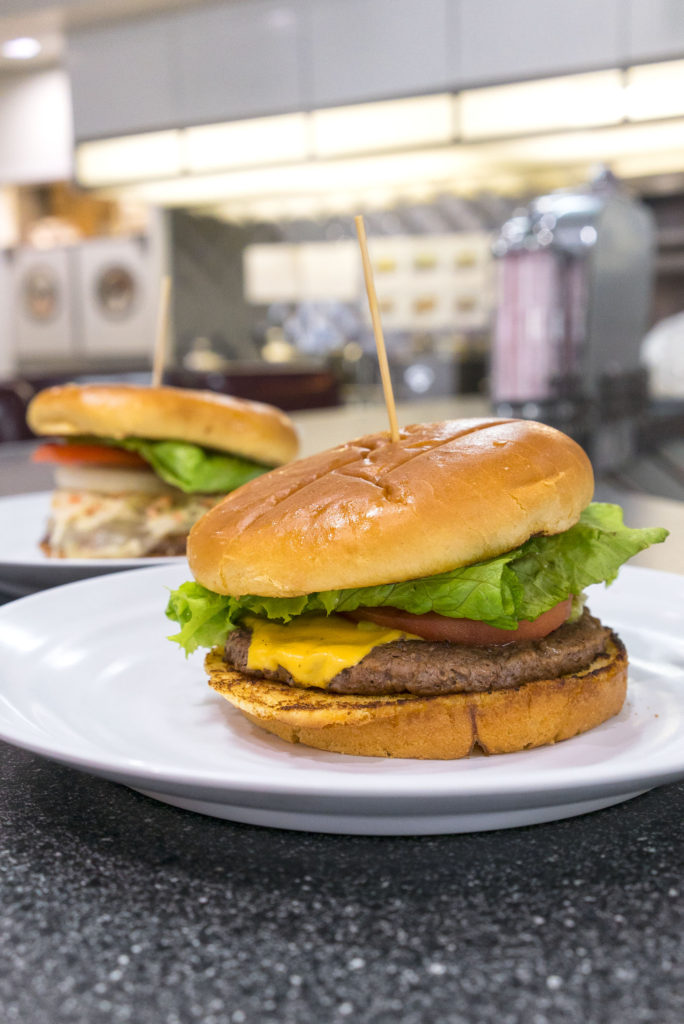
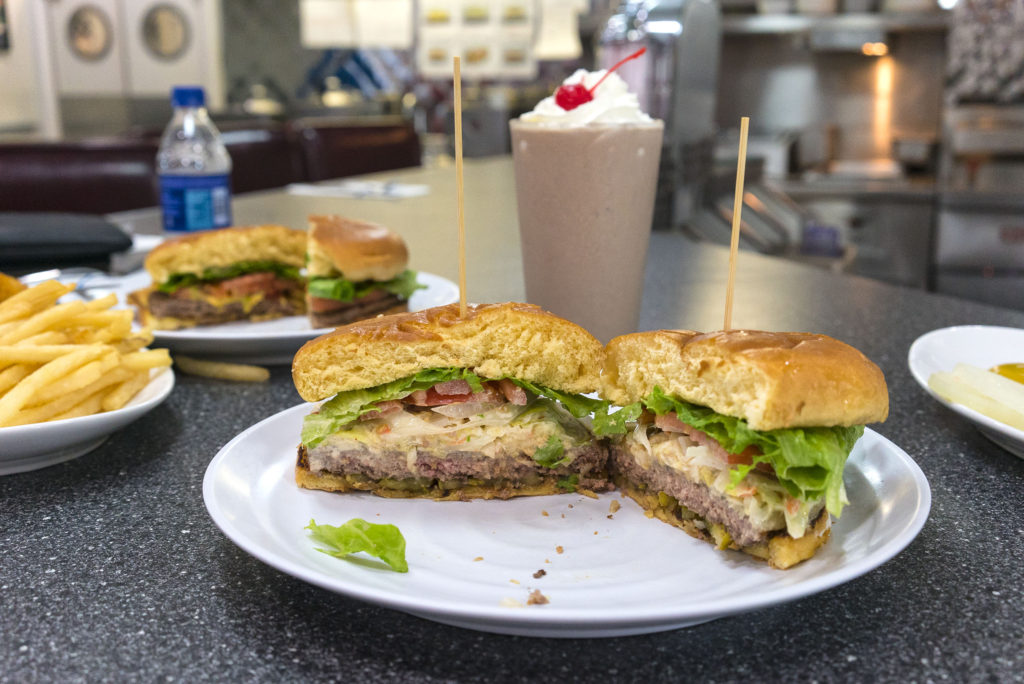
The burgers were pretty good. I can tell they use more fat in their patties than we do here in the states. That made for a more robust flavor but with a slightly less desirable texture. Either way a satisfying burger.
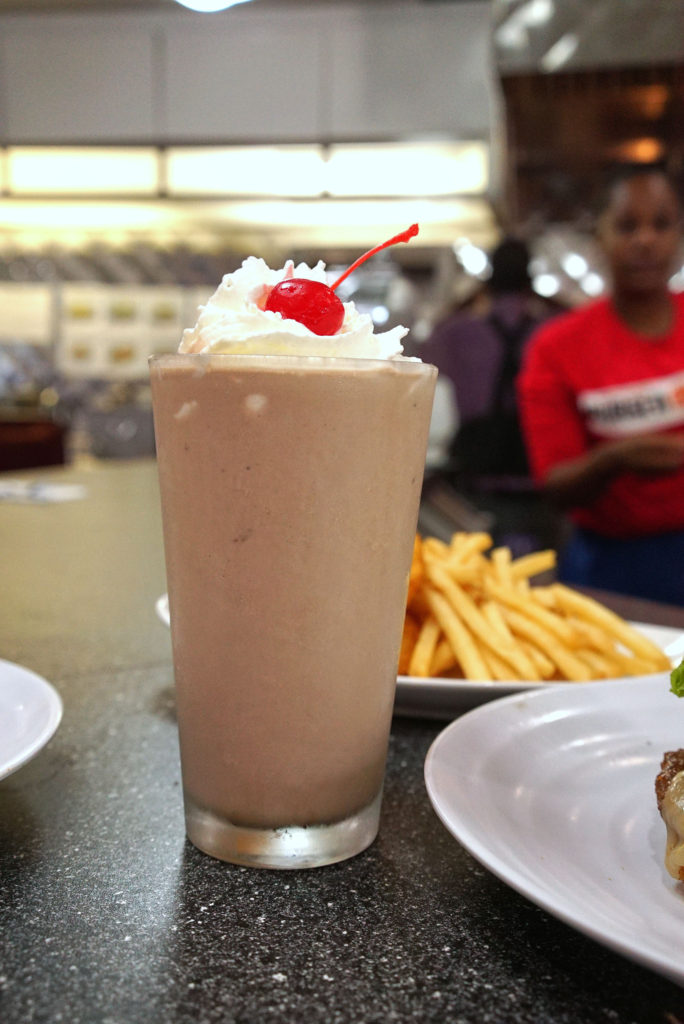
The banana nutella shake was on point, by the way.
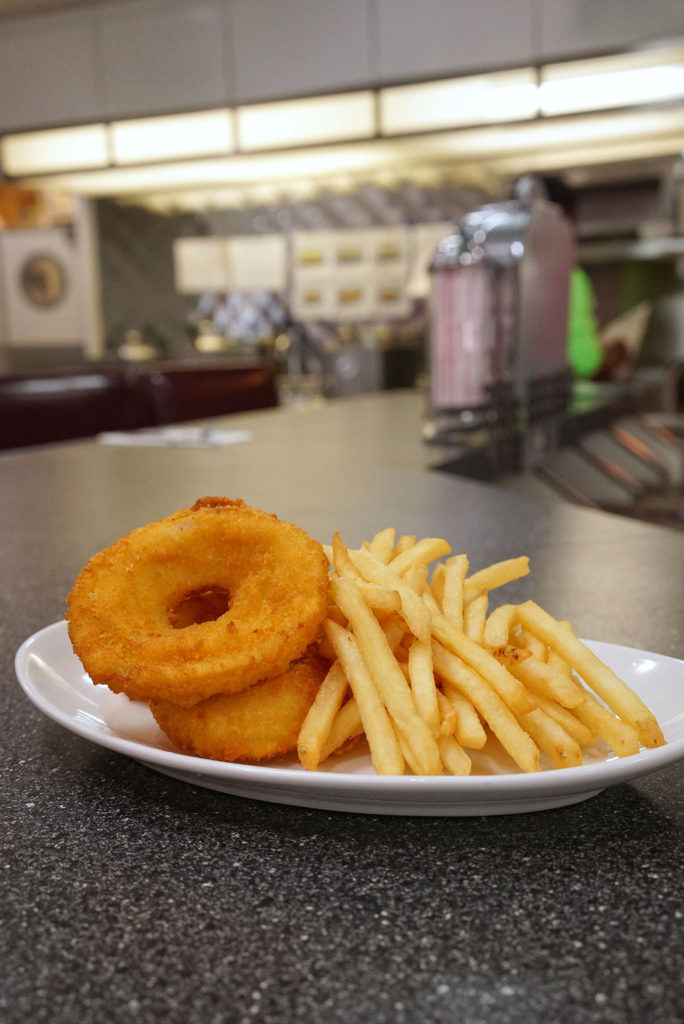
And I’m sure you saw those fries creeping into the frame in the shots above. We actually ordered the combo of onion rings and fries.
Fries were solid. Onions rings, not so much.
Second Meal:
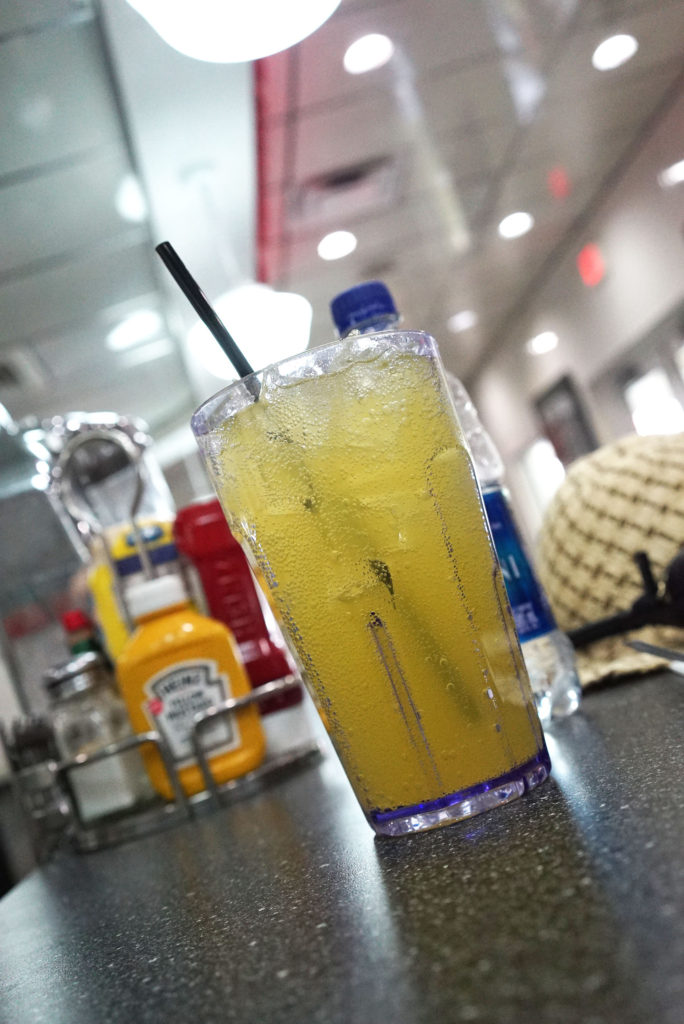
Goombay Punch, essentially fruit soda (pineapple, mainly), is big down here. And sweet. We tried two varieties during the course of our vacation, and this one was superior (the other was called a “fruit champagne” and it sucked balls).
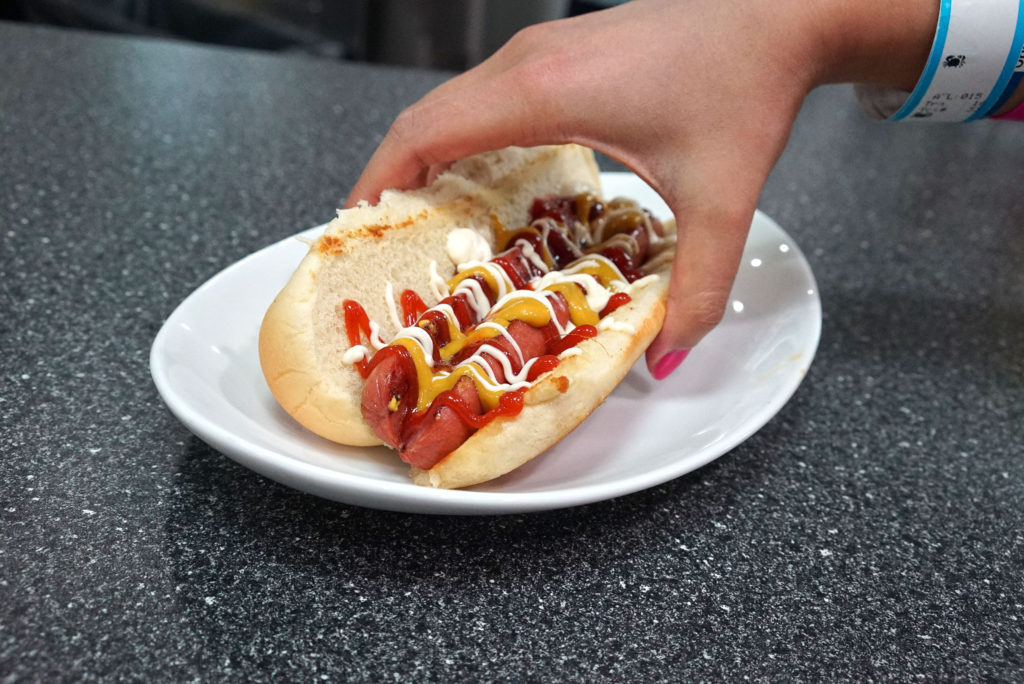
Hot dogs are split and grilled, which I consider to be the best method for grilling dogs. We covered ours with mustard, ketchup, mayo and Tabasco sauce.
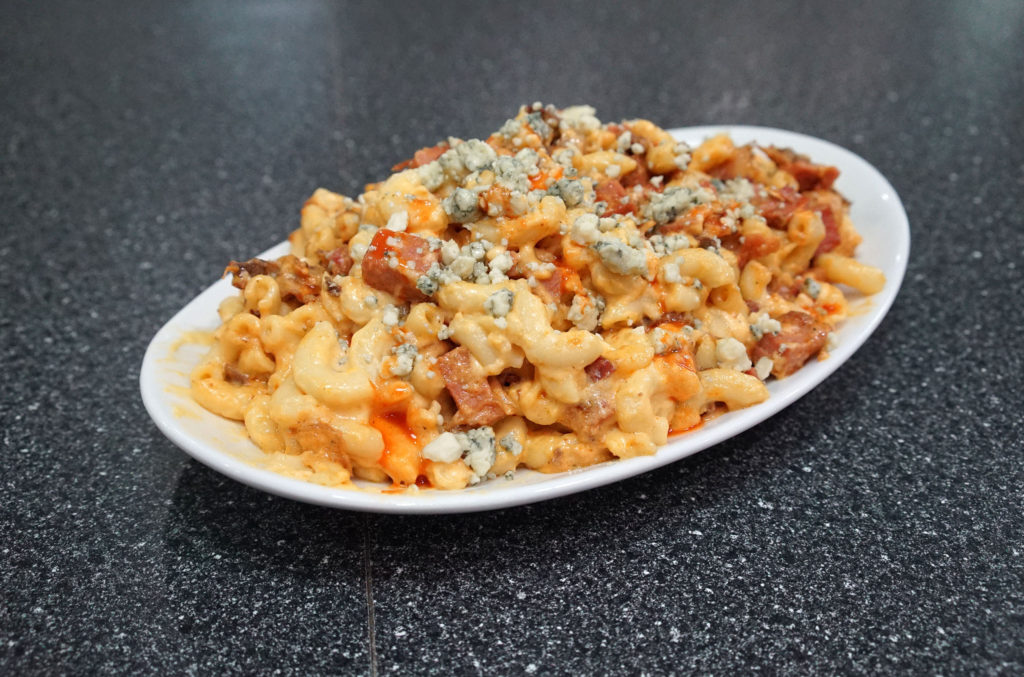
Say hello to the Vitamin B: mac and cheese with blue cheese, chopped up hot dog, BBQ pork, and bacon. Insanity.
Nobu
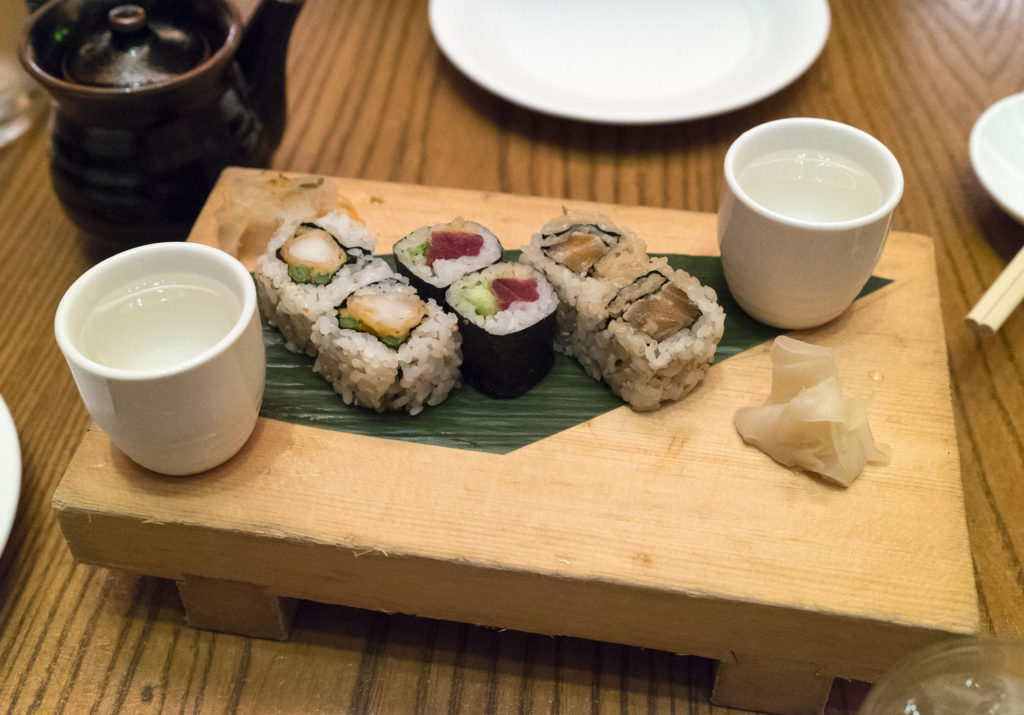
We had some free sake and sushi sampler platter to use at Nobu, so we figured we would eat a meat there.
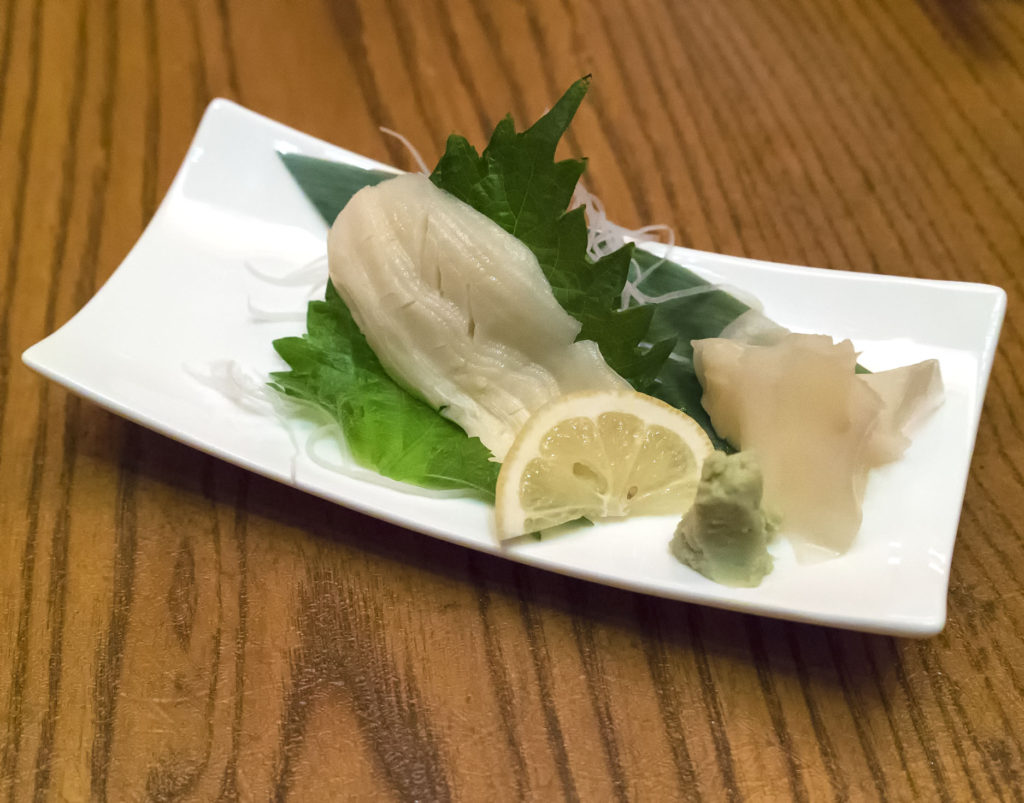
The sampler platter kinda sucked. I can’t believe they normally charge $40 for that. But we did redeem the meal a bit with this conch sashimi:
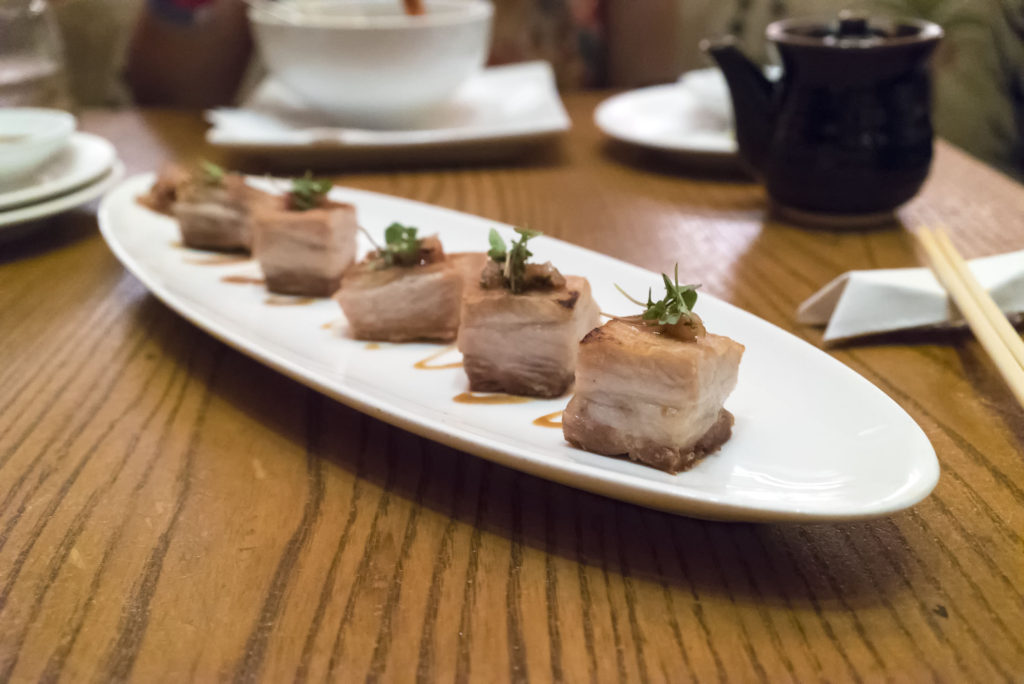
And this crispy pork belly dish:
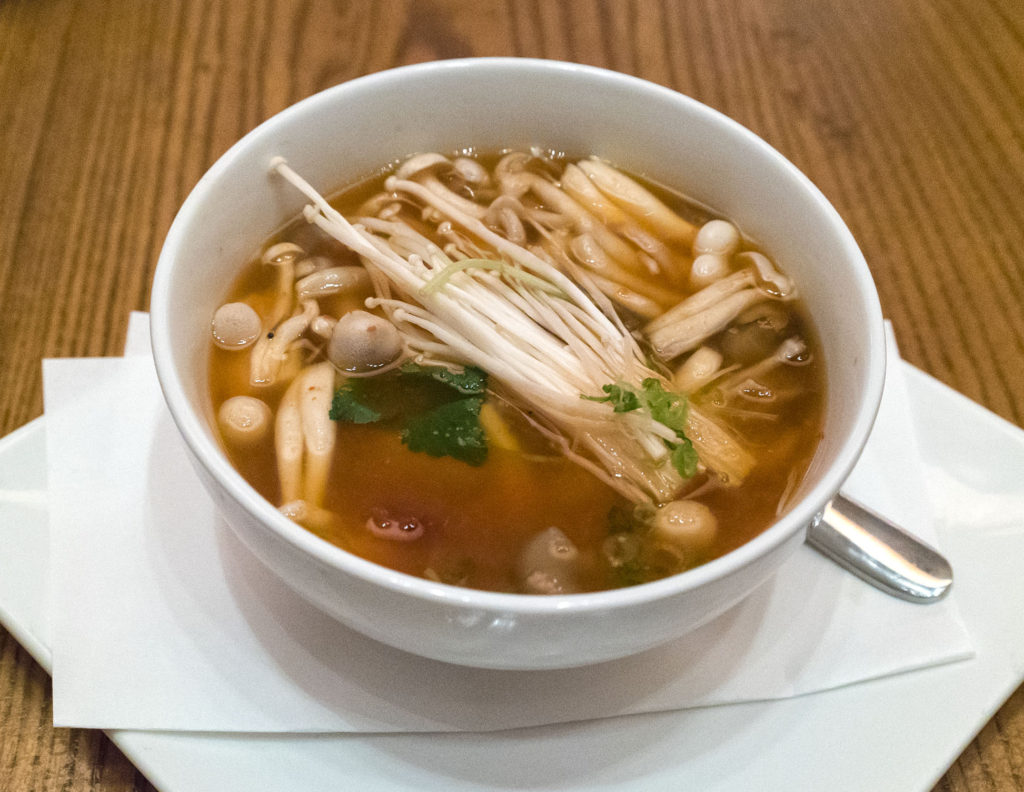
This small bowl of spicy seafood soup cost $19, which was a total rip off, but it was in fact tasty.
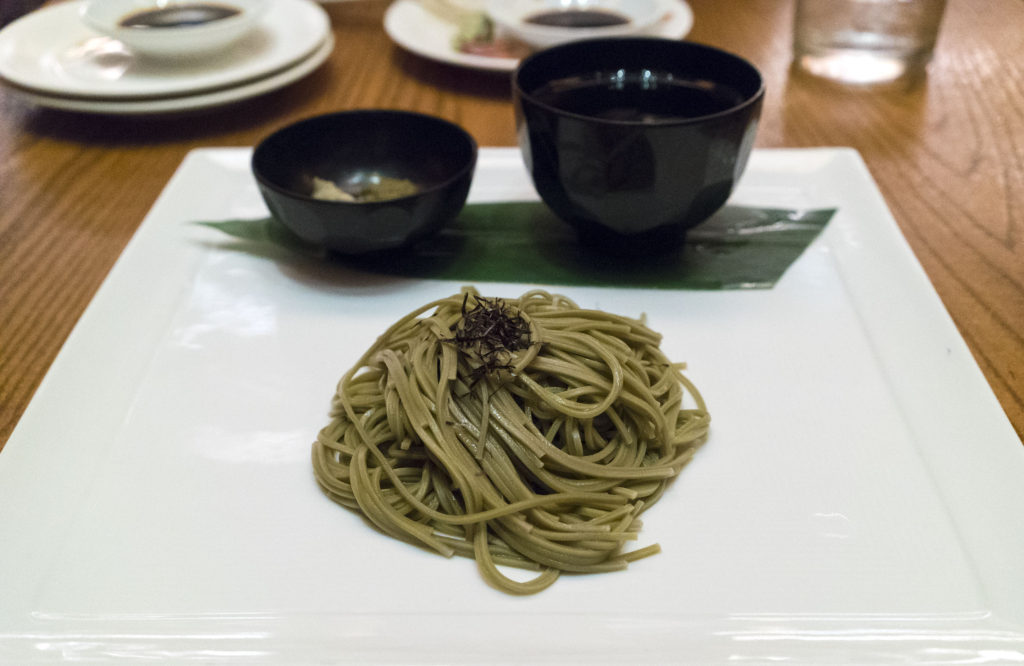
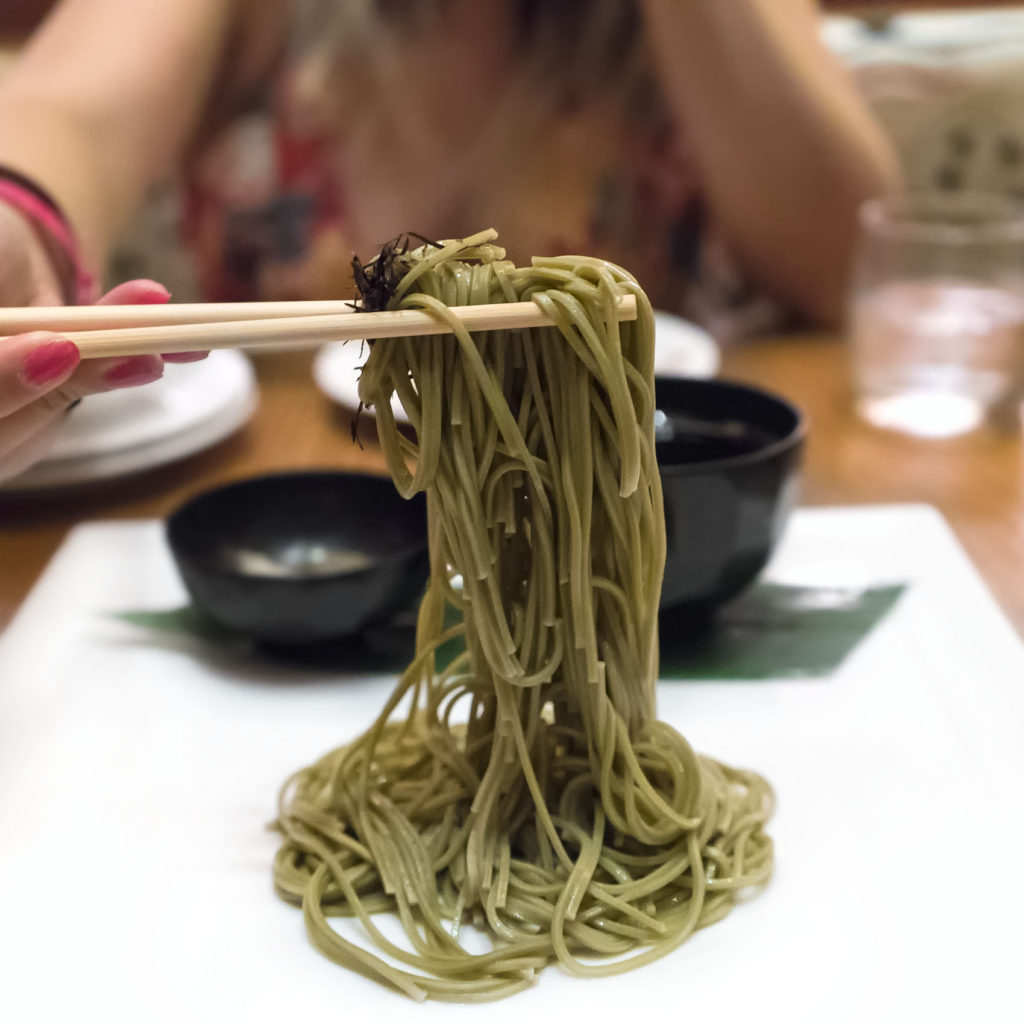
Unfortunately I was still hungry, so I ordered a noodle dish in hopes that the starch aspect would fill me up. Green tea soba noodles:
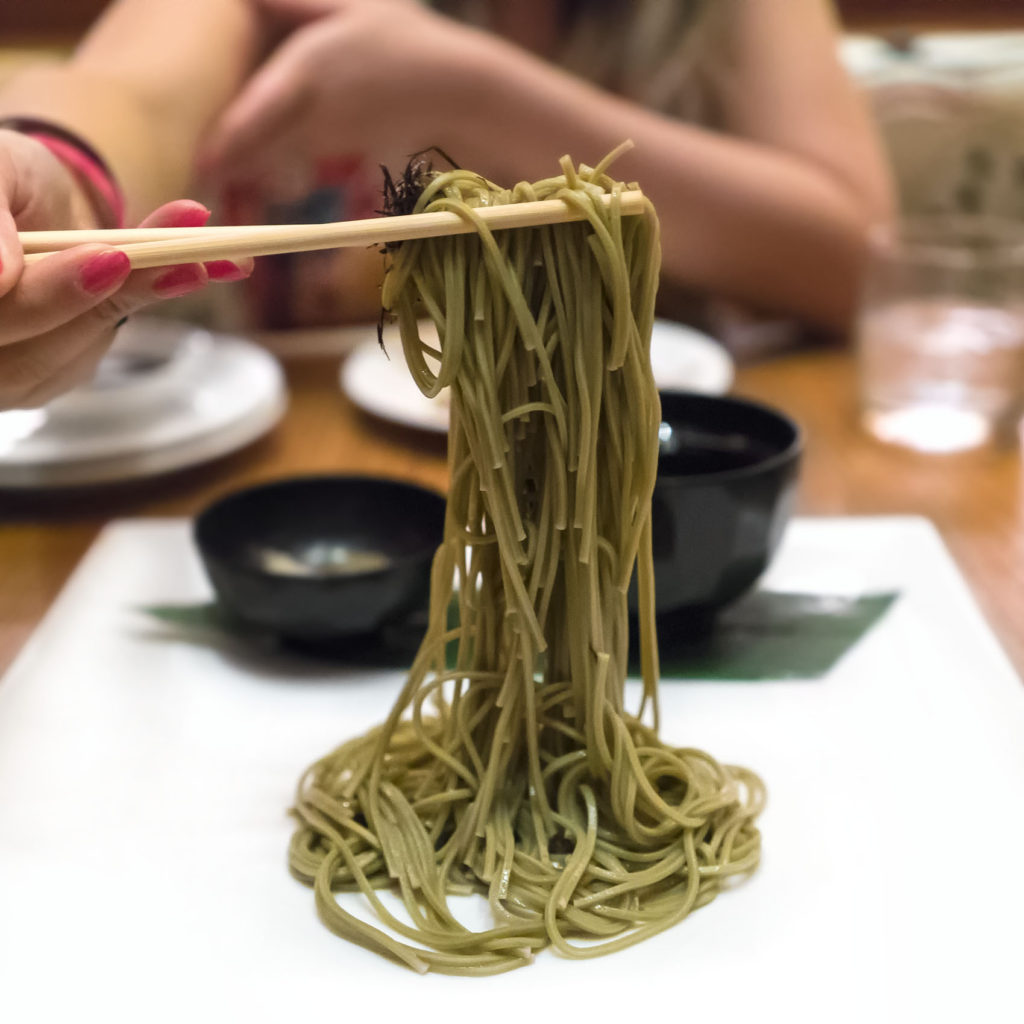
These were actually pretty good. And of course Katherine lifted them for my Instagram feed.
77 West
This was probably the best meal of the trip. We went for lunch, so kept it relatively light, but everything was excellent.
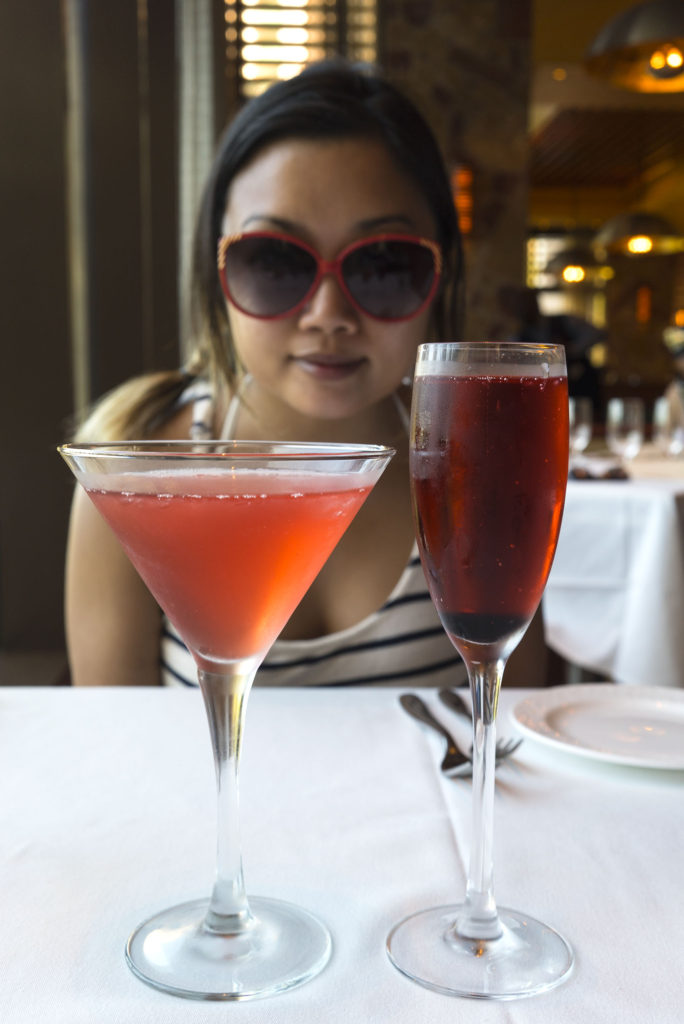
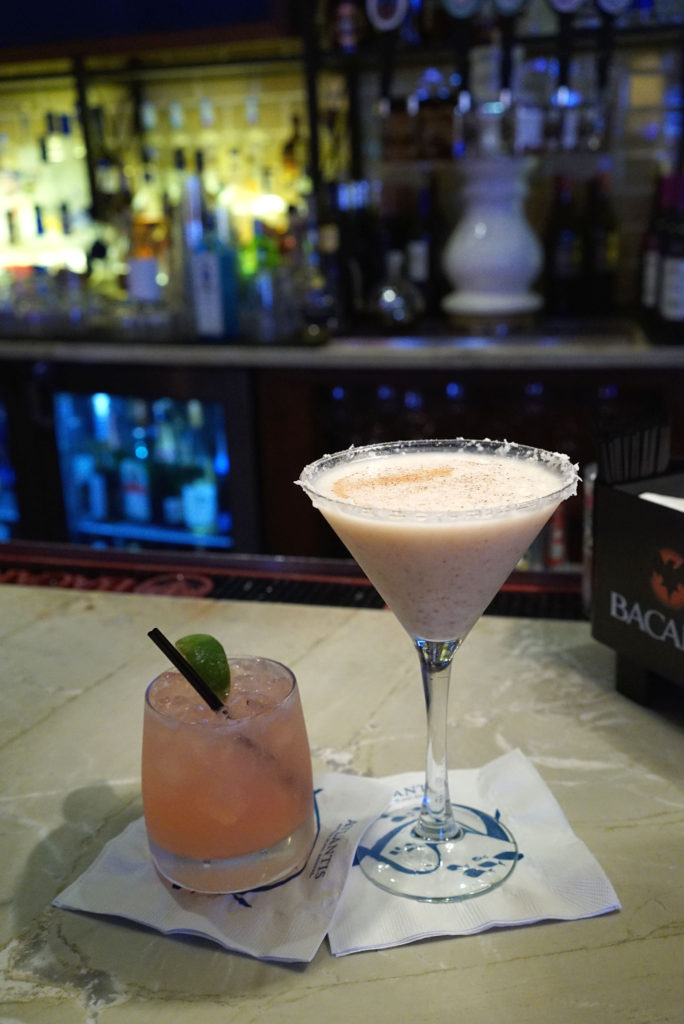
Good cocktails for the ambiance – not too sweet, just right.
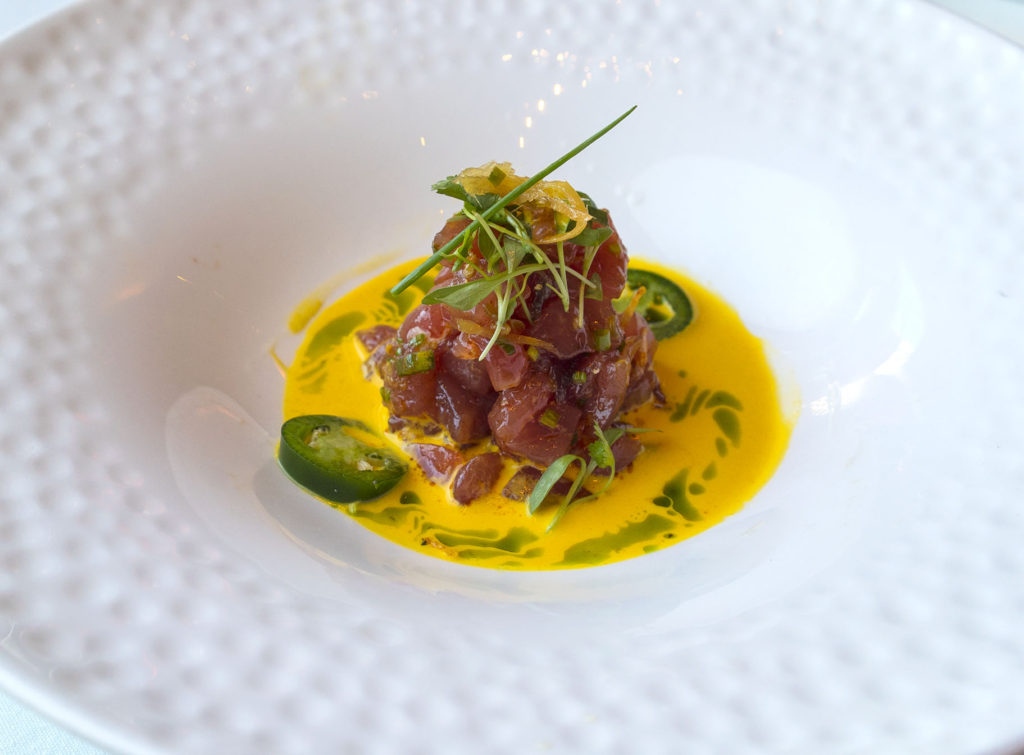
Probably one of the best tuna tartare dishes we’ve ever had; served in a spicy coconut curry style broth that really popped.
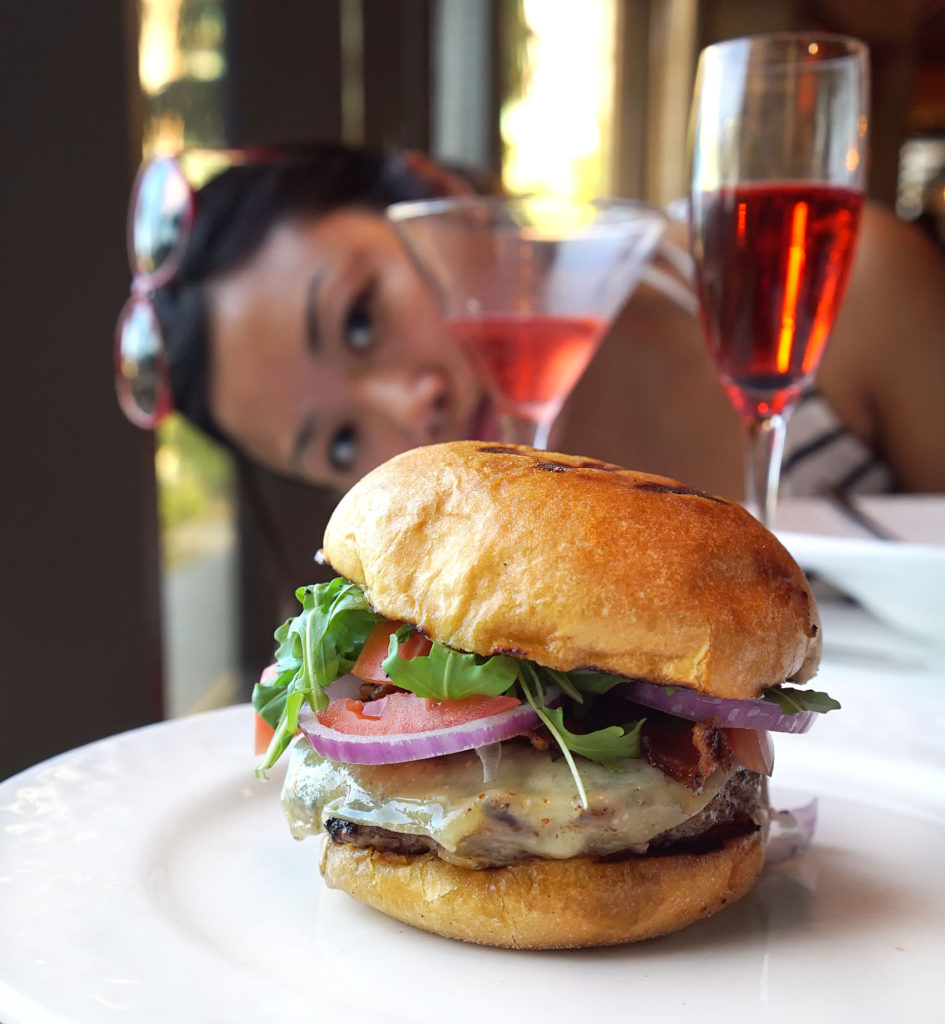
And why not have another burger? This was much better than the ones at Burger Shack, and it came with fries or a salad for the same price, pretty much.
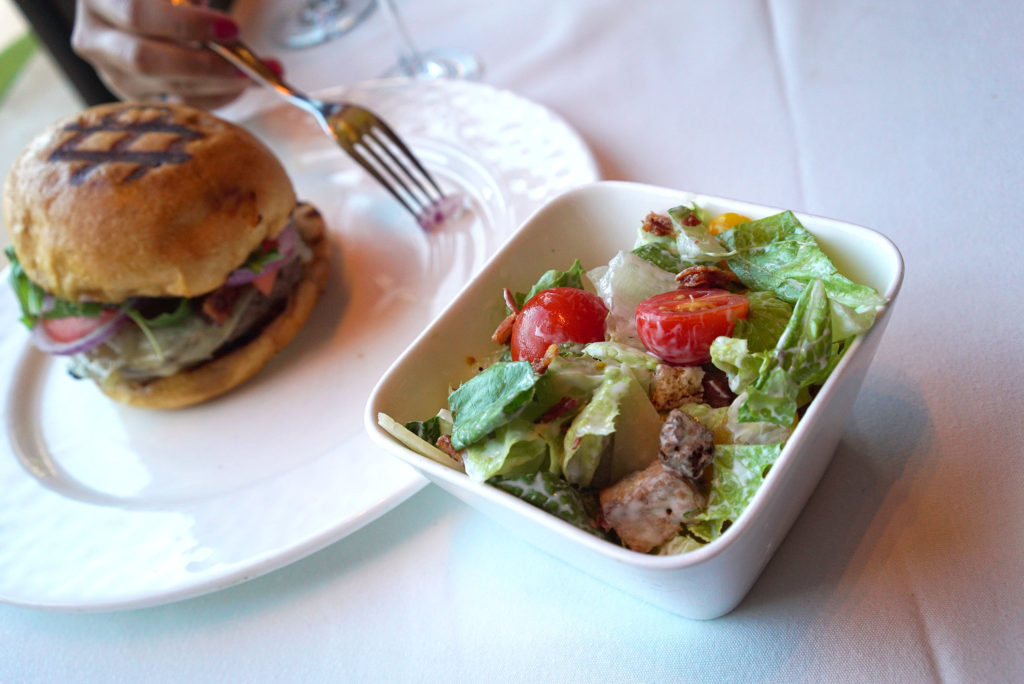
I kept it light with a salad instead of fries, and that was a good move. The salad was actually really great and fresh.
Seafire Grill
Of course we had to try a steakhouse. We pretty much shared a meal for one, since we didn’t want to break the bank.
We tried two cocktails (since we had credit for two free drinks): one was too strong and lacked finesse (the 1888 Rum Old Fashioned), but the other was perfect – a bourbon lemonade.
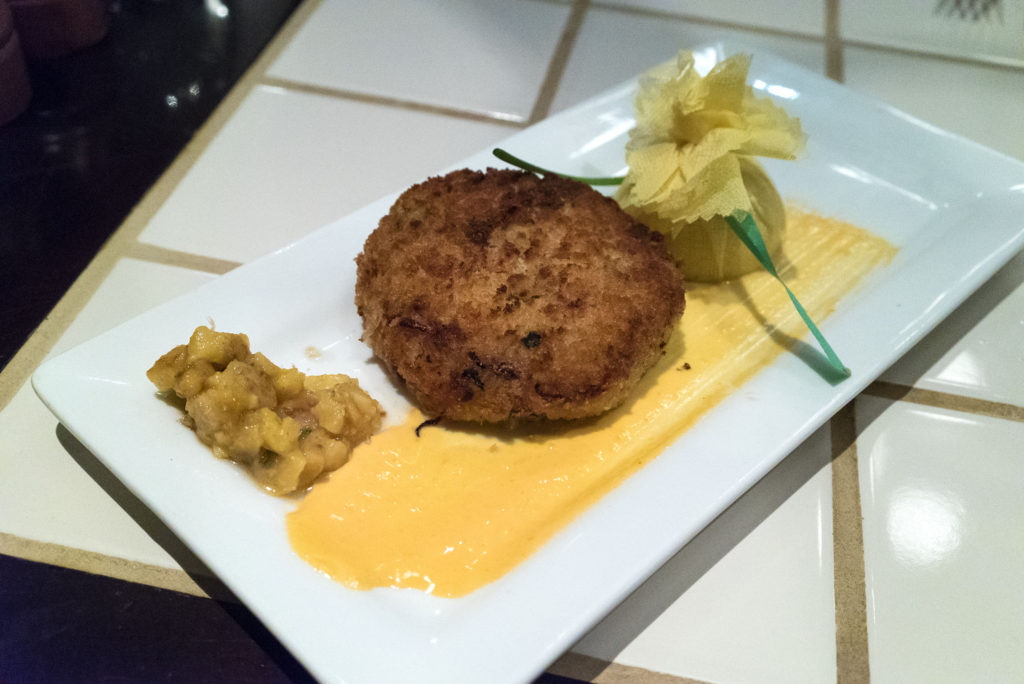
We started with this horrible crab cake. I’ve had better out of the freezer section of Shop Rite.
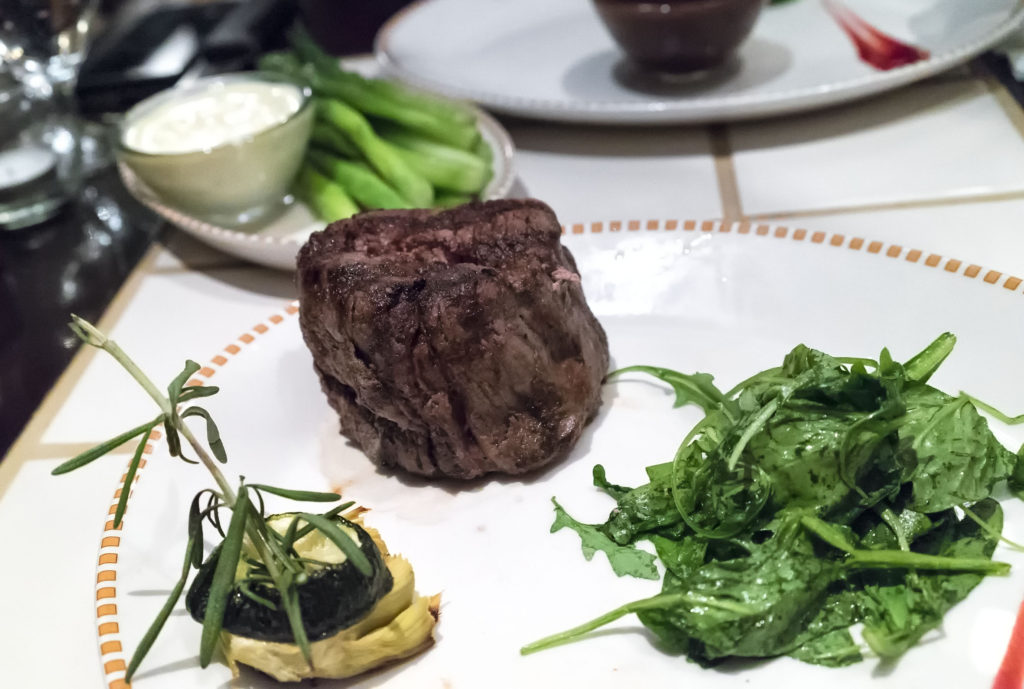
After dining at over 100 steakhouses, some of which are not NYC-based, I’ve learned my lesson: If there is no prime or aged beef on the menu, I should probably stick with a filet. You’re rolling the dice on quality with any other cuts – especially when you’re outside of the USA. Additionally, since a filet had very little fat content to begin with, you don’t have to concern yourself with marbling quality or things like prime and choice. Furthermore, I also took a peek at the butcher shop area of this restaurant (you can buy steaks to grill on your yacht at the marina), and I was not impressed with the strip and rib eye offerings. Filet was the way to go.
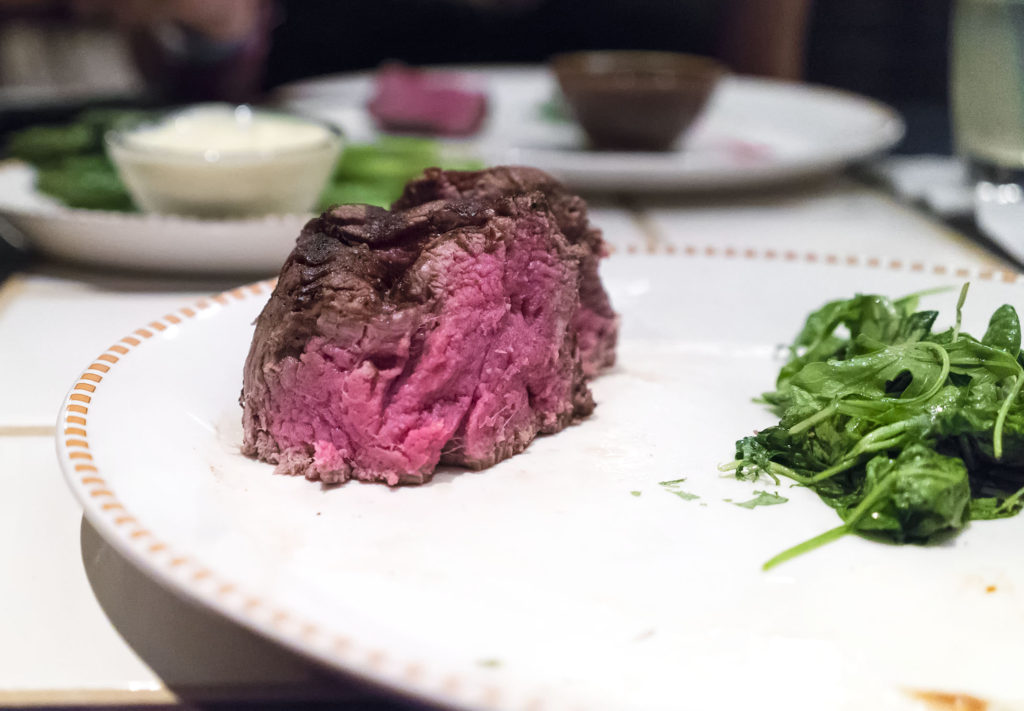
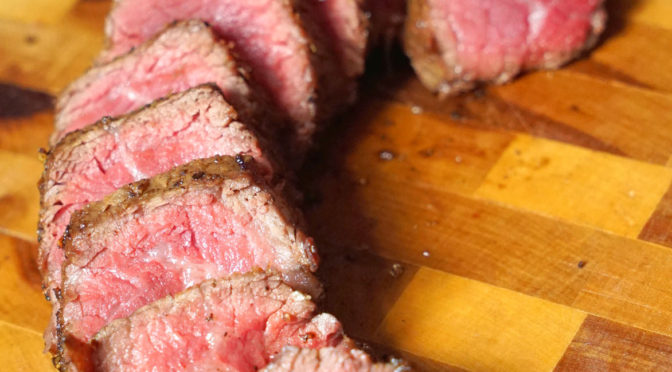
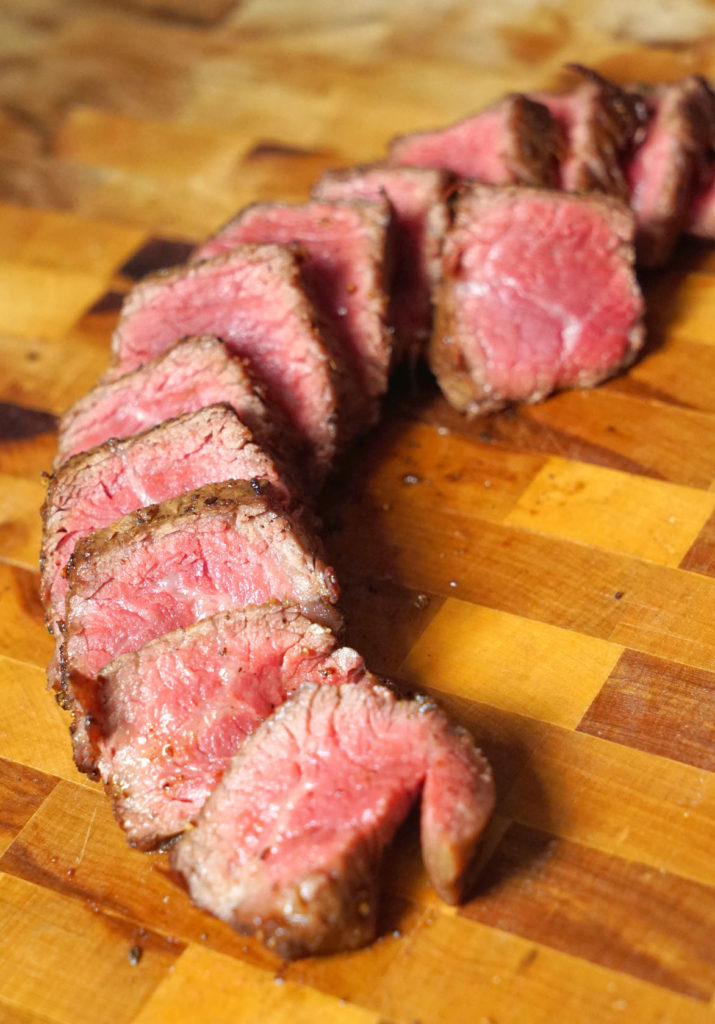
It was decent. I’d say 7/10. It was super tender. It lacked some juiciness and outer crust, but it was cooked perfectly medium rare from end to end. If I weren’t such a steak snob, being spoiled by the selections in NYC, this would have been an outstanding cut.
But at $58 for 10oz, however, this was incredibly overpriced. In NYC it’d be maybe $50, and that’s already pricey since its fucking NYC.
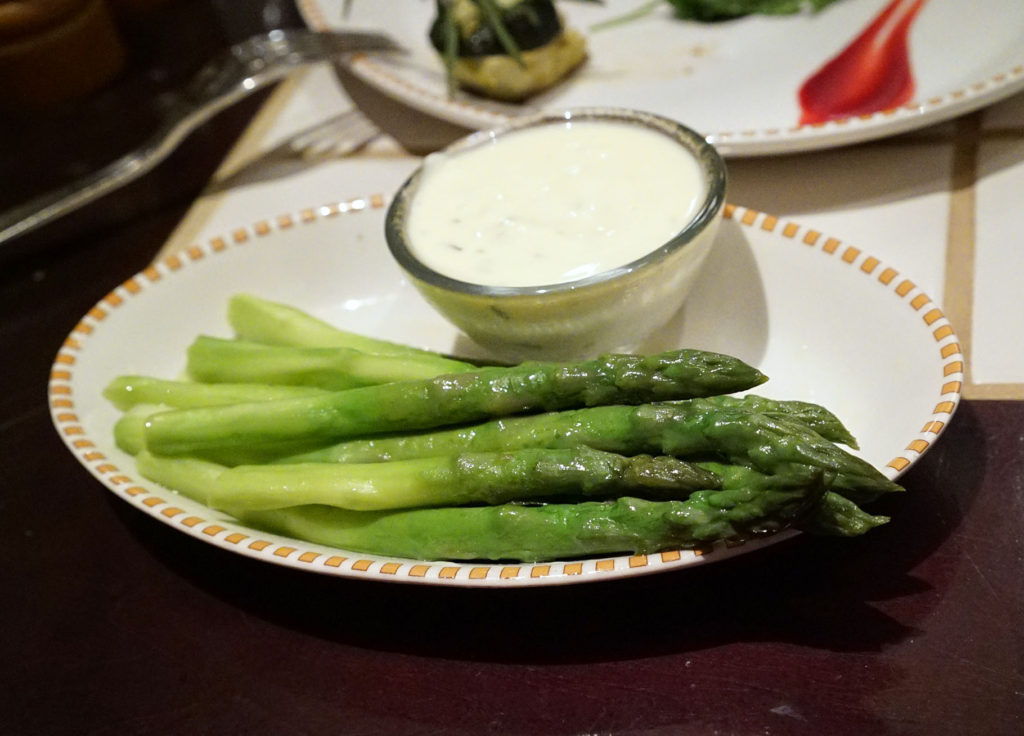
On the side we had some asparagus with Bernaise sauce. These were perfectly cooked, and they even shaved down the woody bottom part with a peeler.
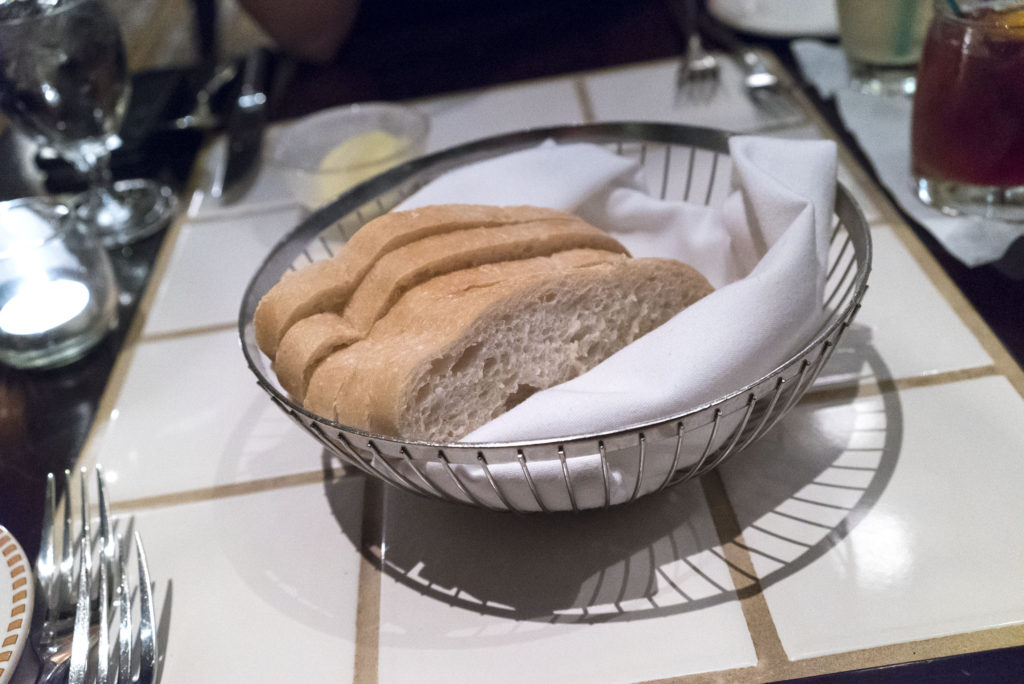
As always, I have to talk about the table bread in some way. Here, it was lame. A little mushy, kinda like tan Wonder Bread. Not warm.
The ambiance and the bar were nice though, and it reminded me of something like Capital Grille in midtown. Rich and dark wood tones. If this joint were in NYC I’d probably score it in the high 60s or low 70s. Let’s just go with a 70, for the sake of ease, and because we really only tried three items.
Olives
Olives is a Todd English joint and it is directly connected to the casino at Atlantis, so the place has some standards to live up to. We weren’t planning on dining here, but when the entirety of Paradise Island lost power, we were unable to dine at the only Bahamian restaurant at the resort, Bimini Road, yet again. First time it was closed (peeve about the resort – random closures of restaurants on random days for random reasons), and the second time, which was our last night there, it was shut down because of the power outage.
Anyway, we ended up having a really nice meal at Olives. We had credit for two free cocktails (which we actually used after eating at Nobu earlier in the week).
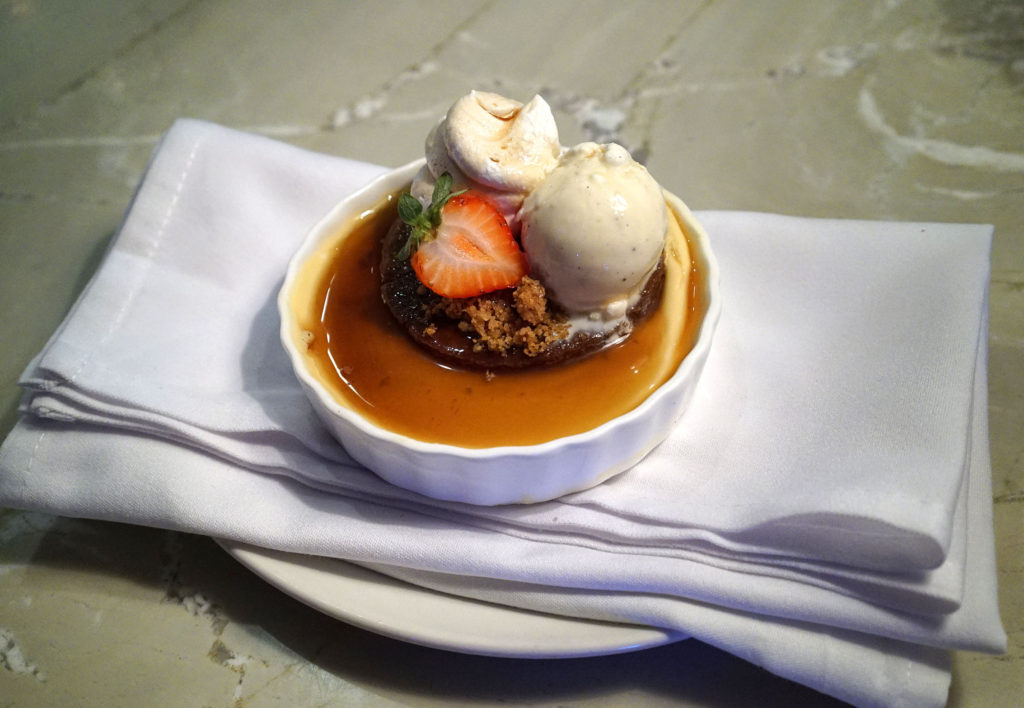
That same day we tried the tiramisu flan, which was really delicious and unique, since Nobu was insanely overpriced and the dessert menu looked dumb there.
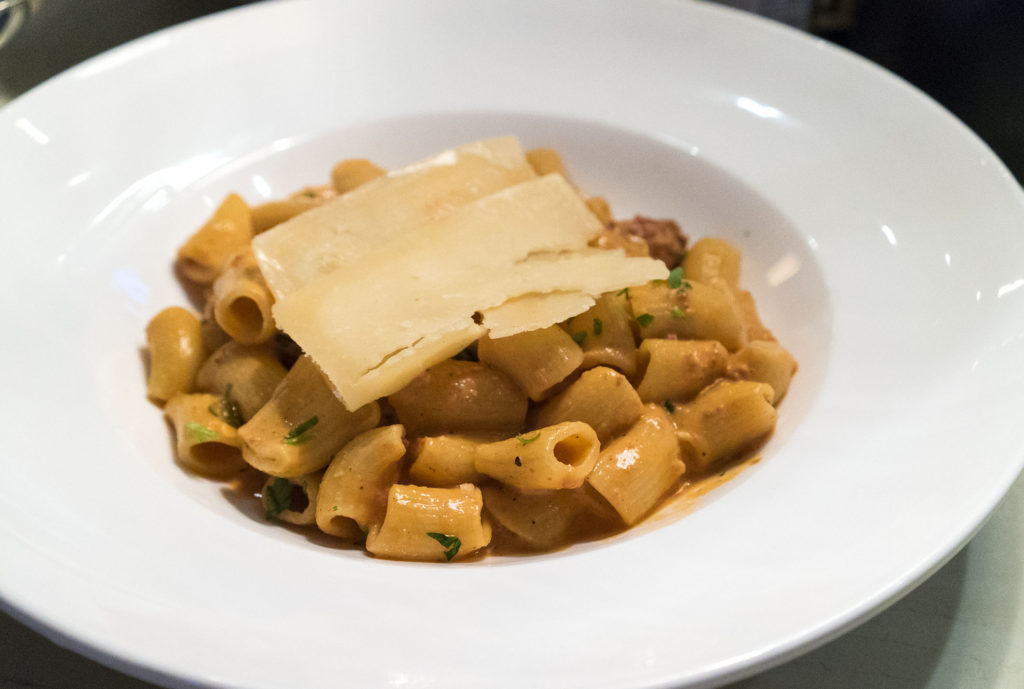
We split the rigatoni bolognese, which was really nicely cooked with sausage and ground meat.
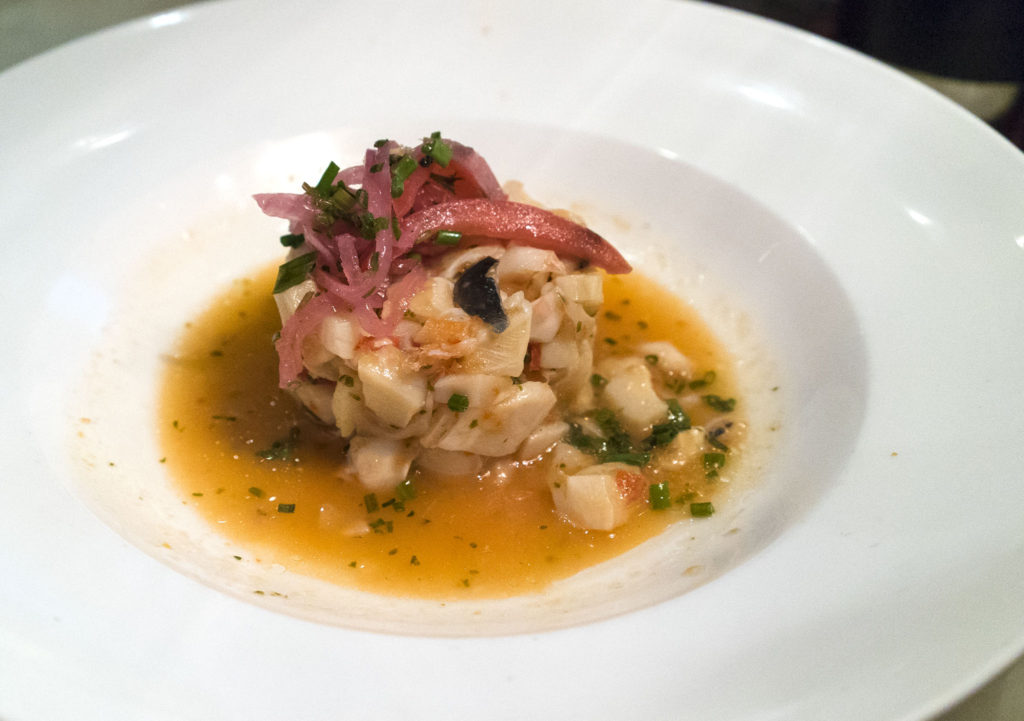
Since we were intending to eat Bahamian food but got denied, we tried the conch ceviche, thinking it would be stellar, made from a local catch. It was just okay. The conch sashimi at Nobu was better.
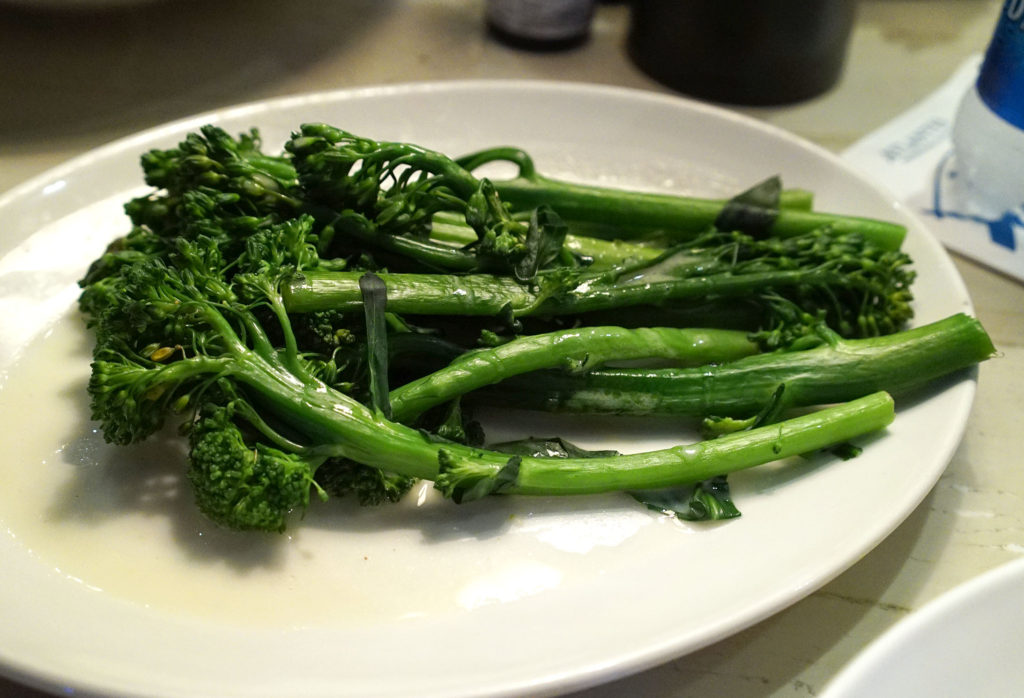
On the side we had some of the free focaccia bread (which was nice) and this bland, flavorless broccolini.
A whole crapload of unnecessary freaking out has happened over ranchers’ use of antibiotics in the raising of animals for human consumption. While some of the alarmist stuff out there might sound scary, in reality it isn’t. So I feel the need to ease some tensions here with this beef advocacy post.
It’s Humane
The judicious use of antibiotics is the humane thing to do for animals that are in need of care. Just like humans, animals need help every so often to fight off a bug. When sick, their ears droop, they cough and have runny noses. They separate from the herd and go off by themselves. Some diseases can be avoided through the use of vaccines, and illnesses can be prevented and combated with the use of vitamins and antibiotics.
The Law
By law, producers must wait a certain amount of time after administering an antibiotic before an animal can be slaughtered for consumption, to ensure that no traces of the antibiotic remain within the animal. These “withdrawal times” are strictly monitored and vary from 0-60 days based on the substance being administered. That means you can be confident that there are no antibiotics in the meat you buy at stores or order in restaurants. Once the withdrawal time is tolled, that basically means the antibiotic has been completely metabolized and has worked its way out of the animal’s system.
Ranchers must carefully follow directions for administering the proper amounts of antibiotics to their animals, and the FDA tests for traces of antibiotics in meat products as well. There is a mess of paperwork, regular federal inspections and tedious record keeping involved in this entire process. It really is a tightly run ship.
Let me unpack those generalizations a bit here: Under new FDA guidelines, there are very specific, detailed measurements that are set for antibiotics in feed – authorized by veterinarians – that are called “veterinary feed directives.” These directives outline exactly how long an antibiotic can be used and which illnesses can be treated. They also specify the number of animals that can be treated.
Again, these drugs will only be used to treat, prevent and control disease with the oversight of a veterinarian. Farmers and ranchers will be required to form even stronger relationships with licensed veterinarians in order to receive authorization for the appropriate antibiotic for a specified illness, and for a specific time period. I’d say that creates a pretty well regulated and closely monitored situation.
Additionally, new laws require that little to no antibiotics given to the herd can be in the same class as human medicines. This is done to prevent any potential reduction in the effectiveness of antibiotics that are needed to treat human diseases.
Even something as simple as a vaccination carries with it a host of guidelines. For example, no shots are allowed in the hip or thigh, as this can damage the sirloin or round cuts of beef.
Ionophores
This is a good time for me to talk about ionophores, actually. Ionophores are a class of antibiotics that are not involved in human health because they work specifically in the rumen (a digestive organ which we do not have).
Coccidiosis is a parasitic disease in the intestinal tract of animals caused by coccidian protozoa. Ionophores combat these organisms, so they’re technically “antibiotics” from the US standpoint.
In Europe, these ionophores have a different term (anticoccidials), and are not classified as antibiotics like they are here. You may have heard that Europe has much lower antibiotic use in their beef industry. That’s misleading, mainly because Europe does not consider the ionophore to be an antibiotic.
Hormones
Hormones and steroids are often used for growth promotion, digestive aids, and to prevent illness and the later need for antibiotics in a herd. Small pellets are implanted behind the animals ear, under the skin, to release these aids into the animal’s body. Many don’t realize that these are completely metabolized and no traces are found in the beef products at the point of consumption.
The FDA and USDA enforce rules on these things, and scientists have tested them for safety. Additionally, once the use of a hormone has been reviewed and approved, it’s continually re-tested, annually, and reevaluated. It will only stay on the market if it continues to pass all FDA and USDA testing. So this stuff may sound scary, but in reality it’s completely safe according to all scientific testing.
Niche Labels
Despite these numerous safety assurances, U.S. consumer concern about using antibiotics in animal feed has led producers to create niche markets for products with specialty labels. “Never ever” means that the animal was never given an antibiotic, for example, throughout its entire lifetime. Other labels tout the fact that the animal was not given any antibiotics in the last 60 days of it’s life, or from various points of its life cycle onward (for example, no antibiotics administered once the animal is sent to the feedlot).
The USDA makes no claim about these products being safer. They are, however, more expensive to produce, and, therefore, more expensive to buy at the consumer level. Here are a few more:
Natural: minimally processed with limited additives.
Naturally Raised: No antibiotics and no hormones except for ionophores.
Certified Organic: No hormones, and raised on 100% organic feed, which means no synthetic pesticides or fertilizers were used to grow the feed.
Conclusion
While our beef producers are wonderful for creating new markets and catering to the odd and unique demands of a diverse population, I felt obligated to set the record straight on the issue of antibiotics with this post.
In general, the use of antibiotics is more an issue of animal health than human health, but it’s still an important topic to know about.
Remember, beef producers have a vested interest in raising healthy, safe and nutritious food, because they feed themselves and their families with the same beef that you and I eat. They understand that antibiotics are vital for the health of the herd, and administering them is a humane act to safeguard their animals.
Farmers and ranchers are dedicated to providing safe products to the market. It’s their livelihood, after all. Implementing new antibiotics guidelines and working closer with veterinarians are just a few examples of how farmers and ranchers are continuously improving the cattle industry.
There’s really nothing to worry about. US beef products are safe, nutritious and delicious. There are safeguards put into place at every step of the beef life cycle, and even afterward at the slaughterhouse and packing plant, to ensure our safety.
I’m going to use this product review and press event post as a vehicle to deliver unto my readers a comprehensive guide to truffles. Let me begin with the education portion of this post.
What Are Truffles?
You’re probably all somewhat familiar with truffles. You occasionally see them on menus as expensive add-ons to your pasta dishes, and you may see “truffle fries” offered at a higher price than regular French fries at certain restaurants. Shavings per ounce can be quite pricey, especially for white truffles.
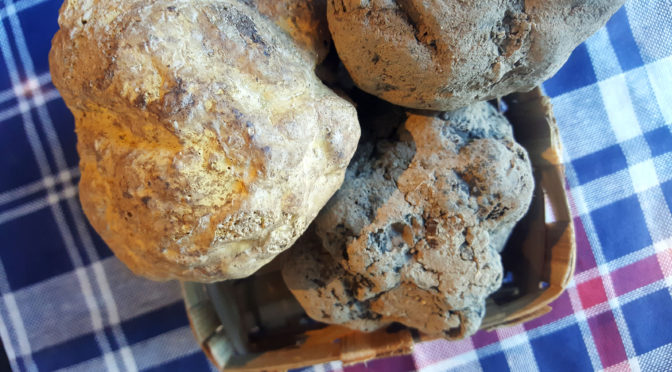
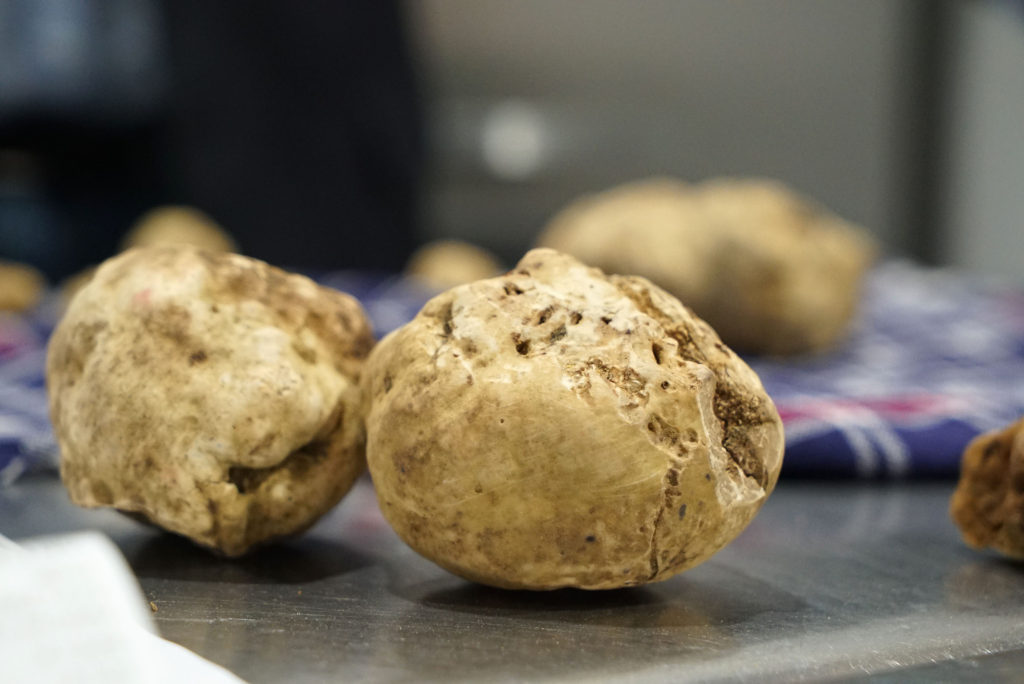
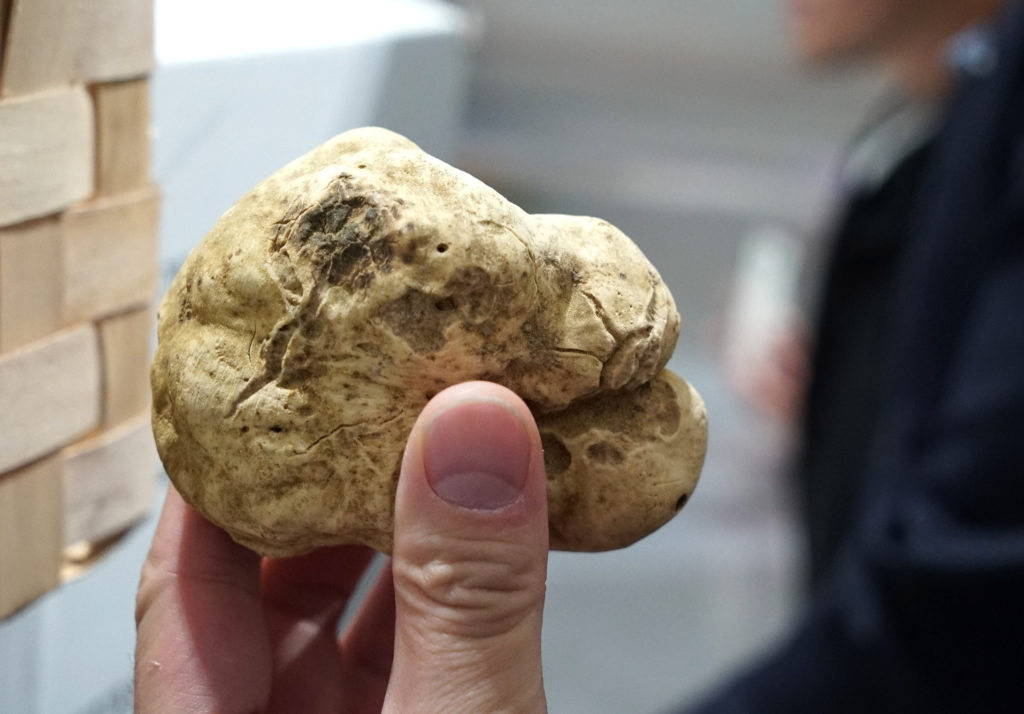
But what exactly is a truffle? It’s a fungus. It’s a tuber-like fungus that grows along the roots of certain trees, like oak, hazelnut and chestnut. They are incredibly aromatic, with an intensely concentrated earthy flavor profile that’s truly unlike anything you’ve ever tasted or smelled before.
Some people say they’re similar to mushrooms, but that’s like saying Kraft mac and cheese powder packets taste similar to piave vecchio. Not even the same ballpark. Similar to dry aged beef, fermented foods, or smoked and/or aged cheeses, truffles offer that same kind of “umami” sensation for your taste buds.
Size & Shape
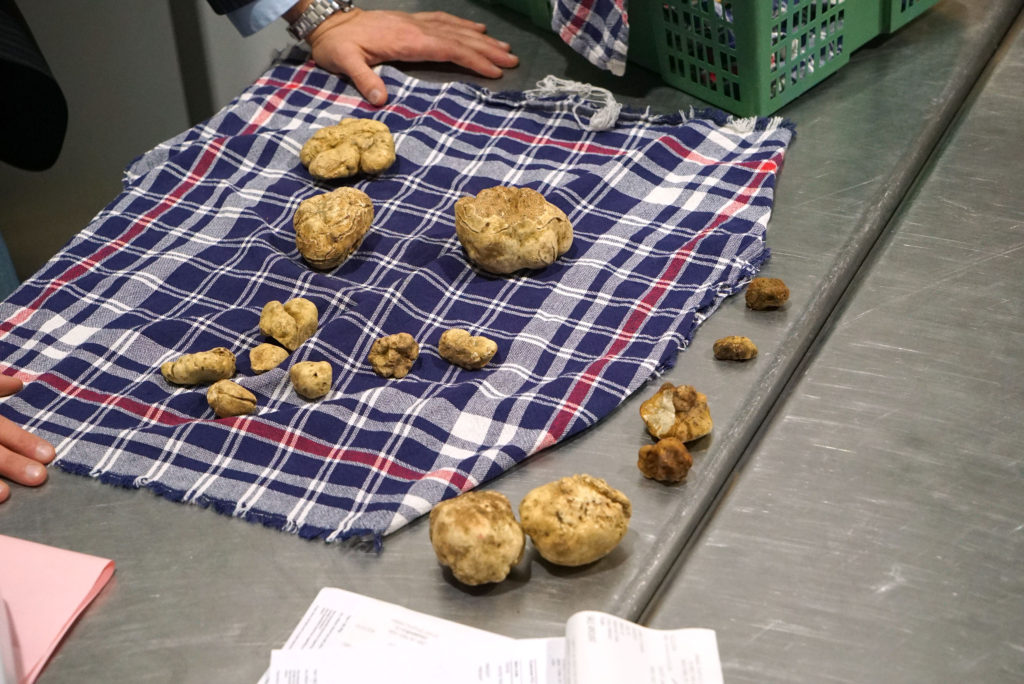
They typically range in size from something like a walnut to about the size of a softball. They get to market size overnight, growing very fast, as do other members of the fungi kingdom. However it may take some time for the spore to first germinate properly.
But just like the saying goes for dicks, “size doesn’t matter.” The same flavors exist in small or large truffles. But preference does matter (just like dicks, I would imagine). The smaller truffles are just as good in terms of quality as the larger ones. They’ll still get you off. Yet, kind of like a director’s preference for big dicks in porn, some restaurants want larger, more uniform shaped truffles so that their shavings look prettier on the plate.
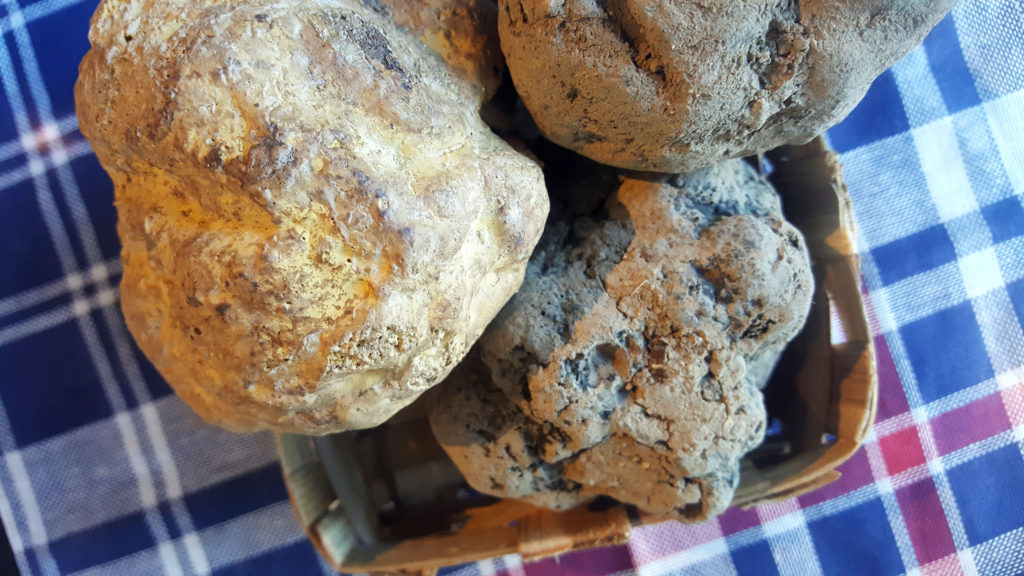
Speaking of which, their shape varies based on the soil in which they grow. Soft, loose soil allows the truffle to grow and expand mostly unhindered into a more spherical shape, while harder, rocky soil will result in more odd-shaped, lumpy truffles.
Kinds of Truffles
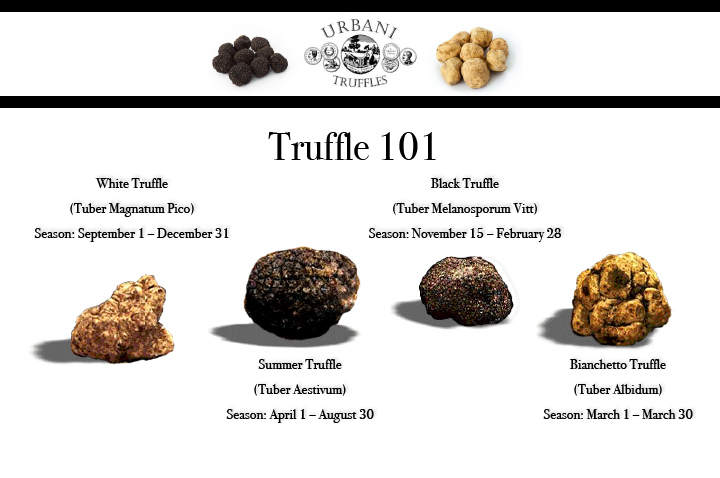
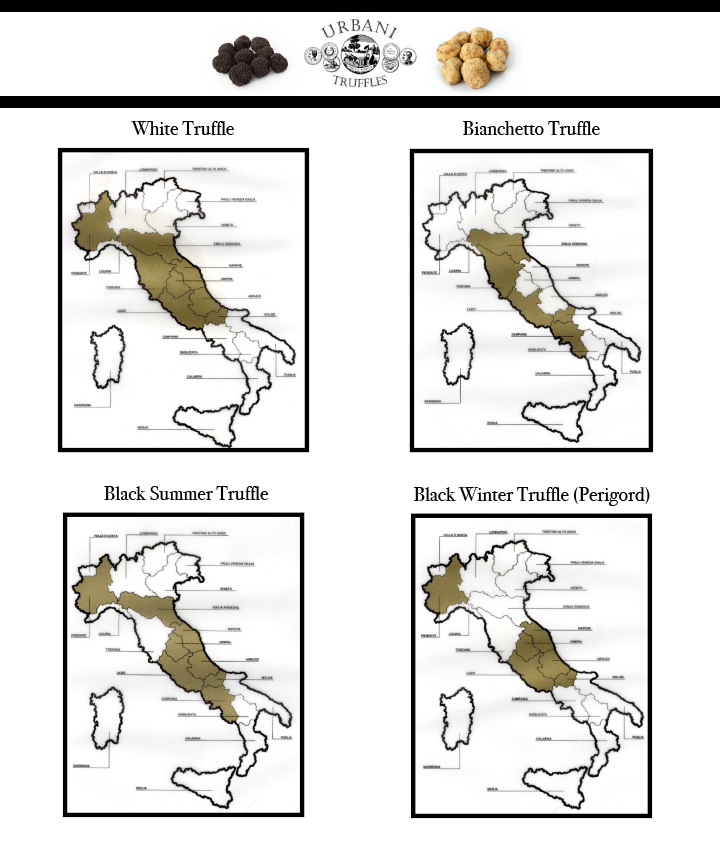
There are (generally) four varieties of truffle: white, black summer, black winter, and bianchetto.
As you can see from above, there are specific seasons for harvesting each type of truffle (in Italy, that is). The neat thing is that some black truffles are grown in Australia as well, so we have access to them in the reverse seasons as well.
Each style of truffle is suited for its own unique purposes. For example, white truffles are best for shaving directly onto freshly cooked food, like eggs and pasta. Black truffles are better suited for grating and incorporating into sauces. If you see black truffles being offered for sale, per ounce, shaved directly onto a food item, my advice is to skip it. That’s not the ideal way to enjoy a black truffle, and you may not even taste anything.
Ripeness & Storage
The best way to tell if a truffle is good is to feel it and smell it. They should be firm, but not rock solid, and definitely not mushy. The aroma should be very powerful and fill your nose with an abundance of robust earthiness. In fact it is said that some can detect up to 120 different flavors and aromas from a fresh truffle.
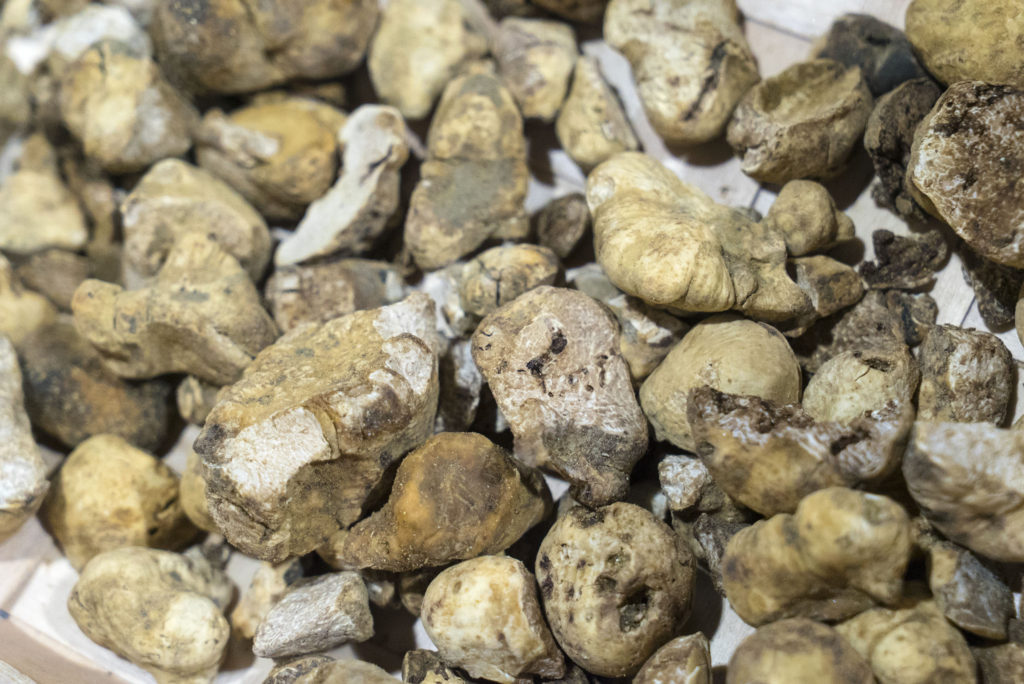
Here, you can see how the degradation process occurs as a truffle goes from good, fresh and ripe to bad:
As a truffle begins to go bad, less of those invigorating aromas come through, the truffle gets spongier, and it emits a more ammonia-like scent. Eventually a white truffle will turn more brown, as well.
The shelf-life for a fresh truffle varies from 7-10 days for white truffles, to 15-20 days for black. A truffle is about 90% water, and it will lose 3-5% of its moisture per day, so that’s why it’s so important to use them while they’re fresh. The intense, characteristic flavors and aromas come from the moisture content within the truffle.
Lots of times you see truffles stored in a box filled with rice. This isn’t a good idea, unless your goal is to infuse the rice with the flavor of truffle. The dry rice will leech out all the moisture, and thus the flavor, from the truffle. My opinion: that’s a dumb move, even if your goal is to infuse the rice. Why? Because rice dishes will never sell for or be worth an amount that’s high enough to cover the cost of the truffle you just wasted by storing it that way.
The best way to store a truffle is to individually wrap each in a paper towel, somewhere cool. It should also be put into a wooden box or a glass mason jar; not plastic, as plastic doesn’t breathe the same way. Excess humidity can build up in plastic and ruin the truffle.
Where Do They Come From?
In Italy, truffles can be found in a variety of locations, as Italian geography is ideal for producing the right weather conditions that result in truffle growth.
The coveted white truffles are highly sought after when they come from the Alba, Piedmont area in the northwest, which is similar to our Napa Valley. However the demand for certain wines from that region (Barolo, Barbaresco) has created a situation where the land is being altered by vintners, with trees being removed to make way for grape vines, and chemicals being used in the soil to aid in the grape-growing process. Trees are necessary for the truffles to grow, so Alba truffles are very rare indeed. In fact, less than 3% of the truffles on the market hail from Alba, and most of the truffles from that region stay local. So be aware, if you happen to see a menu flaunting that the truffles are from Alba: it is likely a lie.
Black truffles can be “seeded” with spores and grown in other locations that have the right climate and trees, but white truffles can not. Therefore, white truffles tend to be a fuckload more expensive, as they are much more rare and localized. Think $1,000/lb.
In Italy, much of the land where truffles are hunted is public access, meaning anyone can come by (licensed truffle hunters, typically) and pick up a truffle. In other places, like Australia or the USA, the land can be owned outright so no one else can lawfully snatch up any truffles that might be growing on your tree roots.
Urbani Truffles
Now that you’ve gotten a good first lesson on truffles, I guess I can begin the product and press review portion of the post.
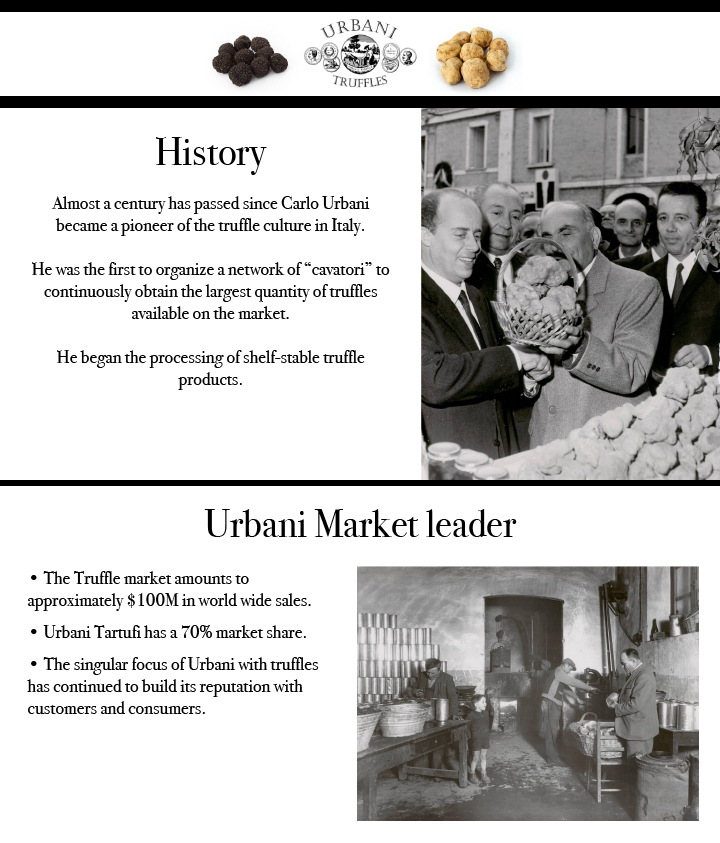
Urbani Truffles began in 1852 and now supplies 70% of the global market with their truffles.
Urbani Truffles are in the hands of NYC restaurateurs within 36 hours of being dug up by their network of truffle hunters in Italy. Amazing! Truffle hunters go out with their trained sniffing dogs at night, to minimize noise and distractions for the dogs. The next morning, any truffles that were gathered are cleaned and sent to the market or shipped out on airplanes all over the world. Cleaning just requires getting the dirt and blemishes off (like a potato). If needed, some light brushing is done, but cleaners are careful to avoid direct contact with water, as that can harm the truffle.
Take a look at this Urbani video below, which will help you visualize the entire process.
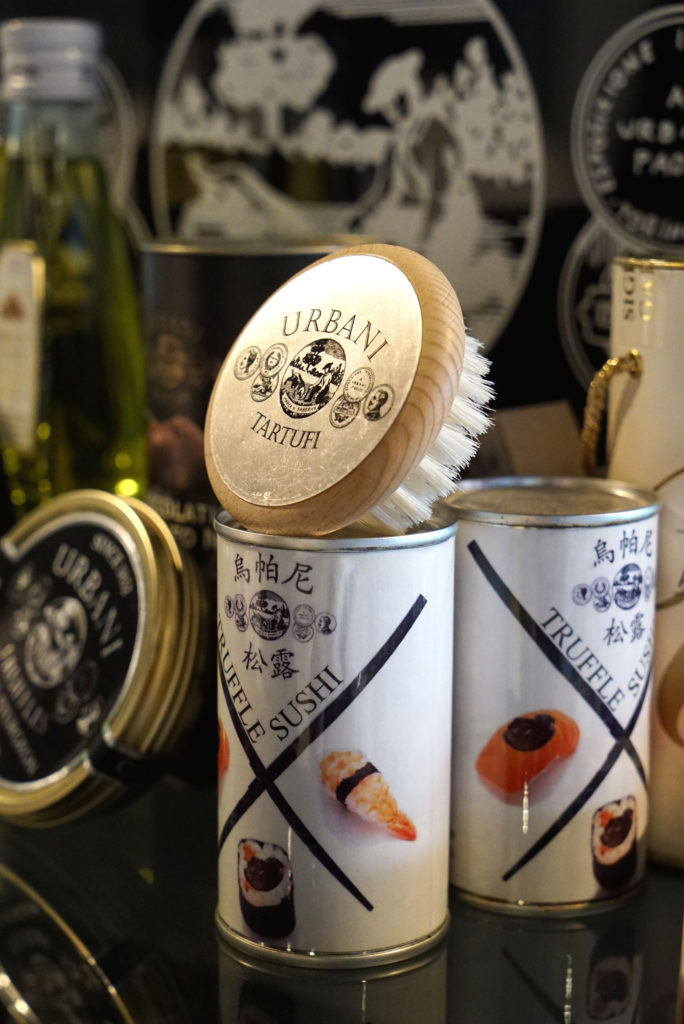
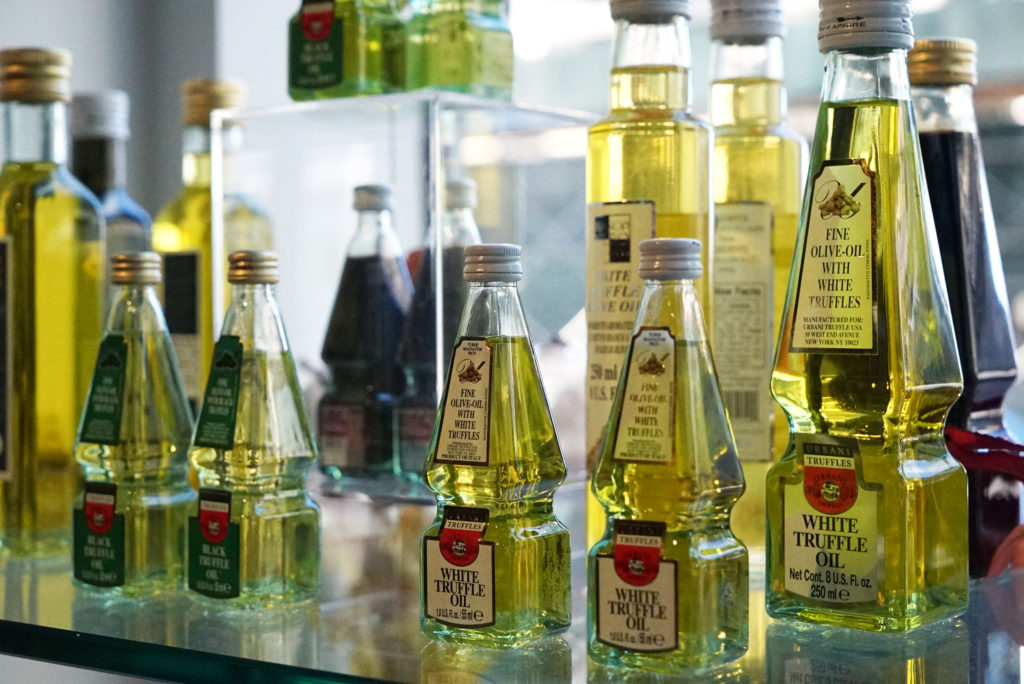
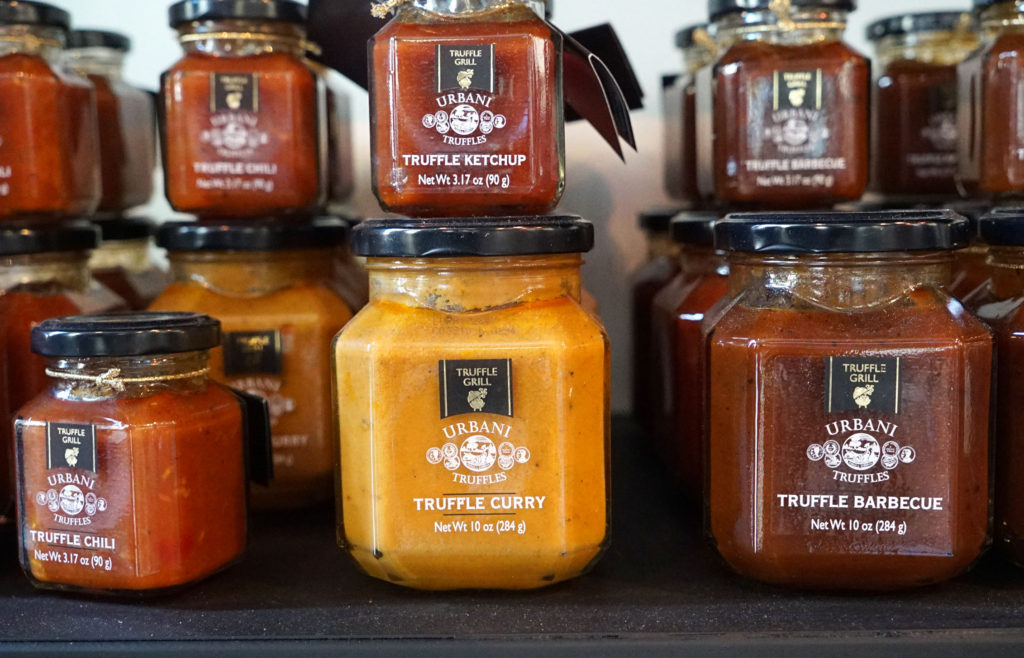
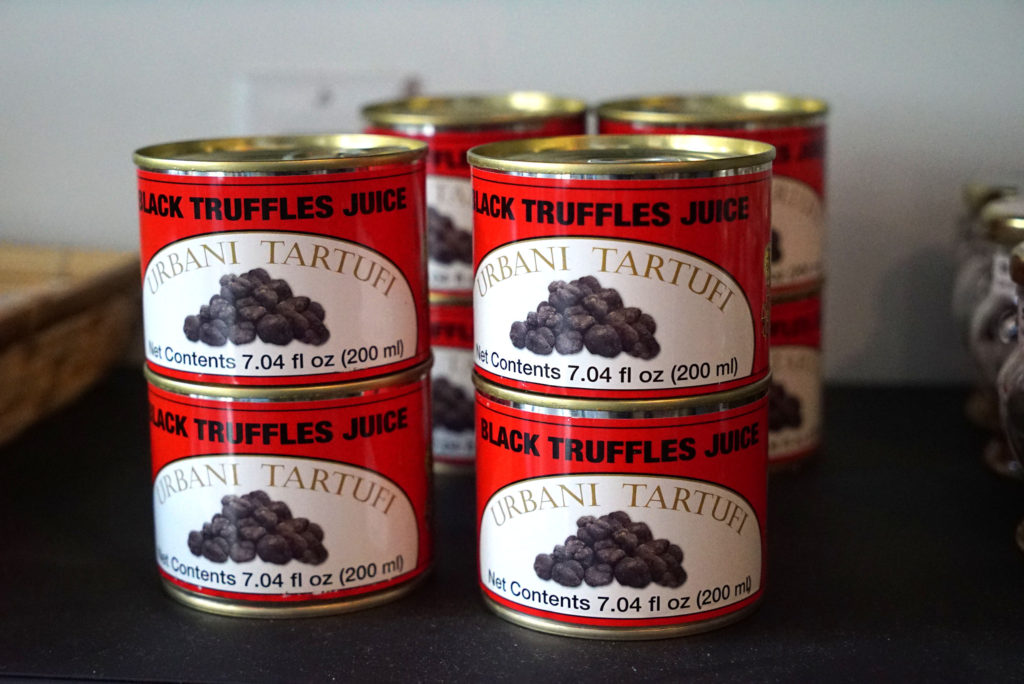
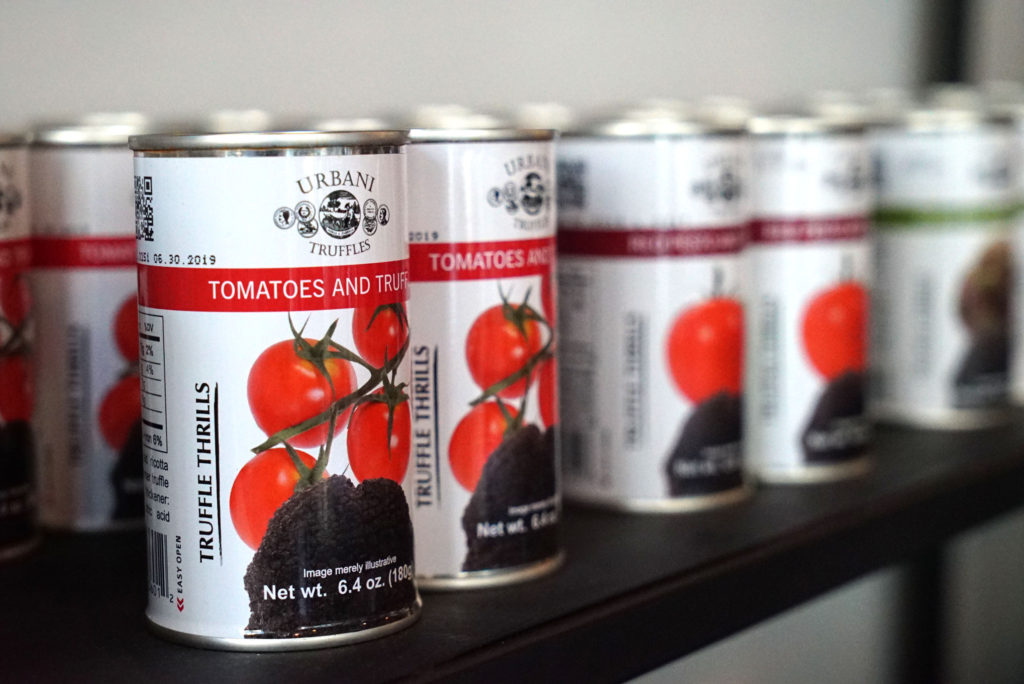
You probably noticed some truffle products in there, like oils and canned goods. Whatever Urbani doesn’t think is fit for the fresh market, they use to create various other products.
Like their fresh truffles, these products are all top notch quality. They never use chemicals in their products, so everything is all natural. Chemicals actually taint the flavor of truffle products, and deliver too much truffle flavor and aroma up front.
All of Urabni’s truffle products will deliver a delayed and longer lasting truffle flavor, due to their rejection of chemicals in the production process.
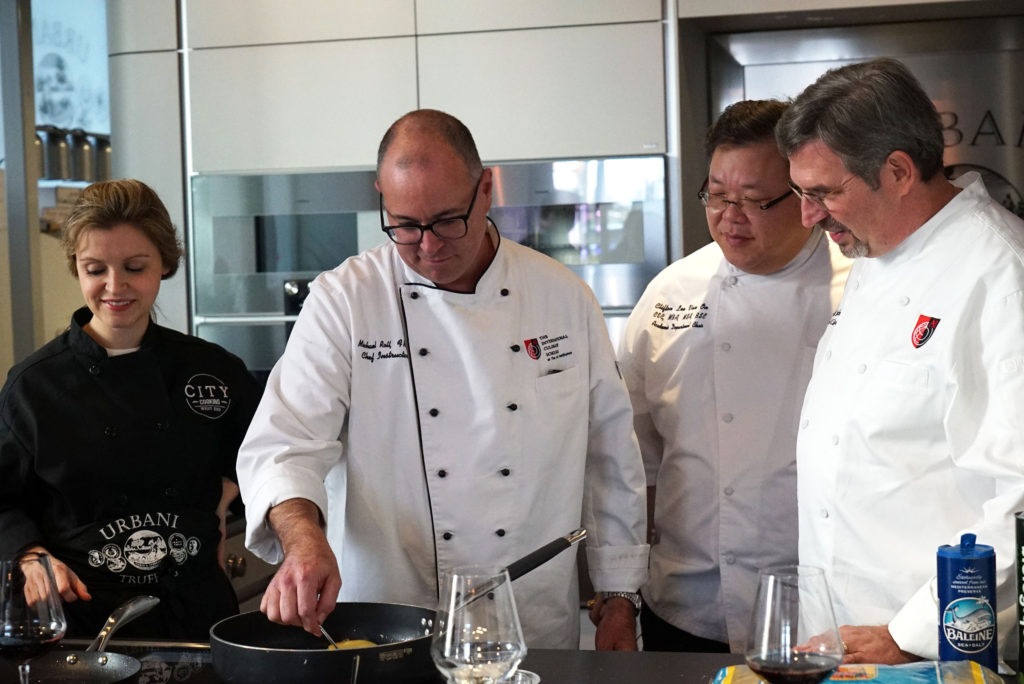
I had the pleasure of sampling both their fresh truffles and some of the products they sell when I was invited to their truffle lab on West End Avenue.
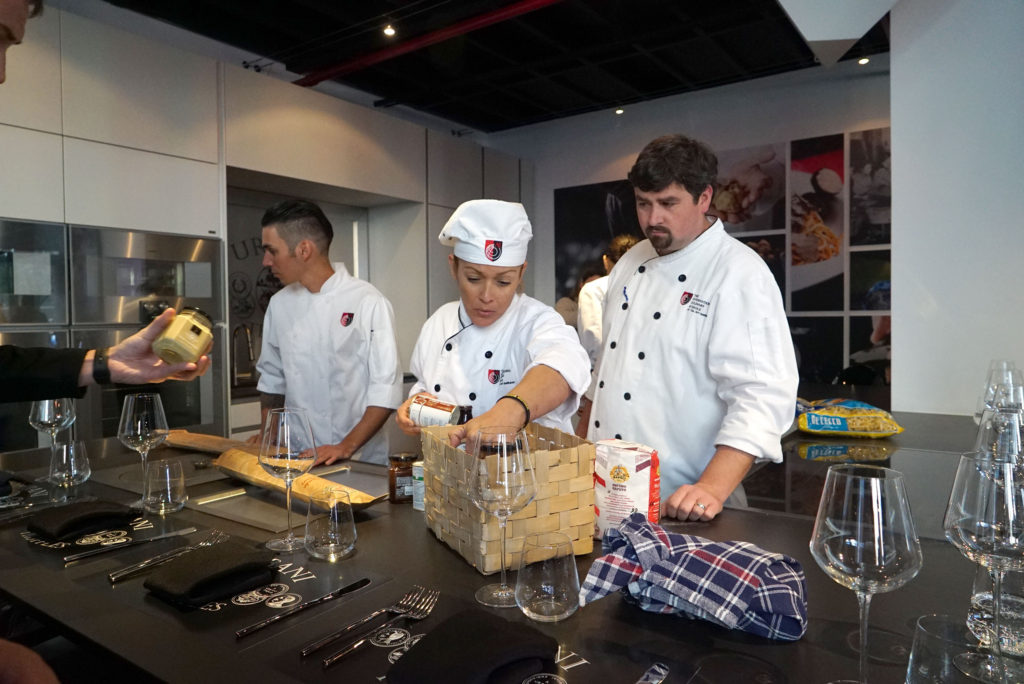
As a matter of fact, I was there while a presentation was being given to six Art Institute / International Culinary School students who were selected as the top of their classes to learn about truffles and to practice cooking with them. Talk about having a great lunch!
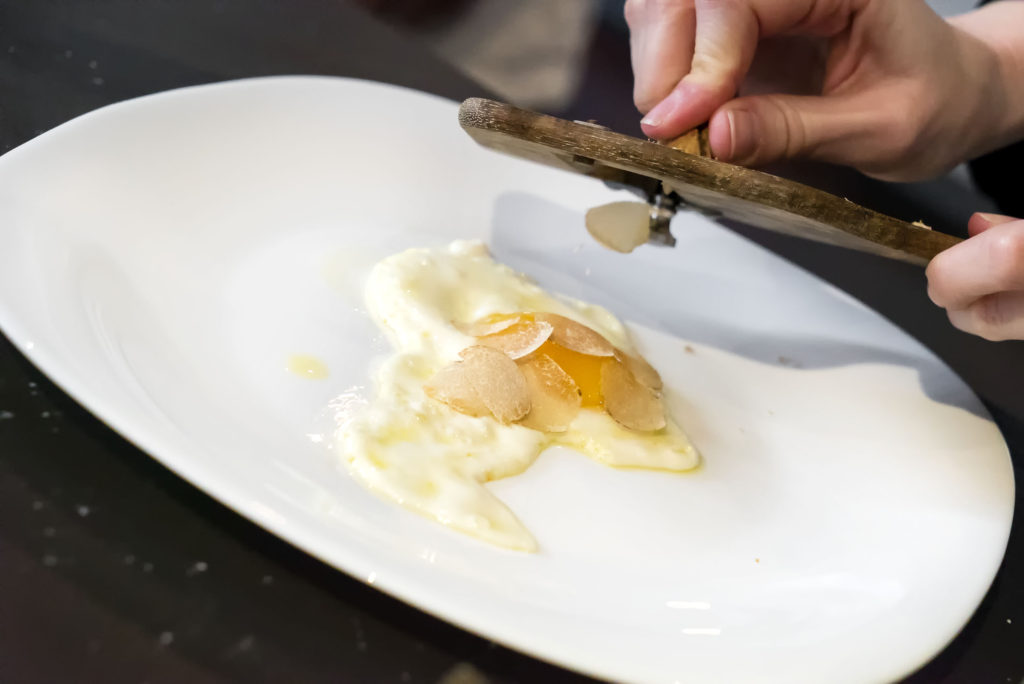
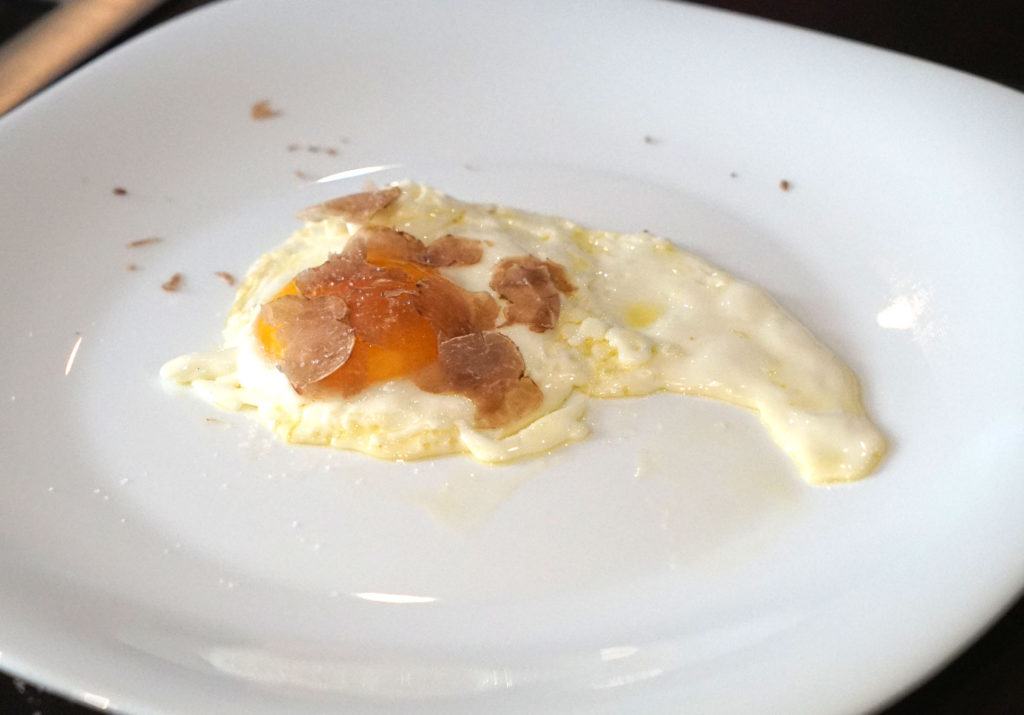
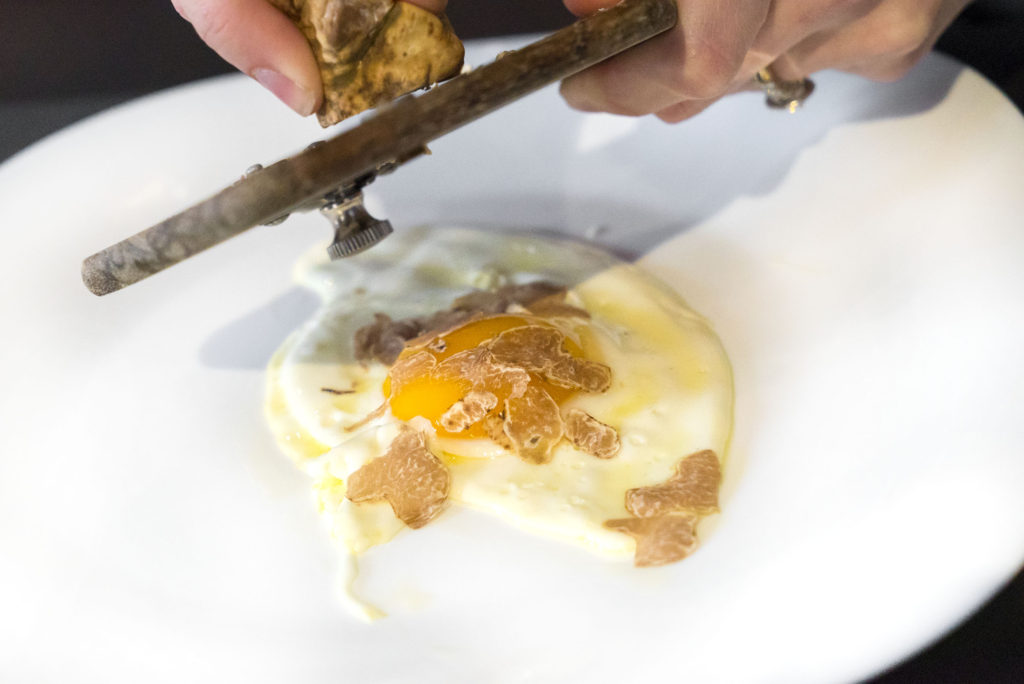
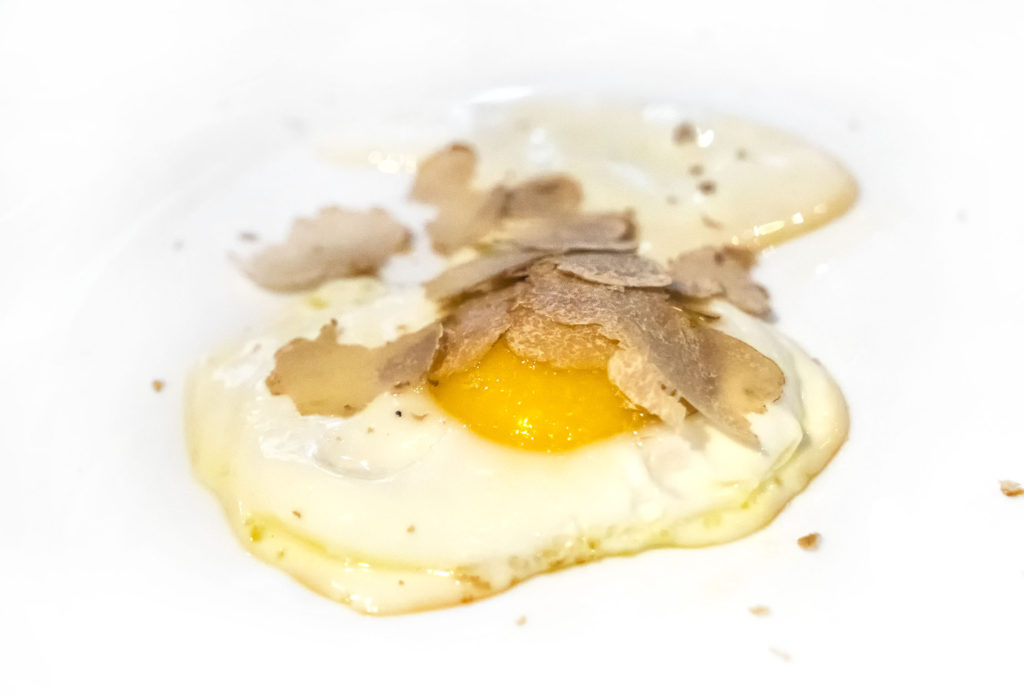
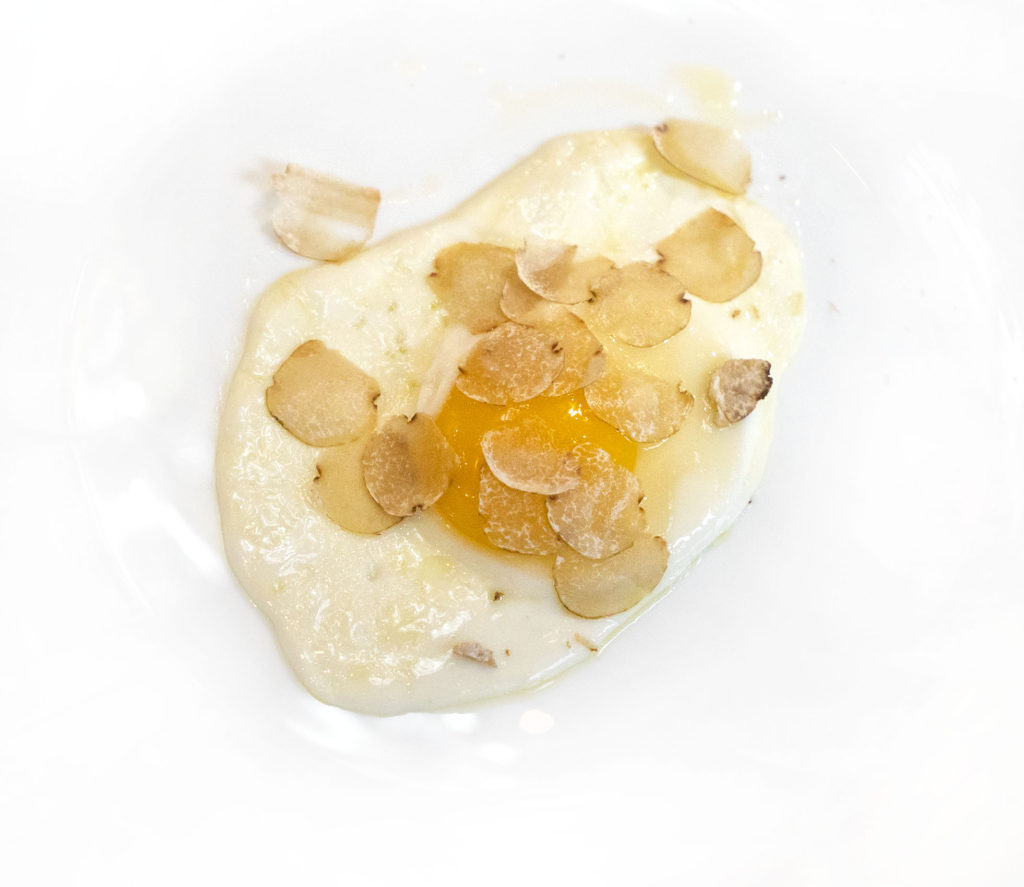
First, we experienced one of the most simple and satisfying ways to enjoy fresh white truffles: shaved directly onto a fried egg.
According to Vittorio, the VP of Urbani Truffles, salt should be sprinkled on after the truffles are shaved onto the egg. Pepper can take away from the truffle flavor and aroma, so skip that.
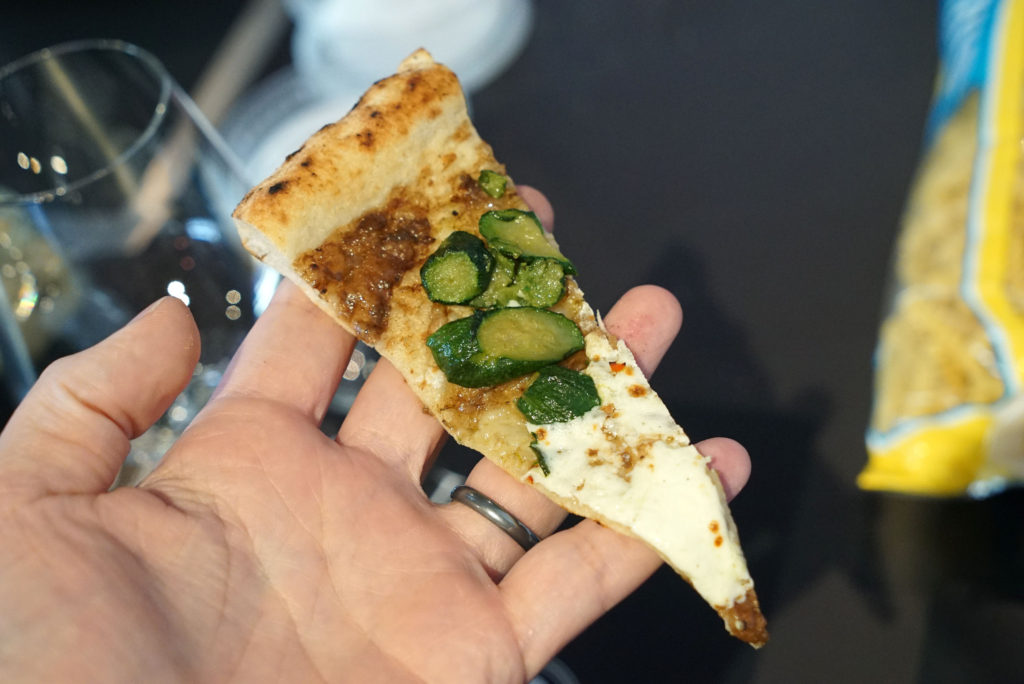
Truffle oil goes really nicely with flatbread and pizza. This one we tried really popped, making something as boring as zucchini really exciting for a change.
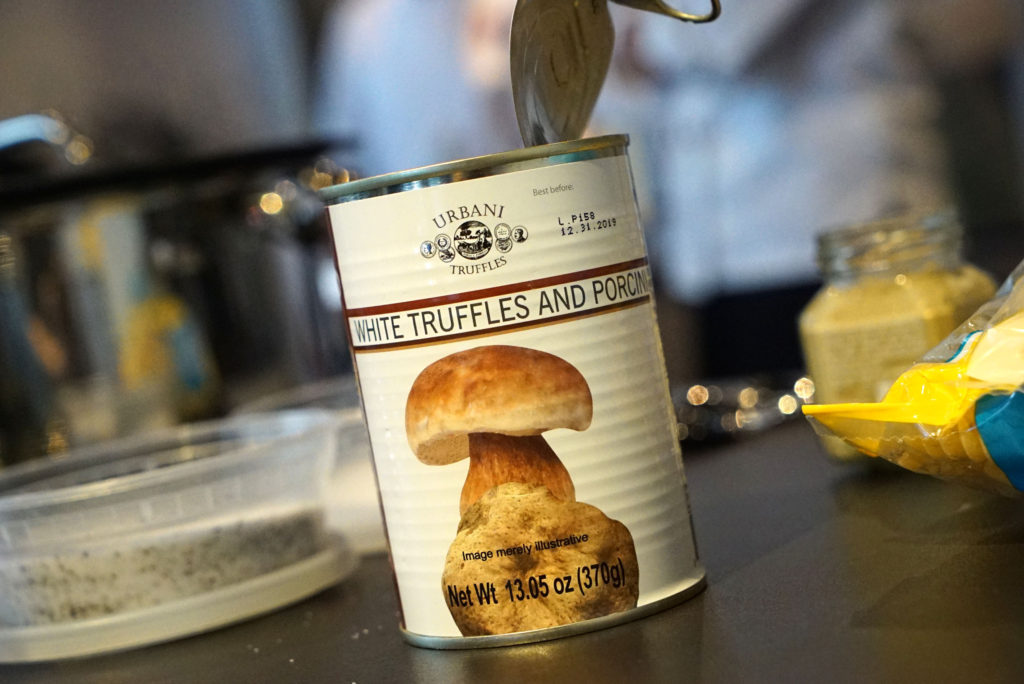
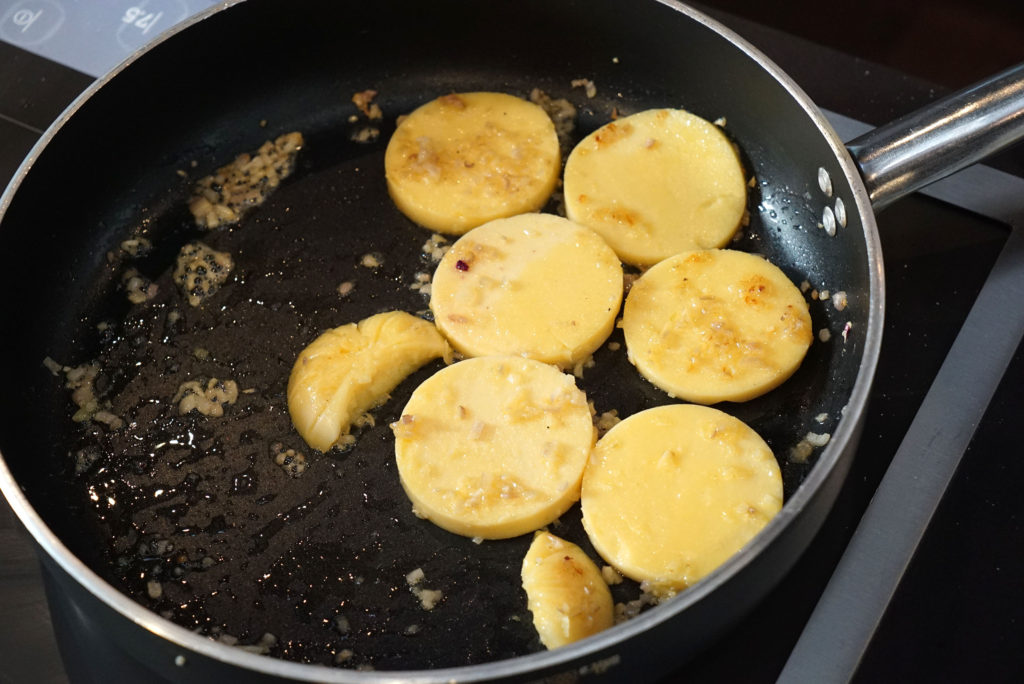
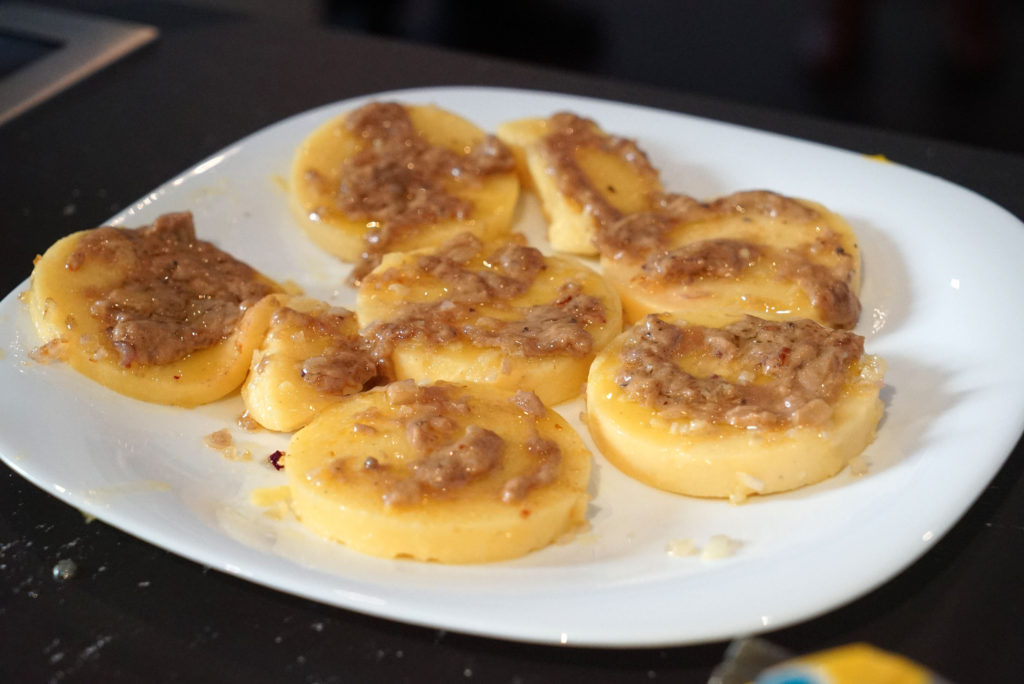
We also sampled one of the canned truffle products: white truffle with porcini mushrooms. This was added to a pan of sauteed shallots and butter to make a sauce, which went on top of some polenta.
This was delicious, and I can totally see this being used to spike something like gravy or even to make a sauce for the top of a filet mignon. Really flavorful – best thing I ever ate from a can.
Another item I tried was their truffle mnustard. I plan to feature this in some recipes in the future, as I think it would be an excellent addition on a cold cut sandwich or a burger.
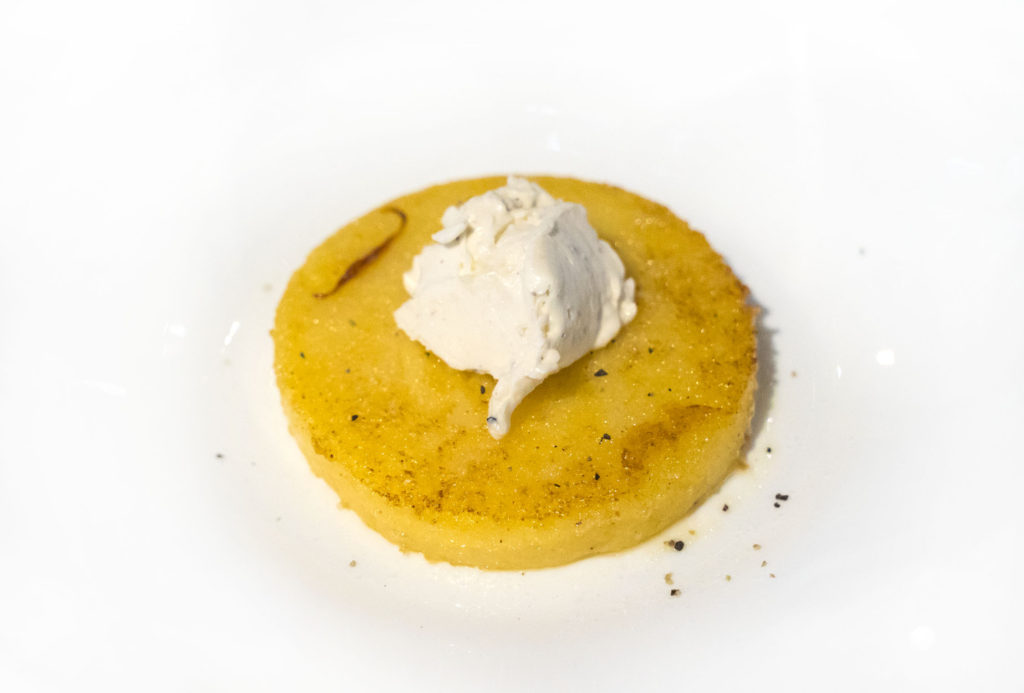
Finally, we tried some truffle cream cheese spread as well. This, too, was plopped onto some sauteed polenta. I can’t imagine how amazing this would be on lox.
If you’ve got room in your budget for a fresh truffle, I say go for it. Urbani delivers the freshest product I have ever experienced, and they supply big dog restaurants like French Laundry and Del Posto. Whipe up some homemade pasta, cook it, throw the pasta in a pan with some butter, fry a sunny side up egg for the top of the pasta, and shave that delicious truffle right onto it. Perfection.
But even if a fresh truffle isn’t on your to-do list, then I highly recommend picking up some of Urbani’s other products and experimenting with truffle in your own recipes that way. You can’t go wrong. Every product is amazing.
I’ve been a little bit bummed out about the kiosks available at TurnStyle, the semi-new food hall located underground at the Columbus Circle subway station. It seems to be mostly coffee, candy and merchandise. I had high hopes for a Chinese noodle joint, but that spot turned out to be pre-packaged sushi and poke bowl counter.
Doughnuttery was a failure for me, as most of the toppings taste similar and the very small doughnuts are a buck each.
Bolivian Llama Party is a different story. This place is serving real food; not some pre-packaged bullshit.
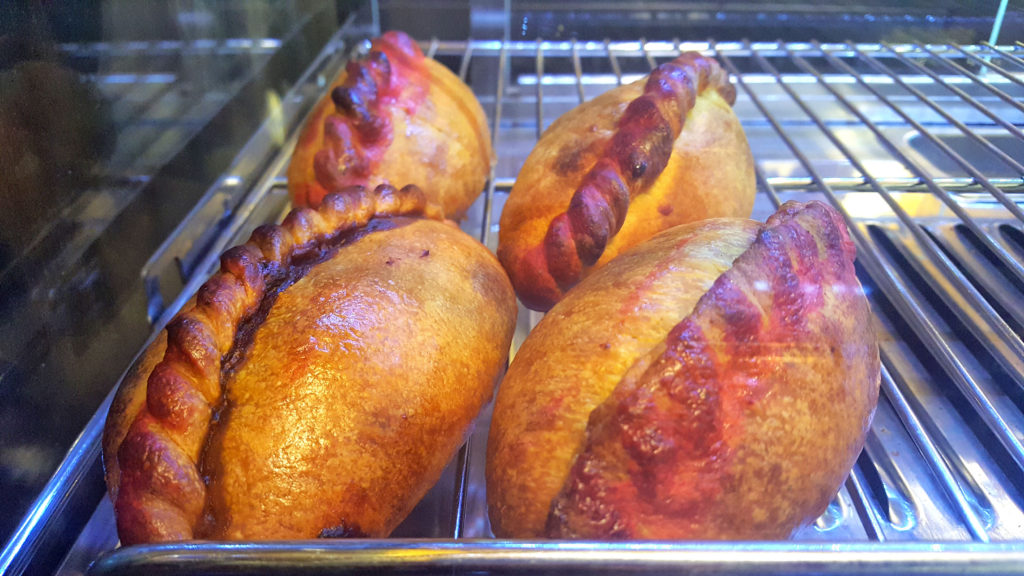
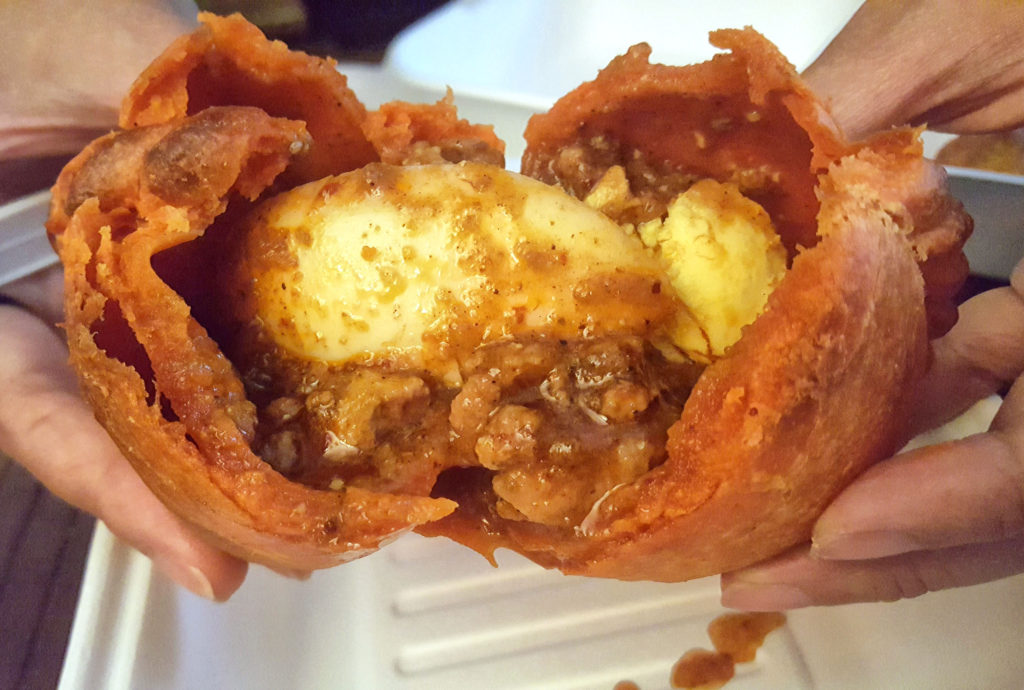
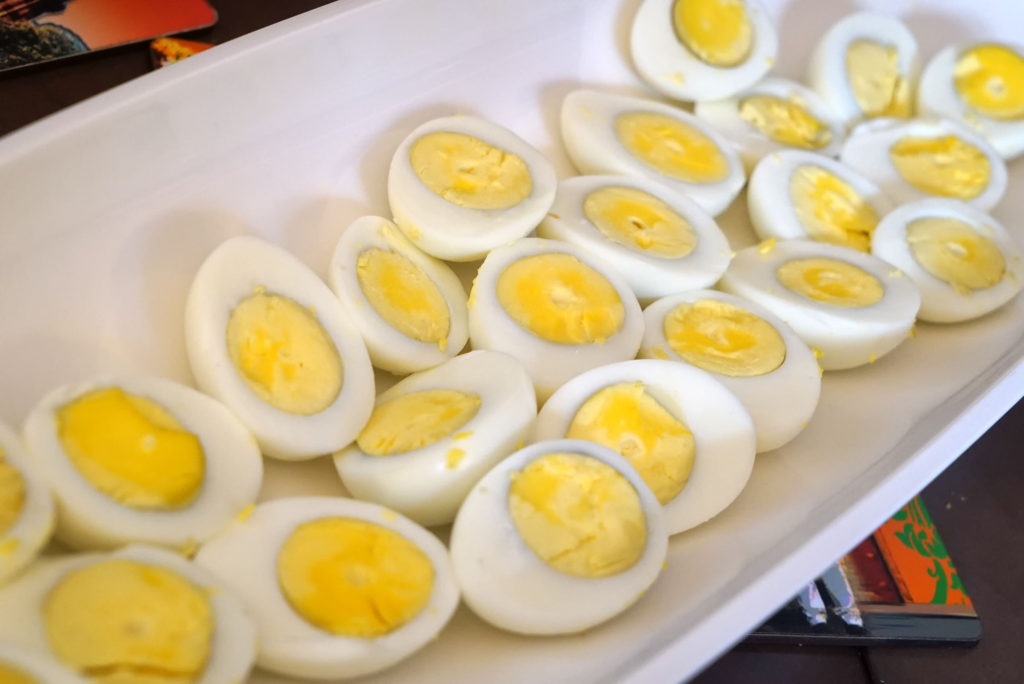
Saltenas, in particular, are their specialty. They’re similar in form to empanadas but they differ in style. They typically consist of a soupy filling and a slice of hard boiled egg inside of a baked outer crust.
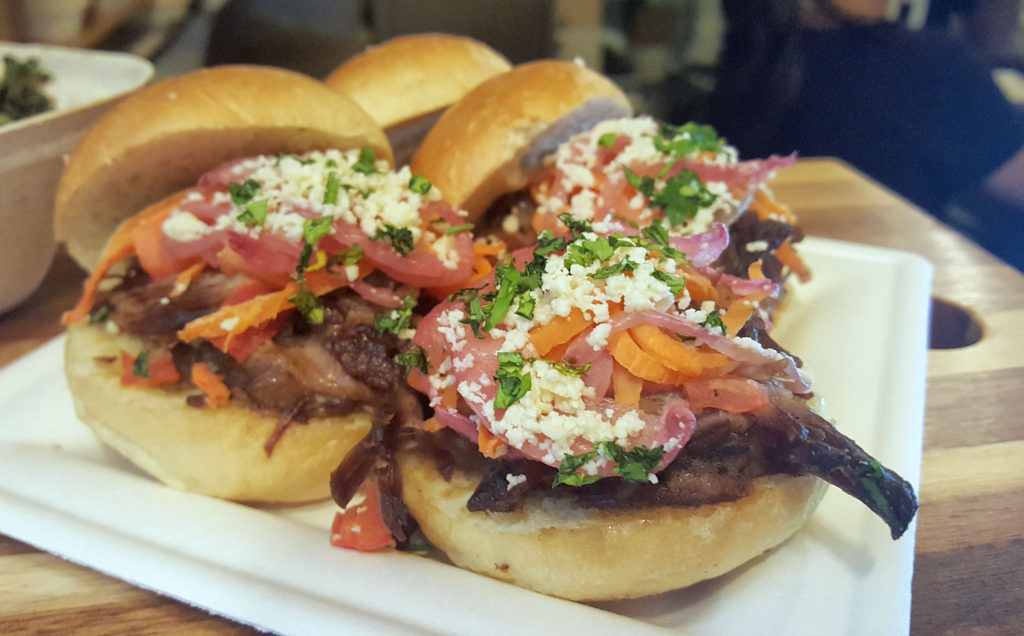
They also offer sliders, sandwiches and interesting drinks.
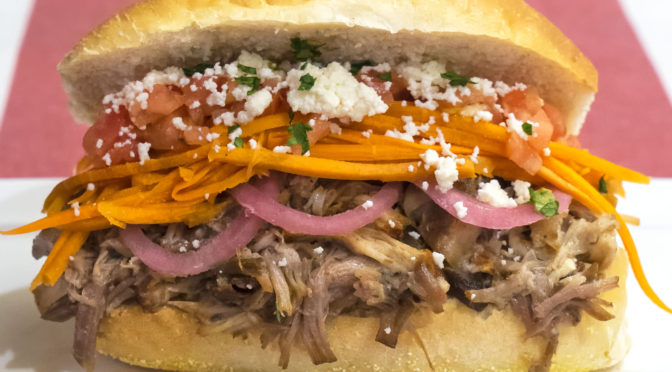
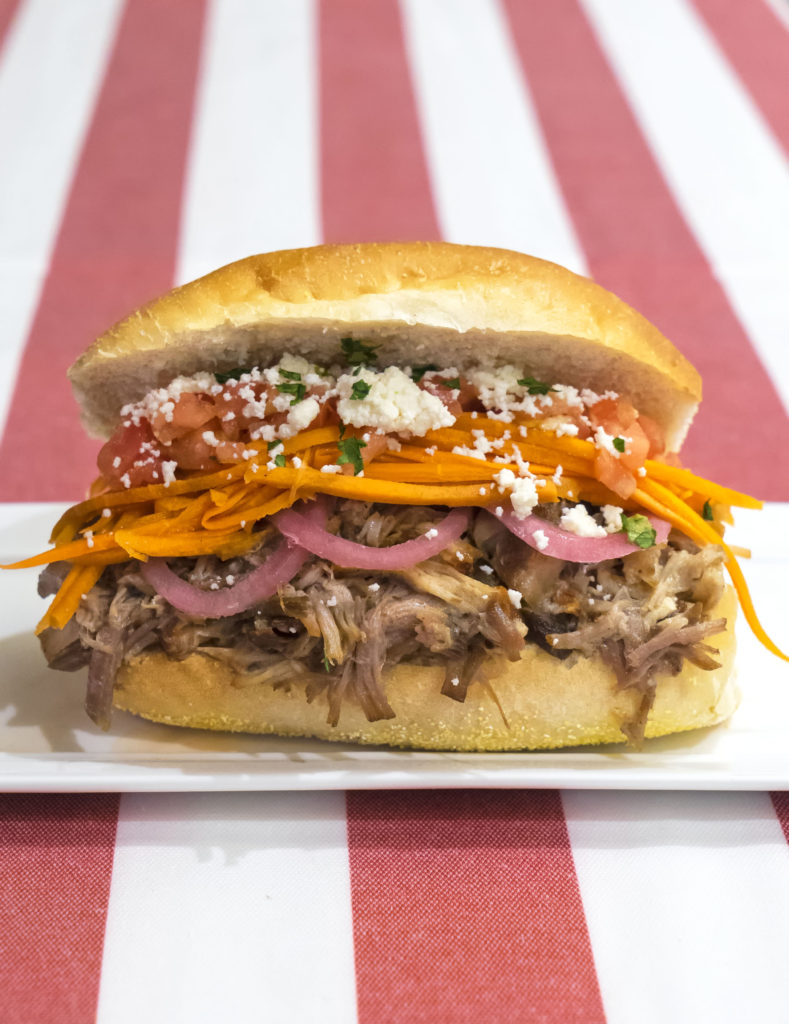
Their Triple Pork sandwich is amazing!
Another spot I tried out is MeltKraft. This is also definitely worth a trip to Turn-Style.
The kiosks and stores will turn over every so often, making way for more restaurants and shops. Overall this place has a few great spots to eat and shop, but hopefully there will be more soon.
TURNSTYLE FOOD HALL
1000S 8th Ave
New York, NY 10019
One of my foodie friends, The Restaurant Fairy, hosted a beautiful and delicious Indian brunch at her home and invited a bunch of us fellow foodies to come by.
They say that, in India, the best food is found either in the streets or in peoples’ homes. I can honestly say that I’ve never had better Indian food than I did at this homemade brunch. No restaurant in the city even comes close.
STARTERS
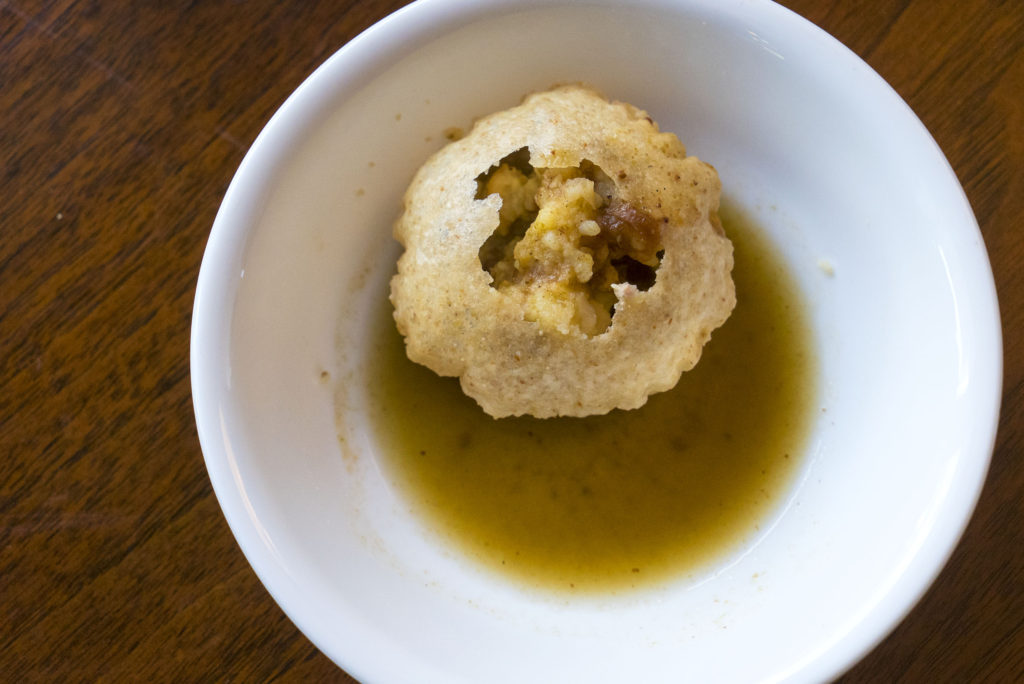
Puri, Indian street food snacks with chickpea spread filling:
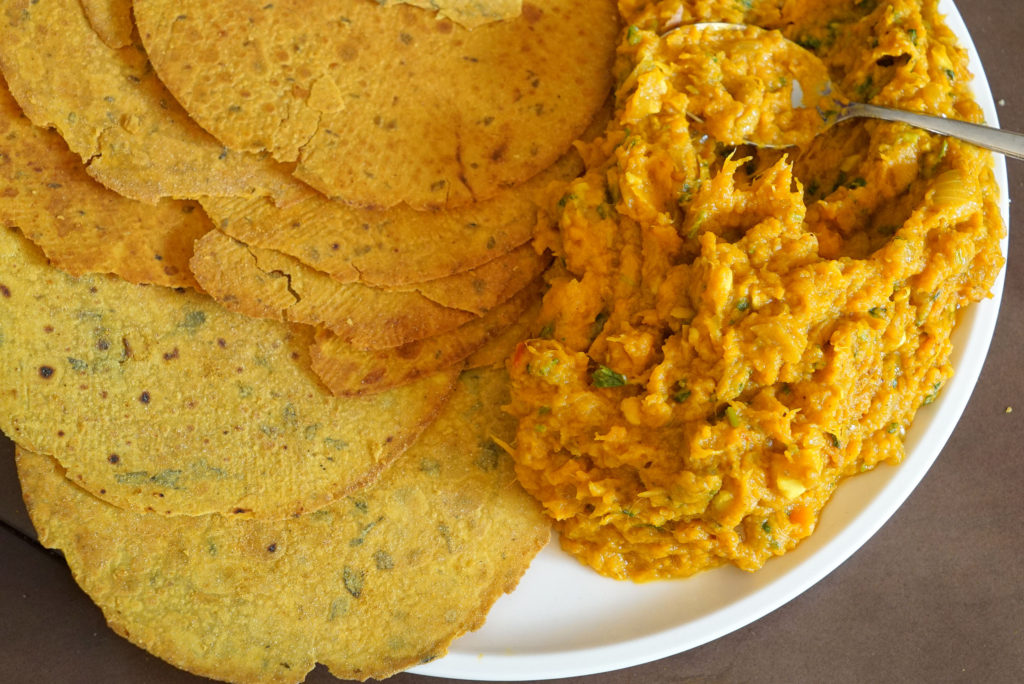
Sweet potato and squash spread with Indian spices and flat bread:
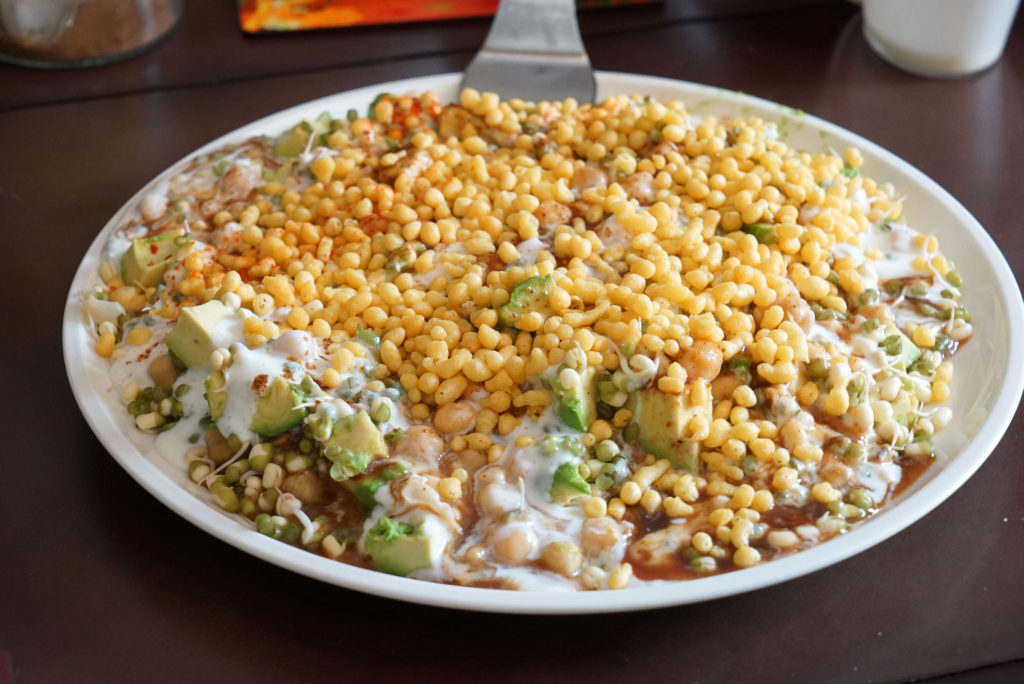
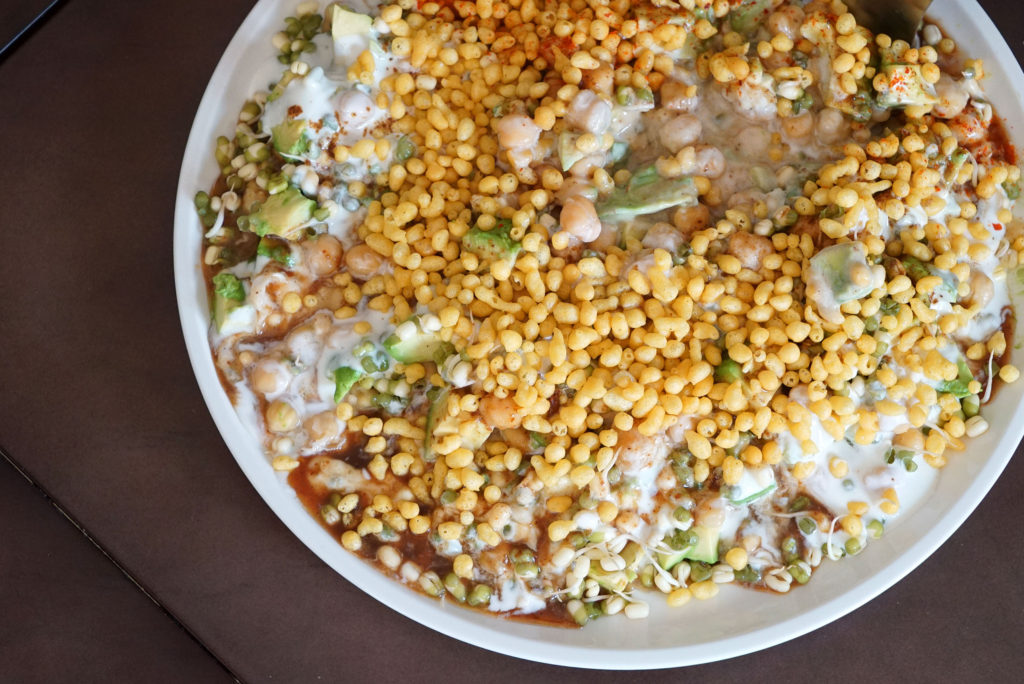
Chaat (Indian savory snack food) consisting of chickpeas, avocado, yogurt and spicy sauces with crunchy puffs:
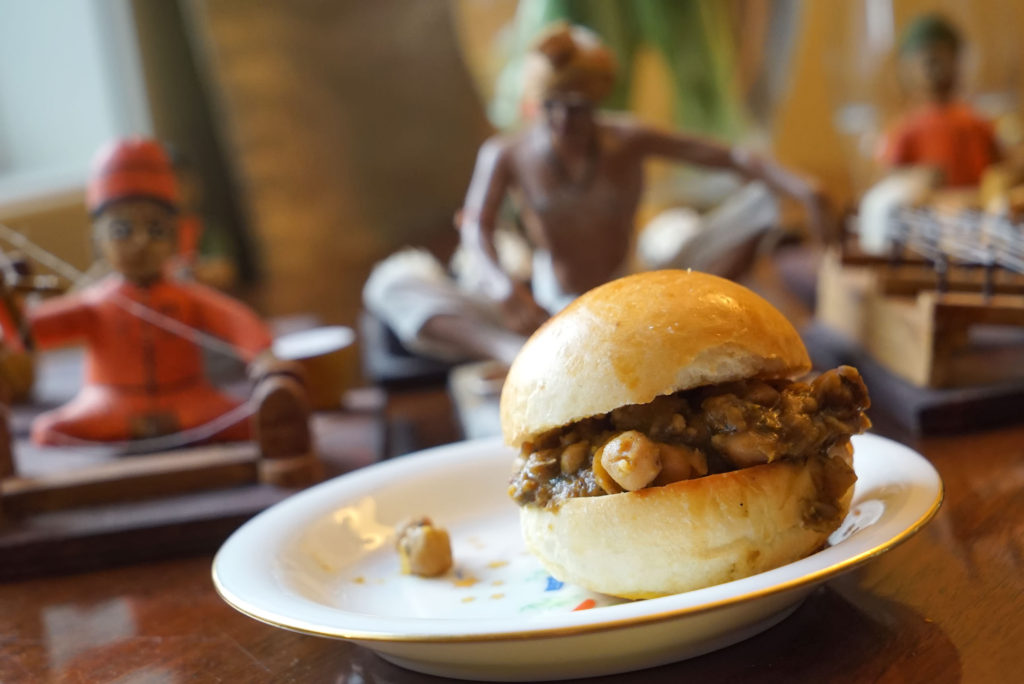
Chickpea and lentil slider:
Entrees
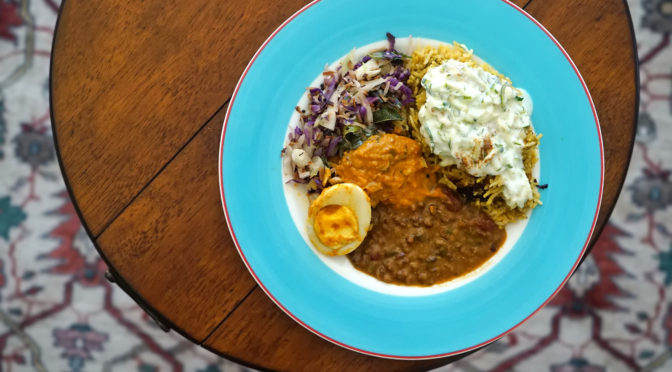
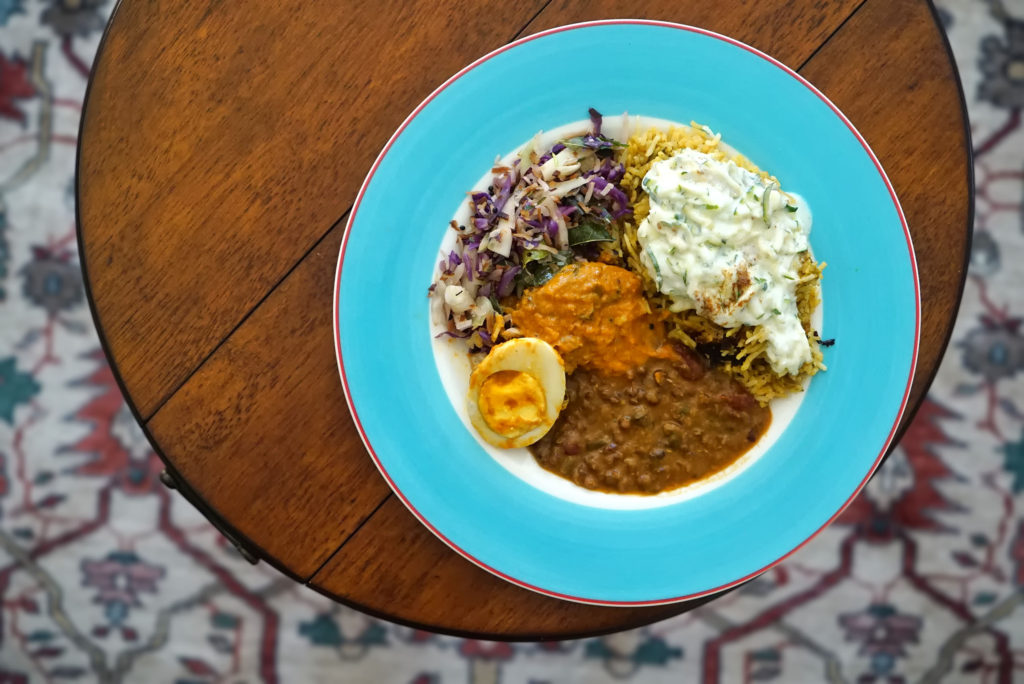
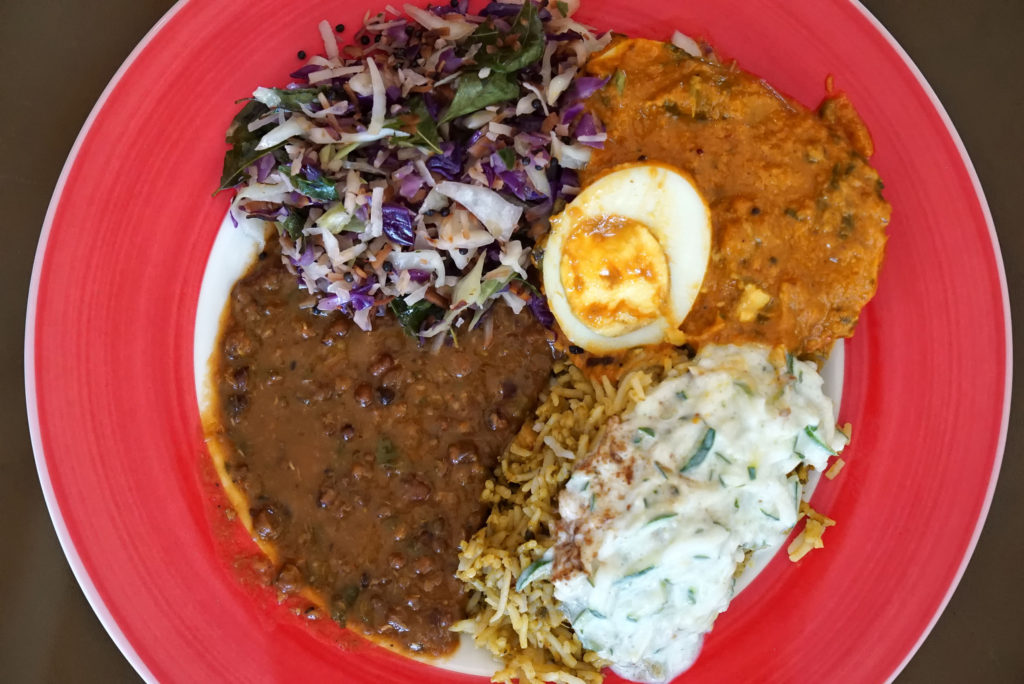
Full plates:
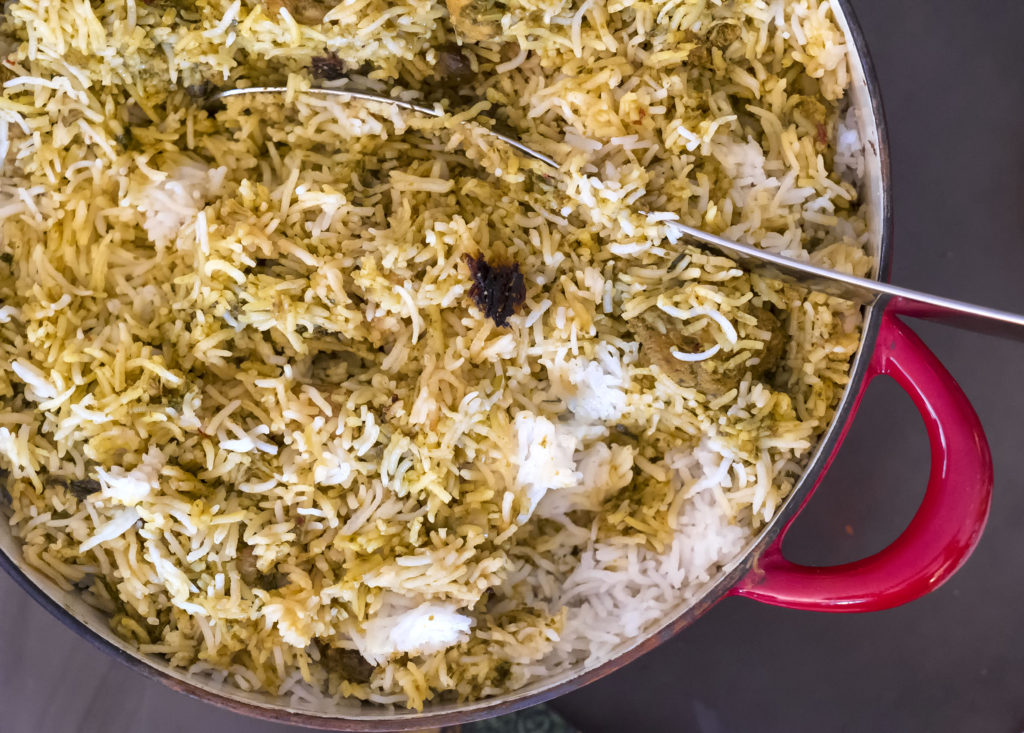
Biryani rice:
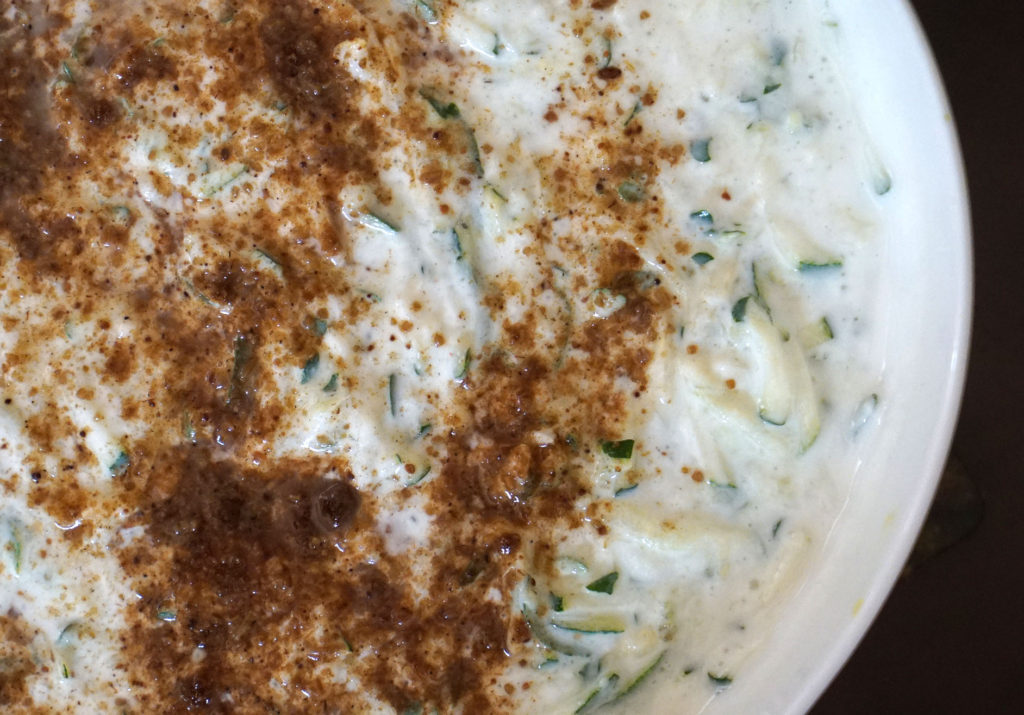
Yogurt sauce for rice:
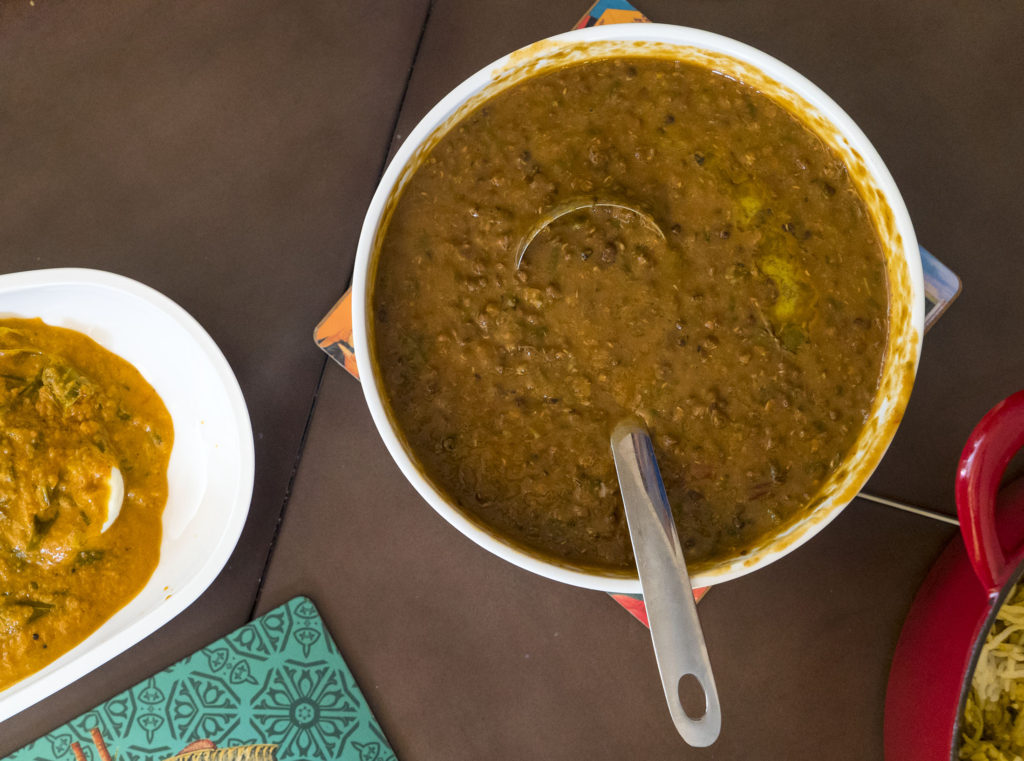
Daal (spiced lentils):
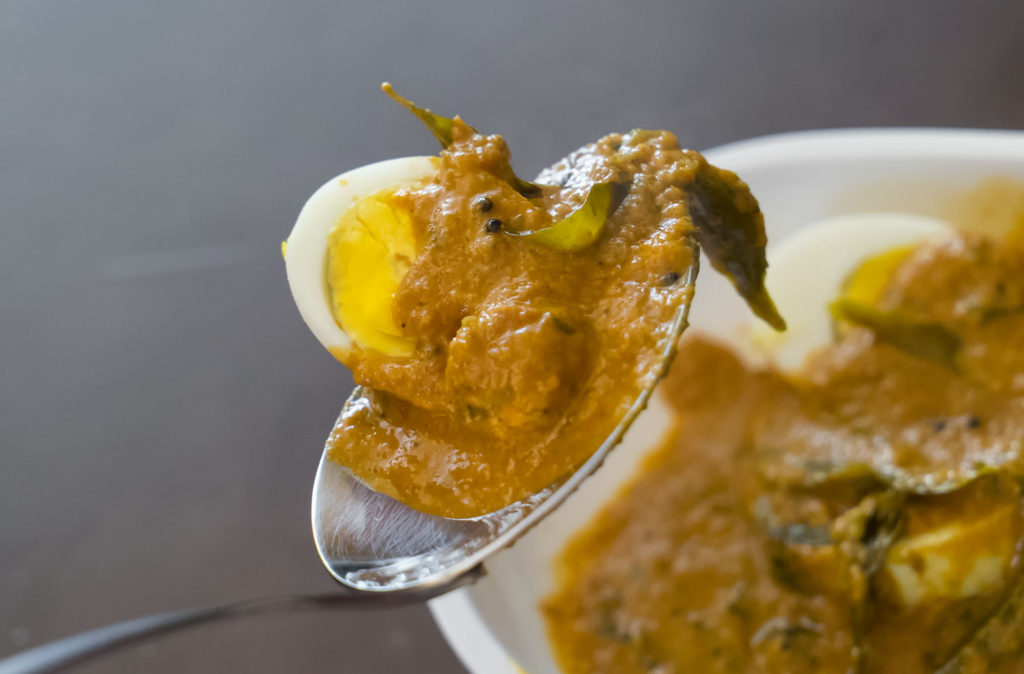
Egg curry:
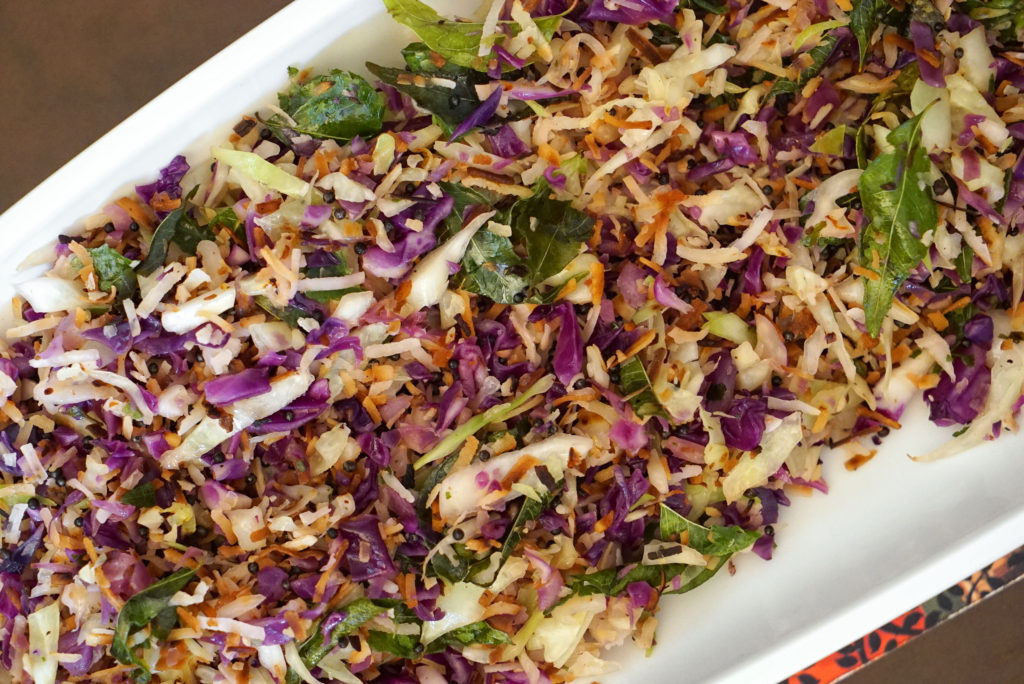
Cabbage slaw with curry leaves:
We also had some Chicken Tikka Masala toward the tail end but I didn’t shoot it. It was the best version of that dish I’ve ever had.
Amazon recently launched a restaurant delivery service called Amazon Restaurants to compete with services like Seamless and GrubHub. They offered a few Instagram influencer friends and I some credit to try it out and post pics, give our thoughts, etc.
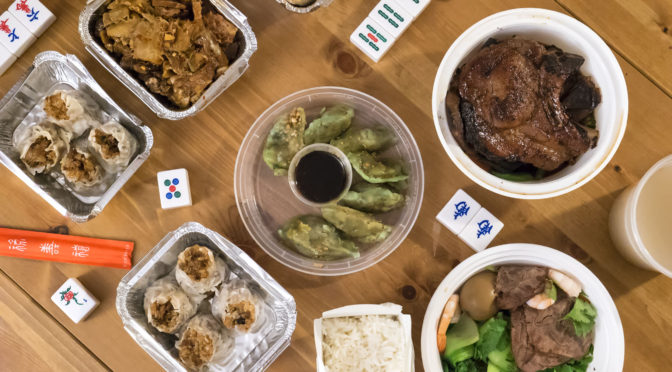
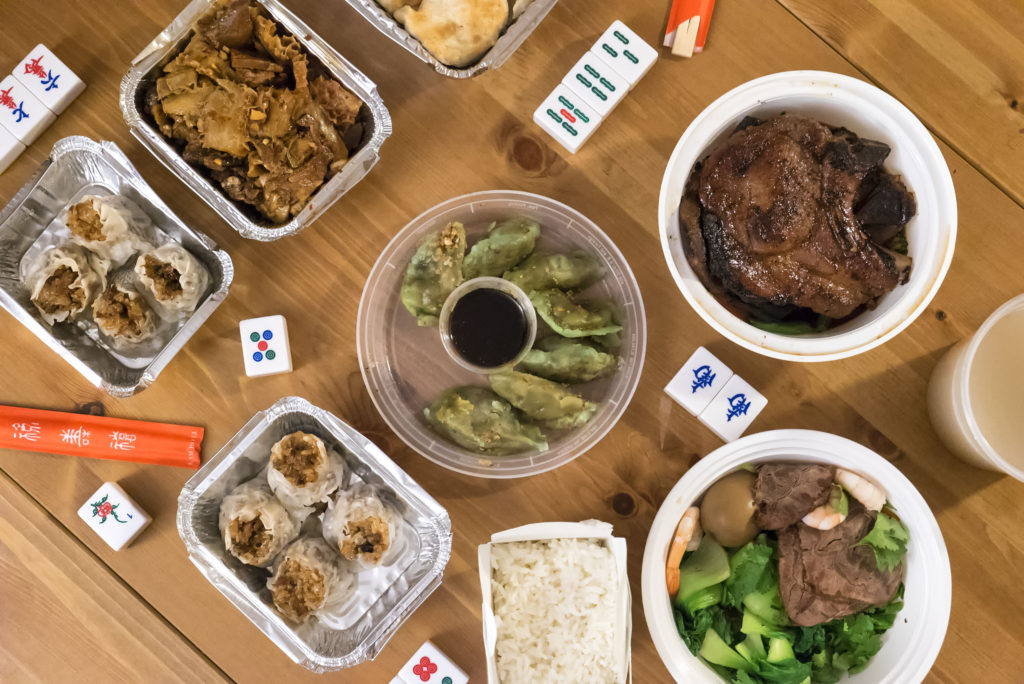
To make a whole night of it, we decided to order a whole bunch of Chinese food (and a little Thai) and make it game night as well with a Mahjong table and a deck of cards for Big Two.
Here’s a list of what we ordered, from three different restaurants.
Kung Fu Little Steamed Buns & Ramen: Pan Fried Pork Dumplings, Sticky Rice Shao Mai, Sliced Beef with Tripe in Chili Oil, House Special Ramen, and Sticky Rice Balls in Chinese Sweet Liqueur.
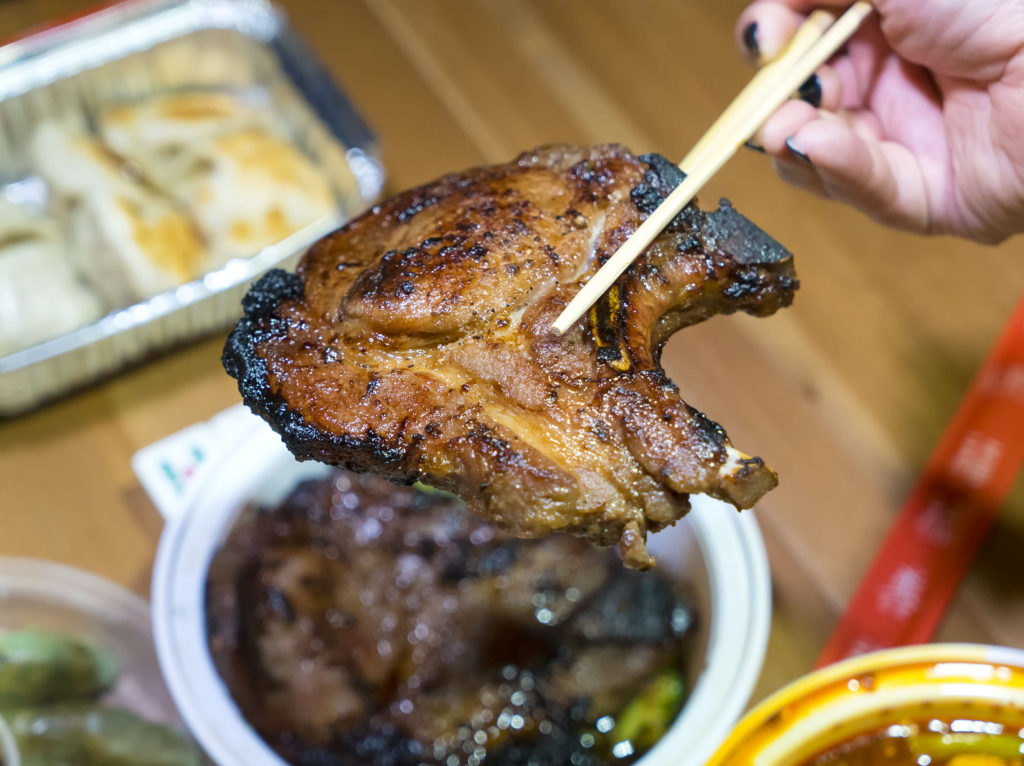
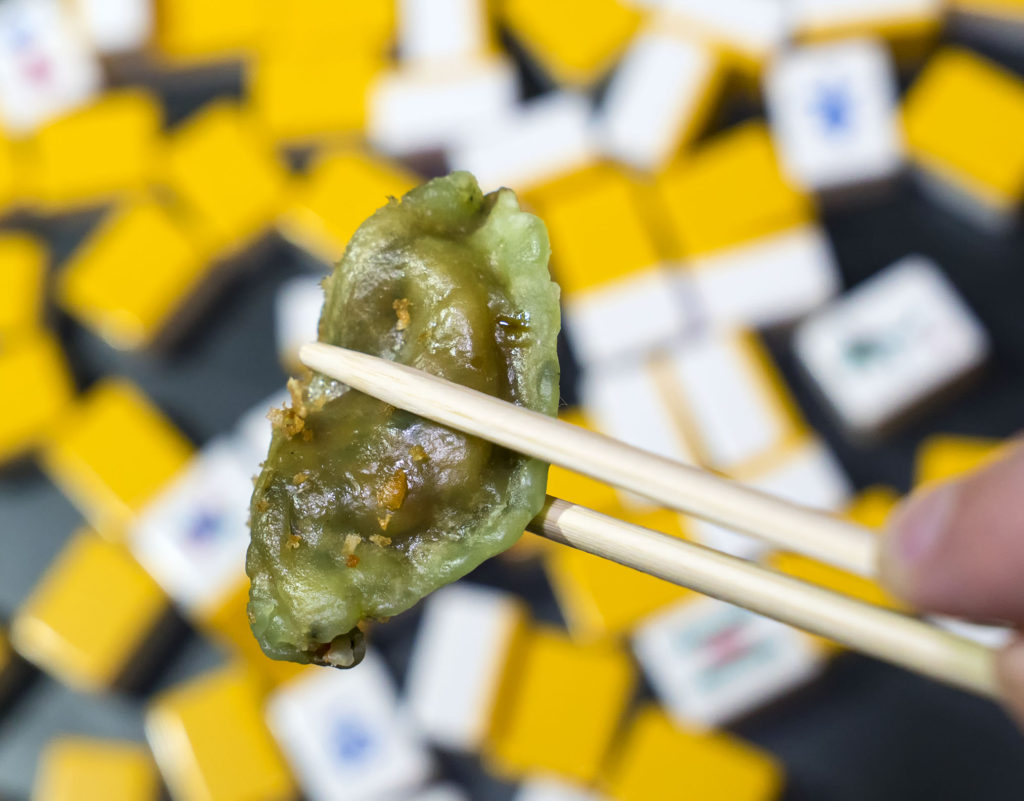
Spice: Maekong Aged Pork Chops and Emerald Vegetable Dumplings.
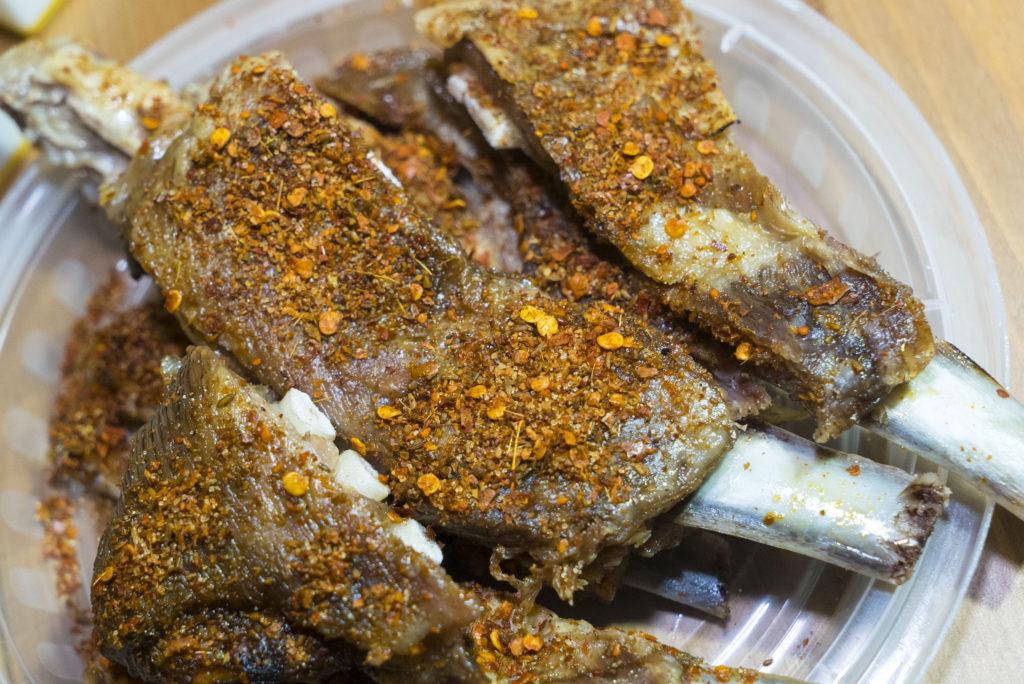
Hot Kitchen: Slow Grilled Lamb Ribs, Ma Po Tofu, Sliced Fish & Sour Cabbage Soup.
Since I’ve reviewed Kung Fu before, I will focus on the other items here. The big standout for me was the slow grilled spicy lamb from Hot Kitchen. The cumin and red pepper dry spice is just fantastic. I highly recommend it, especially because lamb ribs are a rarity on menus.
While the pork chops from Spice were pricey and a bit dry, they were super tender and had a nice aged flavor to them. Perhaps get these in the restaurant, rather than for delivery, to ensure they are cooked properly.
As for the delivery service, Amazon Restaurants was great. They have a good selection of restaurants stretching across the city, and the food arrived in a timely manner, still hot and fresh. A welcome addition to the food delivery service market.
A little over a year ago, the World Health Organization published a finding through their International Agency for Research on Cancer (IARC) that the consumption of red meats represented a “hazard” and classified red meat as “probably carcinogenic.” While the craziness over that fake scare has already passed like a cow fart in the wind, I think it’s useful to talk about it here, even if just to reiterate how wrong it was.
First, I think it’s important to discuss a few things right off the bat.
Okay but seriously…
Difference Between Hazard and Risk: The IARC does not evaluate cancer risks. They only identify hazards. A risk is a statement about the probability, possibility or likelihood to cause harm, while a hazard is merely representative of a possibility to cause harm under any circumstances. It is always important to look at hazard and risk together when talking about things like cancer.
Perhaps the best way to illustrate the difference between the two is by way of analogy. Think about driving, for example. If it’s raining, we know that wet roads represent a hazard to drivers for getting into an accident (cancer). Now let’s say you’re speeding, driving with bald tires, and not using your windshield wipers after drinking a six pack of Bud. You’ve significantly elevated your risk of getting into an accident during hazardous driving conditions like wet roads.
www.vintodphoto.com
If we apply this to beef, the IARC merely told you that the roads are wet. They identified a hazard, and nearly anything can be hazardous. Water is hazardous. It only becomes a risk when you try to breathe it, or drink it while hanging upside down or something ridiculous. So, wet roads? Maybe you walk to work, or maybe you have new tires, drive very slowly in the rain and never drive while intoxicated. As a result, your risk of getting into an accident due to a wet road hazard is very low.
See the difference, and the need to always consider both together? Of course you do, because you’re not an idiot. So when we extrapolate this to something complex, like diet or personal health, the need to assess both becomes absolutely vital. If you’re an alcoholic smoker who works around asbestos all day, never exercises, and consumes nothing but bacon grease, then chances are you’re going to die of cancer pretty quickly, because your personal risk levels are through the roof and you’re dancing around several big hazards.
Scope of Study: First, the IARC does not seem to specialize in the evaluation of food. They’ve looked into more than 1000 chemicals, mixtures, biological agents, personal habits and occupational exposures, but diet and food represent large complexities that are simply out of their realm of specialization.
Second, the IARC only categorizes things into five wishy-washy designations: Probably Not Carcinogenic to Humans (Category 4); Not Classifiable as to its Carcinogenicity to Humans (Category 3); Possibly Carcinogenic to Humans (Category 2B); Probably Carcinogenic to Humans (Category 2A); and Carcinogenic to Humans (Category 1). Aside from the fact that language like “probably” and “possibly” is arbitrary at best, only one substance has ever received the Category 4 designation of “Probably Not Carcinogenic,” and that was caprolactam (whatever the fuck that is).
www.vintodphoto.com
They claimed that red meat was “probably carcinogenic” (Category 2A) and that processed meats were “carcinogenic” (Category 1). So what do “red meats” and “processed meats” even mean?
According to IARC, red meat refers to “unprocessed mammalian muscle meat.” This means beef, veal, pork, lamb, mutton, horse or goat meat. Yeah, you read that right: Pork is not “the other white meat.” Based on the amount of myoglobin or “stuff that looks like blood, but really isn’t blood” in the muscle tissue, pork is categorized as a red meat.
Processed meat refers to “meat that has been transformed through salting, curing, fermentation, smoking or other processes to enhance flavor or improve preservation.” In the U.S., processed meats like bacon, sausages, hot dogs and deli meats primarily contain pork and poultry, but sometimes contain beef as well.
Note that all production and processing methods fall into these definitions, and that even includes organic, grass-fed, nitrite- and nitrate-free meats, as well as conventional meats. NO ONE IS SAFE FROM THE IARC!!!
Findings: The findings are based on pre-existing research. What is that research? How can they control for external factors that may increase or decrease risk when studying human diet? Well, according to their Q&A, “In the case of red meat, the classification is based on limited evidence from epidemiological studies showing positive associations between eating red meat and developing colorectal cancer as well as strong mechanistic evidence. Limited evidence means that a positive association has been observed between exposure to the agent and cancer but that other explanations for the observations (technically termed chance, bias, or confounding) could not be ruled out.”
In layman’s terms, that means other factors could have influenced the weak positive associations between red meat and cancer, like poor diet, sedentary lifestyle, obesity, bad habits like smoking or excessive alcohol consumption, or even genetic health conditions or pre-existing diseases (think speeding, driving on bald tires, driving while intoxicated, etc). So there’s that difference between hazard and risk being played out again.
In short, don’t believe the hype!
Research has always shown that beef should be part of a healthy and balanced diet. But don’t just take my word for it; check out what some dietitians think. To me, it’s clear that the scientific evidence doesn’t show that red or processed meat causes cancer. Studies in humans are limited and inconsistent, and evidence has weakened over time. Take a look HERE for research that the Beef Checkoff submitted to the IARC. The Beef Checkoff is an organization that’s funded by farmers giving $1 for every animal produced in order to pay for research and marketing campaigns within the industry. If you think those submissions are biased for some reason (which is silly, because beef farmers and ranchers feed their families with the same beef and have a vested interest in the industry’s safety), then go HERE for independent submissions that were sent to the IARC.
Okay so what about hot dogs and bacon, the “processed meats” that were categorized as being “Carcinogenic?” If you poked around their website you may have noticed that smoking and asbestos are in IARC Category 1 as well. But on their Q&A they’ve explained that eating processed meats is not equally as dangerous as smoking – not even close, as a matter of fact. As I mentioned above, rather than assessing the level of risk, the IARC classifications merely describe hazards and potential causes.
Just one last note here on the findings: every one of us has about a 1.8%-4% chance of getting colon cancer, which is the form of cancer that many of the studies focused upon for red meat. Colon cancer is the third most common cause of cancer and cancer-related deaths. Even if the risk of colon cancer goes up 17-18% due to eating red meat, as some of the more fear-mongering studies said (and recall that some studies said there was no increased risk), it’s only about 17-18% of that 4%, or an increased risk of 0.72%. That’s only 4.72% total, if we use the worst figures we can find. The bottom end all-in figure is more like 2.1%, and again that’s only if we ignore all of the other studies that found no risk in eating red meat.
I don’t know about you guys, but even if these false-positive studies were somehow believable, I’d be perfectly willing to take on a 0.3% to 0.7% risk in exchange for a lifetime of enjoying nutritious and delicious red meat in my diet. The air I breathe here in NYC is probably way more hazardous or risky to me than red meat.
Charred Crusts: Another concern that was floating around the web was the idea that the charred outer crisp on meats that develops when the meat comes in contact with fire (like the crust of a broiled steak or the smoky crisp on a flame-kissed burger) is also cancerous.
The chemicals that form during this charring process are present on any meat that gets hit with flame (not just beef). They’re called heterocyclic aromatic amines (HAA) and polycyclic aromatic hydrocarbons (PAH).
They are, indeed, known or suspected carcinogens. However, they aren’t present in high enough concentrations to be a real concern when grilling or cooking. I’ve known of people who charred meat to a crisp and tested the meat afterward, and the amounts of harmful chemical present were so small that they were insignificant. Concentrations matter here. There are probably harmful chemicals in the water you drink too, but unless they’re highly concentrated there’s no cause for concern.
Conclusion: Given the totality of the studies, it’s clear to me that no single food, including red or processed meats, causes cancer. So, my meat minions, beef on with confidence and pride. And go forth and continue to develop that delicious, nicely-textured crust on your steaks and burgers as well. Just don’t overcook anything, for fuck’s sake!
In two days I’m running the NYC Marathon. To earn my bib number, I’m simultaneously raising money for an amazing charity, the Army Ranger Lead the Way Fund.
The Fund is a 501(c)(3) non-profit organization that supports disabled U.S. Army Rangers and the families of Rangers who have died, have been injured or are currently serving in harm’s way around the world. It provides spouses and children of deceased, disabled or active duty Rangers with assistance for health and wellness programs and other services determined to be vital to the family’s well-being, beyond what the government can offer.
If you’re feeling generous, please help me reach my fund raising goal! I’m only about $400 away at the time of this post; the goal is $3000. CLick the link below if you’re so inclined!
I can’t think of a better way to honor these badasses than to endure a marathon in their names and raise money for those they left behind. Help me help them!
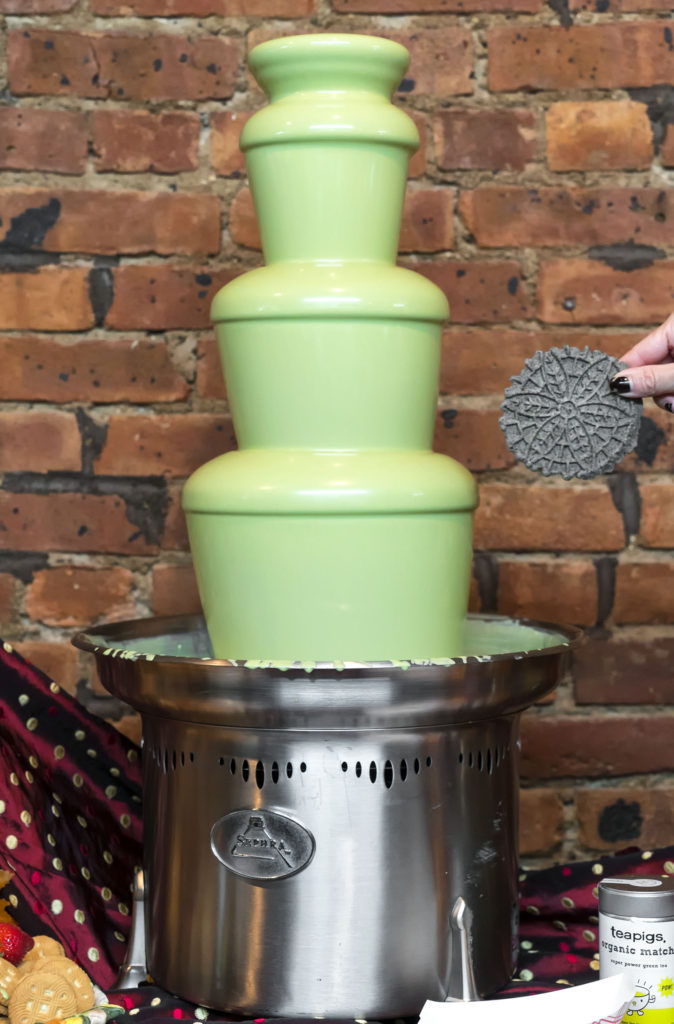
After kicking the shit out of a 20 mile training run, I stopped into this great little spot on the lower east side called Roni Sue’s for a chocolate event, featuring both regular chocolate and matcha white chocolate fountains by Divalicious Chocolate.
The matcha was really interesting. I used to love white chocolate as a kid. Now I like it much less, but when mixed with matcha, it really tones down those flavors and adds a bitter element that makes it a lot more pleasing to my taste buds. I liked it!
The best way to eat it? With one of these sesame cookie wafers that The Diva That Ate New York made for the event.