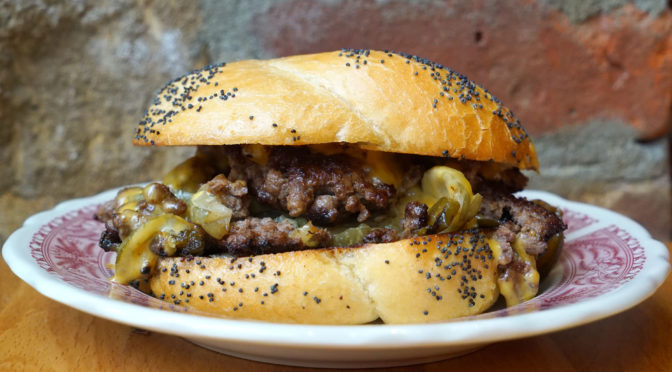
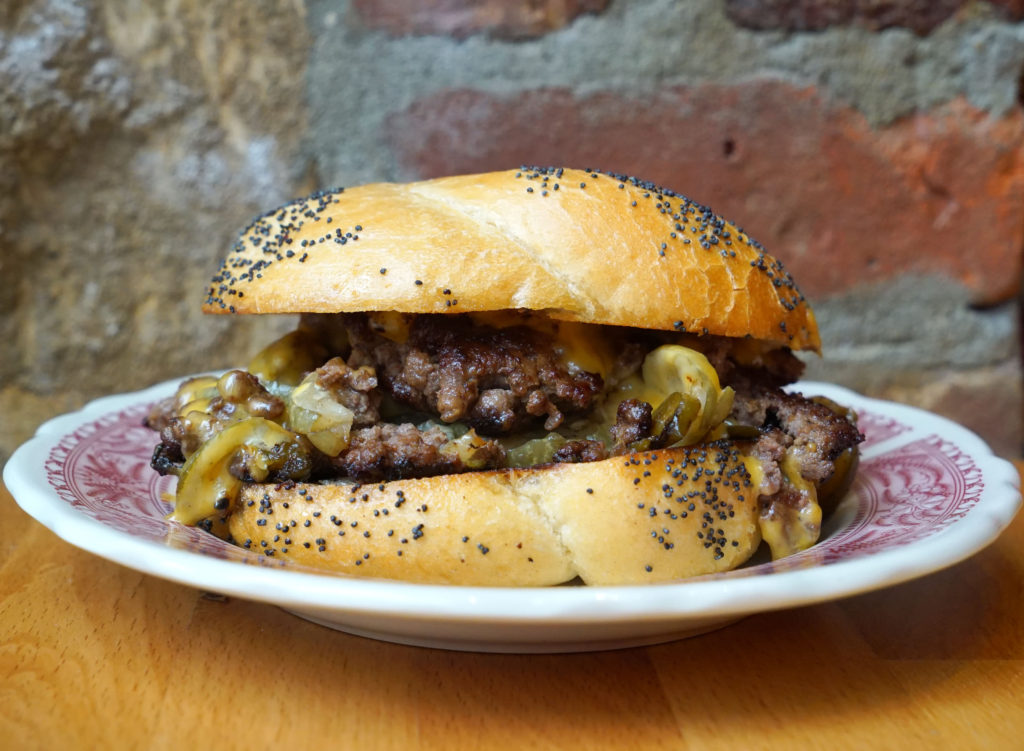
This joint came on my radar when I learned that it was serving a “Chopped Cheese” sandwich. Made popular by Bronx bodega operators, the “Chopped Cheese” sandwich is a cross between a burger, a cheesesteak, and a NY-style breakfast sandwich (minus the egg and bacon – in fact, it is mainly just likened to a NY bacon, egg and cheese sandwich because of the poppy seed sandwich roll).
The sandwich has been trending hard among food folk in the last few months, and it’s now making its way to the upper crust. Elite restaurateurs must be rejoicing, silently thanking the griddle kings who collectively invented this sandwich, for which they can now charge $11 to residents of the Upper West Side.
Mine was pretty good. There was a great crisp on the meat, which seemed to consist of a mix of chopped meat and thinly sliced steak. There was a ton of cheese, and some really nice pickles and peppers folded in. It was a bit salty, however, and after an hour it will certainly make you want to buy stock in Tums.
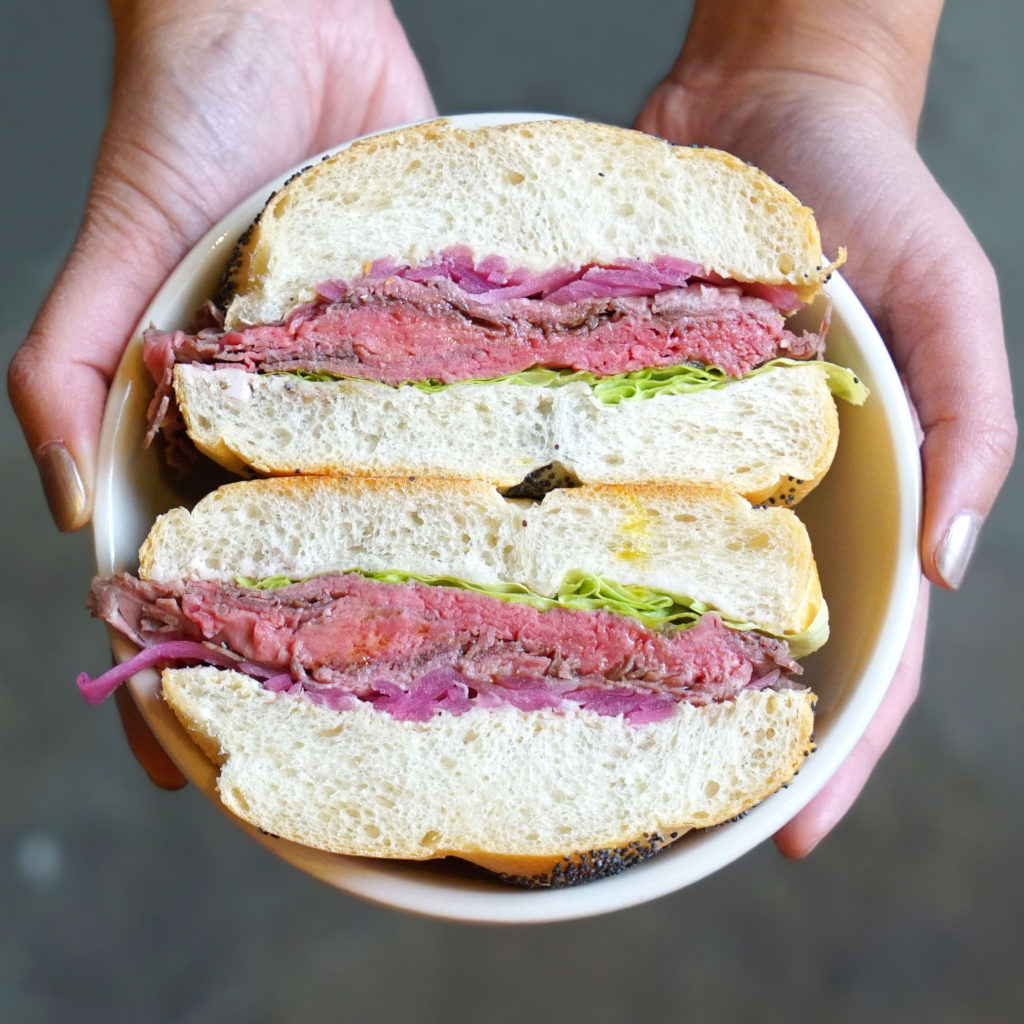
We also tried the roast beef sandwich for $8.
The quality of the beef here was incredible; there just wasn’t enough of it. The sandwich needs double the meat, lettuce and horseradish cream sauce. The bread just kills the ratios. Otherwise this sandwich was excellent, especially with the pop you get from the pickled red onions.
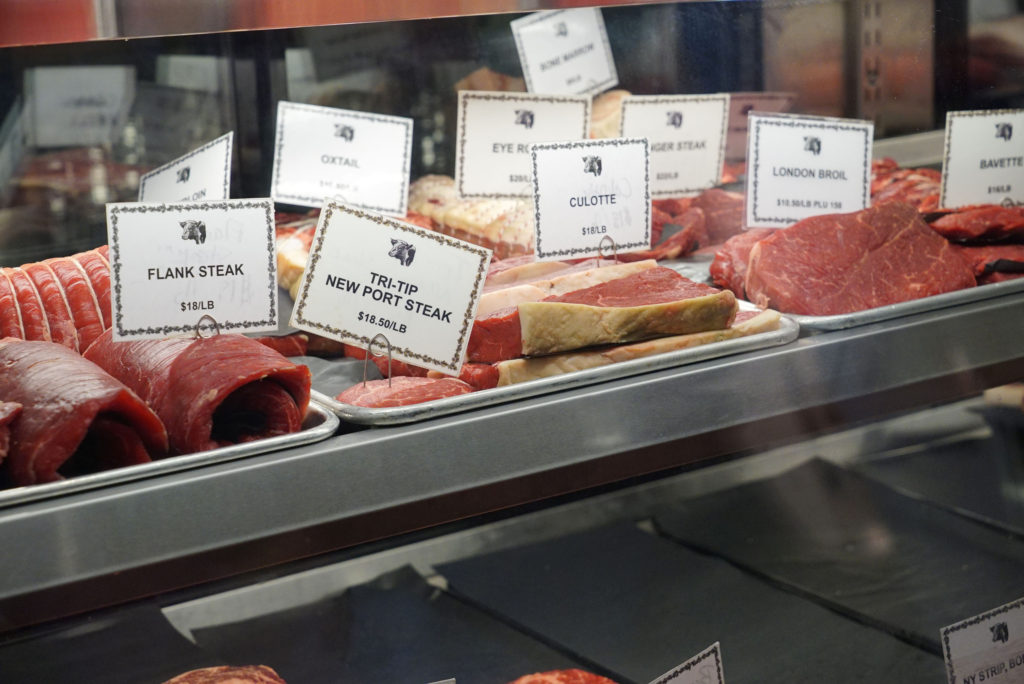
The cool thing about this joint is that it also serves as a butcher shop, where you can buy a variety of nice cuts like culotte and bavette.
WHITE GOLD BUTCHERS
375 Amsterdam Ave
New York, NY 10024
The concept behind Bespoke Kitchen is a totally custom dining experience that’s different every time. The idea is simple: aside from about a dozen starter items, you choose from four proteins and whether you want your protein to have rich or light flavors. The alternative is to leave the entree completely up to the chefs with a secret protein. There are several chefs, too, by the way. All have different culinary backgrounds, but all are incredibly talented and well-experienced.
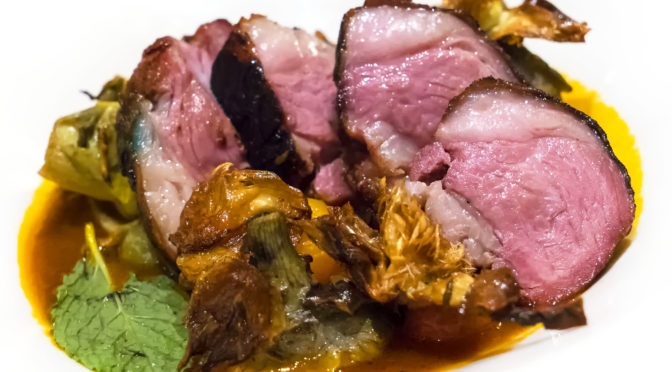
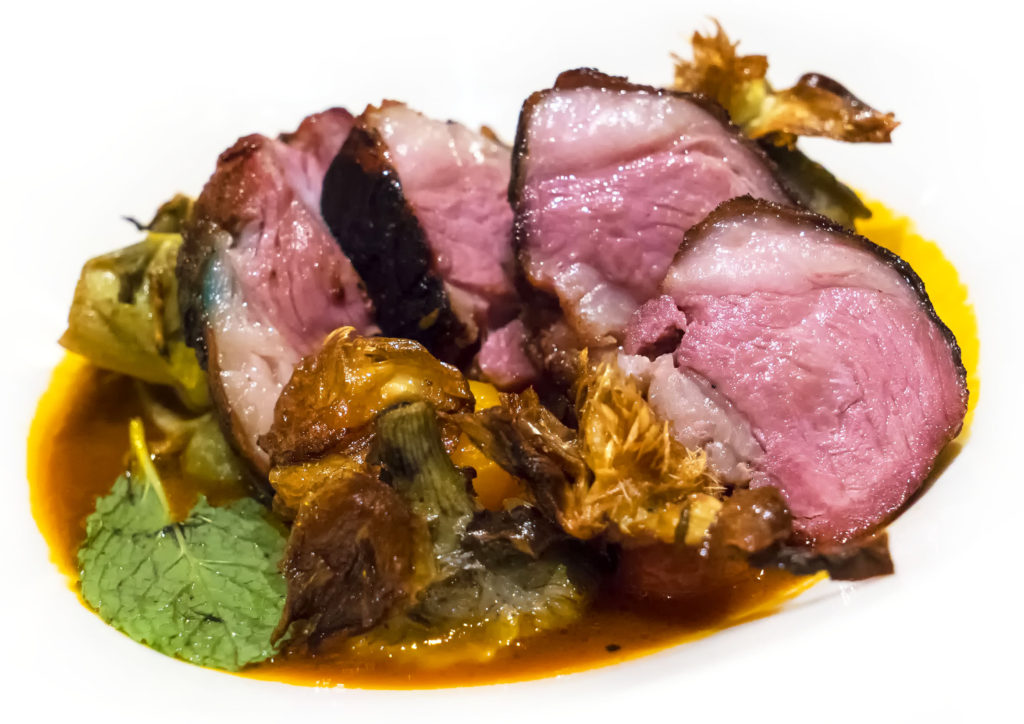
When I was here for an influencer event via their PR group, NYC Restaurant, organized by The Dishelin Guide, the available proteins were rib eye, branzino, sea bass or duck. The secret protein turned out to be lamb on this night, but I didn’t get to try any. It did look beautiful though:
Let me get back to the starters though. We tried a bunch, so I will just fire them off with some commentary to go with each.
STARTERS
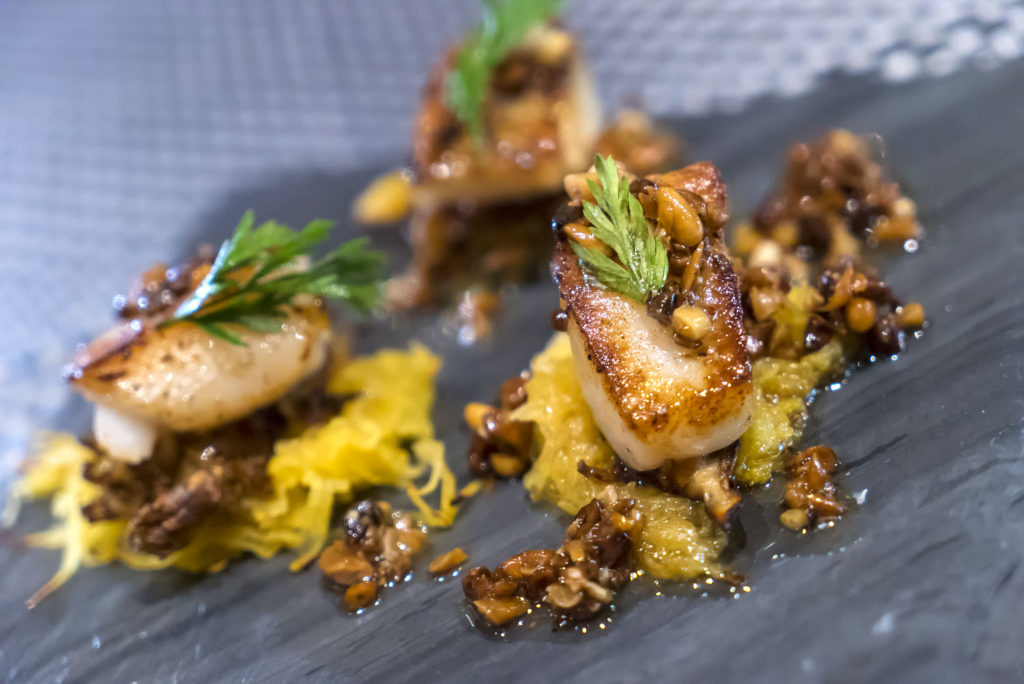
Diver Scallops:
These were pretty good. They were halved scallops served atop a bed of spaghetti squash, hen of the woods mushrooms and pine nuts. The outside was seared and caramelized just right, leaving the meat supple and juicy inside.
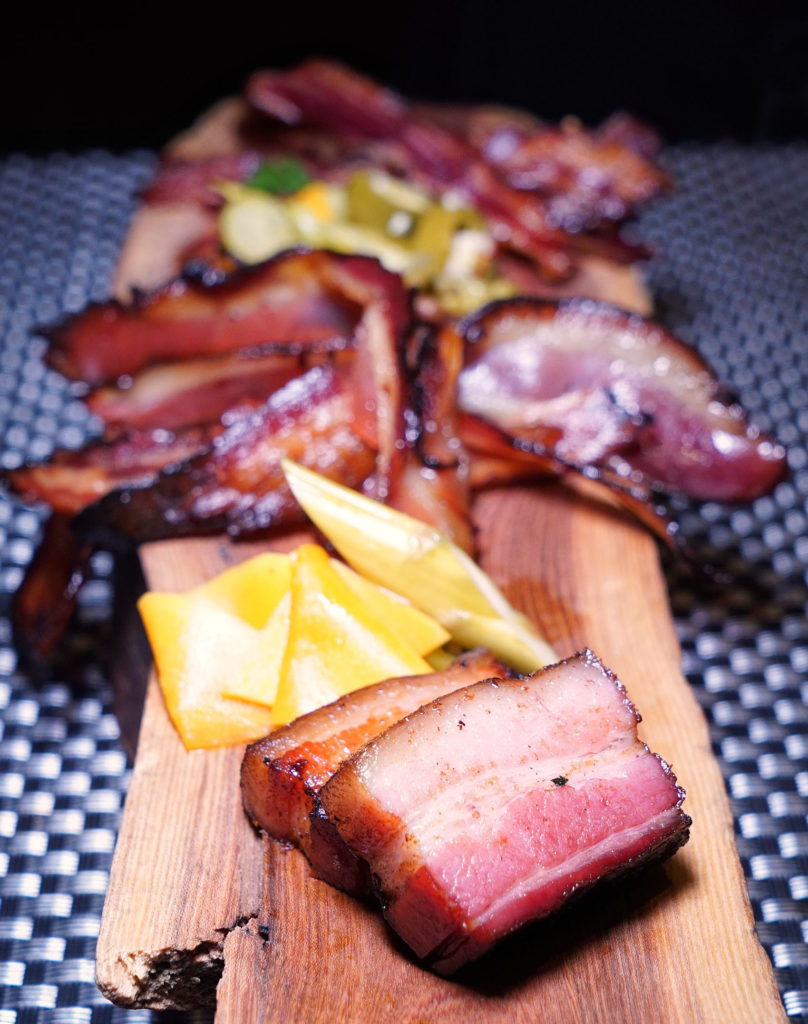
Bacon Tasting:
Thick cut belly, maple bacon and lamb bacon graced this beautiful natural wood platter of pork. My favorite was the lamb, not only because it is delicious but because it is a rare gem to find on any menu here in the city.
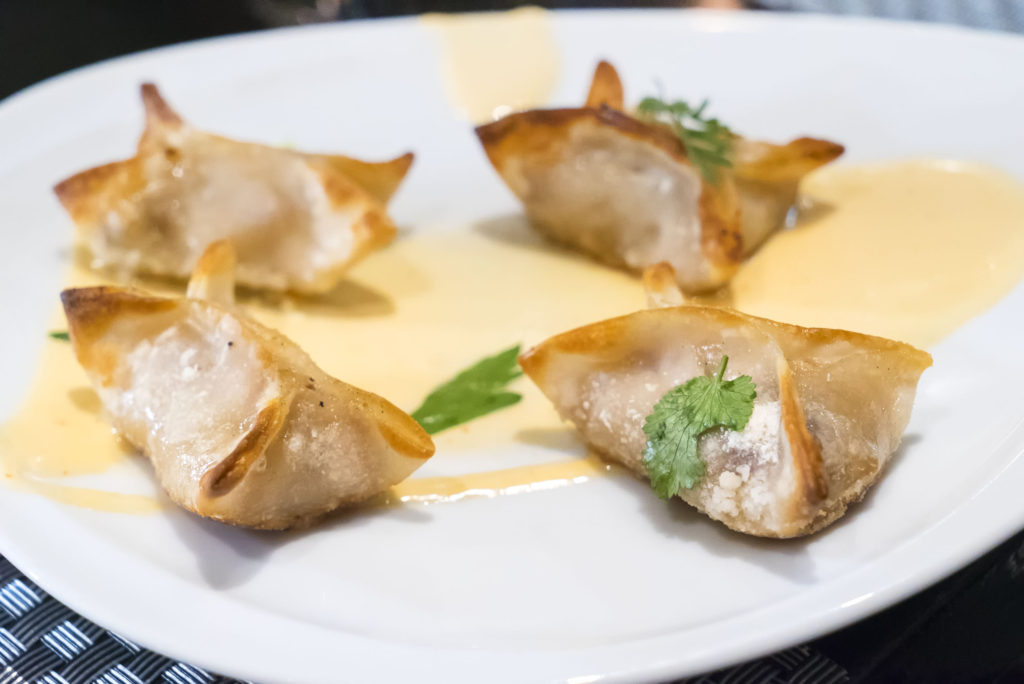
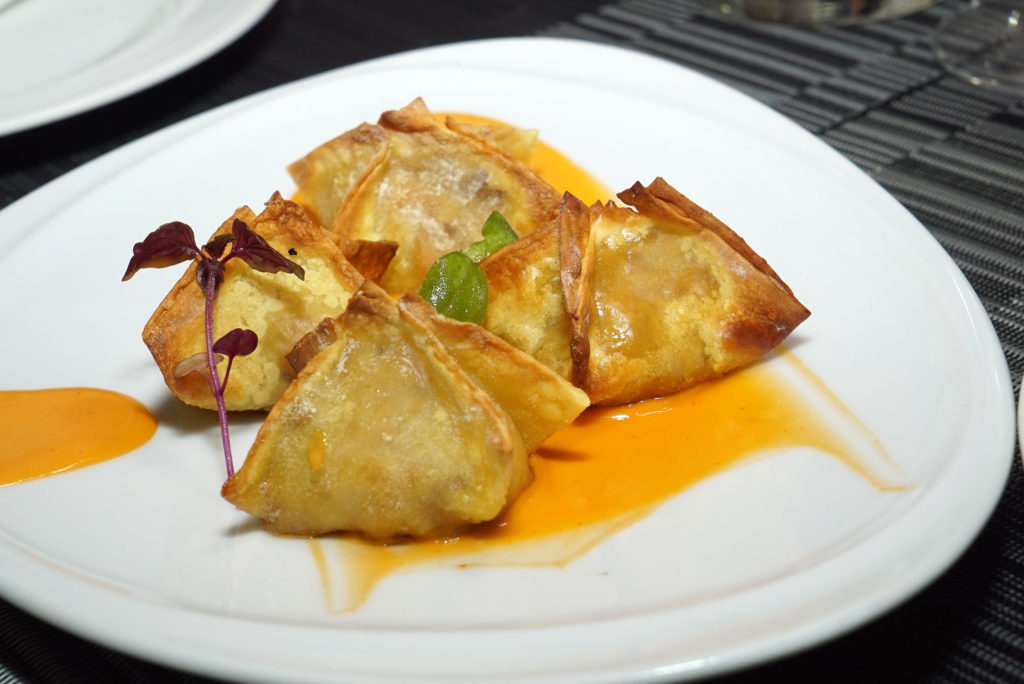
Bacon Dumplings:
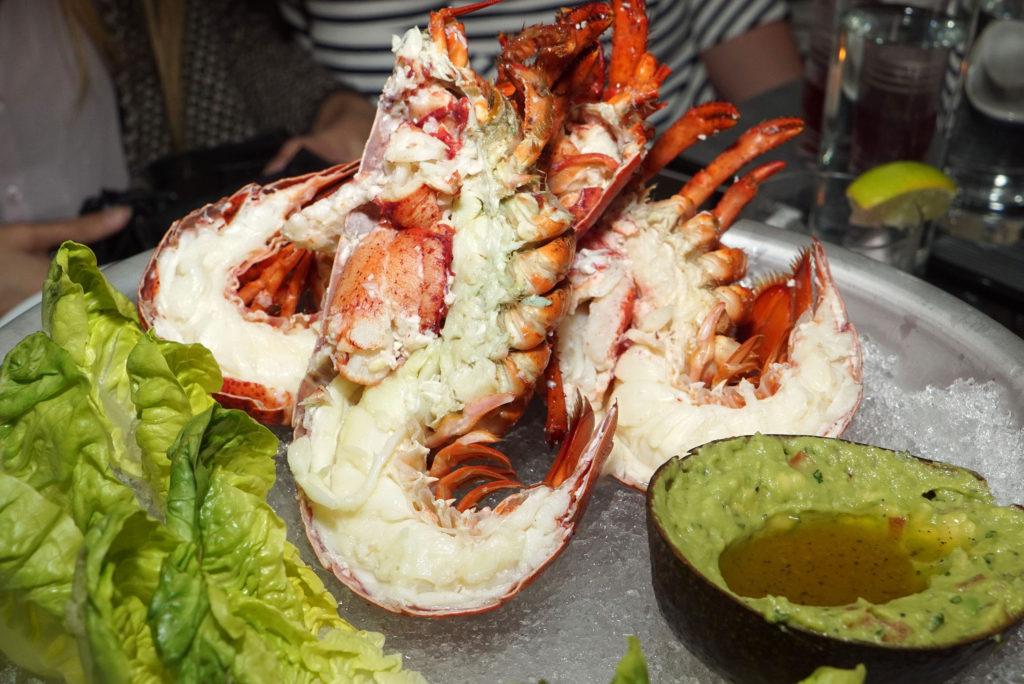
Lobster cocktail:
Why the fuck not? These were like cheddar and bacon Totino’s pizza rolls, only elevated and in a nicer wrapper.
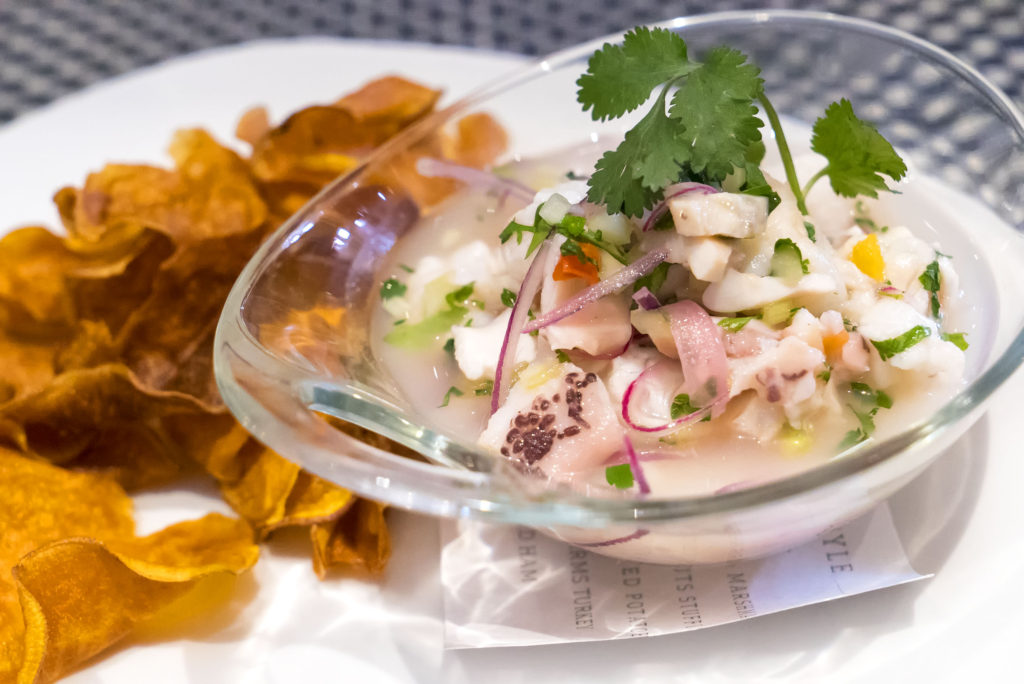
Mixed Ceviche:
Light and refreshing, this bowl contained fluke, octopus and shrimp, with a side of sweet potato chips.
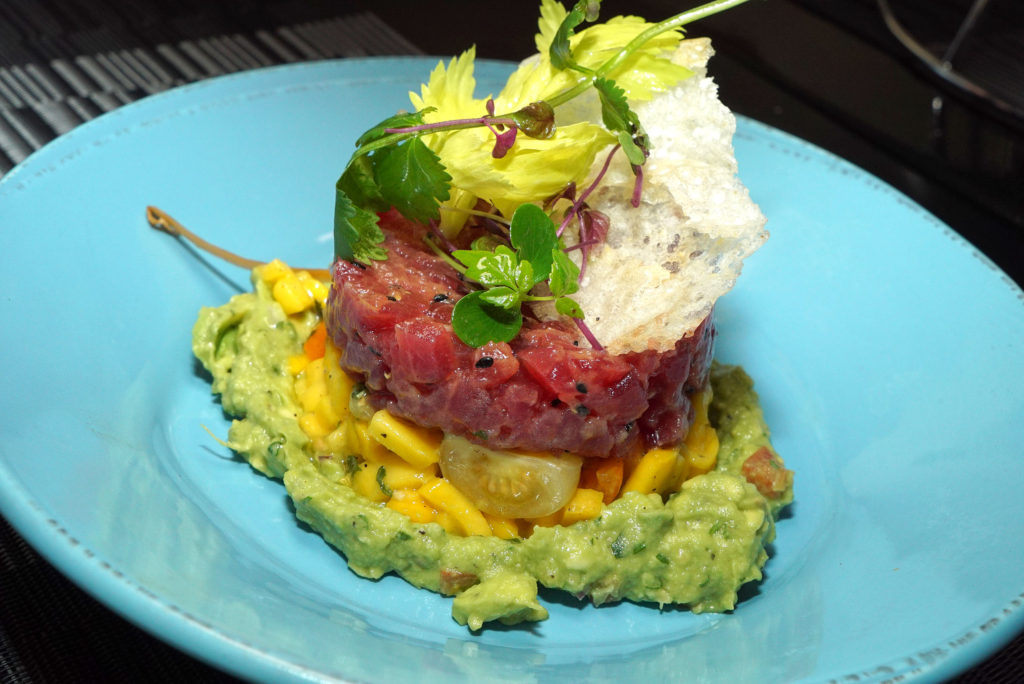
Tuna tartare:
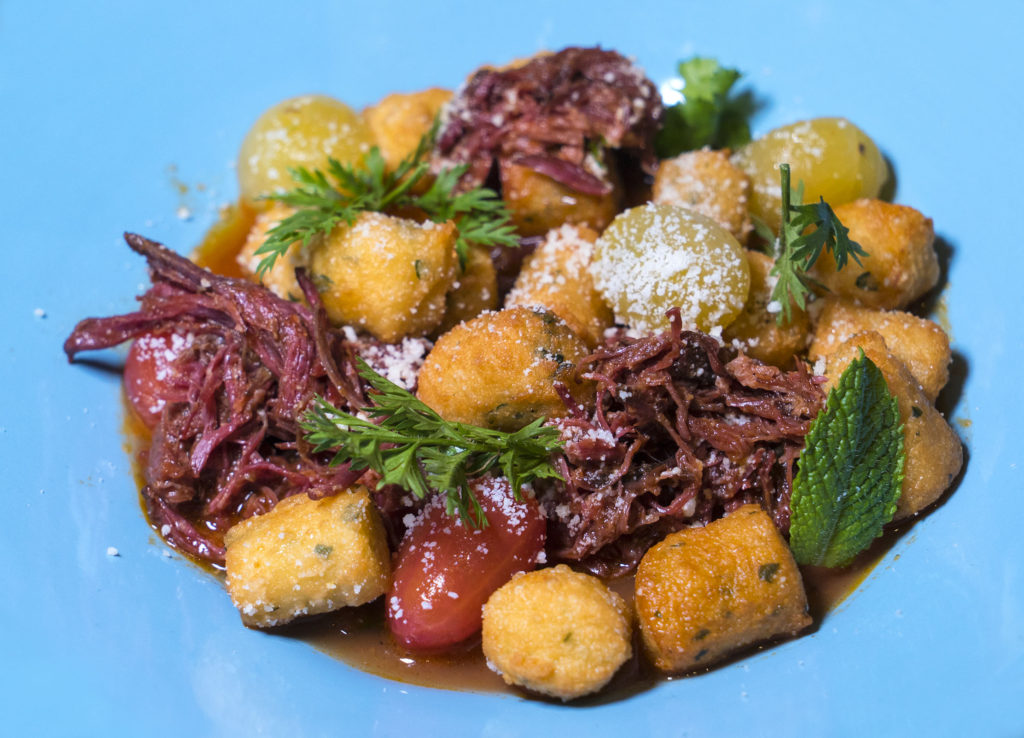
Short Rib Gnocchi:
The gnocchi were light but with a crispy coating on them, and the short rib was rich and extremely flavorful. Big fan of this dish.
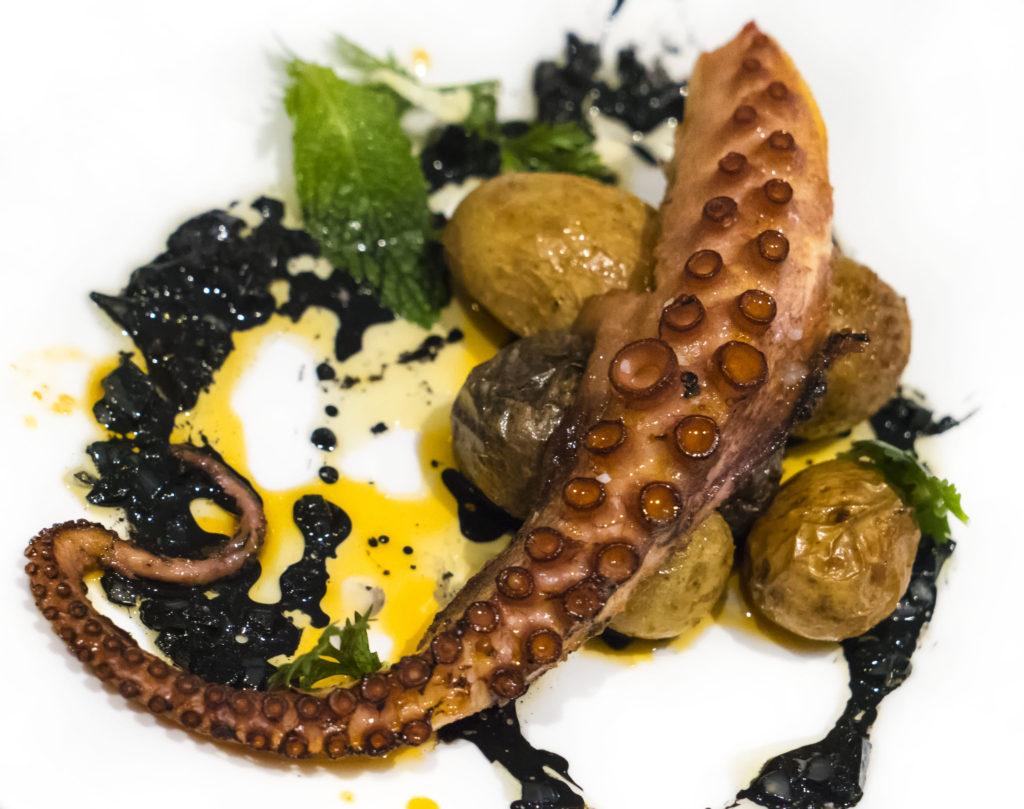
Grilled Octopus:
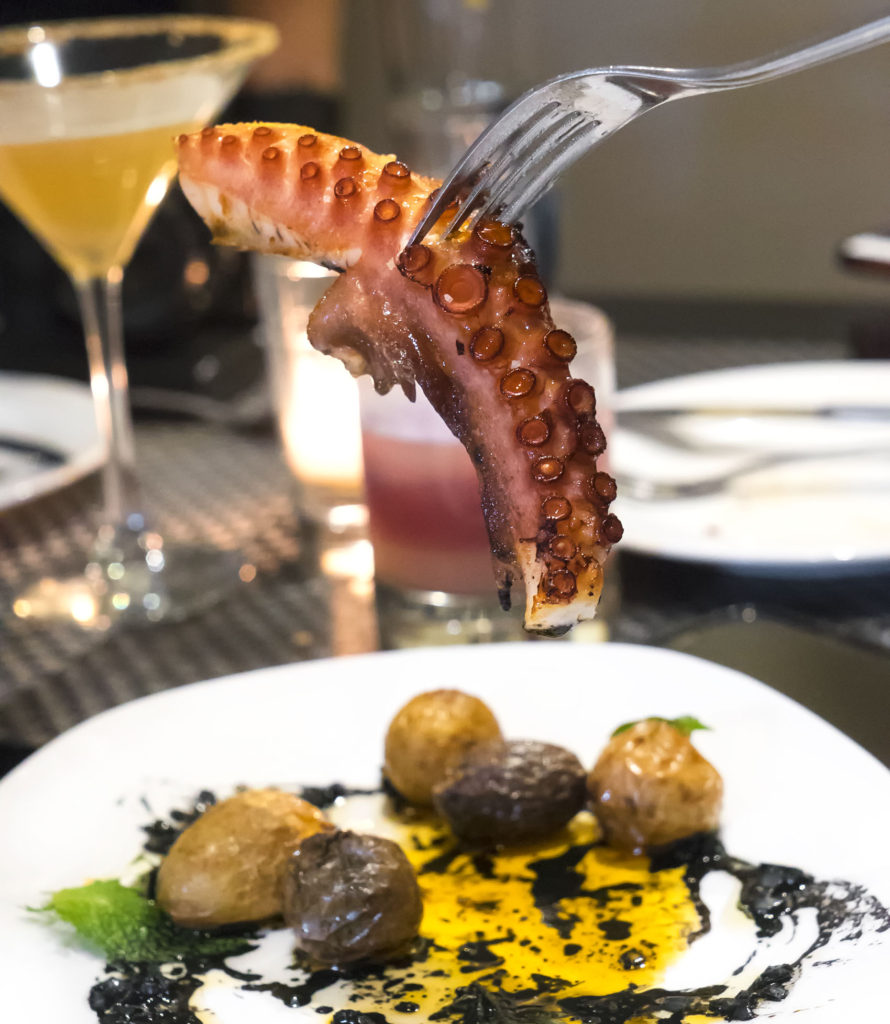
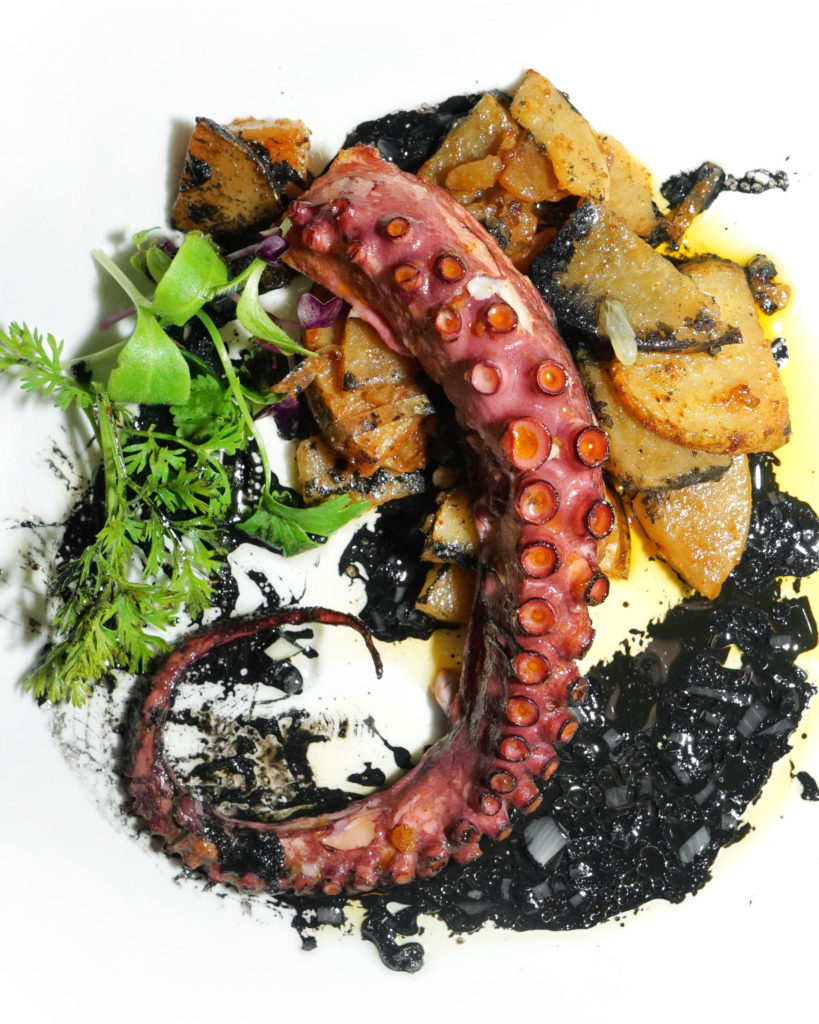
This was really well executed. The tentacle was very tender, and the squid ink balsamic on the plate was perfect for smearing onto the purple potatoes. Check out my buddy Ben’s awesome shot of it:
I ended up going back another time and shooting this again. Check it:
ENTREES
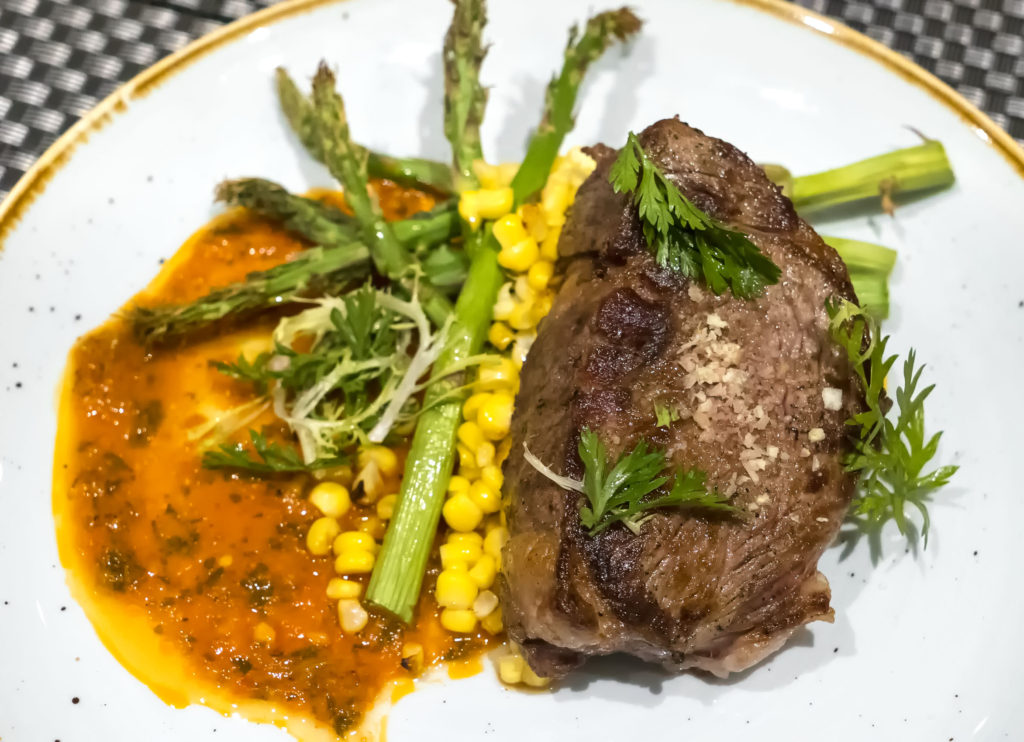
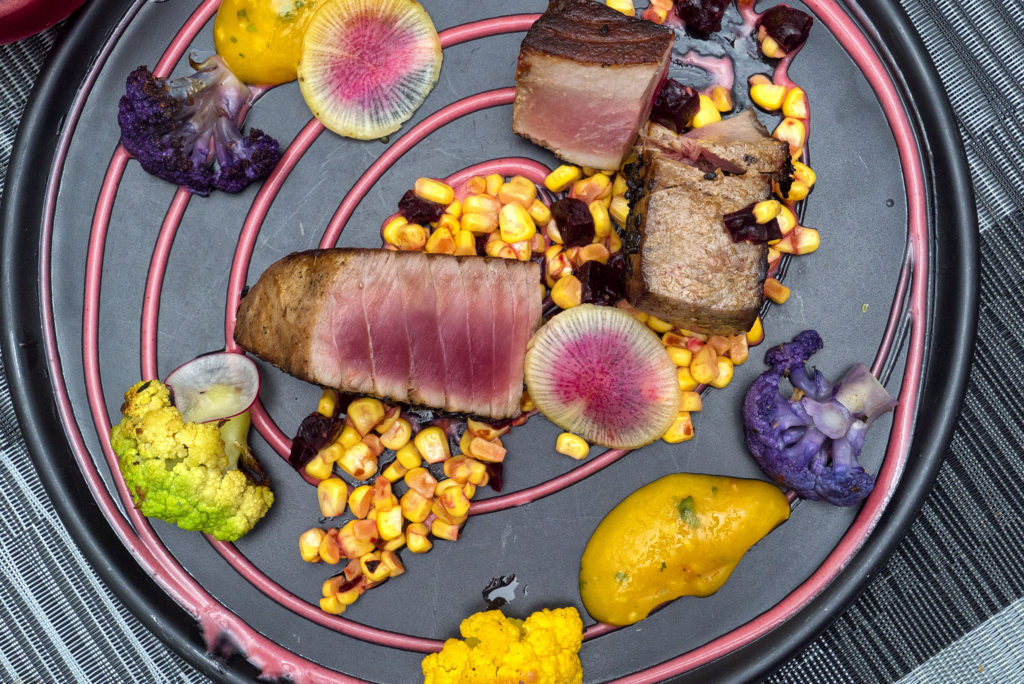
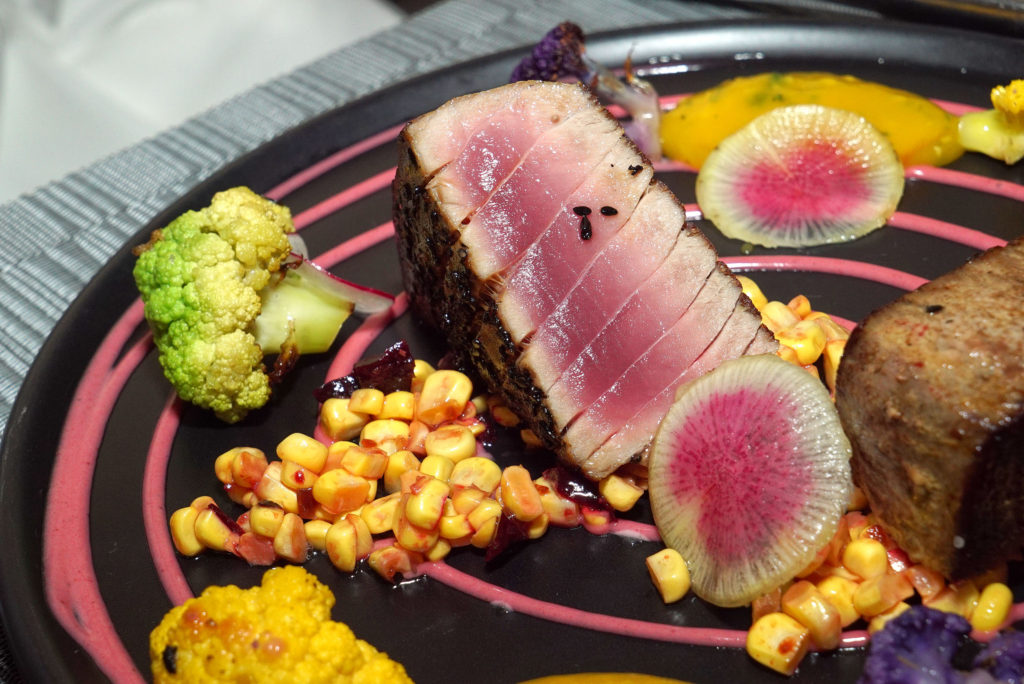
Each protein comes as a fully composed meal, complete with a starch and a veggie. Naturally, I went with the rib eye. I also tried some of the duck.
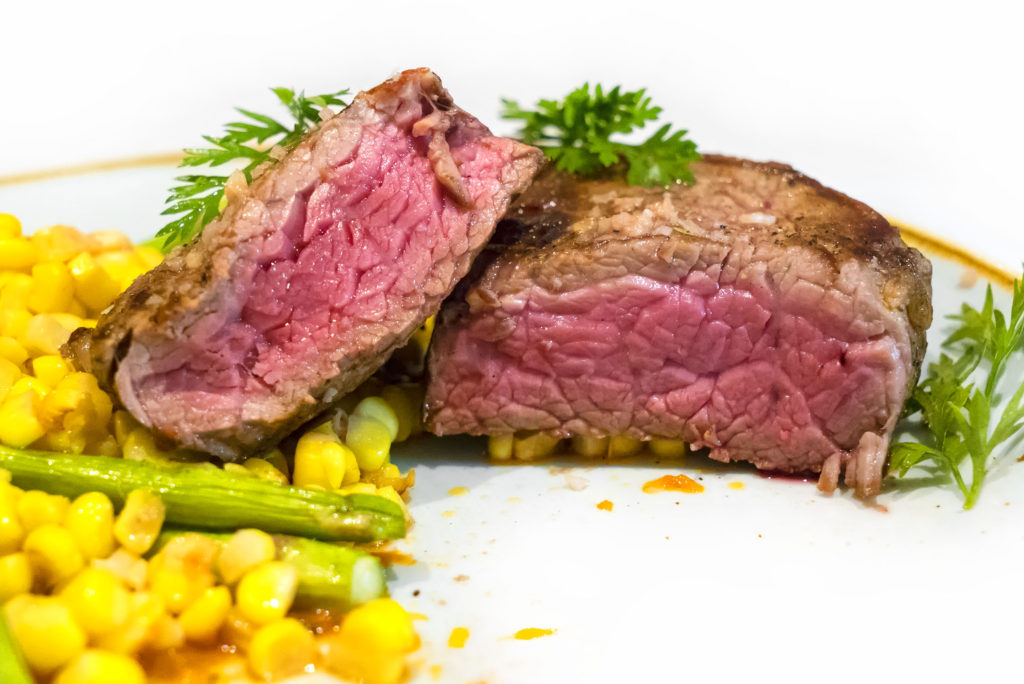
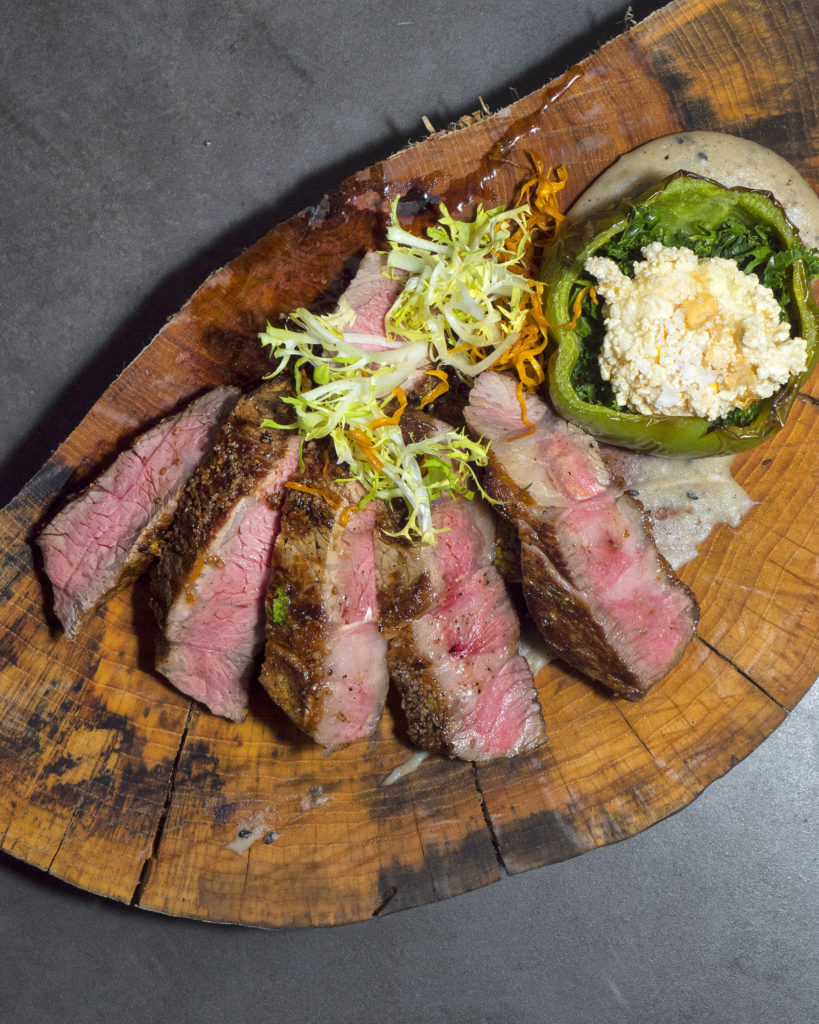
The rib eye was really juicy and succulent, with lots of nice beefy flavor. While there wasn’t much cap present, the eye was delicious. I score it at a nice 8/10. Two other rib eyes were ordered in our group, and each one was plated differently, with different veggies. One even had a poached egg on top!
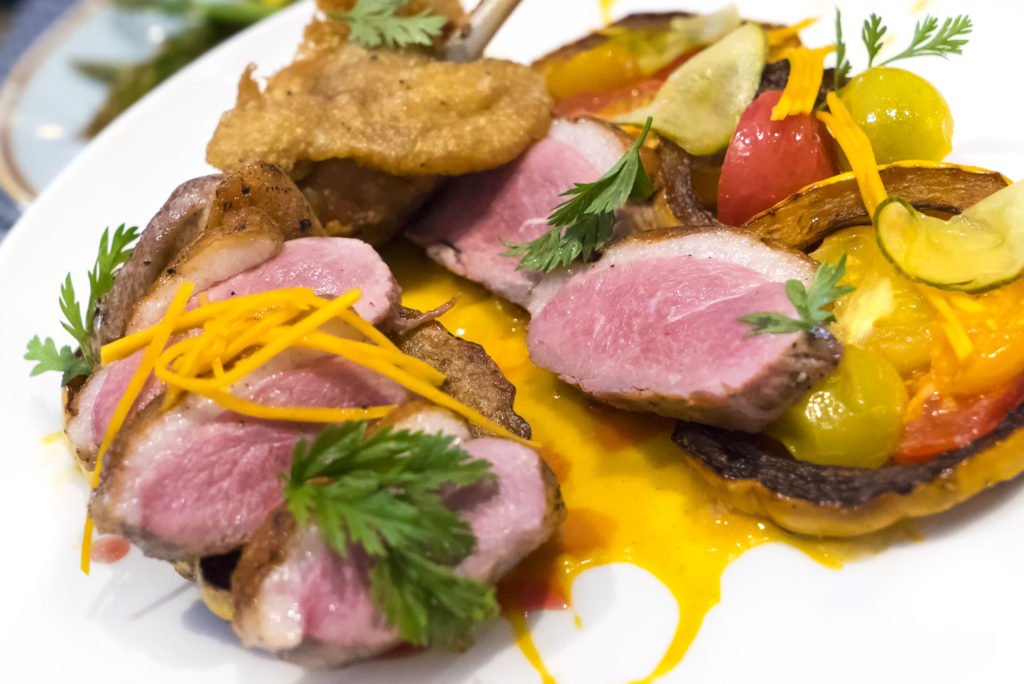
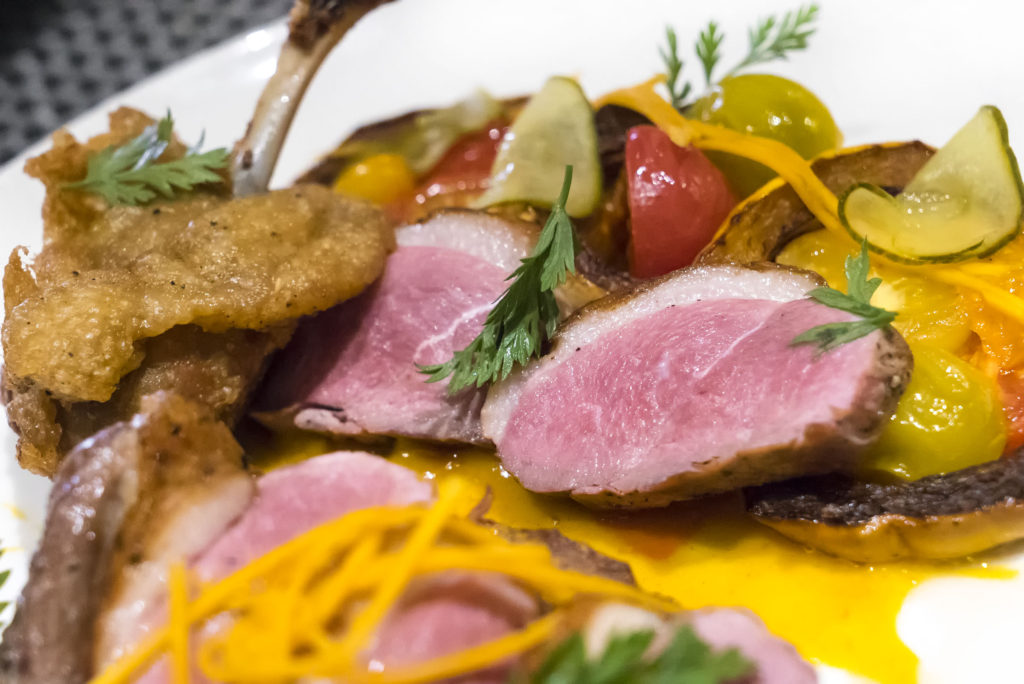
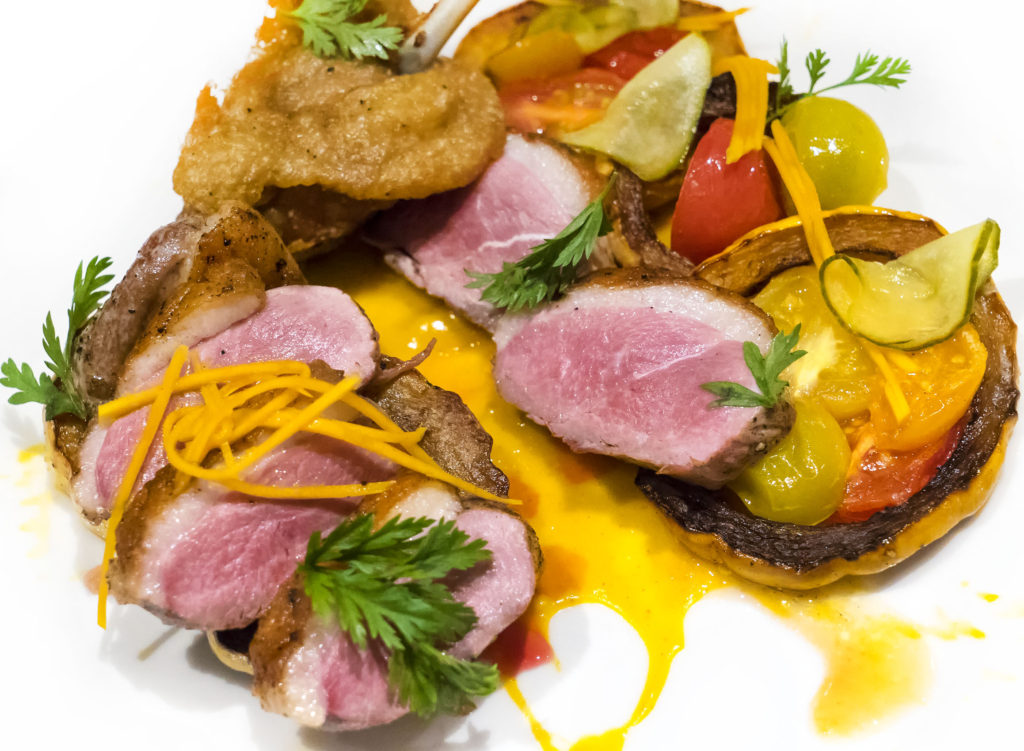
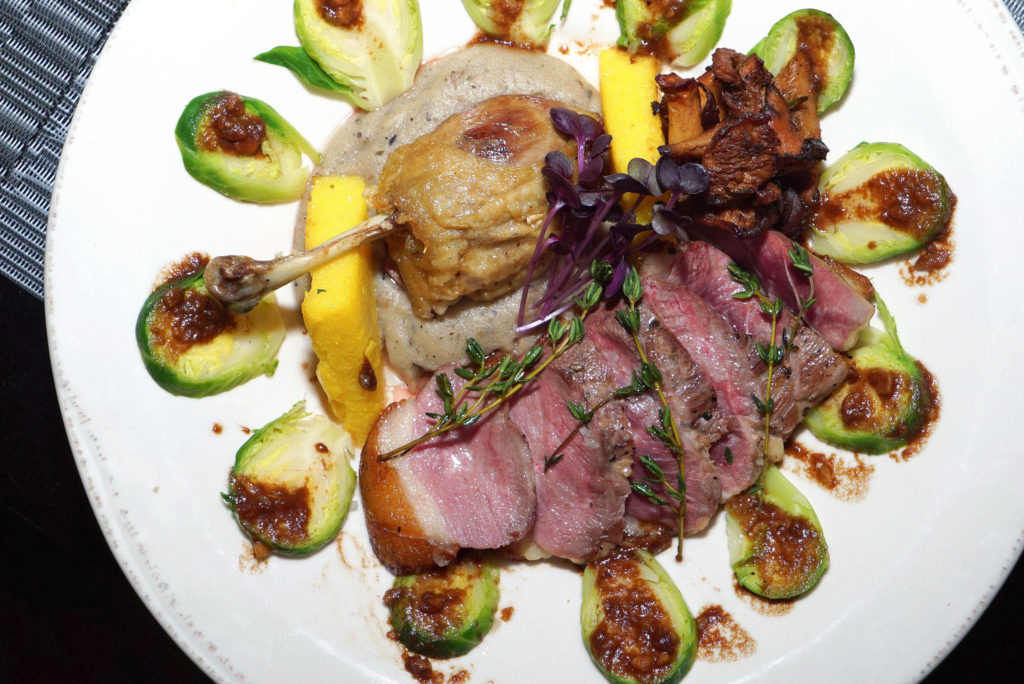
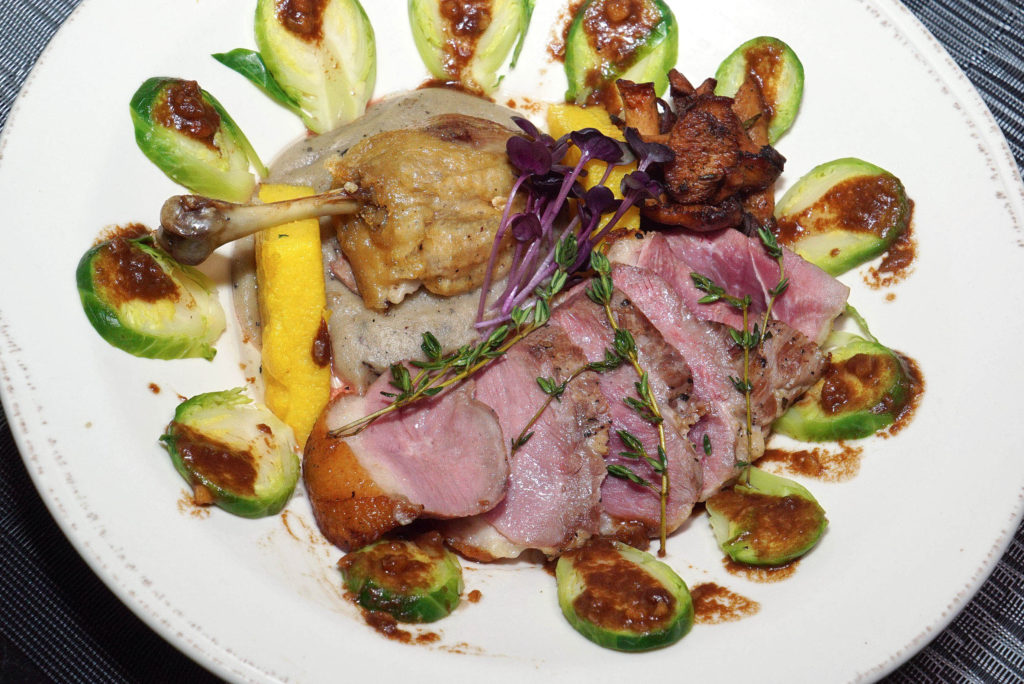
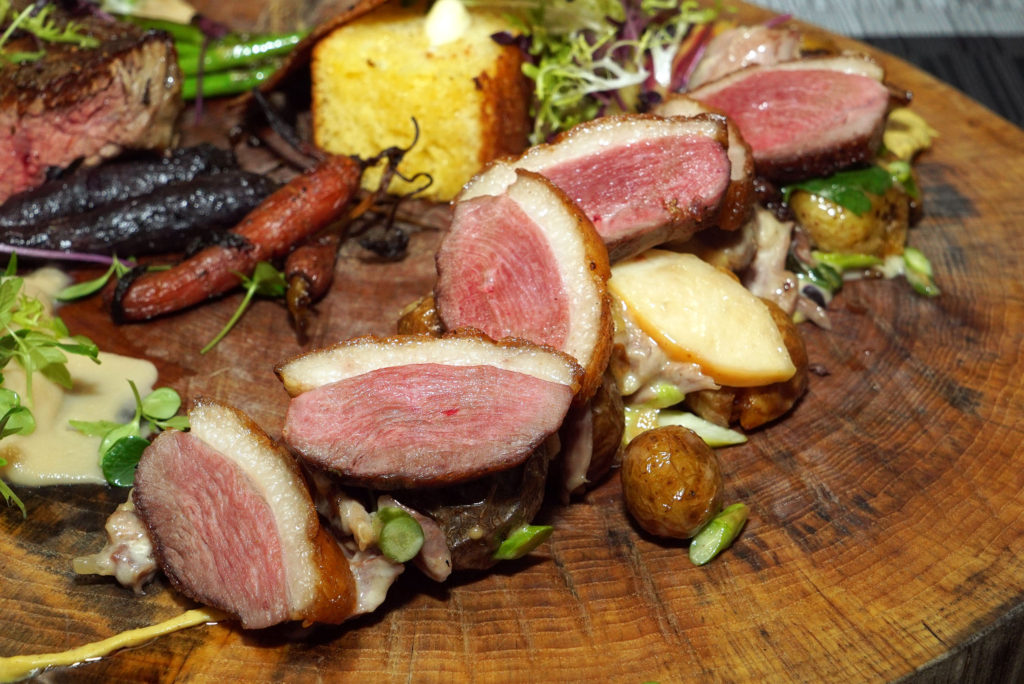
But check out this duck!
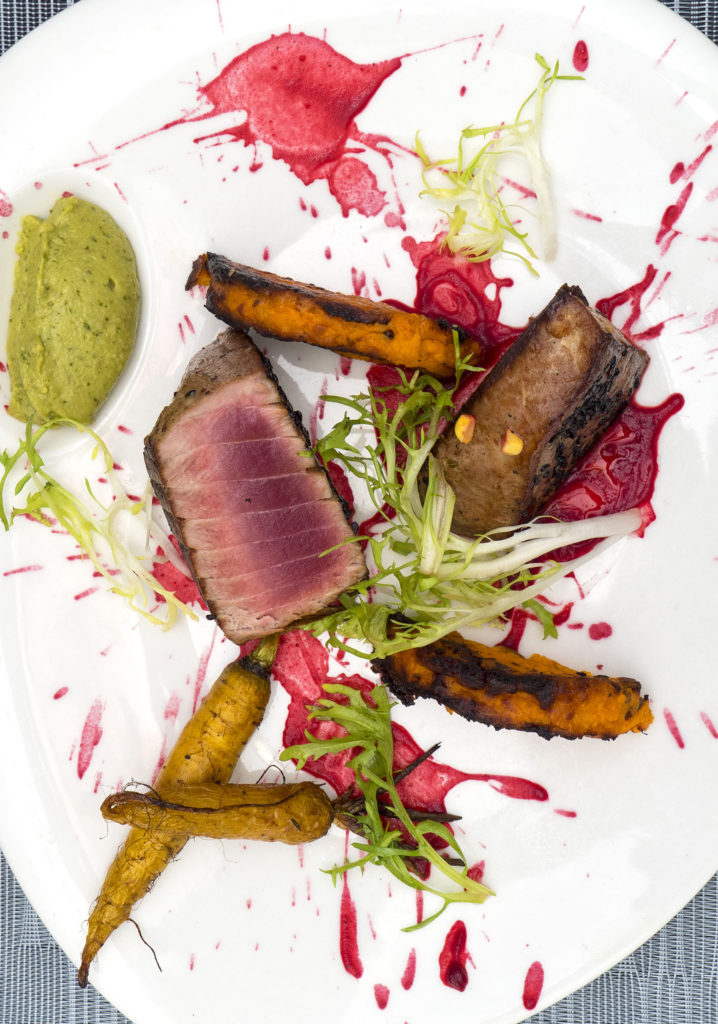
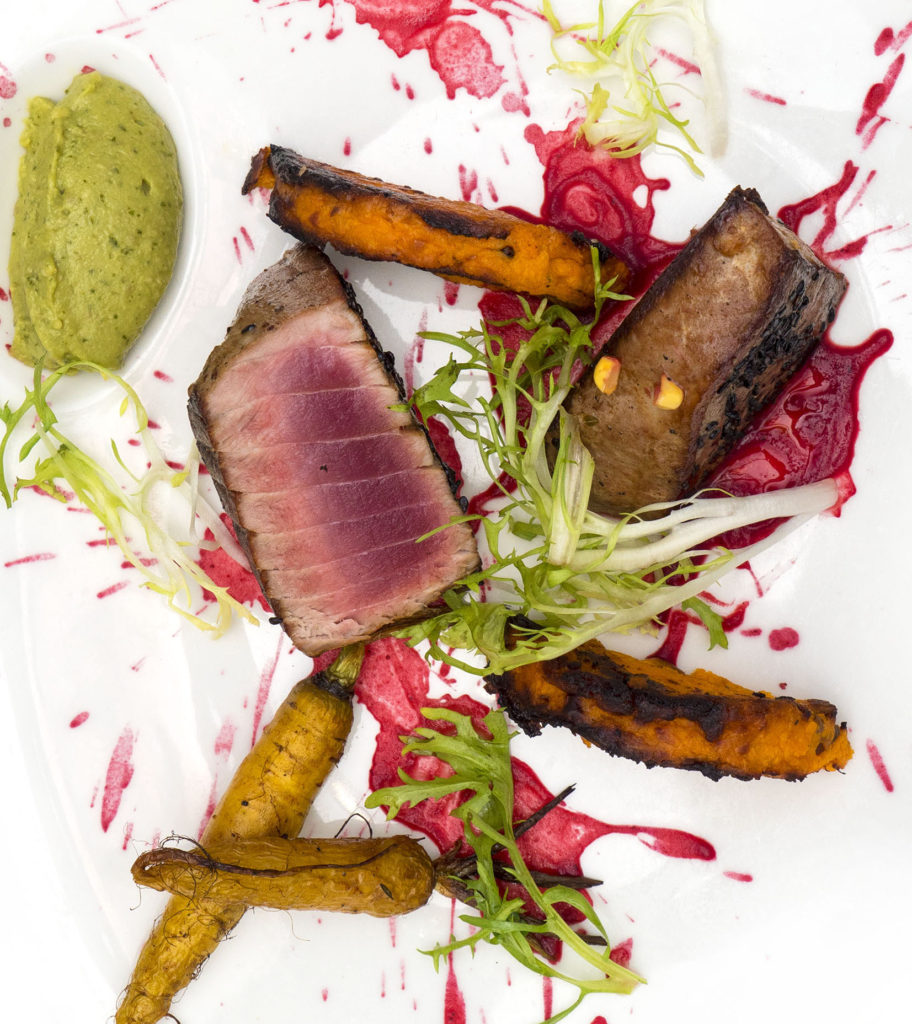
Beautiful tuna plating.
The fat could have used some better rendering, to get that rubbery quality out completely, but that is a tough challenge to accomplish on a breast while still maintaining a good medium rare cook temperature. I was fine with trimming the fat away and munching on that beautiful pink breast meat.
DESSERT
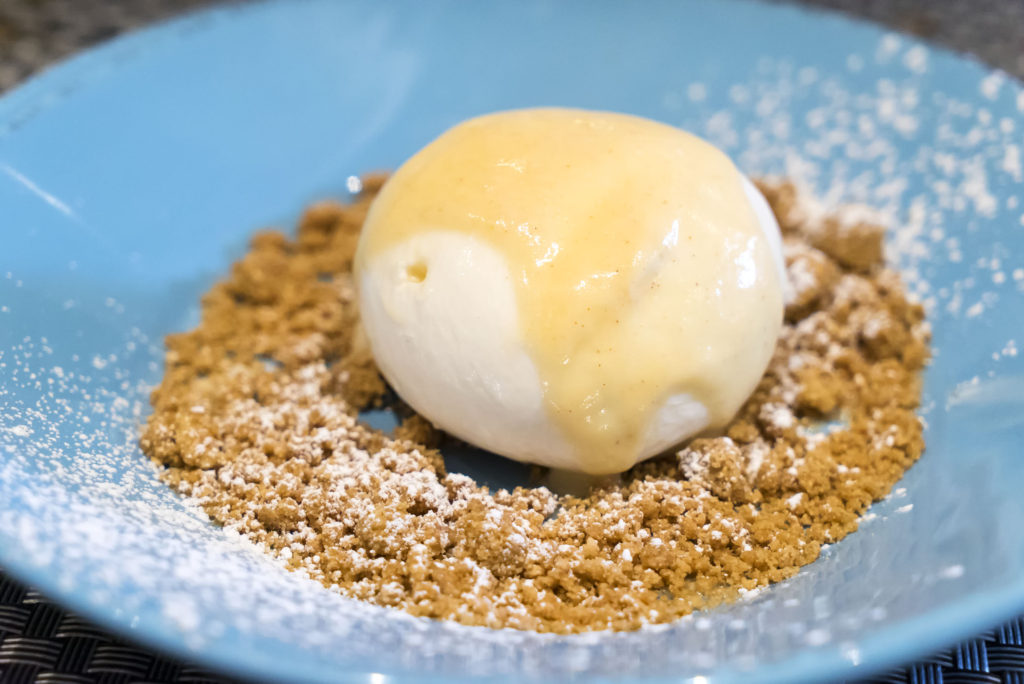
Burrata Cheesecake:
This delight is made in house, which is very impressive being it is a burrata cheese. It was super creamy and light, served with graham cracker crumble and an apple caramel. It was simple and delicious.
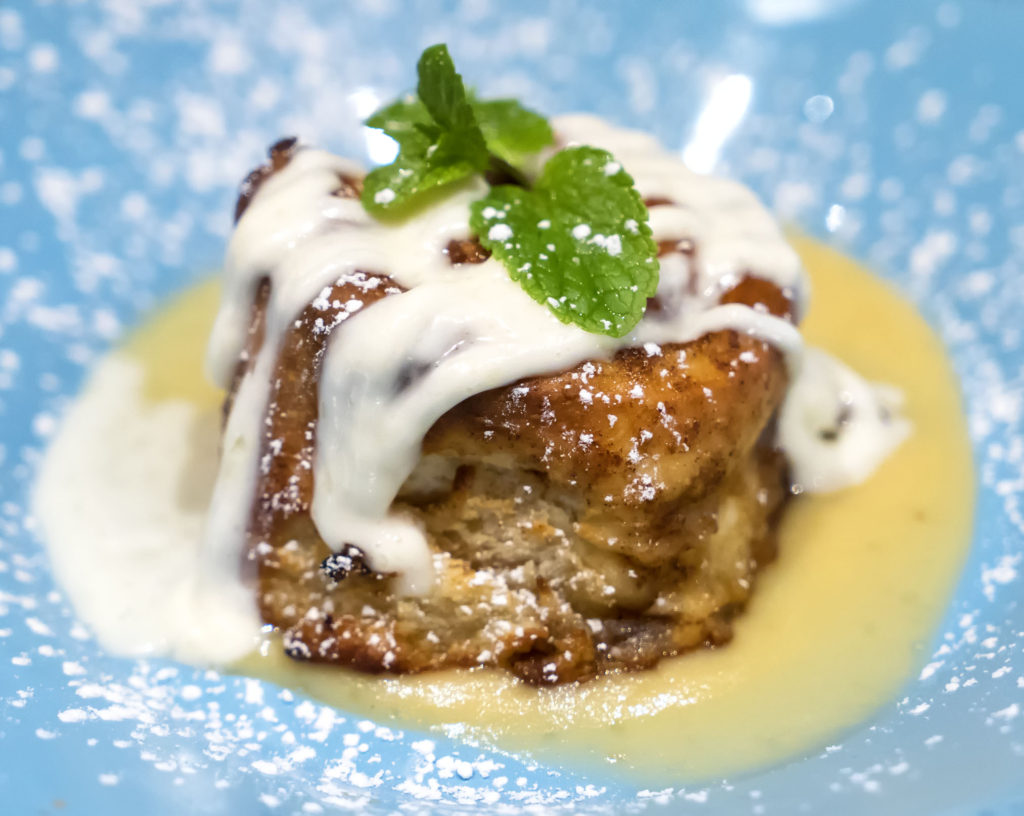
Cinnamon Bun:
This was really tasty, and my favorite of the desserts. It was a soft cake inside, some good crisp outside, and lots of ooey gooey dolce de leche glaze on top.
Chocolate Pudding:
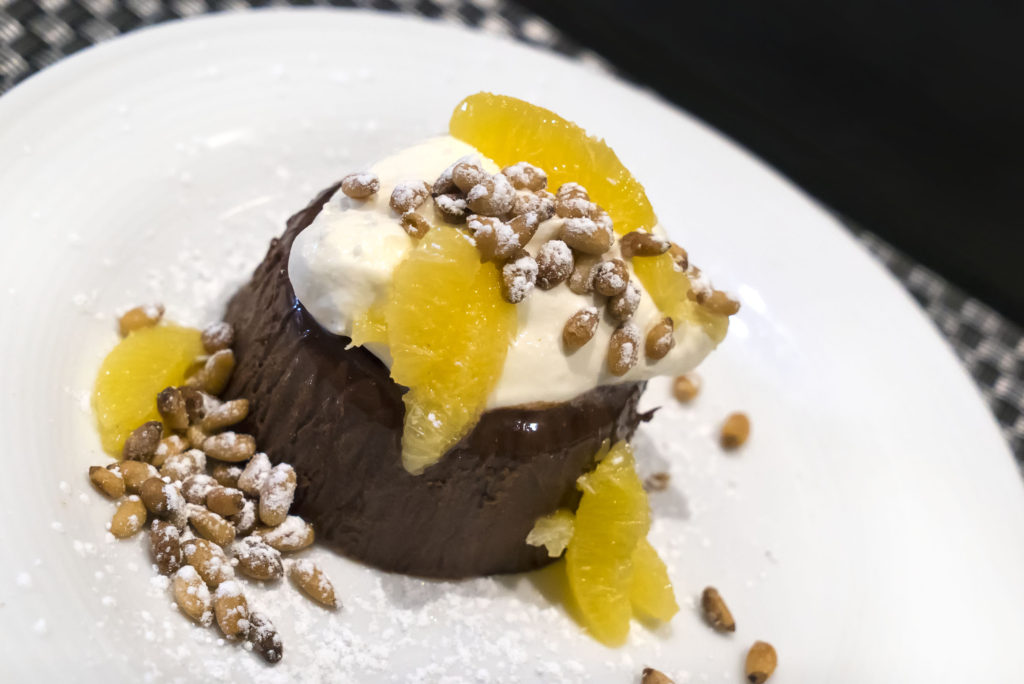
This lacked sweetness, and almost tasted as if it was sugarless or “diet” – not fake sugar, but NO sugar, or LOW sugar. I didn’t mind so much, since I don’t have a huge sweet tooth to begin with, but some other diners expressed dissatisfaction. I did get that cocoa flavor from it, though, and the texture was nice and smooth.
Butternut Squash Ice Cream:
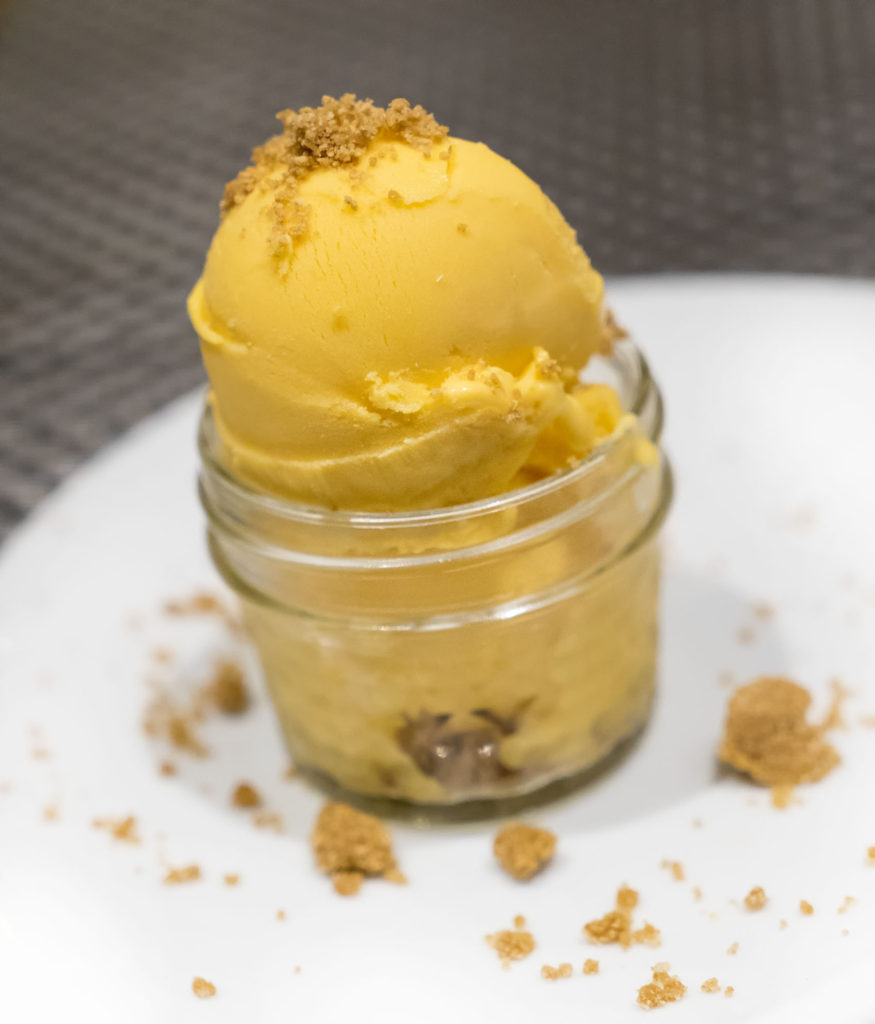
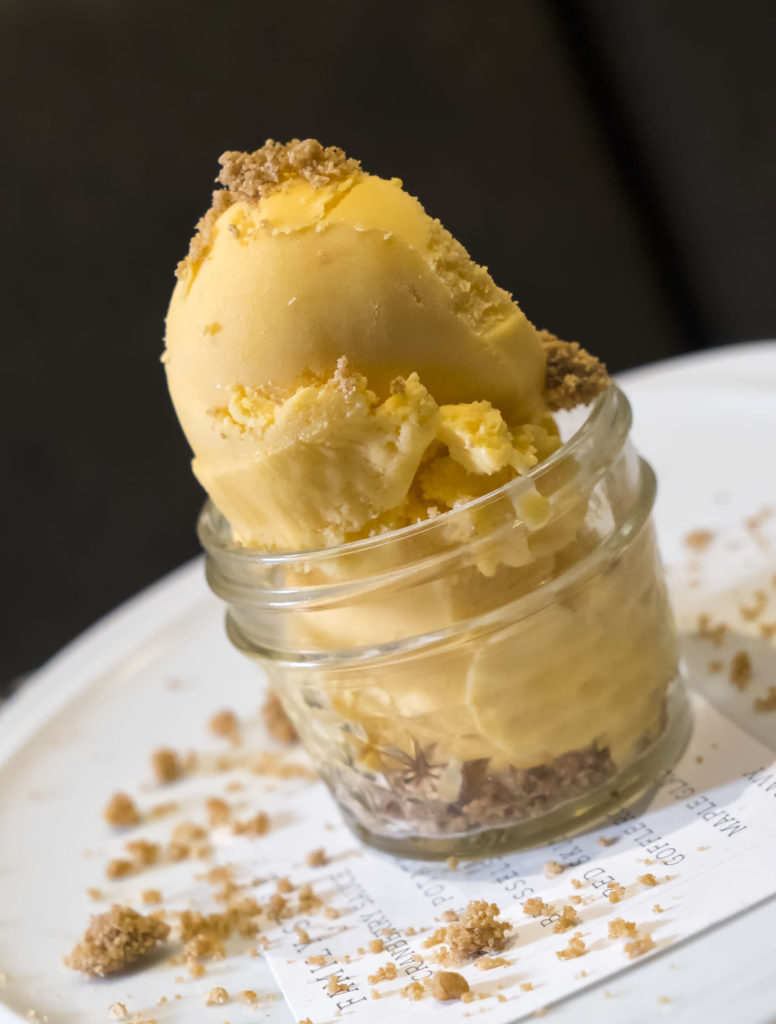
This was really interesting, and at first I didn’t think I’d like it, based on the description. Imagine candied yams in an ice cream format, but without that horrible starchy texture. It was similar to that flavor. I was oddly attracted to this, so I just kept going back to it over and over. That must mean it was a success.
I definitely recommend coming to this joint. Every meal you eat here will be different, even if you and your table-mates order the same exact thing at the same exact time. It’s kind of fun, new, exciting and adventurous. I’m happy to see something unique like this in NYC.
Meet Your Meat posts are a new way for me to introduce my readers to the people responsible for raising and producing our food. Farmers, ranchers, processors, butchers, etc. You get enough chef info in my restaurant reviews, but it’s high time that I start focusing on the people who actually supply restaurants with their delicious beef proteins.
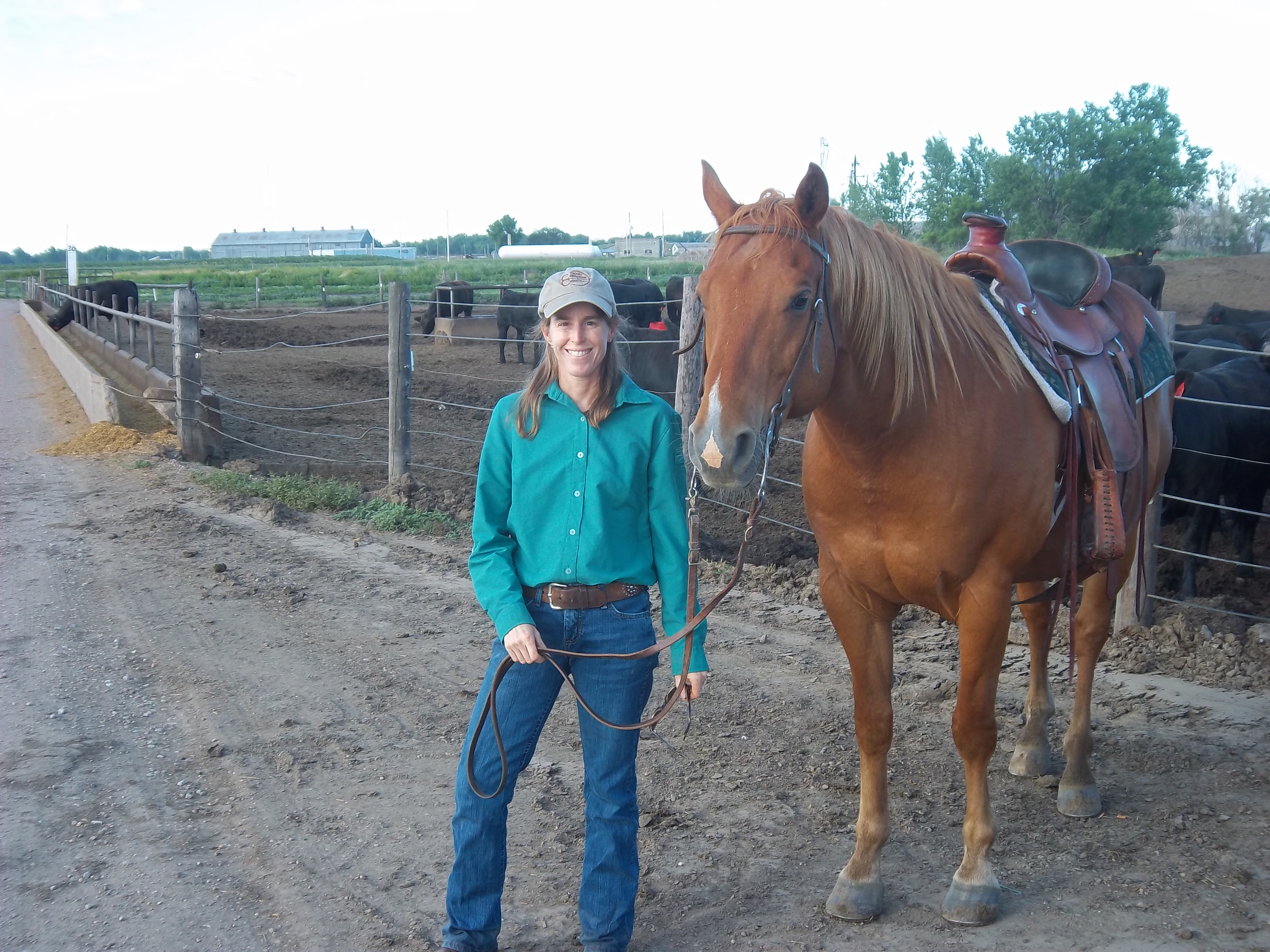
That experience is the subject of a whole other post, so I won’t get too deep into it here, but the point in mentioning it is to anchor your understanding of why I’m choosing Anne Burkholder to be the first person that I spotlight in this new “Meet Your Meat” endeavor. Anne was an instructor at the Top of the Class, and over the course of the two day training program, I got to know her and was inspired to write about her journey.
https://feedyardfoodie.wordpress.com/
Since I and most of my readers are from the NYC metro area, many of us don’t know a lot about farming, or we take it for granted. Most of us are probably still in the dark about what it takes to bring beef to our plates every week. We just don’t get exposed to the process often enough.
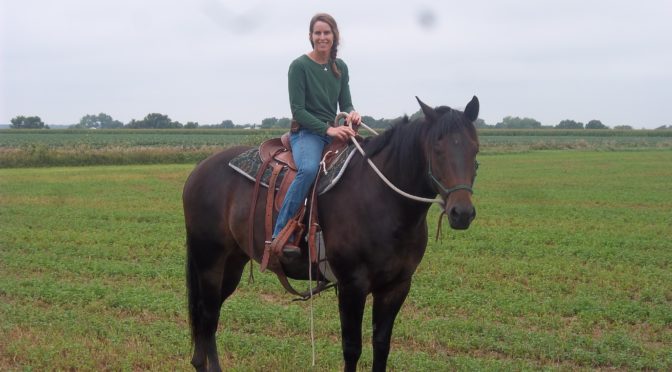
Anne represents all of us urbanites and suburbanites. She grew up in urban Palm Beach County, Florida. While anything “Florida” may sound like a sprawling paradise to us NYC folks, urban Palm Beach is certainly not a farming community; it’s a city!
Smart as a whip and with incredible athletic pedigrees in both cross country running and swimming, Anne attended an ivy league college. She met her husband Matt there, and they later moved back to Matt’s home town in Nebraska.
Matt’s family owned and operated a diversified farm business. What is a diversified farm? Essentially it’s when a farm produces a variety of crops or animals, usually both, with the crops feeding the animals that they raise, in an effort to create a self-sustained farm with little waste or reliance upon other operations. You may recall that Walbridge Farm is like this as well, where they grow sunflowers and raise cattle, with the sunflowers being used to produce both sunflower oil and cattle feed.
Okay so back to Anne. Soon after graduating cum laude at Dartmouth, she was putting on boots and blue jeans to work at her and her husband’s cattle feed yard, Will Feed, Inc. This is where cattle get fattened up, so to speak, before going off to market. Check out this short video that explains what she does:
See how much space these animals have? Just goes to show you how bogus those myths are about “factory farming.” But anyway, I digress…
Nearly 20 years have passed since Anne moved out to the country, and she still loves what she does. Apparently the beef community loves what she does as well:
In 2009, she was awarded the Beef Quality Assurance Producer of the Year Award for her volunteer work in beef farmer education concerning animal welfare and food safety. In 2013 she was voted to Vance Publishing’s 40 under 40 in Agriculture, and in 2014 she was awarded Beef Magazine’s Trail Blazer Award. Both awards were given for her work in consumer outreach through her blog, Feed Yard Foodie.
She’s a member of the Tyson Fresh Meats Animal Well-being Committee for Farm Check, the National Beef Quality Assurance Advisory Committee, a Director of the Nebraska State Beef Council, and an avid advocate for the cattle industry. She’s constantly and actively improving cattle welfare and beef safety. She is an irreplaceable asset.
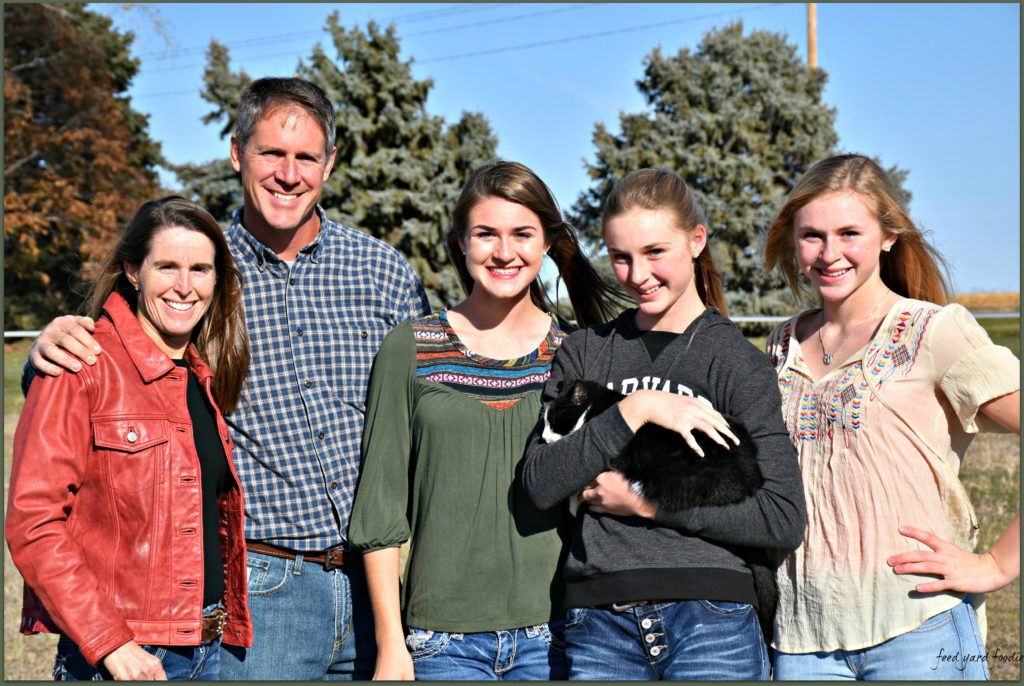
The best part is that Anne’s operation is a family farm, and she loves the personal responsibility that her three daughters learn from taking care of their land and animals. So not only is Anne working to improve all-things-beefy, but she is setting a great example so that the next generation can do so as well.
In addition to running cattle on grass in the spring and summer, Anne is soon to start a new job with Beef Marketing Group and Innovative Livestock Services. Her role will be in communications, and she will also be helping take on various animal welfare projects for four Nebraska feed yards. She’s looking forward to implementing her animal care ideas to impact a larger number of animals.
I encourage you all to follow her blog and check out her insightful posts. She’s a wonderful person and an inspiration.
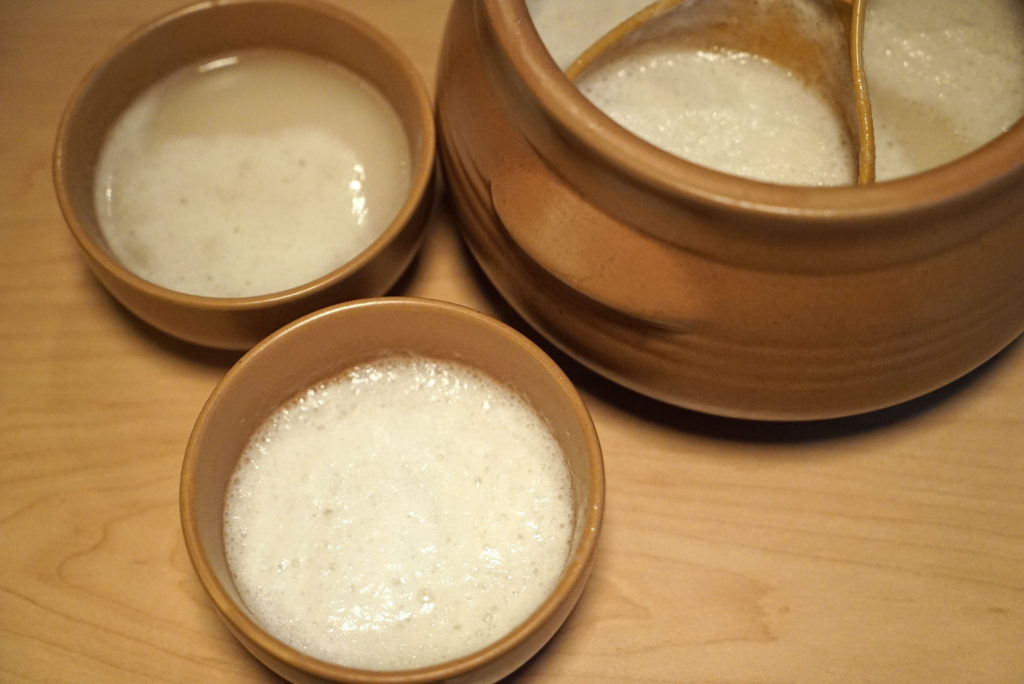
My wife scored a crazy flash deal for KBBQ here at Miss Korea. The regular price was $95 but with additional coupon codes, she paid something like $70 for this BBQ barrage. We went above and beyond, though, when we started with this bowl of makgeolli (slightly bubbly, unfiltered rice wine at about 6% alcohol that drinks as easily as soda). I love this stuff.
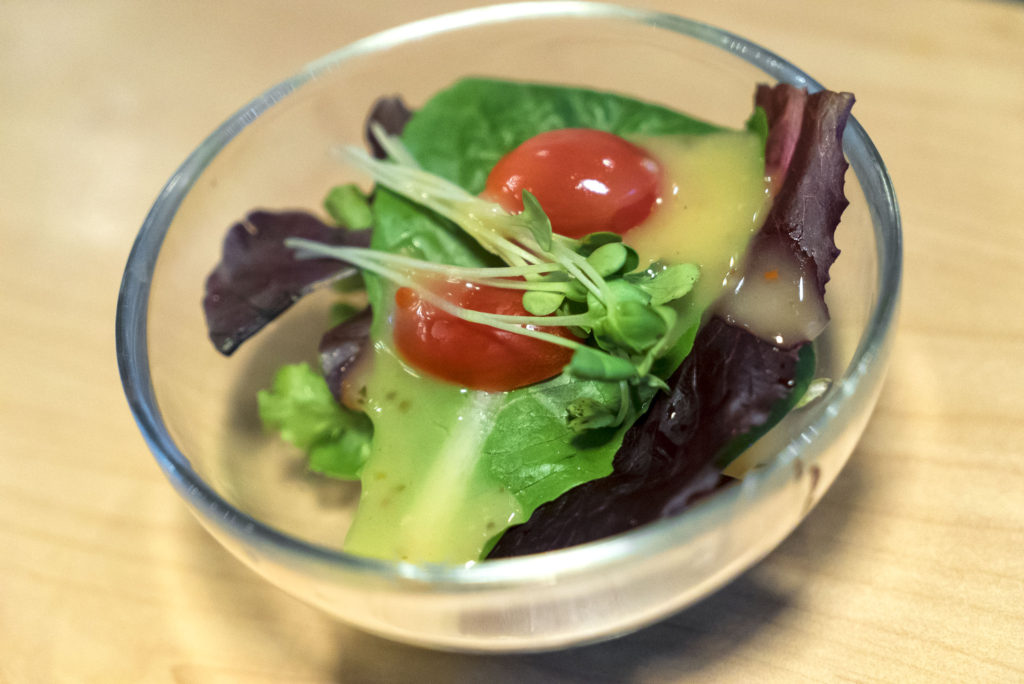
First was a simple salad to get the juices flowing.
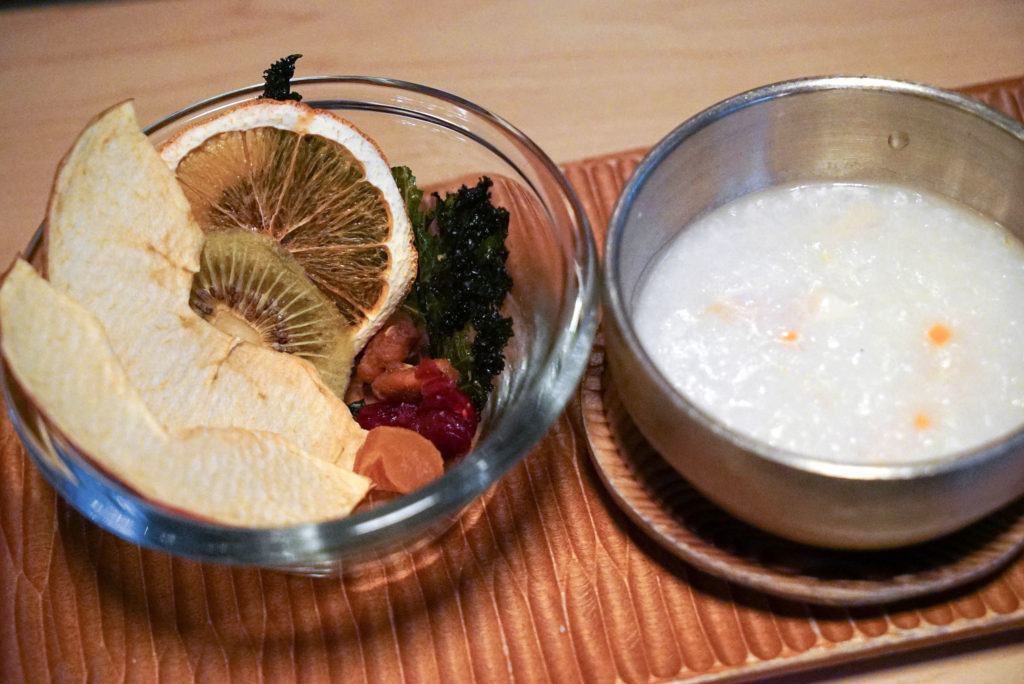
Then a bowl of rice porridge with dried fruits and nuts. This was refreshing and light.
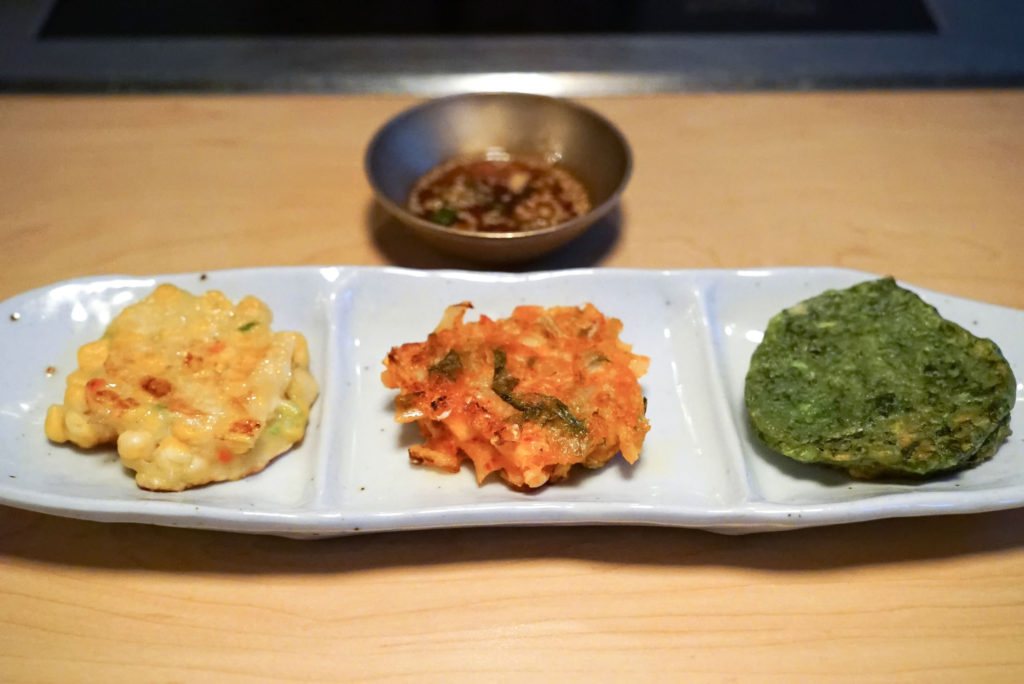
Next up was a trio of Modeum Jeon pancakes: corn, kimchi, spinach.
These were amazing. Usually they’re thin, greasy and too crowded with scallions. Not the case here. These were thick and light.
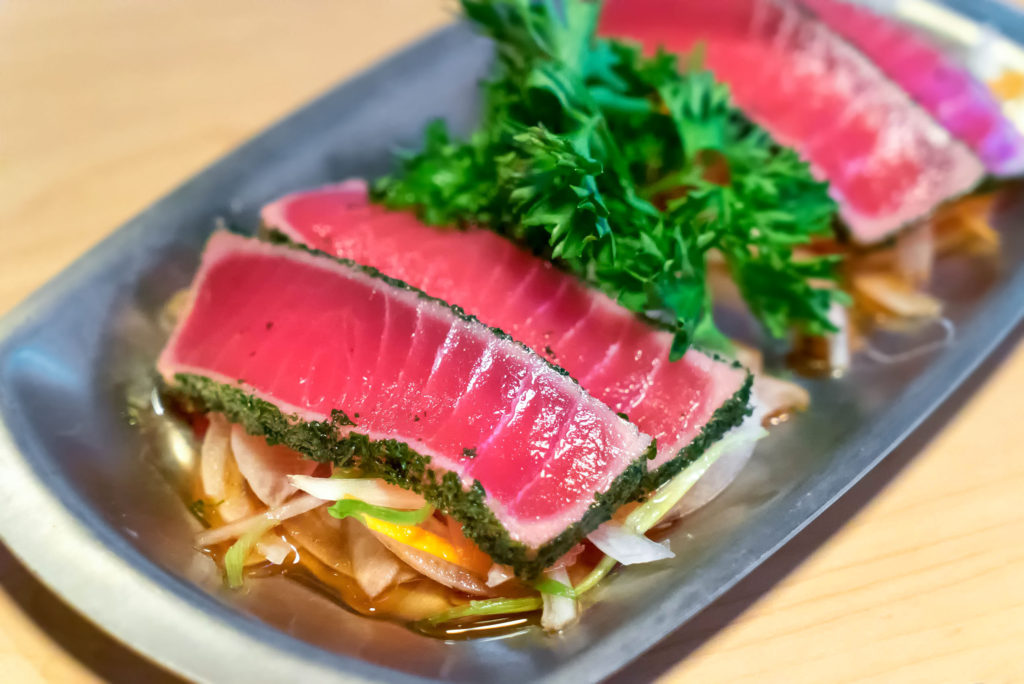
Holy shit this thing came out next… Tuna tartare. But look at how vibrant the color is on this!
It had a perfect sear on the outside, nice and peppery. I could eat this all day long.
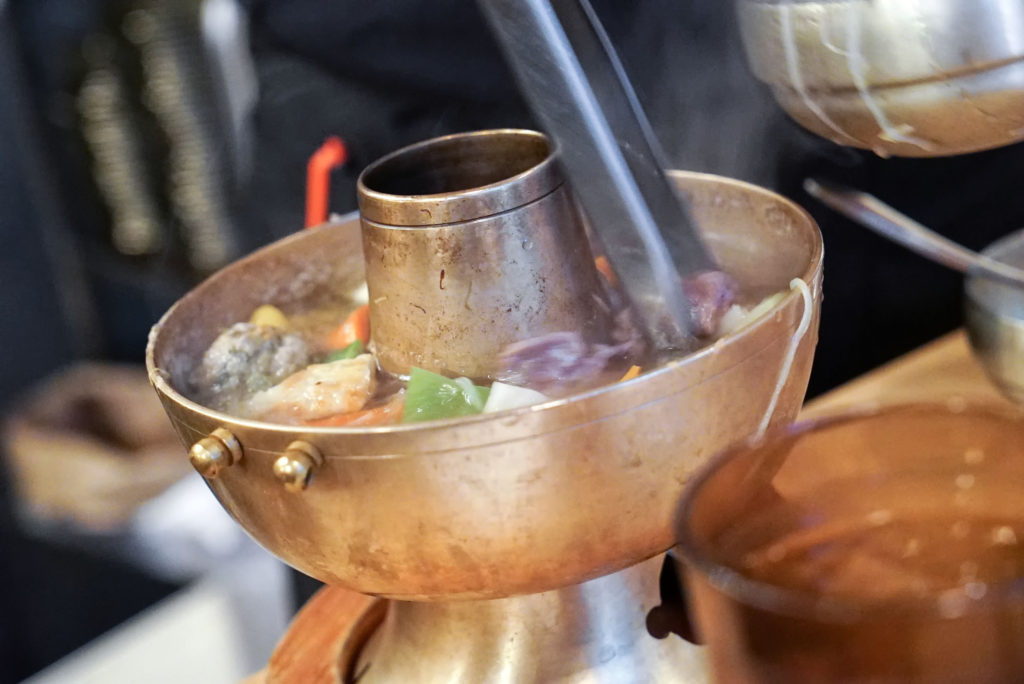
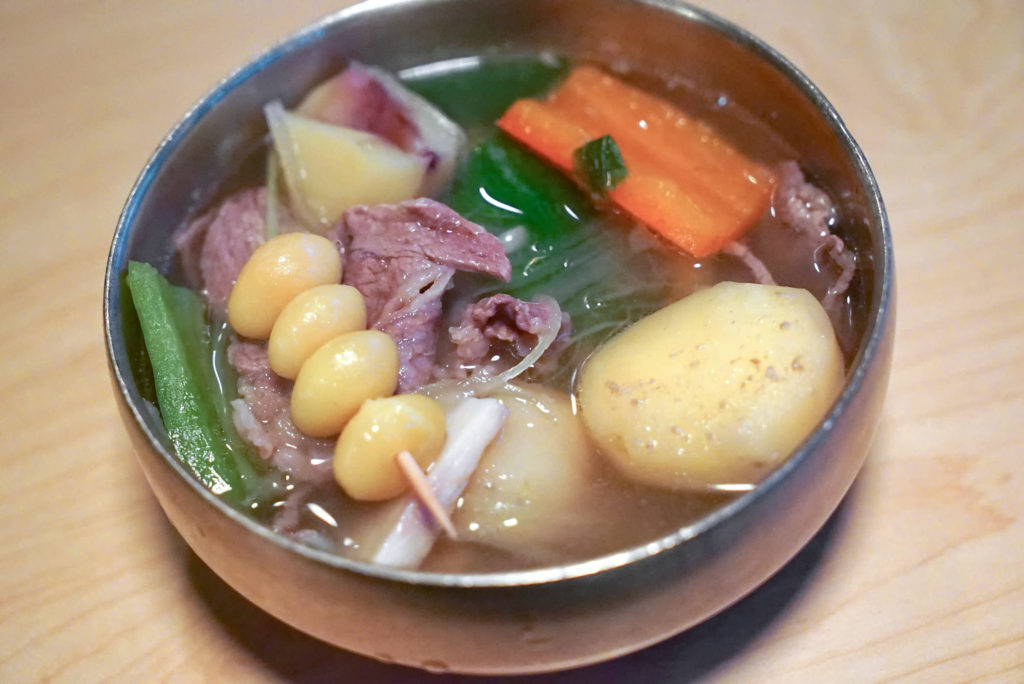
Next up was this spicy Sinseollo hot pot that had chestnuts, soy beans, veggies, beef and fish mixed in.
Very soul-warming, satisfying, and totally unique.
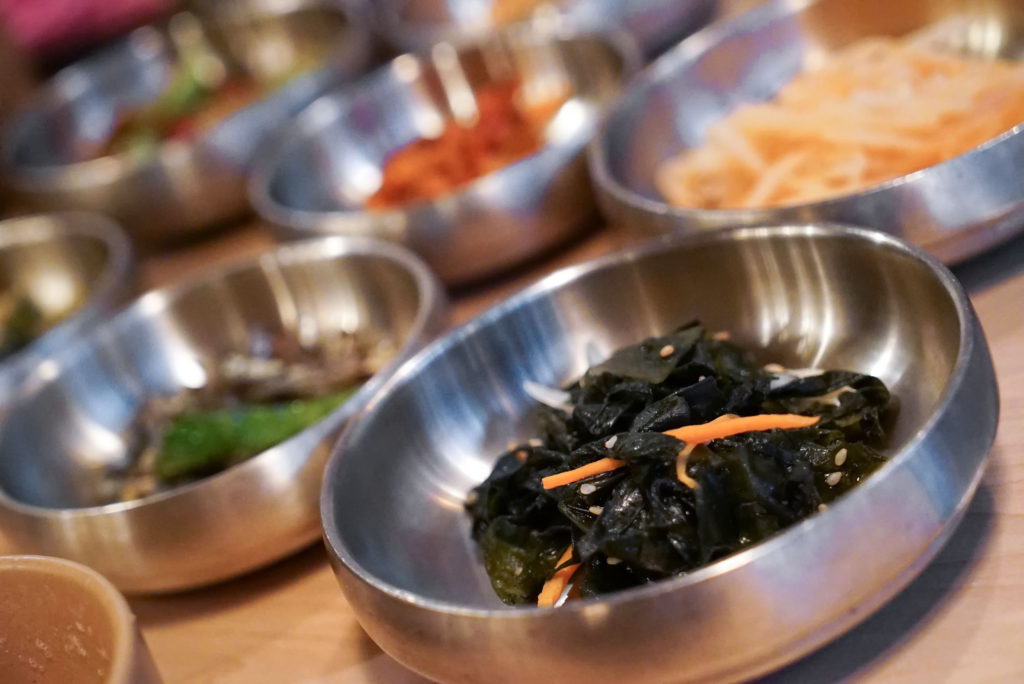
Then came the onslaught of banchan: small dishes and bowls of pickled items (kimchi) and veggies.
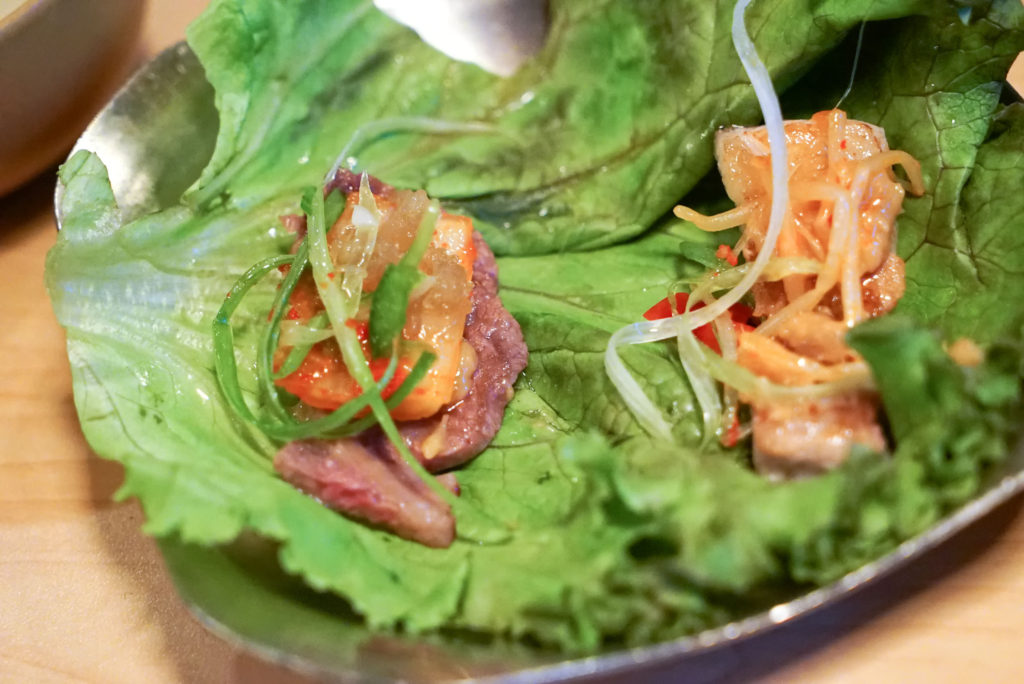
These are used to dress up your lettuce wraps, in which you place the finished BBQ meat after its all grilled up nicely.
Then you wrap it up and eat it.
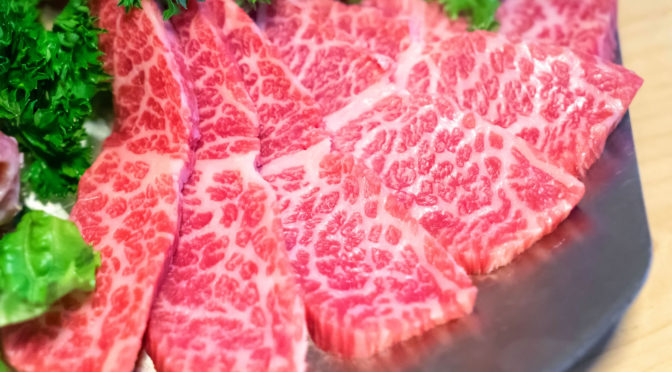
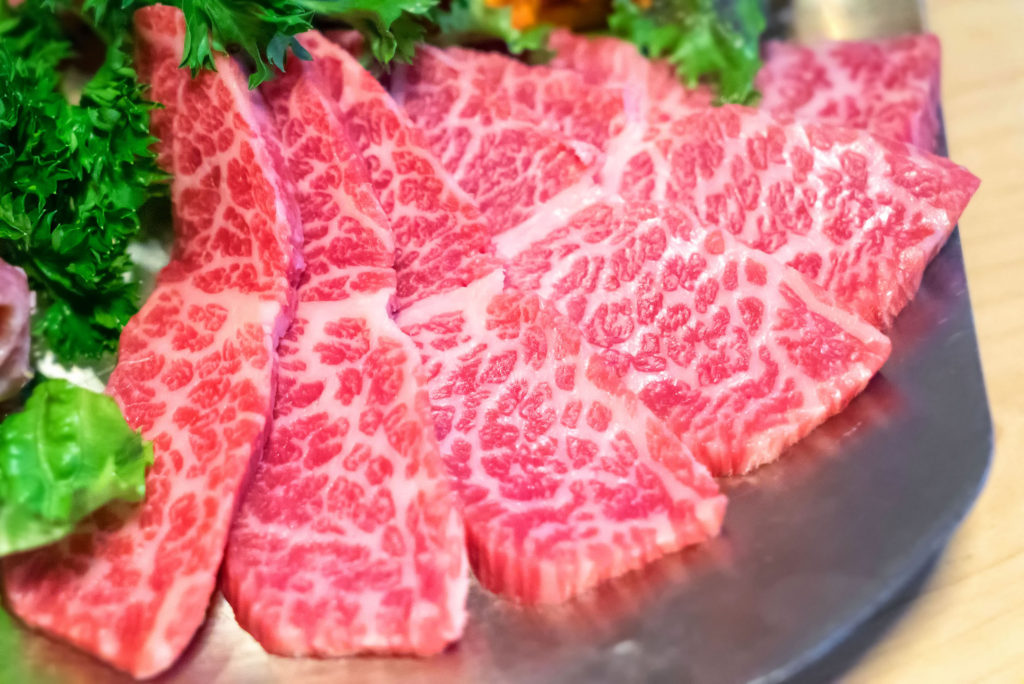
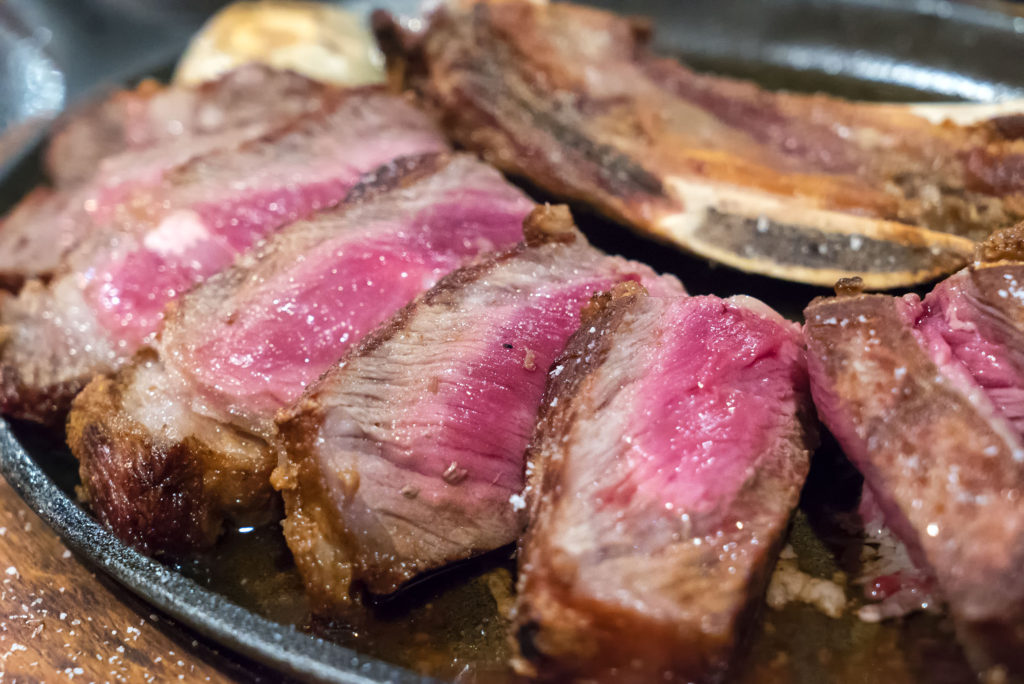
But wait.. I skipped the best part. The MEAT! Our meal came with a plate of four meats: thick cut pork belly, spicy pork bulgogi, boneless beef rib and beef short ribs. Look at this fucking short rib…
That marbling… Holy shit! I was so captivated that I didn’t bother shooting the other meats. Just perfect. My order of preference: short rib, belly, bulgogi, boneless rib.
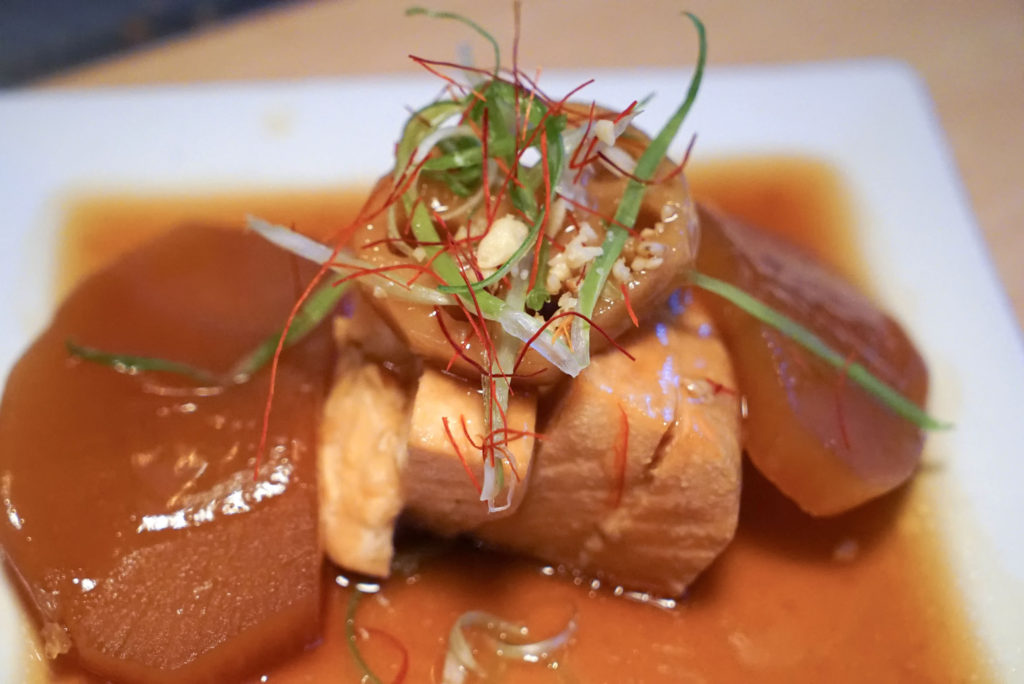
We also had a braised salmon dish. This was a bit dry and overcooked for my liking. In fact we threw the salmon meat into the hot soup dish for the next course, but I really enjoyed the sauce and radish that came with it. It was topped with a slice of lotus root too.
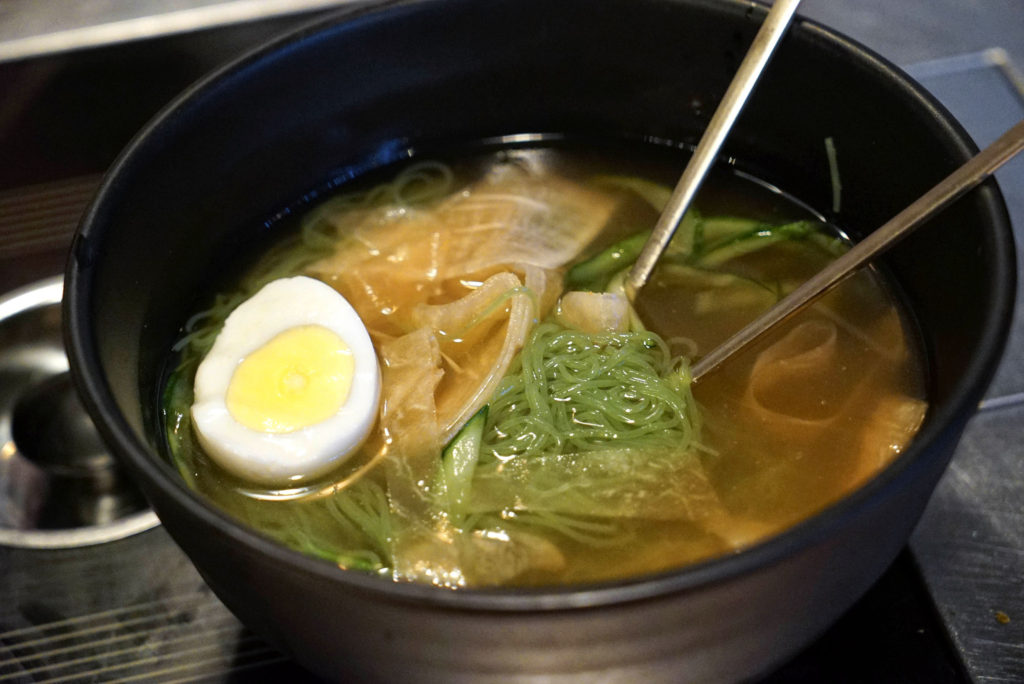
Next course: noodles. I couldn’t believe we were each getting a bowl here. We picked Haemul Kalguksu: spicy seafood noodles (hot); and Mul Naengmyeon: green buckwheat noodles (cold). Both were tasty but we seriously had no more room left in our stomachs! We brought these home, but not before my wife lifted the noodles for an Instagram pic.
That cold soup (green noodles) had some sweetness to it from the shaved winter melon within.
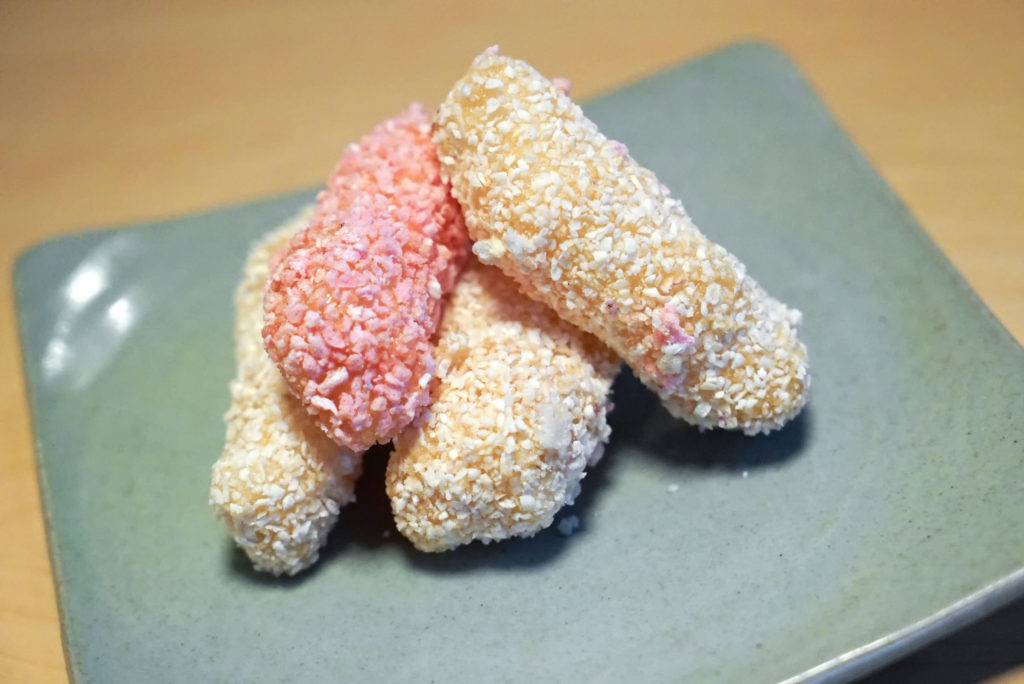
And then there was dessert. Little puffy, sweet and soft logs of fried dough with a cup of cold and sweet rice juice.
Between tax, tip and drinks I dropped another $50 on this meal, but for an all-in grand total of $120 (including the $70 we paid for the flash deal), this was a steal. I highly recommend this joint.
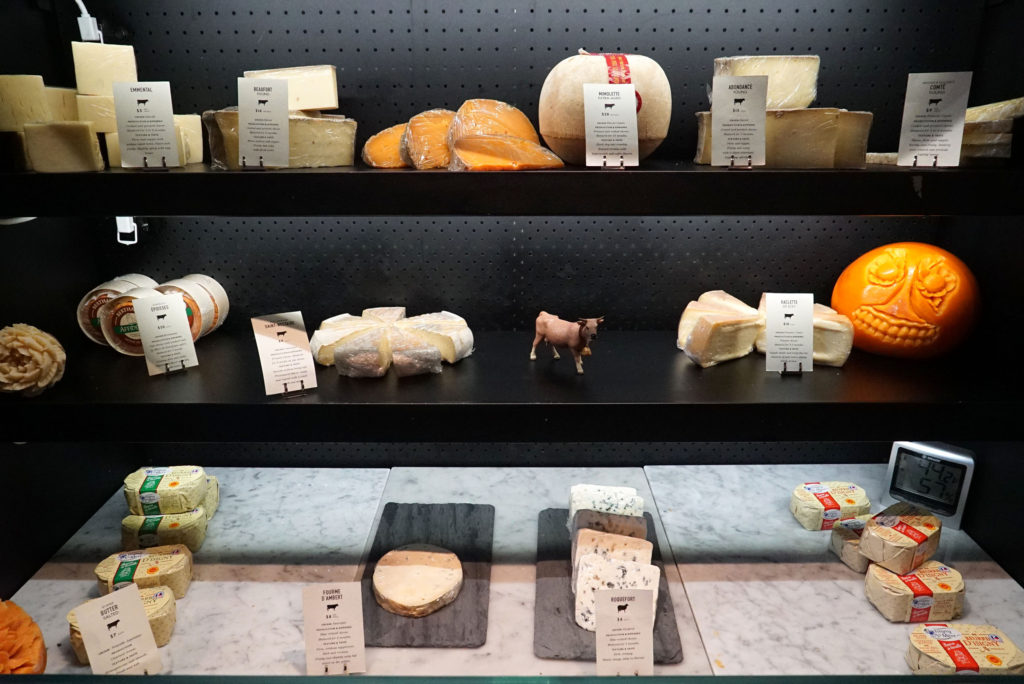
I was recently invited to the French Cheese Board by Peachonomics and The Baddish Group for a cheese tasting. I ended u learning a lot about cheeses, and since we were eating all cow’s milk cheeses, I figured it was worth a write-up on here.
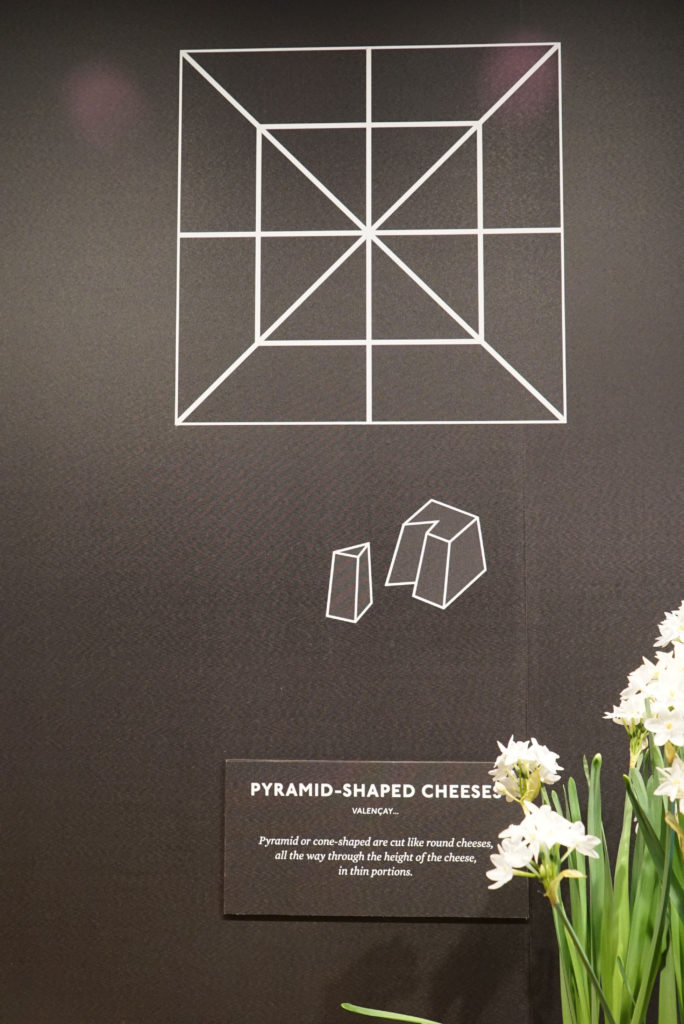
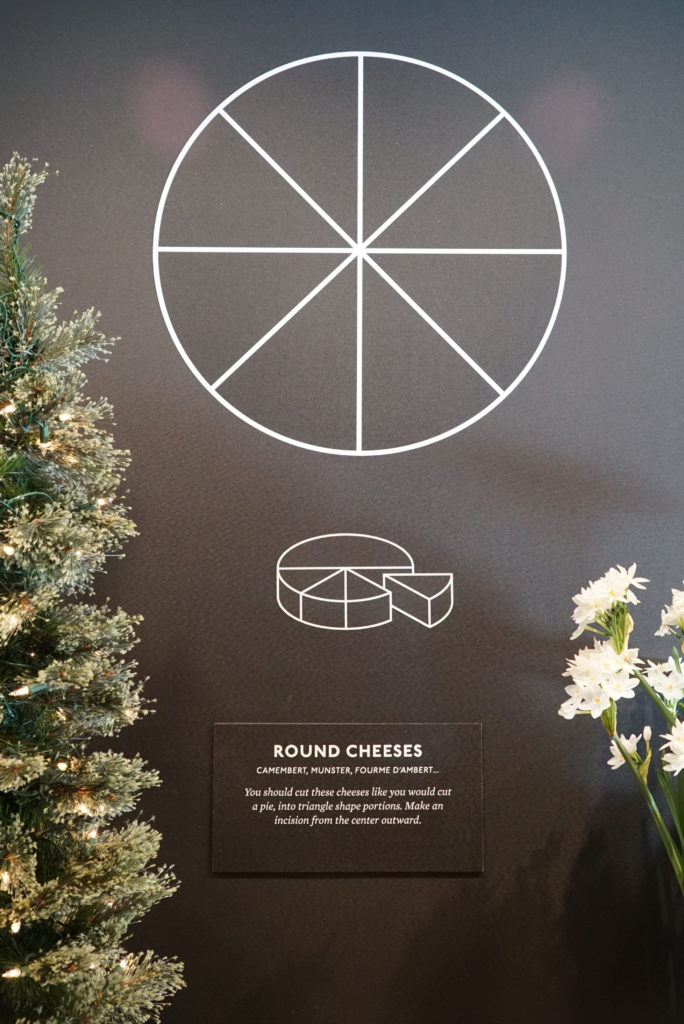
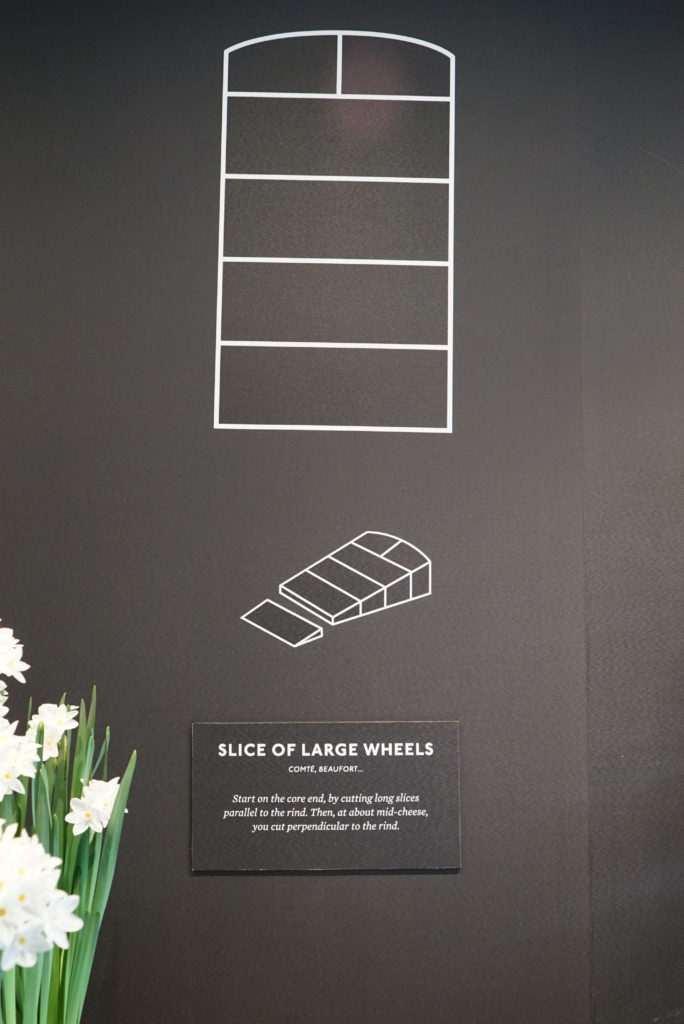
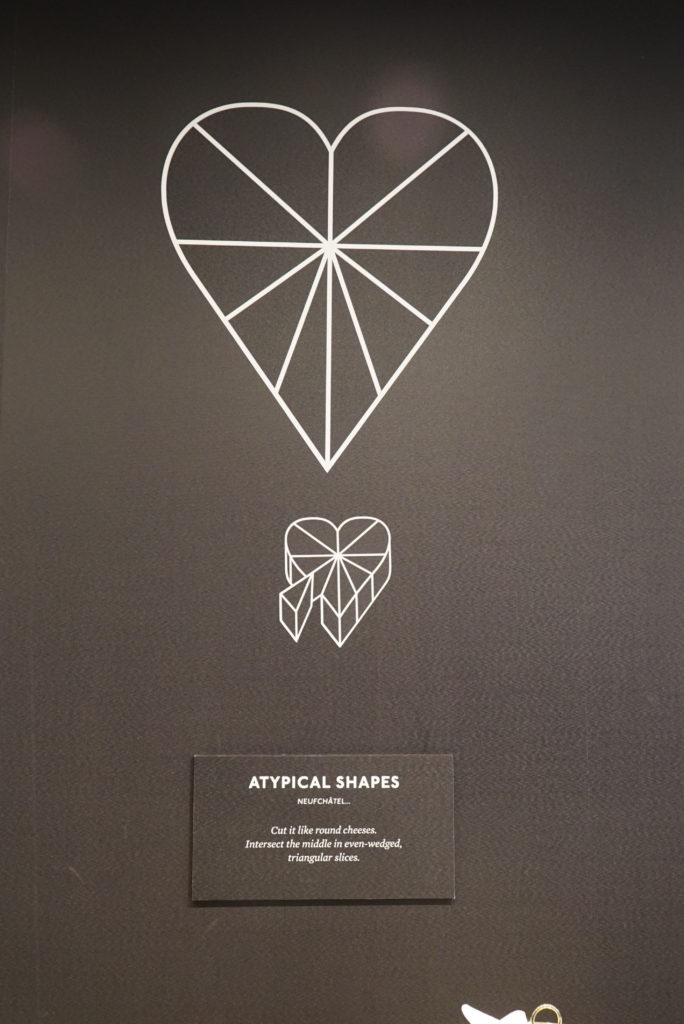
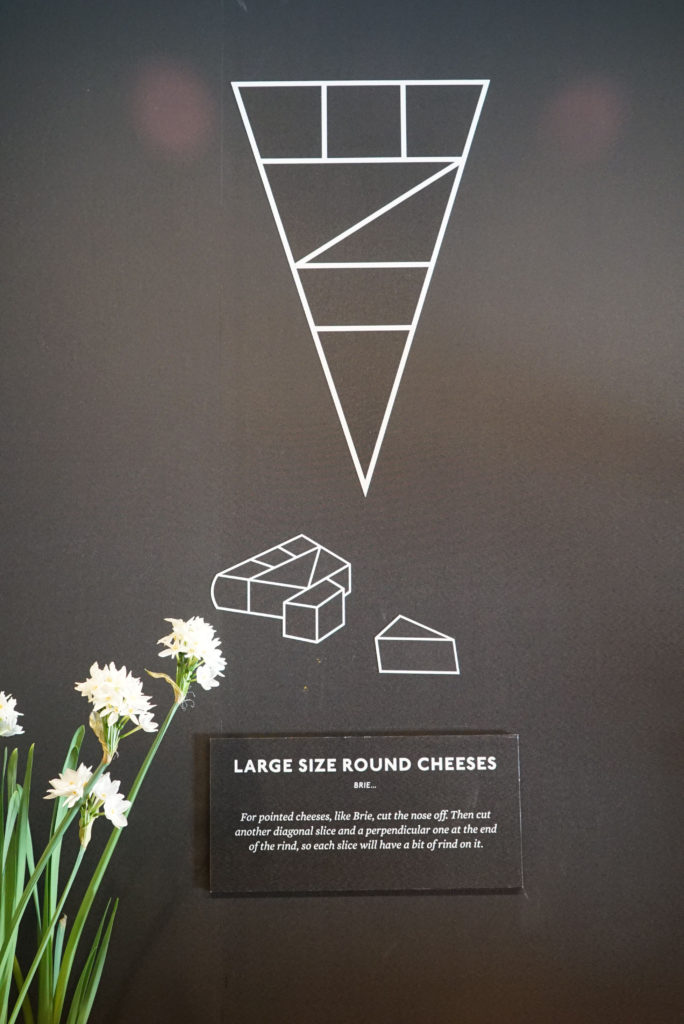
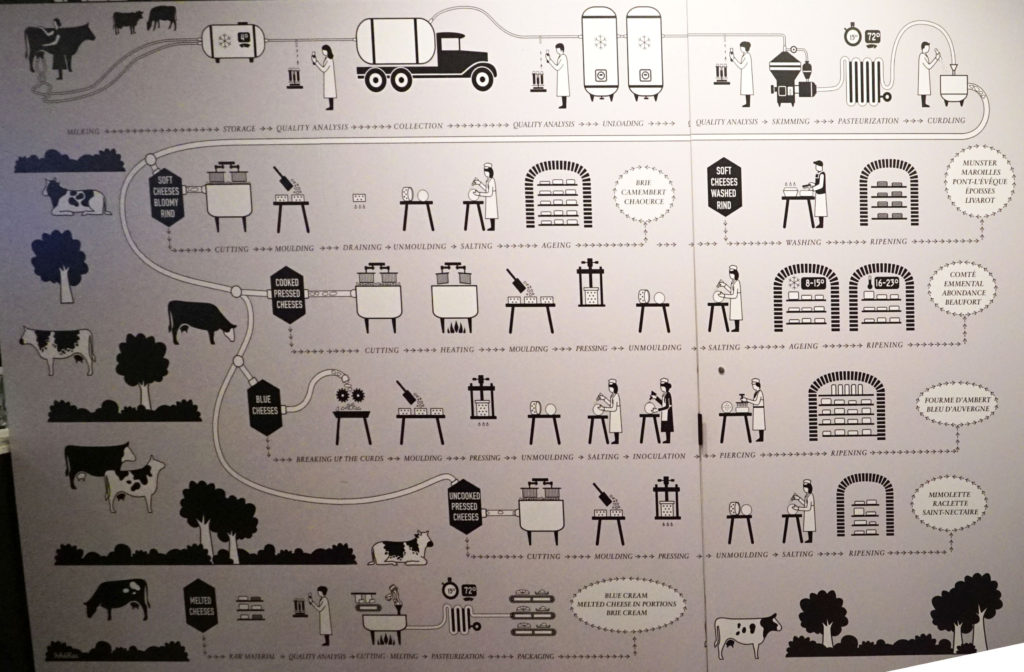
I had no idea that certain cheeses were meant to be cut and eaten in specific ways depending on their shape and size. Check out these charts:
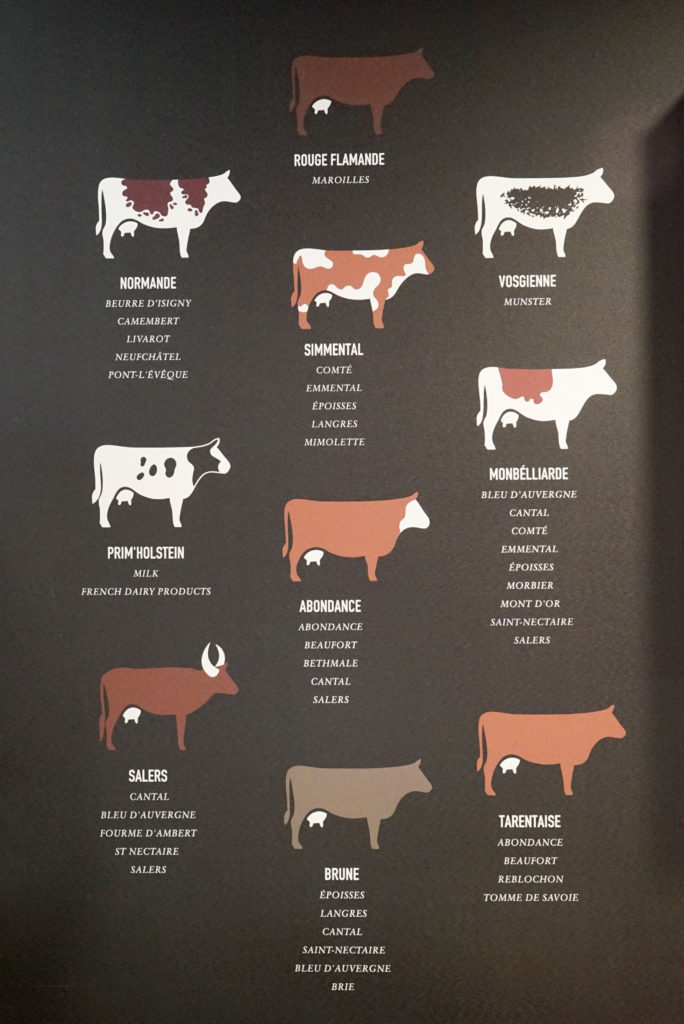
Pretty interesting. And this chart of cow breeds shows which cheeses come from which cows:
What I found interesting is that, much like our Beef Check-Off system here in the States, Cheeses of Europe acts as a marketing tool and advocacy arm of the cheese industry across the pond. They organized this event as a way to educate foodies in NYC about French cheeses. I’m actually looking forward to learning more about cow’s milk cheeses. Maybe one of these days I’ll organize a beef and cheese pairing event, as I’m sure certain cuts of beef or methods of preparation would pair nicely with certain cheeses.
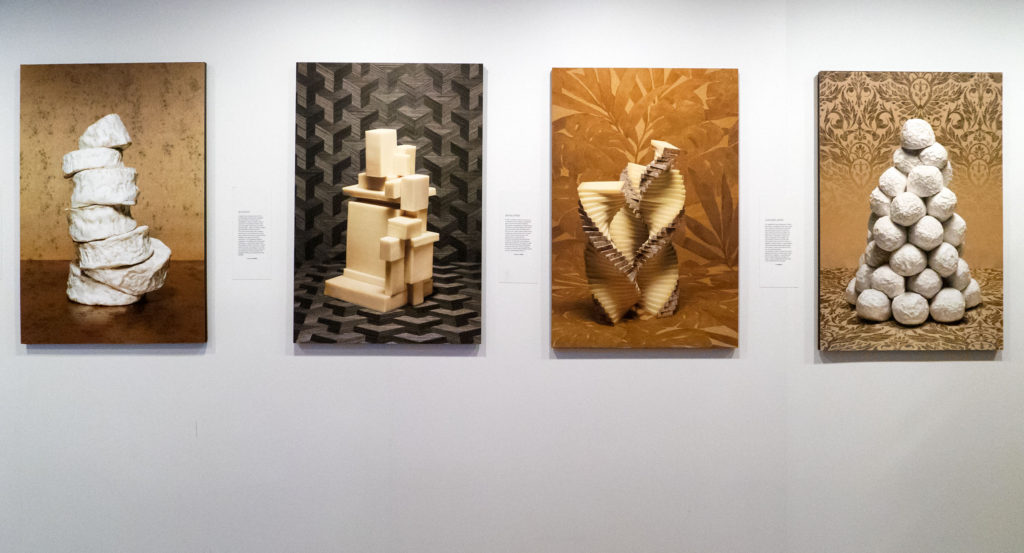
Not only does the French Cheese Board sell cheese, but it also acts as an art gallery and food lab as well, where students can intern and learn about cheese.
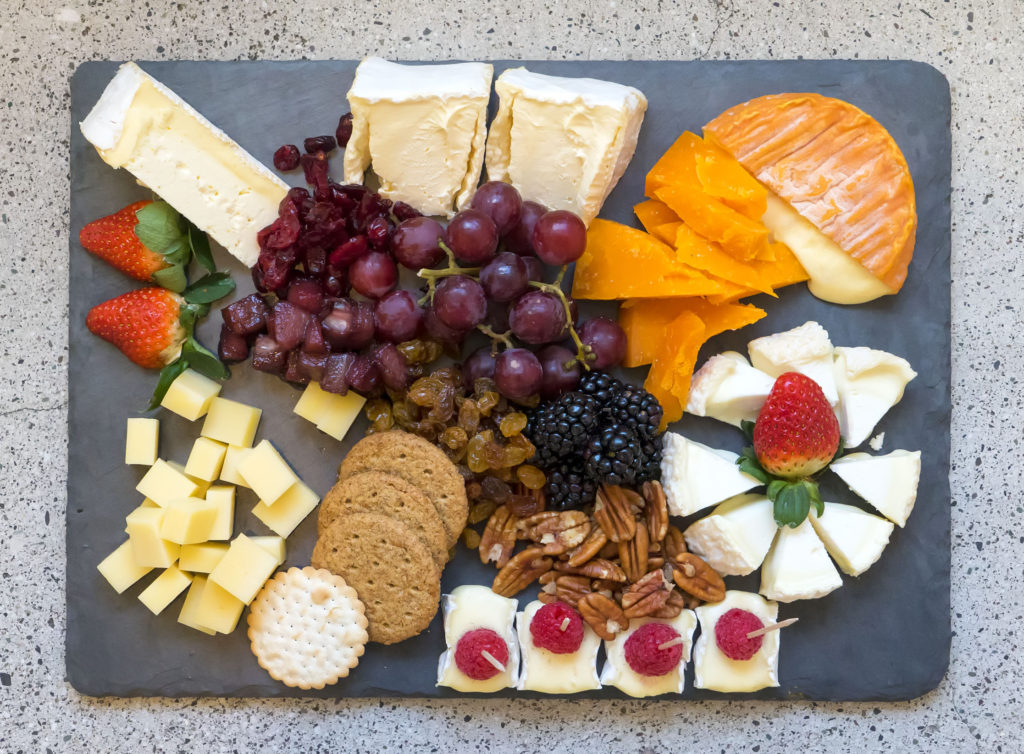
We tried a bunch of really diverse cheeses. My two favorites were the Brillat Savarin and Pont I Eveque. Both were softer and creamier than Brie.
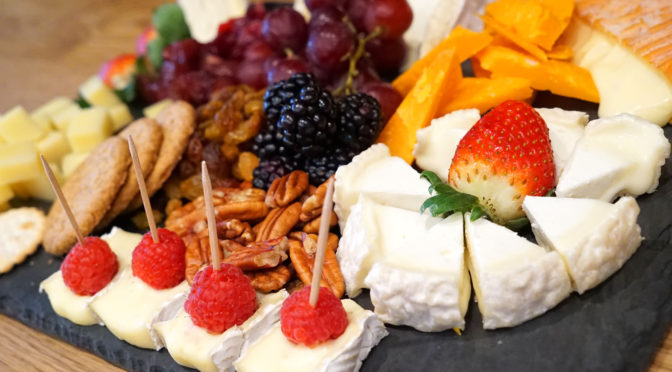
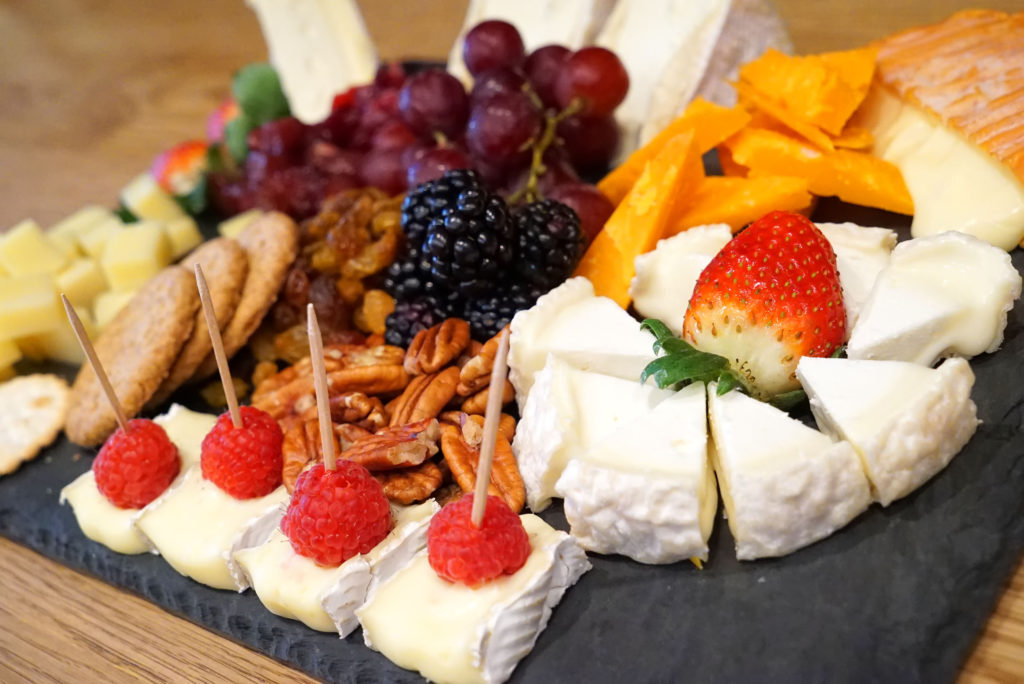
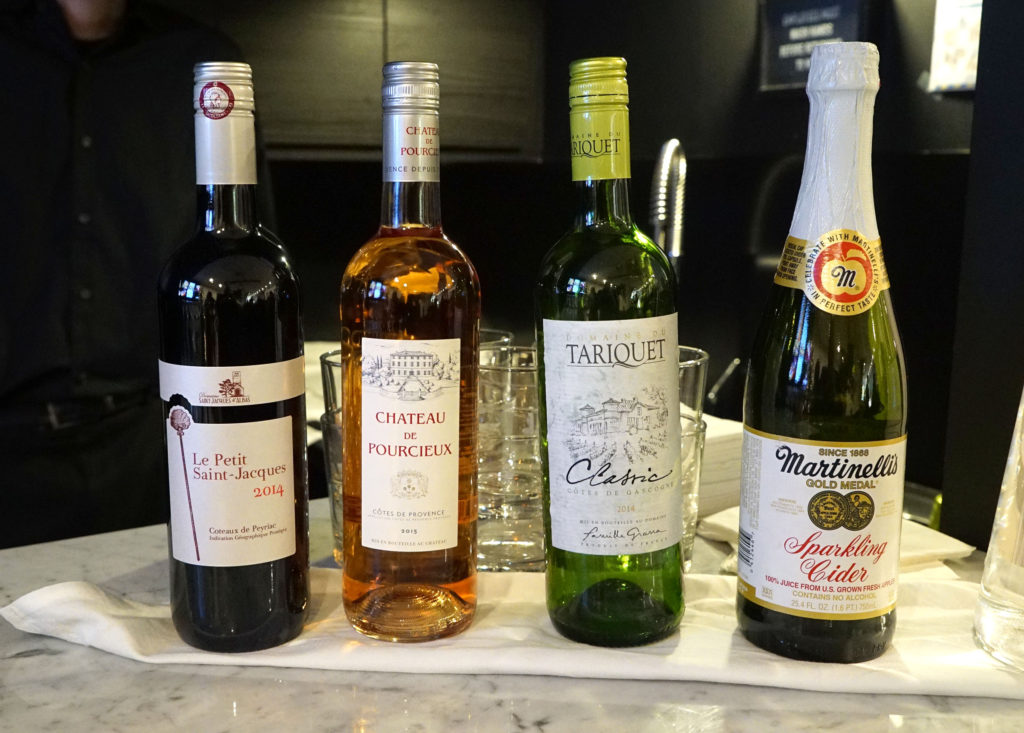
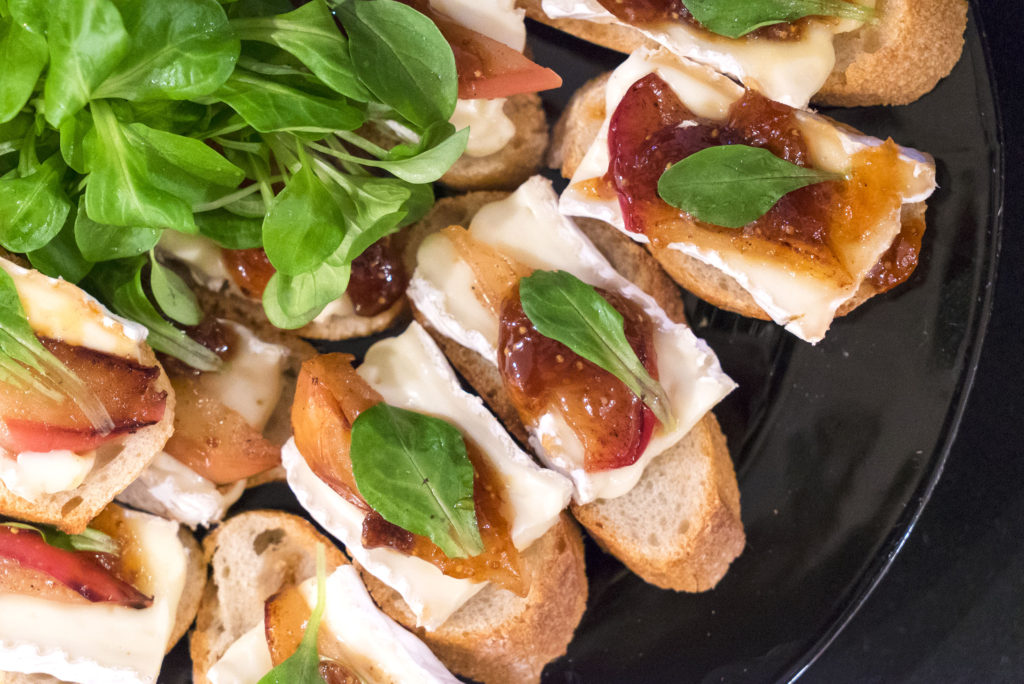
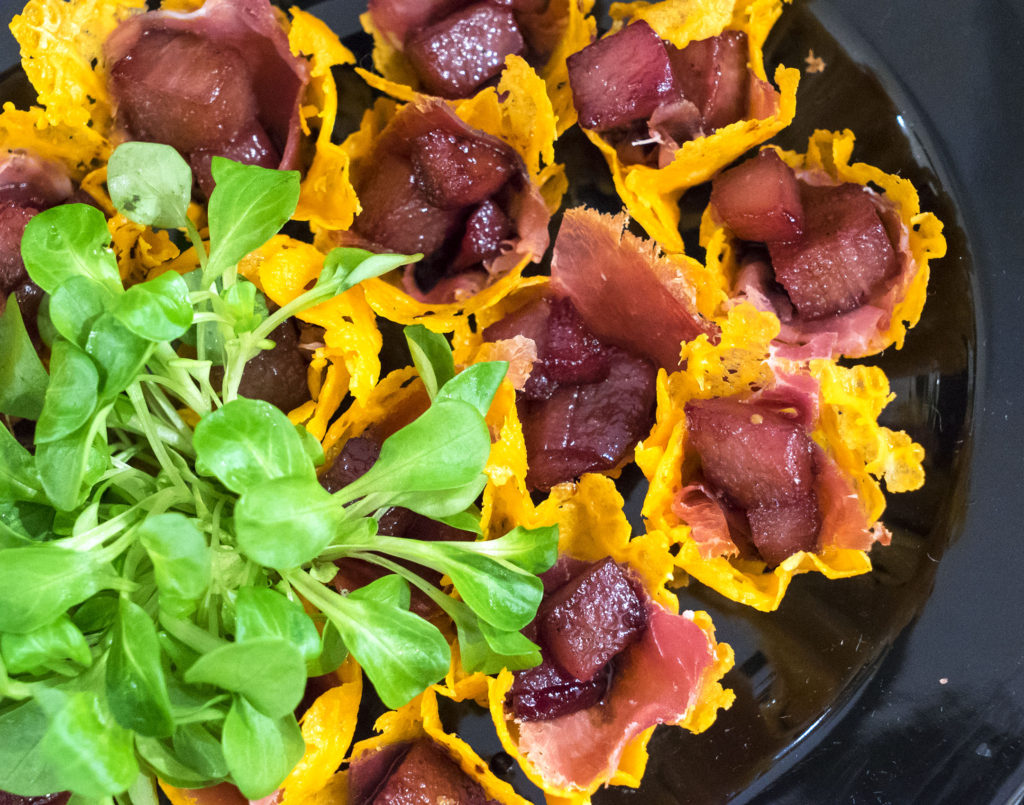
They served us some nice wines that went with the cheeses, and even put together some plated cheese hors d’oeuvres.
I definitely recommend hitting this spot to try out some cheeses. The prices are very reasonable.
THE FRENCH CHEESE BOARD
41 Spring St
New York, NY 10012
A whole crapload of unnecessary freaking out has happened over ranchers’ use of antibiotics in the raising of animals for human consumption. While some of the alarmist stuff out there might sound scary, in reality it isn’t. So I feel the need to ease some tensions here with this beef advocacy post.
It’s Humane
The judicious use of antibiotics is the humane thing to do for animals that are in need of care. Just like humans, animals need help every so often to fight off a bug. When sick, their ears droop, they cough and have runny noses. They separate from the herd and go off by themselves. Some diseases can be avoided through the use of vaccines, and illnesses can be prevented and combated with the use of vitamins and antibiotics.
The Law
By law, producers must wait a certain amount of time after administering an antibiotic before an animal can be slaughtered for consumption, to ensure that no traces of the antibiotic remain within the animal. These “withdrawal times” are strictly monitored and vary from 0-60 days based on the substance being administered. That means you can be confident that there are no antibiotics in the meat you buy at stores or order in restaurants. Once the withdrawal time is tolled, that basically means the antibiotic has been completely metabolized and has worked its way out of the animal’s system.
Ranchers must carefully follow directions for administering the proper amounts of antibiotics to their animals, and the FDA tests for traces of antibiotics in meat products as well. There is a mess of paperwork, regular federal inspections and tedious record keeping involved in this entire process. It really is a tightly run ship.
Let me unpack those generalizations a bit here: Under new FDA guidelines, there are very specific, detailed measurements that are set for antibiotics in feed – authorized by veterinarians – that are called “veterinary feed directives.” These directives outline exactly how long an antibiotic can be used and which illnesses can be treated. They also specify the number of animals that can be treated.
Again, these drugs will only be used to treat, prevent and control disease with the oversight of a veterinarian. Farmers and ranchers will be required to form even stronger relationships with licensed veterinarians in order to receive authorization for the appropriate antibiotic for a specified illness, and for a specific time period. I’d say that creates a pretty well regulated and closely monitored situation.
Additionally, new laws require that little to no antibiotics given to the herd can be in the same class as human medicines. This is done to prevent any potential reduction in the effectiveness of antibiotics that are needed to treat human diseases.
Even something as simple as a vaccination carries with it a host of guidelines. For example, no shots are allowed in the hip or thigh, as this can damage the sirloin or round cuts of beef.
Ionophores
This is a good time for me to talk about ionophores, actually. Ionophores are a class of antibiotics that are not involved in human health because they work specifically in the rumen (a digestive organ which we do not have).
Coccidiosis is a parasitic disease in the intestinal tract of animals caused by coccidian protozoa. Ionophores combat these organisms, so they’re technically “antibiotics” from the US standpoint.
In Europe, these ionophores have a different term (anticoccidials), and are not classified as antibiotics like they are here. You may have heard that Europe has much lower antibiotic use in their beef industry. That’s misleading, mainly because Europe does not consider the ionophore to be an antibiotic.
Hormones
Hormones and steroids are often used for growth promotion, digestive aids, and to prevent illness and the later need for antibiotics in a herd. Small pellets are implanted behind the animals ear, under the skin, to release these aids into the animal’s body. Many don’t realize that these are completely metabolized and no traces are found in the beef products at the point of consumption.
The FDA and USDA enforce rules on these things, and scientists have tested them for safety. Additionally, once the use of a hormone has been reviewed and approved, it’s continually re-tested, annually, and reevaluated. It will only stay on the market if it continues to pass all FDA and USDA testing. So this stuff may sound scary, but in reality it’s completely safe according to all scientific testing.
Niche Labels
Despite these numerous safety assurances, U.S. consumer concern about using antibiotics in animal feed has led producers to create niche markets for products with specialty labels. “Never ever” means that the animal was never given an antibiotic, for example, throughout its entire lifetime. Other labels tout the fact that the animal was not given any antibiotics in the last 60 days of it’s life, or from various points of its life cycle onward (for example, no antibiotics administered once the animal is sent to the feedlot).
The USDA makes no claim about these products being safer. They are, however, more expensive to produce, and, therefore, more expensive to buy at the consumer level. Here are a few more:
Natural: minimally processed with limited additives.
Naturally Raised: No antibiotics and no hormones except for ionophores.
Certified Organic: No hormones, and raised on 100% organic feed, which means no synthetic pesticides or fertilizers were used to grow the feed.
Conclusion
While our beef producers are wonderful for creating new markets and catering to the odd and unique demands of a diverse population, I felt obligated to set the record straight on the issue of antibiotics with this post.
In general, the use of antibiotics is more an issue of animal health than human health, but it’s still an important topic to know about.
Remember, beef producers have a vested interest in raising healthy, safe and nutritious food, because they feed themselves and their families with the same beef that you and I eat. They understand that antibiotics are vital for the health of the herd, and administering them is a humane act to safeguard their animals.
Farmers and ranchers are dedicated to providing safe products to the market. It’s their livelihood, after all. Implementing new antibiotics guidelines and working closer with veterinarians are just a few examples of how farmers and ranchers are continuously improving the cattle industry.
There’s really nothing to worry about. US beef products are safe, nutritious and delicious. There are safeguards put into place at every step of the beef life cycle, and even afterward at the slaughterhouse and packing plant, to ensure our safety.
I’m not really big into the whole artisan ice cream fad that’s sweeping NYC. Don’t get me wrong: I, too, will “scream for ice cream” now and then. As you probably have figured out, I’m more of a savory guy than a sweets guy. But who doesn’t like ice cream, right? It’s just that my soft spot when it comes to ice cream is soft serve. Typically vanilla, and Carvel if possible; no sprinkles either, and in a cheap-ass wafer cone, too. I know, I know. That’s boring crap. But it’s my boring crap. It’s what I like.
Anyhow, with a set-up like that I you might get a sense that I am super critical when it comes to scooped ice cream, because I generally don’t dig it the same way everyone else does. And then once you trust me in my ice cream criticalness, I could tell you something like “HOWEVER, AFTER TRYING VAN LEEUWEN, I AM A CHANGED MAN,” and you’d lick it up, thinking “Well, it must be good if the guy who hates ice cream even likes it.”
Well, that’s sorta what I’m doing. But I’ll be honest: I’m not really a changed man, per se. I will still choose soft serve vanilla Carvel over the best ice cream in town, but I now understand the draw to these new artisan ice cream joints.
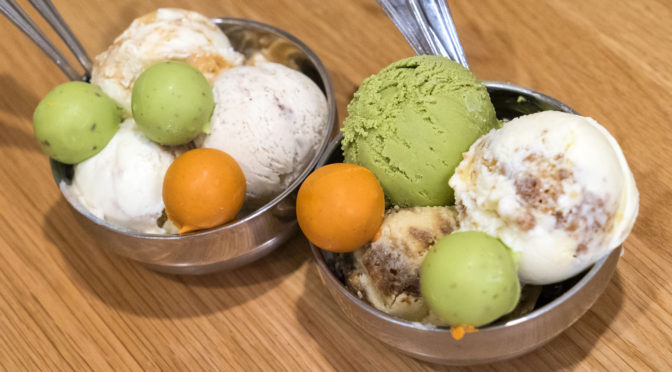
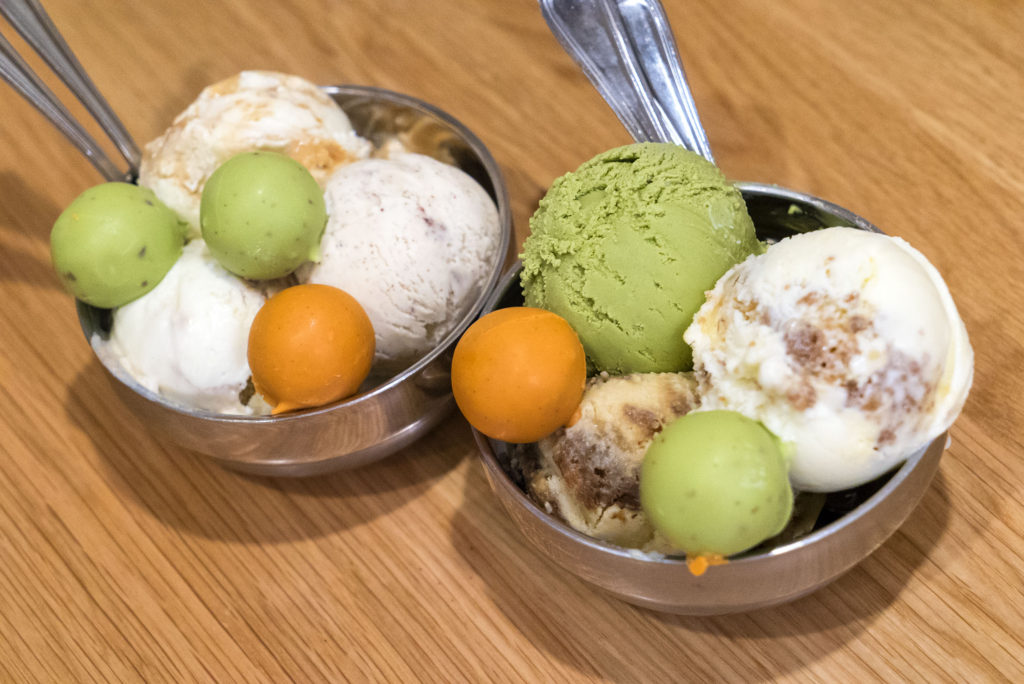
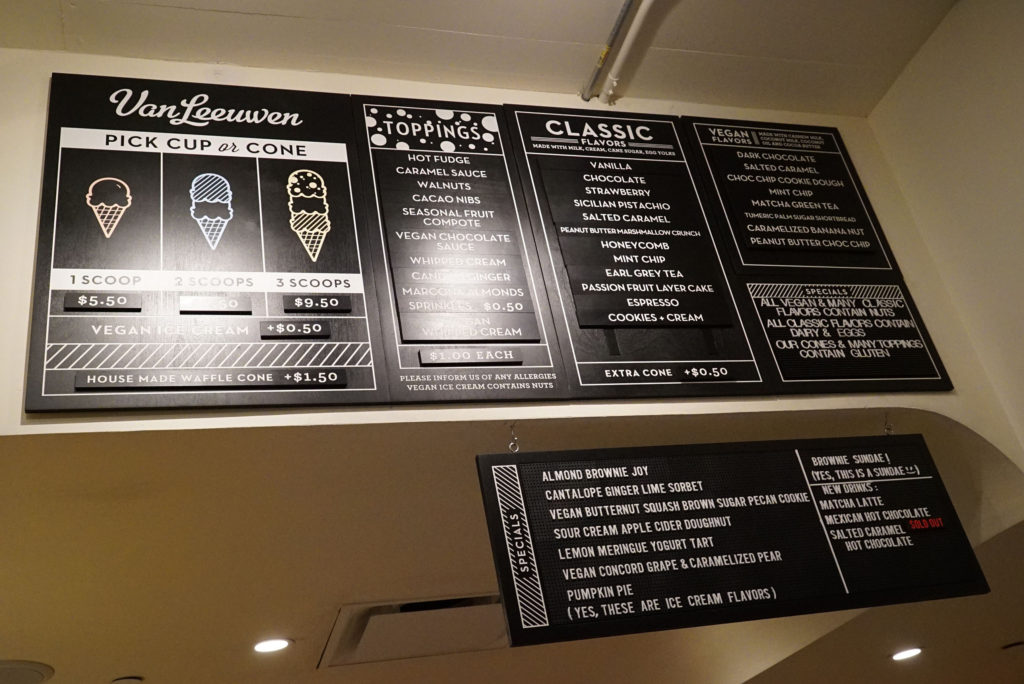
We tried an array of scoops. Six, I believe. The lemon meringue, butternut squash, and sour cream apple flavors really stood out as amazing. (Those are my wife’s cake balls that we put on top)
And a few of these were even VEGAN! They pull it off. You’d never know you were eating hippie food.
I actively disliked Morgenstern’s, but I truly enjoyed Van Leeuwen. But get this: I was there with ice cream aficionado JustAFoodieNYC. This guy is legit. He eats more ice cream than anyone I know, and he’s been at it since he was a kid. A true ice cream enthusiast. I trust his judgment; he is to ice cream what I am to steak. Anyway, Van Leeuwen is one of his top picks, but he tells me that Ice & Vice is even better. So I will have to give that shit a try soon.
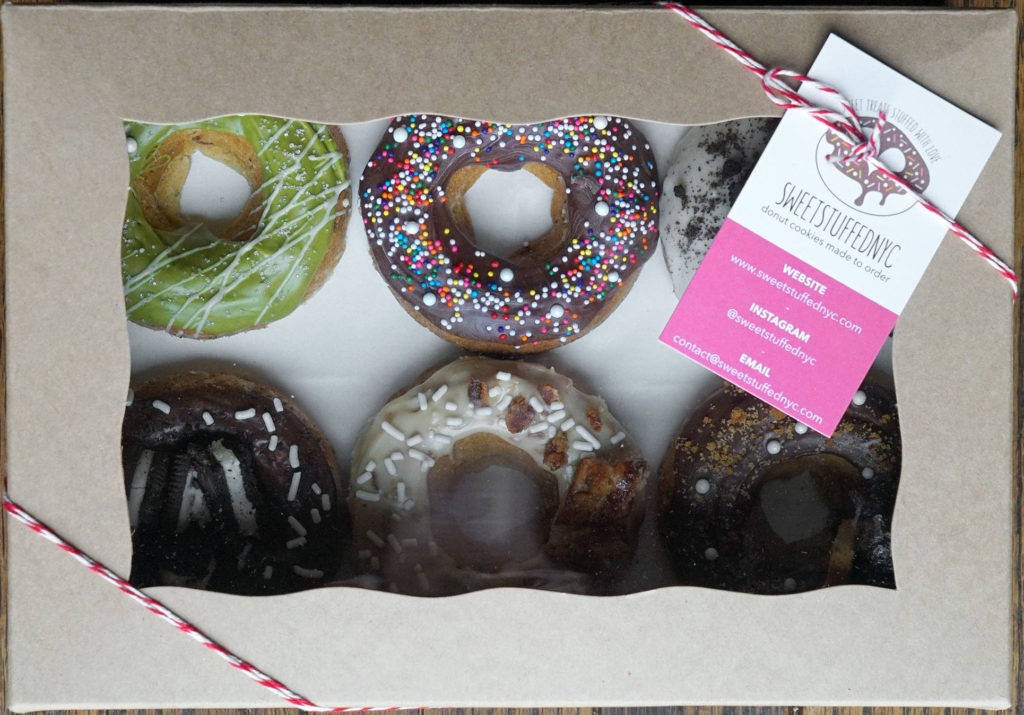
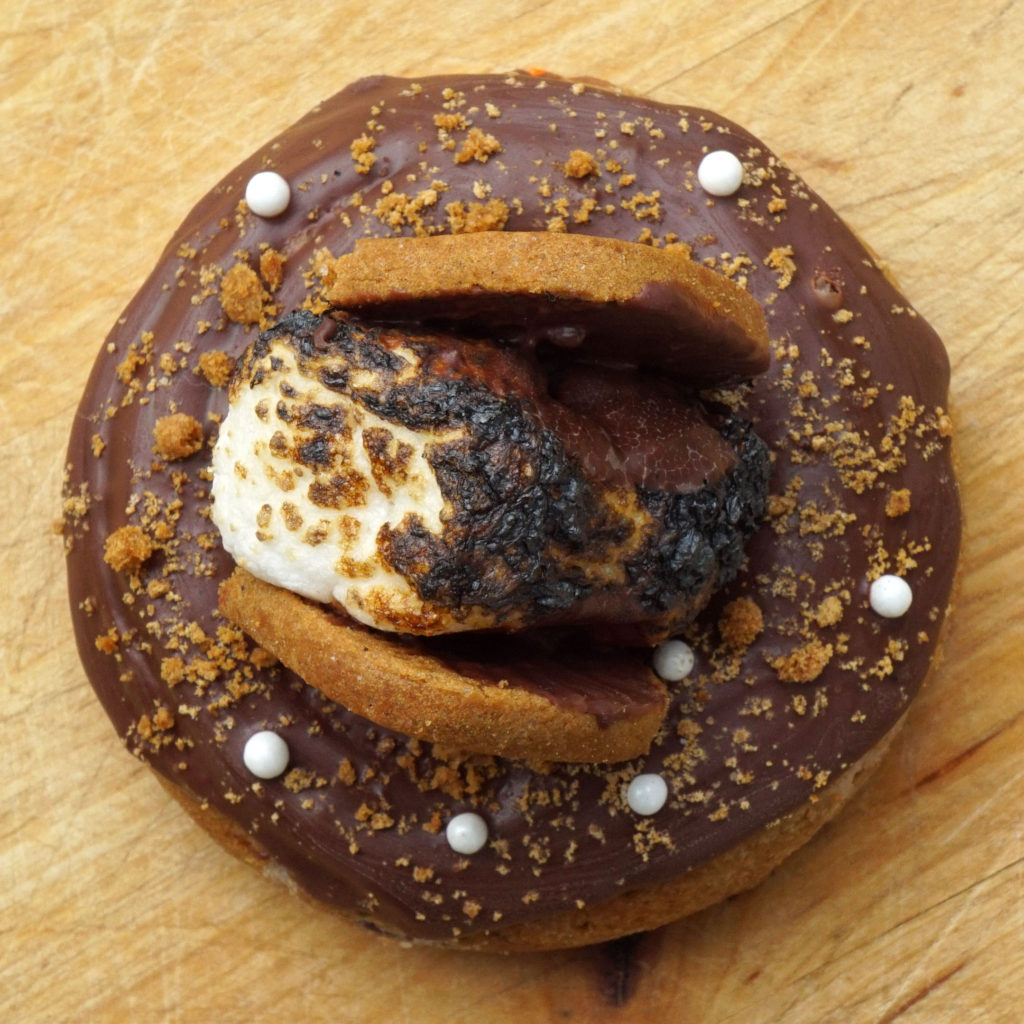
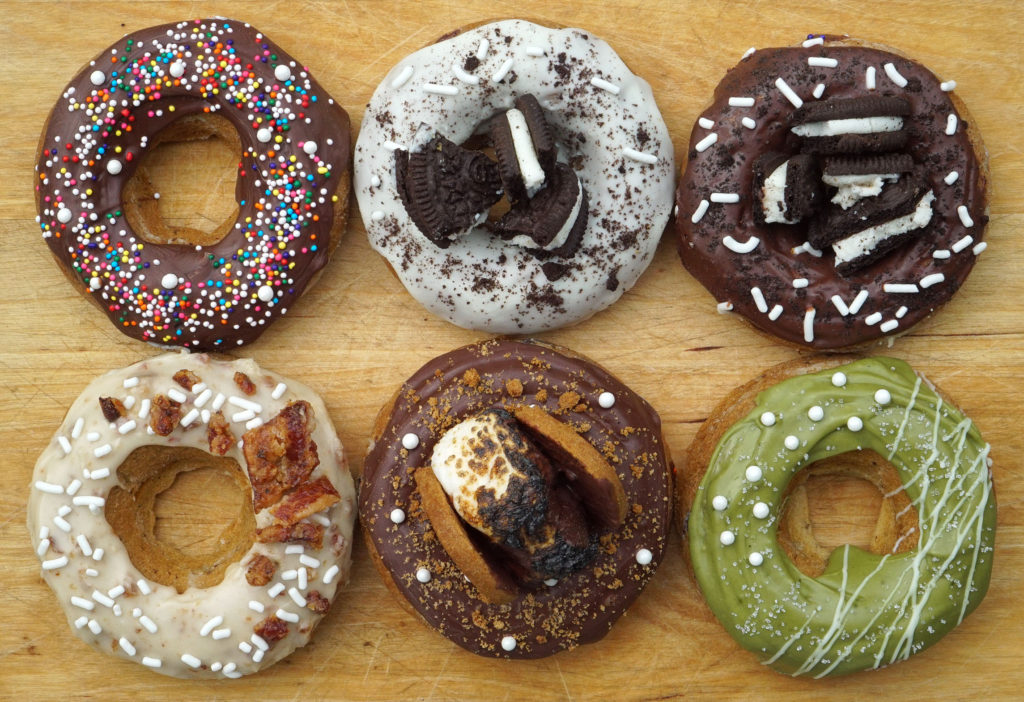
These unique treats by SweetStuffed are doughnut-shaped cookies that are stuffed with various flavors and then frosted on the top.
My first foray into these delicious things cam when my wife won a box in an Instagram giveaway contest.
After that, I was hooked, It’s like that first taste of crack. The first one is free, but then you can’t stop. You know, because you’re all familiar with how crack addiction works…
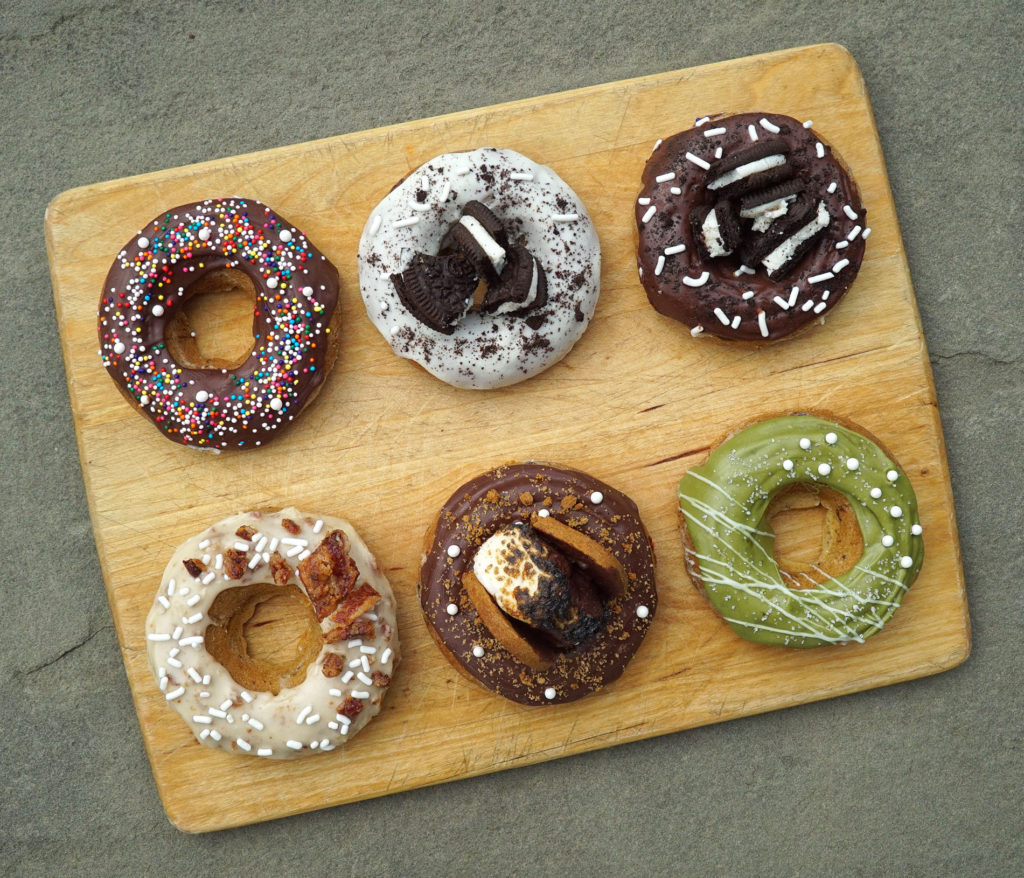
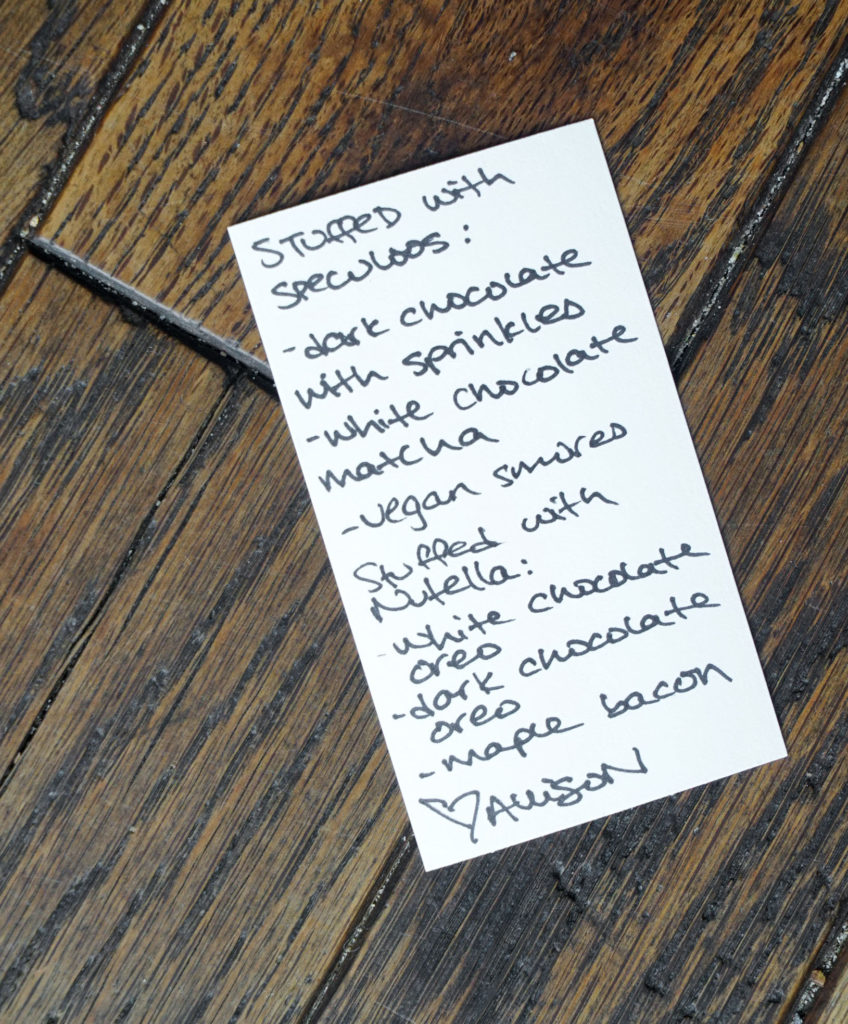
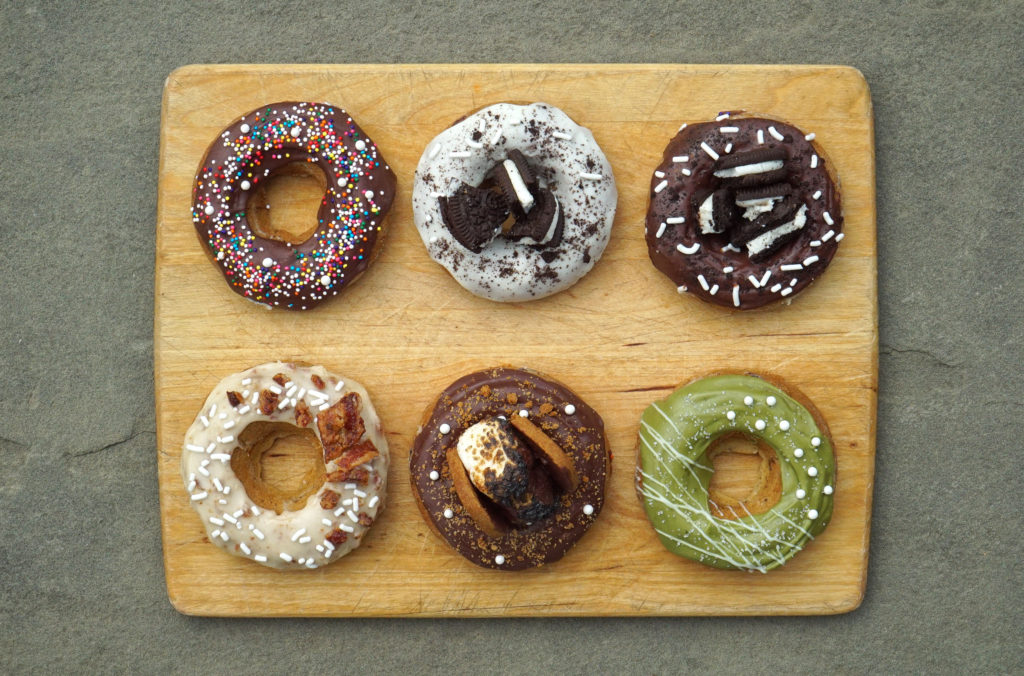
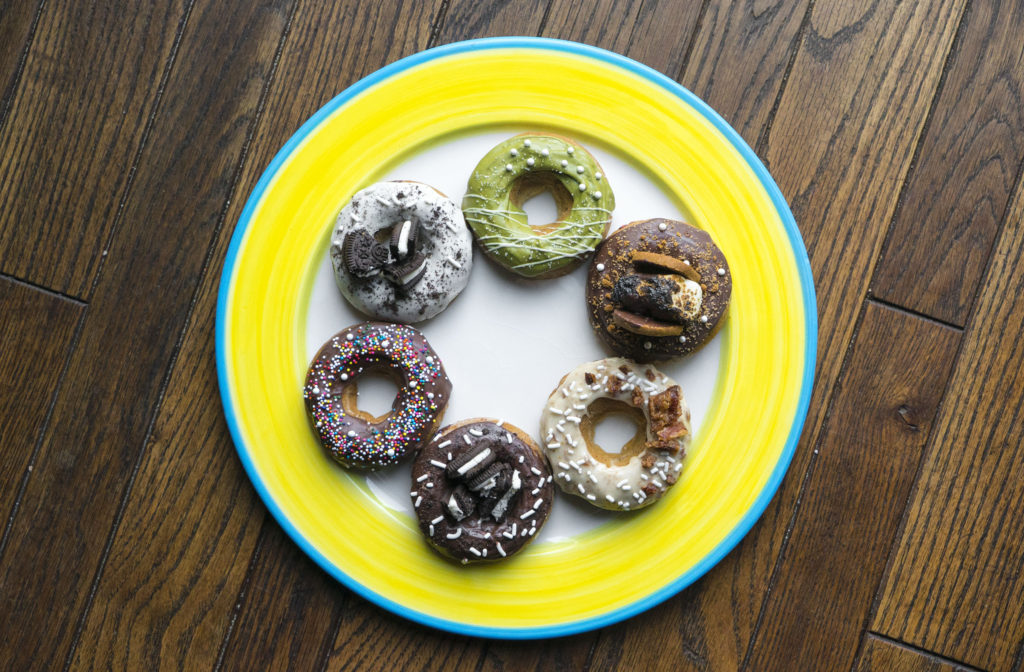
Anyway, I decided to order a box to share with my family for the dessert table on Thanksgiving. Here are the flavors I tried:
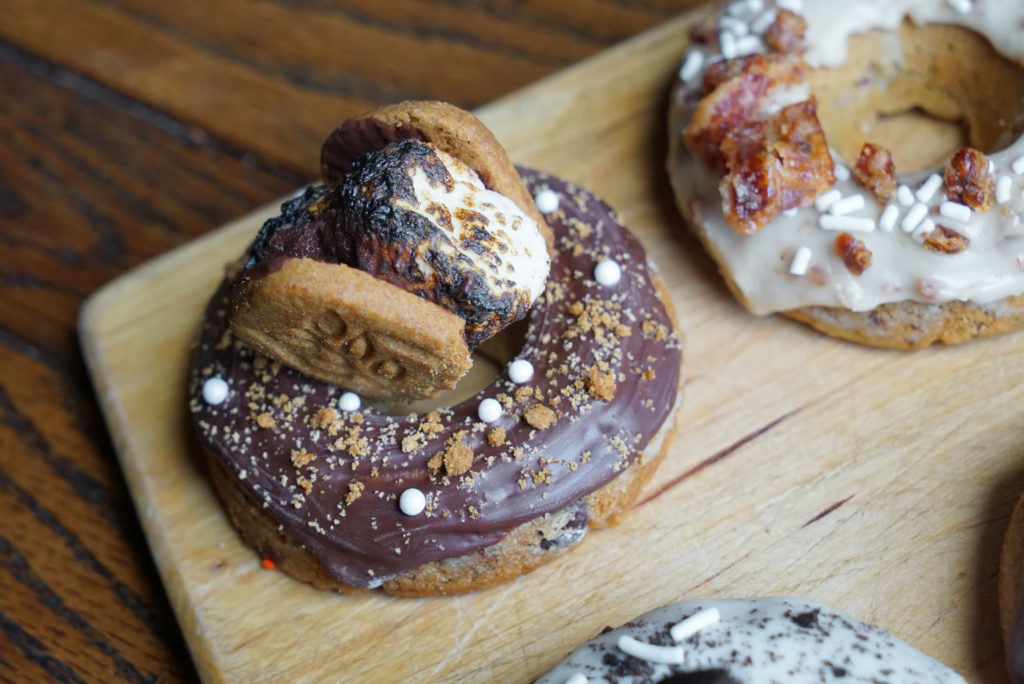
My favorite flavor from the Instagram giveaway box was smores, so I made sure to get one of those.
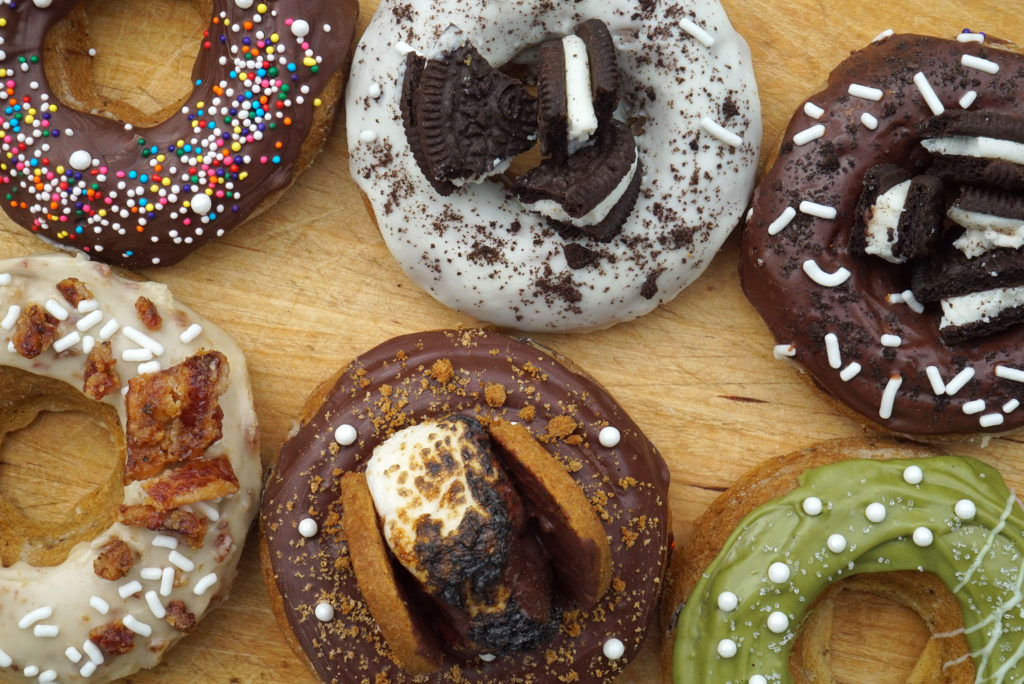
This baby is just firing on all cylinders. It’s even topped with an actual toasted marshmallow smore, too!
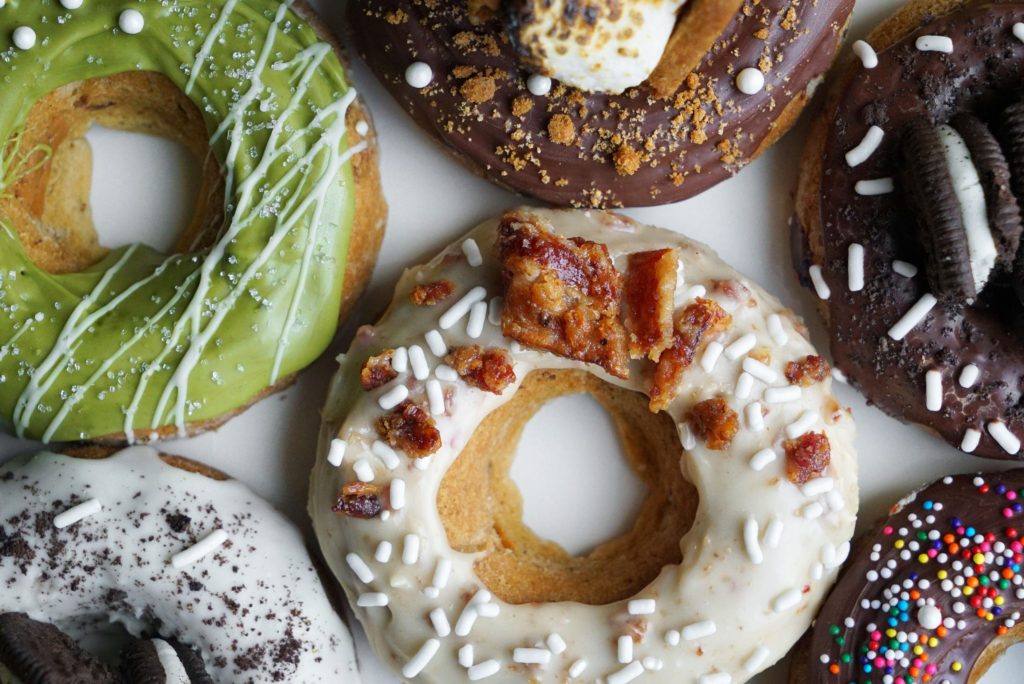
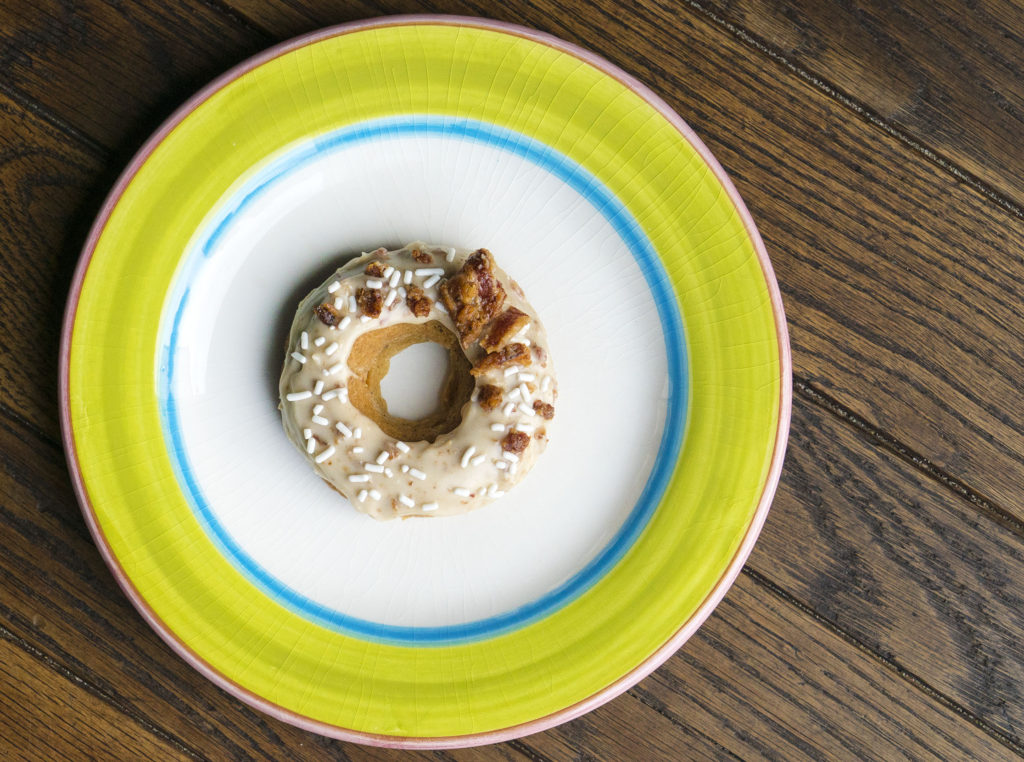
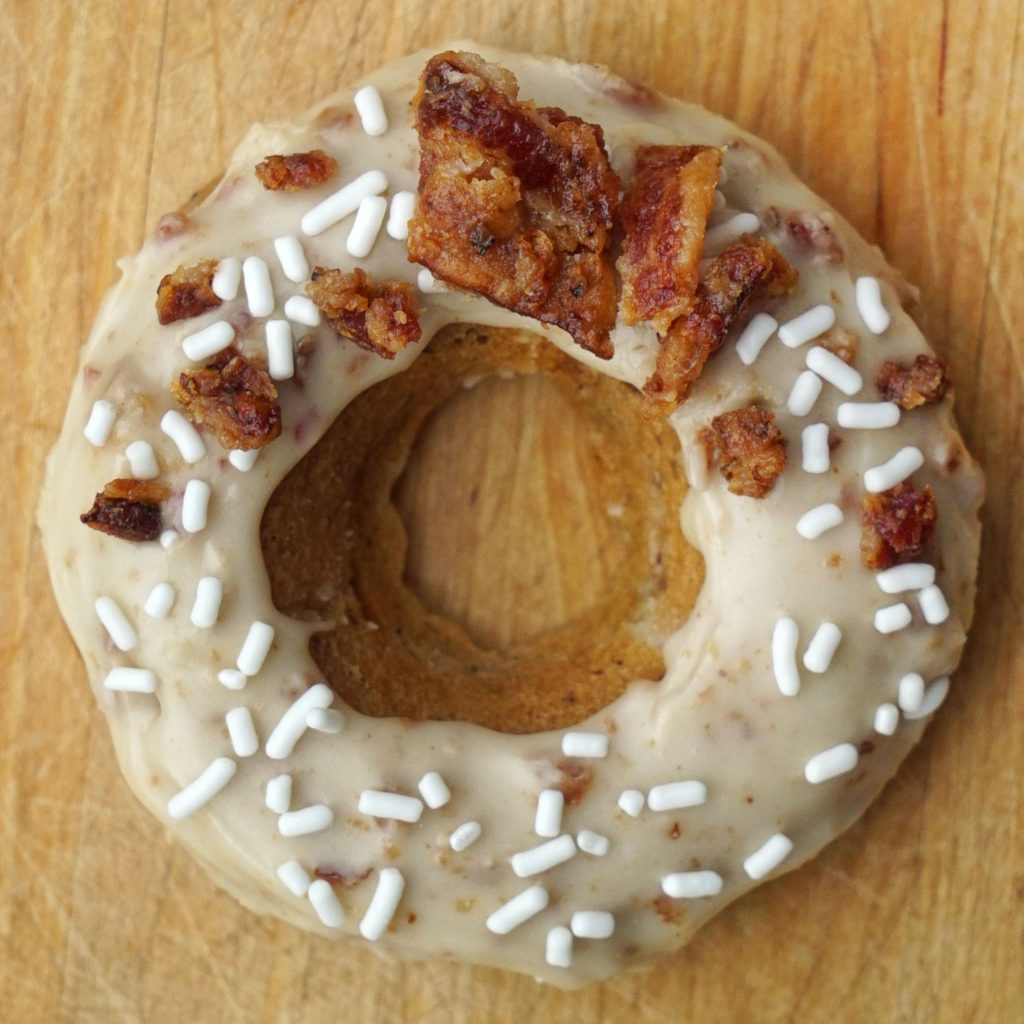
But I felt pretty special when I was told I’d be the first customer to taste the maple bacon donut cookie. I was a happy guinea pig.
Real candied bacon on top, with bacon dust worked into the maple frosting? Genius!
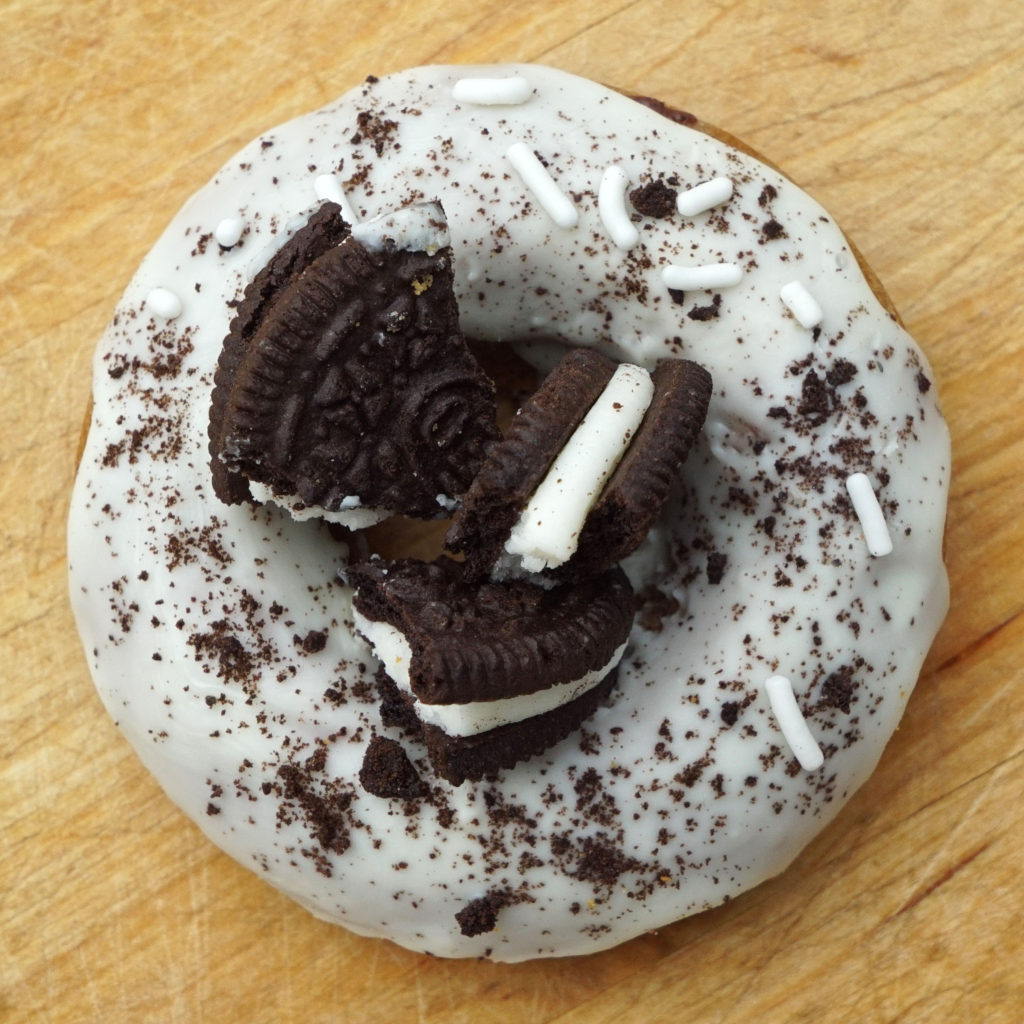
Both the white chocolate and dark chocolate oreo donut cookies are amazing as well. I’m a sucker for anything “cookies and cream” related, so this was a big win for me.
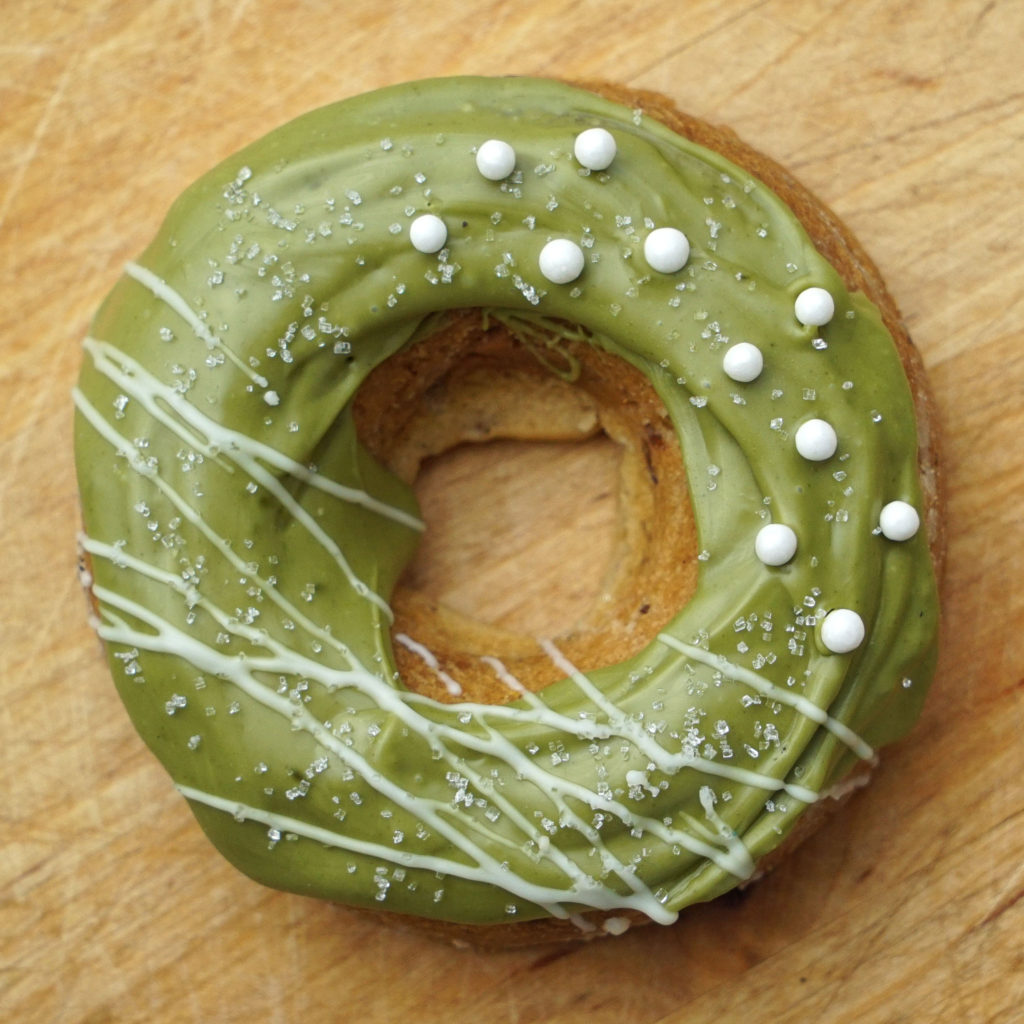
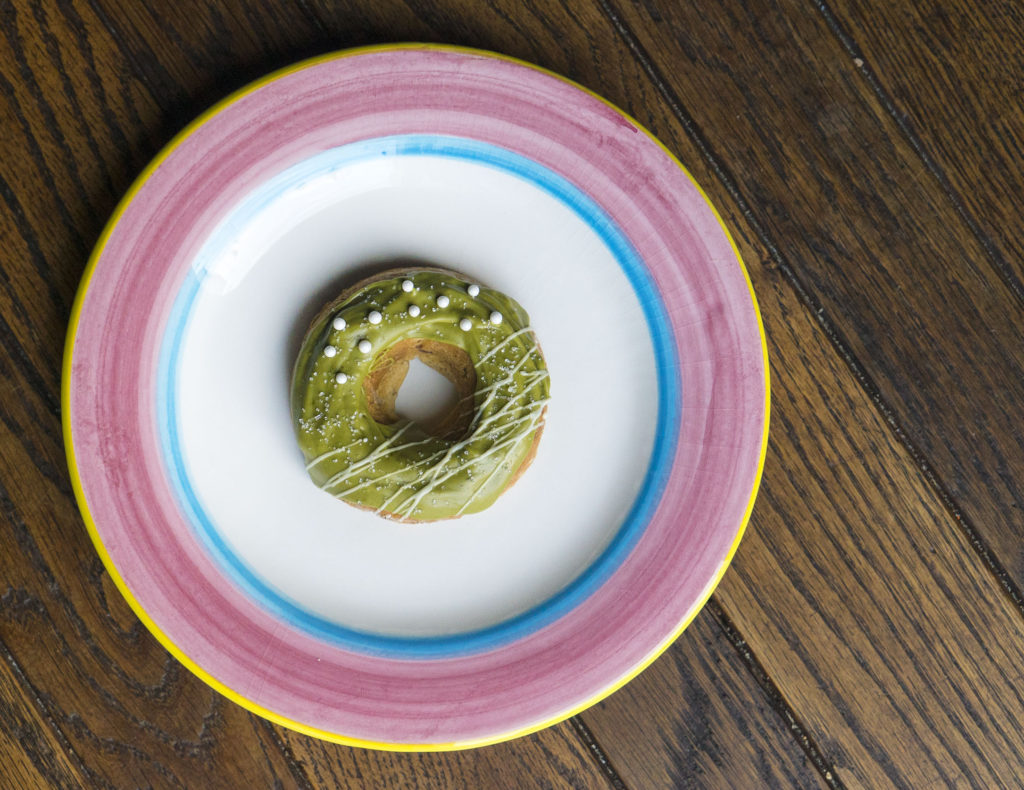
But one of the biggest new sensations in the food world is anything matcha (green tea powder). Cream puffs, ramen noodles, chocolate… you name it, people love it. The same goes for this stuff here. The green tea donut cookie is delicious, and beautiful.
It’s light, but robust at the same time.
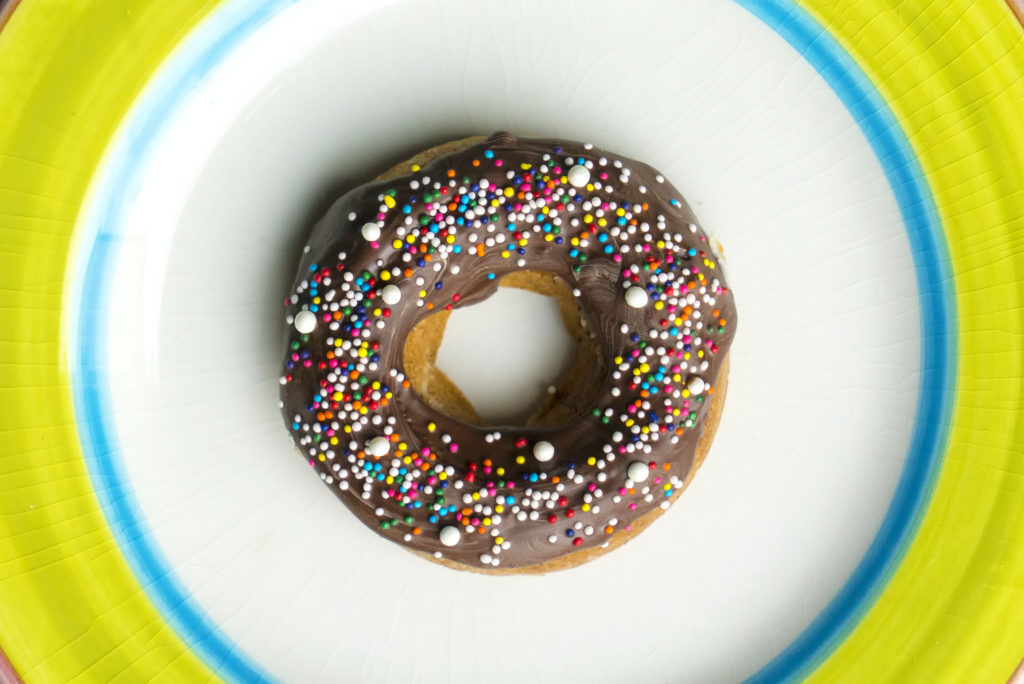
And last but not least from my box of six was the dark chocolate with sprinkles. So simple, so pretty.
Everything that Allison Kim (owner/proprietor) makes is on point, so you really can’t go wrong.
OH – and one other standout to me (from my wife’s giveaway box) was the white chocolate rose, with part of your purchase price going to cancer charities (because of the pink):
Super aromatic and floral, but with a good hit of sweetness that you expect from a “pink donut.”
I highly recommend this stuff. Yo won’t be disappointed! And when you order, tell Allison that I sent you. Maybe she’ll make something special and unique for you.
I’m going to use this product review and press event post as a vehicle to deliver unto my readers a comprehensive guide to truffles. Let me begin with the education portion of this post.
What Are Truffles?
You’re probably all somewhat familiar with truffles. You occasionally see them on menus as expensive add-ons to your pasta dishes, and you may see “truffle fries” offered at a higher price than regular French fries at certain restaurants. Shavings per ounce can be quite pricey, especially for white truffles.
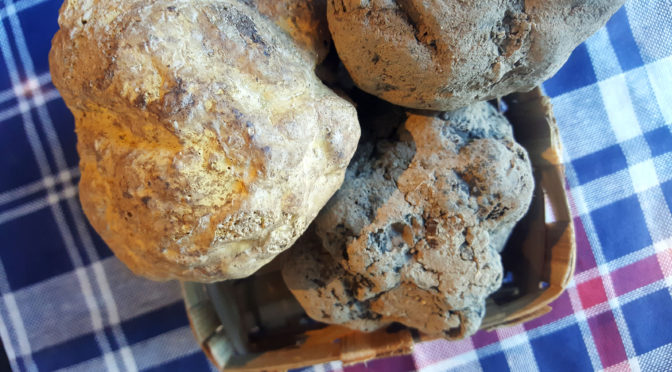
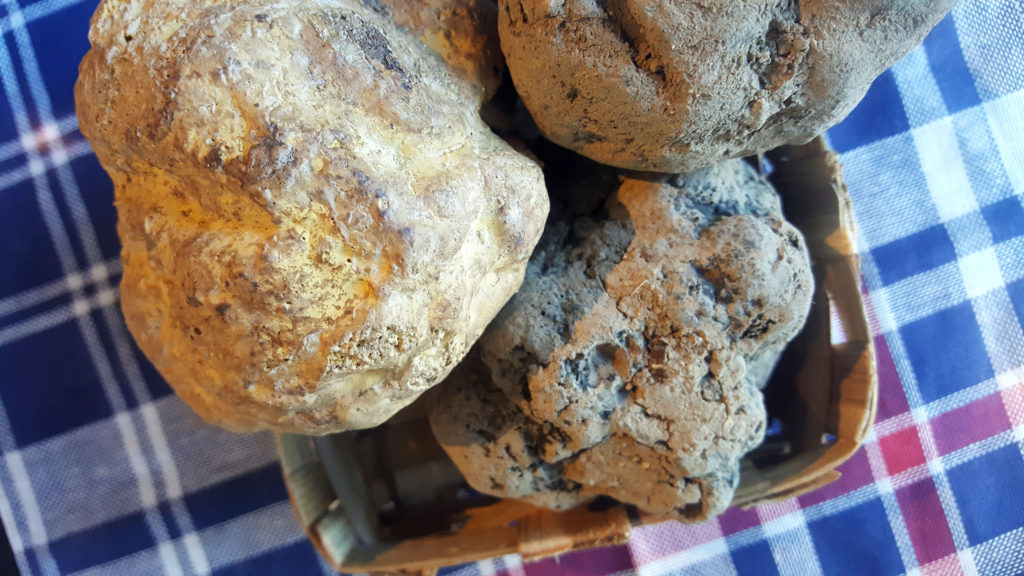
But what exactly is a truffle? It’s a fungus. It’s a tuber-like fungus that grows along the roots of certain trees, like oak, hazelnut and chestnut. They are incredibly aromatic, with an intensely concentrated earthy flavor profile that’s truly unlike anything you’ve ever tasted or smelled before.
Some people say they’re similar to mushrooms, but that’s like saying Kraft mac and cheese powder packets taste similar to piave vecchio. Not even the same ballpark. Similar to dry aged beef, fermented foods, or smoked and/or aged cheeses, truffles offer that same kind of “umami” sensation for your taste buds.
Size & Shape
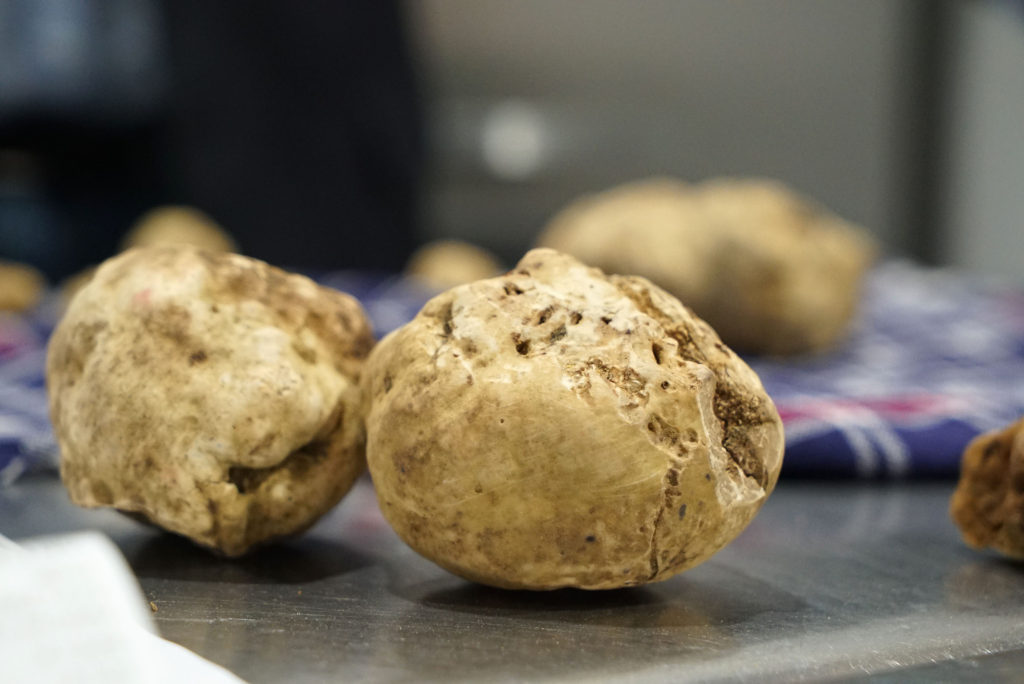
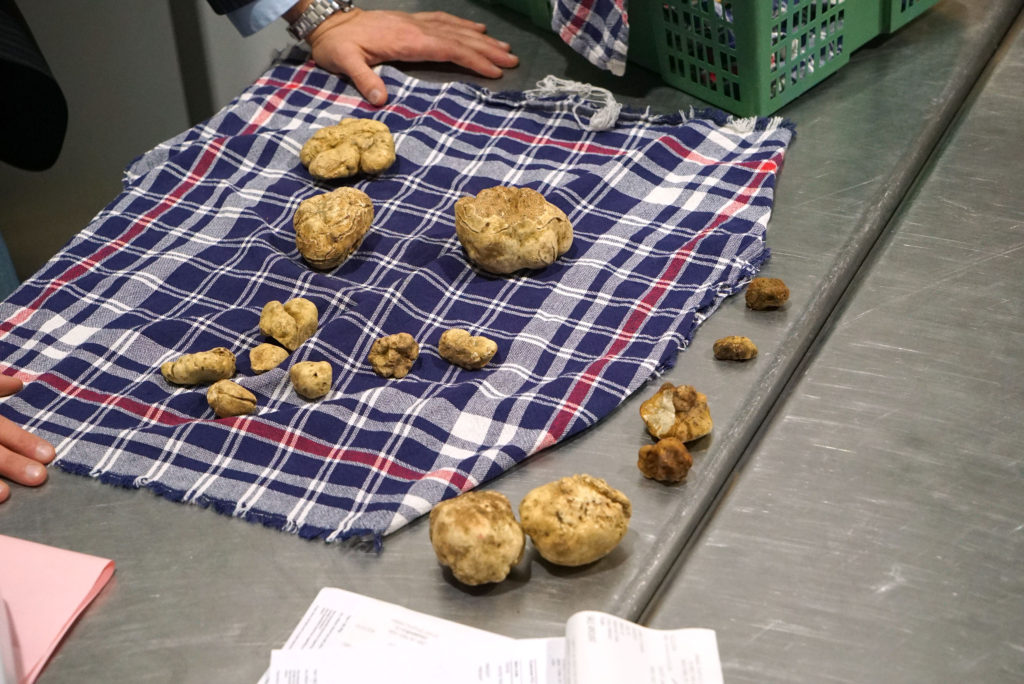
They typically range in size from something like a walnut to about the size of a softball. They get to market size overnight, growing very fast, as do other members of the fungi kingdom. However it may take some time for the spore to first germinate properly.
But just like the saying goes for dicks, “size doesn’t matter.” The same flavors exist in small or large truffles. But preference does matter (just like dicks, I would imagine). The smaller truffles are just as good in terms of quality as the larger ones. They’ll still get you off. Yet, kind of like a director’s preference for big dicks in porn, some restaurants want larger, more uniform shaped truffles so that their shavings look prettier on the plate.
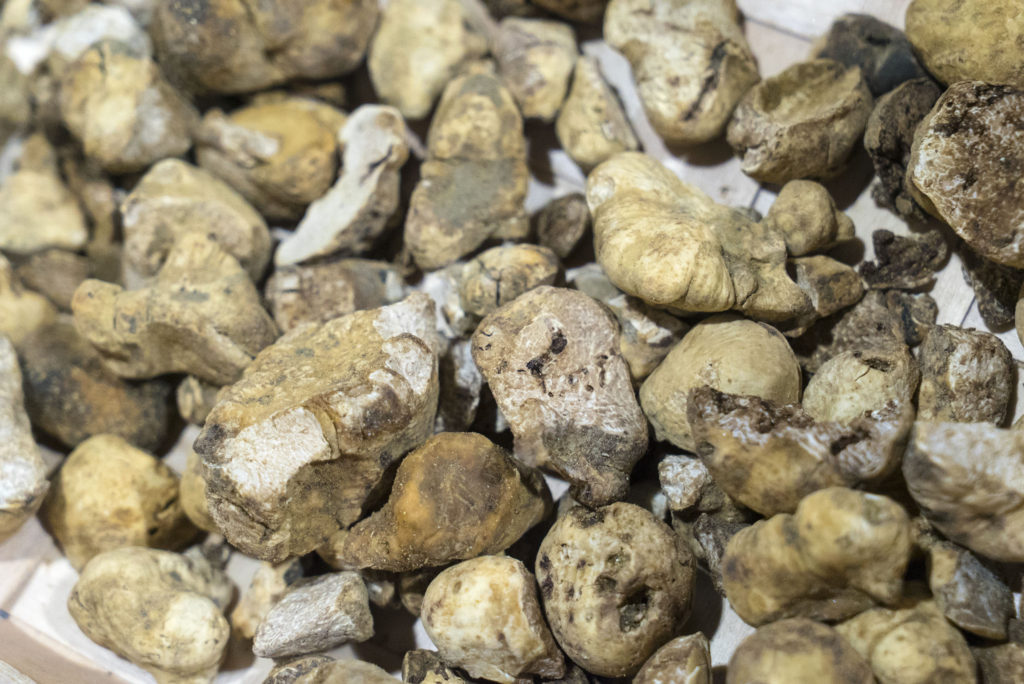
Speaking of which, their shape varies based on the soil in which they grow. Soft, loose soil allows the truffle to grow and expand mostly unhindered into a more spherical shape, while harder, rocky soil will result in more odd-shaped, lumpy truffles.
Kinds of Truffles
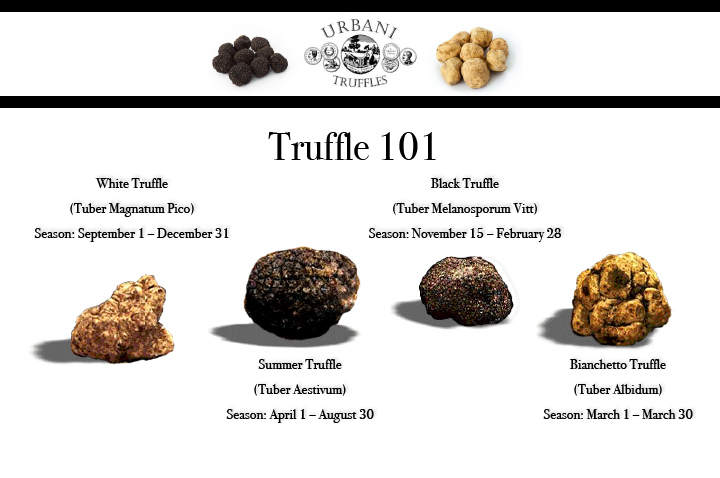
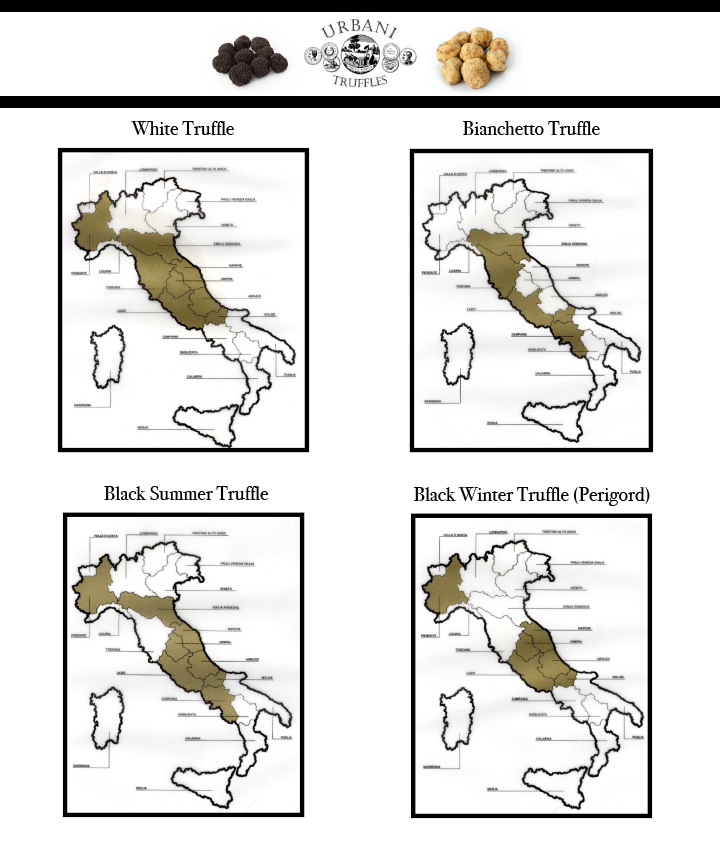
There are (generally) four varieties of truffle: white, black summer, black winter, and bianchetto.
As you can see from above, there are specific seasons for harvesting each type of truffle (in Italy, that is). The neat thing is that some black truffles are grown in Australia as well, so we have access to them in the reverse seasons as well.
Each style of truffle is suited for its own unique purposes. For example, white truffles are best for shaving directly onto freshly cooked food, like eggs and pasta. Black truffles are better suited for grating and incorporating into sauces. If you see black truffles being offered for sale, per ounce, shaved directly onto a food item, my advice is to skip it. That’s not the ideal way to enjoy a black truffle, and you may not even taste anything.
Ripeness & Storage
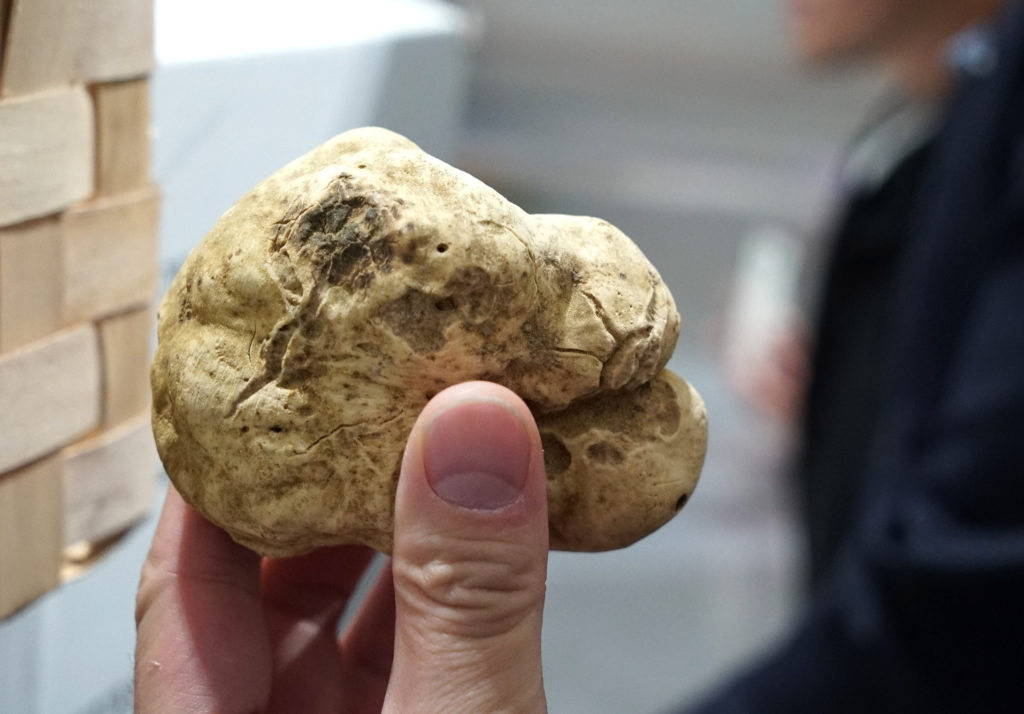
The best way to tell if a truffle is good is to feel it and smell it. They should be firm, but not rock solid, and definitely not mushy. The aroma should be very powerful and fill your nose with an abundance of robust earthiness. In fact it is said that some can detect up to 120 different flavors and aromas from a fresh truffle.
Here, you can see how the degradation process occurs as a truffle goes from good, fresh and ripe to bad:
As a truffle begins to go bad, less of those invigorating aromas come through, the truffle gets spongier, and it emits a more ammonia-like scent. Eventually a white truffle will turn more brown, as well.
The shelf-life for a fresh truffle varies from 7-10 days for white truffles, to 15-20 days for black. A truffle is about 90% water, and it will lose 3-5% of its moisture per day, so that’s why it’s so important to use them while they’re fresh. The intense, characteristic flavors and aromas come from the moisture content within the truffle.
Lots of times you see truffles stored in a box filled with rice. This isn’t a good idea, unless your goal is to infuse the rice with the flavor of truffle. The dry rice will leech out all the moisture, and thus the flavor, from the truffle. My opinion: that’s a dumb move, even if your goal is to infuse the rice. Why? Because rice dishes will never sell for or be worth an amount that’s high enough to cover the cost of the truffle you just wasted by storing it that way.
The best way to store a truffle is to individually wrap each in a paper towel, somewhere cool. It should also be put into a wooden box or a glass mason jar; not plastic, as plastic doesn’t breathe the same way. Excess humidity can build up in plastic and ruin the truffle.
Where Do They Come From?
In Italy, truffles can be found in a variety of locations, as Italian geography is ideal for producing the right weather conditions that result in truffle growth.
The coveted white truffles are highly sought after when they come from the Alba, Piedmont area in the northwest, which is similar to our Napa Valley. However the demand for certain wines from that region (Barolo, Barbaresco) has created a situation where the land is being altered by vintners, with trees being removed to make way for grape vines, and chemicals being used in the soil to aid in the grape-growing process. Trees are necessary for the truffles to grow, so Alba truffles are very rare indeed. In fact, less than 3% of the truffles on the market hail from Alba, and most of the truffles from that region stay local. So be aware, if you happen to see a menu flaunting that the truffles are from Alba: it is likely a lie.
Black truffles can be “seeded” with spores and grown in other locations that have the right climate and trees, but white truffles can not. Therefore, white truffles tend to be a fuckload more expensive, as they are much more rare and localized. Think $1,000/lb.
In Italy, much of the land where truffles are hunted is public access, meaning anyone can come by (licensed truffle hunters, typically) and pick up a truffle. In other places, like Australia or the USA, the land can be owned outright so no one else can lawfully snatch up any truffles that might be growing on your tree roots.
Urbani Truffles
Now that you’ve gotten a good first lesson on truffles, I guess I can begin the product and press review portion of the post.
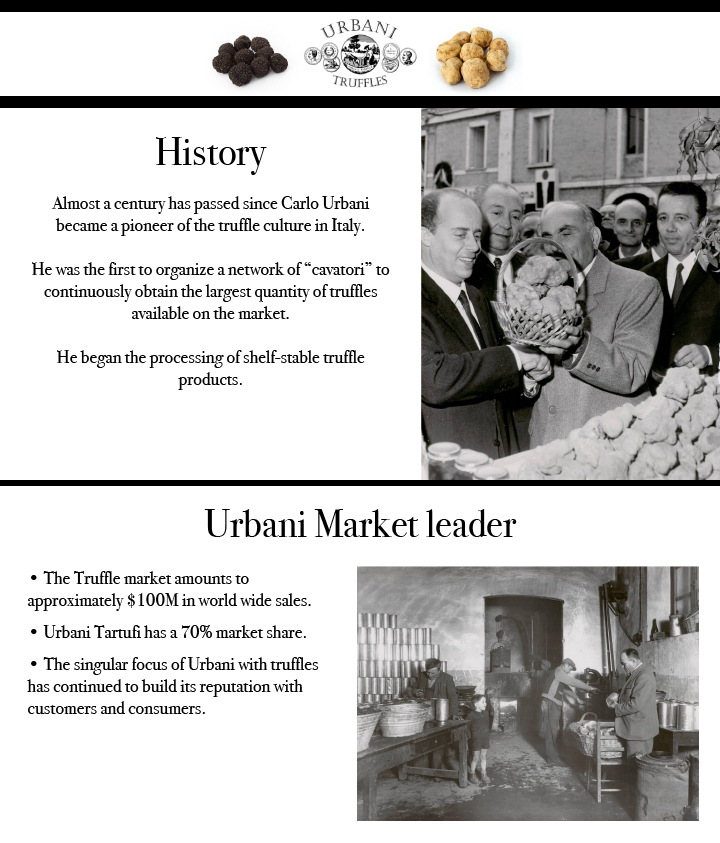
Urbani Truffles began in 1852 and now supplies 70% of the global market with their truffles.
Urbani Truffles are in the hands of NYC restaurateurs within 36 hours of being dug up by their network of truffle hunters in Italy. Amazing! Truffle hunters go out with their trained sniffing dogs at night, to minimize noise and distractions for the dogs. The next morning, any truffles that were gathered are cleaned and sent to the market or shipped out on airplanes all over the world. Cleaning just requires getting the dirt and blemishes off (like a potato). If needed, some light brushing is done, but cleaners are careful to avoid direct contact with water, as that can harm the truffle.
Take a look at this Urbani video below, which will help you visualize the entire process.
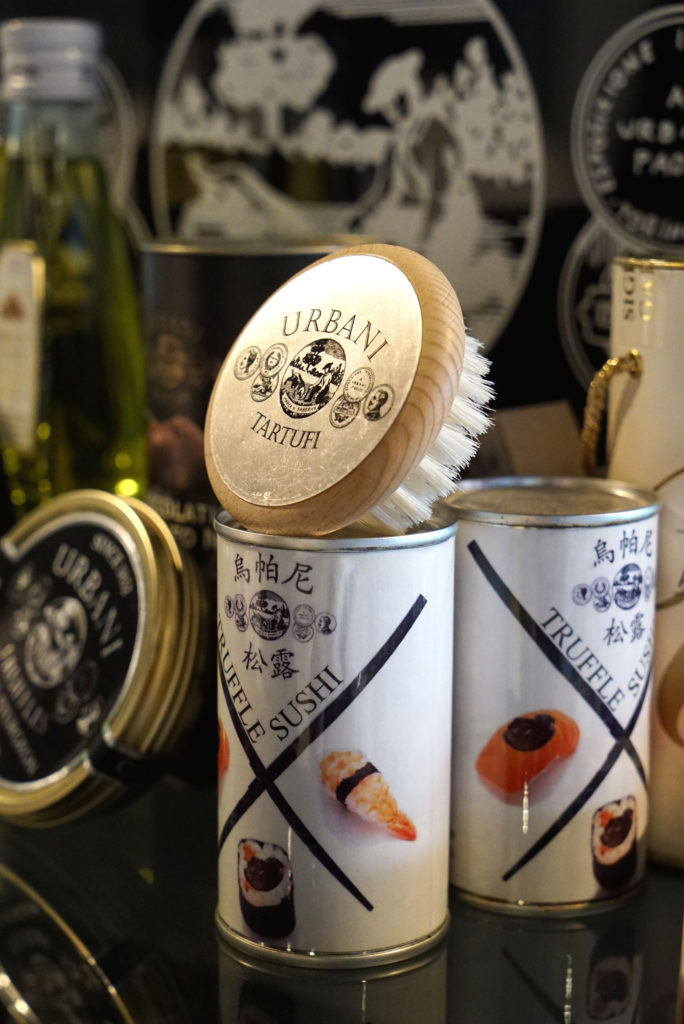
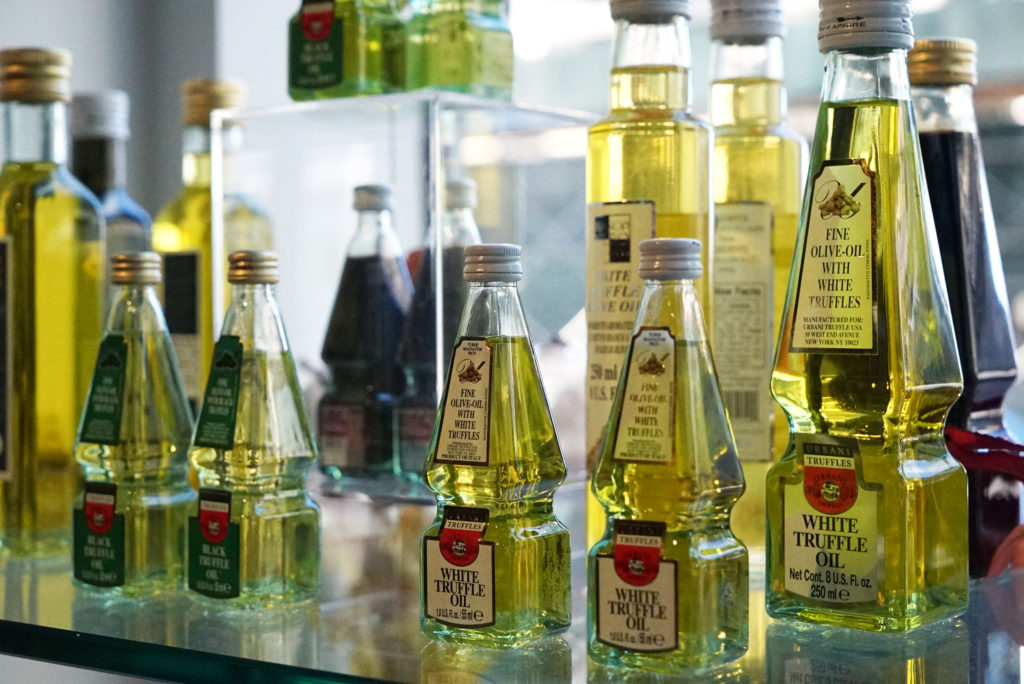
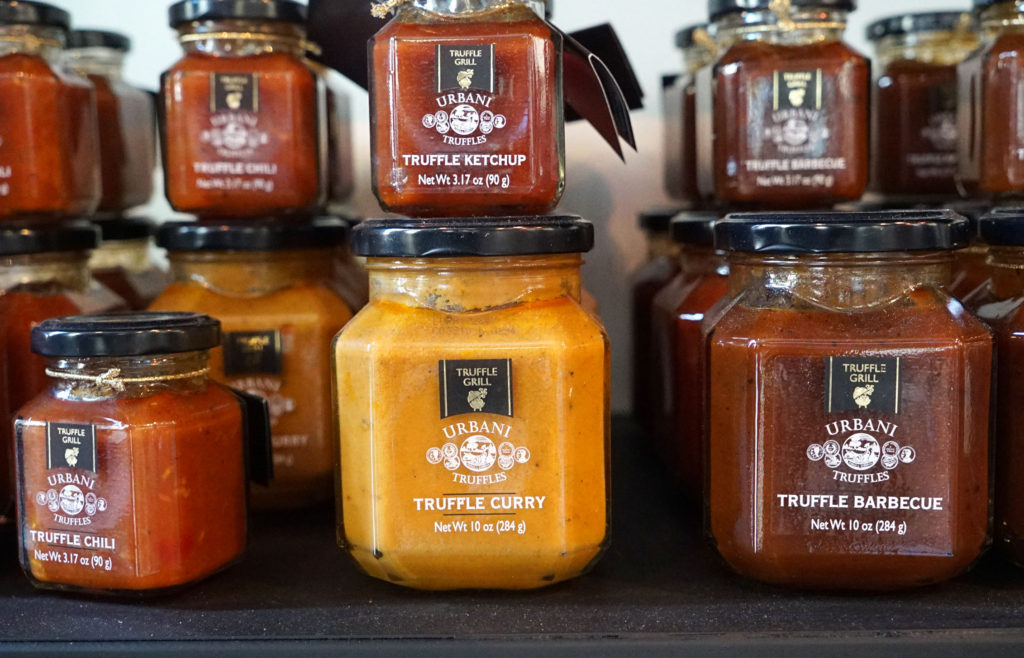
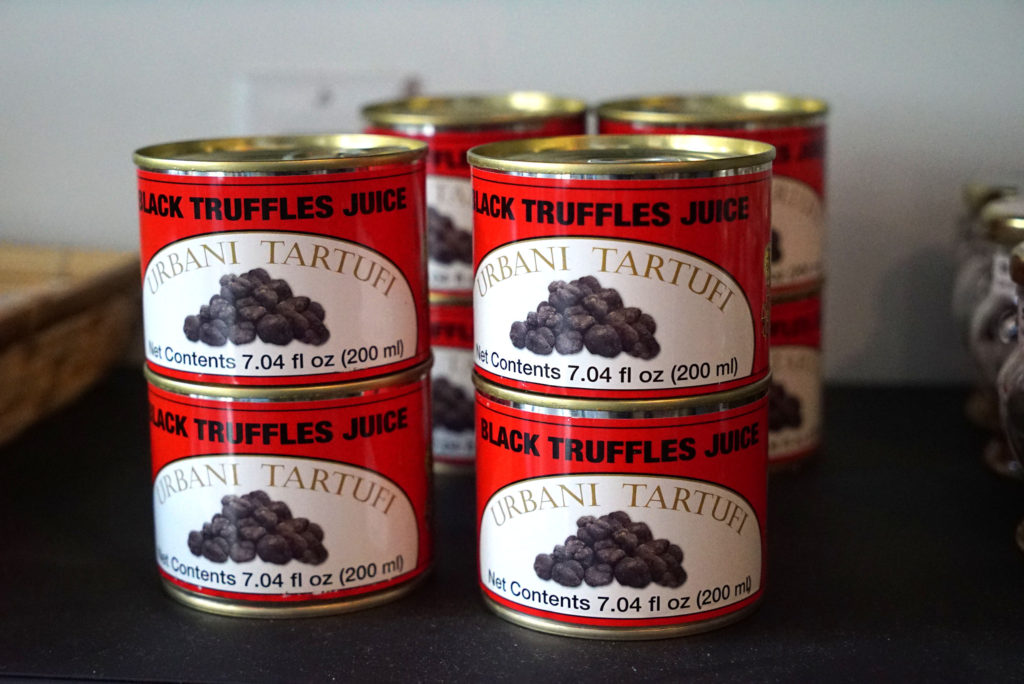
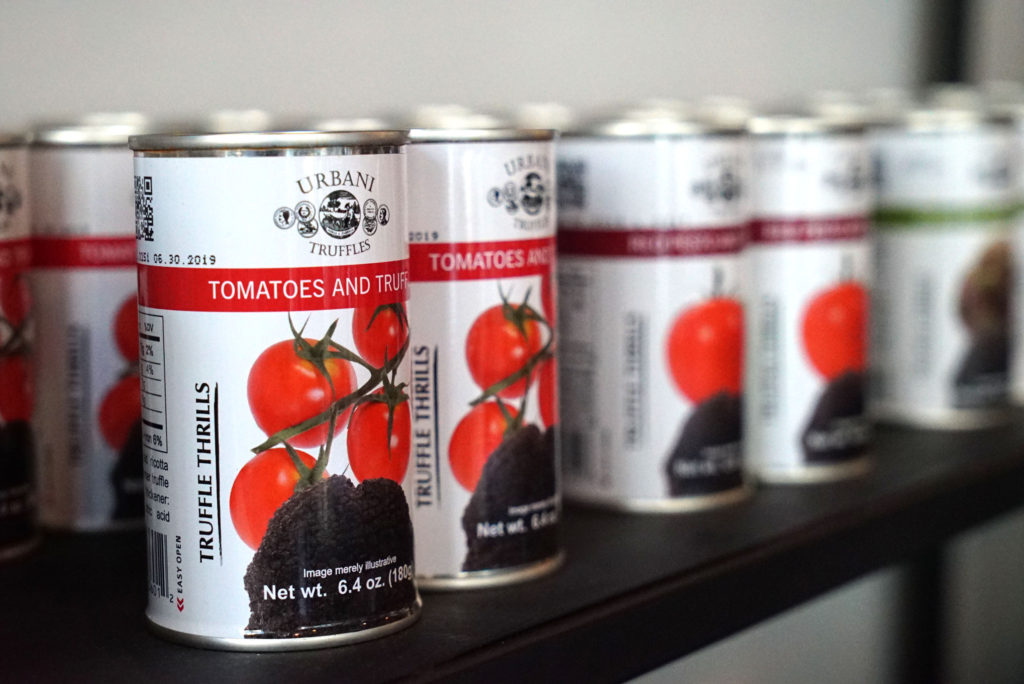
You probably noticed some truffle products in there, like oils and canned goods. Whatever Urbani doesn’t think is fit for the fresh market, they use to create various other products.
Like their fresh truffles, these products are all top notch quality. They never use chemicals in their products, so everything is all natural. Chemicals actually taint the flavor of truffle products, and deliver too much truffle flavor and aroma up front.
All of Urabni’s truffle products will deliver a delayed and longer lasting truffle flavor, due to their rejection of chemicals in the production process.
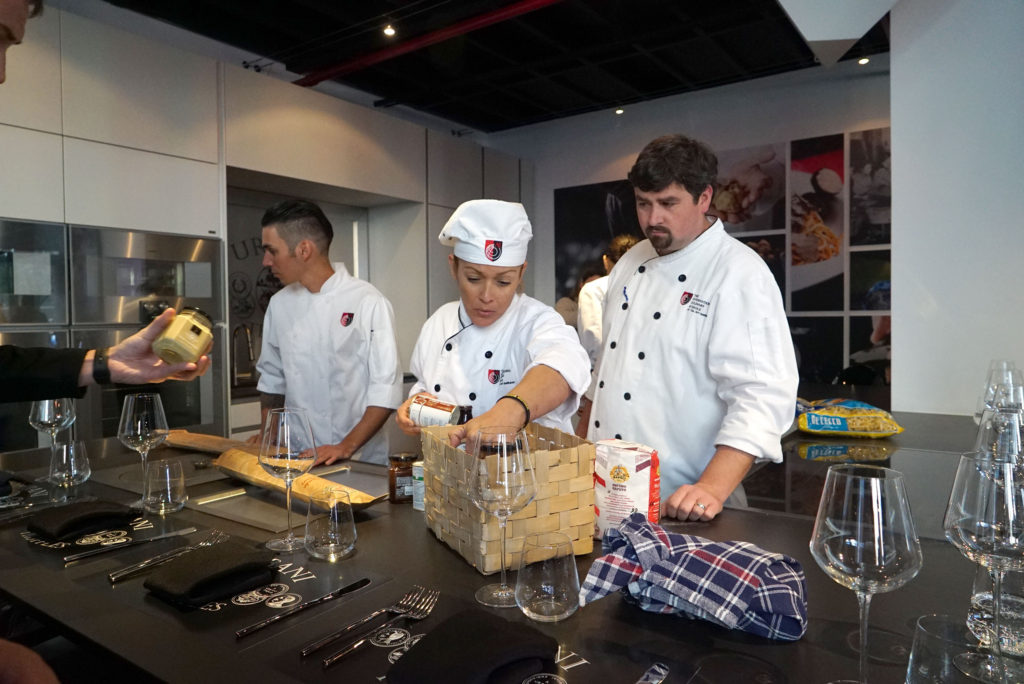
I had the pleasure of sampling both their fresh truffles and some of the products they sell when I was invited to their truffle lab on West End Avenue.
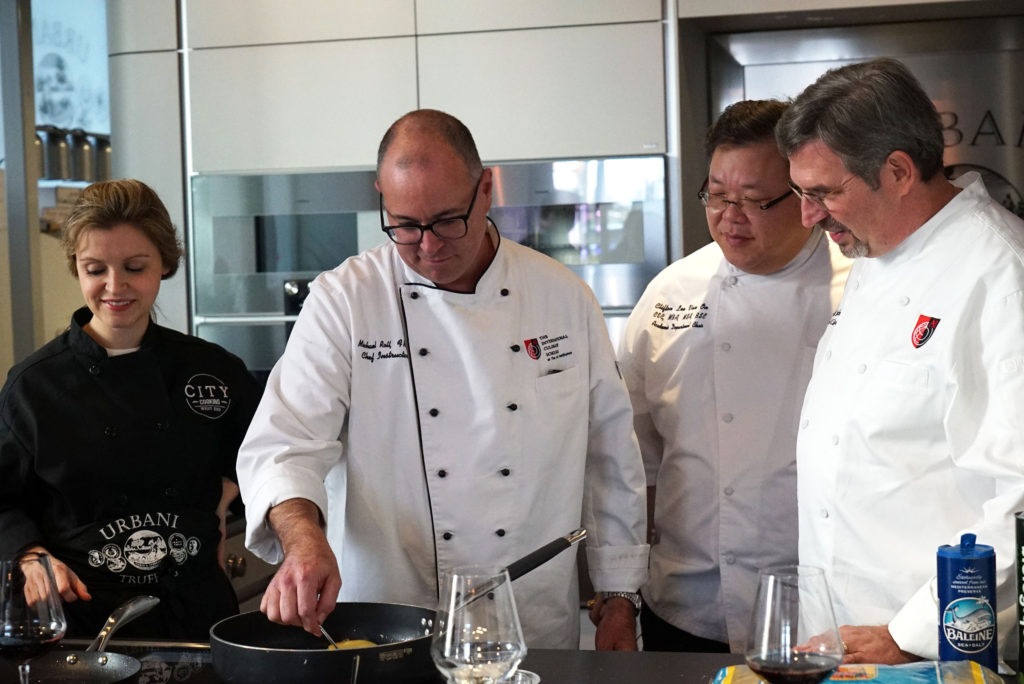
As a matter of fact, I was there while a presentation was being given to six Art Institute / International Culinary School students who were selected as the top of their classes to learn about truffles and to practice cooking with them. Talk about having a great lunch!
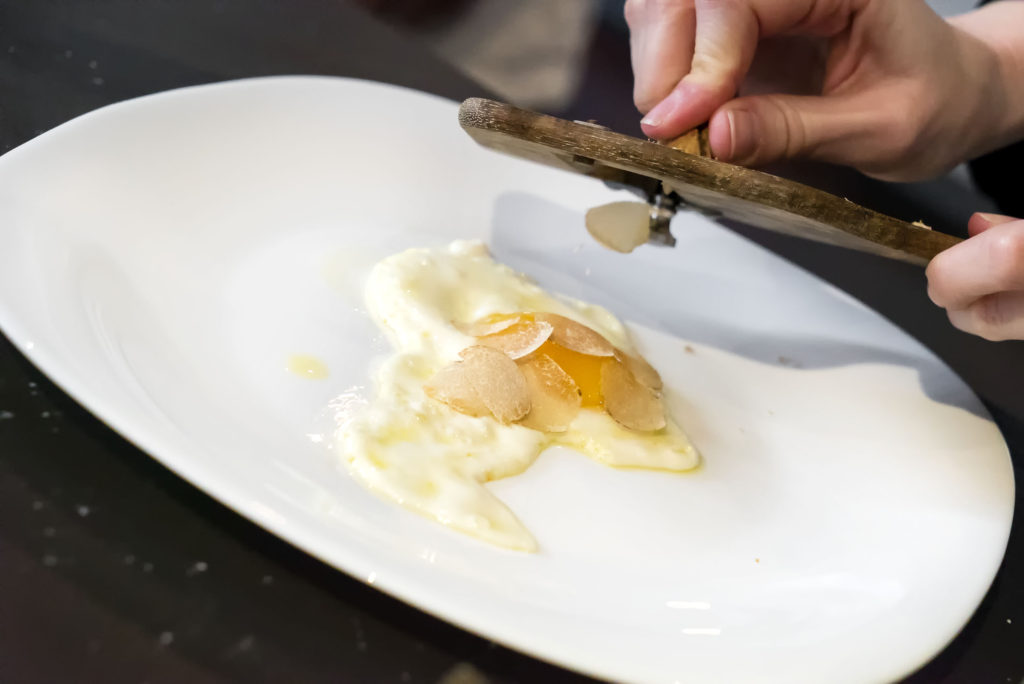
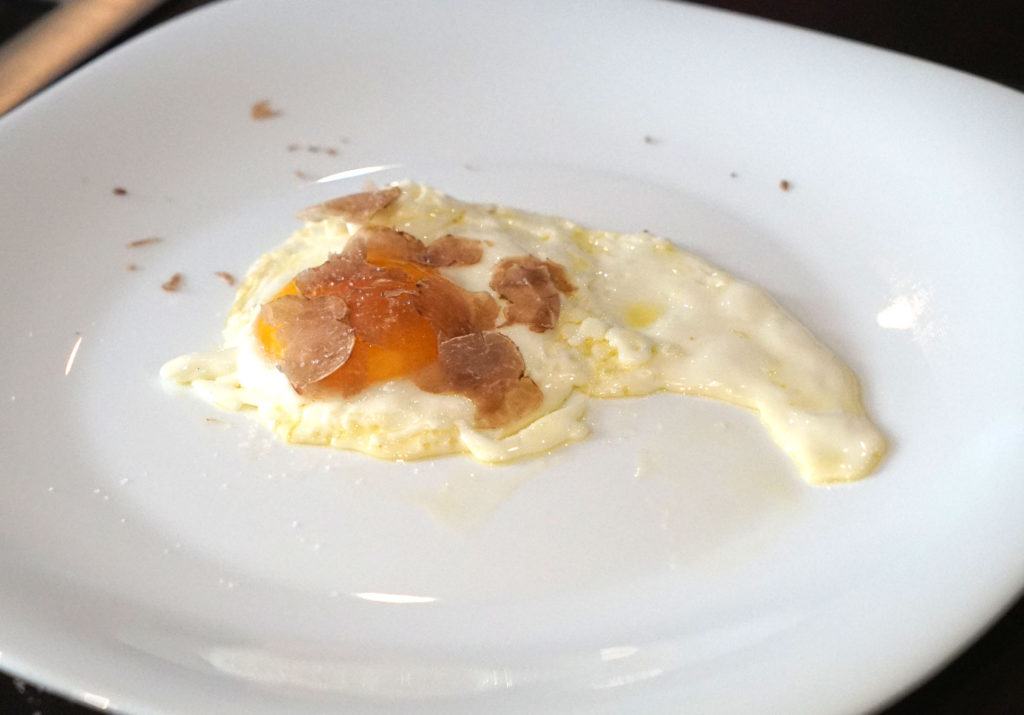
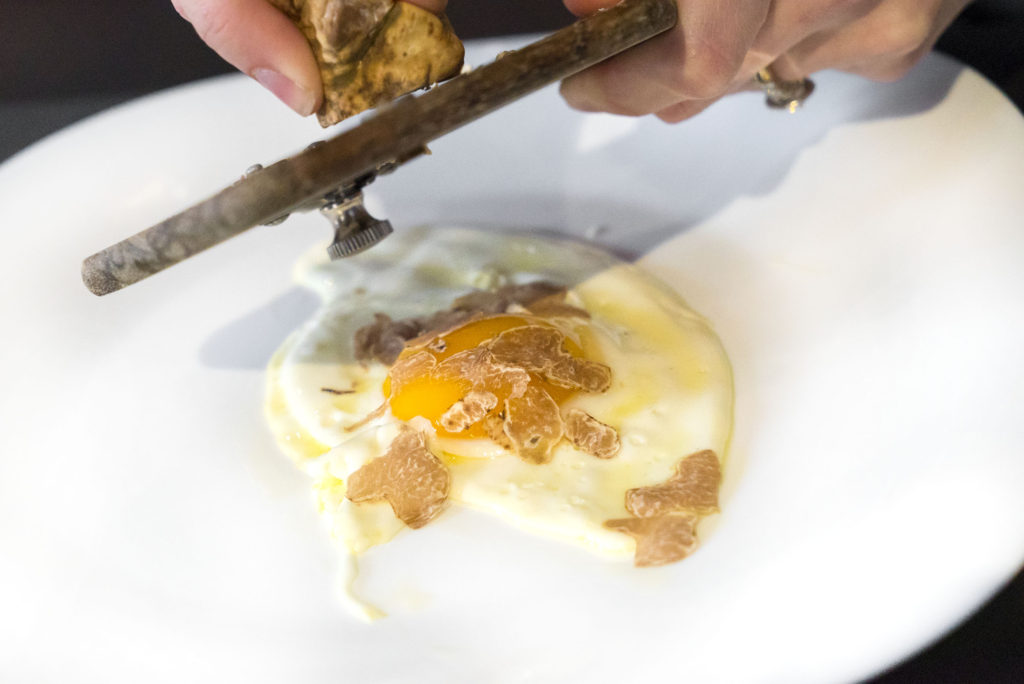
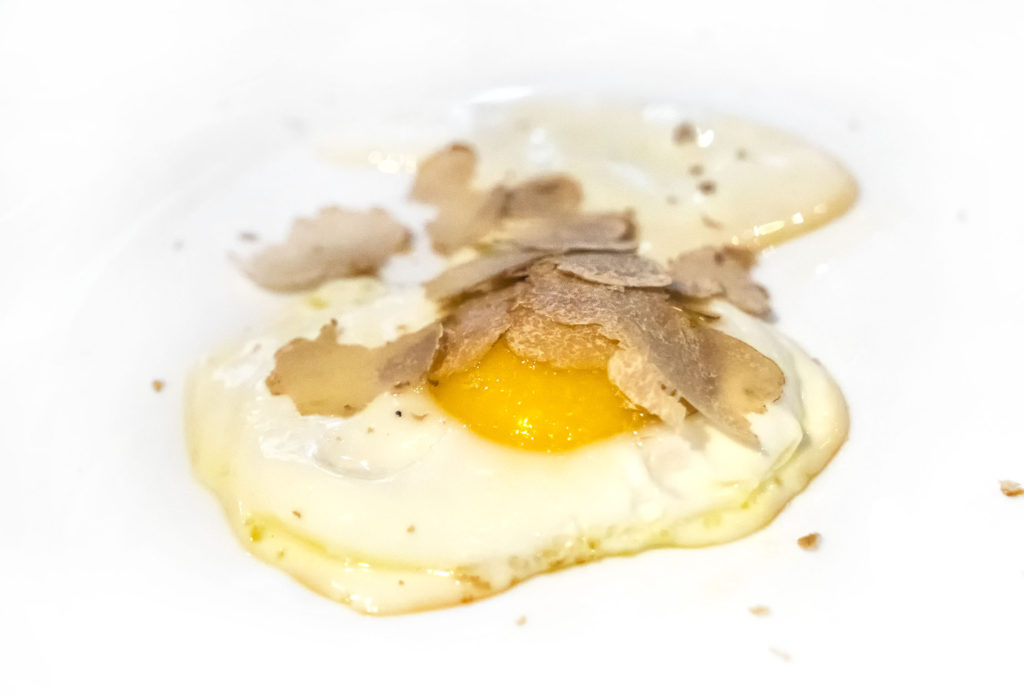
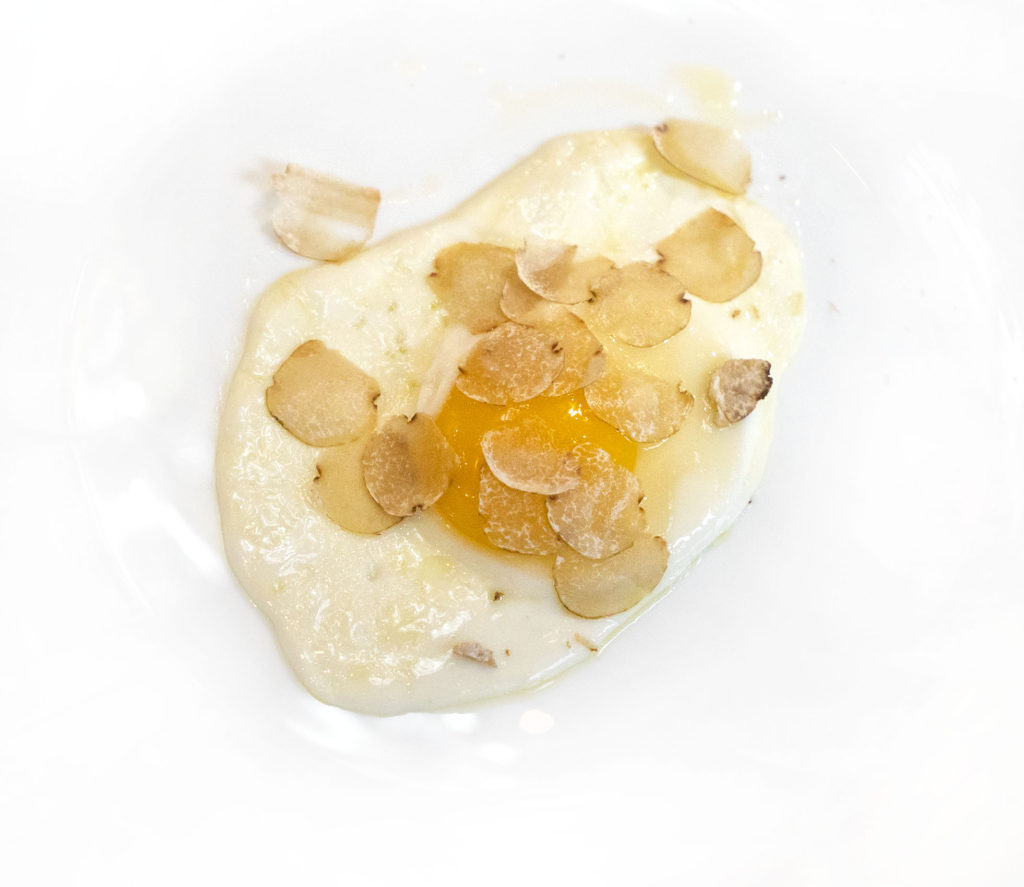
First, we experienced one of the most simple and satisfying ways to enjoy fresh white truffles: shaved directly onto a fried egg.
According to Vittorio, the VP of Urbani Truffles, salt should be sprinkled on after the truffles are shaved onto the egg. Pepper can take away from the truffle flavor and aroma, so skip that.
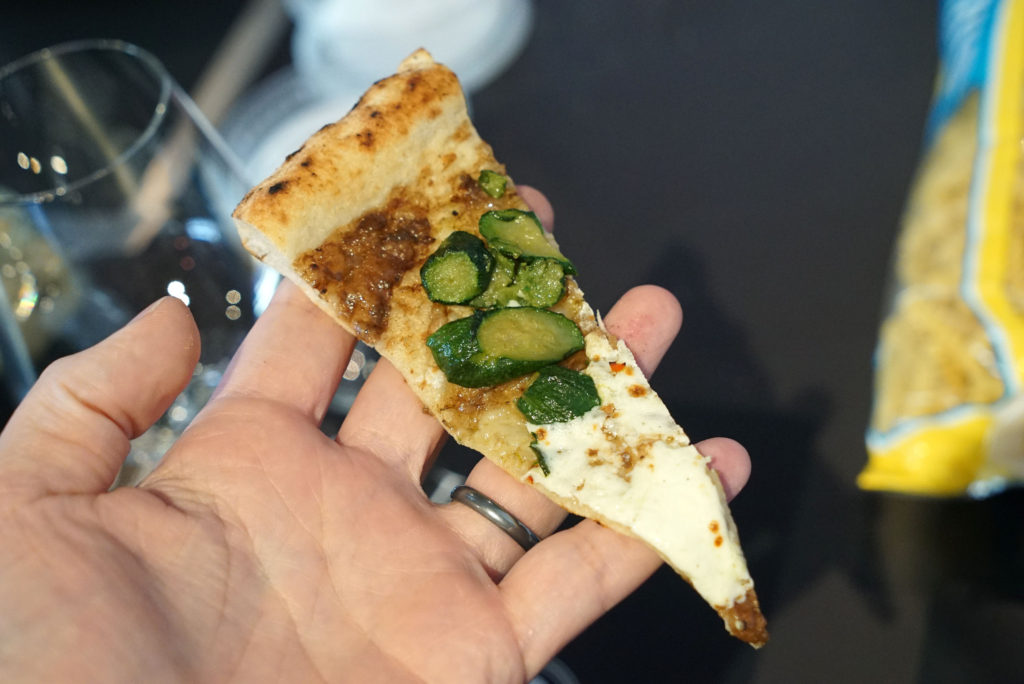
Truffle oil goes really nicely with flatbread and pizza. This one we tried really popped, making something as boring as zucchini really exciting for a change.
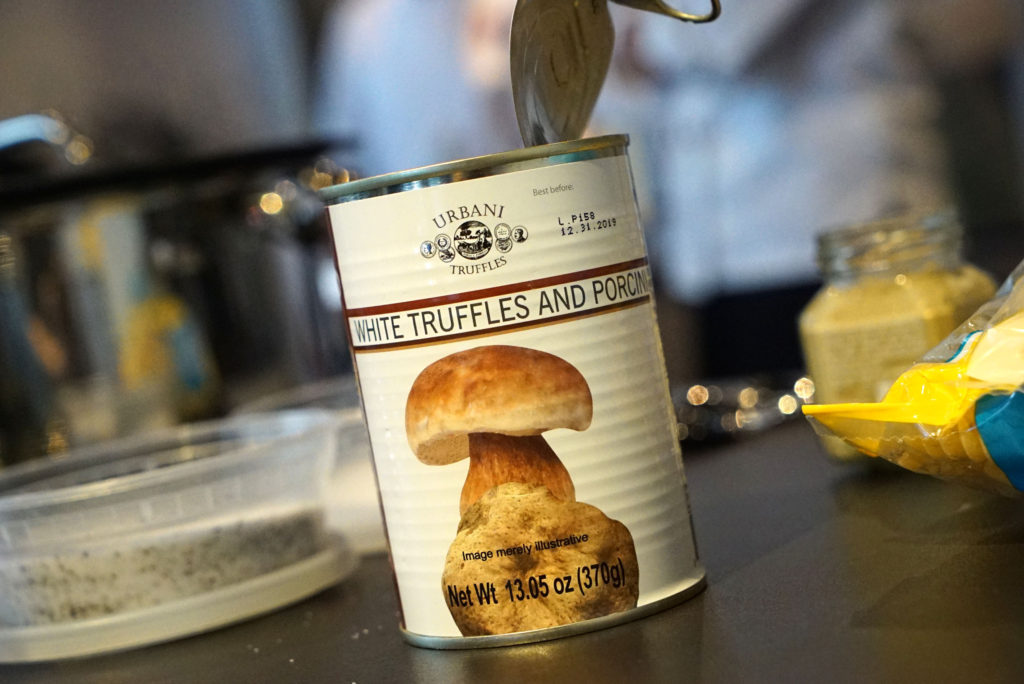
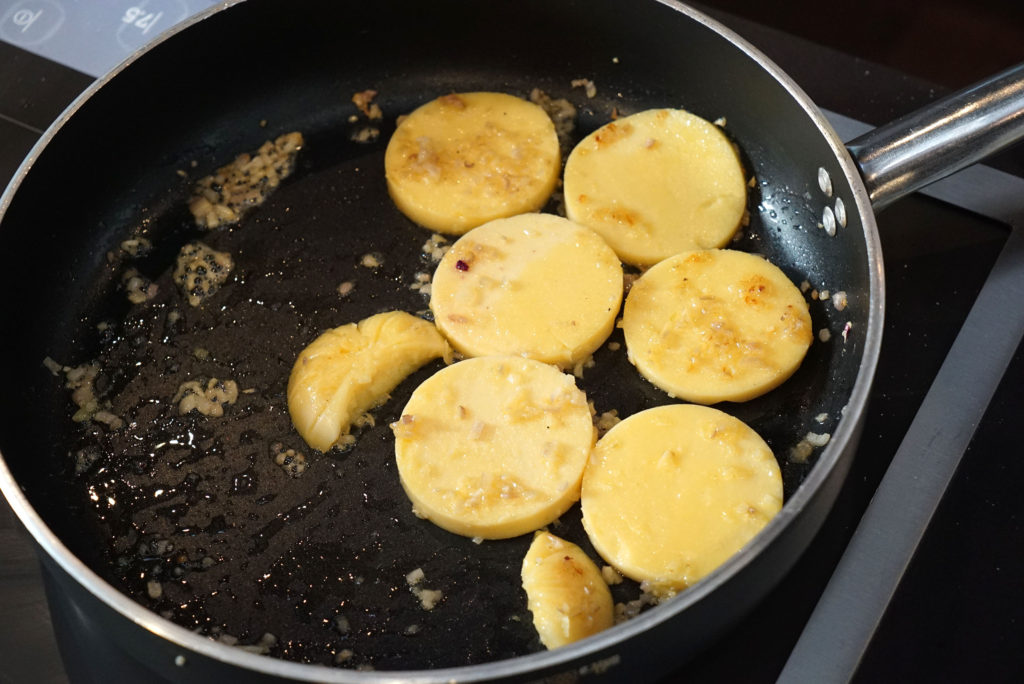
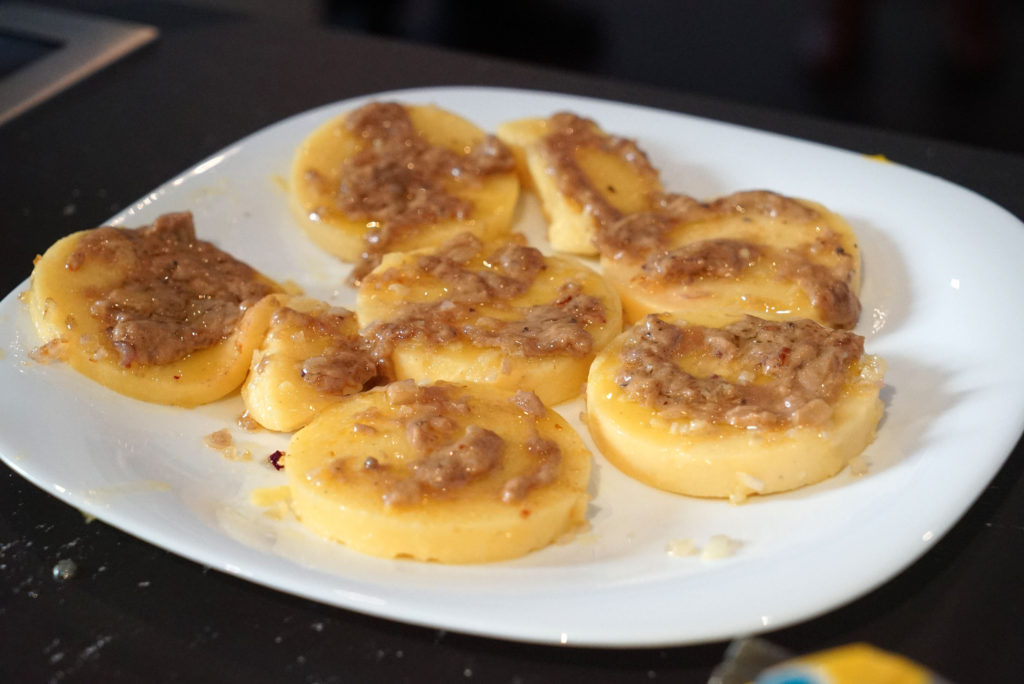
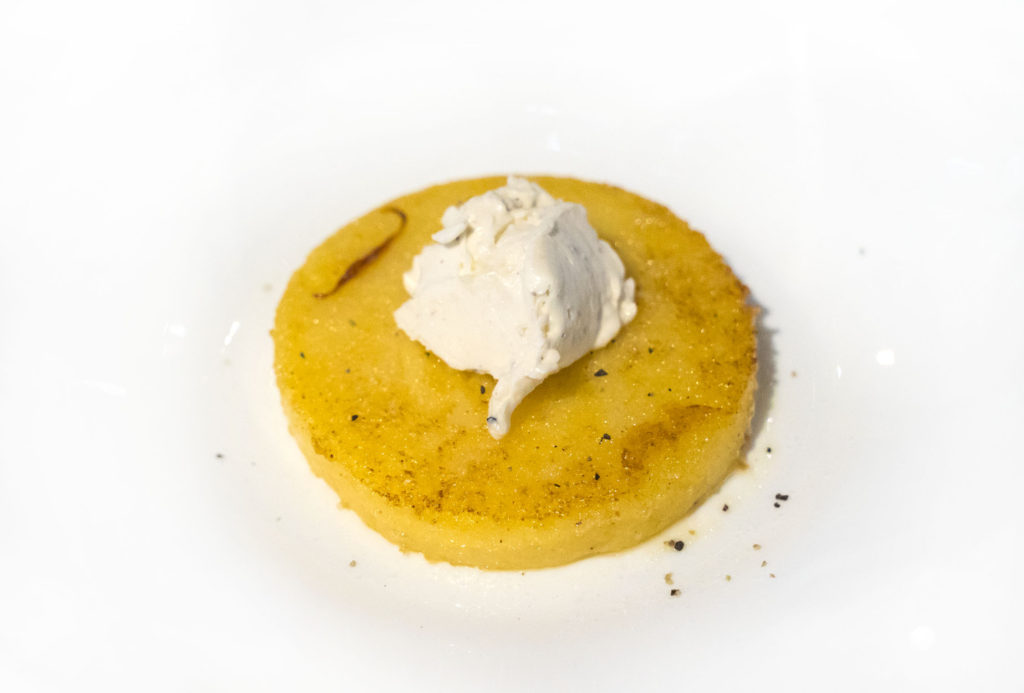
We also sampled one of the canned truffle products: white truffle with porcini mushrooms. This was added to a pan of sauteed shallots and butter to make a sauce, which went on top of some polenta.
This was delicious, and I can totally see this being used to spike something like gravy or even to make a sauce for the top of a filet mignon. Really flavorful – best thing I ever ate from a can.
Another item I tried was their truffle mnustard. I plan to feature this in some recipes in the future, as I think it would be an excellent addition on a cold cut sandwich or a burger.
Finally, we tried some truffle cream cheese spread as well. This, too, was plopped onto some sauteed polenta. I can’t imagine how amazing this would be on lox.
If you’ve got room in your budget for a fresh truffle, I say go for it. Urbani delivers the freshest product I have ever experienced, and they supply big dog restaurants like French Laundry and Del Posto. Whipe up some homemade pasta, cook it, throw the pasta in a pan with some butter, fry a sunny side up egg for the top of the pasta, and shave that delicious truffle right onto it. Perfection.
But even if a fresh truffle isn’t on your to-do list, then I highly recommend picking up some of Urbani’s other products and experimenting with truffle in your own recipes that way. You can’t go wrong. Every product is amazing.
I had the pleasure of attending an Instagram influencer event at Handcraft last night, and I have to say: I was super impressed with everything I drank and ate. This place really knows their stuff.
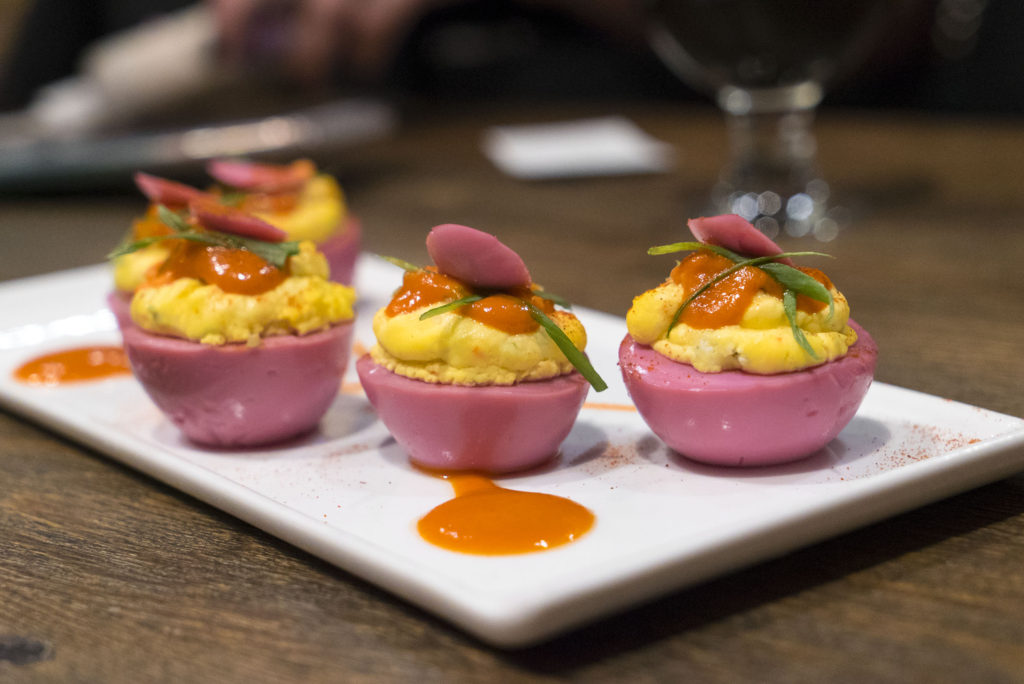
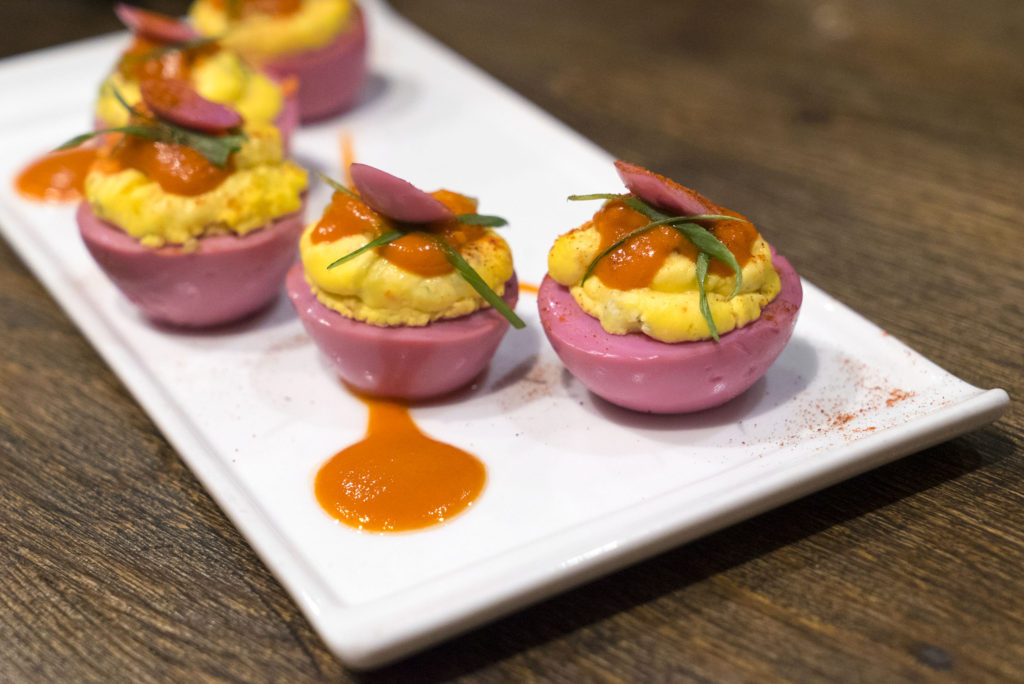
The meal started with some buffalo style deviled eggs, which were absolutely delicious.
They had the same flavor profile you get from good spicy chicken wings, with a pop of hot sauce.
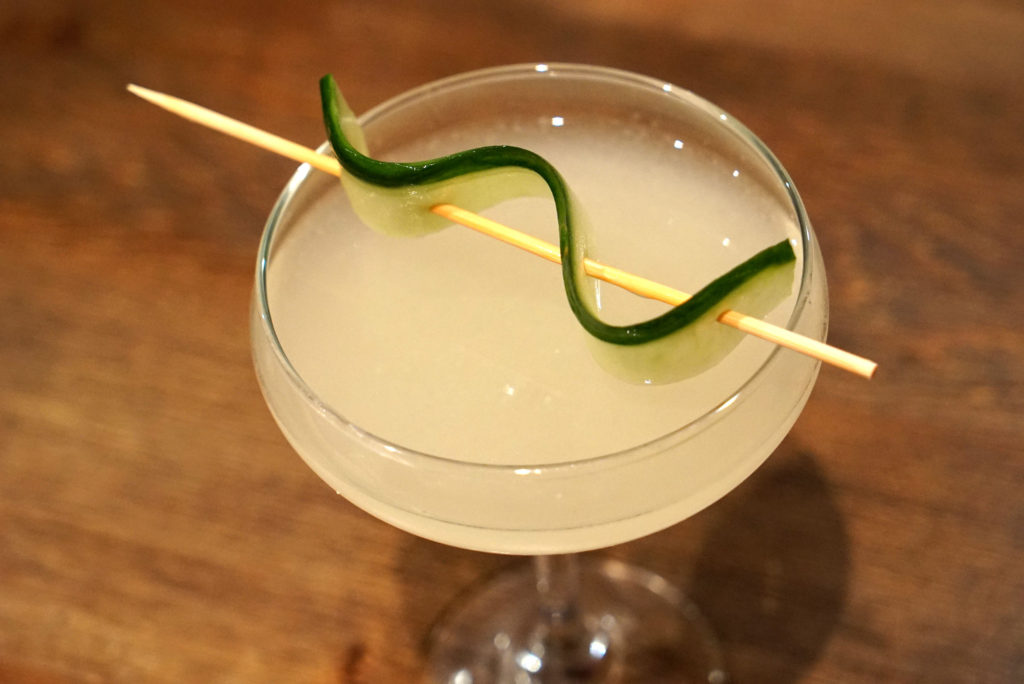
Then came our first cocktail: Tokyo Drift. This was made with gin, sake, cucumber, lemon and fizz.
It was really refreshing and slammable, which was nice to pair with the next part of the meal: Handcraft Nachos.
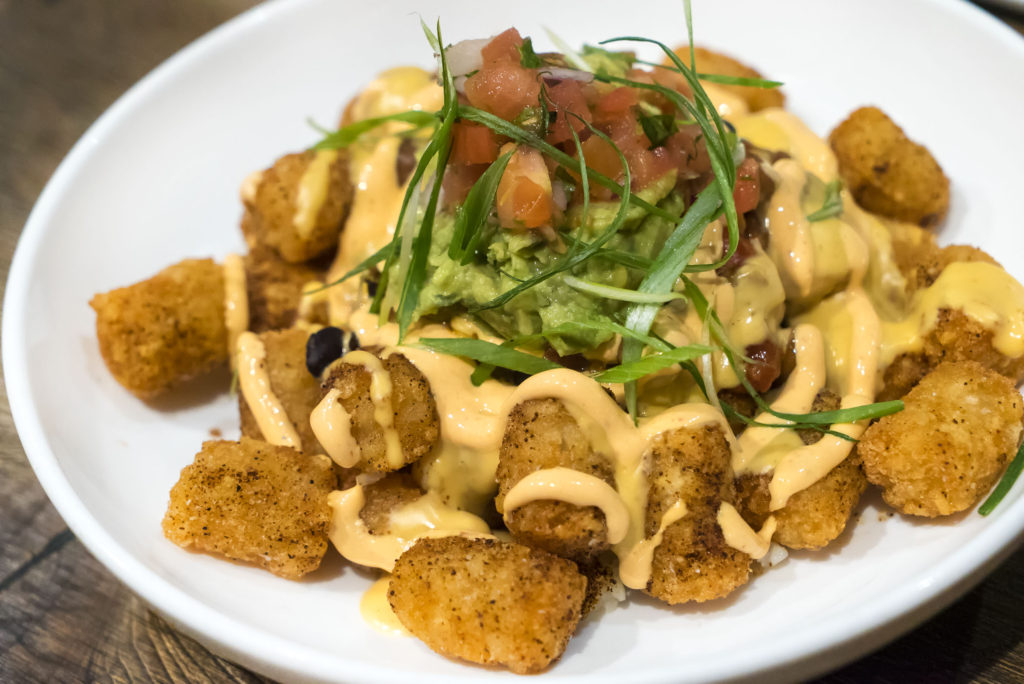
These are tots, topped with corn, bean chili, pico de gallo, guacamole, chipotle sour cream and cheese sauce. These “totchos” were absolutely fantastic. You definitely need to start your meal with these when you come here.
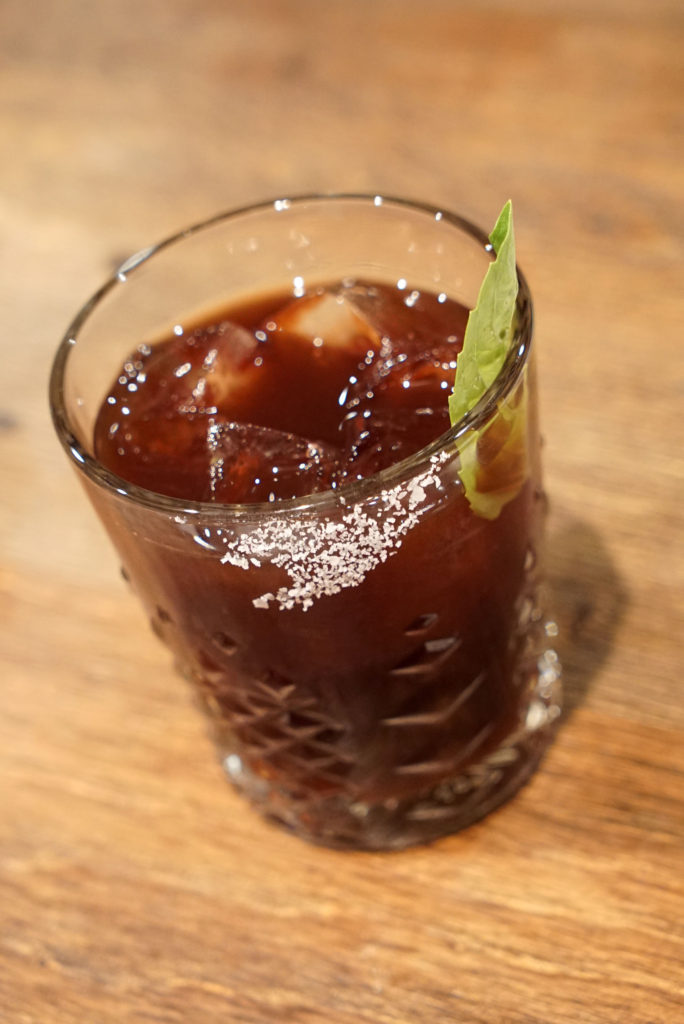
Next up on cocktails was the Liquid Lunch: watermelon and strawberry gin, basil, balsamic vinegar and lime.
This baby was like drinking a salad! So savory yet still with a nice pop of sweetness. I loved it.
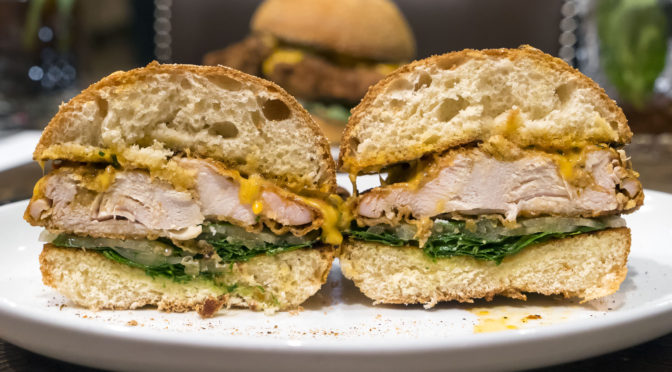
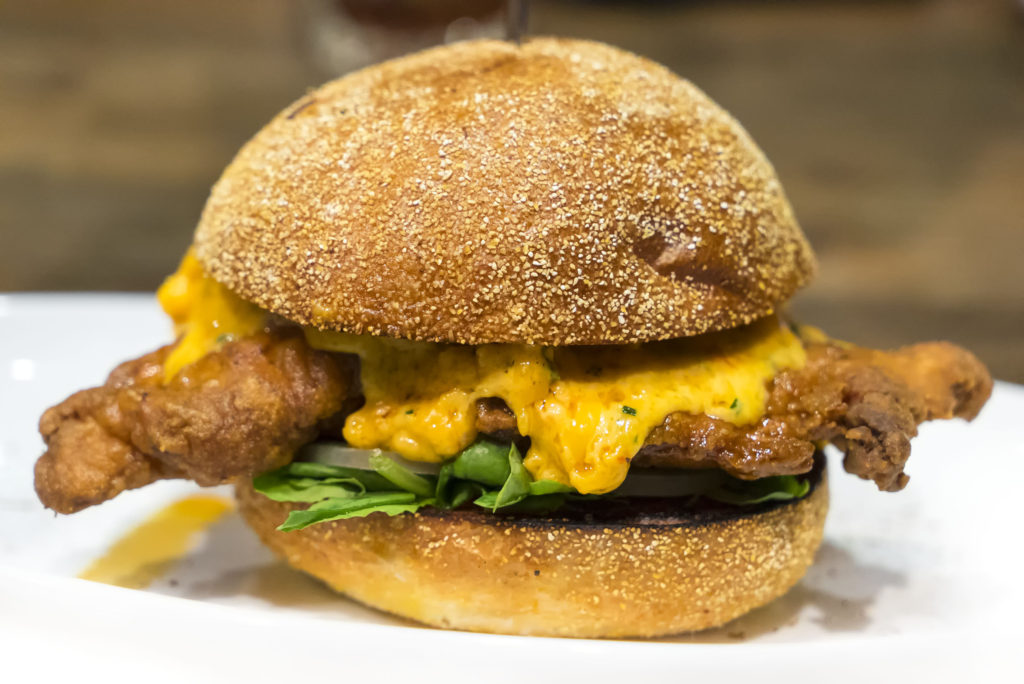
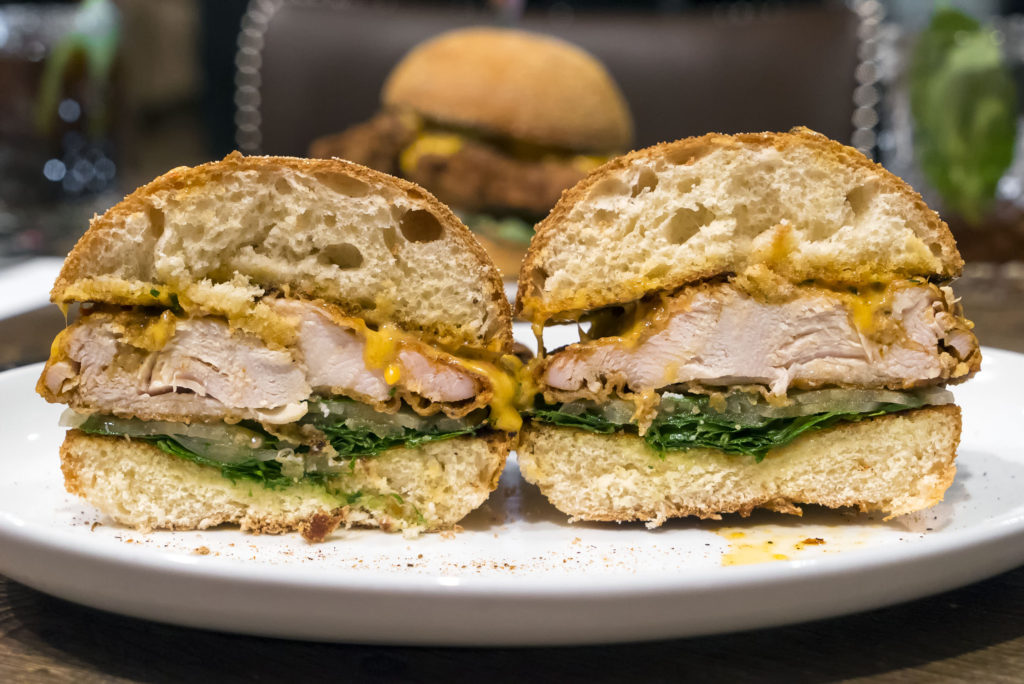
We drank that with a killer fried chicken sandwich.
This is up there with Delaney and Fuku+ in terms of taste and quality. It’s topped with pimento cheese, pickled green tomato and kale, served on focaccia.
The chicken was so tender and juicy inside, and that cheese acted like a sauce to boot. Awesome.
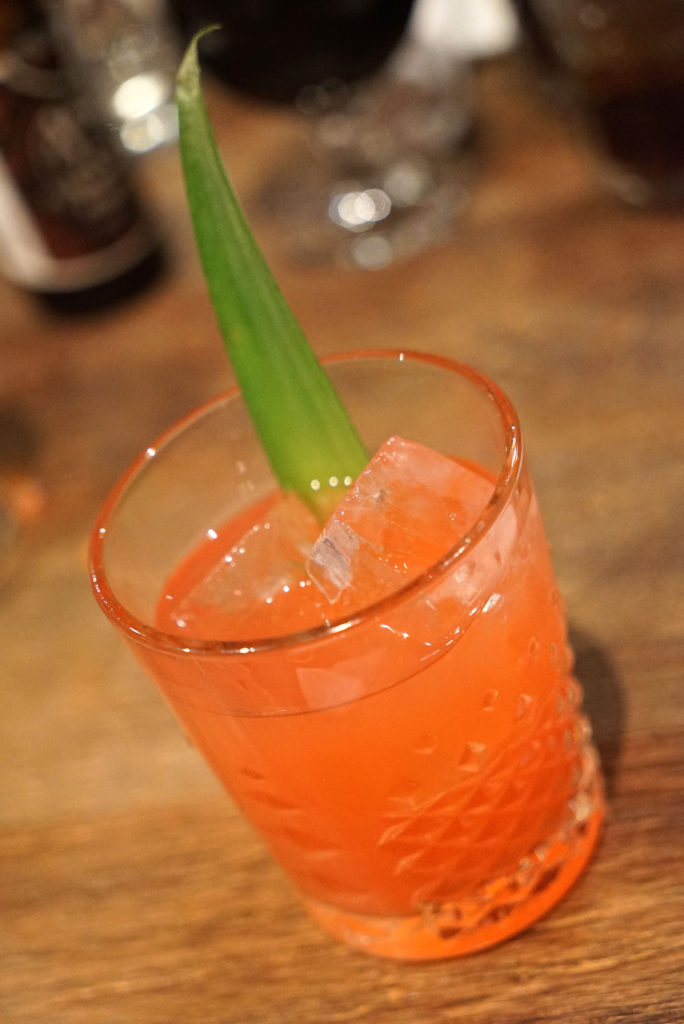
The final cocktail was a Bourbon Punch: bourbon, amaretto, southern comfort, orange and pineapple.
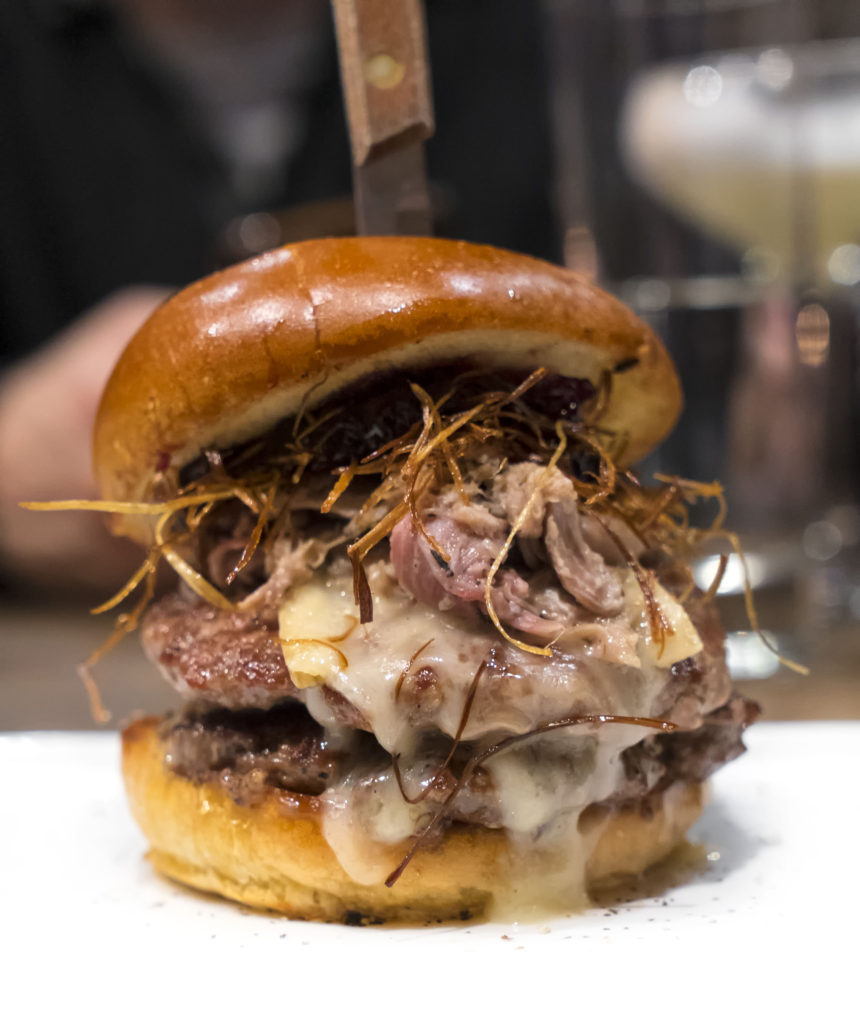
The hard liquor really gets balanced out by the sweetness here, and the fruitiness of the drink went well with the next course: The Game Changer.
This mountain of meat consists of a bison patty and a wild boar patty. Then it gets topped with duck confit, brie and cherry chutney, served neatly on a brioche bun. Amazing. The cherry chutney almost acts like a cranberry sauce, turning this into the perfect Thanksgiving substitute for those of you who despise turkey.
I highly recommend this place, and they have a great beer menu too.
HANDCRAFT KITCHEN & COCKTAILS
367 3rd Ave
New York, NY 10016